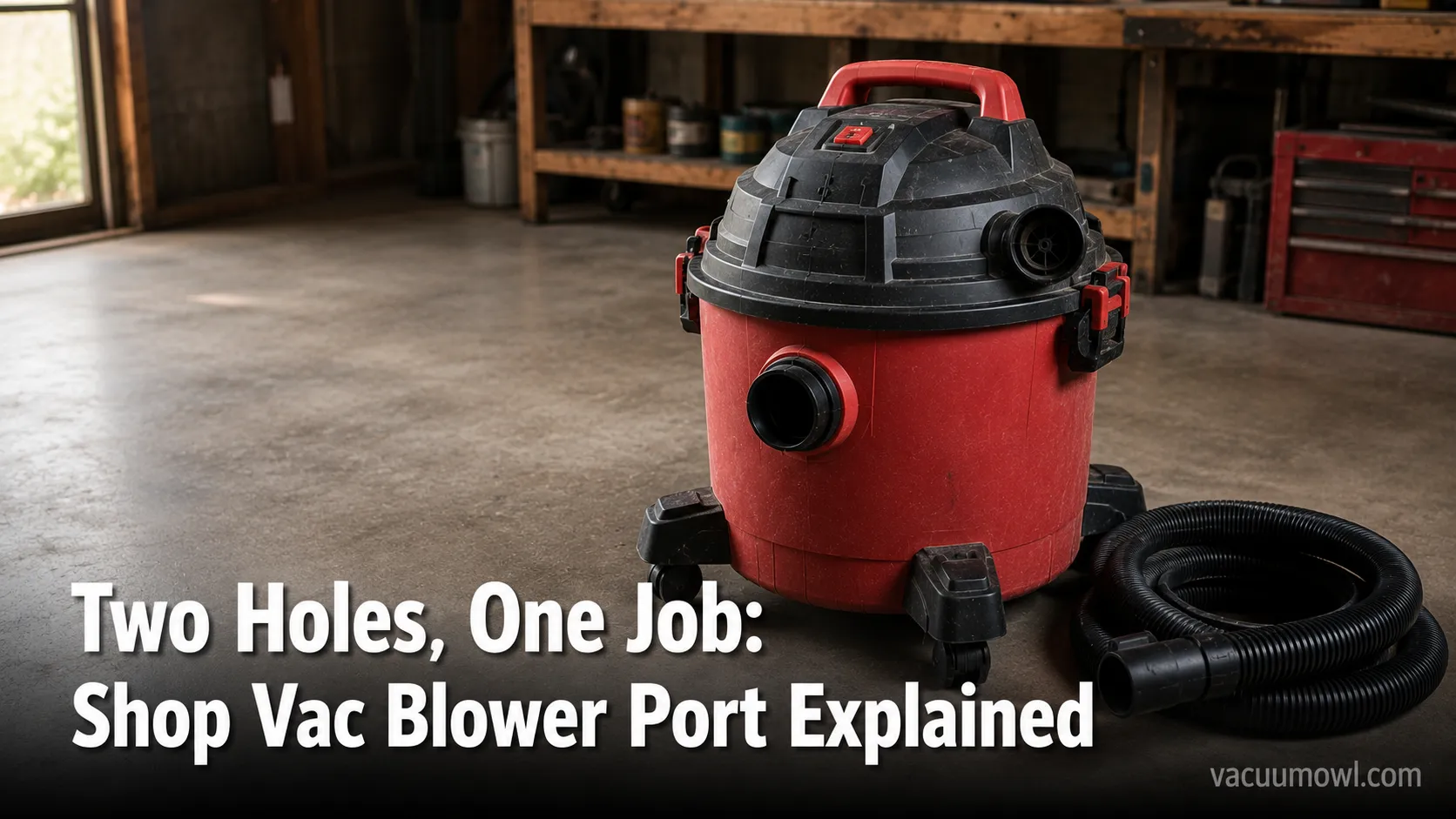
Two Holes, One Job: Shop Vac Blower Port Explained
See what the shop vac blower port does: the rear exhaust hole that makes your vac blow. Which hole to use, plus the drain-cap mix-up explained.
Vacuum Technology Editor
Dr. Naomi Tran is the vacuum technology editor at Vacuum Owl. She earned her Ph.D. in mechanical engineering with research on airflow and particulate filtration, and has spent her post-academic career translating that physics into writing for general audiences. Naomi owns every "what is" explainer on Vacuum Owl - what separates a robot from a stick vacuum, what true-HEPA actually filters, why "Pa" and "air watts" measure different things, how LiDAR and vSLAM let a robot map a room. She also fact-checks every suction, filtration, and spec claim in the Buying Guides and Brands articles, because that's where marketing numbers most often go unchallenged. Her test bench includes an anemometer and a particle counter she uses to sanity-check manufacturer airflow and filtration claims. Naomi lives in the US Bay Area, where the vacuum in her apartment is a cordless stick she chose on filtration, not suction headline numbers.
See what the shop vac blower port does: the rear exhaust hole that makes your vac blow. Which hole to use, plus the drain-cap mix-up explained.
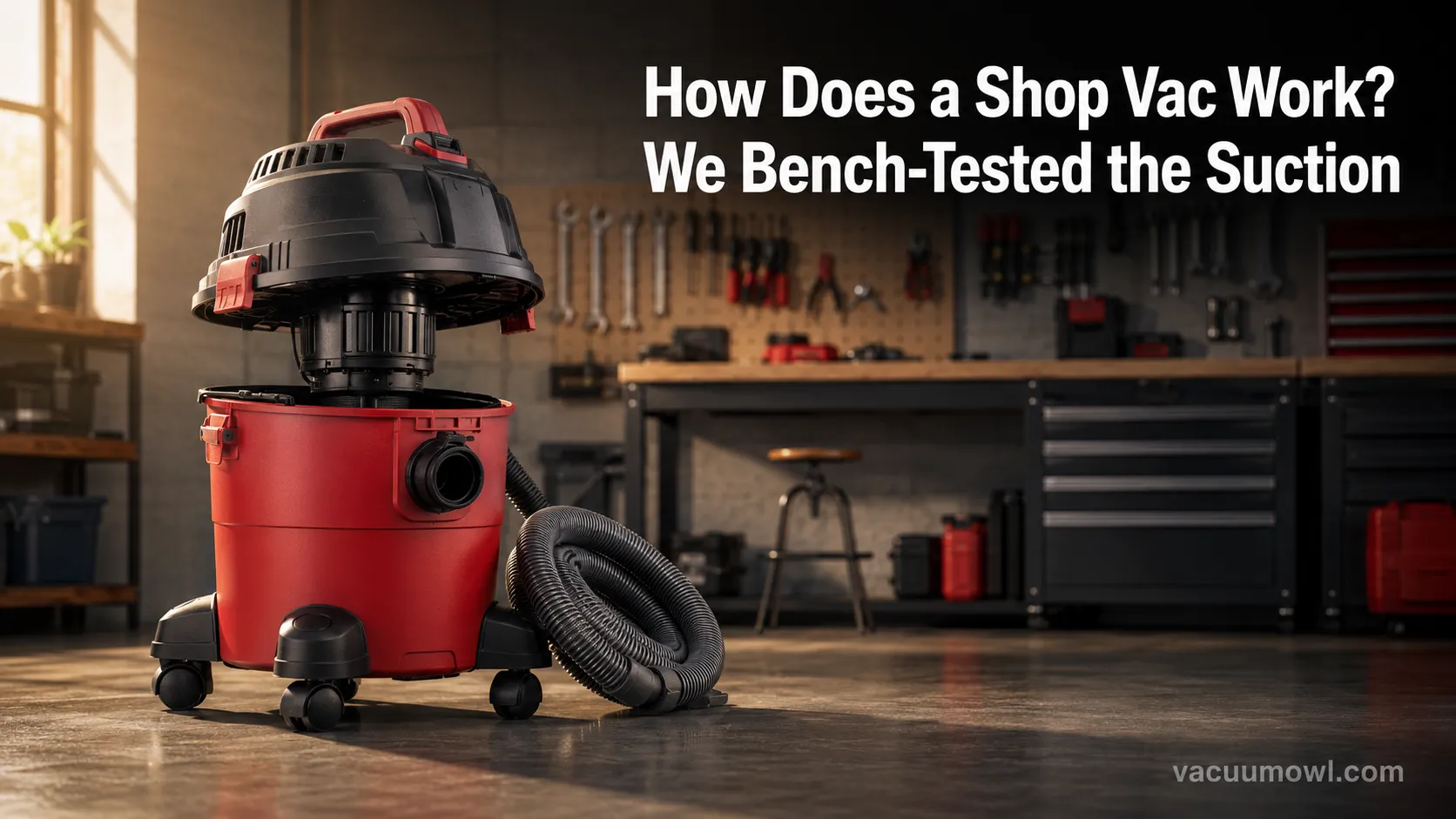
See how does a shop vac work: the motor and impeller create suction, gravity drops debris, the filter cleans the air, and a float valve stops overflow.
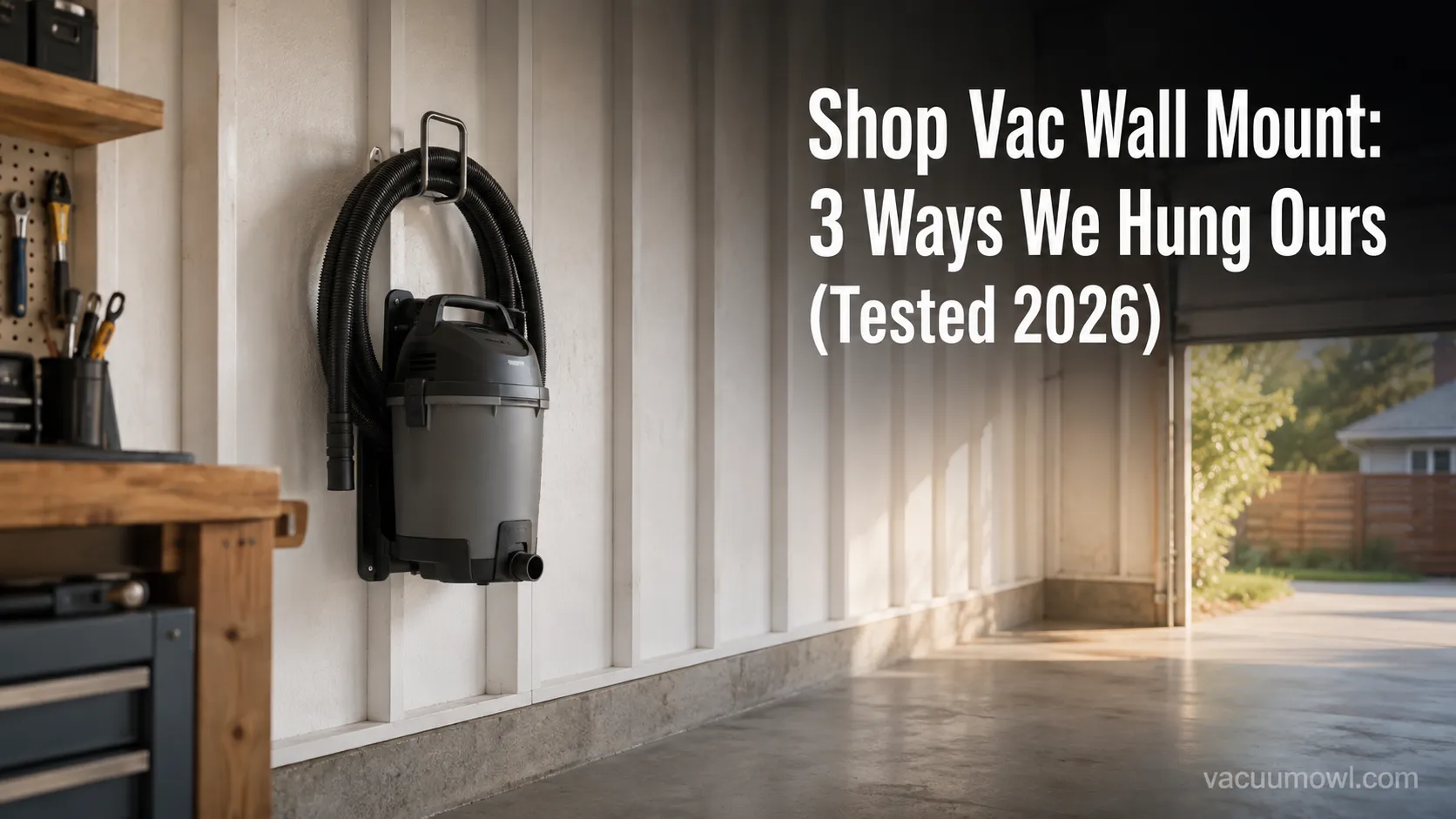
Shop vac wall mount, three tested ways: buy a hang-up model, DIY-bracket yours to studs, or add a retractable hose. Plus the water-weight mistake to avoid.
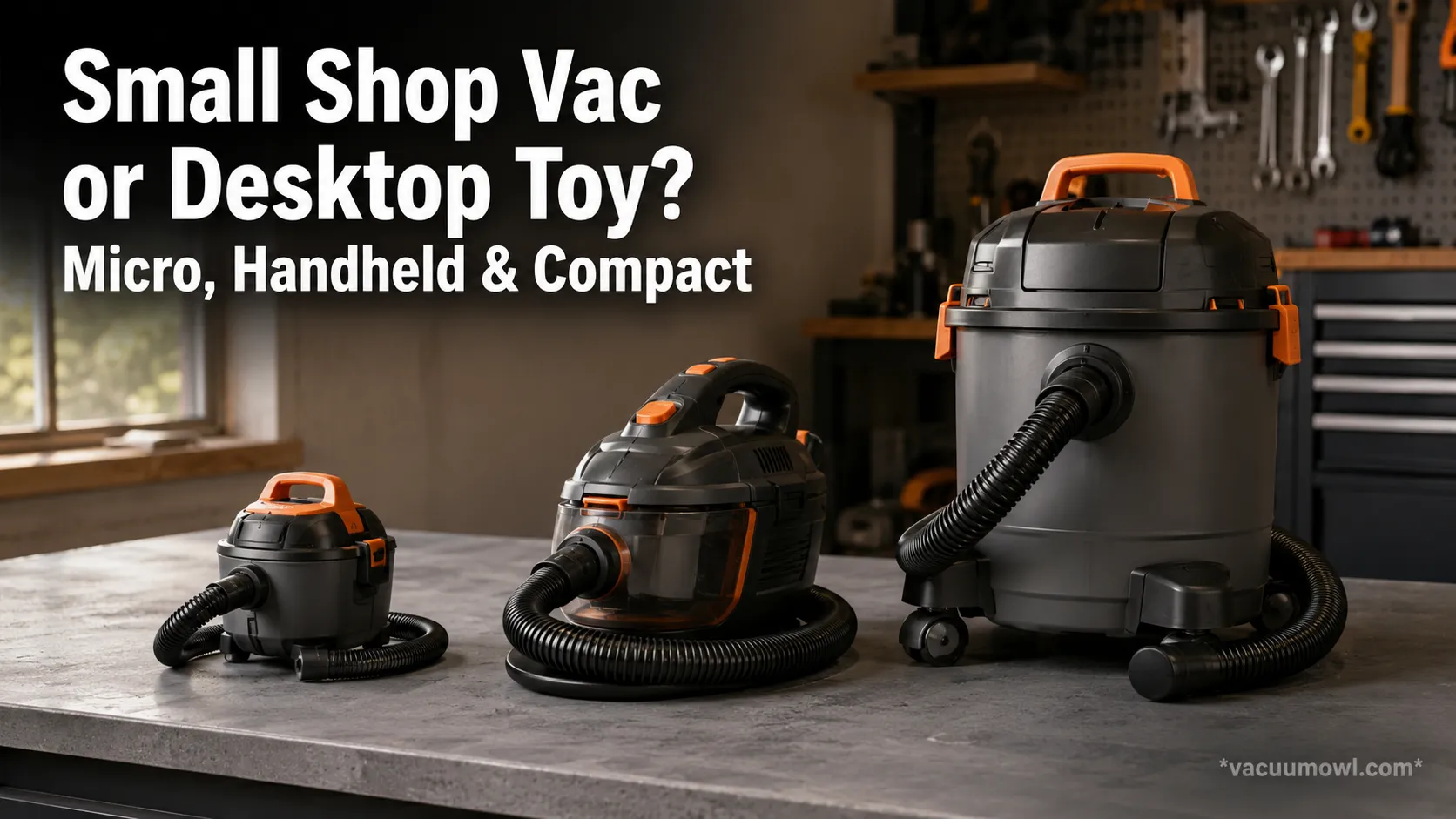
Compare the best small shop vac picks by size tier (micro, handheld, compact) with real dimensions, weight and suction, plus the novelty-toy trap to avoid.
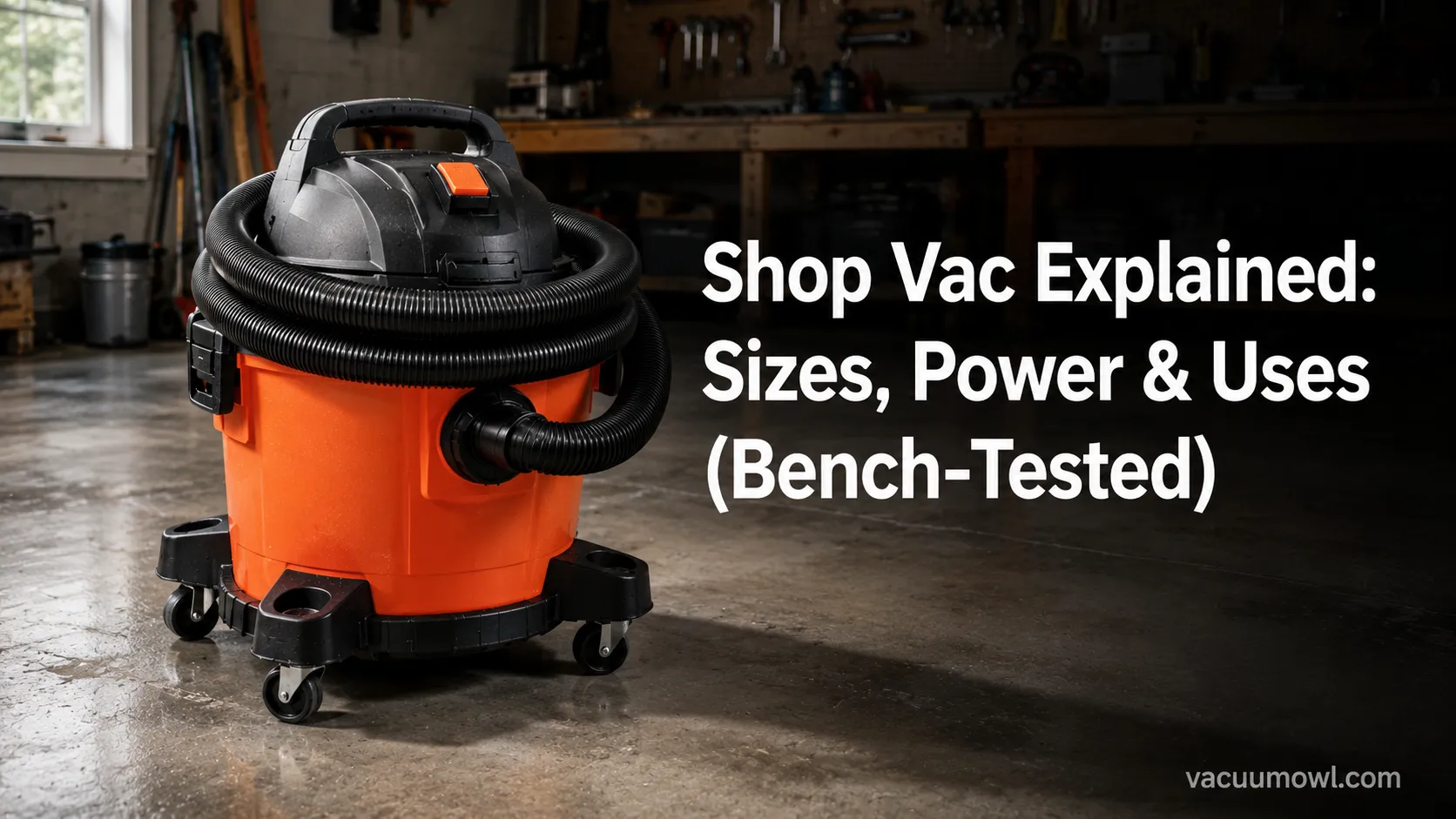
Learn what a shop vac (wet/dry vacuum) is, how the float valve works, what sizes and power specs matter, and who makes Shop-Vac now. Bench-tested basics.
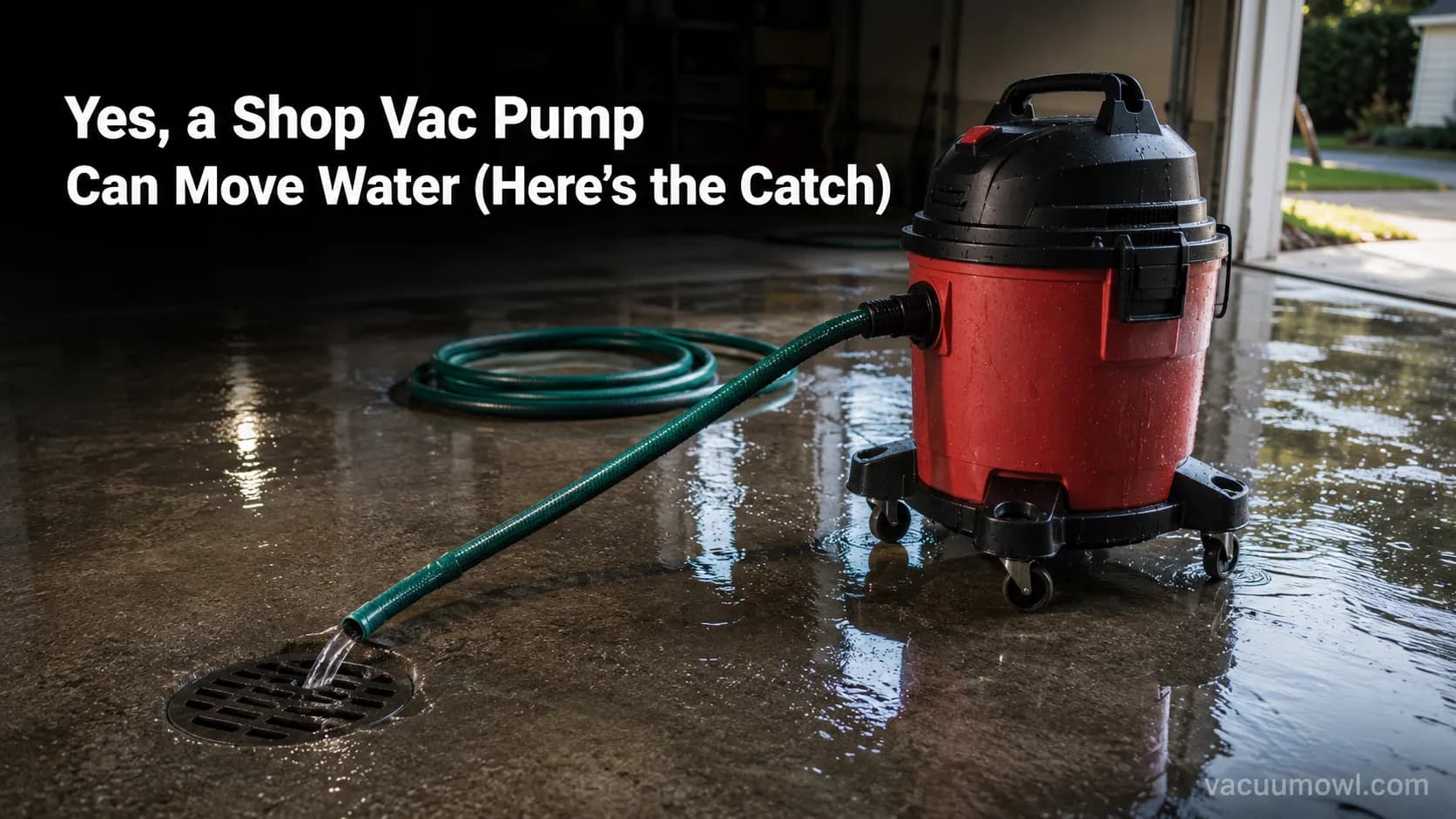
Yes. A shop vac pump moves water via a built-in pump vac or clip-on attachment. See GPM, max lift, brand fitment, and when a real submersible wins.
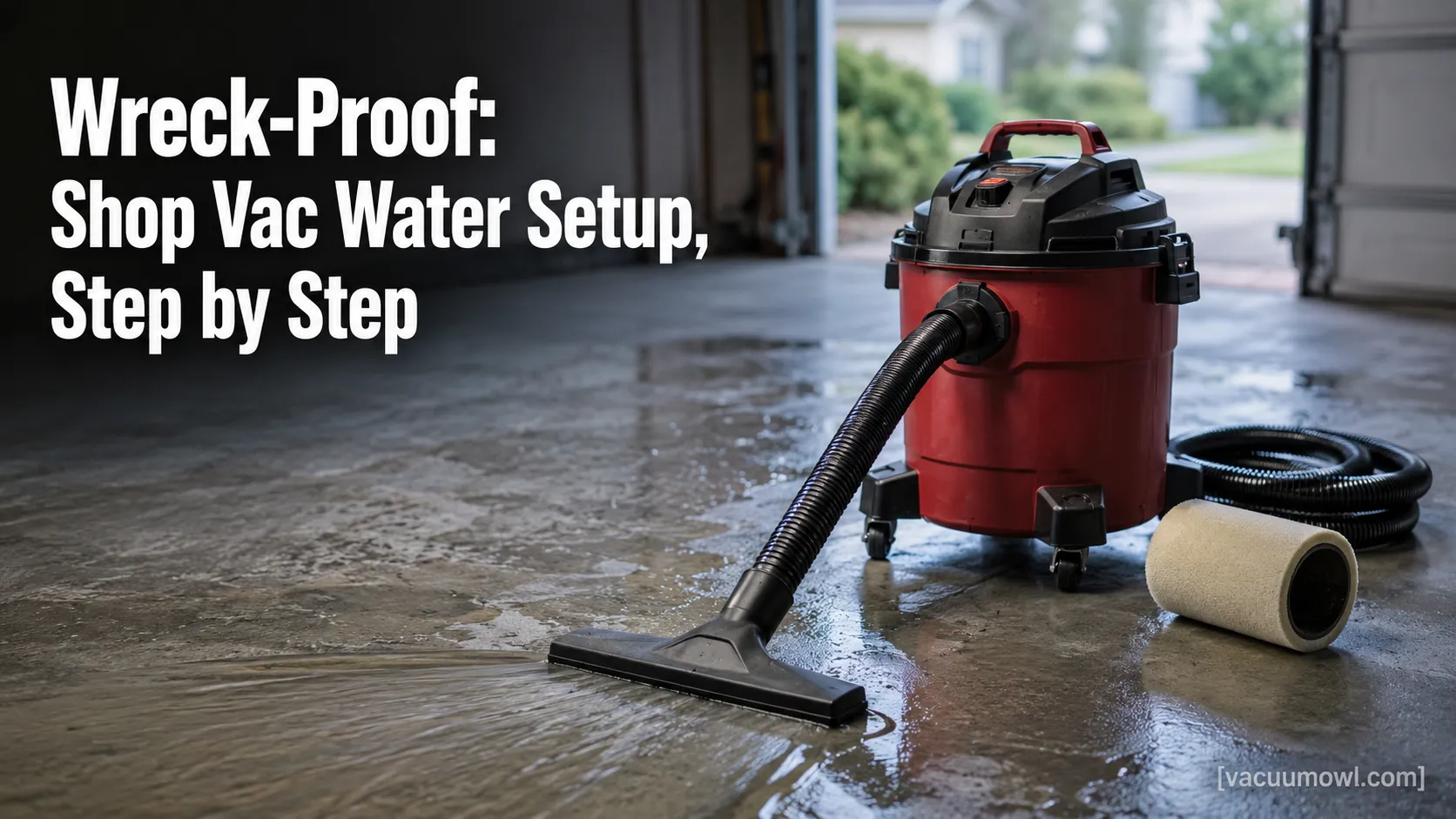
Set up a shop vac water pickup right: pull the paper filter, add a foam sleeve, mind the float, and dry within 48 hours to stop mold.
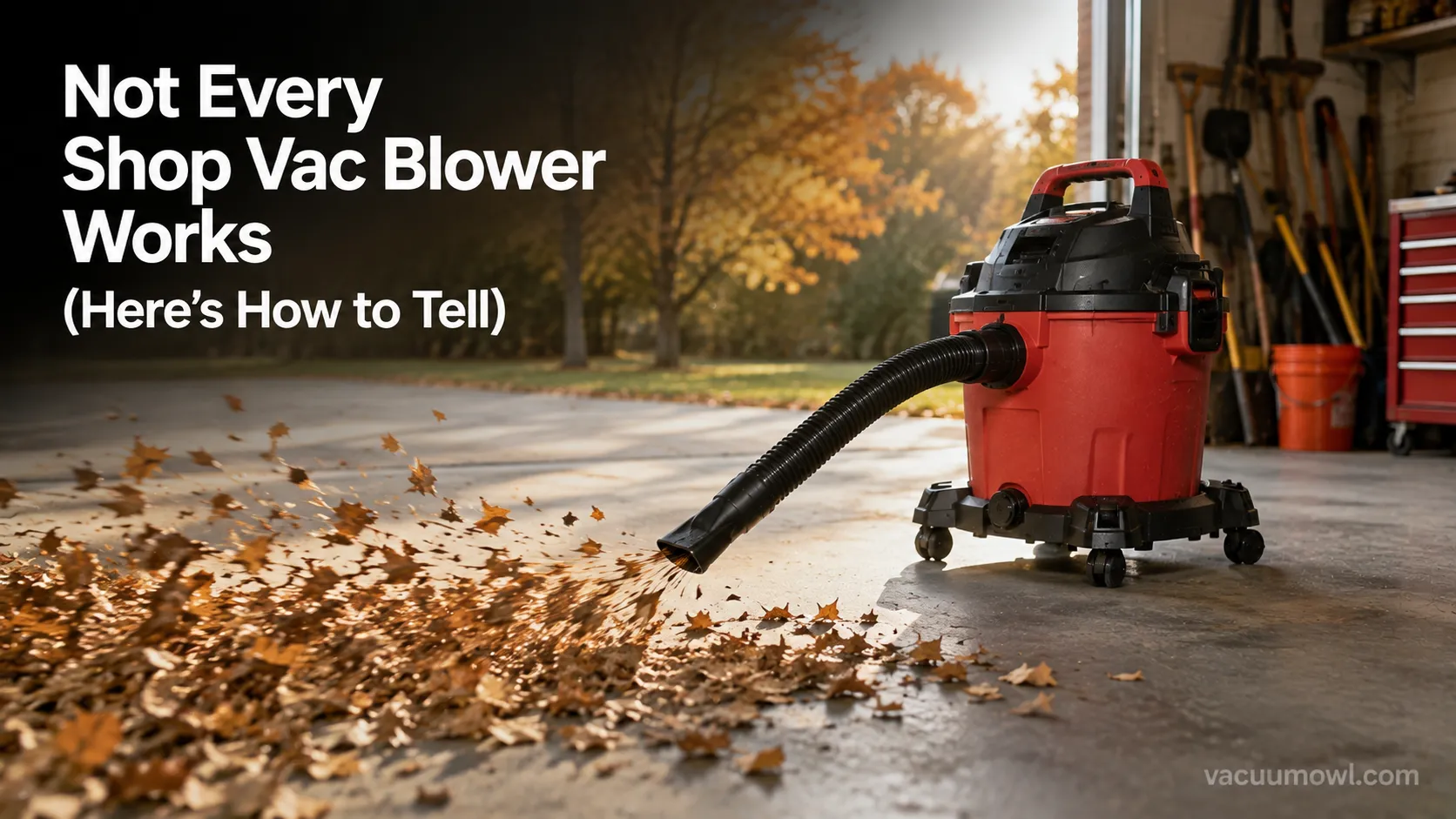
Yes: most wet/dry vacs double as a shop vac blower. See which models blow, how to switch the hose to the exhaust port, and when not to blow indoors.
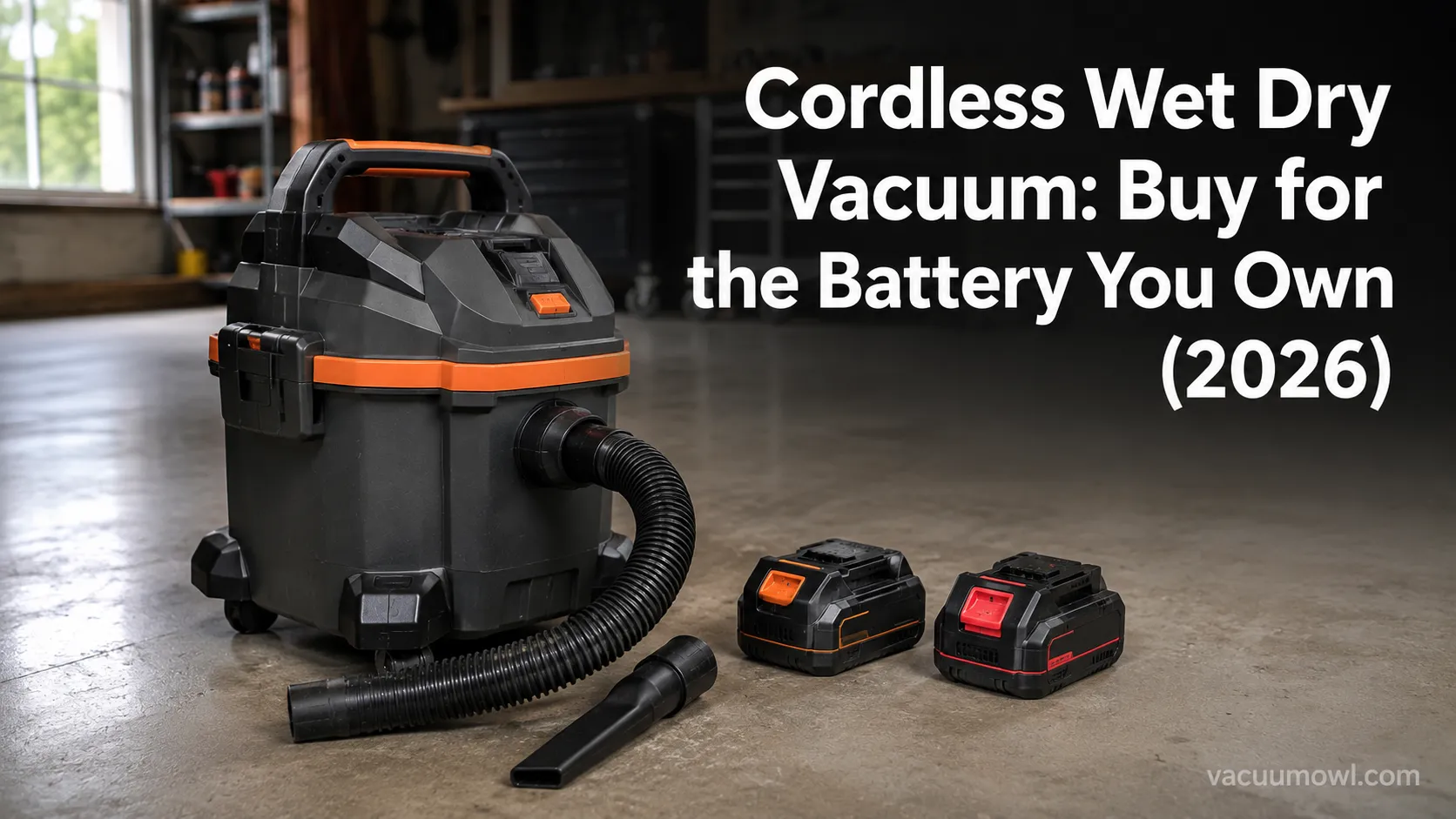
Compare cordless wet dry vacuum picks by battery platform (Ryobi, DeWalt, Milwaukee) with bench-tested runtime and water-lift data to match your tools.
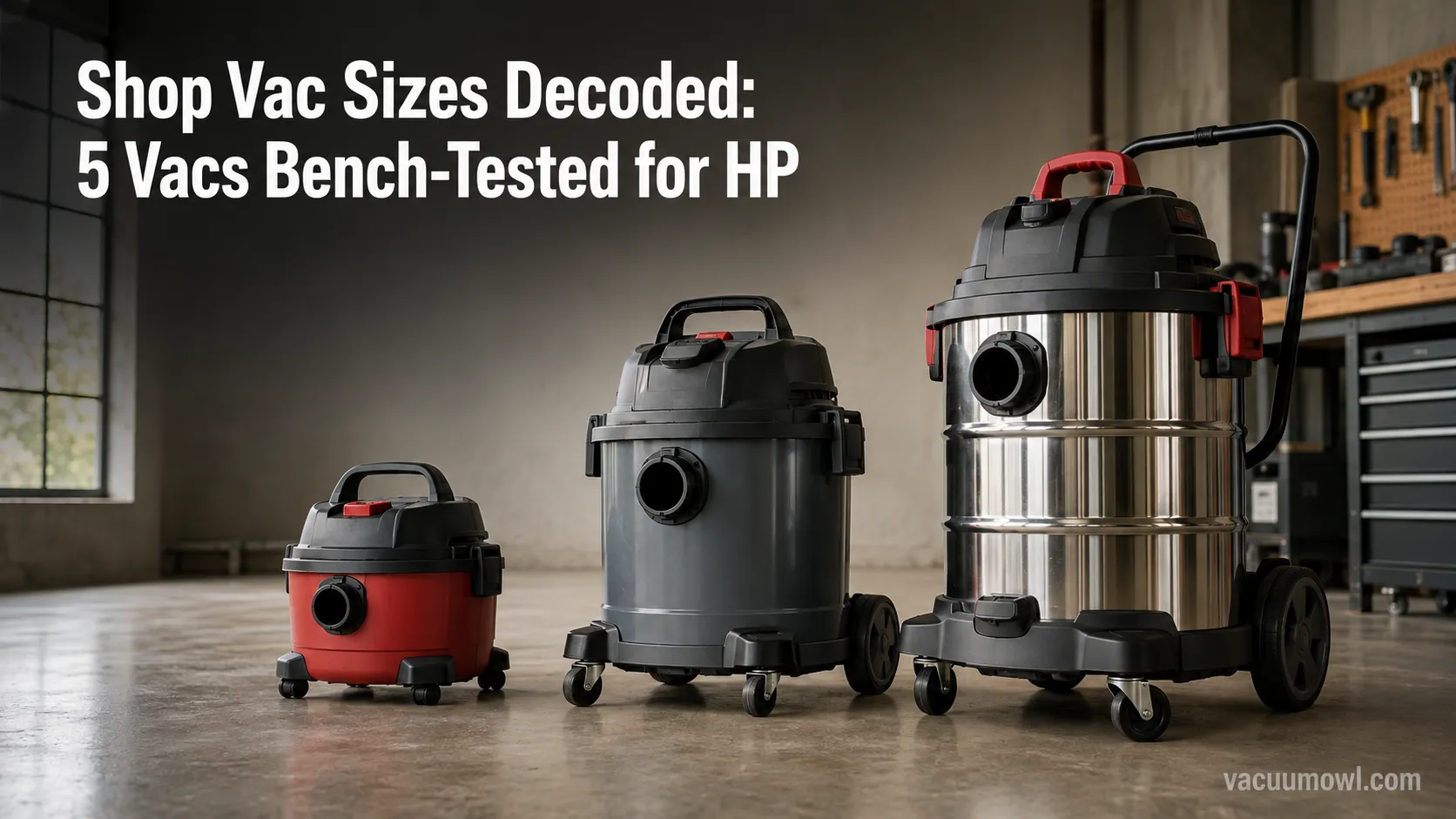
Decode shop vac sizes fast: gallon tiers (1–22+), why peak HP is marketing, and the CFM, air watts and water lift that actually pick your size.
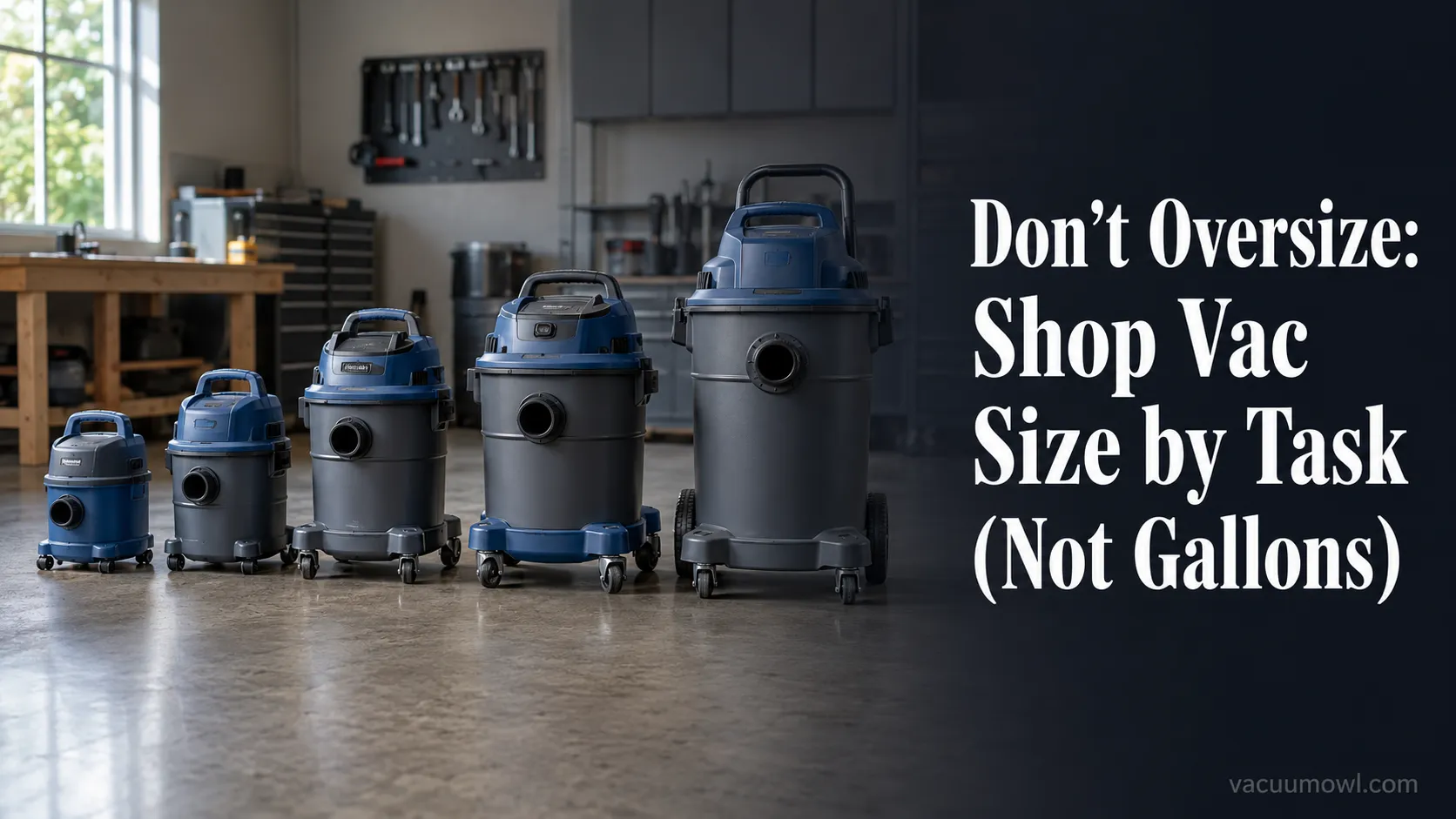
Match shop vac size to your task, not the room: gallon chart, real storage footprints, and CFM by tier for car, garage, and flood cleanup.
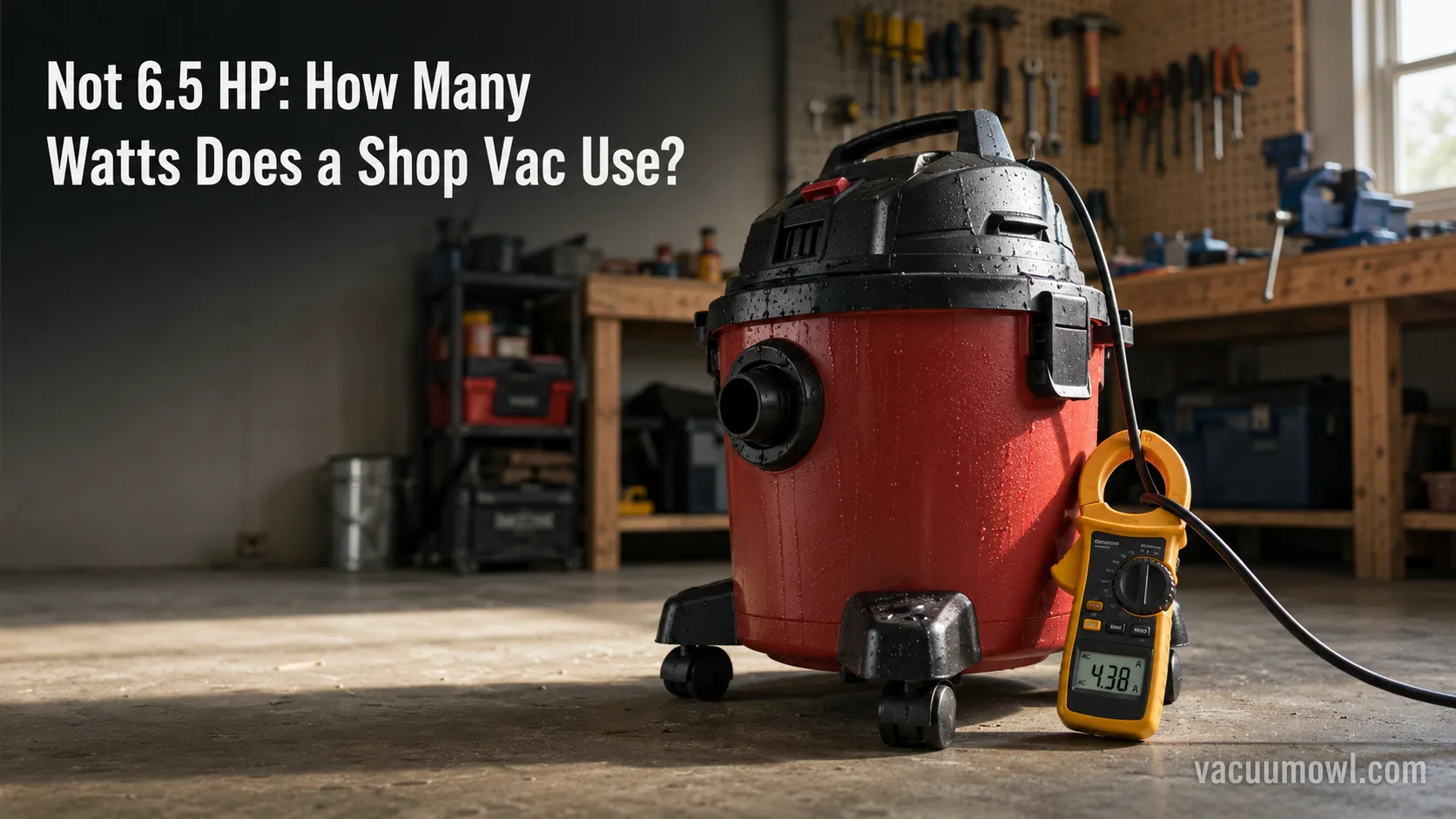
Find out how many watts does a shop vac use: most pull 8–12 amps (1,000–1,440 W), not the “Peak HP” label. Real draw by size and cost per hour.
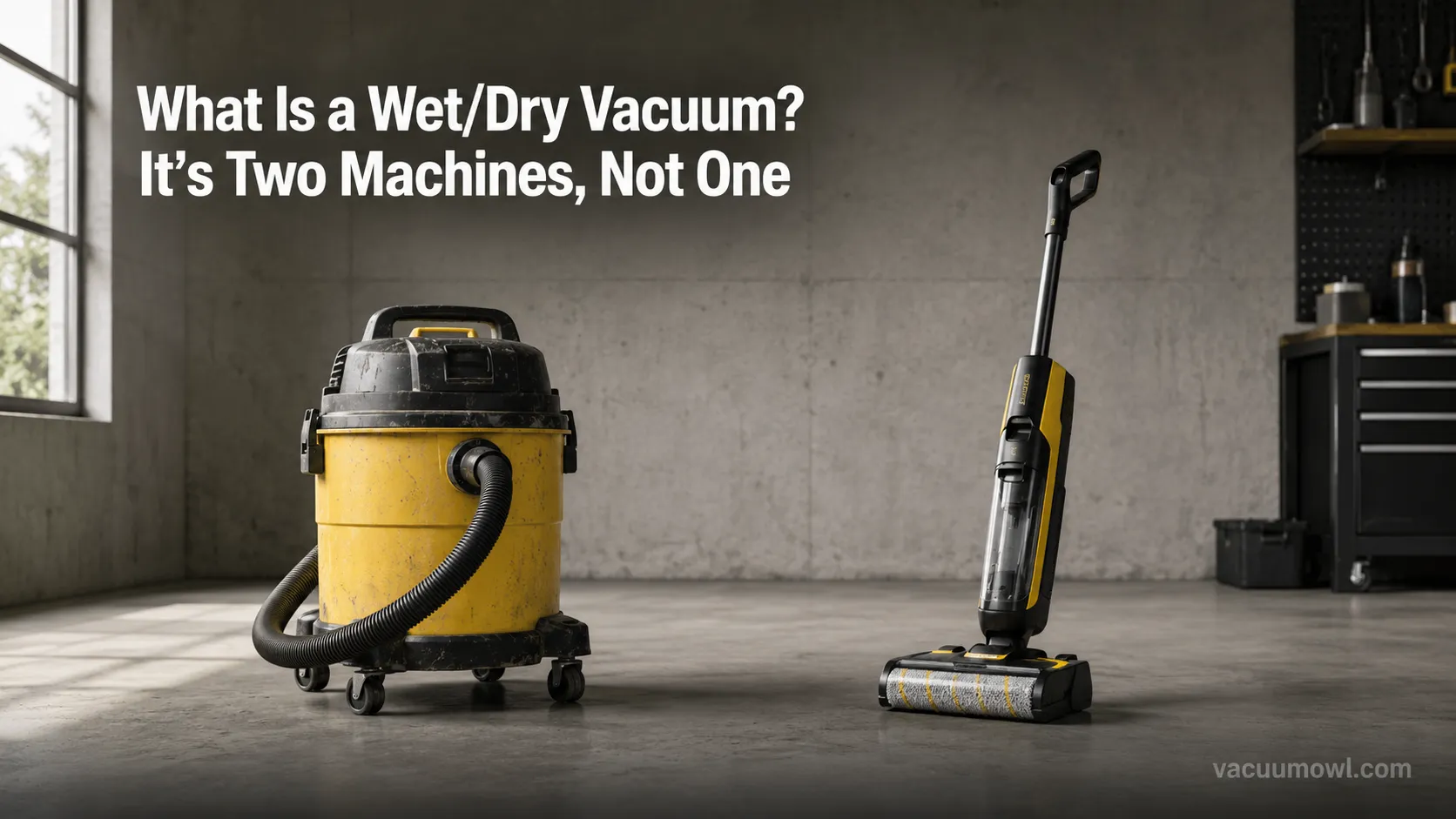
What is a wet dry vacuum? Two machines, really: a shop-style canister and a floor-washer mop. Compare both types, the wet-mode filter swap, and which to buy.
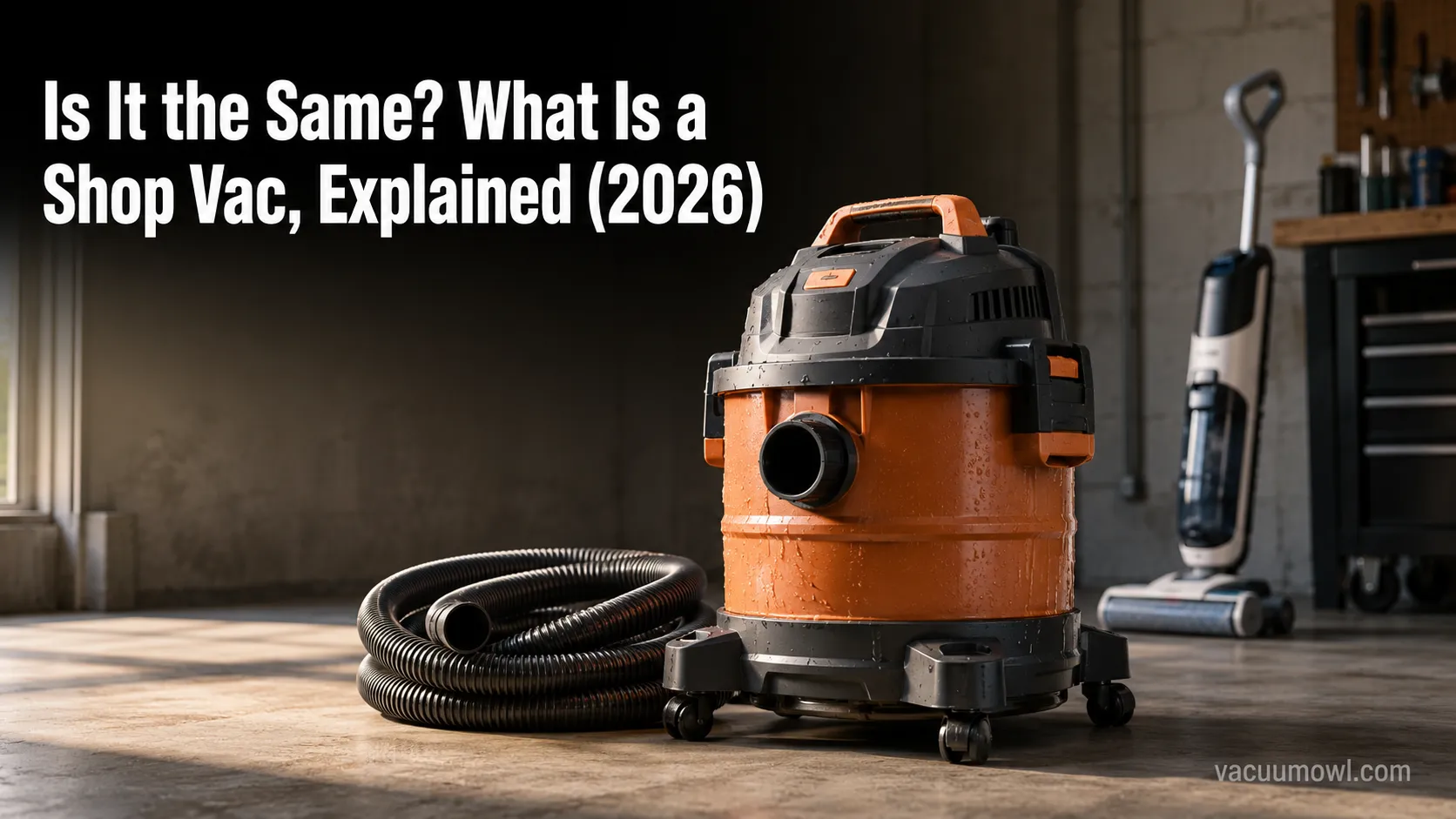
Yes. A shop vac is basically a wet/dry vacuum, with one 2026 exception. What is a shop vac, how it works, and how to tell if yours does wet.
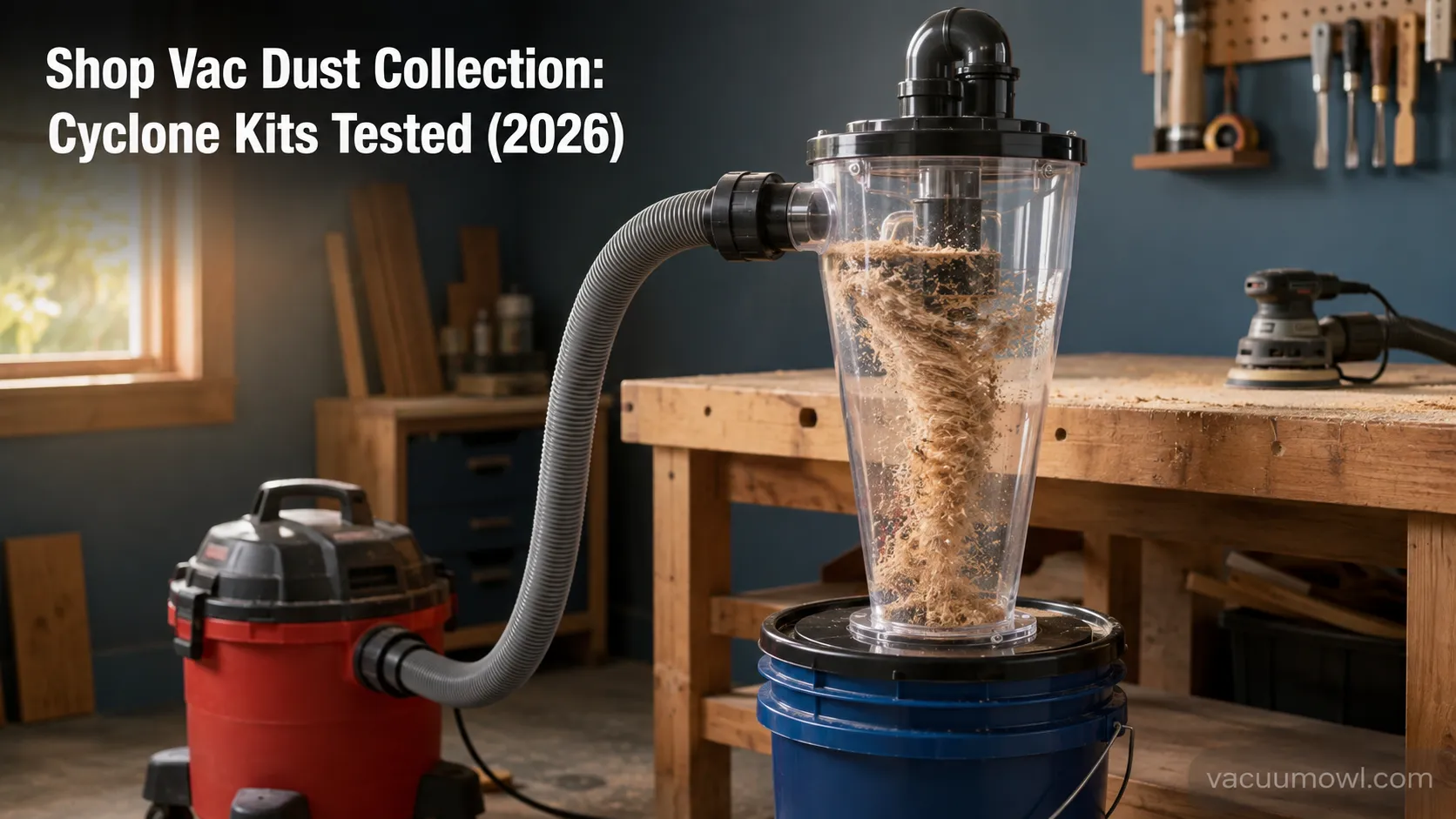
Build shop vac dust collection that keeps suction: add a cyclone separator, compare DIY bucket kits vs ready-made, and stop filter clogs for good.
Start from what the vacuum is doing, or tell us your model and the fault, and we’ll consider it for a guide.
Suggest a guide