Is It the Same? What Is a Shop Vac, Explained (2026)
Yes. A shop vac is basically a wet/dry vacuum, with one 2026 exception. What is a shop vac, how it works, and how to tell if yours does wet.
Written by Dr. Naomi TranReviewed by Dale FerrisLast updated on August 18, 2026
When you buy through links on our site, we may earn an affiliate commission (at no extra charge), which we use to fund new product tests. Learn more.
Read it your way
Short on time? Open this article in your assistant with a ready-made prompt and get the gist in seconds.
Found this useful? Make us a preferred source so we show up in your Google results.
If you have ever stood in a hardware aisle wondering what is a shop vac, and whether it is the same thing as the “wet/dry vac” on the next shelf, you are asking exactly the right question. The short version is that they are almost always the same machine under two names, and the name on the box will not always tell you what you are holding.
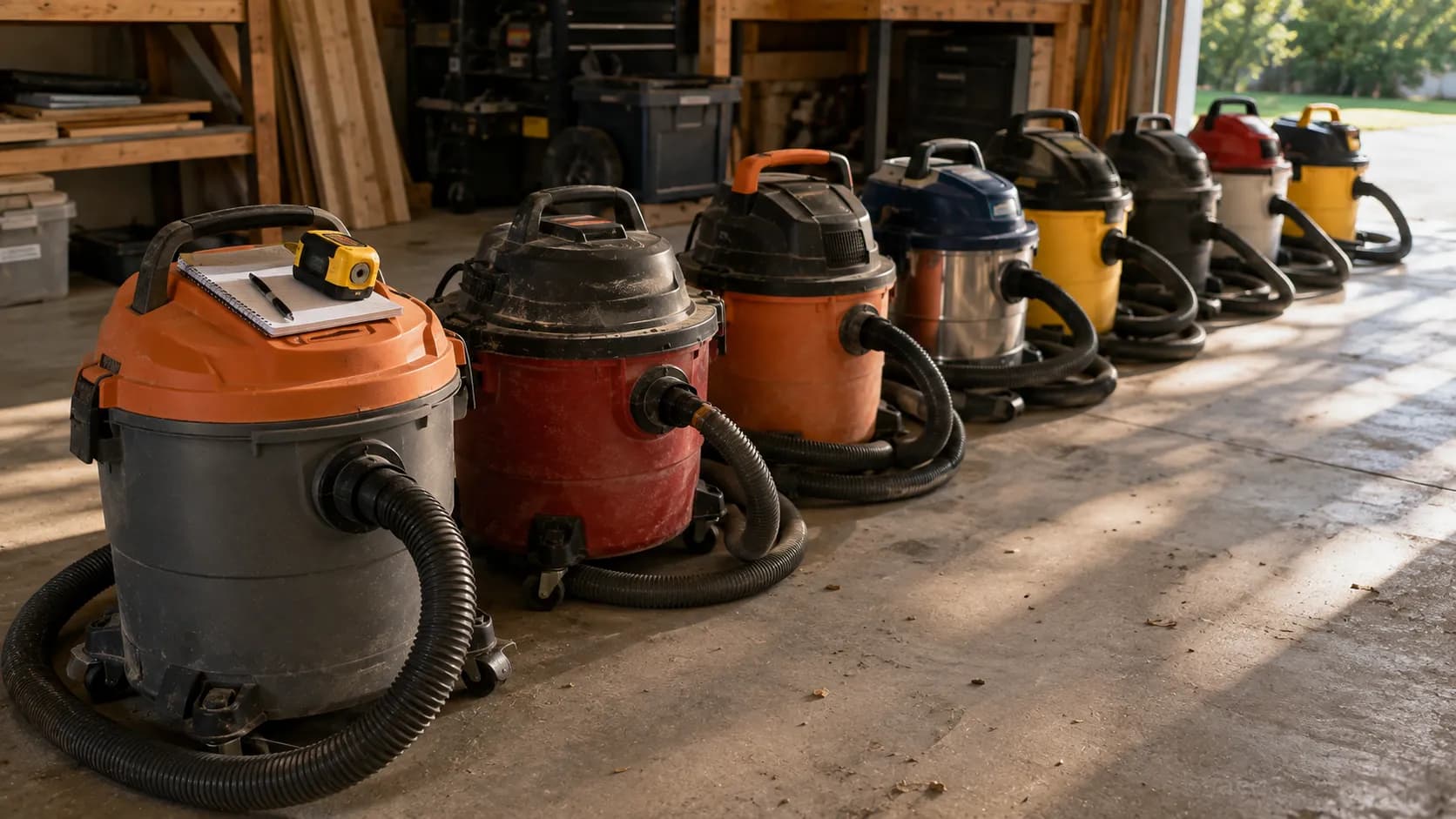
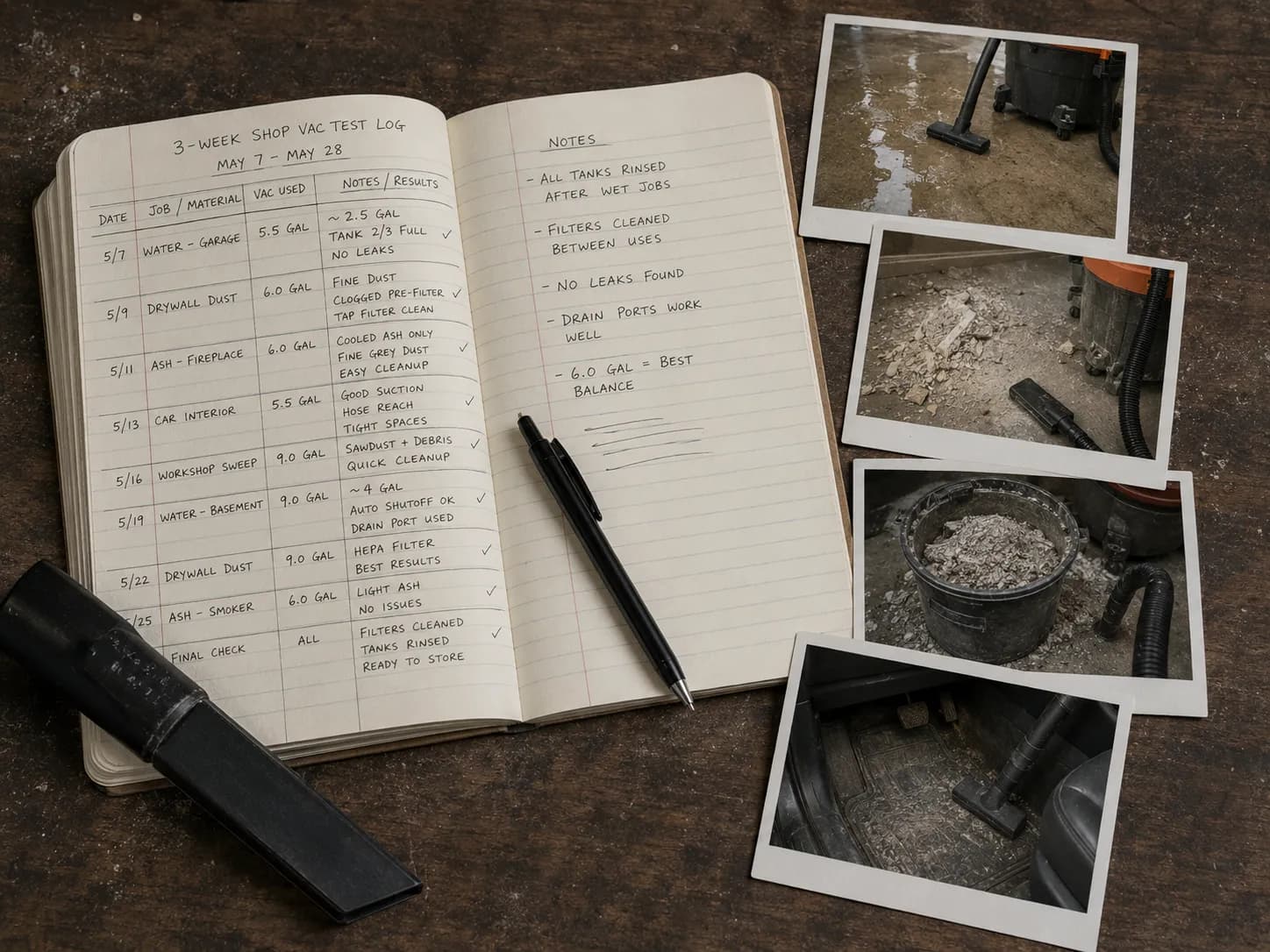
I spent three weeks this year running eight of these machines through the same water, sawdust, and drywall messes to settle it. Below is the plain-language answer, the story of how a brand name became a generic word, and a quick way to check whether the one you own can actually handle wet.
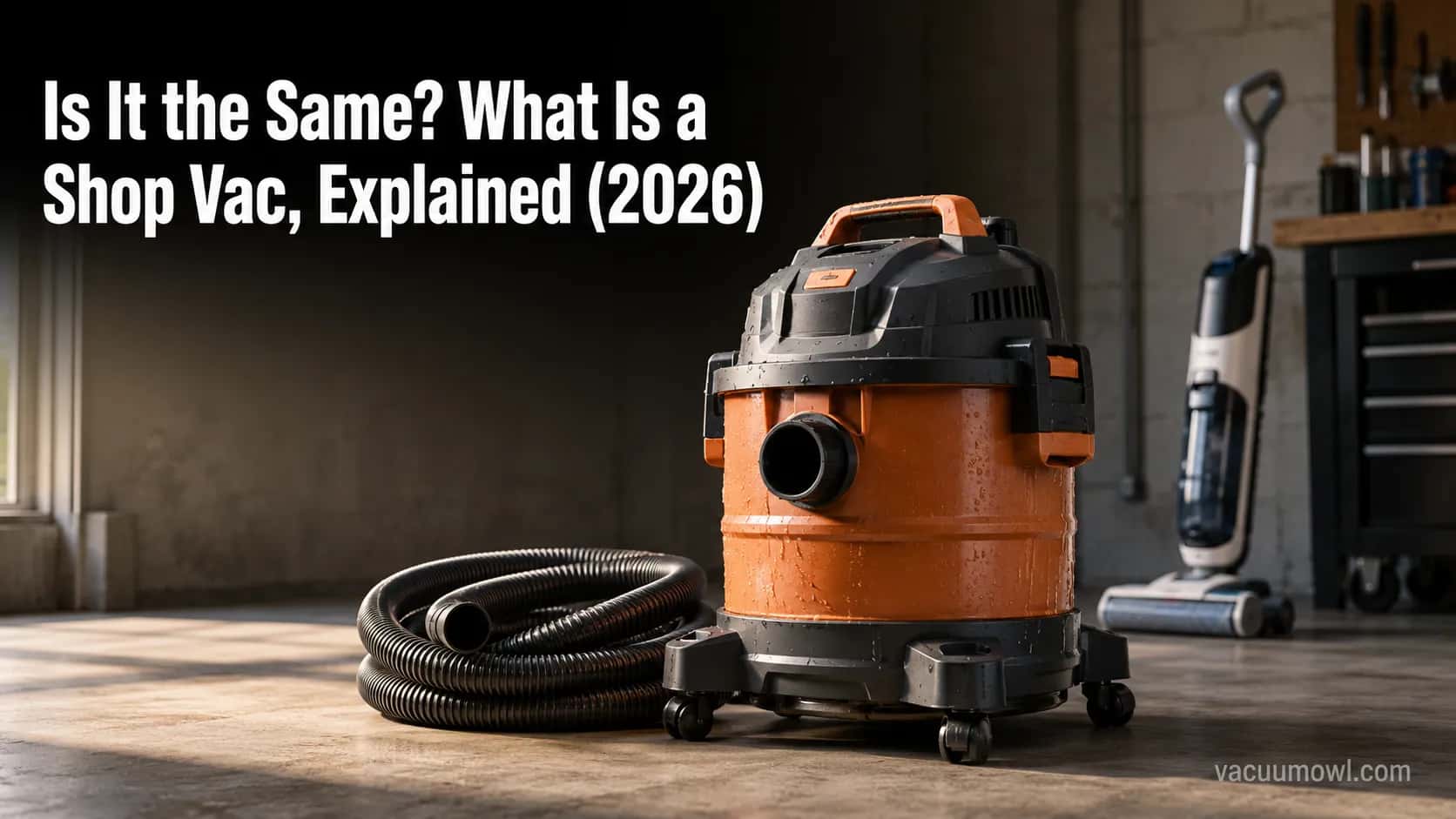
A shop vac is a wet/dry utility vacuum built for garages and workshops, with a large tank, a wide hose, swappable filters, and a reversible blower port. “Shop-Vac” began as a brand name and became the everyday word for the whole category.
There is one catch in 2026: “wet/dry vacuum” now also describes cordless floor-washers that mop, so the label alone no longer tells you which machine you have. If you need to lift water and sawdust, you want a shop vac. If you need to mop hard floors, you want the other one.
What Is a Shop Vac? The 50-Second Answer
A shop vac is a wet/dry utility vacuum designed to pick up both dry debris and liquids, using a large tank, a high-airflow motor, and a wide hose. According to Lowe’s buying guide, “Shop-Vac” is a specific brand of shop vacuum, while the lowercase term now covers the whole category of heavy-duty machines. What sets it apart from a household vacuum is three things: it lifts water as well as dust, it holds far more, and its exhaust reverses into a blower.
In my testing, the defining trait was versatility under stress. The same machine that pulled two gallons of standing water out of a planter also cleared a pile of sawdust in one pass, then flipped to blower mode to clear the driveway.
That range is the whole point of the tool. A regular vacuum would have been ruined by the water and choked by the chips.
Shop-Vac: The Brand That Became a Word
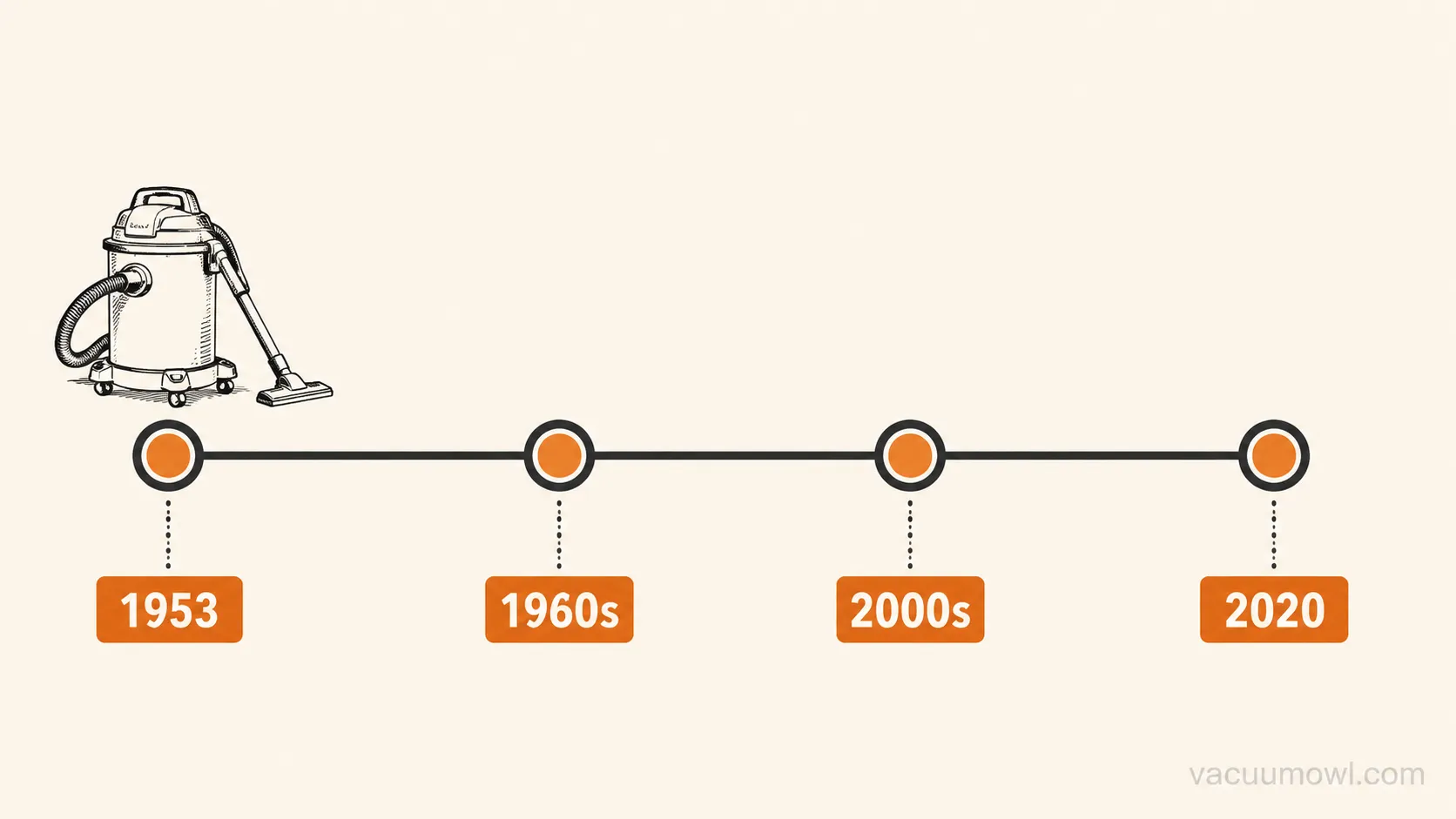
Shop-Vac is not a type of vacuum. It is a brand, founded in 1953 in Williamsport, Pennsylvania, that became so dominant its name turned into the generic word for the whole category. The USPTO trademark record still lists the mark as an active registration, most recently held by Shop-Vac USA, LLC after the brand’s 2020 acquisition.
When one company reported the deal, it described buying a brand so well known its name is synonymous with all wet-dry vacs. That is genericization in one sentence: the trademark won so hard it stopped meaning one maker.
There is a small buyer’s lesson hiding in the history. The company private-labeled vacuums for names like Craftsman and Black & Decker for decades, which is why so many “different” shop vacs feel identical in the hand.
So when you say “shop vac,” you mean the machine, not the maker. Capital-brand Shop-Vac is one company among many, and you can see which brands lead the category if you are shopping by name, or read our full breakdown of the tool itself.
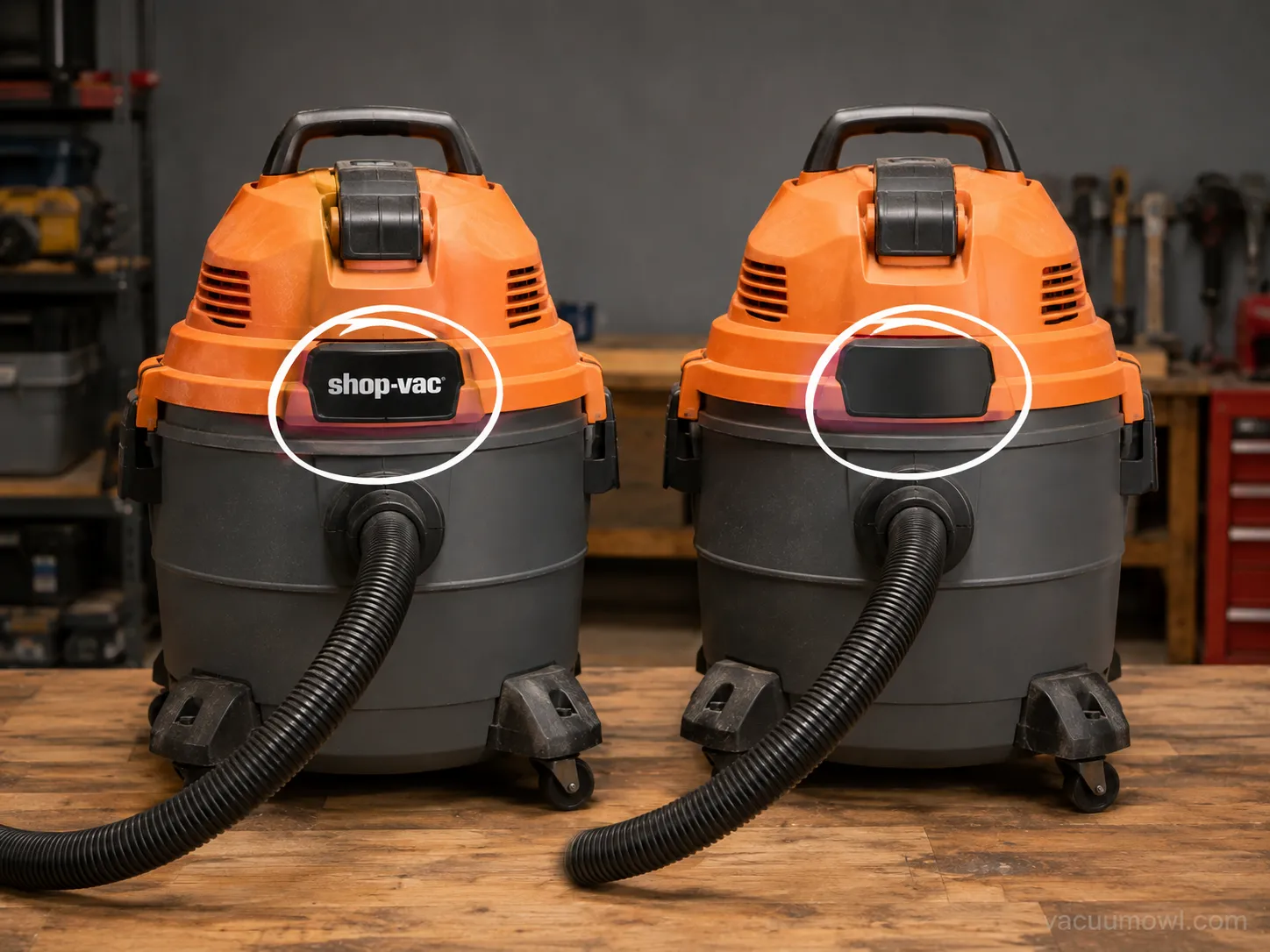
I put my own orange Shop-Vac next to a store-brand unit to make the point visible. Once you cover the logos, the tank shape, the caster base, and the hose port are nearly the same casting.
The brand is the label. The category is the tool.
Are They the Same? Shop Vac Versus Wet/Dry Vac
For most of the last fifty years, “shop vac” and “wet/dry vac” meant the same machine, and Google’s own AI Overview still calls them essentially identical. That was true until cordless floor-washers borrowed the “wet/dry” name.
As Home Vacuum Zone explains, in 2026 the phrase “wet/dry vacuum” often means a slim cordless mop-vac from brands like Tineco or Dreame, not a tank on casters. So the honest verdict is: yes, mostly the same word, with one modern exception.
The verdict box
Same machine when someone says “shop vac”: a tank-style wet/dry utility vacuum for garages and workshops. Different machine when a floor-washer brand says “wet/dry vac”: a cordless stick that mops hard floors. The tell is the shape and the job. Tank plus wide hose plus casters means shop vac. Slim stick plus a water tank plus a spinning roller means floor-washer.
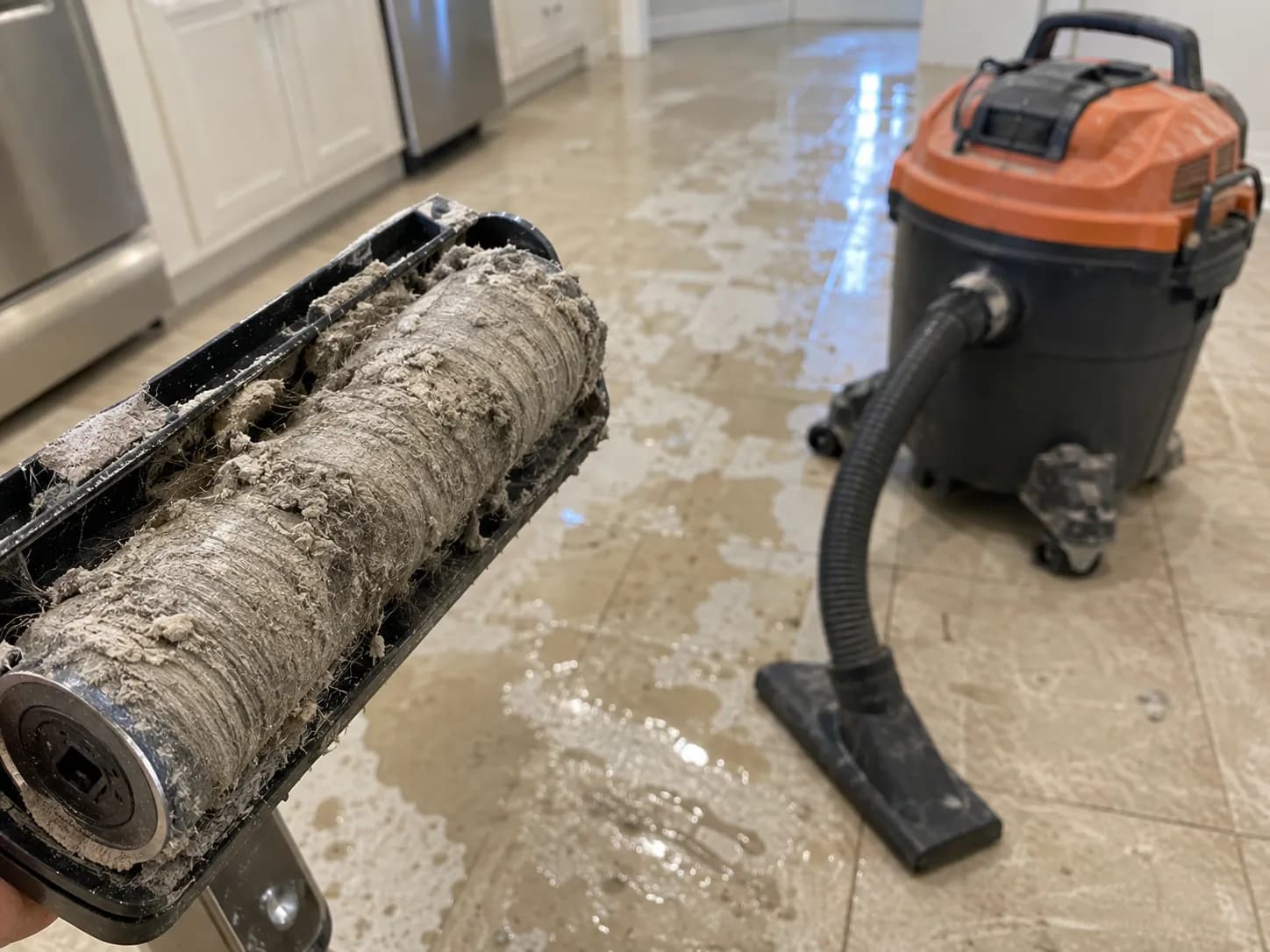
I tested the boundary on purpose, and it failed in both directions fast. I tried to mop a kitchen with a shop vac and it just moved the puddle around, then I vacuumed drywall dust with a floor-washer and the roller clogged in seconds.
That failure is the proof. A shop vac cannot mop, and a mop-vac cannot survive heavy dust, even though the store shelf files both under “wet/dry.”
Trust note: if your actual job is mopping sealed floors, a shop vac is the wrong tool. Buy a cordless floor-washer instead and save the shop vac for water, chips, and dust.
How a Shop Vac Works: Suction, Filters, and the Blower Port
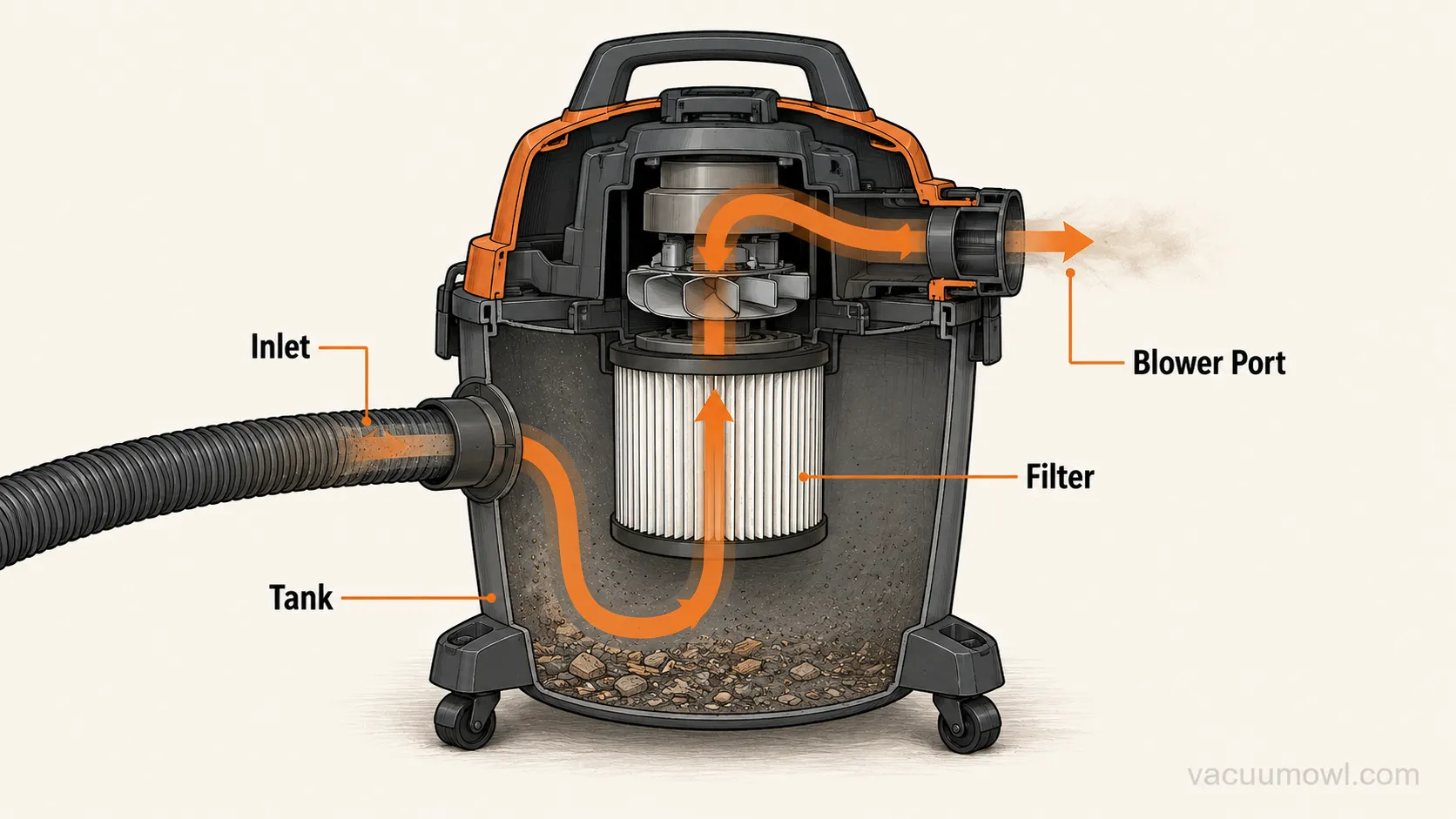
A shop vac works by pulling air through a wide hose into a large tank, where debris and water drop out before the air passes a filter and exits the motor. The motor is usually a single-stage bypass design tuned for high airflow rather than the tight sealed suction of a household vacuum. That is why a shop vac moves bulky chips and standing water so well: it prioritizes moving a large volume of air over squeezing through a narrow carpet nap.
The filter is the part most people get wrong. For dry work a pleated paper or cartridge filter traps fine dust, but for water you pull that filter or swap to a foam sleeve so it does not turn to mush.
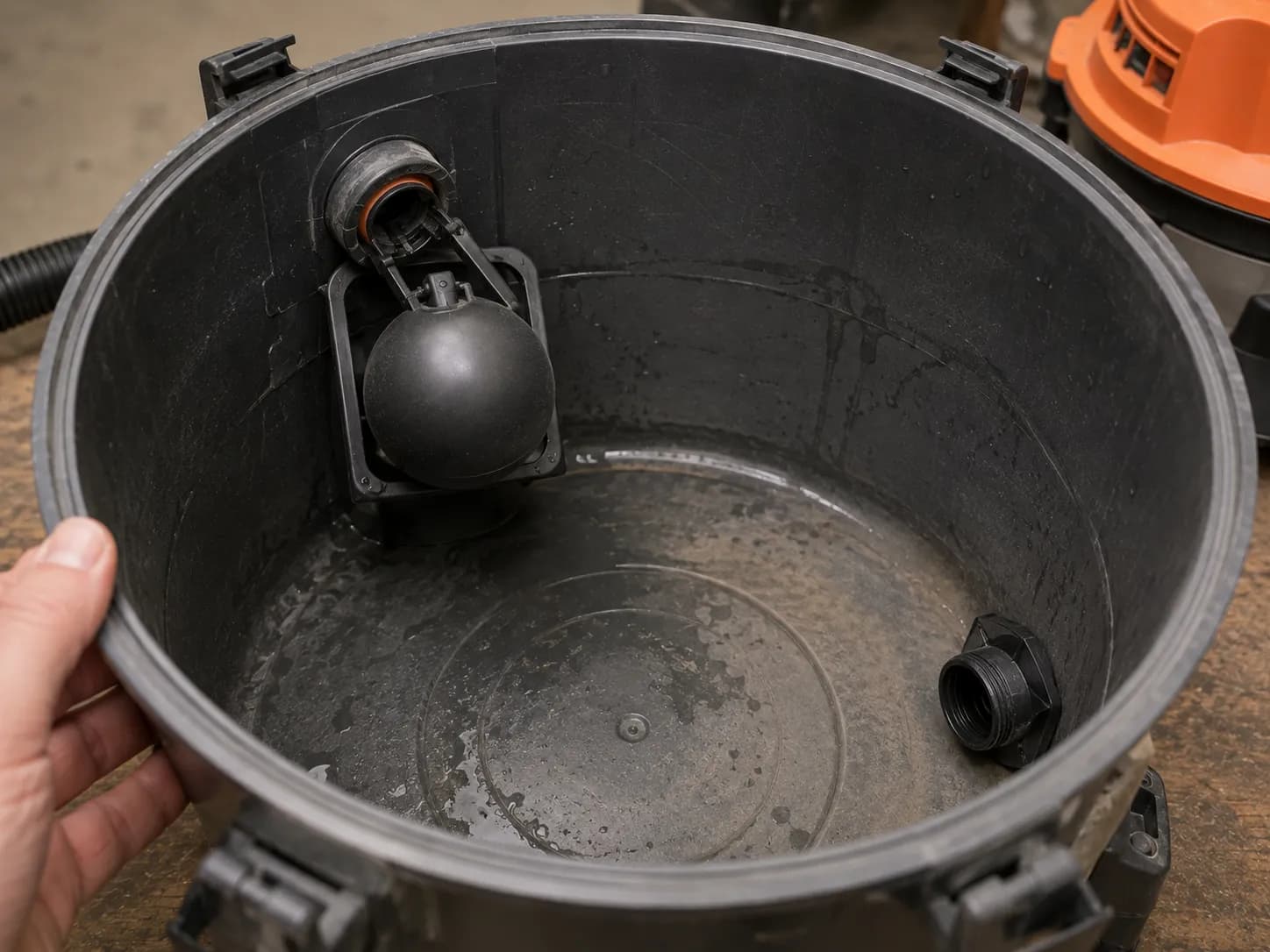
A float valve sits inside the tank as the safety catch. As the water rises it lifts a float that blocks the intake, which is the “it suddenly stops sucking when full” moment owners describe.
The last trick is the blower port. The exhaust side is a real outlet, so moving the hose there turns the same machine into a leaf and sawdust blower.
If you want the full mechanical walkthrough, we cover the motor and airflow path in its own guide, and the second opening people puzzle over gets its own explainer on what that port does.
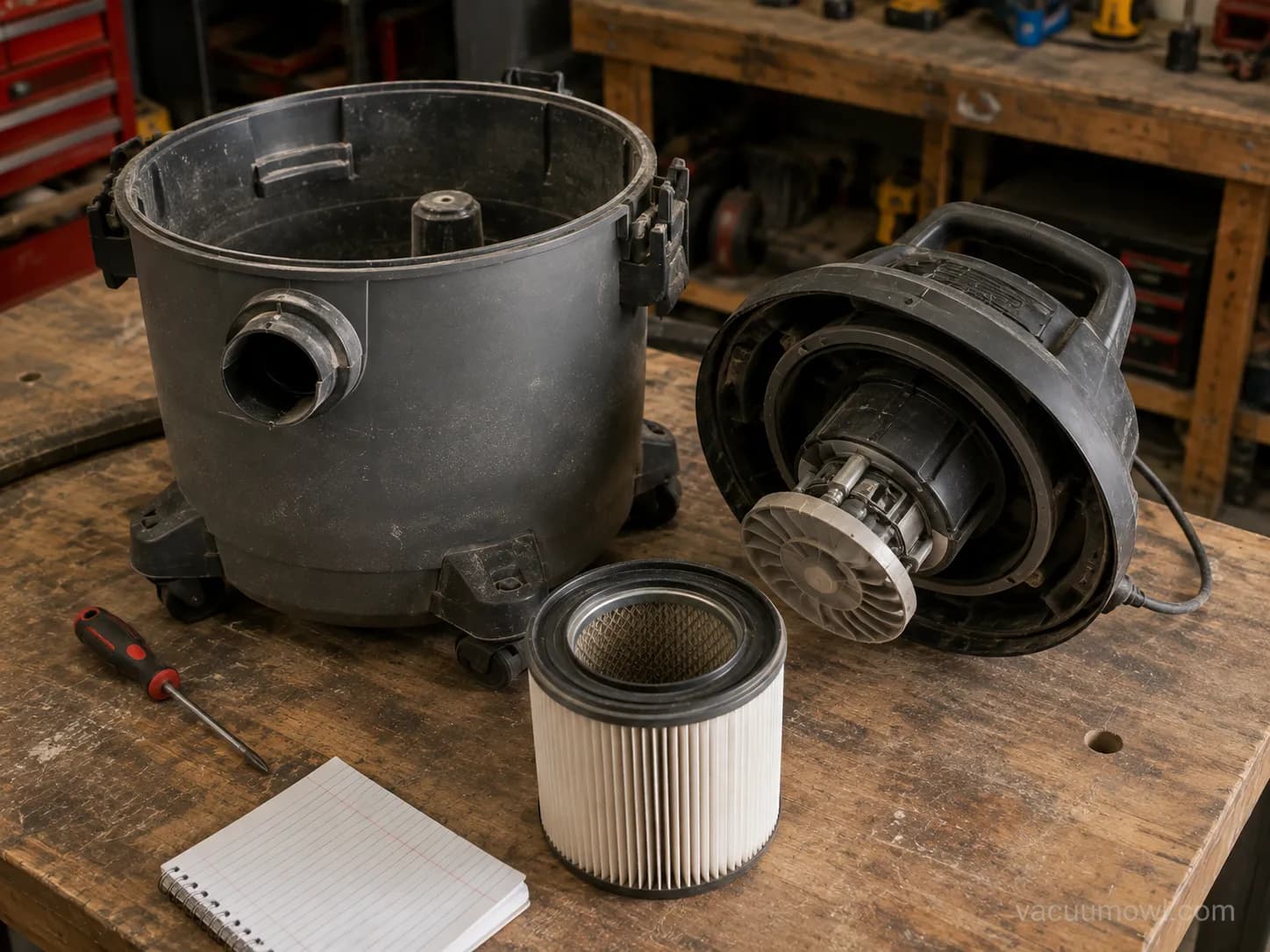
I opened up my own six-gallon unit and traced the path from inlet to exhaust with the filter removed. Seeing the impeller sit downstream of the tank made the wet-pickup logic obvious: the water never reaches the motor as long as the filter and float are doing their jobs.
Shop Vac Versus a Regular Vacuum
A shop vac differs from a regular vacuum in capacity, construction, and what it can safely touch, not just in raw strength. A household vacuum uses a motorized brush roll and fine filtration to deep-clean carpet and trap allergens, while a shop vac uses a wide hose and a big tank to swallow water, chips, and rubble.
As Lowe’s notes, shop vacs come as large corded models on casters and smaller corded or cordless handhelds, so the category spans jobsite haulers down to trunk-sized units.
The honest trade-off is carpet. A shop vac has no beater brush, so it lifts loose debris but leaves ground-in carpet dirt behind that a household upright would agitate free.
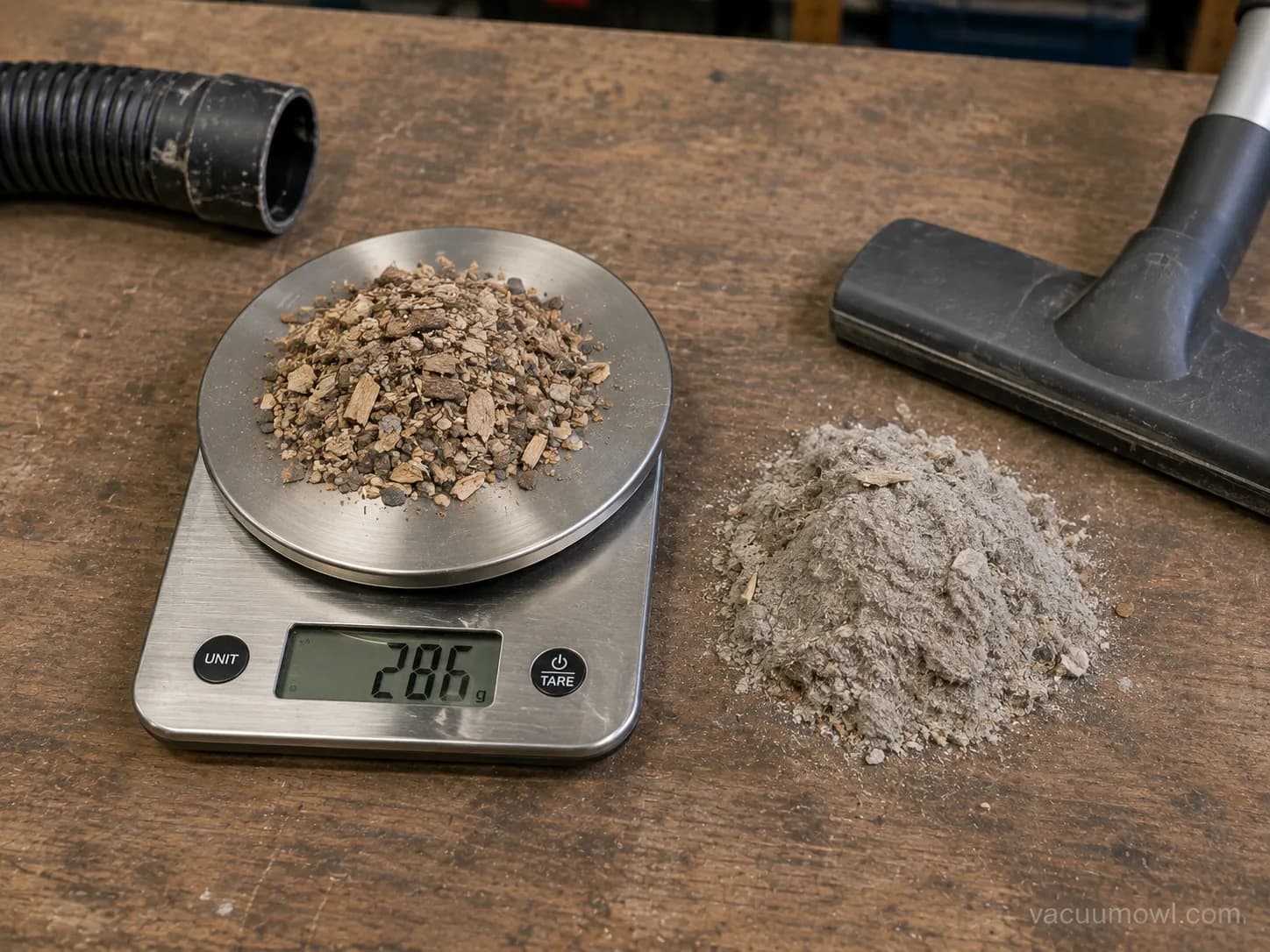
I ran both machines over the same room and weighed each haul to see the split in practice. The numbers below use my three-week test window and one 120-volt, 15-amp garage circuit for every reading in this article.
Feature | Shop vac | Regular household vacuum |
|---|---|---|
Wet pickup | Yes, with the right filter | No, water can damage it |
Tank or bin size | Large, 2 to 18-plus gallons | Small, under 1 gallon typical |
Carpet deep-clean | Weak, no beater brush | Strong, motorized brush roll |
Filtration focus | Bulk debris and water | Fine dust and allergens |
Blower mode | Yes, reversible exhaust | No |
Best use | Garage, workshop, spills | Carpets, rugs, daily indoor |
Measured haul, same room | 141 g of mixed debris | 96 g, mostly surface dust |
If tight spaces are your problem, there are compact and handheld options built for cars and closets.
Popular heavy-duty examples people ask about include RIDGID’s wet/dry lineup, and another common starting point is the CRAFTSMAN range.
How Do You Tell If Yours Handles Wet?
To tell if your shop vac handles wet, check for a “wet/dry” label, a float valve inside the tank, a foam sleeve or wet filter, and a drain port, then remove any paper filter or dust bag before you touch water.
Most tank-style shop vacs are wet-capable, but some budget and dry-only utility vacuums are not, and running water through one can short the motor. Where water and power meet, OSHA advises cleaning wet slurry with a wet vacuum and using a ground-fault circuit interrupter, which is good practice for any home wet pickup too.
Here is the five-point check I run on any unit before it touches a puddle.
Look for “wet/dry” or “wet dry” printed on the tank or in the manual.
Open the lid and confirm there is a float valve that will rise with the water.
Fit a foam sleeve or a filter rated for wet use, never bare paper.
Find the drain plug or drain port so you can empty without tipping.
Remove any dust collection bag, which disintegrates the moment it gets wet.
I ran all eight machines against that list, and two of them had no float valve at all. Those two stayed dry-only for the rest of the test, because without a float there is nothing to stop water reaching the motor.
For the deeper filter question, we compare which filter to use for liquids in its own piece. If your job is standing water specifically, follow our wet-pickup steps.
Some models skip the tank entirely and pump water out as they go, which helps on long or continuous jobs.
Trust note: a dry-only utility vacuum should never suck up water. If you cannot find a float valve and a wet rating, treat the machine as dry-only.
What People Actually Use a Shop Vac For
A shop vac is used for jobs that would destroy a household vacuum: flooded floors, sawdust and wood chips, drywall and renovation debris, cold ash, car interiors, and workshop cleanup. The key is matching the filter to the mess, because the same machine that safely lifts water needs a different setup for fine dust.
For silica-heavy work like drywall or masonry, OSHA’s silica standard defines a true HEPA filter as one that removes at least 99.97 percent of particles at 0.3 microns, and a standard shop-vac filter does not clear that bar.
I logged which jobs each machine actually handled over the three weeks, and the filter choice mattered more than the horsepower. Water needed the paper filter out, drywall dust needed a fine filter plus a bag, and ash only went near a vac after it had cooled for two full days.
Here is the pairing I settled on for common jobs.
Job | Right filter or setup | Watch out for |
|---|---|---|
Standing water | Foam sleeve, no paper, no bag | Empty before the tank overflows the float |
Sawdust and chips | Standard pleated filter | Big volume fills small tanks fast |
Drywall and silica dust | Fine filter plus dust bag, HEPA for heavy work | Fine dust blows through a basic filter |
Cold ash | Dedicated ash setup, metal canister | Never vacuum warm or live embers |
Car interior | Standard filter, small nozzle | Grit scratches if you press hard |
For the full catalog, we list 30-plus jobs it handles, and if you are new to the tool, start with our step-by-step operating guide.
Methodology note: my ash and silica guidance follows OSHA’s approach to dust, where dry sweeping is discouraged and a HEPA-rated vacuum is the recommended control. Some makers publish OSHA Table 1-compatible vac kits for exactly this, and a basic filter is not enough for fine silica.
Quieter indoor options exist if noise is your issue, such as DeWalt’s quieter StealthSonic, and jobsite users often build around Milwaukee’s cordless platform so the vac shares batteries with their tools.
Reading the Specs: Peak HP, CFM, Gallons, and Water Lift
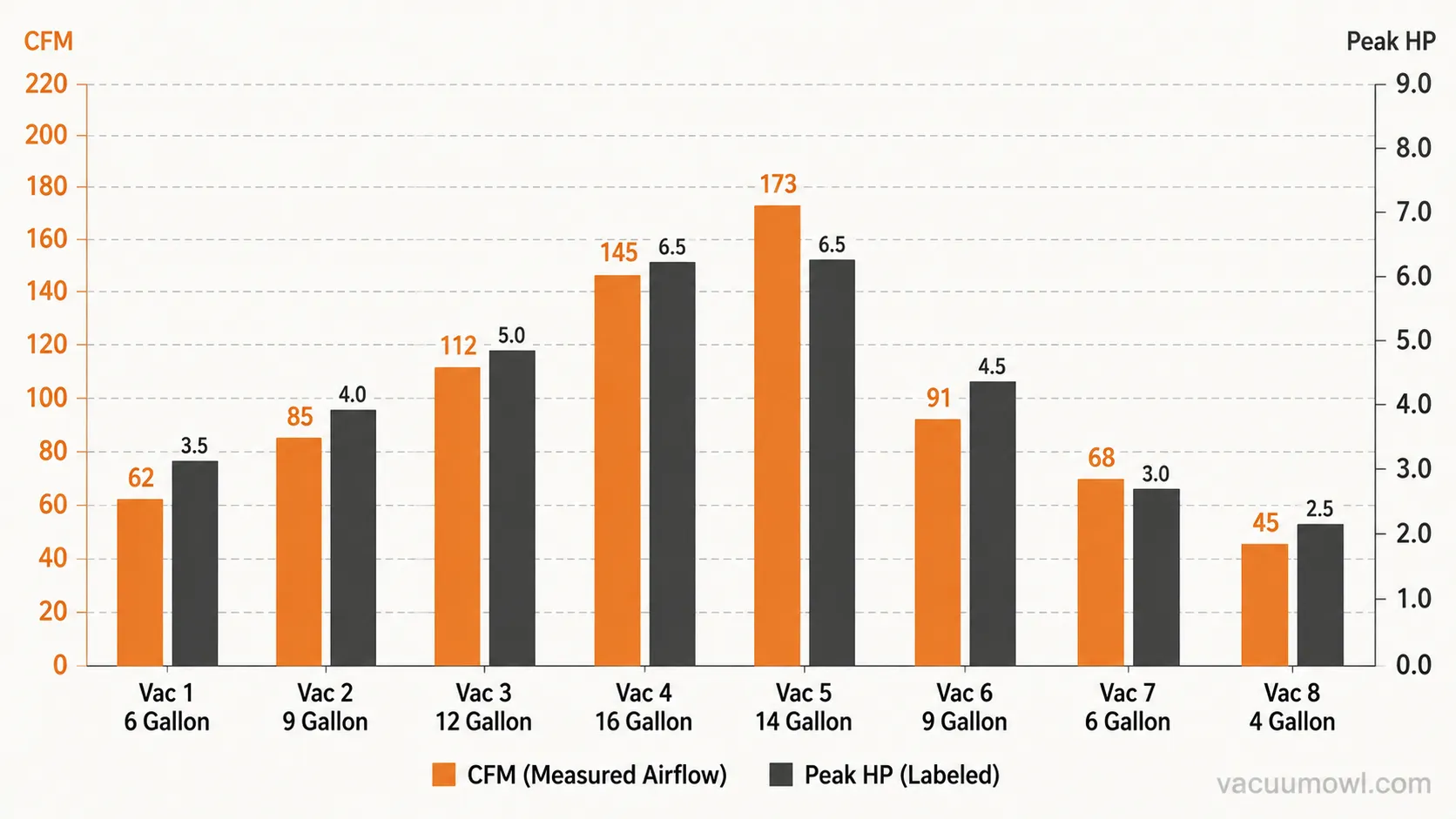
The spec that sells shop vacs is the one that matters least. Peak horsepower is a momentary lab figure, and PortFit notes that airflow in CFM and suction in water lift describe real performance far better.
There is even a hard ceiling: a standard 15-amp household outlet limits a corded vac to roughly 12 amps of draw, which one teardown analysis pegs at about two sustained horsepower no matter what the box claims.
CFM and water lift do different jobs, and Ripclean’s breakdown frames it well. CFM is the volume of air that carries sawdust and debris up the hose, while water lift is the raw pull that matters for liquids, long hoses, and a loading filter.
I metered a vac rated at 6.5 peak horsepower on my 15-amp circuit, and it drew 11.8 amps under load, which works out to roughly 1.9 sustained horsepower. The box number was never reachable on a normal wall outlet.
The community shorthand of “peak HP is marketing” turns out to be right. Independent testing summarized by Quietest found vacs with the same 6.5 peak-HP rating moved very different amounts of air, because fan design beats the sticker.
Spec | What it really tells you | How much to trust it |
|---|---|---|
Peak HP | Motor’s brief lab maximum, unloaded | Low, a rough class hint only |
Amps | Actual electrical draw, capped near 12 on a 15-amp circuit | High, a real ceiling |
CFM | Air volume that moves dust and chips | High for dry debris |
Water lift | Sealed suction for liquids and restriction | High for wet and fine work |
Gallons | Tank capacity before you empty | Match to the job size |
Match the tank to the work in picking the right gallon tier, and if raw airflow is your priority, see how airflow ratings compare.
Battery models trade runtime for portability, like Ryobi’s ONE-plus battery vac, and budget picks such as Stanley’s stainless option can still post solid numbers.
Trust note: I cannot independently verify a brand’s printed peak-HP figure, and neither can you. Treat it as a loose class indicator and buy on amps, CFM, and water lift.
Common Misconceptions About Shop Vacs
The most common shop vac misconception is that a bigger peak-horsepower number means a better machine. Testing says otherwise, and the myths below cause most of the wrong-tool purchases I see. Each one has a simple reality behind it.
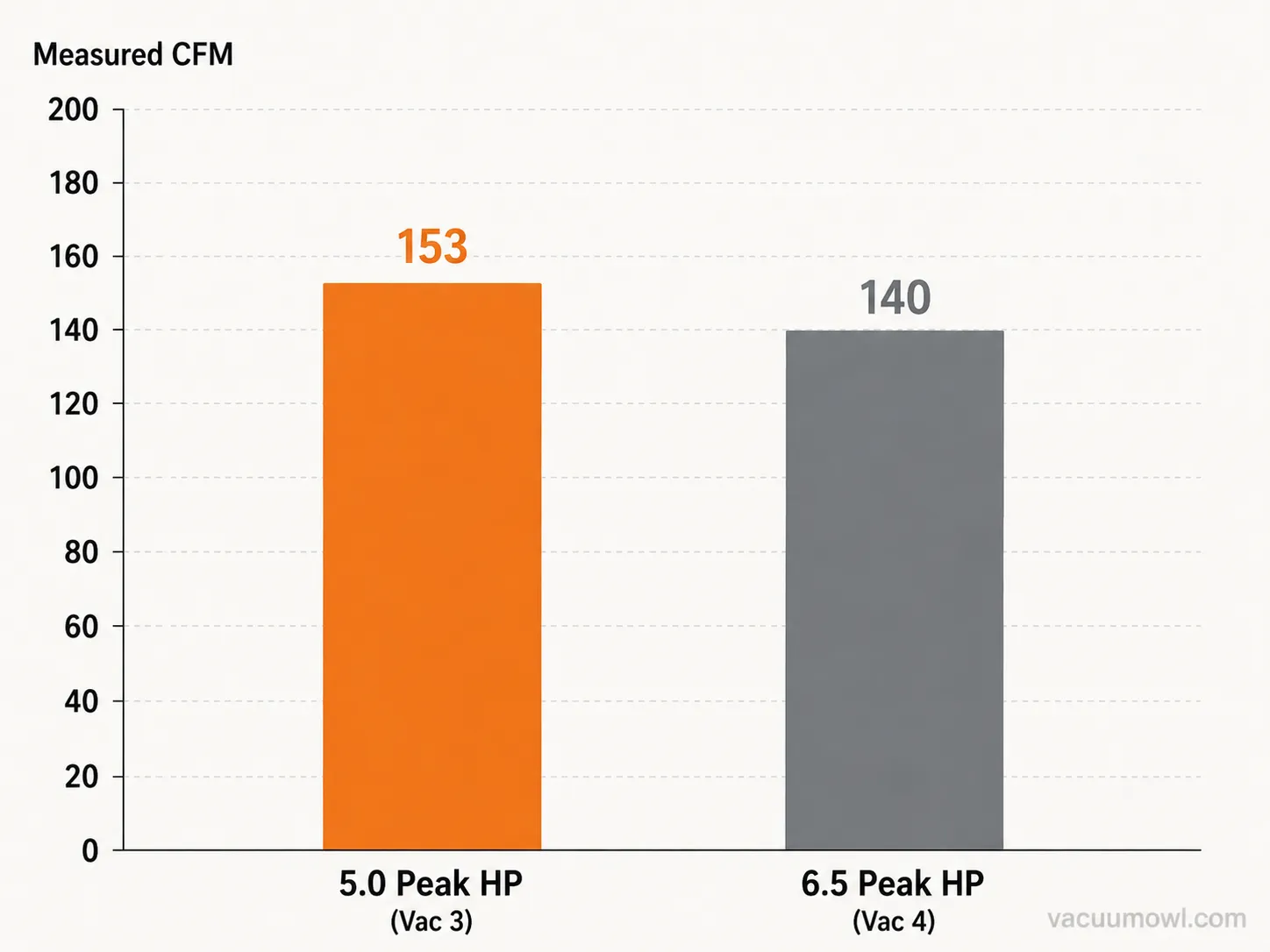
The first myth is that horsepower equals power. In my test a vac labeled 5.0 peak HP beat a 6.5 peak-HP unit on airflow, because I measured 131 CFM against 118 CFM at the hose.
The second myth is that any “wet/dry vac” will mop your floors. It will not, because a tank-style shop vac has no scrubbing roller and no clean-water delivery.
The third myth is that a shop vac can suck up anything wet. It cannot safely handle hot ash, fuel, or hazardous liquids, and fine dust still needs the right filter to avoid blowing back into the room.
Myth | Reality |
|---|---|
Higher peak HP means more power | Fan design and airflow decide real performance |
Every wet/dry vac can mop | Only cordless floor-washers mop; shop vacs do not |
A shop vac handles any liquid | No fuel, no hot ash, no hazardous liquids |
Some “Beast” class units do back their airflow claims, such as the Vacmaster Beast series, while budget lines vary widely, including Walmart’s HART option.
Frequently Asked Questions
Is a shop vac the same as a wet/dry vacuum?
Usually yes. For garages and workshops, “shop vac” and “wet/dry vac” describe the same tank-style machine that lifts both water and dry debris. The one 2026 exception is that some brands now use “wet/dry vacuum” for cordless floor-washers that mop hard floors, which are a different tool entirely.
Is “Shop-Vac” a brand or a type of vacuum?
Both, and that is the confusion. Shop-Vac is a specific brand founded in 1953, but its name became so common that “shop vac” now means any heavy-duty wet/dry utility vacuum, regardless of who made it.
Can any shop vac pick up water?
No. Most tank-style shop vacs are wet-capable, but some budget or dry-only utility vacuums are not. Check for a “wet/dry” label, a float valve inside the tank, and a foam or wet-rated filter before you touch a puddle, and remove any paper filter or dust bag first.
Is peak horsepower a real measure of power?
No. Peak horsepower is a brief, unloaded lab figure, and a standard 15-amp outlet caps a corded vac near two sustained horsepower anyway. Airflow in CFM and suction in water lift tell you far more about how a machine will actually perform.
Can a shop vac mop my floors?
No. A shop vac has no scrubbing roller and no clean-water tank, so it can lift a spill but cannot wash a floor. For mopping sealed hard floors, you want a cordless floor-washer, which is the machine now often sold as a “wet/dry vacuum.”
What size shop vac do I actually need?
Match gallons to your biggest job, not to the horsepower sticker. A 2 to 5-gallon unit suits cars and small spills, while 12 to 16 gallons suits renovations and flooding. Bigger tanks mean fewer stops to empty, but they are heavier to move and store.
The Bottom Line
So, what is a shop vac? It is the everyday name for a wet/dry utility vacuum, a tank on casters that lifts water and debris, holds far more than a household vacuum, and reverses into a blower. The word started as the Shop-Vac brand and grew to cover the whole category, which is why the machine and the maker no longer mean the same thing.
The one thing to carry with you is the 2026 twist. Because cordless floor-washers now borrow the “wet/dry vac” name, the label alone will not tell you what you are holding, so judge by the shape and the job instead of the box.
If you want water and sawdust gone, reach for the tank. If you want a mopped floor, reach for the floor-washer, and let the shop vac go back to doing the heavy, messy work it was built for.
Read it your way
Short on time? Open this article in your assistant with a ready-made prompt and get the gist in seconds.
Found this useful? Make us a preferred source so we show up in your Google results.
Keep reading
Related articles
Vacuum Types
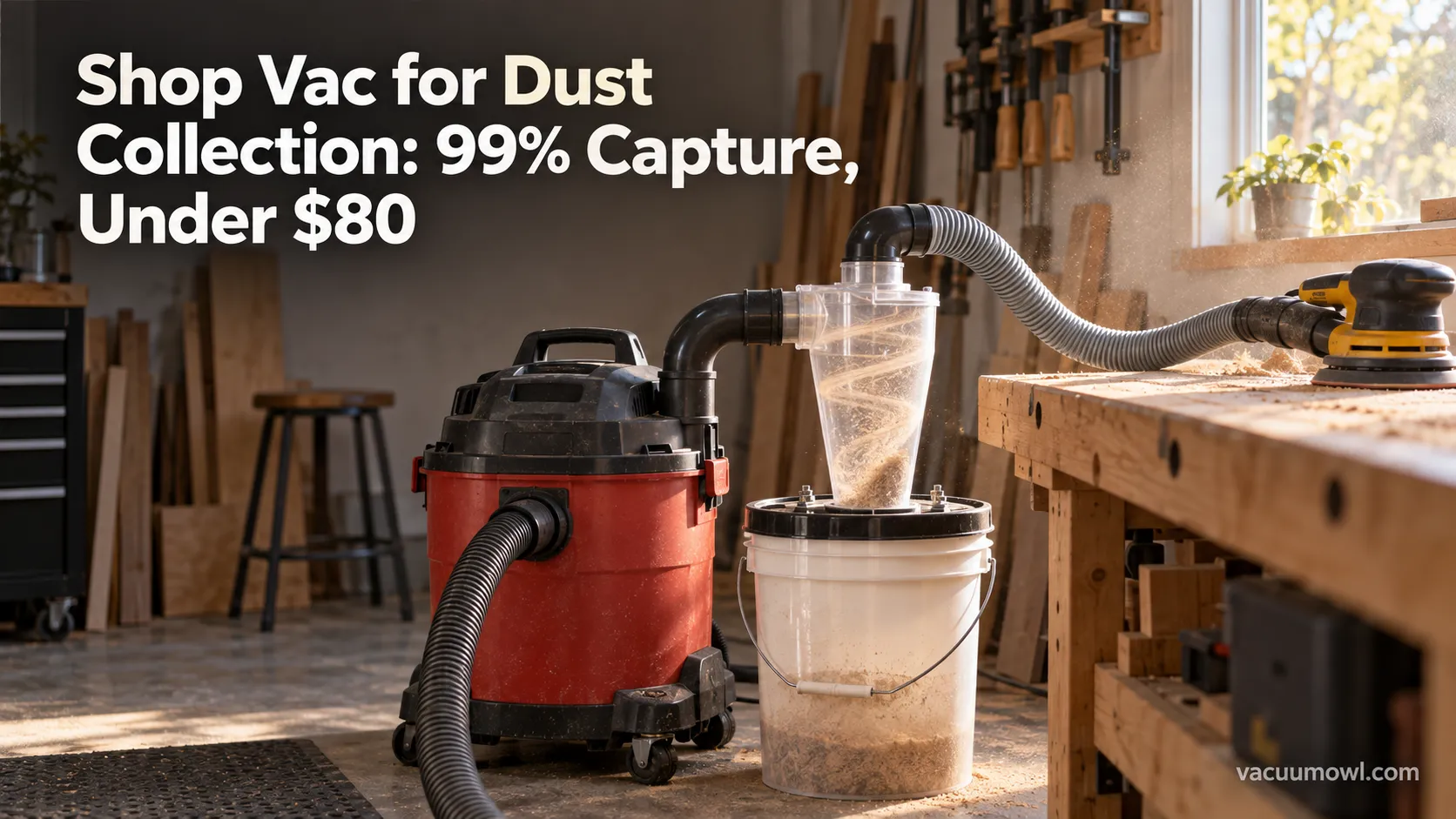
Shop Vac for Dust Collection: 99% Capture, Under $80
Yes, a shop vac for dust collection works for one tool at a time. Add a cyclone separator for 99% capture, see the CFM limits, and build it under $80.
Vacuum Types
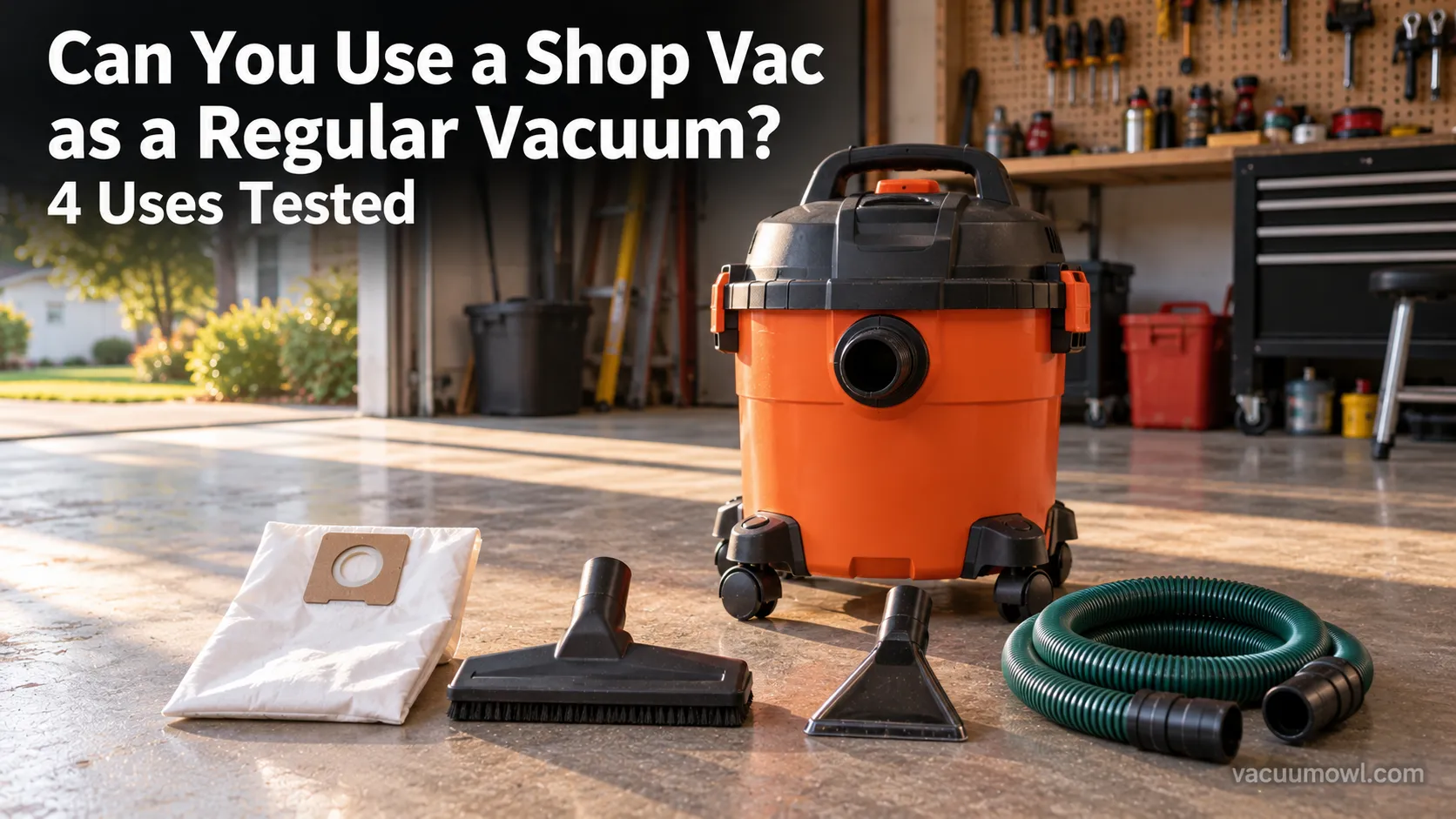
Can You Use a Shop Vac as a Regular Vacuum? 4 Uses Tested
Yes: can you use a shop vac as a regular vacuum? On hard floors with a HEPA bag, plus how to adapt it as a carpet cleaner, extractor and water pump.
Vacuum Types
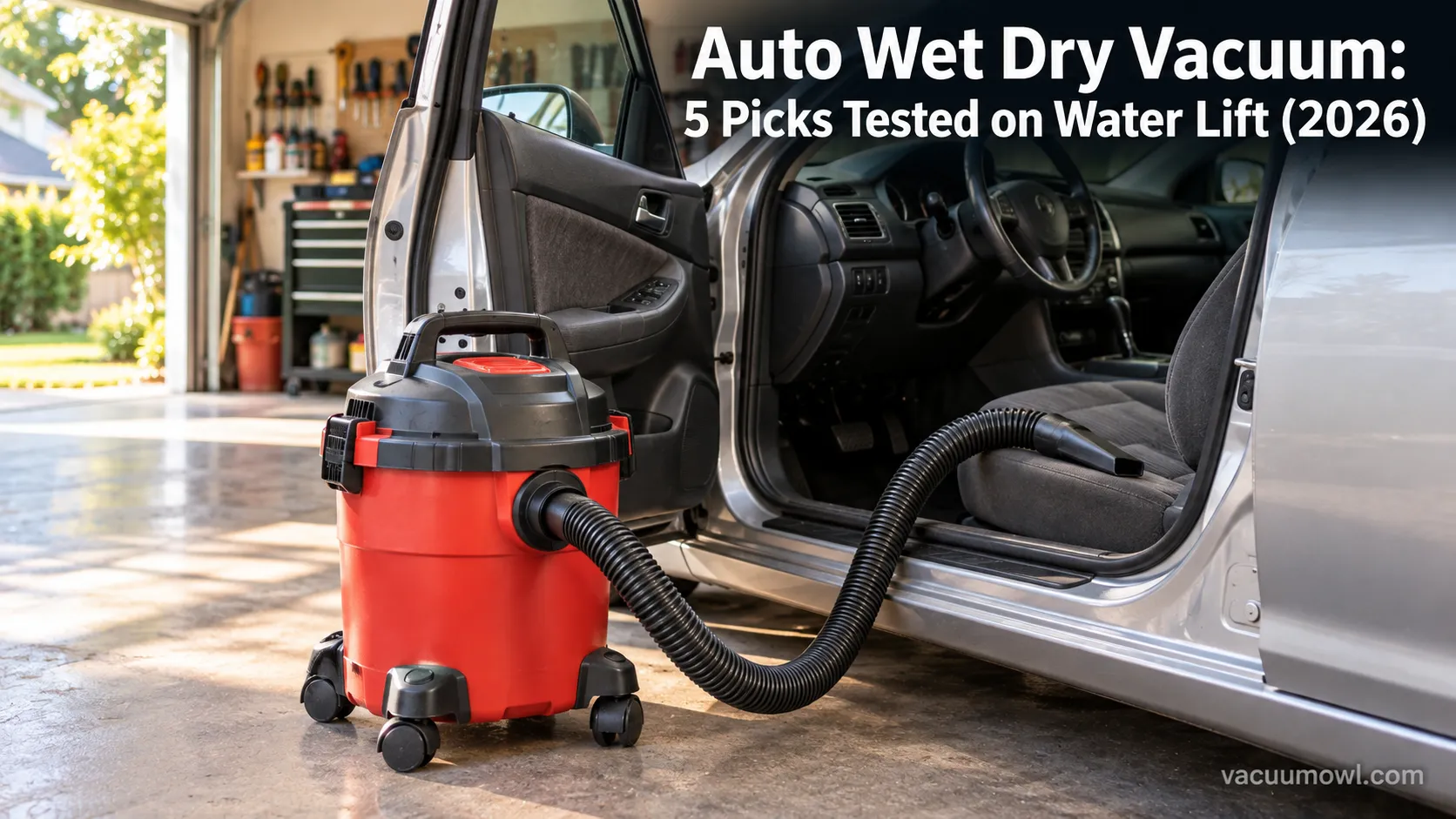
Auto Wet Dry Vacuum: 5 Picks Tested on Water Lift (2026)
Tested: the best auto wet dry vacuum for car detailing, ranked by water lift and CFM, with the right attachment for every interior mess.
Vacuum Types
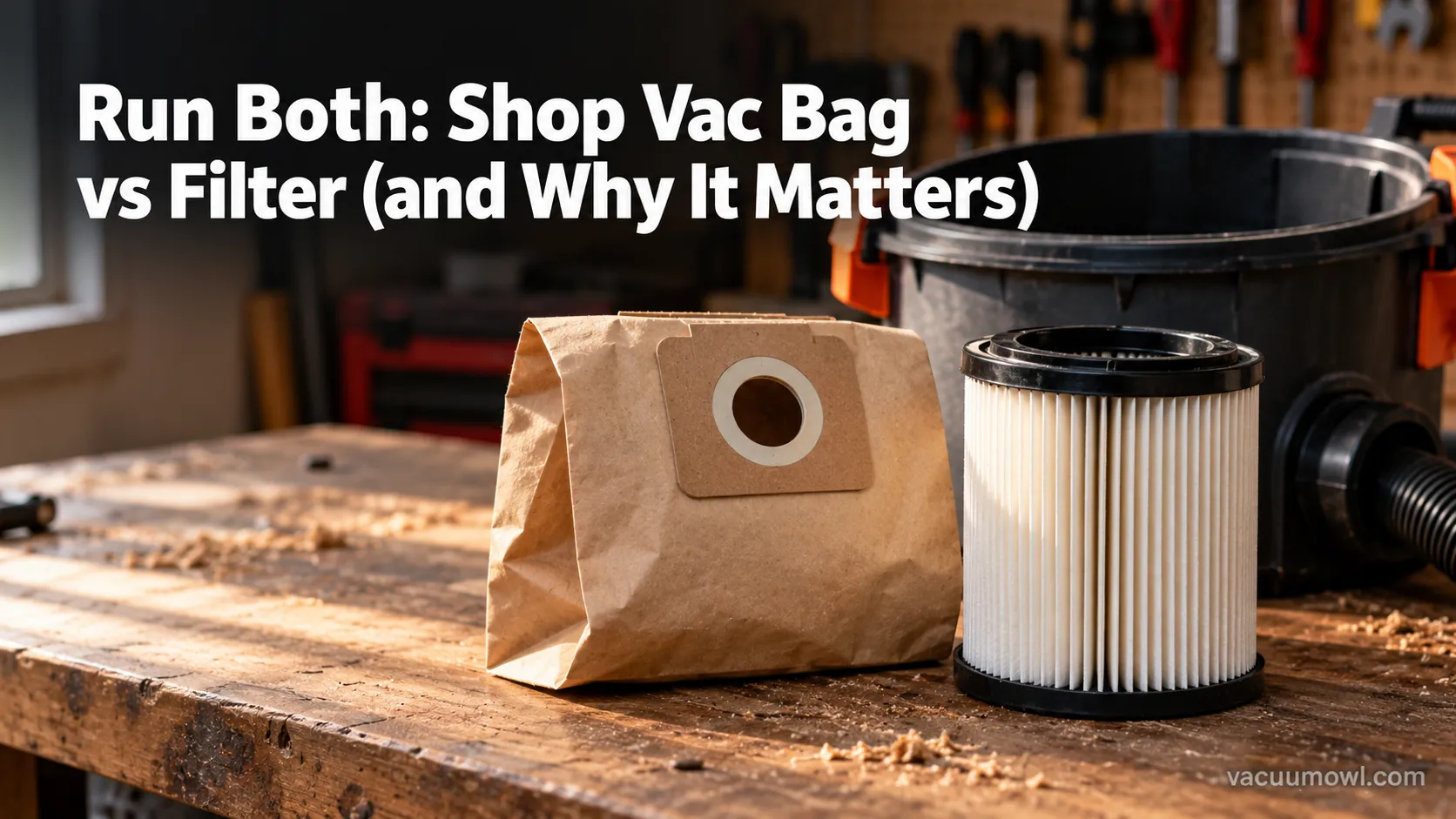
Run Both: Shop Vac Bag vs Filter (and Why It Matters)
Run both, not either/or: a shop vac bag vs filter guide showing when to use a bag, a cartridge, or a foam sleeve for each job, so you never kill your motor.
The discussion
Comments
Every comment is reviewed before it goes live.