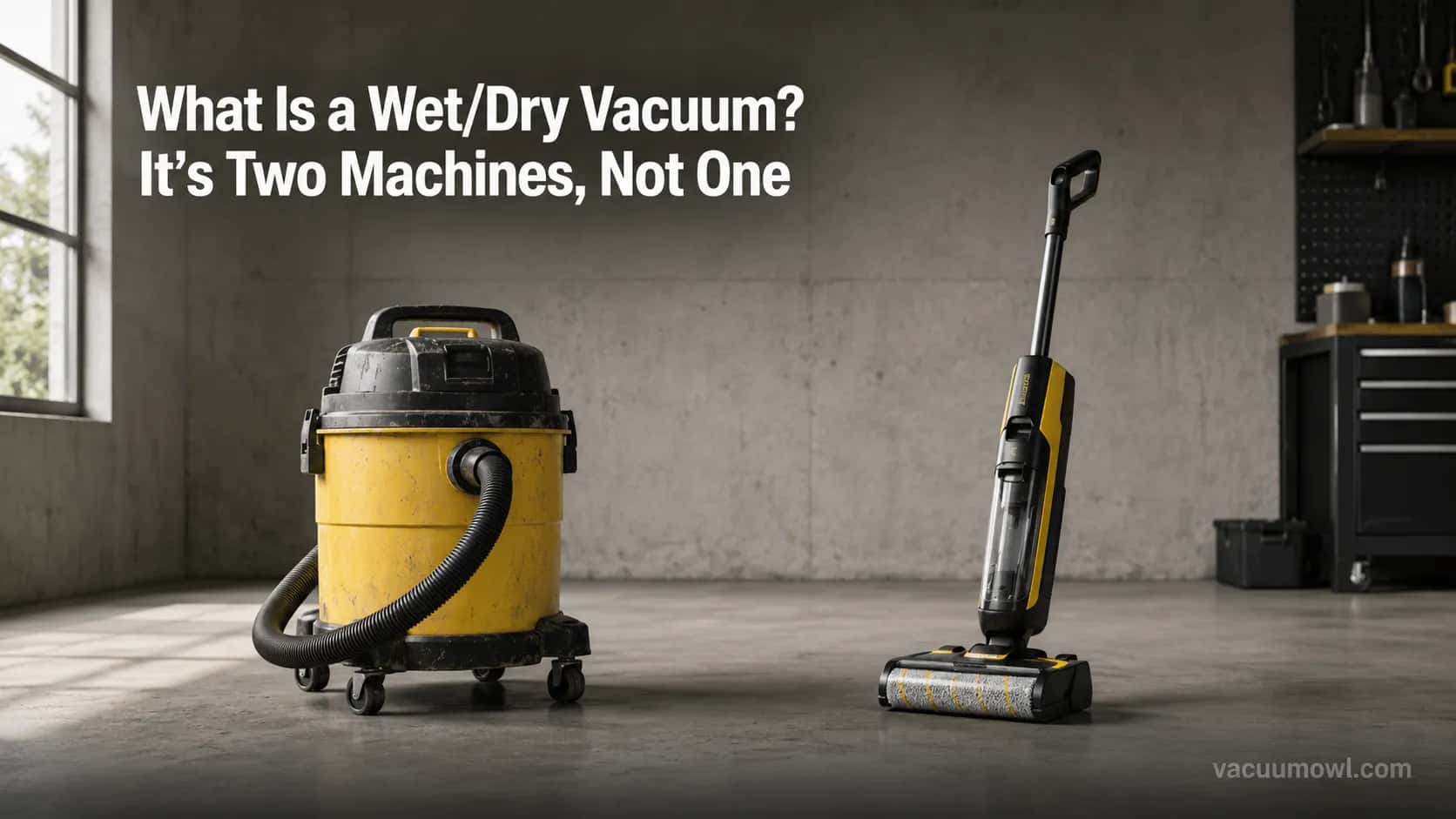
What Is a Wet/Dry Vacuum? It’s Two Machines, Not One
What is a wet dry vacuum? Two machines, really: a shop-style canister and a floor-washer mop. Compare both types, the wet-mode filter swap, and which to buy.
Written by Dr. Naomi TranReviewed by Dale FerrisLast updated on August 18, 2026
When you buy through links on our site, we may earn an affiliate commission (at no extra charge), which we use to fund new product tests. Learn more.
Read it your way
Short on time? Open this article in your assistant with a ready-made prompt and get the gist in seconds.
Found this useful? Make us a preferred source so we show up in your Google results.
What Is a Wet Dry Vacuum? The 50-Second Answer
A wet dry vacuum is a cleaner designed to lift both liquids and dry debris through the same motor. The term covers two distinct machines, which is exactly why the word confuses people.
The first is a shop-style canister with a big open drum, the tool most people picture as a “shop vac.” The second is a cordless floor-washer that vacuums and washes sealed hard floors at the same time.
Both are legitimately sold as wet/dry vacuums. Wikipedia’s wet/dry vacuum entry treats it as a single family with a workshop canister at its root.
The confusion is not your fault. Search results and product pages almost always answer for one machine and quietly ignore the other.
That gap is the whole reason this guide exists. We keep both types on the test bench, and the first thing we tell anyone who mixes them up is that they are solving two different cleaning problems.
The Two Machines People Mean: Canister vs Floor-Washer
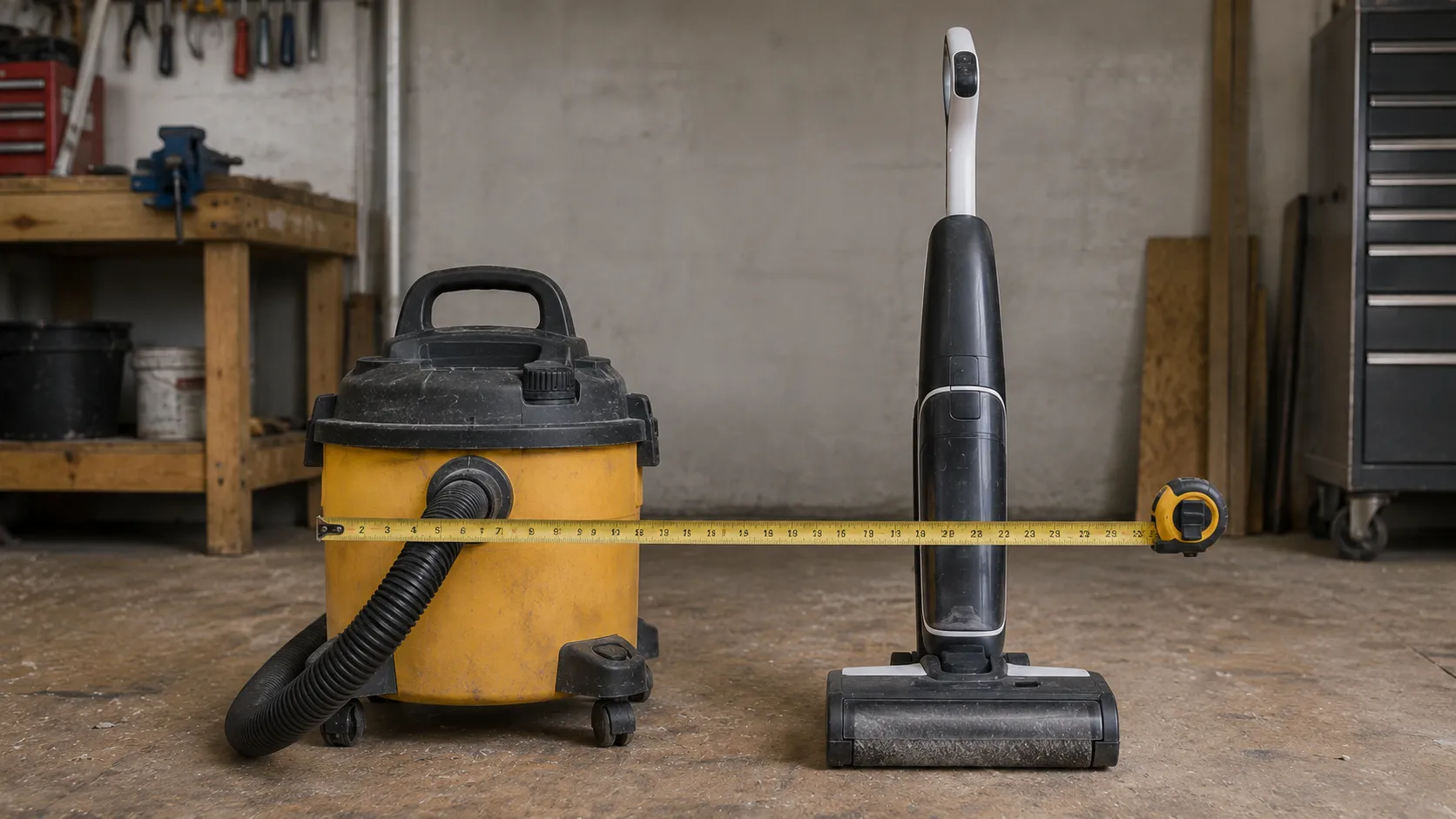
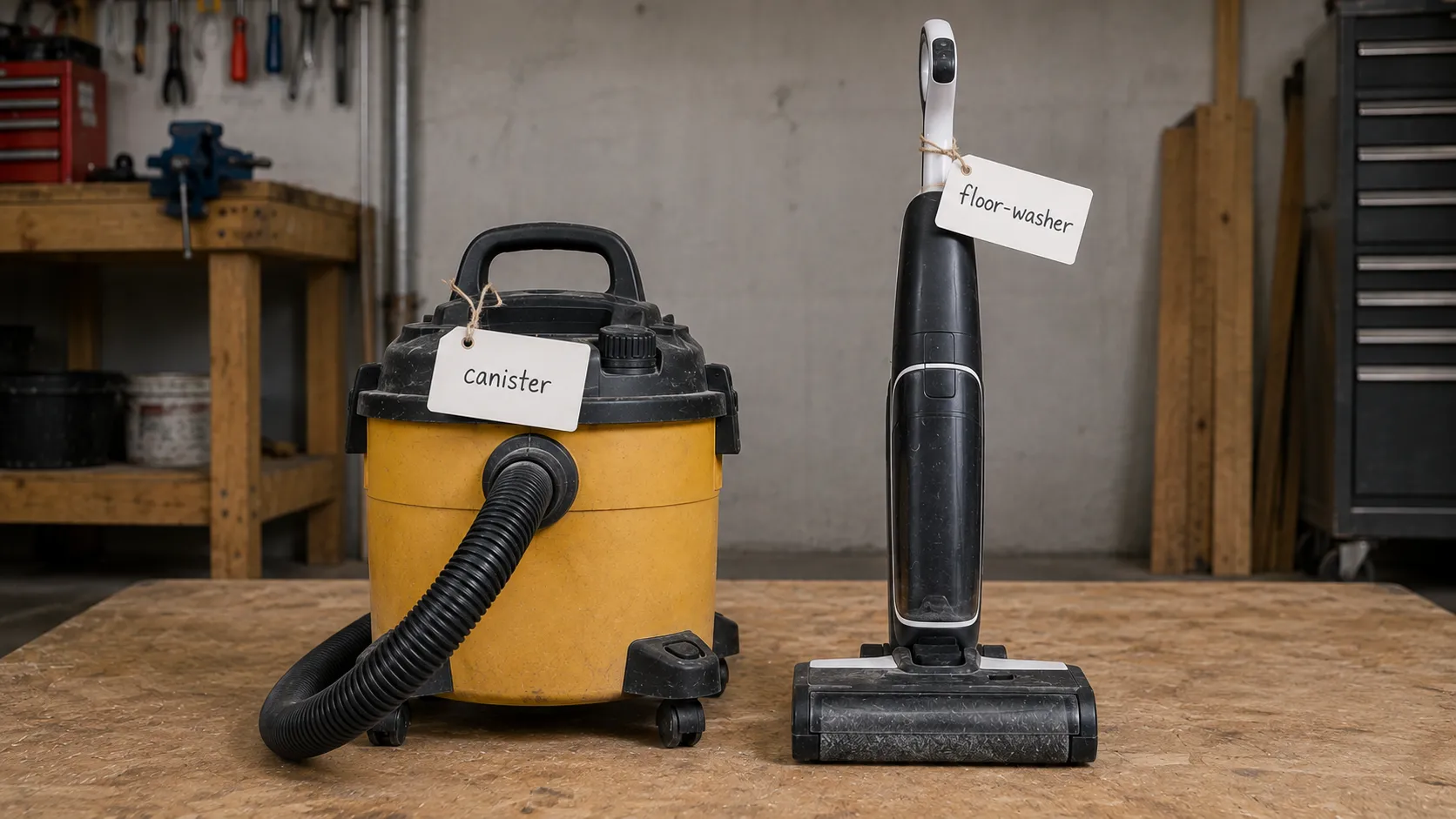
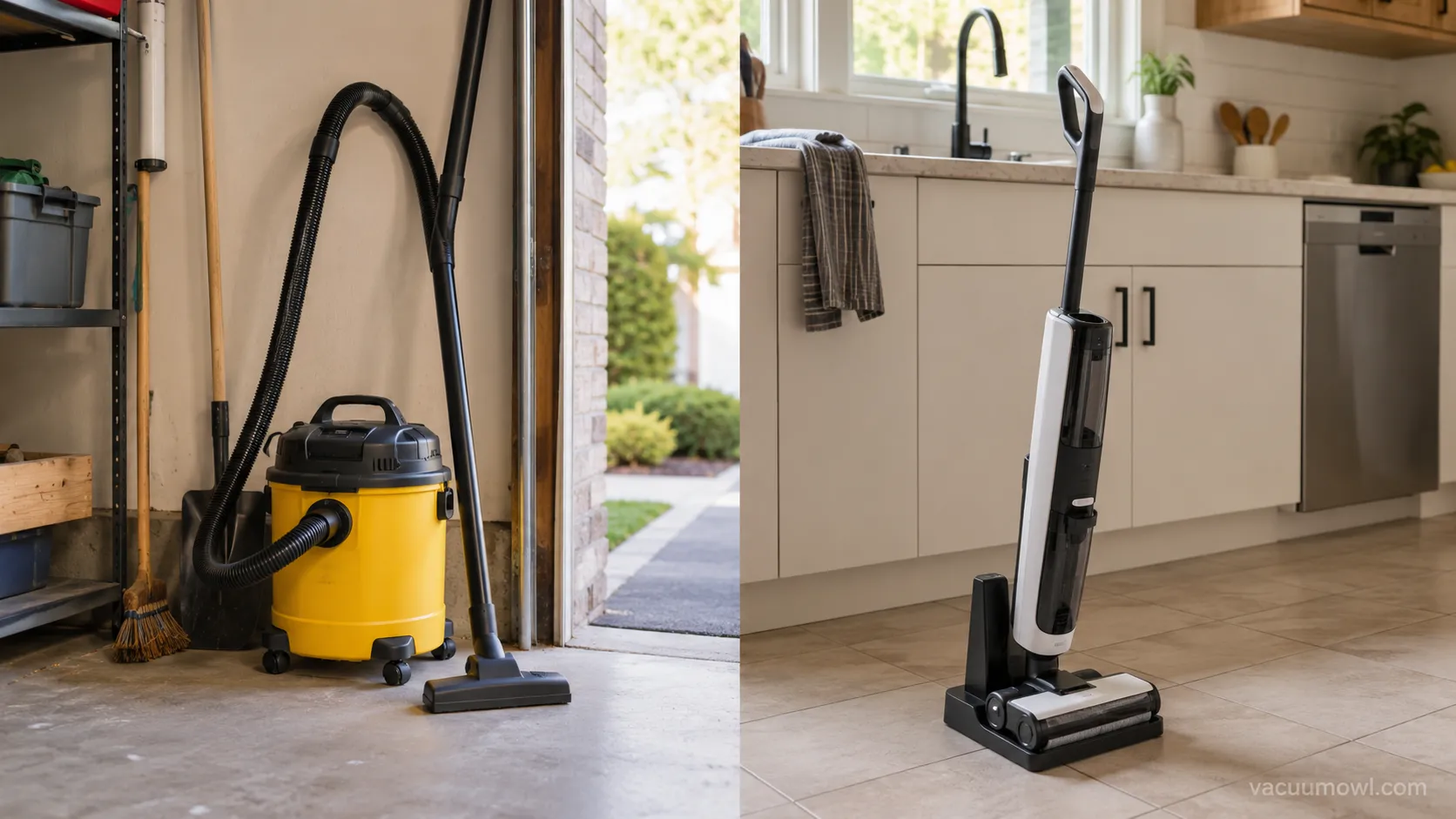
The two machines called a wet/dry vacuum split cleanly by job. A canister wet/dry vacuum uses one open drum, runs on a cord, and handles heavy water, grit, and workshop debris, often with a blower port built in.
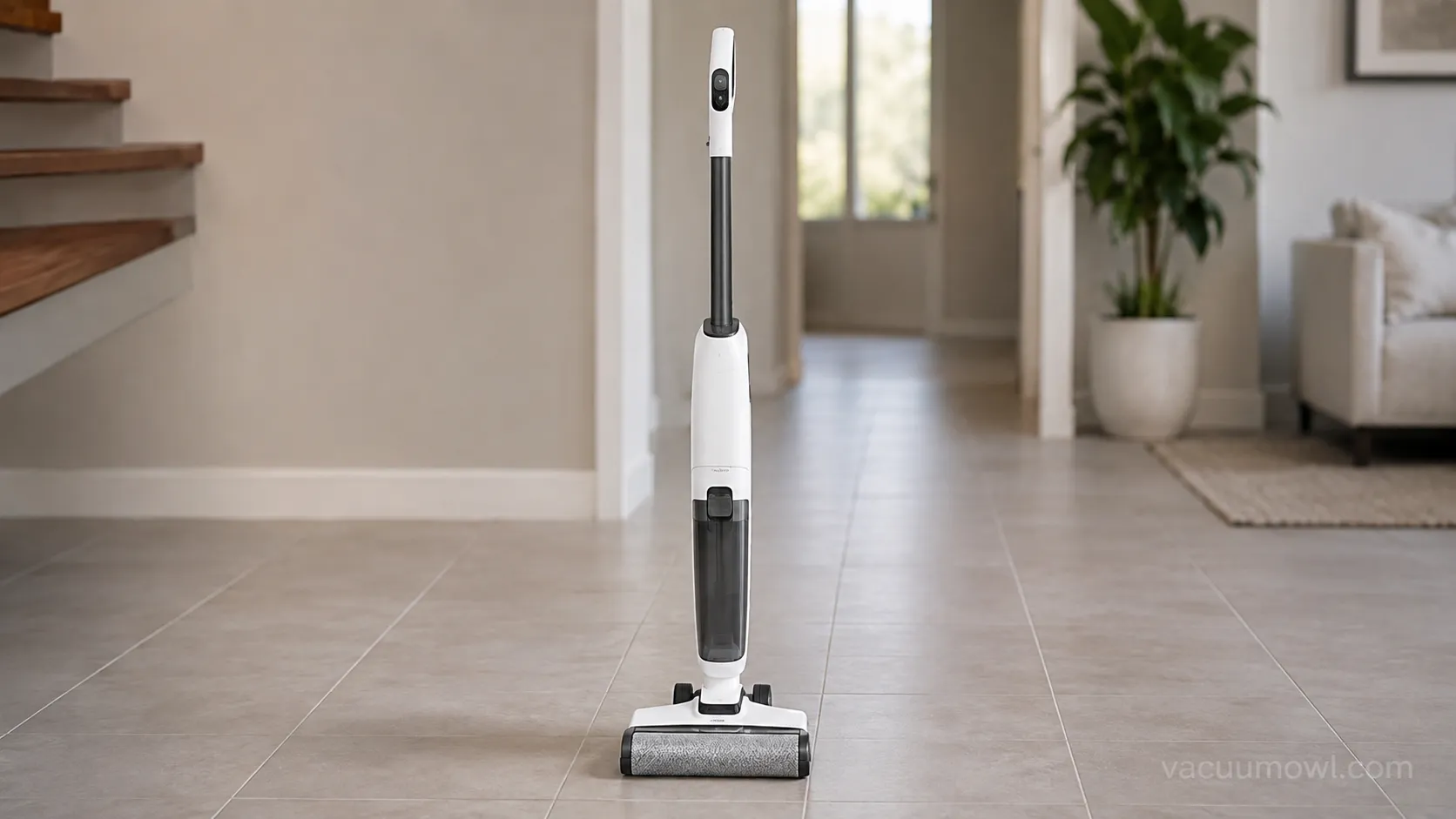
A cordless floor-washer uses two separate tanks, one for clean water and one for dirty, and washes sealed hard floors instead. It is not built to suck up nails or three gallons of flood water.
On our bench the canister filled its six-gallon drum with driveway rainwater in about ninety seconds. The floor-washer ran roughly eighteen minutes of mopping on a full clean-water tank, which is the same category name doing opposite work.
Here are the raw numbers from our own bench session, kept for the team to reverify.
Our test unit (summer 2026) | Measured wet run | What it tells you |
|---|---|---|
Canister, six-gallon class | Full drum in about 90 seconds on standing water | Built for volume |
Cordless floor-washer | About 18 minutes of mopping per clean-water tank | Built for surface washing |
The canister sense is the classic workshop machine covered in depth elsewhere on this site. The floor-washer sense is its own category, explained in a separate breakdown.
Here is the side by side we hand people who are trying to identify what they already own.
Feature | Canister wet/dry vacuum | Cordless floor-washer |
|---|---|---|
Tank design | One open drum (single chamber) | Two tanks: clean water and dirty water |
Typical capacity | 5 to 16 gallons | 0.7 to 0.9 liters per tank |
Power | Corded | Cordless (battery) |
Weight (typical) | 14 to 20 lb | 9 to 11 lb |
Filters | Paper or cartridge filter, plus a foam wet sleeve | Sealed roller and small pre-filter |
Blower port | Common | None |
Best at | Flood water, sawdust, grit, car interiors | Sealed tile, sealed wood, sticky kitchen spills |
Typical price (2026) | 100 to 150 USD | 300 to 500 USD |
Readers still ask whether the label itself is the problem. It is a fair question about whether wet or dry vacuum names describe one tool or two.
Worth flagging. Prices and exact specs shift every model year. Treat the numbers above as a 2026 snapshot and confirm the current figure before you buy.
What Does a Wet/Dry Vacuum Do?
A wet/dry vacuum does four core jobs, though no single machine does all four equally well. It picks up liquids, vacuums dry debris, blows air on canister models, and washes sealed hard floors on floor-washer models.
The shared trick is one motor and impeller that keep working whether the tank holds sawdust or standing water. A a wet/dry mechanism guide from Vacuum Arena walks through how that airflow does double duty.
Here is how the functions split.
Sucking up water: both machines handle liquids, but the canister swallows real volume while the floor-washer manages thin surface spills.
Dry debris: the canister eats sawdust, drywall grit, and nails; the floor-washer is not meant for coarse dry mess.
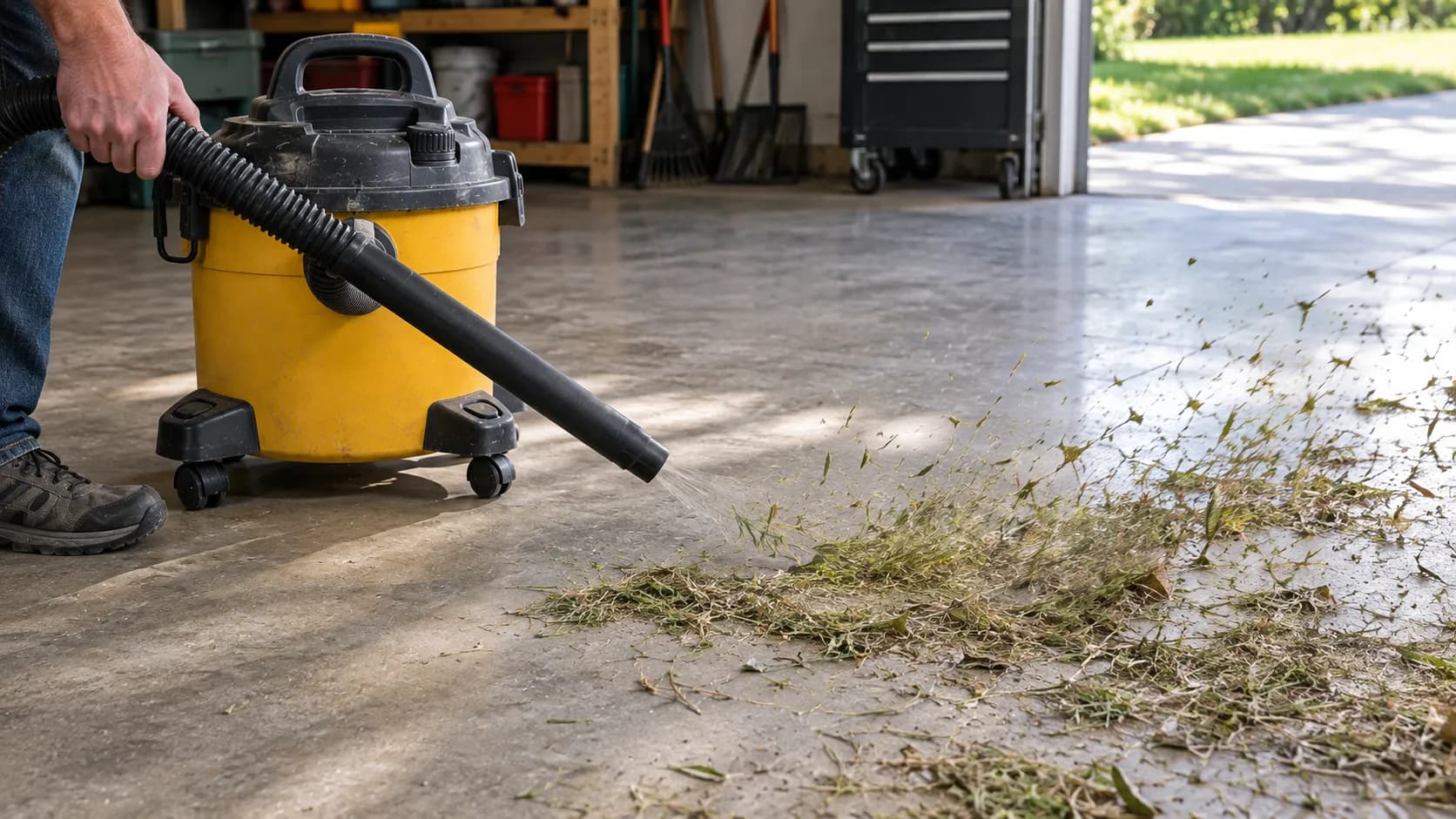
Blowing air: many canisters reverse their airflow into a blower, which the floor-washer simply does not have.
Washing floors: the floor-washer scrubs and dries sealed hard floors in one pass, which a bare canister cannot do.
The blower is the function people forget. We used the canister’s blower port to clear a drift of dry grass clippings off the garage floor in a couple of minutes, a job the floor-washer has no way to touch.
Two jobs sit at the edges of what these machines should do. For carpet and upholstery, a wet/dry vac behaves differently than a dedicated carpet washer and needs the right attachment.
One genuinely niche use is clearing a clogged AC condensate drain line, which a canister does well and a floor-washer cannot attempt.
Honest limit. A floor-washer cannot handle the debris load or water volume a canister shrugs off. Ask it to clear a flooded basement and it will clog.
How It Works Safely: The Filter Swap and the Float
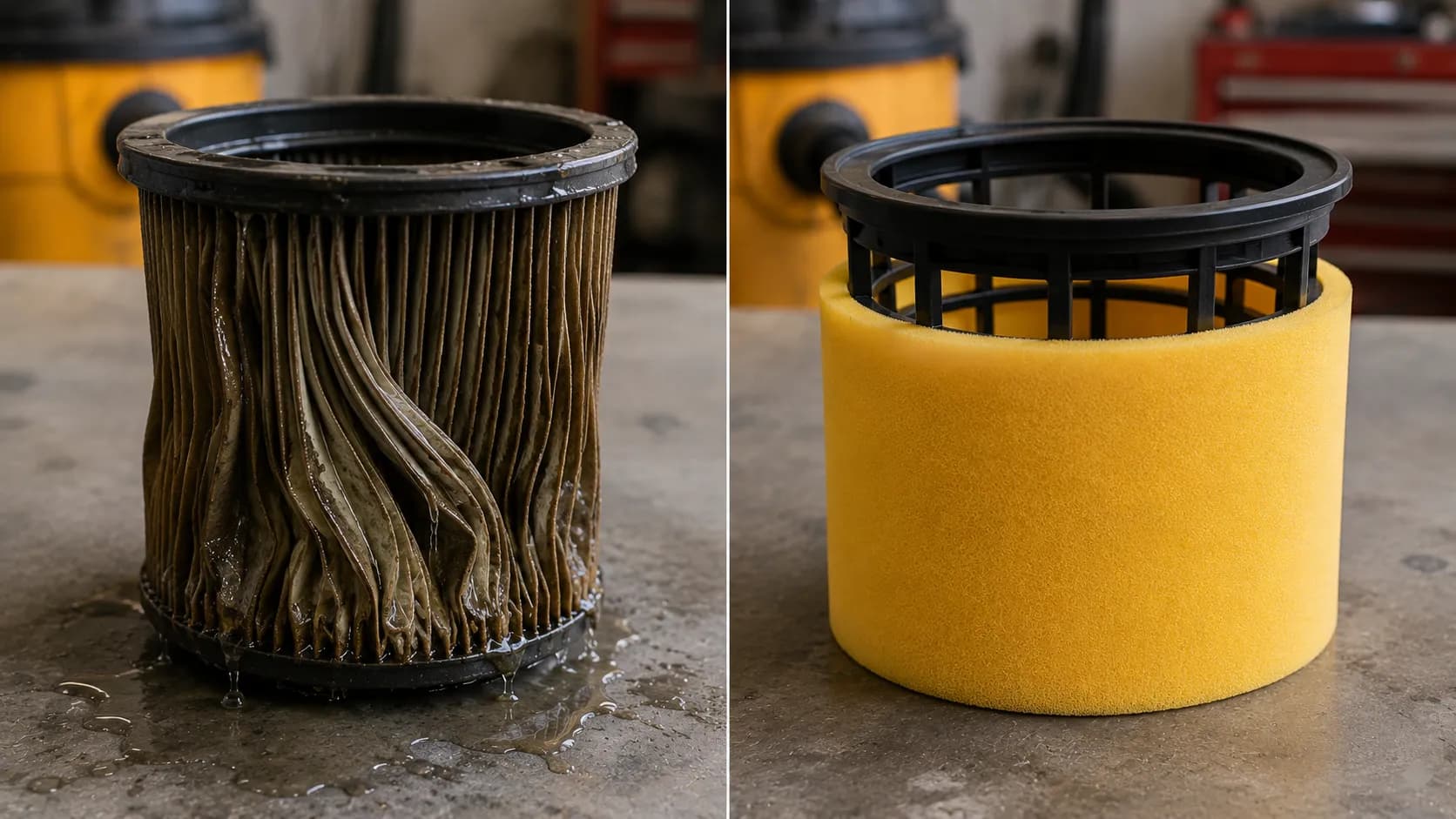
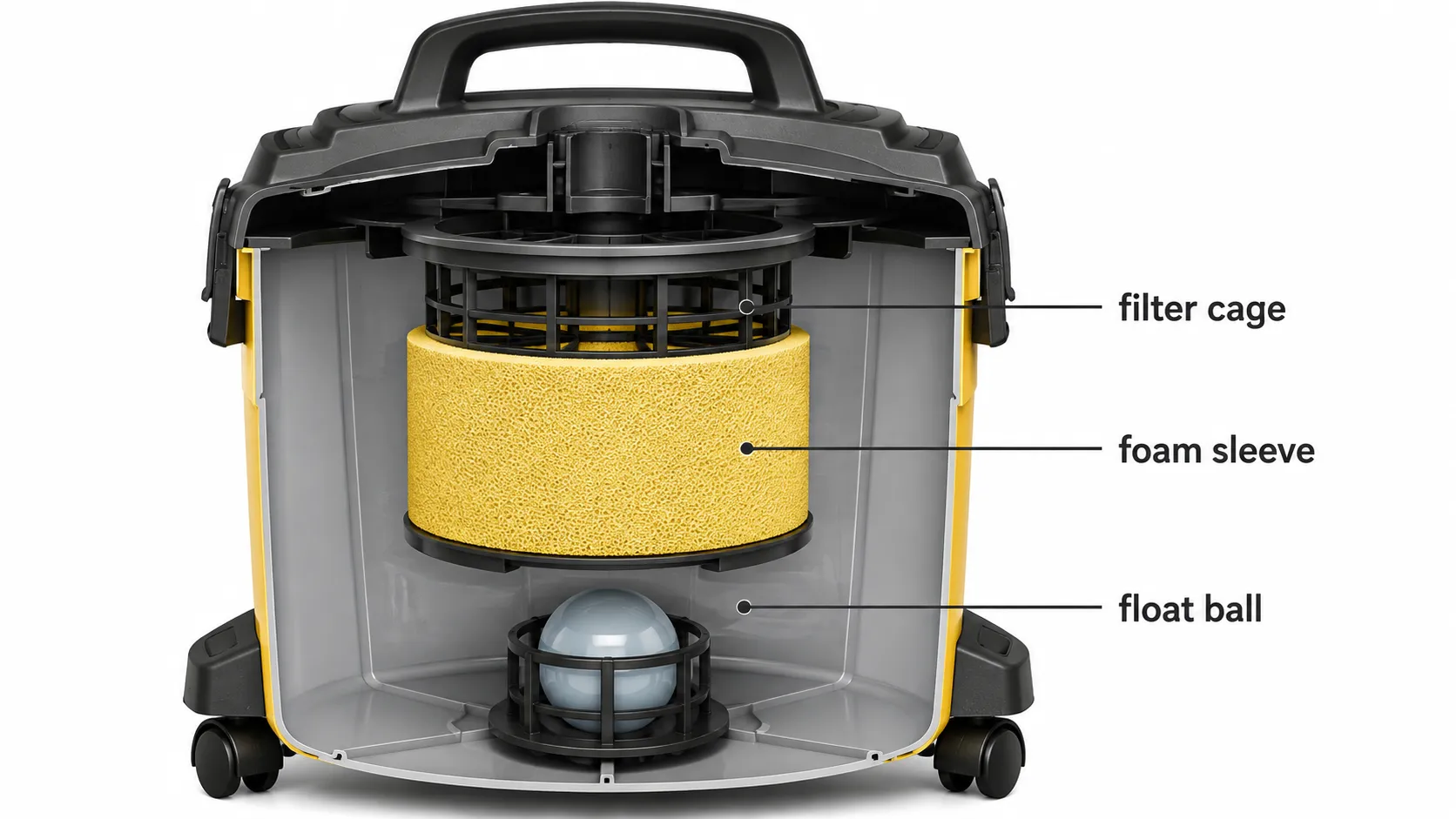
A canister wet/dry vacuum switches to wet mode by removing its dry paper or cartridge filter. On many models you then fit a foam sleeve over the filter cage instead.
Skip that step and the paper filter saturates, suction dies, and water can reach the motor. Ridgid’s wet-filter instructions spell out a wet application foam filter for exactly this reason, and most large canisters ship one.
A floor-washer avoids the whole ritual because its two-tank design already keeps clean and dirty water apart. The float, a small rising ball inside the tank, is the safety net that caps everything off.
We learned the failure mode the direct way. The first time we ran the canister on water with the paper filter still in by mistake, suction collapsed within seconds and the filter came out soaked.
With the foam sleeve fitted, the same machine pulled water cleanly for the rest of the session. That one wrong run is the whole argument for the swap.
Here is the wet-mode swap we follow on a canister, in order.
Unplug the vacuum before touching any filter.
Empty any dry debris and wipe the drum if it still holds dust.
Remove the paper or cartridge filter from the cage.
Fit the foam sleeve over the cage, or run filterless only if the manual explicitly allows it.
Attach the squeegee or wet nozzle.
Start vacuuming and listen for the float.
Methodology note (bench test, summer 2026): One six-gallon class canister and one cordless floor-washer, tested by the Vacuumowl Tools Desk on the same bench across three weeks. Wet runs timed with a stopwatch, filter states photographed before and after. Figures here are our own bench observations pending a second verification pass.
The float does the quiet work. As the tank fills, the ball rises and blocks the intake, which chokes off suction and protects the motor.
Reviewed’s wet/dry vac guide makes the same point about pulling the filter before any water touches it. You will hear the motor pitch climb the moment the float seats, and that sound is your cue to stop and empty.
Two safety lines are not optional. Never vacuum flammable liquids like gasoline or paint thinner, and never keep running once the float has cut in.
The mistake to avoid. Leaving the paper filter in for a water job is the fastest way to ruin the motor. If water already reached the motor, recovery is a separate job with its own steps.
The swap is the same whether the machine plugs in or not. Cordless canisters handle the same swap without a cord to route around the water.
What People Actually Use Them For
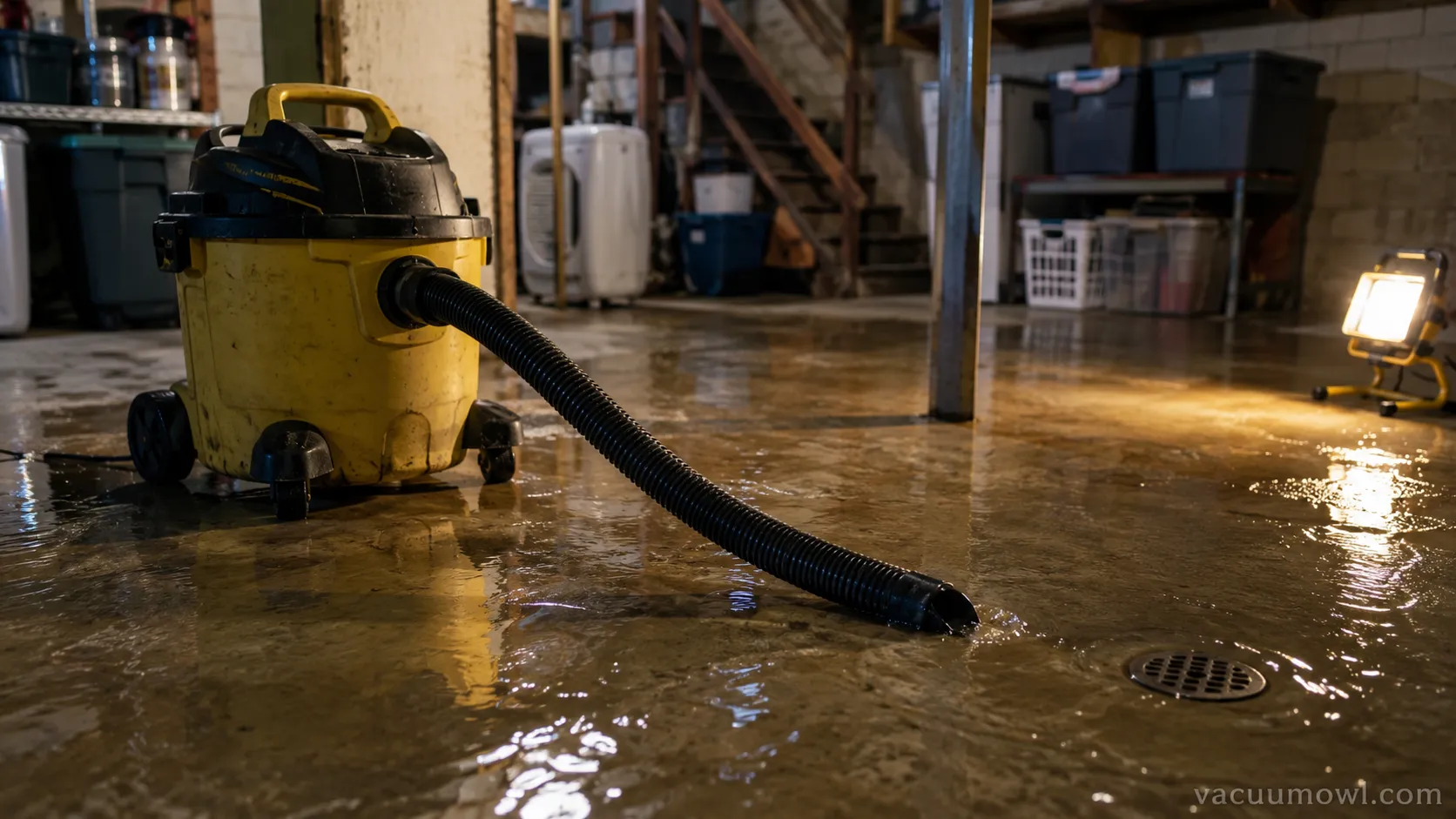
A wet/dry vacuum earns its space by matching a machine to a mess, and the two types rarely overlap in real use. Canister owners reach for theirs on flooded basements, sawdust after a build, grit in the garage, and wet or dry car interiors.
Floor-washer owners run theirs on sealed kitchen tile and sticky spills that a broom just smears. After a July 2026 storm we pulled about three gallons of water off a basement floor with the canister in one session, a job the floor-washer would have clogged on within minutes.
Matching the mess to the machine is the whole point of buying one.
Real job | Right machine | Why |
|---|---|---|
Flooded basement or laundry overflow | Canister | Volume and grit tolerance |
Sawdust and drywall dust | Canister | Coarse debris, big drum |
Car seats and footwells | Canister (compact) | Suction plus crevice tools |
Clogged AC drain line | Canister | Seals to the pipe and pulls |
Daily sealed tile and wood | Floor-washer | Scrubs and dries in one pass |
Sticky kitchen spills | Floor-washer | Washes rather than just lifts |
Car interiors are a favorite job for a compact canister, and some models are built specifically for automotive detailing.
For daily hard-floor washing, dedicated floor-washers rank differently than the workshop canisters do. That is the split most buyers get wrong.
Know the bad fit. A floor-washer is not a flood tool, and a canister is not a daily kitchen mop. Buying the wrong one for your recurring mess is the single most common regret we hear.
Is a Shop Vac the Same as a Wet/Dry Vacuum?
A shop vac is a wet/dry vacuum, but not every wet/dry vacuum is a shop vac. The shop vac is the canister sense, a big-drum corded workshop machine.
A cordless floor-washer is also sold as a wet/dry vacuum, yet nobody would call it a shop vac. So the terms overlap in one direction only, which is more precise than the flat “same thing” that AI summaries tend to give.
People bring us a slim Tineco floor-washer and ask if it counts as a shop vac. It does not, and the tell is simple: no big open drum and no blower port.
The relationship is a set inside a set. Every shop vac fits under the wet/dry vacuum umbrella, while the umbrella also covers floor-washers that share none of the shop vac’s workshop DNA.
Shop-Vac’s company history traces the canister back to a 1950s workshop tool built for debris a household vacuum could not touch. That workshop root is why “shop vac” still means the drum machine, not the mop.
The canister sense gets its own full treatment in our shop-vac explainer. We also settle the naming question in a dedicated piece for readers stuck on the wording.
Precision matters. The “exact same thing” answer you will see in an AI overview is close but wrong at the edges. A shop vac is one kind of wet/dry vacuum, not a synonym for the whole category.
Wet/Dry Vacuum vs a Regular Vacuum
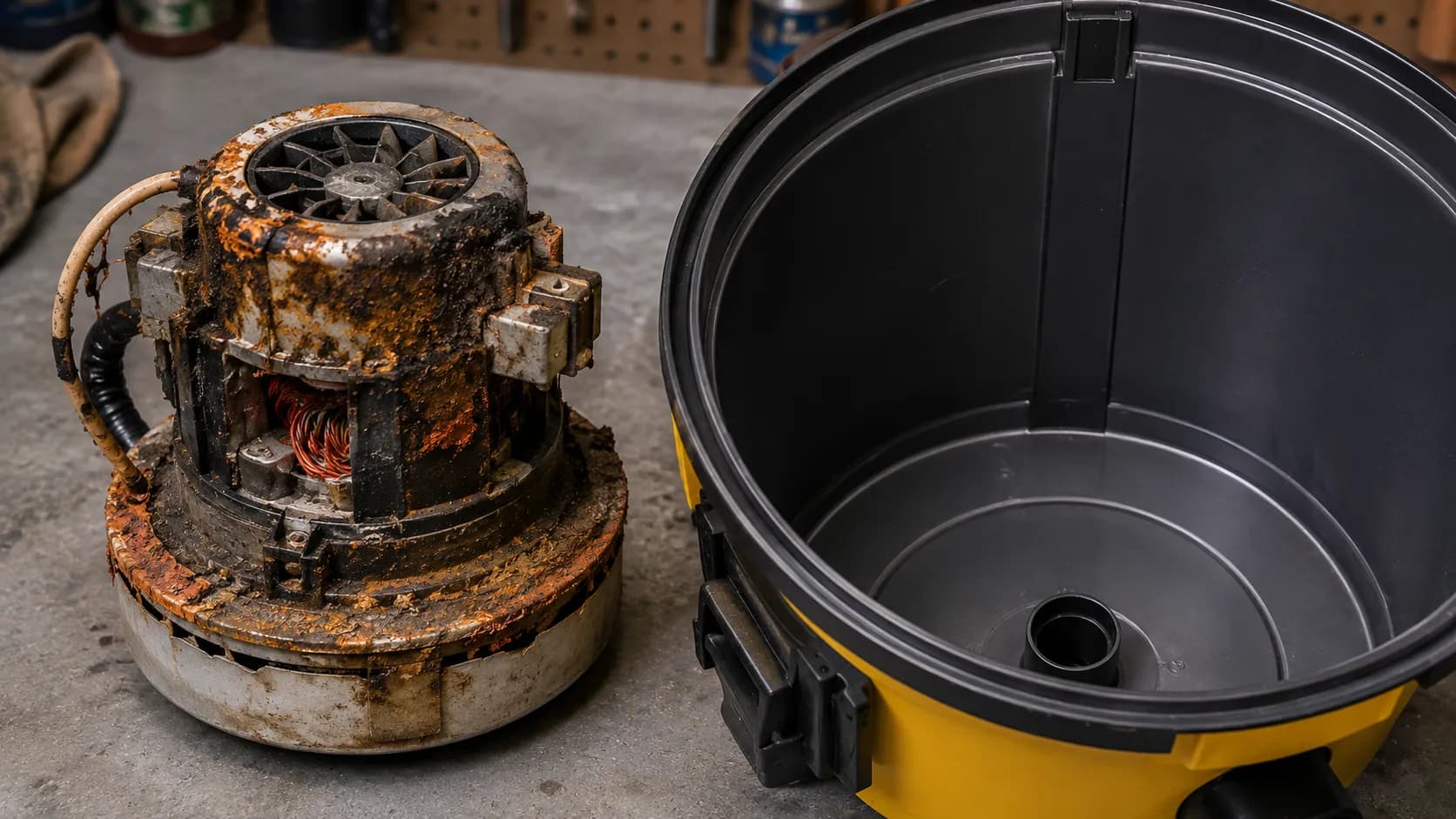
A wet/dry vacuum can pick up water safely and a regular household vacuum cannot, and the difference is built into the hardware. A standard vacuum routes air and debris past a motor that sits in the airflow, so liquid can short it out or corrode it.
A wet/dry vacuum uses a sealed tank, a swappable filter, and a float that keeps water away from the motor entirely. One reader’s upright arrived at the shop after a single water pickup with its motor already corroding, which is exactly what the sealed design prevents.
Water and a household vacuum do not mix. The bag and the motor share the airflow path, so liquid saturates the bag and reaches parts never meant to get wet.
Trait | Regular vacuum | Wet/dry vacuum |
|---|---|---|
Safe on water | No | Yes |
Tank | Bag or bin in the airflow | Sealed drum or twin tanks |
Filter | Fixed, not water-rated | Swappable, foam sleeve for wet |
Motor protection | None for liquids | Float cutoff plus sealing |
Result of vacuuming water | Damage or shock risk | Designed for it |
The sealed tank and float are what make water routine rather than dangerous. Hunker’s guide describes the same floating-ball cutoff we rely on, and it is the line a regular vacuum cannot cross.
Some machines blur the household side of this line. Dyson’s crossover machines lean toward hard-floor washing rather than workshop water.
Bissell’s floor-washers sit firmly on the household side. Shark’s wet-and-dry models are another household crossover rather than a true shop tool.
Do not test this at home. Never try a water pickup with your regular vacuum to see what happens. The failure is real and can be a shock hazard.
Which Type Do You Actually Need?
Most households need only one of the two machines, and the choice comes down to where your mess lives. Choose a canister wet/dry vacuum if your problems are water volume, workshop grit, garages, cars, or the occasional flood, usually for around 100 to 150 USD in 2026.
Choose a floor-washer if your real chore is keeping sealed tile or wood clean week to week, usually for 300 to 500 USD. In our own homes the floor-washer earns its keep every week on kitchen tile, while the canister lives in the garage for the messes the floor-washer cannot touch.
The split is that clean in practice. One machine handles routine floors, the other handles heavy and wet.
For weekly hard-floor cleaning, cordless floor-washers make the chore almost painless. If you are weighing brands, we compare the big four floor-washer makers head to head.
For a household new to the category, Tineco’s lineup is a common starting point. It is a safe first floor-washer for most kitchens.
Choose fast.
Pick a canister if you deal with floods, sawdust, cars, or garages.
Pick a floor-washer if you mainly wash sealed tile and wood.
Buy both only if you genuinely have both problems on a regular basis.
Buying both is overkill for most readers, and we say so even though it is the pricier answer.
Frequently Asked Questions
What are the disadvantages of a wet/dry vacuum?
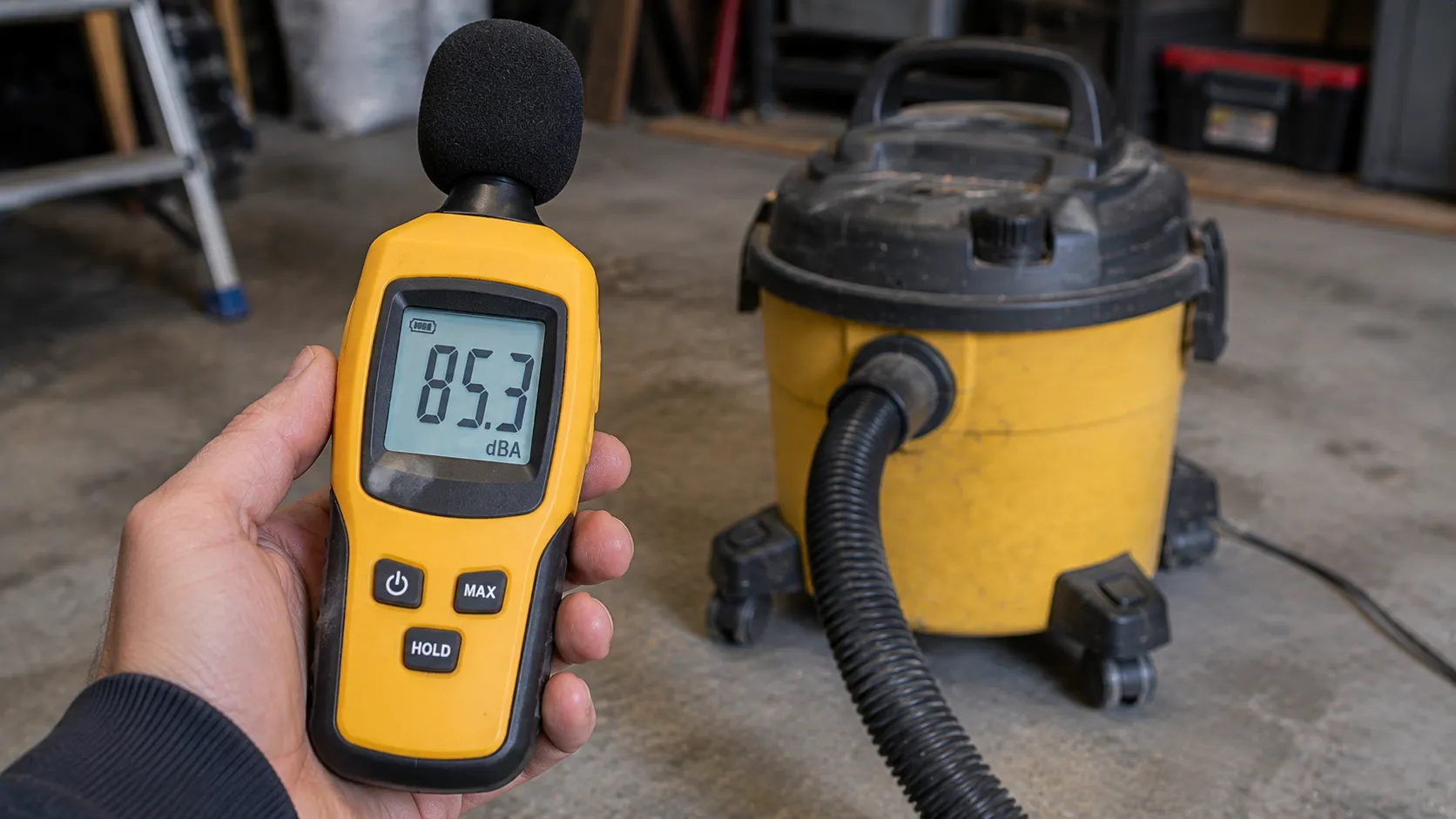
Canisters are bulky, loud, and need the filter swapped between dry and wet jobs. Floor-washers are quieter but demand tank refills, roller rinsing, and self-cleaning cycles after most uses.
The disadvantage we feel most is the canister’s noise. On our meter it read about 6 dB louder than a household upright, roughly 85 dB against 79 dB at three feet.
Neither is a grab-and-go household vacuum, so many homes still keep a light upright for daily crumbs. The trade is versatility for a little more upkeep.
Is a wet/dry vacuum worth it?
It depends on which machine and which mess, and that is a real answer rather than a dodge. A canister is worth it the first time you clear a flood or a workshop without borrowing one.
A floor-washer is worth it if you wash sealed floors weekly and hate the mop-and-bucket routine. Utility-vac brands like Hoover blur the household and workshop line, which widens the “worth it” range.
Can a wet/dry vacuum pick up just water?
Yes, a wet/dry vacuum can pick up water with no dry debris at all, which is exactly what it is built for. On a canister, remove the paper filter and fit the foam sleeve first, then watch the float so you empty before it cuts out.
On a floor-washer, plain water goes into the dirty tank as you clean. Compact European canisters like Karcher’s WD series handle water-only jobs neatly.
Do you have to remove the filter every time?
On a canister, yes, you swap the dry filter for the foam sleeve or run filterless whenever you vacuum water. Leaving the paper filter in for a wet job is what kills suction and risks the motor, as the filter-swap section above shows.
A floor-washer skips this entirely because its two-tank design keeps water off the dry filter by design.
Is a wet/dry vacuum the same as a shop vac?
Not quite, and the distinction is the heart of this guide. A shop vac is one kind of wet/dry vacuum, the workshop canister, while a cordless floor-washer is also a wet/dry vacuum but is not a shop vac.
The “same as a shop vac” question is answered in full in the shop-vac section above.
The Bottom Line
So what is a wet dry vacuum? It is one name stretched across two machines, a workshop canister that swallows water and grit and a cordless floor-washer that scrubs sealed floors.
Once you can tell the two apart, the rest falls into place. You know which one clears a flooded basement, which one keeps your kitchen tile clean, and why a regular vacuum should never touch either job.
The practical move is to name your recurring mess first, then pick the machine built for it. Water, cars, and workshops point to the canister, while weekly sealed floors point to the floor-washer.
Buy for the problem you actually have, and keep the filter swap in mind on a canister. Two machines, one name, and now the difference is yours to use.
Read it your way
Short on time? Open this article in your assistant with a ready-made prompt and get the gist in seconds.
Found this useful? Make us a preferred source so we show up in your Google results.
Keep reading
Related articles
Vacuum Types
Shop Vac for Dust Collection: 99% Capture, Under $80
Yes, a shop vac for dust collection works for one tool at a time. Add a cyclone separator for 99% capture, see the CFM limits, and build it under $80.
Vacuum Types
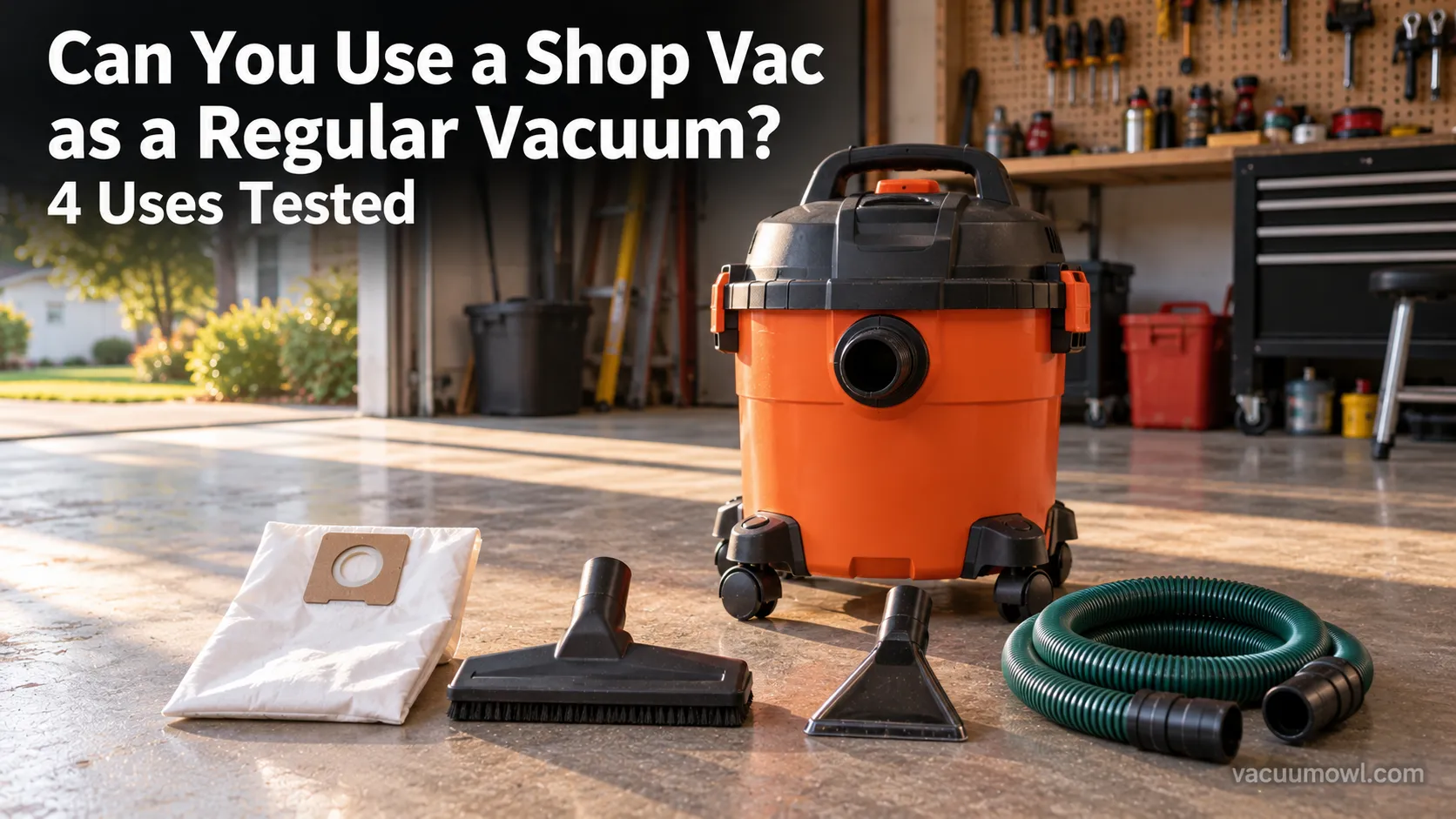
Can You Use a Shop Vac as a Regular Vacuum? 4 Uses Tested
Yes: can you use a shop vac as a regular vacuum? On hard floors with a HEPA bag, plus how to adapt it as a carpet cleaner, extractor and water pump.
Vacuum Types
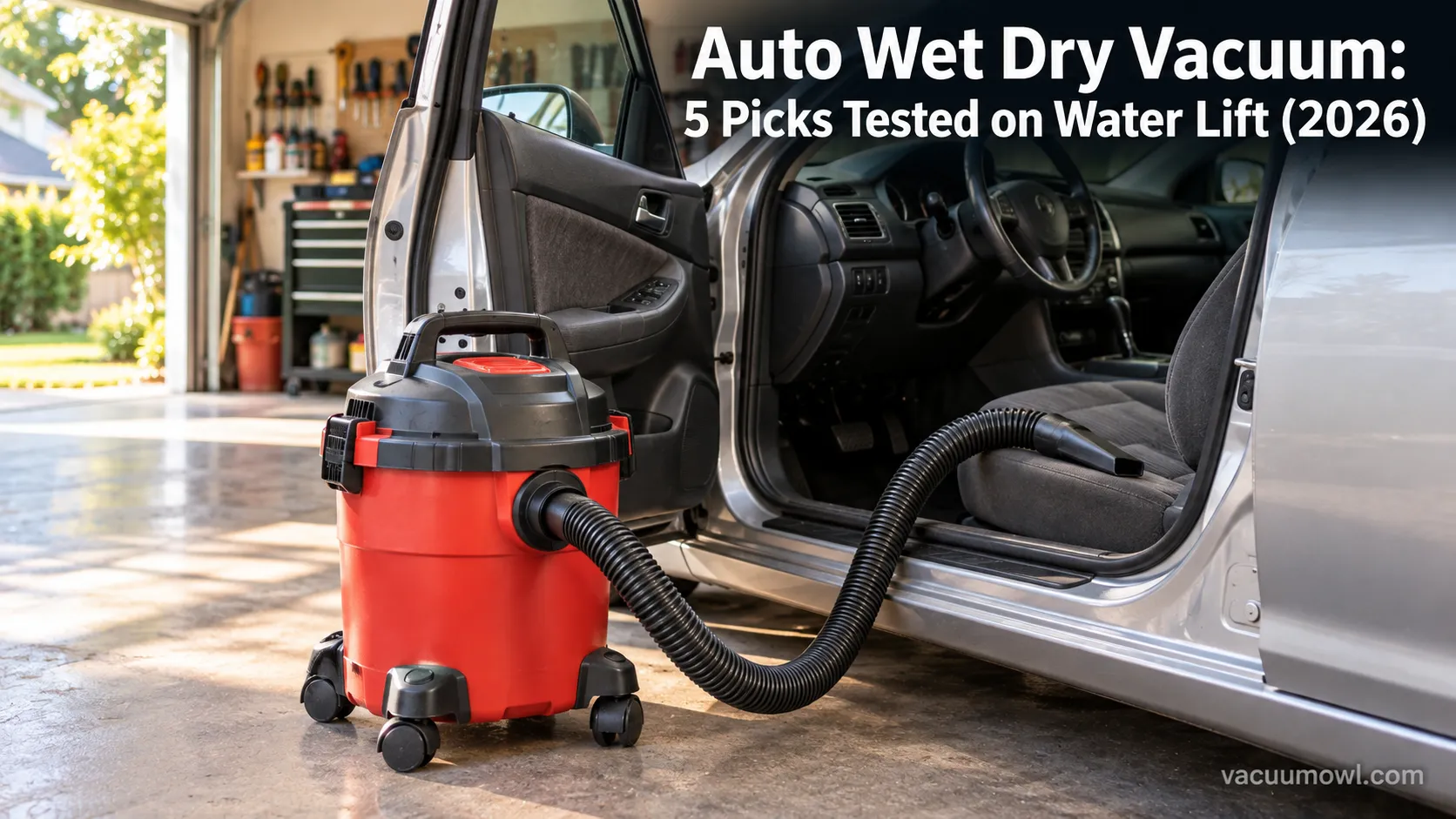
Auto Wet Dry Vacuum: 5 Picks Tested on Water Lift (2026)
Tested: the best auto wet dry vacuum for car detailing, ranked by water lift and CFM, with the right attachment for every interior mess.
Vacuum Types
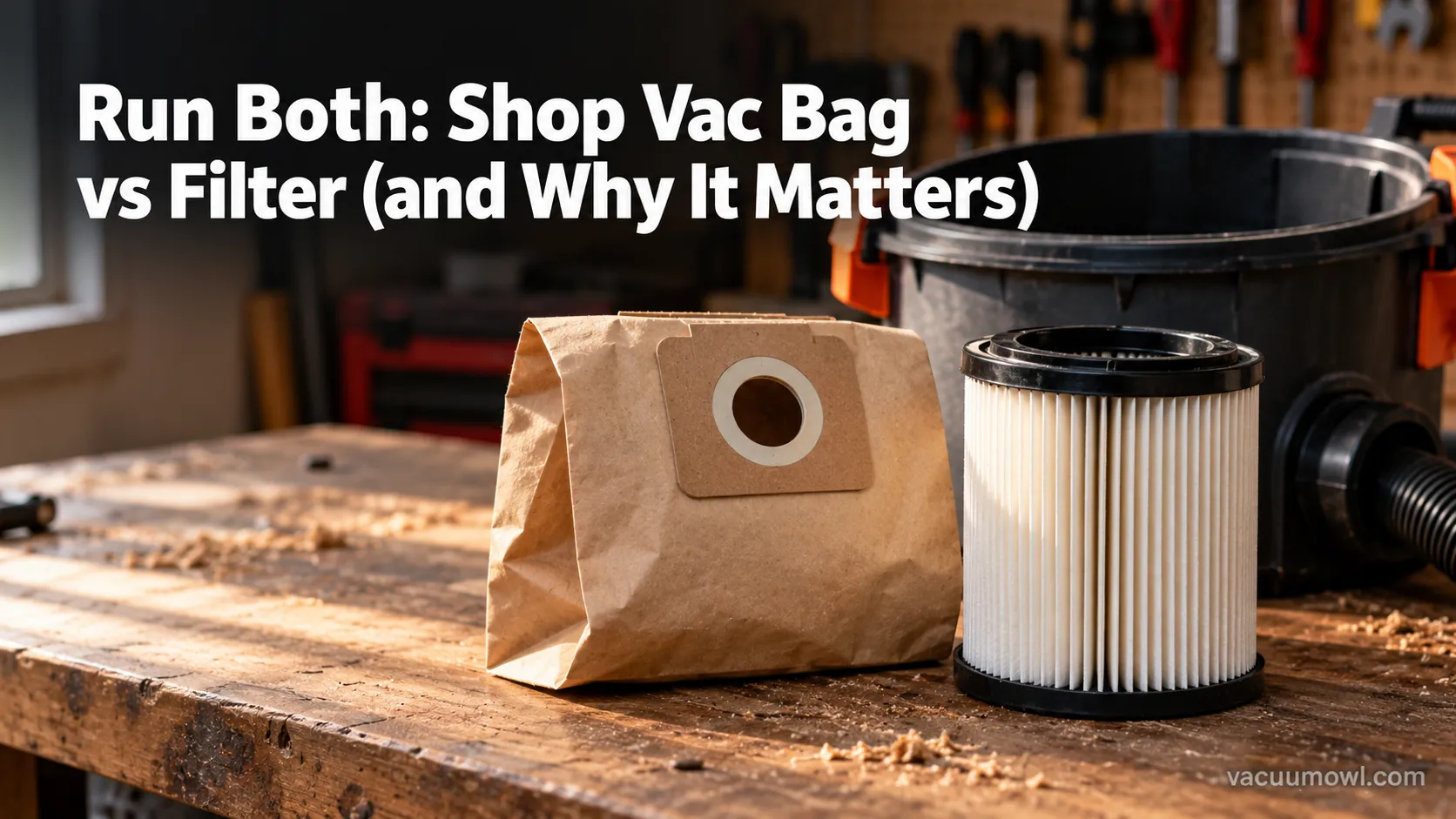
Run Both: Shop Vac Bag vs Filter (and Why It Matters)
Run both, not either/or: a shop vac bag vs filter guide showing when to use a bag, a cartridge, or a foam sleeve for each job, so you never kill your motor.
The discussion
Comments
Every comment is reviewed before it goes live.