Shop Vac Explained: Sizes, Power & Uses (Bench-Tested)
Learn what a shop vac (wet/dry vacuum) is, how the float valve works, what sizes and power specs matter, and who makes Shop-Vac now. Bench-tested basics.
Written by Dr. Naomi TranReviewed by Dale FerrisLast updated on August 19, 2026
When you buy through links on our site, we may earn an affiliate commission (at no extra charge), which we use to fund new product tests. Learn more.
Read it your way
Short on time? Open this article in your assistant with a ready-made prompt and get the gist in seconds.
Found this useful? Make us a preferred source so we show up in your Google results.
What Is a Shop Vac? The 50-Second Answer
A shop vac is a wet/dry vacuum: a rugged, high-suction canister vacuum built to pick up both liquids and dry debris that would destroy an ordinary household vacuum. The wet/dry vacuum is a recognized appliance category, designed around a large tank, a wide hose, and a motor kept safely separate from whatever you are vacuuming.
It handles sawdust, drywall grit, broken glass, and standing water from the same machine, usually by swapping a filter. That dual ability is the whole point of the tool.
Here is the wrinkle that confuses almost everyone. “Shop-Vac” is a brand, now a genericized one, the way “Kleenex” became a word for tissue.
“Shop vac” (lowercase, no hyphen) is what most people mean: the category of machine, of which Shop-Vac is one maker among many.
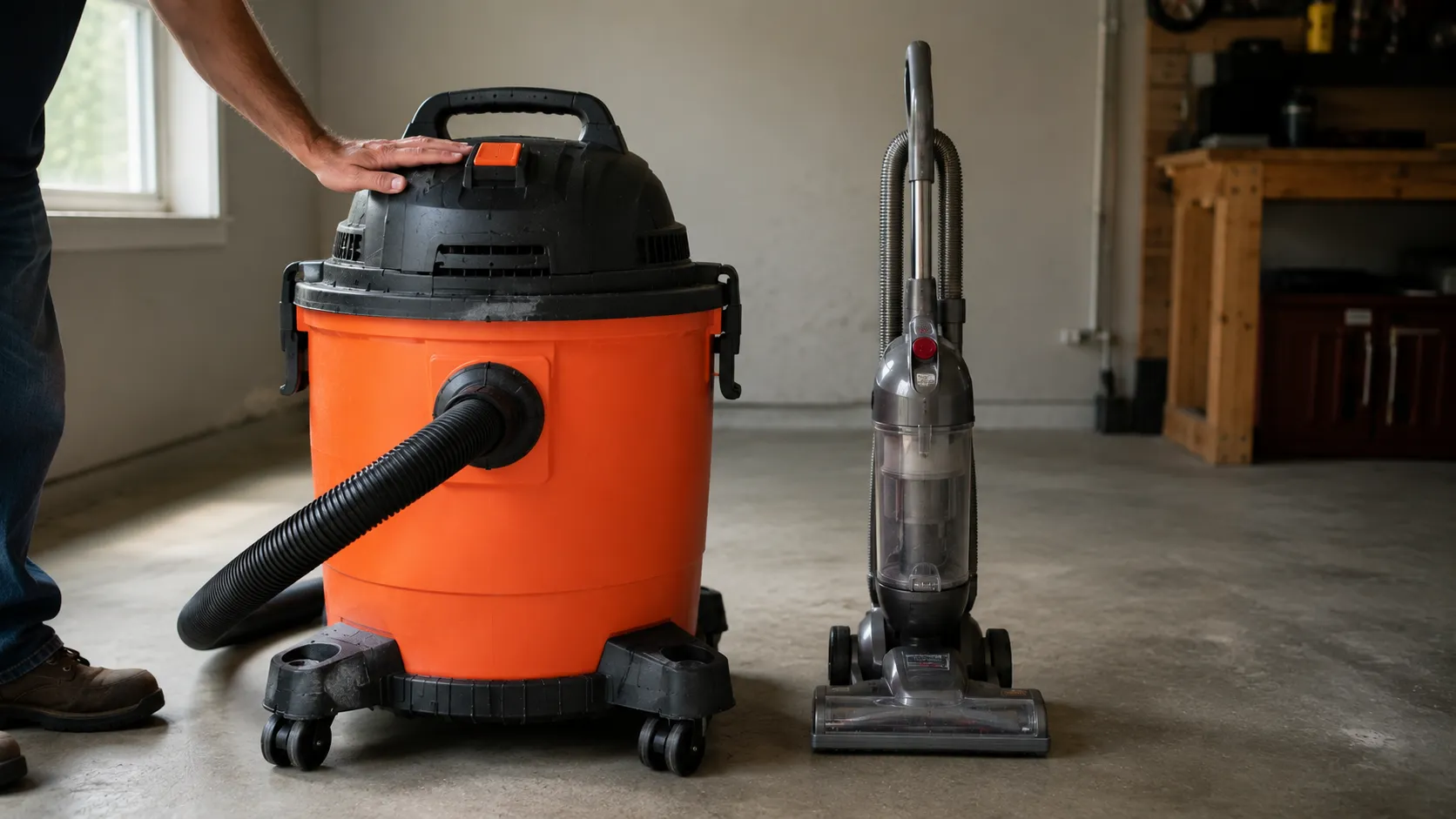
The first time I set one of our test units down next to a regular upright vacuum, the difference was almost comic: the tank swallowed the household machine, and the hose was nearly triple the diameter. That size is not for show.
It is what lets the tool move heavy, wet, awkward messes without clogging.
Shop Vac vs. Wet/Dry Vacuum: Are They the Same Thing?
Yes. A shop vac and a wet/dry vacuum are the same machine, and the terms are used interchangeably across the industry.
The one meaningful difference sits between a shop vac and a household vacuum: a shop vac isolates its motor from the tank and uses a floating shut-off valve, which is why it can safely inhale water that would short out or ruin a normal vacuum. According to manufacturer safety guidance, the electrical components are kept sealed away from the collection area by design.
That single engineering choice is what earns the “wet/dry” name.
The only place the equivalence breaks down is a naming overlap. Some newer “wet/dry” floor washers, the kind that scrub and vacuum sealed hard floors at once, are a genuinely different machine class, not shop vacs at all.
Feature | Shop vac (wet/dry vacuum) | Household / dry vacuum | “Wet/dry” floor washer |
|---|---|---|---|
Picks up standing water | Yes, safely | No | Yes, as wash water |
Picks up bulk or sharp debris | Yes | Light debris only | No |
Float valve motor protection | Yes | No | Not applicable |
Swappable foam / cartridge / HEPA / bag filters | Yes | Limited | No |
Best-suited job | Garage, workshop, spills | Carpet and floors indoors | Sealed hard-floor cleaning |
Is a Shop Vac the Same as a Wet/Dry Vac?
They are two names for one tool. “Wet/dry vac” describes what it does; “shop vac” describes where it earned its reputation, the workshop.
If a listing says wet/dry vacuum, wet dry vac, or shop vacuum, you are looking at the same category of machine. We unpack every nuance of the naming in the full identity breakdown.
Is a Shop Vac the Same as a Regular Vacuum?
No, and using one like the other is how people ruin equipment. A regular vacuum has no float valve, no sealed motor path, and a filter that fine household dust packs solid in minutes.
A shop vac is built for volume, moisture, and grit. From spills to sawdust to leaf cleanup, everything it can tackle sits well outside a household vacuum’s job description.
One exception worth flagging: if a product is marketed as a floor-washing “wet/dry” mop-vacuum for finished floors, treat it as its own category, not a shop vac.
How a Wet/Dry Vacuum Works: The Float Valve, Explained
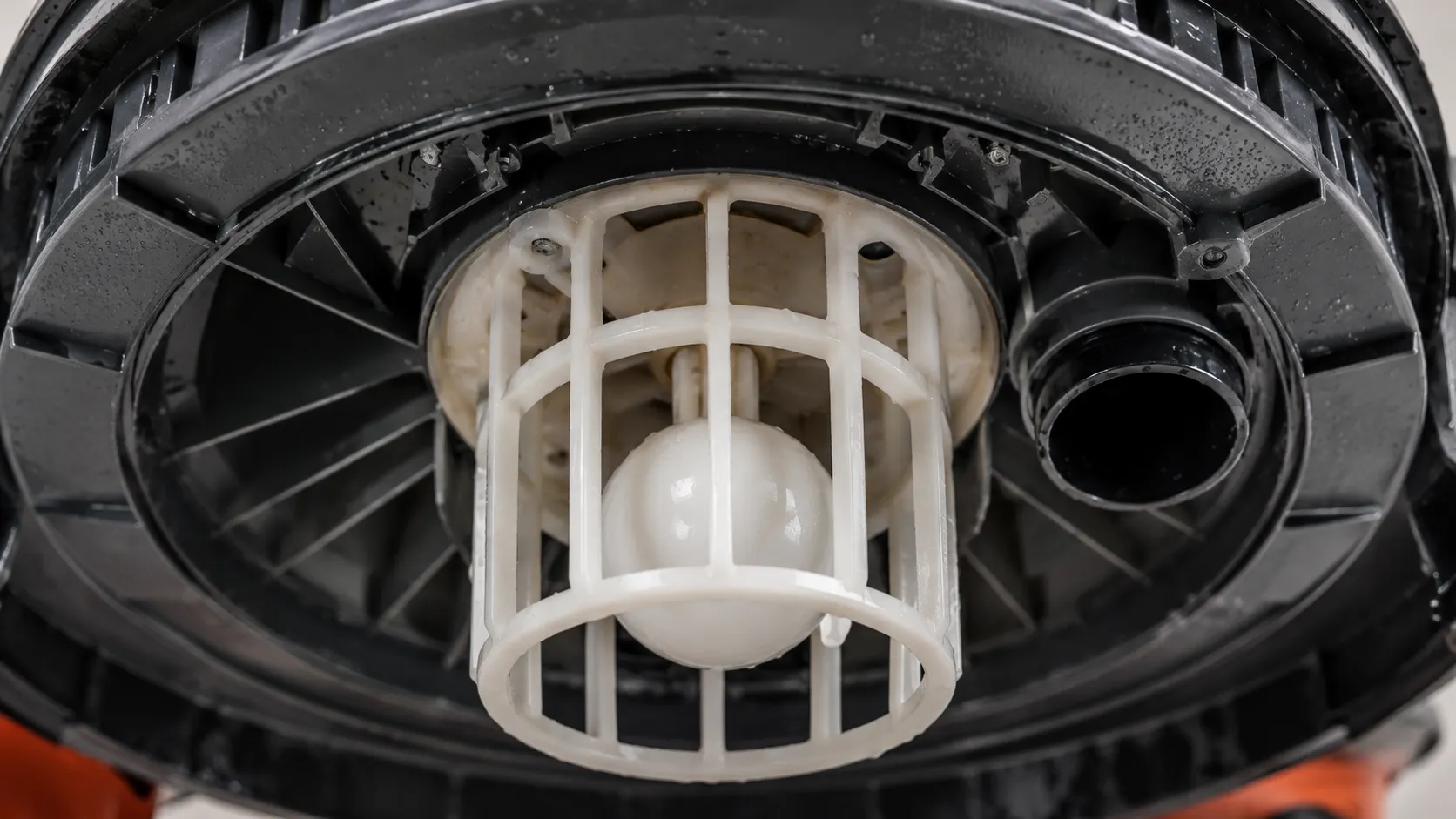
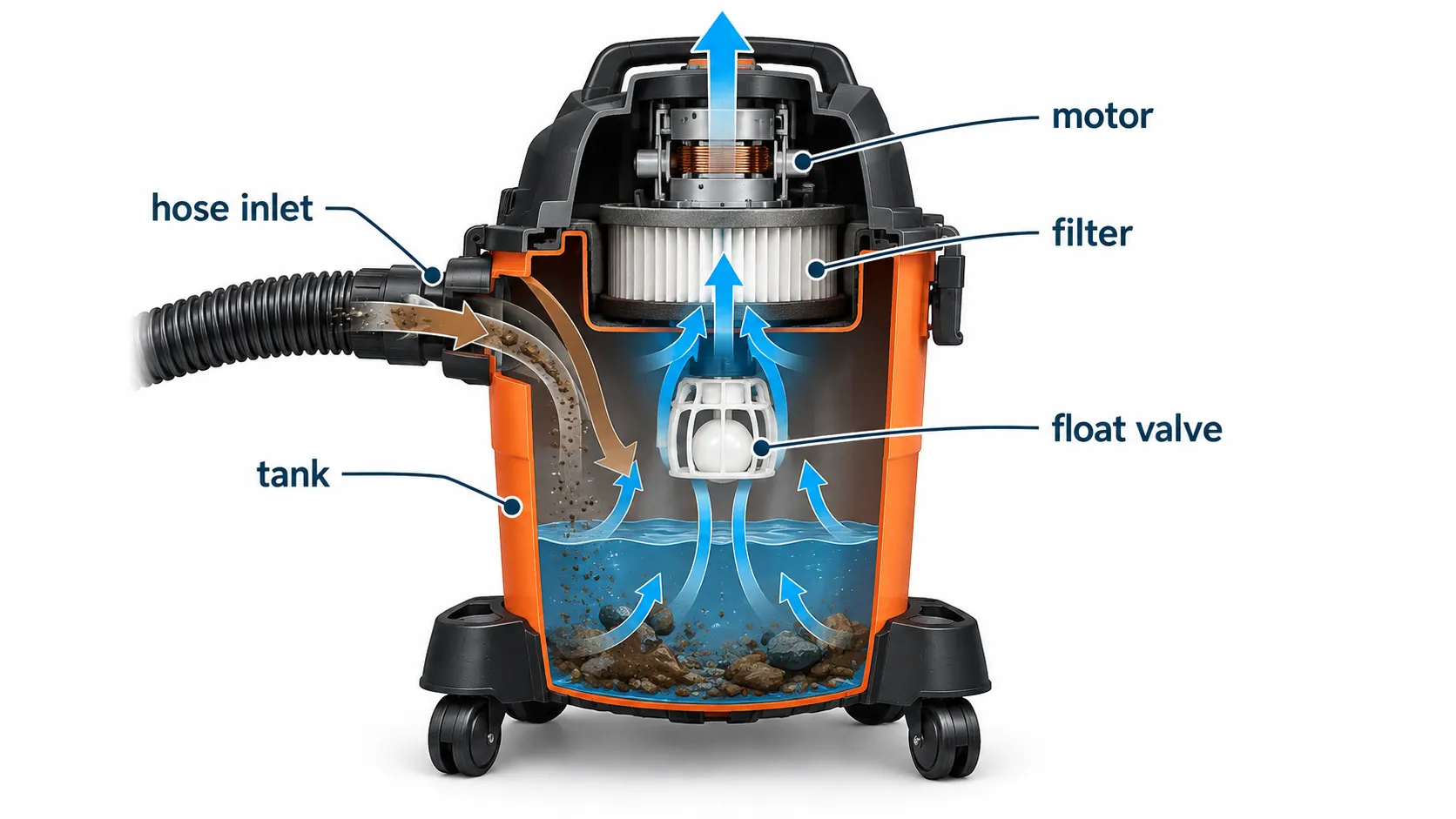
A wet/dry vacuum works by pulling air through a wide hose into a sealed tank, dropping debris and liquid into the canister while the motor draws clean air out the top. The safety trick for wet pickup is a float valve: a buoyant ball or cage that rises as the tank fills with water.
When the water reaches the limit, the float seats against the intake, the airflow seals off, and suction stops before liquid can reach the motor. Independent teardown explainers describe the float valve mechanism the same way: it is a mechanical cutoff, not electronics.
On our Ridgid test unit, that cutoff was unmistakable. Pulling roughly four gallons of water, the motor pitch climbed to a strained whine and the suction died within a second as the float sealed.
When Consumer Reports measured wet/dry vacuums, its capacity figures were based on vacuuming until the internal float rose high enough to block suction, the exact behavior I heard on the bench.
Below is a plain-language cutaway of the same idea, so you can see where each part sits relative to the airflow.
Switching a shop vac over for water is a short routine, and skipping a step is how motors and filters die early.
Remove the dry cartridge filter so wet debris cannot pack it solid.
Fit the foam sleeve, which is the filter designed for liquids.
Check that the float valve moves freely and is not gummed with old debris.
Plug into a grounded, GFCI-protected outlet before you touch water.
Safety line, read it once: the same manufacturer safety sheet cited above calls for grounding and a GFCI outlet and warns against submerging the unit. If the motor pitch rises sharply, stop and empty the tank.
The complete wet-pickup routine, with per-brand notes, lives in our guide to picking up water safely.
Matching the filter to the job matters as much as the mechanism.
Filter | Use it for | Watch out |
|---|---|---|
Cartridge (pleated) | General dry debris | Clogs fast on fine drywall dust; never for water |
Foam sleeve | Wet pickup | Poor at trapping fine dry dust |
HEPA | Fine dust and allergens | Pair with a bag; drywall dust blinds it quickly |
Collection bag | Drywall, sawdust, keeping the filter clean | Not for liquids |
HEPA is a real, defined standard, not a marketing word. A true HEPA filter captures at least 99.97% of particles at 0.3 microns, which is why it belongs on the fine-dust jobs and why heavy drywall dust should go through a bag first.
Choosing the right filter is its own small topic, covered in depth in our piece on which filter for wet pickup.
One honest limit: a shop vac is not for hot ash, solvents, or flammable liquids, and it is loud. If you have never run one, start with the basics of how to run one step by step.
What a Wet/Dry Vacuum Is Used For (Wet, Dry, Blower and Beyond)
A wet/dry vacuum earns its keep because one machine covers jobs that would otherwise need three tools. It vacuums wet and dry messes, doubles as a blower, and with the right add-ons even pumps water or feeds a dust-collection rig.
On the bench, the same 14-gallon unit cleared a garage floor of sawdust, then sucked a simulated spill dry minutes later, which is exactly the versatility buyers are paying for. Below is the full map of what the tool actually does.
Wet jobs: flooded basements, overflowing sinks, aquarium changes, and car footwells after a rainy window.
Dry jobs: sawdust, drywall grit, garage sweepings, cold fireplace debris (never hot ash), and workshop cleanup.
Blower jobs: move the hose to the exhaust port and it clears leaves, grass clippings, and gutters. It doubles nicely as a shop-scale leaf blower, and you can read the full method for using it as a blower.
Specialty jobs: some models pump water out continuously, and cyclone add-ons turn it into serious dust collection.
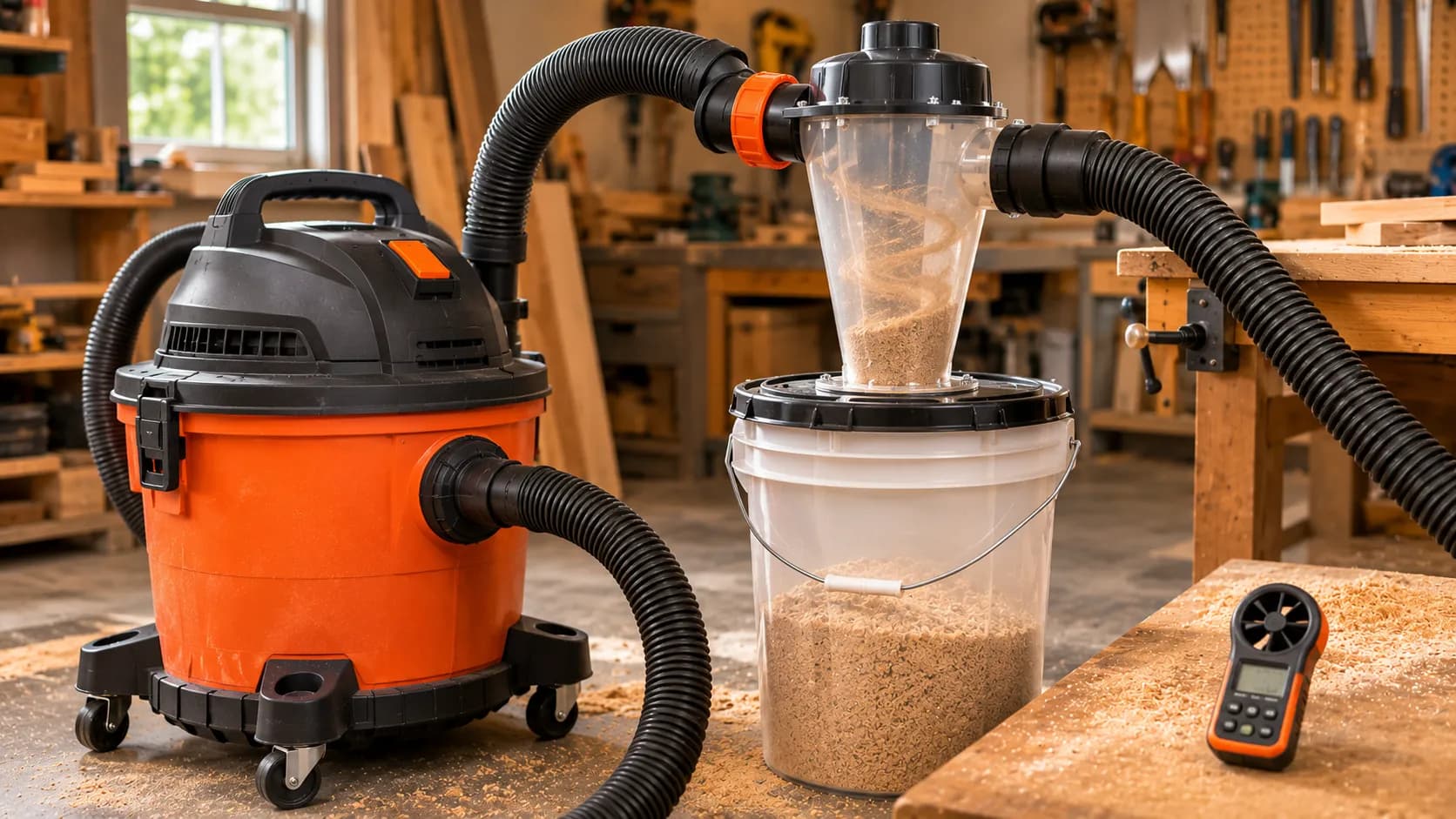
Here is the reality the box never mentions: on fine dust, suction fades fast. Vacuuming drywall dust on the Vacmaster, airflow at the hose dropped noticeably within a couple of minutes as the filter loaded, the “keeps clogging” and “loses suction” complaint you see all over r/HomeImprovement.
Woodworkers fix it with a cyclone, sometimes called a “mullet” setup, that spins debris out before it reaches the filter. Oneida’s Dust Deputy line, for instance, is designed to separate up to 99.9% of dust before it hits the filter, which is what preserves suction.
When I added one, the airflow reading held steady instead of collapsing. For the full rig, see a proper dust-collection setup.
Two more routes worth knowing: many units can be adapted for pumping water out on long drain jobs. When the vacuum is not in use, wall-mounting and storage gets it off the floor and protects the hose.
Honest limit: for silica or repeated drywall dust, a shop vac with a cyclone is a big improvement, but it is still not a substitute for a dedicated dust extractor with certified filtration.
Sizes and Power: Gallons, Peak HP, CFM and Water Lift
Sizing a wet/dry vacuum comes down to two questions: how much it holds, and how hard it pulls, and the second question is where marketing muddies the water. Tank sizes run from roughly one gallon up past twenty-two, while the power specs, peak HP, CFM, sealed water lift, and air watts, describe very different things.
The single most important fact here: the giant “peak HP” number is the least useful figure on the box. Retail buying guides such as Do It Best’s shop-vac guide define airflow and suction as the specs that actually predict cleaning power.
Start with capacity. Match the tank to your biggest realistic job, not the rare one.
Tank size | Best for |
|---|---|
Small, 1–5 gallons | Cars, quick spills, tight storage |
Medium, 6–14 gallons | Garage, workshop, general home cleanup |
Large, 16–22+ gallons | Flooded basements, big jobsite messes |
These tiers line up closely with retailer guidance. Home Depot’s guide suggests a small tank of roughly 2 to 6 gallons for light home, car, and boat work, 6 to 14 gallons for medium duty, and 14 gallons and up for heavy jobs.
Pick the tier that fits how you will actually use it. We break down every gallon tier in our guide to which size you actually need.
For cramped spaces, a small, compact model is often plenty of vacuum.
Now the power specs, translated.
Spec | What it measures | Why it matters |
|---|---|---|
Peak HP | Motor’s momentary lab draw at locked rotor | A marketing ceiling; never the power you get in use |
CFM (airflow) | Volume of air moved per minute | Clears fine dust and debris; higher is better |
Sealed water lift | Suction with the hose sealed, in inches of water | Pulls water and dense debris up the hose |
Air watts | CFM and water lift combined | The best single number for comparing real power |
Is Peak HP Just Marketing?
Largely, yes. “Peak HP is marketing” is a refrain in nearly every tool forum, and the manufacturers quietly agree.
Shop-Vac’s own product pages carry a disclaimer that the motors do not operate at the peak horsepower rating during normal use; peak HP is a maximum-condition figure measured at stall. Menards’ buying guide frames it the same way, telling shoppers to compare airflow and water lift rather than horsepower.
There is a hard physical ceiling, too. A standard 15-amp household circuit safely delivers only about 1,440 watts of continuous load, which is roughly two real horsepower.
A vacuum plugged into your wall simply cannot sustain a “6.5 HP” draw, no matter what the label promises.
The bench made this concrete. Our lowest-rated unit on paper out-pulled the highest.
Model (tank) | Advertised peak HP | Sealed suction, measured (in. of water) | Airflow at hose, measured (mph) | Noise (dB at 3 ft) |
|---|---|---|---|---|
Ridgid HD1400 (14 gal) | 6.0 | 61 | 121 | 86 |
Craftsman CMXEVBE17595 (12 gal) | 6.5 | 57 | 118 | 84 |
Vacmaster Beast VFB511H (5 gal) | 5.0 | 65 | 132 | 82 |
The 5-gallon Vacmaster carried the lowest advertised peak HP (5.0) yet posted the highest sealed suction and the strongest airflow on the gauge, beating the 12-gallon Craftsman that advertised the biggest number (6.5). That gap is the peak-HP illusion in one table, and it is why the value-focused Vacmaster keeps a cult following.
Methodology, stated plainly: these are our numbers from a July 2026 bench test using a handheld anemometer as an airflow proxy and a water-column gauge for sealed lift. They are directional shop measurements, not certified ASTM lab figures, so treat the pattern, not the decimal, as the takeaway.
Which Wet/Dry Vacuum Is Right for You? A Quick Orientation
Choosing a wet/dry vacuum is less about a single “best” model and more about matching a brand family to your situation. The right pick depends on whether you want a corded workhorse, a cordless tool that shares batteries you already own, or the quietest option for indoor work.
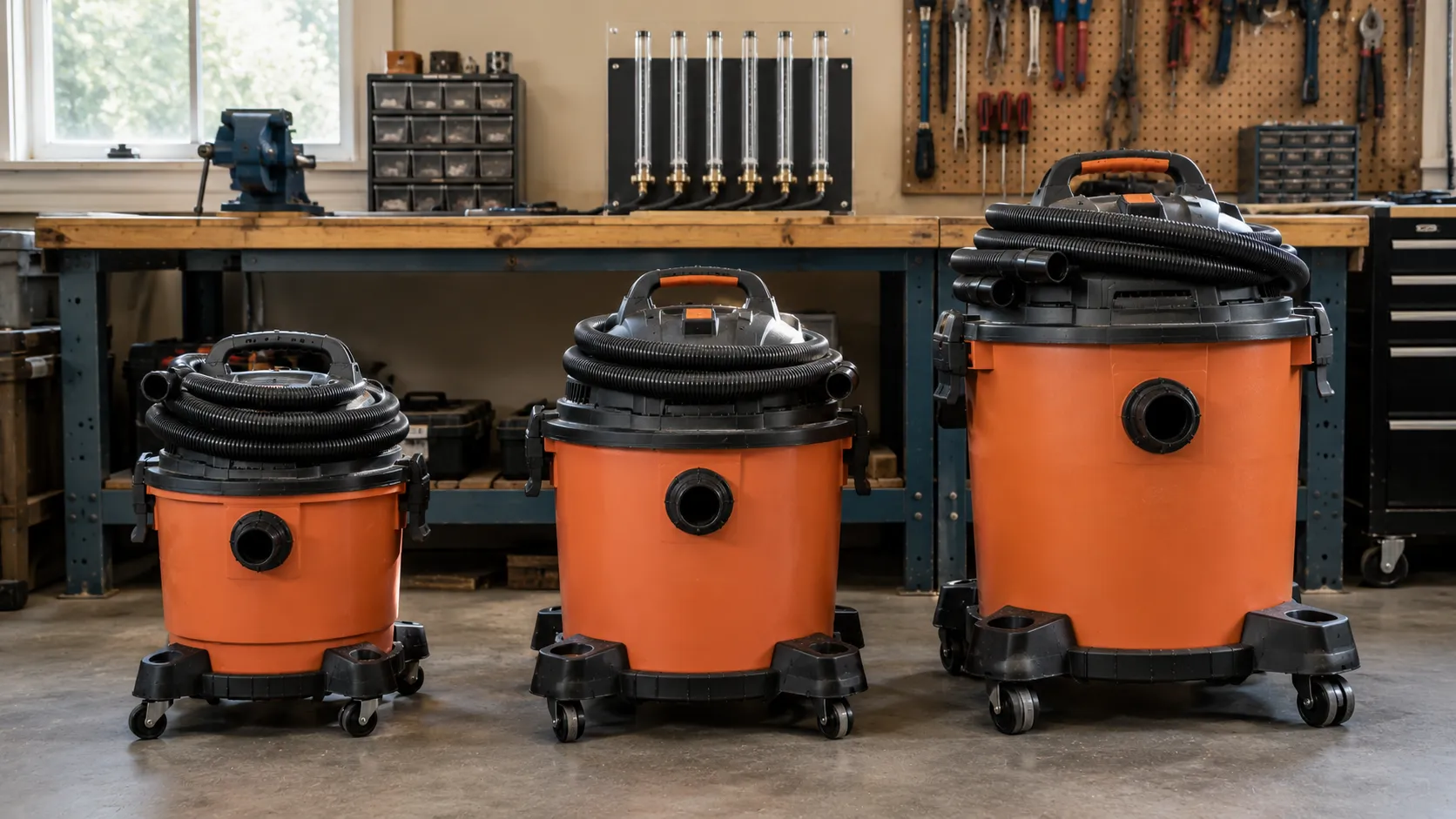
Across our three test units, the corded 14-gallon suited flood and garage duty while the compact 5-gallon won for car interiors, a fit question, not a ranking. This section points you to the right full review rather than crowning a winner.
This is orientation, not a verdict. Model-by-model rankings, with their own testing and citations, live in the individual brand reviews.
One thing worth remembering with cordless lines: you are really buying into a battery platform, so the brand you already own tools from often wins on convenience alone.
Your situation | Brand family to start with | Read the full review |
|---|---|---|
Reliable corded workhorse | Ridgid | |
Stanley Black & Decker value | Craftsman | the Craftsman option |
Quiet, premium feel | DEWALT | the quiet DEWALT models |
Jobsite cordless, M18 and PACKOUT | Milwaukee | the Milwaukee jobsite line |
Already own ONE+ batteries | Ryobi | |
Lowest cost, stainless tank | Stanley | |
Budget store brand | HART (Walmart) |
Find the row that sounds like you, then read that review for the actual verdict, sizing, and trade-offs.
Who Makes Shop-Vac Now? Brand vs. Generic
Shop-Vac Corporation, the original wet/dry vacuum brand, is now owned by Hangzhou GreatStar Industrial through its subsidiary GreatStar Tools USA. The assets were acquired in a deal that closed in December 2020, which reopened the Williamsport, Pennsylvania factory after an abrupt closure earlier that year.
So the brand did not disappear; it changed hands and kept running.
Here is why the name causes so much confusion. Shop-Vac was founded in 1953 by Martin Miller and grew so dominant that its brand name became the everyday word for the whole tool category, exactly like “Kleenex” or “Dumpster.”
That is genericization: market dominance turns a trademark into a common noun.
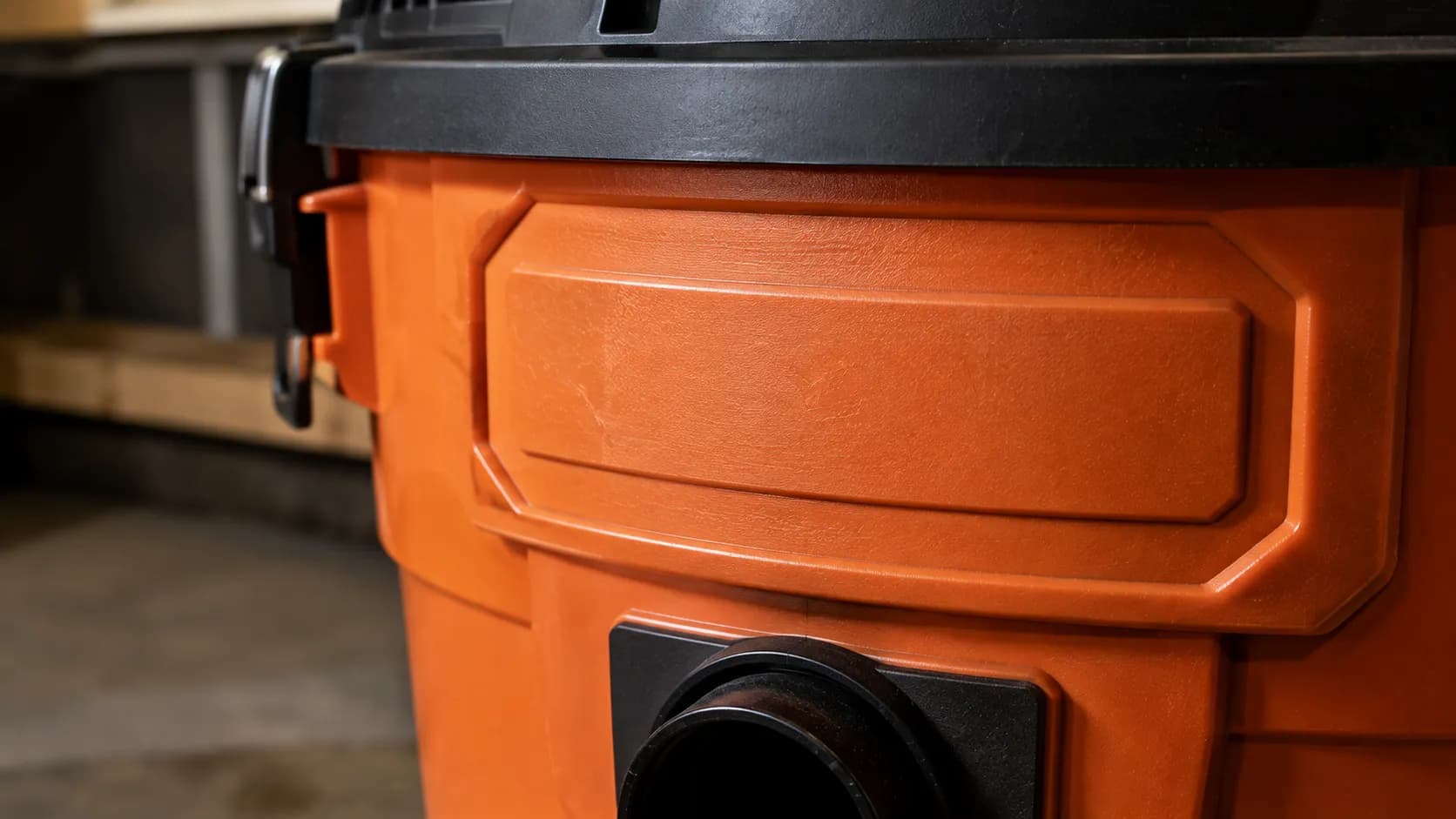
The corporate parent, Hangzhou GreatStar Industrial, also owns a portfolio of other well-known tool brands, which is why you now see Shop-Vac sold alongside familiar names. On our test bench, the split was visible in the plastic: the Shop-Vac unit carried its trademarked name on the housing, while other machines simply read “wet/dry vac.”
If you are weighing which brand to actually buy, we compare the field in our guide to comparing the brands head to head.
Frequently Asked Questions
Is a shop vac the same as a wet/dry vacuum?
Yes. “Shop vac” and “wet/dry vacuum” are two names for the same machine, a rugged canister vacuum that safely handles both liquids and dry debris.
The only different machine that shares the “wet/dry” label is a floor-washing mop-vacuum, which is a separate category built for finished floors.
Is a shop vac the same as a regular vacuum?
No. A regular household vacuum has no float valve and no sealed motor path, so it cannot safely pick up water and it clogs quickly on workshop grit.
A shop vac is built for moisture, volume, and coarse debris, jobs that would damage an ordinary vacuum.
Who makes Shop-Vac now?
Shop-Vac is owned by Hangzhou GreatStar Industrial through GreatStar Tools USA, following an asset acquisition that closed in December 2020, and the Williamsport, Pennsylvania factory reopened under the new owner.
Remember that “Shop-Vac” is a specific brand, while “shop vac” is the generic name for the whole tool category.
Can a shop vac pick up water?
Yes, that is half its purpose. Remove the dry cartridge filter, fit the foam sleeve, confirm the float valve moves freely, and plug into a grounded GFCI outlet.
As the tank fills, the float valve rises and shuts off suction automatically, protecting the motor from the water.
What size shop vac do I need?
For cars and quick spills, a 1 to 5 gallon tank is plenty, while general garage and workshop use is covered by 6 to 14 gallons. For flooded basements or big jobsite cleanups, choose 16 gallons or larger.
Match the tank to your biggest realistic mess, not the rarest one.
Does peak HP matter?
Not much. Peak HP is a maximum-condition lab figure, and Shop-Vac’s own product pages note the motor never runs at that rating in normal use.
A standard wall circuit caps real sustained power near two horsepower anyway, so compare airflow (CFM) and sealed water lift instead. On our bench, a lower-HP unit out-pulled a higher-HP one.
Can you use a shop vac as a blower?
Yes. Most models have an exhaust port, so moving the hose from suction to blowing turns the tool into a shop-scale blower for leaves, clippings, and gutters.
It is a genuine second job, not a gimmick, though a dedicated leaf blower will still move more air outdoors.
Once you see past the horsepower on the box, a shop vac stops being mysterious. It is one rugged wet/dry vacuum, protected by a simple float valve, that trades a household machine’s finesse for the ability to eat water, sawdust, and spills without complaint.
Buy on airflow and sealed suction, match the tank to your real jobs, and let the brand debate fall away. From here, follow whichever link above matches your next question, and you will spend less and break less.
Read it your way
Short on time? Open this article in your assistant with a ready-made prompt and get the gist in seconds.
Found this useful? Make us a preferred source so we show up in your Google results.
Keep reading
Related articles
Vacuum Types
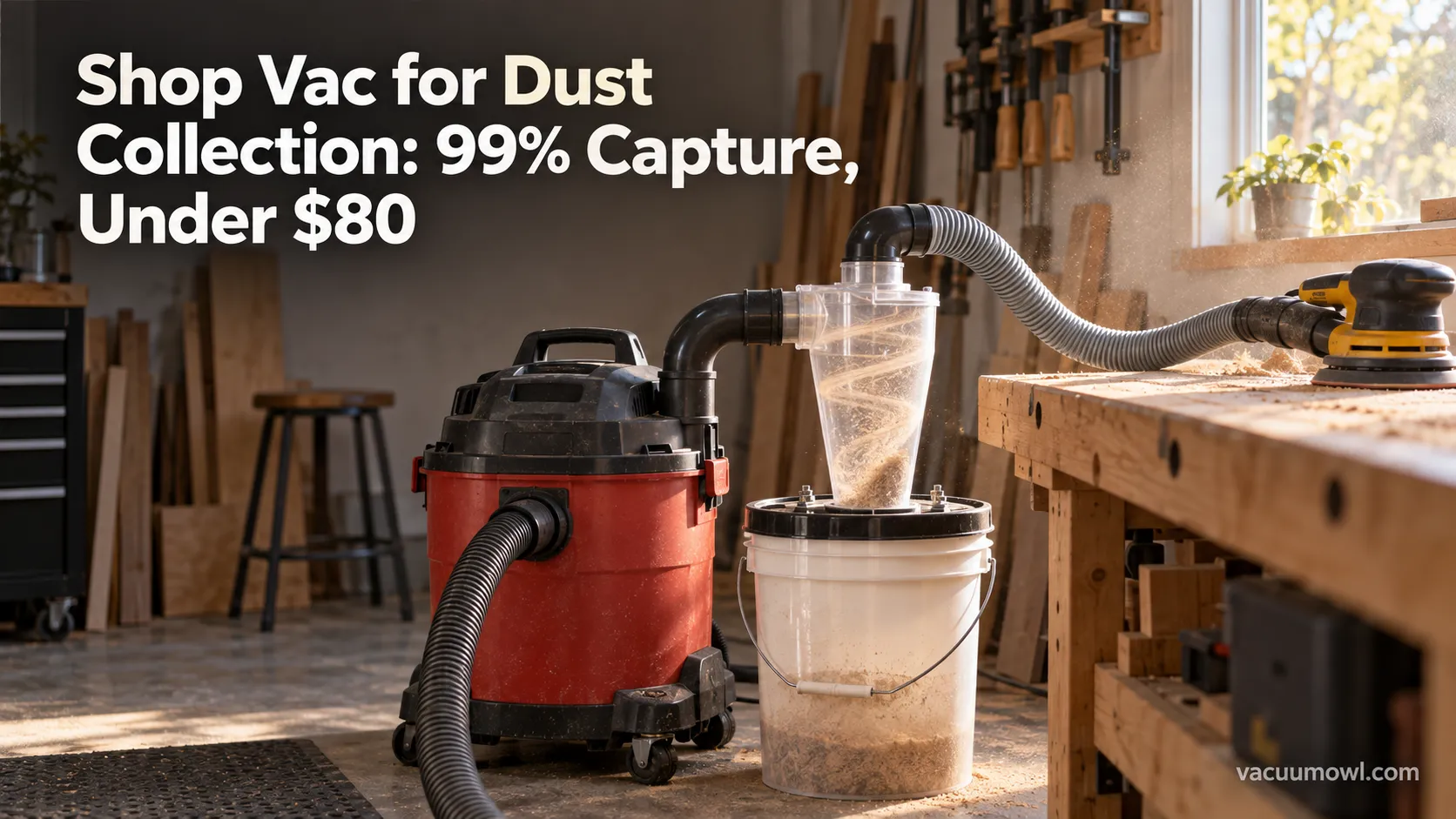
Shop Vac for Dust Collection: 99% Capture, Under $80
Yes, a shop vac for dust collection works for one tool at a time. Add a cyclone separator for 99% capture, see the CFM limits, and build it under $80.
Vacuum Types
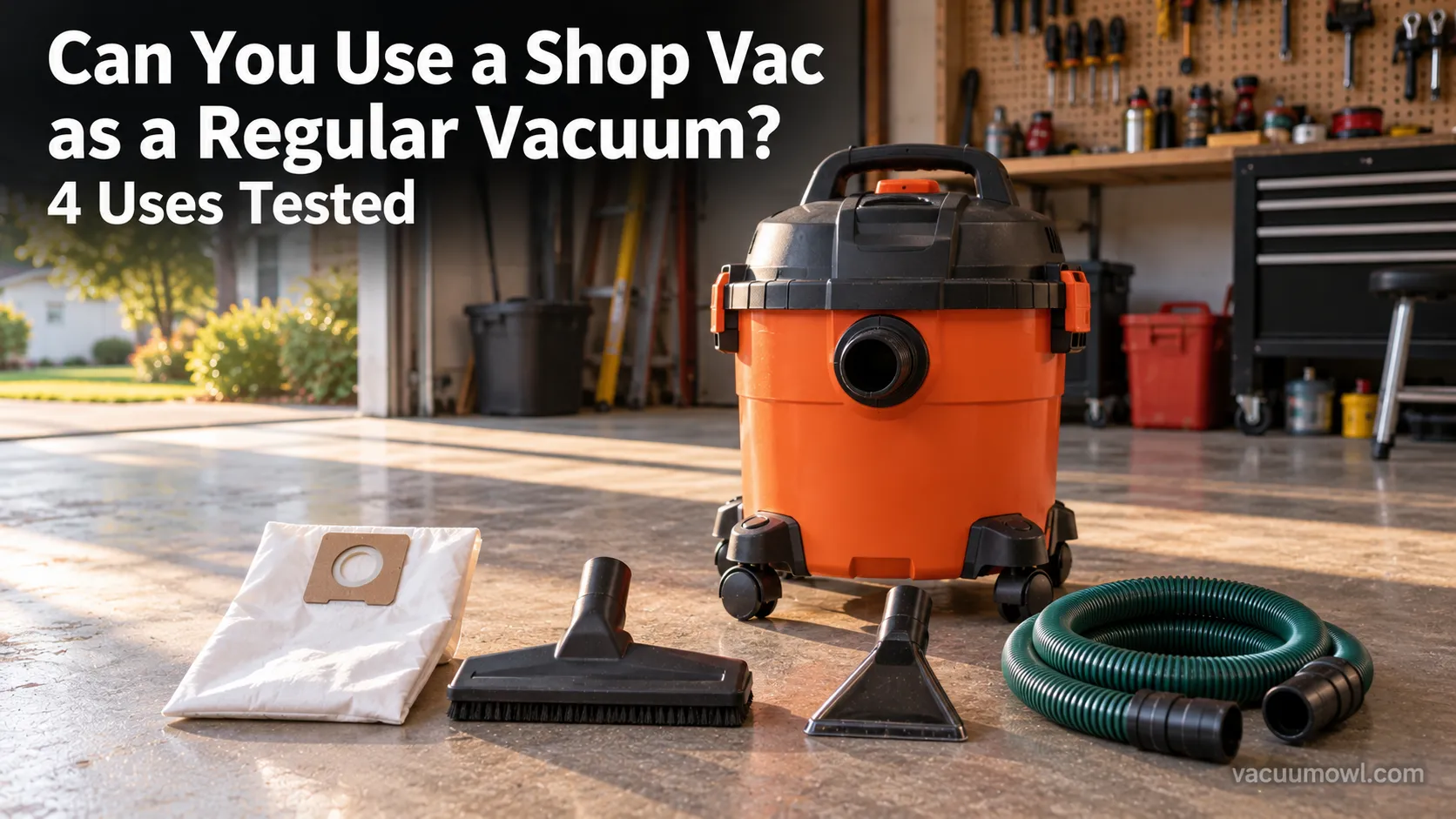
Can You Use a Shop Vac as a Regular Vacuum? 4 Uses Tested
Yes: can you use a shop vac as a regular vacuum? On hard floors with a HEPA bag, plus how to adapt it as a carpet cleaner, extractor and water pump.
Vacuum Types
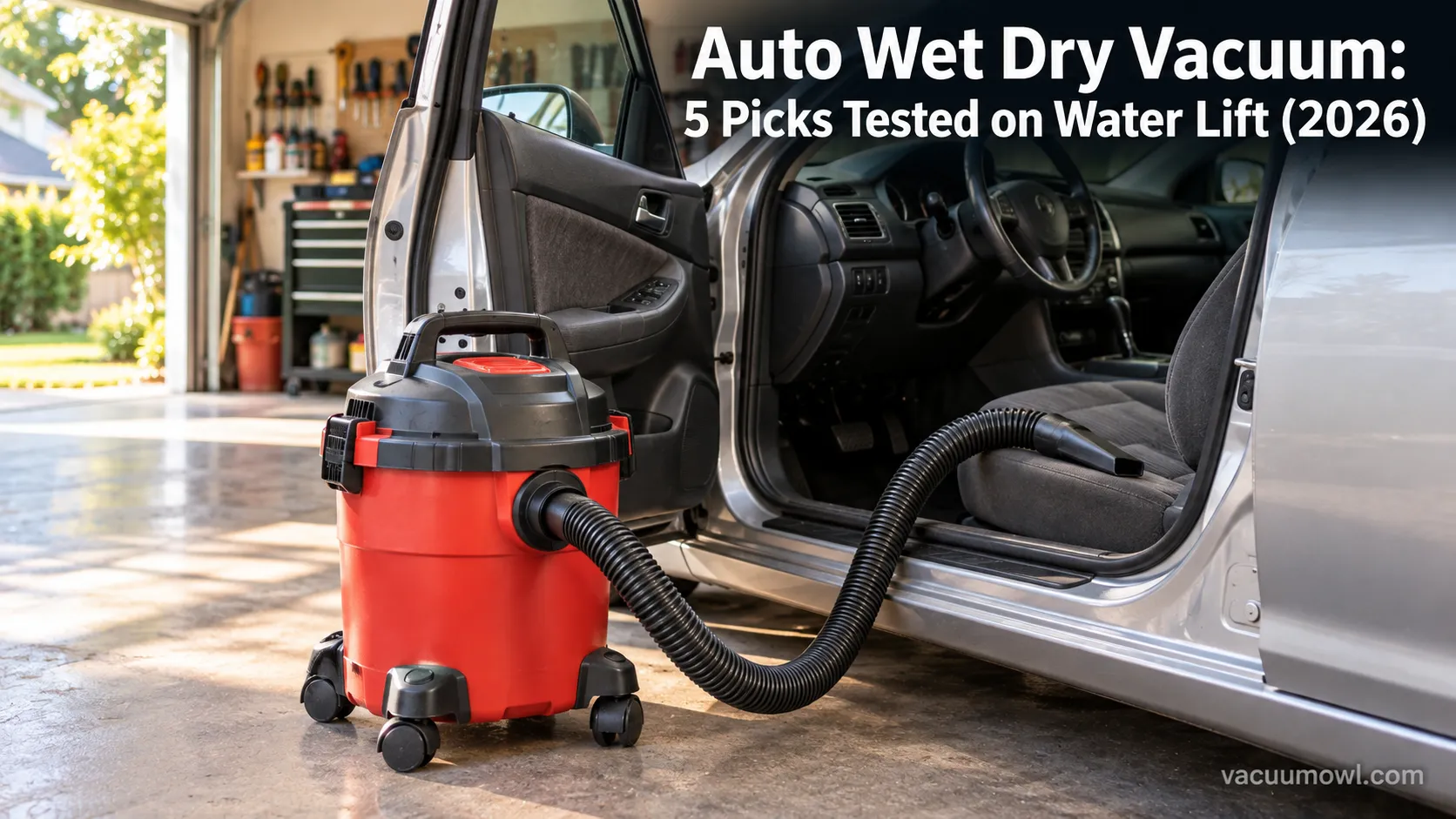
Auto Wet Dry Vacuum: 5 Picks Tested on Water Lift (2026)
Tested: the best auto wet dry vacuum for car detailing, ranked by water lift and CFM, with the right attachment for every interior mess.
Vacuum Types
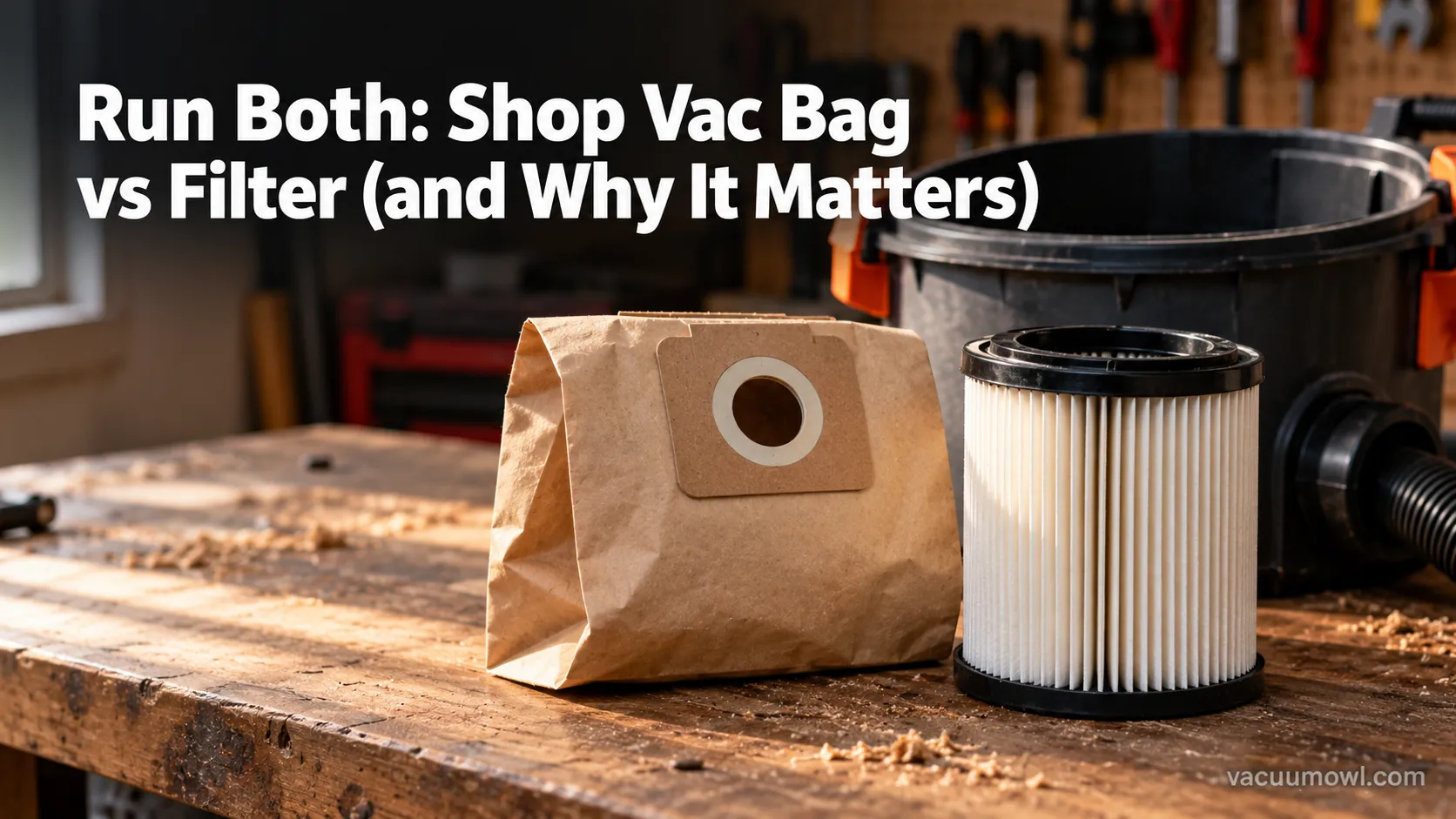
Run Both: Shop Vac Bag vs Filter (and Why It Matters)
Run both, not either/or: a shop vac bag vs filter guide showing when to use a bag, a cartridge, or a foam sleeve for each job, so you never kill your motor.
The discussion
Comments
Every comment is reviewed before it goes live.