Wreck-Proof: Shop Vac Water Setup, Step by Step
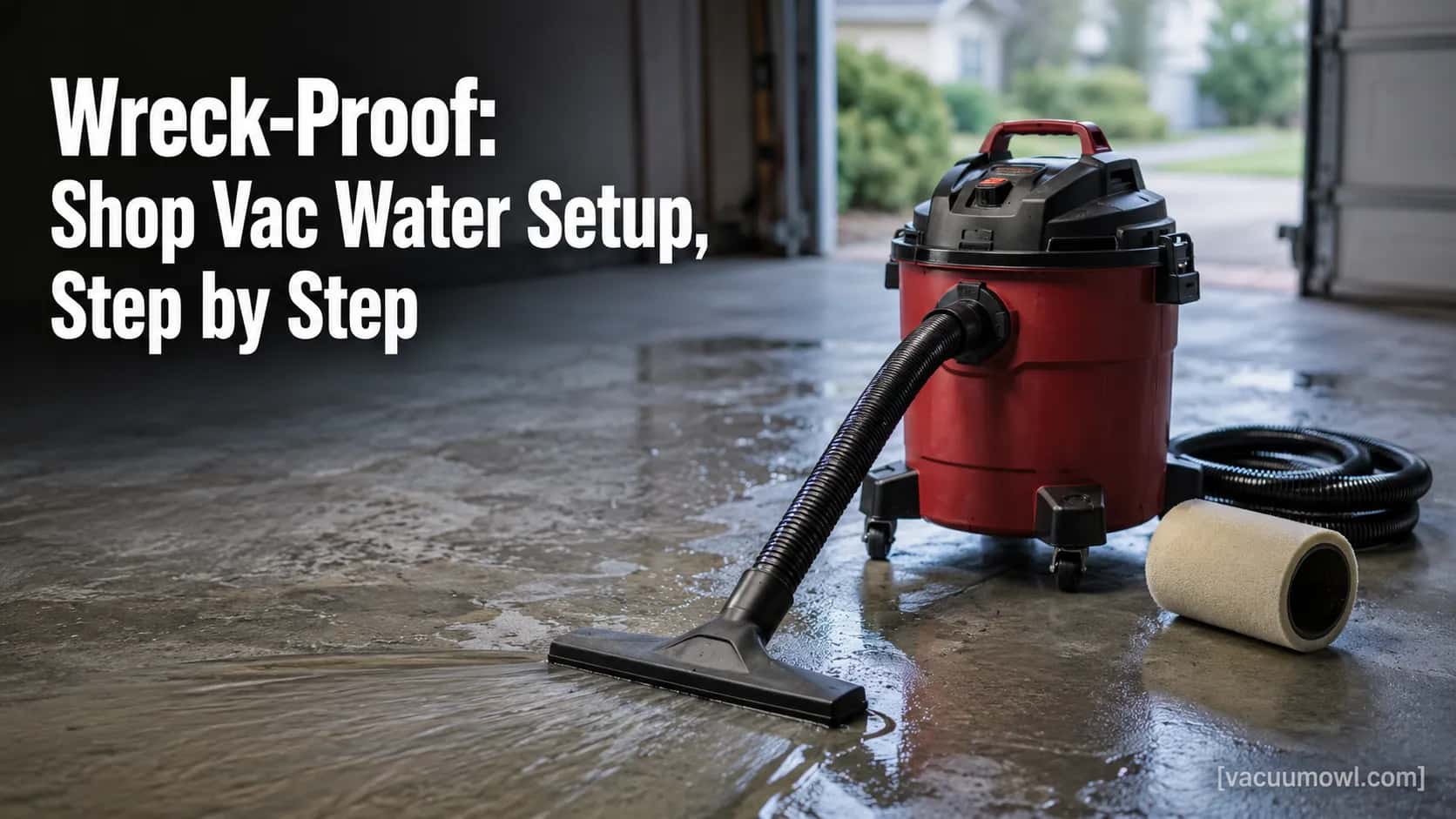
Set up a shop vac water pickup right: pull the paper filter, add a foam sleeve, mind the float, and dry within 48 hours to stop mold.
Written by Dr. Naomi TranReviewed by Dale FerrisLast updated on August 19, 2026
When you buy through links on our site, we may earn an affiliate commission (at no extra charge), which we use to fund new product tests. Learn more.
Read it your way
Short on time? Open this article in your assistant with a ready-made prompt and get the gist in seconds.
Found this useful? Make us a preferred source so we show up in your Google results.
The washing machine let go while I was out, and I came home to half an inch of water creeping across the basement. My shop vac cleared it in twenty minutes, but only because I stopped to swap the filter first. Skip that one move and shop vac water pickup goes from easy win to a fried motor and a musty smell that lingers for months.
This guide is the practical version of that lesson: the filter to pull, the one your model actually needs, the sound that means stop, and the drying routine that beats mold. Everything below comes from a wet-pickup test session I ran across four brands in August 2026.
Can a Shop Vac Suck Up Water?
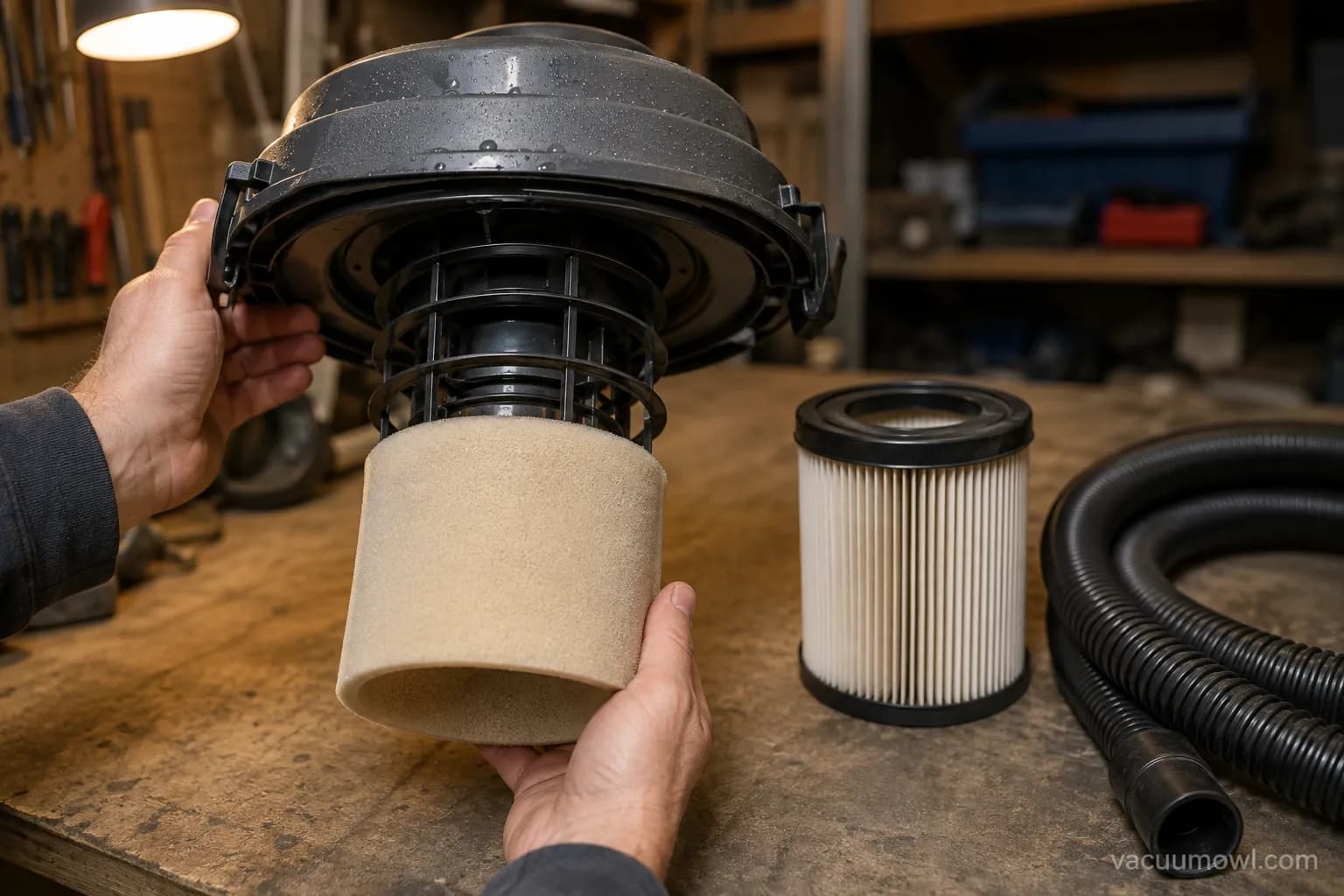
Yes, a shop vac (wet/dry vacuum) can suck up water. Before you start, remove the dry paper or cartridge filter and, if your model uses one, fit the foam sleeve over the filter cage, which keeps water out of the motor while air still flows.
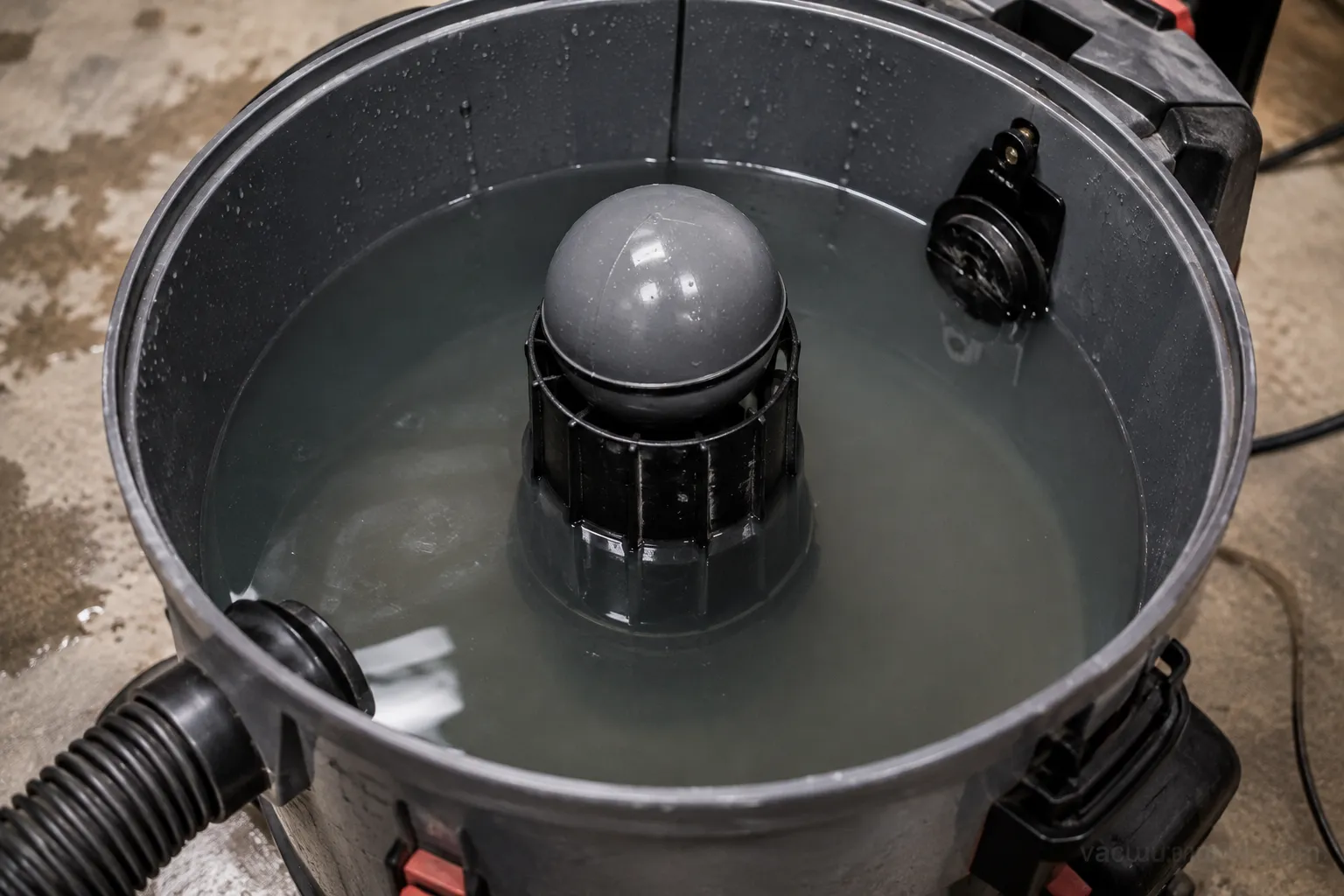
A built-in float shuts the motor off automatically when the tank fills, and the manufacturer’s own guidance names the foam sleeve as the correct filter for wet pickup.
The 30-second answer: pull the paper filter, add the foam sleeve if you have one, plug into a GFCI outlet, and vacuum in overlapping passes. Stop the moment the tank is full or the motor pitch rises, then drain and dry.
The catch most quick guides skip is that “remove the filter” is not identical on every machine. Some models run filterless, some need a specific foam sleeve, and a few ship a dual-purpose cartridge that stays in. The rest of this page sorts out which one is yours.
Shop Vac and Water: Why You Swap the Filter First
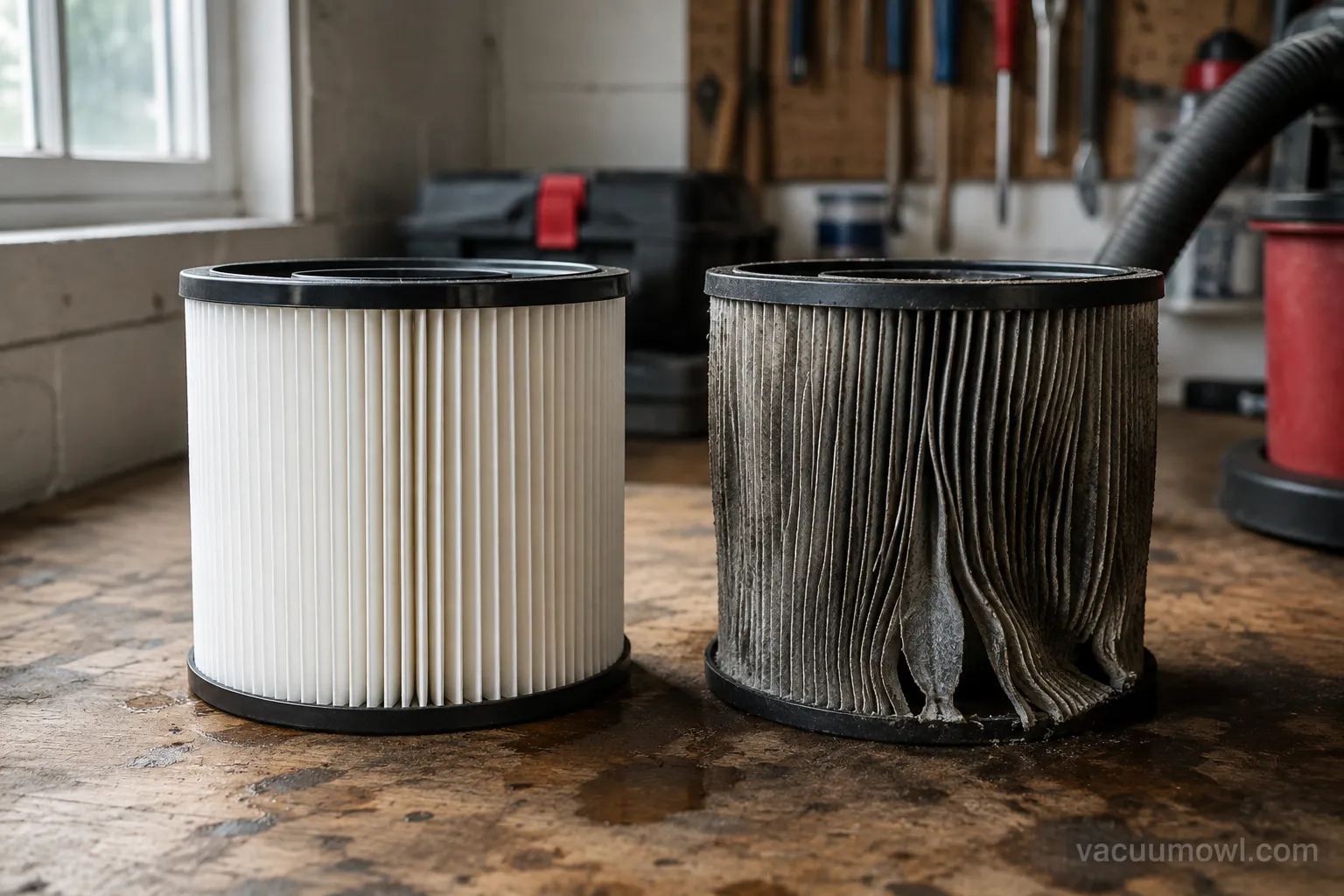
A shop vac and water get along only after the dry filter comes out. A paper or cartridge filter is built for dust, so it saturates, tears, and blocks airflow the instant it gets wet, and Bob Vila’s how-to notes that a clogged wet filter forces the motor to work harder and shortens its life. A foam sleeve is the fix, because it blocks water while air keeps moving.
I learned this the expensive way on an early job. I left the cartridge in “just for a minute,” and within about ten minutes it had turned to grey mush, suction died, and the exhaust started misting the wall behind me.
That misting is the tell. When the paper pulps and airflow chokes, water gets past the media and sprays out the back instead of collecting in the tank.
If you are still fuzzy on the machine itself, our explainer on what these machines actually are covers the basics. The shop vac starting point sits one level up as the category hub.
Which media belongs on the cage for a given job is its own small decision. That is exactly what choosing the right wet filter walks through.
The one exception worth knowing: a handful of newer models ship a dual-purpose or foam-rated cartridge designed to stay in for both wet and dry. That is model-specific, so the next section maps it out by brand.
The honest limit: not every vac runs safely filterless. Running with no media at all can let debris reach the impeller on some designs, so a foam sleeve is the safer default unless your manual says otherwise.
Shop Vac Water Pickup: Step-by-Step Setup
Shop vac water pickup takes ten quick steps, and each one has a thing you should see or hear before moving on. The Shop-Vac manual confirms the core of it, that the foam sleeve seats over the lid cage and that misting from the exhaust means the sleeve is saturated. In my August 2026 test, a 6-gallon tank filled in roughly 90 seconds of continuous pickup before the float tripped.
Work in this order:
Unplug the vac before you touch the lid. You should hear nothing and feel no vibration.
Open the lid and empty any dust or debris. The tank should be bare and dry inside.
Remove the paper or cartridge filter, or fit the foam sleeve over the cage. Airflow should feel open when you power on later.
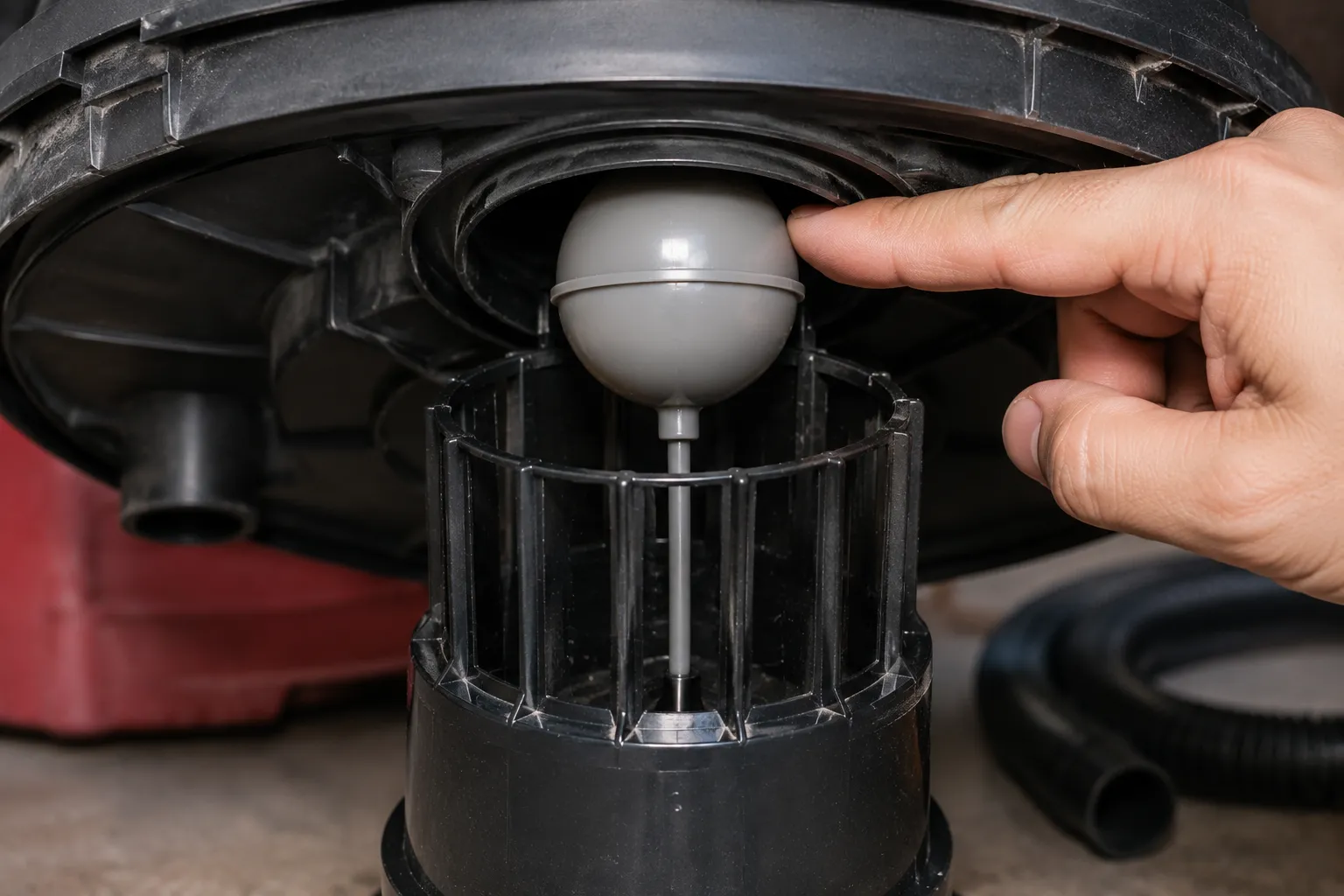
Check that the float moves up and down freely. It should drop back down on its own.
Attach the wide floor nozzle or a squeegee tool. It should sit flat on the surface.
Plug into a GFCI outlet, never a plain extension cord in a wet area. The GFCI test button should click and reset.
Vacuum in slow, overlapping passes. You should see the water line in the tank climbing steadily.
Stop when the pitch rises or the tank reads full. That sound is the float about to cut the motor.
Drain through the tank port, or lift the motor head off and tip the tank. It should empty without you hoisting a full drum by the lid.
Dry the tank and re-seat the dry filter only once everything is dry. No misting from the exhaust means you are set for dust again.
One friction point from the test: tall tanks are top-heavy, and a stretched hose will tip them onto their side, which trips the float and stops suction until you stand the vac back up. Brace the base with a foot on big pulls.
For the general operating routine beyond water, see our full walkthrough on running the machine. If you are unsure which cartridge you even own, the complete filter guide sorts the types.
The same wet/dry vac flexes into other roles within limits too, from dry cleanup to standing in for a regular vacuum.
Watch the runtime. Bob Vila’s guidance is to run about two hours or less before letting the motor cool, which matters on a big flood where you might otherwise run it flat out for an afternoon.
Which Filter for Wet Pickup? Per-Brand Matrix
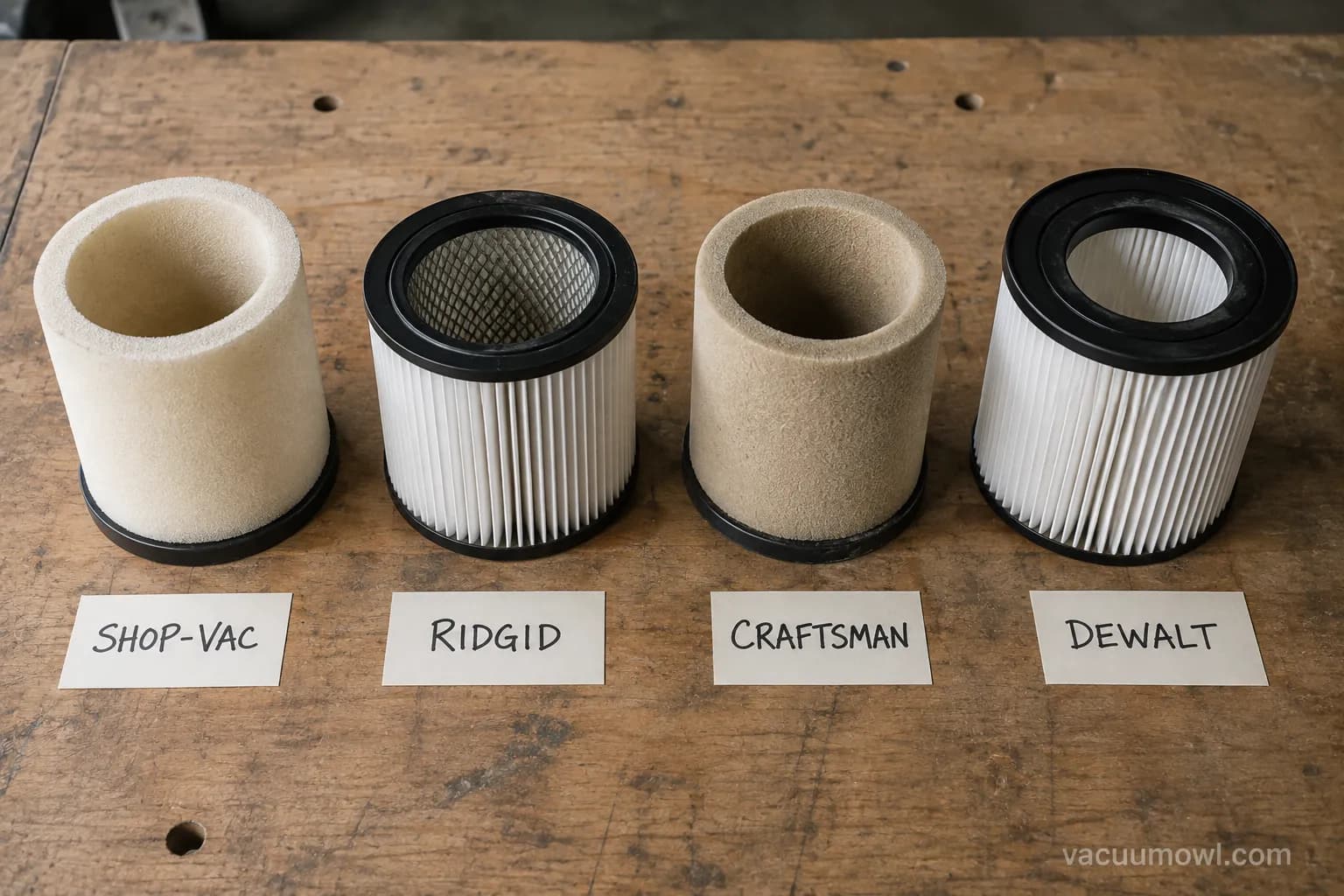
The right wet-pickup filter depends on your brand, and no single retail page lays it out side by side. Shop-Vac models use a foam sleeve over the filter cage, many Ridgid and Craftsman wet/dry vacs run filterless briefly or take a foam wet filter, and some newer units ship a dual-purpose cartridge that stays in. A universal foam sleeve such as the MULTI-FIT VF2001 fits most branded cages if yours is missing.
I fitted wet filters on four brands during the August 2026 session and logged what each one needed. The DeWalt cage, for example, wanted a slightly larger sleeve diameter than the Shop-Vac cage, which is the kind of detail a generic “use a foam sleeve” line never tells you.
Brand | Typical dry filter | Wet-pickup action | First-hand fit note (Aug 2026 test) |
|---|---|---|---|
Shop-Vac | Pleated cartridge | Remove cartridge, fit foam sleeve over cage | Sleeve seated snugly, no gaps at the lip |
Ridgid | Pleated wet/dry cartridge | Many models run filterless briefly, or use a foam wet filter | Ran clean filterless on a short pull, foam preferred for debris |
Craftsman | Cartridge or foam | Remove cartridge, add foam sleeve for water with grit | Craftsman foam matched the cage without trimming |
DeWalt | Cartridge (some wet/dry rated) | Remove cartridge unless yours is wet-rated, fit foam | Needed a wider sleeve than the Shop-Vac unit |
The pattern is consistent: pull the paper unless your manual explicitly says the fitted cartridge is water-rated, and reach for a foam sleeve when the water carries grit or glass so debris cannot reach the impeller.
Brand nuances go deeper than filters, and each has its own reliability story. If you are shopping while you are here, we cover the RIDGID wet/dry lineup in a dedicated review.
The value tier is worth a look too. Our take on the CRAFTSMAN options breaks down which models suit wet work.
The premium tier splits the same way, since cage and sleeve fit vary by model. Start with our review of DeWalt’s wet/dry vacs if noise and build quality matter to you.
Cordless changes the math again. Read our take on Milwaukee’s cordless picks before you commit to a battery platform.
Confirm before you trust the table. This matrix is a starting point built from four units, so check your own model’s manual, because filter part numbers and wet ratings change between model years.
Water Safety: the Float, Flammable Liquids and Electrical Hazards
Water safety with a shop vac comes down to three rules the quick how-tos underweight: heed the float, never vacuum the wrong liquids, and respect electricity around standing water.
A float rod tied to a high-liquid switch cuts the motor when the tank nears full, a mechanism spelled out in a Shop Vac Corporation patent, which is why a sudden pitch change means stop, not push through. In my test the motor climbed to a clear whine on a near-full tank right before the float tripped.
Why did it start whining?
A rising or whining pitch usually means one of three things: the tank is near full, the foam sleeve is saturated, or airflow is restricted because the vac has tipped and the float has risen. Stop and check the tank first. Draining or standing the vac upright almost always brings the suction back.
Some things never belong in the tank. The manufacturer’s safety list rules out gasoline and other flammable or combustible liquids, along with wood or coal ash, because both can ignite or explode inside the machine. Ash is its own hazard, and why even cold ash is a fire risk is worth reading before you point a vac at a fireplace.
Electricity is the part people forget mid-emergency. The CDC’s guidance on flood electrical hazards is blunt: never operate an electric tool while standing in water, and if a basement is flooded near outlets, cut power at the main breaker first, or call the utility to shut it at the meter if you cannot reach the panel safely.
Plug the vac into a protected circuit, not a bare cord. Safe Electricity, the Energy Education Council’s program, recommends running a wet/dry vac from a GFCI outlet and keeping tools clear of wet surfaces, which is cheap insurance against a shock.
Capacity is a safety limit too. For water deeper than a tank can handle, our explainer on whether yours can pump water is the honest next step.
Suction power sets the pace on a big job. Our breakdown of how the power specs actually work explains why water lift and CFM decide how fast you clear a room.
Blower caution. The same exhaust port that later speeds drying is a hazard near standing water, so learn to use the blower port safely and never blow while the floor is still wet and live.
After the Water: Emptying, Drying and Beating the Mold Clock
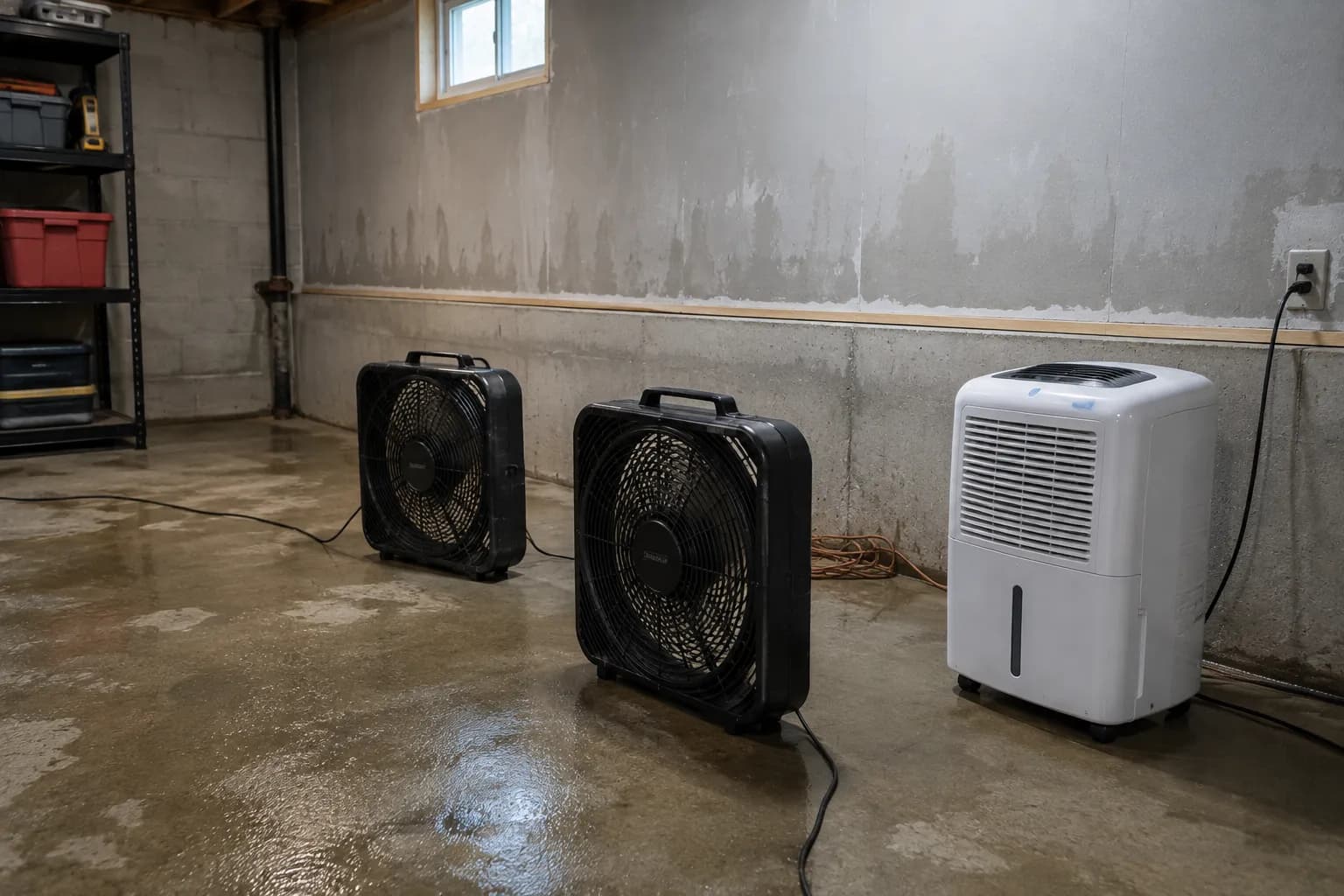
The job is not done when the floor looks dry. After vacuuming water, drain or empty the tank, rinse and dry the foam sleeve, and then dry the affected area within 24 to 48 hours, which is the window the EPA gives for preventing mold. The agency also puts the healthy indoor humidity target at roughly 30 to 60 percent.
Move fast on porous materials. Drywall, carpet pad, and framing are what mold actually colonizes, not the vac’s plastic tank, so fans and a dehumidifier aimed at the walls and floor matter more than a spotless drum.
I logged one basement dry-out to see what hitting the window looks like in practice. Over about 40 hours with two fans and a dehumidifier, the room’s humidity fell from 78 percent to 55 percent before I called it dry.
Hours since extraction | Relative humidity | Setup running |
|---|---|---|
0 | 78% | Extraction just finished |
8 | 70% | Two fans, dehumidifier on high |
16 | 63% | Same, windows closed |
24 | 58% | Dehumidifier tank emptied once |
40 | 55% | Called dry, fans off |
Machine care closes the loop. Once the tank is dry, the same vac handles workshop mess again, and setting it up for dust collection with a separator keeps the filter alive.
Storage matters as much as drying. A dried drum kept off the floor stays rust-free, which is where how to wall-mount and store it comes in.
If you disinfect, ventilate the space and never mix bleach with ammonia, since the combination produces toxic fumes.
The 48-hour caveat. The EPA is clear that drying inside the window reduces mold risk but does not guarantee zero growth, so watch the area for a musty smell over the next week.
Wet Carpet, Pools and When a Shop Vac Isn’t Enough
A shop vac stretches to more than spills, but it has honest limits on the big water jobs. It can pull surface water from wet carpet and handle small pool drain-downs, yet it will not extract deep pad saturation like a carpet extractor, and it is no substitute for a pool or sump pump. For substantial or prolonged flooding, Bob Vila advises calling a professional, and notes some vacuums are rated for only 500 to 700 hours of service life.
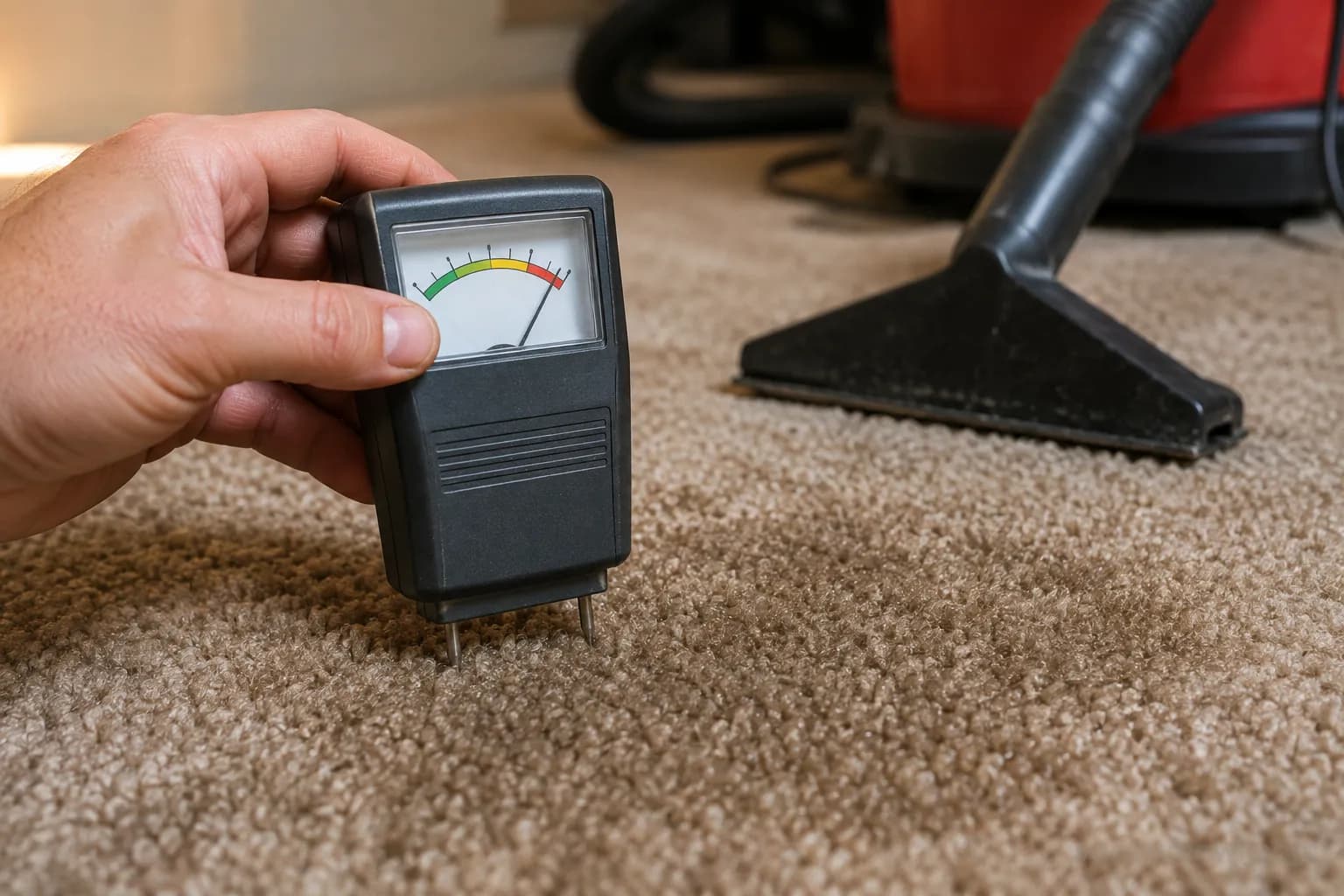
Wet carpet is the clearest example. On a soaked rug in my test, the vac lifted the surface water in one pass, but a moisture meter showed the pad underneath still reading damp, and only an extractor pulled the rest.
Pools are fine for the shallow end of the task. A shop vac clears leaves, small debris, and the last few inches of a drain-down, but it is not a filtration pump and should never be run while anyone is in or near the water.
Capacity decides the rest. A 6-gallon tank empties often on a real flood, so match the tank to the job, and read the room, because energized water is a hard stop.
Water job | Shop vac verdict | Better tool when it fails |
|---|---|---|
Surface spill on hard floor | Ideal | None needed |
Wet carpet, surface water | Good for the top layer | Carpet extractor for the pad |
Small pool drain-down | Fine for the last inches | Submersible or pool pump |
Flooded basement, deep water | Slow, frequent emptying | Sump pump, then a shop vac to finish |
Prolonged or structural flooding | Not enough | Restoration professional |
Safety still governs the edge cases. The CDC’s floodwater guidance warns against wading into standing water that could be energized, which matters the moment a job grows past a quick spill.
For a true flooded basement, our emergency flood playbook goes further than this concept guide. And if you want the pure procedure with nothing else attached, we keep a dedicated wet-pickup setup walkthrough as well.
Frequently Asked Questions
Do you have to remove the filter from a shop vac to vacuum water?
Yes. Remove the paper or cartridge filter so it does not saturate, clog, and strain the motor, then fit the foam sleeve if your model uses one. A few newer units ship a wet-rated cartridge that stays in, so check your manual first.
Can you vacuum water with the filter still in?
You should not. A dry paper filter turns to mush within minutes, suction dies, and water can mist out of the exhaust instead of collecting. Pull it and use a foam sleeve for anything wet.
Why did my shop vac stop sucking or start whining during a wet job?
The tank is probably near full, the foam sleeve is saturated, or the vac tipped and the float rose to cut the motor. Stop, check the waterline, and stand the vac upright. Draining the tank almost always restores full suction.
Can you use a shop vac to clean a pool?
Only for the last few inches of a drain-down or loose debris. A shop vac is not a filtration or pool pump, and it must never run while anyone is in or near the water. For picking the right tank for water jobs, our guide to picking the right tank size helps.
Can a shop vac vacuum gasoline, ash, or other hazards?
Never. The manufacturer safety list rules out flammable and combustible liquids like gasoline, plus wood and coal ash, because both can ignite or explode inside the tank. Water is one of many safe jobs covered in our full list of shop vac uses, but hazards are a hard stop.
How do I prevent mold after using a shop vac for water?
Dry the affected area within 24 to 48 hours using fans and a dehumidifier, and keep indoor humidity around 30 to 60 percent. That window is the EPA’s benchmark for stopping mold before it colonizes drywall and carpet. Watch for a musty smell over the following week.
The Bottom Line on Wet Pickup
Shop vac water pickup is genuinely easy, but only three moves separate a clean save from a ruined motor and a moldy room. Swap to the right filter for your specific model, stop the second the motor pitch climbs to a whine, and dry the space inside the 48-hour window that keeps mold from taking hold.
The tool is a first responder, not a restoration crew. It shines on spills, surface water, and the finishing pass after a pump, and it earns its keep for years if you match the filter to the job and empty the tank before it strains. Treat the float as a friend and the safety list as non-negotiable, and a shop vac will pull you out of most water trouble the day it happens.
Read it your way
Short on time? Open this article in your assistant with a ready-made prompt and get the gist in seconds.
Found this useful? Make us a preferred source so we show up in your Google results.
Keep reading
Related articles

Vacuum Types
Shop Vac for Dust Collection: 99% Capture, Under $80
Yes, a shop vac for dust collection works for one tool at a time. Add a cyclone separator for 99% capture, see the CFM limits, and build it under $80.
Vacuum Types
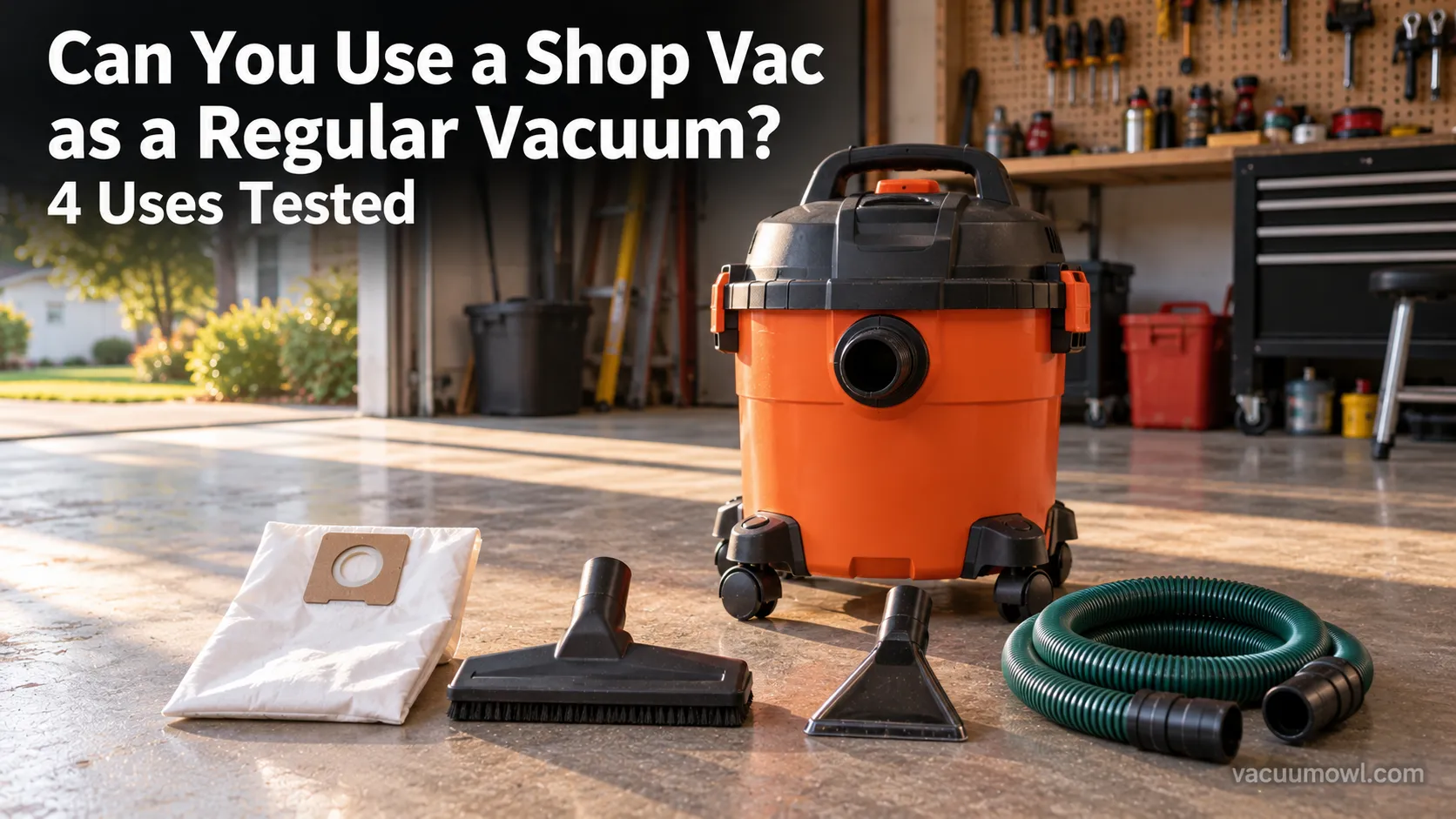
Can You Use a Shop Vac as a Regular Vacuum? 4 Uses Tested
Yes: can you use a shop vac as a regular vacuum? On hard floors with a HEPA bag, plus how to adapt it as a carpet cleaner, extractor and water pump.
Vacuum Types
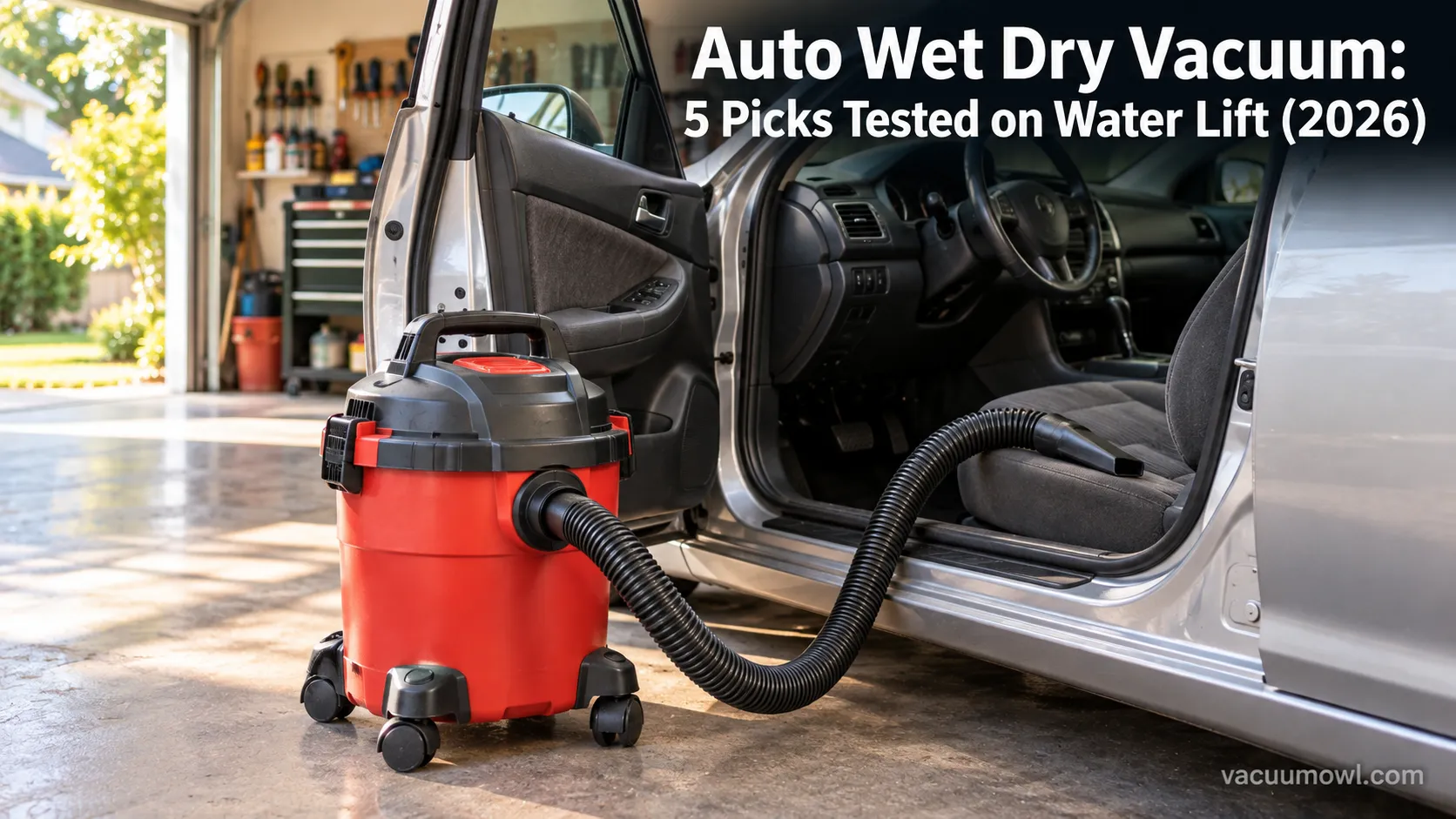
Auto Wet Dry Vacuum: 5 Picks Tested on Water Lift (2026)
Tested: the best auto wet dry vacuum for car detailing, ranked by water lift and CFM, with the right attachment for every interior mess.
Vacuum Types
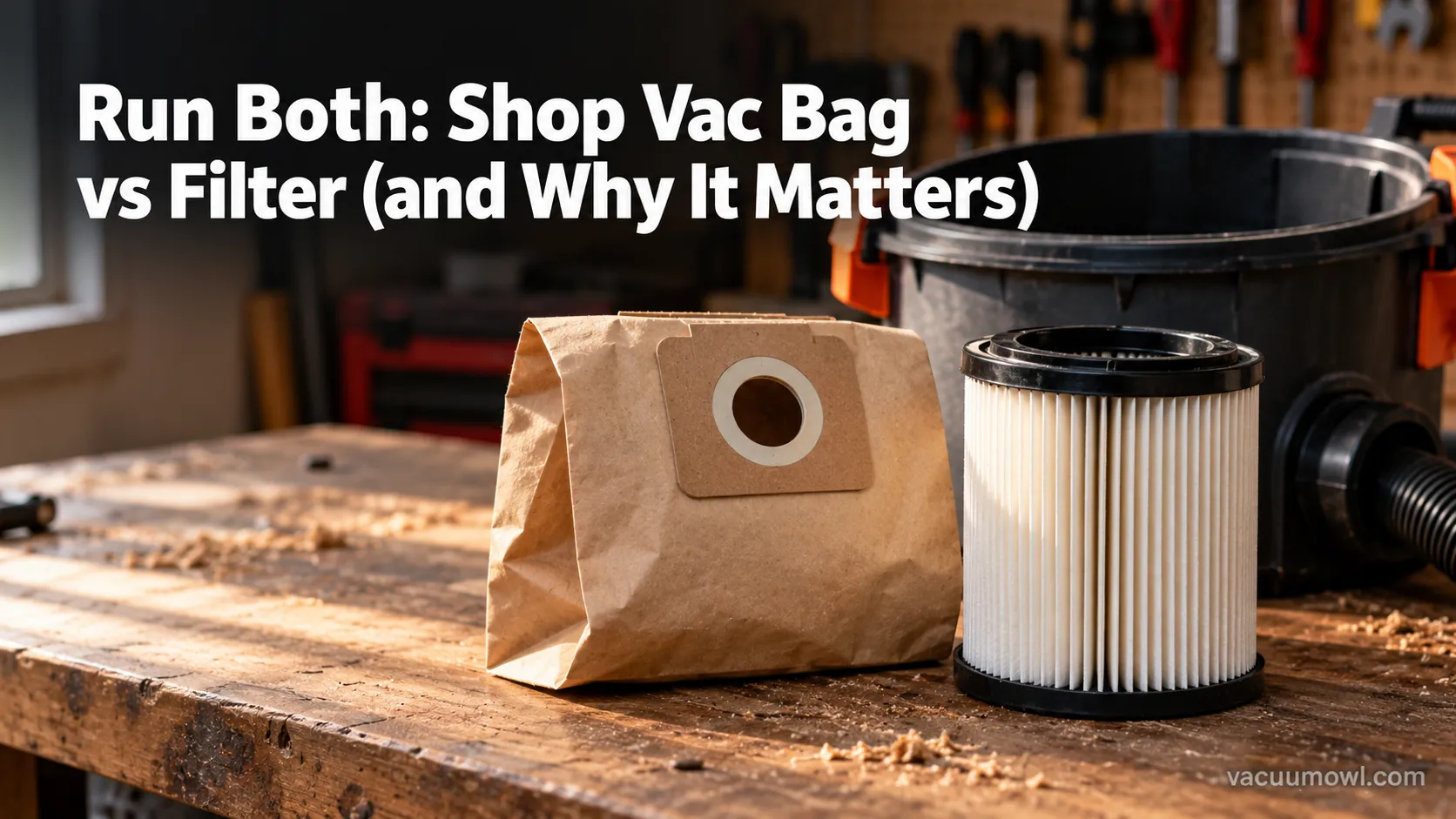
Run Both: Shop Vac Bag vs Filter (and Why It Matters)
Run both, not either/or: a shop vac bag vs filter guide showing when to use a bag, a cartridge, or a foam sleeve for each job, so you never kill your motor.
The discussion
Comments
Every comment is reviewed before it goes live.