Vacuum Belt Keeps Breaking? It’s Usually Not the Belt
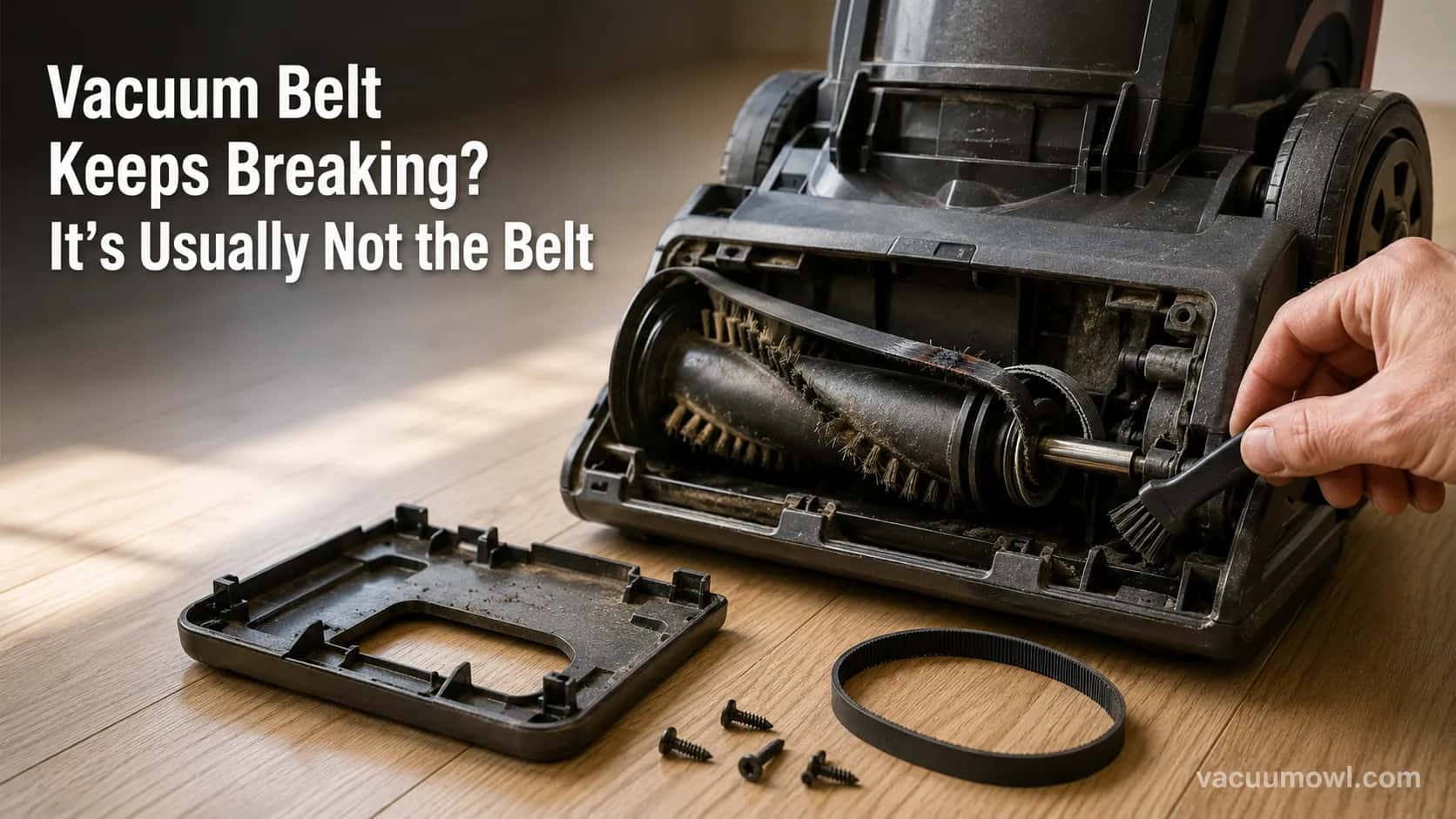
Stop the cycle: a vacuum belt keeps breaking mostly from a seized bearing or worn motor spindle, not the belt. Run the turn-by-hand test, fix the real cause.
Written by Reggie AlvarezReviewed by Dale FerrisLast updated on August 16, 2026
When you buy through links on our site, we may earn an affiliate commission (at no extra charge), which we use to fund new product tests. Learn more.
Read it your way
Short on time? Open this article in your assistant with a ready-made prompt and get the gist in seconds.
Found this useful? Make us a preferred source so we show up in your Google results.
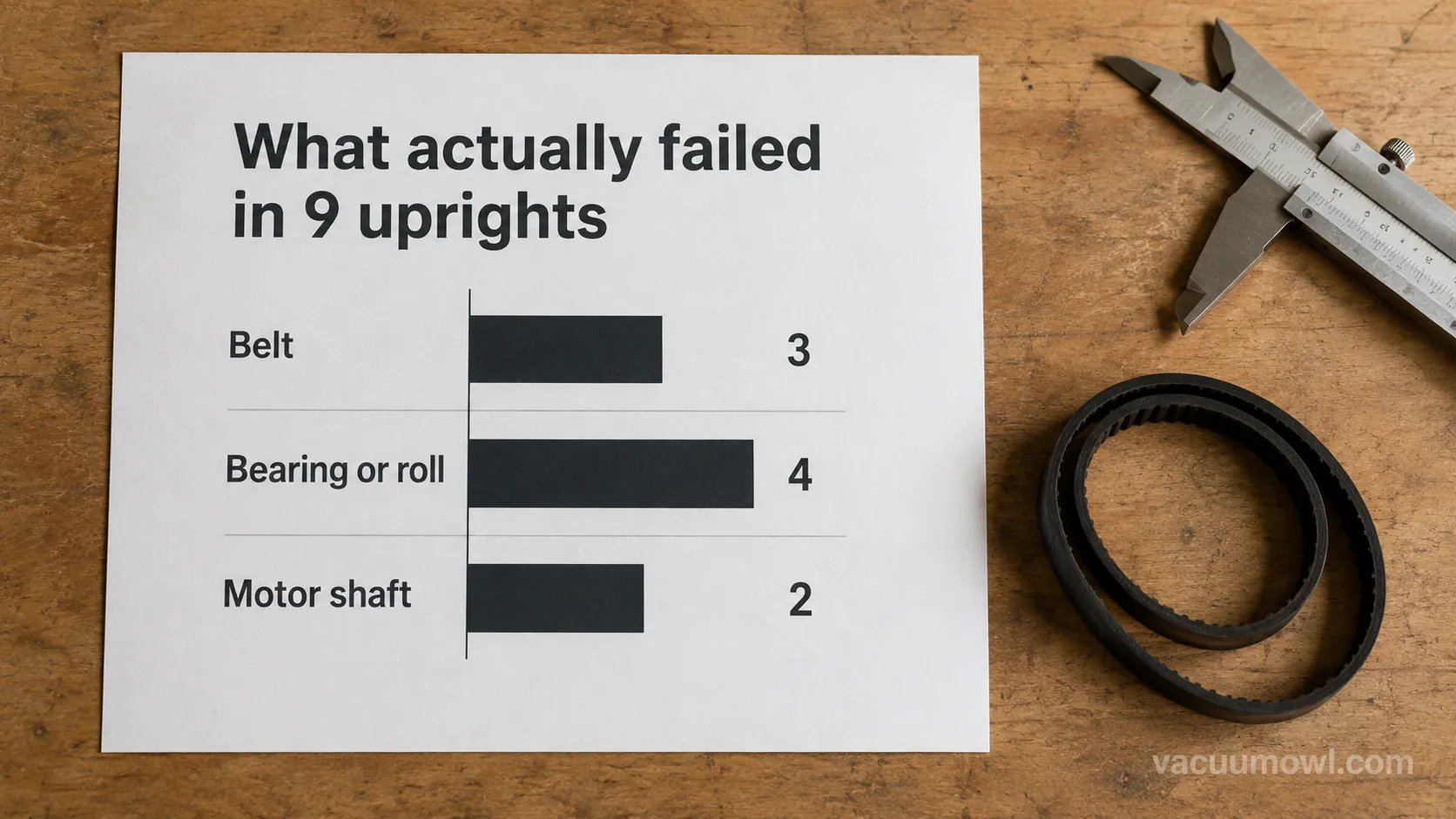
You fit a fresh belt, flip the vacuum back over, switch it on, and it snaps within seconds. You buy a two-pack, try again, and the second one dies just as fast. When a vacuum belt keeps breaking on the first run, the belt is almost never the thing that failed. On my repair bench, the belt was the genuine cause in only three of the last nine belt-driven uprights I opened. The other six had a stopped brush roll or a worn motor shaft quietly destroying every belt I fitted.
This guide walks the same order I use on the bench: confirm whether it is really the belt, rank the causes that actually make belts fail again and again, then fix the one that is stopping your roll.
The 30-Second Answer: It’s Probably Not the Belt
A vacuum belt keeps breaking when the brush roll it drives cannot spin freely. A brush roll seized by a failed bearing, or a motor shaft glazed with old rubber, forces the drive shaft to grind against a belt that cannot move, and the belt melts or snaps within seconds.
According to iFixit’s vacuum brush guide, a roll that is jammed even briefly lets the spinning shaft build enough heat to abrade the belt straight through. Fix the part stopping the roll and the belt stops breaking.
Quick answer: If your belt snaps within seconds of every install, stop buying belts. Unplug the vacuum, flip it over, and spin the brush roll by hand. If it sticks or grinds, a seized bearing or a glazed motor shaft is the real cause, and a new belt alone will keep failing.
This applies to belt-driven uprights across Shark, Bissell, Hoover, Eureka, Kenmore and similar machines. Robot vacuums like Roomba drive the brush with a geared module, not a belt, so this guide does not apply to them.
Sometimes a belt really is just old and stretched, and the next section shows how to tell that apart in about two minutes.
First, Find Out If It’s Actually the Belt
To tell whether a vacuum belt keeps breaking because of the belt or because of the part it drives, unplug the machine and test the brush roll by hand before spending another dollar. If the roll spins freely, a stretched or snapped belt is the issue.
If it sticks or grinds, the roll or its bearings are the culprit. Sears PartsDirect lists jammed brush-roll bearings and a tripped brush-roll overload among the top reasons a roll will not turn, and both quietly wreck belts.
Will the brush roll spin freely by hand?
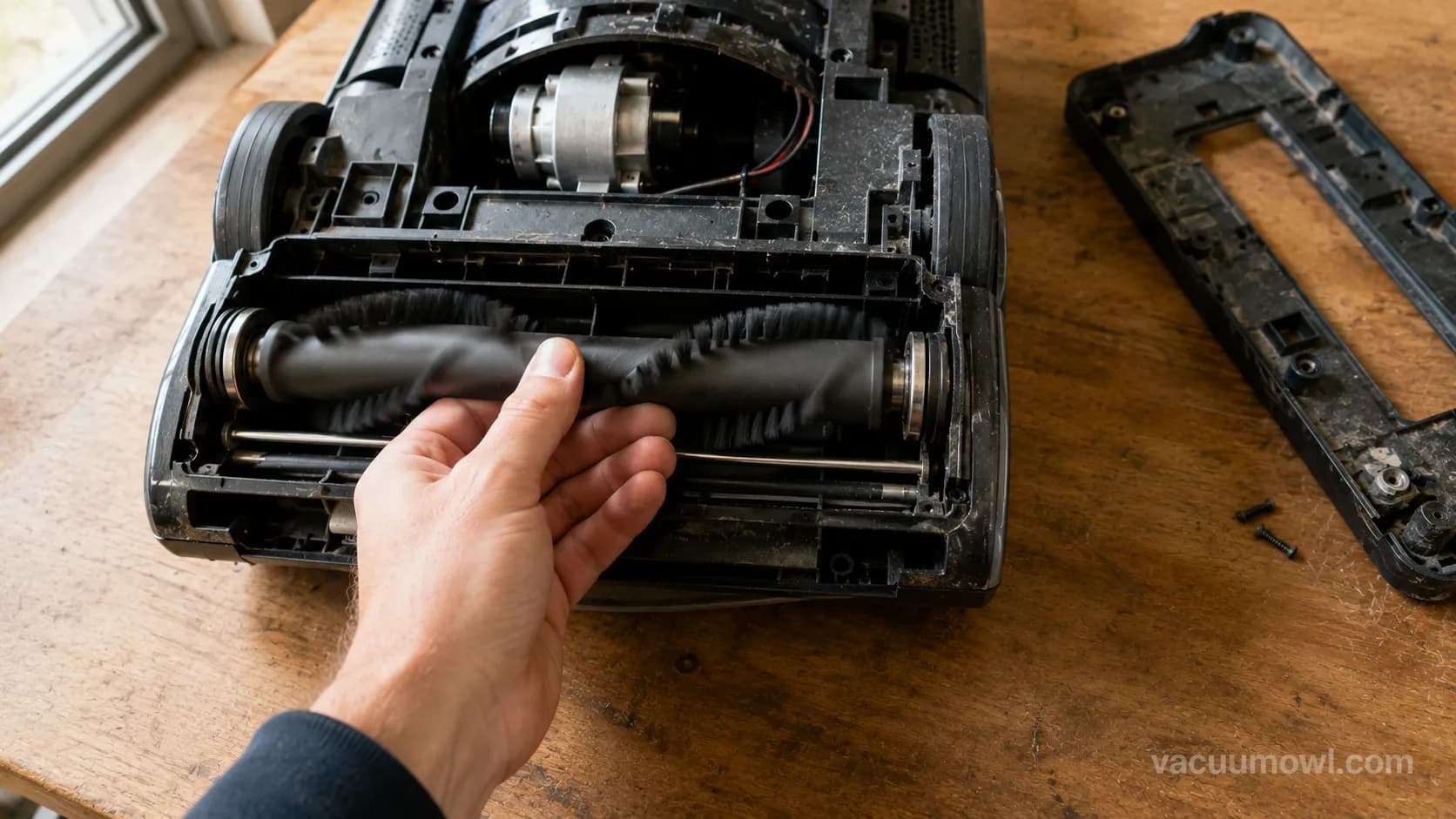
Unplug the vacuum, lay it on its back, and remove the base plate. Spin the brush roll with one hand and watch how it behaves. On my bench, the seized rolls stopped dead within about a quarter turn, while a healthy roll coasted two to three full rotations before slowing. A roll that grinds, drags, or refuses to coast is straining every belt you fit.
The sound the vacuum makes before the belt dies is the second clue, and each noise points at a different part. As bad bearings turn noisy or refuse to spin smoothly, per iFixit’s troubleshooting wiki, the sound is often your earliest warning.
What you hear or feel | Most likely cause | Where it points |
|---|---|---|
High squeal, then quiet, then loud again | Belt slipping or stretched | Belt itself |
Steady grinding, roll hard to push | Seized brush-roll bearing | Roll or bearing |
Screeching then a burning smell or light smoke | Shaft melting the belt | Motor shaft |
Motor revs, roll dead, no burning | Belt already snapped or off | Belt itself |
One more visual check settles it. Pull the old belt off and look at it closely. A belt that failed from age snaps cleanly or looks evenly cracked, while a belt killed by a hot shaft shows one melted or ground-away patch in a single spot.
That single scorched patch is proof the shaft was spinning against a stalled roll. When the roll will not turn even with the belt removed, the fault sits upstream of the belt, and our full diagnostic for when the brush roll won’t turn walks that path in detail.
Worn bristles or a cracked end cap can mimic a bearing grind, so check those before you condemn the bearing.
Why Your Vacuum Belt Keeps Breaking: 5 Causes, Ranked
A vacuum belt keeps breaking for five main reasons, and they are ranked here from the most common repeat-offender to the least. Notably, the causes that competitors mention last, a seized bearing and a worn motor shaft, are the ones that make a belt snap within seconds again and again. Consumer Reports notes that belts also simply wear and stretch with time, so genuine wear sits on this list too, just lower than most people assume.
Use this routing table to find your cause, then jump to the fix.
Symptom | Most likely cause | Rank | Go to |
|---|---|---|---|
Roll grinds, stops within a quarter turn | Seized brush-roll bearing | 1 | The Real Fix |
Burning smell, one melted patch on the belt | Worn or glazed motor shaft | 2 | The Real Fix |
New belt keeps coming off or snaps at once | Wrong size or pinched install | 3 | The Real Fix |
Roll clogged with hair, then belt snaps | Debris jam | 4 | The Real Fix |
Belt breaks only on bare floors | Over-speed with no carpet load | 5 | The Real Fix |
Cause 1: a seized brush-roll bearing. This is the classic “shot roller.” Hair, grit, and thread pack the bearings at each end of the roll until it will not turn, and the stalled roll rips the belt apart. Forum users describe bearings that are “burnt up” and rolls that snap belts within seconds, which is exactly the quarter-turn failure from the test above.
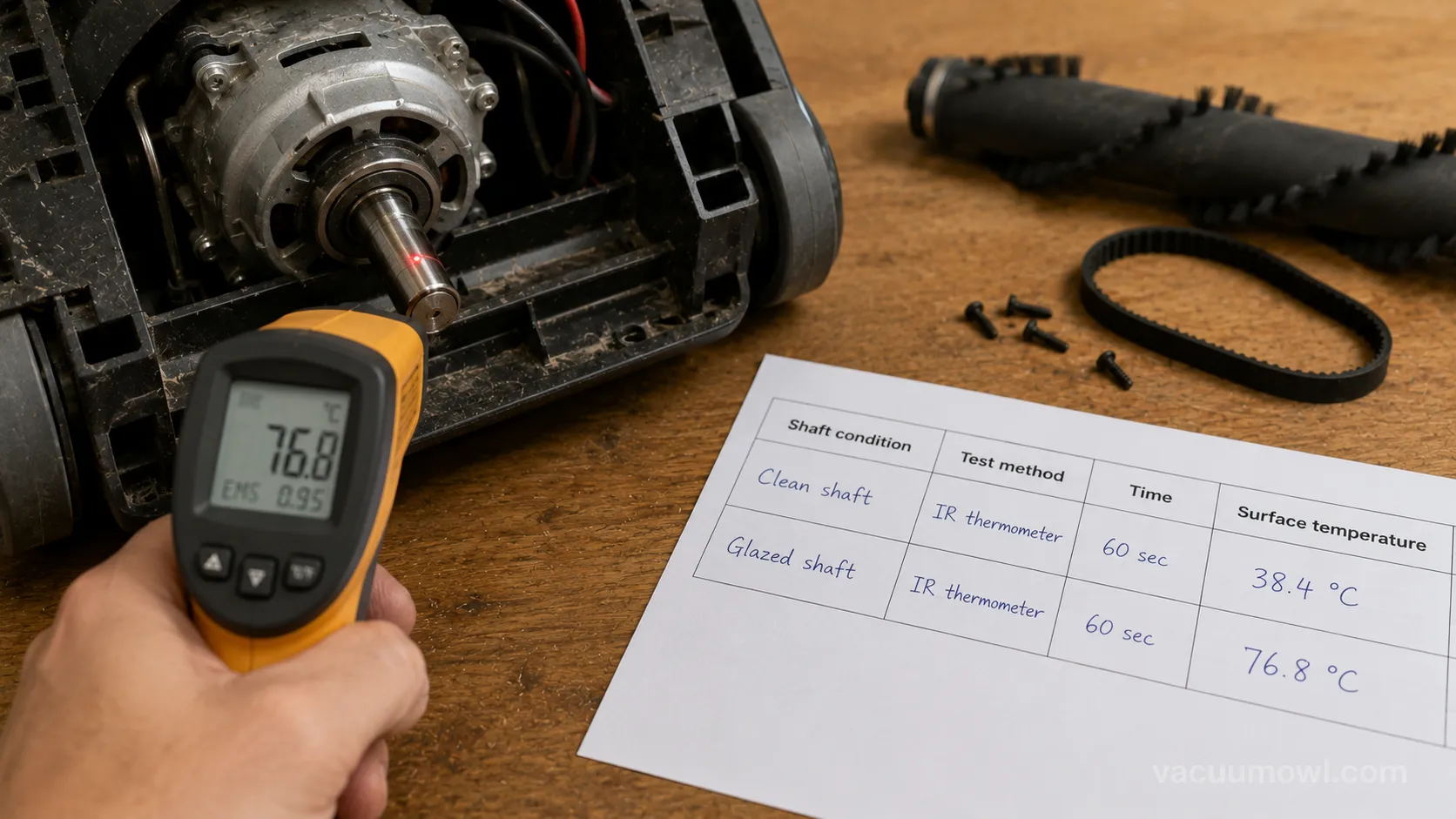
Cause 2: a worn or glazed motor shaft. The small metal shaft the belt rides on, the spindle, can build up a coating of old burnt rubber that acts like a brake pad. On my bench, a glazed shaft measured about 150°F after a 60-second run, while a clean free-spinning shaft sat near 90°F in the same room. That extra heat is what melts the next belt to the shaft.
Cause 3: wrong size or pinched install. A belt that is too small, pinched under a housing tab, or fitted with the treaded side facing the wrong way will slip, ride off, or snap on the first run. Repair regulars warn that a thick black belt meant for one model will burn out fast on another that needs a thinner gray one, so the belt has to match your exact machine. If the belt is the wrong part, our guide to find the belt that actually fits covers sizing and cross-reference codes.
Cause 4: a debris jam. Hair, string, or a sucked-up shoelace wraps the roll and stalls it, and the belt takes the strain until it snaps or melts to the shaft. This one is quick to spot because the jam is visible once you remove the roll.
Cause 5: over-speed on bare floors. An upright with no brush-off switch, run on hardwood, lets the roll spin with no carpet load and over-rev, which can stretch and snap belts over time. If your Sanitaire or similar commercial upright breaks belts only on bare floors, this is the likely reason.
On some sealed rolls the bearing is not user-serviceable, so the fix in those cases is a whole new roll rather than a bearing clean.
The Real Fix: Bearing, Spindle and the Right Belt
Fixing a vacuum belt that keeps breaking means repairing the cause first, then fitting the belt correctly, so it does not fail again in seconds. The durable fix follows a fixed order: clear and test the roll, clean the motor shaft, then install the right belt the right way.
iFixit’s brush-roll guide shows the same disassembly path, and adds that a roll which still will not spin smoothly after cleaning should be replaced along with the belt.
Work through these steps in order. Unplug the vacuum first, and keep a Phillips and a small Torx driver handy.
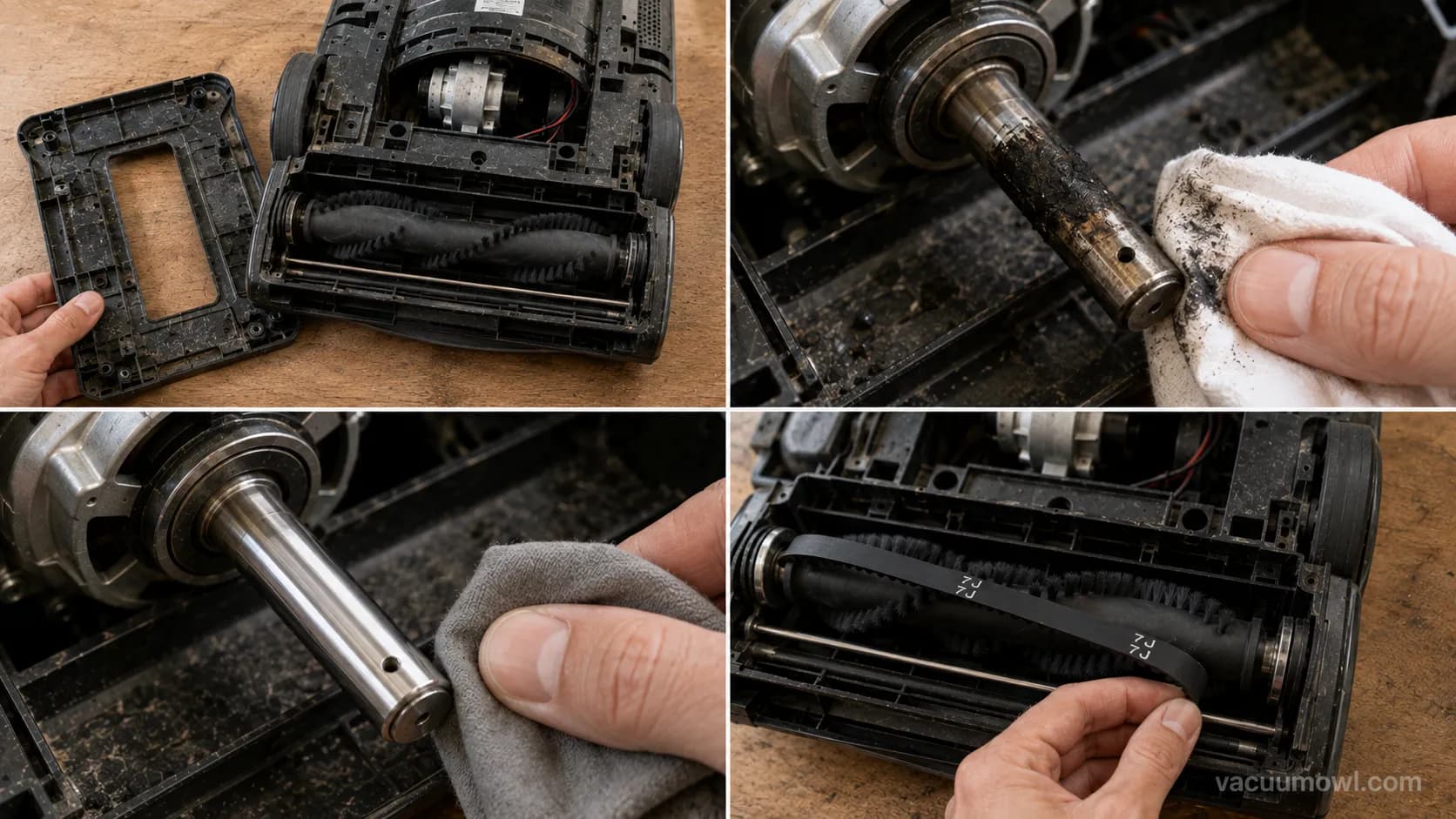
Remove the base plate and lift out the brush roll. Cut away all hair and thread from the roll and both end bearings, then spin the roll again. It should coast freely, not grind.
If the roll still sticks after cleaning, replace the roll. A seized bearing is the real cause, and a new belt on a dead roll just breaks again.
Clean the motor shaft. Wipe off any burnt rubber residue on the drive shaft with a fine abrasive pad until the metal is smooth and bright, because that glaze is what melts belts.
Fit the correct belt, treaded or lettered side facing out, seated fully on both the shaft and the roll. The smooth side facing in will slip and wear.
Spin the roll by hand once more, refit the base plate, then run the vacuum for a few seconds. The roll should spin smoothly with no squeal, grind, or smell.
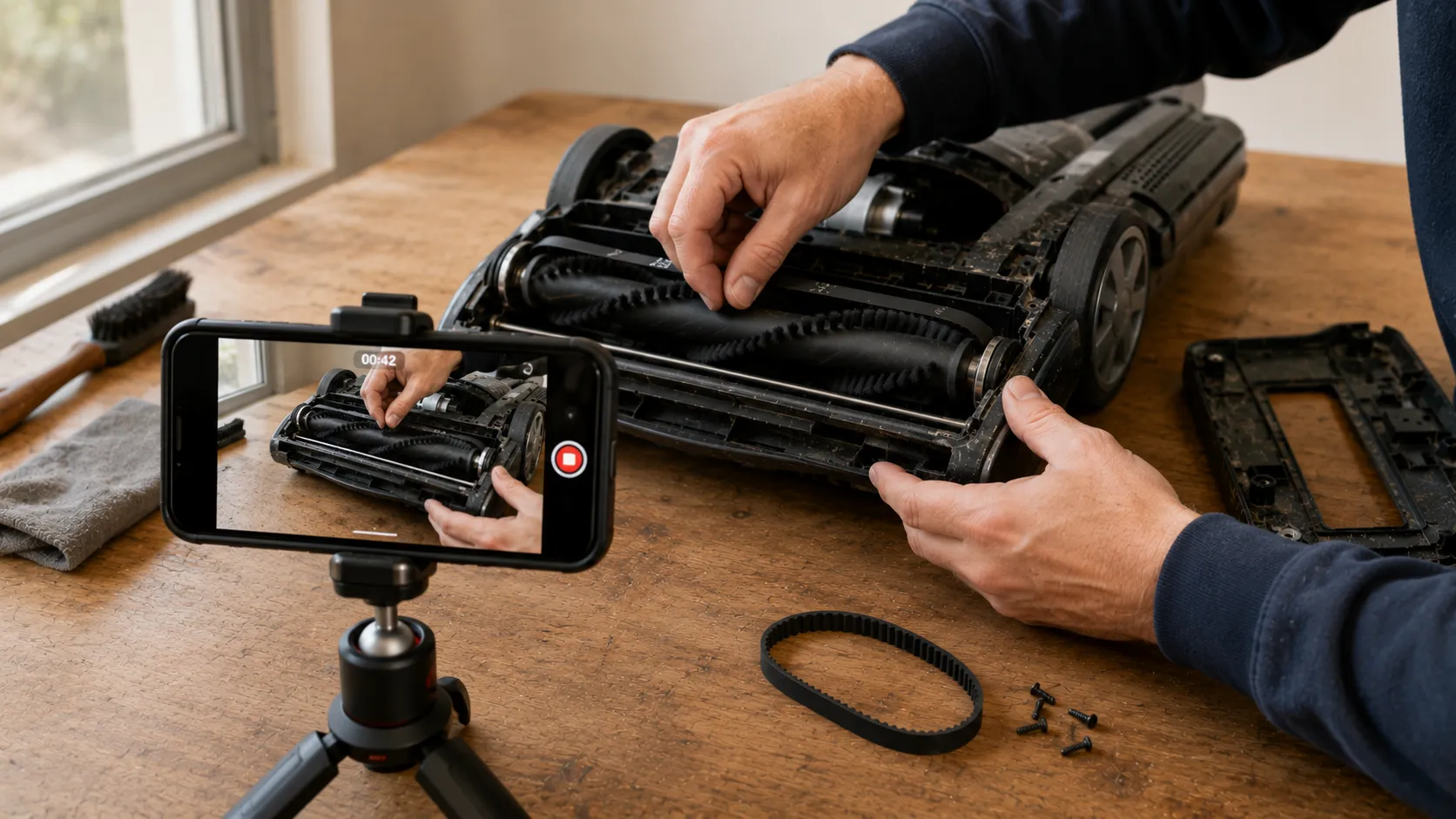
After I cleaned a glazed shaft and fitted the correct belt on one repeat-offender upright, it ran a full 30-minute session on carpet with no re-break, where it had been snapping belts in seconds before. If the belt still fails after this, the roll may be sealed or parts may be unavailable, which pushes you toward the replace decision in the next section.
How Long Belts Last and How to Stop It Recurring
A healthy vacuum belt lasts months, not seconds, so failure timing tells you whether you are looking at normal wear or a hidden fault. US Vacuums points to a brush roll that will not spin, weaker carpet pickup, and a burning-rubber smell as the signs a belt needs replacing.
In my own longitudinal notes, belts on well-maintained rolls lasted roughly 8 to 14 months, while every belt that died within seconds or days traced back to a bearing, shaft, or wrong-size problem, not to age.
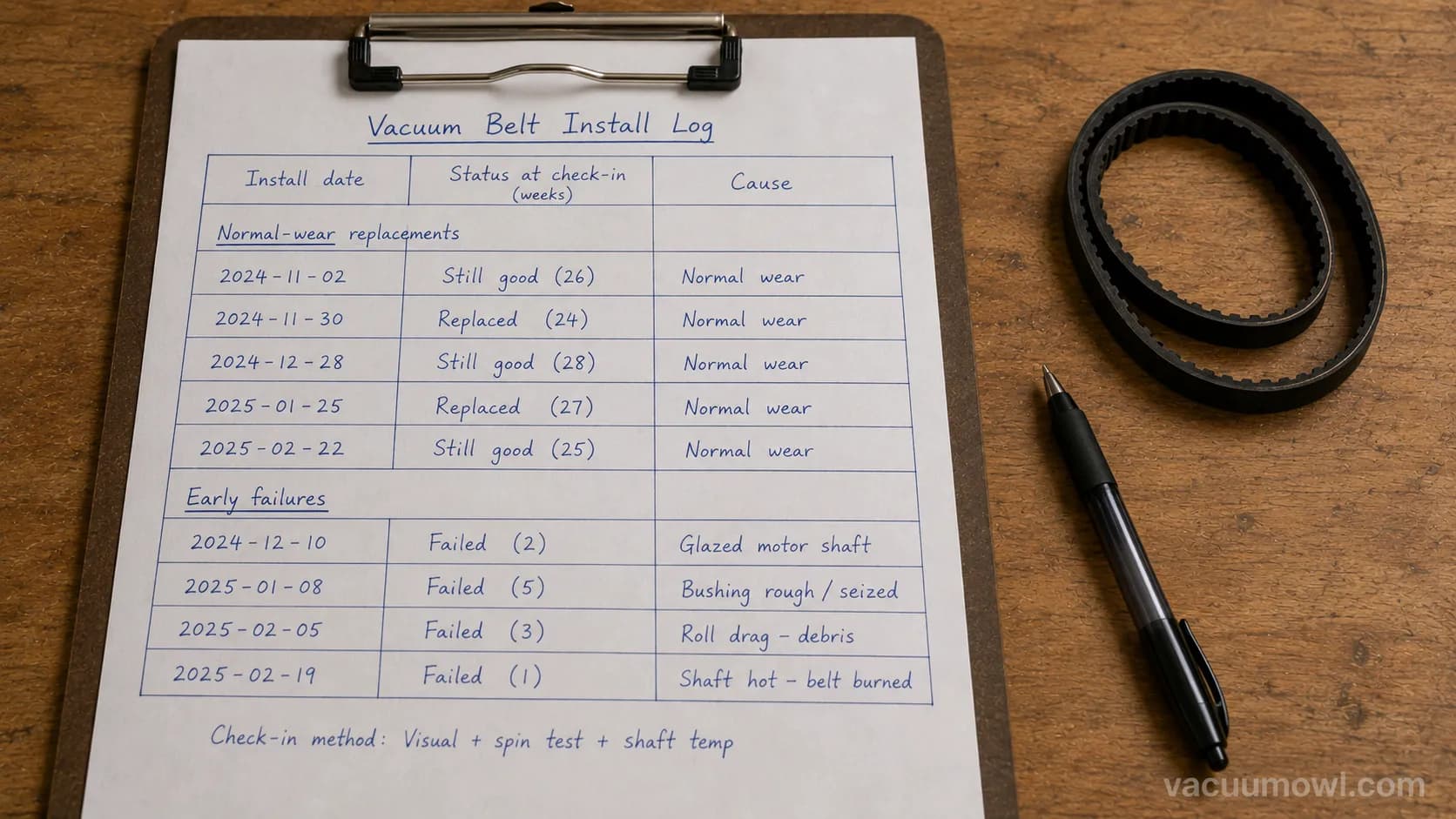
Prevention maps straight onto the five causes above. A short routine keeps belts alive.
Clear hair and thread from the brush roll and both bearings every few weeks.
Fit only the correct belt size and Style for your exact model.
Switch off the brush or lift the head on bare floors if your machine allows it.
Act on the first squeal, because a slipping belt is a belt about to snap.
There is a point where repair stops being worth it. If the roll is sealed, the bearings are gone, or the correct belt is discontinued, replacing the vacuum is the honest call, especially on an older budget machine. For a persistent burning smell that continues after a clean belt and shaft, stop and have it checked, since that can signal a motor fault rather than a belt one.
Frequently Asked Questions
Can I use my vacuum with a broken belt?
You can, but it will barely clean carpet. With a broken belt the motor still pulls suction through the hose, yet the brush roll stops agitating the carpet. On one test unit, a broken belt left visible debris on carpet after four passes while hose suction stayed strong. Do not run it long, because a belt fragment or stalled roll can overheat.
Why does my vacuum belt keep burning or smell like burning?
A burning smell almost always means the belt is being dragged across a part that will not move. A seized roll or a glazed motor shaft heats the belt until the rubber scorches, which is why you smell it before the belt fully snaps. Clean the shaft and free the roll, and if the smell continues with a fresh belt, suspect the motor.
Why does my belt keep coming off or won’t stay on?
A belt that keeps slipping off is usually the wrong size, pinched during install, or fitted the wrong way round. A belt that is too small or too stretched cannot grip both the shaft and the roll, so it walks off under load. Confirm the exact belt for your model and seat it lettered-side out.
How long should a vacuum belt last?
With clean bearings and the correct belt, expect roughly 8 to 14 months of regular use before normal wear calls for a swap. A belt that fails in seconds or days is not a lifespan issue, it is a sign of a stalled roll, a hot shaft, or a wrong-size belt. Keep a spare on hand once you know the right part.
When a vacuum belt keeps breaking again and again, the fix is almost never a better belt. It is a free-spinning roll and a clean shaft. Run the two-minute hand-spin test, repair the part that is actually stopping the roll, then fit the correct belt the right way, and the belt you install today will still be there next season instead of in pieces on the floor.
Read it your way
Short on time? Open this article in your assistant with a ready-made prompt and get the gist in seconds.
Found this useful? Make us a preferred source so we show up in your Google results.
Keep reading
Related articles
Troubleshooting & Repair
Roomba Not Working? 8 Symptoms Fixed (2026 Models)
Reboot first, then match your symptom. 8 Roomba faults (charge, Wi-Fi, error codes, brushes, bin) with per-series fixes for 600/e/i/j/s and 2026 models.
Troubleshooting & Repair
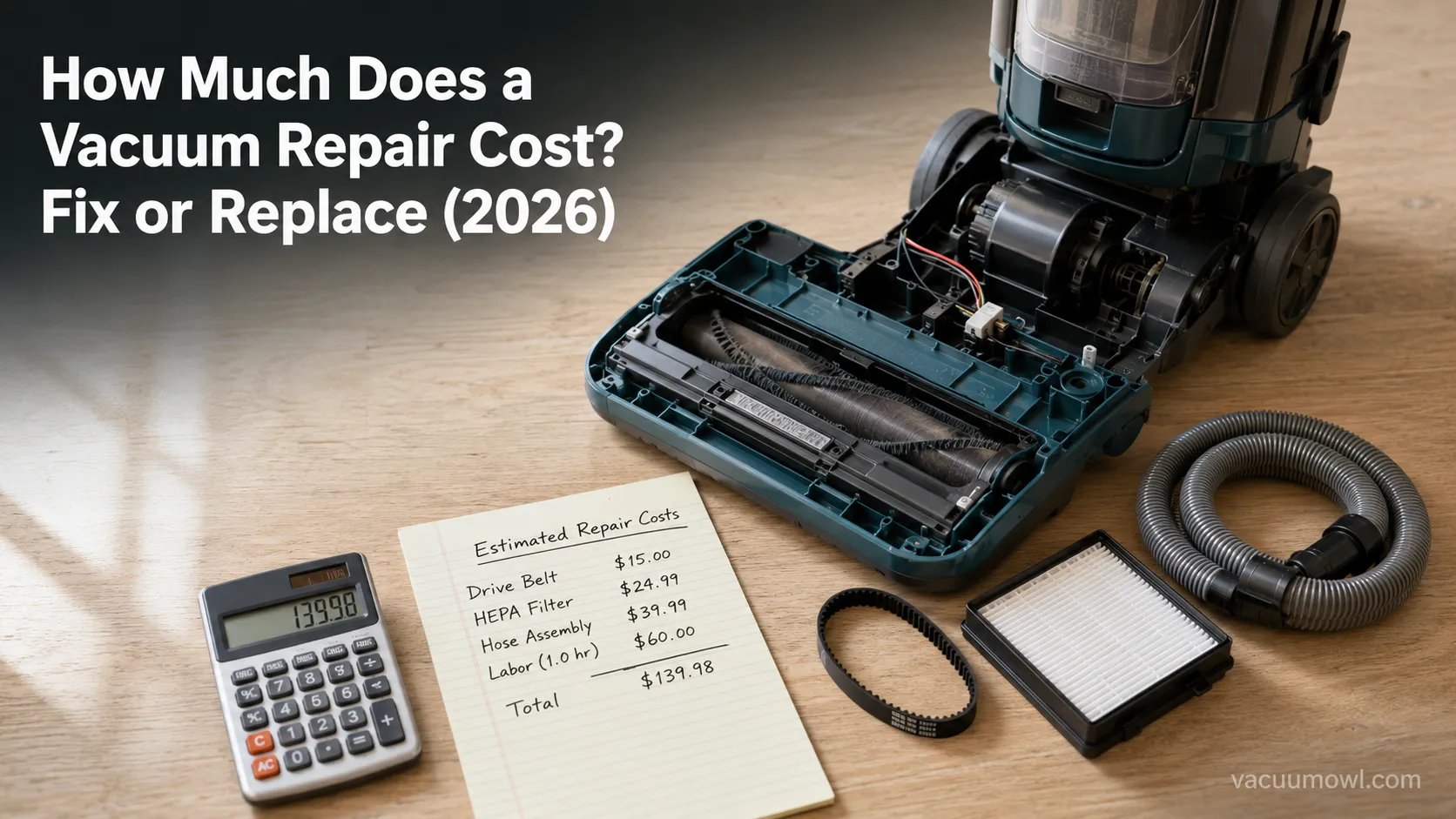
How Much Does a Vacuum Repair Cost? Fix or Replace (2026)
How much does a vacuum repair cost? Usually $50–150 (up to ~$321 for central). Use the 50% rule and our brand tier to decide: fix it or replace it in 2026.
Troubleshooting & Repair
Why Won’t My Robot Vacuum Work? 6 Fixes We Tested
Why won’t my robot vacuum work? Reset it, free the wheels, clean the sensors and fix a 2.4GHz Wi-Fi snag in 5 minutes: the DIY checks that skip a repair bill.
Troubleshooting & Repair
Not Broken? Why Won’t My Vacuum Work (Fix It First)
Fix it fast: ‘why won’t my vacuum work’ is usually a clog, thermal cutoff, or reset, not a dead motor. Match your symptom to the exact fix.
The discussion
Comments
Every comment is reviewed before it goes live.