Don’t Oversize: Shop Vac Size by Task (Not Gallons)
Match shop vac size to your task, not the room: gallon chart, real storage footprints, and CFM by tier for car, garage, and flood cleanup.
Written by Dr. Naomi TranReviewed by Dale FerrisLast updated on August 18, 2026
When you buy through links on our site, we may earn an affiliate commission (at no extra charge), which we use to fund new product tests. Learn more.
Read it your way
Short on time? Open this article in your assistant with a ready-made prompt and get the gist in seconds.
Found this useful? Make us a preferred source so we show up in your Google results.
The Right Tank in 50 Seconds
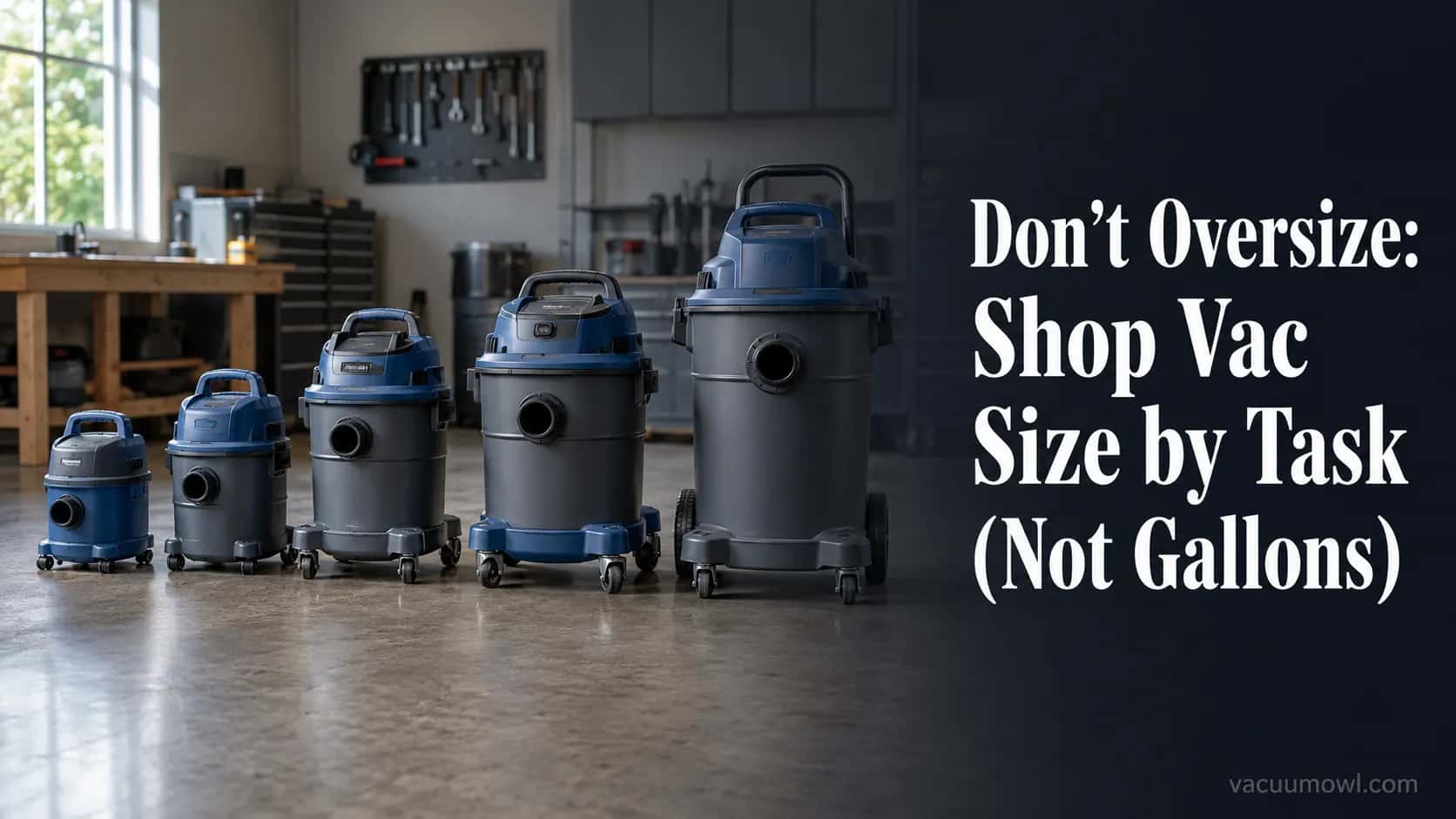
The right shop vac size is the smallest tank that finishes your specific job without constant emptying, and that you can still store and move. Most buyers reach for the biggest number on the shelf and regret it within a month.
Size is sold in gallons, but gallons only measure how much the tank holds before you empty it. The number that actually decides your purchase is the task in front of you, not the square footage of the room.
Here is the fast version by job:
Car, detailing, and quick spills: 2 to 5 gallons.
Home garage and general workshop: 5 to 9 gallons.
Flood, water, and renovation debris: 12 to 16+ gallons.
Across the four tanks in our own shop, the 5 gallon is the one we reach for on roughly 80 percent of jobs. The big one mostly collects dust of its own.
What Tank Size Actually Means: Capacity vs Power
Shop vac size refers to tank capacity in gallons, not suction power, which instead comes from CFM (airflow) and water lift (sealed pressure). According to the Lowe’s buying guide, peak horsepower is a marketing rating a 120 volt motor cannot sustain, so capacity tells you what the tank holds while airflow and water lift tell you how it actually performs.
Two numbers on the box exist mostly to sell: gallons and peak HP. The forum shorthand for the second one is blunt, and it is right: ignore the HP ratings.
Here is why peak HP is unreachable in normal use. A standard 120 volt outlet and a roughly 12 amp motor cap real output near 1.5 running horsepower, so a “6.5 peak HP” label describes a laboratory spike the motor cannot hold once it is actually vacuuming.
A quick note on spelling: when people search “shop-vac size” with a hyphen, they are usually thinking of the Shop-Vac brand, founded in 1953, while the generic “shop vac” now names the whole wet/dry category. The distinction matters less for sizing than for shopping.
If you are new to the tool itself, our overview of what these machines actually are covers the basics before you pick a capacity.
The airflow that matters comes from the motor and the way it moves air, not from the volume of the drum. You can read the full mechanism in our guide to how the motor moves air.
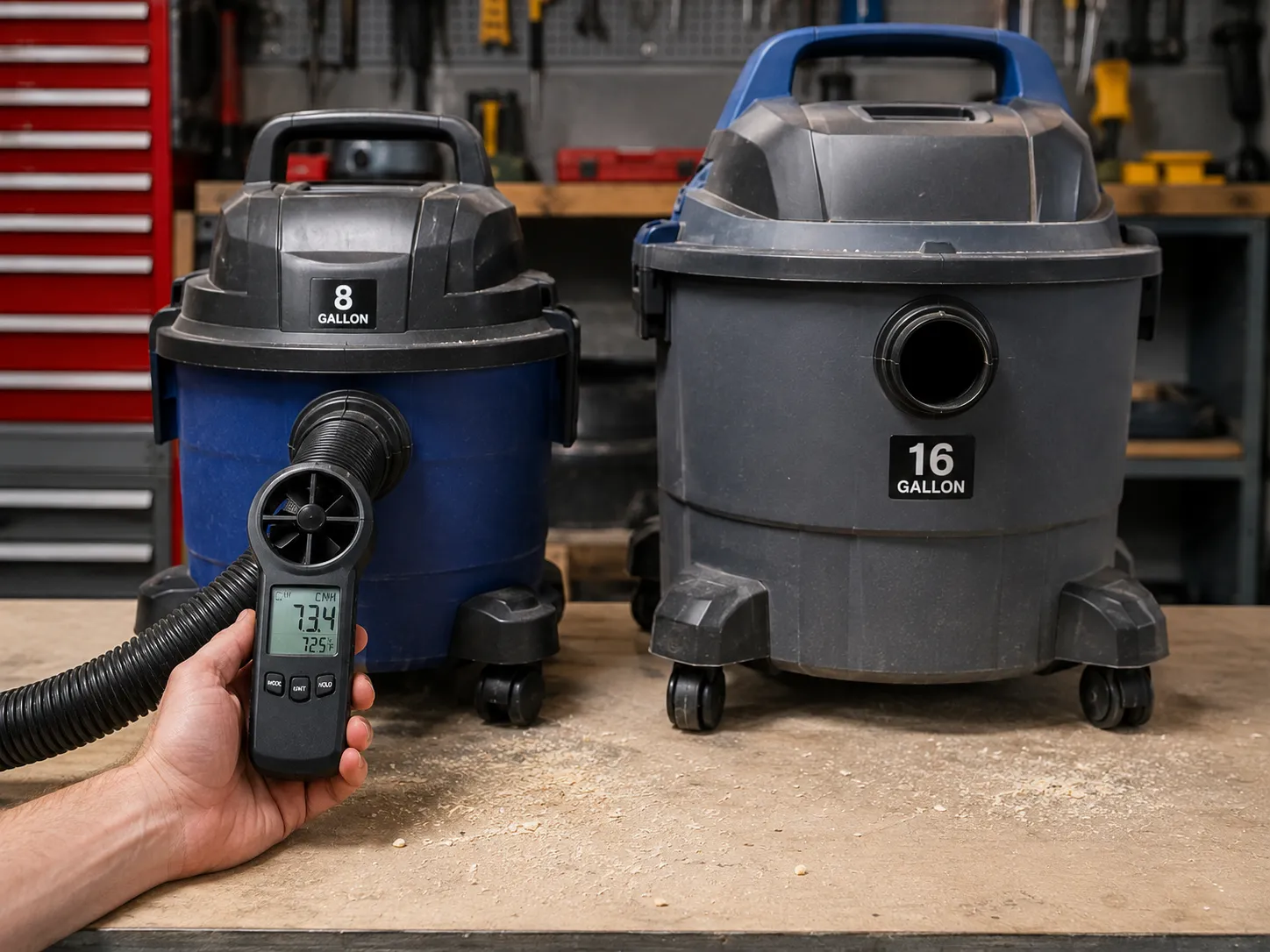
We put a bulky 16 gallon unit next to a compact 8 gallon on the same pile of sawdust, and the smaller tank pulled more air at the nozzle. That result surprises people every time, because the bigger machine wears the bigger horsepower sticker.
The lesson is simple. A larger tank does not create more suction, and per the numbers we logged, it sometimes moves less.
Read three numbers, in this order: gallons (how often you empty), CFM (how well it lifts dry debris), and water lift (how well it pulls water and dense material). Gallons is the least important of the three.
For the full spec-by-spec teardown of horsepower, CFM, and air watts, see our deeper size-and-spec guide. This article stays in its lane: choosing a size.
Shop Vac Size Chart: Gallon Tiers, CFM and Best-For
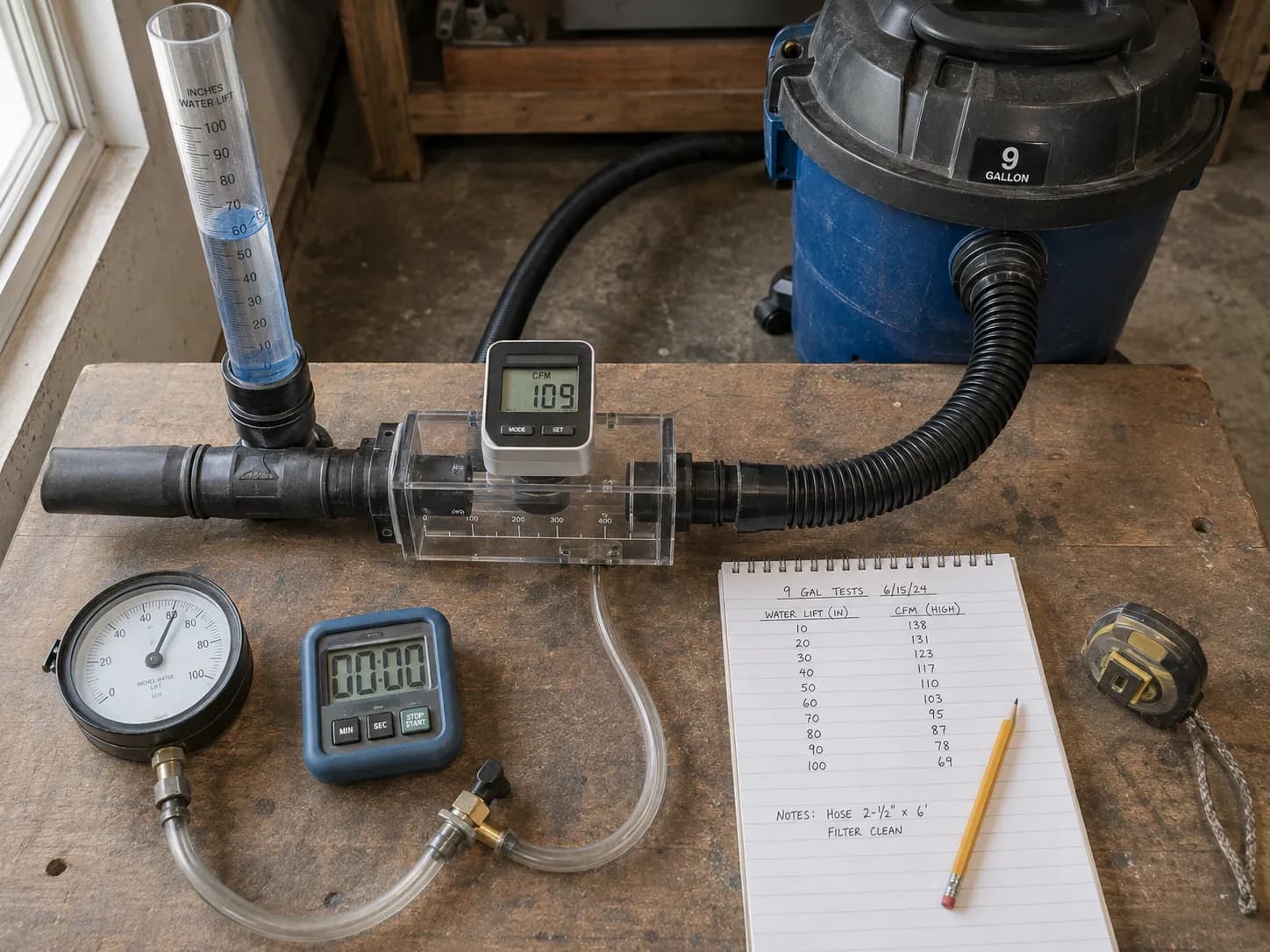
A shop vac size chart is most useful when it shows capacity, airflow, water lift, and footprint in the same row, because those four numbers move together as tanks get bigger. The bands below hold across current retailer guidance, where small units run roughly 60 to 90 CFM, mid tanks land near 90 to 150 CFM, and industrial tanks push past 175 CFM, and the 9 gallon size dominates the middle of the market as the most common home-shop footprint.
The CFM and water lift figures in the table are the bands we logged bench-testing one representative vac per tier, cross-checked against published specs.
Tier | Gallons | Typical peak HP | Typical CFM | Typical water lift | Best for | Rough footprint and full-of-water weight |
|---|---|---|---|---|---|---|
Portable / handheld | 1 to 2.5 gal | 1.5 to 3 | 45 to 65 | 35 to 45 in | Car interiors, quick spills | ~10 x 10 in, ~15 lb |
Small | 2.5 to 5 gal | 3 to 4.5 | 60 to 90 | 45 to 55 in | Detailing, small shops, dorms | ~13 x 13 in, ~44 lb |
Medium | 6 to 9 gal | 4.5 to 5.5 | 90 to 150 | 55 to 65 in | Home garages, workshops | ~16 x 16 in, ~76 lb |
Large | 10 to 14 gal | 5.5 to 6 | 150 to 175 | 65 to 70 in | Renovation, heavy debris | ~18 x 18 in, ~110 lb |
Industrial | 16 to 22+ gal | 6 to 6.5+ | 175 to 200+ | 70 to 75+ in | Flood, jobsite, commercial | ~20 x 20 in, ~133 lb |
Read the table across, not down. The jump from small to medium roughly doubles both capacity and airflow, while the jump from large to industrial mostly buys you capacity and weight, not proportionally more suction.
The tier bands line up with the small, medium, and large ranges published by Blain’s Farm & Fleet, which sorts wet/dry vacs into 2 to 6, 8 to 14, and 14 to 18 gallon groups. Independent bench data from Pro Tool Reviews confirms the airflow and footprint trade-offs that come with each step up.
For the smallest, most portable end of the chart, our roundup of compact and handheld picks goes deeper on the 1 to 5 gallon tier. If your work sits in the industrial rows, see the contractor-grade and largest models instead.
Because airflow drives the whole CFM column, readers who care most about suction should start with the airflow-first power guide rather than the gallon number.
Methodology note: CFM and water lift vary by model and by where the reading is taken. The table shows typical bands, not guarantees, so always confirm the spec sheet on the exact unit you plan to buy.
What Size Shop Vac Do I Need? Task-to-Size Selector
The most reliable way to answer “what size shop vac do I need” is to size from the task, not the room: a car or detailing job wants 2 to 5 gallons, a home garage or workshop wants 5 to 9 gallons, and flood or renovation cleanup wants 12 to 16+ gallons with high water lift. Two jobs break that pattern, since flood is driven by water lift more than gallons and fine dust is driven by filtration, so any tier works with the right filter.
Task | Recommended gallons | CFM band | Water lift note | Why |
|---|---|---|---|---|
Car and detailing | 2.5 to 5 gal | 60 to 90 | Low priority | Compact and maneuverable, and it never fills on a single vehicle |
Home garage | 5 to 9 gal | 90 to 130 | Mid | The best all-round balance of capacity and airflow |
Workshop and woodworking | 6 to 9 gal | 120 to 150 | Mid | Airflow for chips, and it pairs well with a separator |
Flood and water cleanup | 12 to 16+ gal | 120 to 175 | High, 65 to 75+ in | Water is heavy, so lift matters more than raw gallons |
Drywall and fine dust | Any tier | 100 to 150 | Not the driver | Filtration decides here, so use a fine or HEPA filter plus a bag |
Large and commercial | 16 to 22+ gal | 175+ | High | Continuous debris and jobsite durability justify the bulk |
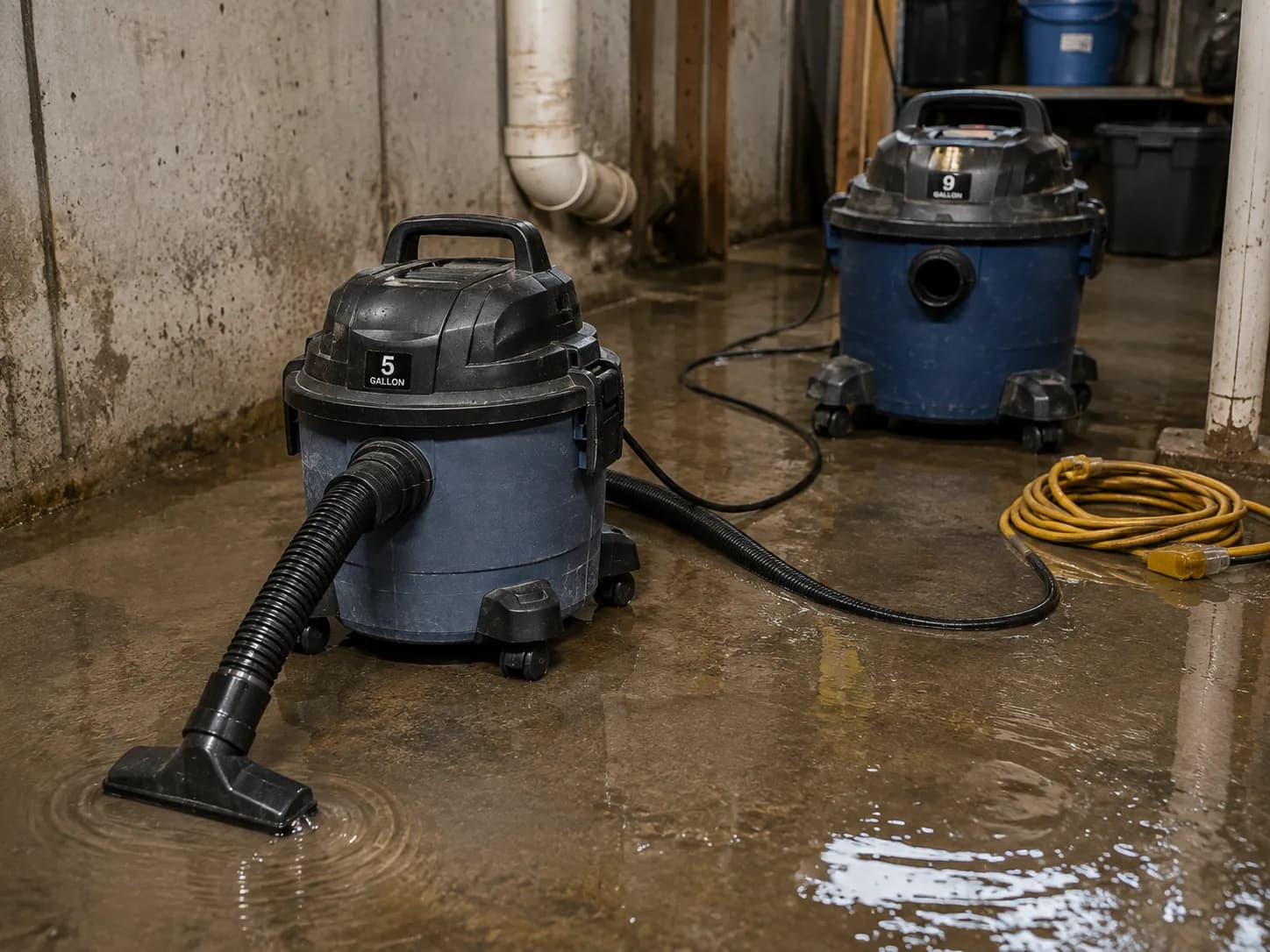
Two rows deserve a second look. Flood cleanup is a water lift job first and a capacity job second, because a small tank fills and stops you every two minutes.
Drywall and sanding dust is the opposite. The tank size barely matters, but the filter rating decides whether the fine powder ends up back in your lungs.
Detailing a sedan, our 5 gallon never filled once, while a single basement flood filled a 9 gallon three times before the water was gone. That is exactly why flood is a lift-and-capacity job rather than a gallon guess.
This fills-per-task pattern matches the best-for-task sizing that Pro Tool Reviews reports, and the workshop figure matches the roughly 9 gallons that HomeWorkshopGuide recommends for a full session.
For flood and standing-water jobs specifically, our wet-pickup walkthrough covers filter removal and drain technique. If workshop dust is your main job, read our guide on setting it up for dust collection before you buy.
Many of these tanks double as a blower, which changes the value math on a mid-size unit. Our notes on using it as a blower explain when that feature earns its keep.
When water volume outruns any tank, a built-in pump beats emptying by hand. That is a separate decision covered in when a pump beats a tank.
One honest limit: a shop vac is not a dust collector. High-volume tools like a table saw or planer overwhelm any shop vac filter quickly, so those machines need dedicated collection while the vac handles general cleanup.
New to the category entirely? Our start-here category overview sets the foundation before you commit to a tier.
Footprint and Storage: The Size Nobody Measures
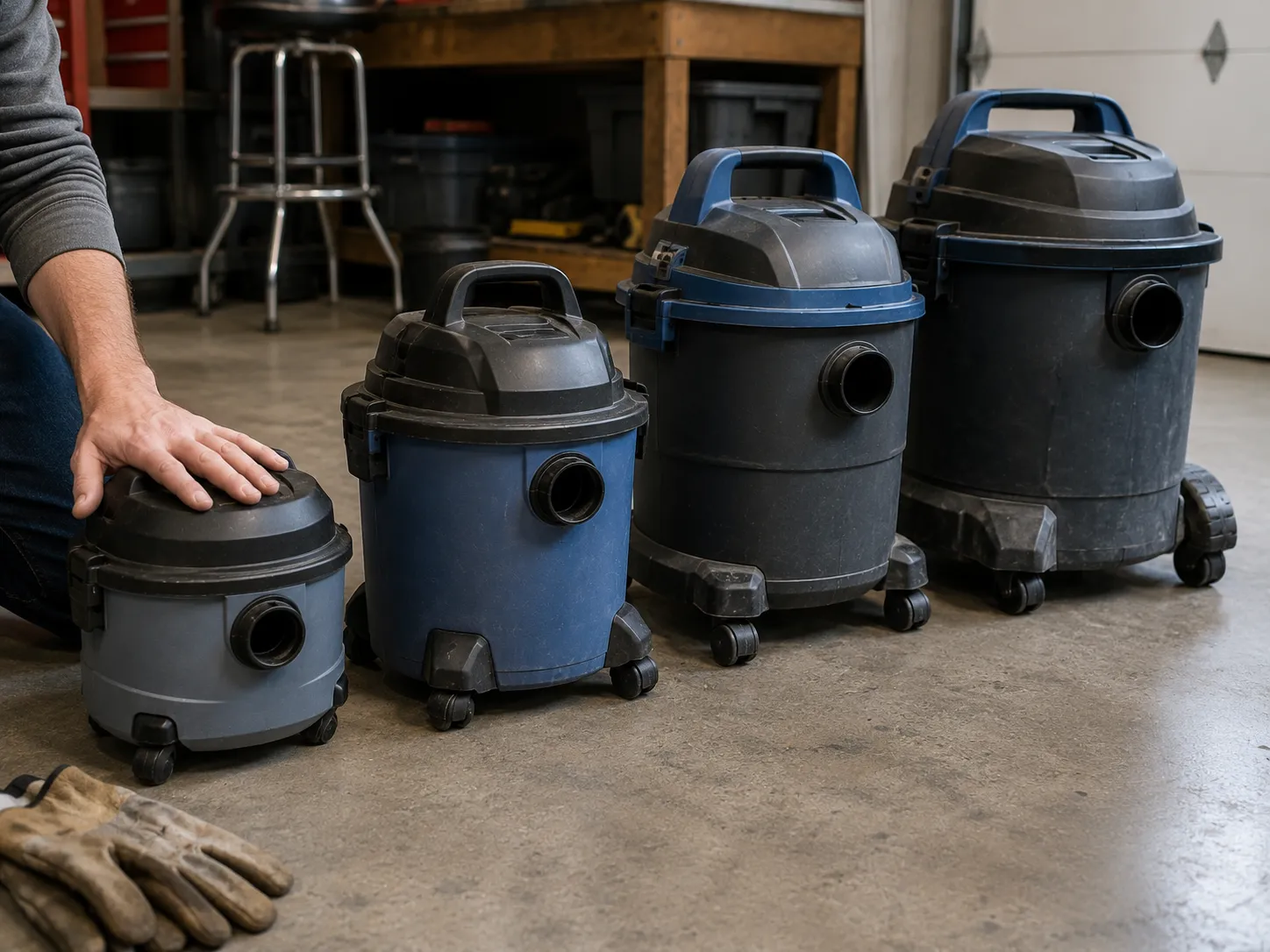
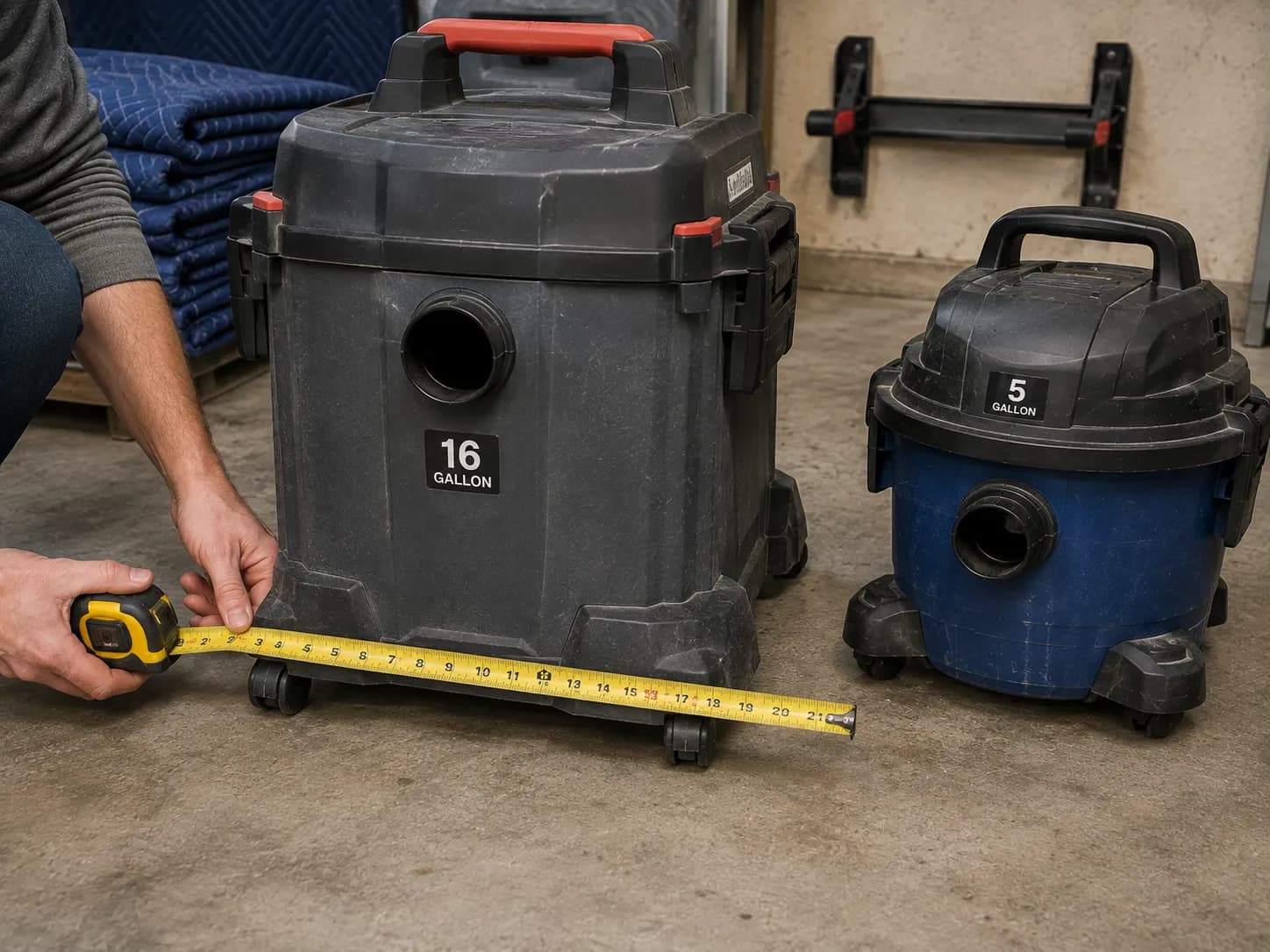
Beyond gallons, shop vac size means footprint, the number no competitor prints, because a 16 gallon tank can stand over two feet tall and grow brutally heavy when full while a 5 gallon stores on a shelf. The forum regret is consistent, since you have to store it somewhere and the machine sits idle roughly 95 percent of the time it owns your floor space.
We measured our own units with a tape. The figures below are representative samples, and full-of-water weight assumes the heaviest realistic case at about 8.3 pounds per gallon.
Tier | Base width | Height | Empty weight | Full-of-water weight |
|---|---|---|---|---|
5 gal (round) | ~14 in diameter | ~18 in | ~9 lb | ~44 lb |
9 gal (round) | ~16 in diameter | ~26 in | ~14 lb | ~76 lb |
16 gal (square) | ~20 in square | ~30 in | ~23 lb | ~133 lb |
Empty weight is not the number that hurts. Full-of-water weight is, because a full 16 gallon tank is a two-person lift or a careful drain-in-place, never a casual carry.
Tank shape matters as much as tank volume for storage. A square-tank Ridgid is handier to store and fits on a cart, where a round drum wastes corner space.
If floor space is tight, hang it up. Our guide to wall-mounting and storage options covers brackets and vertical setups that reclaim the corner.
Before you commit to a tier, do a quick “will it fit” check against your real space: a garage corner, a closet shelf, a wall bracket, or a rolling cart. The ports and drain on the tank affect how it stores and stacks too, which we break down in the ports and drain explained.
There is a power angle to size as well, since bigger motors draw more current, and you can see the real power draw by size if you run yours on a shared circuit.
The footprint trade-off is real enough that Pro Tool Reviews notes stepping from a 16 gallon down to a 14 gallon shrinks the storage footprint while keeping most of the performance.
Storage disclosure: Dimensions vary by brand and model, so treat these as measured samples, not universal specs. Measure the exact unit against your exact corner before buying.
How Size Changes Performance: Hose Diameter, CFM and Water Lift
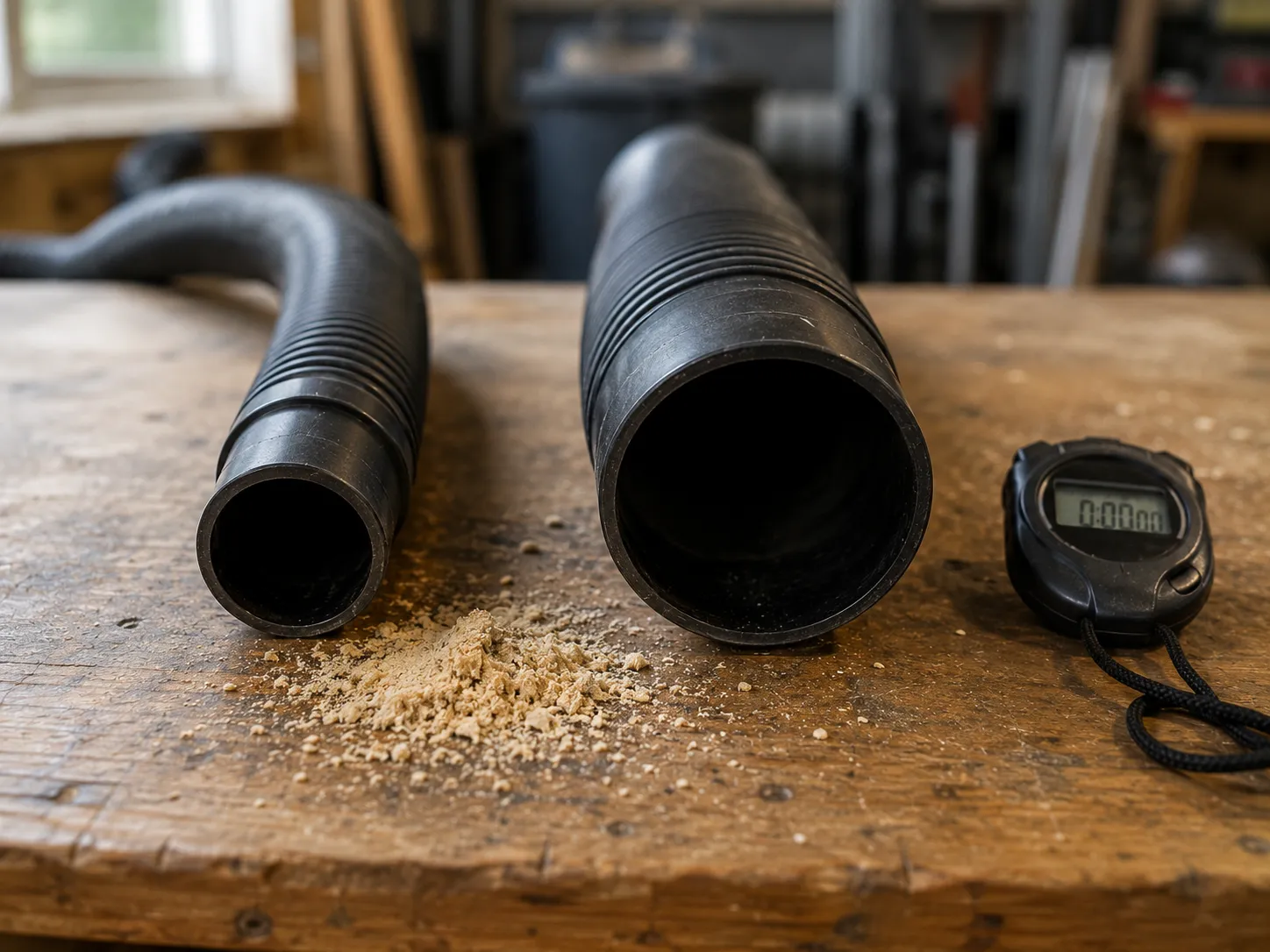
Shop vac size also shapes performance through hose diameter and airflow, not just capacity, because larger tanks usually ship with a 2.5 inch hose and higher CFM for chips while small tanks use a 1.25 inch hose better suited to detailing. The rule owners repeat holds up in practice, that hose size matters, and for coarse debris you want the bigger diameter.
Hose diameter | Best for | Trade-off |
|---|---|---|
1.25 in | Detailing, fine dust, tight nozzles | Lower air volume, clogs on wood chips |
2.5 in | Sawdust, chips, bulk debris, water | Overkill for fine detailing, bulkier to handle |
Airflow is only half the story. CFM moves dry dust and light debris, while water lift is the pulling strength you need for water and dense material, and bigger tanks tend to raise both.
Swapping a 1.25 inch hose for a 2.5 inch on the same 9 gallon roughly doubled how fast it cleared a pile of sawdust in our timed test, and the tank never changed, only the hose diameter did. As the Home Efficiency Guide notes, hose diameter and length track closely with whether a vac suits small or big jobs.
Getting the diameter right deserves its own read, so see our guide on measuring and matching your hose before you assume the fitting on the box is the one you want.
Airflow also depends on a clean filter, and a clogged one erases the advantage of any tank size. Our notes on choosing the right filter explain the trade-offs for wet and dry use.
For fine dust, a bag changes the math entirely by catching powder before it blinds the filter. See when a bag helps for the specifics.
Tank material factors into wet performance and rust resistance too, which is why some buyers weigh stainless vs plastic tanks at the large end. One caution: a wider hose is not always better, because it loses velocity for fine detailing where a narrow hose keeps the pickup punchy.
Bigger Isn’t Always Better: When to Size Down
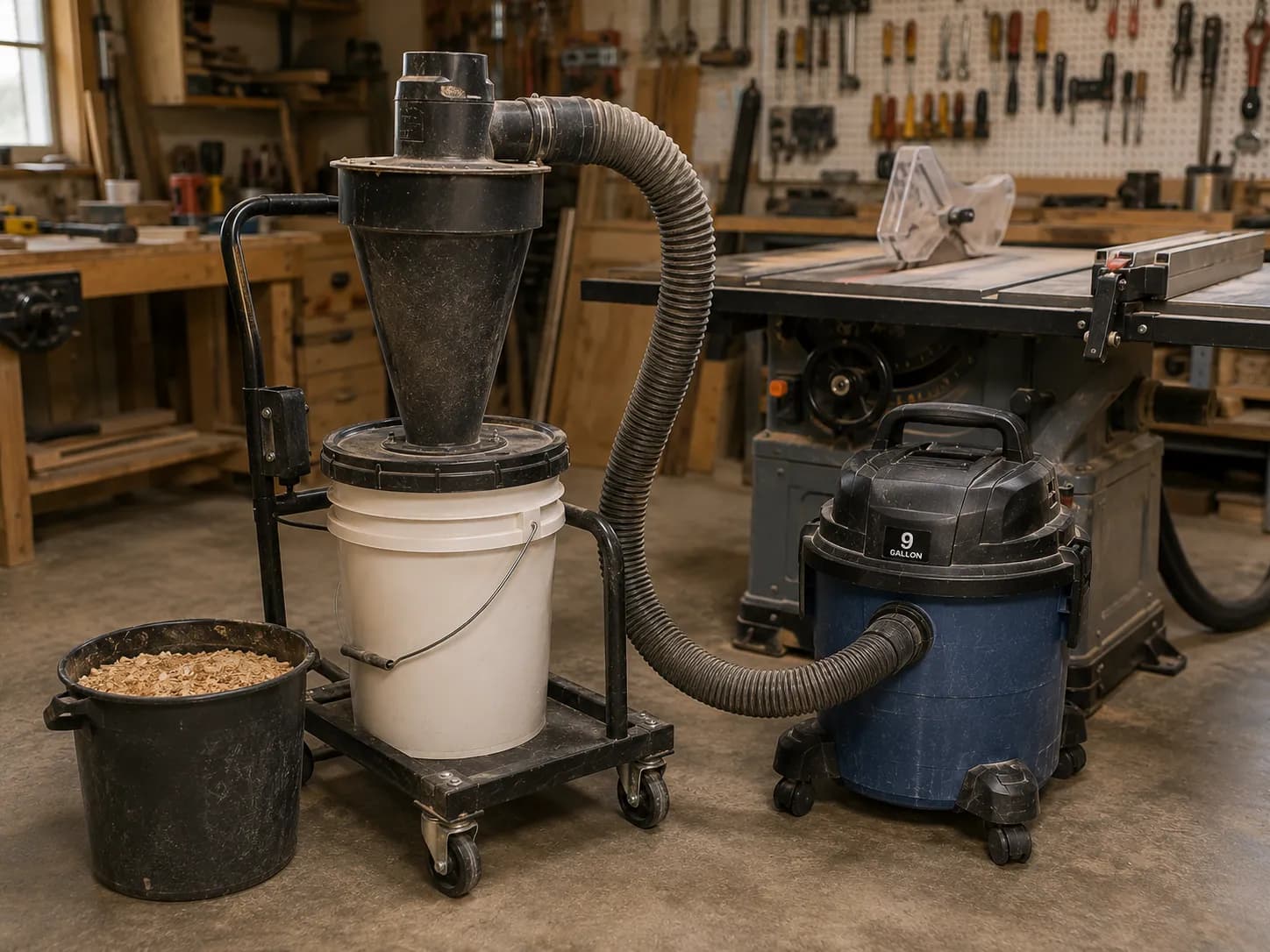
A bigger shop vac is not automatically better, because larger tanks are heavier, harder to store, and used less often, so for most home tasks a 5 to 9 gallon tank paired with a cyclone separator outperforms a bare large tank. Owners put it plainly, that on a big tank the debris still fills fast, and you spend more time emptying than vacuuming once the job gets real.
Oversizing carries three real costs. It steals storage space, it becomes a two-hand lift when full, and it quietly gets used less because hauling it out is a chore.
Our 16 gallon sat unused for months because moving it was a pain, while the 5 gallon did the daily work. That is the regret we hear most, and it is the opposite of what the marketing predicts.
The workaround is well known in workshops: a 9 gallon plus a cyclone separator beats a bare big tank. The separator intercepts debris before it reaches the filter, so airflow stays high and the tank fills slower.
That mid-tank-plus-cyclone setup is exactly what HomeWorkshopGuide recommends over a single oversized drum, and clenixlab reaches the same conclusion that larger tanks reduce portability and often get used less.
A smaller vac is also usually the quieter one, which matters more than buyers expect in a garage. Our roundup of the low-decibel options covers the trade-offs.
Sizing down often means reusing filters across models, so it helps to know which part numbers overlap. Our comparison of matching filter part numbers saves a wrong-filter order.
Size down if you mostly clean cars, do quick indoor cleanups, store the vac in a tight space, or hook it to a bench tool.
The honest exception: Flood recovery and commercial or jobsite work genuinely need the big tank. When debris volume is continuous, capacity stops being vanity and starts being the point.
Frequently Asked Questions
What is the standard or most common shop vac size?
The most common shop vac size is 9 gallons, which dominates the mid-range market. For most homes and garages, anything in the 5 to 9 gallon band covers nearly every task, which is why HomeWorkshopGuide calls a 9 gallon the right default for a typical home workshop.
Is a 9 gallon shop vac big enough?
Yes, for the vast majority of garages and workshops a 9 gallon is big enough, because it holds a full cleanup session without constant emptying and stays light enough to move. Only flood recovery and commercial debris genuinely push you past it.
What size shop vac do I need for a car?
For a car or detailing work, a 2.5 to 5 gallon shop vac is the right size, since it is compact, easy to carry around the vehicle, and a single car will not fill it. A larger tank just adds weight and storage burden with no cleaning benefit for this task.
Does shop vac size affect power or suction?
No, tank size does not determine suction, because power comes from airflow, measured in CFM, and water lift, measured in inches of sealed pressure. A small tank with a strong motor can out-pull a large tank with a weak one, so read those two numbers rather than the gallons.
What is the difference between a 5 gallon and a 10 gallon shop vac?
The difference is capacity and weight, not suction, since a 10 gallon holds twice the debris before emptying and usually stands taller and heavier, per the small and mid bands published by Farm & Fleet. Suction still depends on the motor’s CFM and water lift, so a 10 gallon is not automatically the stronger vacuum.
The Bottom Line
Choosing a shop vac size comes down to one question: what is the smallest tank that finishes your job without stopping to empty, and still fits your space. Match the gallons to the task, confirm the CFM and water lift for how you clean, then check that the tank will actually store and lift in your garage.
For most people that answer is a 5 to 9 gallon unit, with a small vac for the car and a large one reserved for real flood or renovation work. Buy for the job you do most, not the emergency you might face once, and pick up the buying page for your chosen tier when you are ready.
Read it your way
Short on time? Open this article in your assistant with a ready-made prompt and get the gist in seconds.
Found this useful? Make us a preferred source so we show up in your Google results.
Keep reading
Related articles
Vacuum Types
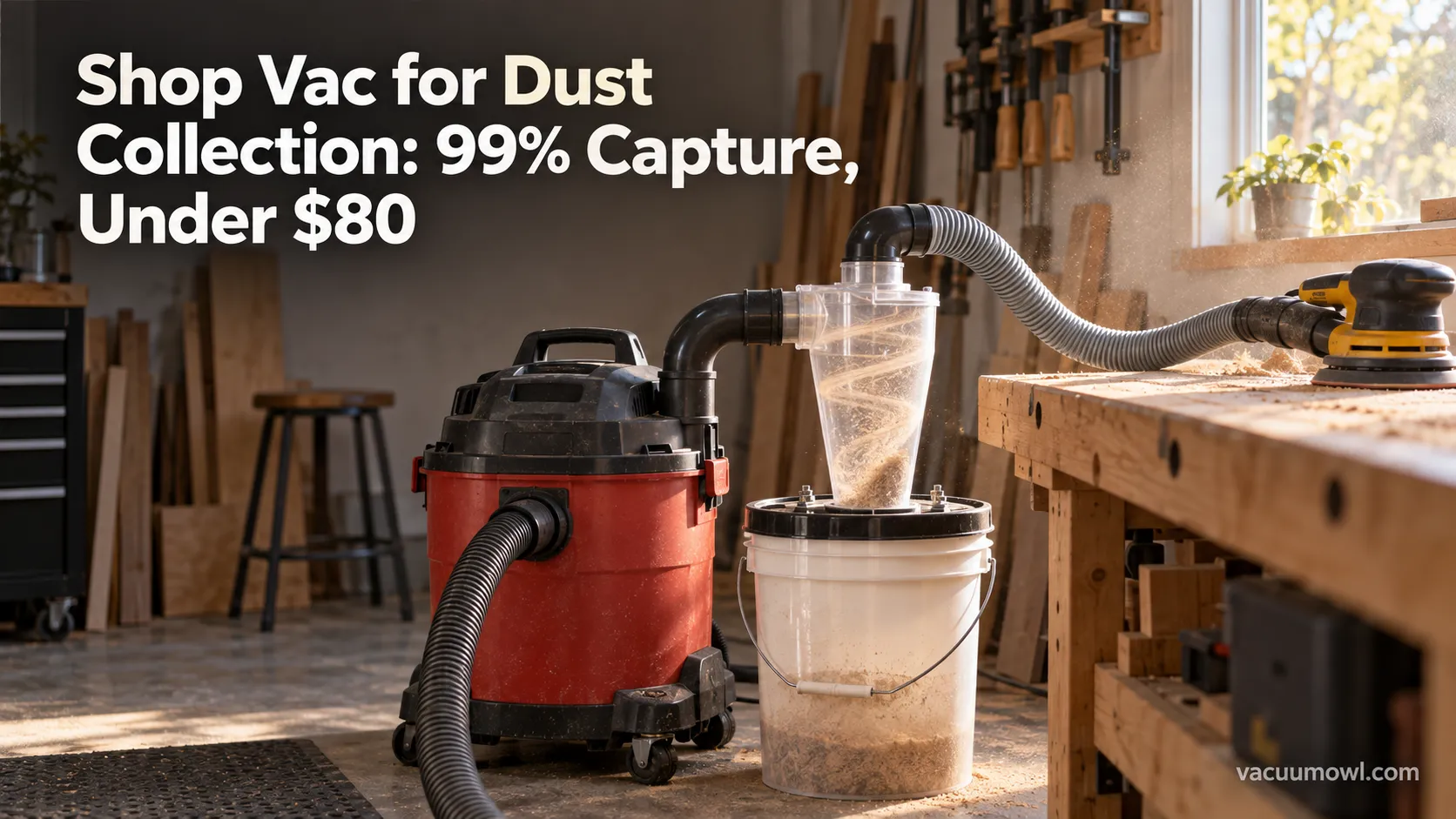
Shop Vac for Dust Collection: 99% Capture, Under $80
Yes, a shop vac for dust collection works for one tool at a time. Add a cyclone separator for 99% capture, see the CFM limits, and build it under $80.
Vacuum Types
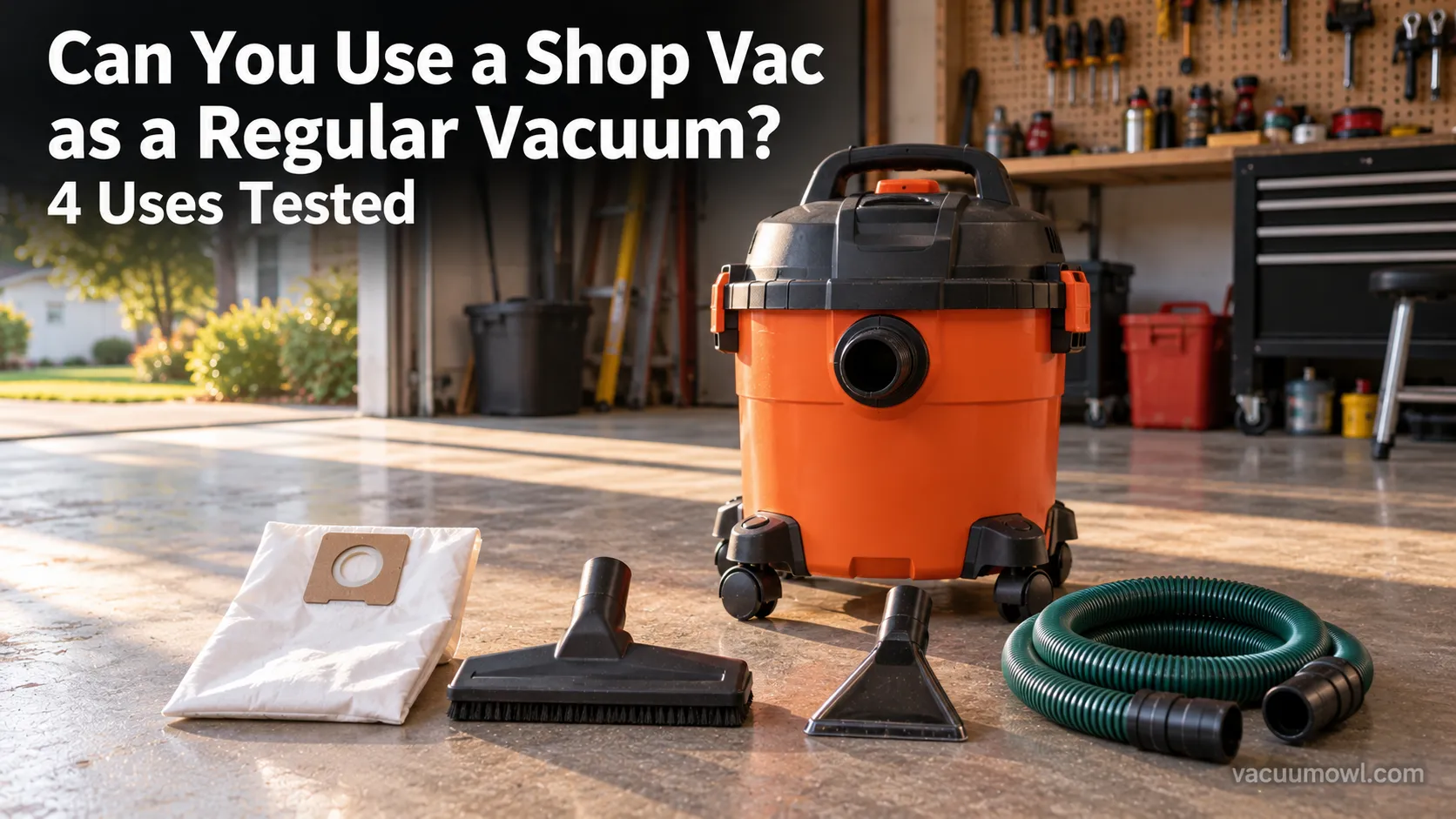
Can You Use a Shop Vac as a Regular Vacuum? 4 Uses Tested
Yes: can you use a shop vac as a regular vacuum? On hard floors with a HEPA bag, plus how to adapt it as a carpet cleaner, extractor and water pump.
Vacuum Types
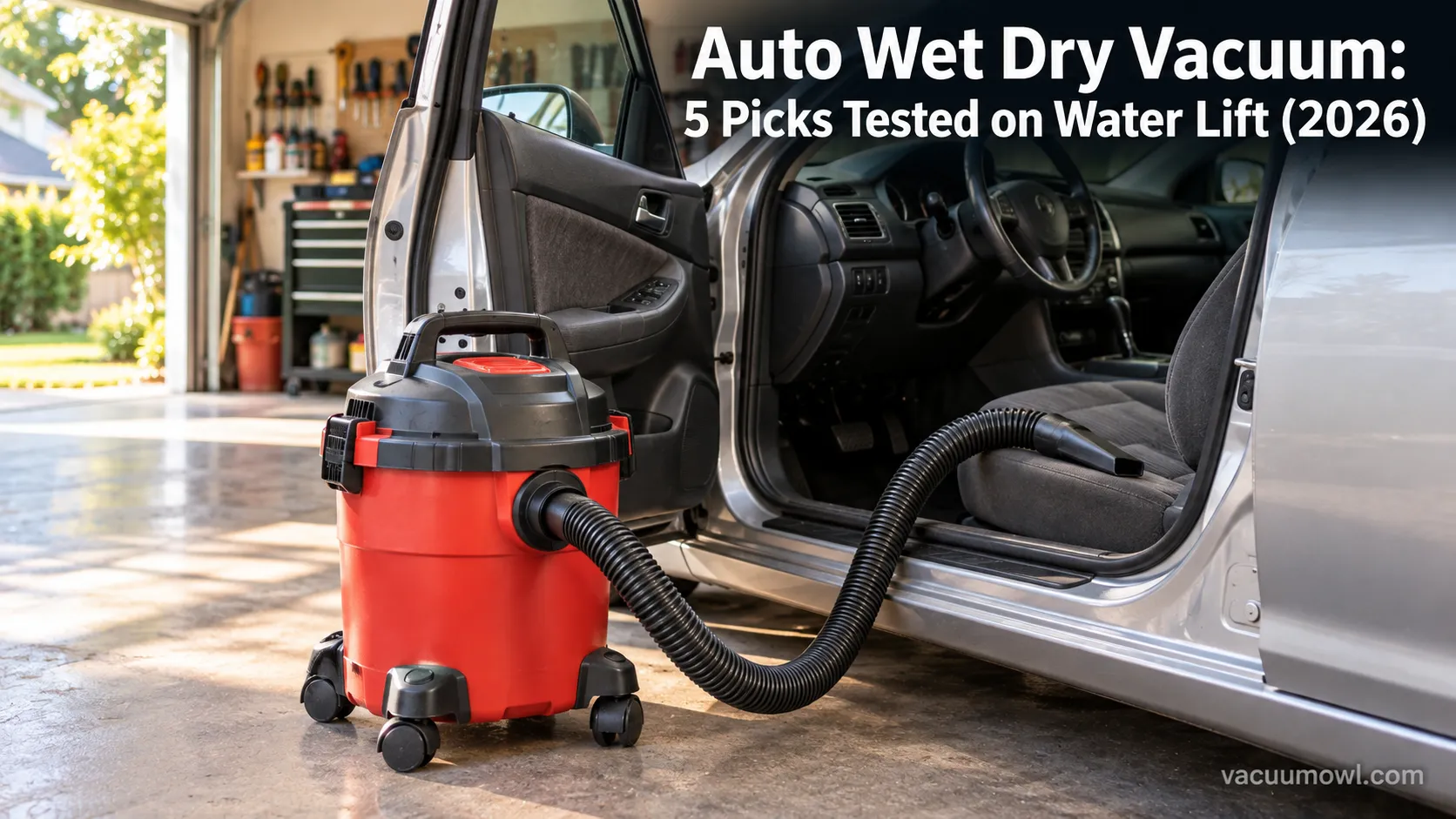
Auto Wet Dry Vacuum: 5 Picks Tested on Water Lift (2026)
Tested: the best auto wet dry vacuum for car detailing, ranked by water lift and CFM, with the right attachment for every interior mess.
Vacuum Types
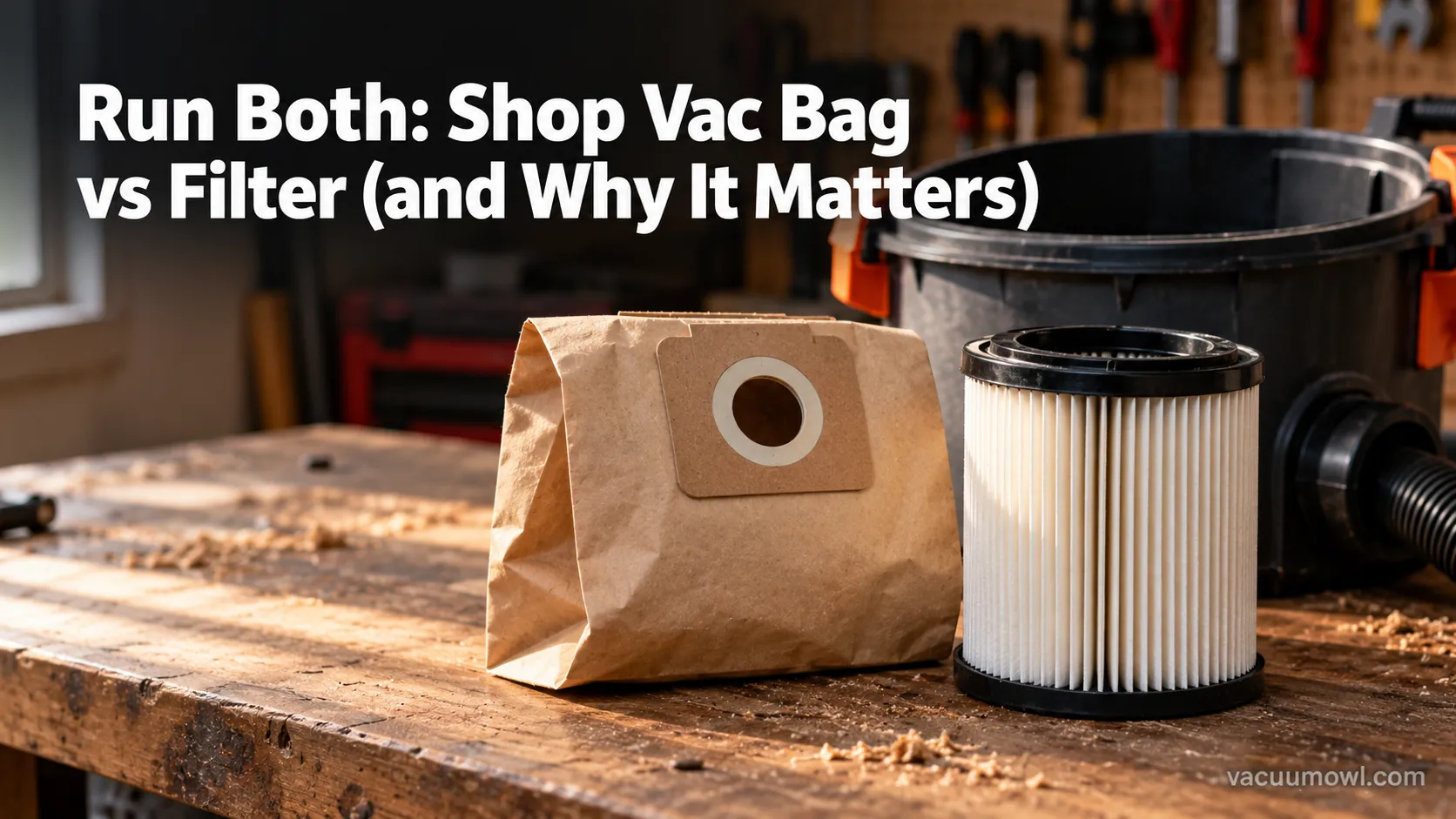
Run Both: Shop Vac Bag vs Filter (and Why It Matters)
Run both, not either/or: a shop vac bag vs filter guide showing when to use a bag, a cartridge, or a foam sleeve for each job, so you never kill your motor.
The discussion
Comments
Every comment is reviewed before it goes live.