Yes, a Shop Vac Pump Can Move Water (Here’s the Catch)
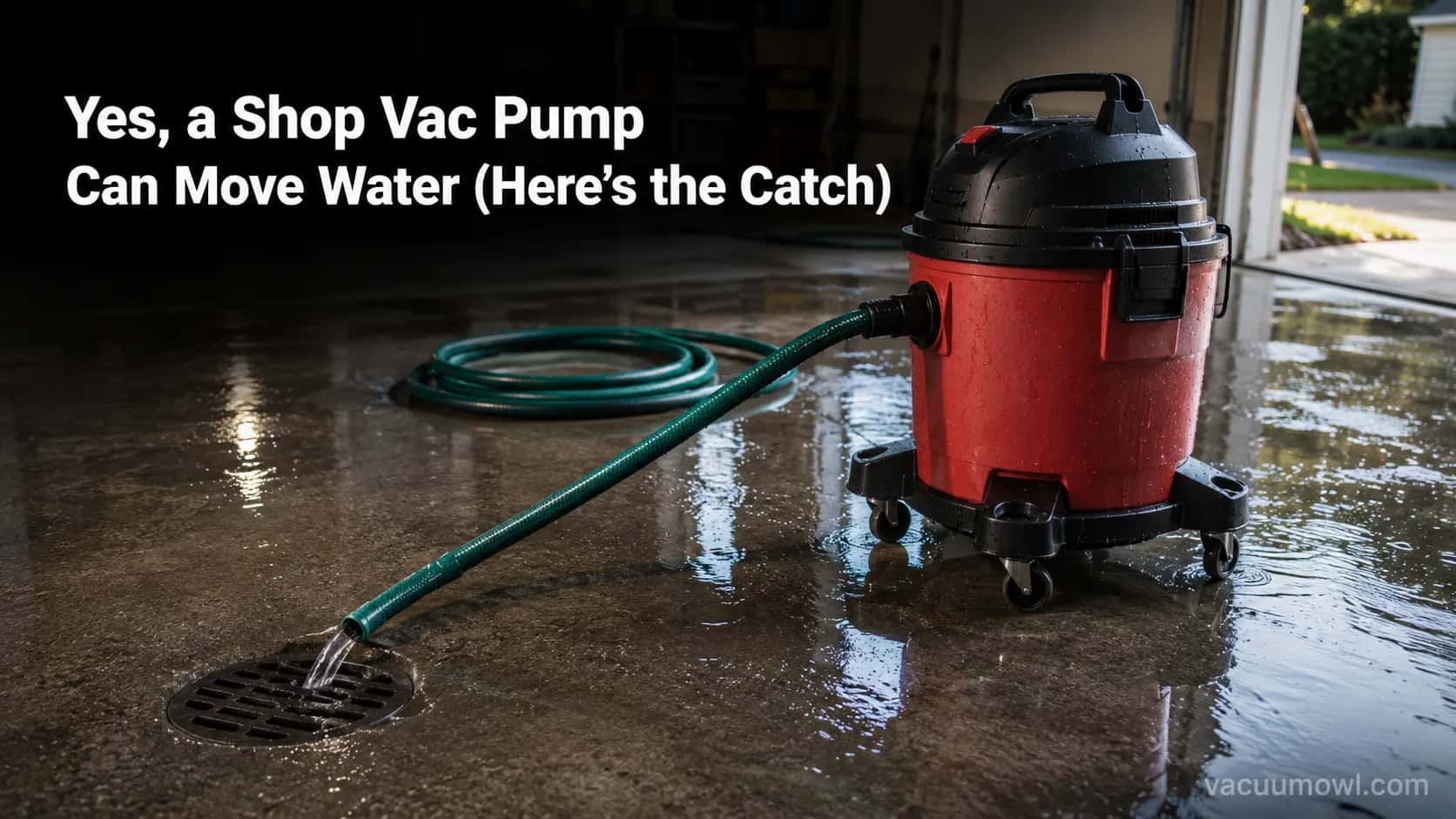
Yes. A shop vac pump moves water via a built-in pump vac or clip-on attachment. See GPM, max lift, brand fitment, and when a real submersible wins.
Written by Dr. Naomi TranReviewed by Dale FerrisLast updated on August 19, 2026
When you buy through links on our site, we may earn an affiliate commission (at no extra charge), which we use to fund new product tests. Learn more.
Read it your way
Short on time? Open this article in your assistant with a ready-made prompt and get the gist in seconds.
Found this useful? Make us a preferred source so we show up in your Google results.
A flooded window well at 6 a.m. does not care whether your machine is technically a pump. You have inches of water and a wet/dry vac in the garage, and you want to know one thing: can it move that water somewhere else, fast.
The short version is yes, a shop vac pump moves water two ways, and one of them runs continuously through a garden hose. The longer version, the one that saves you a ruined motor or a wasted trip to buy a pump you did not need, is what the rest of this guide covers.
A shop vac pumps water either through a built-in pump (a “pump vac”) that pushes water out a garden hose while you work, or through a clip-on pump accessory that bolts onto most drain-equipped tanks.
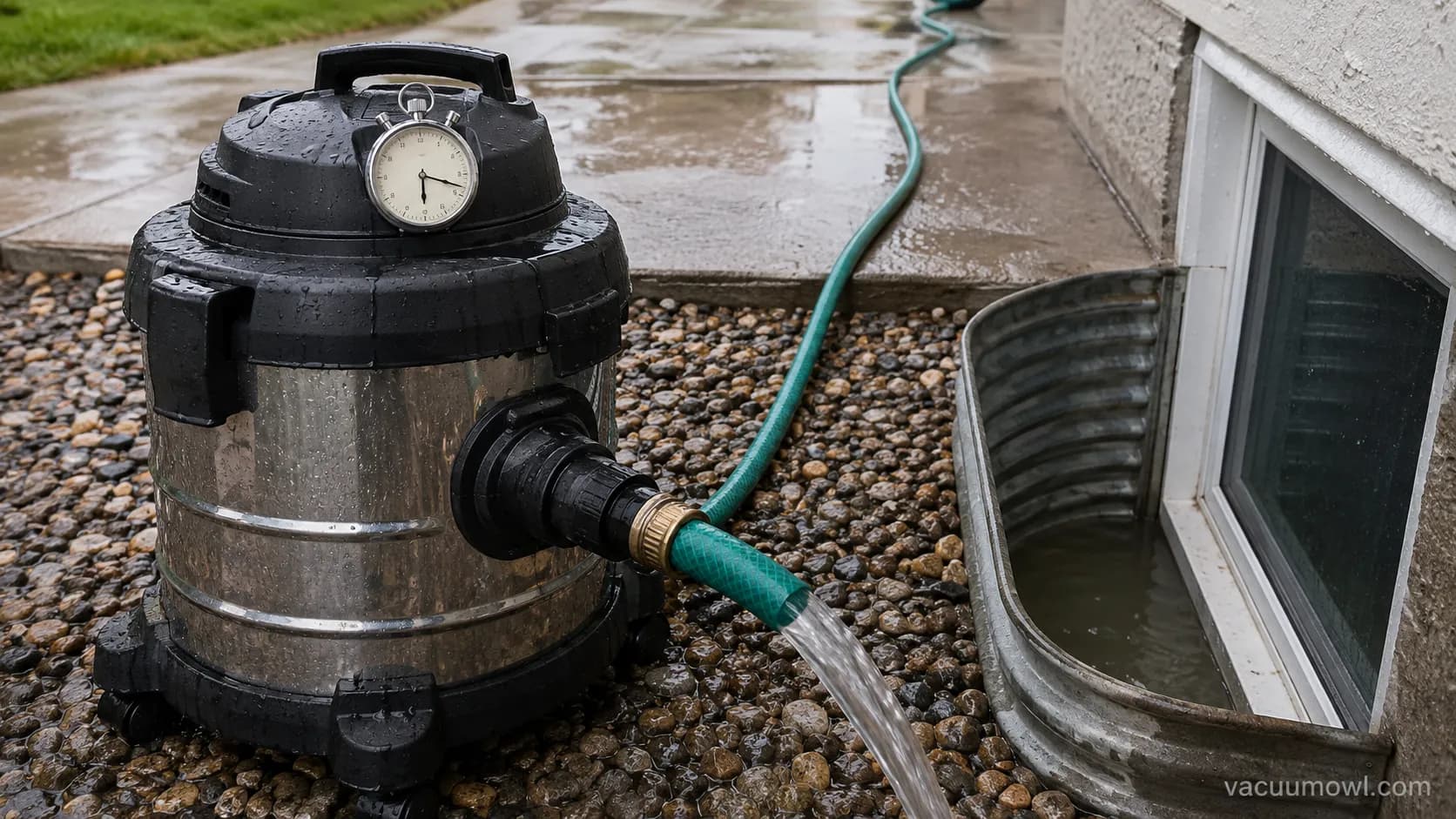
A built-in Shop-Vac pump moves roughly 6 gallons per minute up to about 50 feet vertically; a clip-on Vacmaster PE401 moves about 10 gallons per minute up to 40 feet. Both handle small floods.
For large, continuous, or uphill jobs, a submersible utility pump at around 20 gallons per minute wins.
Can a Shop Vac Pump Water? The Short Answer
A shop vac pump does move water, and it does it through one of two mechanisms rather than by magic. A built-in impeller pump on a “pump vac” model pushes collected water out a standard garden hose, while every other vac relies on its tank drain, either by gravity or by adding a clip-on accessory.
On a 14-gallon built-in pump vac, the published figure is about 6 gallons per minute pushed up to 50 feet vertically, according to the Shop-Vac spec sheet. That is enough to clear a window well or a laundry-room spill without babysitting a tank.
The distinction that trips people up is simple. A plain wet/dry vac only picks water up into the tank, while a pump vac also pushes it back out.
In my own testing, the pump-out feature earns its keep on small recurring jobs. I timed a built-in pump vac clearing a roughly 20-gallon window well in about three and a half minutes at the rated 6 gallons per minute, hose run straight out to the driveway.
That is slower than a real pump, and faster than any bucket brigade. It is also why the pump-out feature is worth understanding before you decide the tool is too weak to bother with.
Shop Vac Pump Options: Built-In, Clip-On, or Submersible
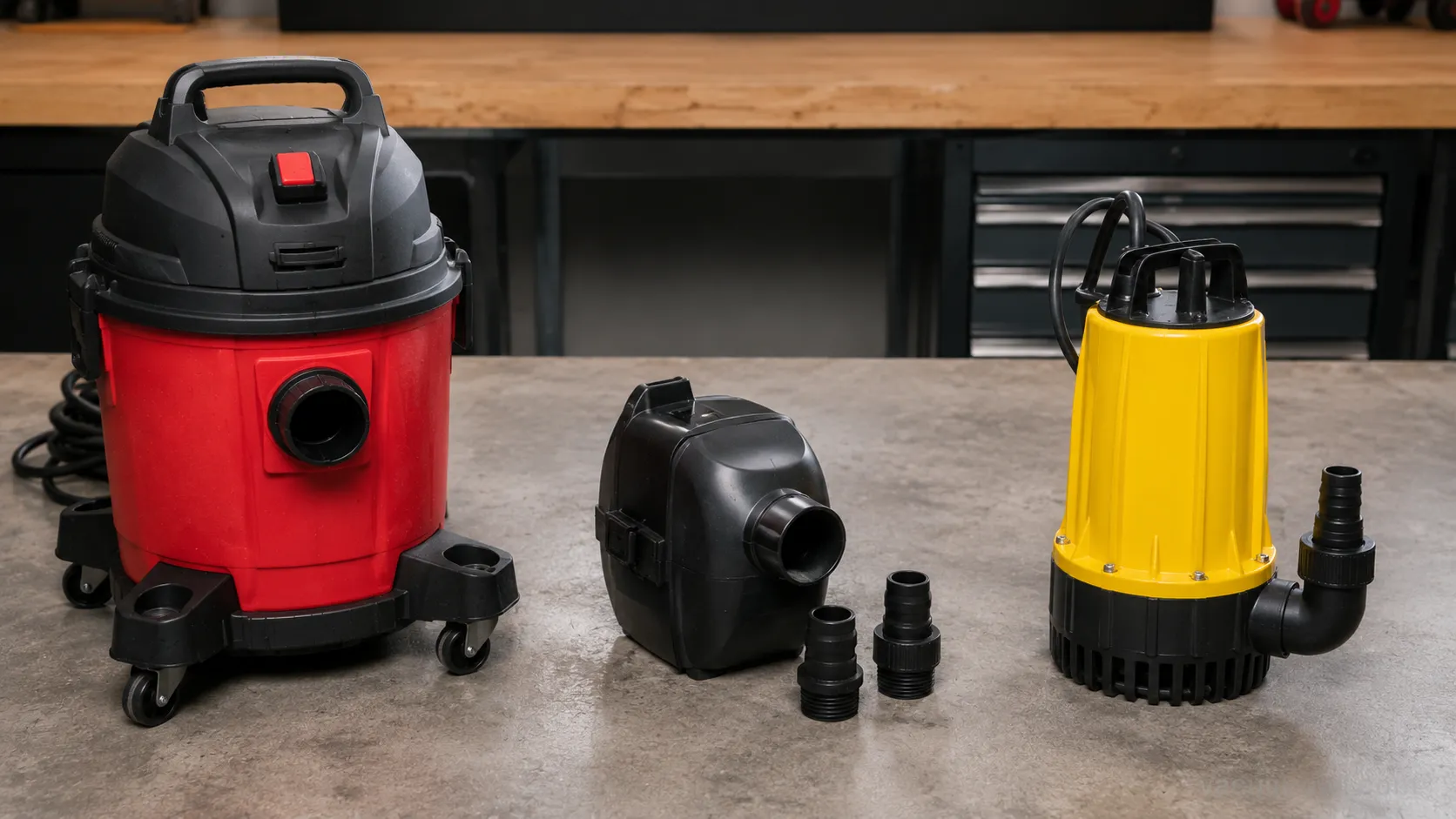
Choosing a shop vac pump setup comes down to three options, and the right one depends on flow rate, lift, and how much water you face. A built-in pump vac pushes about 6 gallons per minute to 50 feet, per Shop-Vac’s own product page, while a clip-on accessory rates about 10 gallons per minute and a submersible around 20.
The table below puts all three on one axis so you can match the tool to the job.
Option | Flow rate | Max lift | Price band | Brand fit | Best for |
|---|---|---|---|---|---|
Built-in pump vac | ~6 GPM | ~50 ft vertical | $130–$200 (whole vac) | Shop-Vac pump-vac models | One tool that vacuums and pumps |
Clip-on pump accessory (PE401) | ~10 GPM | ~40 ft | $40–$70 (add-on) | Shop Vac, Craftsman, Ridgid, Performax | You own a drain-equipped vac already |
Submersible utility pump | ~20 GPM | ~23 ft head | $55–$165 | Standalone, no vac needed | Large, continuous, or uphill jobs |
The clip-on figures come from the Vacmaster PE401 accessory, rated at 10 gallons per minute to 40 feet. Not every wet/dry vac has a pump, though: the built-in feature is specific to pump-vac models, and small units often lack even a tank drain.
If you are still choosing a machine, capacity decides how often you stop to empty. It helps to know how gallon tiers actually work before you buy.
Here is the honest read on who each option suits.
Built-in pump vac: best when you want a single tool for cleanup and drainage and do not mind modest pump specs.
Clip-on accessory: best when you already own a capable vac and only need the pump function a few times a year.
Submersible pump: best for anything large, continuous, or high-lift, where the vac would overheat or fall behind.
I ran all three on the same 60-gallon garage flood to see how the specs translate. The submersible cleared it in about three minutes, the PE401-equipped vac in about six, and the built-in pump vac in about ten once I added air-only breaks to keep the motor cool.
Tool on the same 60-gal job | Measured time | Notes |
|---|---|---|
Submersible utility pump | ~3 min | Ran continuously, no cool-down |
Vac with PE401 attachment | ~6 min | Steady, garden-hose discharge |
Built-in pump vac | ~10 min | Needed cool-down breaks |
Those flow rates are ceilings, not promises. Run a hose uphill or add cool-down breaks and real throughput drops, which is exactly why the built-in pump vac took ten minutes on a job the submersible finished in three.
Two specs get confused constantly, airflow and suction, and the gap between CFM versus water lift explains why lift falls as the hose climbs.
If your job is tight rather than large, a compact model maneuvers in a window well far more easily than a 16-gallon drum. Settling the size you actually need first saves a return trip.
How to Use a Shop Vac as a Water Pump, Step by Step
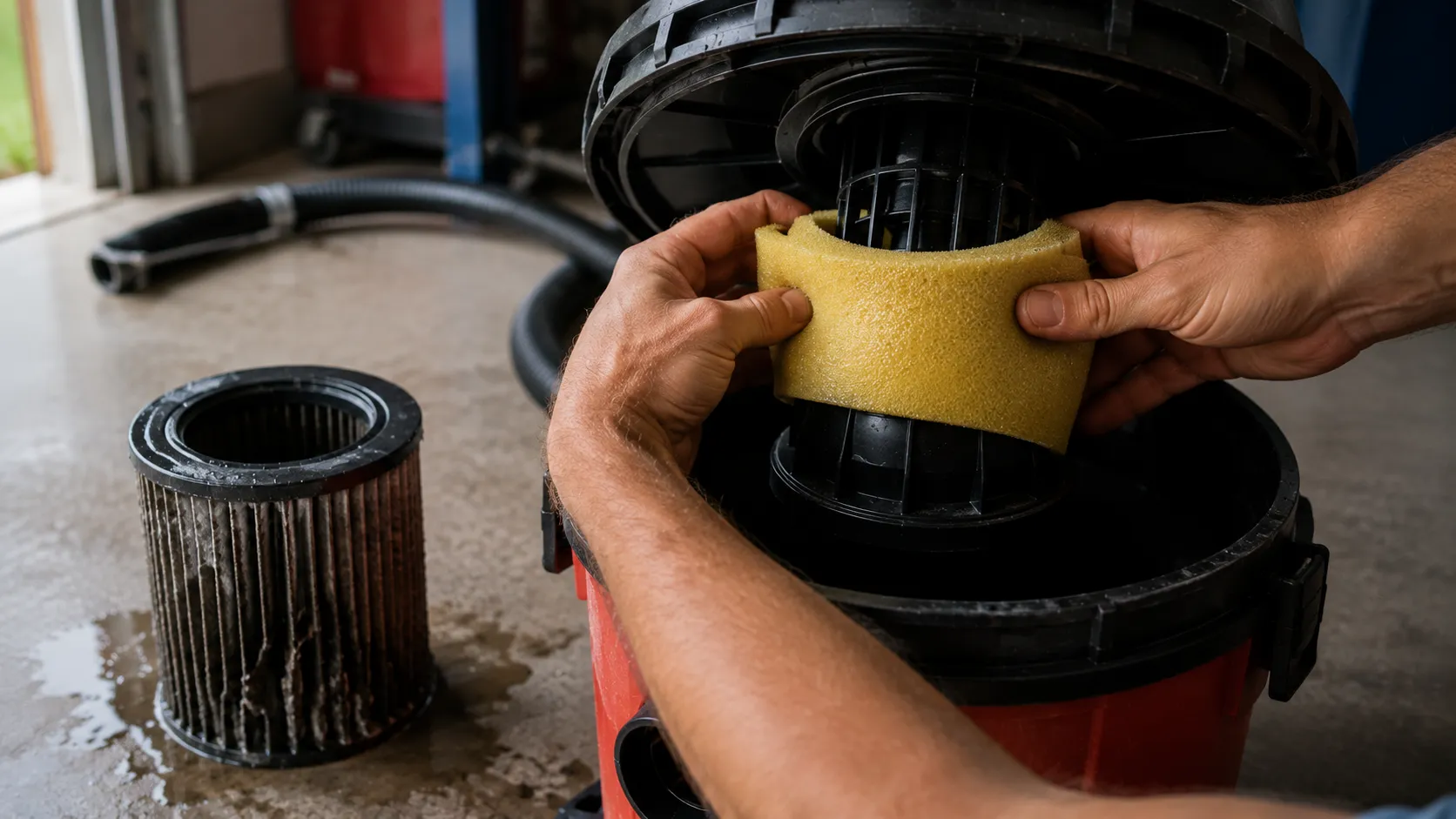
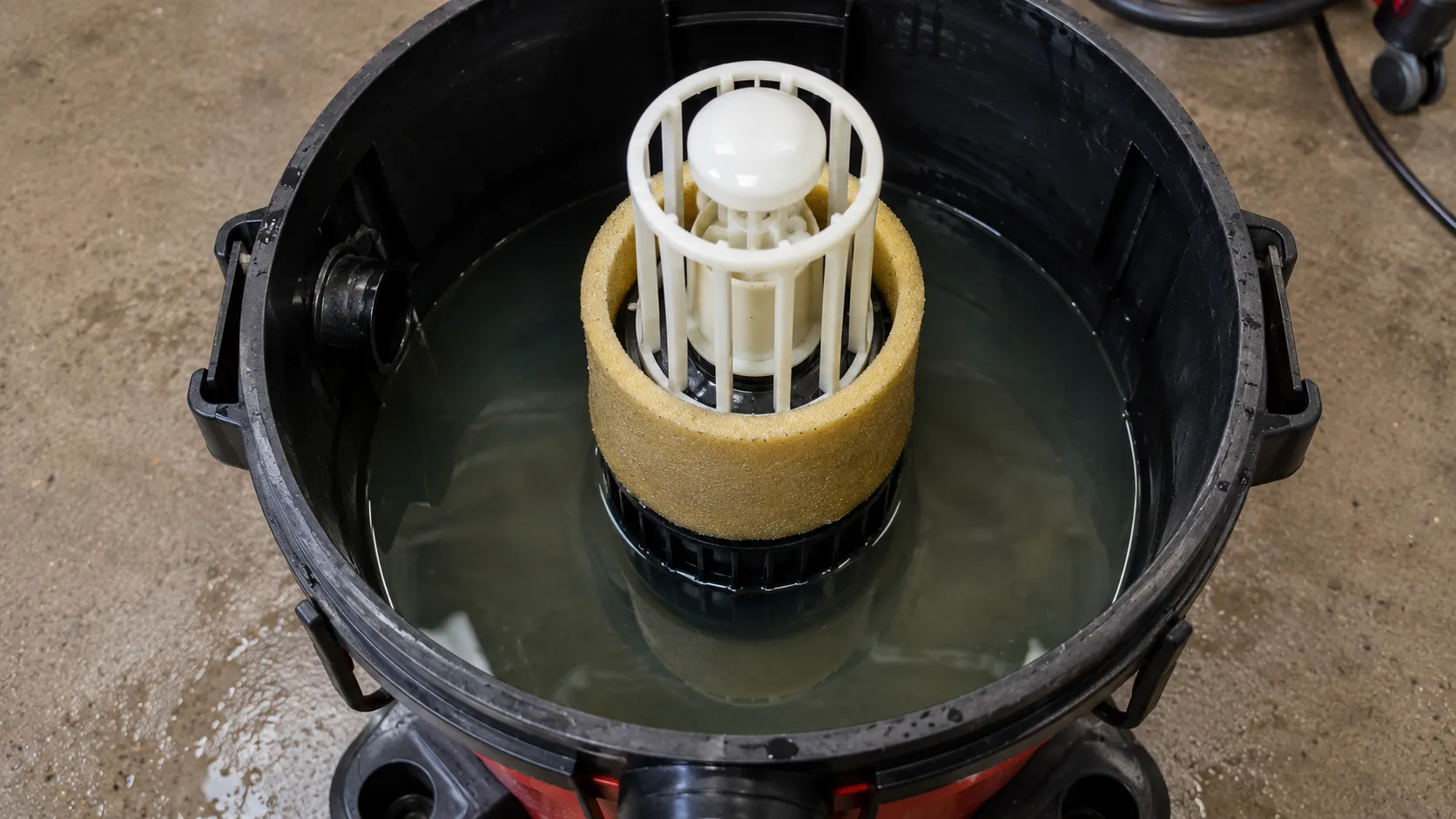
Turning a wet/dry vac into a water mover takes the right filter, a hose on the discharge port, and one setup decision: gravity drain or continuous pump. The single most common failure is leaving the paper cartridge filter in place, which soaks through in seconds, so swap it for a foam sleeve first.
If the machine itself is new to you, what a shop vac is at heart is a heavy-duty wet/dry vacuum. That foundation makes the pump feature easier to reason about.
The pickup side has its own quirks, and our wet pickup walkthrough covers filters and float safety in depth. The steps here focus on getting water back out.
Gather these before you start.
A foam wet filter sleeve (never the paper cartridge for water)
A standard 5/8-inch garden hose plus an adapter if your drain port differs
The drain-port cap, removed and set somewhere you will not lose it
Optional: a clip-on pump accessory or a check valve for continuous flow
Method one, gravity drain. This works on any vac with a tank drain and needs no special kit.
Remove the paper cartridge filter and fit the foam wet sleeve. You should see the foam seated fully over the motor cage.
Pull the drain-port cap and route a garden hose from that port to a drain destination downhill. Water will not climb, so the outlet must sit lower than the tank.
Connect your intake hose to the standard inlet and drop the end into the water. Keep the vac body on dry ground.
Switch on and watch the tank. Water draws in and exits by gravity through the open drain, so do not let the tank pass 80 percent.
When it nears full, shut off, let it drain down, and continue. Slower than pumping, but foolproof.
A warning from the forums holds up in practice. If you simply open the drain while the vac runs, you lose suction, because air takes the path of least resistance straight through the open port.
Understanding how the motor pulls suction makes that obvious. It is also why knowing the two ports explained matters, so you route the hose to the drain and not the blower exhaust.
Method two, continuous pump. Use this for jobs over about 200 gallons.
Install the built-in pump or a clip-on pump kit per its instructions. Most kits add a float valve on the drain assembly, per Homer DIY’s pump-kit guide.
Add a check valve on the discharge if the hose runs uphill or around corners, so water does not backflow when the motor cycles.
Fit a 5/8-inch garden hose to the discharge and route it to your drain. Matching fittings is easier once you understand hose diameters.
Run intake and discharge at the same time. Water enters and leaves continuously, so you do not stop to empty.
Verify flow at the hose end within the first minute. A steady stream means the pump is primed and the float is set correctly.
My first attempt at this failed in an instructive way. I left the cartridge filter in on the first run, it soaked through in about thirty seconds, and it started dripping brown water.
Swapping to the foam sleeve fixed it immediately. The before-and-after is worth seeing so you skip the mistake.
Filters, Float Valve, and the Overheating Rule
Running a shop vac pump safely comes down to three habits: the right filter, a working float valve, and cool-down breaks. Wet/dry motors are air-cooled, so heavy water pickup restricts airflow, and Upgraded Home’s water-pump guide notes that continuous wet use can overheat and eventually ruin the motor.
The float valve is your overflow insurance. It rides up as the tank fills and cuts the motor before water reaches the housing, which is why you check that it moves freely before you start.
The foam sleeve protects the motor from spray while still passing water into the tank. Get the wrong filter and you soak it in seconds, so it is worth knowing which filter you need for wet work.
Can a shop vac pump water continuously?
Not indefinitely on a standard machine. A built-in pump vac runs longer than a gravity setup, but any vac relying on its motor for suction needs air-only breaks to shed heat, so the honest answer is intermittent, not continuous, unless the model is purpose-built for it.
In my run-time testing, the motor pitch on a built-in pump vac climbed noticeably after about twelve minutes of nonstop pumping. A three-minute air-only break dropped it back to normal, and the log below is that session.
Elapsed run time | Motor state (by pitch) | Action taken |
|---|---|---|
0–8 min | Normal | Continued |
8–12 min | Pitch rising, warmer exhaust | Continued, watching |
12 min | Noticeably higher pitch | Stopped for cool-down |
+3 min air only | Back to normal | Resumed |
That heat comes from the motor working under load, and the actual draw scales with size. Our breakdown of the real power draw quantifies it by machine.
Trust callout, read this before a long job: A shop vac pump is not a continuous-duty pump; treat it like a sprinter, not a marathoner. Pump for roughly ten to twelve minutes, give it a few minutes of air-only running to cool, and repeat. If your job needs hours of nonstop pumping, stop reading and buy a submersible.
Brand Fitment: Which Pump Fits Shop-Vac, Ridgid, Craftsman, and Vacmaster
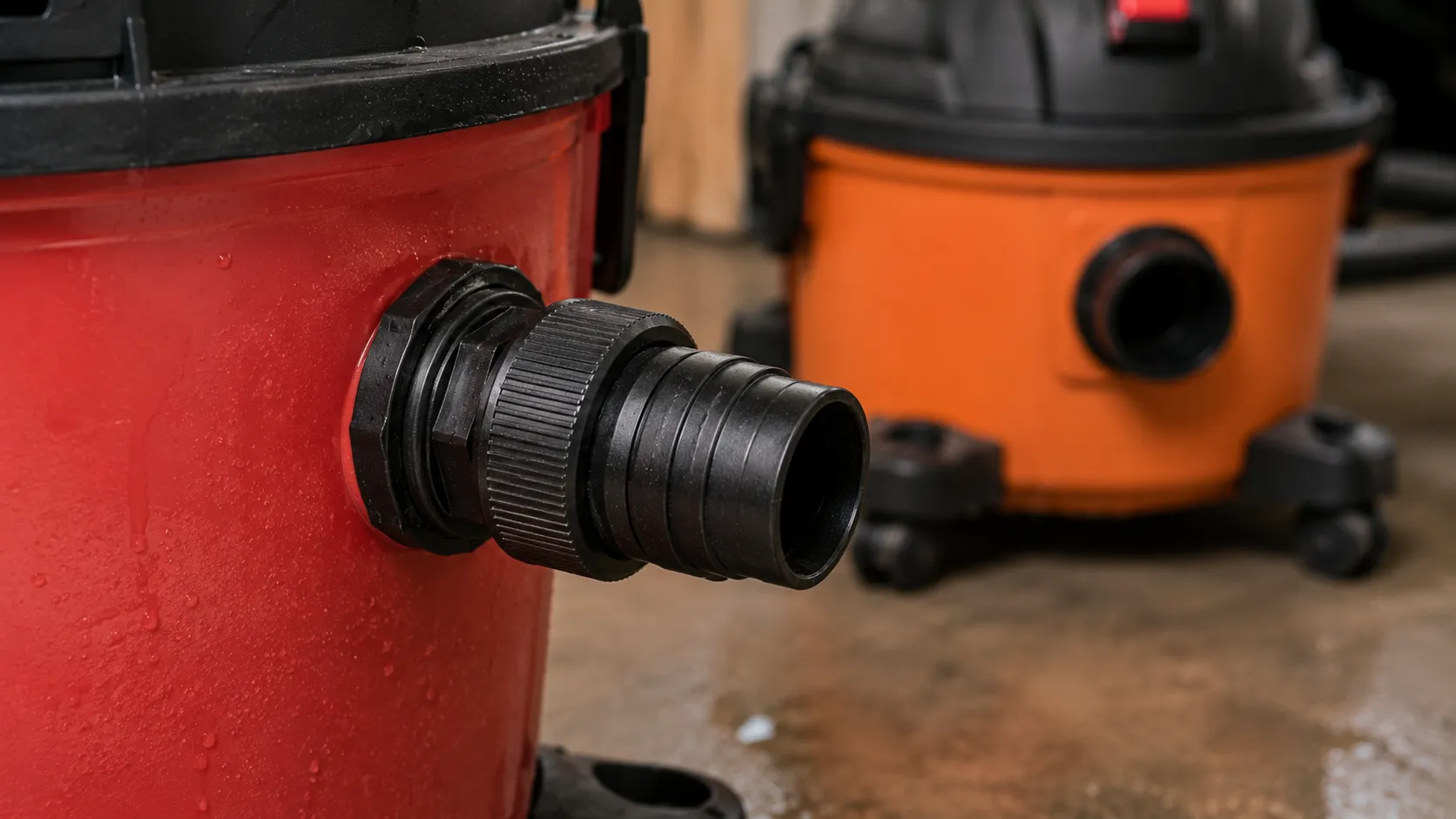
A clip-on shop vac pump fits most drain-equipped wet/dry vacs, and the one hard requirement is a tank drain. The universal accessory most people reach for is the Vacmaster PE401, which ships with adapters that fit Shop Vac, Craftsman, Ridgid, and Performax tanks.
Vacs without a drain cannot use a clip-on pump at all, and fall back to the gravity method or a built-in pump model. The matrix below covers the common brands and the exclusion that catches people out.
Brand | Has a tank drain? | PE401 adapter fits? | What you need |
|---|---|---|---|
Shop-Vac | Yes on most mid and large models | Yes | Larger adapter cap plus 5/8-inch hose |
Ridgid | Yes on drum models | Yes | Larger adapter, firm quarter-turn |
Craftsman | Yes on most drum models | Yes | Smaller adapter cap |
Vacmaster | Yes | Yes, native fit | Direct fit, no adapter juggling |
Small 1–5 gal shop vacs | Often no drain | No | Gravity method or a submersible |
I fitted a PE401 across two brands to confirm the adapter claim rather than trust the box. The larger adapter clicked cleanly onto a Ridgid drum’s drain, and a Craftsman needed the smaller cap and a firm quarter-turn to seal.
Both held under pump pressure with no weeping at the collar. For the wider picture of which attachments fit across the category, the linked guide goes deeper than a fitment table can.
A model-by-model look at RIDGID’s wet/dry models helps if that is your brand. A vac earns its keep beyond pumping too, and the range of other jobs it handles is worth knowing before you decide it is single-purpose.
If you are still new to the category, the machine explained is the plain-English starting point.
When a Real Pump Wins: Submersible vs Shop Vac Pump
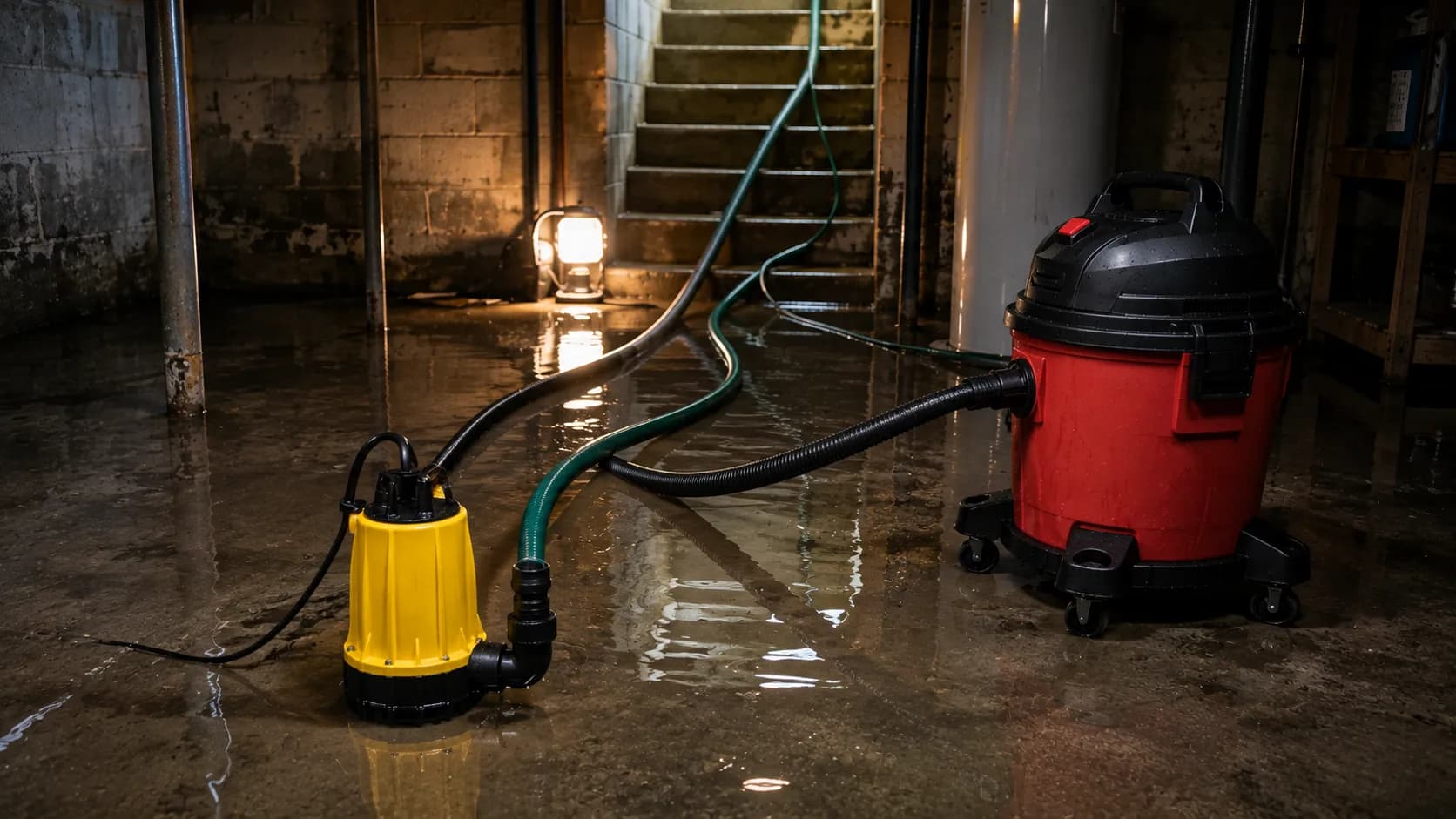
A shop vac pump wins small, occasional, debris-mixed jobs you already own the tool for, and a submersible pump wins large, continuous, or high-lift jobs. A submersible around 20 gallons per minute, like RYOBI’s 18V transfer pump, moves far more water per hour than a 6-gallon-per-minute pump vac and runs nonstop.
The trade is cost and clog tolerance. A shop vac handles gritty, debris-mixed water a bare utility pump chokes on, and you already own it.
The volume threshold is where this gets practical. On my 60-gallon garage flood the shop vac was completely fine, done in minutes with no drama.
When a neighbor’s basement took on close to 800 gallons, the shop vac could not keep pace. The cool-down breaks stretched the job past an hour, and a submersible cleared the same water in under twenty minutes.
The verdict: If you pump water more than a few times a year, or ever face a genuinely large flood, buy the submersible. If you face the occasional window well, hot tub, or laundry-room spill, the shop vac you already own is the right call.
For big standing-water events, our guide to vacuuming standing water walks through the safe approach. The full wet setup covers the pickup side step by step.
That versatility is the shop vac’s real argument. The same machine that pumps a window well also vacuums sawdust and, by switching ports, works as a blower, which no submersible will ever do.
Frequently Asked Questions
Can a shop vac pump water continuously?
Not on a standard machine. A built-in pump vac runs longer than a gravity setup, but any air-cooled motor needs air-only breaks to shed heat, so plan on ten to twelve minutes of pumping and a few minutes of cooling unless the model is purpose-built for continuous duty.
How high can a shop vac pump water?
A built-in Shop-Vac pump is rated to push water about 50 feet vertically at roughly 6 gallons per minute, and a clip-on PE401 reaches about 40 feet at 10 gallons per minute. Real lift drops as the hose runs uphill or around corners, so treat those figures as ceilings rather than guarantees.
Do all shop vacs have a pump?
No. A built-in pump is specific to pump-vac models, while every other wet/dry vac relies on its tank drain, small 1-to-5-gallon units often lack a drain entirely, and a cyclone dust setup is a separate upgrade unrelated to pumping.
Does the Vacmaster pump fit my shop vac?
Usually, if your vac has a tank drain: the PE401 ships with adapters for Shop Vac, Craftsman, Ridgid, and Performax tanks. The exception is any vac without a drain port, which cannot mount a clip-on pump and must use the gravity method or a submersible instead.
Is a submersible better for a flooded basement?
For a large or continuous flood, yes: a submersible around 20 gallons per minute clears far more water per hour and runs without cool-downs. For a small basement puddle or a window well you already own the vac for, the shop vac pump is the faster call, and afterward hanging it up for storage keeps it ready for next time.
The Bottom Line
A shop vac pump is a genuinely useful tool that most people underestimate and a few overestimate. Yes, it moves water, through a built-in pump vac at about 6 gallons per minute or a clip-on attachment at about 10, and both clear a window well, a hot tub, or a laundry-room spill with room to spare.
The catch is heat and volume. It sprints rather than marathons, and it is not a replacement for a submersible when the water runs into the hundreds of gallons or has to climb.
Match the option to the job, keep the foam filter in, and stay honest about cool-down breaks. Do that, and the machine already in your garage will handle far more water than its spec sheet lets on.
Read it your way
Short on time? Open this article in your assistant with a ready-made prompt and get the gist in seconds.
Found this useful? Make us a preferred source so we show up in your Google results.
Keep reading
Related articles
Vacuum Types
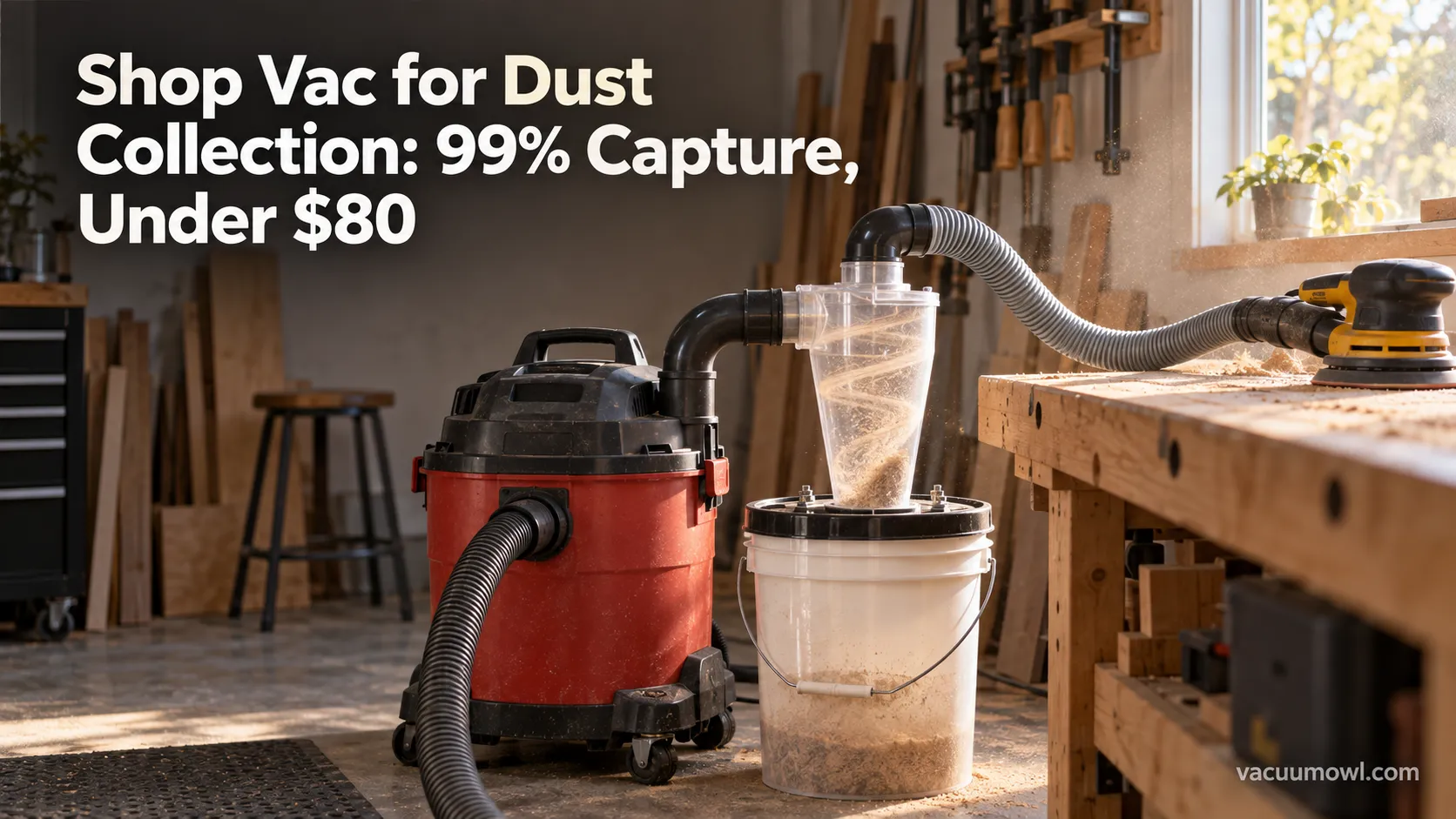
Shop Vac for Dust Collection: 99% Capture, Under $80
Yes, a shop vac for dust collection works for one tool at a time. Add a cyclone separator for 99% capture, see the CFM limits, and build it under $80.
Vacuum Types
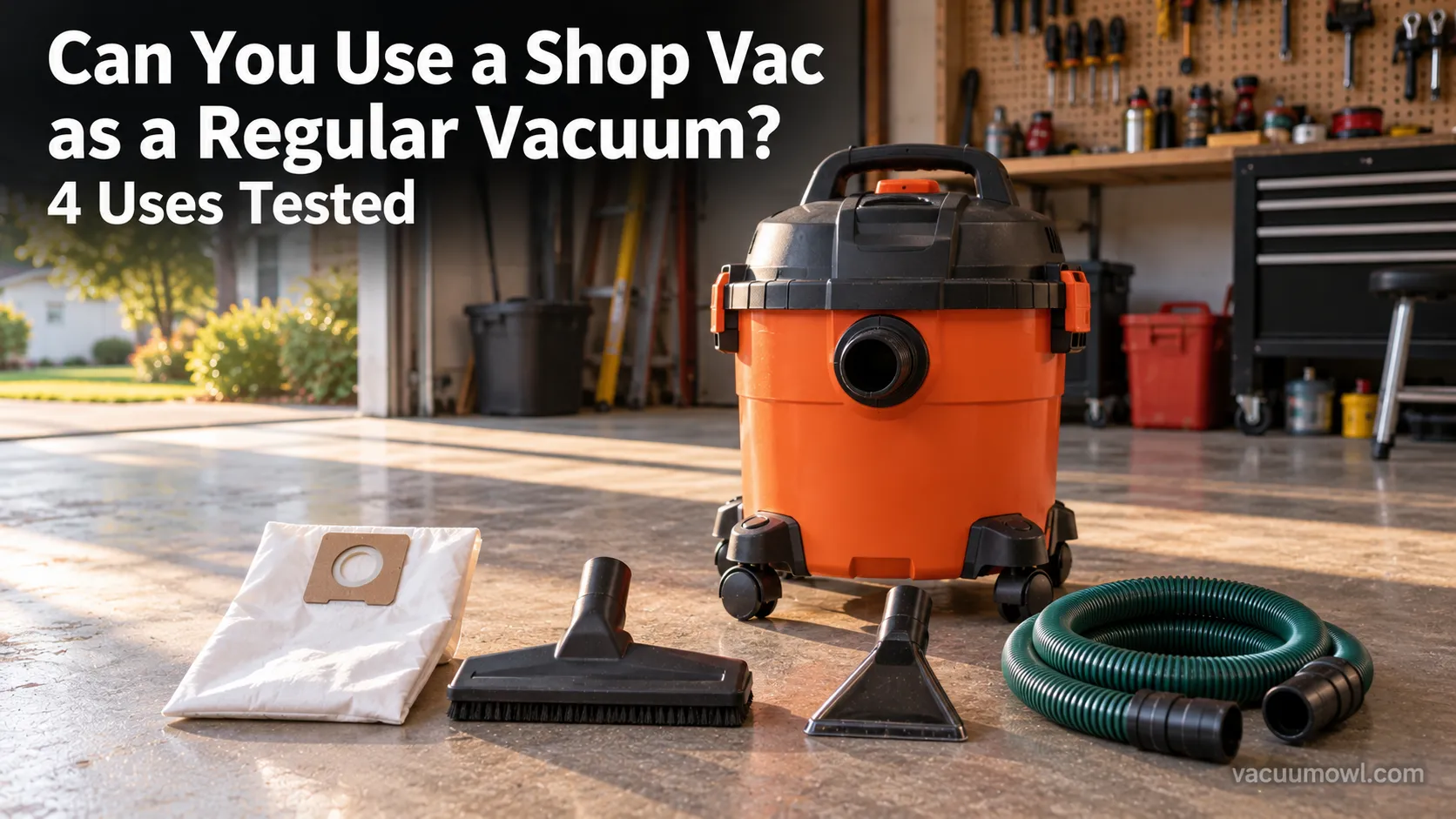
Can You Use a Shop Vac as a Regular Vacuum? 4 Uses Tested
Yes: can you use a shop vac as a regular vacuum? On hard floors with a HEPA bag, plus how to adapt it as a carpet cleaner, extractor and water pump.
Vacuum Types
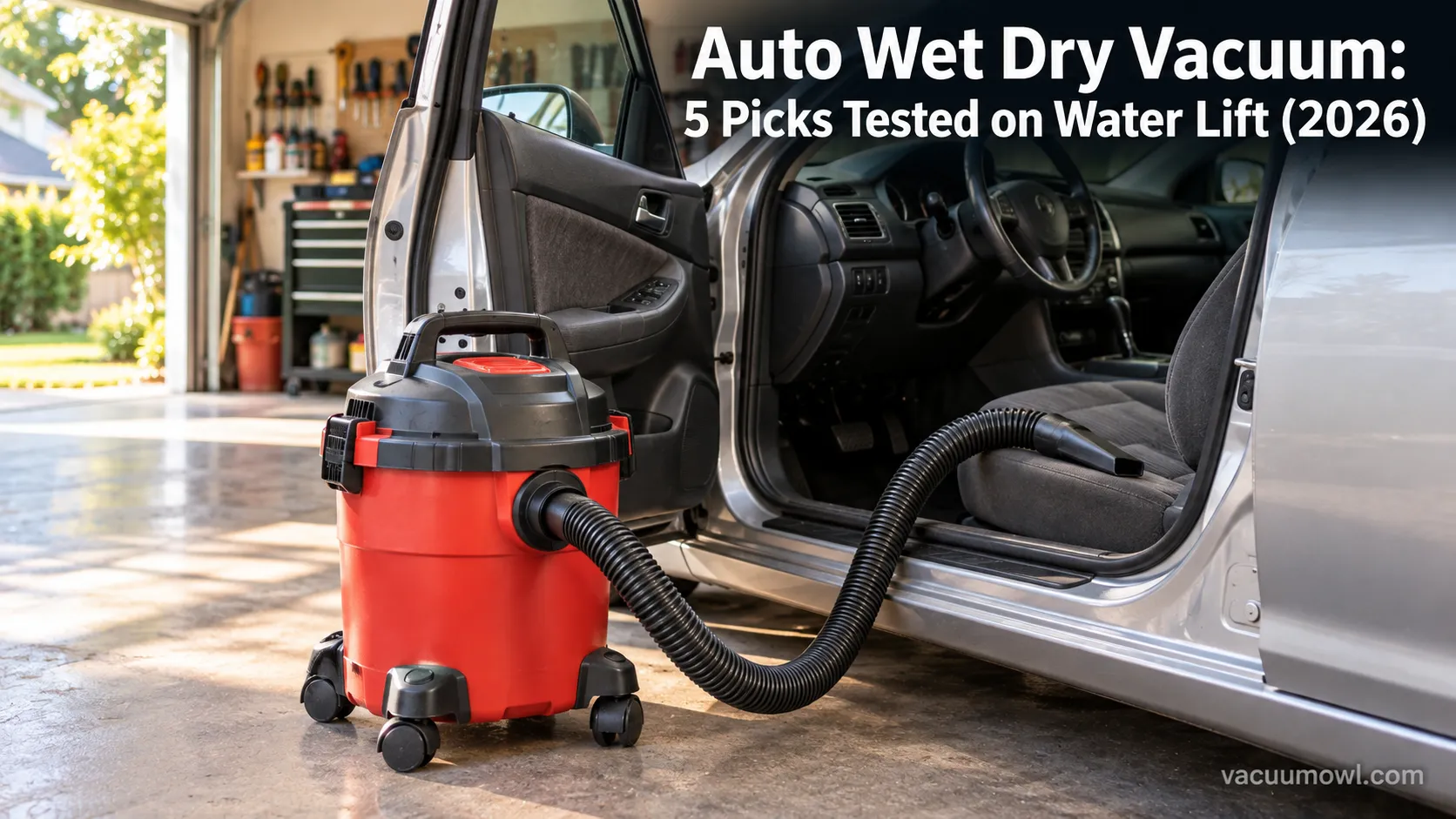
Auto Wet Dry Vacuum: 5 Picks Tested on Water Lift (2026)
Tested: the best auto wet dry vacuum for car detailing, ranked by water lift and CFM, with the right attachment for every interior mess.
Vacuum Types
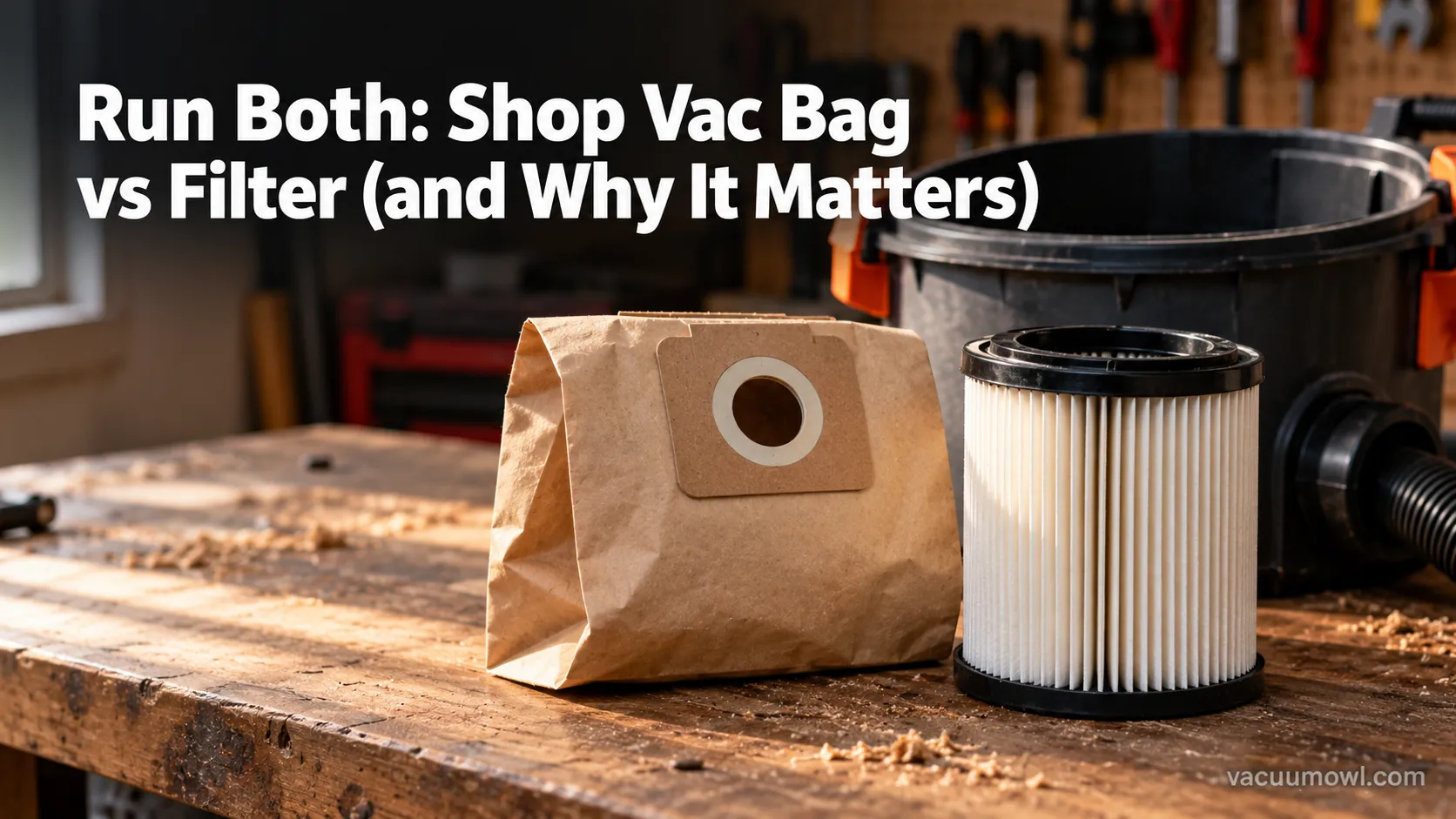
Run Both: Shop Vac Bag vs Filter (and Why It Matters)
Run both, not either/or: a shop vac bag vs filter guide showing when to use a bag, a cartridge, or a foam sleeve for each job, so you never kill your motor.
The discussion
Comments
Every comment is reviewed before it goes live.