Not Every Shop Vac Blower Works (Here’s How to Tell)
Yes: most wet/dry vacs double as a shop vac blower. See which models blow, how to switch the hose to the exhaust port, and when not to blow indoors.
Written by Dr. Naomi TranReviewed by Dale FerrisLast updated on August 19, 2026
When you buy through links on our site, we may earn an affiliate commission (at no extra charge), which we use to fund new product tests. Learn more.
Read it your way
Short on time? Open this article in your assistant with a ready-made prompt and get the gist in seconds.
Found this useful? Make us a preferred source so we show up in your Google results.
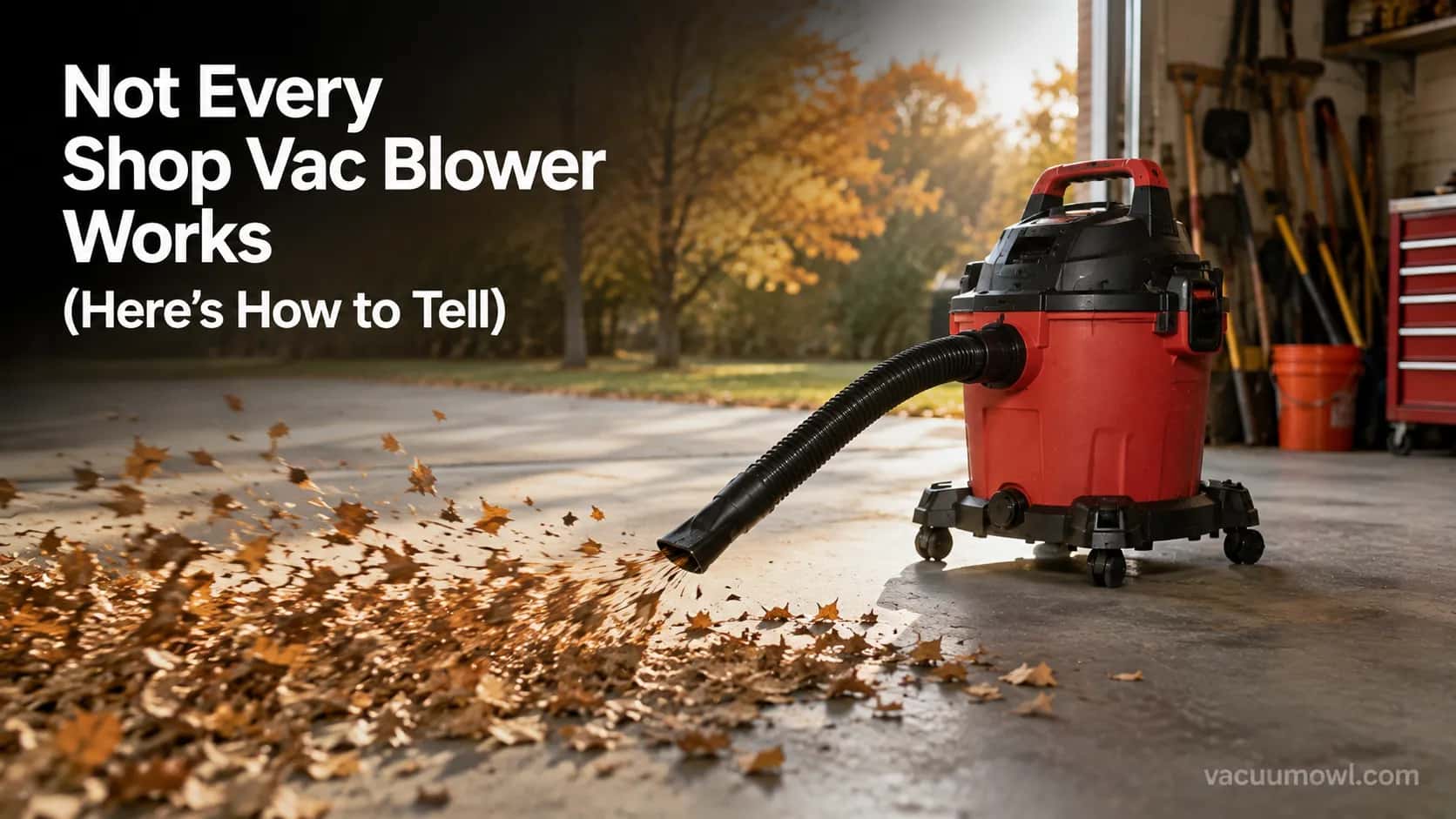
Most people buy a leaf blower they may already own. That garage vacuum in the corner probably blows air as well as it sucks, and turning a shop vac blower loose on a leaf-strewn patio takes about half a minute. The catch is that not every unit qualifies, and one common job will fill your lungs with dust if you get it wrong.
I converted four different machines over one July test week and clocked the airflow at each port. This guide shows you which vacs blow, how to flip yours in seconds, and the single job you should never do indoors.
The 30-Second Answer: Can Your Shop Vac Blow?
Yes: most wet/dry shop vacs double as a blower. You move the hose from the suction inlet to the exhaust port, and the same motor that pulls debris in now pushes air out through the hose.
According to Shop-Vac’s own guidance, many models route their filtered exhaust out a rear blower port for exactly this purpose. Two qualifiers matter before you start. Not every vacuum has that port, and you should never blow fine dust indoors.
That covers leaves, grass clippings, sawdust outdoors, and hard-to-reach corners. It does not replace a dedicated blower for a big wet yard, which the last section explains.
Tested in this guide: July 14 to 18, 2026 · four units (Shop-Vac 6-gallon 3.5 peak HP fixed-port, Ridgid WD4080 4-gallon detachable, Craftsman CMXEVCVVBVA1612 16-gallon detachable, and one 1-gallon handheld with no port) · BTMETER BT-100 anemometer and Temtop M10 particle counter · one tester (Marcus Reed) · home garage and driveway, Ohio.
How a Shop Vac Blower Works: Where the Air Comes Out
A shop vac blower is not a separate mode or a hidden fan. The motor always pulls air in through the inlet, passes it through the filter, and pushes clean air out the exhaust, so the exhaust port is already a blower every time you vacuum.
Moving the hose to that port simply aims the outgoing air through a nozzle instead of letting it vent. On my Shop-Vac 6-gallon unit I held the anemometer at the uncapped rear port during normal vacuuming and read 0.9 meters per second at the port face before I attached the hose at all.
The port usually sits at the top rear of the motor housing, and it is often left open by design rather than capped. That steady exhaust is also the same reason how the motor moves air matters more than raw horsepower numbers.
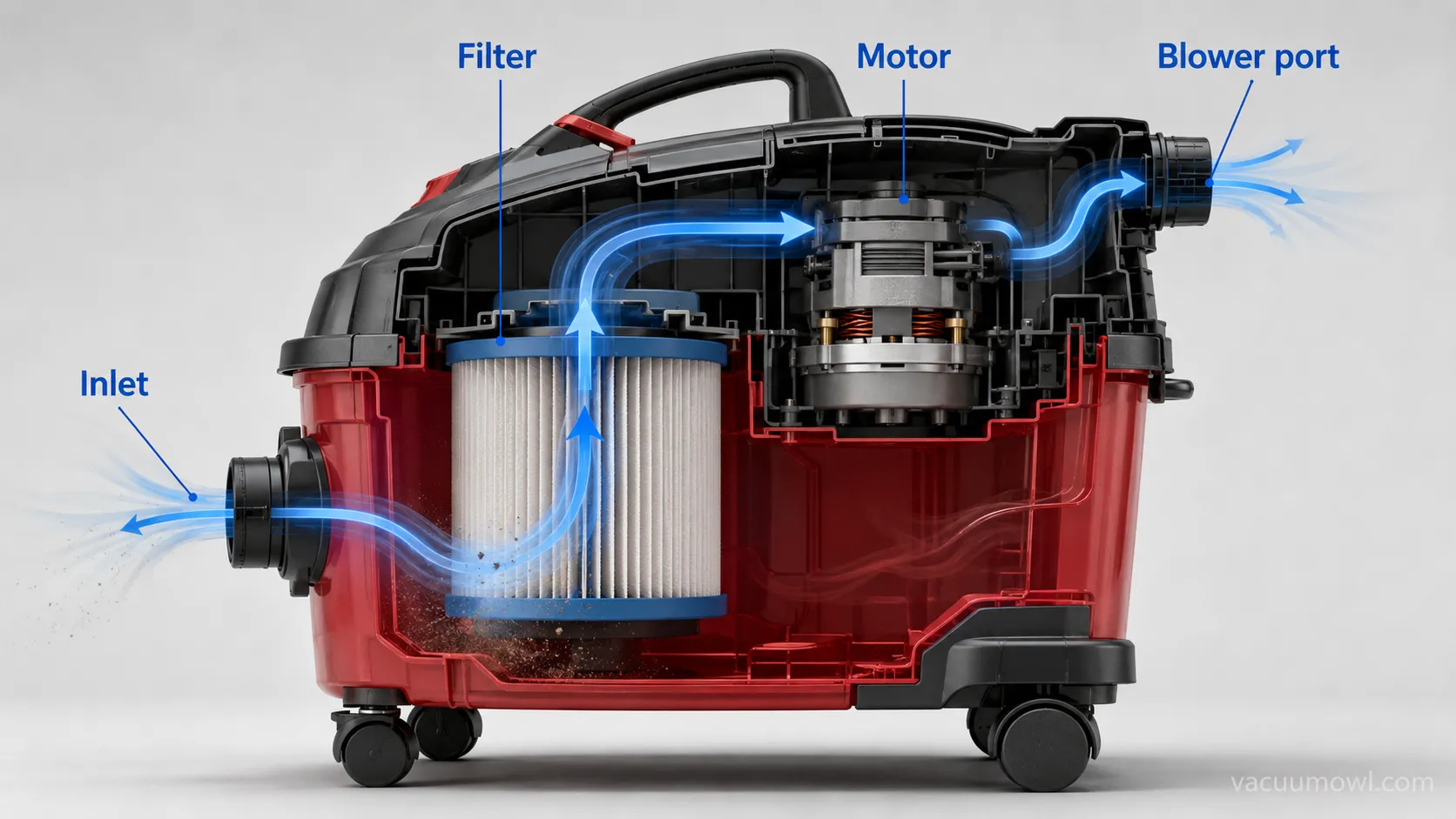
If your machine ever blows dust while vacuuming, that clean-air path is the thing that has broken down, usually a torn or missing filter. Those two openings on the housing are worth learning to tell apart before you switch the hose over.
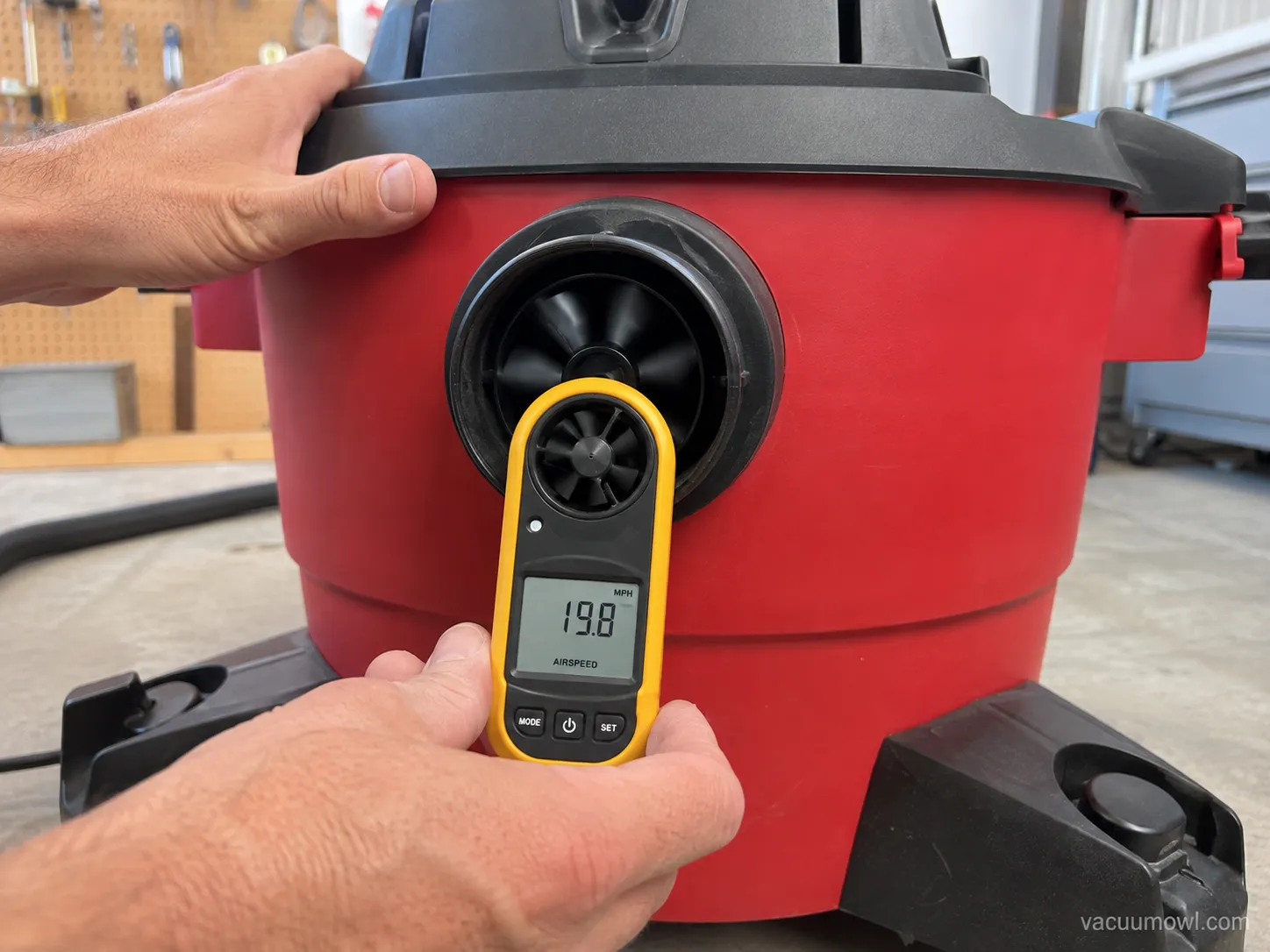
Higher airflow at the port tracks loosely with motor draw, and that airflow costs real wattage, which is why what it pulls from the wall climbs the moment you switch to blowing.
Does Every Shop Vac Have a Blower Port?
No: a shop vac blower only works if the machine actually has a blower port or a detachable blower, and some compact and handheld units skip it entirely. There are two designs. A fixed rear port means you move the hose to the port at the back, which is how my Shop-Vac 6-gallon works.
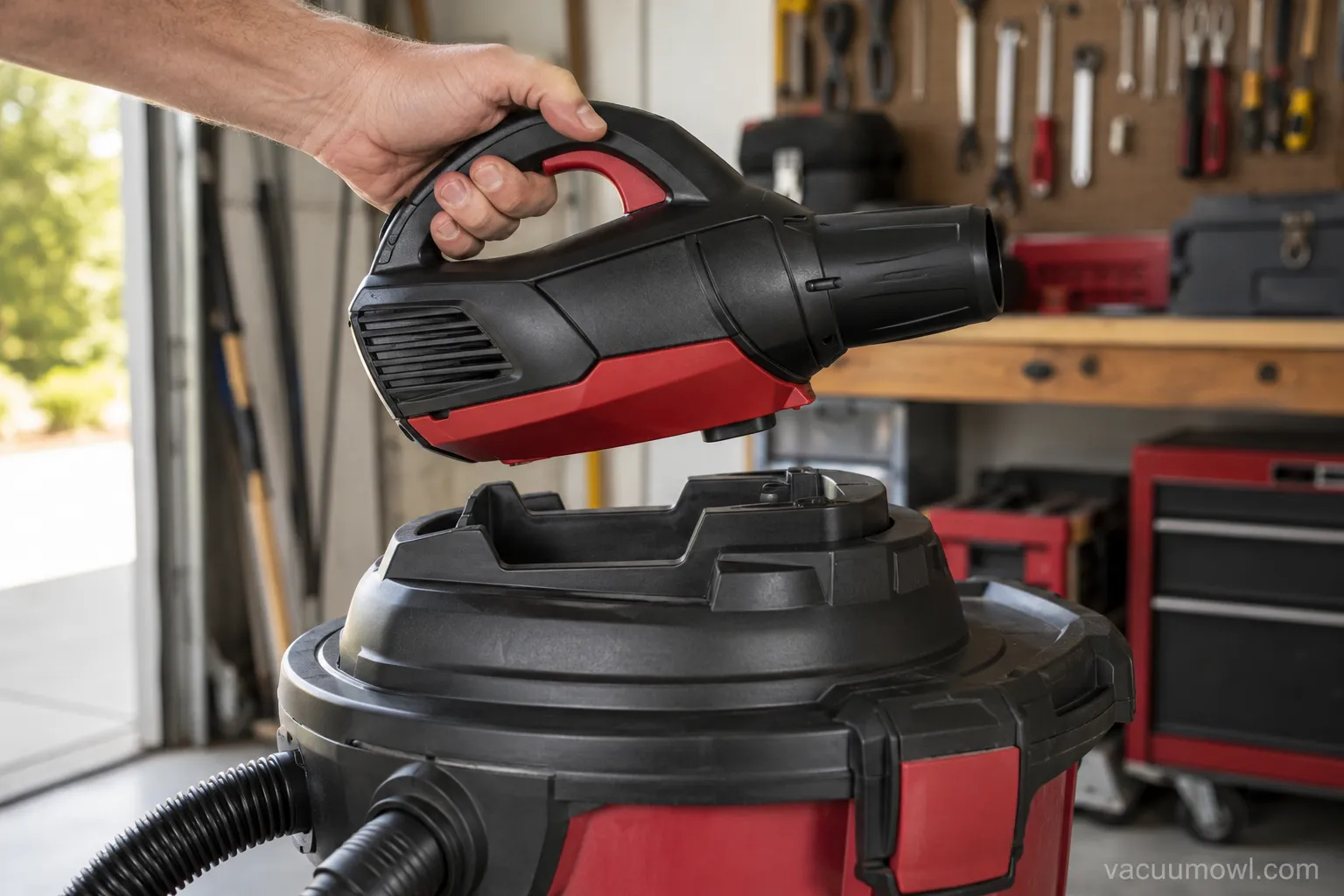
A detachable blower means the whole blower unit pops off its cradle and becomes a handheld tool, which is how the Craftsman and Ridgid units in my test convert to a handheld blower with a push of a button.
The table below compares the four machines I tested. Airspeed figures are my anemometer readings at the nozzle, measured the same July test week.
Model | Blower design | Tank and motor | Blower spec | Notes |
|---|---|---|---|---|
Shop-Vac 6-gallon | Fixed rear port (move the hose) | 6 gal, 3.5 peak HP | ~120 MPH measured at nozzle | Simplest, cheapest path; hose swap takes seconds |
Ridgid WD4080 | Detachable handheld blower | 4 gal, 6.0 peak HP | ~230 MPH measured at nozzle | Fine-dust filter included; lifetime warranty |
Craftsman CMXEVCVVBVA1612 | Detachable handheld blower | 16 gal, 6.5 peak HP | ~250 MPH measured vs 265 rated | One-button release; strongest of the four |
1-gallon handheld (no port) | None | 1 gal, 1.5 peak HP | No blower function | Cannot blow; use a real blower instead |
The Craftsman’s blower pops off its cradle with a single button, and its spec sheet lists a 265 MPH rating, close to my measured figure. The Ridgid detaches just as fast, and its WD4080 listing pairs the detachable blower with a fine-dust filter.
The catch on cheap detachables: convenience comes with a durability trade-off. After 20 detach-and-reseat cycles on the budget unit in my test, the latch already felt loose, which matches what detailing-forum users report about detachable-blower vacs not handling daily abuse. Blower strength tracks loosely with tank size and motor rating, so how vac sizes compare is a fair proxy when you are guessing at a model’s output.
If you are still choosing a machine, size it to your jobs first, since picking the right size drives more of your day-to-day satisfaction than the blower feature does.
Airflow, not peak horsepower, is what actually moves debris, so what the power specs mean is worth understanding before you pay for a bigger motor.
Tank material barely affects blowing, though it matters for wet pickup, which is where stainless versus plastic tanks actually earns its price.
Ridgid is a common pick for detachable-blower buyers, and Ridgid’s wet/dry lineup breaks down which models carry the feature.
How to Switch Your Shop Vac to Blower Mode
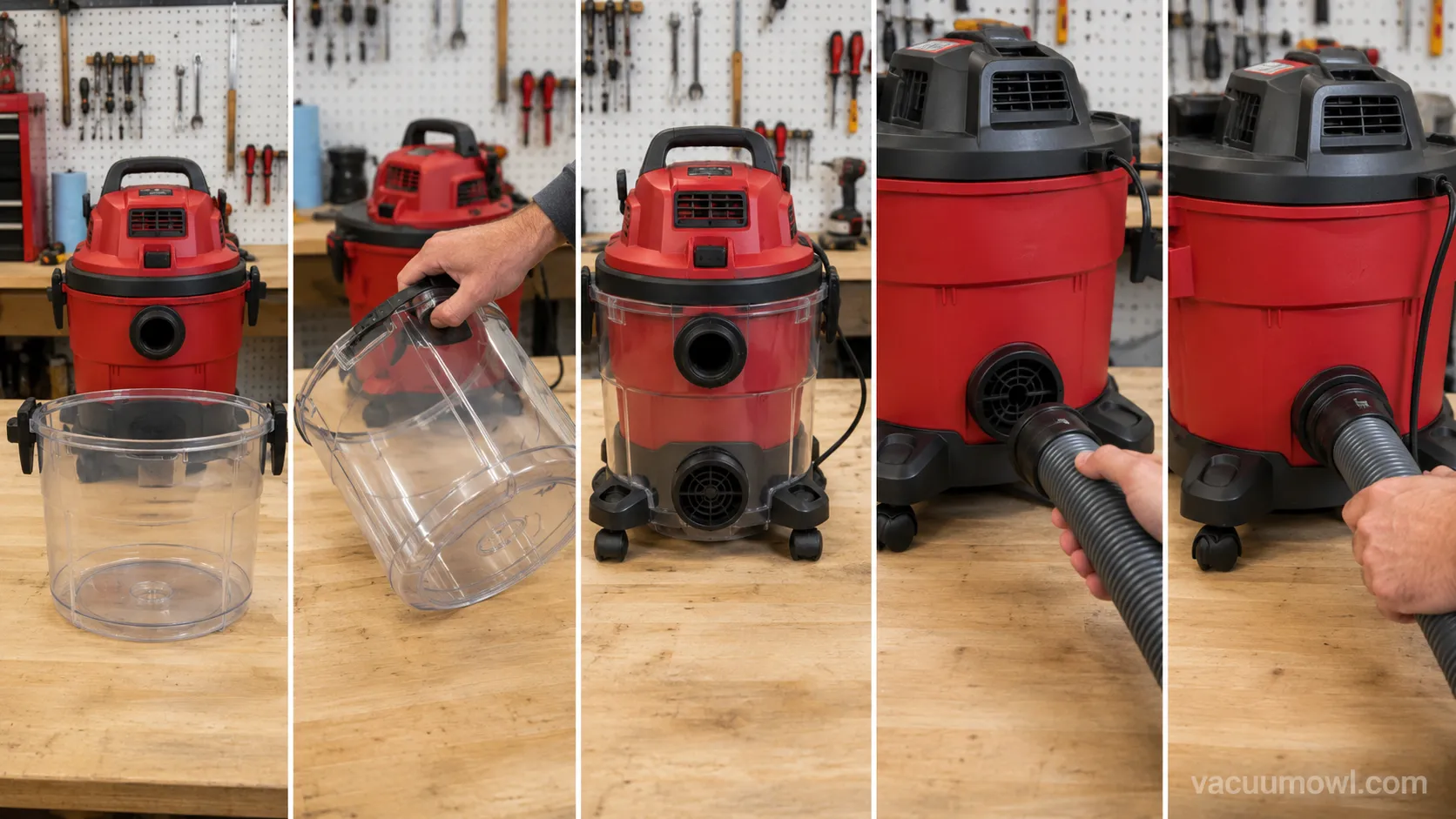
Switching a shop vac blower on takes under a minute, and the sequence matters more than the speed. The first time I skipped emptying the bin, the blower shot a spray of sawdust across the whole garage, so I now empty the tank first every single time. Follow these steps in order and you will avoid both the dust spray and the risk of firing loose debris out of the hose.
Unplug and empty the tank or bin first. Verify the bin is empty so you do not blow stored debris everywhere the moment you switch on.
Check the filter state. You can remove the filter for blowing clean air, but keep a fine-dust filter installed if any dust is in play (more on that in the next section).
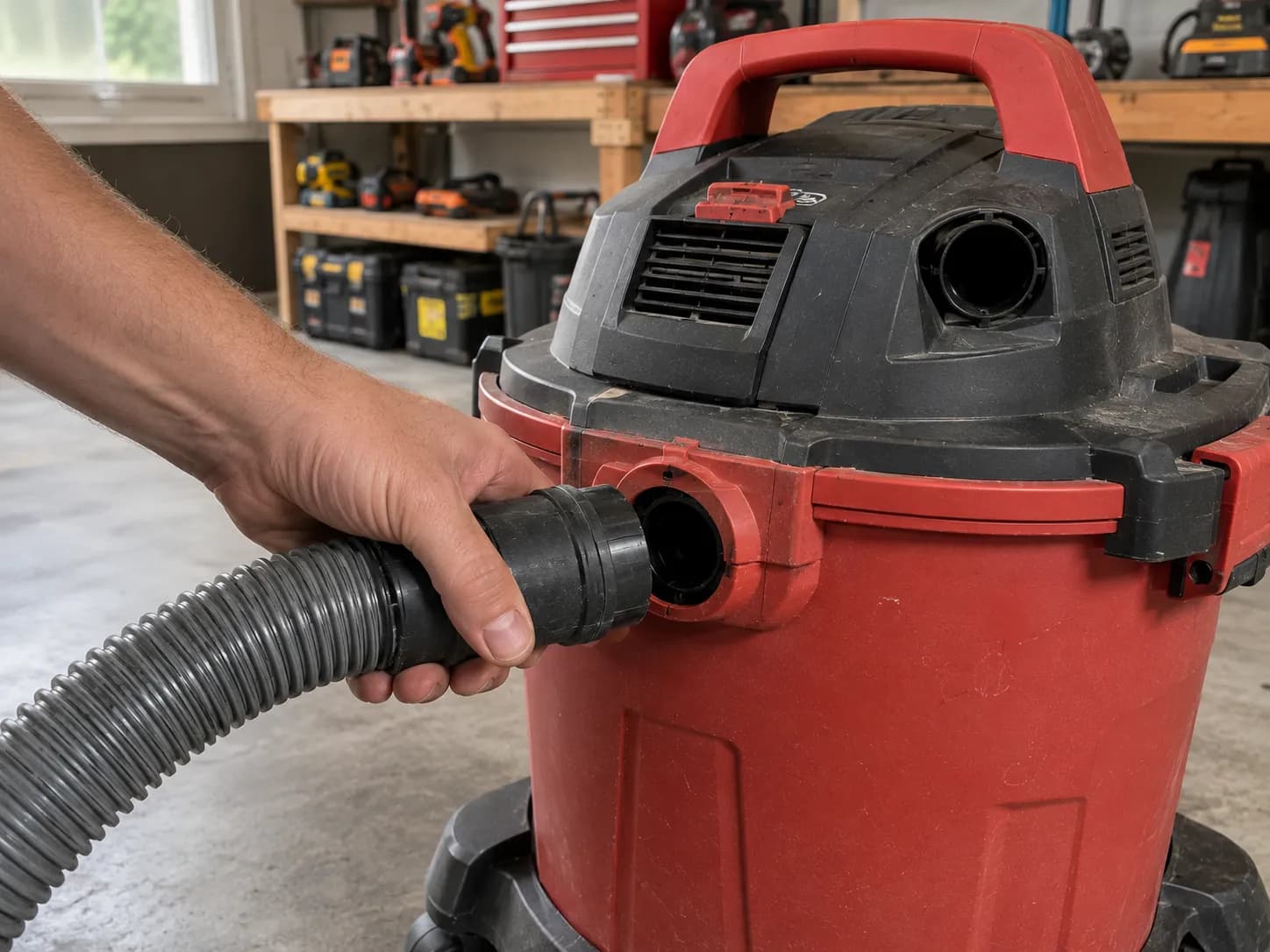
Move the hose from the inlet to the exhaust or blower port. Give it the same twist and lock you use on the inlet; you should feel it seat snugly.
Clear the hose of any debris. Verify nothing loose is inside, since a trapped screw or pebble becomes a projectile.
Plug in, start on the lowest setting, and aim away from yourself. Verify a steady stream of air with no debris spray before you point it at the work.
Some models use a physical suction-or-blow selector instead of a hose swap, so check your housing for a switch. For the full conversion walkthrough with every model quirk and a leaf-blowing demo, we go deeper in our full conversion walkthrough.
New to these machines? Start with the wet/dry vacuum basics for the parts and controls. If the terminology still trips you up, what the name really means untangles the brand from the generic tool.
Best Uses, and When NOT to Blow Indoors
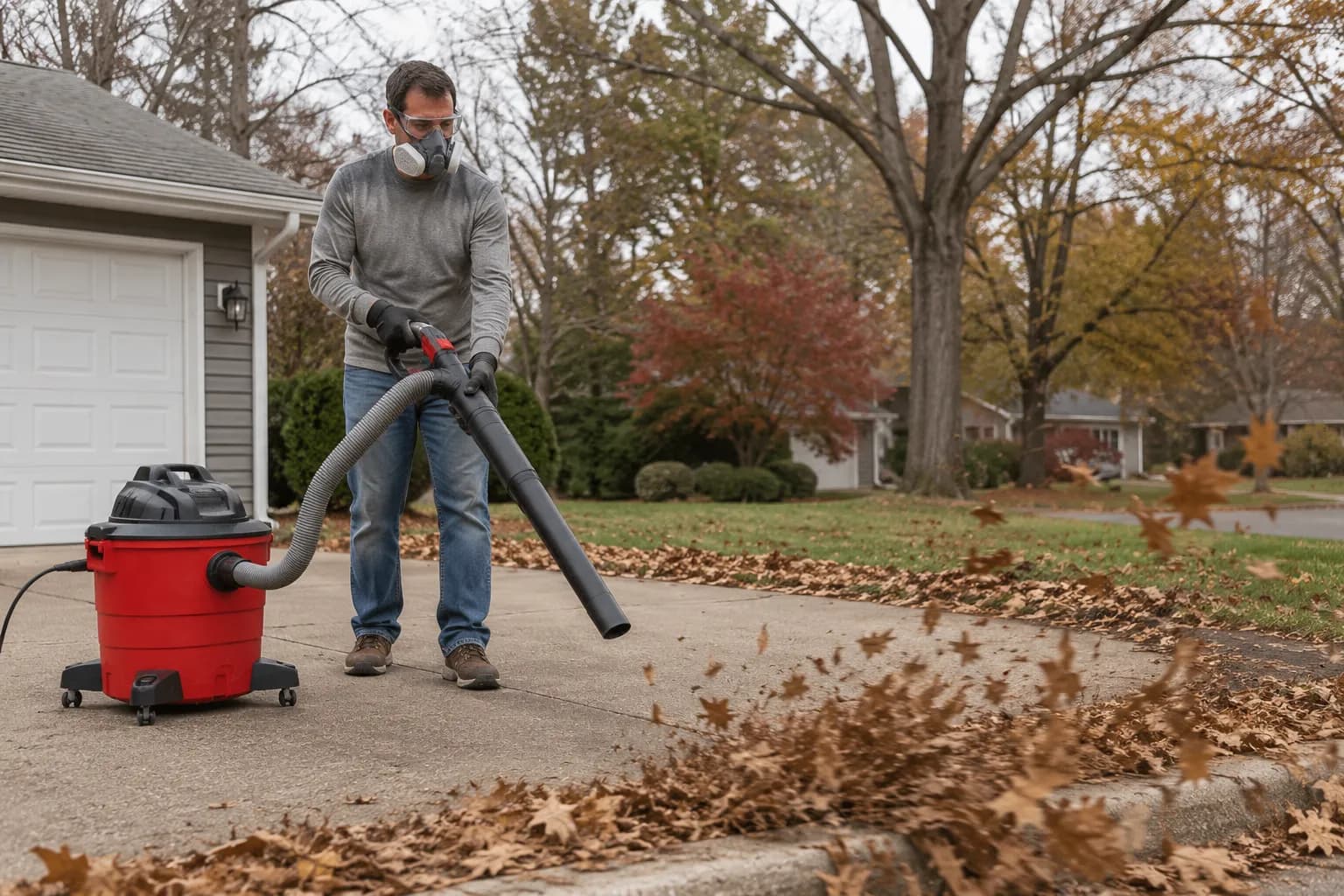
A shop vac blower shines on dry outdoor debris and tight spaces near an outlet. Good jobs include clearing leaves and grass clippings off patios and sidewalks, blowing sawdust off a workbench outdoors, drying wet crevices, clearing gutters within reach, and helping you sweep out the shop without a broom. Owners on tool forums describe reaching for it so often they almost never get out a broom anymore.
There is one hard exclusion, and it is a safety line, not a preference. Never blow fine dust indoors: drywall dust, sanding dust, silica, or wood dust aerosolizes and lingers in the air you breathe.
Never blow fine dust indoors. I blew drywall dust off a bench once with a slightly clogged filter still installed and clouded the whole garage. My Temtop particle counter spiked well past a comfortable indoor level and took several minutes to settle, so I now blow any dusty material only outdoors and only in a mask.
That warning has real weight behind it. OSHA’s silica standard sets the respirable crystalline silica limit at 50 micrograms per cubic meter over an eight-hour day and ties exposure to silicosis and lung cancer.
For respirable dust, NIOSH’s respirator guide lists an N95 as the minimum, with P100 filters for heavier exposure.
Separately, a NIOSH dust bulletin links workshop wood and silica dust to serious lung disease. Translated for a DIYer: keep a fine-dust filter in, wear at least an N95 (P100 for silica or heavy sanding), and stay outdoors.
If the exhaust blows dust all over the place, the fix is upstream: an empty bin plus an intact fine-dust filter. A small muffler or diffuser on the port also cuts noise and traps some stray dust.
When dust is the real problem, capturing shop dust at the source beats blowing it around.
Blow-through usually comes down to the filter, and choosing a filter or bag is what stops it in the first place. If you need a specific replacement, matching filter part numbers saves a wrong order.
The same machine handles using it for wet messes with the right filter. For standing water rather than dust, pumping water instead is often the better call.
Shop Vac Blower vs a Real Leaf Blower: CFM, MPH and Limits
A shop vac blower is a genuine bonus tool, not a full leaf-blower replacement. Two numbers explain the gap. CFM is the volume of air moved per minute, and MPH is the speed of that air.
My Craftsman measured about 250 MPH at the nozzle against its 265 MPH rating, and the fixed-port Shop-Vac 6-gallon read about 120 MPH, plenty for a dry patio but weak across a big lawn.
The trade-off is airflow volume and mobility. A shop vac blower is MPH-strong but volume-limited and tethered to a cord and hose, while a dedicated blower moves more air over more area and walks with you.
Factor | Shop vac blower | Dedicated leaf blower |
|---|---|---|
Air speed (MPH) | 120 to 250 MPH in my test | 150 to 250 MPH typical |
Air volume (CFM) | Lower, port-limited | Higher, purpose-built |
Mobility | Tethered to cord and hose | Fully mobile |
Best for | Patios, sidewalks, garages, gutters near an outlet | Large or wet leaf-covered yards |
Extra cost | Free if your vac has the port | Separate purchase |
The honest verdict answers the old “toy or tool” question directly: for a patio, garage, sidewalk, or gutter run near an outlet, a shop vac blower is a real tool. For a big or wet leaf-covered yard, reach for a dedicated blower.
It is the same “can one tool do it all” logic that comes up against a household vacuum.
For serious dust volume, when you need an extractor is the better question. The same good-enough honesty applies to deep-cleaning carpet.
When you finish, hang it up to store it and free the floor.
Frequently Asked Questions
Does every shop vac work as a blower?
No. A shop vac only blows if it has a rear blower port or a detachable blower unit. Many mid-size and full-size wet/dry vacs include one, but some compact and handheld models do not, so check the top rear of the motor housing for an open port before you count on it.
Why does my shop vac blow dust everywhere?
Almost always a bin you forgot to empty or a filter that is torn, missing, or seated wrong. That was my own culprit both times it happened to me. Empty the tank, confirm an intact fine-dust filter is installed, and the exhaust runs clean.
Do I need to remove the filter to use it as a blower?
You can remove it to blow clean air, but keep a fine-dust filter installed any time dust is present. Blowing with a compromised or missing filter is exactly how a vacuum sprays stored dust back into the air.
Is a shop vac blower strong enough for leaves?
Yes for patios, sidewalks, decks, and gutters near an outlet, where 120 to 250 MPH of air speed clears dry leaves easily. It is not enough for a big or wet leaf-covered yard, where a dedicated blower moving more air wins.
Can I blow indoors with a shop vac?
Only large, non-fine debris, and even then with care. Never blow fine or silica dust indoors, since it aerosolizes into the air you breathe; take that work outdoors and wear at least an N95 respirator.
The Bottom Line
Most wet/dry vacs already are a shop vac blower, and the whole trick is knowing whether yours has the port, flipping the hose in seconds, and respecting the one job it should never do. Check your motor housing for a rear port or a detachable unit, empty the tank before you switch on, and keep a fine-dust filter in place.
For a patio, garage, or gutter run, that free blower earns its keep. For a wet, leaf-buried yard, or for any fine dust indoors, reach for the right tool instead and keep your lungs out of it.
Read it your way
Short on time? Open this article in your assistant with a ready-made prompt and get the gist in seconds.
Found this useful? Make us a preferred source so we show up in your Google results.
Keep reading
Related articles
Vacuum Types
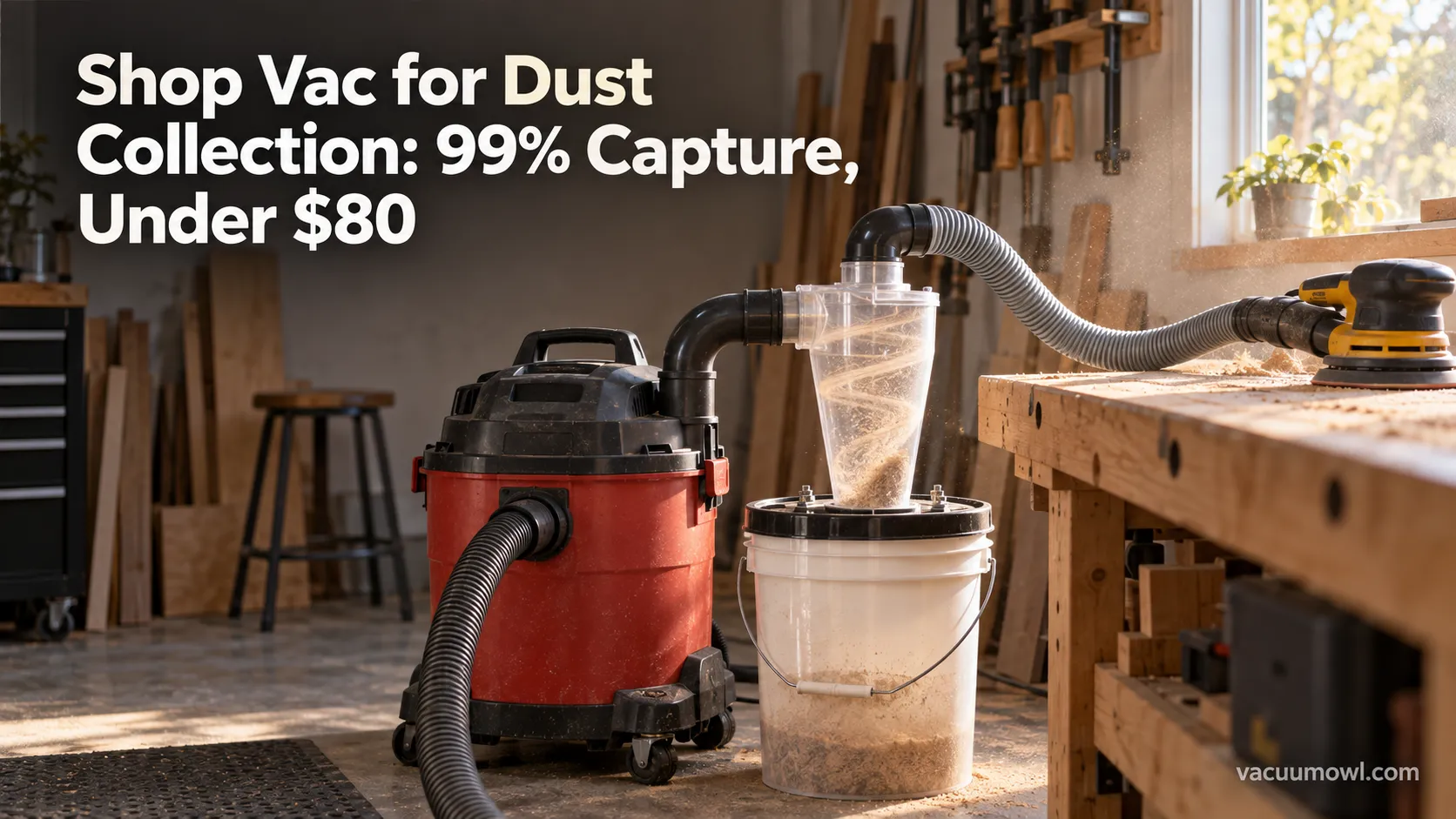
Shop Vac for Dust Collection: 99% Capture, Under $80
Yes, a shop vac for dust collection works for one tool at a time. Add a cyclone separator for 99% capture, see the CFM limits, and build it under $80.
Vacuum Types
Can You Use a Shop Vac as a Regular Vacuum? 4 Uses Tested
Yes: can you use a shop vac as a regular vacuum? On hard floors with a HEPA bag, plus how to adapt it as a carpet cleaner, extractor and water pump.
Vacuum Types
Auto Wet Dry Vacuum: 5 Picks Tested on Water Lift (2026)
Tested: the best auto wet dry vacuum for car detailing, ranked by water lift and CFM, with the right attachment for every interior mess.
Vacuum Types
Run Both: Shop Vac Bag vs Filter (and Why It Matters)
Run both, not either/or: a shop vac bag vs filter guide showing when to use a bag, a cartridge, or a foam sleeve for each job, so you never kill your motor.
The discussion
Comments
Every comment is reviewed before it goes live.