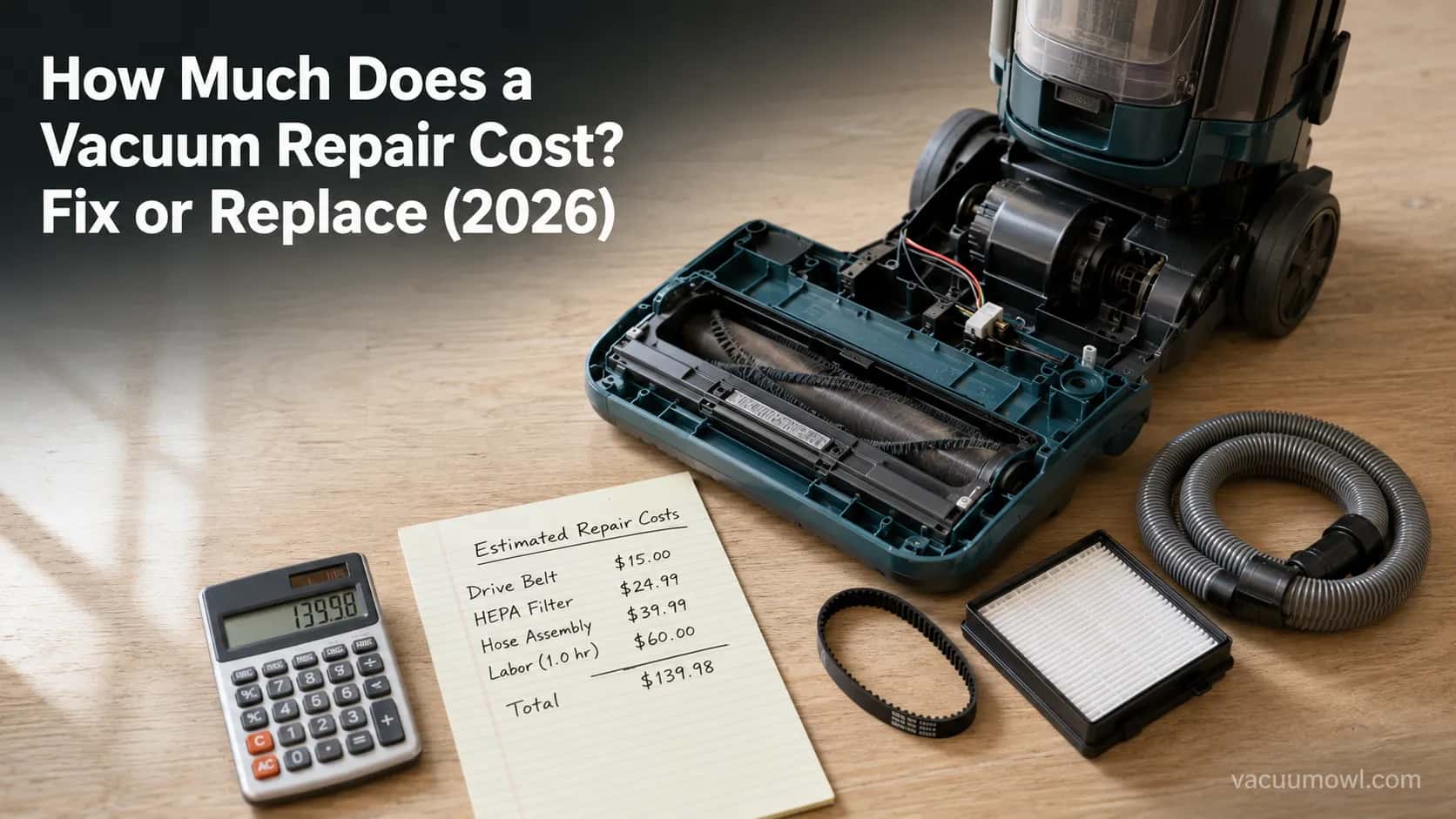
How Much Does a Vacuum Repair Cost? Fix or Replace (2026)
How much does a vacuum repair cost? Usually $50–150 (up to ~$321 for central). Use the 50% rule and our brand tier to decide: fix it or replace it in 2026.
Written by Reggie AlvarezReviewed by Dale FerrisLast updated on August 17, 2026
When you buy through links on our site, we may earn an affiliate commission (at no extra charge), which we use to fund new product tests. Learn more.
Read it your way
Short on time? Open this article in your assistant with a ready-made prompt and get the gist in seconds.
Found this useful? Make us a preferred source so we show up in your Google results.
Your vacuum just died mid-clean, and now you are staring at it wondering whether to spend money on it or bin it. The honest answer to how much does a vacuum repair cost sits between a $6 belt you fit yourself and a several-hundred-dollar motor job. This guide gives you real 2026 prices by fault and by machine, the one rule that settles fix-or-replace in a glance, and a brand tier so you know whether your machine is even worth the spend.
The 30-Second Answer: Repair Cost and the 50% Rule
Most portable vacuum repairs run $50 to $150 at a shop, while whole-house central systems average around $321, according to national cost data from HomeAdvisor and ConsumerAffairs.
The fastest way to decide is the 50% rule: if the repair costs less than half of a comparable new machine, fix it; if it is more, replace it. Cheap faults like belts and filters are often a $6 to $60 do-it-yourself job, so the pro bill is not always your only option.
Quick verdict box
Typical portable repair: $50–150 (parts plus labor).
Central vacuum repair: $129–561, average ~$321.
The 50% rule: repair cost under half of a comparable new vacuum means fix it.
DIY-able cheap faults: belt ($6–10), filter ($15–60), hose refit (often free).
Escalate to a pro: motor, wiring, and anything electrical.
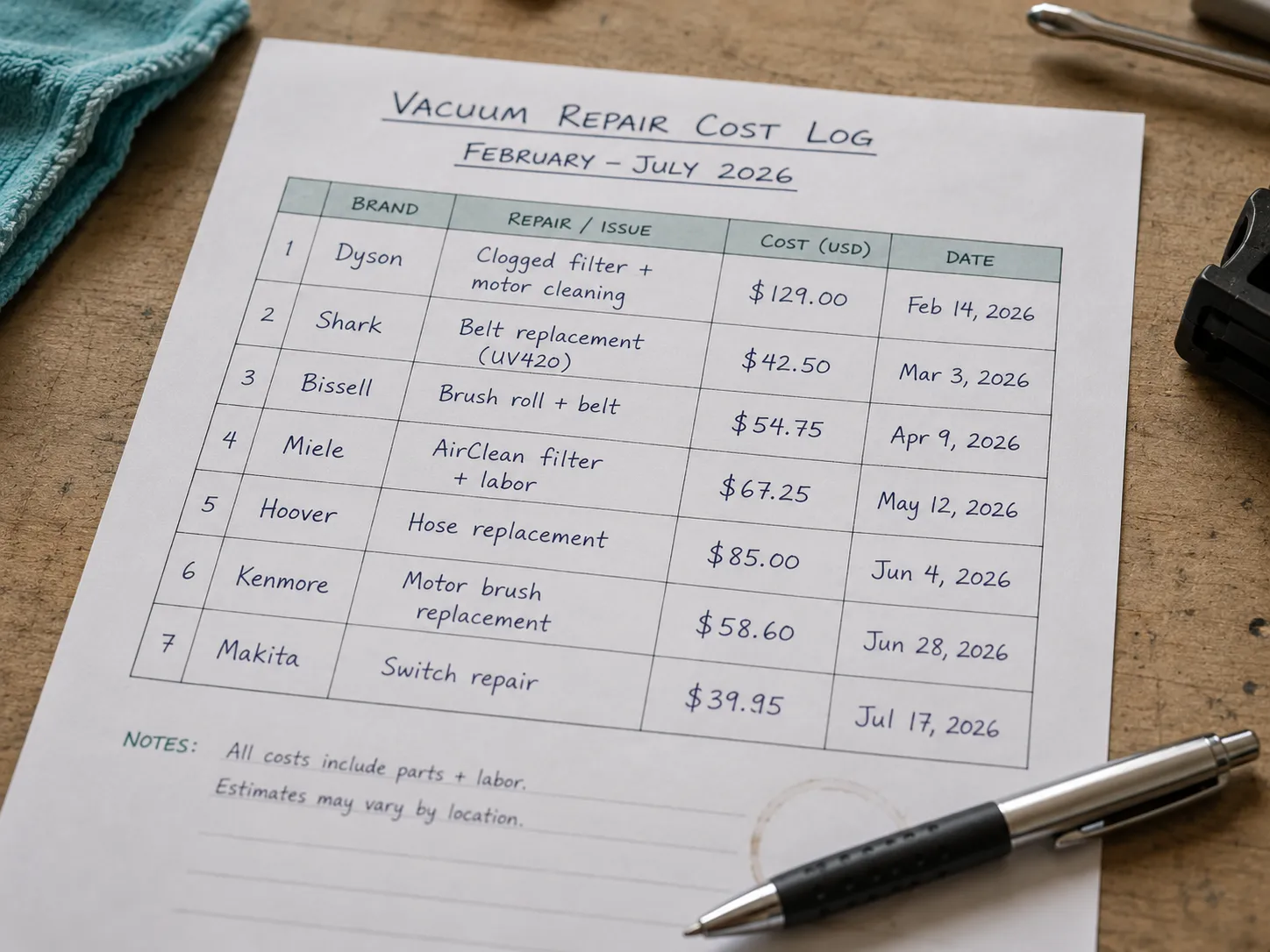
Across our 2026 repair-cost log, priced on real faults over February to July, that $50 to $150 band held for every portable brand we tracked.
How Much Does a Vacuum Repair Cost? Real Prices by Fault, Part and Type
A vacuum repair cost depends far more on the fault than the brand. Simple wear parts like belts and filters cost single digits to fit yourself, while a professional motor or electrical job runs into the hundreds, with central-vacuum motor work reaching $150 to $800 per HomeAdvisor’s cost data.
The table below pairs the do-it-yourself part price against the typical shop bill, so you can see where the labor charge, not the part, is what you are really paying for.
Repair cost by fault (portable vacuums, 2026)
Fault | DIY part cost | Pro repair (part + labor) | Notes |
|---|---|---|---|
Drive belt | $6–10 | $40–55 | Minutes to fit yourself |
Filter (HEPA or foam) | $15–60 | $50–120 | Wash first, replace if degraded |
Hose (split or clogged) | $0–25 | $55–250 | Refit near the handle is often free |
Clog removal | $0 | $50–250 | Usually a DIY job |
Brush roll or beater bar | $20–50 | $40–100 | Hair unwrap is free |
Battery (cordless) | $30–150 | $75–150 | Dyson V11 pack runs about $150 |
Motor | $75–150 | $100–300 | Central systems reach $800 |
Electrical or wiring | Not advised | $75–450 | Escalate for safety |
Battery jobs are where cordless owners get surprised. A genuine Dyson V11 battery is about $150 and a high-torque cleaner head about $112, per House Digest’s Dyson breakdown, which stacks up fast on an older stick vac.
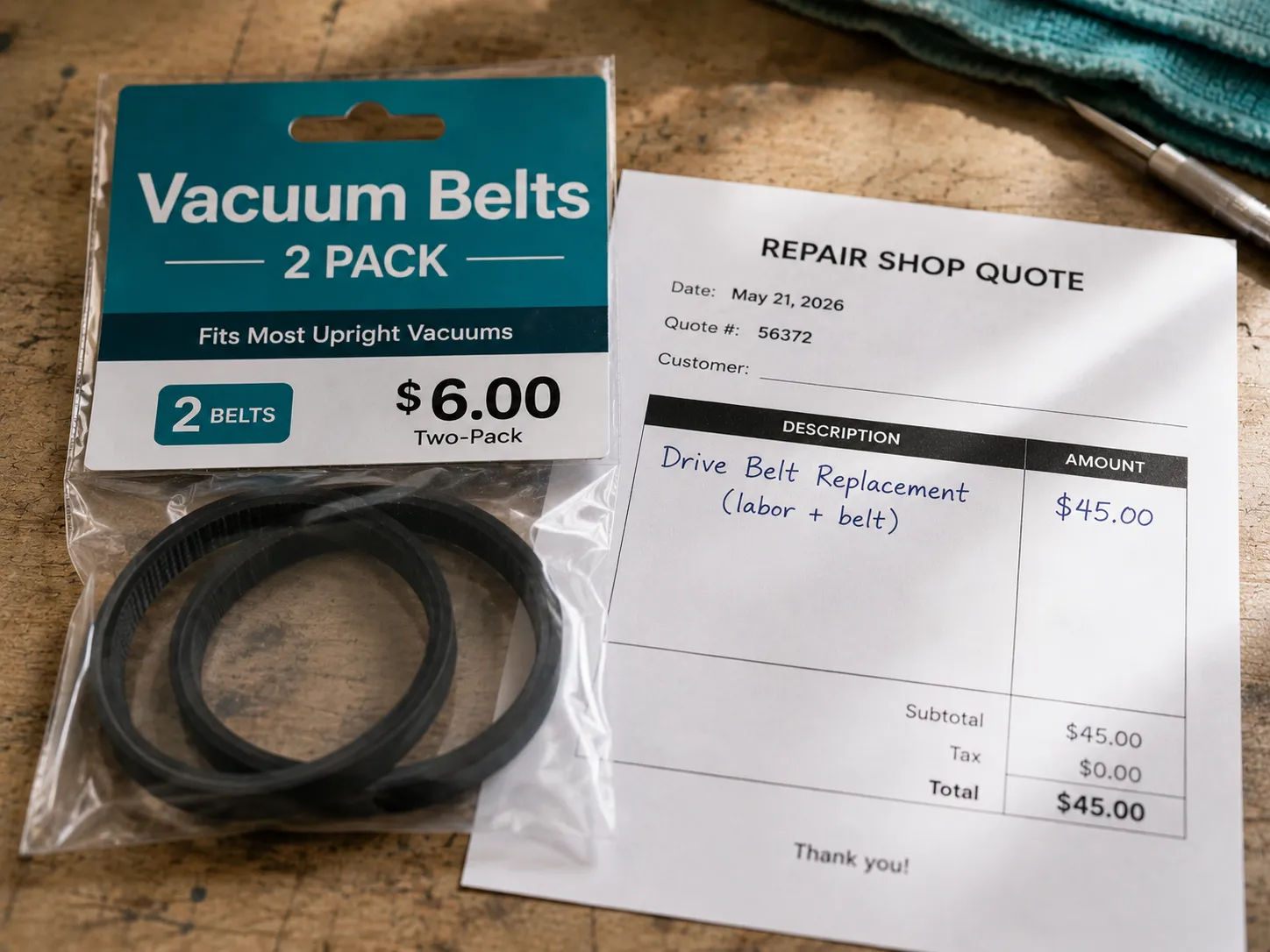
On our own bench, a drive belt made the labor gap obvious. The belt was a $6 two-pack, yet the local shop quoted $45 to fit the same belt, so learning that ten-minute swap saved roughly forty dollars. For the step-by-step on that and the other cheap faults, our complete DIY fix walkthrough covers each one.
Cost also tracks the machine type, because a whole-house system carries labor a stick vac never will.
Repair cost by machine type (2026)
Machine type | Typical repair | Comparable new | The 50% read |
|---|---|---|---|
Budget upright (under $80 new) | $50–120 | $80–200 | Often replace |
Mid-range upright or canister | $50–150 | $200–400 | Case by case |
Central vacuum | $129–561 (avg ~$321) | $1,150–3,500 | Usually repair |
Cordless or stick | $50–200 | $250–750 | Battery age decides |
Robot | $50–200 | $250–1,000 | Board versus brush |
The 50% Rule: When to Repair vs Replace Your Vacuum
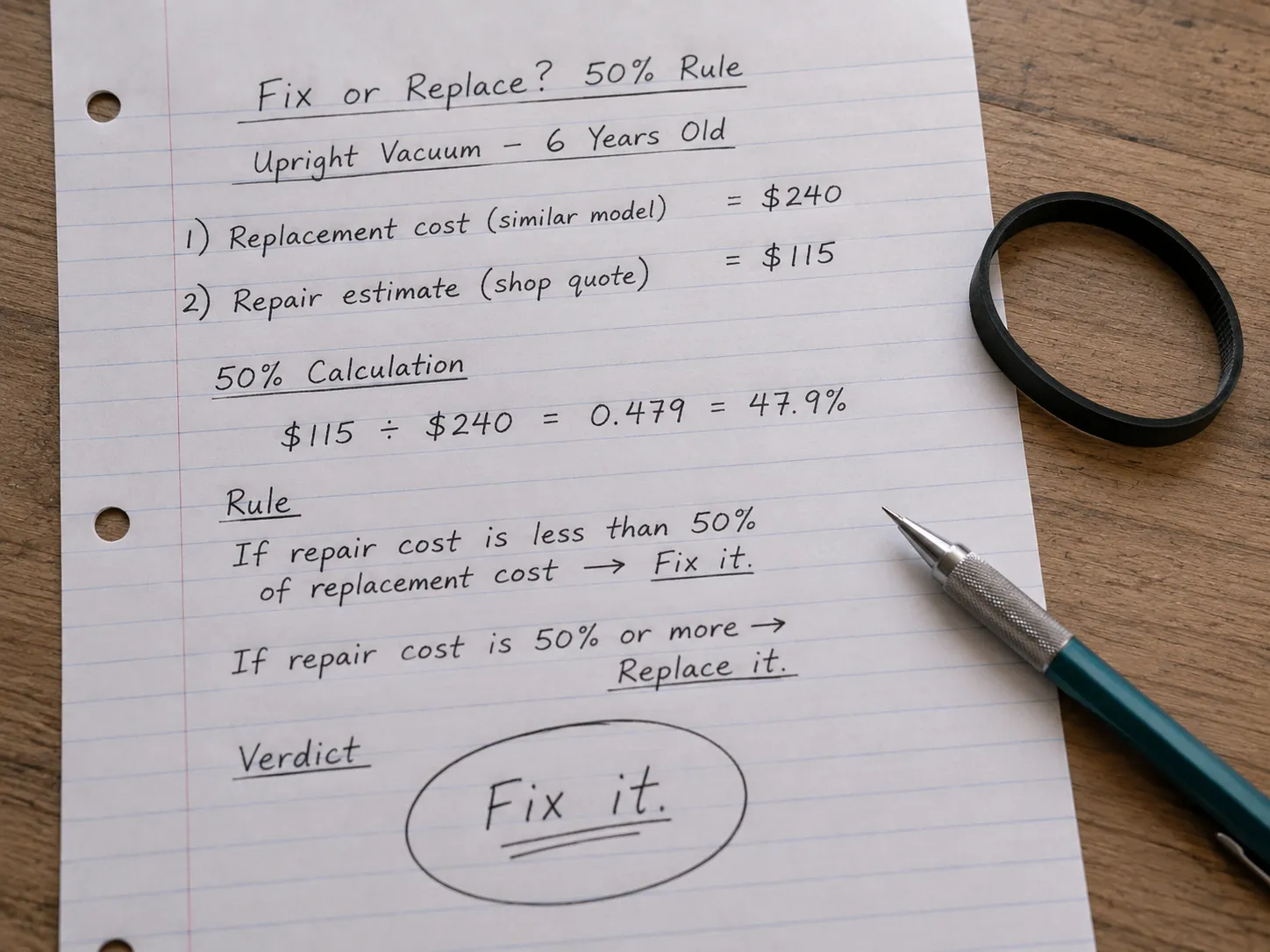
The repair-vs-replace decision comes down to one number: spend on a fix only when it costs less than half of a comparable new vacuum. Consumer Reports adds an age layer to that math, noting uprights usually are not worth fixing past about five years and canisters past about seven, since worn bearings and a tired motor tend to follow the first failure. Run the cost against the age, and the verdict is rarely ambiguous.
Here is the logic in order:
Get the repair quote (or add up your DIY part cost).
Find the price of a comparable new machine.
If the repair is under 50% of that new price, and the machine is inside its age window, fix it.
If the repair is over 50%, or the machine is past its age window, replace it (or buy a refurb).
Two worked examples make it concrete. I ran this on a six-year-old budget upright: the shop quoted $60, a comparable new model was $90, so the repair was two-thirds of new on an out-of-window machine, and I replaced it.
The opposite case was a mid-range canister where a $70 repair sat against a $300 replacement, an easy fix. If you are not even sure what failed yet, the start-here diagnostic narrows it down before you pay for a quote.
Methodology note: These figures are 2026 US estimates drawn from national cost data and our own bench log. Your local shop quote is the real number. Treat the 50% rule as a guide, not gospel, since warranty coverage or a sentimental machine can tip the call.
Is Your Brand Worth Fixing? The Repair-Worth-It Tier
Whether a vacuum is worth fixing depends heavily on the brand, because part availability and build quality decide if a repair buys you years or months. Premium brands like Rainbow, Kirby, Dyson, and Miele generally justify repair, with a Miele motor job at $150 to $250 against a $500 to $1,200 replacement, per Ace Vacuums’ cost math, while sub-$80 big-box machines usually cross the 50% line on the first real fault. The tier below turns that into a one-glance verdict.
Brand repair-worth-it tier (2026)
Brand | Repair economics | Verdict |
|---|---|---|
Rainbow / Kirby | Durable, parts stocked; belt and HEPA are DIY, motor via factory service | Fix |
Miele | Motor $150–250 vs $500–1,200 new; 20-year lifespans | Fix |
Dyson | Motor $100–200 vs $400–800 new; battery $75–150 | Case by case (fix if under 6 years) |
Shark / Bissell / Hoover / Eureka | Affordable; cheap faults are DIY wins | Fix cheap faults, replace a dead motor |
Kenmore | Canister and belt-driven; belts are cheap | Fix belt and brush, weigh motor |
Roomba | Brush and bearing parts cheap; mainboard pricey | Fix wear parts, replace if the board fails |
Budget big-box (under $80) | Repair often exceeds half of new | Replace |
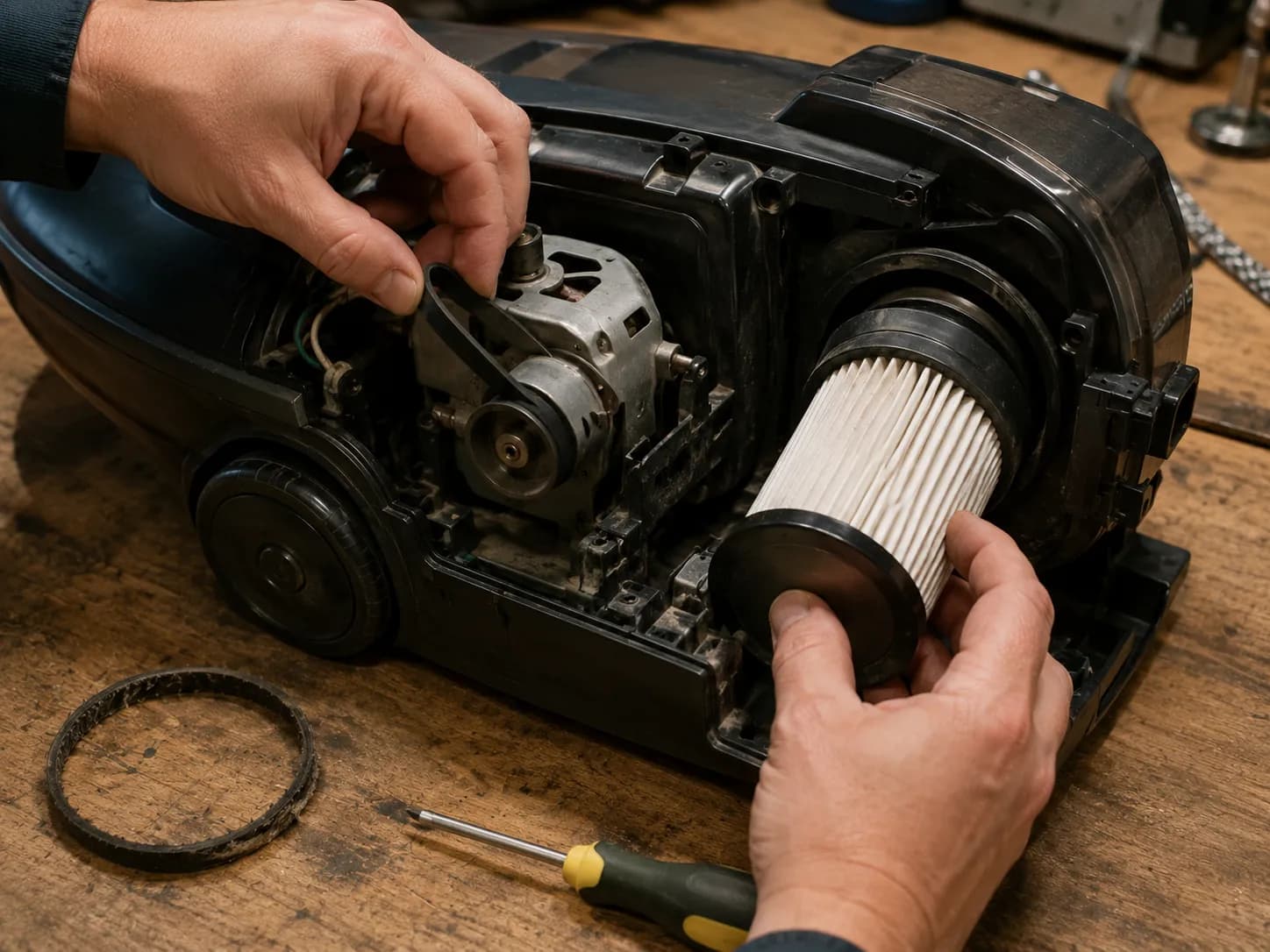
Rainbow sits firmly in the fix column, and its split personality shows why. On our unit, swapping the belt and HEPA neutralizer was a 20-minute job with a roughly $30 parts cost, but the motor is a different animal: Rainbow points owners to factory-authorized service for motor and electrical work, and that is the right call. Do the cheap wear parts yourself and escalate the serious ones.
Bissell owners weighing the same call have a dedicated cost breakdown in our Bissell worth-fixing guide, which drills into parts sources by model. Cordless shoppers should let battery age decide, since a machine that will not hold a charge past a few minutes needs a pack, not a whole new vacuum. Robot owners hearing a grinding brush deck are usually looking at a cheap roller or bearing rather than a dead unit.
DIY Fixes vs Repairs You Must Escalate
Knowing which vacuum repairs to attempt yourself and which to hand off is what keeps you from either overpaying a shop or getting hurt. Belts, filters, hoses, clogs, and brush rolls are safe DIY territory, with a belt costing about $5 and taking minutes to fit per Consumer Reports’ belt how-to, while a professional hose replacement runs $55 to $250. Anything involving the motor, internal wiring, or a tripped thermal cutoff belongs with a pro, both for safety and because the diagnosis needs proper tools.
Do it yourself vs escalate
Do it yourself | Escalate to a pro |
|---|---|
Drive belt replacement | Motor replacement or rewind |
Filter clean or swap | Internal wiring and switches |
Hose refit or unclog | Tripped thermal cutoff or fuse |
Clog removal | Mainboard or control faults |
Brush roll unwrap or swap | Anything you smell burning |
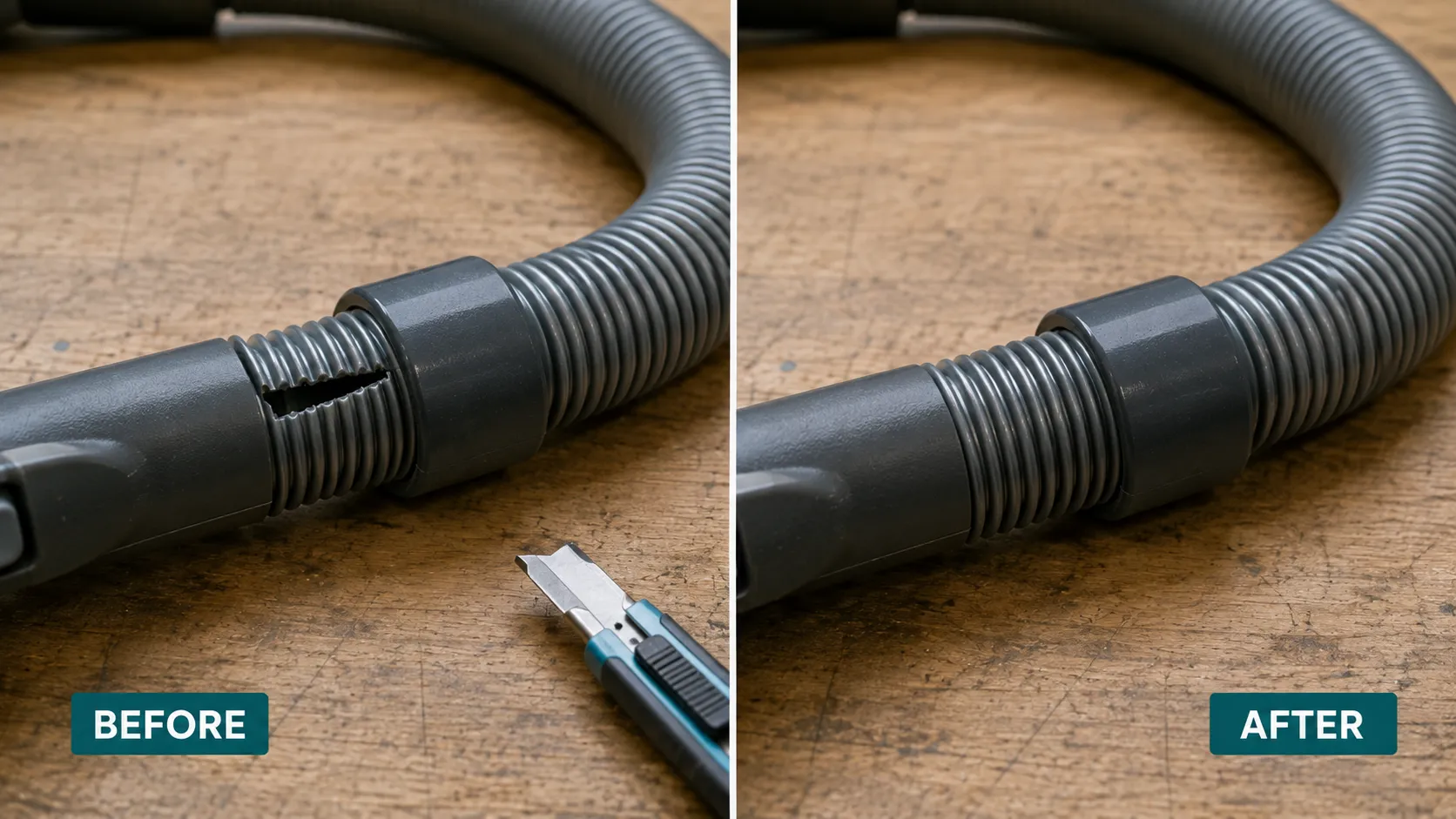
The hose is the classic DIY win. A split near the handle takes about eight minutes and often costs nothing: cut the damaged inch away, release the cuff, and twist the fresh end back in. Here is the short version.
Unplug the vacuum and find the split by feeling along the hose.
If the split is near the handle, cut straight through it to remove the cuff end.
Press the release tab on the plastic cuff and pull the old stub out.
Twist the fresh hose end back into the cuff until it locks.
For a mid-hose split, wrap it firmly with electrical tape as a temporary seal.
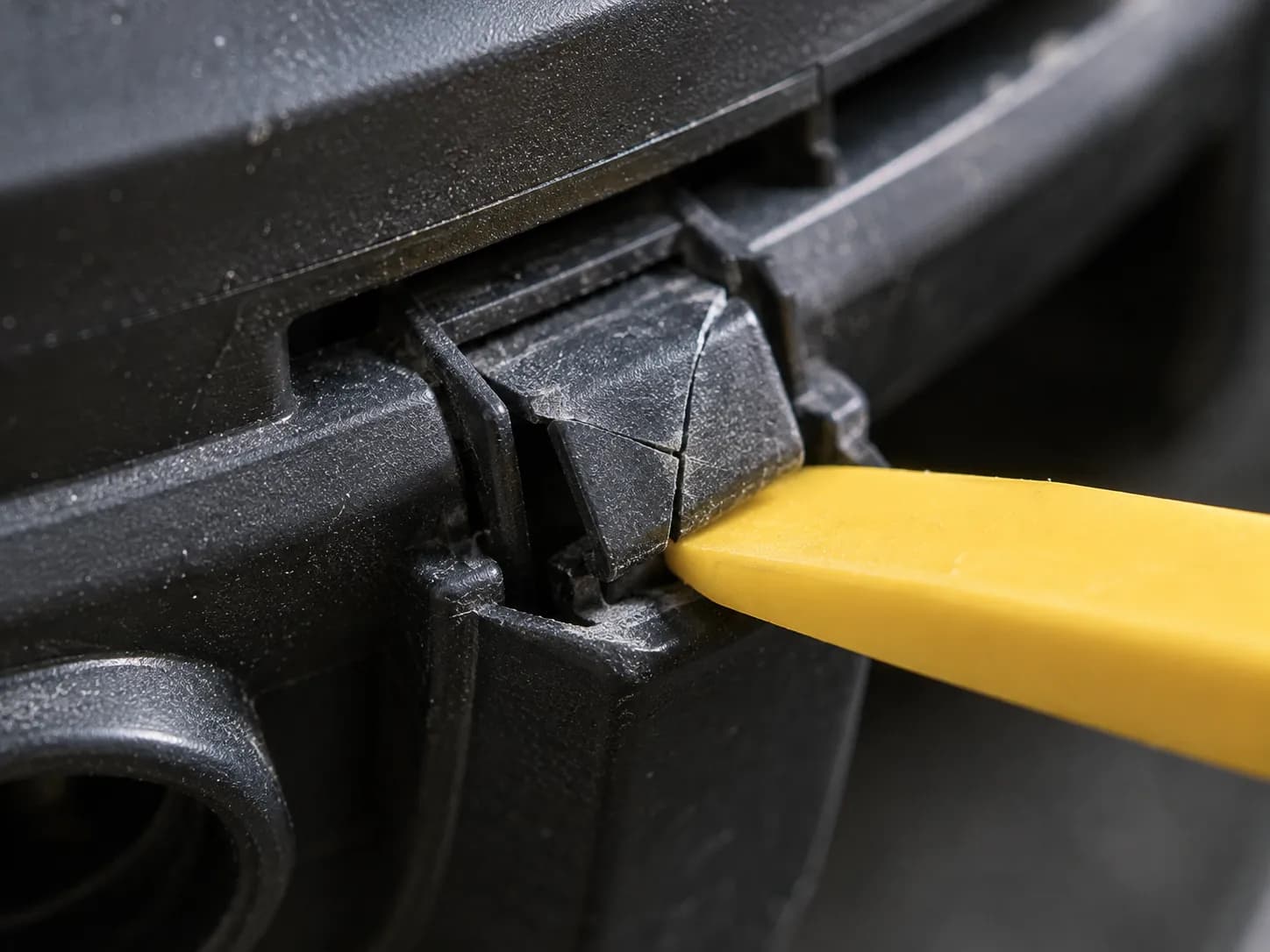
One hard-won caution from my own bench: go slow on the plastic. The snap-fit housing clip on a stick vac cracked on my first pry, and that ratcheting-then-cracking moment is exactly how a cheap fix turns into a new part. If a repair needs you to force a sealed housing or touch wiring, that is your line to escalate.
Safety callout: Electrical and motor work carries shock and fire risk. If you smell burning, see scorching, or the machine tripped its thermal cutoff, stop and take it to a technician.
Warranty, Geek Squad, and Repair Near Me: Your Service Options
Before paying out of pocket, check which of three service paths covers your vacuum: the manufacturer warranty, a retail protection plan, or an independent shop. Geek Squad protection, for example, covers 100% of parts and labor on covered failures and includes a one-time battery replacement if the pack drops below 80% of its original charge, per Best Buy’s plan terms. Each path fits a different situation, and the table sorts them out.
Your three service options
Path | What it covers | Typical out-of-pocket | Best for |
|---|---|---|---|
Manufacturer warranty | Defects within the warranty window | $0 in window | Newer machines |
Retail protection (Geek Squad) | 100% parts and labor on covered failures; battery if under 80% | Plan cost; diagnostic fee refunded if covered | Plan holders |
Independent shop | Any repair, usually with a free estimate | $45–150 for most portables | Out-of-warranty machines |
In practice, the local shop was the fastest read for me: a free estimate in about ten minutes told me the fix was worth it, whereas the protection-plan route needed an appointment and a diagnostic hold before anyone touched the machine.
A protection plan only pays off if you actually claim on it, so weigh the plan cost against the repair you are likely to face. When you search repair near you, ask whether the estimate is free, since many independent and factory-authorized shops quote at no charge.
The Bottom Line
So, how much does a vacuum repair cost? For most portable machines it is $50 to $150 at a shop, climbing to an average near $321 for whole-house central systems, and dropping to single digits when you fit a belt or wash a filter yourself. The number only matters next to two others: the price of a comparable new machine and the age of the one in your hands.
Run the 50% rule, factor the age window, and check your brand’s tier before you spend. A premium Rainbow, Kirby, or Miele almost always earns the repair, a mid-range machine is a case-by-case call, and a sub-$80 big-box vacuum usually belongs in the recycling with a fresh model on the way.
Do the cheap faults yourself, escalate anything electrical, and let a free shop estimate settle the close ones. That is how you spend repair money only when it genuinely beats replacement.
Frequently Asked Questions
How much does it cost to fix a vacuum?
Most portable vacuum repairs cost $50 to $150 at a shop, covering common faults like belts, filters, hoses, and brush rolls. Whole-house central vacuum repairs average around $321 and range from $129 to $561. Many cheap faults cost only $6 to $60 to fix yourself.
Is it worth fixing, or should I just buy new?
Use the 50% rule: if the repair costs less than half of a comparable new vacuum, fixing it is worth it. A $100 repair on a $150 machine usually is not, while a $70 repair on a $300 machine clearly is. Machine age matters too, since ConsumerAffairs and others note repairs make less sense on older units.
When should you replace a vacuum instead of repairing it?
Replace it when the repair exceeds half the cost of a comparable new machine, or when an upright is past about five years or a canister past about seven. A dead motor on a budget machine, or repeated failures in a short span, also point to replacement over another repair.
How much is a vacuum motor or battery replacement?
A professional motor repair runs $100 to $300 on portables and up to $800 on central systems. A cordless battery pack costs $75 to $150 fitted, with a genuine Dyson V11 pack around $150. Both are among the pricier repairs, so weigh them hard against the 50% rule.
Does Best Buy or Geek Squad fix vacuums?
Yes. Geek Squad protection covers 100% of parts and labor on covered vacuum failures and includes a one-time battery replacement if the pack falls below 80% of its original charge. A diagnostic fee may apply but is refunded when the failure is covered under the plan.
Can I fix my vacuum myself?
Yes for belts, filters, hoses, clogs, and brush rolls, which are safe, cheap, and quick. Leave the motor, internal wiring, and any tripped thermal cutoff to a technician. Forcing a sealed plastic housing or touching wiring is the point to stop and escalate.
Read it your way
Short on time? Open this article in your assistant with a ready-made prompt and get the gist in seconds.
Found this useful? Make us a preferred source so we show up in your Google results.
Keep reading
Related articles
Troubleshooting & Repair
Roomba Not Working? 8 Symptoms Fixed (2026 Models)
Reboot first, then match your symptom. 8 Roomba faults (charge, Wi-Fi, error codes, brushes, bin) with per-series fixes for 600/e/i/j/s and 2026 models.
Troubleshooting & Repair
Why Won’t My Robot Vacuum Work? 6 Fixes We Tested
Why won’t my robot vacuum work? Reset it, free the wheels, clean the sensors and fix a 2.4GHz Wi-Fi snag in 5 minutes: the DIY checks that skip a repair bill.
Troubleshooting & Repair
Not Broken? Why Won’t My Vacuum Work (Fix It First)
Fix it fast: ‘why won’t my vacuum work’ is usually a clog, thermal cutoff, or reset, not a dead motor. Match your symptom to the exact fix.
Troubleshooting & Repair
How Do I Reset My Vacuum? Upright to Robot, Tested
Reset any vacuum fast. How do I reset my vacuum? Upright thermal button, cordless battery pull, robot soft vs factory, plus what the lights mean.
The discussion
Comments
Every comment is reviewed before it goes live.