Shop Vac Bags: Skip Them for Most Jobs (When You Don’t)
Skip shop vac bags for most jobs: bag only fine drywall dust, never wet messes, and keep your filter in. See when a bag helps, which type fits, and why.
Written by Dr. Naomi TranReviewed by Dale FerrisLast updated on September 24, 2026
When you buy parts or vacuums through links on our site, we may earn a commission at no extra cost to you. It never changes what we recommend. Learn more.
Read it your way
Short on time? Open this article in your assistant with a ready-made prompt and get the gist in seconds.
Found this useful? Make us a preferred source so we show up in your Google results.
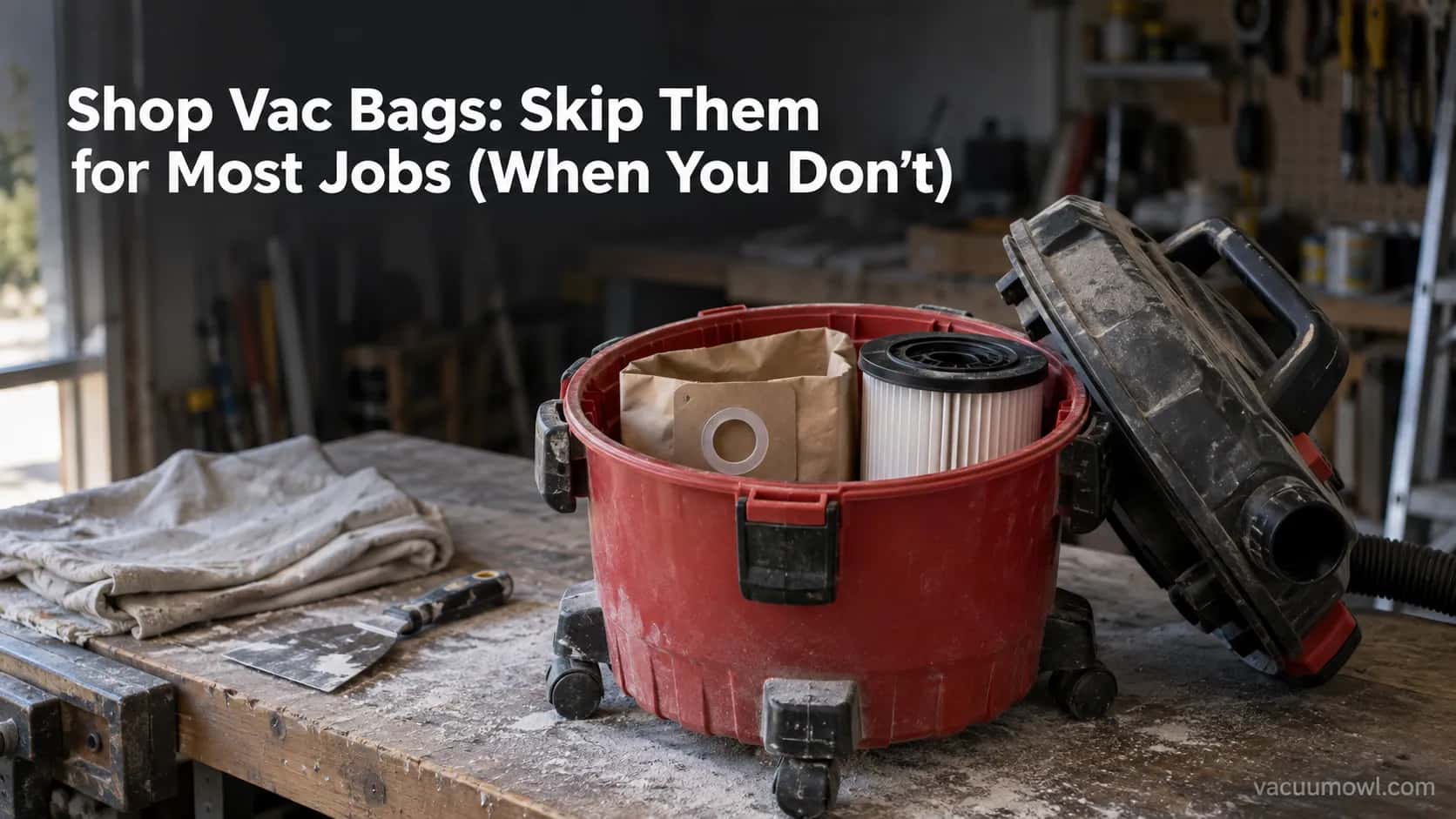
Walk down the accessory aisle and every wet/dry vac seems to come with a matching bag, which makes it easy to assume you always need one. You mostly don’t.
After running the same five-gallon vacuum bagged and bagless across drywall jobs, wet spills, and general garage cleanup, the pattern is consistent: shop vac bags earn their keep on fine dust and clean disposal, and they get in the way (or fall apart) almost everywhere else.
The confusion is worth clearing because the wrong call has a cost. Bag a wet mess and the bag rips.
Skip the bag on drywall dust and the cartridge clogs in a single tank.
You usually don’t need a shop vac bag.
A bag is a disposable inlet liner that helps only with fine or drywall dust and low-mess disposal.
Never use one for wet pickup or heavy debris, and always keep your cartridge filter installed.
The bag works with the filter, not instead of it.
Shop Vac Bags: Do You Need One? (30-Second Answer)
A shop vac bag is a disposable dust-collection liner that fits over the tank inlet and pre-catches debris before it reaches the main filter, and for most jobs you do not need one.
It pays off in exactly two cases, fine or drywall dust and clean low-dust disposal, and it never replaces the cartridge filter that keeps dust out of the motor.
The single rule worth memorizing: bag the fine dust, skip it for everything else, and keep the filter in either way.
Trust note: “Usually not” has a real exception.
Fine dust, especially drywall and plaster dust, is the one case where a bag genuinely helps, so the default is a starting point, not an absolute.
Bag or No Bag? When to Use One (and When Not To)
Deciding whether to run a shop vac bag is a question about the mess, not the machine: use one for fine or drywall dust and clean disposal, skip it for general dry debris, and never use it for wet pickup.
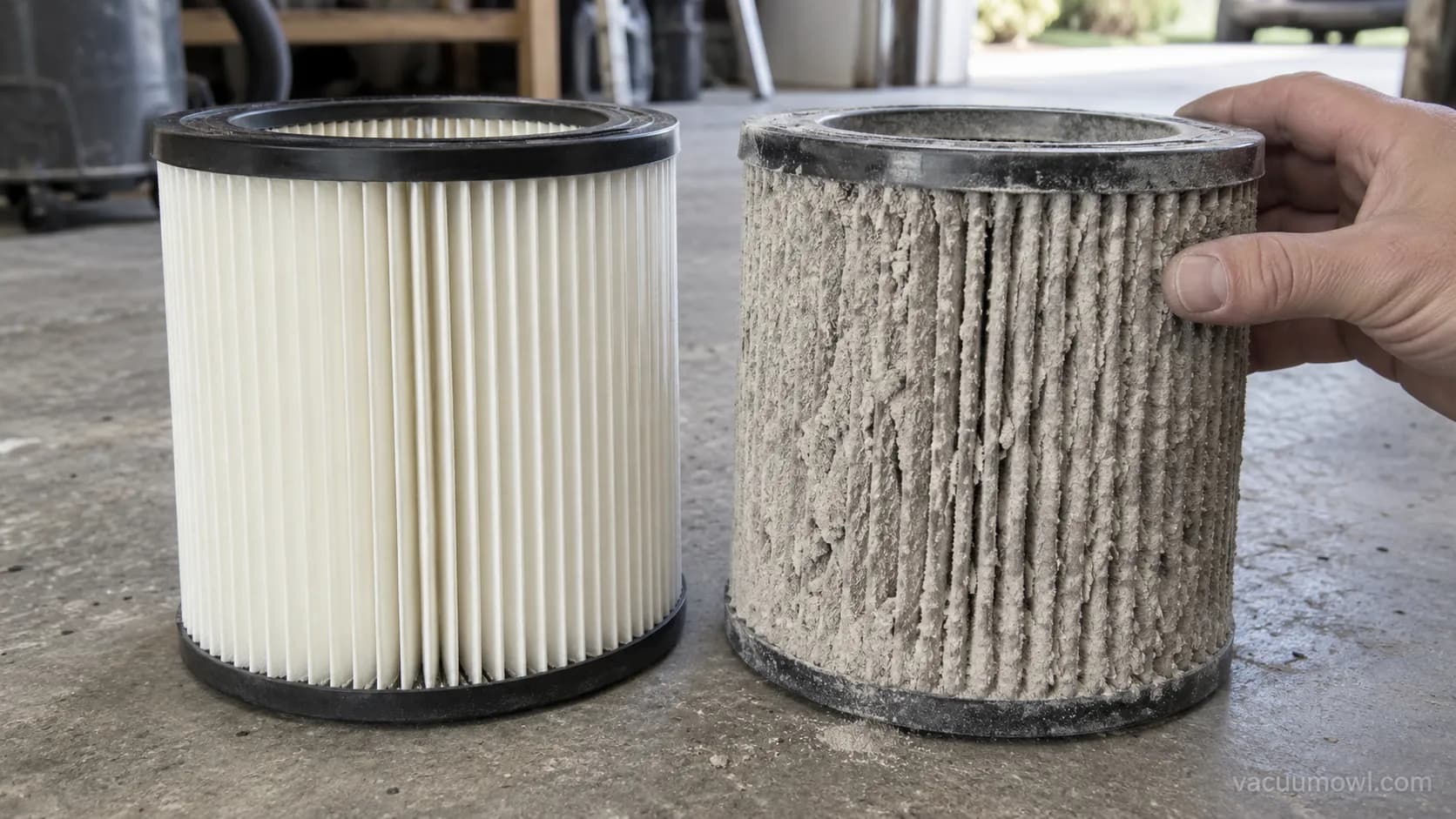
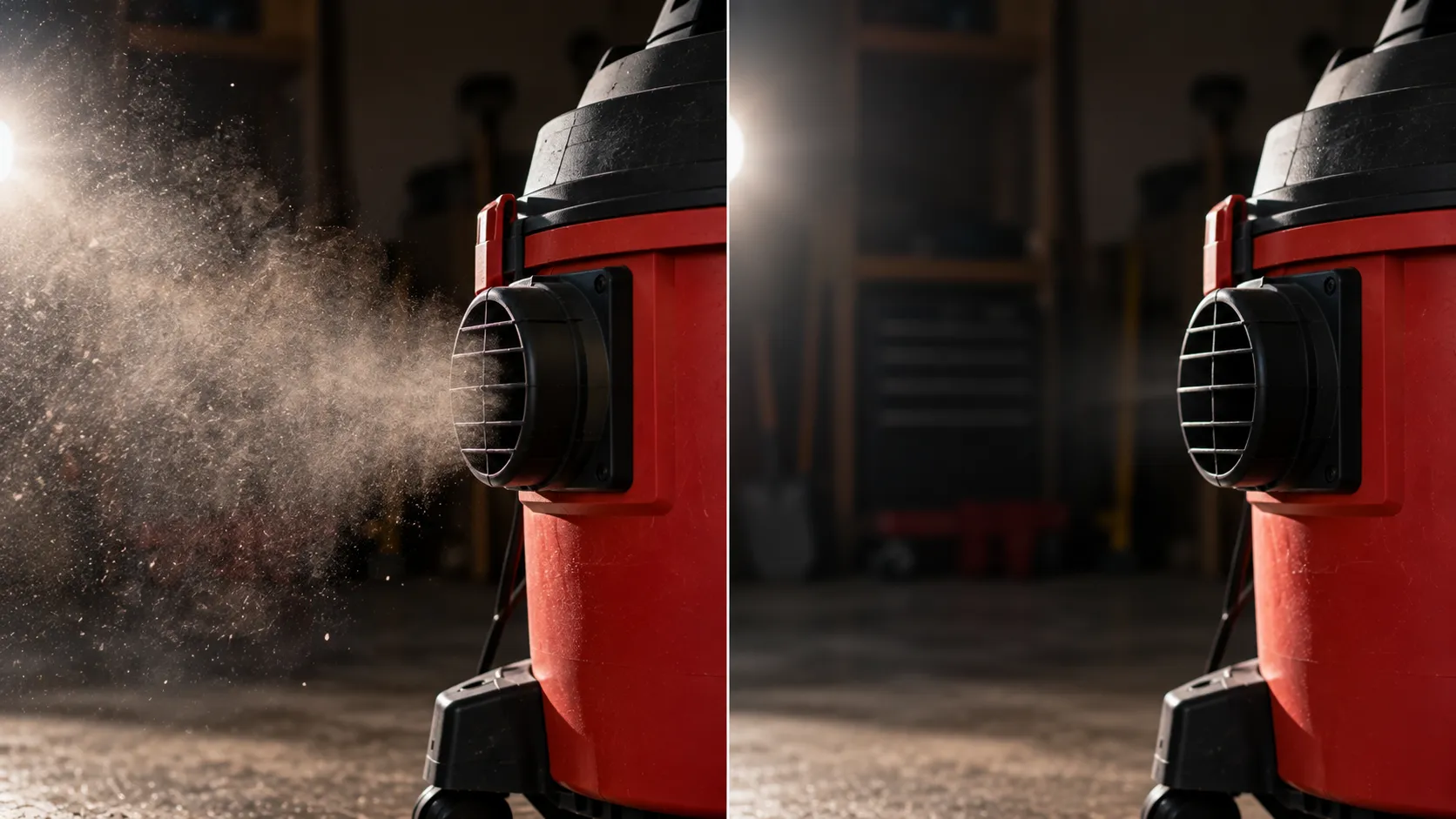
A bag acts as a pre-filter, catching the fine particles that would otherwise pack the cartridge and cutting the dust cloud that puffs out when you empty the tank.
Here is the decision keyed to what you are actually vacuuming.
Debris type | Bag it? | Why |
|---|---|---|
Fine or drywall dust | Yes | The bag pre-catches fines before they clog the cartridge and contains dust on disposal |
Plaster, joint compound, sanding dust | Yes | Same fine-particle problem, plus a cleaner empty |
General dry dirt, leaves, sawdust | Optional | The filter handles it; a bag only adds convenience and cost |
Large or sharp debris (gravel, offcuts) | No | Bulk tears the bag; the bare tank and filter do better |
Water or wet slurry | Never | A dry-rated bag clogs, weakens, and rips when wet |
The pre-filter benefit is the real reason to bag fine dust. When the bag catches the bulk of the powder, the pleated cartridge stays open longer, so you keep suction and blow less dust out the exhaust.
Fine drywall dust is the case with a health angle, not just a convenience one.
Drywall joint compound can contain crystalline silica, and the OSHA silica standard for construction treats respirable fine dust as the hazard, with a permissible exposure limit of 50 micrograms per cubic meter.
A NIOSH evaluation of drywall sanding documented that a vacuum used without a disposable bag put more dust into the air when it was emptied.
Even for a homeowner, that matters, because the dustiest moment of any drywall cleanup is dumping the tank.
Older federal guidance on drywall sanding dust notes that breathing joint-compound dust over time can irritate the throat and airways, which is reason enough to contain it.
Safety note: A bag is not a mask.
Bagging reduces the dust you stir up, but it does not eliminate fine-dust exposure, so wear a proper respirator when sanding drywall.
If you are tempted to run with no filter and no bag at all, know that fine dust then goes straight through the motor.
And if drywall is a regular job for you, a cyclone dust-collection setup separates most of the debris before it ever reaches the vac, which cuts how often you buy bags.
When You Should Never Use a Bag (Wet and Heavy Debris)
Two jobs turn a shop vac bag from useless into actively counterproductive: wet pickup and bulky or sharp debris.
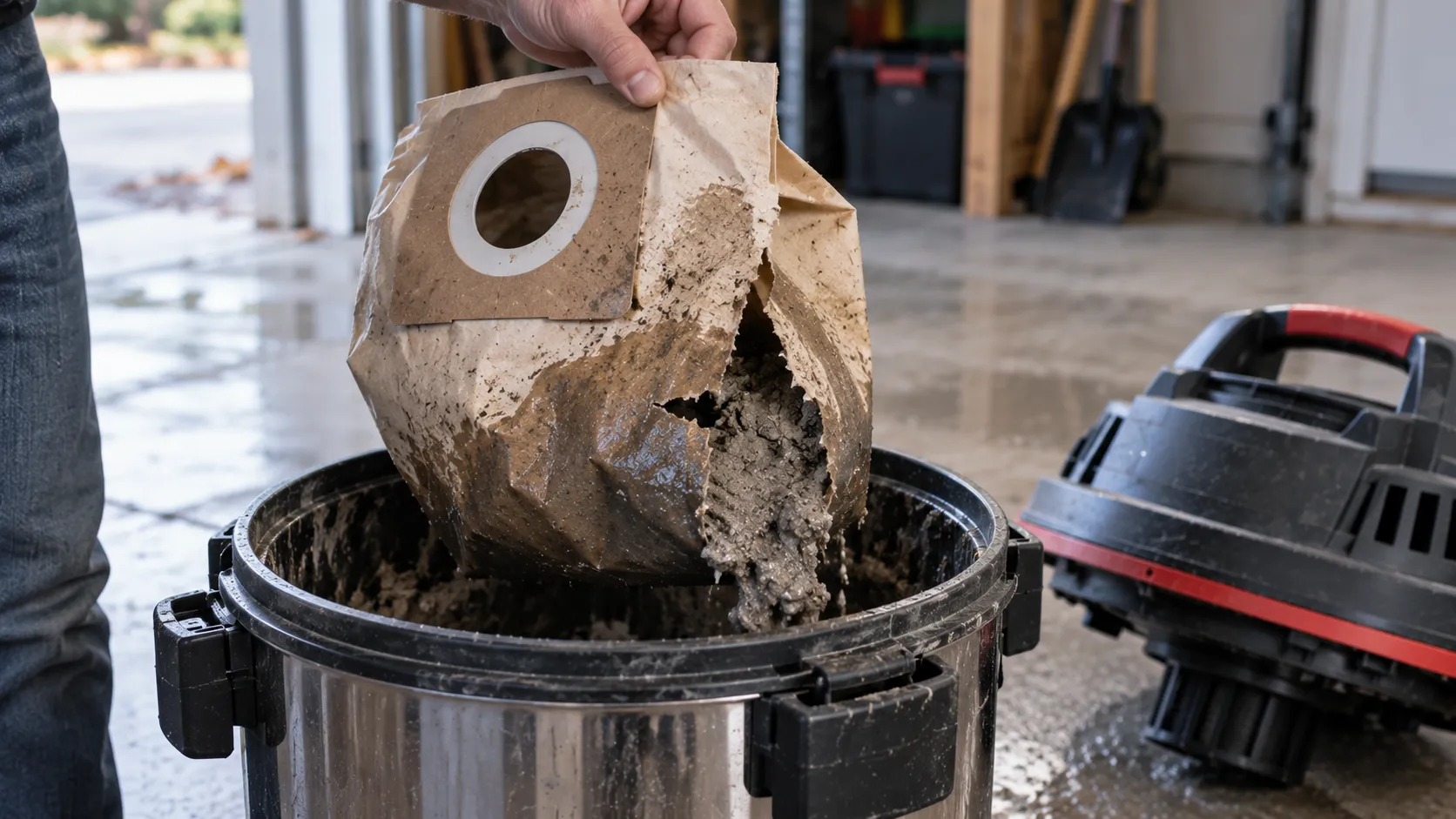
A collection bag is a dry-rated fabric or paper filter, so water saturates and tears it while heavy debris punches straight through, which is why you run the vac bagless for both.
Every bag I have pulled from a wet tank has come out shredded, dumping the mess it was supposed to hold right back into the drum.
The mechanism is simple once you picture it. The bag works by letting air pass through its walls while holding dust back, and the moment those walls get wet they stop passing air and start ripping.
Here are the two hard “never” rules.
Never bag wet or liquid messes. Water disintegrates a dry-rated bag, and a run it bagless approach with the correct wet setup is the right move instead.
Never bag large or sharp debris. Gravel, wood offcuts, and metal bits tear the bag, so use the bare tank and filter.
For a wet cleanup, the bag is not the only thing that changes. You typically remove the dry cartridge and fit the wet foam-sleeve swap so the motor stays protected while liquid is in the tank.
Getting the wet configuration right is worth a minute of setup, and our routine for picking up water safely walks through it. For standing water, a dedicated pump beats a vac, which is where a real pump wins.
Callout: The two rules that protect your gear: never bag wet messes, and never bag heavy or sharp debris.
Shop Vac Bags Explained: Types and Which One Fits
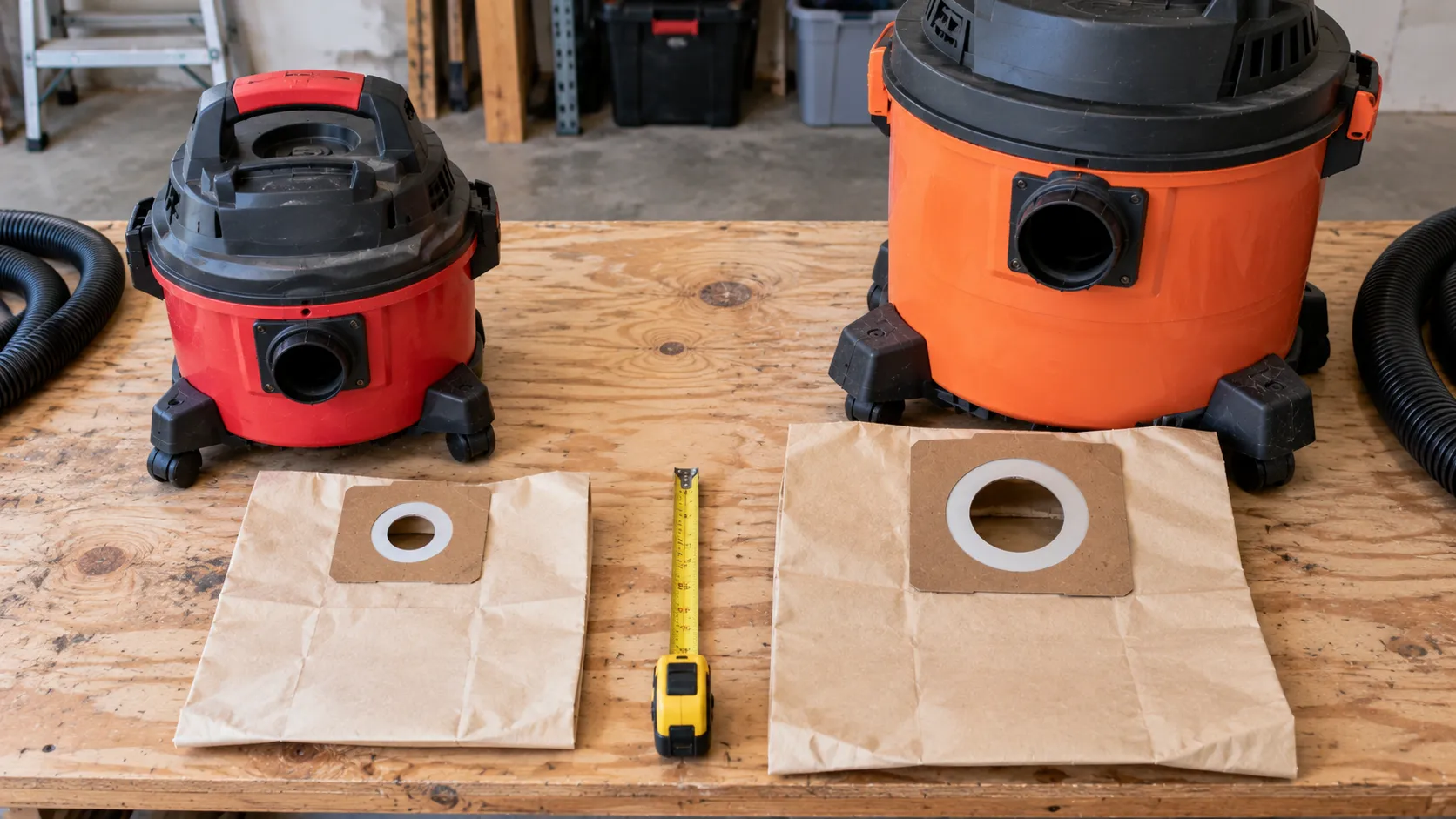
Shop vac bags come in three families: standard disposable collection bags for everyday dry debris, high-efficiency fine-dust bags for drywall and plaster, and reusable cloth bags, all sized to your tank.
The disposable ones are commonly labeled Type A, B, E, and F, matching roughly the 1 to 1.5, 2 to 2.5, 5 to 8, and 10 to 14 gallon tiers, so match the bag to your gallons first and choose standard or high-efficiency by how fine your dust is.
Knowing your capacity comes first, because the collar diameter that seats on the inlet is what differs between types.
Fitting a smaller Type B bag on a mid-size tank simply will not seat, and forcing a large collar onto a small inlet leaves a gap that leaks.
If you are unsure what you own, start with what a shop vac actually is. It also helps to see how tank sizes are tiered, since bag types map straight onto those gallon bands.
This cross-reference maps the common disposable types to tank size and use.
Bag type (common part) | Fits tank size | Best for |
|---|---|---|
Type A (90667) | 1 to 1.5 gallon | Small portable and hand-vac tanks, light dry debris |
Type B (90668) | 2 to 2.5 gallon | Compact tanks, everyday dry pickup |
Type E (90661) | 5 to 8 gallon | Mid-size tanks with a side inlet, general dry debris |
Type F (90662) | 10 to 14 gallon | Large tanks, high-volume dry cleanup |
High-efficiency (fine-dust) | Sized per tank tier | Drywall, plaster, and sanding dust |
Cloth or reusable | Sized per tank tier | Repeat dry jobs, less waste |
Standard collection bags handle ordinary dry debris and are the cheapest option. High-efficiency bags use denser media to trap the finer particles you get from drywall dust.
That fine-particle goal is the same one behind a HEPA filter.
The EPA describes HEPA as capturing at least 99.97 percent of particles at 0.3 microns, and high-efficiency bags aim toward that benchmark.
The trade-off is real: denser media costs more and trims airflow slightly.
One buying wrinkle is worth knowing. “Shop-Vac” is a genericized brand, like Kleenex or Velcro, and after the company’s 2020 closure its assets were bought by GreatStar Tools, which shifted genuine-versus-aftermarket labeling.
Reliable universal bags now exist alongside genuine ones. Both are fine as long as the collar size and grade match, a point the Shop-Vac brand history lays out.
If you still cannot pin down your tank, finding your gallon size takes only a tape measure.
And if the naming trips you up, the shop-vac name explained covers why so many models share one nickname.
Callout: High-efficiency shop vac bags cost more and reduce airflow a little, so most everyday jobs do not need them.
Do You Still Need a Filter If You Use a Bag?
Yes, you still need your cartridge filter when you run a shop vac bag, because the two work as stages rather than substitutes.
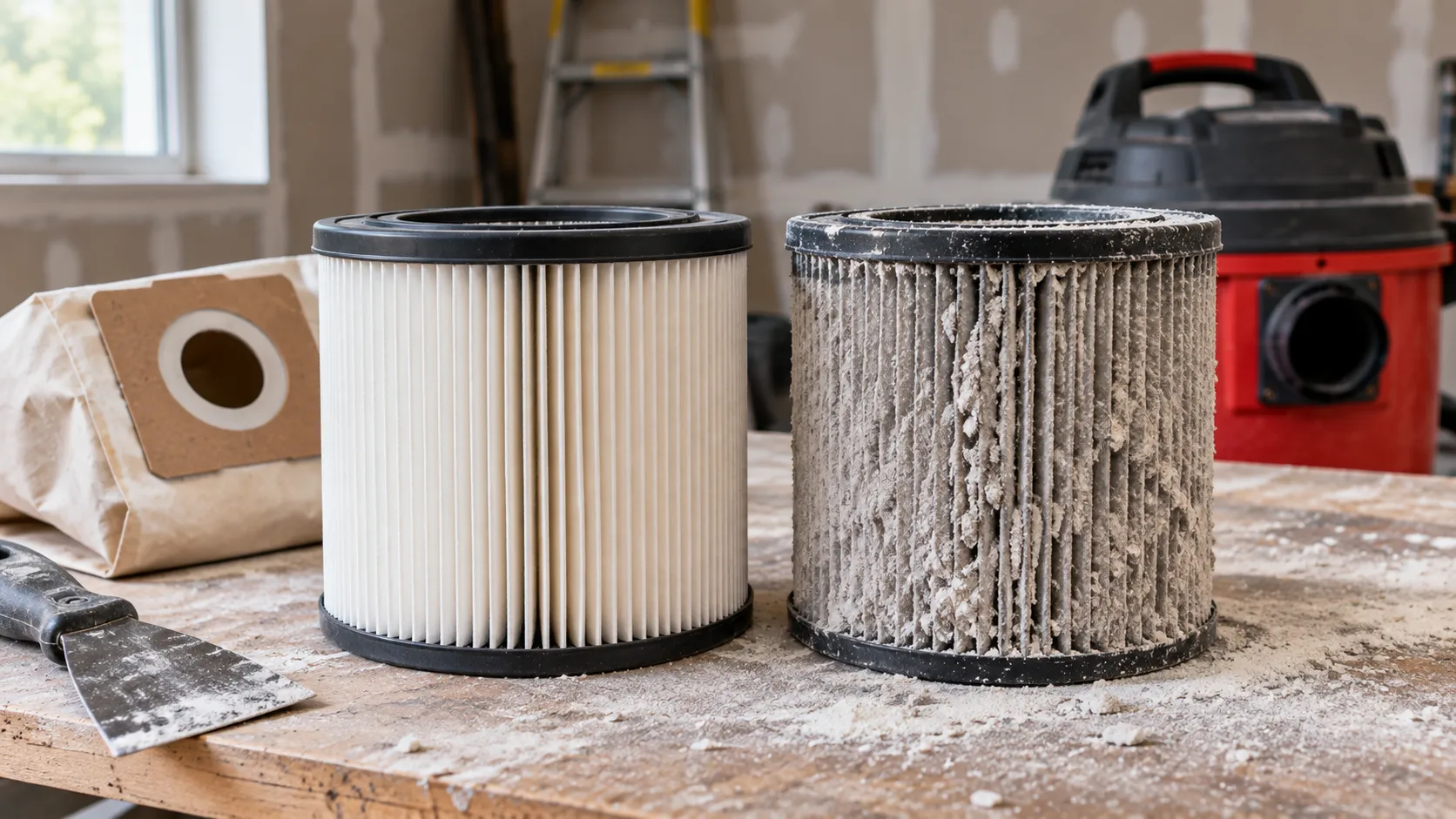
The bag pre-catches the bulk of the dust while the cartridge traps the fines that slip through, so running a bag with the cartridge removed lets fine dust reach the motor, and the only time you pull the dry cartridge is for wet pickup.
Picture the air path in two steps.
The bag catches the bulk, the cartridge catches the remaining fines, and only then does clean air pass the motor.
Stage | What it catches | If you remove it |
|---|---|---|
Bag (pre-filter) | Bulk dust and most fines | Filter clogs faster; more frequent cleaning |
Cartridge filter | Fine particles that pass the bag | Fine dust reaches the motor and exhaust |
The point people trip over is the wet exception. Removing the dry cartridge is a wet-pickup step, not a bagging step, so when you are bagging dry dust the cartridge always stays in.
If you want the layer-versus-layer breakdown, we cover bag versus filter, compared separately.
The cartridge itself comes in a few varieties worth knowing, which the main filter types walks through.
Keeping that cartridge in good shape matters too.
Done right, cleaning the cartridge properly makes it last far longer between swaps.
There is a small cost to running both layers, and it is worth stating plainly.
A bag plus filter trims airflow slightly versus a bare cartridge, but it protects suction for much longer overall, which is exactly how the suction is generated and preserved.
Callout: Using a bag with the filter reduces airflow a little, but it protects suction far longer, so keep both in for dry jobs.
How to Install and Change a Shop Vac Bag (and Make It Last)
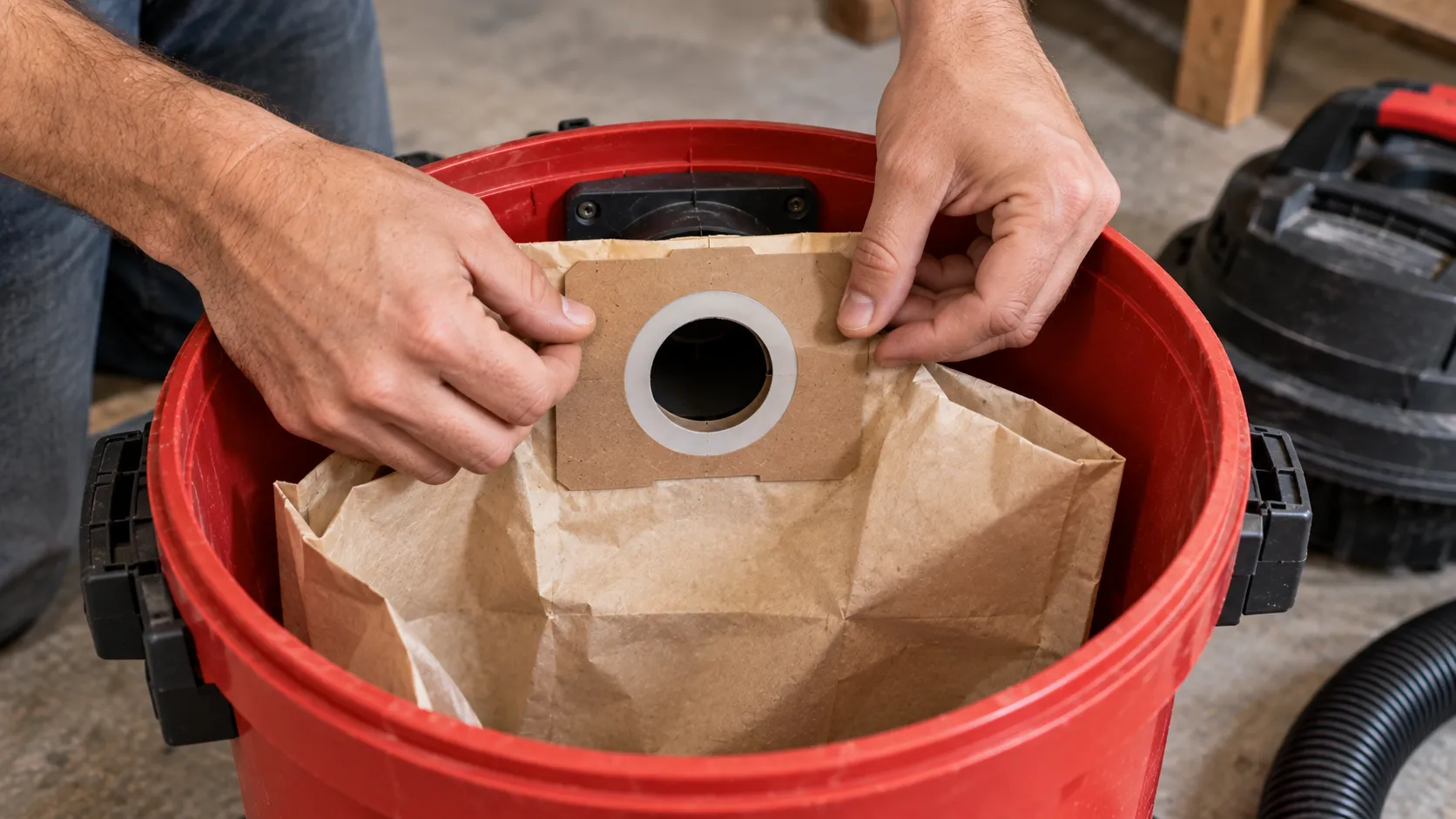
To install a shop vac bag, fit the bag’s cardboard or plastic collar over the tank’s inlet port until it seats flush, then close the lid.
Change it when it is about half to two-thirds full or when suction noticeably drops, since waiting longer chokes airflow and releases more dust when you empty it.
A NIOSH drywall evaluation specifically recommended better vacuum care, including clear guidance on when to replace bags, to cut airborne dust.
Disposable bags pull shut with their sealing collar, while cloth bags shake out and go back in.
Fitting one takes under a minute once you know where the inlet sits.
Locate the inlet port inside the tank, the round opening the hose also connects to.
Slide the bag’s collar over the inlet so the opening lines up with the port.
Press until the collar seats flush with no gap around the rim.
Confirm the seal by tugging gently; the bag should stay put.
Close and latch the lid and reconnect the hose.
Change-timing is where a bag actually helps rather than hurts.
Unlike a bare cartridge that plugs and strangles suction, a bag holds steady until it is well filled, though suction does start to drop once it is past half full.
The inlet you just fitted the bag onto is the same port that accepts hoses and tools, so matching attachments to the inlet is useful background.
Those diameters are not universal, which is why hose sizes are measured before you buy.
If you move around a lot, a cordless model changes how you handle swaps on the go.
For long-run cost, a separator is the honest answer.
It drops most debris into a bin first, so bags fill far slower, and the same tool doubles for using the vac as a blower once the tank is clear.
Callout: A cyclone separator reduces how often you change shop vac bags, and it is the cheapest long-run fix for a heavy-dust workshop.
Can You Use a Regular Garbage Bag Instead?
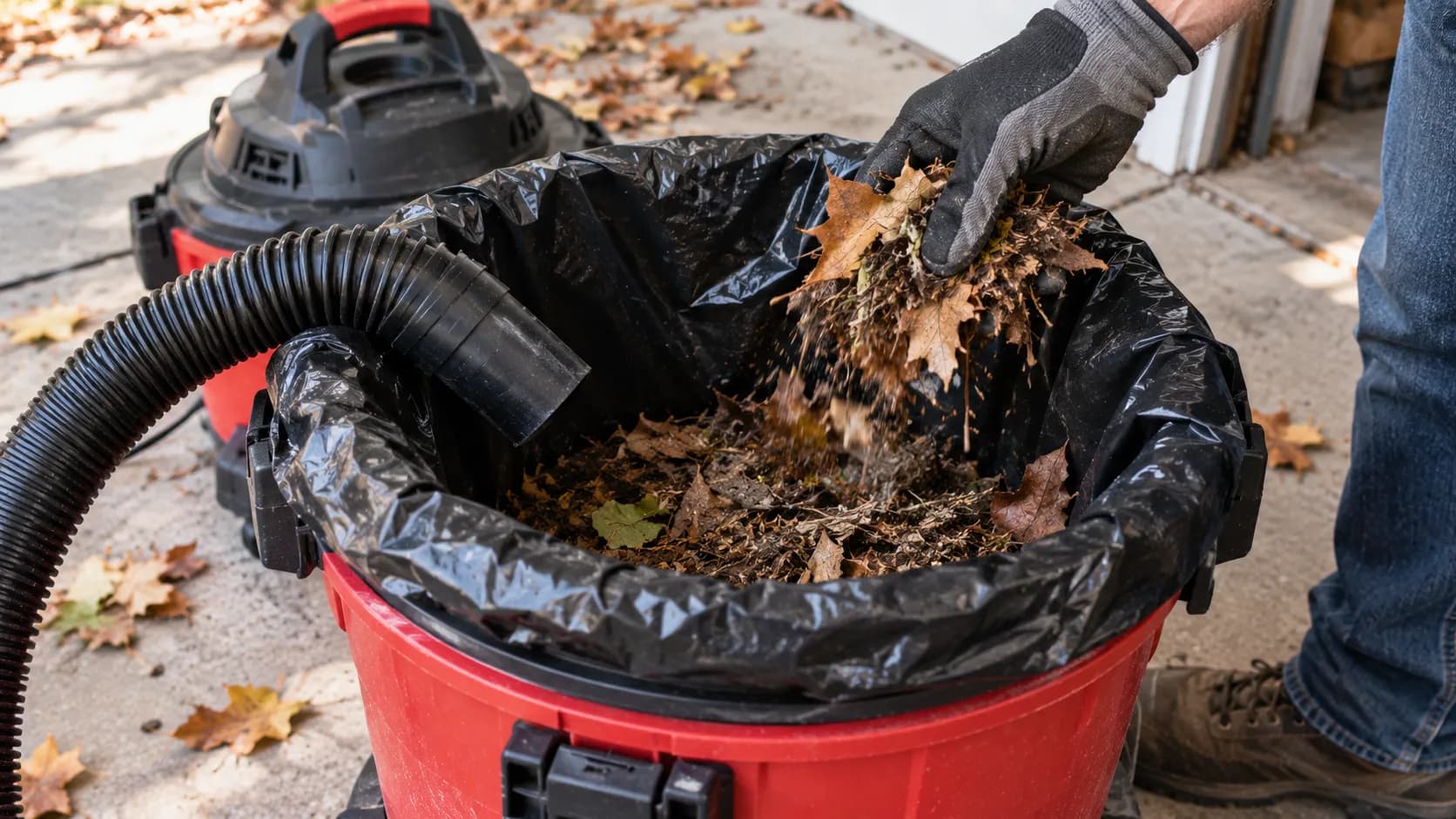
You can line a shop vac tank with a regular garbage bag, but it is a cleanup liner, not a filter bag: it makes emptying bulky dry debris easier yet traps no fine dust, so your cartridge still clogs on drywall.
It also carries a real wet-pickup risk, where a loose liner can get pulled toward the inlet, so for fine dust a proper high-efficiency bag is the only version that actually filters.
The distinction is liner versus filter. A trash-bag liner sits loose in the tank to catch what falls in, but air does not pass through its walls the way it does through a real collection bag, so it does nothing to protect the cartridge.
Where the hack helps is bulky, dry, low-fine debris. A lined tank made a gutter cleanup easy to dump in one lift, and for that kind of mess it is a genuinely handy trick.
Where it backfires is anything fine or anything wet, since it filters nothing and can collapse toward the inlet under suction.
This is one more way a shop vac differs from a house vacuum, and how it differs from a home vacuum explains why the liner idea travels poorly between them.
When the job is done, storing it off the floor keeps the tank and any liner clean for next time.
Callout: Do not use a loose garbage-bag liner for wet pickup; suction can pull it toward the inlet.
The Bottom Line
Reach for shop vac bags when the job is fine or drywall dust and you want a clean, low-dust empty, and leave them in the box for wet messes, heavy debris, and most everyday dry pickup.
Whatever you do, keep the cartridge filter installed, because the bag is a partner to the filter, never a replacement.
Get those two calls right and you protect your suction, your motor, and your lungs in one move.
Frequently Asked Questions
Do shop vacs need bags?
No, shop vacs do not need bags for most jobs, since the cartridge filter alone handles general dry debris and a bag is off the table for wet pickup. A bag helps only with fine or drywall dust and cleaner disposal, so treat it as an optional upgrade for dusty work rather than a requirement.
Can you run a shop vac without a bag?
Yes, you can run a shop vac bagless for almost everything except fine dust, where a bag saves your filter from clogging. General dirt, sawdust, leaves, and wet messes are all handled without a bag, as long as you keep the correct filter installed for the job.
Do you still need a filter with a bag?
Yes, always keep the cartridge filter in when you use a bag on dry debris, because the bag is a pre-filter that catches the bulk while the cartridge traps the fines before they reach the motor. The only time you remove the dry cartridge is for wet pickup, which is a separate setup from bagging.
Can you use a garbage bag in a shop vac?
You can use a garbage bag as a loose tank liner for bulky, dry debris, but it is not a filter and traps no fine dust, so your cartridge still clogs on drywall. Avoid it for wet pickup, where suction can pull the loose liner toward the inlet.
How often should you change a shop vac bag?
Change a shop vac bag when it reaches about half to two-thirds full or when suction noticeably drops, since waiting longer reduces airflow and releases more dust when you empty it. NIOSH raised the same point in its drywall-sanding work, so changing on time keeps suction strong and the cleanup cleaner.
Read it your way
Short on time? Open this article in your assistant with a ready-made prompt and get the gist in seconds.
Found this useful? Make us a preferred source so we show up in your Google results.
Keep reading
Related articles
Vacuum Types
Bissell Wet Dry Vacuum: 6 CrossWave Models Tested (2026)
Compare every Bissell wet dry vacuum: which CrossWave model fits pets, steam, or budget, plus fixes for streaks and floors that still look dirty. Tested 2026.
Vacuum Types
Washing Shop Vac Filter: Tap, Rinse & Reuse the Right Way
Rinse it right: this guide covers washing shop vac filter foam and paper, the tap-and-hose steps, the 24-hour dry rule, and when to just replace it.
Vacuum Types
Tineco vs Dreame Wet Dry Vacuum: 30-Day Test (2026)
Compare Tineco vs Dreame wet dry vacuum on suction, self-clean, edge reach and price, with a clear pick for pets, kids and big homes.
Vacuum Types
Is the DEWALT Shop Vac Worth It? Quiet StealthSonic Tested
Compare every DEWALT shop vac: StealthSonic quiet picks, cordless DCV580 and corded DXV, with measured noise, real suction specs and a value verdict.
The discussion
Comments
Every comment is reviewed before it goes live.