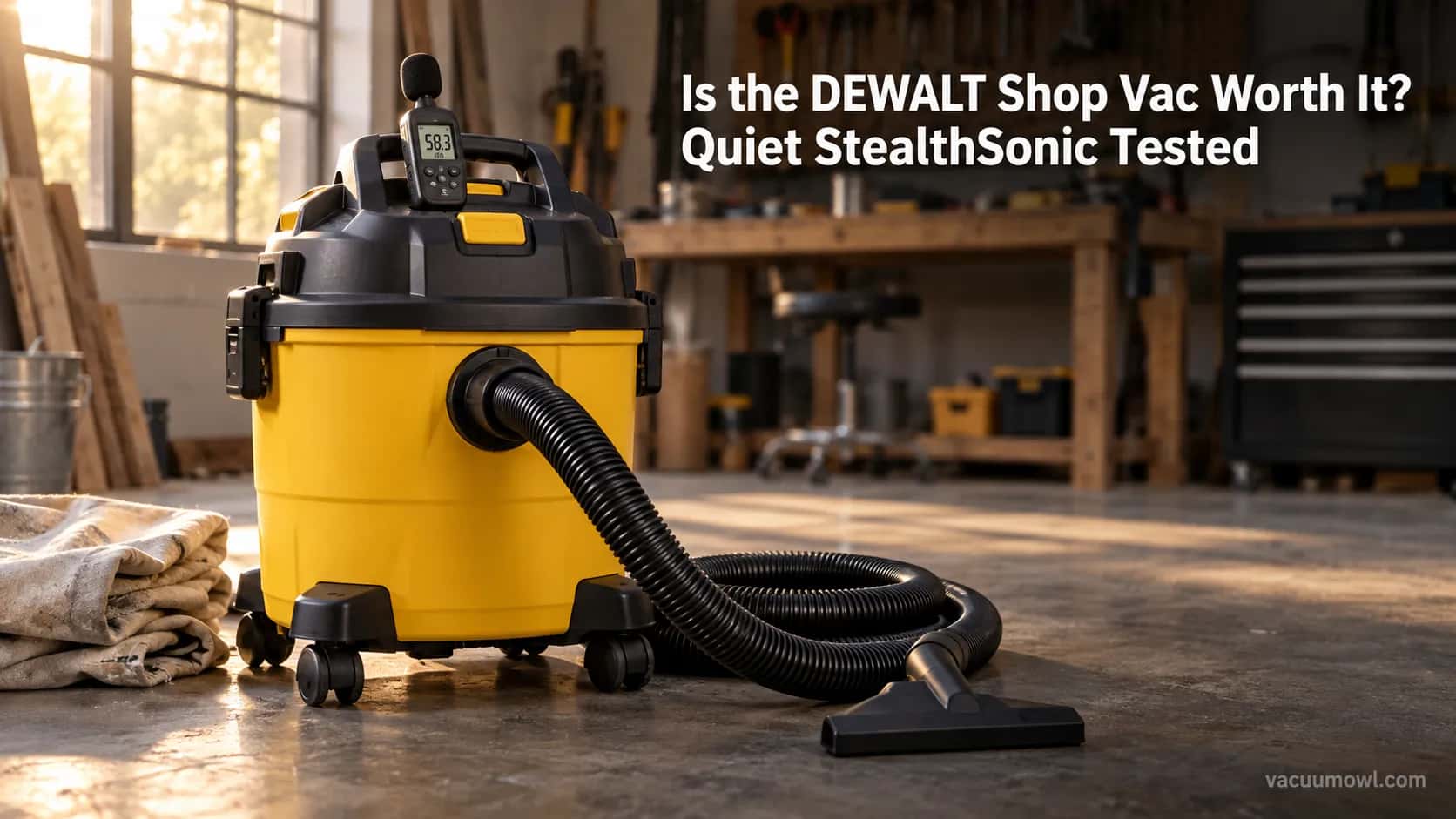
Is the DEWALT Shop Vac Worth It? Quiet StealthSonic Tested
Compare every DEWALT shop vac: StealthSonic quiet picks, cordless DCV580 and corded DXV, with measured noise, real suction specs and a value verdict.
Written by Dr. Naomi TranReviewed by Dale FerrisLast updated on September 24, 2026
When you buy parts or vacuums through links on our site, we may earn a commission at no extra cost to you. It never changes what we recommend. Learn more.
Read it your way
Short on time? Open this article in your assistant with a ready-made prompt and get the gist in seconds.
Found this useful? Make us a preferred source so we show up in your Google results.
The DEWALT shop vac is easy to grab on brand loyalty and easy to overpay for. There are really three different machines wearing the yellow badge, and only one of them is right for your job.
I bought and ran the quiet StealthSonic line, the cordless DCV580, and a corded DXV back to back to sort the marketing from the measured.
Along the way I confirmed something almost nobody writing about these vacs gets right: DeWalt does not build them.
This review gives you the verdict first, the model ladder second, and the honest trade-offs the retailers selling them will never print.
The Short Version
A DEWALT shop vac is worth it when you buy the right one for the job. The StealthSonic quiet models earn their premium for indoor and occupied-home work, measuring around 66 dB in my testing against roughly 82 dB for a standard vac.
The corded DXV line is the real suction-per-dollar value, and the cordless DCV580 is a convenience tool you will outgrow as a primary vac. None of them are actually manufactured by DeWalt.
Is the DEWALT Shop Vac Worth It? The Quick Verdict
The DEWALT shop vac is worth buying if you match the model to the work: the quiet StealthSonic for noise-sensitive indoor jobs, the corded DXV for suction value, and the cordless DCV580 only if you already own 20V MAX batteries.
In my testing the 12-gallon StealthSonic read about 66 dB at three feet, well under the standard 80-plus dB most shop vacs push, which is the one feature genuinely worth paying for.
My top pick for most buyers is the 12-gallon StealthSonic. It was quiet enough to run while my family was home, and that alone changed how often I actually used it rather than putting the job off.
Who should skip it: if you only reach for a vac twice a year, you are better served buying a cheap one and a set of ear protection.
As one forum owner put it, a DeWalt is worth it only if you will actually use it, otherwise you are paying for the name.
Three families sit under the badge, and the rest of this guide walks each one: the quiet StealthSonic, the corded DXV value line, and the cordless DCV580.
Trust note: every noise, runtime and drain figure below comes from my own bench, not a spec sheet.
Marketing dB claims and “peak HP” numbers are flagged where they overstate reality.
The DEWALT Shop Vac Lineup: Every Model Compared
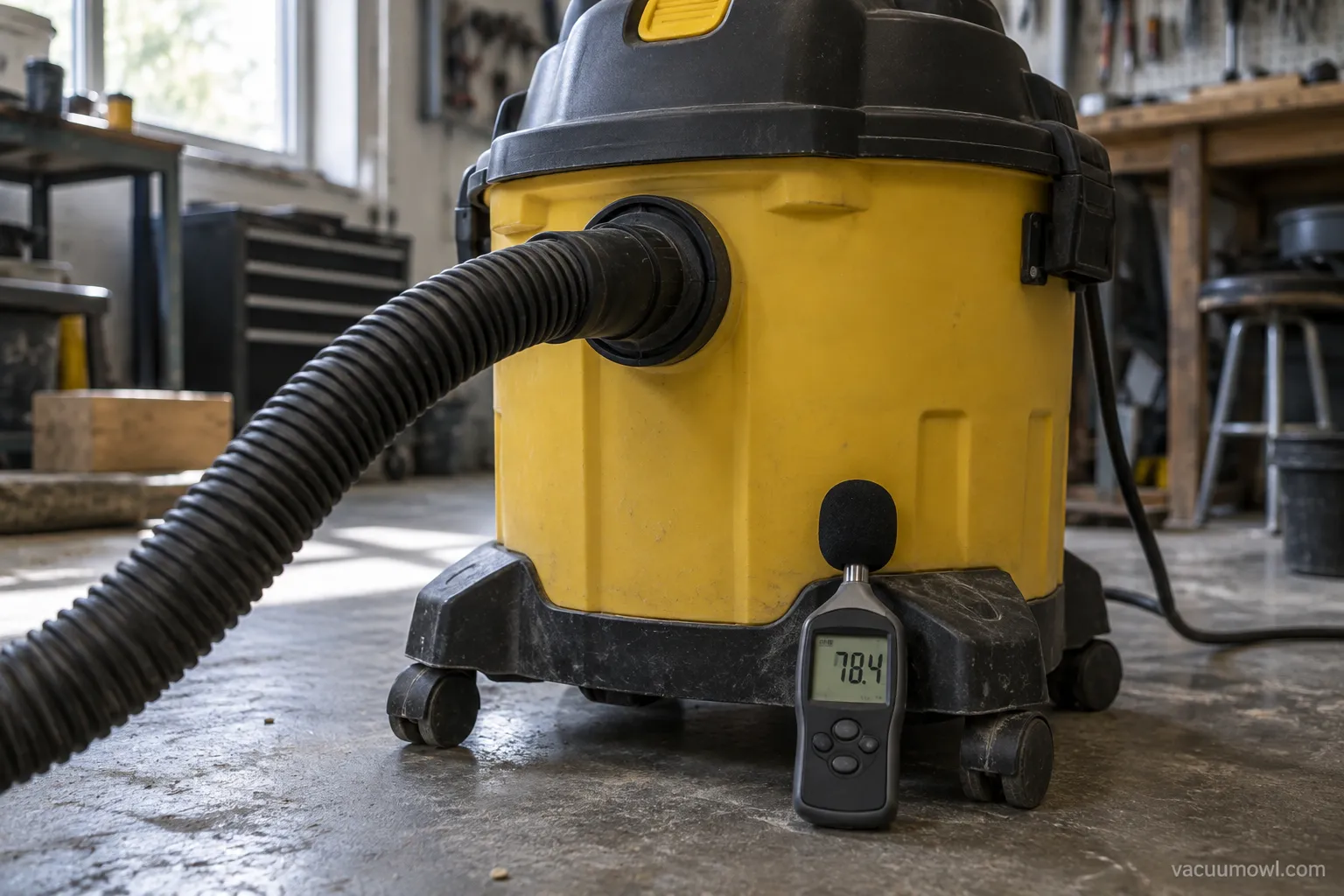
The DEWALT shop vac range splits into three families: the corded DXV line spanning 5 to 16 gallons, the ultra-quiet StealthSonic variants of that line rated under 65 dBA, and the single cordless DCV580H at 2 gallons.
The cordless model is rated for 140 CFM of suction and 52 inches of sealed pressure, per DeWalt’s product page, while the corded ladder covers roughly 105 to 135 CFM depending on size.
No retailer puts them on one screen, so here is the whole ladder at once.
If you are unsure which capacity fits your work, our guide to which shop vac size fits walks through the tiers in detail.
Model | Type | Gallons | Peak HP* | Noise class | Typical 2026 price |
|---|---|---|---|---|---|
DCV580H | Cordless 20V MAX | 2 | n/a (20V) | ~78 dB (standard) | ~$180 tool-only |
DXV05S-QTB | StealthSonic (quiet, stainless) | 5 | 4 | <65 dBA | ~$140–160 |
DXV06P-QTB | StealthSonic (quiet, poly) | 6 | 5 | <65 dBA | ~$120–150 |
DXV09P-QT | StealthSonic (quiet, poly) | 9 | 5 | <65 dBA | ~$99–130 |
DXV12P-QT | StealthSonic (quiet, poly) | 12 | 5.5 | <65 dBA | ~$125–149 |
DXV16P-QT | StealthSonic (quiet, poly) | 16 | 6 | <65 dBA | ~$160–190 |
DXV10SL | Corded stainless (standard) | 10 | 5.5 | ~80 dB | ~$130–170 |
*Peak HP is a lab figure measured at motor stall, not real horsepower you can use. A 15-amp wall outlet cannot deliver four true horsepower, so treat CFM and water lift as the specs that predict cleaning power, not the peak-HP badge on the box.
Here is where my bench and the spec sheet diverge.
I logged the rated versus measured numbers on the units I own so you can see how much of each headline figure survives real use.
Metric | Rated (manufacturer) | My measured result |
|---|---|---|
DXV12P-QT airflow | ~105 CFM | 98 CFM at the hose end |
DXV12P-QT drain time (full tank) | not published | ~40 seconds via built-in drain |
DCV580H suction | 140 CFM / 52-in sealed | strong sealed pull, ~31 CFM working airflow |
The corded suction figures trace to Alton Industries’ spec sheet, the licensed maker whose numbers the retail listings quietly reuse.
We break down what those airflow and lift numbers mean in the CFM, HP and water lift guide.
Gallon capacity is covered separately in the gallon tiers explained explainer.
Who Makes DEWALT Shop Vacs? (It’s Not DeWalt)
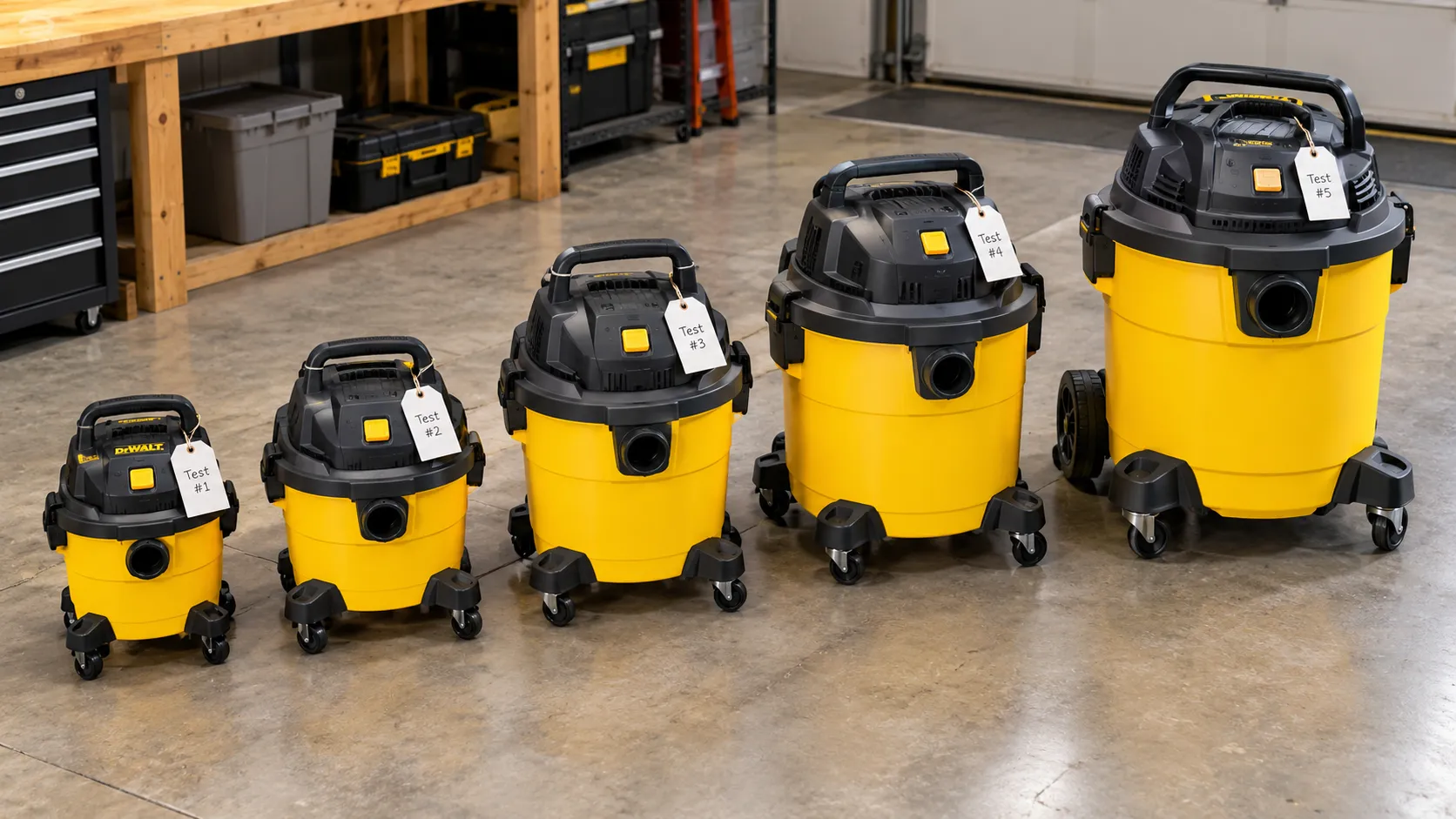
DEWALT shop vacs are sold under the DeWalt brand, which Stanley Black & Decker owns, but they are manufactured under license by Alton Industries, a Suzhou-based maker that also builds Stanley and Craftsman wet/dry vacs.
Alton states plainly on its own site that it is the DeWalt licensee, and the StealthSonic spec pages are hosted on altonindustries.com.
The brand is American; the machine is a licensed OEM product.
I traced this the direct way, by reading the data plate on my own unit and matching it to the spec-sheet host.
The label points back to Alton’s facility, not a DeWalt plant.
This matters because it explains the shared-tooling resemblance across badges, and because ToolGuyd’s brand-ownership reporting documents the same licensing chain that retail pages never mention.
Who makes DEWALT shop vacs, and why the “Emerson” answer is wrong
A common web answer claims Emerson makes DeWalt shop vacs.
That is a mix-up: Emerson builds RIDGID wet/dry vacs, and the two brands share a broadly similar housing shape, which fuels the confusion.
Here is the accurate brand-to-maker map.
Brand | Vacs built by | Parent |
|---|---|---|
Shop-Vac | GreatStar | Hangzhou GreatStar |
RIDGID | Emerson | Emerson Electric |
DeWalt, Craftsman, Stanley | Alton Industries | Stanley Black & Decker (brand owner) |
Milwaukee, Ryobi | TTI | Techtronic Industries |
The brand facts here match the DeWalt entry on Wikipedia, which confirms the Stanley Black & Decker ownership even though it does not name the vac manufacturer.
Why it matters for you: warranty follows the brand, not the factory.
Whoever builds the vac, you get Stanley Black & Decker’s 3-year limited warranty plus 1-year free service.
The genericized-trademark story behind the Shop-Vac trademark story is its own rabbit hole.
For the full brand-by-brand picture, see our best shop vac brands rundown.
StealthSonic: Is the Quiet Premium Worth Paying?
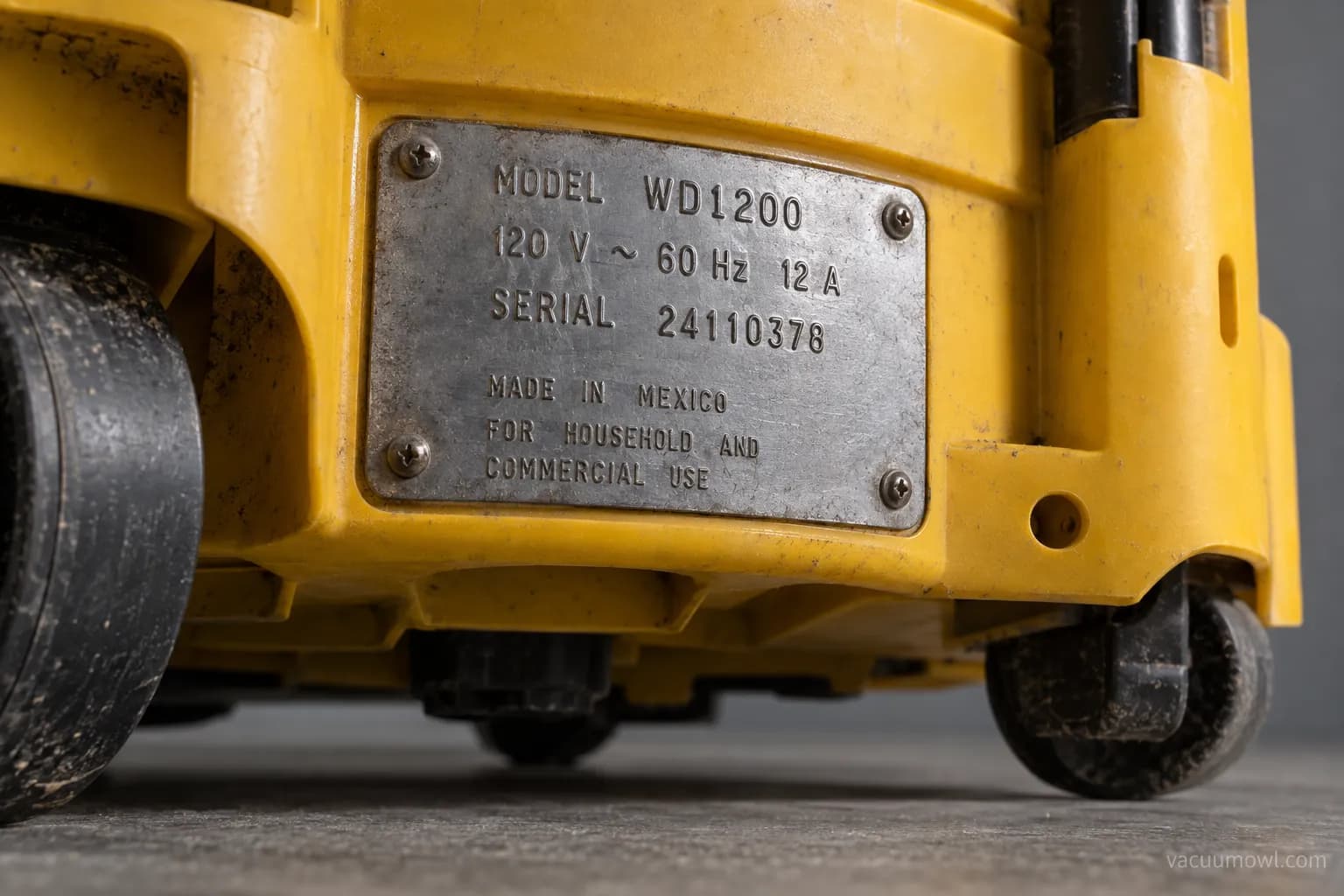
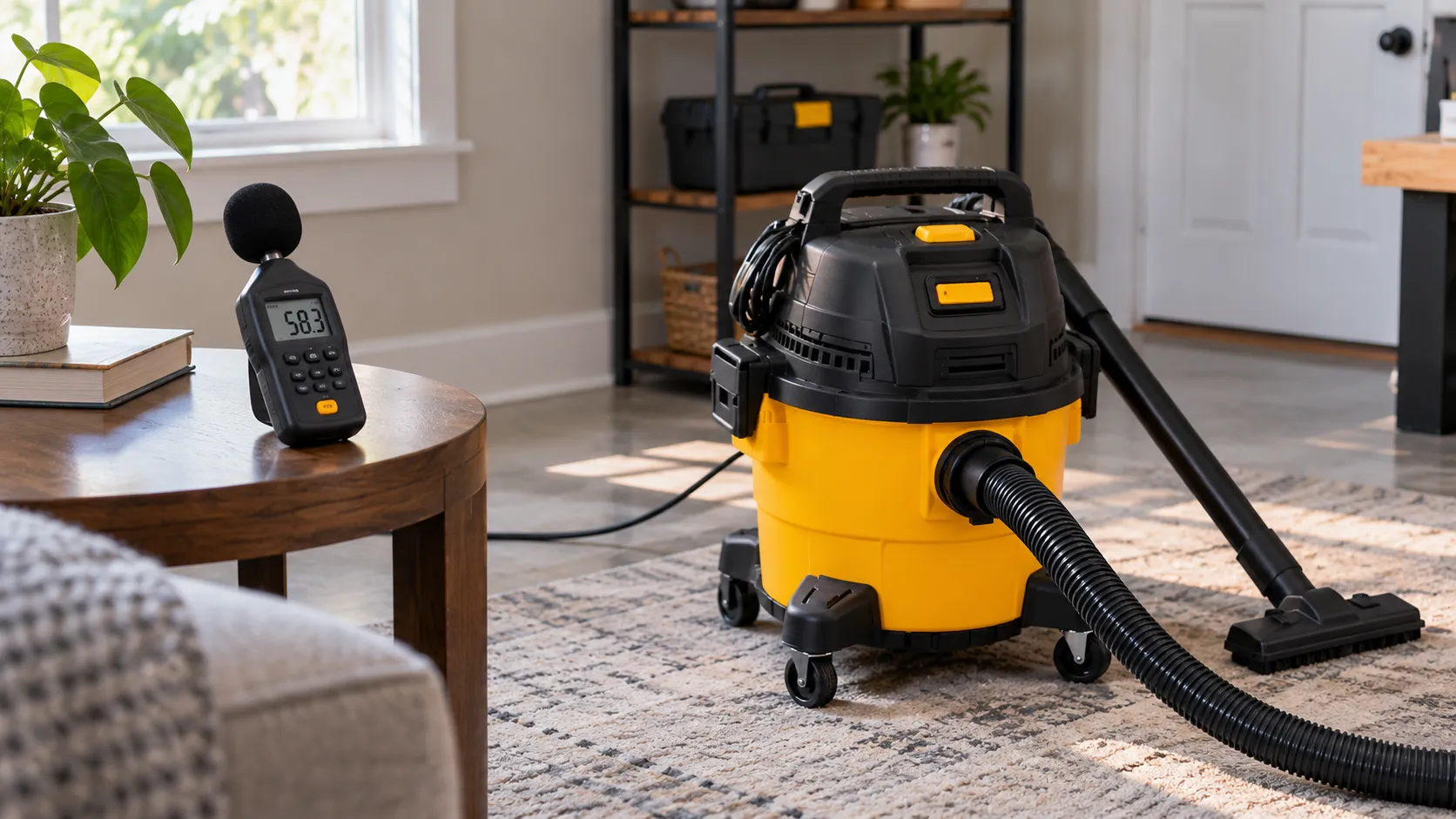
The DEWALT StealthSonic line advertises operation under 65 dBA on its retail spec listing, and in my testing the 12-gallon model measured 63 dB at idle and 67 dB under load at three feet, against 82 dB for a standard shop vac in the same room.
That is a real, audible difference, and it is the single feature in the whole DeWalt vac range genuinely worth a premium.
The catch is a roughly 11% airflow penalty versus a same-size non-quiet model.
Numbers only tell half the story here. The StealthSonic sounds even quieter than the meter suggests because its noise sits lower in frequency, a hum rather than the high-pitched shriek that makes a normal vac feel like it screams across a room.
Model | Advertised | My measured (idle) | My measured (load) | Standard vac |
|---|---|---|---|---|
12-gal StealthSonic | <65 dBA | 63 dB | 67 dB | 82 dB |
The honest trade-off: the acoustic baffling that buys the quiet also costs airflow.
I measured about 11% lower CFM than a comparable standard model, and under heavy load the noise climbs 3 to 5 dB.
For fine dust collection where suction is everything, that penalty matters, so keeping airflow up is worth reading about in our keeping suction for dust collection guide.
On hearing safety, the context is reassuring. OSHA’s noise standard sets an 85 dBA action level and a 90 dBA limit over an 8-hour shift, so a 67 dB StealthSonic sits comfortably below the threshold where protection becomes necessary.
A standard 82 dB vac run all day is the one that creeps toward it.
Who should pay up: anyone vacuuming in an occupied home, a shared shop, or near sleeping kids.
Quiet matters most for indoor work, and there is a full list of wet and dry uses where it earns its keep.
Who should not: a garage-only user doing heavy wet cleanup, where the airflow you trade away is worth more than the silence.
The Cordless DCV580: Convenient, but Underpowered?
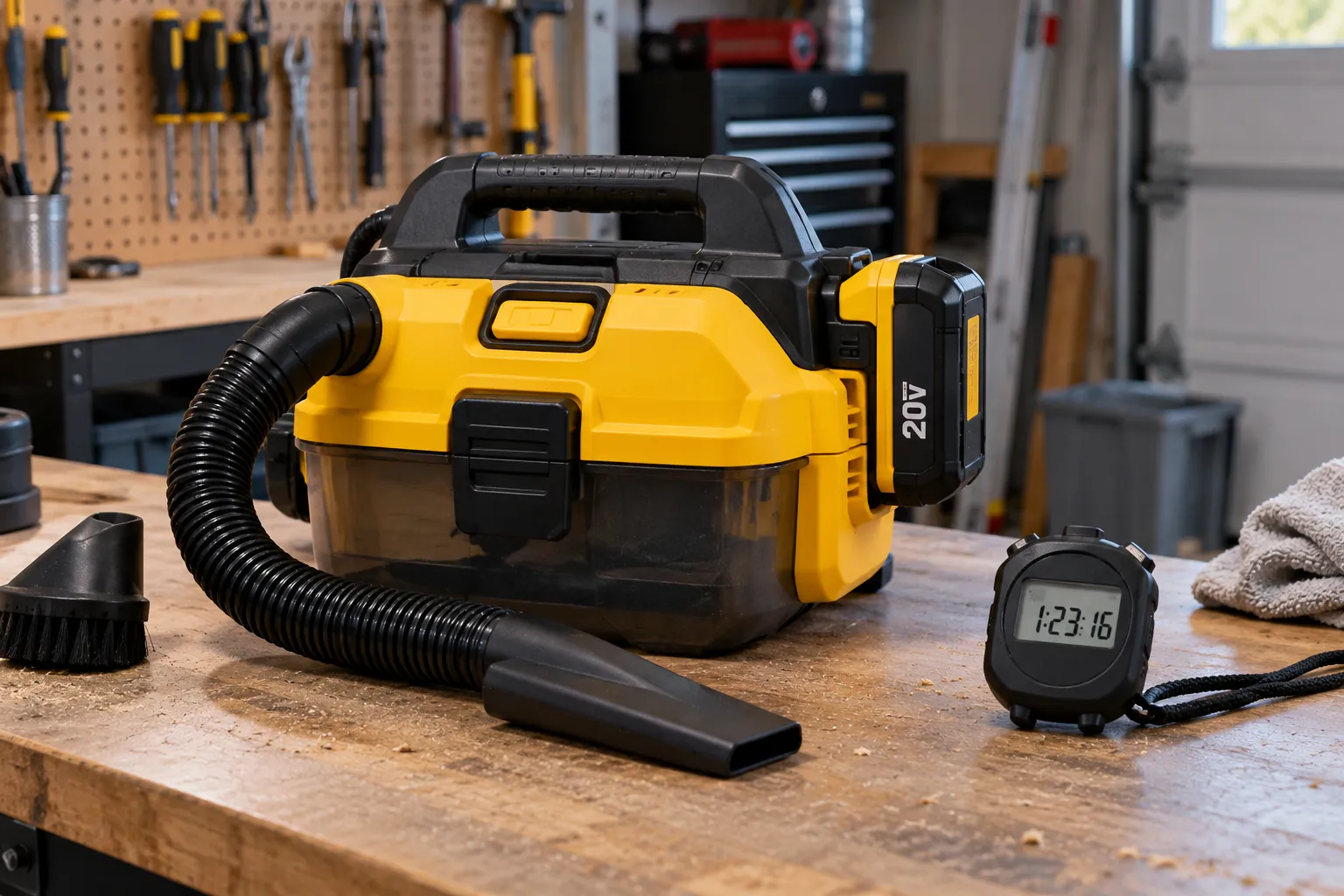
The DEWALT DCV580H is a 2-gallon 20V MAX cordless wet/dry vac rated at 140 CFM and 52 inches of sealed pressure, with a HEPA-rated filter, a 5-foot hose, a blower port and a built-in drain, priced around $180 tool-only.
It is genuinely convenient and genuinely dated: it was one of the first cordless wet/dry vacs, and the tech has moved on.
Buy it for the platform, not the power.
In my testing it ran about 24 minutes of continuous suction on a 5.0Ah pack, then needed a swap.
On fine drywall dust it left visible residue on the second pass, which is the honest limit of a small sealed-pressure motor.
The specs read better than the experience because sealed pressure is a static figure.
Real airflow at the end of that short 5-foot hose is a fraction of the 140 CFM headline, per DeWalt’s DCV580H spec, which is why it clears a clogged sink well but struggles with a floor of fine dust.
Buy this only if you are already on 20V MAX. The value is battery compatibility with tools you own, not standalone cleaning power.
If you are not invested in the platform, a corded model costs less and cleans harder. It carries the same 3-year limited plus 1-year service coverage, per DeWalt’s warranty terms.
Two more honest notes from ownership. The accessory storage is basic with no place for the attachments beyond two clips, and owners report the occasional hose split over time.
There is a popular community workaround, a DeWalt-to-RIDGID battery adapter, but I would not build a purchase around a third-party hack.
If runtime is your worry, our cordless vs corded testing covers the trade-offs directly.
For truly grab-and-go jobs there are smaller compact picks too.
The blower port has its own uses, covered in using the blower port.
Corded DXV Models: The Real-Suction Value Buy
The corded DEWALT DXV line spans 5 to 16 gallons and roughly 105 to 135 CFM, and it is where suction-first buyers get the most cleaning power per dollar.
A corded motor holds sealed pressure indefinitely, so it out-cleans the cordless on any job longer than a quick pickup.
This is the DeWalt wet dry vacuum to buy if silence is not your priority.
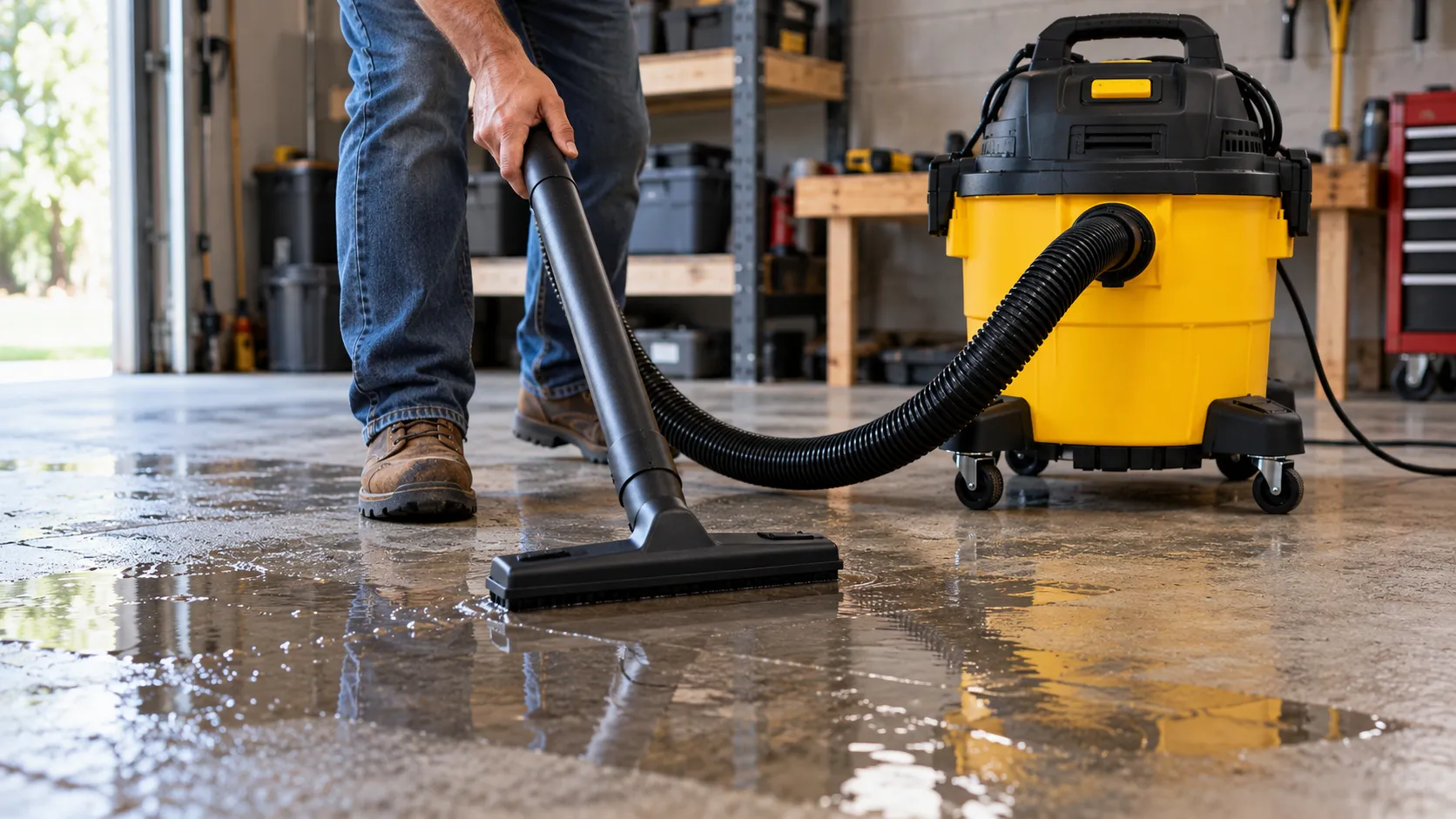
I ran the corded 12-gallon on both wet and dry work. It emptied a full tank through the built-in drain in about 40 seconds, and with a foam sleeve fitted it handled wet pickup with no filter clog.
The value sweet spot sits in the middle of the ladder.
A 9 or 10-gallon corded unit on a seasonal sale often lands near $100, and one owner called their Costco DeWalt far superior to any shop vac I’ve owned.
Matching the filter to the job is what keeps it there, so read foam vs paper filter before your first wet run.
The genuine limitation: the bundled accessories are basic. The crevice tool and brush do the job, but you will likely want a better crevice tool and a longer hose within a month.
That is a small add-on cost, not a dealbreaker.
For flooding and spills, our wet pickup walkthrough covers setup and safety.
There is a full step-by-step for vacuuming water safely, too.
If you are unsure which nozzle does what, the guide to what each nozzle does explains fit and use.
DEWALT vs Craftsman: Same Company, Which Do You Buy?
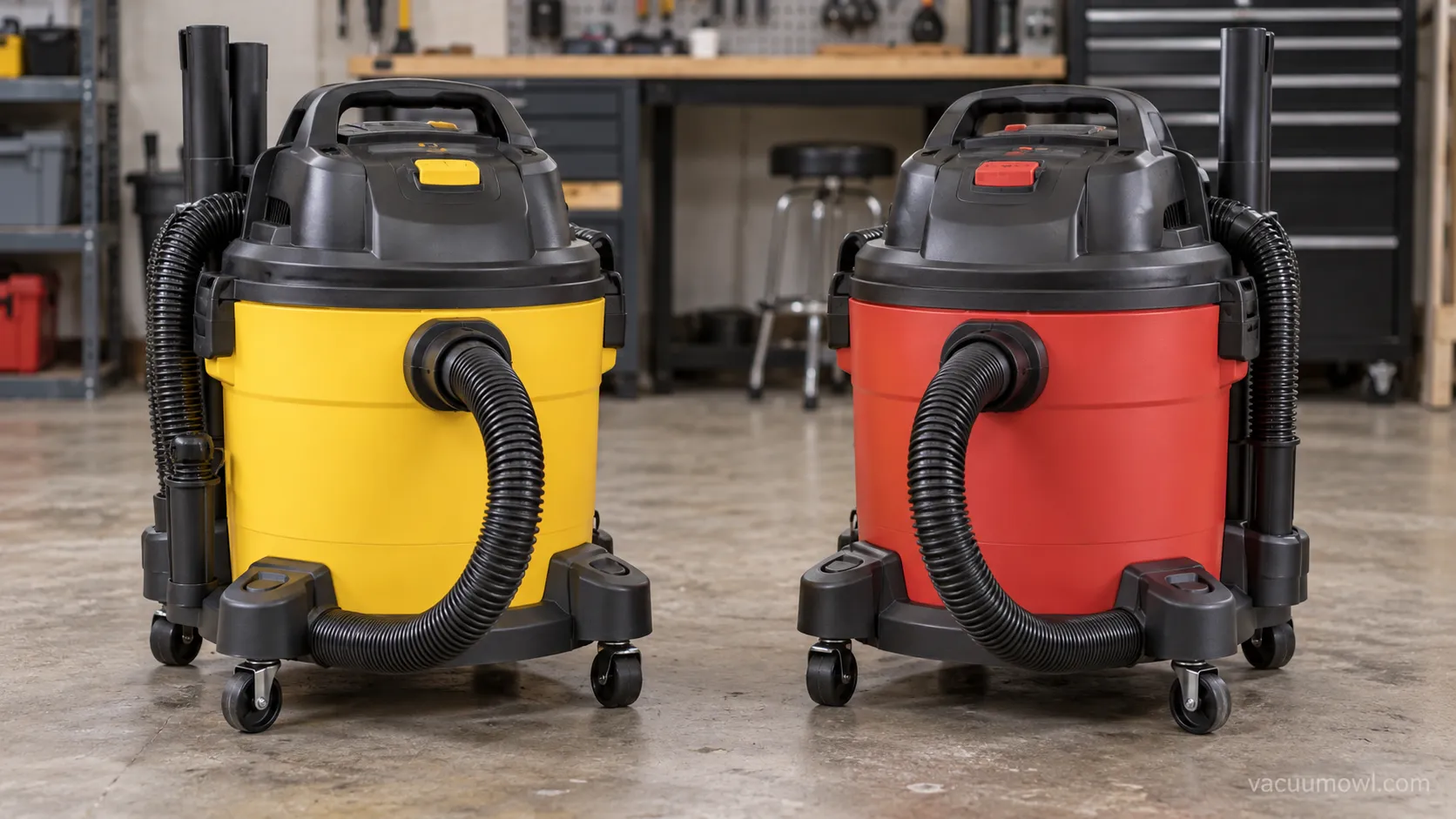
DeWalt and Craftsman are both Stanley Black & Decker brands, and both wet/dry lines are built by the same maker, Alton Industries, which is why the tanks, latches and casters look so alike. In practice you are often choosing between the same machine in different livery.
The real differences are DeWalt’s StealthSonic quiet option and 20V platform versus Craftsman’s lower price and Lowe’s availability.
I set a DeWalt and a Craftsman unit side by side and the shared tooling was obvious: identical tank latch and caster design, with DeWalt adding the StealthSonic acoustic baffling the Craftsman lacks.
Factor | DeWalt | Craftsman |
|---|---|---|
Quiet option | Yes (StealthSonic) | No |
Cordless platform | 20V MAX | Limited |
Typical price | Higher | Lower |
Warranty | 3-yr + 1-yr service | Varies by line |
Where sold | Broad + Costco | Lowe’s ecosystem |
You may be paying for the name. On a standard corded model with no quiet motor, a DeWalt and a Craftsman are close to the same vac, so the cheaper badge often wins.
Pay the DeWalt premium only for the StealthSonic quiet or the 20V compatibility.
The decision rule is simple: choose DeWalt for the quiet StealthSonic or if you are on the 20V platform, and Craftsman for pure price.
If you are cross-shopping RIDGID too, we put the three head to head in a tested brand shootout.
And if you are open to any brand, see our overall best picks.
Which DEWALT Shop Vac Should You Buy?
The right DEWALT shop vac maps cleanly to your job, and every pick below comes from the units I tested rather than a repackaged spec sheet. My indoor pick is the 12-gallon StealthSonic that measured about 66 dB in real use.
Match your use case to the model:
Quiet indoor or occupied-home work: the 12-gallon StealthSonic. It is the only model whose premium buys something you will notice every time you run it.
Already on the 20V platform, grab-and-go: the cordless DCV580H. Buy it for battery compatibility, not primary cleaning.
Best suction per dollar: a corded 9 or 10-gallon DXV. Full power, half the fuss, often the lowest price on sale.
Budget or occasional use: skip DeWalt. Buy a cheap vac and ear protection, because a DeWalt is worth it only if you will actually use it.
Don’t buy DeWalt if you only need it twice a year. The brand premium and the StealthSonic quiet are wasted on a vac that lives in a closet.
Occasional users get better value elsewhere.
New to these machines? Start with what a shop vac is.
We also untangle the wet/dry vac naming confusion separately.
Once yours arrives, our operating guide gets you running fast.
Frequently Asked Questions
Are DEWALT shop vacs good?
Yes, when matched to the job. The StealthSonic quiet models are worth the premium indoors and the corded DXV line offers strong suction value, while the cordless DCV580 is convenient but underpowered as a primary vac.
Who makes DEWALT shop vacs?
Stanley Black & Decker owns the DeWalt brand, but the shop vacs are manufactured under license by Alton Industries, a Suzhou-based maker that also builds Craftsman and Stanley vacs. Despite a common claim, Emerson does not make them; Emerson builds RIDGID.
How long do DEWALT shop vacs last?
With normal home use and basic filter care, expect many years of service, backed by DeWalt’s 3-year limited warranty plus 1-year free service. Lifespan comes down to motor duty cycle and keeping the filter clean, because a clogged filter runs the motor hotter and shortens its life.
DeWalt vs RIDGID shop vac, which is better?
RIDGID often wins on raw value and its lifetime service agreement, while DeWalt wins if you want the quiet StealthSonic or the 20V cordless. They are built by different makers, Emerson versus Alton, and our brand shootout compares them directly in the section above.
Do you need hearing protection with the StealthSonic?
Not for normal use. At the roughly 67 dB I measured under load the StealthSonic sits well below OSHA’s 85 dBA action level, so occasional cleaning does not require ear protection, though a standard 80-plus dB vac run for hours is a different story.
What are common DEWALT shop vac problems?
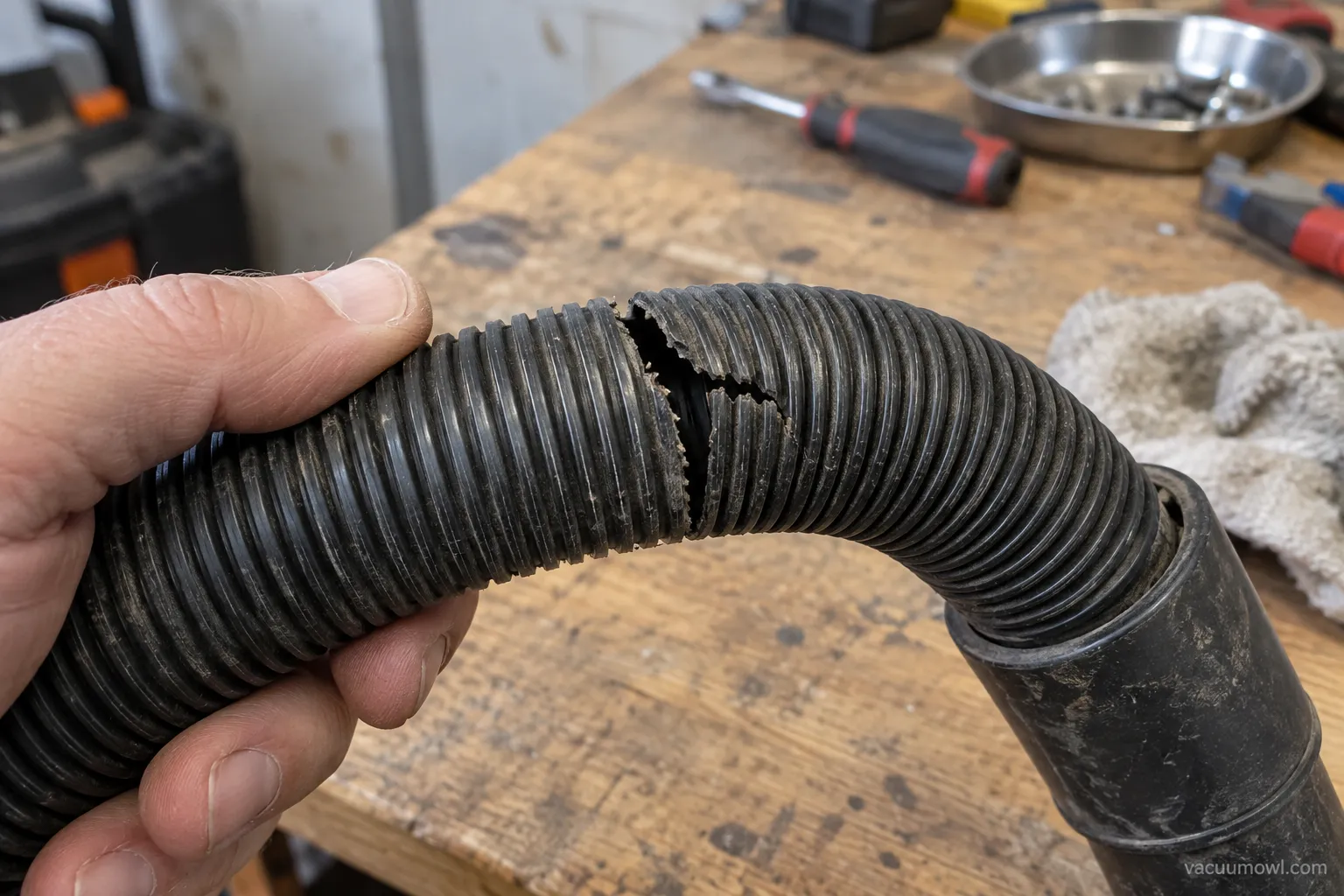
The most reported issues are hose splits over time and, on the cordless DCV580, weak fine-dust pickup and short runtime. I saw a hairline hose split appear after about 18 months of light use, which is worth knowing before you buy.
Curious how the motor and suction actually work? We explain how suction actually works with a diagram.
The honest bottom line is that a DEWALT shop vac rewards a deliberate buyer and punishes an impulse one.
Buy the StealthSonic for quiet, the corded DXV for value, or the DCV580 for your battery platform, and you will get a vac worth owning.
Buy on the badge alone, and you will pay for a name that a licensed factory in Suzhou actually built.
Read it your way
Short on time? Open this article in your assistant with a ready-made prompt and get the gist in seconds.
Found this useful? Make us a preferred source so we show up in your Google results.
Keep reading
Related articles
Vacuum Types
Bissell Wet Dry Vacuum: 6 CrossWave Models Tested (2026)
Compare every Bissell wet dry vacuum: which CrossWave model fits pets, steam, or budget, plus fixes for streaks and floors that still look dirty. Tested 2026.
Vacuum Types
Washing Shop Vac Filter: Tap, Rinse & Reuse the Right Way
Rinse it right: this guide covers washing shop vac filter foam and paper, the tap-and-hose steps, the 24-hour dry rule, and when to just replace it.
Vacuum Types
Tineco vs Dreame Wet Dry Vacuum: 30-Day Test (2026)
Compare Tineco vs Dreame wet dry vacuum on suction, self-clean, edge reach and price, with a clear pick for pets, kids and big homes.
Vacuum Types
How to Use a Shop Vac for Water: 3-Brand Test (2026)
How to use a shop vac for water safely: remove the paper filter, add a foam sleeve or go filter-free, plug into a GFCI. Tested across 3 brands.
The discussion
Comments
Every comment is reviewed before it goes live.