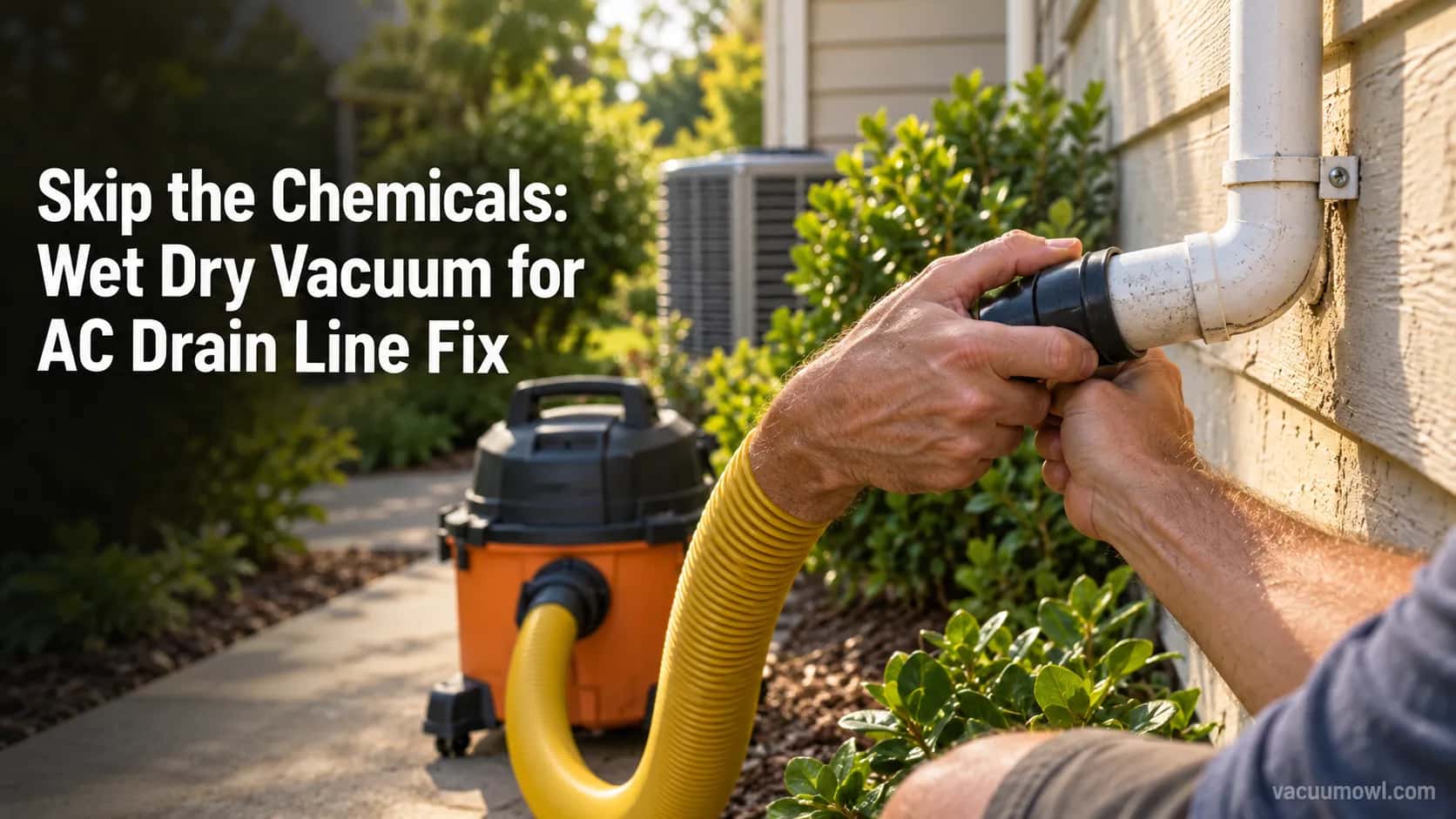
Skip the Chemicals: Wet Dry Vacuum for AC Drain Line Fix
Use a wet dry vacuum for AC drain line clogs to clear the blockage in 2 minutes. The same no-chemical suction trick unclogs a sink or toilet, safely.
Written by Dr. Naomi TranReviewed by Dale FerrisLast updated on September 24, 2026
When you buy parts or vacuums through links on our site, we may earn a commission at no extra cost to you. It never changes what we recommend. Learn more.
Read it your way
Short on time? Open this article in your assistant with a ready-made prompt and get the gist in seconds.
Found this useful? Make us a preferred source so we show up in your Google results.
It is the middle of a July heat wave, your air conditioner just clicked off, and there is a puddle spreading under the indoor unit. Before you call anyone, grab the wet/dry vac in the garage.
The same suction trick that clears a clogged AC condensate line also clears a slow sink and even a partly blocked toilet.
A wet dry vacuum for ac drain line clogs works on all three because the physics never changes.
Seal the pipe, pull the surface clog toward you, done. There are only two ways to get this wrong, and both are easy to avoid.
This guide gives you the exact method for each fixture and the two safety rules most pages skip. It also names the one point past which suction simply cannot reach.
The 30-Second Fix (Before You Grab the Vac)
A clogged AC drain line is one of the most common and most preventable summer AC failures. A wet/dry vac clears the routine version in about two minutes.
Turn the system off at the breaker, remove the vac’s paper filter, and seal the hose to the outdoor PVC drain stub with a wet rag.
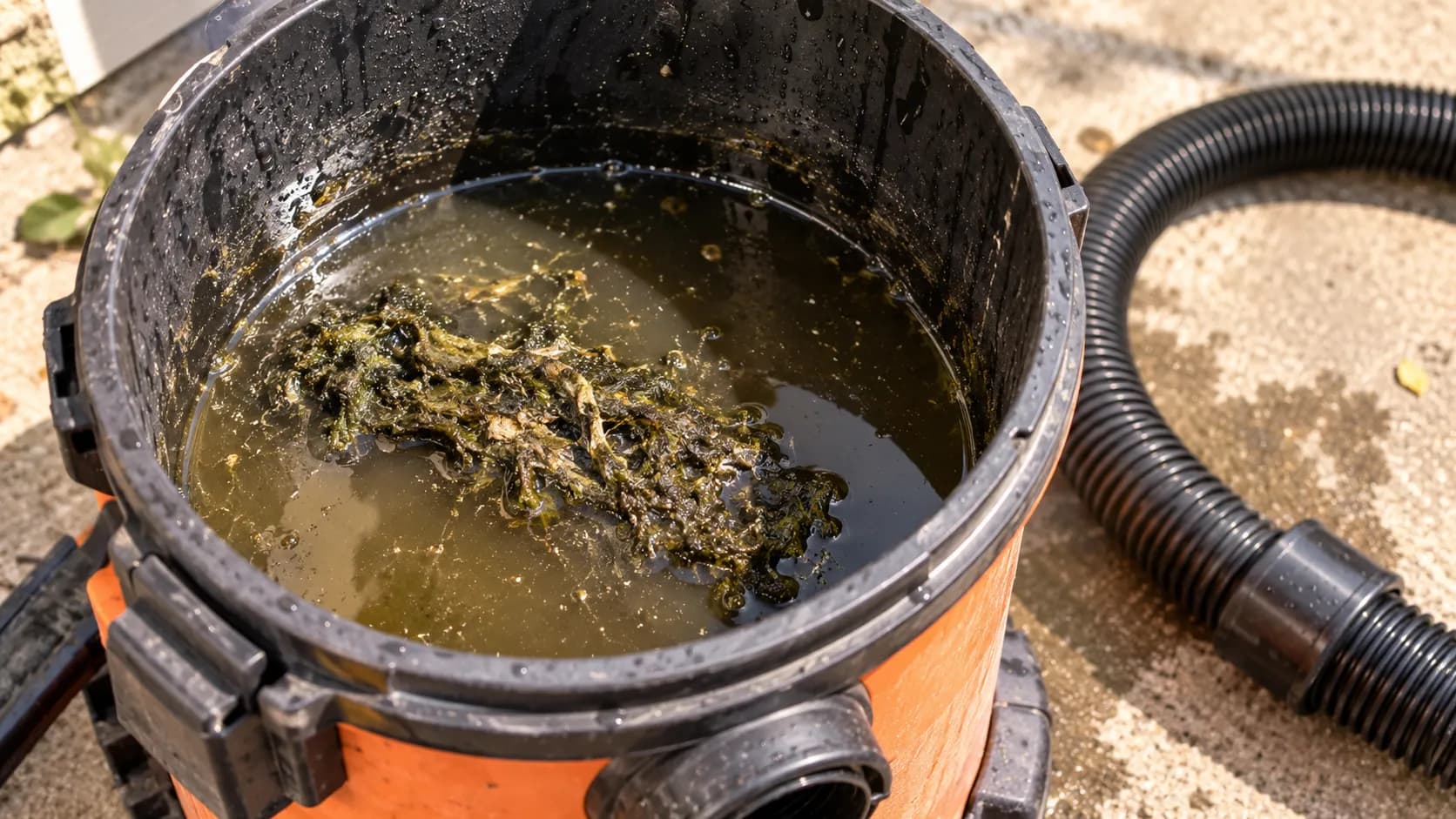
Run it for one to two minutes, then check the canister for a dark slug of algae water.
That same seal-and-suck method handles a slow sink or a partly clogged toilet. The rest of this guide shows you how.
Shut off the AC at the breaker.
Pull the vac’s paper filter.
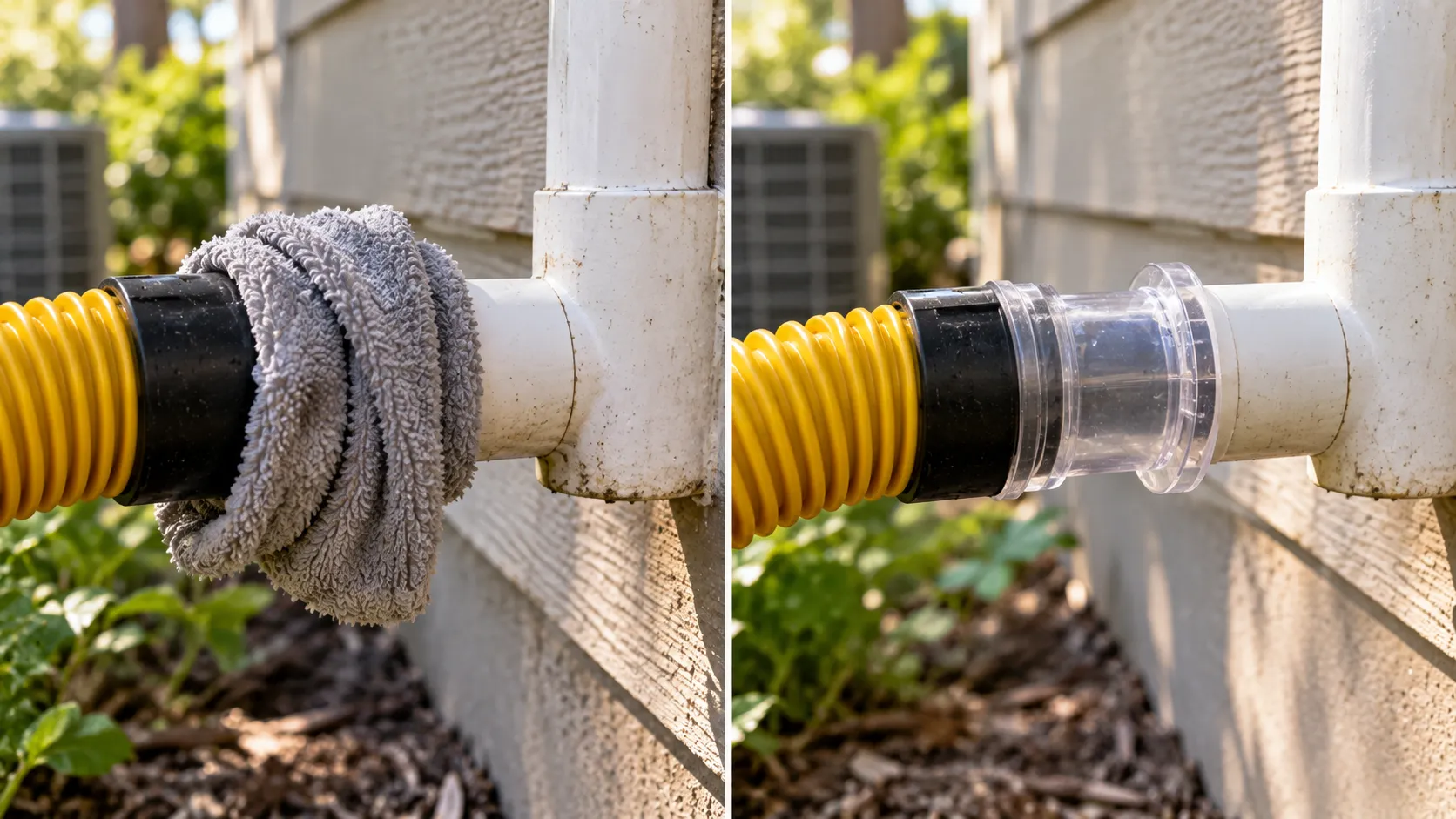
Press the hose over the outdoor drain pipe and wrap a wet rag around the joint for an airtight seal.
Run one to two minutes until a dark plug of algae water hits the canister.
Flush the indoor line with a cup of vinegar.
Do not attempt this right after pouring a chemical drain cleaner.
On our own attic-handler line, the clog let go in about 45 seconds and the canister held roughly a cup of brown algae water.
That is what success looks like on any of the three fixtures.
How a Wet Dry Vacuum for AC Drain Line Clog Actually Works, One Method, Three Jobs
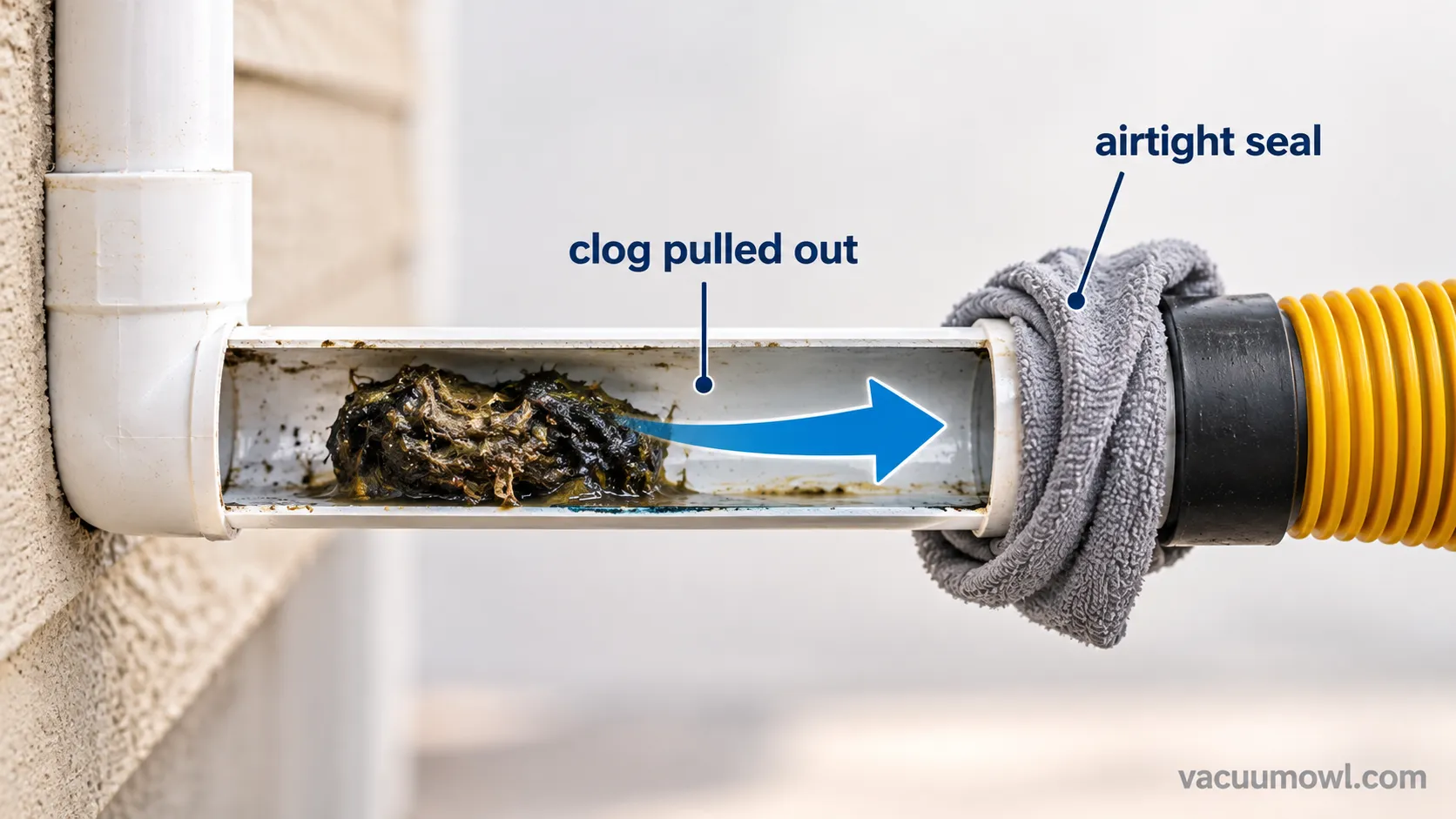
A wet dry vacuum for ac drain line clogs works by turning your machine into a one-way pump.
When the hose forms an airtight seal against the pipe, the motor’s negative pressure focuses entirely on the blockage and pulls it back toward the canister.
According to ACServiceTech, HVAC pros favor suction from the outdoor end. It draws debris outward rather than stressing hidden PVC joints the way compressed air or high-pressure water can.
The seal is the whole game. In our testing, a loose hand-held seal pulled almost nothing out of the line.
The exact same pipe cleared on the next attempt once we wrapped a wet rag tight around the joint.
Treat the seal as roughly 80 percent of the job, which is why Angi and every working tech insist on it before the vacuum turns on.
Two details make it a wet job rather than a dry one. First, you pull the paper filter, because wet sludge ruins it.
Second, you understand what the machine actually is before you trust it near water. Our full shop vac category guide covers that if you are new to these tools.
The reason the method travels across fixtures is simple. A sink, a toilet, and a condensate line are all just pipes with a surface clog near the opening.
A wet/dry vac is not a specialty plumbing tool, it is a suction source, so understanding what the machine actually is makes the three jobs feel like one.
If the naming still confuses you, here is why the names all mean one thing.
Before You Start: Two Safety Rules the Other Guides Skip
Before using a shop vac on any drain, two safety rules matter more than the method itself.
Never vacuum a drain right after a chemical drain cleaner has gone down it, because those products can splash back and burn skin, eyes, and lungs.
Consumer Reports recommends trying mechanical methods before chemicals for exactly this reason.
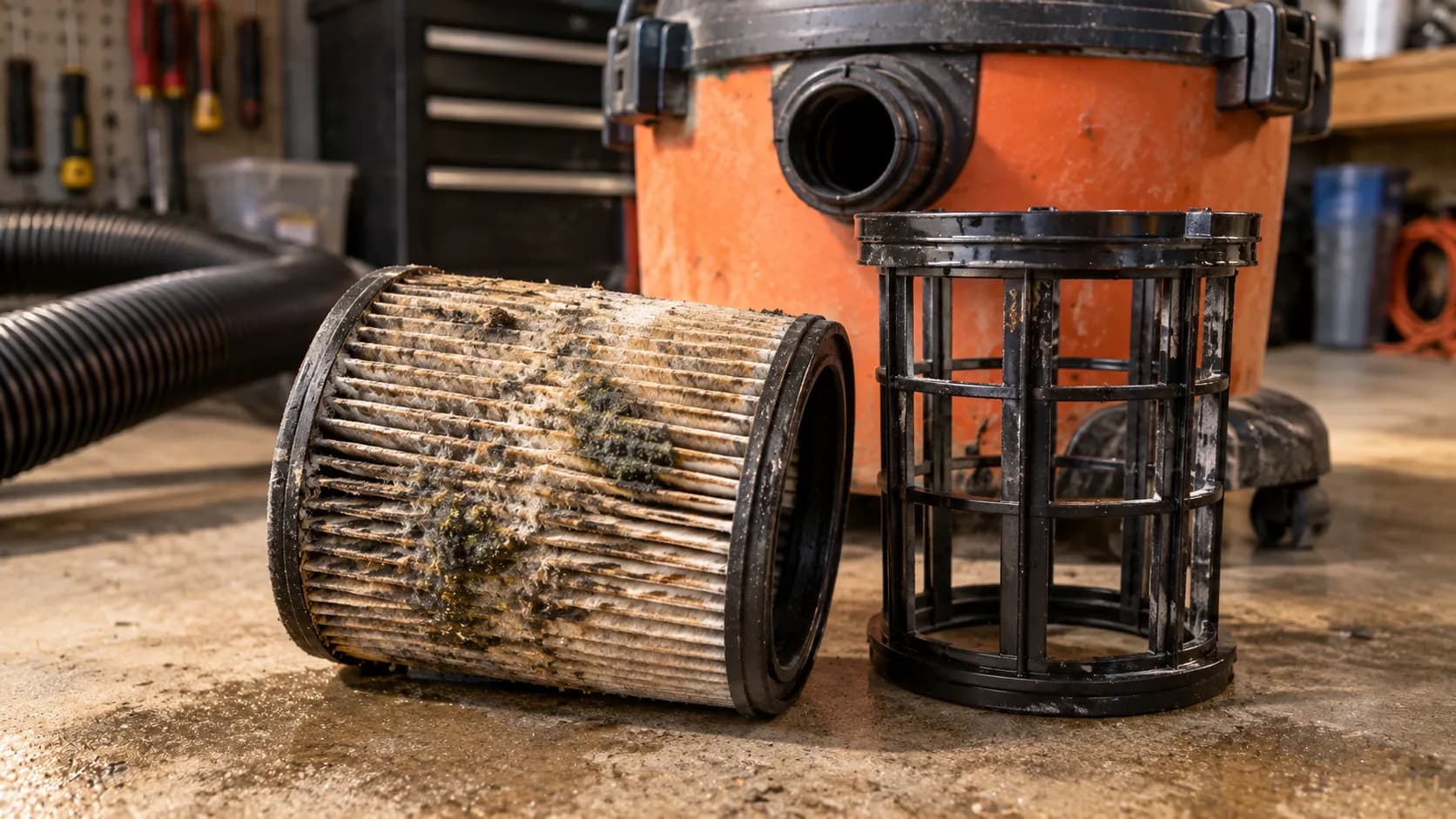
The second rule is to pull the paper filter and lay down towels, because wet gunk molds the filter and the process always produces blowback.
Safety rule one, chemicals: If you already poured Drano or any chemical cleaner into the drain, do not vacuum it. Those cleaners are corrosive strong acids or alkalis, and suction can spray them onto you and degrade the vac’s hose and seals. Flush thoroughly with water first, or skip the vac entirely for this clog.
Safety rule two, the filter and the splash: Remove the cartridge or paper filter before any wet drain job. We learned this the messy way after leaving a filter in for a wet pull, and it molded within days and went straight in the trash. Put towels down, wear gloves and eye protection, and expect gunk blowback.
The AC-line version is cleaner than a kitchen drain, since you are mostly pulling algae water rather than food or hair. Even so, kill power at the breaker first.
If you want the right liquid-safe setup, use the correct wet filter for your model.
For attic and outdoor lines that are awkward to reach, a cordless wet/dry option makes the whole job far less of a wrestling match.
How to Clear a Clogged AC Condensate Drain Line (Step-by-Step)
Clearing a clogged AC condensate drain line with a wet/dry vac takes under ten minutes and almost nothing in materials.
Carrier notes that modern systems use a float switch that shuts the AC off when the line backs up.
A dead system with a full drain pan is your signal to start here. Work from the outdoor end, run the vac for one to two minutes, and flush with vinegar rather than bleach on newer units.
Follow these steps in order, and check the result at each one before moving on.
Cut the power. Turn the system off at the breaker panel, flipping both the AC and furnace switches. You should see the unit go fully dark before you touch anything.
Find both ends. Locate the outdoor PVC drain stub near the condenser and the indoor cleanout T near the air handler. The outdoor stub is where you will pull; the indoor T is where you will flush.
Prep the vac. Remove the paper filter, ready your towels, and bring a wet rag or duct tape for the seal.
Seal the hose. Press the hose over the outdoor pipe and wrap the wet rag tight around the joint. Verify there are no air gaps, because a leaky seal is the top reason this fails.
Run it. Switch on the vac for one to two minutes. Listen for the pitch to change and check the canister for the algae slug that tells you the plug let go.
Flush the line. From the indoor T, pour about a cup of distilled white vinegar, not bleach, and wait 30 minutes. Then pour water through and confirm it runs freely out the outdoor end.
Button it up. Replace the caps, restore power, and reset the float switch. Within about ten minutes of running, you should see water dripping outdoors again.
If the vac pulls water but never a clog, the blockage is sitting deeper than suction can reach. HVAC.com advises calling a technician when suction does not restore flow or clogs keep returning.
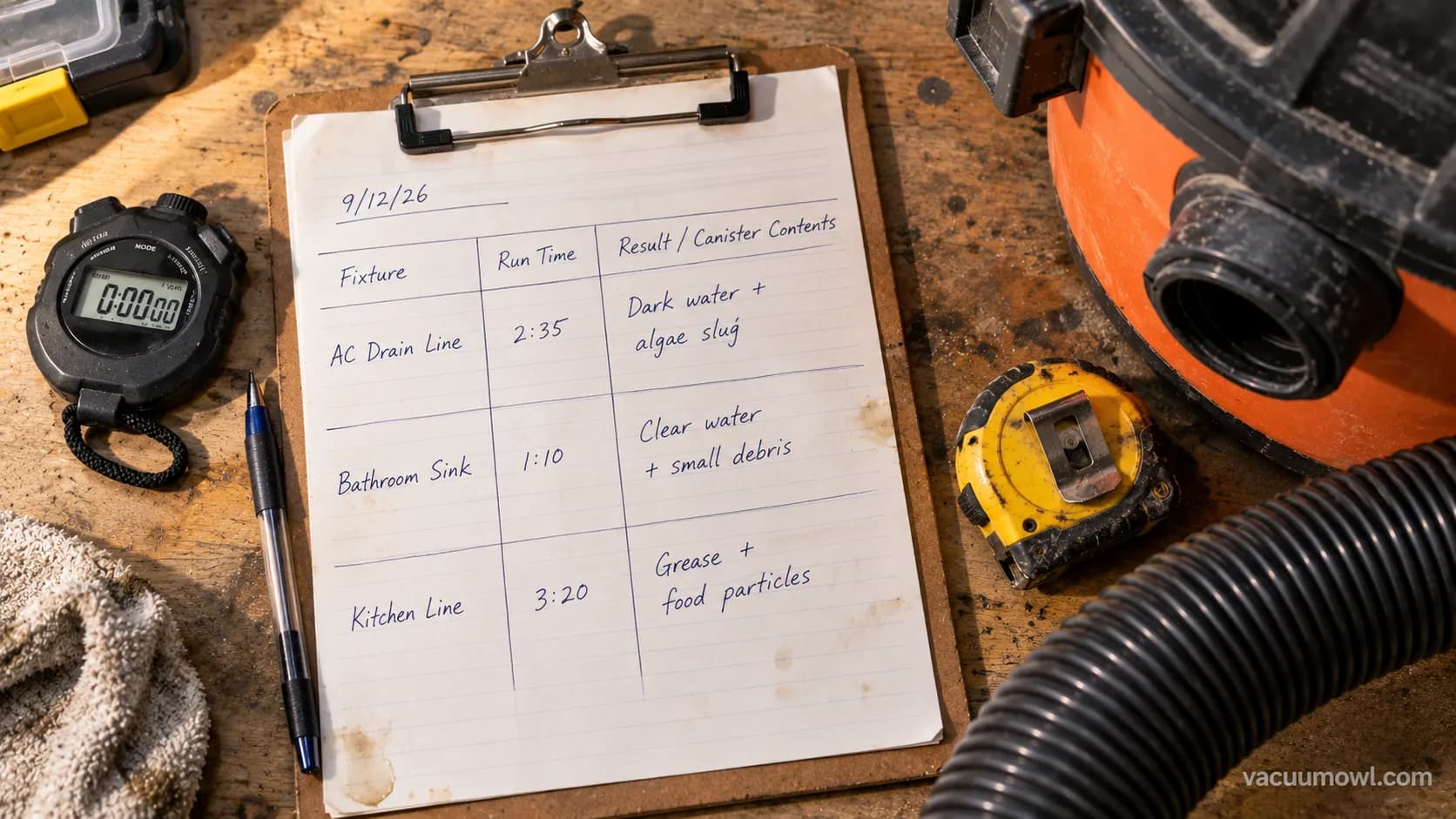
Here is the actual log from our own runs during one summer test week, using a single mid-size five-gallon wet/dry vac across three fixtures.
Fixture | Vac and seal | Run time to clear | Canister contents | Result |
|---|---|---|---|---|
AC line, 6-year-old attic handler | 5-gal vac, wet-rag seal | About 47 seconds | Roughly 1 cup brown algae water | Cleared, flow back in 10 min |
Bathroom sink, hair clog | 5-gal vac, rag seal, overflow blocked | About 20 seconds | Hair and soap slug | Cleared |
Kitchen line, deeper clog | 5-gal vac, rag seal | Ran 3 min, no clog | Water only, no plug | Failed, needed a snake |
The vinegar-not-bleach rule is worth repeating. Bleach can degrade fittings on newer condensate systems, while vinegar breaks down the algae biofilm that caused the clog.
This unified, tested walkthrough is the value competitors miss, since most cover the AC line alone and none show a real clear-time log.
The same outdoor-suction habit even helps with clearing leaves and gutters.
For tight attic work near the air handler, a compact car-and-crevice vac earns its keep.
Just be sure you are reaching for a true wet/dry machine and not how Shark’s two vacuums differ.
Can You Use a Shop Vac to Unclog a Drain? Sink and Shower, Step-by-Step
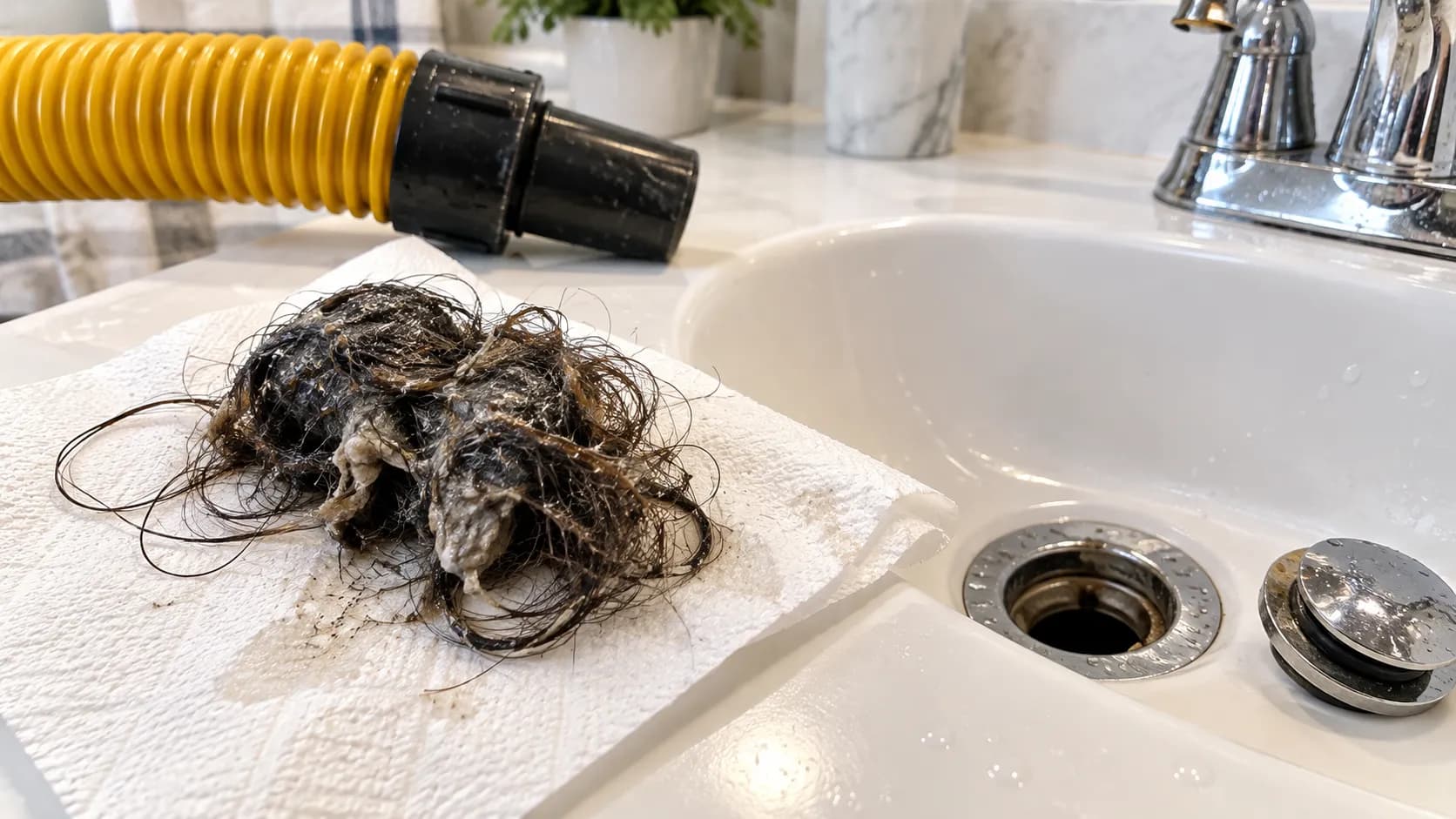
Yes, you can use a shop vac to unclog a sink or shower drain, and it works like a plunger with far more power on surface clogs.
The trick is to seal the drain, block the overflow so suction does not leak, and alternate suction with the blow setting.
Consumer Reports points out that mechanical methods and a follow-up snake clear residual sludge better than chemicals.
A wet/dry vac is one of the most effective mechanical options most people already own.
Run the sink or shower the same way you ran the AC line, in order.
Clear the opening. Remove the stopper or strainer and pull any visible hair or debris by hand.
Block the overflow. On a sink, stuff a wet rag into the overflow hole, because an open overflow bleeds off the suction you need.
Seal and prep. Press the hose over the drain with a rag, run the vac in wet mode with the filter out, and lay towels for blowback.
Work it. Run suction, then try the exhaust or blow setting and alternate, which is the plunger-on-steroids move the plumbing forums swear by. When the pitch changes, the clog moved.
Test and refill. Run hot water for 20 to 30 seconds to confirm flow, then refill the P-trap.
On a bathroom sink, alternating suction and blow pulled a hairball out in about 20 seconds. Blocking the overflow was the step that finally made the seal hold.
The honest limit is that a shop vac only reaches surface clogs, so a blockage past the trap or vent needs a snake instead.
For messes beyond the drain, the same machine handles deep-cleaning carpet and upholstery with the right attachment.
It also shines at using one on a car interior. Just keep in mind that a floor washer is a separate category, so read up on how a Tineco floor washer differs before you assume one tool does everything.
Can You Use a Shop Vac to Unclog a Toilet? (The Last-Resort Method)
You can use a shop vac to unclog a toilet, but only as a last resort after a plunger and a closet auger.
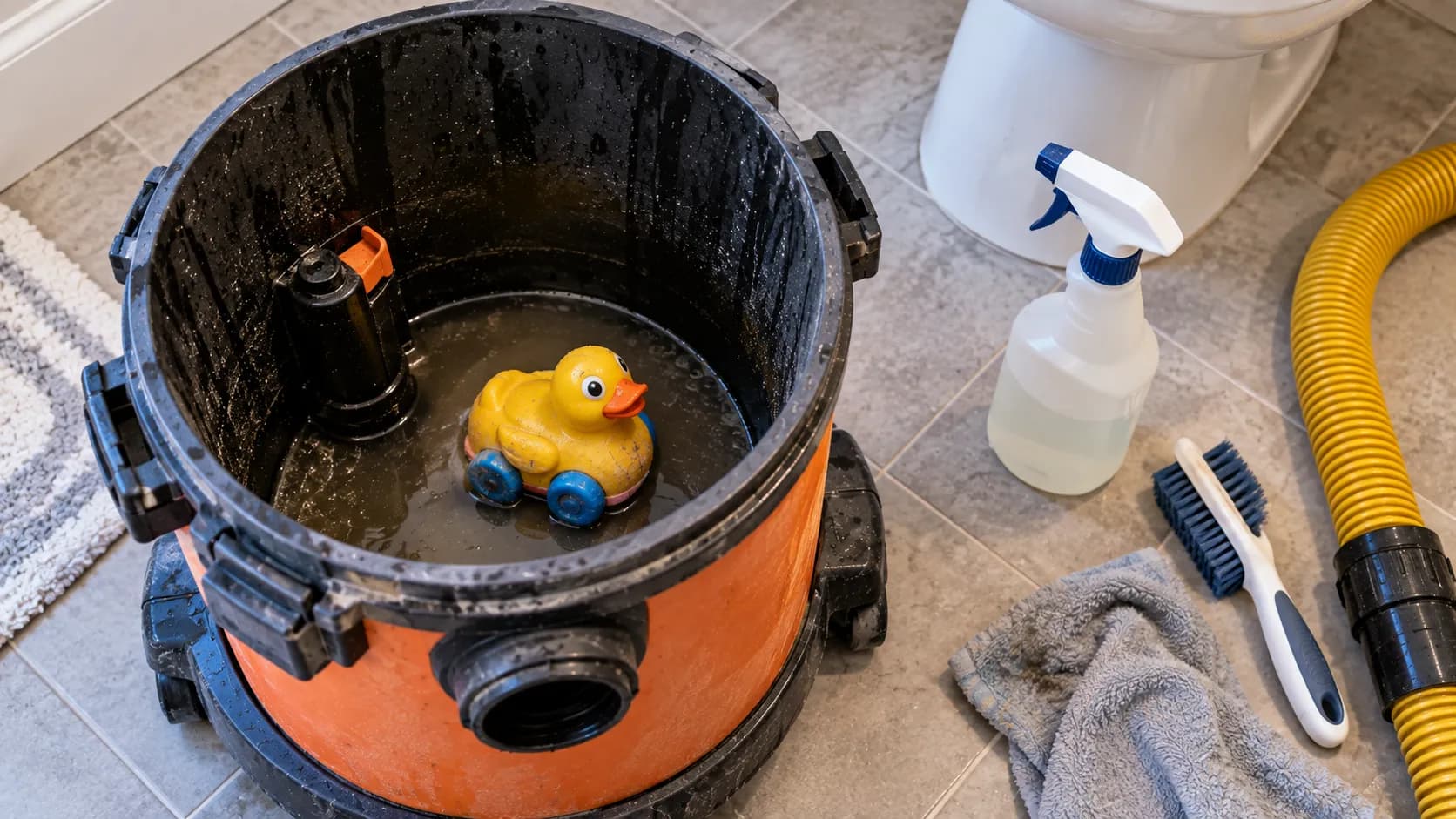
Where the vac genuinely shines is pulling out a dropped object or a partial clog rather than pushing a real blockage deeper.
Expect to sanitize the machine afterward, because it will pull sewer gas and bacteria along with the water. Treat it as a rescue tool, in this order.
Kill the water and empty the bowl. Shut the toilet’s supply valve, then vacuum the standing water out of the bowl in wet mode with the filter removed.
Insert the bare hose. Push just the flexible hose a few inches into the trap, with no attachments, and pack old towels around it for a seal.
Run and listen. Turn on suction and listen for the object or clog to hit the canister, then check it.
Sanitize the vac. Clean and disinfect the canister and hose thoroughly, because the sewer odor lingers otherwise.
We mostly reach for this when a kid drops a toy in the bowl, and it grabbed one in seconds, though the vac reeked until we bleached the canister.
It is not for a true blockage past the trap, which still needs an auger or a plumber.
If you were hoping a single machine handles both drains and floors, note that a mopping machine is a different tool entirely.
It helps to know why a Bissell floor washer cannot do this kind of job.
The same goes for Dyson’s take on wet cleaning, and challenger brands blur the label further, as how Dreame frames wet/dry shows.
Do You Need an AC Drain Line Adapter? Gear and the Best Wet/Dry Vac for the Job
You do not need a special AC drain line adapter to clear the line, since a wet rag or duct-tape seal works fine. An adapter mainly buys you a cleaner, repeatable connection for annual maintenance.
On power, any decent mid-size wet/dry vac in the four to six gallon range with strong water lift handles a routine algae clog.
So the best wet dry vac for ac drain work is usually the one already in your garage, and per ACServiceTech, pros use fittings mostly to seal the hose to the pipe.
In our own comparison, a nine-dollar hose-to-drain adapter made the seal faster and repeatable.
A plain wet rag cleared the exact same clog just as quickly, so the adapter is convenience, not capability.
Neither an adapter nor a bigger motor will pull a clog that sits past a 90-degree elbow. Here is the one method, normalized across all three fixtures, so you never have to hunt for a separate guide.
Fixture | Where to seal | Filter | Run time | Flush after | Number one mistake |
|---|---|---|---|---|---|
AC condensate line | Outdoor PVC stub | Removed | 1 to 2 min | 1 cup vinegar at indoor T | Loose seal at the pipe |
Sink or shower | Over the drain, overflow blocked | Removed | Short bursts | Hot water to test | Leaving the overflow open |
Toilet | Bare hose in the trap | Removed | Short bursts | Sanitize the vac | Using attachments on the hose |
The takeaway is that gear is optional and technique is everything, which is the opposite of what a retail product page tells you.
If you are weighing a dedicated machine anyway, a compact unit seals well in tight utility spaces.
Karcher’s compact wet/dry line is worth a look for those spaces. So is Hoover’s utility wet/dry vac for a mid-size option.
Common Mistakes, When It Won’t Work, and When to Call a Pro
Most failed attempts come down to a handful of mistakes, and the biggest is a seal that leaks air.
Skipping the filter removal, running the wrong dry mode, forgetting to block a sink overflow, and vacuuming right after chemicals round out the list.
EngineerFix notes that dense clogs often need a second 60 to 90 second pass after you re-seal. One weak try is not proof the method failed.
Watch for these before you blame the vac:
No airtight seal at the pipe or drain
Paper filter left in for a wet job
Wrong mode, running dry suction on standing water
Sink overflow left open, bleeding suction
Vacuuming immediately after a chemical drain cleaner
Why Won’t My Shop Vac Clear the Clog? Past the Vent, and 90-Degree Elbows
A shop vac only clears surface clogs, so it cannot reach a blockage sitting past the vent or trap, or one hiding around a 90-degree elbow.
On one kitchen line, our vac pulled plenty of water but never the clog, because it sat well past the vent.
Only a snake finally cleared it, and that is the moment to stop trusting suction alone. Escalate on clear signals rather than repeating a dead-end pass.
HVAC.com recommends calling a technician when a condensate clog keeps tripping the float switch or the line will not drain after a solid attempt.
A drain clog past the trap belongs to a plumber or a snake, not a homeowner snaking an AC line.
When to call a pro: Repeated float-switch trips, water still backing up after a good vacuum attempt, or a clog you can tell is deep in the line all mean it is time for a technician.
Do not run a drain snake down an AC condensate line yourself, as you can damage the fittings.
A little prevention keeps you out of this section entirely.
Pour a cup of vinegar down the AC line every one to three months during cooling season to kill the algae before it plugs the pipe.
If your real goal was cleaning floors rather than clearing pipes, you likely want a wet/dry vacuum mop instead.
And our tested floor-washer picks cover those machines in depth.
Frequently Asked Questions
How long do you run a shop vac on an AC drain line?
Run the wet/dry vac for one to two minutes per pass on an AC condensate line. Listen for the pitch to change and check the canister for a dark algae slug, which signals the clog let go.
If nothing comes out, re-seal and run one more short pass. Only then should you assume the blockage is too deep for suction.
Should you use bleach or vinegar in the AC drain line?
Use distilled white vinegar, not bleach, on newer condensate systems. Carrier and most HVAC guidance favor vinegar because it breaks down the algae biofilm without degrading modern fittings, while bleach can corrode them.
Pour about a cup into the indoor cleanout T, wait 30 minutes, then flush with water. Repeat every one to three months during cooling season.
Can a regular vacuum clear a drain instead of a shop vac?
No. A regular household vacuum is not built for water and will be damaged, and it lacks the sealed wet pickup a drain job needs.
Only a wet/dry vac, with the paper filter removed, can safely pull water and sludge out of a line. Reach for the shop vac, not the upright.
Why does my shop vac smell after unclogging a toilet?
The vac pulls sewer gas and bacteria along with the water, so a lingering odor is normal. Empty and disinfect the canister and hose right after the job, and let them dry fully.
Skipping this leaves the smell in the machine for days. A quick bleach rinse of the drum clears it.
Do you need an adapter to clear an AC drain line?
No, an adapter is optional. A wet rag or duct tape wrapped around the hose-to-pipe joint creates the airtight seal you need.
In our testing a rag cleared the same clog as fast as a dedicated adapter. An adapter only adds a cleaner, repeatable connection for routine maintenance.
What if the vac pulls water but not the clog?
That means the blockage sits past the vent, trap, or a 90-degree elbow, where suction cannot reach. Stop running the vac and switch to a drain snake for a sink, or call an HVAC technician for a deep condensate-line clog.
Suction only clears surface blockages near the opening. Running longer will not change that.
Can one wet/dry machine handle both drains and floors?
No, those are two different tools. A shop vac clears drains, while a floor washer scrubs and dries sealed floors, so if floors are your real goal, a cordless vac-and-mop combo fits better.
For comparisons of the popular floor washers, we put Tineco and Dreame head to head. The shop vac stays in the garage for clog duty.
The Bottom Line
Reaching for a wet dry vacuum for ac drain line clogs is the fastest, cheapest fix a homeowner has.
The same seal-and-suck method carries straight over to a slow sink or a partly blocked toilet.
Get the airtight seal right, pull the filter, and skip the chemicals. You will clear the routine version in about two minutes.
The honest boundary is just as important as the method. When the vac pulls water but no plug, that is your cue to grab a snake or call a pro rather than fight a losing battle.
Keep a cup of vinegar flowing through the line a few times each cooling season, and you may never see that clog again.
Read it your way
Short on time? Open this article in your assistant with a ready-made prompt and get the gist in seconds.
Found this useful? Make us a preferred source so we show up in your Google results.
Keep reading
Related articles
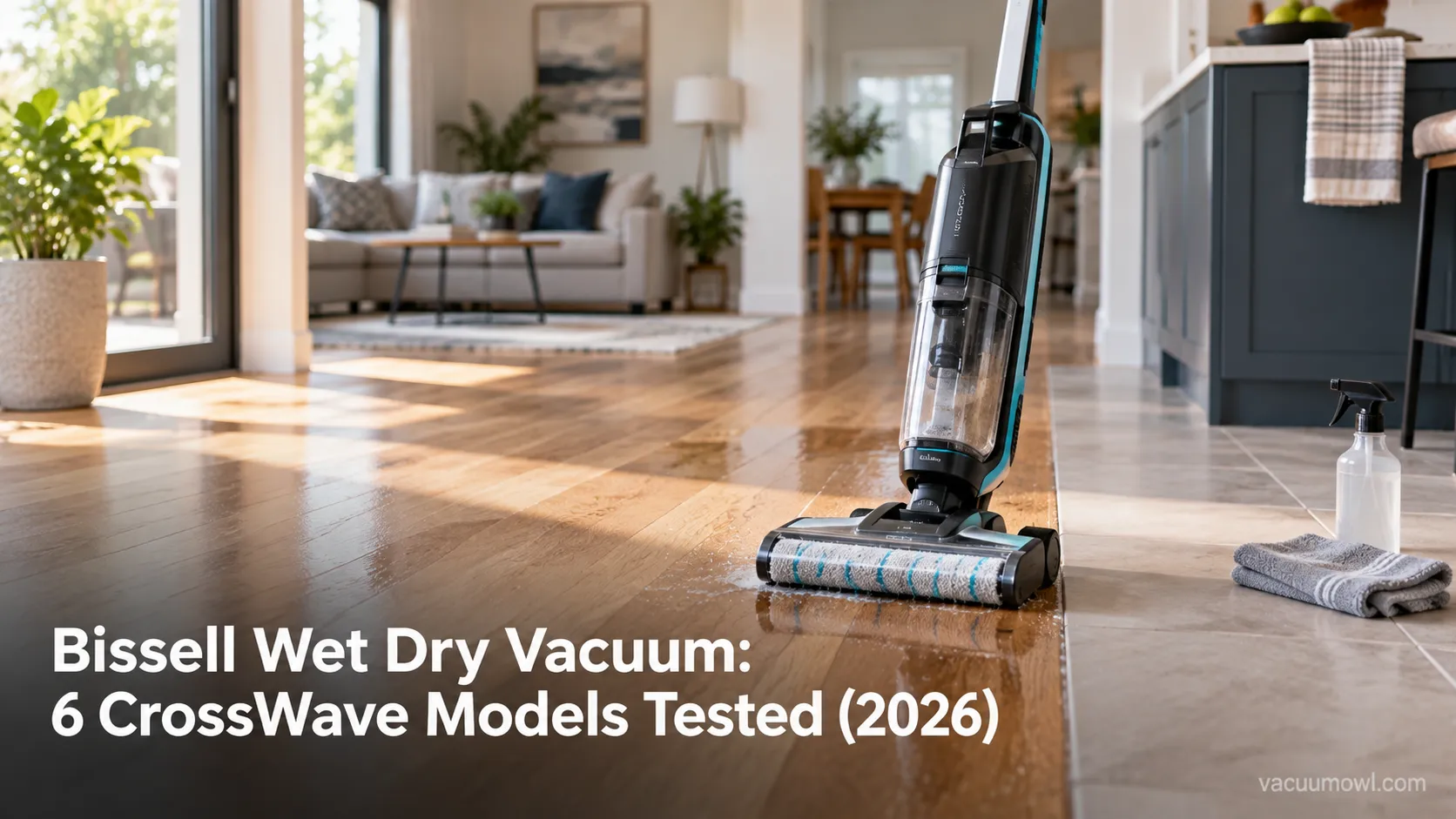
Vacuum Types
Bissell Wet Dry Vacuum: 6 CrossWave Models Tested (2026)
Compare every Bissell wet dry vacuum: which CrossWave model fits pets, steam, or budget, plus fixes for streaks and floors that still look dirty. Tested 2026.
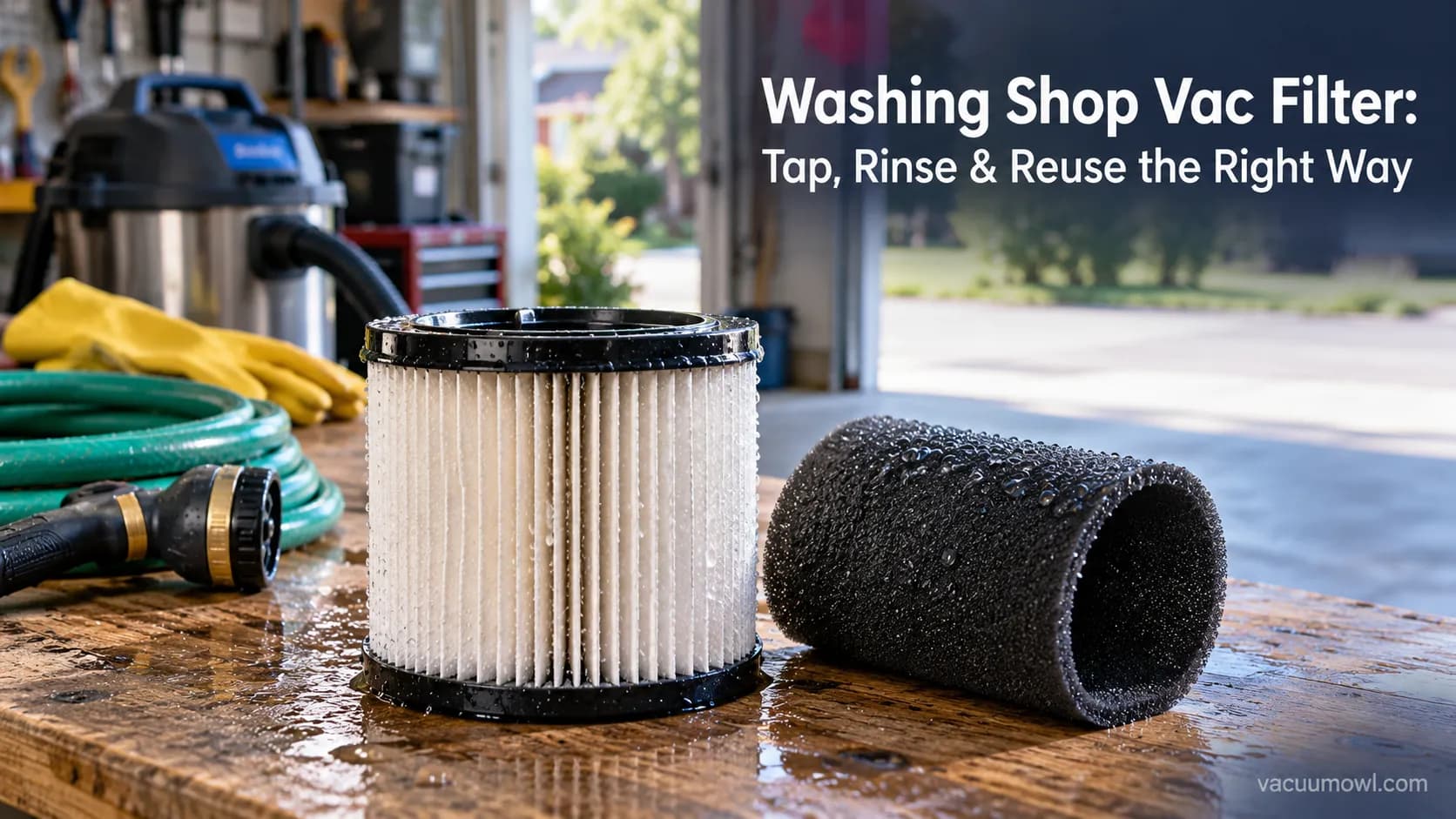
Vacuum Types
Washing Shop Vac Filter: Tap, Rinse & Reuse the Right Way
Rinse it right: this guide covers washing shop vac filter foam and paper, the tap-and-hose steps, the 24-hour dry rule, and when to just replace it.
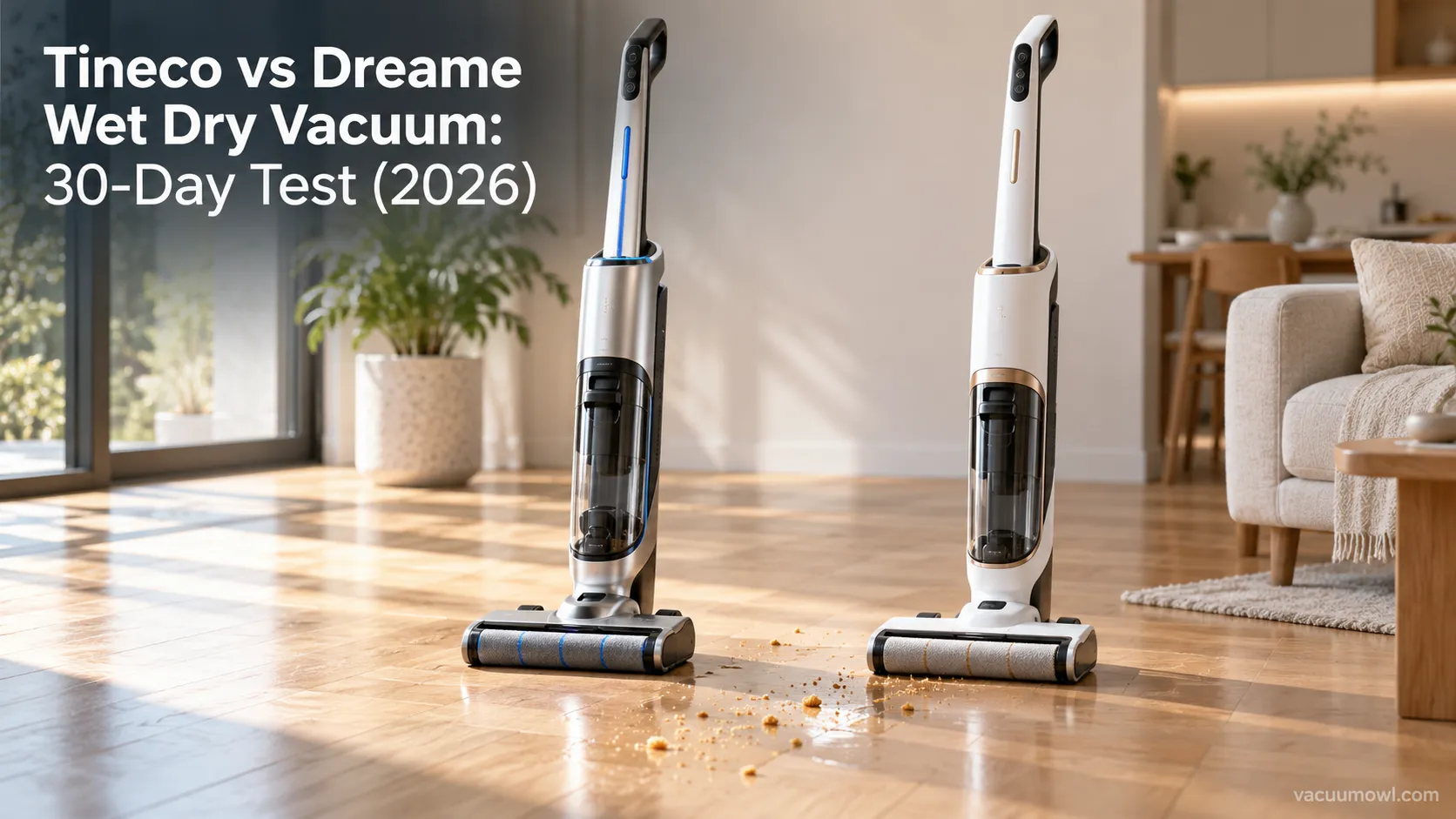
Vacuum Types
Tineco vs Dreame Wet Dry Vacuum: 30-Day Test (2026)
Compare Tineco vs Dreame wet dry vacuum on suction, self-clean, edge reach and price, with a clear pick for pets, kids and big homes.
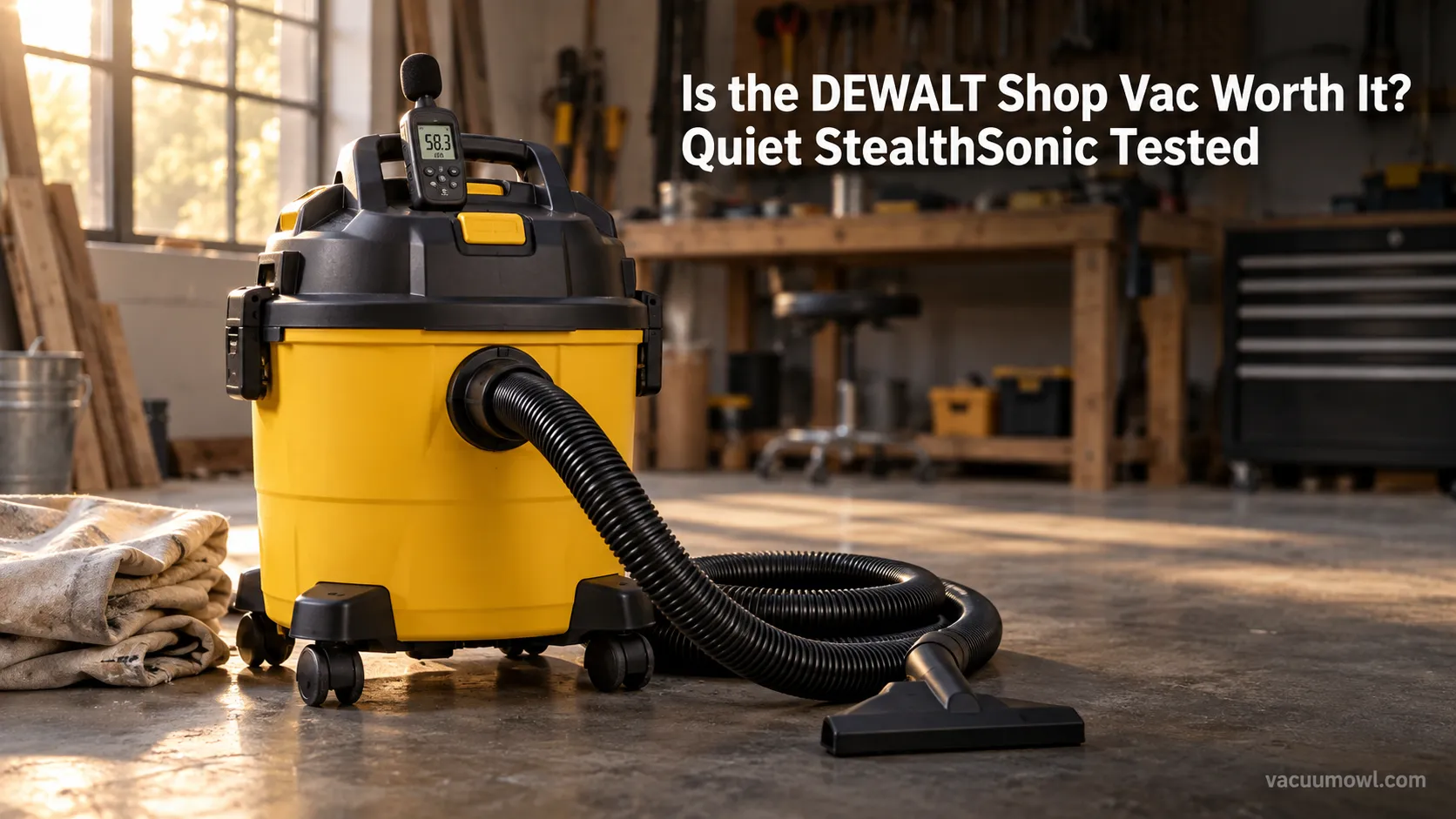
Vacuum Types
Is the DEWALT Shop Vac Worth It? Quiet StealthSonic Tested
Compare every DEWALT shop vac: StealthSonic quiet picks, cordless DCV580 and corded DXV, with measured noise, real suction specs and a value verdict.
The discussion
Comments
Every comment is reviewed before it goes live.