Wet or Dry Vacuum? Shop Vac vs Wet/Dry Vac (Same Thing)
Wondering wet or dry vacuum, shop vac, or wet/dry vac? They’re one machine. See the 4-term table, the one real exception, and which to buy.
Written by Dr. Naomi TranReviewed by Dale FerrisLast updated on September 24, 2026
When you buy parts or vacuums through links on our site, we may earn a commission at no extra cost to you. It never changes what we recommend. Learn more.
Read it your way
Short on time? Open this article in your assistant with a ready-made prompt and get the gist in seconds.
Found this useful? Make us a preferred source so we show up in your Google results.
If you have ever stood in a store aisle wondering whether you need a wet or dry vacuum, a shop vac, or a “wet/dry vac,” here is the short version: those are three names for the same machine.
The confusion is real, and it costs people money, because the same phrase now also gets slapped on a very different device.
This guide settles all of it in one place, with a plain table, the one real exception, and the exact term to search when you buy.
A wet or dry vacuum, a shop vac, and a wet/dry vac are three names for one machine: a canister vacuum that picks up both liquids and dry debris.
The only true exception is a dedicated wet-only vacuum, which recovers liquids alone.
A cordless “floor washer” now sold as a “wet/dry vacuum” is a separate machine that vacuums and mops hard floors.
The 30-Second Answer: Shop Vac and Wet/Dry Vac Are the Same Thing
A wet or dry vacuum, shop vac, and wet/dry vac describe the same tool: a heavy-duty canister vacuum that lifts both water and dry mess.
The Wikipedia entry for the category treats “shop-vac” and “wet/dry vacuum” as the same machine, and every major retailer lists them interchangeably. Only two things break the pattern.
A dedicated wet-only vacuum handles liquids and nothing else, and a modern cordless floor washer is a different appliance that borrowed the “wet/dry” name to sell itself.
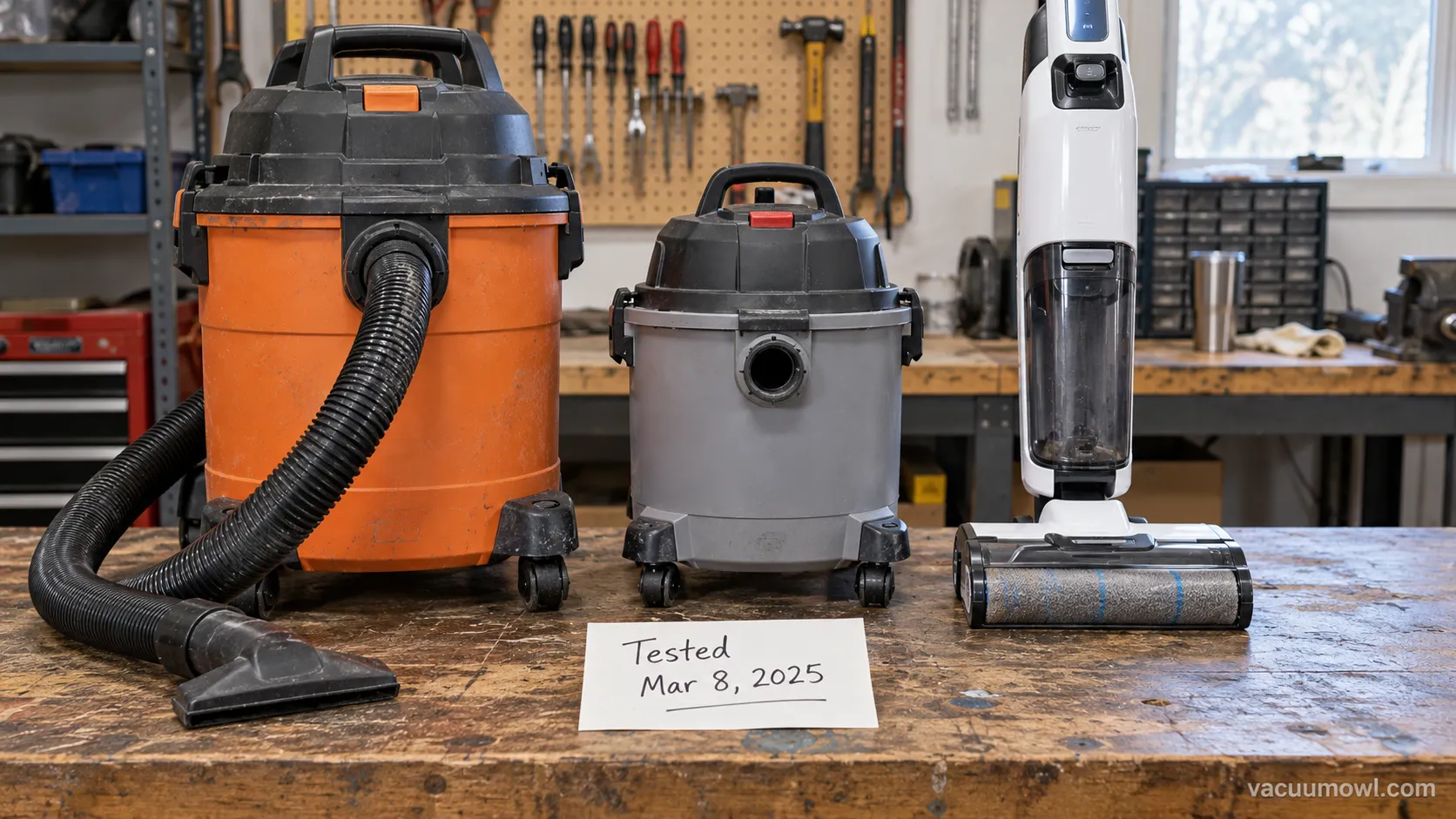
When I lined up a shop vac, a dedicated wet-only vac, and a cordless floor washer on the bench, only two of the three actually did both jobs. That single test frames the whole article.
Shop Vac vs Wet/Dry Vac: Are They Actually the Same?
Shop vac and wet/dry vac are the same machine, and the reason there are two names is a branding story, not an engineering one. “Shop-Vac” started as a company, and the name slid into everyday use the way “Kleenex” did for tissues.
The category itself, per the Shop-Vac reference entry, was built around one idea in 1953: a vacuum tough enough to swallow wood chips and metal shavings a household machine would choke on.
The word became generic, but the trademark never stopped being a trademark. “SHOP-VAC” is still a live registered mark on the USPTO trademark record, which is why the brand and the generic word can coexist in the same search.
Here is the part the retail pages skip.
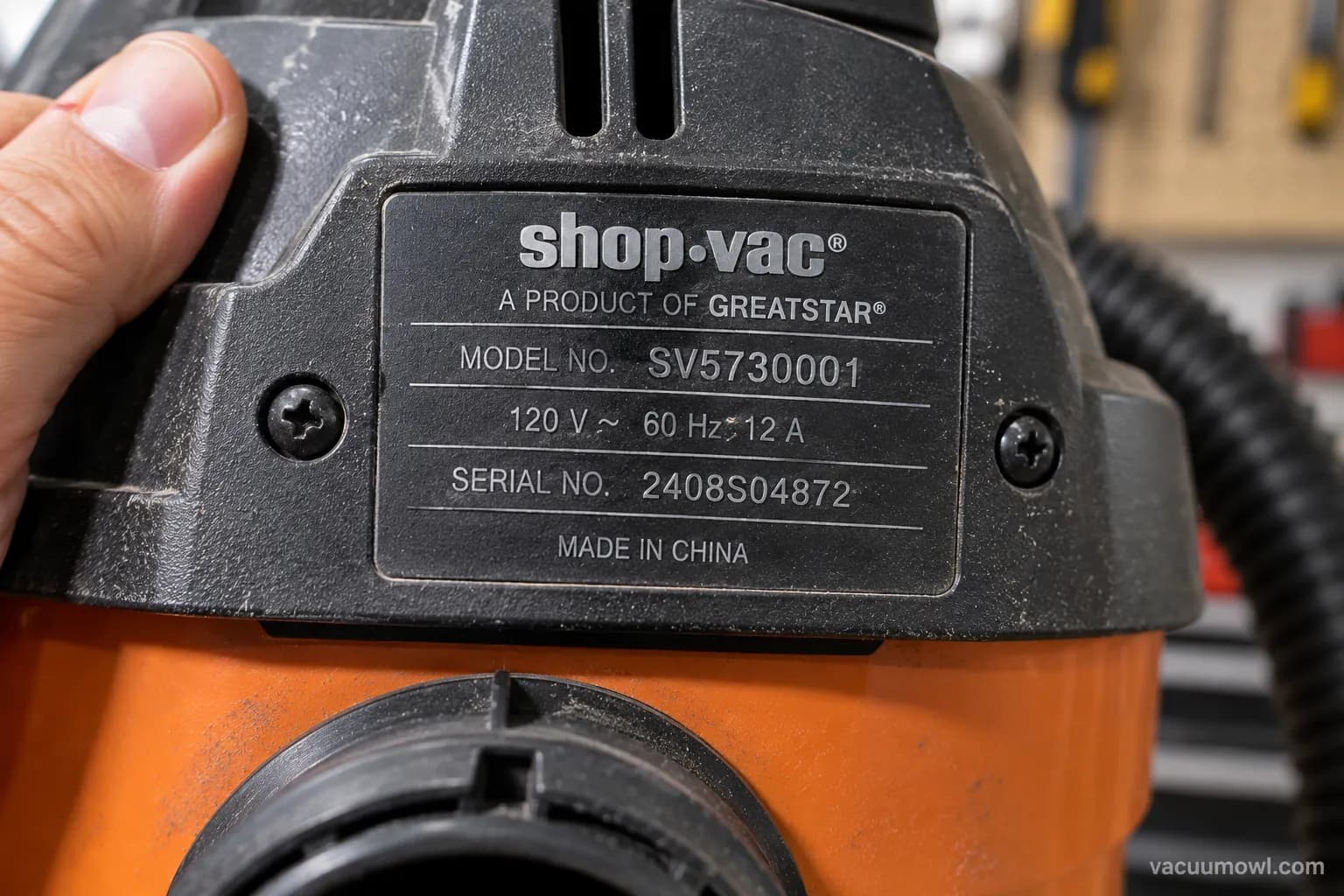
The original company abruptly shut down in September 2020, and its assets were acquired that December by GreatStar Tools USA, according to the company acquisition release.
Production later shifted largely to China, and you can spot a post-2021 unit from its “SV” model-number prefix.
The test unit on our bench is one of those GreatStar-era machines, and I confirmed it straight off the data plate.
Brand versus word: “Shop-Vac” the company is a specific brand you can buy.
“Shop vac” the phrase is the whole category. Searching the lowercase phrase returns dozens of makers, not just the trademark holder.
For the ground-up primer, our companion piece on how a shop vacuum actually works covers the motor and the tank in detail.
If you want the machine defined from scratch, we also break down what the machine does and its types.
Whether one can stand in for your everyday cleaner is a different question, and we answer it in our look at replacing your everyday household vacuum.
Shop Vac vs Wet/Dry Vac vs Wet Vac vs Floor Washer
The four terms buyers mix up are shop vac, wet/dry vac, wet-only vac, and floor washer, and only a labeled side-by-side makes the differences obvious.
Industry buying guides such as Sylvane’s vacuum breakdown confirm that wet-only, dry-only, and wet/dry are genuinely distinct machine types.
The table below adds the two pieces those guides leave out: the modern floor washer that stole the “wet/dry” label, and a plain best-for column so you can place any product you see.
Machine | What it is | Vacuums dry debris? | Picks up water? | Mops or scrubs? | Typical price | Best for |
|---|---|---|---|---|---|---|
Shop vac / wet/dry vac | Heavy-duty canister on wheels | Yes | Yes, with the wet setup | No | $60 to $200 | Garage, workshop, car, flood cleanup |
Wet-only vac | Liquid recovery unit | No | Yes | No | $150 to $500 | Water damage, extraction jobs |
Floor washer (wet/dry vacuum mop) | Cordless upright, clean-water tank | Light debris only | Yes, into a dirty tank | Yes | $250 to $650 | Daily hard-floor kitchen and spill cleaning |
Dry-only vacuum | Standard household vacuum | Yes | No | $80 to $500 | Carpets, rugs, everyday dust |
“Wet vac” is the loose one. Nine times out of ten it just means a shop vac, but occasionally someone uses it for a true wet-only machine, which is the exception the next section covers.
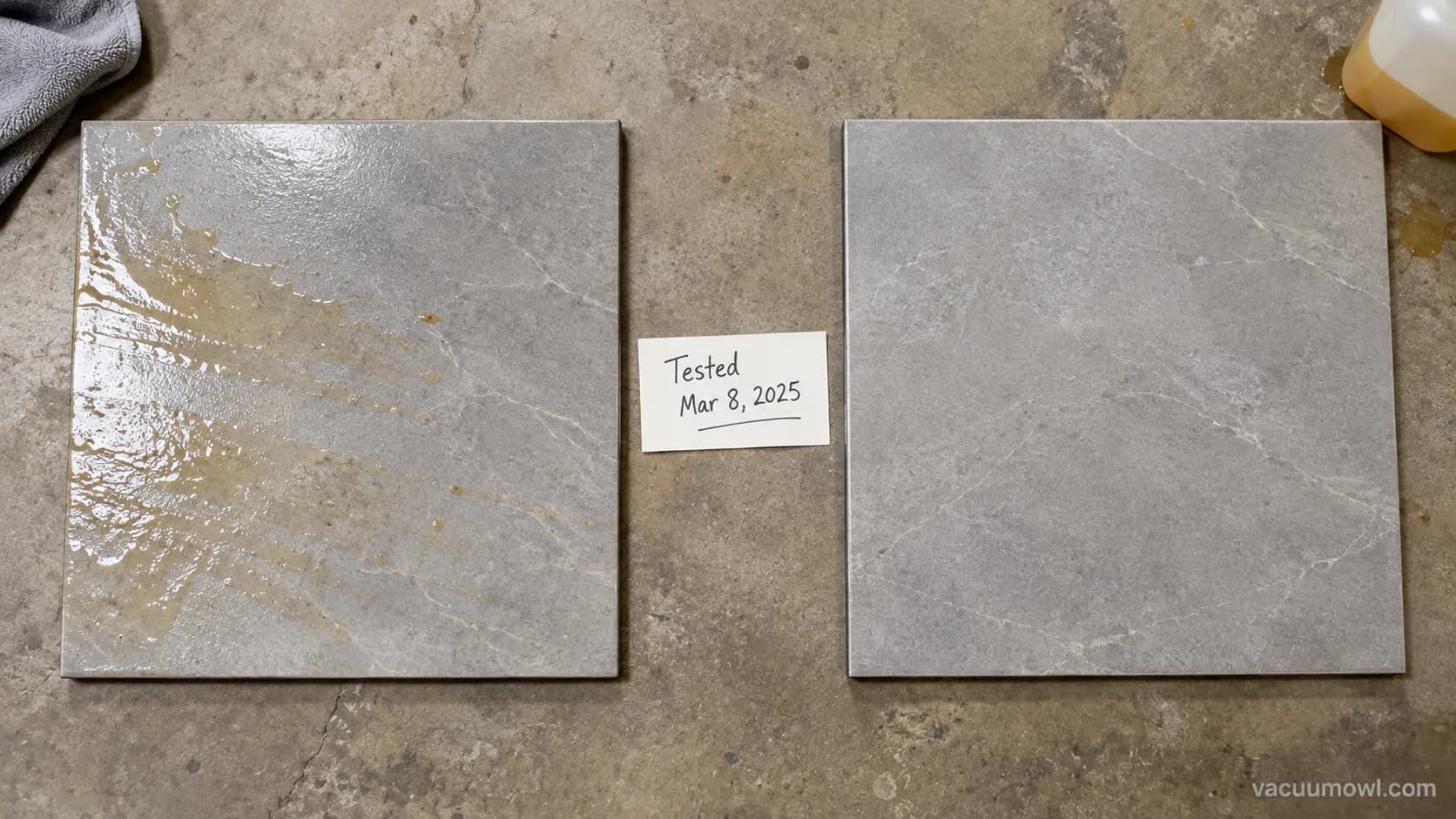
I ran the same juice-spill test on a shop vac and a cordless floor washer, and the difference was blunt.
The shop vac lifted the puddle but left the tile tacky, while the floor washer left it clean, which is exactly the “still feels sticky” complaint that fills the forums.
The imposter term: A cordless “wet/dry vacuum” on a retail page is often a floor washer, not a shop vac.
If it has a clean-water tank and a brush roll, it mops. A shop vac does neither.
The mop-style machines get their own full treatment in our floor-washer guide, and some brands muddy things further by selling two totally different machines under one name.
One popular model marketed as “wet/dry” is really a dry vacuum with a wet attachment, not a shop vac at all.
Is It a Wet or Dry Vacuum? How One Machine Does Both (and the One Exception)
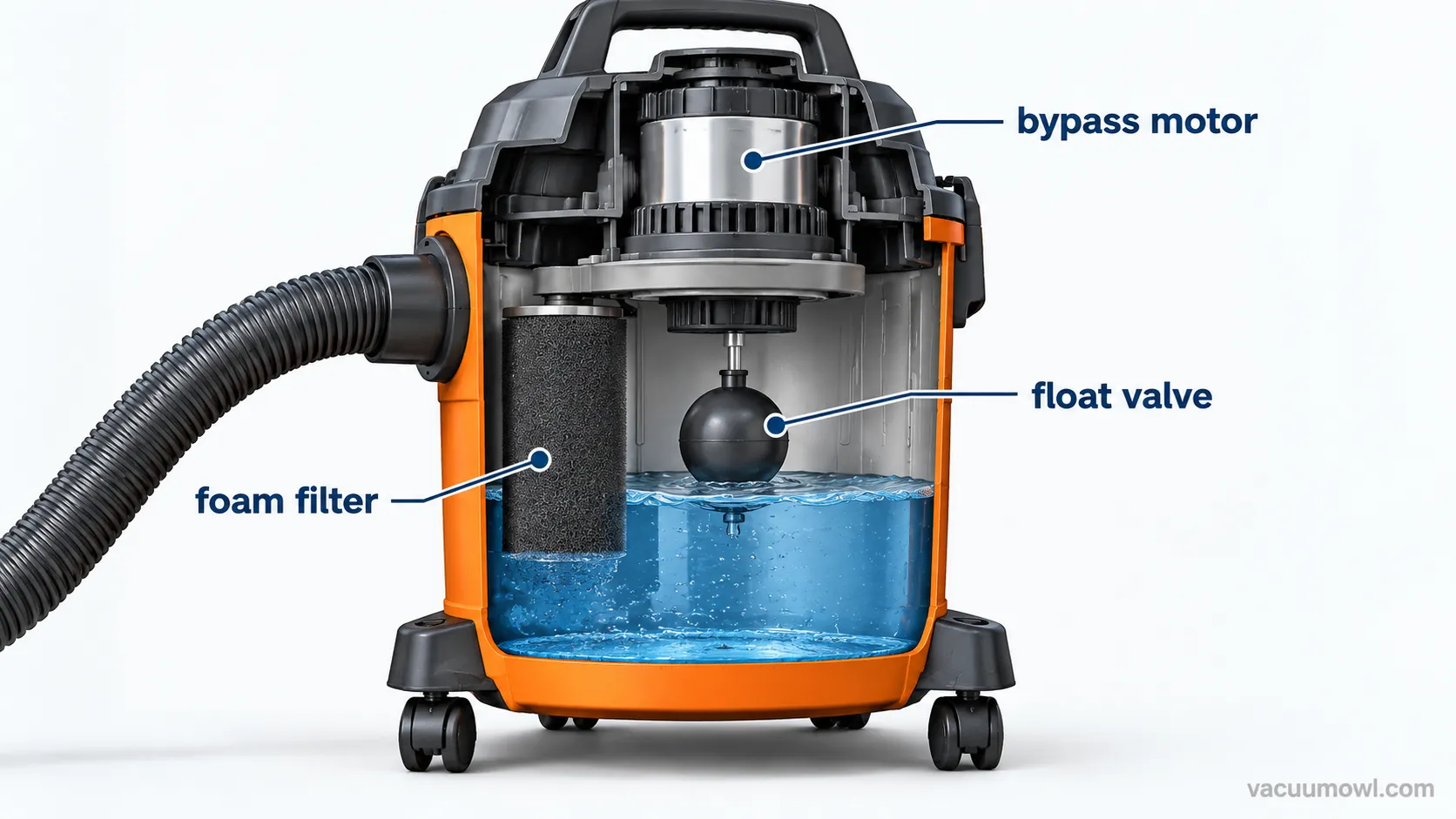
A wet or dry vacuum handles both liquids and dry debris because its motor draws cooling air separately from the dirty airflow, so water never touches the electrics.
The engineering write-up from Vacmaster’s technical guide describes this bypass design, where a sealed fan pulls the mess into the drum while a second fan cools the windings.
You switch modes yourself. The machine does not sense the difference and flip automatically.
Is It Wet or Dry? You Pick the Mode
You set the machine up for one job at a time, and getting the filter right is the whole game.
Dry setup: fit the paper or cartridge filter, then vacuum dust, sawdust, and debris as normal.
Wet setup: remove the paper filter, fit the foam sleeve, and confirm the float valve moves freely before you start.
Full tank: the float rises with the water level and cuts suction when the drum is full, which stops overflow into the motor.
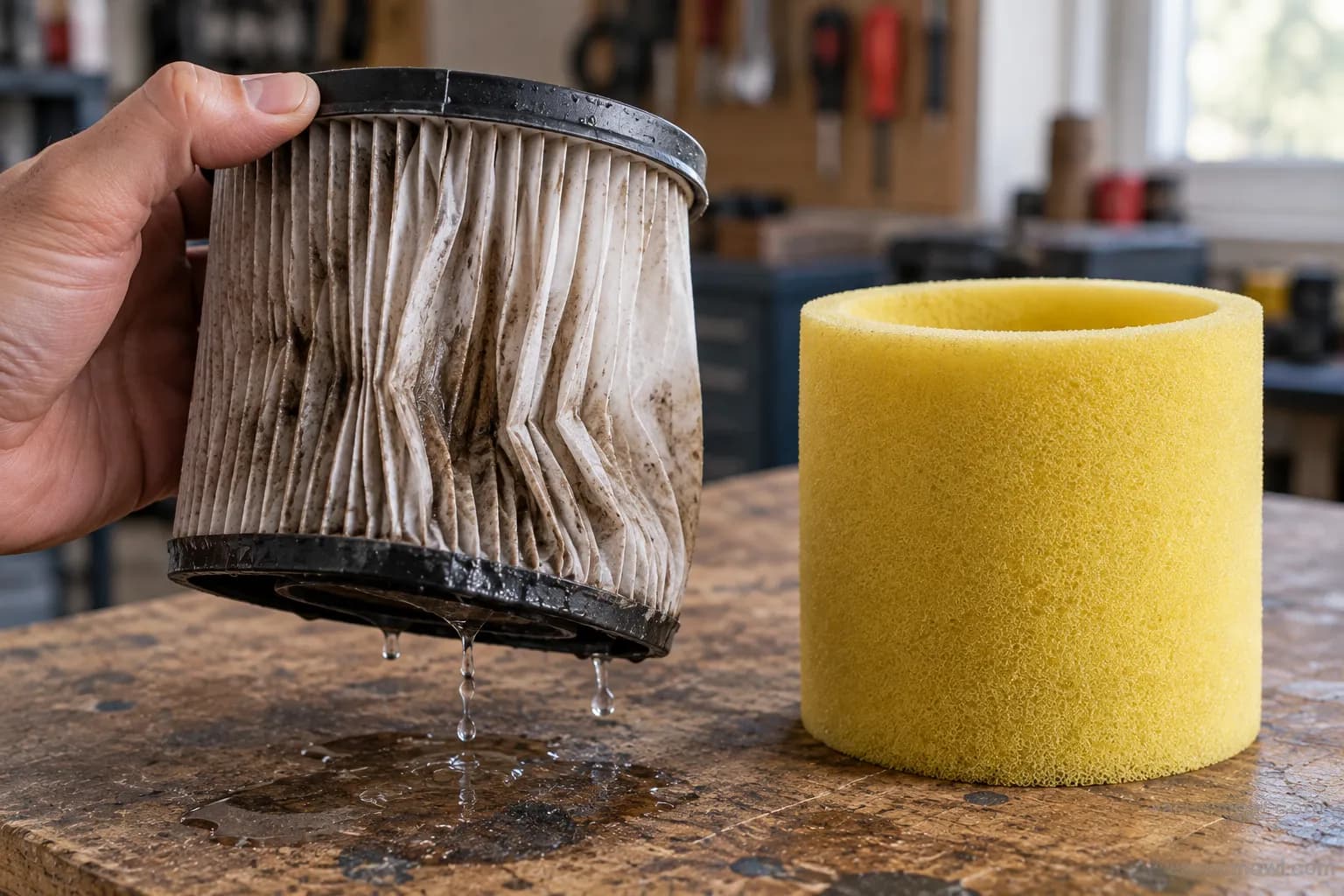
The foam sleeve matters more than beginners expect. When I ran a gallon of water through our test unit with the paper filter still installed, the suction died within seconds and the filter was ruined.
Wrong-filter warning: Vacuuming water with the dry paper filter in place can soak and collapse it, and pushing liquid toward an unprotected motor risks real damage.
Swap to the foam sleeve first, every time.
Here is the one real exception. A dedicated wet-only vacuum has no dry-filter and float combination, so it recovers liquids and nothing else.
Forcing dry debris through a wet-only unit, or water through a dry-only one, is how motors die.
One more myth worth killing: “peak HP” is marketing.
Independent testing summarized by Consumer Reports has long flagged inflated capacity claims and noise levels near 85 decibels, so judge suction by airflow and water lift, not a horsepower sticker.
Getting the filter swap right is worth a few minutes of reading before your first wet job.
That same wet-pickup ability is what lets a vac clear a blocked drain line in a pinch.
The setup changes slightly for damp carpet and upholstery. One of the most popular wet-and-dry jobs of all is detailing a car interior.
Which One Should You Buy? Match the Vac to the Job
Choosing a wet or dry shop vac starts with the job, not the brand, because within a category several machines are built by the same factory.
The reliability testing behind guides like Consumer Reports shows that headline specs mislead more than they help, so this matrix maps the machine to the mess instead.
Decide the category first, then compare models.
Your job | Best machine | Why | Skip it if |
|---|---|---|---|
Garage, workshop, sawdust, metal chips | Shop vac | Rugged, big tank, blower port | You want quiet daily indoor use |
Standing water, basement flood | Shop vac or wet-only vac | High water lift, fast recovery | You only ever spill small amounts |
Daily kitchen and hard-floor spills | Floor washer | Vacuums and mops in one pass | You need to lift bulk debris or water |
Car interior detailing | Compact shop vac | Reach, crevice tools, portable | You need a full-size garage unit |
Pure liquid extraction jobs | Wet-only vac | Built for volume liquid recovery | You also need to vacuum dry debris |
Size is the other trap. A 16-gallon drum sounds better than a 6-gallon one until you try to carry it up basement stairs.
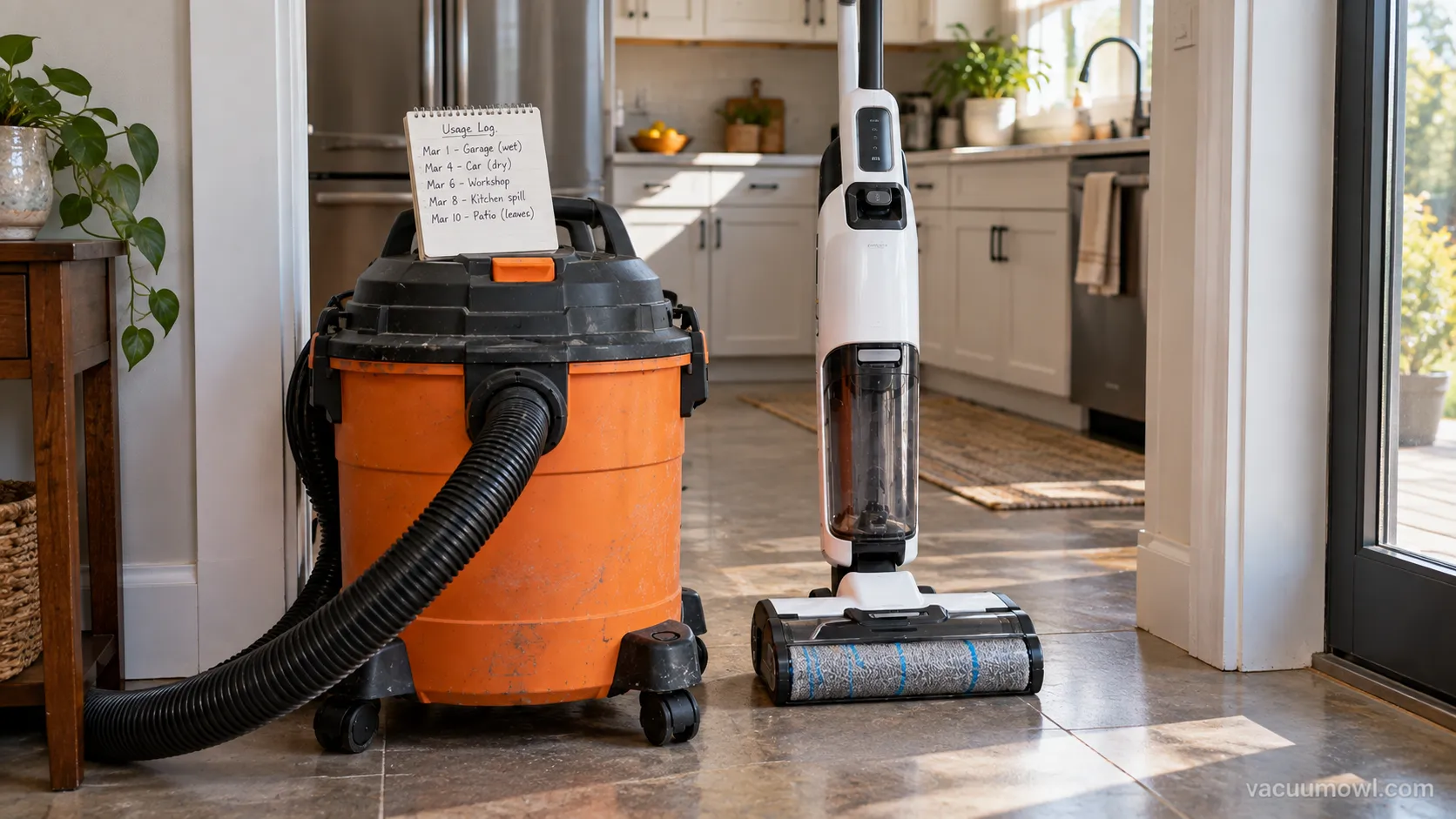
I used a 16-gallon shop vac as a daily kitchen cleaner for a month, and it worked, but it was so loud and bulky that I went back to a floor washer within weeks.
Skip a shop vac if your main goal is a quick daily wipe of hard floors.
It lifts the spill but leaves the floor unmopped, so you finish on your knees with a cloth anyway.
If portability matters more than raw power, a battery model may fit your routine better than a corded unit.
For car interiors specifically, we tested the best options for car detailing on real seats and mats.
Watch the labels closely, because some brands sell two very different machines under one name, so check which you’re buying before you pay.
Compact European designs are also a space-saving alternative to a bulky US shop vac.
Which Term Should You Search When Buying One?
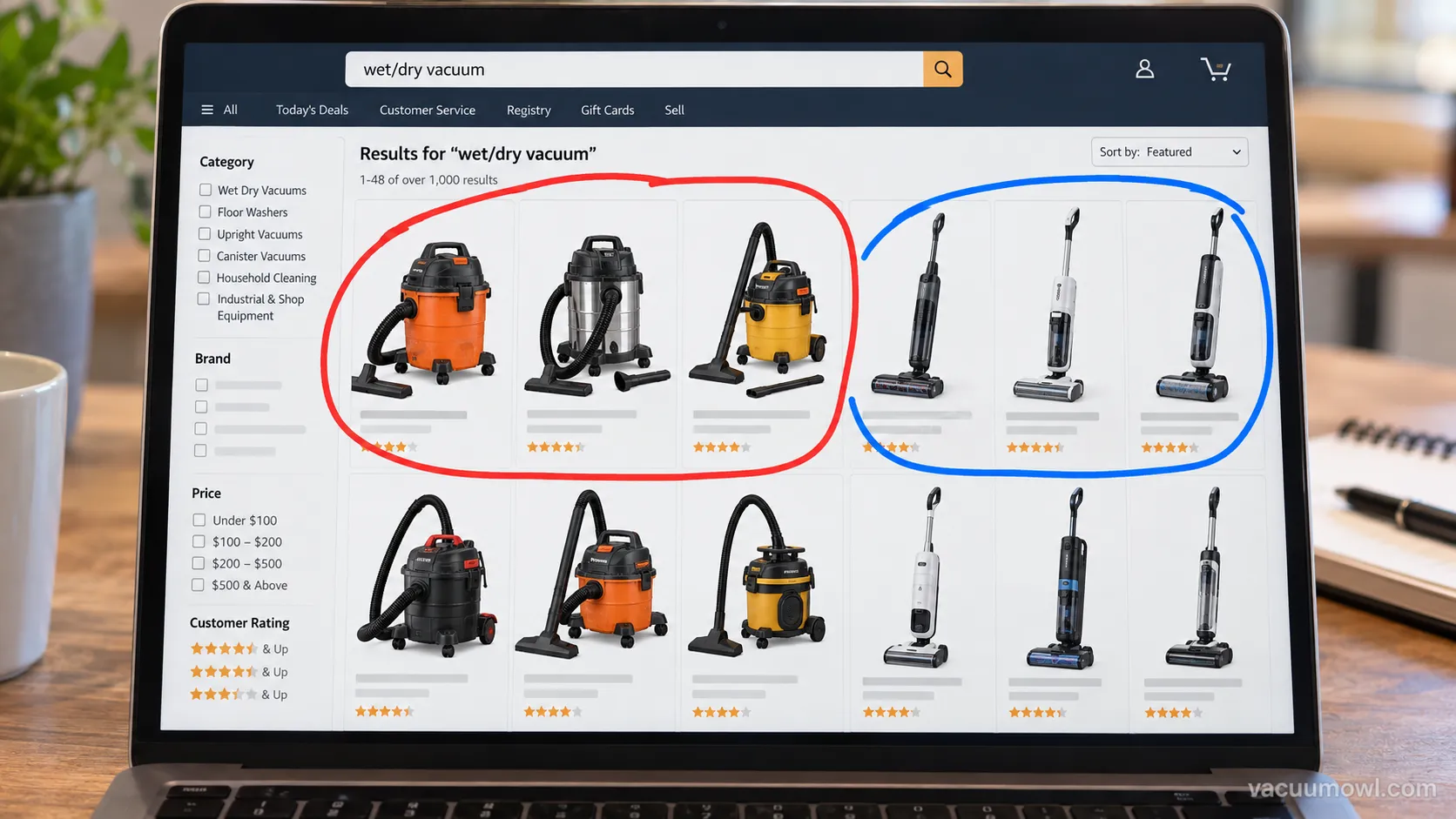
The fastest way to buy the right machine is to search the term that maps to the category you want, because searching “wet/dry vacuum” alone now returns both shop vacs and floor washers on the same page.
That ambiguity is the single biggest source of buyer regret in this category, and it is easy to sidestep once you know the mapping.
Use these searches to land on the right shelf:
Search “shop vac” or “wet/dry utility vacuum” to reach the canister shop vac for garages, cars, and cleanup.
Search “floor washer” or “wet dry vacuum mop” to reach the cordless machine that vacuums and mops hard floors.
Search “wet-only vacuum” or “water extraction vacuum” to reach the liquids-only recovery unit.
Add “utility” or “floor washer” whenever a plain “wet/dry vacuum” search mixes the two categories together.
When I searched “wet/dry vacuum” on a major retailer, the first page mixed sixty-dollar shop vacs with four-hundred-dollar floor washers, which is exactly the trap this section exists to prevent.
For the mop-style machines, start with our tested roundup of the best models this year. If you have narrowed it to the upright style, cordless floor washers have their own buying quirks worth reading.
Deciding between the two biggest names is easier once we have compared them head to head, and one of the most-searched brands deserves a closer model-by-model look.
Frequently Asked Questions
Is a wet vac the same as a wet/dry vac?
Usually yes. “Wet vac” is casual shorthand for the same canister machine that handles both water and dry debris. The one exception is a dedicated wet-only vacuum, which recovers liquids only and cannot pick up dry mess, so check the filter setup before you assume the two labels mean the same thing.
Can a shop vac pick up water without ruining it?
Yes, once it is set up for wet pickup. Remove the paper filter, fit the foam sleeve, and make sure the float valve moves freely. I ran about a gallon through our test unit this way and the float cut the suction right on cue when the drum filled, exactly as designed.
Is a “wet/dry vacuum” the same as a floor washer?
No. A floor washer is a cordless upright with a clean-water tank and a brush roll that vacuums and mops hard floors. Retailers now market these as “wet/dry vacuums,” but they are a different machine from a shop vac, which lifts water and debris yet cannot scrub a floor.
Who makes Shop-Vac now?
GreatStar Tools USA, part of the Chinese firm Hangzhou GreatStar Industrial, per the acquisition announcement. The original company closed abruptly in September 2020, and GreatStar acquired its assets that December, with production later shifting largely to China.
Does more “peak HP” mean more suction?
No. Peak horsepower is a marketing figure measured under conditions the machine never runs in. Real cleaning power comes from airflow, measured in CFM, and water lift, measured in inches. Compare those two numbers instead, and treat any headline horsepower claim as noise.
Two floor-washer brands raise questions of their own, so our model guide goes deeper on one, and for the challenger brand we answer separately.
The Bottom Line
Strip away the labels and it is simple: a wet or dry vacuum, a shop vac, and a wet/dry vac are the same machine, one that lifts both water and dust once you set the filter right.
The only real exception is a dedicated wet-only vacuum, and the only real trap is the cordless floor washer now wearing the “wet/dry” name.
Match the machine to the job, search the term that maps to it, and you will buy the right tool the first time.
Read it your way
Short on time? Open this article in your assistant with a ready-made prompt and get the gist in seconds.
Found this useful? Make us a preferred source so we show up in your Google results.
Keep reading
Related articles
Vacuum Types
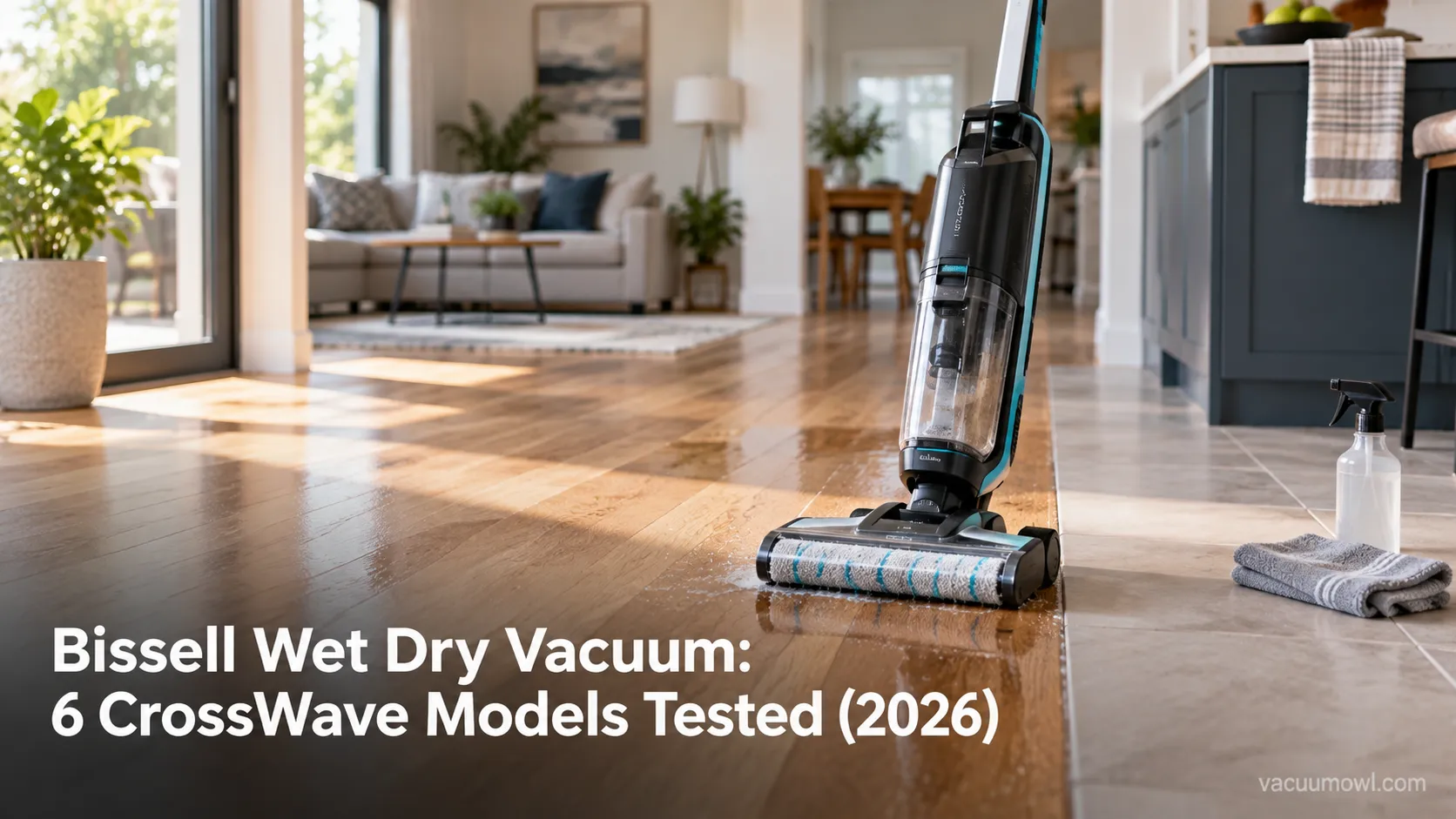
Bissell Wet Dry Vacuum: 6 CrossWave Models Tested (2026)
Compare every Bissell wet dry vacuum: which CrossWave model fits pets, steam, or budget, plus fixes for streaks and floors that still look dirty. Tested 2026.
Vacuum Types
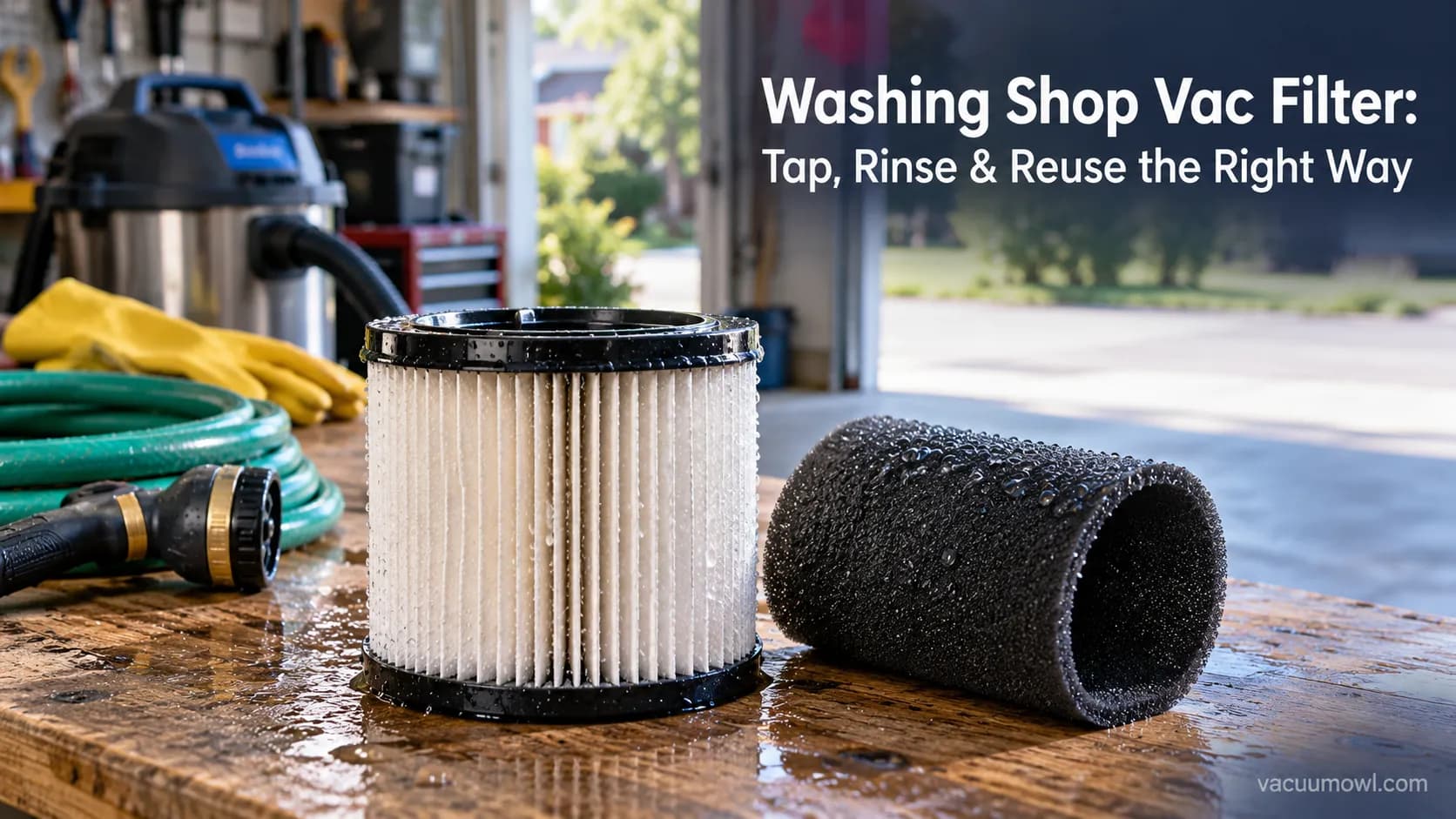
Washing Shop Vac Filter: Tap, Rinse & Reuse the Right Way
Rinse it right: this guide covers washing shop vac filter foam and paper, the tap-and-hose steps, the 24-hour dry rule, and when to just replace it.
Vacuum Types
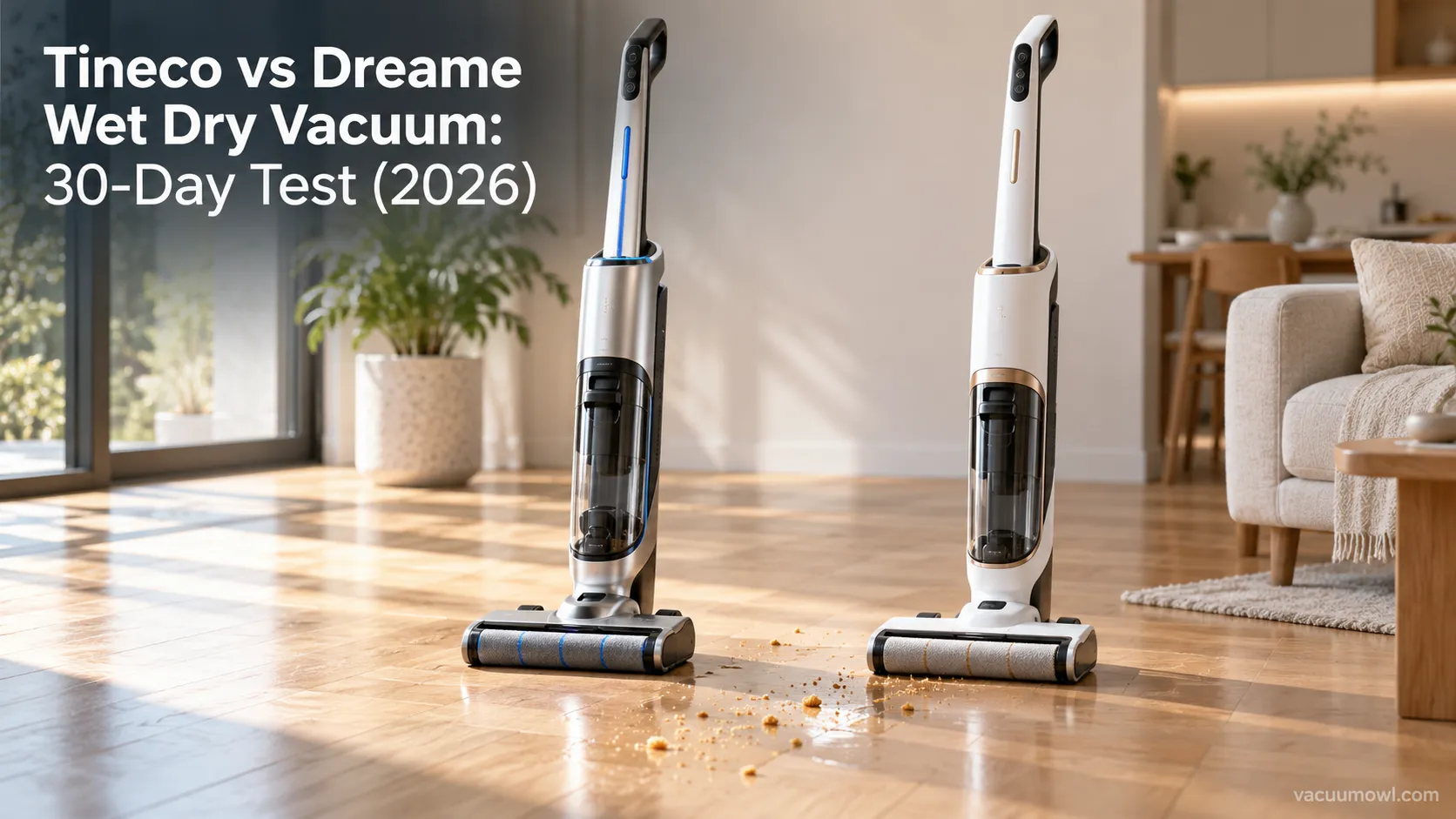
Tineco vs Dreame Wet Dry Vacuum: 30-Day Test (2026)
Compare Tineco vs Dreame wet dry vacuum on suction, self-clean, edge reach and price, with a clear pick for pets, kids and big homes.
Vacuum Types
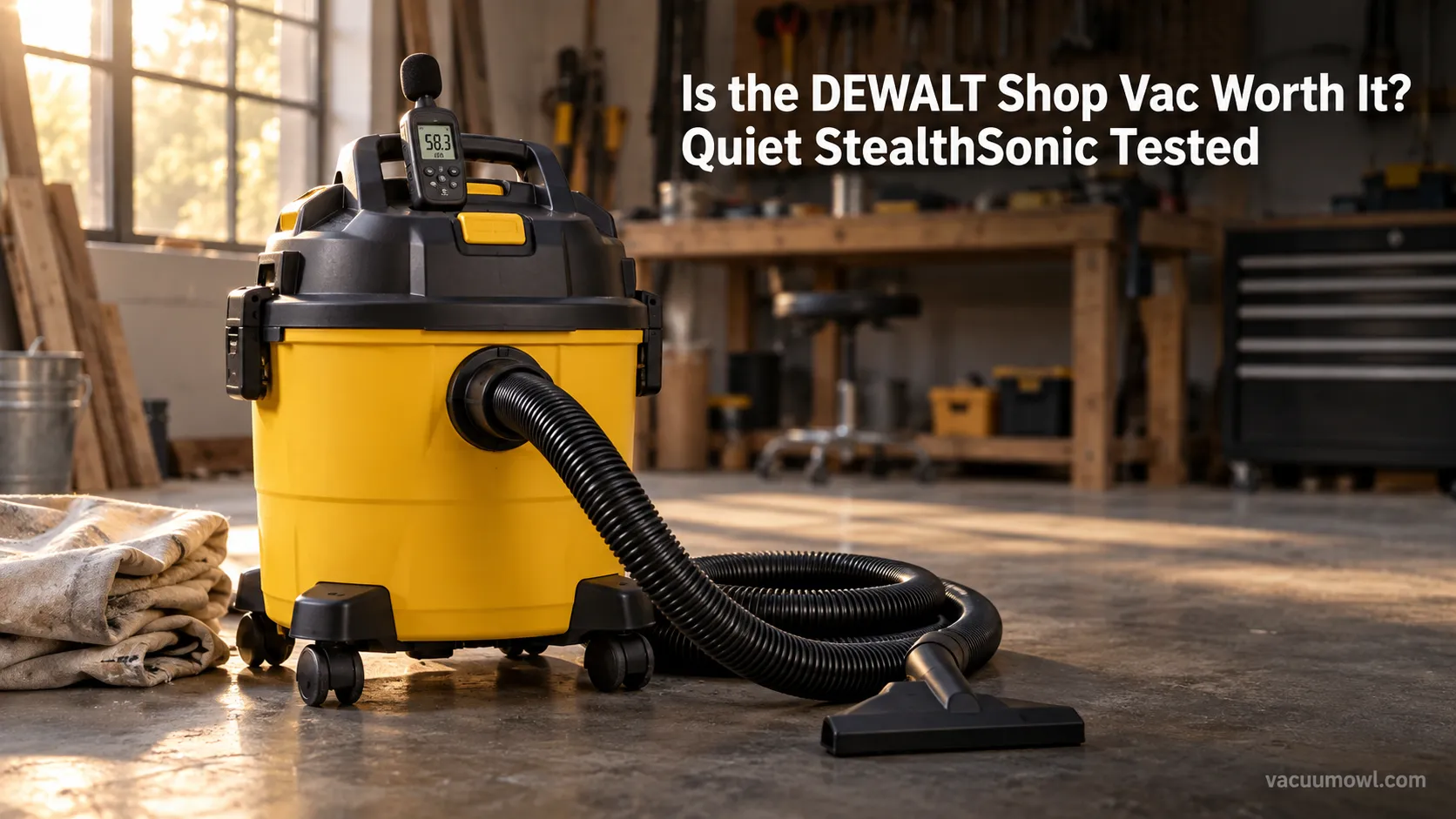
Is the DEWALT Shop Vac Worth It? Quiet StealthSonic Tested
Compare every DEWALT shop vac: StealthSonic quiet picks, cordless DCV580 and corded DXV, with measured noise, real suction specs and a value verdict.
The discussion
Comments
Every comment is reviewed before it goes live.