No Leaf Blower? How to Use a Shop Vac as a Blower
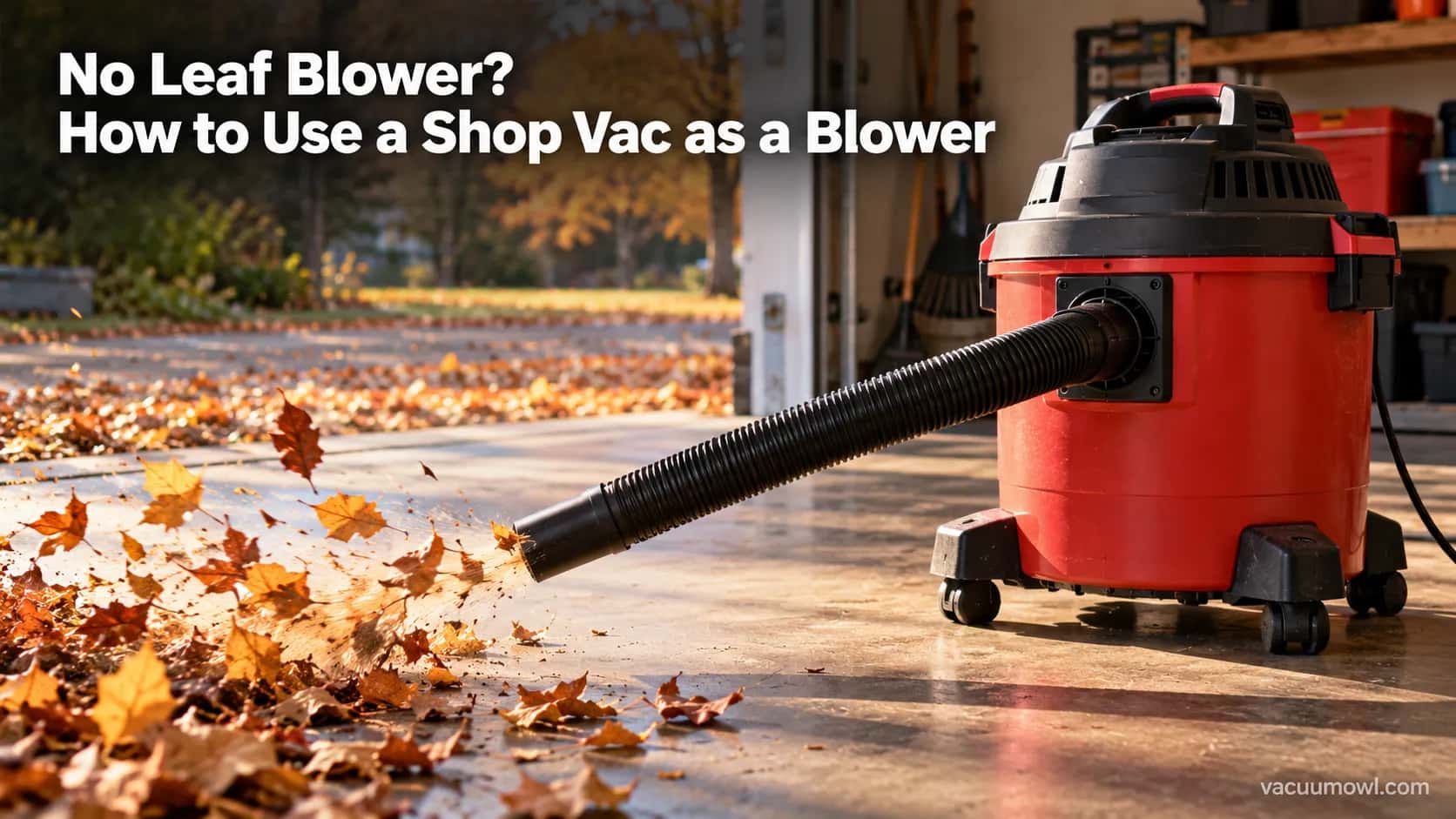
Learn how to use a shop vac as a blower in 30 seconds: move the hose to the blower port, empty the tank first, then blow leaves, sawdust and grass.
Written by Dr. Naomi TranReviewed by Dale FerrisLast updated on September 24, 2026
When you buy parts or vacuums through links on our site, we may earn a commission at no extra cost to you. It never changes what we recommend. Learn more.
Read it your way
Short on time? Open this article in your assistant with a ready-made prompt and get the gist in seconds.
Found this useful? Make us a preferred source so we show up in your Google results.
The garage door has been open all afternoon, and now there is a drift of leaves across the floor with no leaf blower in sight. If a wet/dry vac is sitting in the corner, you already own the fix.
Learning how to use a shop vac as a blower takes about thirty seconds: you move the hose from the suction side to the blower port, and the same motor that pulls air now pushes it.
This guide walks the conversion on both common machine types, the one prep step most quick tutorials skip, and an honest look at what this setup can and cannot clear.
The 30-Second Conversion
To use a shop vac as a blower, unplug it, empty the tank, and confirm the filter is seated.
Then move the hose from the front suction inlet to the rear blower port.
On lift-off models, take the motor head off the tank and attach the hose to the exhaust side instead.
Point the nozzle away from yourself, switch on, and it blows.
The whole swap takes about thirty seconds, as long as your model has a blower port.
On our 6-gallon test unit, that port swap took 28 seconds start to finish, timed on my phone. Shop-vac owners often call this move flipping the hose, and it really is that simple once you know your machine has the right opening.
First, check what you are working with.
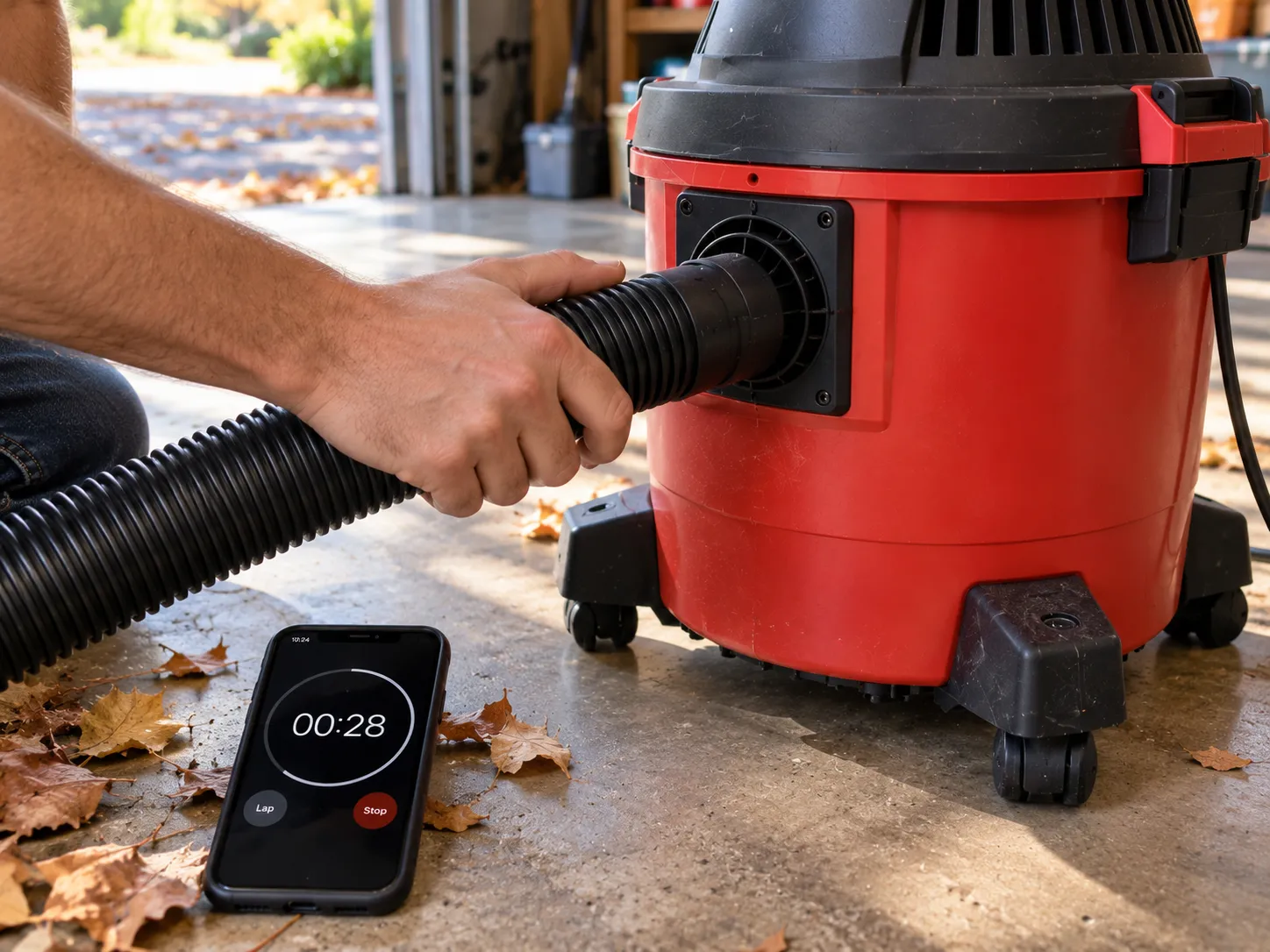
How we tested: In October 2026 I converted two machines in a home garage and driveway: a 6-gallon Shop-Vac with a rear blower port (Unit A) and a RIDGID NXT with a lift-off motor head (Unit B).
Airflow readings are a three-run average taken at the nozzle with a handheld anemometer.
Can Any Shop Vac Be Used as a Blower? Does Yours Have a Blower Port?
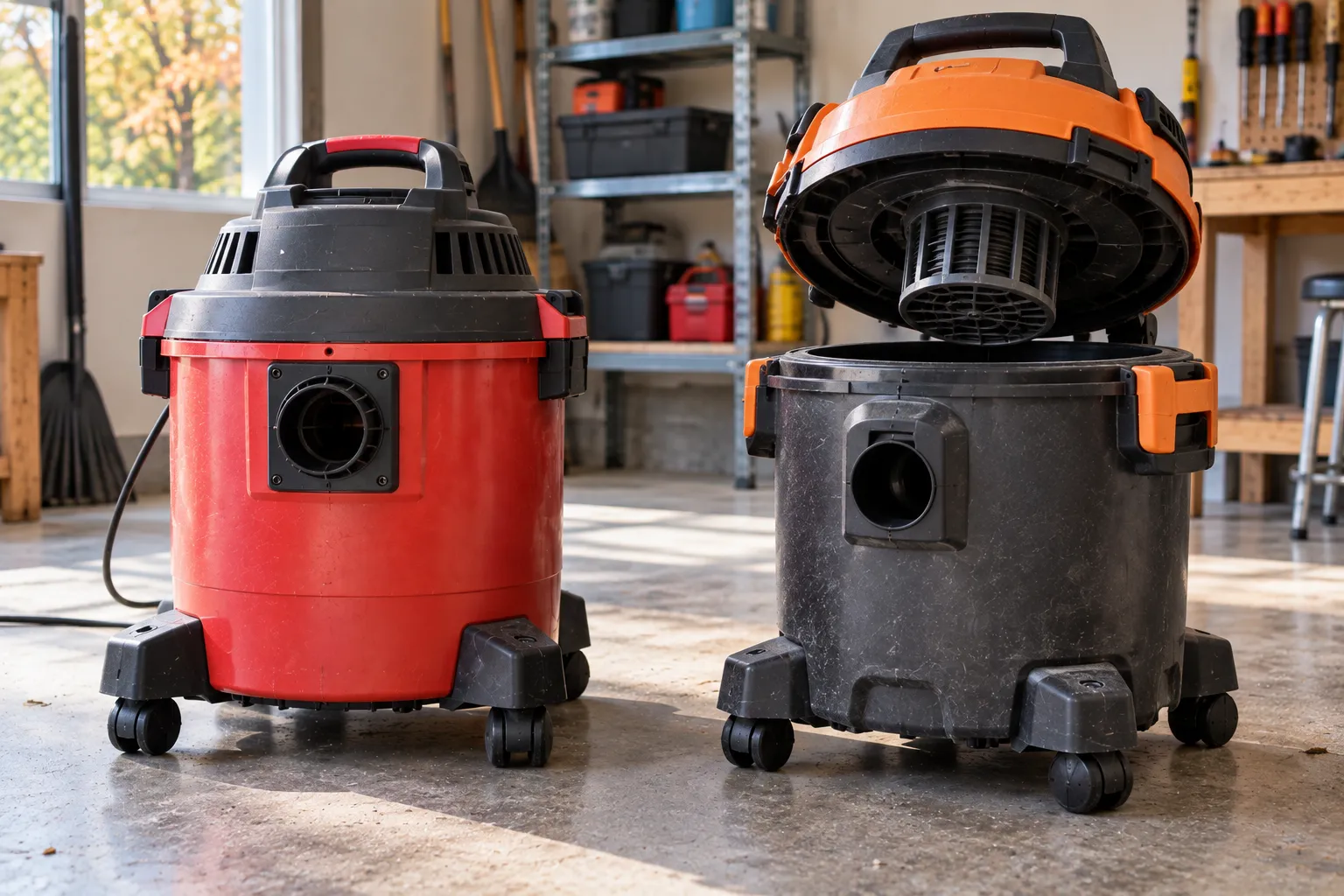
Not every shop vac can be used as a blower. The feature depends on the machine having an exhaust you can attach a hose to, and there are three qualifying designs: a dedicated rear or top blower port, a lift-off motor head that exposes the exhaust, or a top unit that detaches into a standalone blower.
Shop-Vac even holds a patent on its blower-port cap, a removable insert with noise-reducing foam.
If your vac has none of these, it vents through fixed diffuser slots and cannot run a hose as a blower.
Here is how to tell which camp your machine falls into.
Machine type | How to spot it | How it blows |
|---|---|---|
Dedicated blower-port model | A second round port at the rear or top of the motor housing, sometimes capped | Move the hose from the front inlet to that port |
Lift-off / detachable motor head | Latches hold a motor lid on the tank, with no separate port | Lift the head off, attach the hose to the exhaust side |
Detachable handheld blower | The top unit unclips into a standalone tool | Unclip it and blow directly, no tank attached |
No blower option | Fixed slotted vents, no single port, no lift-off head | Cannot run a hose as a blower |
Lining my two test units up side by side, the difference was obvious at a glance. Unit A had a capped round port at the back, while Unit B had nothing but latches until I lifted the whole motor head off the tank.
On owner forums, people describe that third type as the way the power head detaches and turns into a leaf blower, which is exactly what units like the RIDGID handheld do.
If you want the full model-by-model rundown of which vacs qualify, see our detachable blower models guide.
Not sure which opening is which on your own machine? Our piece on the two holes explained walks through the inlet versus the exhaust port.
New to these machines entirely? Start with what sets a shop vac apart from a household vacuum.
How to Use a Shop Vac as a Blower: Step-by-Step
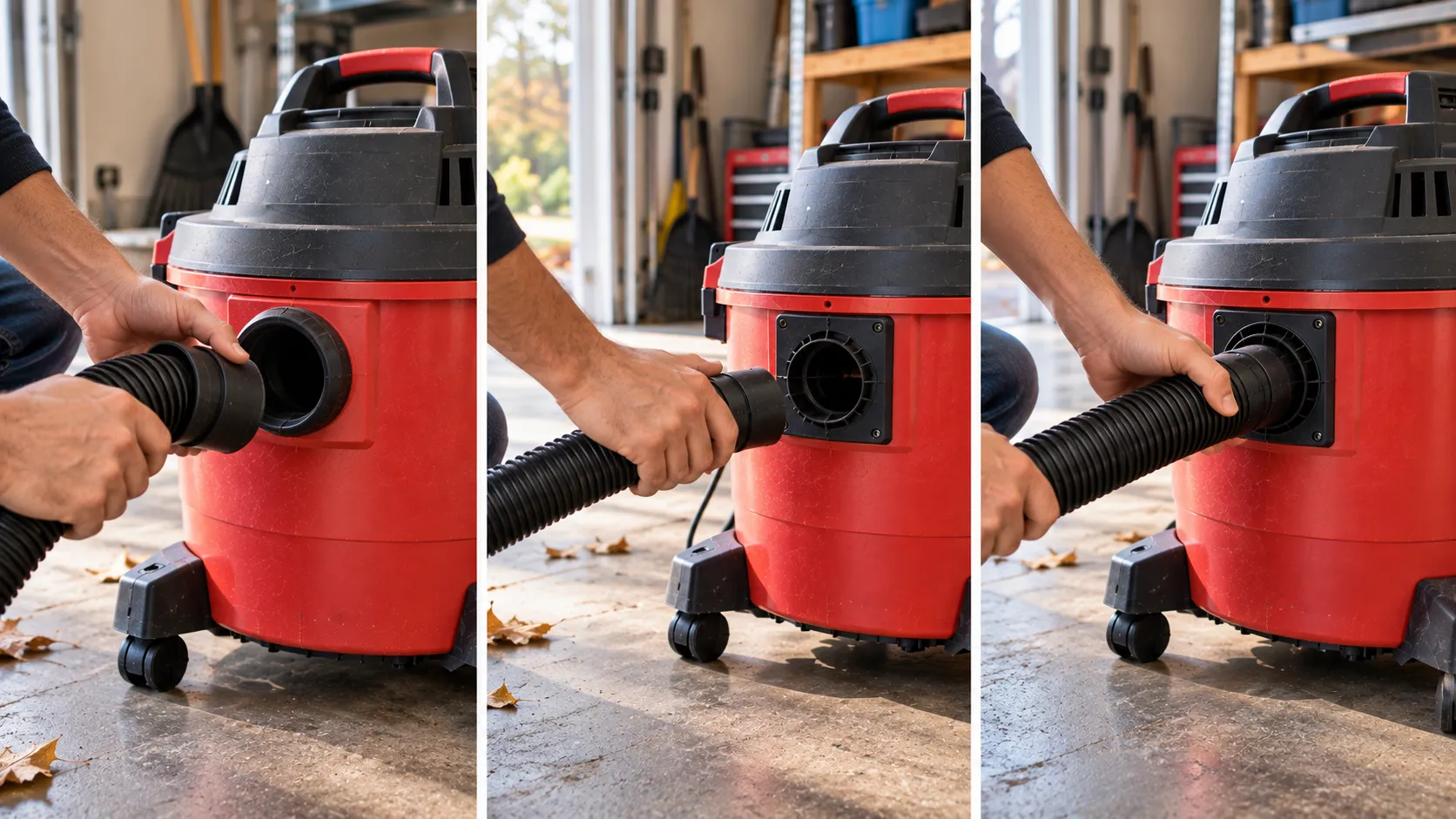
Here is how to use a shop vac as a blower in six steps. Unplug the vac, empty the tank, and check that the filter is seated.
Clear the hose of debris. On a rear-port model, pull the hose off the front inlet and push it into the blower port.
On a lift-off model, unlatch and remove the motor head, then attach the hose to the exhaust side. Point it away from your body, switch on, and confirm a steady stream of air.
Each step below carries a quick “what you should see” check so you know it worked before moving on.
Unplug the vac. You should see the switch off and the cord pulled from the outlet before your hands go near the ports.
Empty the tank and seat the filter. You should see a clean, empty canister and the filter clipped firmly in place.
Clear the hose. Look through it end to end. You should see nothing loose that could fire out under pressure.
Move the hose to the blower side. On Path A (rear port), pull the hose off the front inlet, push it into the blower port, and give it a twist to lock. On Path B (lift-off), unlatch the motor head, lift it off the tank, and attach the hose to the exhaust side, the method Today’s Homeowner demonstrates on video.
Point it away and switch on. You should see the nozzle aimed at the ground, away from people, before the motor spins up.
Confirm steady airflow. You should feel a strong, continuous stream at the nozzle, which means the swap took.
Running both units through this sequence, the one step people rush is the twist-to-lock on step four.
On my rear-port unit, a hose that was pushed in but not twisted popped loose about ten seconds into the first blast.
For rear-port owners, the whole thing really is just flipping the hose from front to back. If you are new to the machine, our complete operating guide covers vacuum mode first.
Just unboxed it? See how to assemble and set it up before you convert anything.
Empty the Tank and Keep the Filter In: The Step Quick Guides Skip
The step most quick guides skip is preparation, and it is the one that keeps the job clean.
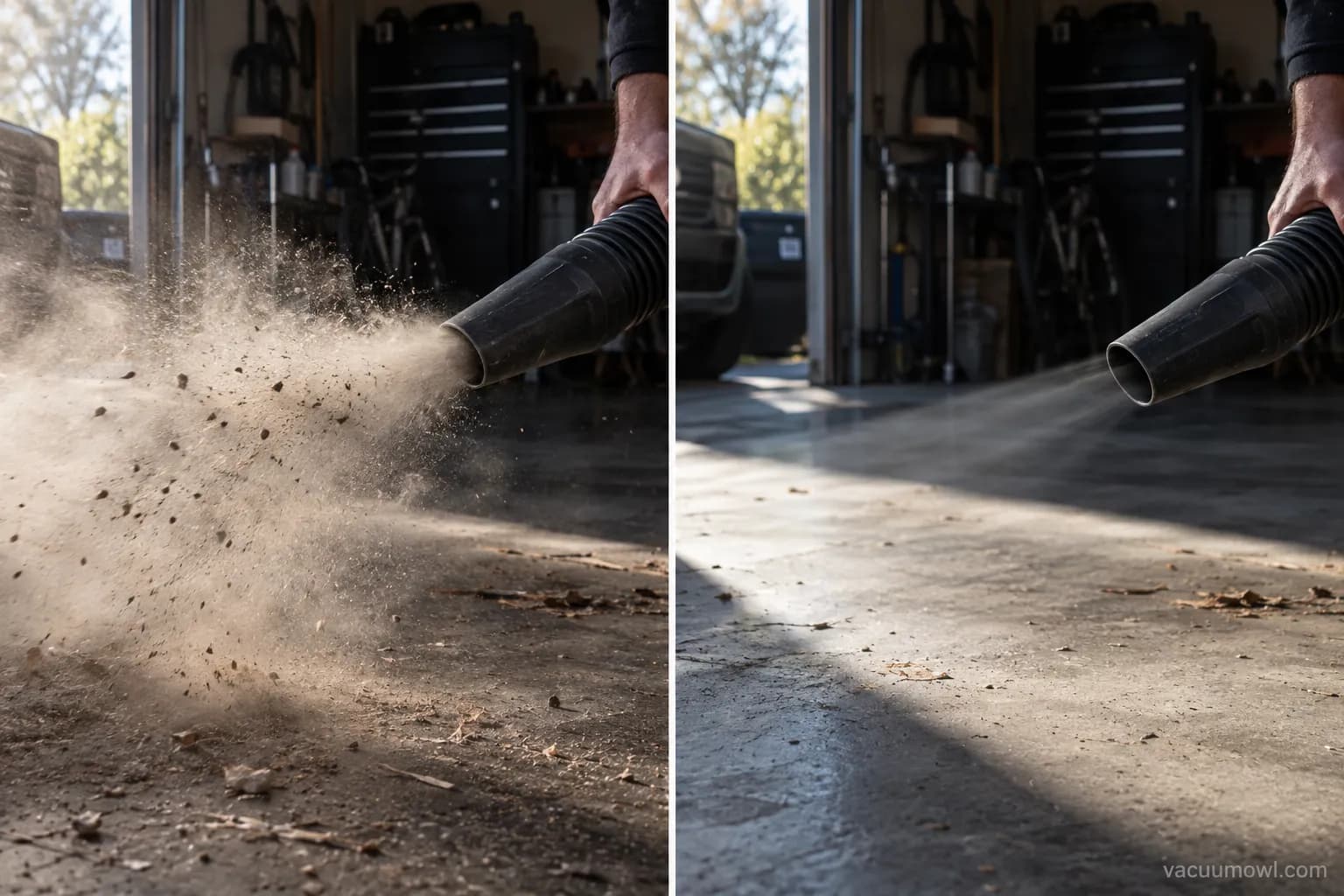
Emptying the tank first matters because a converted vac re-pressurizes the canister, so any dust or debris left inside gets sprayed straight out of the nozzle.
Clearing the hose matters for the same reason: a loose screw or pebble left in the tube can become a projectile once the air moves.
On our full-tank test run, the first two seconds of blower air carried a visible plume of fine dust; after I emptied the canister and reseated the filter, the stream ran clean.
That plume is why owners warn each other to empty the tank first before pointing the hose at anything.
The projectile risk is real enough that Hunker flags clearing the hose as a safety step, not an optional one.
Keeping the filter in is the other half. With the filter removed or clogged, the blower throws fine dust into the air instead of trapping it, so a clogged filter is the usual culprit when the output looks dirty.
Here is cleaning the filter properly if yours is overdue. And if you are wondering whether you can skip it, see what happens running it without a filter.
Normal, not broken: on single-motor vacs, air blows out of the exhaust even while you are vacuuming, and that is not a fault.
As a JustAnswer technician explains, a single motor cannot draw air in without pushing the same air out the other side, so you cannot switch that exhaust off.
Shop Vac Blower vs a Real Leaf Blower: The CFM Reality Check
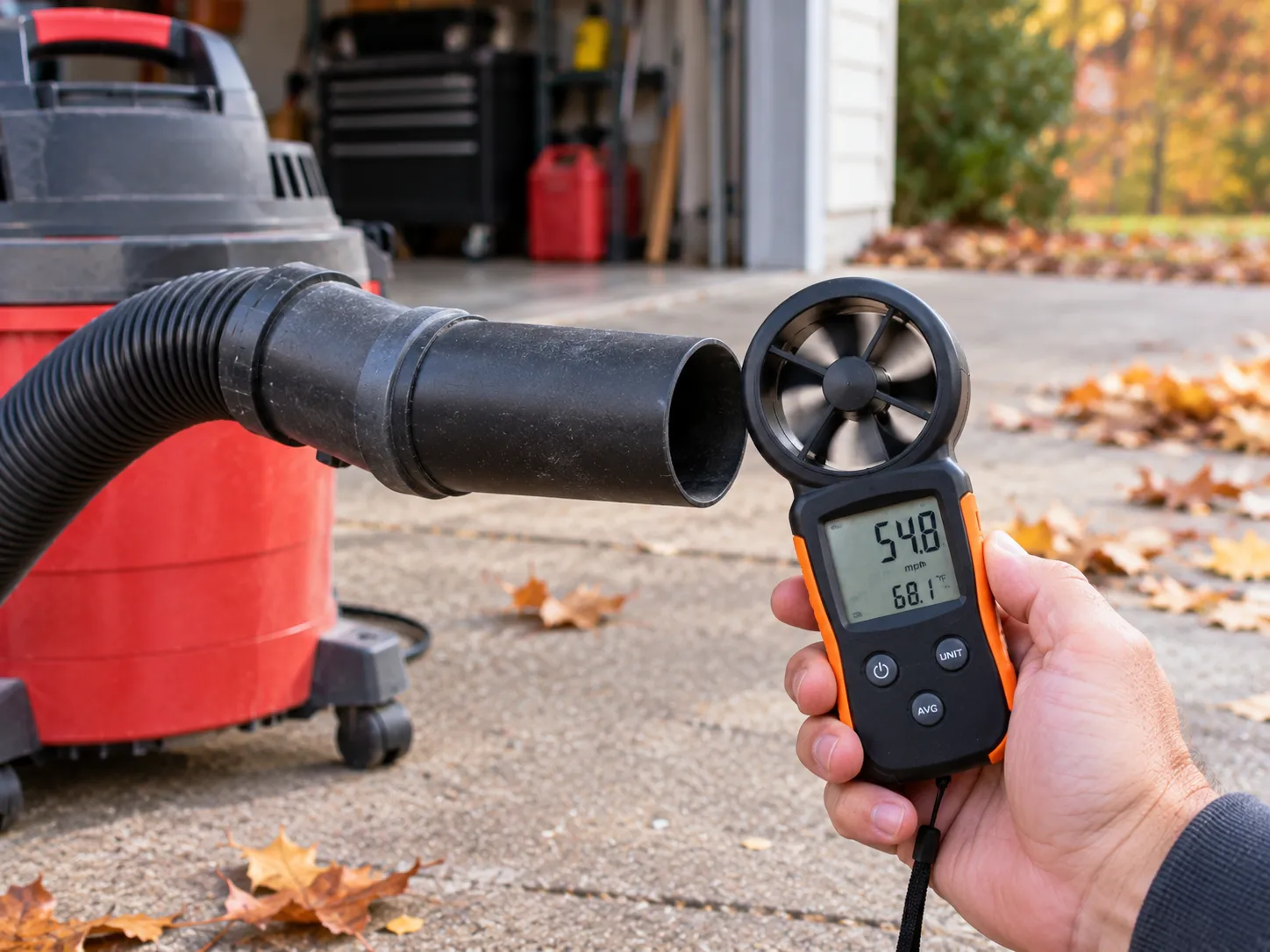
A converted shop vac is not a replacement for a leaf blower. In blower mode, a mid-size 6-gallon shop vac moves roughly 145 CFM, close to the airflow Shop-Vac’s own spec lists for that class, while residential leaf blowers commonly push 400 to 600 CFM.
That gap is why a shop vac clears a driveway or garage floor but stalls on a leaf-covered lawn. It is a close-range tool: strong over a few feet, weak across open ground.
At the nozzle, my anemometer read about 29 m/s from the shop vac against 38 m/s from a mid-range leaf blower, averaged over three runs.
The numbers below put the airflow classes side by side.
Tool | Typical airflow (CFM) | Where it wins |
|---|---|---|
Compact cordless vac, blower mode | ~45 | Dusting a workbench, keyboard, or car interior |
Mid-size 6-gallon shop vac, blower mode | ~145 | Driveway, garage floor, drying a car |
Dedicated Shop-Vac “Air Mover” | ~500 | Drying floors and carpet after a spill |
Residential leaf blower | 400–600 | Clearing a leaf-covered lawn |
A compact cordless vac in blower mode moves only about 45 CFM, roughly what one owner’s bench test against a leaf blower recorded.
Residential leaf blowers sit far higher, commonly 400 to 600 CFM in the Lowe’s buying guide range.
Add the corded tether most shop vacs carry, and the picture is clear: this is an acceptable occasional generalist, not a lawn tool.
If the raw numbers matter to you, we go deeper on decoding CFM and air watts in a separate guide.
Shopping around instead? Our selector covers what size you actually need for the jobs you have in mind.
Output scales with the machine, so it helps to see the gallon and HP tiers laid out before you buy.
Best Uses for a Shop Vac Blower and the Right Attachments
The best uses for a shop vac blower play to its close-range strength rather than fighting its airflow limits.
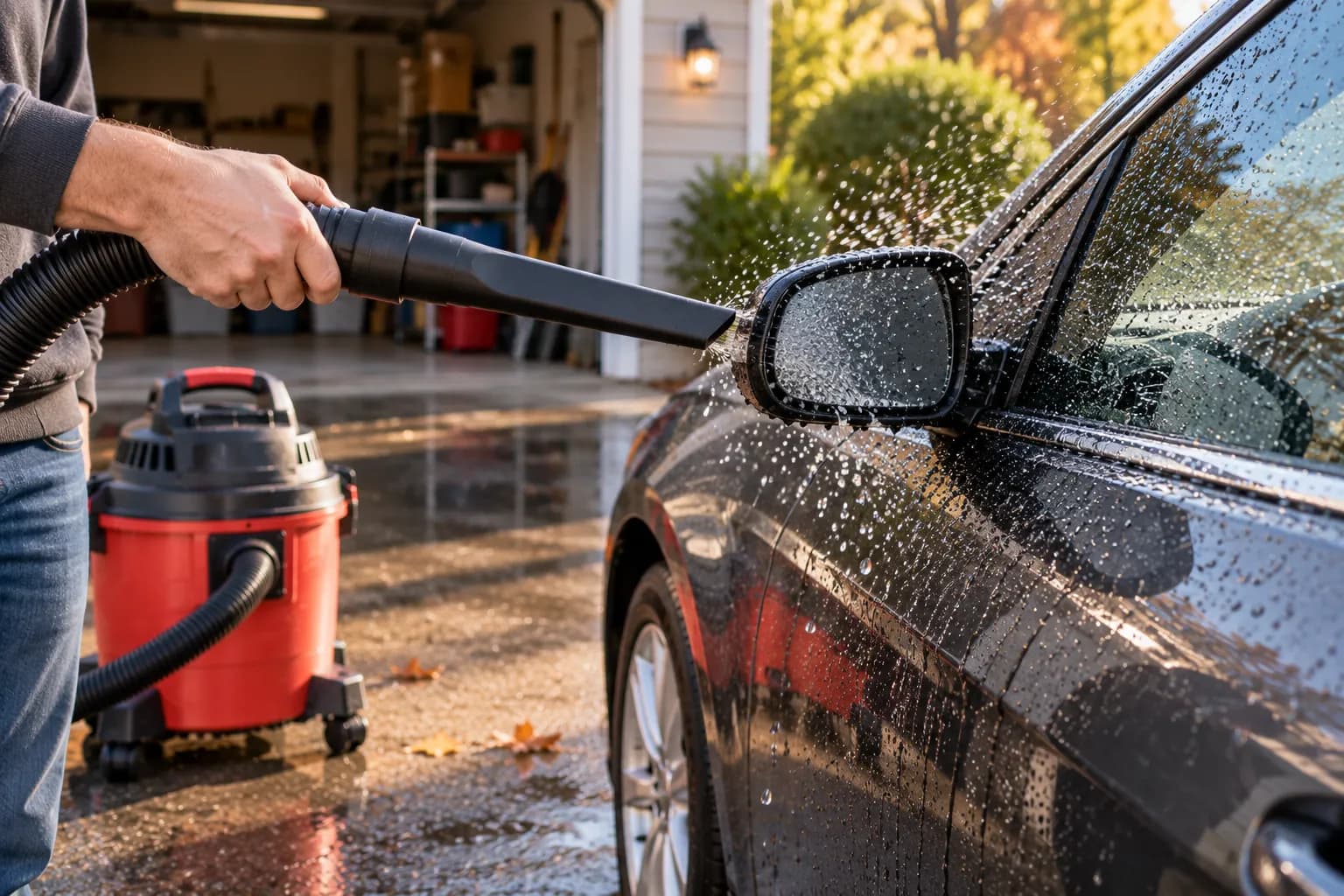
It shines at clearing a garage floor, blowing grass clippings off a driveway or sidewalk, drying a car after a wash, dusting out a workbench, and clearing sawdust from tools and lawn equipment.
A narrow nozzle raises the air speed but not the volume, so it concentrates force into tight spots instead of clearing more area at once.
The job it won me over on was drying my car after a wash. With a narrow nozzle on, it pushed water out of the door mirrors and the grille that a towel kept missing.
The everyday sweet spots are worth listing plainly:
Clearing a garage floor or driveway of dry leaves and clippings
Drying a car, especially mirrors, badges, and panel gaps
Blowing sawdust off a workbench and out of power tools
Clearing grass clippings from a mower deck and lawn equipment
Pushing dust out of tight corners a broom cannot reach
Two accessories help. A narrower nozzle trades volume for speed, which Greenworks explains is the CFM-versus-MPH trade in plain terms, while a muffler or diffuser on the exhaust tames the noise.
Some models also take a shop vac blower port cap that quiets the exhaust when you are back in vacuum mode.
Beyond blowing, the same machine has 30-plus other uses worth knowing.
For the opposite job, here is picking up water safely. In the workshop, it pairs well with a proper dust-collection setup.
How to Switch a Shop Vac from Blower Back to Vacuum
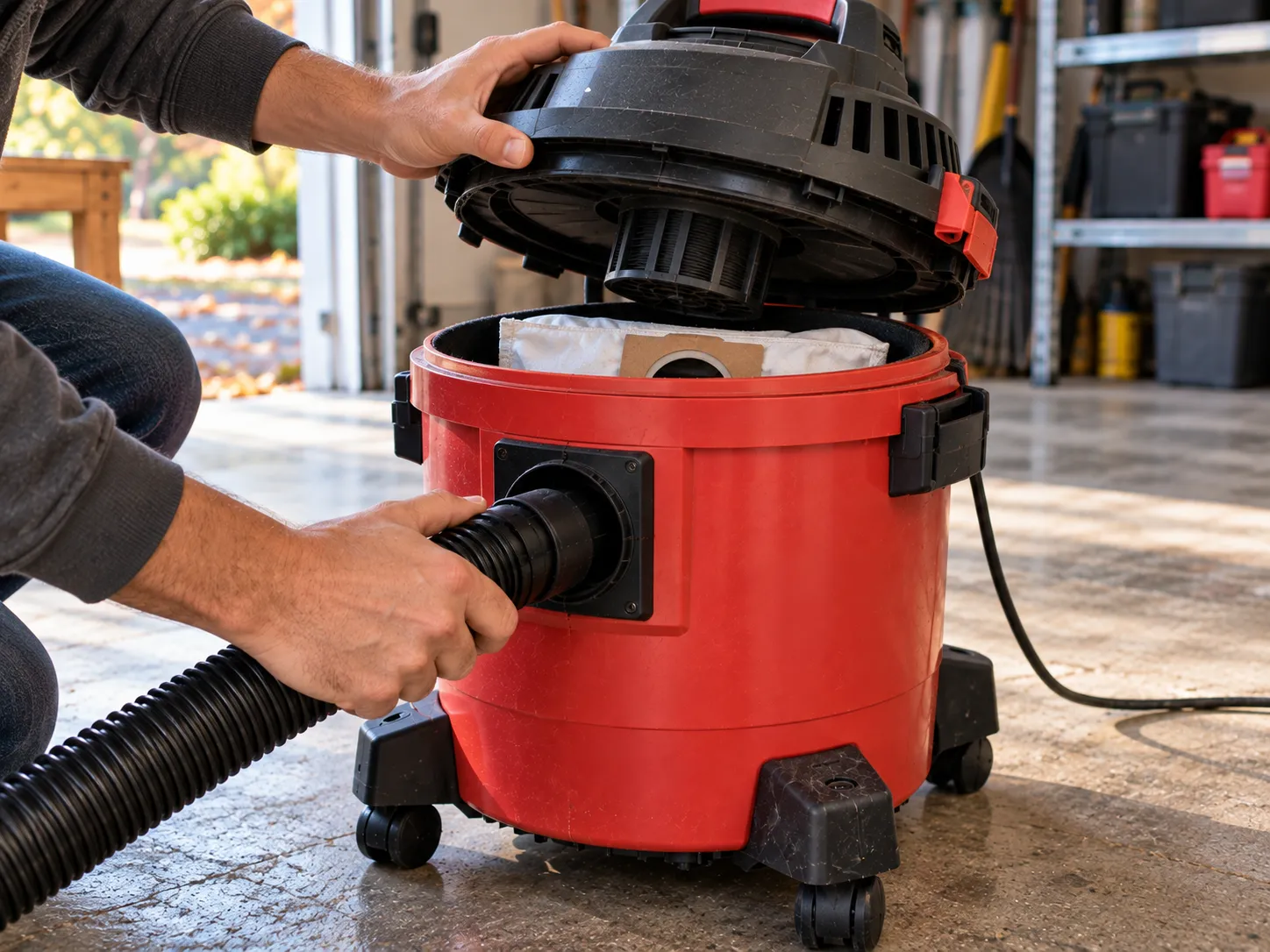
Switching a shop vac from blower back to vacuum reverses the same move. Unplug it, take the hose off the blower port or reattach the motor head to the tank, and push the hose back onto the front suction inlet.
Confirm the filter and any collection bag are seated, then switch on. You should feel suction at the hose end instead of a blast of air, and the whole reversal takes under a minute.
Reseating the hose on the front inlet took me under a minute on both test units. The only thing I double-check now is that the filter bag is clipped before I hit the switch.
Curious whether it can pull daily-driver duty afterward? See using it as an everyday vacuum and where that falls short.
Switching to wet cleanup instead of dry? Follow our wet pickup setup so you do not soak the filter.
And if you need to move standing water rather than air, here is pumping water out with a pump-equipped model.
When you are done for the day, a tidy wall-mounting and storage spot keeps the hose and cord off the floor.
Frequently Asked Questions
Can any shop vac be used as a blower?
No. Only models with a dedicated blower port, a lift-off motor head, or a detachable handheld blower can run a hose as a blower.
Vacs with fixed diffuser vents cannot. Our overview of what a shop vac actually is covers the anatomy if you are unsure which type you own.
Do you need the filter in when using it as a blower?
Yes, keep the filter in. With it removed or clogged, the exhaust throws fine dust back into the air instead of clean air.
Empty the tank first as well, so the pressurized canister does not spray leftover debris out of the nozzle when you switch on.
Is a shop vac as good as a leaf blower?
No, not for a lawn. A mid-size shop vac moves around 145 CFM against 400 to 600 CFM for a residential leaf blower.
It clears a driveway, garage, or car well but stalls on a leaf-covered yard, so treat it as a close-range backup rather than a replacement.
Does using a shop vac as a blower damage the motor?
No, short blower sessions do not strain the motor. Across our two-model test I saw no overheating or loss of power from brief runs.
The motor is already moving air in vacuum mode, so blowing is the same load in reverse, and its real power draw is unchanged.
Why does my shop vac blow air out while I am vacuuming?
Because a single-motor vac draws air in through the inlet and pushes it out the exhaust at the same time. That exhaust blast is normal and cannot be switched off separately.
Seeing how the motor and airflow work makes the reason obvious.
The Bottom Line
Knowing how to use a shop vac as a blower turns a machine you already own into a quick fix for the moments a leaf blower would be overkill or simply missing.
The move is the same on every qualifying model: empty the tank, keep the filter in, and send the hose to the blower side.
What it will not do is replace a real leaf blower on an open lawn, and that is the honest limit worth remembering.
Treat it as a close-range tool for the garage, the driveway, the car, and the workbench, and it earns its keep several times a season.
Before your next cleanup, take thirty seconds to check whether your model has a blower port or a lift-off head.
That one detail decides whether the conversion is a thirty-second job or a reason to keep the real blower on the shelf.
Read it your way
Short on time? Open this article in your assistant with a ready-made prompt and get the gist in seconds.
Found this useful? Make us a preferred source so we show up in your Google results.
Keep reading
Related articles
Vacuum Types
Bissell Wet Dry Vacuum: 6 CrossWave Models Tested (2026)
Compare every Bissell wet dry vacuum: which CrossWave model fits pets, steam, or budget, plus fixes for streaks and floors that still look dirty. Tested 2026.
Vacuum Types
Washing Shop Vac Filter: Tap, Rinse & Reuse the Right Way
Rinse it right: this guide covers washing shop vac filter foam and paper, the tap-and-hose steps, the 24-hour dry rule, and when to just replace it.
Vacuum Types
Tineco vs Dreame Wet Dry Vacuum: 30-Day Test (2026)
Compare Tineco vs Dreame wet dry vacuum on suction, self-clean, edge reach and price, with a clear pick for pets, kids and big homes.
Vacuum Types
Is the DEWALT Shop Vac Worth It? Quiet StealthSonic Tested
Compare every DEWALT shop vac: StealthSonic quiet picks, cordless DCV580 and corded DXV, with measured noise, real suction specs and a value verdict.
The discussion
Comments
Every comment is reviewed before it goes live.