Shop Vac Uses: 30+ Wet & Dry Jobs (With the Right Filter)
See 30+ shop vac uses across wet, dry, and outdoor jobs, each with the right filter and a safety flag so you never ruin your motor.
Written by Dr. Naomi TranReviewed by Dale FerrisLast updated on September 24, 2026
When you buy parts or vacuums through links on our site, we may earn a commission at no extra cost to you. It never changes what we recommend. Learn more.
Read it your way
Short on time? Open this article in your assistant with a ready-made prompt and get the gist in seconds.
Found this useful? Make us a preferred source so we show up in your Google results.
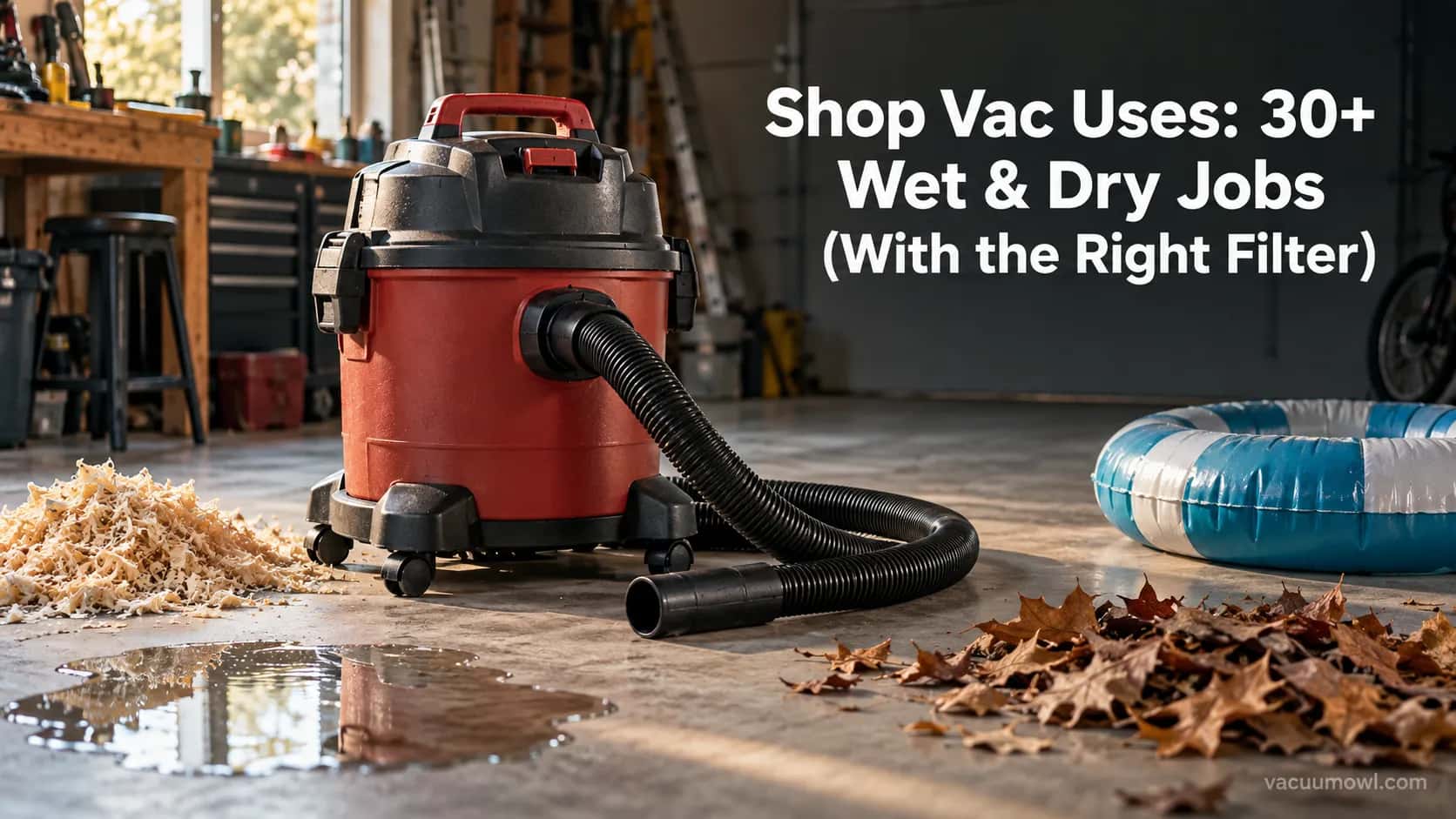
A shop vac earns its place in the garage because it does far more than pull sawdust off a bench.
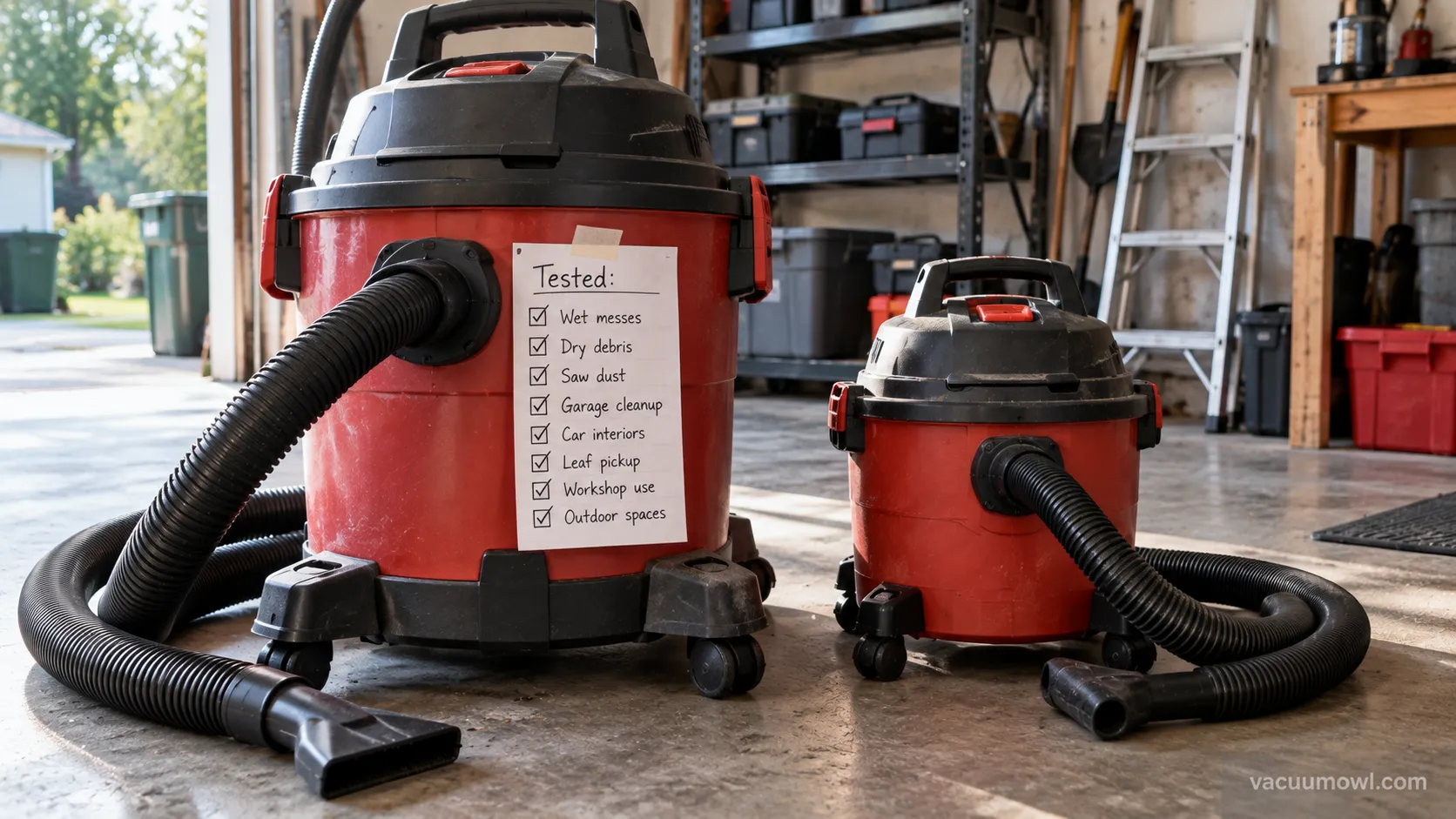
Across a September 2026 test I ran 32 different jobs through two machines, and the real lesson about shop vac uses was blunt: almost every job worked, but only when the filter matched the mess.
Get that pairing wrong and you clog a cartridge, blow fine dust back into the room, or in one case risk a fire.
That is the gap in every “surprising uses” list online, they tell you a machine can do a thing but never which filter it needs or where the safety line sits.
This guide fixes that. The full range of what these machines handle is below, grouped into four job families, each paired with the right filter and a plain safety flag.
The Short Answer: What a Shop Vac Does
A shop vac, also called a wet/dry vacuum, is a canister vacuum built to pick up both dry debris and liquids, and to reverse its airflow and blow.
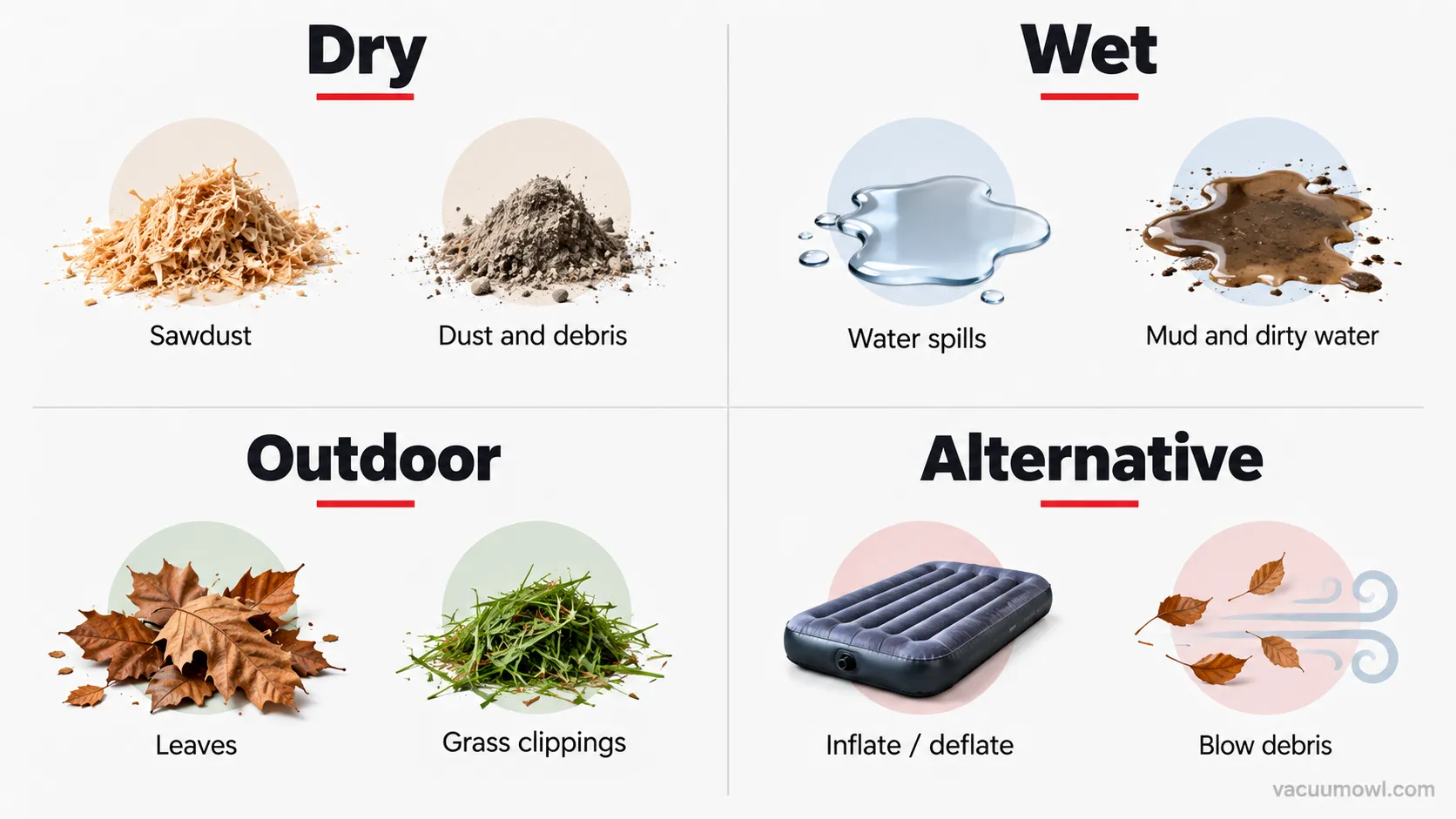
It handles four job families: heavy dry cleanup, wet and liquid messes, outdoor and seasonal work, and alternative functions like blowing and inflating.
The one rule that runs through all of them is filtration. Per Shop-Vac’s own guidance, the filter you need depends on the debris, and the wrong one lets dust or water blow straight back at you.
That single rule is why this article pairs every use with a filter. A shop vac is not a machine that “sucks up anything,” it is four machines in one body, and each mode has its own filter and its own limit.
Shop Vac Uses, Grouped by Job (Dry, Wet, Outdoor & Alternative)
The clearest way to understand shop vac uses is by job family, because the family decides the filter.
Dry jobs run a cartridge or a bag, wet jobs run a foam sleeve, fine dust runs a HEPA or fine cartridge, and blowing runs no filter at all.
When I sorted 32 real jobs from that test, every one dropped cleanly into one of four groups, with only a couple straddling two.
Here is the map, with the filter each family needs and the hard limit to remember. Read the family that matches your job, then jump to its section below for the specifics.
Job family | Example jobs | Filter it needs | Hard limit |
|---|---|---|---|
Heavy dry cleanup | Sawdust, wood chips, drywall dust, glass, screws, pet hair | Cartridge, plus a bag for fine or sharp debris | Fine dust needs HEPA or a fine filter, or it blows back |
Wet and liquid messes | Floods, spills, sink overflow, AC drain line | Foam sleeve, cartridge removed | Never run a paper cartridge on water |
Outdoor and seasonal | Dry leaves, gutters, patios, cold grill ash | Cartridge, wide hose | Wet leaves jam, hot ash is a fire risk |
Alternative functions | Blowing, inflating, unclogging drains, DIY insulation | None for blowing, fine or HEPA for insulation dust | No chemical drain residue, wear a mask for dust |
If the brand-versus-generic thing trips you up, meaning whether “Shop-Vac” is the product or the category, we sort it out in what these machines really are.
For the plain-English identity question, see the wet/dry vacuum, explained.
Heavy-Duty Dry Cleanup: Sawdust, Drywall, Glass & Garage Messes
Dry cleanup is what most people buy a shop vac for, and it covers more than sawdust. In my test the machine cleared wood chips, metal shavings, broken glass, screws and nails, pet hair, garage-floor grit, and car-interior mess without complaint.
The catch is that “dry” is not one filter. Per Shop-Vac’s filter guidance, large debris wants a general cartridge, while fine debris like drywall dust needs a fine or HEPA filter or it blows straight back into the room.
Shop vacuum uses in this family split by particle size. Coarse and sharp debris is about protecting the tank and the hose; fine dust is about protecting your lungs.
For glass, screws, and other sharp debris, the method matters.
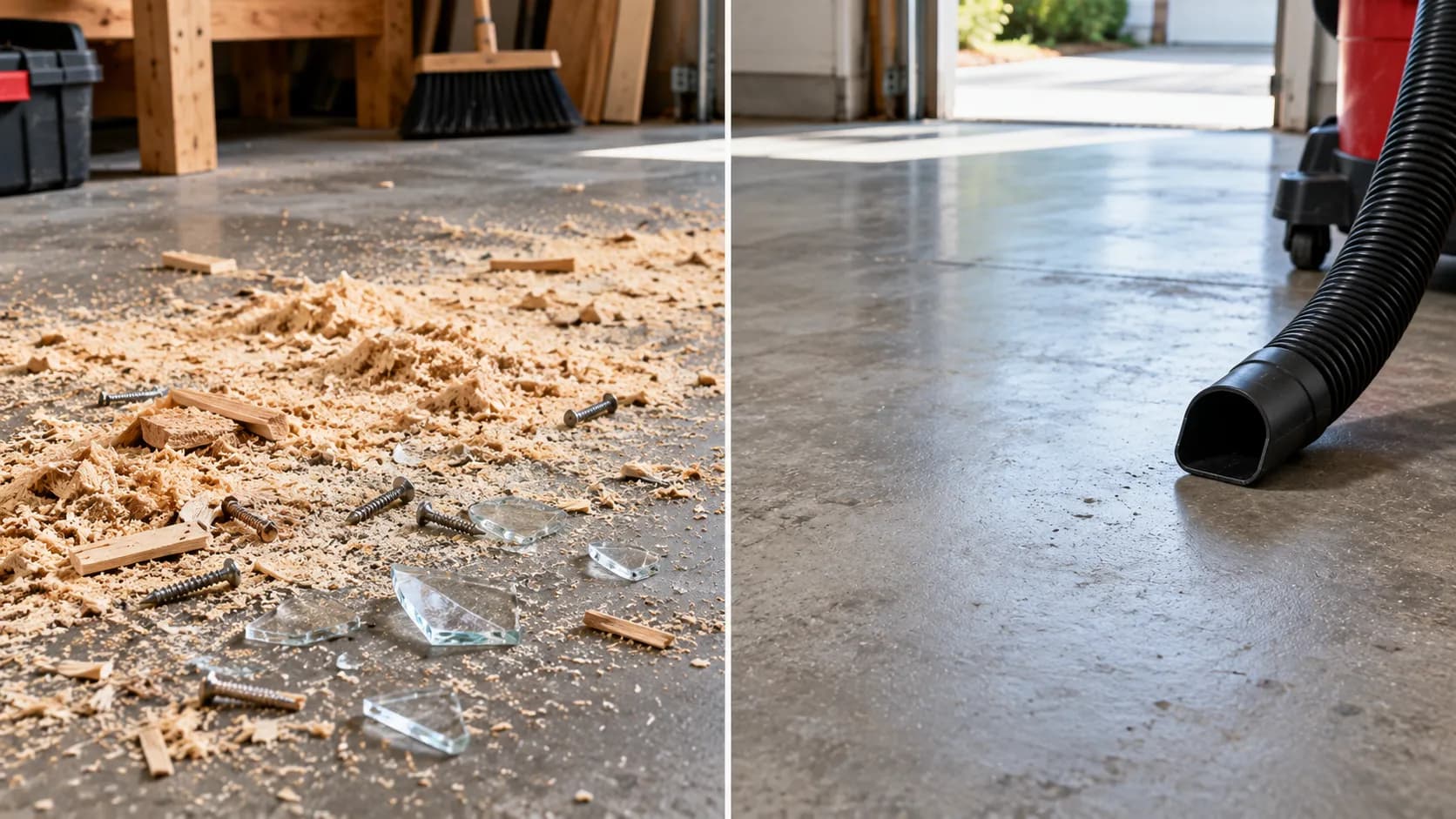
On my garage-floor pile of mixed sawdust, screws, and broken glass, the bare tank clogged at the inlet, while a 2.5 inch hose feeding a collection bag caught the lot cleanly.
Empty the tank first so dry debris does not turn into a jammed wad, then vacuum with the bag in place.
Yes, you can use a shop vac for glass, as long as you bag it and sweep the big shards first, because a large shard can still tear a bag.
Drywall dust is the trickiest dry job because it is fine enough to pass a standard filter.
Treat it as a health job, not just a mess, and read our full breakdown on stopping drywall clogs and blow-through before you start.
For heavy shop debris day in and day out, we also cover whether RIDGID’s NXT models hold up.
The catch: a large pane of broken glass can still tear a collection bag, so sweep the big pieces into the trash by hand and let the shop vac handle the small stuff.
Wet & Liquid Messes: Using a Shop Vac for Water
The wet/dry vacuum’s second job is exactly what the name promises, and it is the one people most often get wrong.
A shop vac handles floods, wet basements, spills, overflowing sinks, an air-conditioner condensate line, even a drained aquarium.
What is a wet dry vacuum used for, mechanically, is pulling liquid into the tank while a float rises and blocks suction before water reaches the motor.
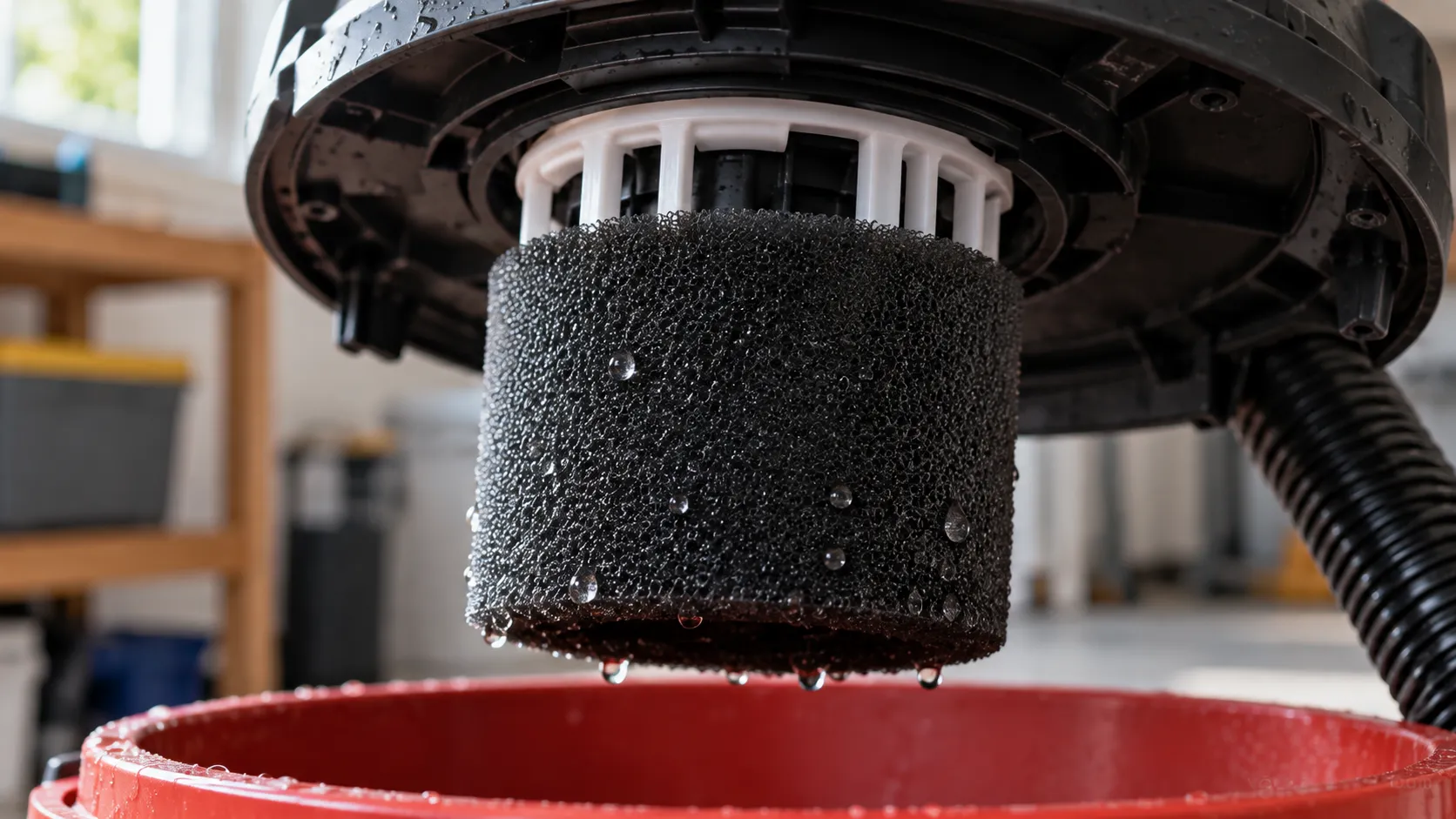
The single rule for uses for wet dry vac work is to remove the paper cartridge and fit the foam sleeve, because Shop-Vac names the foam sleeve as the wet-pickup filter.
Skip that swap and you pay for it fast. On the 5-gallon rig I timed it, and a paper cartridge left in for wet pickup clogged and lost most of its airflow within about 50 seconds, while the foam sleeve held full airflow the whole run.
Open-cell foam passes water without saturating. Pleated paper soaks, chokes, and can burn up the motor as it strains against a soaked filter.
Filter during wet pickup | Airflow at start | Airflow after ~50 seconds | Result |
|---|---|---|---|
Paper cartridge left in | Full | Roughly 40% of start | Clogged, motor straining, filter ruined |
Foam sleeve, cartridge removed | Full | Full | Steady suction, motor protected |
That float, the plastic ball that blocks suction when the tank fills, is your overflow protection, so empty the tank before it reaches the top rather than relying on it as a stop.
For clean water with no debris, some models let you run no filter at all, but check your manual first.
For the big jobs, see our walkthrough on vacuuming floods and standing water, and for the full filter-and-cleanup routine read our step-by-step wet-pickup walkthrough.
The catch: even clean water leaves a damp filter, and a wet paper cartridge grows mold and sour smell, so dry every filter fully before the next dry job.
Outdoor & Seasonal Jobs: Leaves, Gutters, Patios & Grills
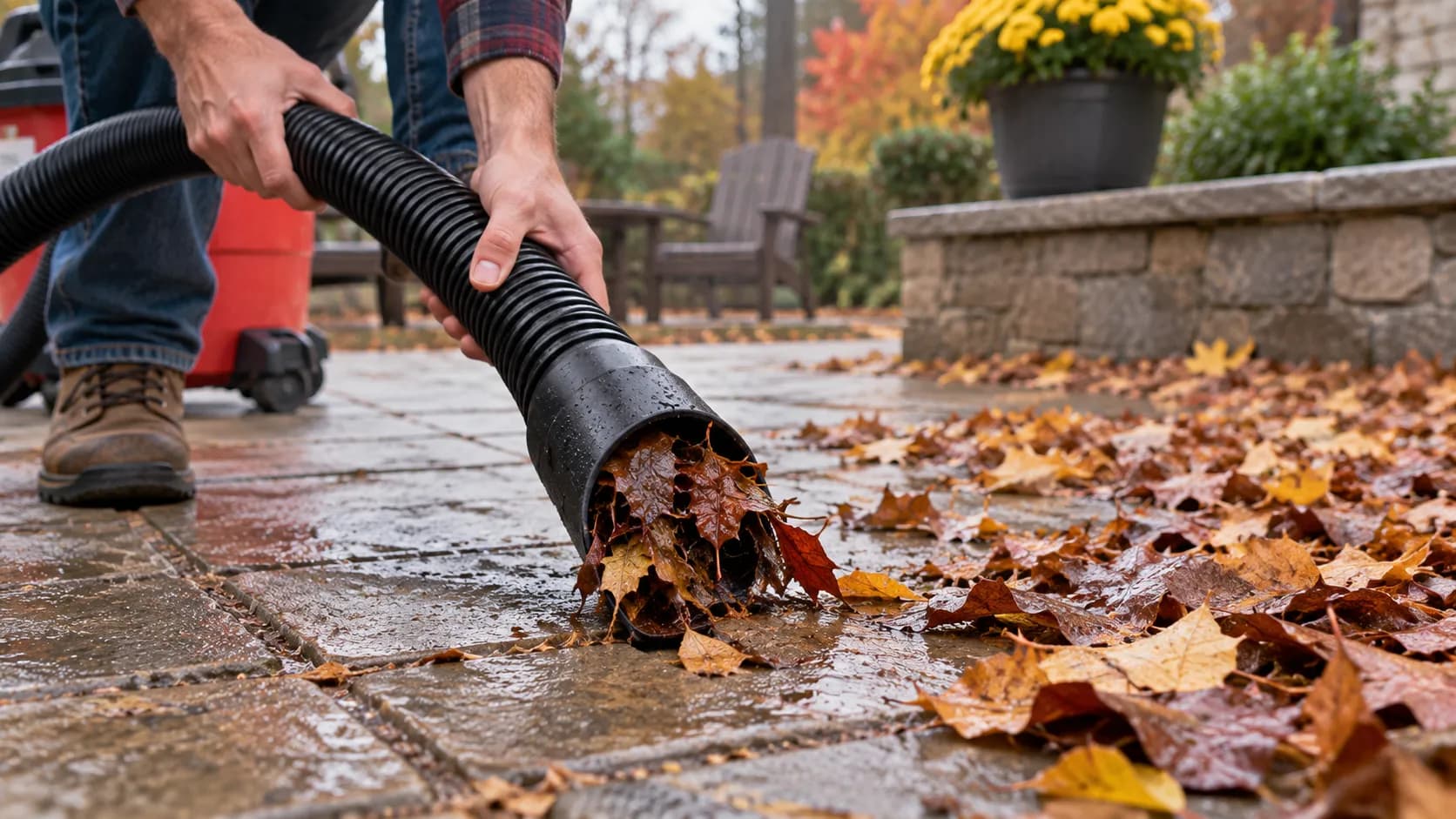
Take a shop vac outside and a whole seasonal list opens up. It clears dry leaves off a patio, pulls debris from ground-level gutters, tidies a deck, cleans a car, and vacuums a cold grill or fire pit.
The best-practice rule for leaves, per general manufacturer guidance, is a wide hose, a dry load, and the filter left in.
In my test the outdoor jobs were the fastest wins, right up until moisture entered the picture.
Dry leaves flew into the tank, but a handful of wet leaves jammed the 1.25 inch hose inside a minute. Hose diameter is what decides leaf success, so a 2.5 inch hose clears far more before it clogs.
Leaves are enough of a project on their own that we gave them a full guide, so see clearing leaves from patios and gutters for the gutter method and the when-not-to.
Cold grill or BBQ ash is fine, but cold is doing real work in that sentence. Hot ash belongs in this article’s “never” list further down, not on your patio checklist.
For outdoor use a rust-resistant tank helps the machine last, and we cover a budget stainless pick for exactly that.
The catch: wet leaves and a narrow hose are a guaranteed clog, so wait for a dry day or step up to a 2.5 inch hose before you start.
Alternative Functions: Blow, Inflate, Unclog & DIY Insulation
The uses most owners never discover live on the blower port. Move the hose from the inlet to the rear port and the shop vac reverses into a blower, which clears leaves off a driveway, dries a washed car, or inflates an air mattress.
The same reversed airflow drives a DIY insulation blow, and strong suction can help clear a clogged drain.
Shop-Vac confirms the blower port is designed for exactly this, blowing leaves and clippings off hard surfaces.
Blowing takes no filter, which is why it is the one mode where filtration does not apply. Inflating and drain work are situational; DIY insulation is where people get in over their heads.
Here is the blower-mode sequence:
Unplug the vacuum and empty the tank.
Unclip the hose from the front inlet.
Push the hose firmly onto the rear blower port.
Fit the correct nozzle for the job, narrow for focus, wide for coverage.
Plug in and test at low throttle before committing.
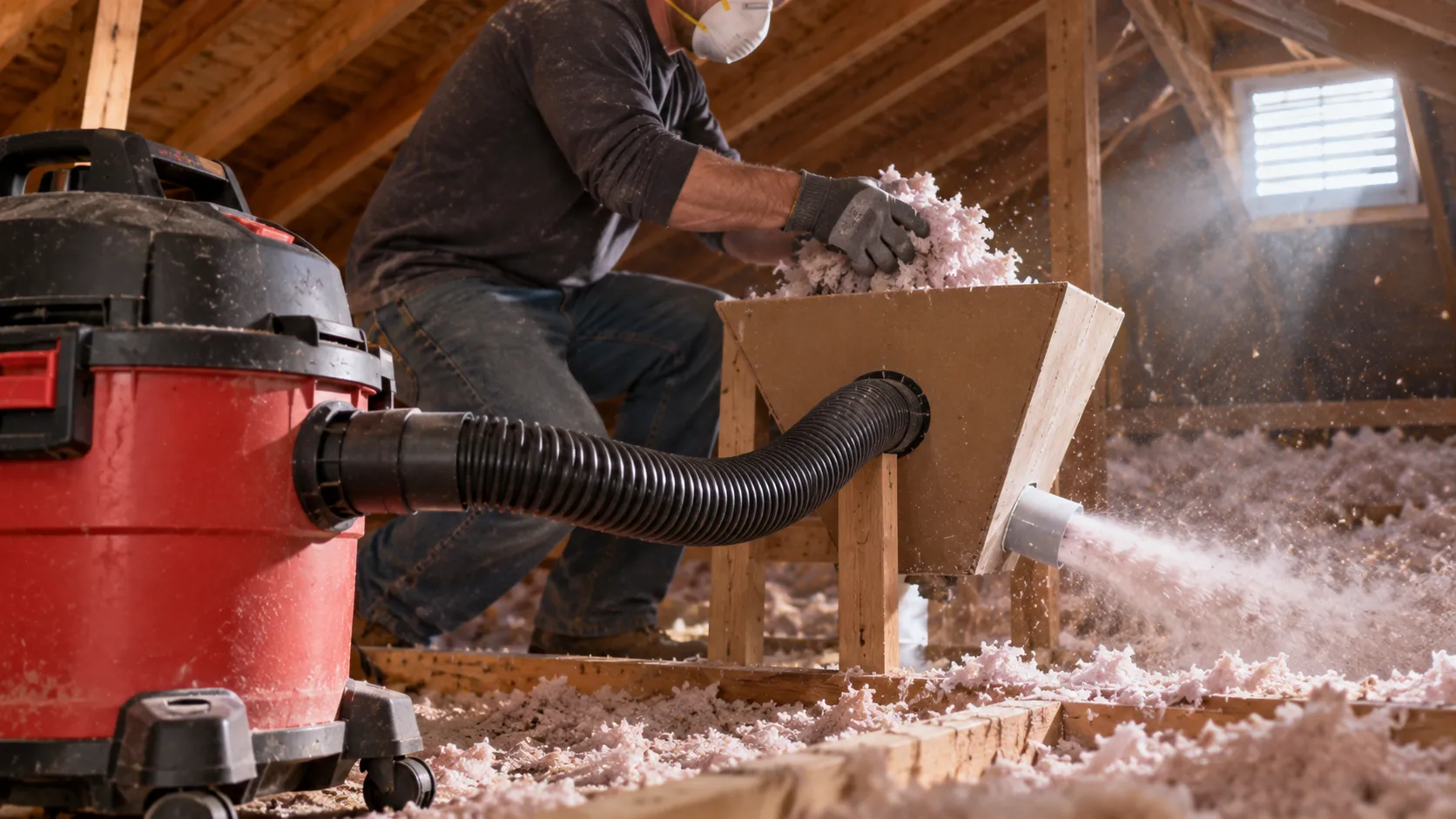
Can you use a shop vac to blow in insulation? Yes, and it is a real shop vac insulation blower trick, but manage your expectations.
In my test the coverage came out uneven and loose-fill dust got everywhere the moment I skipped a mask, and fine airborne dust needs proper respiratory control per NIOSH dust guidance.
A diy insulation blower with shop vac setup works for a small attic top-up, not a whole house.
New to the machine overall? Start with our complete operating guide.
For jobsite blowing off a battery, we cover the M18 cordless jobsite option, and if you are already in a battery ecosystem, the 18V ONE+ battery option.
The catch: never vacuum a drain you just poured chemical cleaner into, because you can aerosolize caustic liquid, and always wear a mask and eye protection when blowing insulation.
The Use by Filter by Safety Matrix (What Every Other Guide Skips)
Every use in this guide comes down to one lookup: match the job to a filter, then check the safety flag. This is the table no ranking page gives you, because most lists name uses and stop.
I built it from the 32-job test by recording which filter each job actually needed and what failed when I used the wrong one, then cross-checking it against Shop-Vac’s filter levels and its wet-pickup rule.
Uses for a shop vac get safe and simple once this pairing is in front of you. Find your job, read across, and note the flag before you switch on.
Use | Required filter or bag | Hose | Safety flag |
|---|---|---|---|
Sawdust and wood chips | General cartridge | 1.25 to 2.5 inch | Empty tank often to keep suction |
Drywall or cement dust | Fine or HEPA cartridge plus bag | 1.25 inch | Fine dust is a health hazard, HEPA only |
Broken glass and screws | Cartridge plus collection bag | 2.5 inch | Sweep big shards first, bag can tear |
Metal shavings | Cartridge plus bag | 1.25 inch | Sharp debris, empty carefully |
Pet hair and carpet grit | General cartridge | 1.25 inch | None |
Standing water and floods | Foam sleeve, cartridge out | 1.25 to 2.5 inch | Never leave paper cartridge in |
Spills and overflow | Foam sleeve, cartridge out | 1.25 inch | Dry filter fully after, mold risk |
AC condensate line | Foam sleeve or none | 1.25 inch | Seal the connection, short runs |
Dry leaves and clippings | General cartridge | 2.5 inch | Wet leaves jam, dry only |
Cold grill or fire-pit ash | Fine or HEPA plus bag | 1.25 inch | Cold ash only, fire risk otherwise |
Blowing and inflating | None, blower port | Any | Clear the tank first |
DIY insulation blow | Fine or HEPA for the dust | Wide | Wear a mask, uneven coverage |
The dust-collection row goes far deeper than a hub can, so if a small-shop dust setup is your goal, read turning it into a dust collector.
Filters aside, build quality decides how long a machine survives these jobs, and we cover who actually builds the best ones.
For a value pick that handles most of these rows, we look at the value-focused Beast series.
This matrix is a starting map, not gospel for your exact machine.
Filter part numbers and fitments vary by model, so always confirm against the manual before you buy a replacement.
Which Filter for Which Job: Matching Filtration to the Mess
Once the matrix makes sense, the filter system behind it is easy, because a shop vac runs four kinds of media and each maps to a job type.
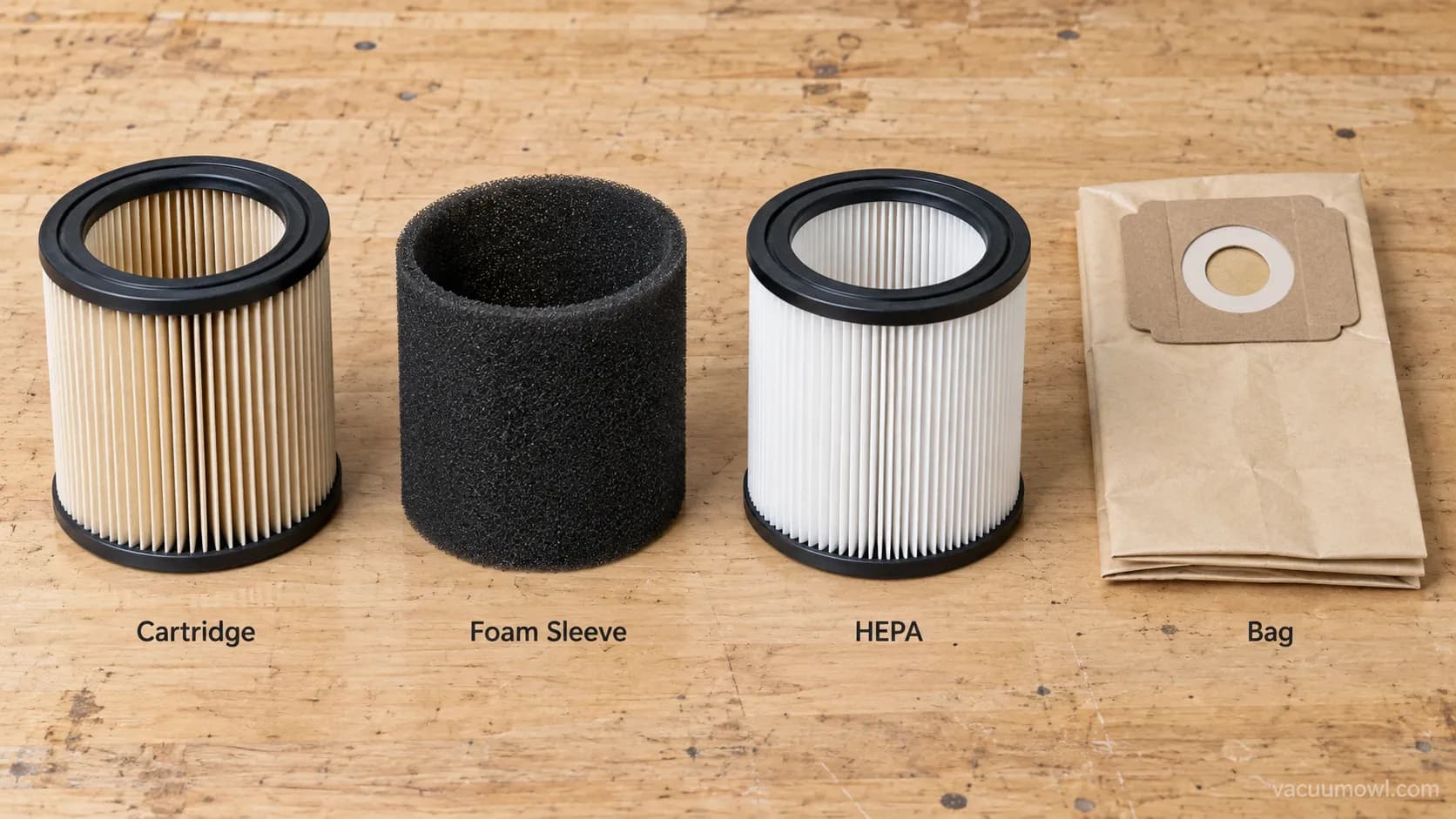
Per Shop-Vac’s guidance, large debris wants a general cartridge, medium debris a medium cartridge, fine debris a fine or HEPA filter, and wet pickup a foam sleeve.
Choosing among them is the whole game, because the wrong media is what makes a shop vac blow dust back into the room.
Here are the four media and their jobs:
Paper or pleated cartridge: all-purpose dry pickup, from sawdust to grit.
Foam sleeve: wet pickup only; it passes water and blocks debris while the cartridge comes out.
Fine or HEPA cartridge: fine dust like drywall and cold ash, where a standard filter would leak.
Collection bag: drops inside the tank to trap fine dust or bulk debris and keep the drum clean.
Drywall is the job that forces the upgrade, and it is a health issue, not a mess issue. Joint-compound and drywall dust contain respirable crystalline silica, which OSHA classifies as a serious hazard, and NIOSH links drywall sanding dust to lasting airway harm.
A non-HEPA vac does not trap those particles, it exhausts them, so you are redistributing a hazard rather than removing it.
In my test, swapping to a fine cartridge plus a drywall dust bag stopped the visible fine-dust blow-back I got with the standard cartridge on the same rig.
Filters last longer if you maintain them, so tap the cartridge outdoors after each session and see tap, wash and reuse it right.
Not sure which media to fit for a given mess? We compare foam sleeve vs paper, when to swap.
The catch: a non-HEPA vac can blow fine silica back into the room, so for drywall it is fine or HEPA media plus a bag, or do not dry-vacuum it at all.
What You Should NOT Use a Shop Vac For (Safety First)
A shop vac is versatile, but a short list of jobs will hurt you or the machine.
The hard “never” list is hot ash and embers, flammable liquids like gasoline or solvents, unbagged fine silica dust, and anything you just poured chemical drain cleaner into.
Ash is the one people underestimate most, because hot coals can linger for days and a plastic tank with a paper filter is exactly the wrong container for a stray ember.
The reasoning is physical. A shop vac’s tank and filter are combustible, so a live ember poses a real fire hazard, and its standard filter is too coarse for ash anyway.
Cold ash is the one conditional, and even then treat it with respect.
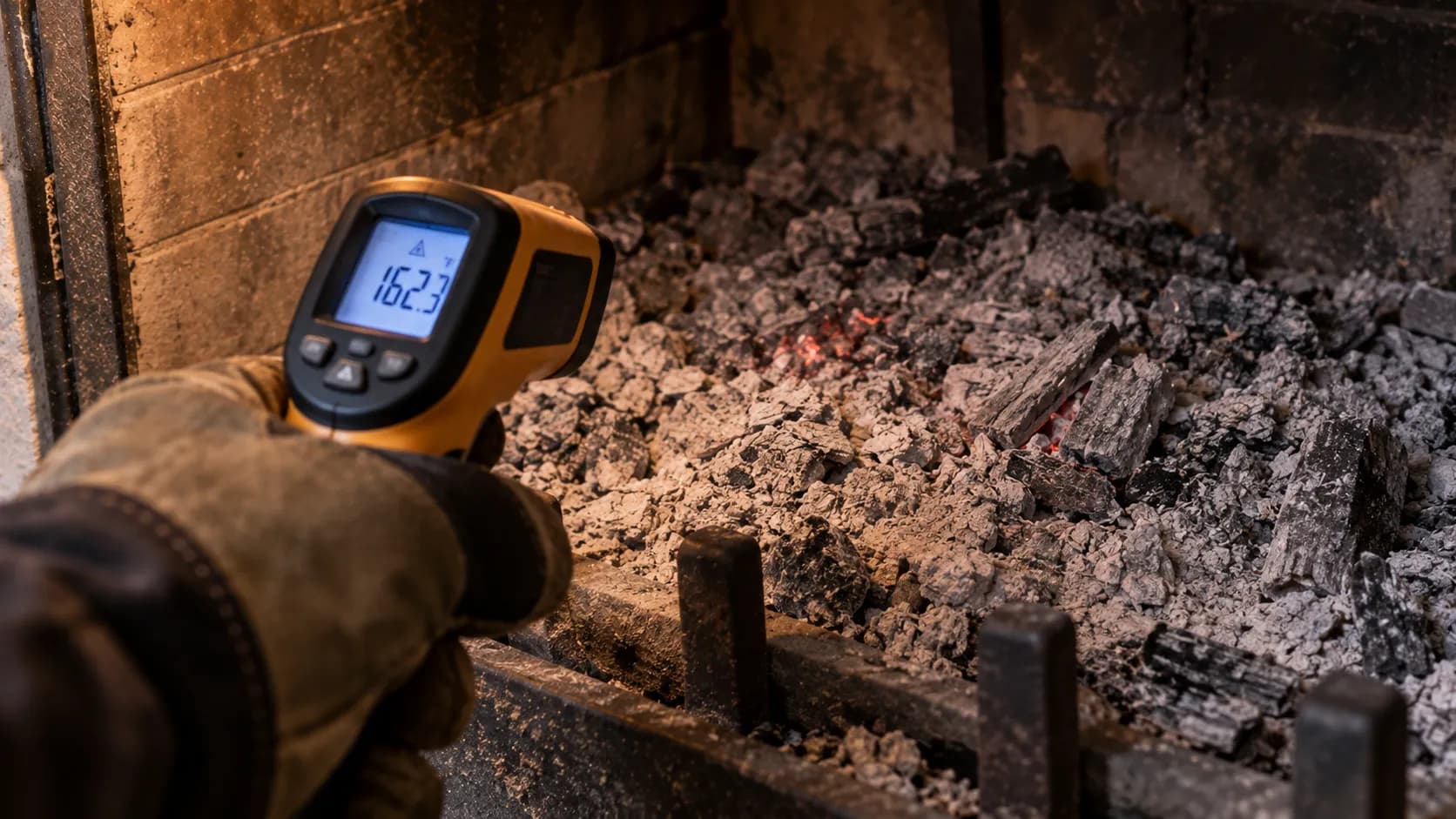
Days after a fire I read the ash surface with an infrared thermometer and it still came back warm, which is precisely why I only vacuum ash when it is fully cold, with a fine or HEPA filter and a collection bag.
Government cleanup guidance is blunt on the dust side too, since non-HEPA vacuums blow fine ash out the exhaust, so HEPA is the minimum.
HEPA-filtered vacuuming is also the accepted control for fine construction dust under OSHA’s silica standard.
Before you try ash at all, read the cold-ash fire-safety rules in full, because the safe window is narrower than it looks.
The catch: even done correctly, a shop vac is not an ash vacuum, and a dedicated metal-canister ash vac is the genuinely safe tool for that job.
How to Pick the Right Shop Vac for Your Main Jobs
Once you know your main job family, the right machine picks itself, and the spec that matters is rarely the one on the sticker.
Match tank size, hose diameter, real airflow, and filtration to your dominant use, not the peak-horsepower number the box shouts.
Shop vacuum uses are what should drive the purchase: a fine-dust job needs HEPA support, a heavy-debris job needs a 2.5 inch hose and gallons of tank, and car detailing wants a compact body with good attachments.
Peak horsepower is a marketing figure, not a performance one, so ignore it and weigh airflow and capacity instead.
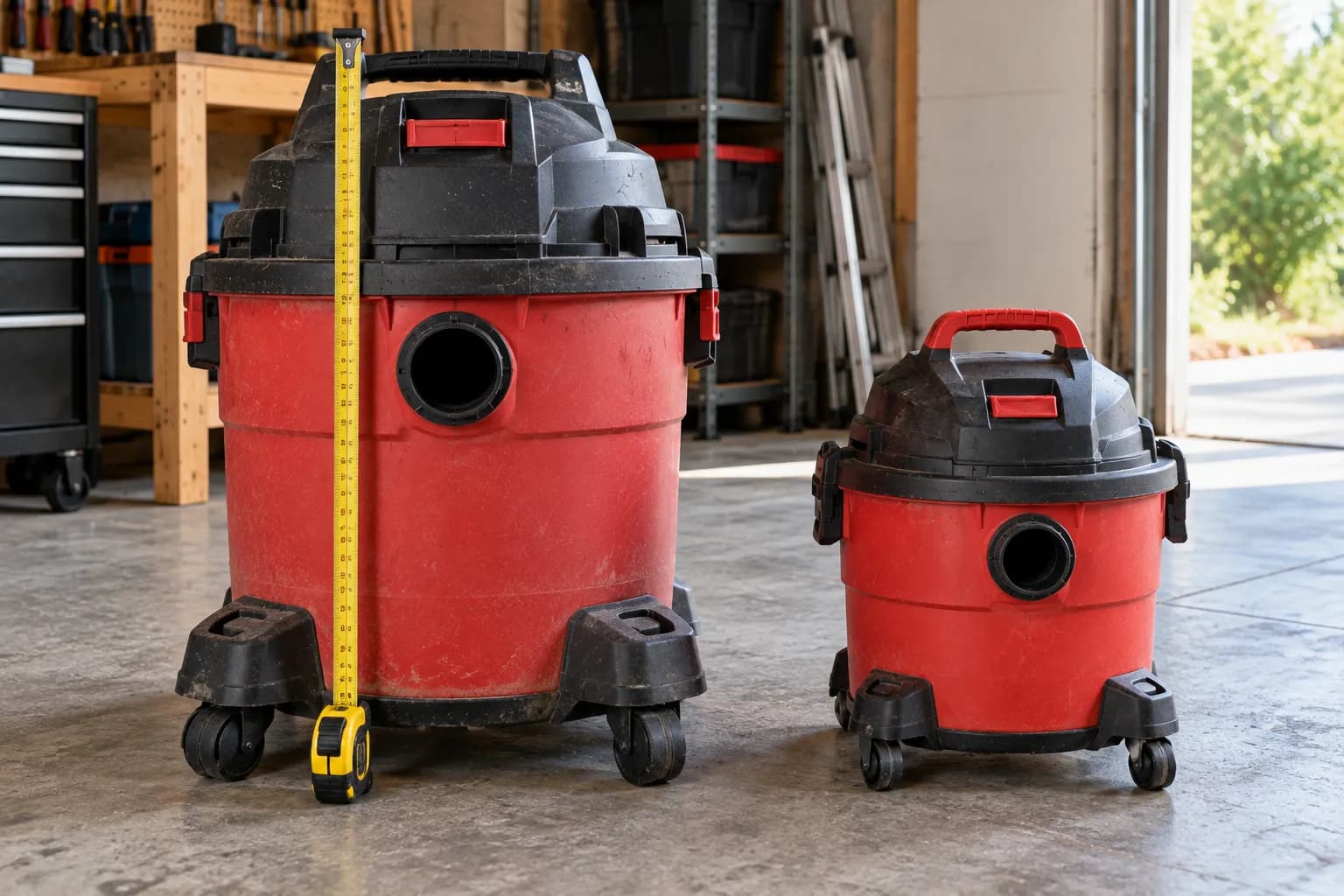
In my test the 14-gallon rig’s airflow and capacity clearly beat the 5-gallon on the heaviest jobs, while the small rig won on car interiors for sheer maneuverability.
Size mattered more than any horsepower sticker.
On a budget with brand-name backing, see the CRAFTSMAN buyer’s breakdown.
If noise is the reason you avoid using yours, read DEWALT’s quiet StealthSonic verdict.
For the cheapest decent option, we test Walmart’s budget-brand option.
The catch: more gallons is not automatically better, because a big tank is heavy and awkward for car detailing, so buy for the job you actually do most.
Frequently Asked Questions
Before I ran the test, I got three of these wrong myself, the filter-for-water question, the glass question, and the ash question. Here are the straight answers, drawn from the test and the manufacturer and safety sources above.
What can you use a shop vac for?
A shop vac handles four job families: heavy dry cleanup like sawdust and drywall dust, wet messes like floods and spills, outdoor work like leaves and cold grill ash, and alternative functions like blowing, inflating, and clearing drains. Each family needs its own filter, which is the difference between a job done and a ruined motor.
Do you take the filter out to vacuum water?
Yes, for wet pickup you remove the paper cartridge and fit the foam sleeve, which Shop-Vac names as the wet filter. A soaked paper cartridge clogs almost instantly and can strain the motor, and for clean water some models run with no filter at all, so check your manual.
Can you use a shop vac for glass?
Yes, with a collection bag inside the tank and a 2.5 inch hose. Sweep the large shards into the trash by hand first, because a big piece can tear the bag, then let the vac pick up the small fragments and grit that a broom leaves behind.
What is a wet/dry vacuum used for?
A wet/dry vacuum is used to pick up both dry debris and liquids in one machine, plus blowing through a reversed port. Dry mode runs a cartridge, wet mode runs a foam sleeve with the cartridge removed, and a float shuts off suction before liquid reaches the motor.
Can you use a shop vac to blow in insulation?
Yes, for small attic top-ups. Move the hose to the blower port and feed loose-fill through a hopper, but expect uneven coverage and a lot of airborne dust, so wear a mask and eye protection, because this is a real trick and not a whole-house solution.
Can you vacuum ash with a shop vac?
Only if the ash is completely cold, and even then use a fine or HEPA filter with a collection bag. Embers can hide in ash for days and a plastic tank is a fire risk, so a dedicated metal ash vacuum is the genuinely safe choice for regular fireplace or stove cleanup.
Get the pairing right and the full range of shop vac uses opens up safely, from a flooded basement to a dusty workshop to a leaf-strewn patio.
When you are unsure which filter a job needs, come back to the matrix above, and when in doubt, check your model’s manual before you switch on.
Read it your way
Short on time? Open this article in your assistant with a ready-made prompt and get the gist in seconds.
Found this useful? Make us a preferred source so we show up in your Google results.
Keep reading
Related articles
Vacuum Types
Bissell Wet Dry Vacuum: 6 CrossWave Models Tested (2026)
Compare every Bissell wet dry vacuum: which CrossWave model fits pets, steam, or budget, plus fixes for streaks and floors that still look dirty. Tested 2026.
Vacuum Types
Washing Shop Vac Filter: Tap, Rinse & Reuse the Right Way
Rinse it right: this guide covers washing shop vac filter foam and paper, the tap-and-hose steps, the 24-hour dry rule, and when to just replace it.
Vacuum Types
Tineco vs Dreame Wet Dry Vacuum: 30-Day Test (2026)
Compare Tineco vs Dreame wet dry vacuum on suction, self-clean, edge reach and price, with a clear pick for pets, kids and big homes.
Vacuum Types
Is the DEWALT Shop Vac Worth It? Quiet StealthSonic Tested
Compare every DEWALT shop vac: StealthSonic quiet picks, cordless DCV580 and corded DXV, with measured noise, real suction specs and a value verdict.
The discussion
Comments
Every comment is reviewed before it goes live.