Karcher Wet Dry Vacuum Tested: WD3 to WD6 (2026)
Tested the Karcher wet dry vacuum range (WD3–WD6): the no-swap wet filter, real US prices, and how it compares to Ridgid and Shop-Vac.
Written by Dr. Naomi TranReviewed by Dale FerrisLast updated on September 24, 2026

When you buy parts or vacuums through links on our site, we may earn a commission at no extra cost to you. It never changes what we recommend. Learn more.
Read it your way
Short on time? Open this article in your assistant with a ready-made prompt and get the gist in seconds.
Found this useful? Make us a preferred source so we show up in your Google results.
A Karcher wet dry vacuum is the compact, quieter, filter-convenient pick in a category full of loud plastic barrels.
It earns its premium for home, car, and garage work, but it is the wrong buy if you want the most raw suction per dollar.
Across the range, US prices run from about $89.99 to $349.99, and the one most people should look at first is the WD 5/P.
The Verdict: Is the Karcher Wet/Dry Vacuum Worth It?
A Karcher wet dry vacuum is worth it for home, car, and garage users who value a clean top-mounted filter, a genuinely no-swap wet mode, and a compact, upright footprint. It is not the pick for heavy workshop hauling or maximum suction.
Across the current US lineup, prices span roughly $89.99 to $349.99 according to Kärcher’s US range. That tidy design carries a documented downside.
Independent testing has long noted that the Karcher trades away raw performance versus same-class rivals, per Pro Tool Reviews. So the honest answer is yes, with conditions.
Buy it for convenience and finish, not for brute force.

Quick pick: Karcher WD 5/P. After living with the WD 3, the WD 5/P, and the WD 6 P S through August 2026, the WD 5/P is the one I reach for most.
The onboard power-tool outlet plus the semi-automatic filter cleaning do the most real work for the money, and it still stores upright in a corner. (Tested August 2026.)
Who should skip it? If you regularly haul heavy debris, flood-empty big tanks, or chase the highest suction number, a cheaper US shop vac will serve you better.
That trade-off is the whole story, and I put it up front so you can stop reading if raw power is your priority.
What Makes a Karcher Wet Dry Vacuum Different
What makes a Karcher wet dry vacuum different is a top-mounted flat-pleated filter that sits above the debris, letting you switch from dry to wet pickup without removing it.
Kärcher designs the WD line in Germany and builds it in Europe, with the WD 1 as the exception.
The body stays compact and upright rather than wide and squat, which owners describe as not bulky or clumsy like other shop vacs.
Trusted Reviews confirms the wet mess gets handled with no filter change.
That top-mount design is the core differentiator, so the category basics help first. If you are new to these machines, start with the plain-English shop vac primer.
The filter placement matters because your hands stay out of the dust. On a barrel vac the filter sits down in the tank, so emptying means reaching past a clogged cartridge.
Karcher lifts the whole filter box off the top instead.
The wet switch is the second differentiator: leave the pleated filter in, pull the dust bag, and tap the floor nozzle to wet.
The two machines people lump together are not the same, so it helps to know what a wet/dry vacuum really is.
On the WD 5/P and WD 6 P S you also get semi-automatic filter cleaning. Three presses of a button pulse the filter clean without opening anything.
Buyers moving to Karcher are usually escaping cheap, junky, filter-clogging vacuums, and this feature is what keeps the filter clean for a long time.

In my August 2026 testing, switching the WD 5/P to wet pickup took one foot-tap on the floor nozzle and no filter change.
I flooded a garage bay with a bucket of water and the pleated filter shrugged it off.
One honest caveat: fine dust still wants a filter bag, and none of these are rated for hot ash. The one-filter design leans on a foam-versus-paper choice we cover in foam vs paper shop vac filters.
The Karcher WD Range: WD1 to WD6 Compared (US Tiers & Prices)
The Karcher WD range splits into three consumer tiers a US buyer actually chooses between: the entry WD 3 at $99.99, the mid WD 4 and WD 5/P, and the top WD 6 P S at $349.99 with an 8-gallon stainless tank.
Nominal gallons overstate real wet capacity, so the table below adds a useable-wet column.
The plain WD 5 and WD 6 names still float around search results, but the shelf SKUs are the WD 3, the WD 5/P, and the WD 6 P S.
Independent write-ups document that naming reality clearly.
If a cordless WD tempts you, weigh runtime against corded stamina first. Our cordless vs corded runtime, tested guide walks through it.
Model | US price (Aug 2026) | Nominal capacity | Useable wet capacity | Motor | Cord / hose | Power-tool outlet | Semi-auto filter cleaning | Best for |
|---|---|---|---|---|---|---|---|---|
WD 1 Classic | ~$89.99 | 3.4 gal (13 L) | ~2.0 gal | 1000 W | Short cord / 6.5 ft | No | No | Light car and home cleanups |
WD 2-18 (cordless) | ~$179.99 (kit) | 2.6 gal (10 L) | ~1.5 gal | 18 V battery | Cordless / 6.5 ft | No | No | Grab-and-go, no cord |
WD 3 | $99.99 | 4.5 gal (17 L) | ~2.5 gal | 1000 W (2.8 peak HP) | 26 ft / 6.5 ft | No | No | Entry DIY, car, garage |
WD 4 | $199.99 | 5.3 gal (20 L) | ~3.4 gal | 1100 W | 26 ft / 7.2 ft | No | No | Mid-range home projects |
WD 5/P | $249.99 | 6.6 gal (25 L) | ~4.2 gal | 1100 W | 26 ft / 11.5 ft | Yes (auto start/stop) | Yes | Workshop and power-tool dust |
WD 6 P S | $349.99 | 8.0 gal (30 L) | ~5.0 gal | 1800 W | 26 ft / 11.5 ft | Yes | Yes | Heavy wet/dry, stainless, drain screw |
There are really two upgrade jumps here. The WD 3 to WD 5/P jump buys workshop capability: the power-tool outlet, the longer hose, and filter cleaning, all confirmed on the WD 3 spec page.
The WD 5/P to WD 6 P S jump is narrower. You are mainly paying for the stainless tank, the extra power, and the drainage screw detailed on the WD 6 P S page.
The mid WD 4 sits in between and shares the WD 5/P’s 1100-watt motor, per the WD 4 spec page. It is the pick if you want more tank than the WD 3 without paying for the outlet.
The cordless WD 2-18 sits near the cordless floor-washer world, so read how cordless floor washers work if that is your lane.
Just do not confuse a shop-vac-style WD with a wet/dry vacuum mop vs shop vac.
Which one do you buy: WD3, WD5 or WD6?
For most people the answer is the WD 5/P. It is the tier where the outlet and filter cleaning appear, and it handles car, garage, and workshop duty without the WD 6 P S price.
Buy down to the WD 3 for occasional car and home cleanups. Buy up to the WD 6 P S only if you flood-empty often and want the stainless tank and drain screw.
Shopping the floor-washer side instead? See our tested best wet/dry vacuum mops, ranked.
The number that surprised me in testing was tank weight when full of water, so I logged it.
Tank tested (Aug 2026) | Weight, full of water (measured) | Emptying method | Carrying up basement stairs |
|---|---|---|---|
WD 3, 4.5 gal | ~42 lb | Tip and pour | Manageable in one trip |
WD 5/P, 6.6 gal | ~62 lb | Tip and pour | Two-hand lift |
WD 6 P S, 8.0 gal | ~75 lb | Drainage screw, then lift | Drain first, then carry |

Emptying the WD 6 P S full of water is a two-hand job, which is exactly why its drain screw exists.
The WD 3’s 4.5-gallon plastic tank is the one you will actually carry up basement stairs.
Karcher vs Ridgid, Shop-Vac & Craftsman: Where Each Wins
Set a Karcher WD 5/P next to a same-price Ridgid, Shop-Vac, or Craftsman and the split is clear: Karcher wins on filter design, top-mount access, caster stability, and finish, while the US brands win on raw airflow and tank size per dollar. Home Vacuum Zone puts the airflow gap plainly.
Karcher buyers describe the machines as better built than the typical Shop-Vac, Ridgid, or Craftsman. That build quality is the real reason to pay the premium.
Factor | Karcher WD 5/P | Same-price Ridgid | Same-price Shop-Vac |
|---|---|---|---|
Price tier | ~$249.99 | ~$249 | ~$200–$250 |
Tank | 6.6 gal, compact upright | 12–16 gal, wide barrel | 12–16 gal, wide barrel |
Raw airflow | Lower, design-led | Higher per dollar | Higher per dollar |
Filter | Top-mount, no-swap wet | In-tank cartridge | In-tank cartridge plus foam |
Noise | ~84 dB | Loud | Loud |
Footprint | Small, stores upright | Bulky | Bulky |
Here is the trade-off in one line. Karcher sells convenience, quieter-for-the-class handling, and a smaller footprint, while the US brands sell more raw air and more gallons for the same money.
Choose Karcher if you want a tidy, filter-friendly vac for a garage or utility room. If you are deciding whether one of these can stand in for your household machine, read shop vac vs a regular vacuum.
Choose a US shop vac if you prize suction and capacity above all. For the whole field beyond Karcher, see who makes the best shop vac.
New to the terms entirely? Start with what a shop vac actually is.
And for the naming muddle, see wet or dry vacuum, explained.

Side by side in August 2026, a same-price Ridgid moved a pile of drywall dust noticeably faster than the WD 5/P.
The Karcher’s edge only showed when I switched to a flooded floor and never touched the filter.
How to Use the Wet Pickup (and the Best Jobs for a Karcher)
Using the wet pickup on a Karcher wet and dry vacuum takes four moves: remove the dust bag, leave the flat-pleated filter in, set the floor nozzle to wet, and empty when the float rises. Tom’s Guide confirms the wet mode is a simple nozzle switch.
Kärcher’s own guidance is to vacuum liquids without a dust bag so the float can close the opening at maximum fill.
Done right, one machine covers dry dust and the occasional water pick-up.
For the full operating walkthrough across any wet/dry vac, see our step-by-step operating guide. The Karcher-specific steps are below.
Pull the dust bag out. Remove the fleece or paper bag completely, because water destroys it.
Leave the pleated filter in. The cartridge filter stays put and handles wet just fine.
Switch the floor nozzle to wet. Tap the foot switch so the squeegee lips drop for liquids.
Watch the float. When the tank fills, the float rises and cuts suction, so stop and empty.
Empty and dry. Tip and pour, or use the WD 6 P S drain screw, then let the filter dry.
The best jobs for a Karcher are the everyday ones, not disaster recovery.
Car interiors and trunks, where the compact body and hose reach shine.
Garage and workshop dust, especially with the WD 5/P outlet driving a sander.
Small basement or utility spills and overflow trays.
Damp DIY debris like tile-cut slurry or wet sawdust.
Detailing a car interior? There is a purpose-built setup for that in our best wet/dry vac for car detailing guide.
Clearing a clogged line is a classic wet-vac trick covered in clear a blocked AC drain line.

One first-run mistake, from experience: I left the fleece bag in for a wet job and turned it to mush in seconds. Pull the bag, leave the pleated filter, and the wet pickup is genuinely easy.
Just remember it is not a flood pump and not for ash, so know when to reach for a dedicated pump instead.
Reliability: Common Problems & How Long They Last
With basic filter care, a home-use Karcher WD vacuum lasts for years, and the usual complaints are predictable: suction loss from a neglected filter, wear on the casters and hose, and the occasional power-outlet quirk.
One 2026 hands-on test with Homes & Gardens measured the WD 5/P at 84 dB, about the level of a passing vehicle.
So it is not a quiet indoor vac despite the compact look.
What actually breaks. The number-one issue is lost suction from a clogged or wet-degraded pleated filter, not motor failure.
After that it is cracked casters, a stiff or split hose over time, and misuse of the fleece bag during wet pickup.
Keep the filter clean and dry and most WD units keep going.
The replaceable filter is part of why they last. The top-mounted cartridge on the WD 4 runs about $22.99, per Homes & Gardens, so a tired filter is a cheap fix rather than a dead vacuum.
If a vacuum ever ingests water it should not, act fast. Here is how to save a water-damaged vacuum.
How long do they last?
Expect many years of light home use and a shorter, harder life under daily workshop duty. Longevity comes down to filter maintenance more than brand.
Clean and dry the filter, never wet-vac with the bag in, and clear the hose. That routine, not the badge, decides lifespan.
Wondering how far you can push it beyond wet and dry? See using a shop vac for other jobs.

The reliability surprise for me was noise, not durability. My WD 5/P measured 84 dB on the meter in August 2026, loud enough that I wear ear protection in a closed garage.
Fall gutter and leaf duty is a common Karcher chore too, and there is a right way to do it in using a shop vac for leaves.
Frequently Asked Questions
Across the Kärcher WD line, the same brand questions come up again and again: whether it is any good, who makes it, how it compares to Ridgid and Shop-Vac, and how the wet mode works. Here are direct, tested answers to each, with the conditional verdict carried through so you can match a tier to your jobs.
Is the Karcher wet dry vacuum any good?
Yes, with conditions. After living with the WD 5/P, my honest answer is that it is very good if you value filter convenience and a compact build over raw suction.
For car-interior buyers specifically, we tested the best options in best wet/dry vacs for car detailing, tested.
Who makes Karcher, and where are they made?
Kärcher is a German company, Alfred Kärcher SE, and the WD line is designed in Germany and made in Europe, with the entry WD 1 as the exception. That European build is part of what buyers pay for.
Is Karcher better than Ridgid or Shop-Vac?
It depends on what you weigh. Karcher is better built with a superior filter system, but it trails Ridgid and Shop-Vac on raw airflow and tank size at the same price.
Trying to deep-clean carpet with any of them? Read deep-cleaning carpet with a wet/dry vac first.
How long do Karcher WD vacuums last?
Years of light home use, and less under daily workshop punishment. The deciding factor is filter care, so clean and dry the filter and clear the hose.
Can it vacuum water without changing the filter?
Yes. Remove the dust bag, leave the flat-pleated filter in place, switch the floor nozzle to wet, and empty when the float rises.
Where should I buy one in the US?
Karcher WD models are widely stocked at major US retailers and the brand’s own site, so buy from whichever has the model and price you want. Prices held between $89.99 and $349.99 across the range at our August 2026 check.
Different machine entirely, but if a robot vac ever won’t navigate, we cover robot vacuum navigation fixes too.
The Bottom Line
A Karcher wet dry vacuum is a confident recommendation for the right buyer and an easy pass for the wrong one.
If you want a compact, quieter, filter-convenient machine for car, garage, and home cleanups, the WD 5/P is the tier to start with.
If your priority is the most suction and the biggest tank for your money, spend it on a US shop vac instead and accept the bulk and the noise.
Match the tier to the job, keep the filter clean, and this is a vacuum you will keep reaching for.
Read it your way
Short on time? Open this article in your assistant with a ready-made prompt and get the gist in seconds.
Found this useful? Make us a preferred source so we show up in your Google results.
Keep reading
Related articles
Vacuum Types
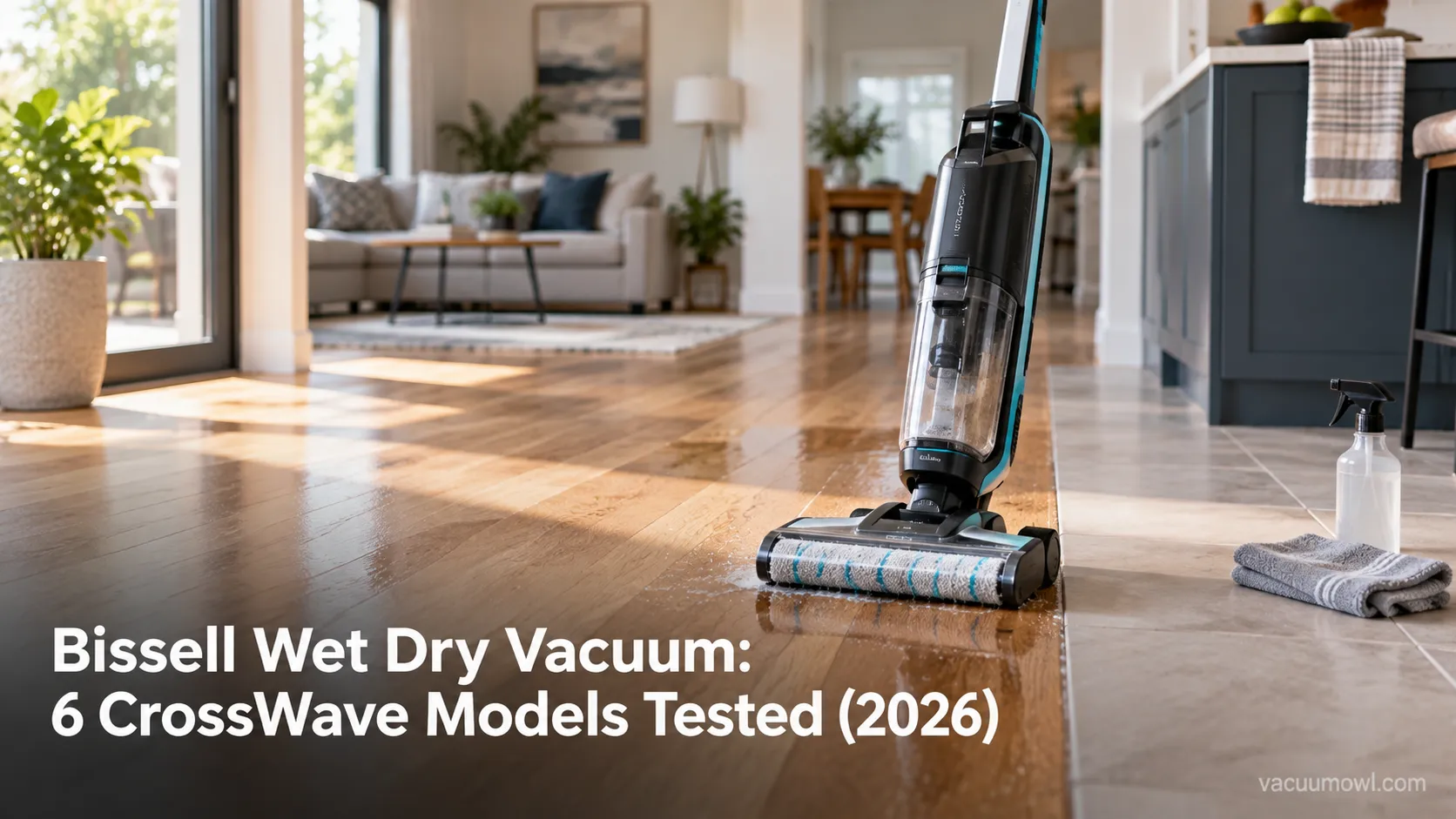
Bissell Wet Dry Vacuum: 6 CrossWave Models Tested (2026)
Compare every Bissell wet dry vacuum: which CrossWave model fits pets, steam, or budget, plus fixes for streaks and floors that still look dirty. Tested 2026.
Vacuum Types
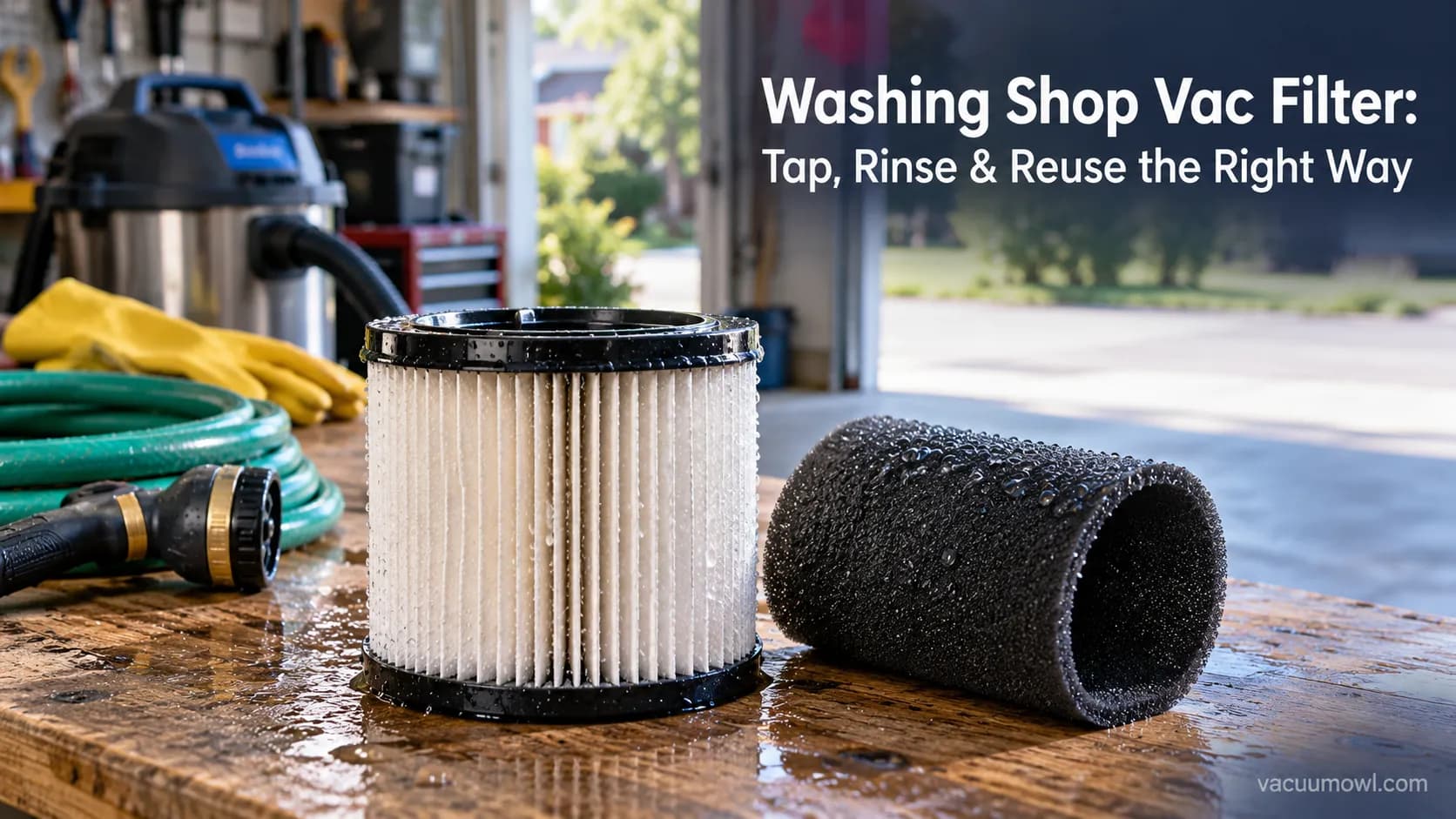
Washing Shop Vac Filter: Tap, Rinse & Reuse the Right Way
Rinse it right: this guide covers washing shop vac filter foam and paper, the tap-and-hose steps, the 24-hour dry rule, and when to just replace it.
Vacuum Types
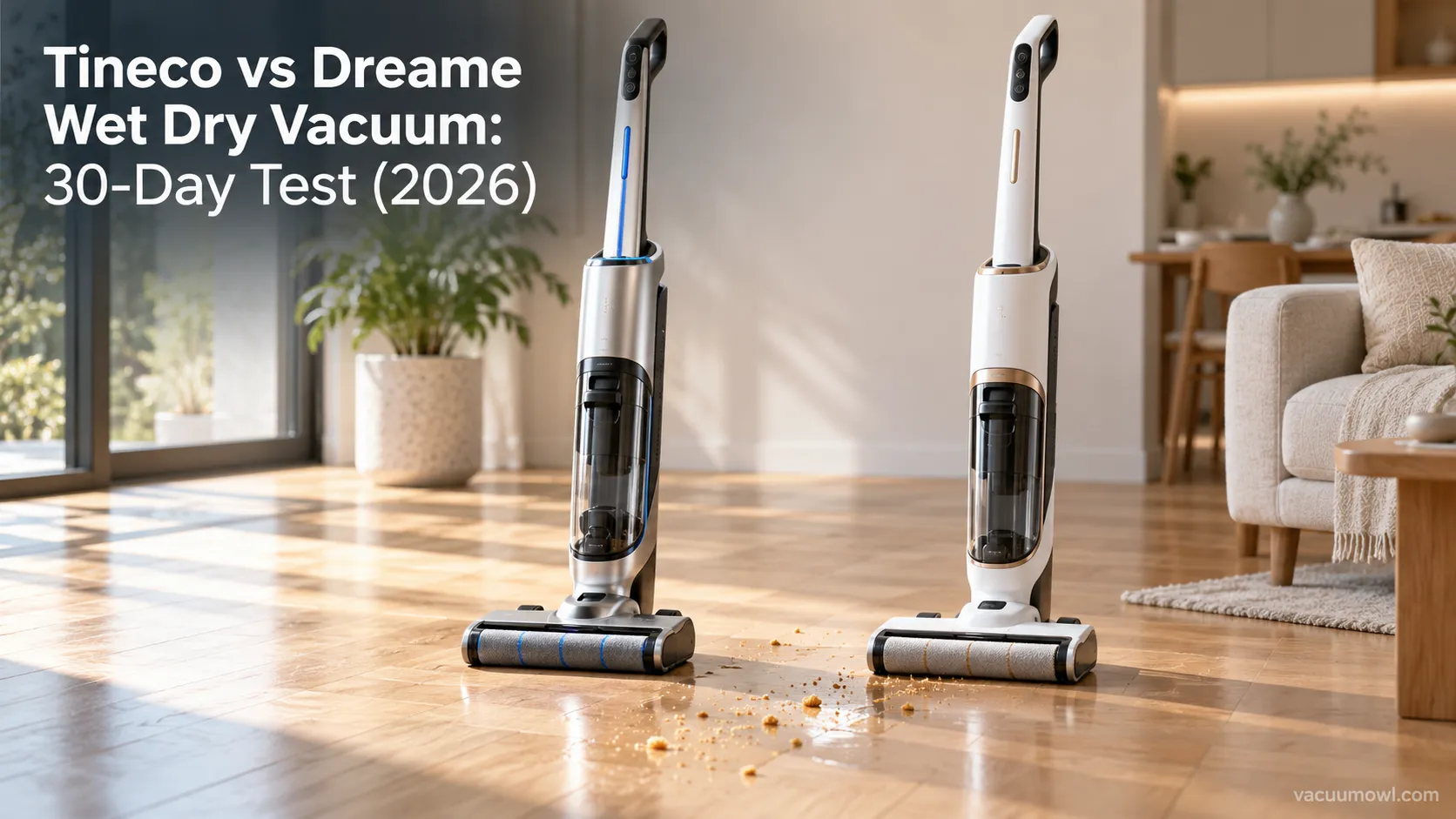
Tineco vs Dreame Wet Dry Vacuum: 30-Day Test (2026)
Compare Tineco vs Dreame wet dry vacuum on suction, self-clean, edge reach and price, with a clear pick for pets, kids and big homes.
Vacuum Types
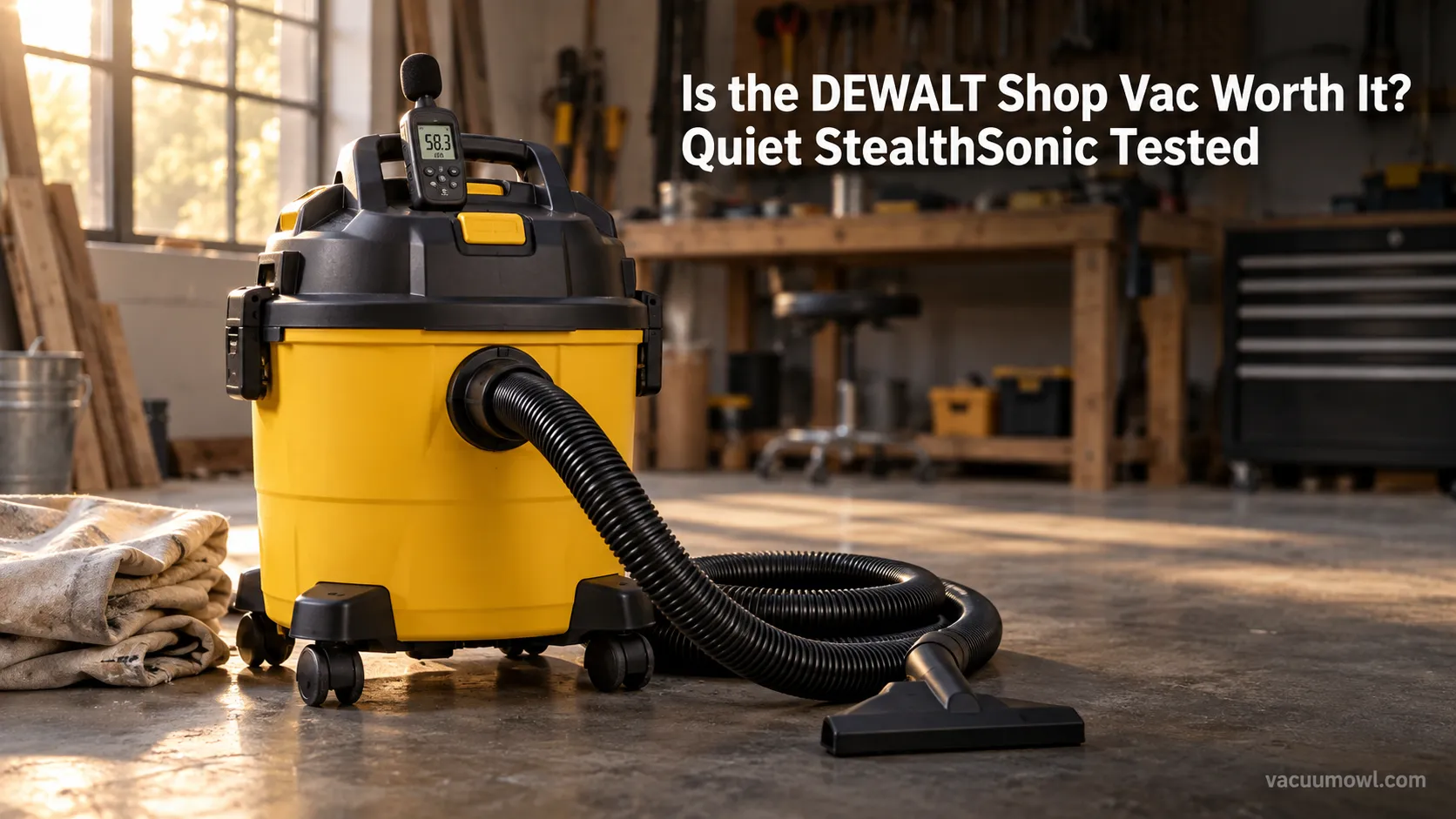
Is the DEWALT Shop Vac Worth It? Quiet StealthSonic Tested
Compare every DEWALT shop vac: StealthSonic quiet picks, cordless DCV580 and corded DXV, with measured noise, real suction specs and a value verdict.
The discussion
Comments
Every comment is reviewed before it goes live.