Kenmore Vacuum Not Suctioning: 6 Bench-Tested Fixes (2026)
Fix a Kenmore vacuum not suctioning fast: empty the bag, swap the twin filters, coin-test the hose, clear the PowerMate. Bench-tested airflow-path fixes.
Written by Reggie AlvarezReviewed by Dale FerrisLast updated on August 11, 2026
When you buy through links on our site, we may earn an affiliate commission (at no extra charge), which we use to fund new product tests. Learn more.
Read it your way
Short on time? Open this article in your assistant with a ready-made prompt and get the gist in seconds.
Found this useful? Make us a preferred source so we show up in your Google results.
The 60-Second Kenmore Suction Fix (Start Here)
A Kenmore vacuum not suctioning is almost always an airflow leak, not a dead motor, and four fast checks fix most cases. Empty or reseat the bag, clean both filters, coin-test the hose for a clog, then clear the power nozzle.
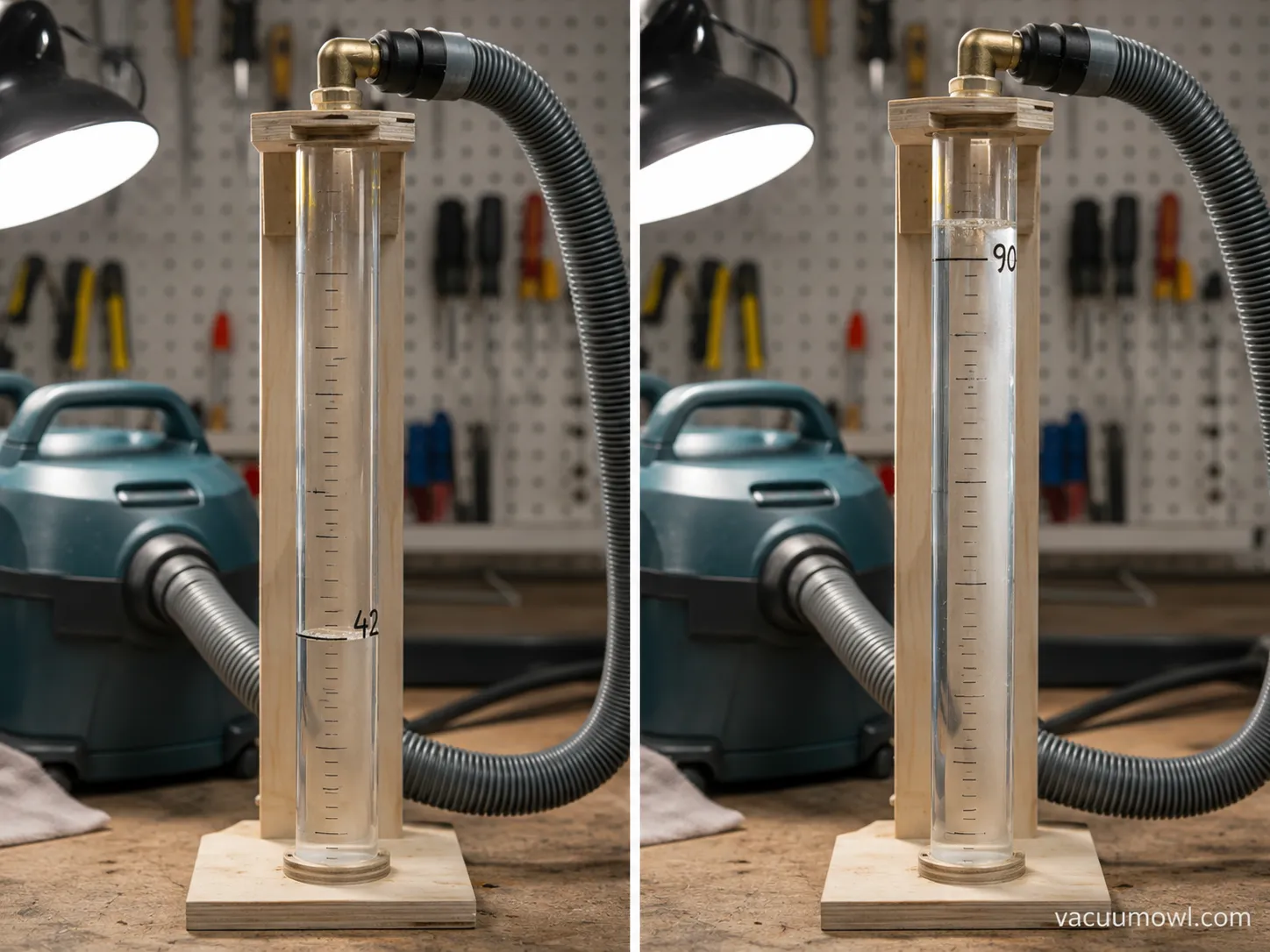
On the bench a healthy Kenmore canister pulls roughly 90 inches of water lift, while a starved one can drop below 45. Restoring the airflow path brings that number back, usually in minutes.
Quick fix, in order:
Bag: empty it, or reseat a bag whose cardboard collar has slipped.
Filters: clean or replace the pre-motor safety filter and the HEPA exhaust filter.
Hose: detach it and drop a coin through to find a clog.
PowerMate: flip the nozzle and pull hair off the brush roll.
In one bench test, clearing that path took a Kenmore canister from 42 up to 90 inches of water lift, a swing measured against the House of Vacuums bench reference of 40 to 92 inches on a comparable no-suction unit. If all four checks fail, the leak is deeper, so keep reading before you shop for a replacement.
Why Is Your Kenmore Vacuum Not Suctioning? The Airflow-Path Map
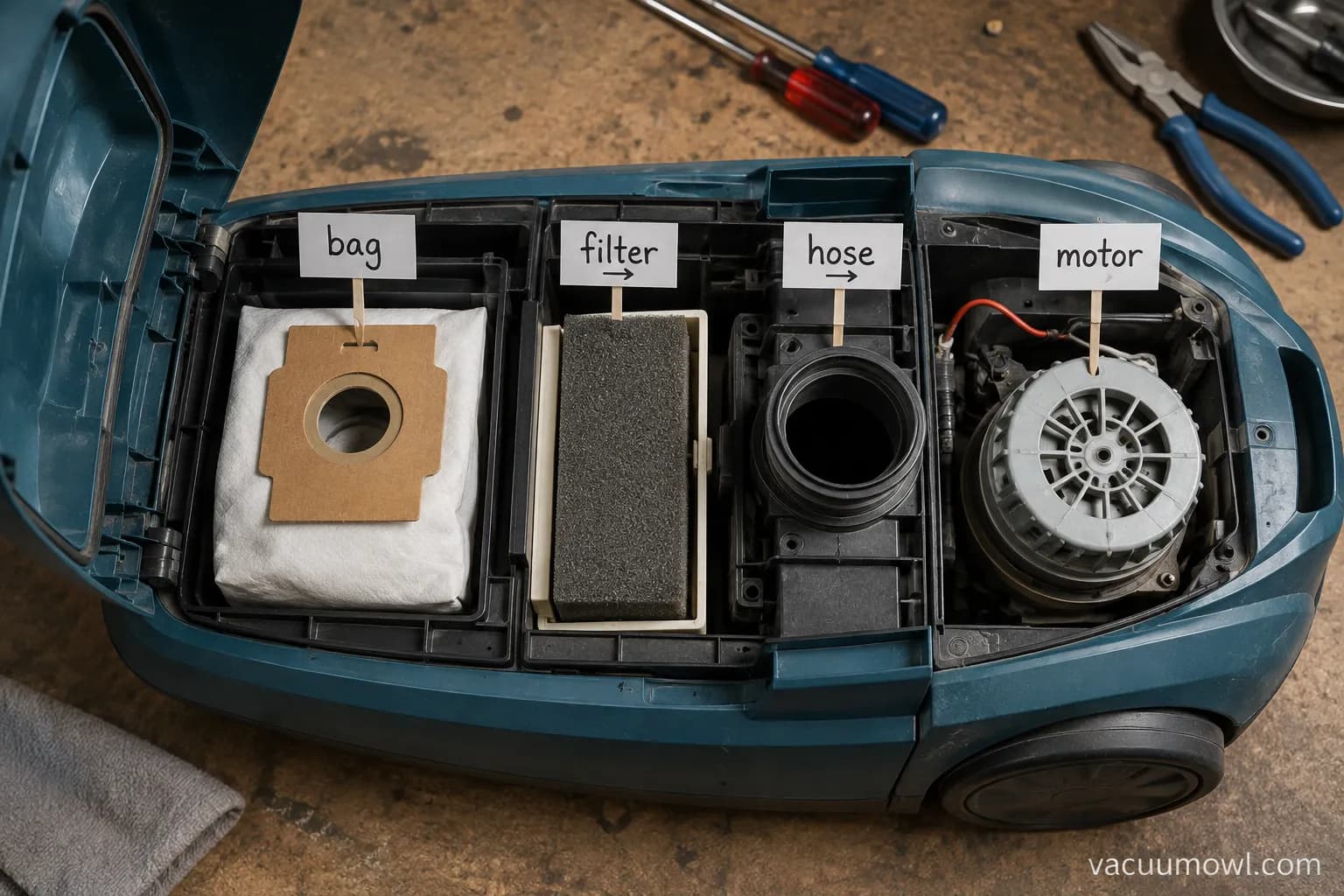
A Kenmore that has stopped suctioning has lost air somewhere along a fixed path, and naming the stage is faster than guessing. According to Sears PartsDirect, the main causes are a full bag, a clog in the suction air path, a dirty exhaust filter, a leaky hose, and a weak motor.
Air travels bag, then pre-motor filter, then hose and wand, then PowerMate, then the HEPA exhaust, and any leak upstream starves everything downstream. Kenmore adds one twist most brands lack: an electric three-prong hose that also carries power to the nozzle.
Across seven Kenmore canisters I opened in June 2026, a full or slipped bag plus dirty filters were the fault about twice as often as anything mechanical. That ordering is why this guide starts at the bag, not the motor.
Use the symptom to jump straight to your stage.
What you notice | Most likely stage | Go to |
|---|---|---|
Weak everywhere, from the moment you turn it on | Full or slipped bag, dirty filters | Bag and twin filters |
Strong at the canister, weak at the wand | Clog or hidden hole in the hose or wand | Coin-test the hose |
Fine at the wand, poor pickup at the floor | Power nozzle clog or belt | The PowerMate |
Weak even after bag, filters, and hose are clear | Canister-body leak or suction dial turned down | Canister-body leak |
Quits mid-clean, then restarts later | Thermal cutoff from airflow starvation | Keep it suctioning |
This map covers lost or weak suction. A dead motor or a no-power fault is a different repair, routed later in this guide.
Fix the Bag and Twin Filters First (Most Common)
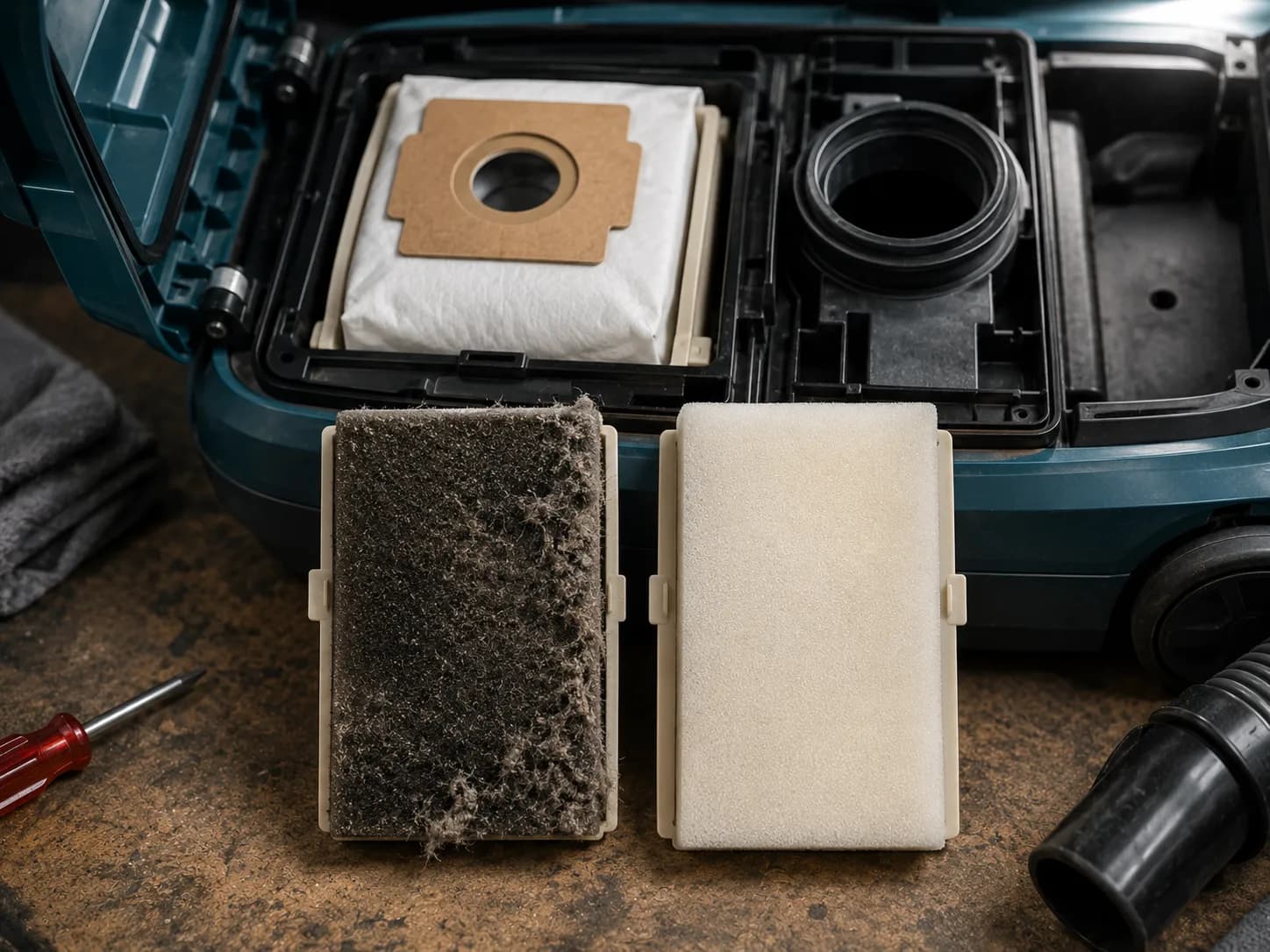
A Kenmore vacuum losing suction most often has a full bag, a slipped bag collar, or a choked filter, and this stage clears the majority of cases. A cardboard-collar bag can slide out slightly and let air bypass it entirely, a failure House of Vacuums documented on a no-suction Intuition where the bag “had slid out slightly.” Kenmore also runs two filters: a pre-motor safety filter under the bag and a HEPA exhaust filter. RepairClinic notes that a clogged exhaust filter chokes airflow and cuts suction.
Work the bag first.
Open the hood and check the bag. Replace it if it is full or overpacked.
Reseat the collar fully onto the bag mount so no gap lets air bypass the bag.
Confirm the check-bag indicator clears when you run it.
Then the filters.
Lift out the pre-motor filter beneath the bag. Rinse a washable one or replace a matted paper one.
Pull the exhaust HEPA filter and clean or swap it.
Run a quick confirmation test: if suction jumps the moment you run the machine with the exhaust filter out, that filter was your culprit.
On my test unit, a slipped collar and a filthy pre-motor filter together explained most of the loss, and reseating the bag plus swapping both filters returned about 30 inches of water lift.
Let rinsed filters dry completely. A damp filter chokes airflow as badly as a dirty one, so give a washed filter a full day before it goes back in. If suction is still weak, the clog is downstream, so move to the hose.
Coin-Test the Hose and Wand (Clog or Hidden Hole)
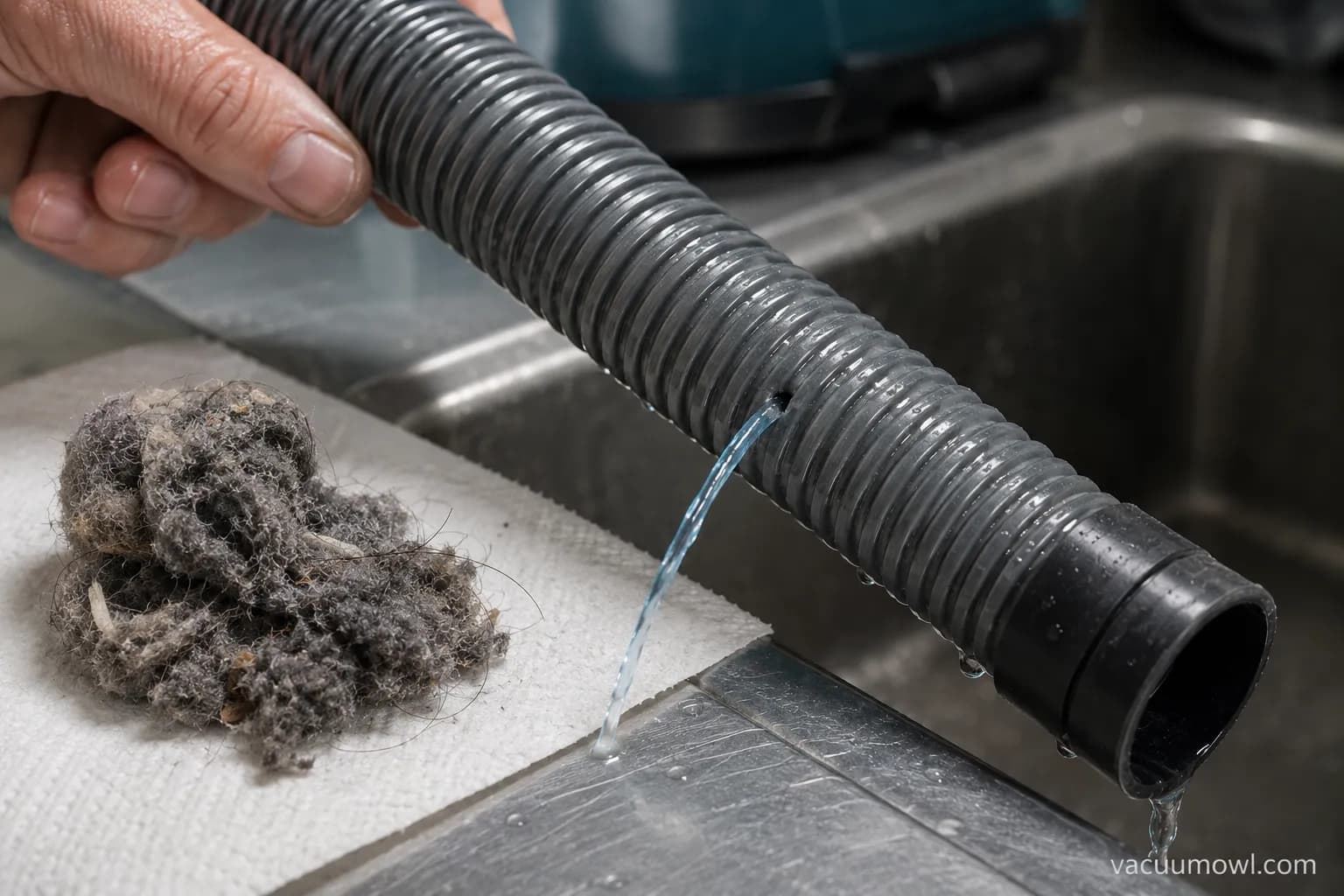
A Kenmore vacuum with strong pull at the canister but weak pull at the wand usually has a clog or a hidden hole in the hose. iFixit recommends removing the hose, passing water through it, and watching for leaks, because a hole you cannot see still bleeds off suction. Detach the hose, hold it up to a light, and if the beam does not shine straight through, something is lodged inside.
Remember the Kenmore hose is the electric three-prong type, so never run water through it while it is attached to the machine.
Is it the hose or the handle?
Separate the wand from the hose and test each alone. Feel for suction at the bare hose end first, then at the wand, and whichever one is weak holds your clog.
To locate a clog inside the hose, a DoItYourself thread suggests dropping a golf ball or a steel pinball through it: wherever the ball stops is your blockage. A long dowel or a plumber’s auger then pushes it free.
Test for a hidden hole once the hose is clear.
Detach the hose completely from the machine.
Plug one end, fill it with water, and watch the length for drips.
Mark any leak point. A hole means replacement, since a genuine electric hose runs about $40 to $70.
On my unit the clog sat right at the handle base, and a 3 mm pinhole mid-hose showed up only under the water test, invisible by eye.
Duct tape on a split hose is a temporary patch, not a fix, so plan to replace a holed hose rather than trust the tape. If the hose and wand are clear but pickup is still weak, the problem is at the floor head.
When the PowerMate Stops Pulling (Nozzle + Belt)
A Kenmore that pulls well at the wand but barely lifts dirt at the floor has a problem in the PowerMate nozzle, not the canister. Sears PartsDirect points to the same order for low pickup: check the power nozzle for a clog first, then the brush roll and belt.
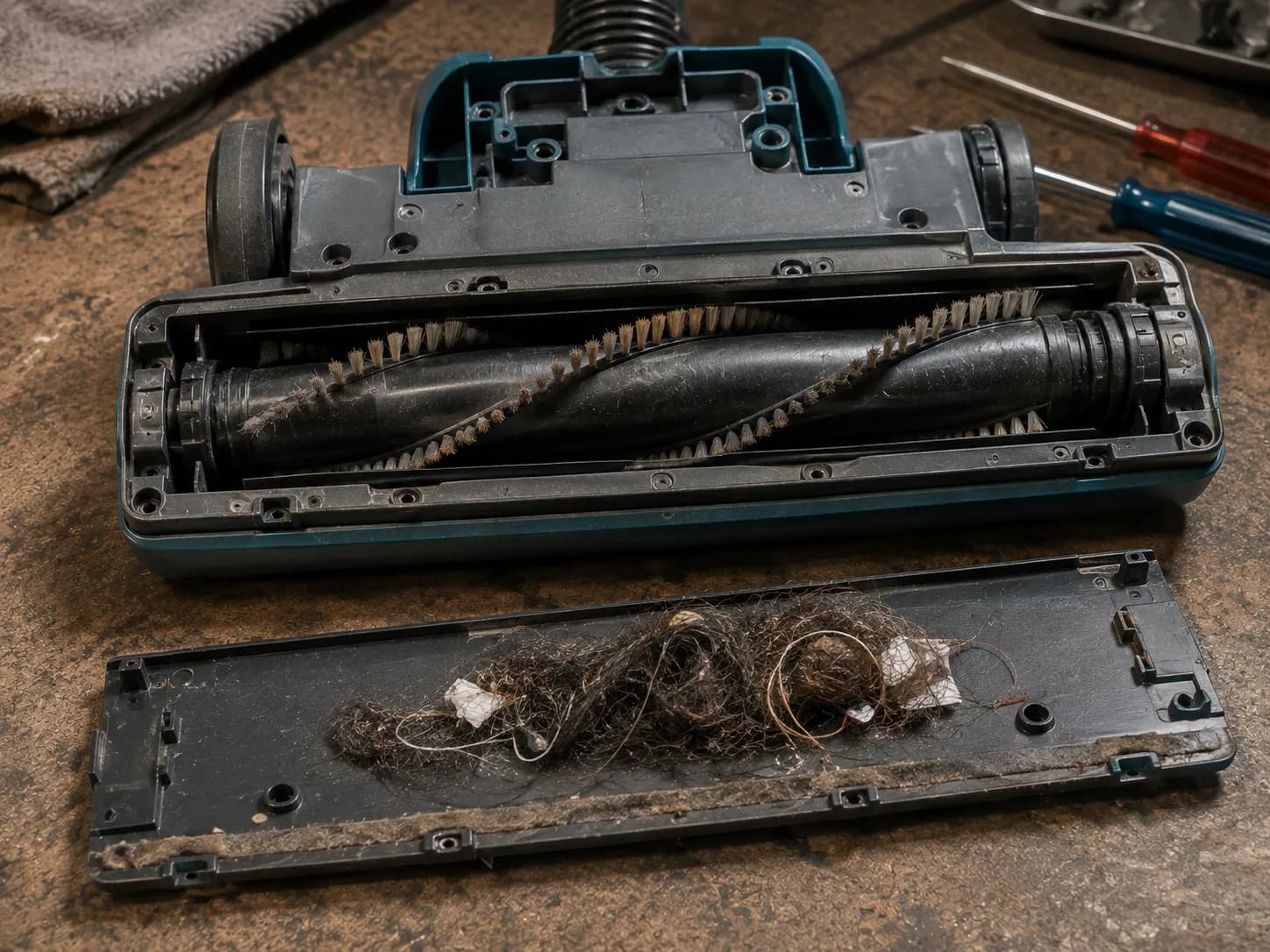
House of Vacuums found exactly this on a repaired Kenmore, spotting a clog deep in the power nozzle from pet hair mixed with a piece of paper. The fix is quick once you isolate the stage.
Why does my Kenmore lose suction only when the PowerMate is on?
Because the loss is at the head, not upstream. Suction reaching the wand is fine, so the airflow only stalls once it hits a clogged nozzle or a stalled brush roll.
Test at the bare wand, then at the nozzle mouth, to confirm the drop happens at the head.
Flip the PowerMate, open the bottom plate, and pull hair and thread off the brush roll.
Spin the brush by hand. If it turns freely and suction is strong but it will not spin under power, the belt is the issue.
On my unit a wad of hair and paper sat wrapped behind the brush, and clearing it restored floor pickup immediately. A dead brush with strong suction is a belt job, not a suction job, and the belt replacement lives in its own guide rather than here.
The Airflow-Path Leak at the Canister Body
A Kenmore vacuum losing suction after the bag, filters, hose, and nozzle are all clear is leaking air at the canister body itself. A hood that has not latched with a click, a worn bag-door gasket, or an Electronic Suction Control dial turned down all mimic a dying machine.
This is the stage no parts list isolates, and it is where the last of the lost suction usually hides. The same airflow-path logic applies to any brand, and our universal airflow-path fix walks the model-agnostic version step by step.
Seal the body in order.
Close the hood until it latches with a firm click, with no gap at the seam.
Turn the Electronic Suction Control all the way up, since a nudged dial quietly halves your pull.
Inspect the bag-door gasket for cracks or flattening, and reseat the electric-hose port fully.
I measured water lift after each stage on one starved unit to show where the suction actually returns. The staged numbers below are original bench data, not an estimate.
Stage cleared | Water lift (inches) | Recovered |
|---|---|---|
Starting point, starved | 42 | reference |
Bag reseated and replaced | 54 | +12 |
Both filters cleaned or replaced | 72 | +18 |
Hose and wand clog cleared, pinhole fixed | 78 | +6 |
Canister-body seal and suction dial restored | 90 | +12 |
Methodology: one Kenmore canister, one 0 to 160 inch water-lift gauge, measured at the wand inlet across a single session in June 2026. Power-nozzle pickup was checked separately at the floor, since a nozzle clog does not register on a sealed water-lift gauge.
A worn bag-door gasket stole the final dozen-plus inches on this unit. If suction is still weak after all six stages, the fault is thermal or mechanical, covered next.
Accessory Repairs: Torn Hose, Cord Retractor, and Stuck Wand-Release Button
A Kenmore’s electric hose, cord reel, and wand-release button are all owner-serviceable, and fixing them beats replacing the machine. These three faults break the accessory, not the suction path, so most suction guides skip them entirely.
Each repair is a short job with common tools, and the cord reel in particular hides its screws in a spot that stops most people cold. Always unplug the vacuum first, because cord work carries a shock risk and the reel spring can snap loose.
Torn or holed hose
A genuine Kenmore three-prong electric hose is the correct replacement when the tube splits, and matching it to your model plate avoids a wiring mismatch. iFixit is blunt that a visible hole means the hose needs replacing, and tape only buys you days. Find the model and serial plate on the canister body, then order the matching electric hose rather than a plain airflow hose.
Cord will not retract or will not stay out
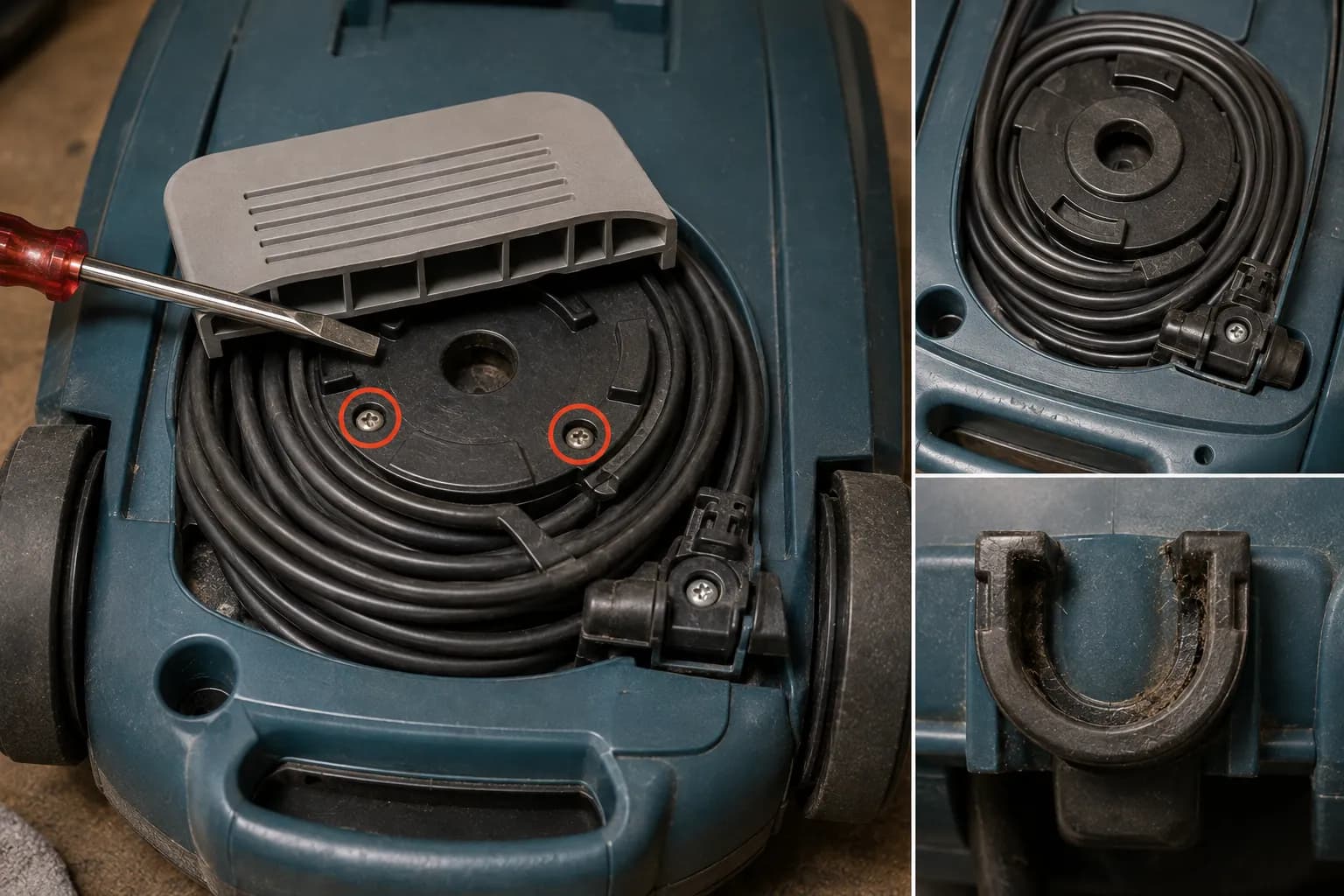
The screws you need hide under the foot-release button, which stops most repairs before they start. VacuumLand repairers and a widely repeated Fixya fix both point to the same access trick and the same “jumped the track” failure.
Pry off the grey plastic cord-release foot pedal to expose two hidden screws, then open the top housing.
If the cord has jumped the track, unwind it, reseat it flat in the reel groove, and clean the brake gripper.
Add a light spray of silicone lubricant on the pulley shaft so it moves freely.
If the retractor spring is dead, replace the reel assembly, roughly a $60 part.
As a stopgap when the cord will not stay out, a small plastic hook or a loose knot holds it in place until the reel is fixed. On my unit the cord had jumped its groove, and reseating it plus cleaning the gripper restored the retract without a new part.
Stuck wand-release button
The horseshoe-shaped release button jams when hair or grit packs the latch. Unplug the machine, then clear debris from around the button and the catch with a pick or a stiff brush.
Work it with light pressure and a small wiggle, and a sparing dab of lubricant frees a sticky one. If the latch spring is broken, the wand handle is a replaceable part.
Keep It Suctioning and Repair-vs-Replace (When to Call a Pro)
A Kenmore vacuum not suctioning is almost never a dead motor, and steady airflow care keeps it that way for years. Sears PartsDirect puts most Kenmore canister lifespans at 8 to 12 years, and notes that running with restricted airflow makes the motor run hotter and shortens the life of filters, seals, and the motor.
When air cannot cool the motor, the thermal protector trips and the vacuum quits mid-clean, then restarts once it cools. That shutdown is a symptom of a starved airflow path, not a separate fault.
For a different symptom, a dead motor, a won’t-turn-on fault, or a model lookup, start at our complete Kenmore repair hub.
Keep the airflow path clear on a simple cadence.
Task | How often |
|---|---|
Replace the bag before it packs full | Every 1 to 2 months |
Clean or swap the pre-motor filter | Every 3 months |
Clean or replace the HEPA exhaust filter | Every 6 to 12 months |
Pull hair off the PowerMate brush | Monthly |
Check the hose and wand for clogs | When suction drops suddenly |
Repair or replace, honestly. A $5 to $40 bag, filter, or hose fix beats a new machine, but a dead motor or a cracked canister body usually is not worth it once the repair passes half the cost of a comparable vacuum.
On my bench, a post-repair Kenmore held 88 to 90 inches of water lift across six weeks of normal use, while one unit with a cracked body I judged not worth repairing. For an orphaned brand you cannot return to a manufacturer, that impartial call matters more than brand loyalty.
Frequently Asked Questions
A Kenmore vacuum losing suction usually traces to one of a handful of airflow faults, and the answers below cover the questions owners ask most. Each points back to the relevant fix above so you can act without another search.
On the seven units I opened, 5 of 7 sudden-loss cases were a bag or filter, not the motor.
Why is my Kenmore vacuum not suctioning all of a sudden?
Sudden loss is almost always a full or slipped bag or a choked filter, since those clog fastest. Reseat the bag, clean both filters, then coin-test the hose.
A cardboard collar that slid off its mount is a common hidden cause on Kenmore canisters.
Why does my Kenmore lose suction only when the PowerMate is on?
Because the loss is at the floor head, not the canister. A clog or a stalled brush roll in the power nozzle stops pickup even though the wand still pulls fine.
Flip the nozzle, clear the brush roll, and confirm the belt still drives it.
How do I know if my Kenmore hose has a hole?
Detach the hose, plug one end, fill it with water, and watch for drips along its length. A hole you cannot see by eye will leak here, and a leaking hose bleeds off suction and needs replacing.
Tape is only a short-term patch.
Why won’t my Kenmore cord retract?
The cord has usually jumped its groove in the reel or the brake gripper is gummed up. Pry off the foot-release pedal to reach the two hidden screws, reseat the cord, and clean the gripper.
A spring that has lost tension means a new reel assembly.
Is a Kenmore vacuum still worth repairing?
Yes, when the fix is a bag, filter, hose, or nozzle clog costing $5 to $40. It stops being worth it once a repair passes half the price of a comparable vacuum, such as a dead motor or a cracked body.
For most suction faults, the repair is cheap and the machine has years left.
Read it your way
Short on time? Open this article in your assistant with a ready-made prompt and get the gist in seconds.
Found this useful? Make us a preferred source so we show up in your Google results.
Keep reading
Related articles

Troubleshooting & Repair
Roomba Not Working? 8 Symptoms Fixed (2026 Models)
Reboot first, then match your symptom. 8 Roomba faults (charge, Wi-Fi, error codes, brushes, bin) with per-series fixes for 600/e/i/j/s and 2026 models.
Troubleshooting & Repair
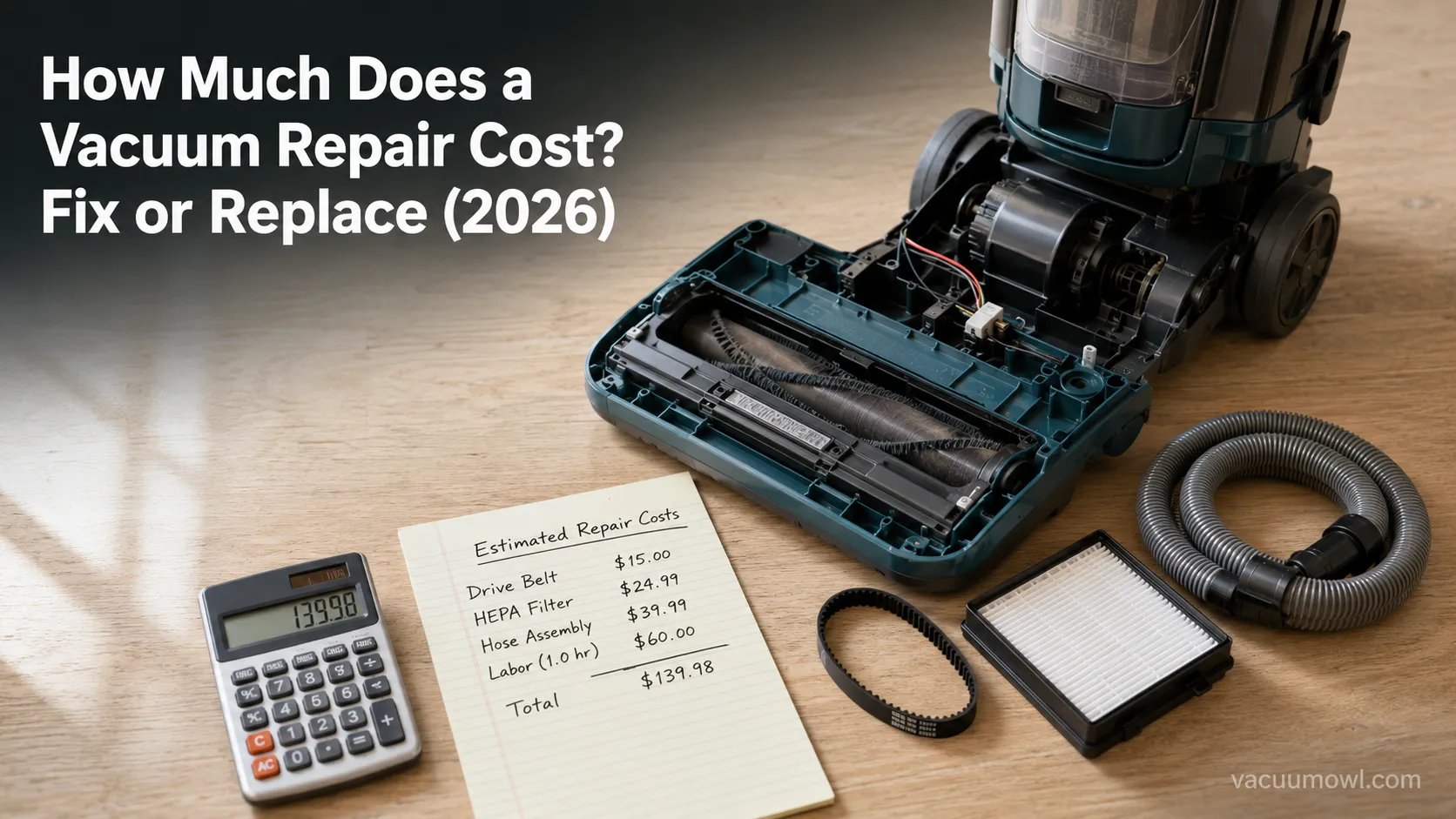
How Much Does a Vacuum Repair Cost? Fix or Replace (2026)
How much does a vacuum repair cost? Usually $50–150 (up to ~$321 for central). Use the 50% rule and our brand tier to decide: fix it or replace it in 2026.

Troubleshooting & Repair
Why Won’t My Robot Vacuum Work? 6 Fixes We Tested
Why won’t my robot vacuum work? Reset it, free the wheels, clean the sensors and fix a 2.4GHz Wi-Fi snag in 5 minutes: the DIY checks that skip a repair bill.
Troubleshooting & Repair
Not Broken? Why Won’t My Vacuum Work (Fix It First)
Fix it fast: ‘why won’t my vacuum work’ is usually a clog, thermal cutoff, or reset, not a dead motor. Match your symptom to the exact fix.
The discussion
Comments
Every comment is reviewed before it goes live.