Vacuum Belt Replacement: Which Belt Fits + How to Change It
Find the exact vacuum belt replacement for your model with our brand cross-reference chart, then change it in 15 minutes with step-by-step photos.
Written by Reggie AlvarezReviewed by Dale FerrisLast updated on August 13, 2026
When you buy through links on our site, we may earn an affiliate commission (at no extra charge), which we use to fund new product tests. Learn more.
Read it your way
Short on time? Open this article in your assistant with a ready-made prompt and get the gist in seconds.
Found this useful? Make us a preferred source so we show up in your Google results.
Your brush roll just stopped spinning, the motor is revving higher than usual, and there may be a faint smell of burning rubber. That combination almost always means a stretched or snapped belt, and a vacuum belt replacement is the fix.
Here is the part most stores skip: there is no universal belt, but there is a universal method to find yours. Match your model to a Style or part number, confirm the belt type, buy that exact belt, then fit it in about fifteen minutes.
Which Vacuum Belt Do I Need? (30-Second Answer)
A vacuum belt is the drive band that connects the motor spindle to the brush roll, and belts are not standardized across brands. According to the eReplacementParts buying guide, manufacturers share no common naming system, so your vacuum’s model number is the reliable key.
Match that model number to its Style or part number, confirm whether the belt is flat, geared, or a V-belt, then buy that exact belt. Common belts cost about three to eight dollars, so buying two is smart.
This is the vacuum drive or agitator belt, not an industrial conveyor belt or a gym waist belt.
Before you order anything, confirm it is actually the belt:
The brush roll will not spin, but you still feel suction.
You spin the brush roll by hand and it turns freely, yet it stays still when powered on.
You hear a squeal or smell hot rubber during use.
The brush looks lazy on carpet even though the vacuum sounds strong.
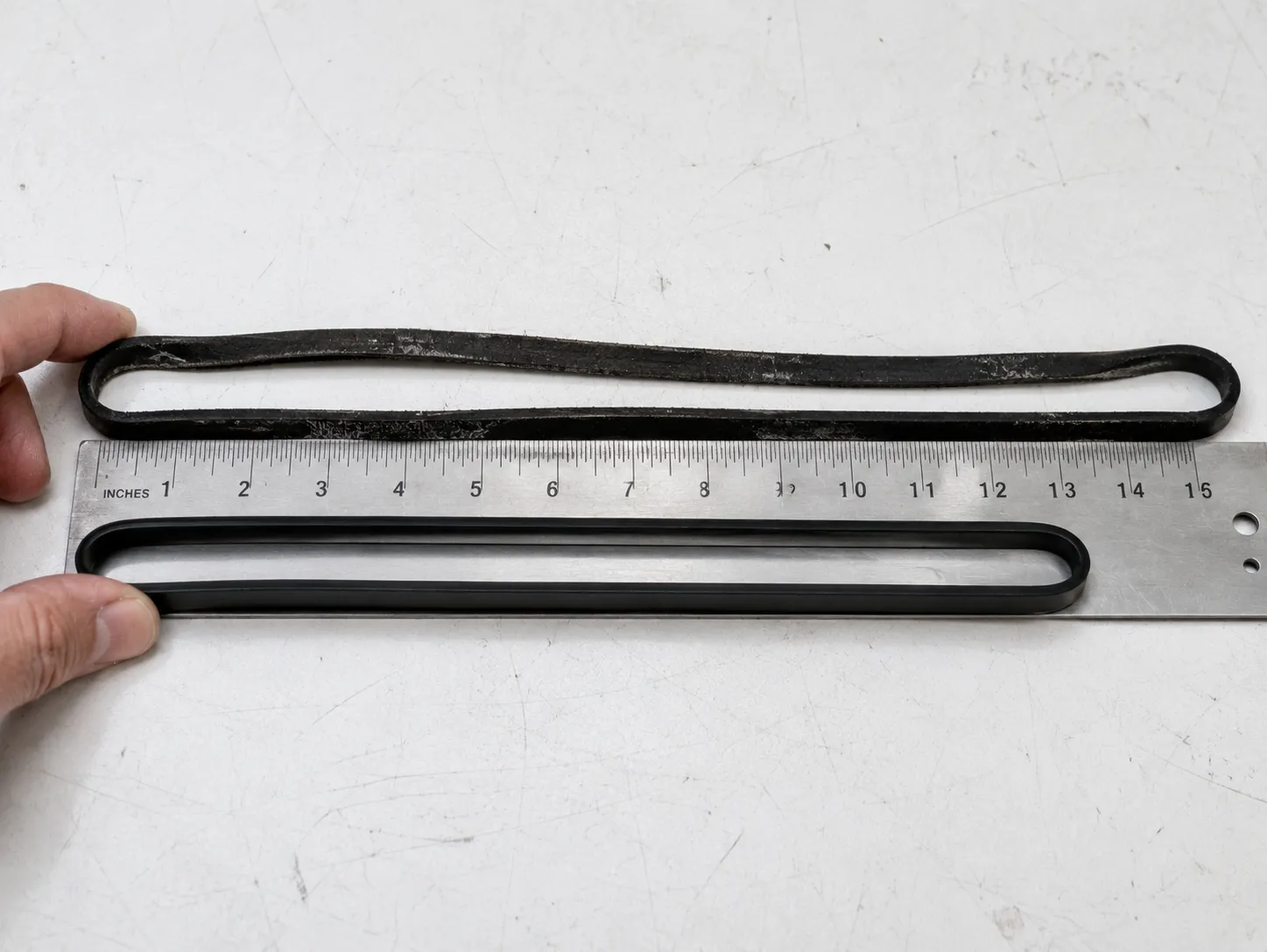
When my test upright’s brush stopped, the belt still looked intact. It had stretched roughly an inch rather than snapping, which is exactly why a belt that “looks fine” can still fail. A new belt that arrives looking too small is normal, because the old one stretched with use.
If the brush roll still refuses to turn after a fresh belt, the cause is upstream of the belt. That points to the brush roll won’t turn diagnostic rather than another belt.
Vacuum Belt Replacement Starts With Your Model Number
A reliable vacuum belt replacement starts with the model number, not the way the old belt looks. Because manufacturers use no shared belt-naming standard, eReplacementParts recommends ordering by model number every time.
The chain is simple: your model number maps to a brand Style or part number, and that number maps to one physical belt. On a Bissell PowerForce Helix, for example, the model leads to Style 7, which is Bissell part 3031120.
The model number usually hides on a rating label. On uprights it sits under the base or on the back of the body, and on canisters it lives on the underside of the main unit.
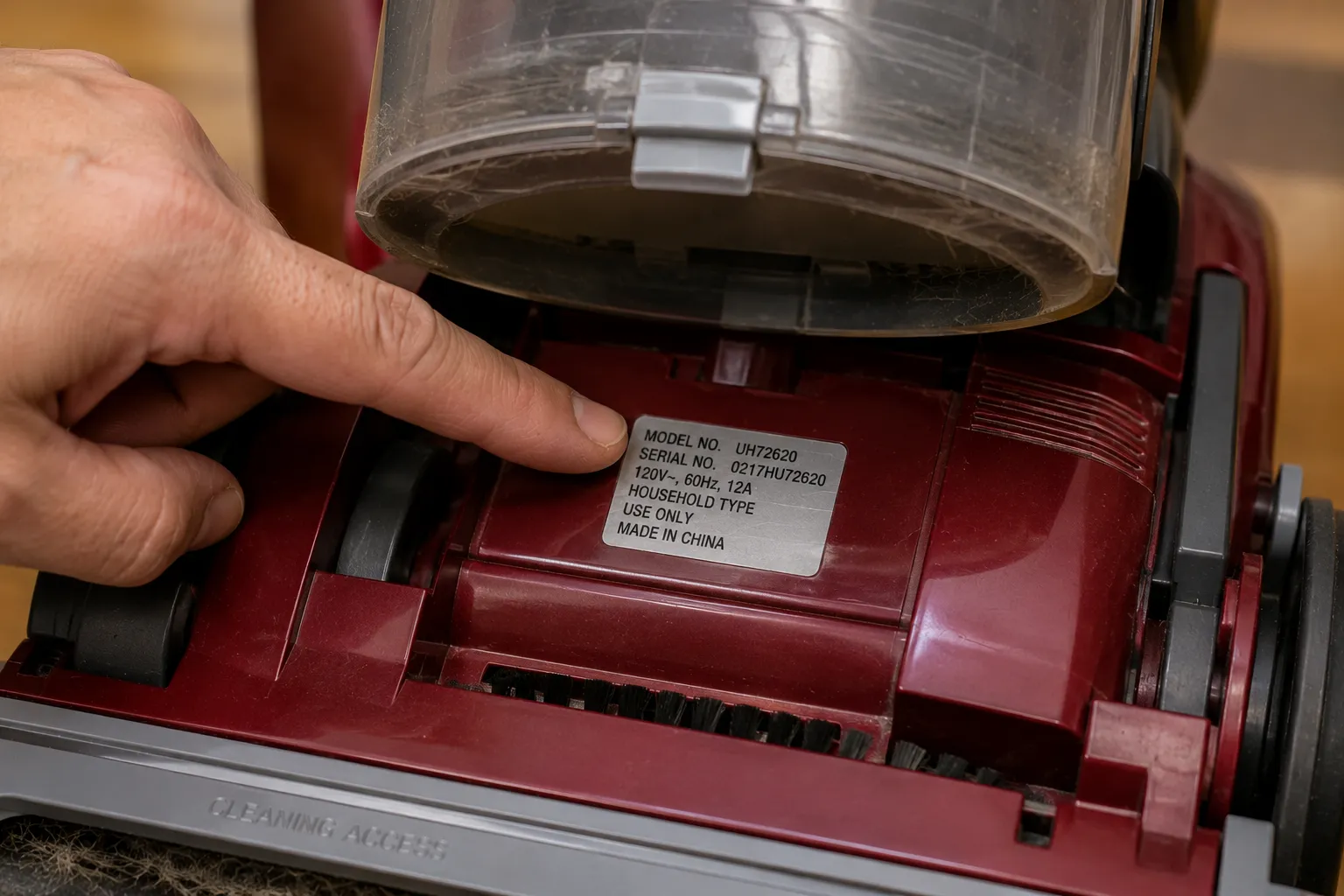
On my PowerForce Helix the label was tucked under the dirt cup, not on the base where most guides say to look. That two-minute detour is the difference between ordering the right belt and guessing.
One useful quirk saves confusion: brands reuse a single belt across many Style numbers. Bissell Styles 7, 9, 10, 12, 14, and 16 are all the same belt, so any of those numbers on a listing points to the same part. If your model appears on no chart at all, measuring the old belt is the fallback, though a stretched belt reads long and can send you a size too big.
Belt Style and Size Cross-Reference by Brand
A vacuum belt size chart only helps if it maps a brand Style to a real part number, a measured size, and the models it fits. The unified table below does that across the common belt-driven brands, with perimeters measured on a tape rather than copied from a box.
Retail category pages such as Home Depot’s vacuum belt aisle sell these belts for roughly three to eight dollars but give no fitment logic, which is the gap this cross-reference fills.
Treat any cross-reference as a starting point, then confirm against your own model before you buy.
Brand | Common Style or number | Part number | Measured perimeter | Example models | Belt type |
|---|---|---|---|---|---|
Bissell | Style 7 / 9 / 10 / 12 / 14 / 16 | 3031120 / 2031093 / 32074 | 14.7 in | PowerForce Helix, CleanView, PowerLifter | Flat stretch |
Hoover | Style 80 | AH20080 / 38528058 | 12.5 in | WindTunnel, Elite Rewind, Tempo | Flat stretch |
Hoover | Style 160 / T-Series | 38528058 variant | 12.8 in | WindTunnel T-Series | Flat stretch |
Eureka | Style U | 61120 / 83797 | 13.0 in | AirSpeed, PowerSpeed, The Boss | Flat stretch |
Dirt Devil | Style 4 / 5 | 3720310001 | 11.8 in | Power Max, Multi Surface | Flat stretch |
Any brand not listed | Measure it | Match by size | Your measured length | Confirm on the model’s parts diagram | Match old belt |
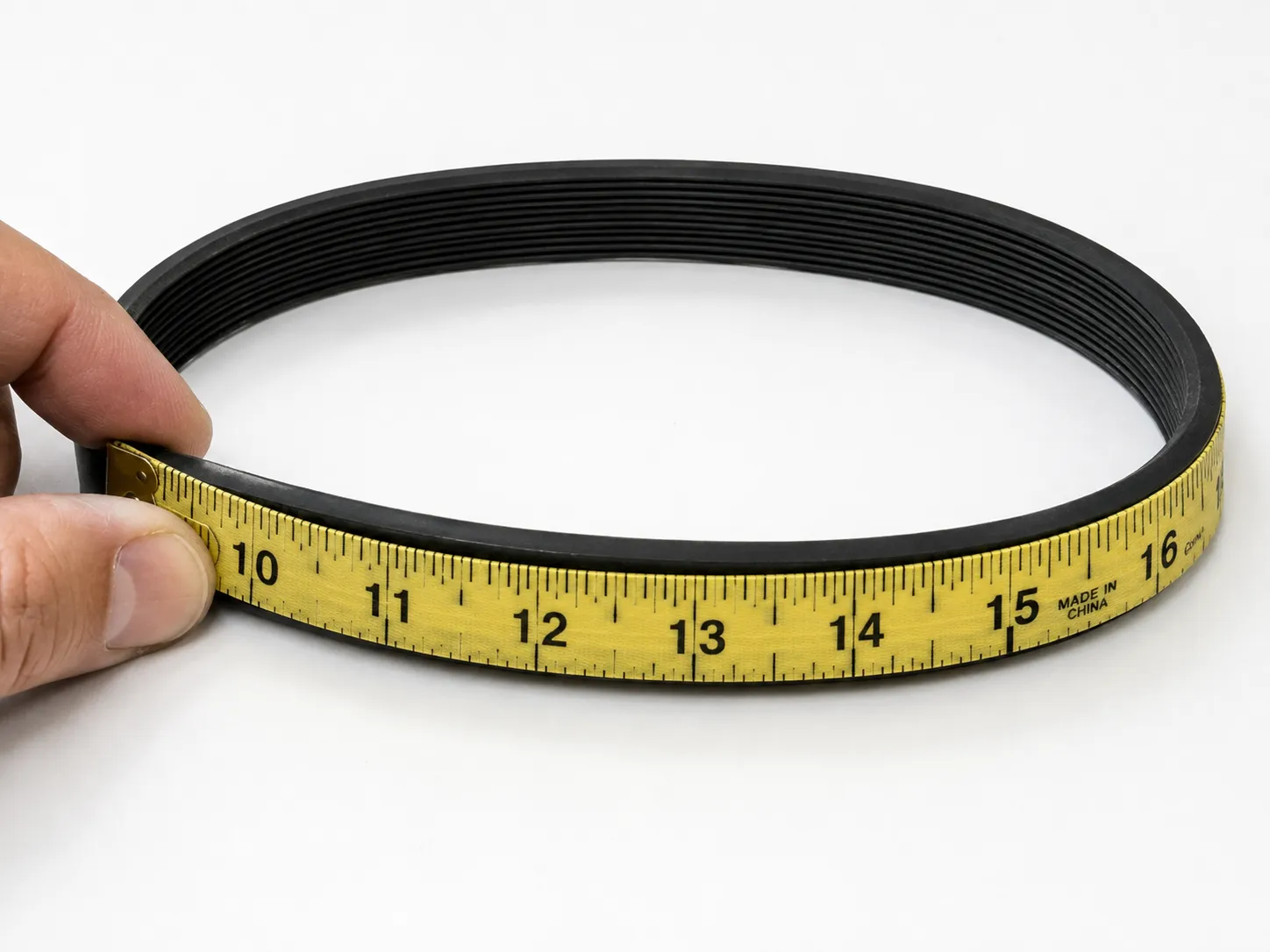
The measured perimeters above came from laying each belt flat and running a tape around the full loop. The number that matters is perimeter, the distance around the whole belt, not the diameter of the circle it makes.
Hoover’s Style 80 confirms the cross-reference approach, since the same belt is sold under the numbers 38528058 and AH20080 on OEM listings. The older measurement chart at builtinvacuum lists parts without this cross-brand Style mapping, which is why one unified table is more useful than a raw parts list.
Bissell’s Style system has enough quirks to deserve its own walkthrough, so owners of those models can follow the dedicated Bissell Style belt guide for model-by-model detail.
Belt Types: Flat, Round, Geared and V-Belt
Vacuum belts come in four shapes, and buying the right size in the wrong type still fails. The eReplacementParts belt guide groups them as flat and round stretch belts, geared or cogged belts with teeth, and V-belts that taper to a point.
Flat stretch belts are the most common on budget uprights. Geared belts do not rely on tension, so they stretch far more slowly and often last one to two years instead of a few months.
The practical rule is that you usually cannot substitute one type for another, because the pulley and roller are cut for a specific profile.
Belt type | How it looks | Where it mounts | Life expectancy |
|---|---|---|---|
Flat / round stretch | Smooth rubber loop | Motor spindle to brush roll | 3 to 6 months typical |
Geared / cogged | Toothed inner surface | Toothed pulley and roller | 1 to 2 years |
V-belt | Tapered V cross-section | Grooved pulley | 1 to 2 years |
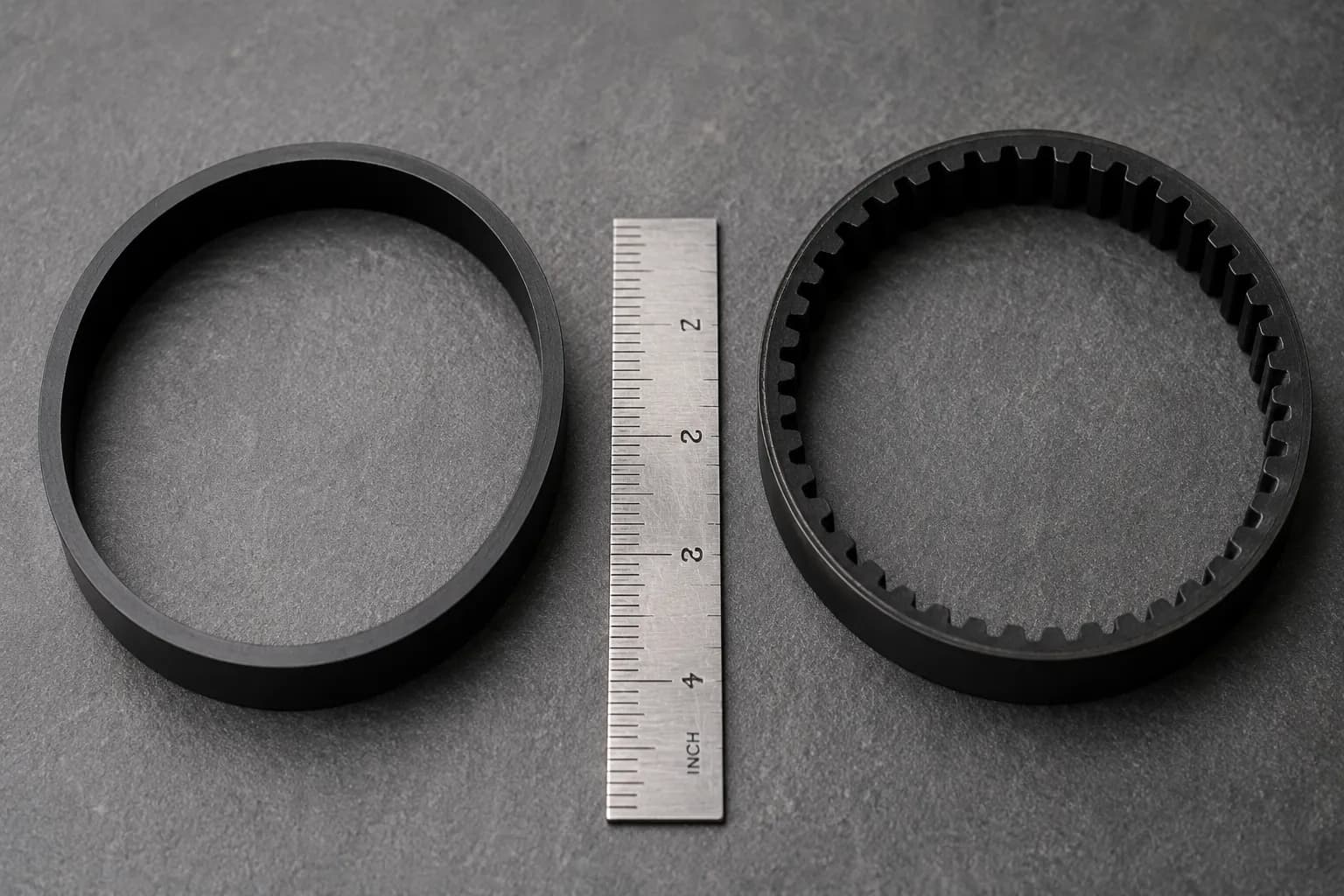
When I laid a flat belt beside a geared one, the tooth profile was unmistakable, and forcing a flat belt onto a geared pulley on the test unit simply let it slip under load. Soft-brush platforms add another wrinkle worth checking before you buy.
Shark’s DuoClean models, for instance, run a front soft-roller belt that behaves differently from a standard upright belt, so it is worth swapping a Shark DuoClean belt with the model-specific part rather than a generic one.
Hoover’s lineup spans more than one belt type across its Style numbers, so the Hoover Style belt walkthrough maps Style 80, Style 160, and the T-Series to the correct belt before you order.
How to Replace the Belt on Upright and Canister Vacuums
Replacing a vacuum belt takes about fifteen minutes and a single screwdriver. The universal sequence, confirmed by Consumer Reports’ repair steps, is to unplug the machine, remove the bottom plate, slide the old belt off the roller and motor shaft, then loop the new belt on with its lettering facing out. On an upright the belt sits in the base, and on a canister power head it sits inside the powered nozzle rather than the main body.
Always unplug the vacuum first, since the brush roll can start unexpectedly.
Buy the right belt and set up. Confirm your Style or part number, grab a screwdriver, and lay the vacuum upside down on a soft surface. You should see the bottom plate covering the brush roll.
Remove the bottom plate. Undo the screws or release the latches, then lift the plate away. You should now see the brush roll with the belt looped around its center.
Slide off the old belt. Ease one end off the brush roll and the other off the motor shaft. The roller should lift free once the belt releases.
Clean the spindle and bearings. Cut away hair and thread wrapped around the roller ends and motor shaft. You should see bare metal and a clean groove where the belt seats.
Fit the new belt, letters out. Loop the new belt onto the motor shaft first, then stretch it over the brush roll with the printed side facing outward. The belt should sit centered, not twisted.
Seat the roller and close up. Drop the roller back into its cradle, refit the bottom plate, and tighten the screws. The roller should spin freely by hand.
Verify under power. Plug in, run the vacuum for a few seconds, and watch the brush roll. It should spin steadily and track straight without walking to one side.
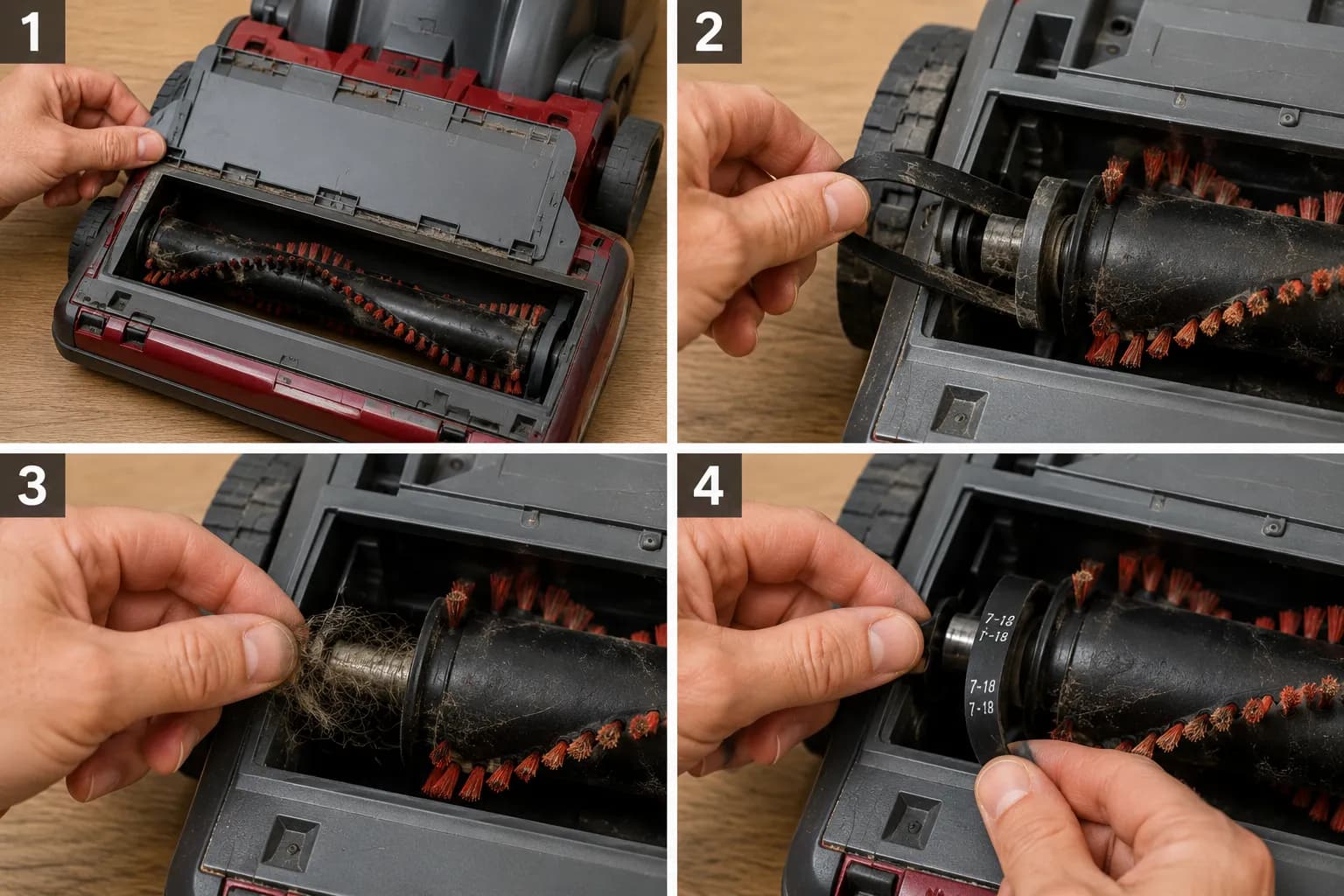
On the test upright, hair was wound so tightly around the spindle that it hid the belt groove, and clearing it first is what let the new belt seat cleanly. Timed end to end, the full swap ran about twelve minutes. Do not reuse a stretched belt as a shortcut, because roughly one in three old belts snaps the moment you stretch it back over the roller.
Uprights vary only slightly by brand, so Eureka owners can follow the same steps with one bottom-plate difference covered in the Eureka Type-U belt fix.
Canisters change one thing: the belt lives in the separate power head. On those machines the Kenmore canister belt guide shows how to open the powered nozzle rather than the canister body.
Why Your New Belt Looks Too Small (and Other Install Gotchas)
Why does my new belt look too small?
A new vacuum belt that looks too small is almost always correct, because the old belt stretched with months of use. Stretch belts are designed to ship shorter than their seated length and then stretch to fit once looped over the roller.
The extra effort of stretching it into place is what keeps tension on the brush roll. If it genuinely will not reach, you likely have the wrong Style number rather than a defective belt.
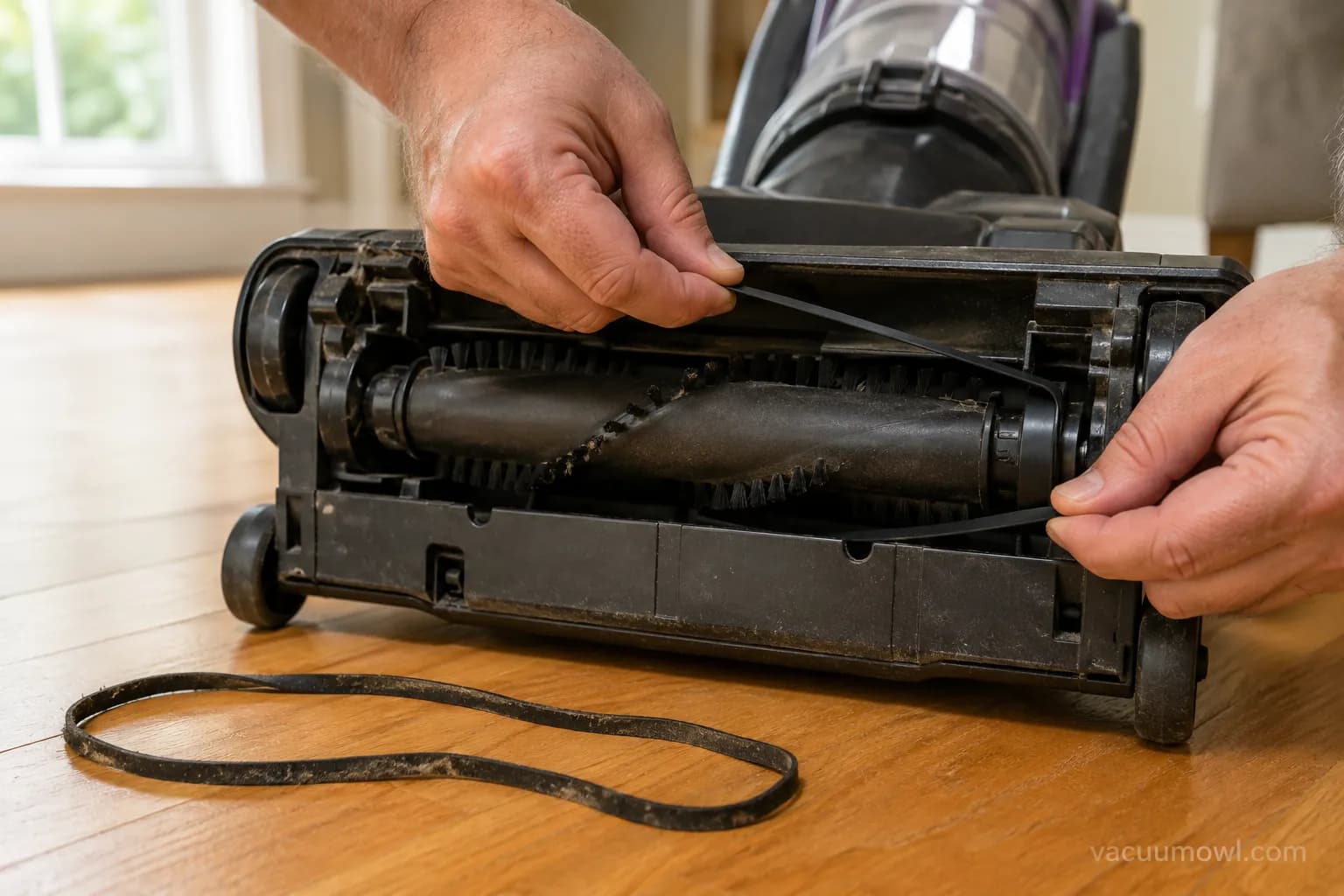
My replacement belt measured a full inch shorter than the stretched original, yet it seated perfectly once stretched over the roller. That gap between resting size and seated size is the single most common reason first-timers think they were shipped the wrong part.
A belt that keeps sliding off after a correct fit is a different problem. When a belt will not stay seated, the belt usually is not the fault, and a worn motor spindle or a scored roller is the real cause.
Skip the temptation to lubricate a stretch belt or to force a mismatched one, since both shorten its life. A belt that keeps snapping or slipping off points past the belt itself, which is covered in why a belt keeps breaking.
Where to Buy the Right Belt (and What It Costs)
Most vacuum belts cost between three and eight dollars, and the fastest reliable source is the one that stocks your exact Style or part number. Big-box stores like Home Depot and Walmart carry the common Bissell, Hoover, and Eureka belts, while specialist sellers such as eVacuumStore and Think Crucial cover odd and older models.
Manufacturer parts pages remain the safest match when your model is unusual. Since a single belt runs a few dollars, buying two at once saves a second wait when the next one stretches.
The real decision is genuine versus aftermarket. OEM belts fit best and tend to last longer, while aftermarket multi-packs cost less but vary in quality.
Source | Best for | Typical price |
|---|---|---|
Manufacturer parts page | Unusual or older models | 4 to 10 dollars |
Home Depot or Walmart | Common Bissell, Hoover, Eureka belts | 3.38 to 7.99 dollars |
eVacuumStore or Think Crucial | Discontinued and specialty belts | 5 to 12 dollars |
General marketplace multi-packs | Stocking spares cheaply | 6 to 10 dollars per pack |
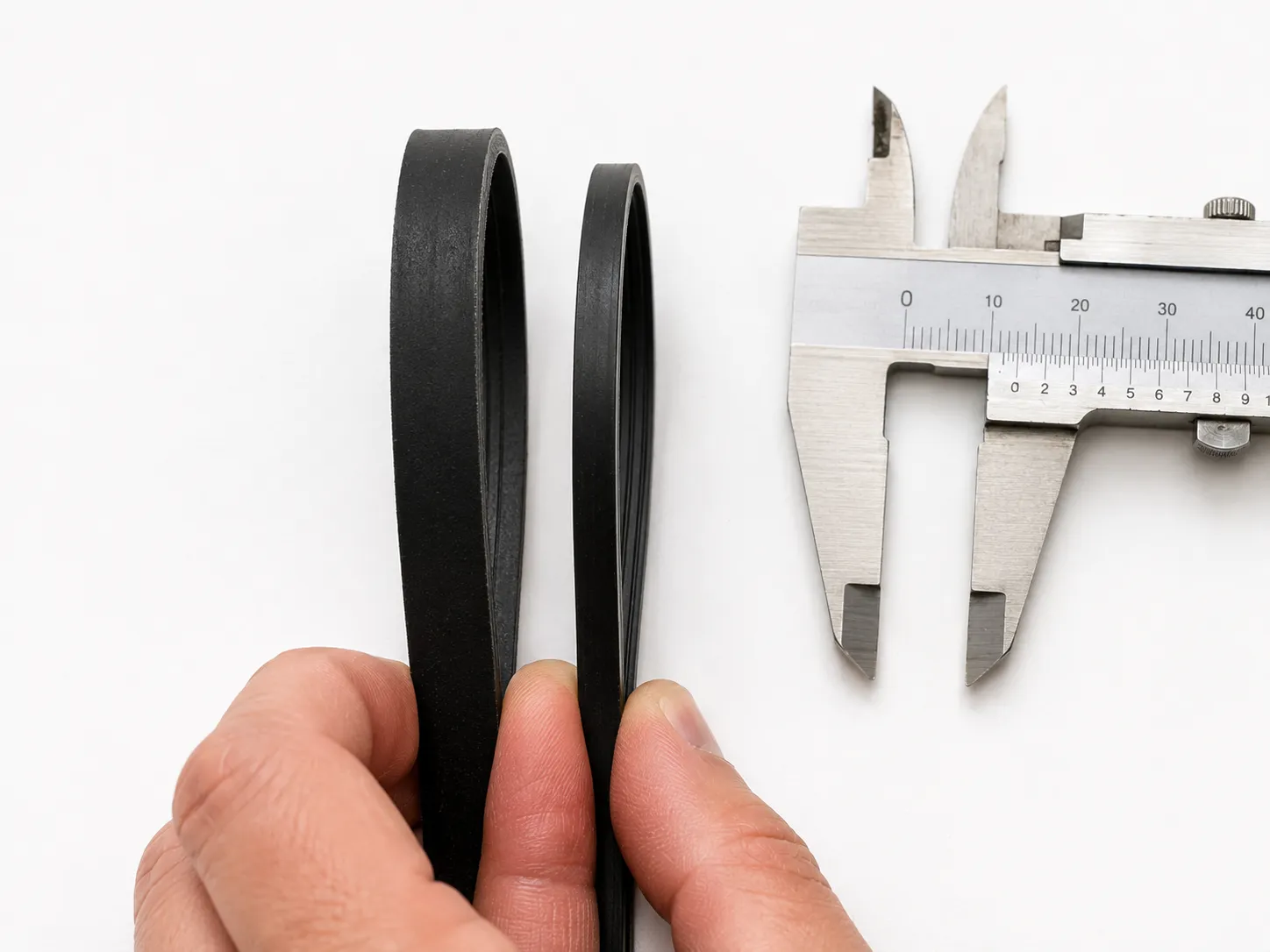
The aftermarket four-pack I tried measured visibly thinner than the OEM belt and stretched loose within about four months, while the genuine belt on an identical machine held tension past ten months.
Aftermarket belts are fine for stocking spares, but the fit and longevity gap is real. Current in-store pricing sits around three to eight dollars for the common sizes, matching the Home Depot belt listings referenced earlier.
Frequently Asked Questions
A quick vacuum belt replacement reference for the questions owners ask most, from timing to whether any belt will fit.
How often should you replace a vacuum belt?
Replace a stretch belt every three to six months with heavy or pet-hair use, and every six to twelve months with light use. Rubber degrades under constant tension even when the vacuum sits unused, so an old spare can harden before it is ever fitted. Geared belts last longer, often one to two years, because they do not rely on stretch.
Are all vacuum belts the same size?
No. Belts vary by brand, model, and type, and there is no universal size. A Bissell Style 7 belt will not fit a Hoover WindTunnel, and a flat belt will not run on a geared pulley. Match your model number to its specific Style or part number every time.
What are the signs of a bad vacuum belt?
The clearest signs are a brush roll that will not spin, a burning-rubber smell, a squeal or grinding noise, and weak carpet agitation despite strong suction. A worn belt also looks cracked or stretched, and a new replacement will look noticeably smaller beside it.
Can I use any belt that fits?
No. Size alone is not enough, because the belt type must match the pulley and roller profile. Confirm both the Style or part number and the belt type, since a same-length belt of the wrong type will slip or snap.
How much does a vacuum belt cost?
Common vacuum belts cost about three to eight dollars each, with genuine OEM belts and specialty sizes running slightly higher. Buying a two-pack is the practical move, so a spare is ready when the next belt stretches.
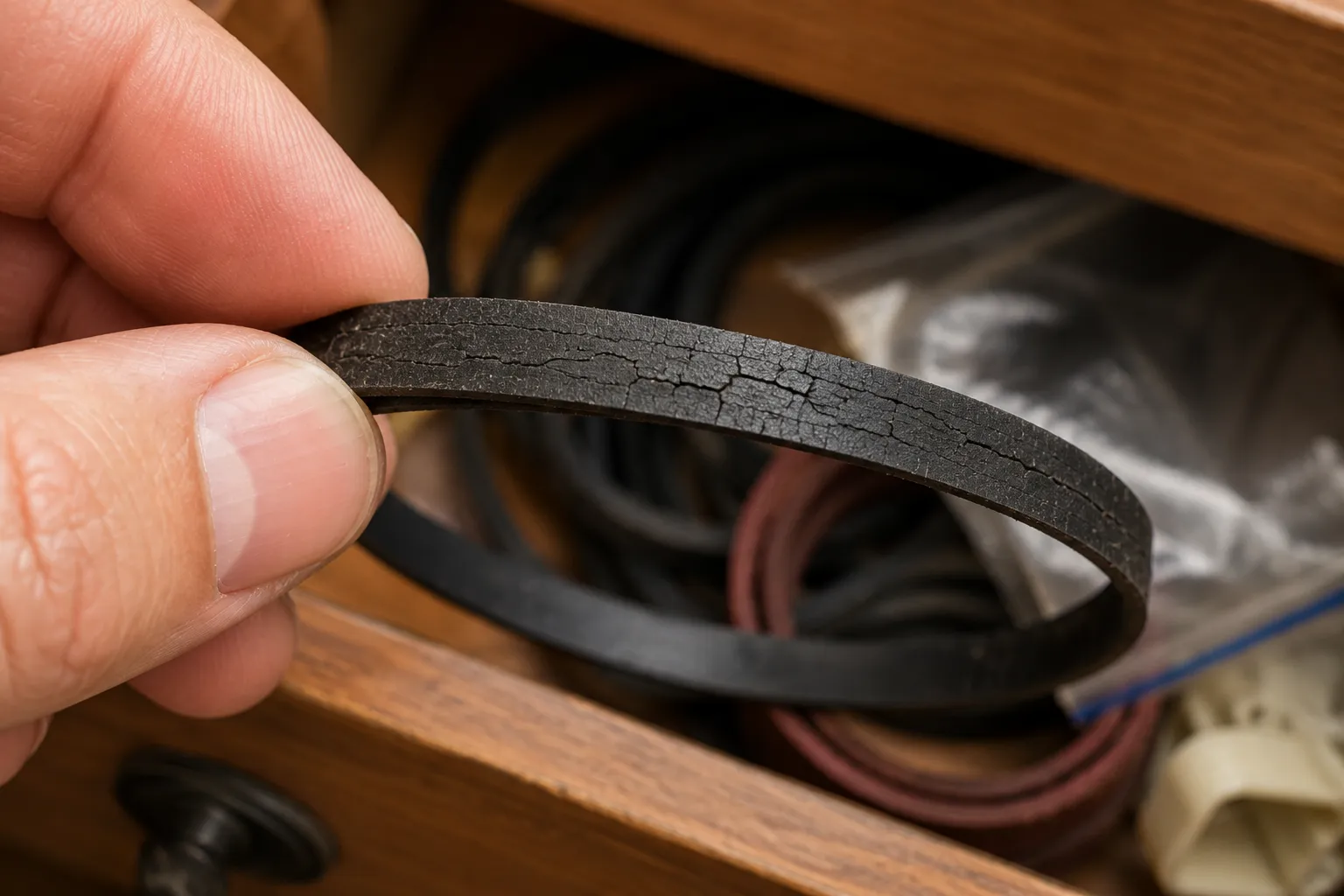
A spare belt I left in a drawer for about eighteen months had already hardened and cracked before it ever touched a vacuum. Intervals are guidance, so inspect the belt rather than only counting months.
The Bottom Line on Replacing Your Belt
A successful vacuum belt replacement comes down to one habit: identify by model number, not by eye. The old belt looks fine because it stretched rather than snapped, the new belt looks too small for the same reason, and the only number that reliably tells you what fits is the one printed on your machine.
Match the model to a Style or part number, confirm the belt type, and the actual swap is a twelve-minute job with a single screwdriver. Keep a spare on hand, check the belt every few months, and your brush roll keeps doing the work your carpet actually needs.
Read it your way
Short on time? Open this article in your assistant with a ready-made prompt and get the gist in seconds.
Found this useful? Make us a preferred source so we show up in your Google results.
Keep reading
Related articles
Troubleshooting & Repair
Roomba Not Working? 8 Symptoms Fixed (2026 Models)
Reboot first, then match your symptom. 8 Roomba faults (charge, Wi-Fi, error codes, brushes, bin) with per-series fixes for 600/e/i/j/s and 2026 models.
Troubleshooting & Repair
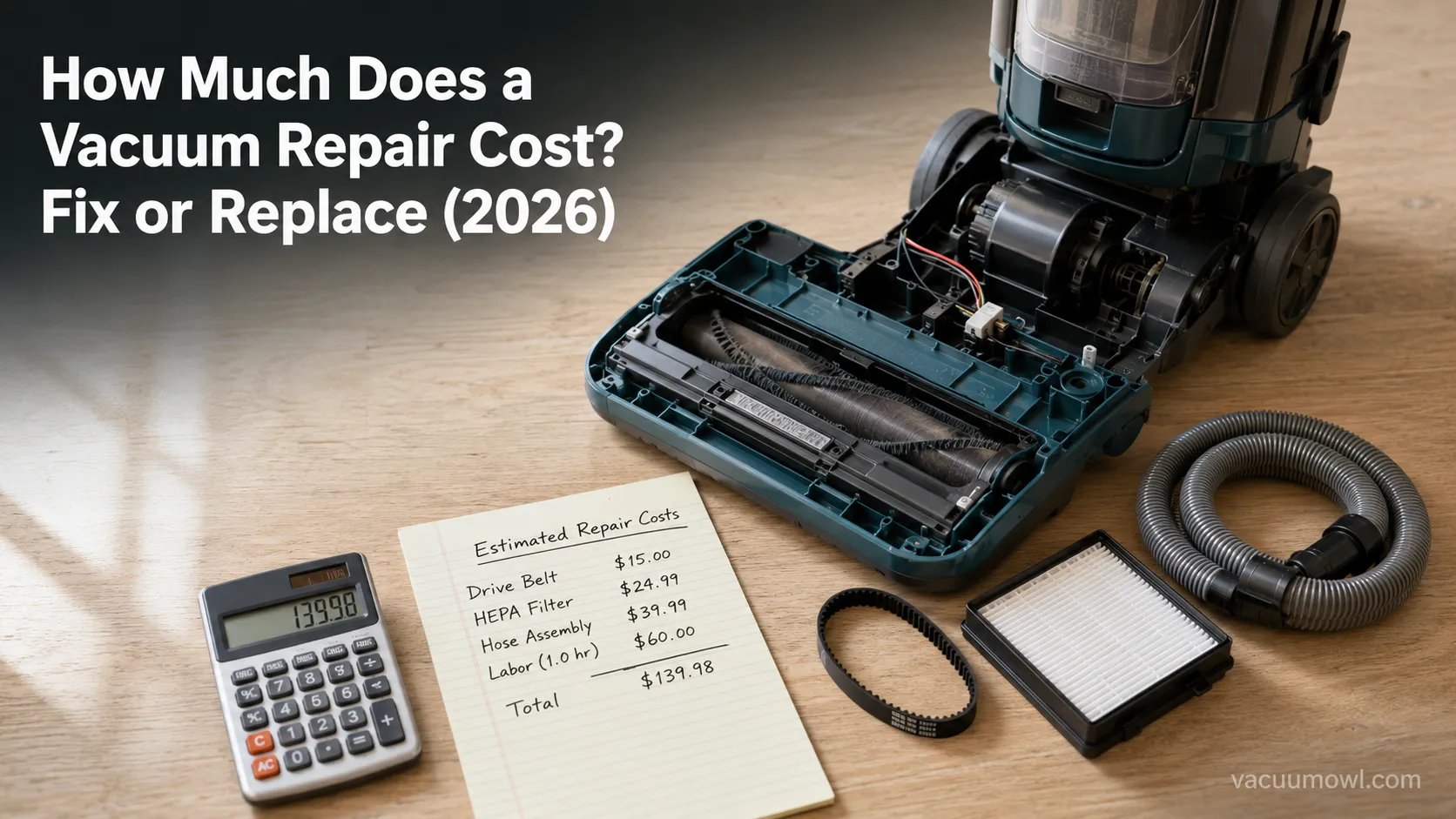
How Much Does a Vacuum Repair Cost? Fix or Replace (2026)
How much does a vacuum repair cost? Usually $50–150 (up to ~$321 for central). Use the 50% rule and our brand tier to decide: fix it or replace it in 2026.
Troubleshooting & Repair
Why Won’t My Robot Vacuum Work? 6 Fixes We Tested
Why won’t my robot vacuum work? Reset it, free the wheels, clean the sensors and fix a 2.4GHz Wi-Fi snag in 5 minutes: the DIY checks that skip a repair bill.
Troubleshooting & Repair
Not Broken? Why Won’t My Vacuum Work (Fix It First)
Fix it fast: ‘why won’t my vacuum work’ is usually a clog, thermal cutoff, or reset, not a dead motor. Match your symptom to the exact fix.
The discussion
Comments
Every comment is reviewed before it goes live.