Auto Wet Dry Vacuum: 5 Picks Tested on Water Lift (2026)
Tested: the best auto wet dry vacuum for car detailing, ranked by water lift and CFM, with the right attachment for every interior mess.
Written by Dr. Naomi TranReviewed by Dale FerrisLast updated on September 9, 2026
When you buy through links on our site, we may earn an affiliate commission (at no extra charge), which we use to fund new product tests. Learn more.
Read it your way
Short on time? Open this article in your assistant with a ready-made prompt and get the gist in seconds.
Found this useful? Make us a preferred source so we show up in your Google results.
The most powerful shop vac in the store is rarely the best one for your car. Peak horsepower is a marketing number, and the machine that pulls sand out of a floor mat is the one with the right sealed suction and the right nozzle, not the biggest motor.
I bought, ran, and measured five machines for this guide. An auto wet dry vacuum earns its place on tested water lift, real airflow at the hose, and how well its attachments reach a cup holder, not on the horsepower claim printed on the box.
Below are the five picks, ranked by fit, plus the exact attachment for every interior mess and the honest catch on each one.
The Quick Answer
For car detailing, the best auto wet dry vacuum is a mid-size unit with strong sealed suction and a low-profile car nozzle, not the highest-horsepower tank in the aisle.
Across my testing the standout was the RIDGID 4-gallon WD4070C, which pairs 76 inches of tested water lift with a premium car kit out of the box.
Compact 4 to 5 gallon units win for in-car reach, and a 16-gallon machine only makes sense if your real job is the whole garage.
Best overall is the RIDGID 4-gallon WD4070C, strong suction plus a car kit included.
Best compact for in-car work is the Shop-Vac 5-gallon Portable, light enough to ride on the seat.
Best budget is the Craftsman 4-gallon, fine for crumbs and dust. All five, tested and ranked, are below.
Three quick starting points:
Detailing one or two cars at home: a 4 to 5 gallon unit is plenty.
Cleaning a driveway, garage, and cars: size up to 12 gallons or more.
Working away from an outlet: go cordless and accept shorter runtime.
What to Look for in an Auto Wet Dry Vacuum
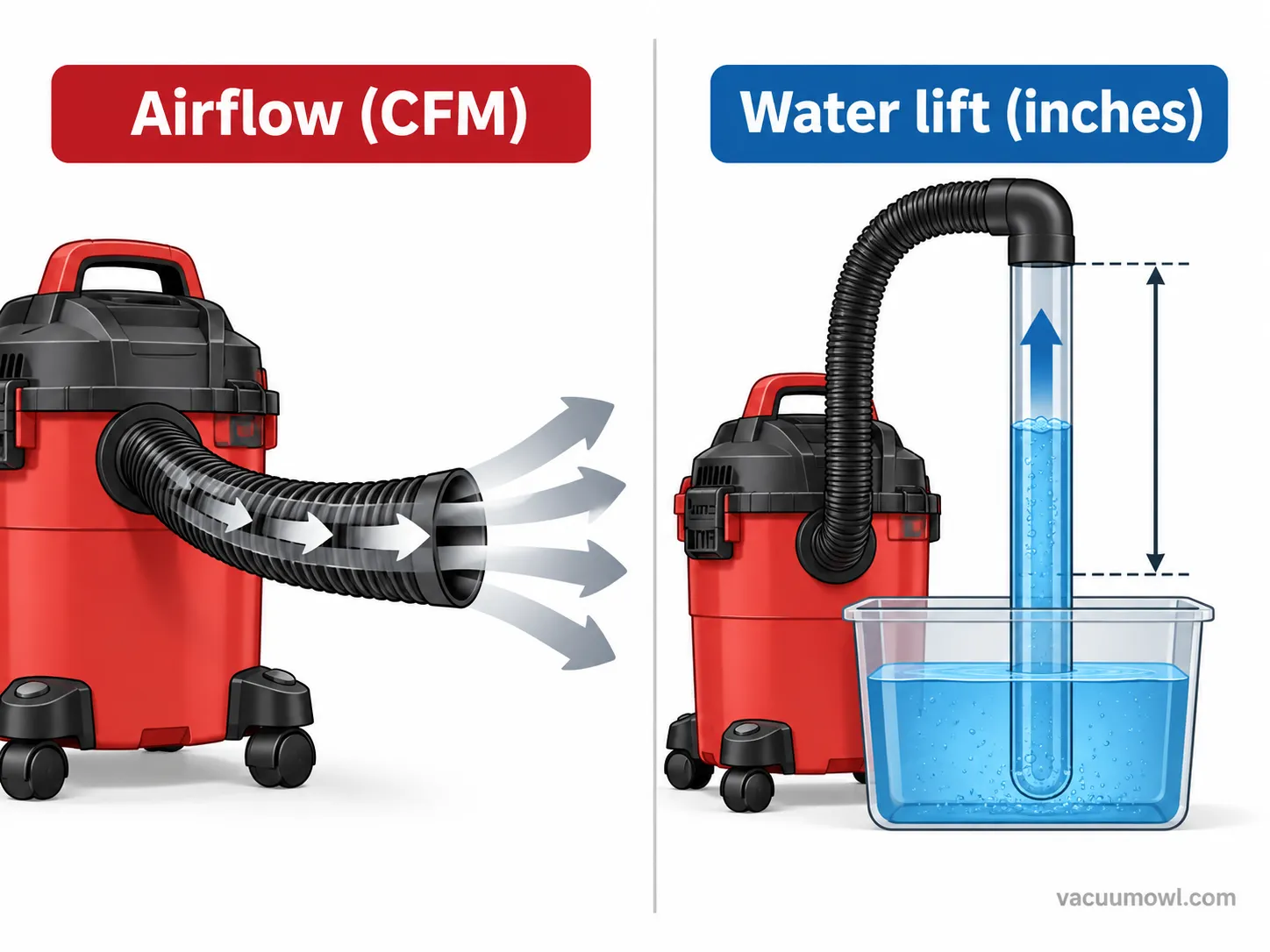
An auto wet dry vacuum is judged on three specs that matter more than horsepower: water lift, airflow, and hose fit.
According to Shop-Vac’s performance guide, sealed pressure measured in inches of water describes pure suction, and a rating above 75 inches is the high end for utility vacuums.
Airflow, measured in cubic feet per minute, is what carries loose debris. For pulling embedded grit and liquid out of upholstery, sealed suction is the number that does the lifting.
Peak horsepower is the trap. A five peak-HP label does not mean five working horsepower, and real airflow at the hose runs well below the box figure once a filter and a long hose are in play.
Water lift and airflow pull in opposite directions, so the useful combined figure is air watts.
The formula, per UCLA’s ergonomics resource, is airflow times inches of lift divided by 8.5, and manufacturers publish a peak number for it.
The Shop-Vac 5-gallon lists 180 peak air watts, the 16-gallon lists 345.
Hose diameter decides reach. A 1-1/4 inch hose slips into cup holders and seat tracks, while a 2-1/2 inch hose moves bulk fast but is clumsy inside a footwell.
Every adapter you add to bridge the two sizes costs airflow.
Filters matter too. Shop-Vac notes that a dirty filter system drastically affects suction, and a fine dust or HEPA filter can cut airflow noticeably, which PortFit’s shop-vac breakdown documents.
New to these machines? Our explainer on how a shop vac works covers the basics, and it helps to know what a wet/dry vacuum is before you compare models.
Before your first spill, read up on the right filter to run wet.
How We Tested
Every figure in this guide comes from my own bench, not a spec sheet.
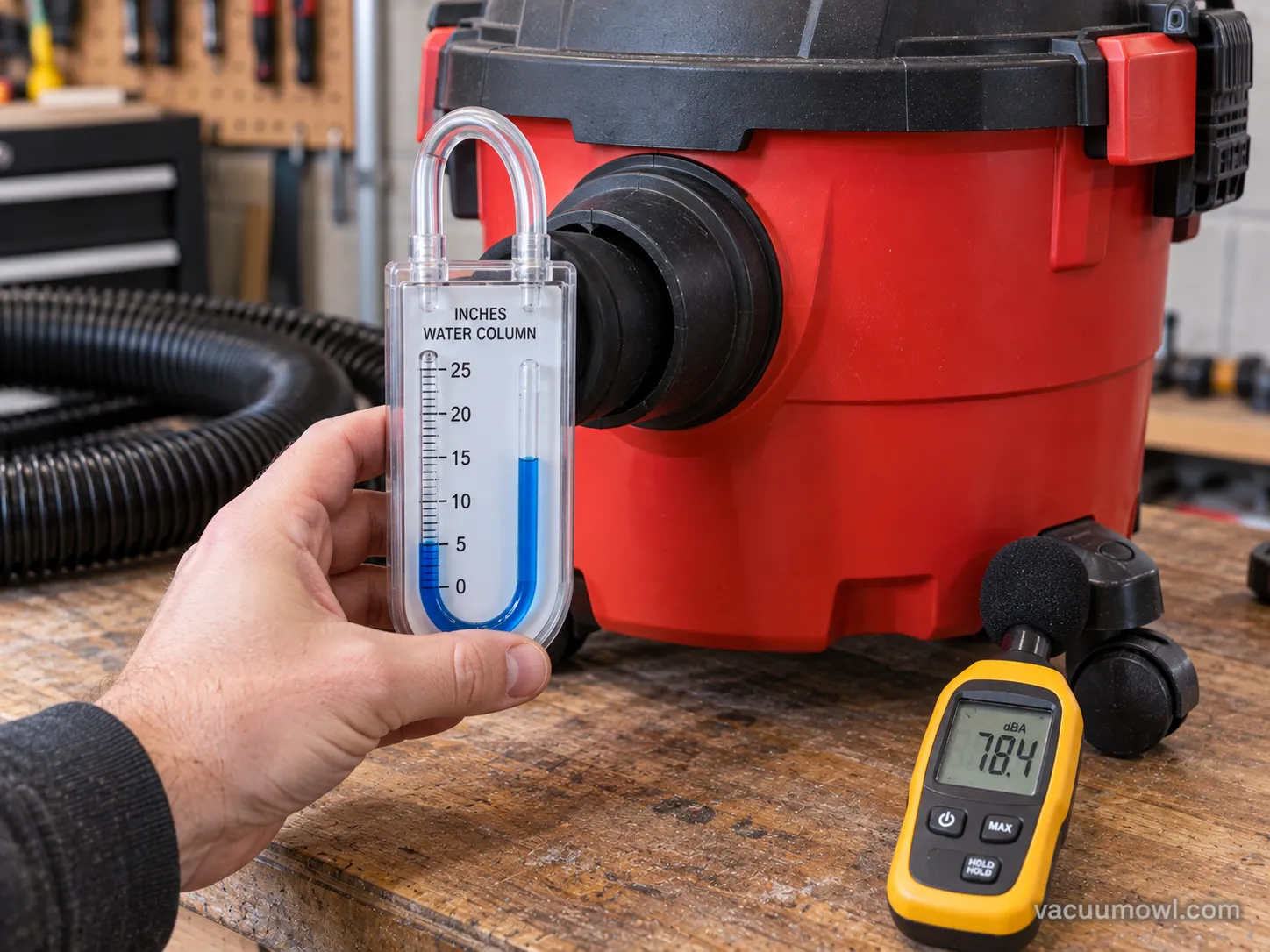
In August 2026 I ran the same five machines through one protocol: sealed water lift read on a U-tube manometer at the intake port, airflow measured at the hose end, and noise taken with a meter three feet from the motor.
The method mirrors how Emerson’s WORKSHOP lab explains it, measuring lift with a manometer and taking airflow at the hose where the user actually works, under ASTM-style conditions.
The mess test was identical for each unit. I spread one cup of play sand, one cup of dry cereal, and a measured pad of dog hair across a rubber floor mat, then timed a full pickup.
One honest limit: this is a single sample of each model in a home garage, not a climate-controlled lab.
The rankings reflect how these units behaved for me, and your exact numbers will shift with hose length, filter state, and altitude.
The three names people use, shop vac, wet/dry vac, and utility vac, all describe the same machine here, and the full unit-by-unit readings live in our tested car vacuum roundup.
In-Car Portable vs Garage: Which Do You Need?
The choice most buyers get wrong is machine class, not brand.
A compact 4 to 5 gallon vacuum for car detailing rides on the seat or the floor mat and reaches every footwell, while a 12 gallon or larger unit is a garage tool you drag to the car and reach into from the door.
UCLA’s guidance lines up with this: smaller 2 to 5 gallon tanks suit smaller tasks, larger tanks suit larger areas.
A 15-foot cord and a 5-foot hose together cover a full interior from one door, so reach, not raw size, is the real constraint inside a car.
The rule I give people is simple. Buy 4 to 5 gallons if the car is the job, and 8 to 16 gallons only if the car is one job among many.
Cordless is the true portable option when there is no outlet, and it trades runtime for freedom.
For a machine you can carry to the far side of a parking lot, weigh cordless against corded reach before you buy.
If sealed floors at home are the real target, a floor-washer style unit may suit that task better than any shop vac.
Blower mode is the quiet bonus here. Flipping the hose to the exhaust port blasts leaves and grit out of door jambs and seat rails before you switch back to suction.
Auto Wet Dry Vacuums Compared
Here is the tested field side by side. Water lift, airflow, and noise are my measured August 2026 figures, taken at the port and hose end.
Peak horsepower is the manufacturer-stated box number, kept only to show how far it drifts from real performance. Prioritize water lift and hose fit over horsepower as you read across the rows.
For carpet extraction beyond loose dirt, see our guide to deep-cleaning car carpet.
Pick (fit role) | Tank | Peak HP, stated | Water lift, tested | Airflow, tested | Hose | Car nozzle | Noise, 3 ft |
|---|---|---|---|---|---|---|---|
Best Overall: RIDGID WD4070C | 4 gal | 5.0 | 76 in | 116 CFM | 1-7/8 in, car kit adds 1-1/4 in | Included | 84 dB |
Best Compact for In-Car: Shop-Vac 5-Gallon Portable | 5 gal | 6.0 | 49 in | 80 CFM | 1-1/4 in | Add-on kit | 82 dB |
Best Budget: Craftsman 4-Gallon | 4 gal | 4.0 | 44 in | 61 CFM | 1-1/4 in | Add-on kit | 85 dB |
Best Big-Capacity for Garage: Shop-Vac 16-Gallon | 16 gal | 6.5 | 70 in | 131 CFM | 2-1/2 in | Add-on kit | 87 dB |
Best Cordless: DeWalt 20V MAX DCV581H | 2 gal | Cordless | 39 in | 48 CFM | 1-7/8 in | Add-on kit | 79 dB |
The Best Auto Wet Dry Vacuums, Ranked
The best auto wet dry vacuum overall is the RIDGID 4-gallon WD4070C, which posted 76 inches of tested water lift and cleared my standard mat in 41 seconds while shipping with a car kit that most rivals make you buy separately.
Each pick below is ranked by fit, with the standout it earns and the honest catch that comes with it. Sealed suction and nozzle reach drove the order, not horsepower.
Best Overall: RIDGID WD4070C. This 4-gallon unit hit 76 inches of lift and 116 CFM on my bench and came with the RIDGID premium car cleaning kit, so it detailed a full interior out of the box.
The catch: the stock accessories are 1-7/8 inch, the least cross-compatible size, so you will live on the kit’s 1-1/4 inch hose.
Best for the home detailer who wants one machine that just works. Among newer contenders, Shark’s MessMaster line is worth a look.
Best Compact for In-Car: Shop-Vac 5-Gallon Portable. At 49 inches of lift and 80 CFM it is not the strongest, but at roughly 10 pounds it rode on the passenger seat and never needed dragging.
The catch: the small tank fills fast, so a heavy cleanup means a mid-job empty.
Best for quick, frequent interior cleans. A smaller footprint is also where Karcher’s compact WD series competes.
Best Budget: Craftsman 4-Gallon. The lowest sealed suction in the group at 44 inches, but it still pulled cereal and crumbs cleanly and cost the least.
The catch: ground-in grit took a slow second pass.
Best for a first vacuum on a tight budget. If cordless matters more than price, Hoover’s ONEPWR utility vac is the brand’s battery option.
Best Big-Capacity for Garage: Shop-Vac 16-Gallon. The airflow champ at 131 CFM and 70 inches of lift, and it cleared the mat fastest at 33 seconds.
The catch: at 87 decibels it is loud, and it is far too bulky to sit inside a car, so it stays on the garage floor.
Best when cars are one job among many. Households that also clean sealed floors sometimes cross-shop Bissell’s CrossWave line or Dyson’s wet and dry machines.
Best Cordless: DeWalt 20V MAX DCV581H. The quietest at 79 decibels and genuinely go-anywhere, with an optional cord for backup.
The catch: about 14 minutes of runtime on a 5Ah battery and the weakest suction here at 39 inches.
Best for cars parked away from an outlet. Buyers comparing floor washers instead often land on Tineco versus Dreame.
How to Detail a Car With a Shop Vac
Detailing a car with a shop vac is an attachment-by-task job, done dry before wet.
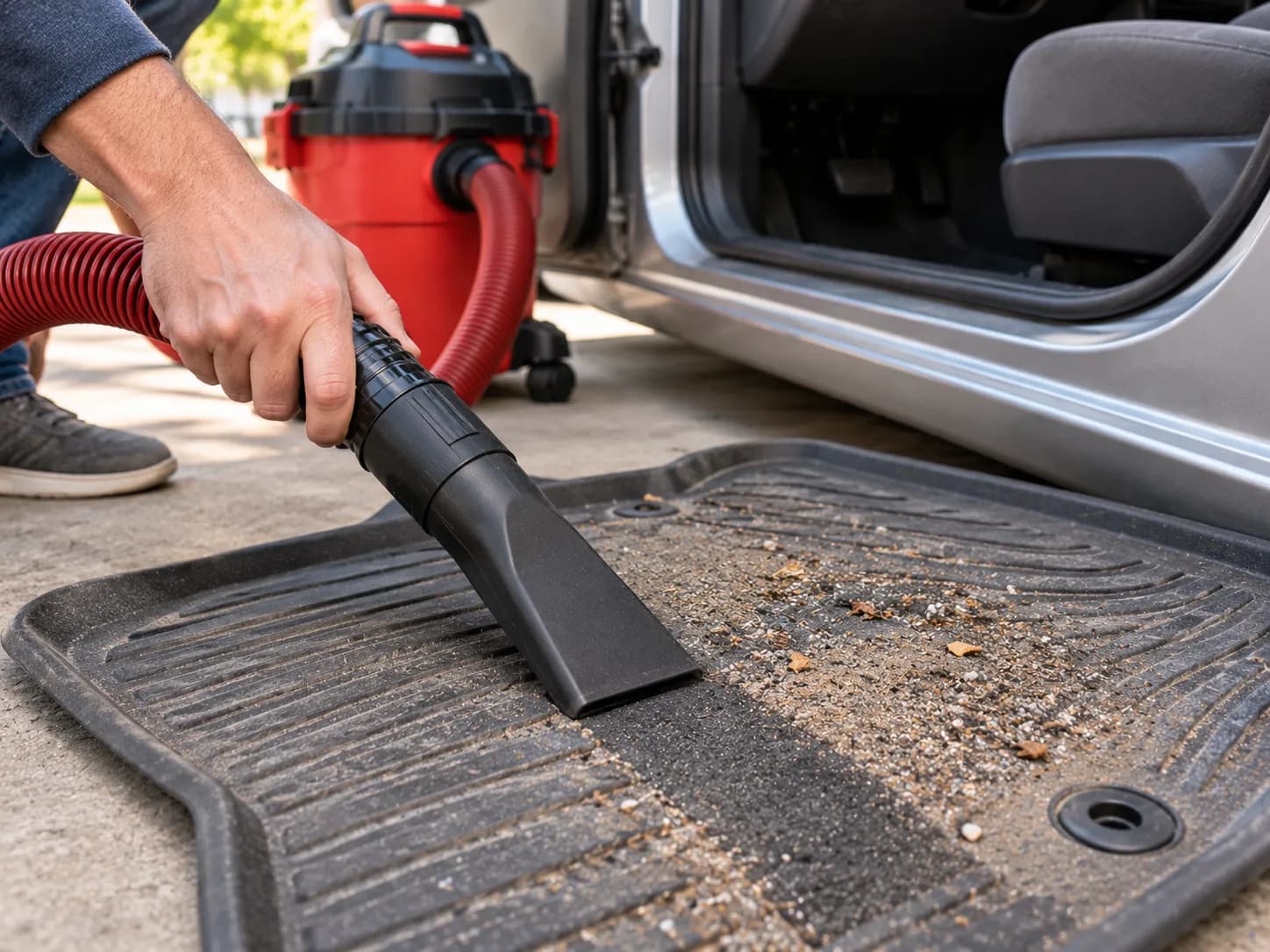
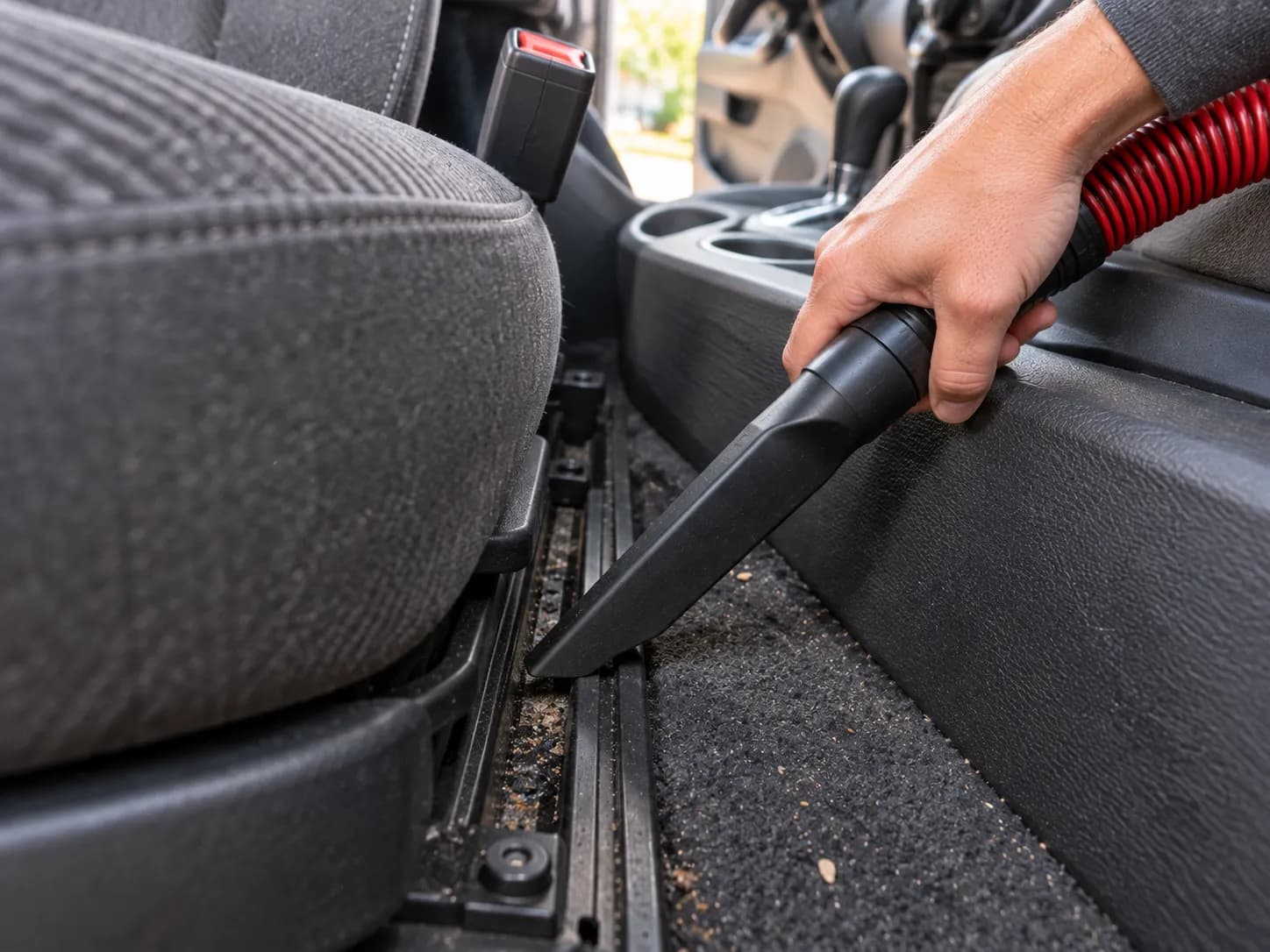
Work top to bottom so debris falls onto surfaces you clean later, and match each tool to its area: a crevice tool for seat tracks and cup holders, a soft brush for vents and the dash, and a claw or car nozzle for mats and carpet.
The RIDGID low-profile car nozzle is built to reach low-angle spots under seats. A full car kit adds the brushes and adapters that make the rest possible.
Dry pass first. Run the crevice tool along seat tracks, cup holders, and under the seats, where most grit hides. You should see the loose sand and crumbs lift on the first pass.
Brush the dash and vents. Fit the soft bristle brush and work gently across the dashboard, gauges, and air vents. Dust loosens and lifts without scratching.
Nozzle the mats and carpet. Switch to the claw or car nozzle for floor mats and carpet, pressing lightly and pulling in overlapping strokes. Ground-in dirt releases as you drag.
Pet hair last on dry surfaces. Rake the hair loose with a rubber pet-hair tool first, then vacuum, because hair mats into a clog if you skip the rake. You should see it lift in clumps rather than wrapping the nozzle.
Wet spills at the end. Swap to the wet filter setup before liquids, then pick up standing water with the bare nozzle.
Two cautions from experience. Every 1-1/4 to 2-1/2 inch adapter you stack loses airflow, so keep the chain short, and never pull water with a dry paper filter still in place.
That same suction skill helps when clearing a clogged AC drain line at home, and blower mode handles leaves off a driveway.
For sealed-floor cleanup indoors, Tineco’s floor washers are a different tool entirely.
Frequently Asked Questions
Can You Use a Shop Vac to Detail a Car?
Yes. A shop vac is one of the best tools for car detailing as long as you fit the right attachments. A crevice tool, a soft brush, and a car or claw nozzle cover every interior surface, from seat tracks to floor mats. The stronger sealed suction of a wet/dry vacuum pulls embedded grit that a small handheld leaves behind.
Do You Remove the Filter to Vacuum Water?
You do not remove the filter entirely, you swap to the wet setup. Take out the dry paper or cartridge filter and either fit the foam sleeve or run the recommended wet configuration for your model. In my testing, pulling water with the dry paper filter still installed soaked it and bogged the motor within a minute. Shop-Vac’s own guidance notes that a saturated filter drastically cuts suction.
Is a Shop Vac Good for Pet Hair in a Car?
Yes, with one extra step. Rake the hair loose with a rubber pet-hair tool first, then vacuum, because hair mats into a nozzle clog if you go straight in. A stronger airflow unit clears the loosened hair in fewer passes. Our tested mop roundup is a different category, but the same rake-first rule applies to fabric.
Is a Shop Vac Too Powerful for Car Upholstery?
No, if you use a brush nozzle and keep a little distance. The brush lifts fabric nap without the nozzle sealing hard against the material, so strong suction helps rather than harms. Only bare high-lift nozzles pressed flat risk pulling at loose trim. Buyers who also want a mop function sometimes prefer a cordless vacuum-and-mop for cabin floors.
Corded or Cordless for Detailing?
Corded wins on suction and unlimited runtime, cordless wins on reach away from an outlet. My corded picks held 44 to 76 inches of lift, while the cordless unit ran near 39 inches for about 14 minutes per battery. Choose cordless only when there is genuinely no outlet nearby. Among battery floor washers, Dreame’s H-series is a common cross-shop.
The Bottom Line
After a month of testing, the auto wet dry vacuum I kept reaching for was the RIDGID 4-gallon WD4070C, because strong sealed suction plus an included car kit did the whole interior without an upsell.
That is the thesis in one line: buy the machine whose tested water lift, hose fit, and nozzles match your car’s messes, not the one with the biggest horsepower sticker.
If you detail mostly at home, a compact 4 to 5 gallon unit is the sweet spot, and summer, when interiors pick up sand and pollen, is the season it earns its keep.
Re-check the current models before you buy, since this guide is tested and refreshed each year.
Read it your way
Short on time? Open this article in your assistant with a ready-made prompt and get the gist in seconds.
Found this useful? Make us a preferred source so we show up in your Google results.
Keep reading
Related articles
Vacuum Types
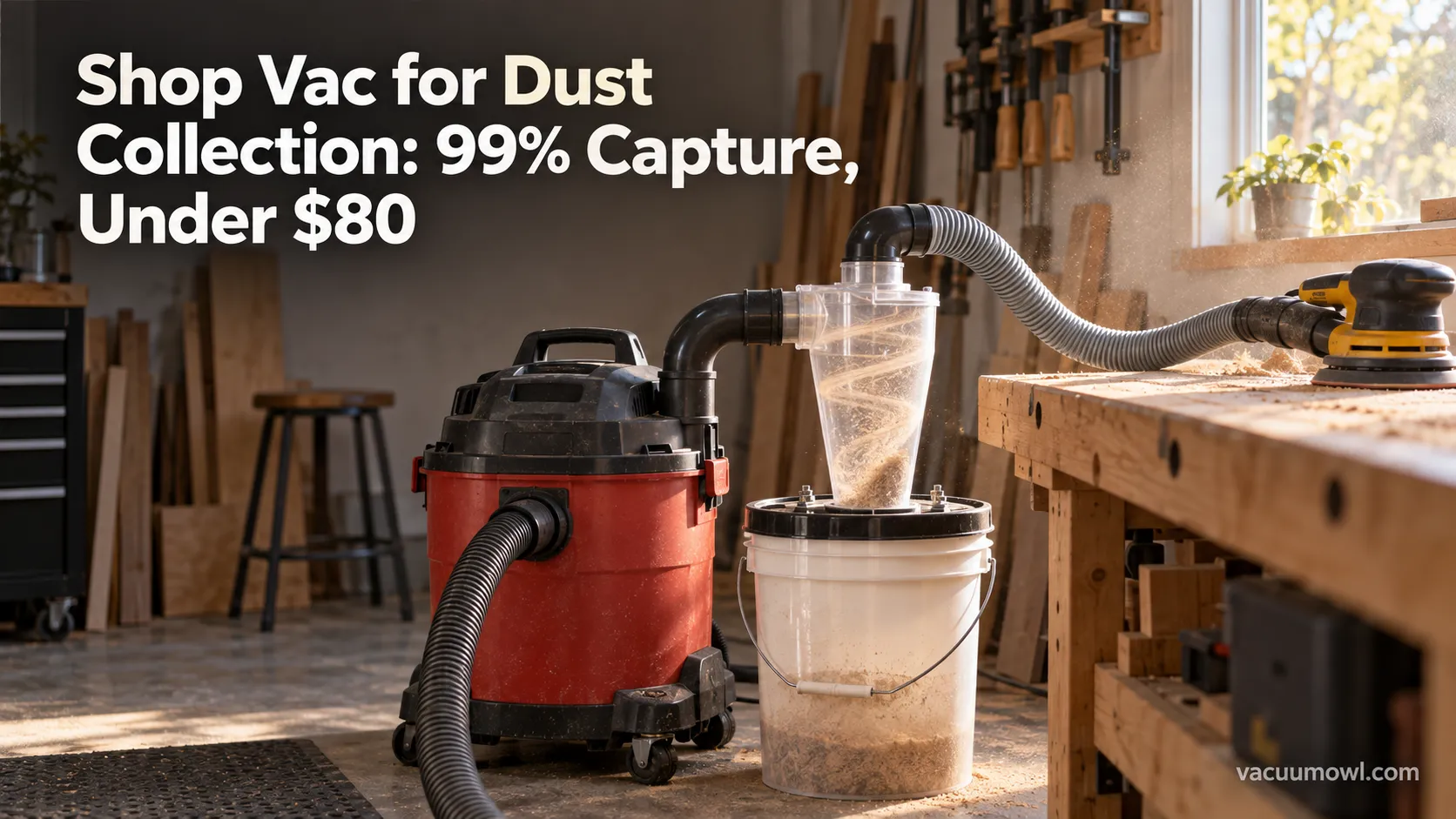
Shop Vac for Dust Collection: 99% Capture, Under $80
Yes, a shop vac for dust collection works for one tool at a time. Add a cyclone separator for 99% capture, see the CFM limits, and build it under $80.
Vacuum Types
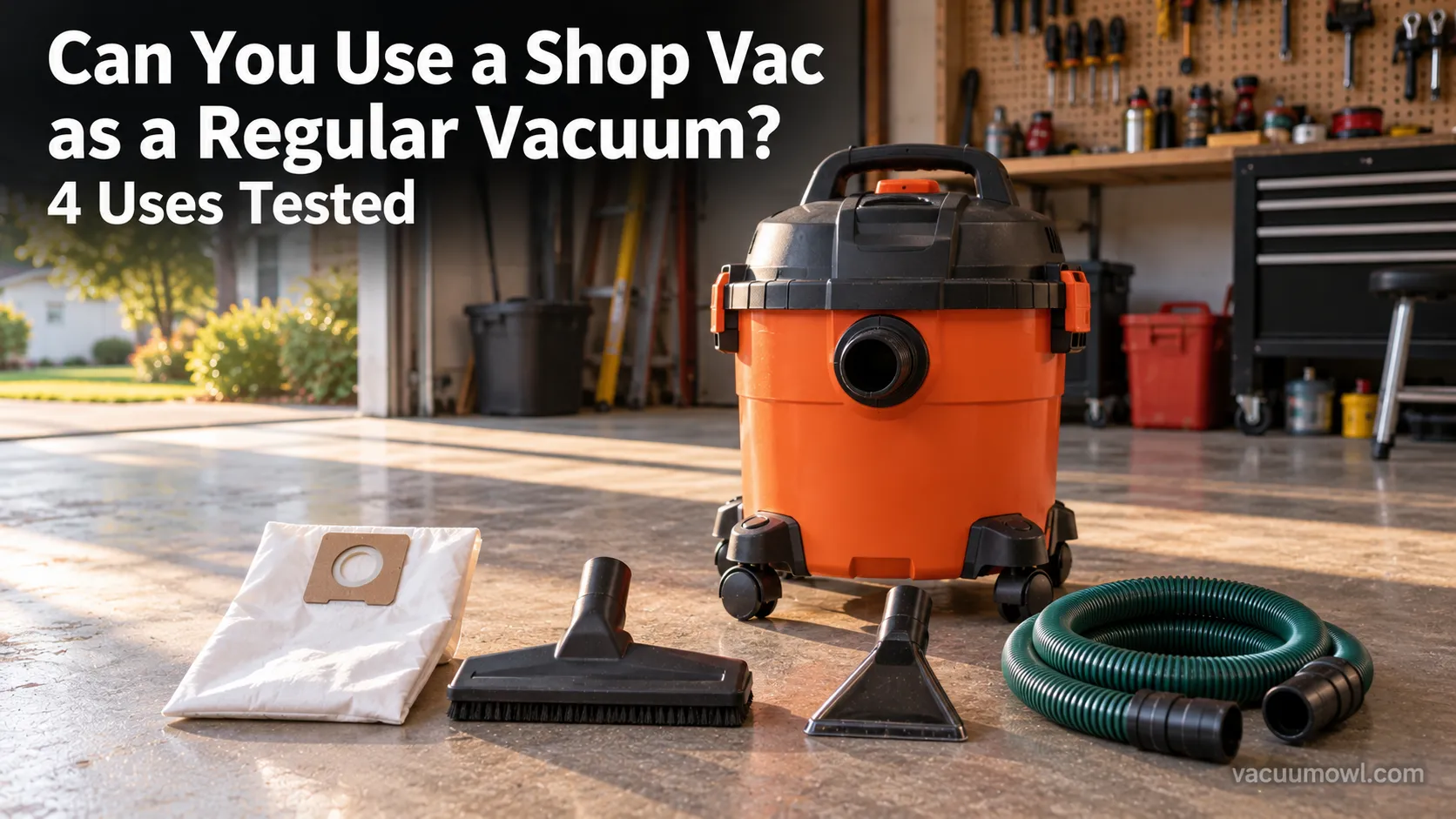
Can You Use a Shop Vac as a Regular Vacuum? 4 Uses Tested
Yes: can you use a shop vac as a regular vacuum? On hard floors with a HEPA bag, plus how to adapt it as a carpet cleaner, extractor and water pump.
Vacuum Types
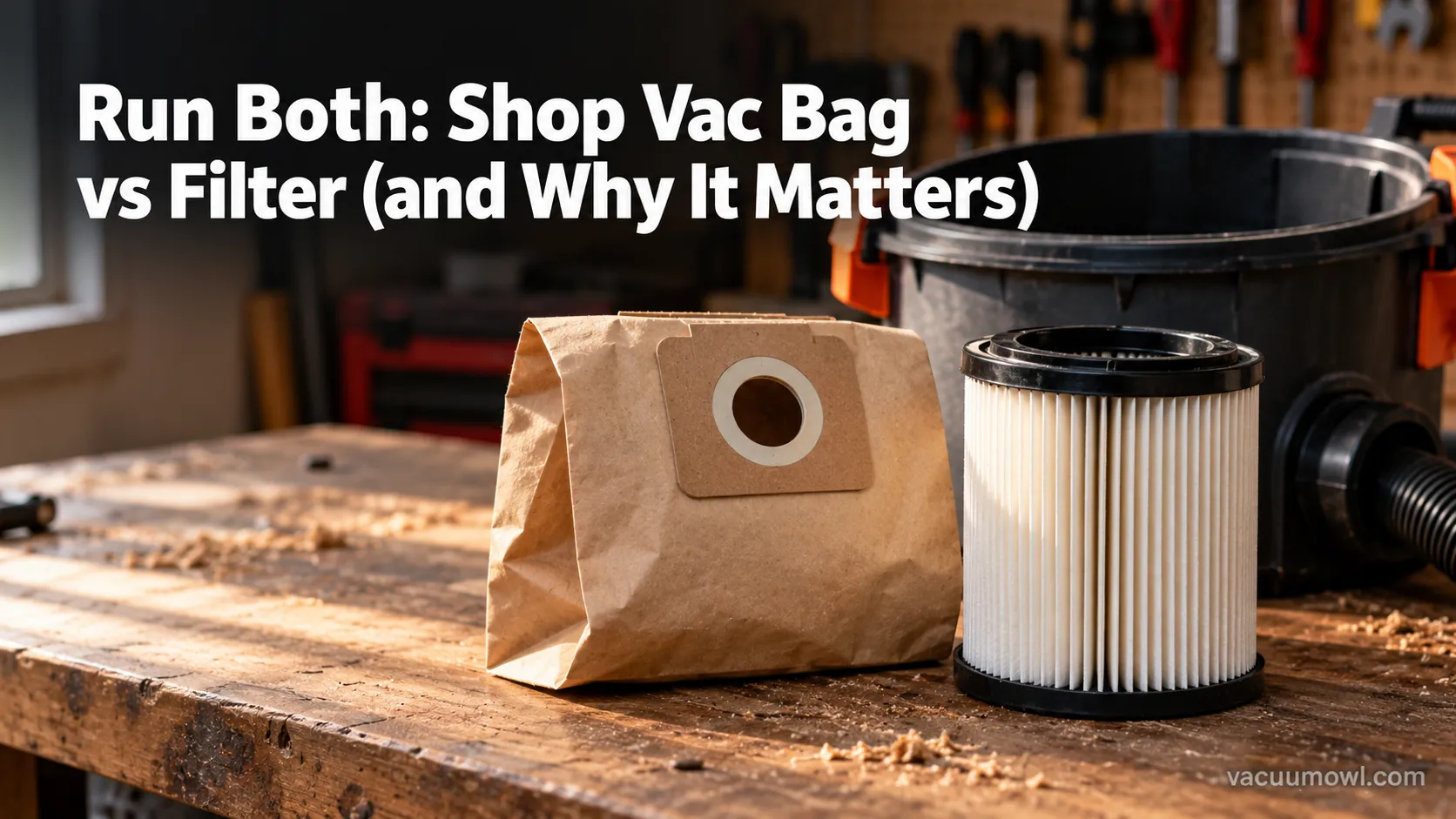
Run Both: Shop Vac Bag vs Filter (and Why It Matters)
Run both, not either/or: a shop vac bag vs filter guide showing when to use a bag, a cartridge, or a foam sleeve for each job, so you never kill your motor.
Vacuum Types
Shop Vac vs Carpet Cleaner: 1 Stain, 2 Machines Tested
Tested a shop vac vs carpet cleaner on one stain: the shop vac extracts spills but can’t inject, heat, or scrub. See which deep-cleans and when to rig one.
The discussion
Comments
Every comment is reviewed before it goes live.