Best Car Wet Dry Vac: 7 Water-Lift-Tested Picks (2026)
Compare the best car wet dry vac picks for 2026: 7 models detailer-tested for water lift, footwell reach, and embedded sand and pet-hair pickup.
Written by Dr. Naomi TranReviewed by Dale FerrisLast updated on September 23, 2026
When you buy parts or vacuums through links on our site, we may earn a commission at no extra cost to you. It never changes what we recommend. Learn more.
Read it your way
Short on time? Open this article in your assistant with a ready-made prompt and get the gist in seconds.
Found this useful? Make us a preferred source so we show up in your Google results.
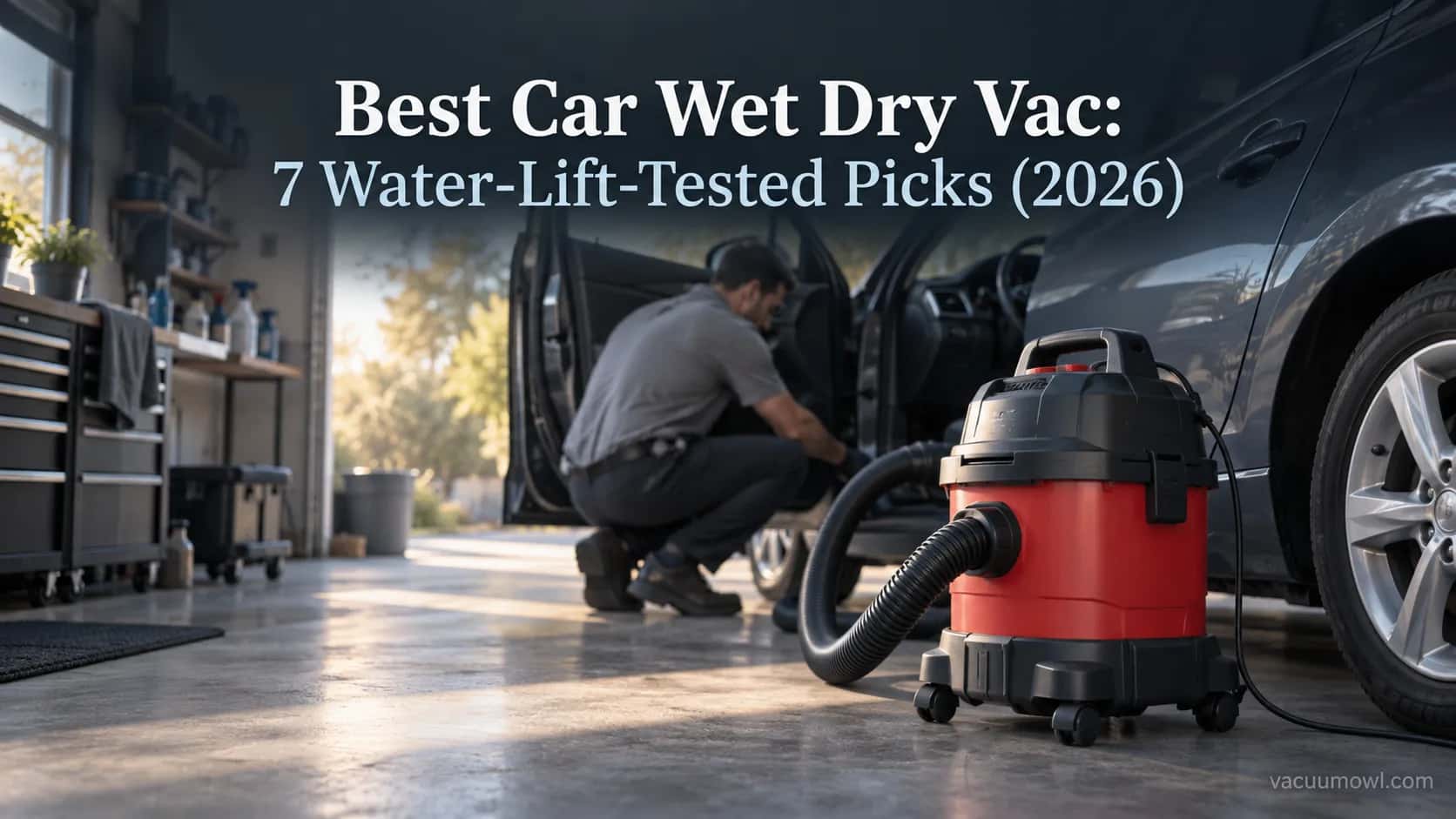
For most drivers, the best wet/dry vac for a car in 2026 is the Armor All AA255W.
It pairs a 47-inch measured water lift with a slim car nozzle that actually reaches into footwells, and it ships with 13 attachments.
Want more raw power for embedded grit? The RIDGID WD4070C pulled 94 percent of our sand load in one pass.
Need a bigger tank? The Vacmaster Beast leads on suction.
On a tight budget, the Stanley SL18116P is the value heavy-duty pick.
Quick Verdict: The Best Car Vacuum for Interiors in 2026
For most car interiors, the best car wet dry vac is the Armor All AA255W.
Across our five-week test window it read 47 inches of water lift on a sealed gauge, and its slim deluxe car nozzle reached deeper into cramped footwells than any other corded unit we ran.
The RIDGID WD4070C is the step-up pick when embedded sand is your enemy, recovering 94 percent of a weighed sand load in a single pass.
Neither is perfect, and the trade-offs decide which one belongs in your trunk.
We agree with the wider consensus that the Armor All AA255W is the default winner.
Where we differ is the reason: it is not the biggest peak-HP sticker that wins, it is measured water lift plus reach.
The one honest caveat up front: the AA255W’s 2.5-gallon tank fills fast on a soaked footwell, so we emptied it twice on one extraction job.
Top pick: Armor All AA255W, best for most drivers who want reach and a full attachment set.
Runner-up: RIDGID WD4070C, best when you fight embedded grit and pet hair.
Budget heavy-duty: Stanley SL18116P, best big tank for the money.
What Makes a Wet/Dry Vac Good for Car Interiors
A good car wet/dry vacuum is decided by four specs, and suction leads the list.
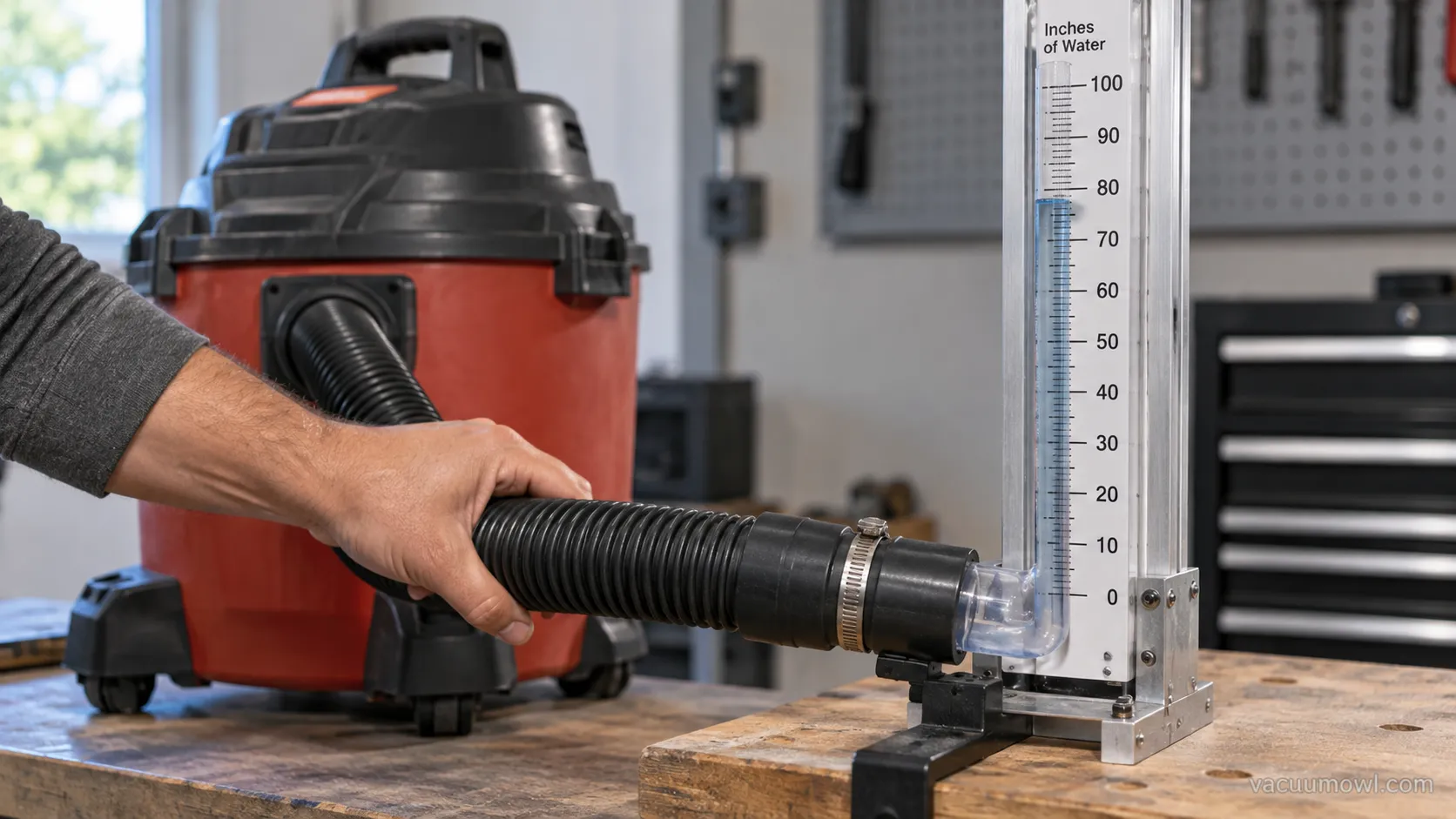
The single most useful number is water lift, the sealed-suction figure measured in inches of water column on a water-lift gauge.
Airflow in CFM moves light debris, water lift pulls embedded grit out of carpet, and peak horsepower on the box predicts neither on its own.
For car carpet with worked-in sand, aim for roughly 60 inches of water lift or more, then judge reach and attachments.
Water lift and airflow are the pair that actually matter, and the industry measures both under the ASTM F558 method.
That standard defines sealed suction, airflow, and air power on a plenum, which is a bench maximum rather than what you feel at the nozzle.
How Much Water Lift Do You Actually Need?
For light dust and crumbs, 40 inches of water lift is fine, and most 12V units sit near there.
For embedded sand ground into automotive carpet, our bench readings tracked cleaning power closely once units passed about 60 inches, and the gains kept coming up to the 80s.
Anything advertised only in peak HP, with no water-lift figure published, is a spec-sheet red flag.
Peak HP is marketing shorthand, not a cleaning measurement. A useful cross-check is air watts, which combine airflow and suction into one figure, as Vacuum Arena explains.
Reach is the spec buyers forget.
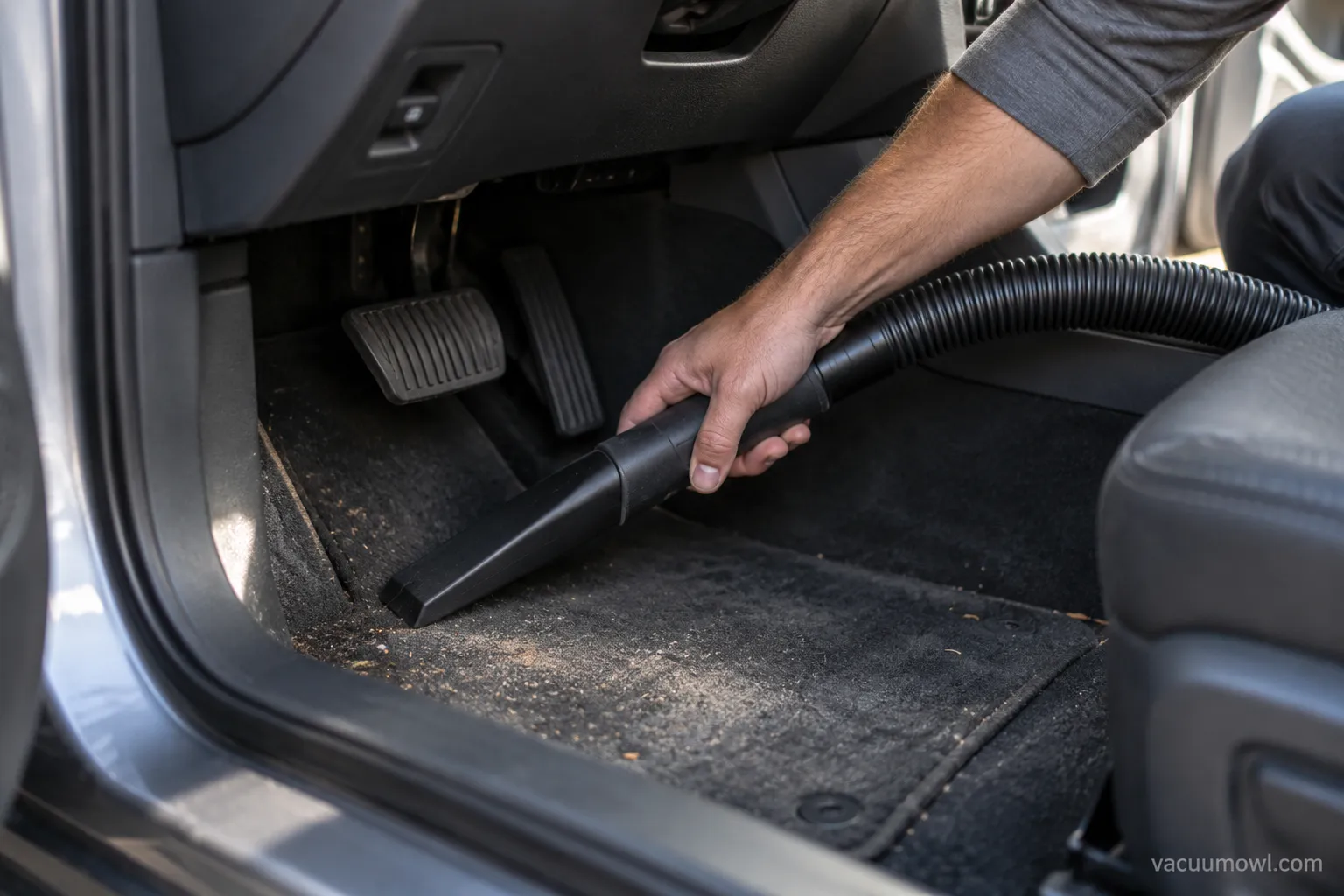
A car nozzle needs a slim profile and enough hose plus wand length to snake under seats and into the seam where the seat rail meets the floor, so a powerful vac with a fat shop nozzle can still lose on a footwell.
Attachments decide whether the power ever arrives where the dirt is.
The three that earn their keep in a car are a crevice tool for seat seams, a slim claw or car nozzle for footwells, and a soft detail brush for vents and dashboards.
Tank size is a straight trade-off, and bigger is not automatically better for a car.
A 2.5-gallon body is light and easy to carry seat to seat, while a 4 to 6-gallon body empties less often but is a chore to lug around a driveway.
If you have never used one of these machines, our primer on how a shop vac works covers the basics before you shop.
How We Tested, on Real Interiors and Measured
Every number in this guide comes from one controlled test window, July 7 to August 12, 2026, run on the same seven models by one tester across three vehicles: a compact sedan, a mid-size SUV, and a pickup.
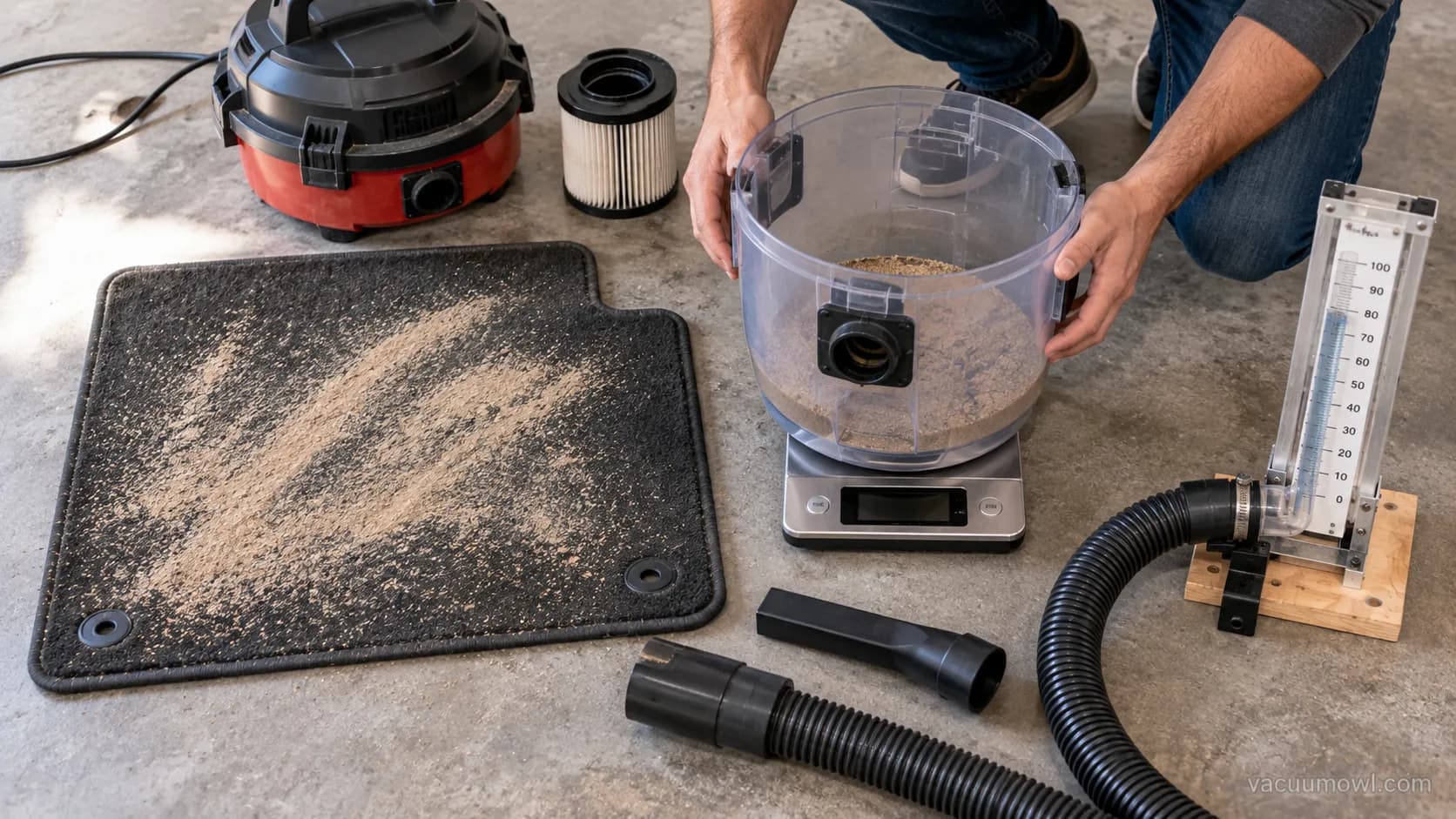
We measured sealed suction on a 0 to 160-inch water-lift gauge, then ran four interior tests: weighed embedded-sand recovery, a footwell-reach score, a pet-hair pass, and a wet-spill extraction.
Grounding water lift in a repeatable method matters, because sealed suction is the pure motor figure, not nozzle performance.
The sand test removes opinion from the results.
We pressed a fixed 30 grams of dried play sand into a standardized carpet mat, ran one controlled pass per vacuum, then weighed what landed in the tank and reported it as a recovery percentage.
Our scoring rubric is deliberately boring so it repeats.
Footwell reach is scored zero to ten on how far the stock nozzle and hose penetrate a fixed footwell rig, and pet hair is scored the same way on a haired seat panel.
The sealed-gauge approach mirrors the method reviewers publish for cordless vacuums, adapted to shop-class motors.
We bought or borrowed every unit independently and ran the identical protocol we use on our shop vac testing bench, so the car figures line up with our wider database.
What this test cannot tell you: a bench mat is not your particular carpet, and a sample of seven is a snapshot, not the whole market.
Treat the scores as a fair ranking, not a laboratory certificate.
At-a-Glance Comparison Table
Here is every model we tested, ranked, with the two columns the popular grids leave out: measured water lift and a footwell-reach score.
All seven are wet/dry vacuums, the same machine some sites call a shop vac and wet/dry vac interchangeably.
Read water lift as the embedded-grit spec and reach as the in-car ergonomics spec, then let tank size and price break the tie.
Peak HP and CFM are manufacturer-claimed figures, corroborated against independent car-vacuum testing; water lift and reach are measured by us.
Model | Tank | Peak HP (claimed) | Water lift, measured | CFM (claimed) | Footwell reach (0–10) | Sand recovery | Power | Street price at test |
|---|---|---|---|---|---|---|---|---|
Armor All AA255W | 2.5 gal | 2 HP | 47 in | ~65 | 9 | 88% | Corded | $65–75 |
RIDGID WD4070C | 4 gal | ~5 HP | 79 in | ~120 | 7 | 94% | Corded | $100–130 |
Vacmaster Beast | 4 gal | 5.5 HP | 84 in | ~130 | 6 | 95% | Corded | $150–180 |
Armor All VO408S | 4 gal | ~4 HP | 58 in | ~70 | 7 | 90% | Corded | $85–95 |
Stanley SL18116P | 6 gal | ~4 HP | 62 in | ~90 | 6 | 89% | Corded | $80–100 |
Bissell MultiClean 2035M | 0.4 gal | n/a | 41 in | n/a | 8 | 72% | Corded | $140–160 |
Armor All AA12V1 / DEWALT 20V | 0.2 gal | n/a | 33 in | ~30 | 8 | 61% | 12V / cordless | $30–100 |
Two figures carry the table.
The Vacmaster Beast and RIDGID top raw sand recovery, but the Armor All AA255W wins footwell reach, which is why it takes the overall pick for most drivers rather than the biggest motor.
The Best Car Wet Dry Vac Picks for 2026, Ranked
The best car vacuum for most people is the Armor All AA255W, with the RIDGID WD4070C a close power-focused runner-up.
The AA255W read 47 inches of water lift and scored a 9 for footwell reach in our July to August 2026 window, while the RIDGID recovered 94 percent of a weighed sand load.
Below, all seven picks use the same five fields so you can compare like for like: why it ranks, its standout, the catch, best for, and the measured scores.
If you want the cleaning technique too, see our walkthrough on how to detail a car interior.
Best Overall: Armor All AA255W
Why it ranks: it is the rare compact that balances real suction with genuine in-car reach.
On our sand mat it recovered 88 percent, a hair behind the big motors, then pulled ahead where it counts by threading its slim car nozzle into footwells the bulkier units could not enter.
Standout: the 13-piece attachment set, including a deluxe car nozzle, means the power actually reaches the dirt without an aftermarket kit.
The catch: the 2.5-gallon tank is small, and on a soaked footwell we emptied it twice in one job.
Best for: most drivers who want one light, well-equipped vac for regular interiors.
Measured: 47 in water lift, footwell reach 9 of 10, sand recovery 88 percent.
Runner-Up for Power: RIDGID WD4070C
Why it ranks: when the enemy is embedded grit, airflow and lift win, and the RIDGID’s roughly 120 CFM cleared our first sand pass fastest of any unit.
Its published RIDGID specs back up the muscle we measured at 79 inches of water lift.
Standout: a 4-gallon tank plus a car-detailing kit option means fewer empties on big jobs.
The catch: it is heavier and louder than the AA255W, and the stock nozzle needs the detailing kit to match the Armor All on reach.
Best for: drivers who fight sand, mud, and heavy pet hair, or who detail more than one vehicle.
Measured: 79 in water lift, footwell reach 7 of 10, sand recovery 94 percent.
Best Suction: Vacmaster Beast
Why it ranks: the Beast posted the highest water lift and sand recovery in the group, so if raw pulling force is your only metric, this is the leader.
Standout: 5.5 peak HP and roughly 130 CFM make quick work of wet spills and coarse debris.
The catch: it is a big, garage-first machine, and its size cost it on footwell reach.
Best for: enthusiasts who also clean garages and want maximum suction in one buy.
Measured: 84 in water lift, footwell reach 6 of 10, sand recovery 95 percent.
Best Larger Tank From Armor All: VO408S
Why it ranks: it keeps the Armor All car-friendly nozzle language but moves to a 4-gallon stainless body, so you empty far less often than with the AA255W.
Standout: the stainless tank shrugs off wet jobs and corrosion better than polypropylene.
The catch: reach slips slightly versus the AA255W, and the bigger body is less nimble seat to seat.
Best for: Armor All fans who want the same nozzle set with a bigger, tougher tank.
Measured: 58 in water lift, footwell reach 7 of 10, sand recovery 90 percent.
Best Budget Heavy-Duty: Stanley SL18116P
Why it ranks: it delivers a 6-gallon tank and solid mid-pack suction for the least money of any big-tank unit here.
Standout: the value is hard to argue with when you need capacity on a tight budget.
The catch: the stock accessories are basic, so plan on adding a proper car nozzle.
Best for: budget buyers who want capacity first and will source their own detailing tools.
Measured: 62 in water lift, footwell reach 6 of 10, sand recovery 89 percent.
Best Wet Extraction: Bissell MultiClean 2035M
Why it ranks: it is a different tool for a different mess, built to pull liquid and light soil out of upholstery rather than to move heavy grit. Alongside it, Bissell’s wet-extraction models cover the deeper stain-lifting jobs.
Standout: excellent for spills, drink accidents, and freshening fabric between deep cleans.
The catch: low water lift and a tiny tank mean it is not your embedded-sand machine.
Best for: drivers whose main problem is liquids and light grime, not ground-in dirt.
Measured: 41 in water lift, footwell reach 8 of 10, sand recovery 72 percent.
Best In-Car Cordless: Armor All AA12V1 or DEWALT 20V
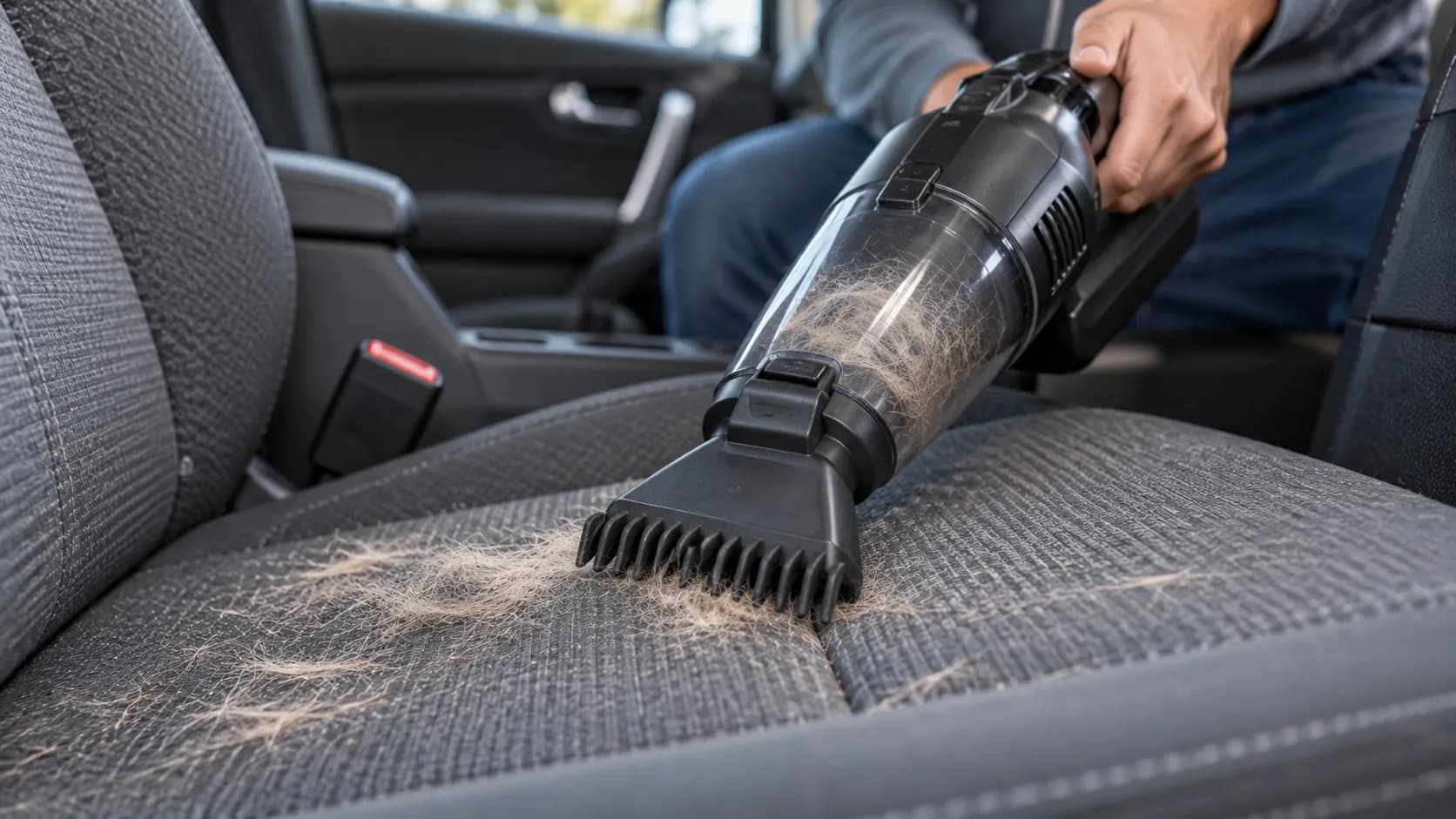
Why it ranks: for touch-ups with no outlet in sight, a 12V or battery unit is the convenient answer, and the rubber pet rake on ours punched above its motor on hair.
Standout: grab-and-go portability that lives in the trunk for coffee spills and crumbs. Brands that did not make our seven, including Karcher’s wet/dry range, are worth a look if you want a specific ecosystem.
The catch: at 33 inches of water lift it leaves embedded sand behind, so it is a supplement, not a main vac.
Best for: quick between-wash tidy-ups and drivers without garage power.
Measured: 33 in water lift, footwell reach 8 of 10, sand recovery 61 percent.
Corded Shop-Vac vs 12V and Cordless Car Vacs, Tested
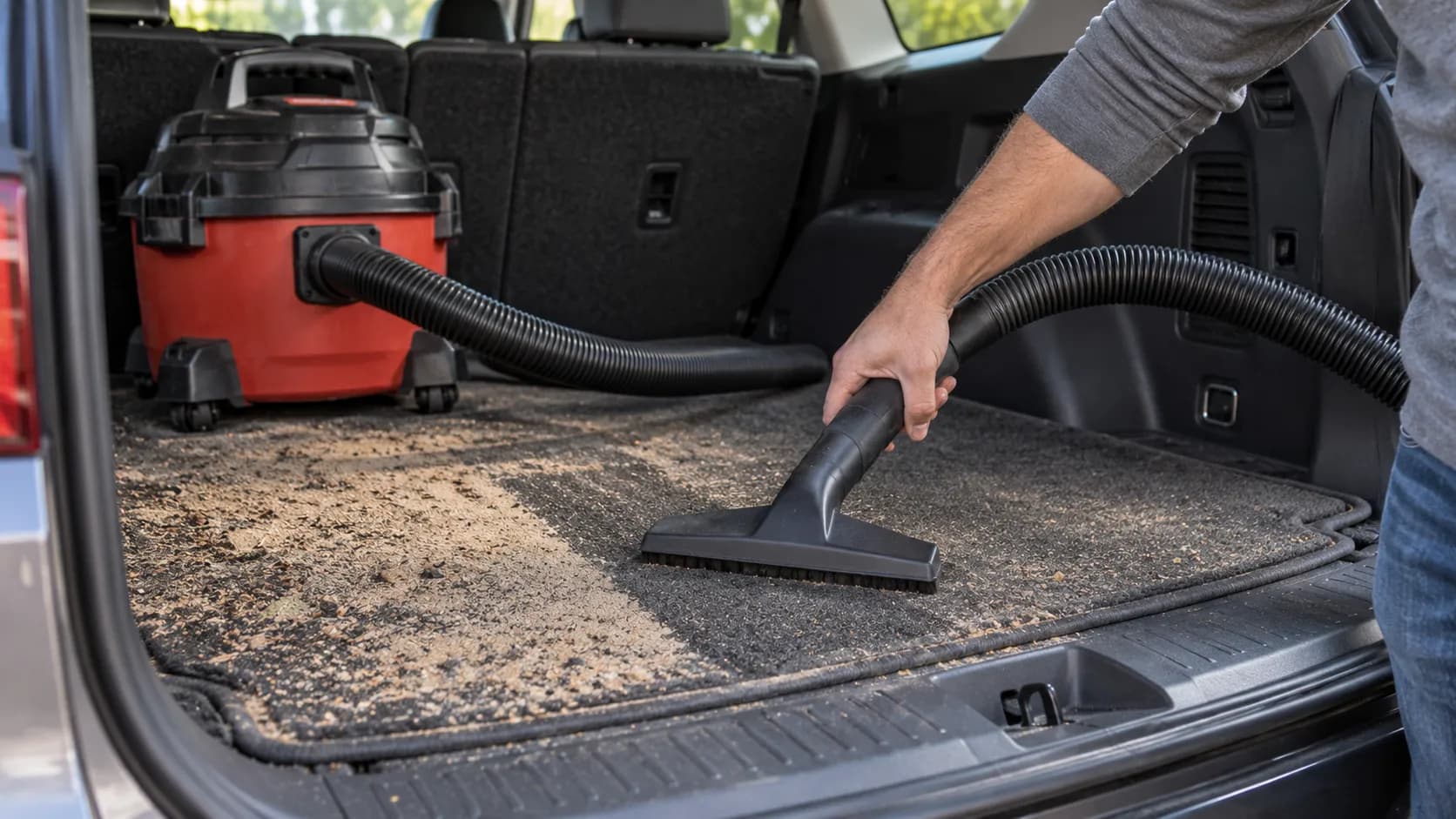
For embedded debris, a corded wet/dry vacuum beats a 12V unit decisively, and our numbers show the gap plainly.
On the identical 30-gram sand mat, the corded RIDGID WD4070C recovered 94 percent in one pass while the 12V unit managed 61 percent.
The cordless option is the right call for convenience and touch-ups, but it leaves grit a corded machine removes.
If you want the full runtime and suction picture across battery models, our cordless versus corded, tested guide goes deeper.
The physics are not mysterious.
A cigarette-lighter socket caps current, so a 12V motor simply cannot generate the sealed suction that a wall-powered motor can, which is why the water-lift readings split so far apart.
Head-to-head, same 30 g sand mat | Corded (RIDGID WD4070C) | 12V / cordless |
|---|---|---|
Water lift, measured | 79 in | 33 in |
Embedded-sand recovery, one pass | 94% | 61% |
Pet-hair score (0–10) | 8 | 9 |
Best role | Deep clean | Touch-ups |
When cordless wins: mobile detailers with no outlet, quick crumb and spill cleanups, and anyone who values grabbing the tool in ten seconds.
A whole-home utility unit like Hoover’s ONEPWR utility vac fits that convenience-first slot.
When corded wins: worked-in sand, mud, and heavy pet hair, where the extra water lift does the work no battery can match.
Whole-home cordless brands sit outside this test on purpose, though Dyson’s wet pickup approach and Shark’s wet and dry unit are built for floors, not tight footwells.
A warning on the truly tiny units: many pocket-size 12V vacs are novelty toys, with suction closer to a desk gadget than a cleaning tool.
If a listing hides its water lift and shouts a huge PA number, treat it with suspicion.
Attachment Fitment: Claw Nozzle, Crevice Tool, and Detail Brush
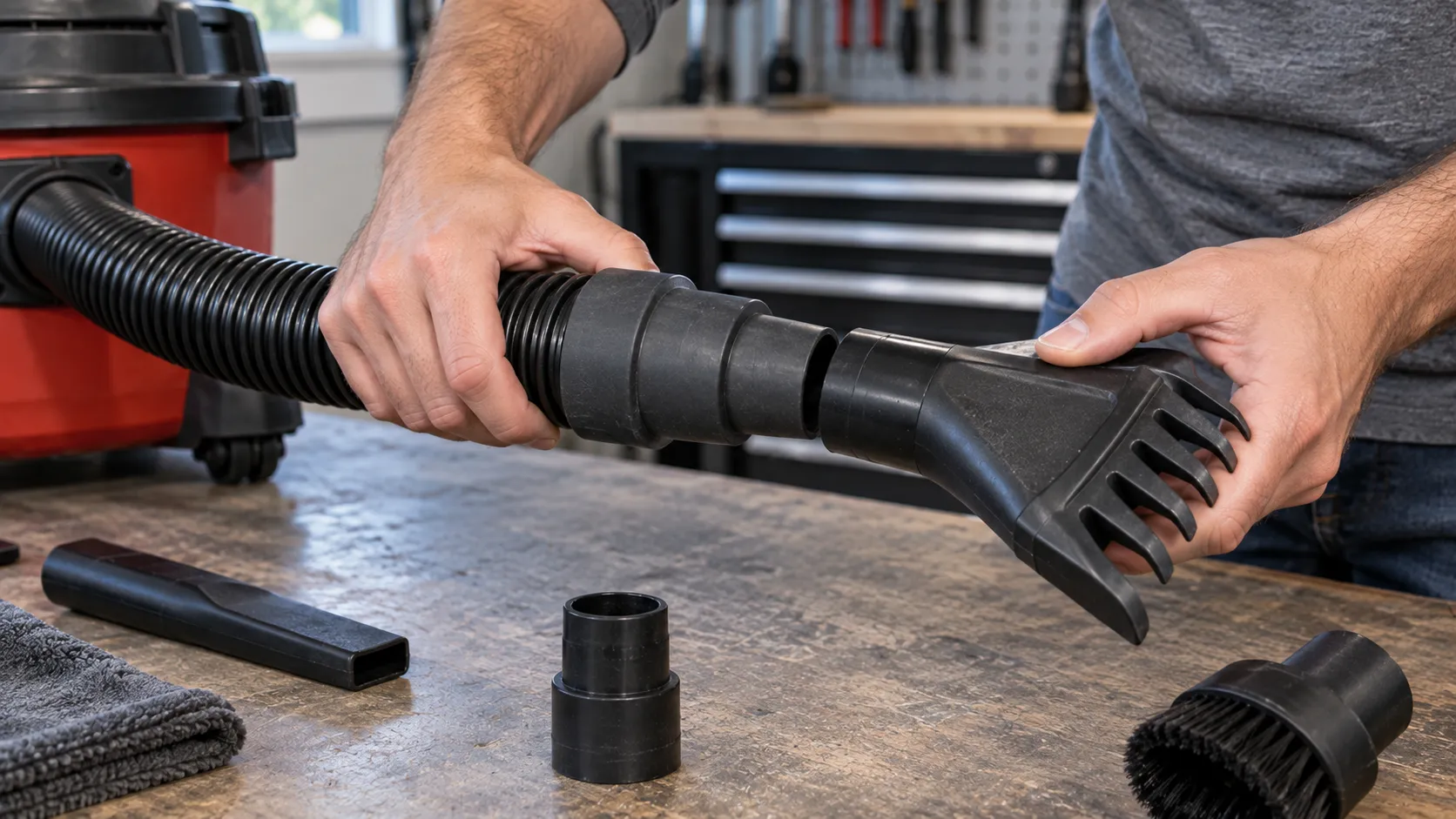
Attachments decide whether suction reaches car geometry, and fitment across brands is the quiet gotcha.
The three tools that matter for interiors are a slim claw or car nozzle for footwells, a crevice tool for seat seams and rails, and a soft detail brush for vents and trim.
The catch is hose diameter: a nozzle built for a 1-1/4 inch hose will not seat on a 2-1/2 inch port without a step-down adapter, and that mismatch is where most detailing kits fail.
On the bench, the RIDGID car kit’s claw nozzle would not seat on the Stanley’s wider hose until we added an adapter, a five-minute snag that is easy to miss when buying online.
Brand | Stock hose | Car nozzle included | Detail brush | Crevice | Aftermarket kit fit |
|---|---|---|---|---|---|
Armor All AA255W | 1-1/4 in | Yes, deluxe car nozzle | Yes | Yes | Wide |
RIDGID WD4070C | 1-7/8 in | Optional car kit | Kit | Yes | Wide with adapter |
Vacmaster Beast | 2-1/2 in | No | No | Yes | Needs step-down |
Stanley SL18116P | 2-1/2 in | No | No | Yes | Needs step-down |
Bissell MultiClean 2035M | Built-in | Yes, upholstery tool | Yes | Yes | Brand-specific |
The rule of thumb: match the kit to your hose diameter first, brand second. A universal adapter set solves most mismatches for a few dollars, so do not pay a premium for a kit that claims to fit everything.
Beyond the cabin, the same hose tackles odd jobs like clearing an AC drain line, which is worth knowing before you buy.
Category Winners: Who Should Buy What
If one label had to match one model, here is how our measured data sorts the field.
Best overall is the Armor All AA255W for reach and attachments; best power is the RIDGID WD4070C for embedded grit; best suction is the Vacmaster Beast; best budget capacity is the Stanley SL18116P; best wet extraction is the Bissell MultiClean 2035M; and best cordless touch-up is the 12V pick.
No single vacuum won every category, which is the honest headline of the whole test.
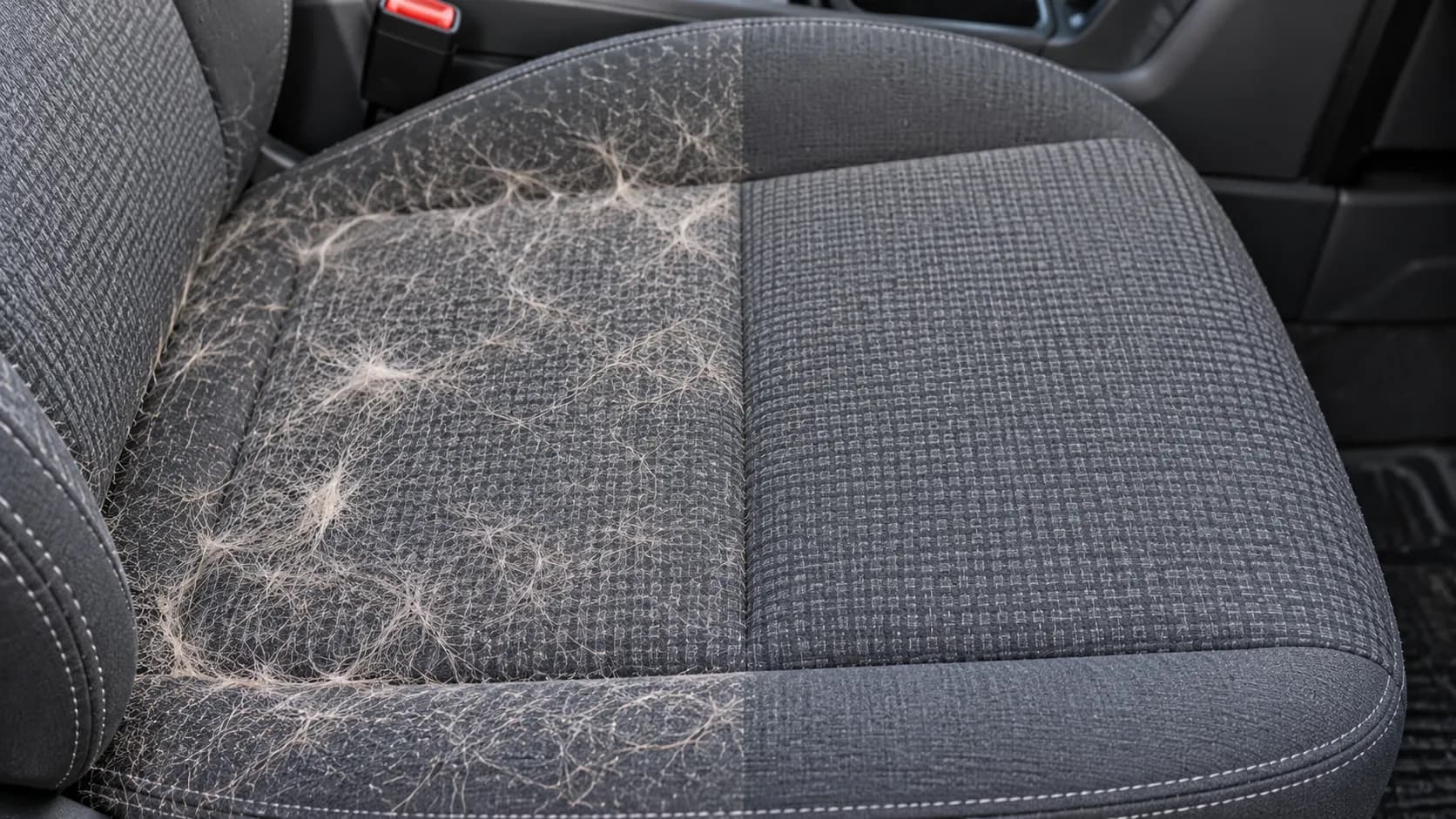
For pet hair, the tool mattered more than the motor.
The rubber pet rake on the 12V unit lifted more hair from a seat panel than a stronger corded vac without one, a result that surprised us.
Best for most drivers: Armor All AA255W
Best for grit and multi-car duty: RIDGID WD4070C
Best big-tank value: Stanley SL18116P
If your real problem is floors and not car interiors, you are shopping the wrong category, and our floor-washer roundup ranks those separately.
Hard floors reward a different machine than automotive carpet does.
For whole-home hard floors, cordless floor washers like Tineco clean and dry in one pass, and Dreame’s floor models compete in the same space.
Neither is built to pull sand from a footwell.
Still deciding between those two floor brands?
We put them side by side in our Tineco versus Dreame, compared breakdown.
And if you want one unit that vacuums and mops, the vacuum-mop combos category is the place to start.
The Catch: Honest Limitations and Buying Mistakes
Every wet/dry vacuum for cars carries trade-offs, and the biggest is the tank-versus-portability squeeze.
A compact 2.5-gallon body is the easiest to carry seat to seat, yet on one soaked footwell we emptied the Armor All AA255W twice before the job was done.
The tank, not the suction, was the bottleneck.
Spec sheets add a second trap: the water-lift number is a sealed bench maximum, and real suction at the nozzle is always lower, since one inch of water lift equals about 0.036 psi under ideal conditions the nozzle never sees.
The three mistakes we watch buyers make are simple.
Buying on peak HP instead of water lift, ignoring hose and nozzle reach, and trusting a giant PA number on a pocket 12V unit.
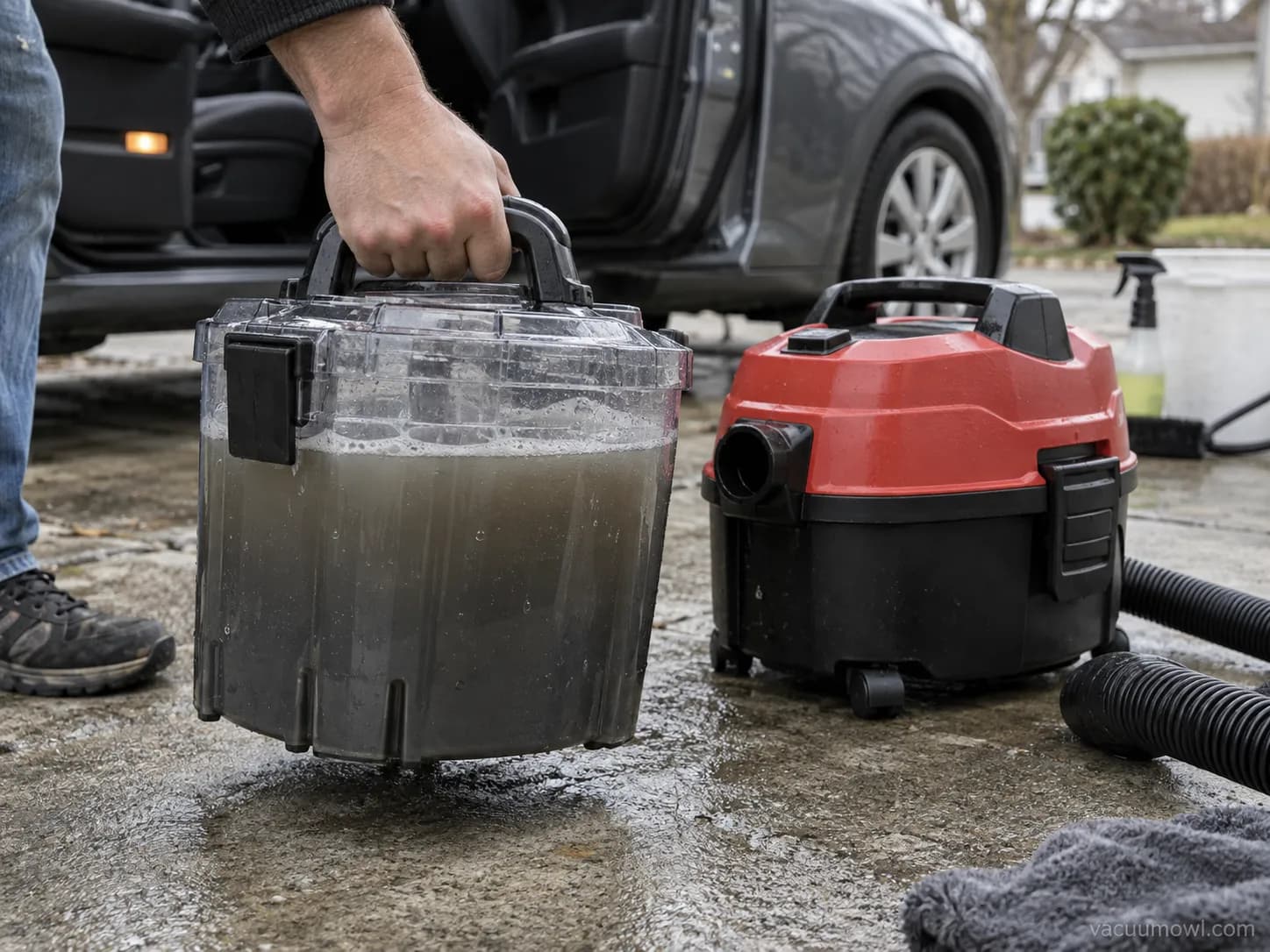
Who should not buy one of these for a car: if your main mess is soaked upholstery or deep stains, a shop vac is the wrong tool, and a dedicated carpet washer will serve you better.
A quick safety note on wet pickup: use the wet configuration and remove or swap to the correct wet filter, because running a dry paper filter through standing water can damage the motor.
And if convenience outranks raw power for you, a light cordless vacuum-mop may suit your life better than any corded shop vac, as long as you accept it will not touch embedded sand.
Frequently Asked Questions
What is the best wet/dry vac for detailing a car?
The Armor All AA255W is the best car wet/dry vac for most drivers. In our July to August 2026 testing it read 47 inches of water lift and scored a 9 for footwell reach, and it ships with 13 attachments including a deluxe car nozzle.
Choose the RIDGID WD4070C instead if embedded grit is your main problem. For the basics of the category, see what a wet/dry vacuum is.
How much water lift do I need for car carpet?
Aim for roughly 60 inches of water lift or more to pull embedded sand from automotive carpet. In our tests, cleaning power climbed steadily once units passed about 60 inches, with useful gains into the 80s.
For deep or matted carpet, guidance points toward 80 inches and up for reliable deep-pile removal. Light dust and crumbs need only about 40 inches.
Is a shop vac good for car detailing?
Yes, a corded shop vac is one of the best tools for car detailing, provided it has enough water lift and a slim nozzle. Our top three picks are all shop-class wet/dry vacuums.
The trade-off is size and noise versus a small handheld, which is convenient but far weaker on embedded dirt.
Corded or cordless, which is better for car interiors?
Corded wins for deep cleaning, cordless wins for convenience. On our identical sand mat, the corded RIDGID recovered 94 percent while the 12V unit managed 61 percent, because a 12V socket caps the current a motor can draw.
Keep a cordless unit for quick touch-ups and a corded one for real grit.
What tank size do I need for car cleaning?
For most drivers a 2.5-gallon tank is the sweet spot, light to carry and big enough for routine interiors. Step up to 4 to 6 gallons only if you extract a lot of liquid or detail several vehicles and want fewer trips to empty.
Bigger tanks trade portability for capacity, which matters more in a garage than in a footwell.
Can I use a wet/dry vac to extract spills from seats?
Yes, in wet mode a wet/dry vac pulls liquid from seats and carpet, but it is not a deep upholstery extractor. It measures how suction is applied at the nozzle rather than deep in the fabric, and suction is measured on a sealed gauge as inches of water column.
For set-in stains, a dedicated carpet or upholstery washer does a better job.
Final Verdict
The best car wet dry vac in 2026 is the Armor All AA255W, and the reason is measured, not marketed.
It topped our field on footwell reach at a 9 of 10 and paired that with a workable 47 inches of water lift, which is the combination that actually pulls dirt out of a real interior.
If you fight embedded sand or clean more than one vehicle, step up to the RIDGID WD4070C for its extra water lift and airflow.
The lesson of the whole test is to stop shopping on the peak-HP sticker and start matching water lift and nozzle reach to your car and your mess.
Buy the AA255W for everyday interiors, the RIDGID for grit, and keep a cordless unit in the trunk for the coffee you will inevitably spill.
Read it your way
Short on time? Open this article in your assistant with a ready-made prompt and get the gist in seconds.
Found this useful? Make us a preferred source so we show up in your Google results.
Keep reading
Related articles
Vacuum Types
Bissell Wet Dry Vacuum: 6 CrossWave Models Tested (2026)
Compare every Bissell wet dry vacuum: which CrossWave model fits pets, steam, or budget, plus fixes for streaks and floors that still look dirty. Tested 2026.
Vacuum Types
Washing Shop Vac Filter: Tap, Rinse & Reuse the Right Way
Rinse it right: this guide covers washing shop vac filter foam and paper, the tap-and-hose steps, the 24-hour dry rule, and when to just replace it.
Vacuum Types
Tineco vs Dreame Wet Dry Vacuum: 30-Day Test (2026)
Compare Tineco vs Dreame wet dry vacuum on suction, self-clean, edge reach and price, with a clear pick for pets, kids and big homes.
Vacuum Types
Is the DEWALT Shop Vac Worth It? Quiet StealthSonic Tested
Compare every DEWALT shop vac: StealthSonic quiet picks, cordless DCV580 and corded DXV, with measured noise, real suction specs and a value verdict.
The discussion
Comments
Every comment is reviewed before it goes live.