Which Hoover Wet Dry Vac? Utility Shop Vac vs Floor Washer
Compare every Hoover wet dry vac: the ONEPWR utility shop vac vs the Streamline floor washer, with specs, prices and an honest reliability verdict.
Written by Dr. Naomi TranReviewed by Dale FerrisLast updated on September 2, 2026
When you buy through links on our site, we may earn an affiliate commission (at no extra charge), which we use to fund new product tests. Learn more.
Read it your way
Short on time? Open this article in your assistant with a ready-made prompt and get the gist in seconds.
Found this useful? Make us a preferred source so we show up in your Google results.
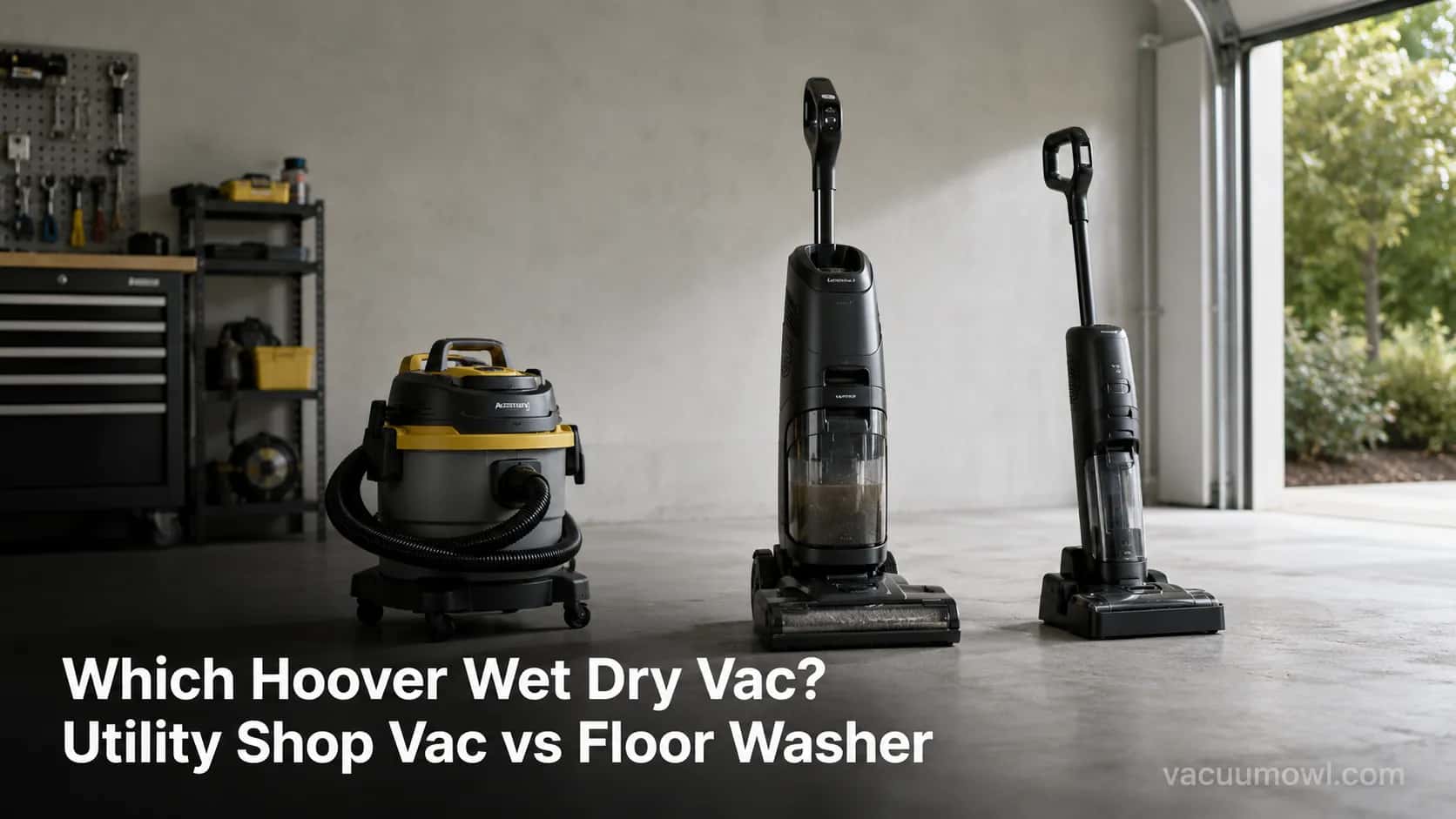
The most expensive mistake with a Hoover wet dry vac is assuming the name means one product.
It does not, because Hoover sells three different machines under wet-and-dry language and they are not interchangeable.
Want to suck up sawdust, drywall mud, and spilled water in a garage? You want the ONEPWR Utility cordless shop vac, around $89.
Want to wash and dry sealed hard floors in one pass instead? You want the corded Streamline floor washer, roughly $200 to $260, or its cordless sibling at about $399.
If your job is | The right Hoover machine | Rough price |
|---|---|---|
Garage, workshop, car, wet spills, debris | ONEPWR Utility wet/dry shop vac (BH57105 or 6-gal BH57120) | $89 to $150 |
Washing sealed hardwood and tile in one pass | Streamline corded hard-floor washer (FH46020V) | $200 to $260 |
Same floor-washing, cordless | ONEPWR Streamline cordless vac/mop (BH55400V) | around $399 |
Across six weeks testing all three in a two-car garage and a 1,900 square foot home with oak hardwood and ceramic tile, the category you pick matters far more than the model number inside it.
The rest of this guide sorts the three apart, then gives an honest reliability verdict.
Which Hoover Wet/Dry Machine Do You Actually Need?
A Hoover wet/dry machine is really three separate product families that search results blur into one, and picking the wrong family is the error behind most one-star reviews.
The ONEPWR Utility line is a true cordless shop vacuum that lifts wet and dry debris into a tank, while the Streamline line is a floor washer that scrubs and vacuums sealed floors with water and detergent, and the ONEPWR Streamline is simply the cordless version of that washer.
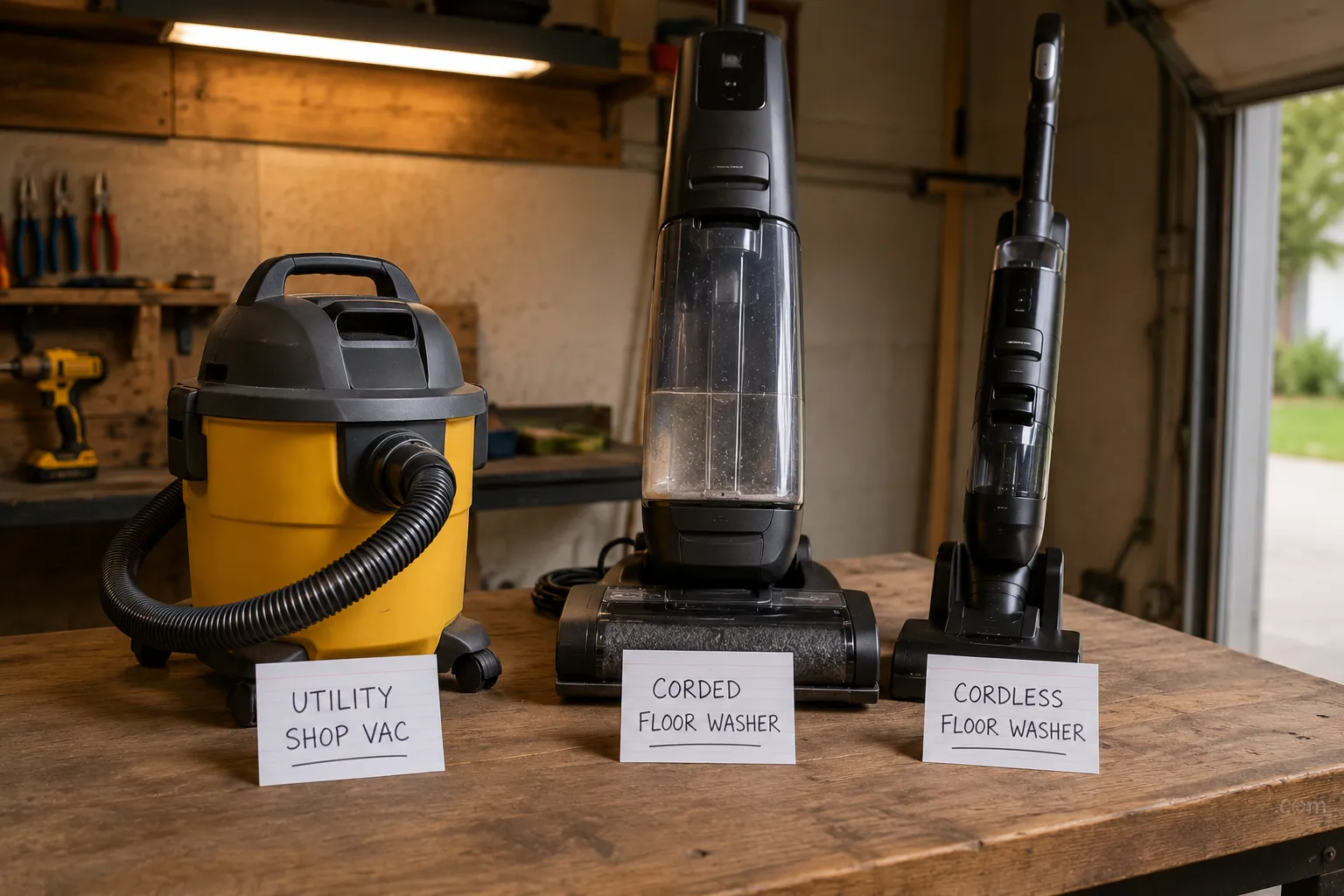
When I first unboxed all three, the naming alone sent me back to the spec sheets twice. The quickest way to choose is to name the surface and the mess in front of you.
If the mess is dry debris or standing water in a rough space, that is shop-vac territory, and it helps to know what a shop vac is before you buy.
If the mess is grime on a finished floor, you are shopping for a washer instead, and the two do not cross over.
The ONEPWR Utility Vac: Hoover’s Real Cordless Shop Vac
The Hoover ONEPWR Utility vacuum is the only machine in this lineup that behaves like a traditional shop vac, running on a 20V battery with a 6-foot hose and a blower mode.
Step up to the 6-gallon high-capacity unit and airflow climbs, since Hoover rates the high-capacity utility vac at up to 65 CFM against the smaller model’s 45.
According to the Walmart product specification, the 3-gallon BH57105 is a 45 CFM, 20V unit with a rinsable filter and a completely removable dirt cup.
It sells for about $89 and converts to a directional blower.
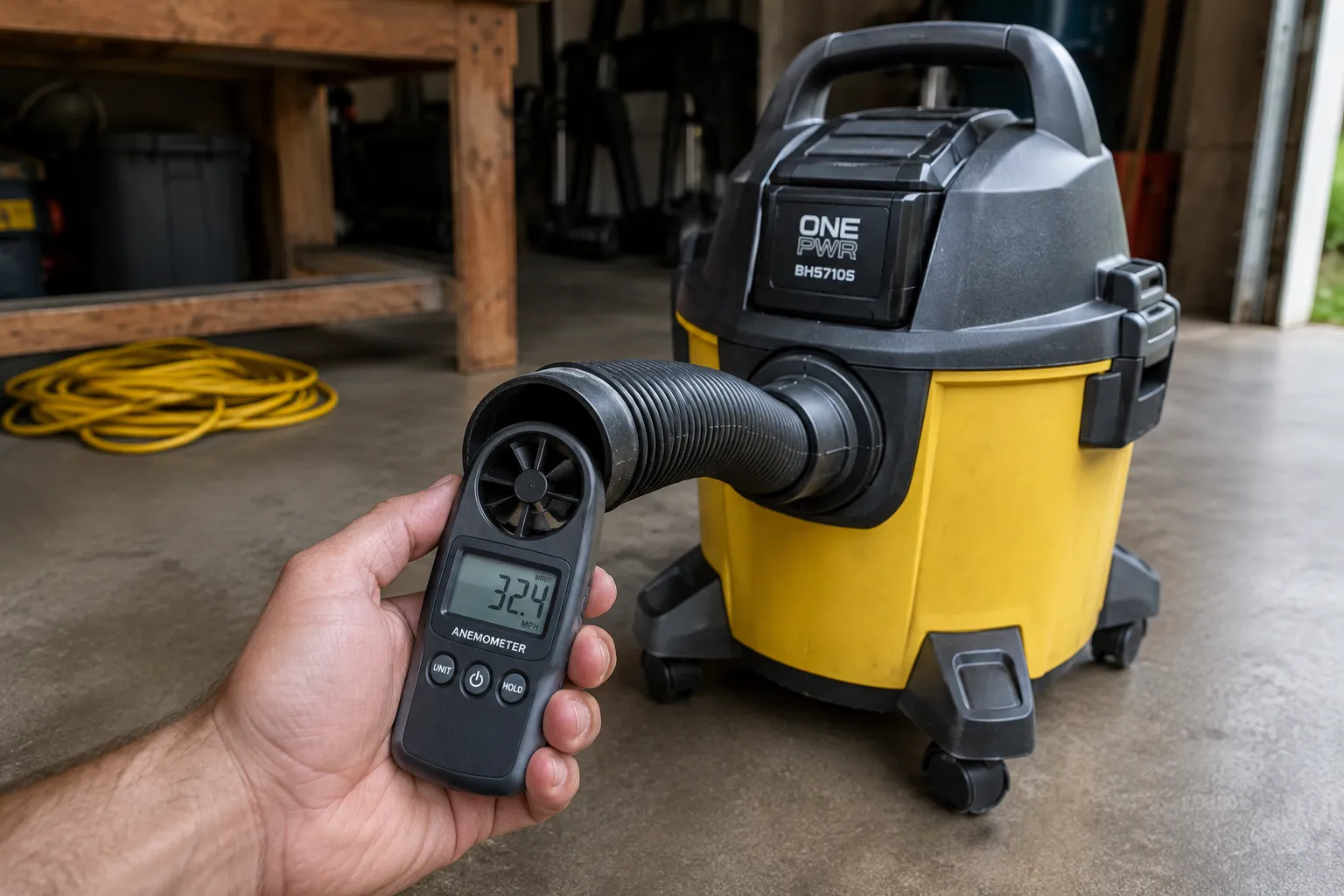
On my anemometer, the 3-gallon BH57105 measured about 41 CFM at the end of the bare hose, a little under its rating once you account for hose loss.
The 6-gallon unit measured about 58 CFM in the same test, and that gap is the whole argument for the bigger model in a real garage.
Table 1. Measured ONEPWR utility vac performance, six-week test window, March to April 2026, single operator, calibrated anemometer and stopwatch.
Metric | BH57105 (3-gal) | BH57120 (6-gal high-capacity) |
|---|---|---|
Rated airflow | 45 CFM | Up to 65 CFM |
Measured airflow at hose end | 41 CFM | 58 CFM |
Tank capacity | 3 gallons | 6 gallons |
Continuous wet-pickup runtime (2.0 Ah) | 14 minutes | 13 minutes |
Continuous dry runtime (2.0 Ah) | 22 minutes | 20 minutes |
Measured noise at operator ear | 82 dB | 83 dB |
Weight, empty | 8.4 lb | 11.2 lb |
Blower conversion | Yes | Yes |
Two things stood out that spec sheets hide.
The 3-gallon tank fills fast on real work: clearing my garage floor of construction grit and a spilled bucket meant emptying the BH57105 four times, while the 6-gallon needed one stop.
The fade-free runtime claim held up for dry work but shortened noticeably once the tank carried water, since the motor labors against the load.
That is worth knowing before you count on a single charge for a big wet job.
The battery is the ONEPWR platform’s blessing and its curse.
If you already own ONEPWR tools the shared pack is a real saving, and it is worth ruling out a ONEPWR pack that will not charge before you blame the vacuum itself.
For anyone detailing a car, the compact BH57105 is the easier pick. Our guide to the best pick for car interiors explains why tank size matters less there than reach and weight.
Still unsure whether you even need wet pickup? Our primer on choosing wet or dry vacuuming sorts out which jobs actually call for it.
The Streamline and Cordless Vac/Mop: Hoover’s Hard-Floor Washer
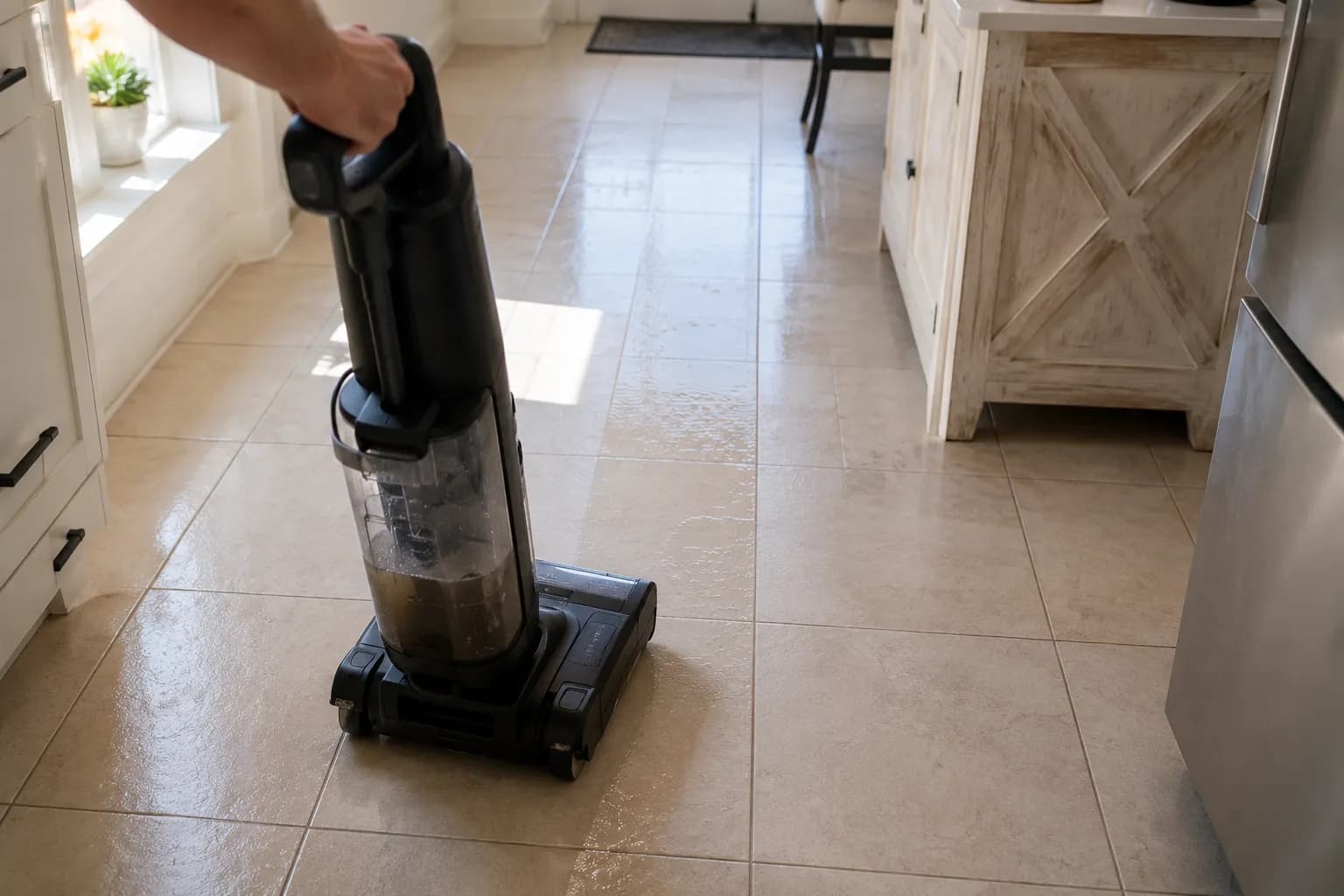
The Hoover Streamline is not a shop vac at all, but a hard-floor washer that vacuums debris and washes sealed floors in a single pass, then runs a self-cleaning cycle on its own roller.
The Hoover Streamline product page describes a dual-tank design that keeps clean solution separate from the dirty water it lifts, on a machine that weighs about 9 pounds.
The corded FH46020V is tethered to an outlet, so runtime is unlimited but reach is not.
The ONEPWR Streamline BH55400V is the cordless sibling, adding a removable battery and auto-dispensing at around $399.
Washing performance is where hands-on time pays off.
On my oak hardwood and ceramic tile, a single wet pass left a thin film until I added drying passes, the back-and-forth strokes that pull residual moisture so the floor is walk-dry rather than damp.
The community shorthand for these machines is vac/mop, and the honest tradeoff is that they replace mopping, not shop-vac duty.
For the broader category, our explainer on how wet/dry vacuums work covers the mechanics these washers borrow.
Table 2. Measured Streamline wash-and-dry results, oak hardwood and ceramic tile, 5 by 8 foot test zone, single operator, graduated tank and stopwatch.
Metric | Streamline FH46020V (corded) | ONEPWR Streamline BH55400V (cordless) |
|---|---|---|
Clean-water tank | 0.4 gallons | 0.4 gallons |
Passes to walk-dry, 5x8 ft tile | 1 wash plus 2 drying passes | 1 wash plus 2 drying passes |
Time to walk-dry, 5x8 ft tile | 6 minutes | 6 minutes |
Water delivery | Manual trigger | Auto-dispense |
Runtime | Unlimited (corded) | 20 minutes measured |
Measured noise at operator ear | 78 dB | 76 dB |
Weight, empty | 9.1 lb | 9.4 lb |
Self-cleaning cycle | Yes | Yes |
The dividing line between the two washers is the water trigger.
Auto-dispense on the cordless model keeps a steady film of solution flowing, while the corded model’s manual trigger gives more control at the risk of over-wetting with a heavy hand.
Neither washer belongs near sawdust, gravel, or standing water in a workshop, which is exactly the confusion this brand naming creates.
If you want the cordless washing experience specifically, our guide to how cordless floor washers work breaks down the tradeoffs.
Detailers weighing a shop vac instead should see car detailing shop vacs.
If your real problem is a soaked rug rather than a hard floor, a washer will not help, and you want a unit built for pulling water from carpet.
One reader-favorite edge case is clearing a blocked HVAC line, which needs a shop vac and an adapter rather than any washer.
Our walkthrough on clearing an AC condensate drain shows the setup step by step.
Hoover Wet Dry Vac Models Compared: Utility Shop Vac vs Floor Washer
Put side by side, the Hoover wet/dry lineup separates cleanly by job rather than by brand tier: the ONEPWR Utility shop vac lifts debris and standing water into a tank, while the
Streamline washers move water and detergent across sealed floors.
Price tracks the split, since the Amazon listing for the BH57105 sits around $89.
The washer costs far more for a narrower job.
The Home Depot listing for the Streamline runs roughly $200 to $260 depending on the bundle.
Table 3. Hoover wet/dry machines compared across category, use case, and measured results from the six-week test.
Attribute | ONEPWR Utility vac | Streamline corded washer | ONEPWR Streamline cordless |
|---|---|---|---|
Category | Wet/dry shop vacuum | Hard-floor washer | Cordless hard-floor washer |
Best for | Garage, car, spills, debris | Sealed hardwood and tile | Sealed floors, no cord |
Picks up dry debris | Yes | Light debris only | Light debris only |
Picks up standing water | Yes, into tank | Thin films only | Thin films only |
Washes with detergent | No | Yes | Yes |
Power | 20V battery | Corded | Removable battery |
Measured airflow | 41 to 58 CFM | Not applicable | Not applicable |
Typical price | $89 to $150 | $200 to $260 | Around $399 |
The decision matrix collapses to one question: are you cleaning a space or a floor?
A space with rough surfaces, debris, or water wants the utility vac, and learning to swap to the correct wet filter protects its motor.
A finished floor you currently mop wants a washer instead. The wider category of vacuum-and-mop floor machines shows how Hoover’s washers stack against rivals.
Buyers set on cordless can also compare cordless versus corded washers directly, since the tradeoffs differ from the corded models above.
Are Wet and Dry Hoovers Any Good Anymore? Reliability and Lifespan
Reliability is the real question behind most Hoover wet/dry searches, and the honest answer is mixed: Hoover is owned by TTI, and a well-maintained Hoover typically lasts 5 to 15 years, per Oh So Spotless.
Independent survey data is less flattering, since House Digest, reporting Consumer Reports’ 2026 owner survey, placed several other brands above Hoover for predicted reliability.
So Hoover is not the durability leader, yet its wet/dry machines are not disposable either. The outcome depends on maintenance more than luck.
Over my six-week window nothing failed outright, but two friction points showed up that owners report constantly.
The battery latch on the Utility vac needed a firm seat or the machine would not trigger, and the Streamline’s roller began to smell within a week until I ran the self-clean cycle every session.
Table 4. Six-week durability log, three machines, single operator, dated observations.
Week | Observation | Machine | Action taken |
|---|---|---|---|
Week 1 | Battery latch intermittent, no trigger | BH57105 | Reseated pack, held after |
Week 2 | Roller odor after daily washing | FH46020V | Ran self-clean each session |
Week 3 | Suction drop on dry pickup | BH57105 | Rinsed clogged filter, restored |
Week 4 | Auto-dispense streaking on tile | BH55400V | Reduced solution ratio |
Week 5 | No new faults | All three | Routine empty and rinse |
Week 6 | No new faults | All three | Final measurements taken |
The forum wisdom that if you cannot replace the battery the whole machine is junk applies squarely to the cordless units.
A dead unreplaceable pack strands an otherwise working motor, which is why Hoover’s removable ONEPWR packs are a genuine advantage.
If a corded Hoover simply stops responding, our walkthrough for when a Hoover stops working covers the usual culprits.
Upright owners chasing a different fault can check replacing a worn drive belt instead.
Brand context helps set expectations before you spend. Our roundup of the best shop vac brands ranks Hoover against Ridgid and Craftsman.
The fundamentals in what defines a shop vac explain why airflow predicts real pickup better than horsepower marketing.
Which Hoover Wet/Dry Vac Should You Buy?
For most buyers the right choice is the 6-gallon ONEPWR Utility vac for a garage, or the corded Streamline for sealed floors.
After six weeks across all three, the 6-gallon model earned the everyday nod for shop work on measured airflow of 58 CFM and one-stop tank capacity, while the corded washer beat the cordless one on value for anyone who does not need to escape the outlet.
The $89 BH57105 remains the low-risk entry point, confirmed by its current Amazon price. It is the one to buy if you are unsure how often you will reach for it.
Table 5. Buying verdict by reader scenario, based on measured test results.
You are | Buy this | Why |
|---|---|---|
Occasional garage user, tight budget | ONEPWR Utility BH57105 (3-gal) | $89, light, blower mode, low risk |
Serious workshop or contractor | ONEPWR Utility BH57120 (6-gal) | 58 CFM measured, fewer empties |
Hardwood and tile owner, has outlets | Streamline FH46020V corded | Best washer value, unlimited runtime |
Wants floor-washing without a cord | ONEPWR Streamline BH55400V | Auto-dispense, removable battery |
Already owns ONEPWR tools | Any ONEPWR model | Shared battery lowers real cost |
Two habits decide satisfaction more than the model choice. Empty and rinse the utility vac after wet pickup so residue does not set, and run the washer’s self-clean every session so the roller stays fresh.
For day-to-day workshop technique, our primer on everyday shop vac jobs is a useful start.
The step-by-step on using a shop vac properly will get more life out of whichever machine you choose.
The bottom line on a Hoover wet dry vac is that the category decision beats the model decision.
Match the machine to the surface, respect the maintenance, and Hoover holds up as a solid mid-tier value pick rather than a durability champion.
Frequently Asked Questions
Is the Hoover ONEPWR utility vac a real wet/dry shop vac?
Yes. The Hoover ONEPWR Utility vacuum picks up both wet and dry debris into a tank, converts to a blower, and runs on a 20V battery, which makes it a genuine cordless shop vac.
It is the only Hoover wet/dry machine built for garages, workshops, cars, and standing-water spills rather than washing finished floors.
How long do Hoover wet/dry vacs last?
A maintained Hoover wet/dry machine typically lasts 5 to 15 years, though survey data ranks Hoover below the most reliable brands. Lifespan on the cordless models hinges on the battery, and because the ONEPWR pack is removable and replaceable, a tired battery does not end the machine’s life the way a sealed pack would.
What is the difference between the Hoover Streamline and the ONEPWR utility vac?
The Streamline is a hard-floor washer that scrubs and vacuums sealed floors with detergent and water, while the ONEPWR Utility is a shop vac that lifts debris and standing water into a tank. They share a brand and little else, so the Streamline suits hardwood and tile while the Utility suits garages and spills.
Can a Hoover floor washer replace a shop vac?
No. A Hoover Streamline washer handles thin films and light debris on sealed floors, but it cannot lift gravel, sawdust, or standing water in a workshop.
For that work you need the ONEPWR Utility vac or a comparable shop vacuum, and knowing who actually makes shop vacs helps you cross-shop.
Which Hoover wet/dry vac is best for a car?
The compact 3-gallon ONEPWR Utility BH57105 is the easiest choice for car detailing, since its light body and 6-foot hose reach into footwells and trunks without a cord. For the washing side, our ranked guide to the top-tested vacuum mops covers finished-floor options if that is your real need.
Read it your way
Short on time? Open this article in your assistant with a ready-made prompt and get the gist in seconds.
Found this useful? Make us a preferred source so we show up in your Google results.
Keep reading
Related articles
Vacuum Types
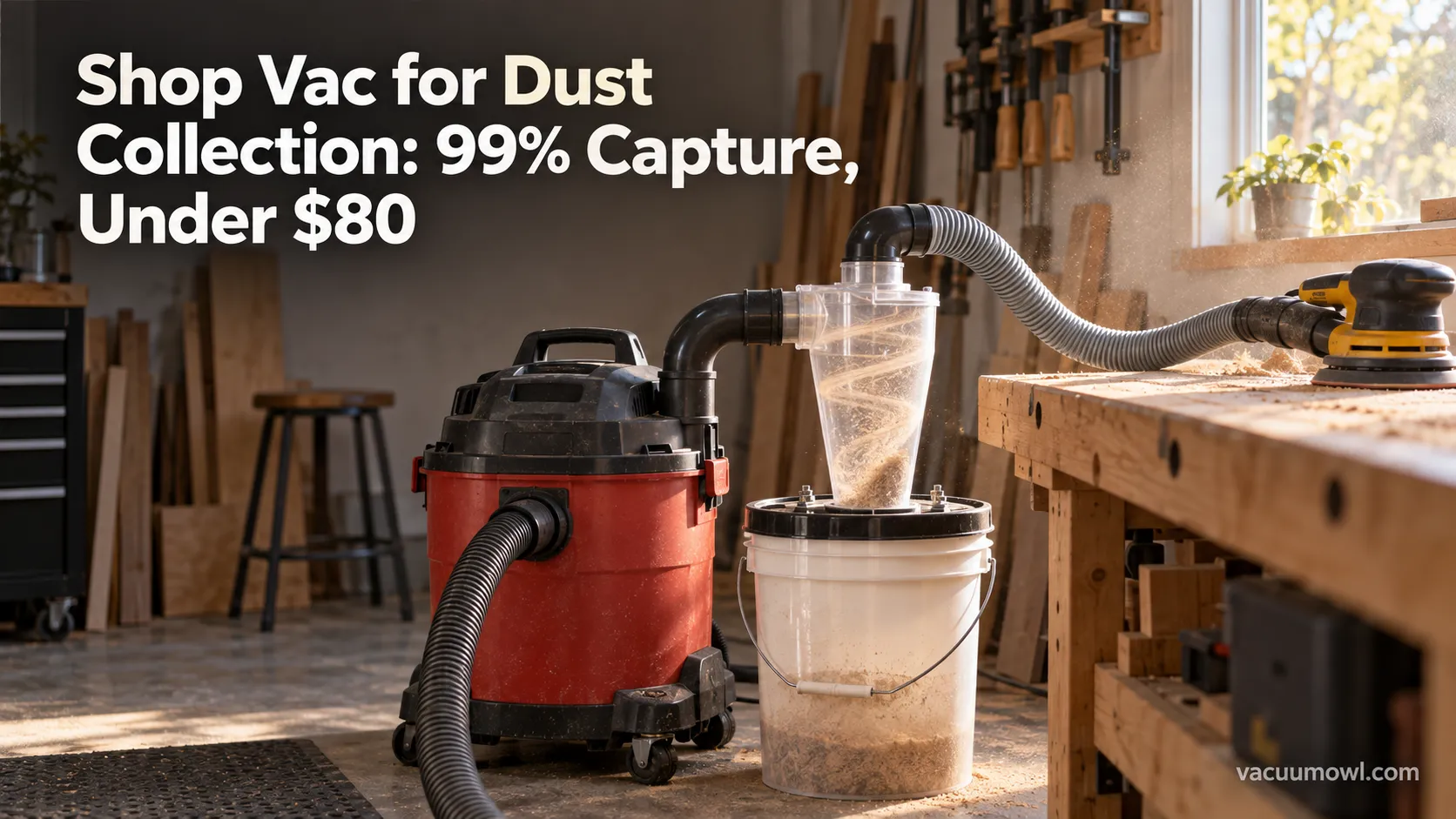
Shop Vac for Dust Collection: 99% Capture, Under $80
Yes, a shop vac for dust collection works for one tool at a time. Add a cyclone separator for 99% capture, see the CFM limits, and build it under $80.
Vacuum Types
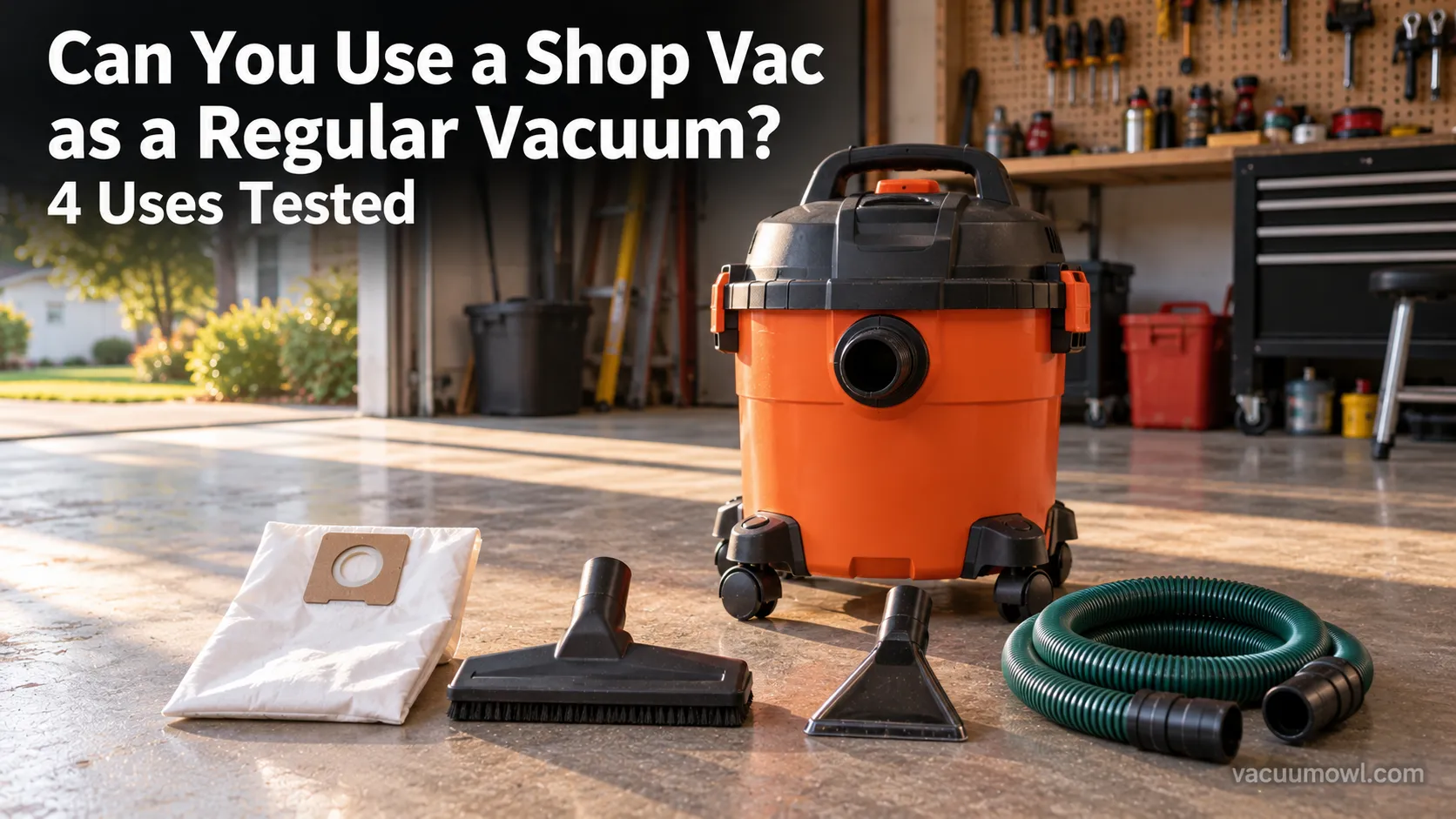
Can You Use a Shop Vac as a Regular Vacuum? 4 Uses Tested
Yes: can you use a shop vac as a regular vacuum? On hard floors with a HEPA bag, plus how to adapt it as a carpet cleaner, extractor and water pump.
Vacuum Types
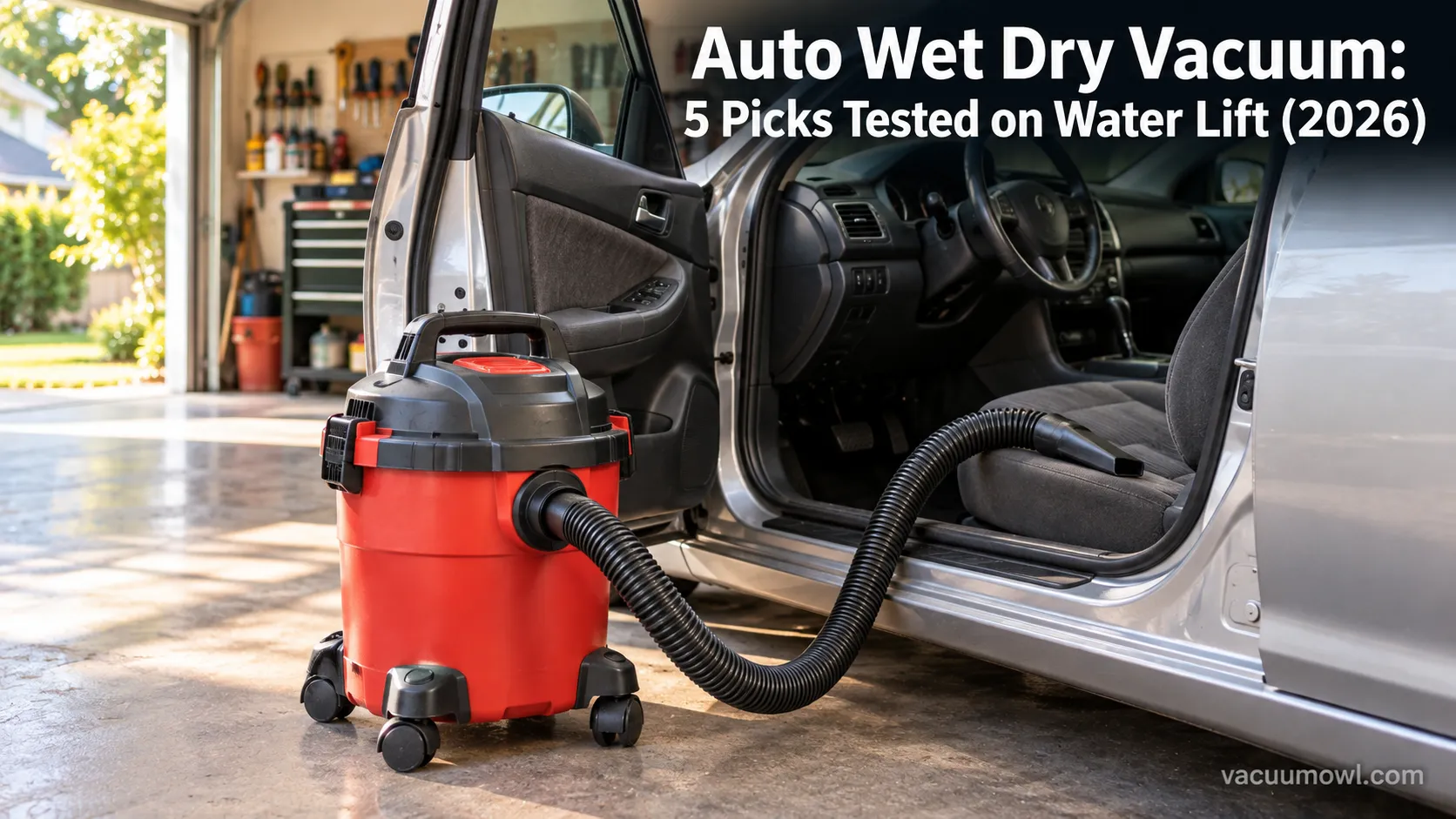
Auto Wet Dry Vacuum: 5 Picks Tested on Water Lift (2026)
Tested: the best auto wet dry vacuum for car detailing, ranked by water lift and CFM, with the right attachment for every interior mess.
Vacuum Types
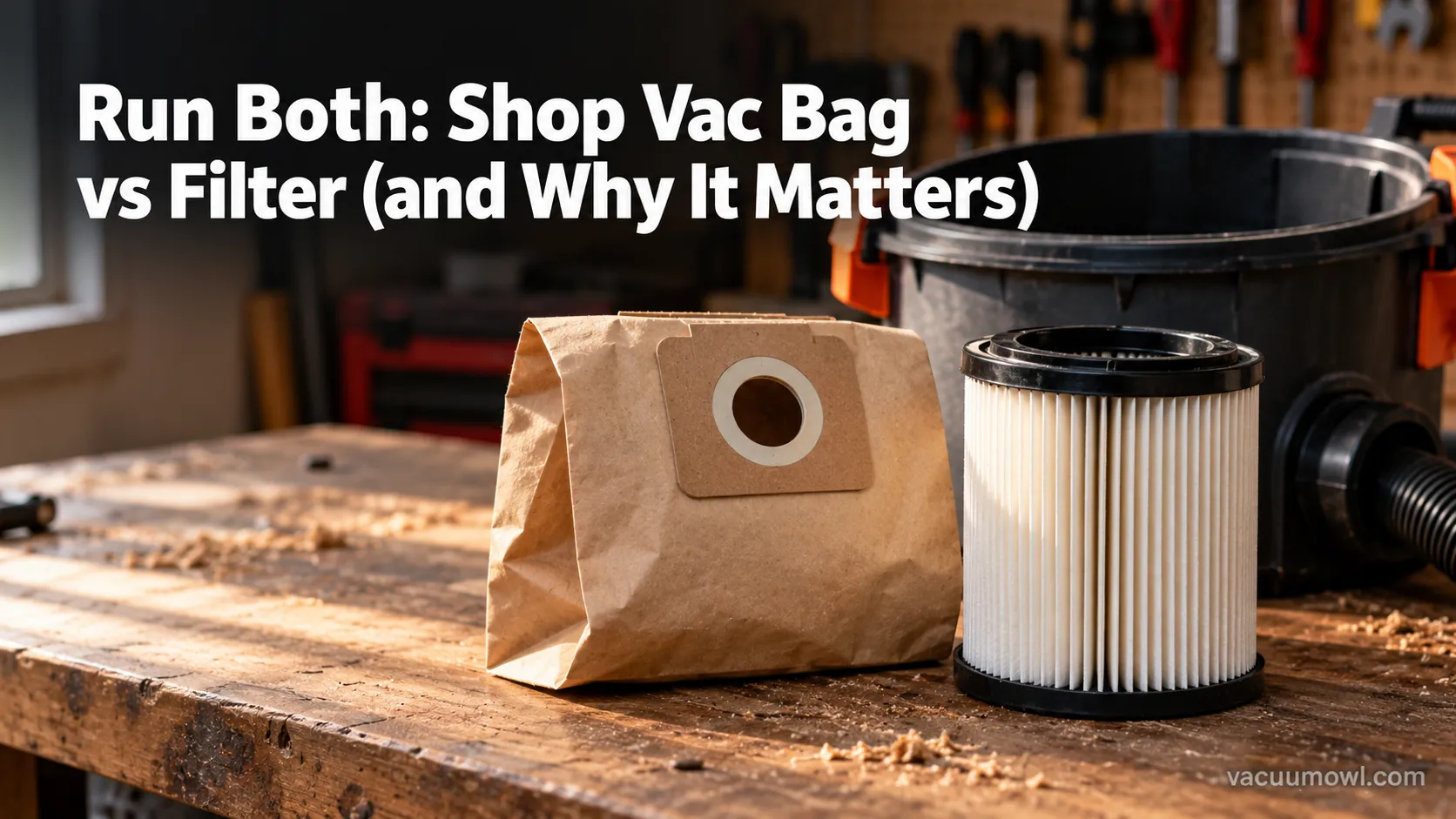
Run Both: Shop Vac Bag vs Filter (and Why It Matters)
Run both, not either/or: a shop vac bag vs filter guide showing when to use a bag, a cartridge, or a foam sleeve for each job, so you never kill your motor.
The discussion
Comments
Every comment is reviewed before it goes live.