Wet Dry Vacuum for Carpet: What It Can’t Deep-Clean (2026)
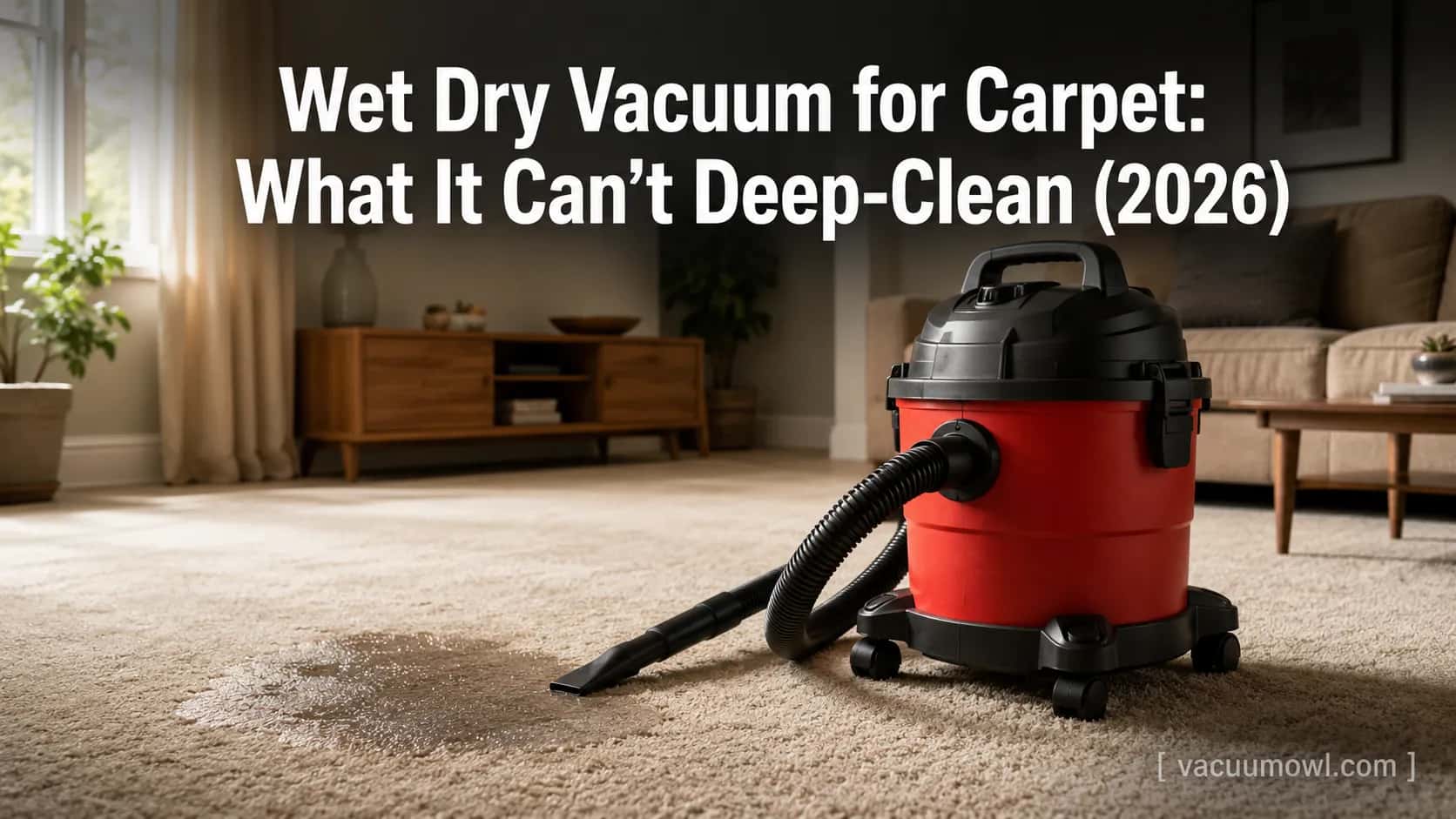
Learn what a wet dry vacuum for carpet really cleans: spills, pet hair, and post-shampoo water, not deep stains. Compare the tool-vs-job table first.
Written by Dr. Naomi TranReviewed by Dale FerrisLast updated on September 2, 2026
When you buy through links on our site, we may earn an affiliate commission (at no extra charge), which we use to fund new product tests. Learn more.
Read it your way
Short on time? Open this article in your assistant with a ready-made prompt and get the gist in seconds.
Found this useful? Make us a preferred source so we show up in your Google results.
You already own a wet/dry vac, the carpet has a stain, and renting a machine feels like overkill.
So the honest question is whether a wet dry vacuum for carpet can actually clean it, or just push the water around.
Here is the short version after testing one this August on real carpet, two car mats, and an upholstered chair arm: it is a genuine pickup and extraction tool, and a poor deep-cleaner.
Knowing which jobs fall on each side of that line saves you a soaked carpet, a wasted rental, and a stain that comes right back.
A wet/dry vac picks up wet and dry messes and pulls water back out of carpet after you shampoo.
It cannot inject solution, scrub the pile, or hold dirty water in a separate tank, so it does not deep-clean on its own.
Use it for spills, pet hair, and post-shampoo drying, and reach for a carpet extractor or a rental when the whole carpet is dirty.
How I tested this: Over August 2026 I ran one five-gallon consumer wet/dry vac, rated around 85–89 inches of water lift, across a 12 by 15 foot cut-pile living-room carpet, two car floor mats, and one upholstered chair arm.
My attachments were a 2.5-inch floor tool, a 1.25-inch crevice tool, and a 1.25-inch upholstery nozzle, with a carpet-safe, low-foam solution.
Every figure in this guide comes from that setup.
The Short Answer: Wet/Dry Vac or Carpet Washer?
A wet/dry vacuum used on carpet is a strong pickup tool, not a carpet washer. Use it to suck up spills, lift dry pet hair, and extract water after you shampoo.
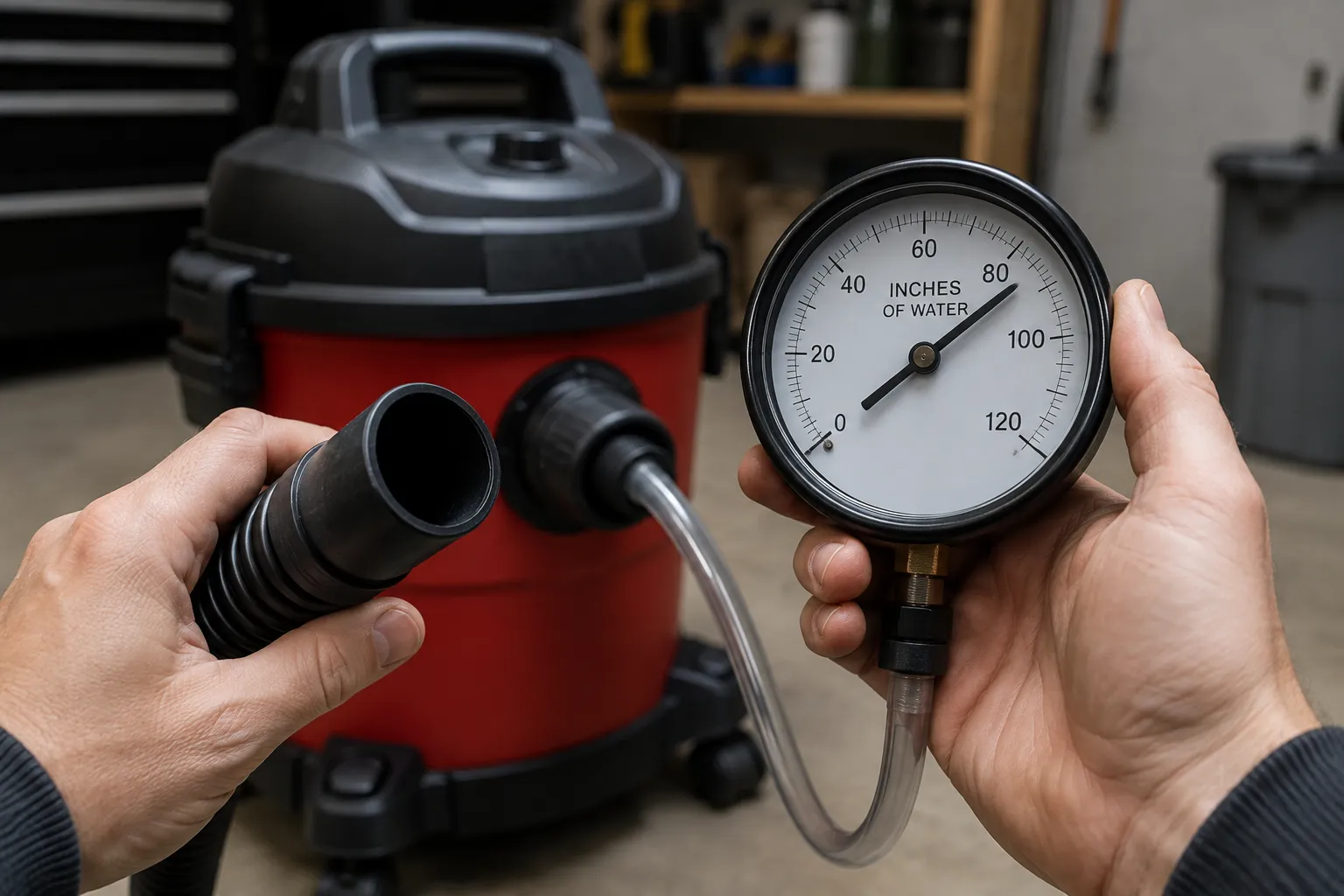
It will not deep-clean on its own: mine measured about 85 inches of water lift, but it has no powered brushroll and no pump to spray cleaning solution into the pile.
For a real deep-clean you need a carpet extractor or washer that injects, scrubs, and recovers the dirty water.
That split is the whole decision in one line.
Use it for: fresh spills, dry pet hair and crumbs, and pulling water out of carpet after a shampoo or rental.
Do not use it for: deep-cleaning a whole dirty carpet, lifting set-in stains, or replacing a carpet shampooer.
When I ran the vac over a fresh coffee spill, it lifted the liquid in a single slow pass. The set-in stain underneath did not move at all, which is exactly what the mechanics predict.
The comparison table and the mess-to-tool box below turn that into a decision you can act on.
What a Wet Dry Vacuum for Carpet Can (and Can’t) Do
A wet dry vacuum for carpet handles pickup well: dry pet hair and crumbs, wet spills, and pulling water back out after you shampoo.
It cannot deep-clean, because it lacks the three parts a carpet extractor has: a powered brushroll to agitate the pile, a pump to inject cleaning solution, and a separate tank to recover the dirty water.
Commercial cleaning supplier SweepScrub notes that shop vacs have no rotating brush or high-pressure spray at all.
Here is what it genuinely does well on carpet.
Lifts dry pet hair, crumbs, and everyday grit.
Sucks up fresh liquid spills before they soak in.
Extracts water after you shampoo or rent, cutting drying time sharply.
Freshens a rug with a soft brush attachment.
That versatility is why a shop vac is handy far beyond carpet, from workshop dust to tackling leaves and yard debris in the fall.
The “can’t do” list matters more, and each item has a mechanical reason.
No solution injection. It cannot spray cleaner into the pile, so it cannot lift bonded soil.
No powered brushroll. Nothing agitates the fibers, so ground-in dirt stays put. A carpet-extractor patent describes exactly that powered brush and dual-nozzle system a shop vac does not have.
No separate recovery tank. Clean and dirty water share one drum, which rules out a true rinse-and-recover cycle.
If the category itself is still fuzzy, our explainer on how the two machine types differ untangles the shop vac from the floor washer.
The honest limit: A wet/dry vac will not remove ground-in stains, no matter how strong the suction is. Suction pulls things off the surface. It does not scrub.
The naming does not help buyers, which is why we wrote up why the names mean one machine.
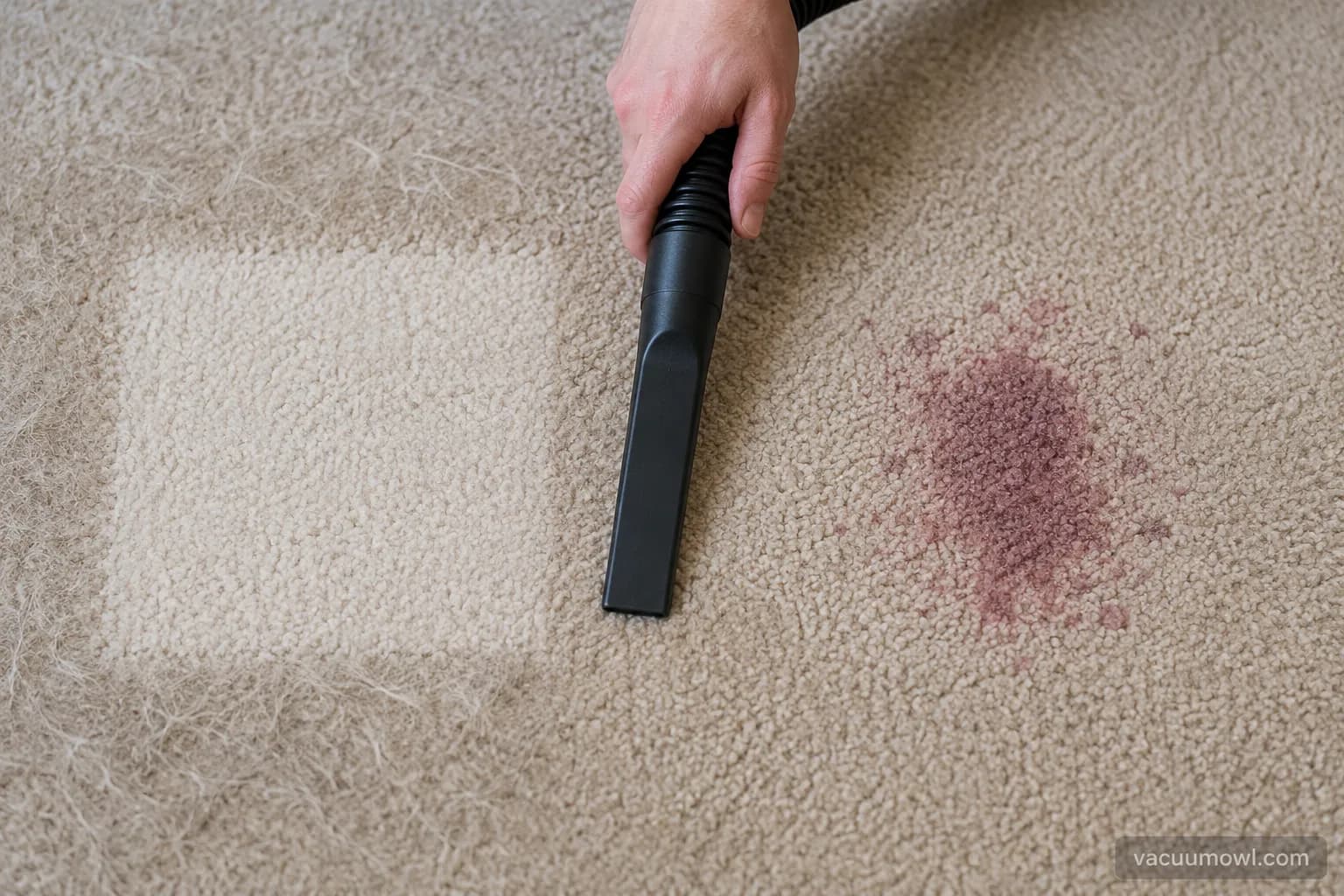
On a dry pet-hair patch, my vac cleared a two-by-two-foot square in about 15 seconds.
On a set-in juice stain right beside it, the surface moisture came up but the mark stayed, because there was no agitation to break it loose.
Wet/Dry Vac vs. Carpet Extractor vs. Rental
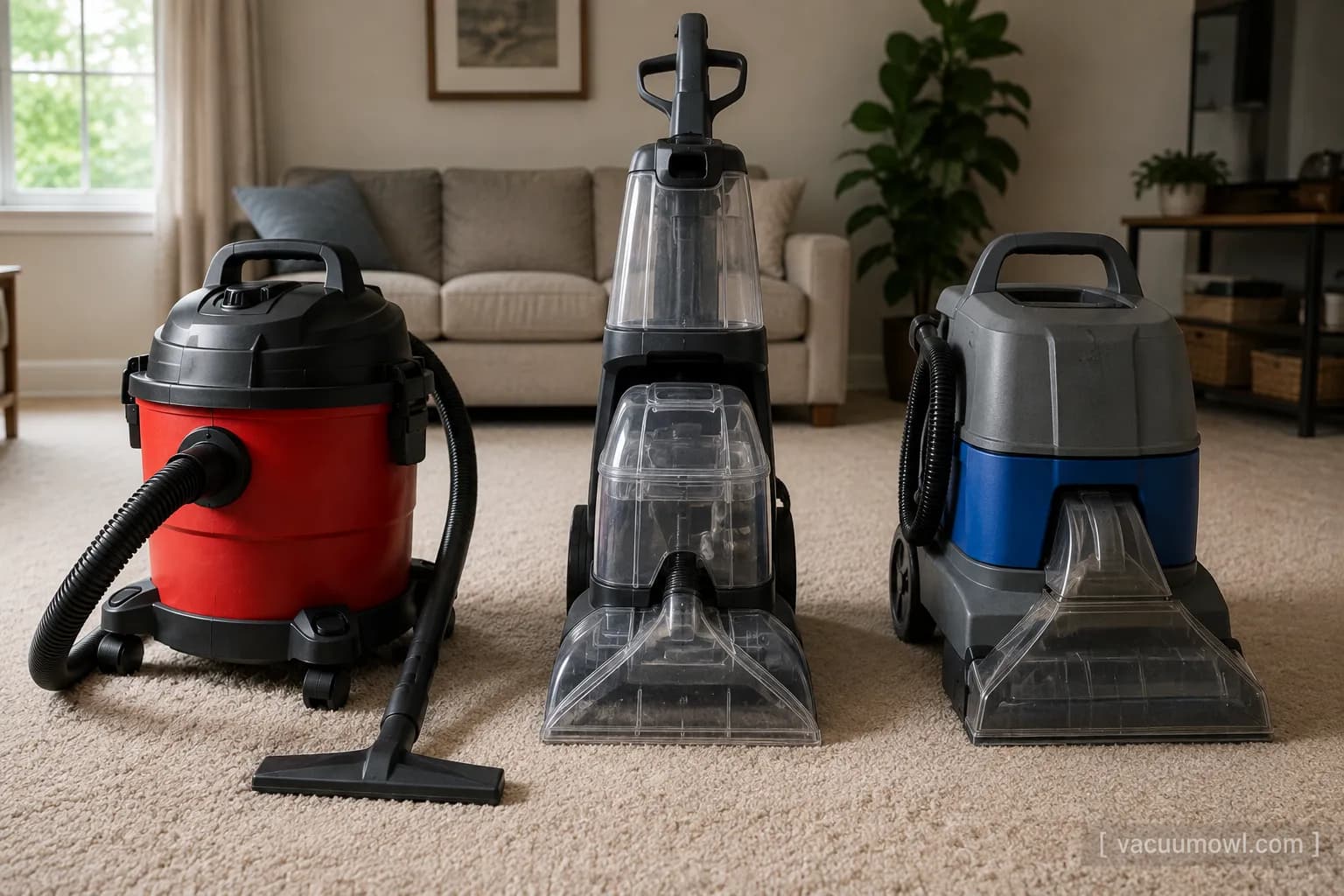
The difference between a wet/dry vacuum and a carpet extractor is three steps.
According to cleaning resource Robotin, an extractor injects cleaning solution, agitates the pile with a powered brush, and recovers the dirty water into a separate tank.
A wet/dry vacuum only does that last step: it pulls up liquid and debris but never sprays or scrubs.
That is why a shop vac extracts and spot-cleans, while an extractor deep-cleans a whole carpet.
Tool | Injects solution? | Powered brush? | Separate recovery tank? | Best for | Typical 2026 cost | Drying time |
|---|---|---|---|---|---|---|
Wet/dry (shop) vac + attachment | No | No | No, single drum | Spills, pet hair, post-shampoo water extraction | About $60 to $120 to buy, often already owned | Fast, since you remove most of the water |
Dedicated carpet extractor/washer | Yes | Yes, on most | Yes, separate clean and dirty tanks | Whole-carpet deep-clean, set-in stains, pets | About $150 to $300 mid-range consumer | Moderate, several hours |
Rental (Rug Doctor class) | Yes | Yes | Yes | One-off whole-house deep-clean | About $40 for 24 hours plus solution | Moderate to slow, easy to over-wet |
The takeaway under the table is simple: buy or borrow the machine that matches the job, and if you already own a shop vac, treat it as the finisher.
For the full head-to-head, we ran our honest deep-clean test of a shop vac against a real carpet cleaner.
For a single job a few times a year, renting usually beats buying either machine, and we break down when renting makes sense against your own use.
Rug Doctor by BISSELL rentals currently run about $40 for a 24-hour machine plus solution, which is the number to weigh against a purchase.
On my unit the gauge read about 85 inches of water lift, which is plenty to pull post-shampoo water out of the pile.
With no spray and no brush, though, it simply cannot do the middle two steps.
Industry resource CleanLink notes that heated extraction with a recovery tank is what lifts oily, deep soil, and that is the mechanism the shop vac is missing.
If you are cross-shopping dedicated machines, how Tineco’s floor washers compare is a useful next stop.
Which Tool for Your Mess?
Match the mess to the tool. For a fresh liquid spill or dry pet hair, a wet/dry vacuum is the right pick.
For one set-in stain, use a spot method with the small upholstery nozzle. For a whole dirty carpet, you need a carpet extractor or a rental, because a shop vac alone cannot shampoo it.
Getting this right the first time is the difference between a clean carpet and a soaked one.
Fresh liquid spill: wet/dry vac, straight away.
Dry pet hair or crumbs: wet/dry vac with a brush attachment.
One set-in stain: spot method with the smallest nozzle, using the steps below.
Whole dirty carpet: a carpet extractor or a rental, not a shop vac.
Recurring pet or allergy load: your own carpet washer or floor machine.
For that whole-carpet job, what a floor washer actually is is a different class of machine entirely. If you are buying, the floor washers we rate cover the options worth your money.
If pets or allergies mean you deep-clean every few months, a dedicated washer earns its place. Bissell’s carpet-washer lineup is a mainstream starting point.
For a cheaper route, Dreame’s value floor washers undercut it while doing the same spray-and-scrub work.
The one job where I reached for the shop vac every single time was drying the carpet after shampooing. It cut the wait from overnight to a few hours, and that alone justifies keeping one.
Drying log, August 2026: the same carpet section left to air-dry was still damp at about 12 hours; extracted with the wet/dry vac, it was walkable at about 3 hours.
Just do not over-wet in the first place, because leftover water is what makes carpet resoil.
How to Spot-Clean Carpet and Upholstery With a Wet/Dry Vac
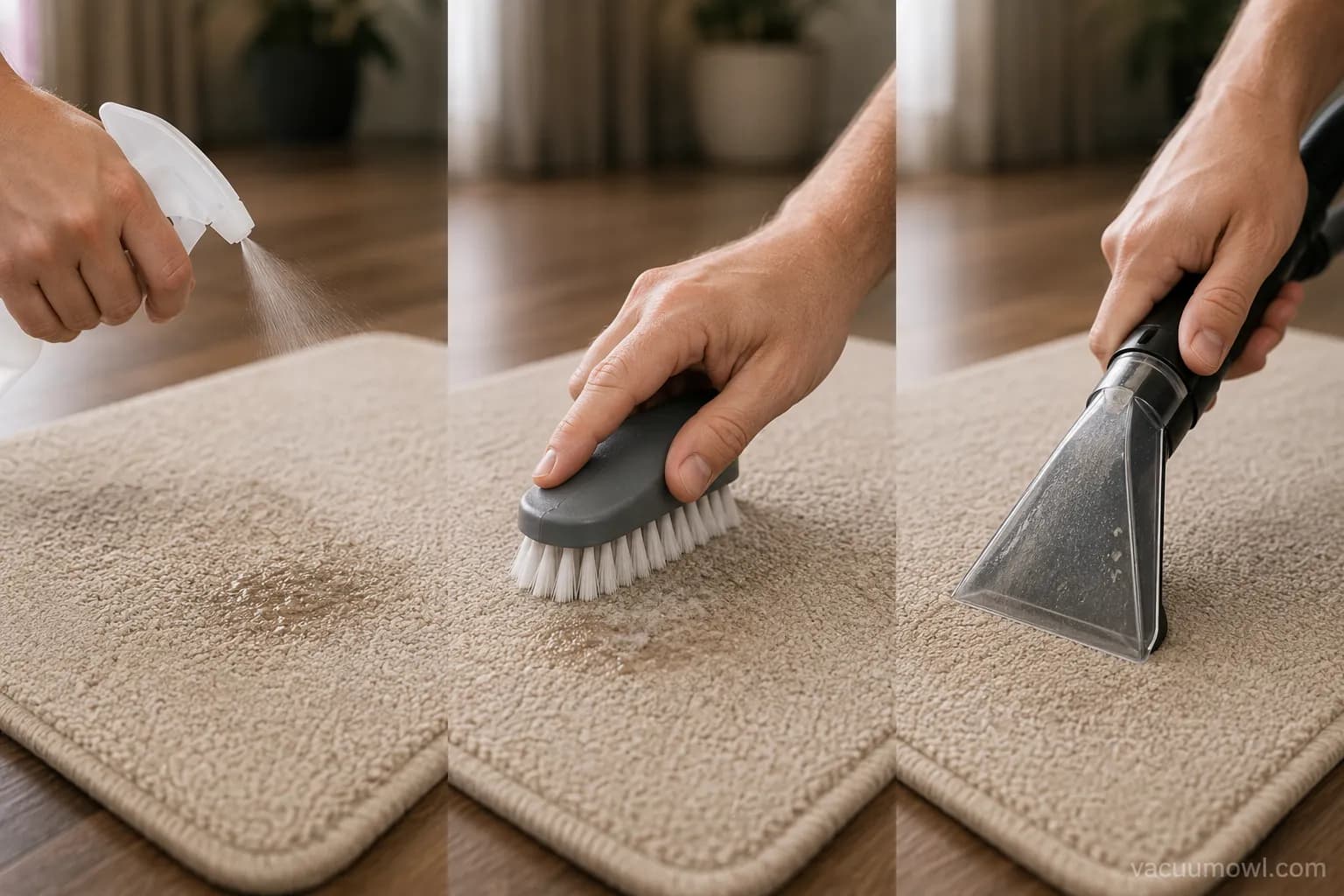
To clean carpet with a wet/dry vac, vacuum the dry debris first, then lightly mist a carpet-safe solution and never soak the pile.
Agitate with a brush, let it dwell a few minutes, then extract with the smallest nozzle you own, since a 1.25-inch crevice or upholstery tool pulls more water than a wide floor tool.
Rinse with clean water and extract again, or leftover solution will make the carpet resoil fast. Open a window or run a fan to finish drying.
A wet/dry vacuum is built to lift liquids as well as solid debris, per Wikipedia’s vacuum cleaner entry, which is exactly what makes extraction possible.
Vacuum the dry debris first. Run the vac over the area dry, so you are not turning loose dirt into mud the moment water hits it.
Lightly mist a carpet-safe solution. Do not soak the pile. A light mist is enough, and over-wetting is the single most common mistake.
Agitate, then let it dwell. Work the solution in with a soft brush and let it dwell a few minutes so it can lift the soil.
Extract with the smallest nozzle. Swap to the 1.25-inch crevice or upholstery tool. A narrow opening concentrates suction and pulls far more water than the wide floor tool.
Rinse, then extract again. Mist clean water and pull it straight back out, or leftover detergent will make the spot resoil and feel crunchy once dry.
Dry it fast. Open a window or run a fan. The vac has already removed most of the water, which is why this step is often called the last stage of carpet cleaning.
Filter check before wet pickup: Take out the paper or cartridge filter, or fit the foam wet filter your model came with.
The Lowe’s wet-vac guide confirms a dry filter clogs and can bog the motor, and the float will cut suction on its own when the tank fills.
Can You Use a Shop Vac to Clean Upholstery?
Yes. The same light-mist, dwell, and extract routine works on upholstery and car seats with the upholstery nozzle.
Keep the mist even lighter than on carpet, since foam padding holds water and takes longer to dry, and always test a hidden spot first.
Car interiors and floor mats are the classic home for this method. The exact same steps apply when cleaning your car’s interior, just on a smaller scale.
For the vacs I rate highest on car carpet and mats, see our tested car detailing picks.
That same wet-pickup skill has other uses around the house, like using the vac to clear a clogged drain line on an AC unit.
If most of your work is in the car, going cordless for cars saves fighting an extension cord across the driveway.
The first mat I over-sprayed stayed damp for a full day and felt crunchy once it dried.
The second, with a light mist and a proper rinse pass, dried soft in about two hours, which is the whole case for restraint with the spray bottle.
Methodology stop-point: If the spot still looks dirty after you rinse and re-extract, stop. At that point it is an extractor job, and pushing in more water will only over-wet the pad.
The Right Attachments for Carpet
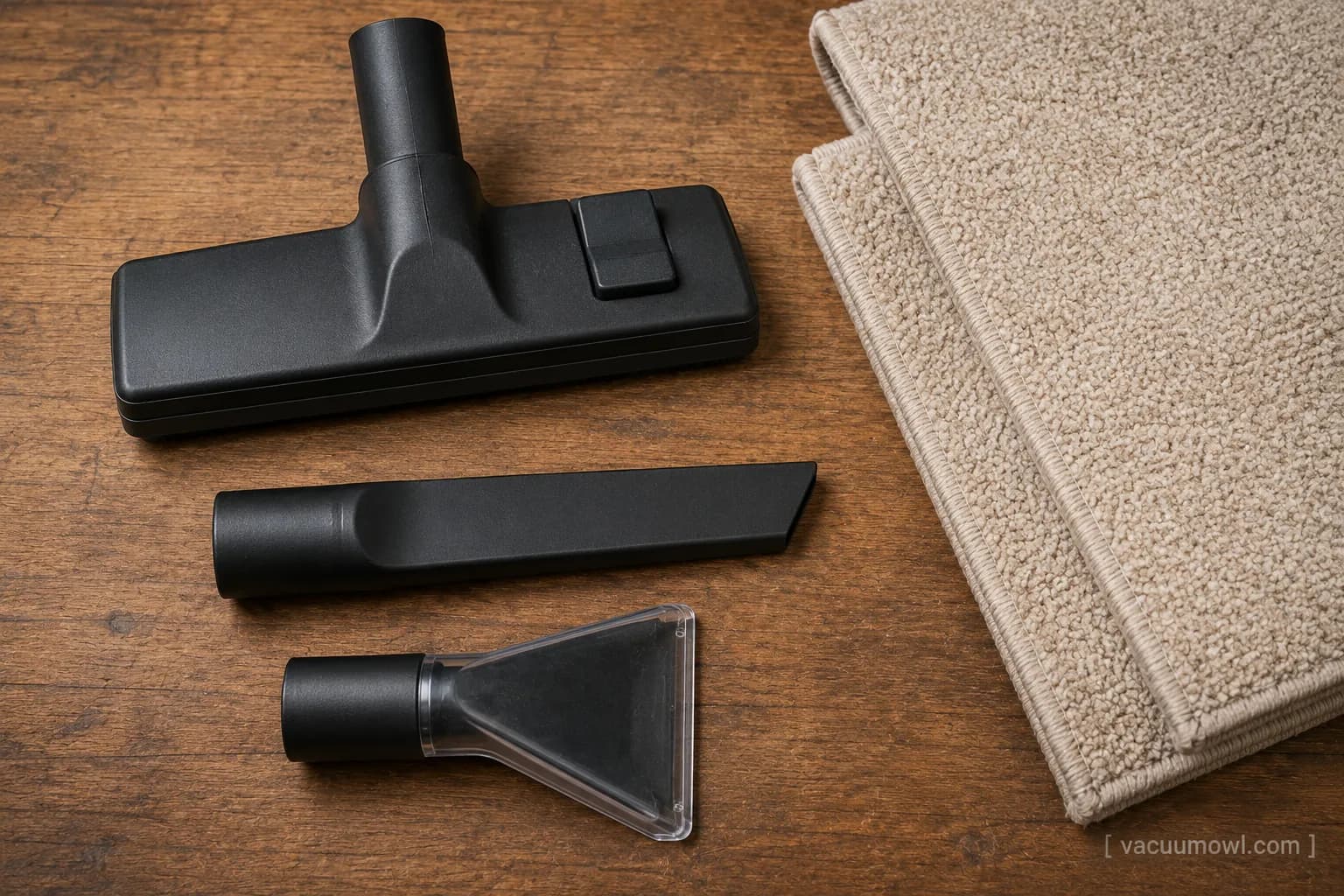
The most useful shop vac attachment for carpet is the smallest nozzle you own, a crevice or upholstery tool, because a narrow opening concentrates suction for better extraction.
You can add an aftermarket extractor wand that sprays solution, but without a heated tank or a powered brush it is a budget stand-in, not a true carpet extractor.
Check your hose diameter first, usually 1.25 or 2.5 inches, before you buy anything.
Attachment | What it does on carpet | Hose fit |
|---|---|---|
Crevice tool (narrow) | Concentrates suction for spot extraction and edges | 1.25 in |
Upholstery/spot nozzle | Best for stains, stairs, car seats, and upholstery | 1.25 in |
Wide floor/squeegee tool | Fast on hard floors, weakest on carpet pile | 2.5 in |
Aftermarket extractor wand | Sprays solution as you vacuum, a budget stand-in | 1.25 or 2.5 in, check fit |
The principle behind that table is worth knowing: a smaller opening raises the effective suction at the nozzle, so more water leaves the pile per pass.
New to the category? Start with how a shop vac works and the airflow basics.
Swapping the 2.5-inch floor tool for the 1.25-inch upholstery nozzle noticeably increased how much water I pulled from the same wet patch, enough that I stopped using the wide tool on carpet at all.
Set expectations on conversions: As SweepScrub notes, a shop vac has no high-pressure spray or rotating brush, which caps what any wand conversion can achieve.
A DIY extractor wand is a poor-man’s extractor, not a real one.
If you would rather not rig a conversion, cordless floor-washer options do the spray-and-scrub job properly out of the box.
When You Actually Need a Carpet Washer Instead
You need a carpet washer instead of a wet/dry vacuum when the whole carpet is soiled, stains are set in, or pets and allergies mean frequent deep-cleans.
A wet/dry vacuum cannot inject solution or scrub the pile, so it can only finish the job by extracting water after a washer or rental does the deep-clean.
A floor washer or vacuum-mop is a separate class of machine again.
CleanLink makes the same point: heated extraction with a recovery tank is what removes oily, deep soil.
Reach for a washer, or a rental, when you see these signals.
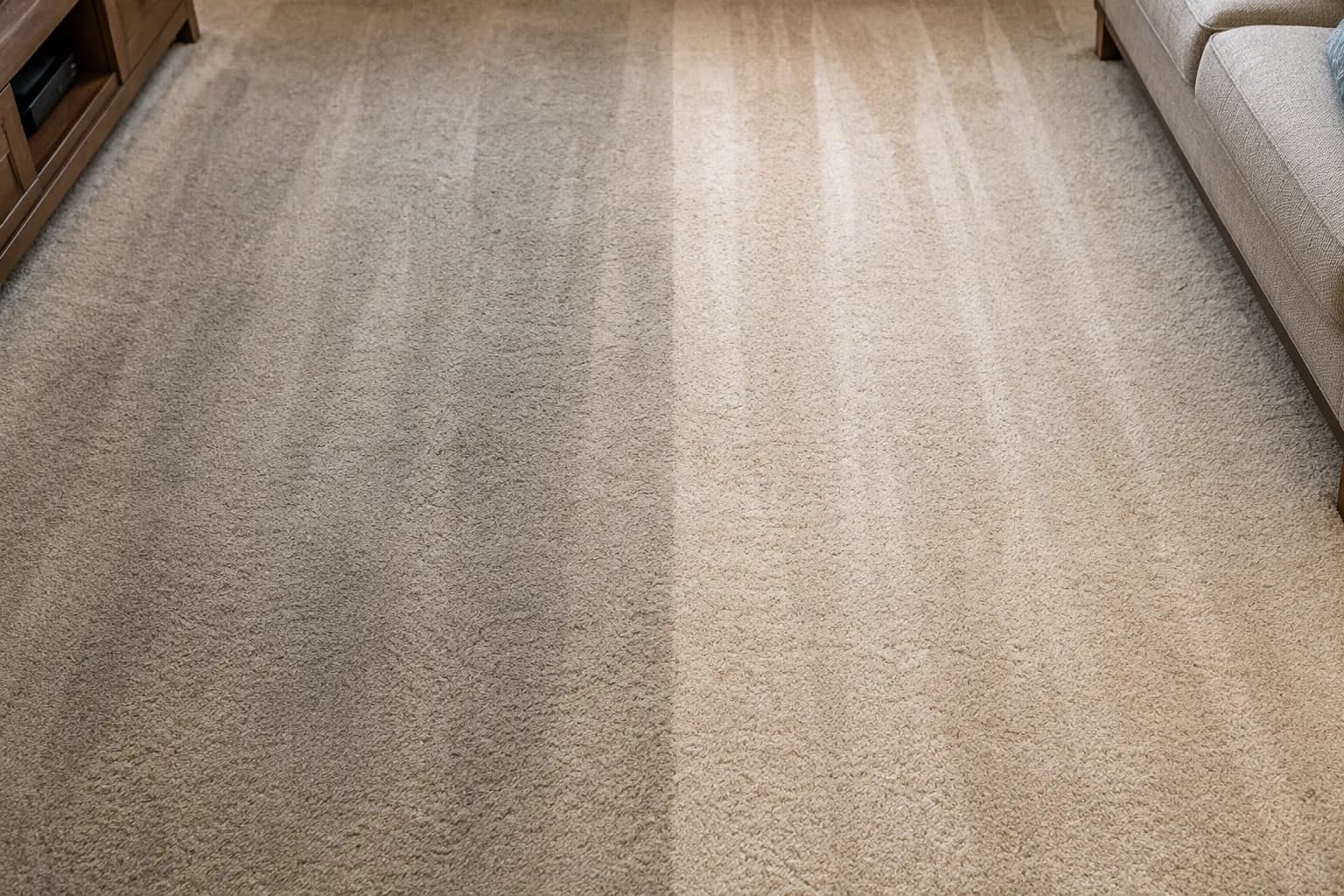
The whole carpet, not just a spot, looks dull or grey in the traffic lanes.
Stains are set in and survive a proper spot-clean.
Pets or allergies mean you deep-clean every few months.
There is odor deep in the pile, not just on the surface.
Think of the wet/dry vac as the last stage of carpet cleaning: it is the finisher that cuts drying time, not the machine that does the deep-clean.
Beyond carpet, a shop vac still earns its keep on the odd jobs Southern Living rounds up, from drying to quick cleanup.
If you have decided to buy, the brand guides help. Dyson’s wet-clean machines suit some homes better than others.
Shark’s two very different vacuums trip up a lot of buyers who expect one machine to do everything.
For a value head-to-head, a full floor-washer face-off compares the popular brands directly. Prefer a European or utility route? European and utility alternatives covers those machines.
The job that finally convinced me was a whole living-room deep-clean.
After two passes with the shop vac the traffic lanes still looked grey, and a rented extractor fixed in one pass what I could not.
The honest close: This is the real limit of the tool this whole guide is about. A wet/dry vac makes carpet cleaning easier. It does not replace a carpet cleaner.
Frequently Asked Questions
Can you use a shop vac to clean carpet?
Yes, for the right jobs. A wet/dry vac cleans carpet by picking up spills, dry debris, and pet hair, and by extracting water after you shampoo. It does not deep-clean, because it cannot spray solution or scrub the pile, so treat it as a spot-cleaner and a finisher rather than a shampooer.
Can a wet/dry vac deep-clean carpet?
No. A wet/dry vacuum has no powered brushroll, no solution pump, and no separate recovery tank, which are the three things a carpet extractor uses to deep-clean. It can extract and spot-clean small areas well, but a whole dirty carpet needs a dedicated extractor or a rental machine instead.
Do you take the filter out for wet carpet?
In my testing this is the step people skip, and it is why their motor bogs down on wet pickup. Remove the paper or cartridge filter, or fit the foam wet filter your model came with, before you vacuum any liquid. The built-in float will stop suction on its own when the tank fills.
Can you use a shop vac on upholstery or car seats?
Yes. The same light-mist, dwell, and extract routine works on upholstery and car seats using the upholstery nozzle. Use an even lighter mist than on carpet, since foam padding holds water and takes longer to dry, and always test a hidden spot first to check for color transfer.
Can you turn a shop vac into a carpet extractor?
Sort of. An aftermarket extractor wand lets a shop vac spray and vacuum at once, which makes a budget stand-in. Without a heated tank or a powered brush it will not match a true extractor, so set your expectations before spending money on the conversion parts.
Will a shop vac leave my carpet too wet?
Only if you over-wet it first. Used correctly, a wet/dry vac removes more water than it adds, which is why it actually speeds drying after shampooing. Mist lightly, extract thoroughly, and rinse, and the carpet should be walkable in a few hours, not soaked.
The Bottom Line
A wet dry vacuum for carpet is one of the most useful tools you can own, as long as you ask it to do the right job. It is a spot-cleaner and a water extractor, not a carpet washer.
Every frustration people report comes from expecting the second thing from a machine built for the first.
Use it on spills the moment they happen, on dry pet hair and crumbs, and above all on pulling water back out of the pile after you shampoo, where it cuts drying from overnight to a few hours.
When the whole carpet is dull, when stains are set in, or when pets keep the soil coming, that is the line. Rent or buy a real extractor and let the shop vac finish the job.
Match the mess to the tool, keep the mist light, and rinse before you extract. Do that, and you will get clean carpet without a soaked floor or a wasted rental.
Read it your way
Short on time? Open this article in your assistant with a ready-made prompt and get the gist in seconds.
Found this useful? Make us a preferred source so we show up in your Google results.
Keep reading
Related articles
Vacuum Types
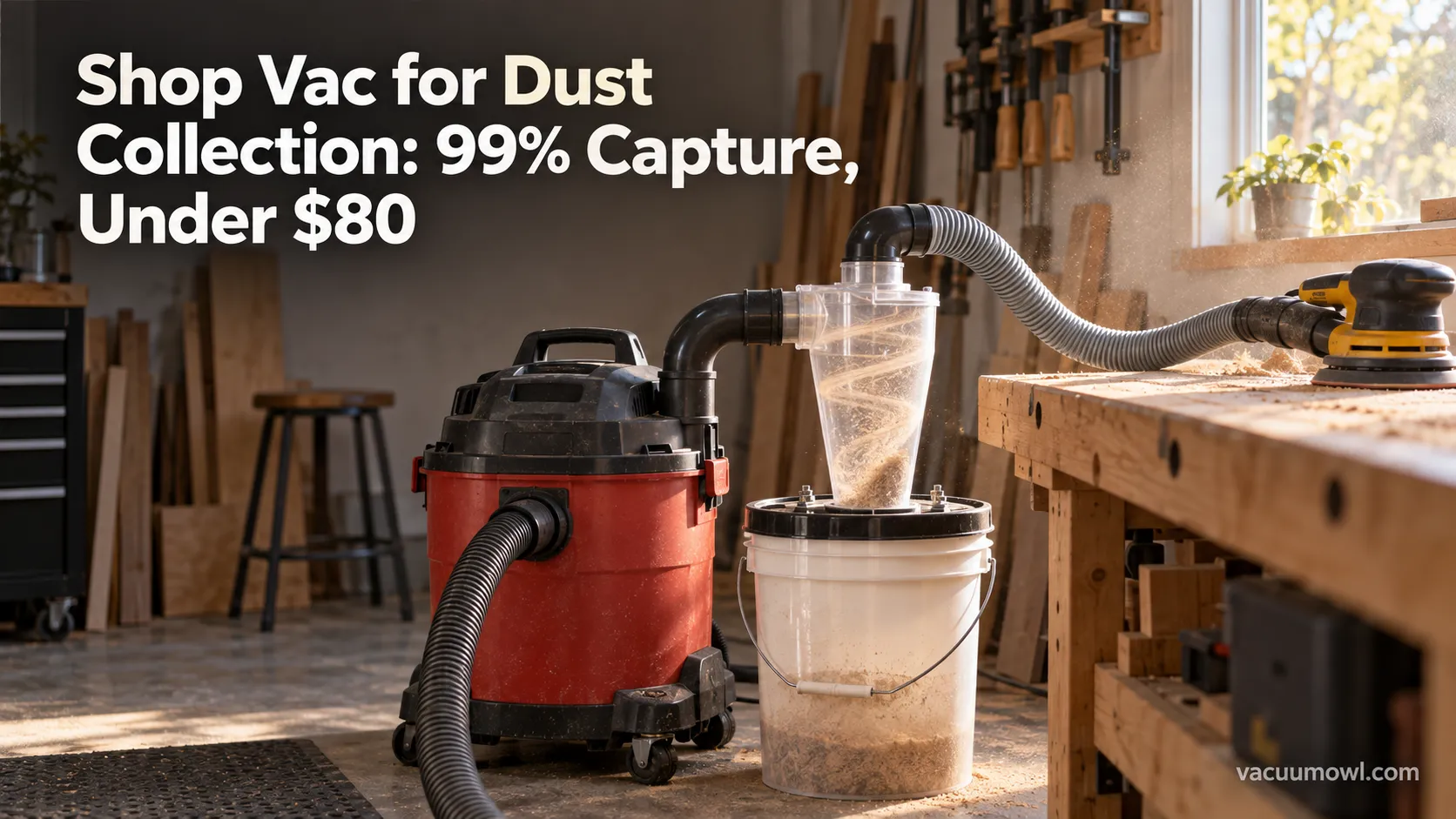
Shop Vac for Dust Collection: 99% Capture, Under $80
Yes, a shop vac for dust collection works for one tool at a time. Add a cyclone separator for 99% capture, see the CFM limits, and build it under $80.
Vacuum Types
Can You Use a Shop Vac as a Regular Vacuum? 4 Uses Tested
Yes: can you use a shop vac as a regular vacuum? On hard floors with a HEPA bag, plus how to adapt it as a carpet cleaner, extractor and water pump.
Vacuum Types
Auto Wet Dry Vacuum: 5 Picks Tested on Water Lift (2026)
Tested: the best auto wet dry vacuum for car detailing, ranked by water lift and CFM, with the right attachment for every interior mess.
Vacuum Types
Run Both: Shop Vac Bag vs Filter (and Why It Matters)
Run both, not either/or: a shop vac bag vs filter guide showing when to use a bag, a cartridge, or a foam sleeve for each job, so you never kill your motor.
The discussion
Comments
Every comment is reviewed before it goes live.