Shop Vac Vacuum Leaves: My 2.5-Inch Hose Setup That Works
Yes, a shop vac vacuum leaves setup works for patios and gutters. Use a 2.5-inch hose, keep the dry filter, and see when to grab a leaf blower.
Written by Dr. Naomi TranReviewed by Dale FerrisLast updated on September 23, 2026
When you buy parts or vacuums through links on our site, we may earn a commission at no extra cost to you. It never changes what we recommend. Learn more.
Read it your way
Short on time? Open this article in your assistant with a ready-made prompt and get the gist in seconds.
Found this useful? Make us a preferred source so we show up in your Google results.
Can a shop vac vacuum leaves? Every fall I get some version of that question from neighbors staring at a leaf-covered patio with a shop vac already sitting in the garage.
The short version is yes, for small dry areas, and the setup matters more than the machine.
I spent a fall running my own 12-gallon shop vac across patios, decks, flower beds, and a one-story gutter run to find exactly where it wins and where it wastes your afternoon.
A shop vac vacuums leaves well on small, dry areas: patios, decks, flower beds, and gutter debris you can reach.
Fit the widest hose you have (ideally 2.5 inches), keep the dry cartridge filter or a dry-pickup bag installed, and add a wide utility nozzle.
Past a couple hundred square feet the drum fills too fast, so a leaf blower or a mulching mow beats it.
Never vacuum wet leaves, because they pack the hose and strain the motor.
Can a Shop Vac Vacuum Leaves? Yes, With Limits
A shop vac can vacuum leaves, but only on small, dry surfaces where suction and drum capacity are enough for the job.
On a patio, a deck, a set of flower beds, or a stretch of gutter you can reach, it works well with a wide hose and the dry filter kept in.
On a whole lawn it fills too fast to be practical. The value of a shop vac here is the reason it earns garage space: it swallows debris that would clog your regular house vacuum in seconds.
The catch is scope. This is a small-areas-only tool for leaves, not a lawn machine, and it fails outright on wet leaves.
The Leaf Setup: 2.5-Inch Hose, Dry Filter, Right Nozzle
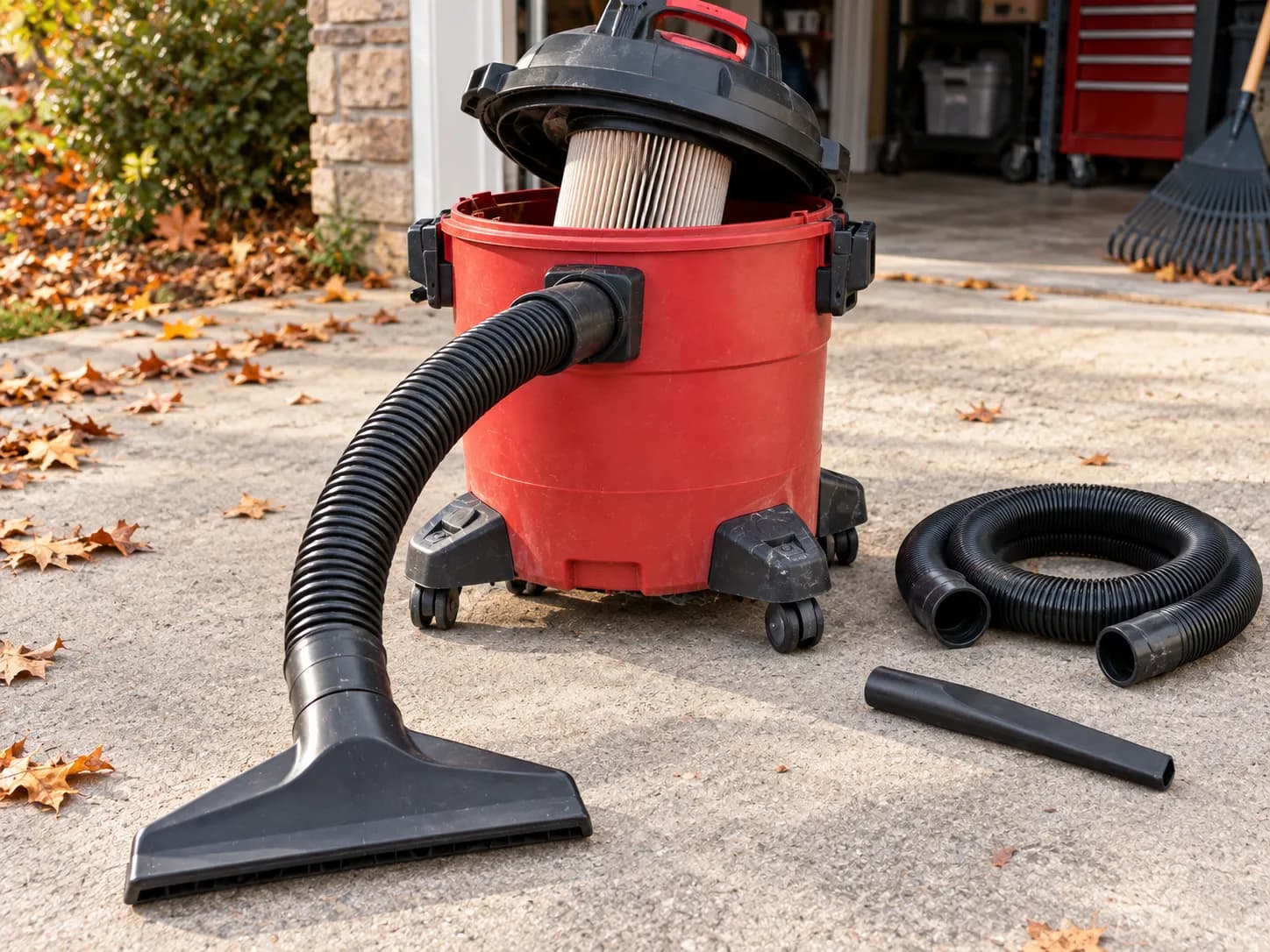
Getting a shop vac ready to vacuum leaves takes about five minutes and comes down to four choices: the widest hose you own, the dry filter kept in place, a wide utility nozzle, and knowing your hose reach for gutters.
Airflow matters far more than horsepower here, so a wide, unobstructed path beats a high peak-HP rating on the box.
If you are new to the tool itself, our explainer on what a shop vac is covers the basics before you point one at a leaf pile. Here is the setup I run every fall.
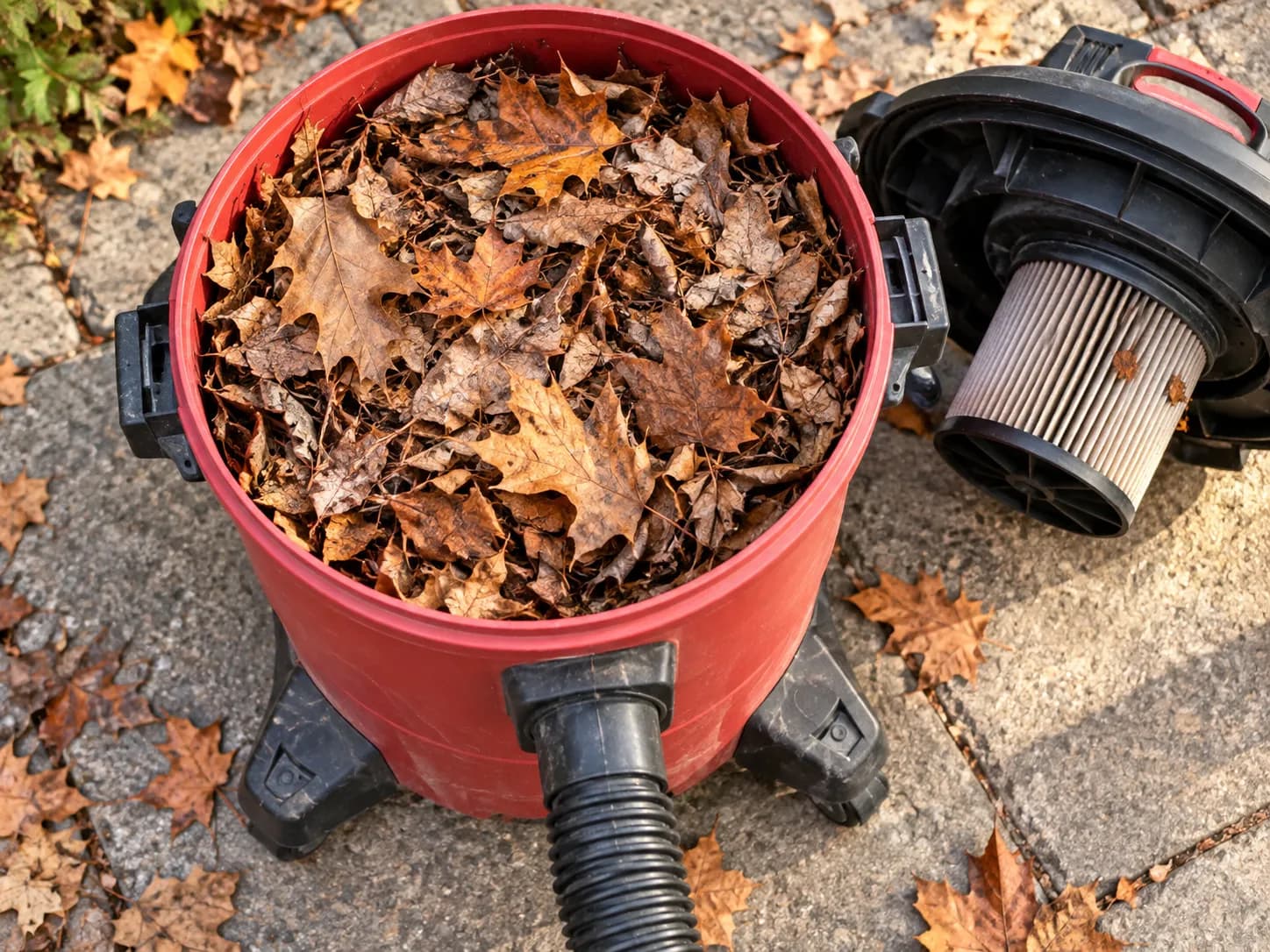
Fit the widest hose you have, ideally 2.5 inches. Wide hoses resist the clogs that narrow hoses cause when leaf stems bridge across the opening, and in my testing a narrow 1.25-inch hose jammed on stems where the 2.5-inch hose did not.
Keep the dry cartridge filter or a dry-pickup bag installed. Leaves are dry debris that carry fine dust, and running filterless loads that dust straight through the motor.
Add a wide utility or gulper nozzle. A wide mouth grabs more leaves per pass and clogs less than a narrow crevice tool.
Know your reach and your blower port. Most shop vac hoses run about seven to nine feet, which matters for gutters, and many machines reverse into a blower to gather leaves into a pile first.
Not sure your machine is big enough for the job? Our breakdown of shop vac sizes helps you match drum capacity to the mess.
Because airflow is the real limiter, it also helps to understand how CFM compares to the marketing horsepower numbers.
That same strong suction can even run a small dust collector once leaf season ends.
Even with the right rig, keep your expectations honest. A small drum fills with fluffy leaves faster than you think, which is exactly what the next section measures.
How Big an Area Can It Handle? (The Cutoff Table)
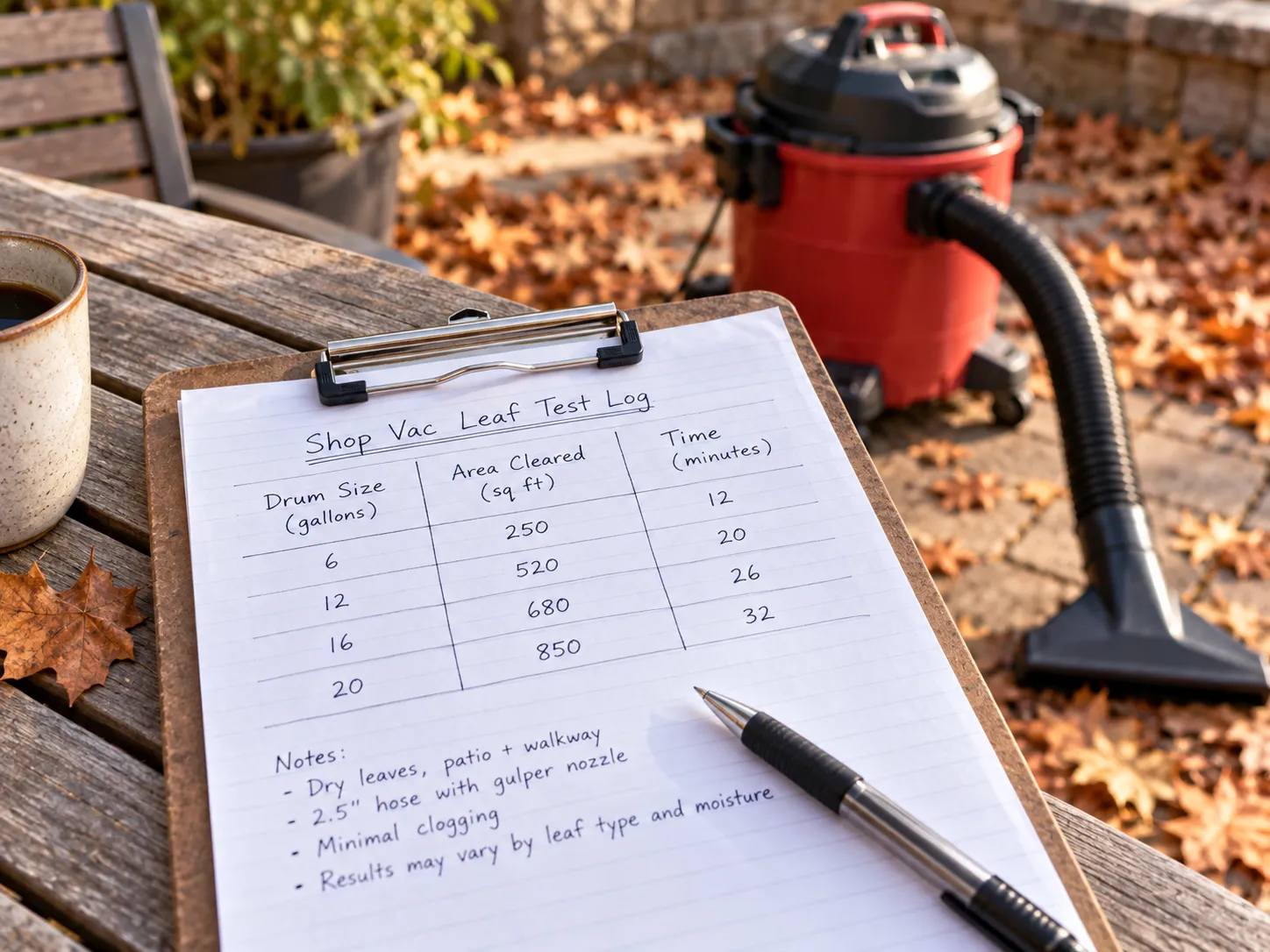
A shop vac vacuum leaves job works up to roughly a couple hundred square feet before the drum fills and you spend more time emptying than cleaning.
In my testing a 12-gallon drum cleared about a 200 square foot deck in a single fill, while a strip of leaf-covered lawn packed the drum in minutes.
The limit is not suction, it is volume: fluffy dry leaves fill by bulk long before weight becomes an issue.
University of Minnesota Extension notes in its fall leaf guidance that leaves are best handled dry, which is exactly where a shop vac shines.
The table below is the cutoff I use to decide shop vac or different tool.
The area-per-drum figures come from my own fall runs with a 12-gallon machine on maple and oak leaves.
Job | Typical area | Shop vac verdict | Why |
|---|---|---|---|
Patio or deck | 100 to 250 sq ft | Great | Hard surface, contained, one to two drums |
Flower beds and around shrubs | Small, irregular | Great | Nozzle reaches tight spots a mower cannot |
Single-car driveway apron | 150 to 300 sq ft | OK | Doable but expect two to three drum empties |
Small courtyard | 200 to 400 sq ft | OK | Fine if you do not mind stopping to empty |
Full residential lawn | 3,000+ sq ft | Stop | Drum fills in minutes; wrong tool entirely |
Leaf-covered acre | 40,000+ sq ft | Stop | Not remotely practical |
The pattern is simple: contained and dry is a yes, open and sprawling is a no.
For the wider picture of what this machine is and is not built for, our guide to shop vac vs a regular vacuum sets the expectations.
The fuller map of jobs lives in our dedicated uses guide.
Because capacity is the real limit here, matching drum size to your typical job matters more than raw power, and our gallon-size selector helps you pick a drum you will not empty every ninety seconds.
Volume is also why timing counts.
As UConn’s turf program documents in its leaf-management guidance, a given area produces a surprising amount of leaf material, so a small drum disappears fast.
Dry Leaves Only: Why Wet Leaves Wreck It
Wet leaves are where a shop vac fails, and it fails fast.
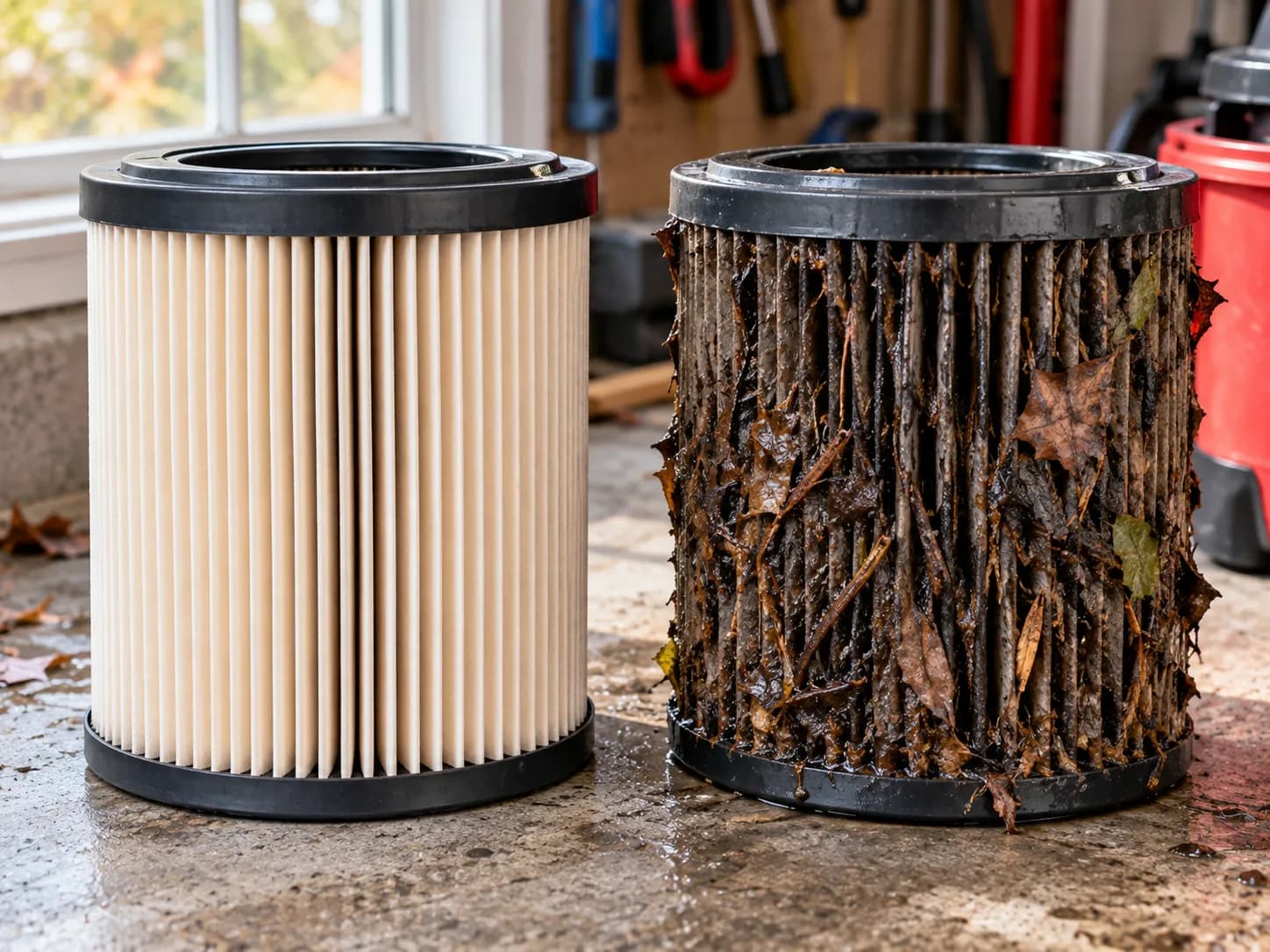
In my dry-versus-wet run the machine cleared dry leaves cleanly, then packed the hose and blinded the filter within about a minute once I moved to rain-soaked leaves the next morning.
The failure chain is predictable: wet leaves stick together, mat inside the hose, choke airflow, cake the dry cartridge filter, and leave the motor laboring against a blocked path.
University of Missouri Extension makes the same point for lawns in its leaf-management publication, warning that wet leaves mat and weigh far more than dry.
The practical rule is to wait for a dry day, or at least shake the dew off, before you start.
A laboring motor also draws more current, which is worth understanding through our breakdown of what a shop vac actually pulls.
If you do hit an early clog, the fix is quick. Power off, clear the packed section of hose by hand, and tap the debris out of the filter before you restart.
The same filter-choking problem shows up with fine construction dust, which is why our drywall dust filter setup exists as its own guide. Wet pickup, though, is genuinely a different job with a different setup.
If your real problem is standing water rather than leaves, follow the proper method in our guide to using a shop vac for water instead of improvising with your leaf rig.
For floods and basements, the safety-first wet-pickup steps walk through filter removal and drainage.
Heavy, matted leaf cover is a problem on lawns too.
Virginia Tech’s turf specialists explain in their fall lawn-care guidance why dense wet leaf layers need breaking up rather than leaving in place.
Clearing Gutters From the Ground (Blower Mode)
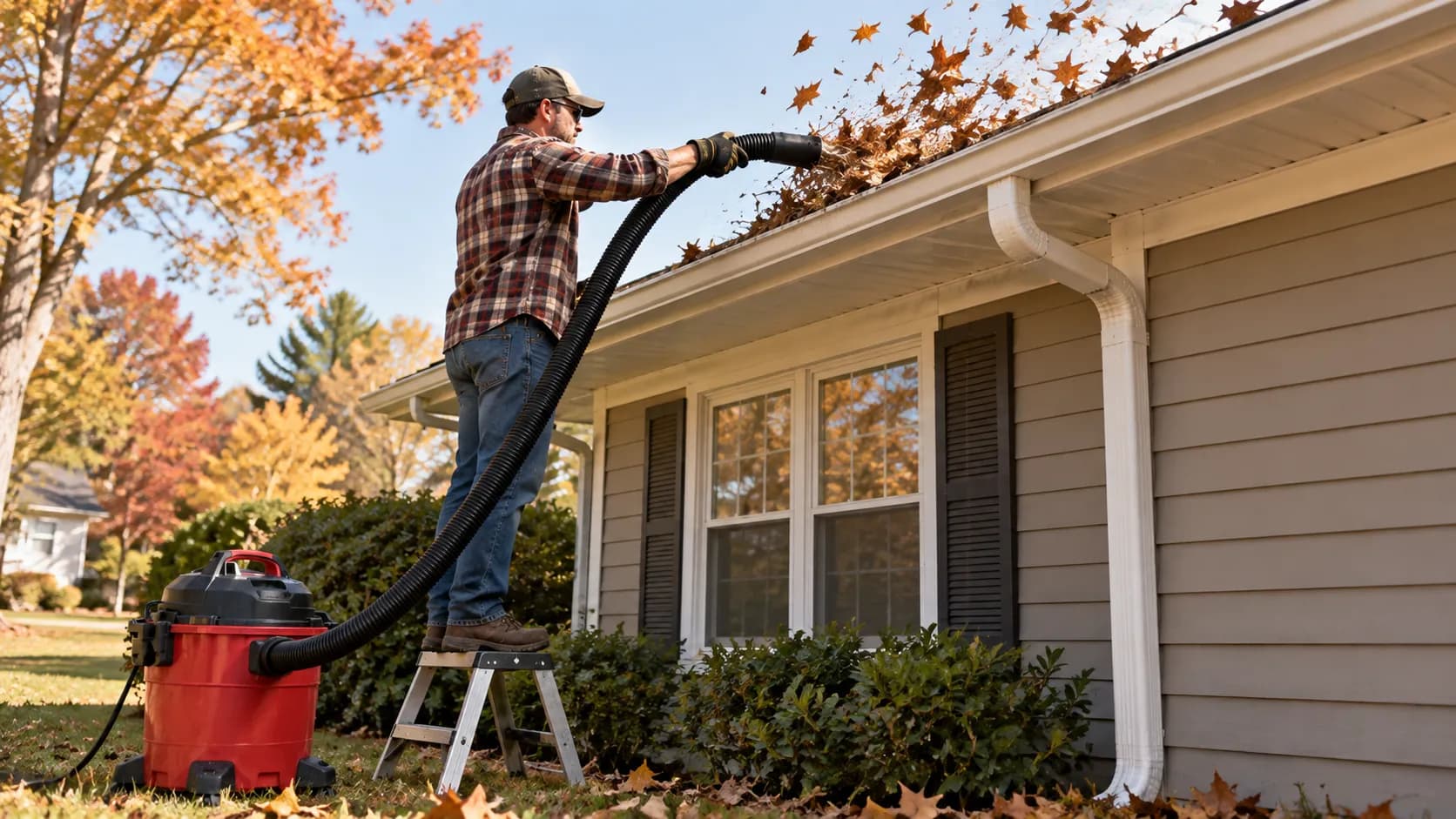
A shop vac clears gutter debris best in blower mode, blasting dry leaves out from the ground where the hose can reach.
Switch the hose to the exhaust port, add the extension and a curved nozzle, and use the roughly seven to nine feet of reach to blast a one-story gutter from a step stool rather than climbing onto a ladder.
This matters for more than convenience.
Ladder falls are a leading, preventable home injury, and CDC and NIOSH surveillance data record thousands of ladder-fall injuries treated in emergency departments every year.
The reach is real but limited.
In my test an eight-foot hose let me clear a single-story gutter section from a low step stool, but a two-story gutter still needs proper ladder access or a pro.
Blowing works better than vacuuming here because it flushes dry debris out and down in one motion. Here is the ground-first method I use.
Empty the drum first so nothing blows back out of the exhaust.
Switch the hose to the blower or exhaust port.
Fit the extension wand and a curved gutter nozzle.
From a stable step stool, blast along the gutter run, working debris toward the downspout end.
Rake up the fallen debris from the ground afterward.
Blower mode is the trick that makes this work, and our full walkthrough on using a shop vac as a blower covers models that switch easily.
If you are not sure which opening is the blower port, the two holes on a shop vac explains the inlet versus the exhaust.
Curious why reversing the airflow blows instead of sucks? See how a shop vac works for the airflow basics.
Safety note: A shop vac reduces ladder time on single-story gutters, it does not remove the risk.
Two-story and steep-roof gutters still call for a proper ladder or a professional.
The University of Pennsylvania’s safety office cites CPSC figures of roughly 500,000 ladder injuries a year, so keep both feet grounded whenever the reach allows.
When to Skip the Shop Vac: Blower vs Mulcher vs Mulch-Mow
Past the small-area cutoff, a shop vac is the wrong tool for leaves, and honesty here saves you an afternoon.
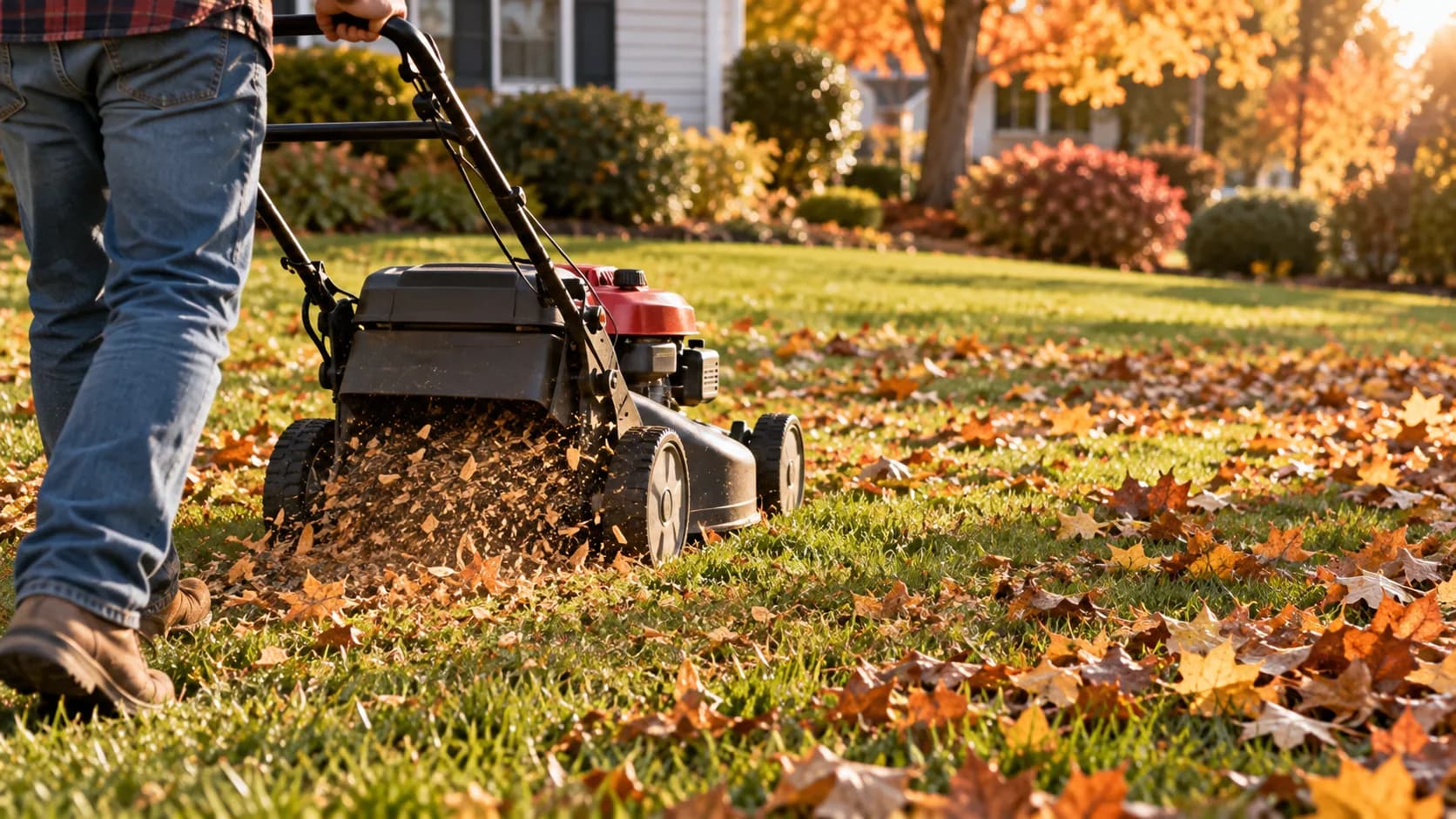
For a real lawn, a leaf blower gathers faster, a dedicated leaf vacuum or mulcher shreds and bags in one pass, and often the least-work option is to mulch-mow the leaves back into the grass.
Michigan State University research found that mulching dry leaves into turf, up to about six inches over the season with a couple of criss-cross passes, feeds the lawn rather than harming it.
I ran the same modest leaf pile three ways and timed each.
The shop vac was fine for the contained edge along the patio, the blower was fastest for gathering across open ground, and the mow was the clear winner for the lawn itself.
There was simply nothing to bag or haul.
Leaf volume or area | Best tool | Why |
|---|---|---|
Small contained patch (patio, beds) | Shop vac | Precise pickup, reaches corners |
Open ground, moderate leaves | Leaf blower | Gathers fast into a pile to bag or mulch |
Whole lawn, you want it bagged | Leaf vacuum or mulcher | Shreds and bags in one pass, cuts disposal volume |
Whole lawn, least effort | Mulch-mow | No collection; returns nutrients to the soil |
The mulch-mow case is worth taking seriously because it is free and backed by decades of turf science.
Set the mower deck high, mow the dry leaves in a criss-cross pattern, and stop before you leave a thick smothering mat.
Purdue University research found no negative effect on turf quality or soil pH from mulching leaves in, as long as the layer stays thin and the leaves are dry.
A dedicated leaf vacuum or mulcher earns its place only if you have a large yard every fall and want shredding and bagging a shop vac cannot do.
The same yes-but-a-dedicated-tool-wins logic applies to plenty of shop vac jobs, which is how we frame whether a shop vac can pump water.
If shredding for disposal is your goal, a bucket cyclone gets partway there, and our dust-collection setup shows the principle.
The hybrid I like best is to blow leaves into a pile, then vacuum the pile with the shop vac. That plays each tool to its strength.
A shop vac genuinely does stand in for a lot of tools, and our honest look at where it works as a substitute is worth a read before you buy anything new.
New to the category entirely? Start with what a shop vac is.
Frequently Asked Questions
Can you use a shop vac for leaves?
Yes, on small dry areas like patios, decks, flower beds, and reachable gutters. Fit a wide 2.5-inch hose, keep the dry filter in, and stop short of whole lawns where the drum fills too fast to be practical.
Will wet leaves clog my shop vac?
Yes, and quickly. Wet leaves mat together, pack the hose, and blind the filter within a minute or two, so wait for a dry day or at least knock the dew off before you start.
Should I take the filter out to vacuum leaves?
No, keep the dry cartridge filter or a dry-pickup bag installed. Leaves carry fine dust that will pass straight through to the motor without a filter, so between runs just power off and tap the debris out rather than removing it.
Can a shop vac pick up a whole lawn of leaves?
No. A shop vac drum fills with fluffy leaves in minutes, so for a whole lawn use a leaf blower, a dedicated leaf vacuum or mulcher, or simply mulch-mow the dry leaves back into the grass instead.
Do I need a special nozzle to vacuum leaves?
A wide utility or gulper nozzle helps a lot, since a narrow crevice tool jams on leaf stems. Pair it with the widest hose you own for the smoothest pickup, and once fall is over our guide to wall-mounting and storing your shop vac keeps it off the garage floor.
Is vacuuming ash the same as vacuuming leaves?
No, and this one is a safety issue. Ash can hide live embers that ignite inside the drum, so read the cold-ash-only rules before you point a shop vac at a fireplace or fire pit.
The Bottom Line
So, can a shop vac vacuum leaves? Yes, within limits that are easy to remember.
On patios, decks, flower beds, and reachable gutters, a shop vac with a 2.5-inch hose and the dry filter kept in clears leaves cleanly and reaches corners a mower never will.
Past a couple hundred square feet, or the moment the leaves are wet, it stops being the right tool.
For a real lawn, reach for a leaf blower to gather, a mulcher to shred and bag, or the highest mower deck and a dry-day mulch-mow that feeds the grass for free.
Match the tool to the size of the job, and your fall cleanup gets faster instead of frustrating.
Read it your way
Short on time? Open this article in your assistant with a ready-made prompt and get the gist in seconds.
Found this useful? Make us a preferred source so we show up in your Google results.
Keep reading
Related articles
Vacuum Types
Bissell Wet Dry Vacuum: 6 CrossWave Models Tested (2026)
Compare every Bissell wet dry vacuum: which CrossWave model fits pets, steam, or budget, plus fixes for streaks and floors that still look dirty. Tested 2026.
Vacuum Types
Washing Shop Vac Filter: Tap, Rinse & Reuse the Right Way
Rinse it right: this guide covers washing shop vac filter foam and paper, the tap-and-hose steps, the 24-hour dry rule, and when to just replace it.
Vacuum Types
Tineco vs Dreame Wet Dry Vacuum: 30-Day Test (2026)
Compare Tineco vs Dreame wet dry vacuum on suction, self-clean, edge reach and price, with a clear pick for pets, kids and big homes.

Vacuum Types
Is the DEWALT Shop Vac Worth It? Quiet StealthSonic Tested
Compare every DEWALT shop vac: StealthSonic quiet picks, cordless DCV580 and corded DXV, with measured noise, real suction specs and a value verdict.
The discussion
Comments
Every comment is reviewed before it goes live.