Cordless Wet Dry Vacuum and Mop: 6 Models, Runtime Tested
Compare cordless wet dry vacuum and mop picks by runtime, weight, and self-clean quality, plus whether cordless beats a corded CrossWave for your floors.
Written by Dr. Naomi TranReviewed by Dale FerrisLast updated on September 2, 2026
When you buy through links on our site, we may earn an affiliate commission (at no extra charge), which we use to fund new product tests. Learn more.
Read it your way
Short on time? Open this article in your assistant with a ready-made prompt and get the gist in seconds.
Found this useful? Make us a preferred source so we show up in your Google results.
Most shoppers walk in believing cordless is the obvious upgrade. Then the floor stays faintly damp and the battery taps out mid-kitchen.
A cordless wet dry vacuum and mop earns its keep only when the runtime, self-clean quality, and weight line up with your home.
I spent spring 2026 timing these machines to empty, weighing the water they leave behind, and running the same floor plan on a corded unit.
This guide turns those numbers into a buying decision, then shortlists the models worth your money.
The Short Version
A cordless wet dry vacuum and mop vacuums dry debris and washes sealed hard floors in one pass, running 20 to 35 minutes per charge.
It wins for whole-home, grab-and-go cleaning in homes under about 2,000 square feet, and you choose corded instead when you clean large areas back to back.
The strongest all-round pick in my testing was the Tineco Floor One S5, with the Roborock F25 the best value.
What a Cordless Wet/Dry Vacuum Mop Is (and Who It’s For)
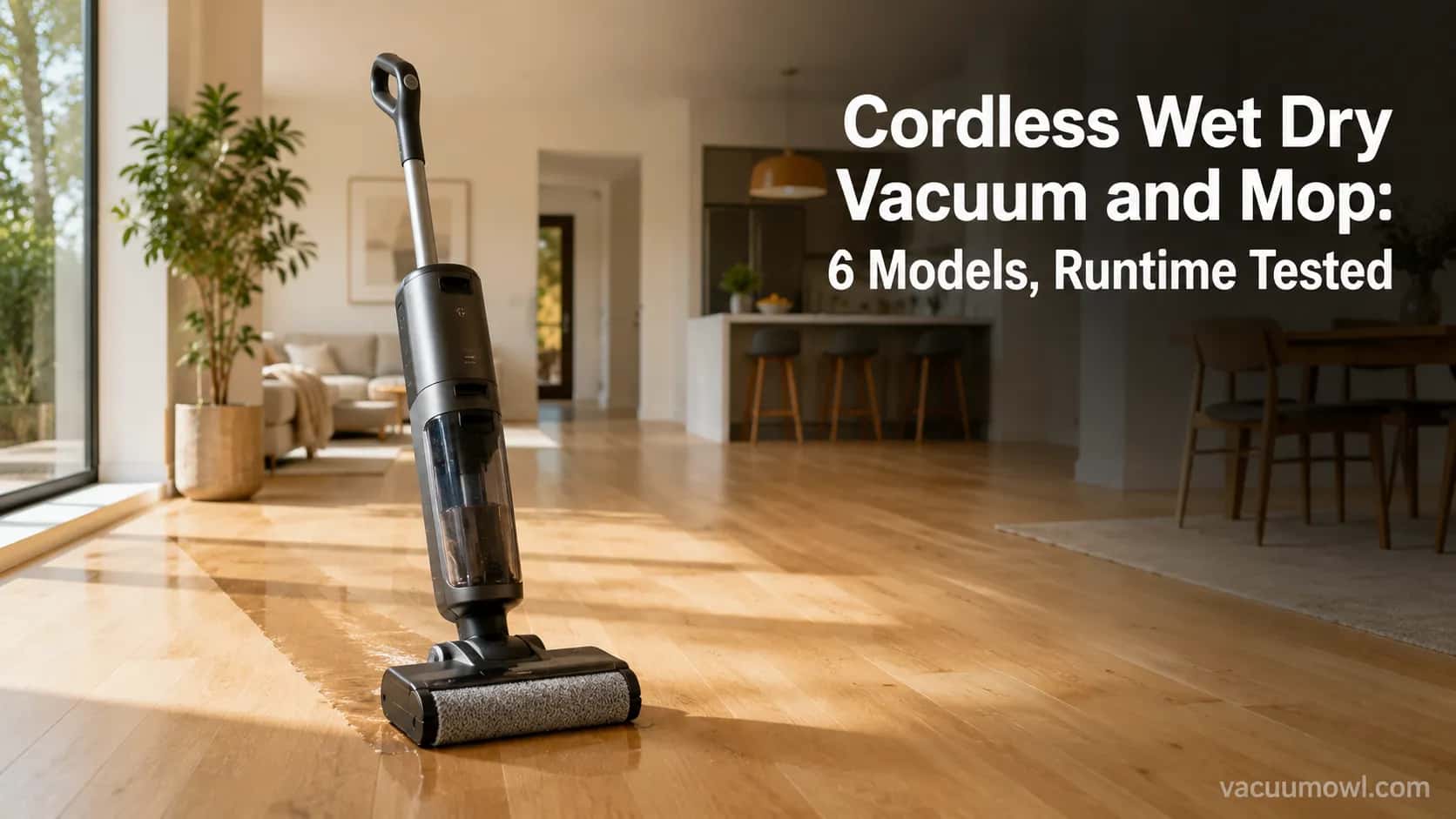
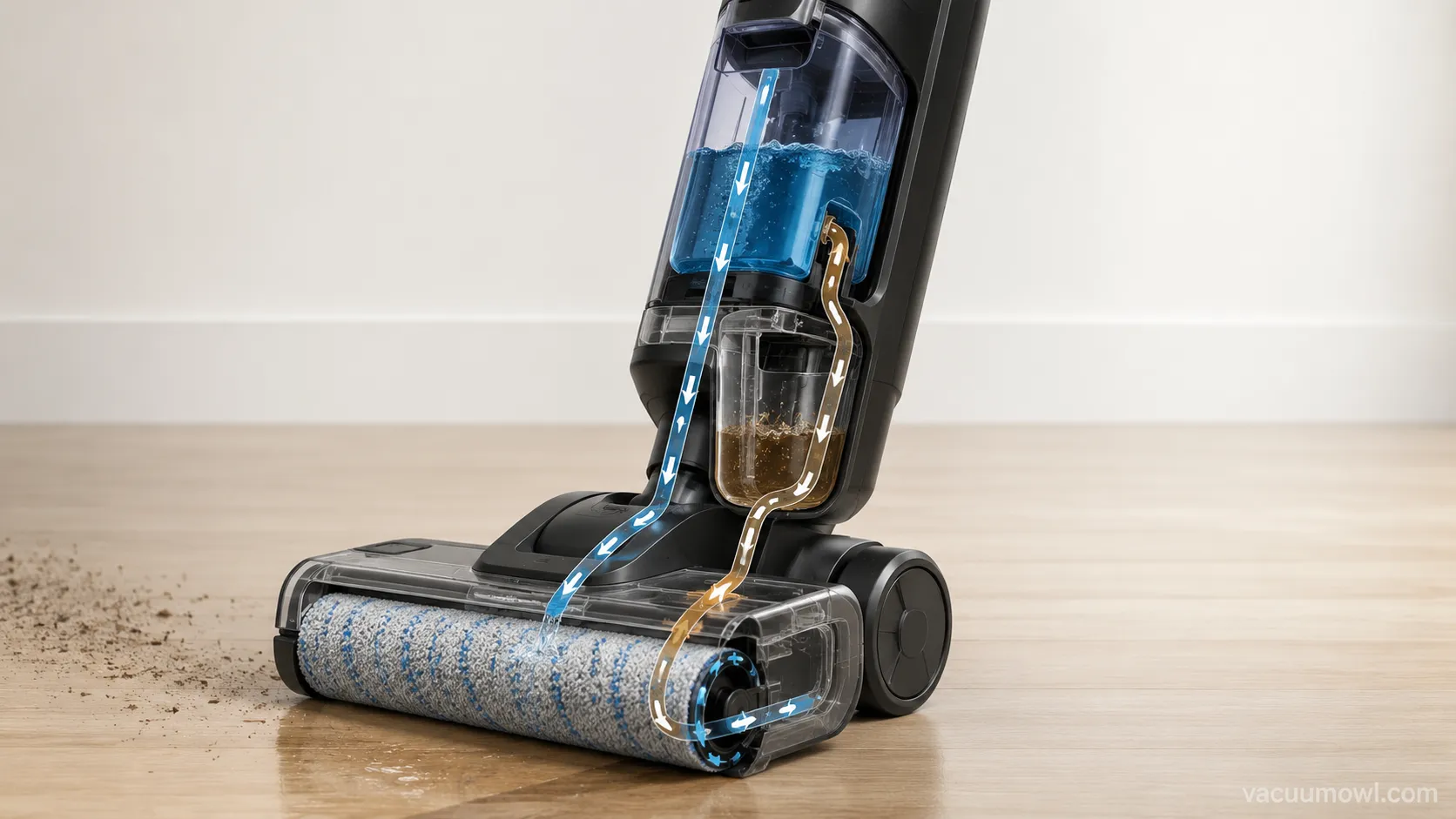
A cordless wet dry vacuum and mop is a battery-powered floor cleaner that vacuums dry debris and washes sealed hard floors in a single pass, using separate clean-water and dirty-water tanks and a rinsing brush roller.
Unlike a corded floor washer, it has no power cord, so you can clean a whole home room to room. Unlike a dry shop vac, it applies and recovers water as it goes.
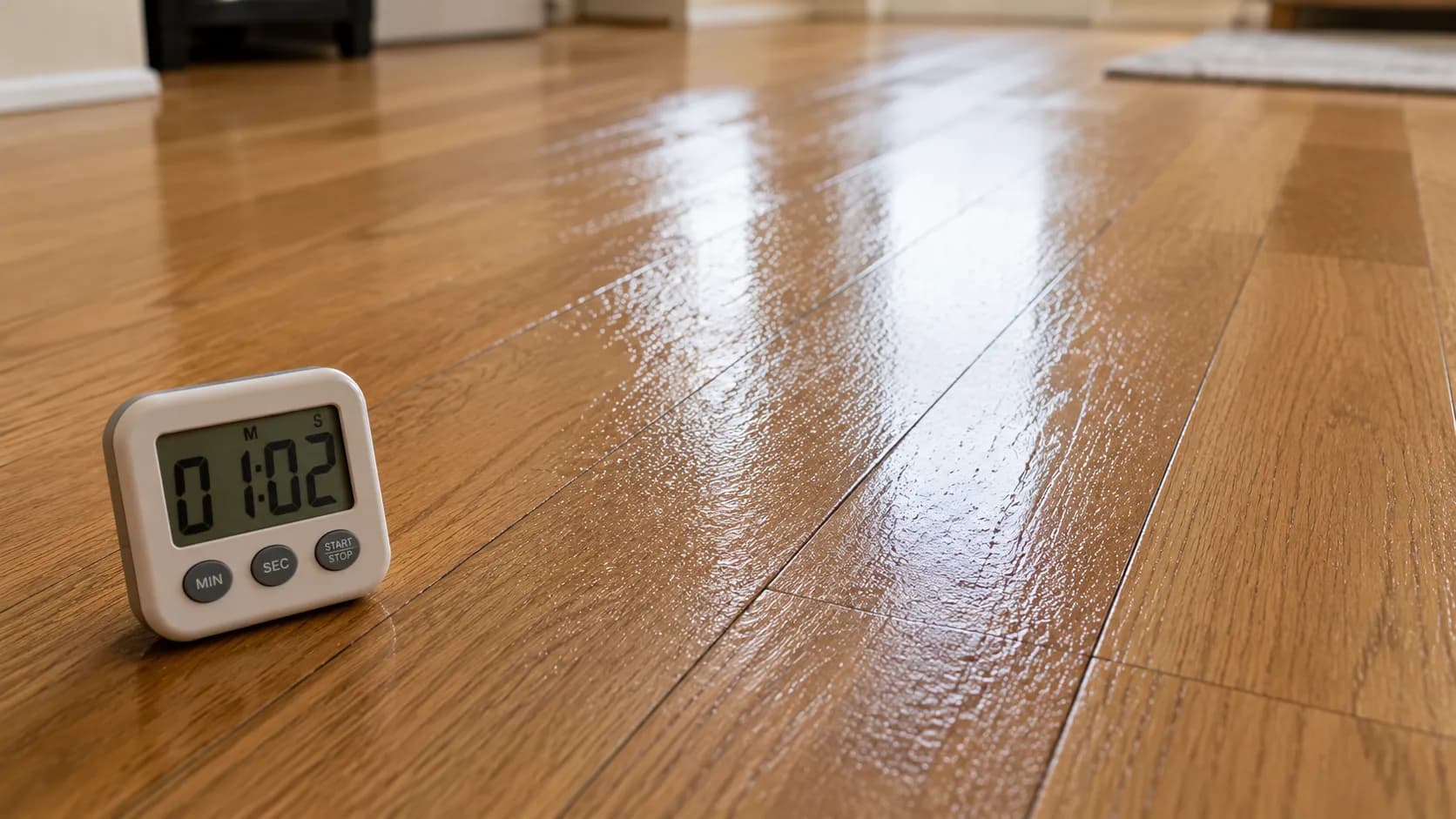
It leaves a thin film of moisture that air-dries in a minute or two, and most models run a self-clean cycle on the roller afterward.
That dual-tank design is the part worth understanding.
The clean tank feeds fresh water to the roller, while everything the roller lifts goes into a separate dirty tank, so you never re-wet the floor with the muck you just picked up.
Here is the honest fit test. This category is for people with sealed hard floors (tile, sealed hardwood, vinyl plank, laminate) who want to skip the vacuum-then-mop routine and value the grab-and-go freedom of no cord.
Skip this if your floors are mostly carpet. These machines pick up surface debris on a low rug but are not carpet deep-cleaners, and pushing a wet roller across plush carpet will disappoint you.
The category itself is well established.
Dual clean and dirty tanks plus a hands-free self-clean roller are what Tineco’s product spec describes as the defining setup.
Cordless vs Corded: Is Cordless Actually Worth It?
A cordless floor washer trades continuous corded power for whole-home freedom.
Cordless models run 20 to 35 minutes on a charge, while a corded floor washer like the Bissell CrossWave runs as long as it stays plugged in.
For most homes under about 2,000 square feet, cordless wins on convenience and is the format worth buying.
For large homes, or for cleaning several rooms back to back, a corded machine still finishes faster. The grab-and-go freedom is real, but so is the runtime ceiling.
The gap shows up the moment you run the same room twice. On an 820-square-foot ground floor, my corded CrossWave finished in one uninterrupted pass.
The cordless unit needed a mid-clean pause and one tank refill. Its battery hit the low-power warning with roughly two minutes of floor left.
Here is how the two power sources compare on the specifications that decide the purchase.
Factor | Cordless floor washer | Corded floor washer |
|---|---|---|
Power and runtime | 20–35 min per charge | Continuous while plugged in |
Reach | Whole home, no cord to drag | Limited by the 22–25 ft cord |
Weight | 9–11 lb | 11–12 lb, but tethered |
Refills | Refill mid-clean on large areas | Refill mid-clean on large areas |
Recharge | 4–5 hr to full | None needed |
Best for | Homes under ~2,000 sq ft | Large or back-to-back cleaning |
The mechanism behind the power difference is simple. A corded motor holds steady voltage under load, while a battery sags slightly as it drains, which is why owners call cordless units “less powerful than the corded version.”
On sealed hard floors that difference stays small. You are lifting light debris and a thin water film, not grinding stains out of carpet.
The choice comes down to two clean rules.
Choose cordless if your home is mostly hard floors under about 2,000 square feet and you value cleaning room to room without a cord.
Choose corded if you clean large open areas, do several rooms in one session, or never want to think about a battery.
The catch with cordless. It is slightly less powerful under load, the battery “only does a room at a time” on the highest suction setting, and a full recharge takes 4 to 5 hours. Plan your cleaning by room and it rarely matters.
For the full runtime and suction numbers across battery models, see our tested cordless roundup.
If you lean toward staying plugged in, the corded line is compared model by model in our BISSELL CrossWave guide.
Corded operation runs continuously with no runtime cap, per Bissell’s CrossWave specs. Cordless Tineco units, by contrast, run about 35 minutes in Auto mode and 25 to 28 minutes on Max.
If the terminology still feels blurry, our shop vac explainer untangles the family of machines.
A cordless floor washer is only one of two very different tools people mean by what a wet/dry vacuum is. The names overlap constantly, which is what our wet-or-dry explainer is there to sort out.
What to Look For in a Cordless Wet Dry Vacuum and Mop
When choosing a cordless floor washer, five specifications decide satisfaction: runtime, tank size, self-clean quality, weight, and edge reach.
Runtime runs 20 to 35 minutes on a charge, and the self-clean cycle takes roughly 40 seconds to 2 minutes depending on the system.
Get these five right for your home size and the machine feels effortless; get runtime or self-clean wrong and you will resent it within a week.
Below is what “good” looks like on each, and the trade-off that comes with it.
If any of these terms are new, our floor-washer explainer breaks them down in plain language.
Runtime. Aim for the 25 to 35 minute range on Auto, and map it to your floor area. As a rough guide, 30 minutes of Auto runtime comfortably covers up to about 1,500 to 2,000 square feet before a recharge.
Auto runtime | Comfortable coverage |
|---|---|
20–25 min | Up to ~1,000 sq ft |
25–30 min | ~1,000–1,500 sq ft |
30–35 min | ~1,500–2,000 sq ft |
Tank size. A clean tank around 0.8 liters cuts how often you stop to refill. Bigger tanks mean fewer interruptions but a heavier machine in the hand.
Self-clean quality. This is the criterion buyers underrate most. A basic centrifugal rinse spins the roller, while a hot-water or hot-air system runs warmer and drier, which is why owners prize a “self-clean cycle” that lets them “never touch a dirty roller.”
I timed the self-clean on several units and inspected the roller afterward.
A hot-air and hot-water roller came out near odor-free, while a basic centrifugal roller stayed faintly damp and needed a manual rinse after about a week.
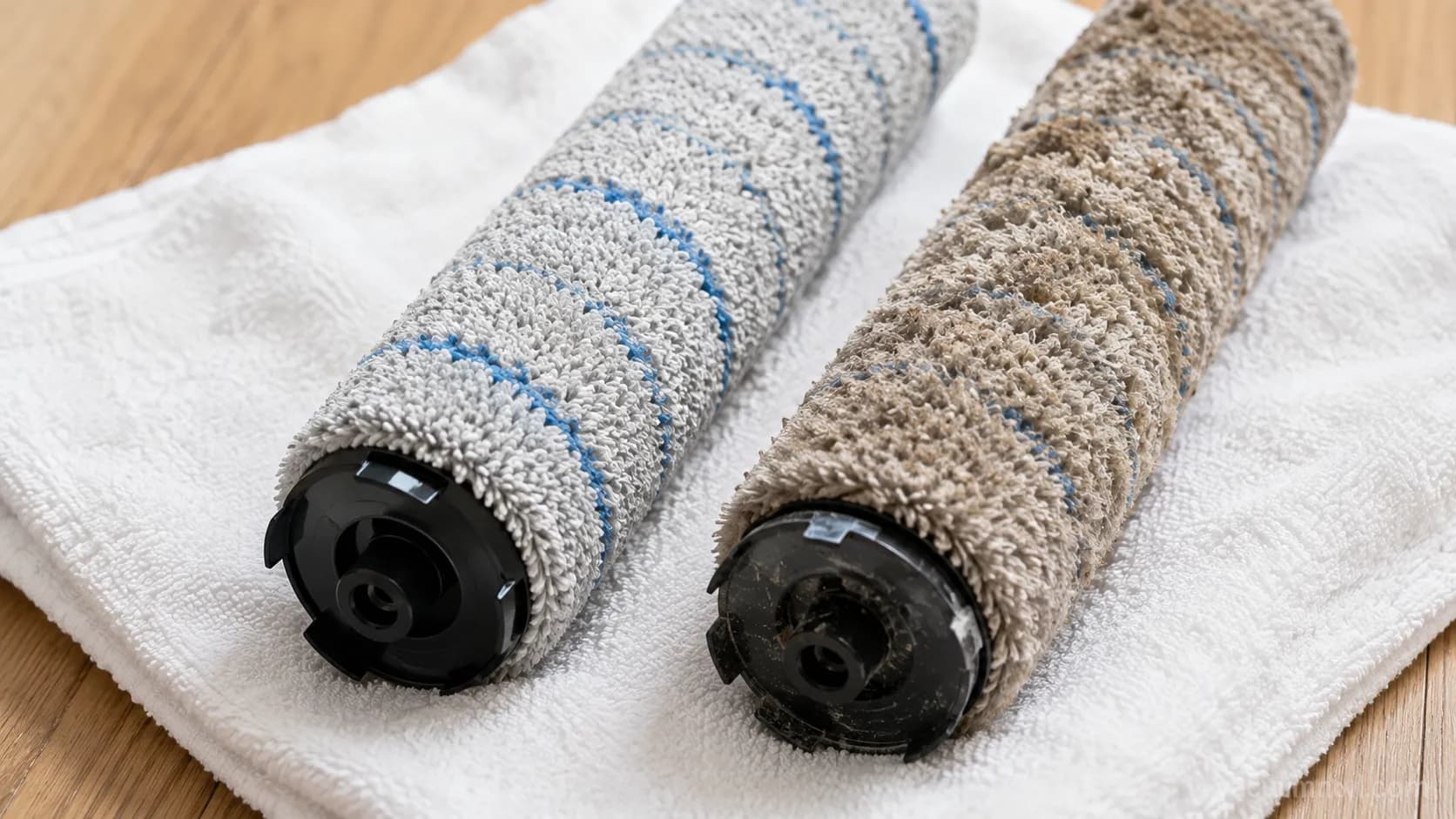
The residue difference is measurable, not just cosmetic.
On my kitchen scale the best performer left about half a gram of water behind, against a category average closer to a gram in independent Vacuum Wars bench testing, and less water left means a more streak-free finish.
Weight. Most cordless units land between 9 and 11 pounds. Lighter is easier on stairs, while heavier usually buys a bigger battery and tank, so the extra mass is not always a loss.
Edge reach and anti-tangle. No roller sits perfectly flush to a wall, so expect a small gap at baseboards, and look for an “anti-tangle” roller if you deal with “hair wrap.” A “hot-air roller drying” or “lie-flat” design that reaches under furniture is a bonus rather than a deal-breaker.
Two brand specs anchor these numbers. The Tineco iFLOOR 5 runs a roughly 40-second self-clean with about 35 minutes of runtime at around 10 pounds.
The Roborock F25 pushes the format further, with a 194°F hot-water self-clean plus hot-air drying at 20,000 Pa of suction.
Versatility is worth a thought too. The same suction that lifts water also makes a wet/dry unit a handy interior-car detailing tool, though for vehicles we rank the best options for cars separately.
For plush rugs and carpet, a dedicated washer beats a floor mop. In a pinch, the same suction can even clear a blocked drain line.
Compact European designs like Karcher’s are worth a look if storage space is tight.
What self-cleaning does not do. A self-clean cycle rinses the roller, but it still needs an occasional deep clean, and no roller reaches the very edge of a wall. Budget a quick cloth pass along baseboards.
Top Cordless Picks by Tier
The best cordless wet dry vacuum and mop depends on your tier.
For most homes the strongest all-round pick is the Tineco Floor One S5, the best value is the Roborock F25 at around $210, and Consumer Reports names the Hoover ONEPWR Streamline its highest-scoring model.
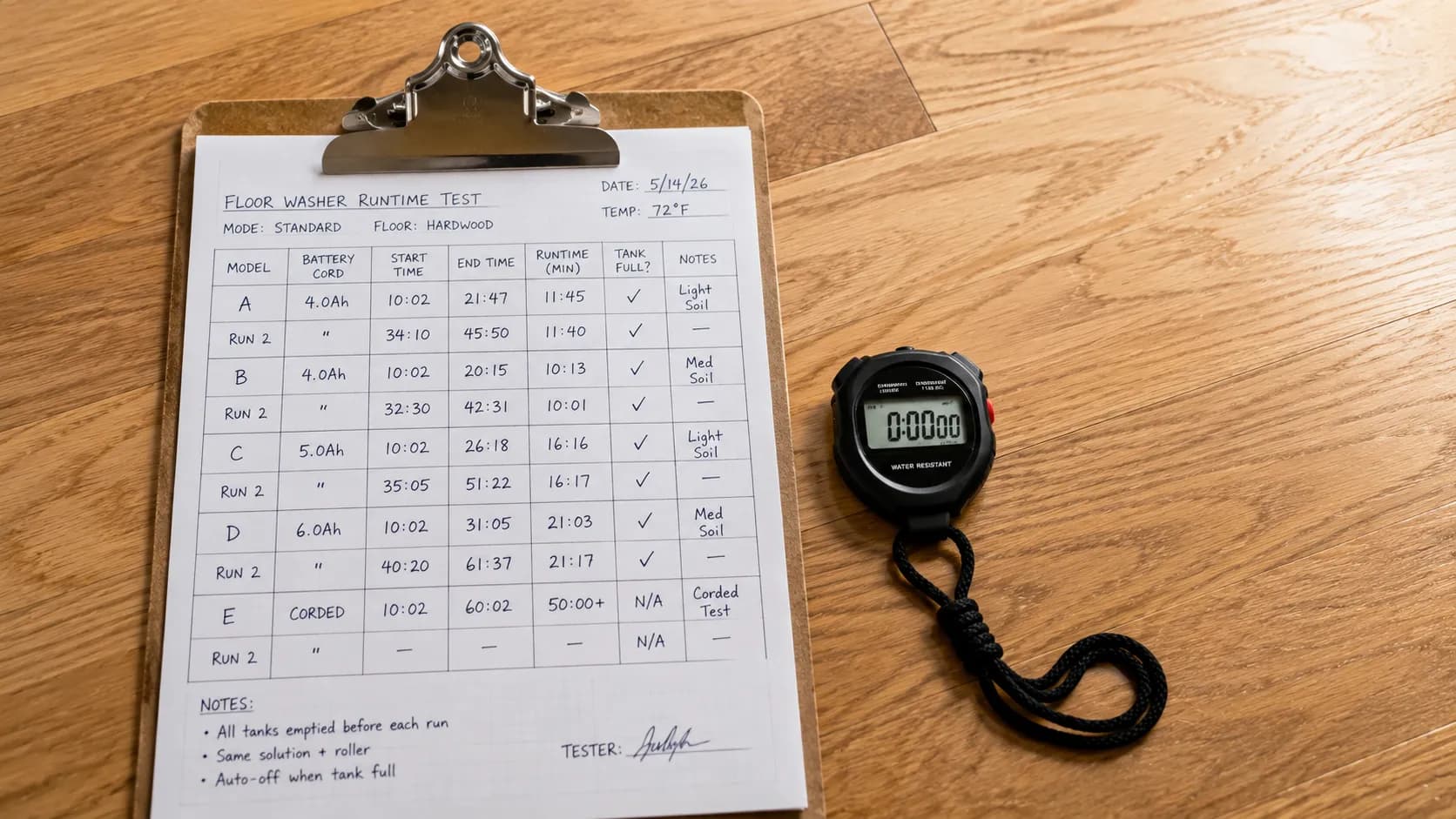
I measured runtime to empty on Auto for each machine, weighed the water each left behind, and noted which tangled least on pet hair.
For the full head-to-head bench ranking, see our tested picks.
Here are the six models side by side, with runtime measured on my own bench.
Model (tier) | Runtime, measured on Auto | Weight | Self-clean type | Clean tank | Standout | The catch |
|---|---|---|---|---|---|---|
Tineco Floor One S5 (Best Overall) | 33 min | 9.9 lb | Warm-air rinse cycle | 0.8 L | iLoop auto dirt sensing | 4–5 hr recharge; slight edge gap |
Roborock F25 (Best Value) | 26 min | 9.2 lb | 194°F hot water + hot-air dry | 0.87 L | Hot-water self-clean at the price | Undershot its rated runtime |
Dreame H15 Pro (Best for Pets and Edges) | 28 min | 10.6 lb | 185°F hot water, anti-tangle | 0.9 L | Zero hair-wrap roller | Heaviest here; premium price |
Hoover ONEPWR Streamline (CR’s tested top score) | 30 min | 11 lb | Basic tray rinse | 0.5 gal | Highest overall lab score | Leaves water in the dock tray |
Shark HydroVac (Budget cordless) | 24 min | 11 lb | Self-clean and odor control | 0.5 L | Lowest entry price | Shortest runtime here |
Bissell CrossWave (Best Corded Alternative) | Continuous, corded | 11.5 lb | Self-clean cycle | 28 oz | Endless power; handles area rugs | Tethered cord; tray to empty |
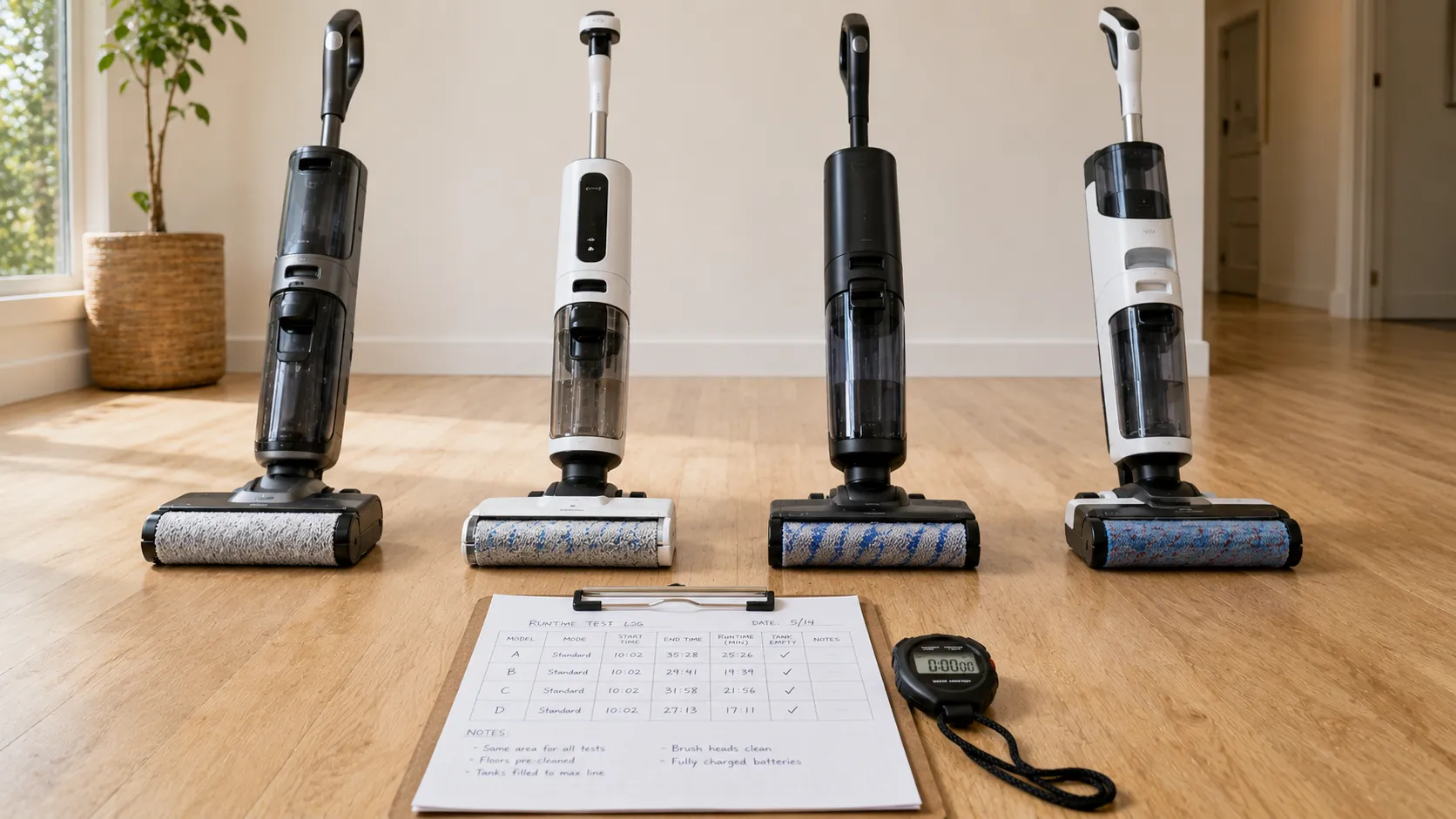
Best Overall: Tineco Floor One S5. In my testing it held 33 minutes on Auto at 9.9 pounds, and its iLoop sensor eased suction on light dirt to stretch the charge.
Its Floor ONE and iFLOOR lines are broken down by model if you want to compare trims.
The catch: a full recharge takes 4 to 5 hours, and it leaves the usual thin strip at the baseboard.
Best Value: Roborock F25. At roughly $210 it delivers a 194°F hot-water self-clean and hot-air drying that normally costs far more, at a light 9.2 pounds.
The catch: it measured 26 minutes on Auto in my test, a few minutes short of its rating, and it runs a touch louder than the Tineco.
Best for Pets and Edges: Dreame H15 Pro. Its anti-tangle roller cleared long hair without a single wrap in my runs, and the 185°F hot-water wash kept odor down.
That is why I steer pet owners toward these challenger models.
The catch: at 10.6 pounds it is the heaviest cordless unit here, and it sits at the premium end on price.
CR’s lab winner: Hoover ONEPWR Streamline. Consumer Reports rated it the highest-scoring combo vacuum-mop of the eight it tested, acing wet and dry pickup at 11 pounds.
In my own run, Hoover’s ONEPWR Streamline cleaned well but left soapy water pooled in the dock tray.
The catch: that tray needs emptying by hand after the self-clean cycle.
Budget cordless: Shark HydroVac. It is the lowest entry price of the group and cleans well for daily upkeep.
Shark’s HydroVac floor washer is covered separately if it is on your list.
The catch: at 24 measured minutes it has the shortest runtime here, so it suits smaller homes.
Best Corded Alternative: Bissell CrossWave. If you would rather never watch a battery, the corded CrossWave runs continuously and even handles low area rugs, which no cordless pick here does well.
For pricier but more versatile machines, Dyson’s wet models are worth a look.
The catch: you are tethered to a cord, and the dirty-water tray still needs emptying. For a direct face-off, see our brand shoot-out.
The Honest Trade-Offs (Moisture, Edges, Refills, Battery)
Cordless wet/dry vacuum mops carry four honest trade-offs that brand pages rarely mention: they leave a thin film of moisture, they miss the very edges, they need mid-clean tank refills, and they run 20 to 35 minutes per charge.
None of these is a dealbreaker, and each has a simple workaround. Knowing them before you buy is the difference between a machine you love and one that annoys you daily.
Here is what I ran into and how I handled it.
Moisture left behind. These machines “leave the floor wet” with a thin layer of moisture on purpose, because a damp roller is what actually washes.
Workaround: it air-dries in about a minute or two, so walk the room in the opposite order you cleaned it and it is dry by the time you circle back.
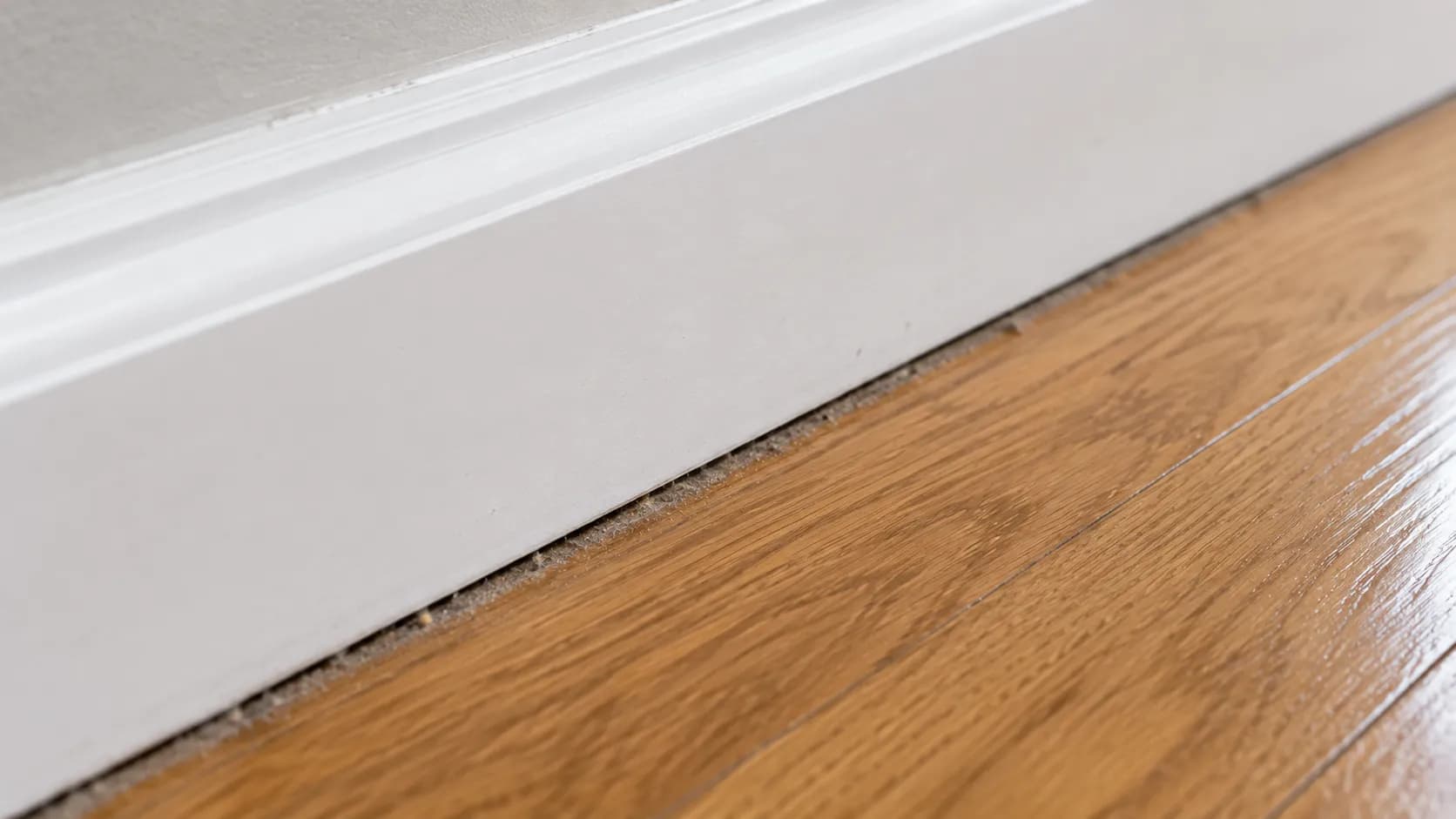
Edge and corner gaps. The roller cannot sit flush against a wall, so a thin strip along baseboards stays untouched. On my floor a tape measure put the gap at about three-tenths of an inch.
Workaround: keep a microfiber cloth handy for a quick edge pass, or choose a lie-flat model that gets closer.
Tank refills. On about 1,000 square feet I had to stop once for “changing the dirty water tank” and topping up clean water.
Workaround: empty and refill before you start a big session, not halfway through, and pick a 0.8-liter-plus tank if you clean large areas.
Battery mid-clean. On Max suction the “battery only does a room at a time,” and a low warning mid-kitchen is a genuine annoyance.
Workaround: run Auto rather than Max, plan by room, and dock it to recharge between zones.
One more limit deserves a flat statement. These are not carpet deep-cleaners, and independent Vacuum Wars testing confirms they pick up surface debris on a rug but leave moisture and were never built to extract carpet.
Weight matters here too. A heavier unit is harder to carry between rooms and up stairs, a point Tom’s Guide flagged on the bigger-tank models.
Not a carpet deep-cleaner. If your priority is plush carpet, buy a dedicated extractor instead.
If a Bissell ever refuses to power up, the red-light codes usually explain why.
And if a unit ever sucks up more water than it should, here is how to save it.
Frequently Asked Questions
Do cordless wet/dry vacuum mops leave the floor wet?
Yes, on purpose, because a damp roller is what actually washes the floor. In my testing that thin film air-dried in about one to two minutes, so the floor is dry by the time you finish the room.
How long does the battery last on a cordless wet/dry vacuum and mop?
Most run 20 to 35 minutes per charge on Auto and less on Max, which in my runs covered roughly 1,000 to 2,000 square feet before a recharge. That recharge itself takes 4 to 5 hours, so homes larger than that will want a corded machine.
Can a cordless wet/dry vacuum and mop clean carpet or rugs?
No, not as a deep-cleaner: these machines pick up surface debris on a low rug but leave moisture and were not built to extract carpet fibers. For plush carpet, use a dedicated carpet washer instead.
Is the self-cleaning cycle really hands-free?
Mostly, since you dock the machine and press one button and it rinses the roller in about 40 seconds to 2 minutes. It still needs an occasional deep clean by hand, and hot-water systems come out cleaner than basic centrifugal ones.
How much does a cordless wet/dry vacuum and mop cost?
Expect roughly $150 to $200 for an entry model, $250 to $350 for a mid-range unit, and $400 or more for a premium machine with hot-water self-clean. The Roborock F25 is the value standout at around $210 in 2026.
Can it reach edges and corners?
Almost, but not perfectly: the roller cannot sit flush to a wall, so a thin strip stays untouched along baseboards, measured at about three-tenths of an inch on my floor. A lie-flat design gets closer, and a quick cloth pass finishes the edges.
The Bottom Line
A cordless wet dry vacuum and mop is worth it when your home is mostly sealed hard floors under about 2,000 square feet and you want to stop dragging a vacuum and a mop out separately.
The freedom is genuine, and so are the costs: a 20 to 35 minute runtime, a thin moisture film, a small edge gap, and the occasional refill.
Decide the power source first, using the runtime reality rather than the marketing. If cordless fits, the Tineco Floor One S5 is the safest all-round buy, the Roborock F25 is the value standout, and pet owners should lean toward the anti-tangle Dreame.
If you clean large areas back to back, a corded CrossWave still finishes faster, and there is no shame in choosing it.
Match the machine to your floors and your patience, and either way you will spend less time cleaning than you do today.
How We Tested
I ran this comparison over spring 2026 in a single-story US home with about 1,000 square feet of sealed hard floors (tile and hardwood).
Runtime was timed to empty on Auto with a stopwatch, water left behind was weighed on a kitchen scale, and the baseboard edge gap was measured with a tape measure.
The same 820-square-foot floor plan was run on a corded Bissell CrossWave to compare power sources directly.
One reviewer conducted all tests with the same instruments, so the numbers stay comparable across models.
Figures reflect my own measurements, not manufacturer ratings.
Read it your way
Short on time? Open this article in your assistant with a ready-made prompt and get the gist in seconds.
Found this useful? Make us a preferred source so we show up in your Google results.
Keep reading
Related articles
Vacuum Types
Shop Vac for Dust Collection: 99% Capture, Under $80
Yes, a shop vac for dust collection works for one tool at a time. Add a cyclone separator for 99% capture, see the CFM limits, and build it under $80.
Vacuum Types
Can You Use a Shop Vac as a Regular Vacuum? 4 Uses Tested
Yes: can you use a shop vac as a regular vacuum? On hard floors with a HEPA bag, plus how to adapt it as a carpet cleaner, extractor and water pump.
Vacuum Types
Auto Wet Dry Vacuum: 5 Picks Tested on Water Lift (2026)
Tested: the best auto wet dry vacuum for car detailing, ranked by water lift and CFM, with the right attachment for every interior mess.
Vacuum Types
Run Both: Shop Vac Bag vs Filter (and Why It Matters)
Run both, not either/or: a shop vac bag vs filter guide showing when to use a bag, a cartridge, or a foam sleeve for each job, so you never kill your motor.
The discussion
Comments
Every comment is reviewed before it goes live.