Shop Vac vs Carpet Cleaner: 1 Stain, 2 Machines Tested
Tested a shop vac vs carpet cleaner on one stain: the shop vac extracts spills but can’t inject, heat, or scrub. See which deep-cleans and when to rig one.
Written by Dr. Naomi TranReviewed by Dale FerrisLast updated on September 9, 2026
When you buy through links on our site, we may earn an affiliate commission (at no extra charge), which we use to fund new product tests. Learn more.
Read it your way
Short on time? Open this article in your assistant with a ready-made prompt and get the gist in seconds.
Found this useful? Make us a preferred source so we show up in your Google results.
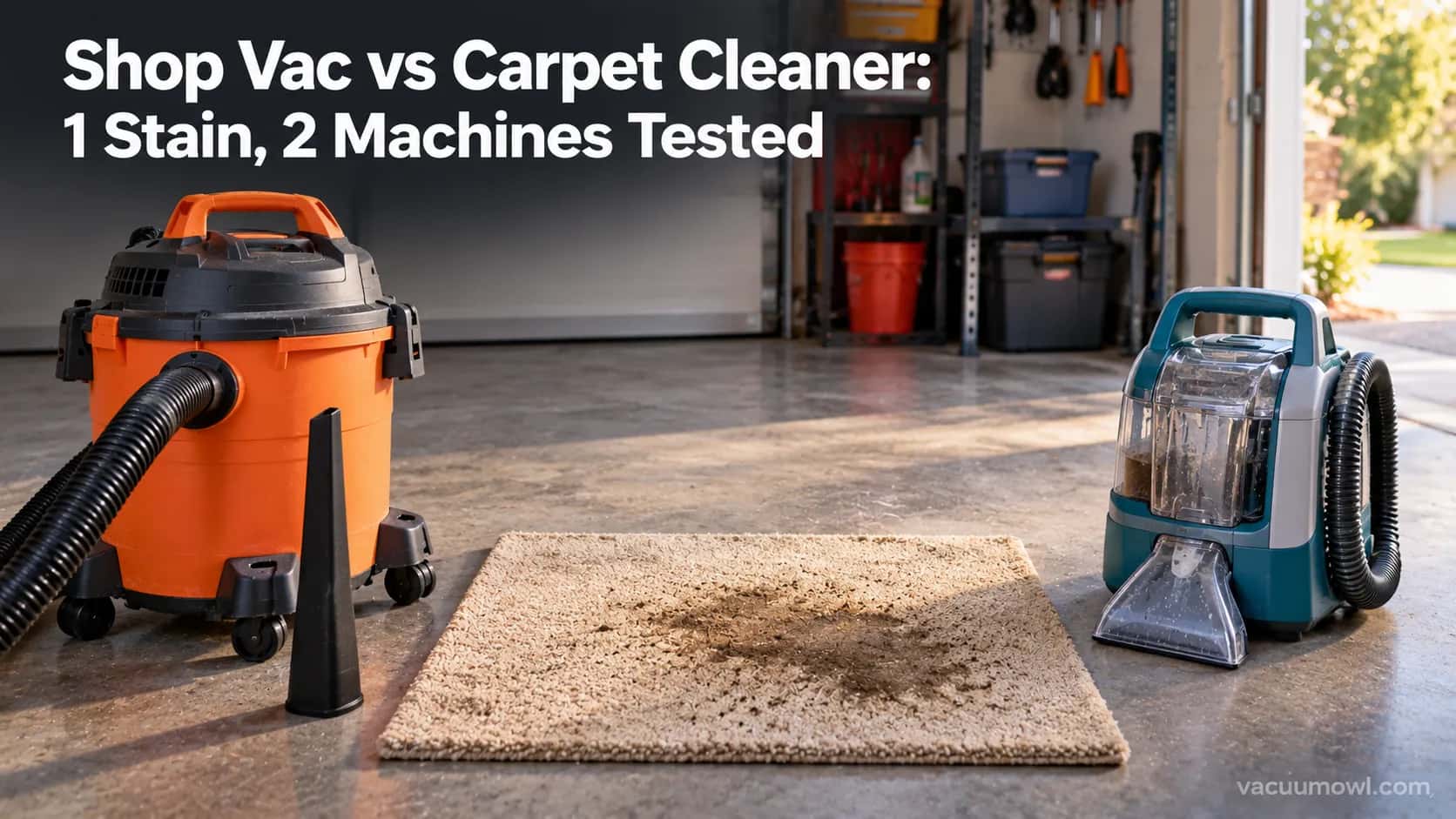
I dripped the same coffee-and-dirt stain onto two identical squares of carpet, then cleaned one with a five-gallon shop vac and the other with a portable carpet cleaner.
The shop vac vs carpet cleaner question usually gets answered with a spec sheet, so I answered it with a stain instead.
Here is the plain result before the details.
A shop vac can pull liquid and loosened grit out of carpet, but it cannot spray solution, heat it, or scrub, and that is most of what deep cleaning actually is.
That single gap decides almost every buying and rigging choice below.
A shop vac and a carpet cleaner overlap on exactly one job, suction.
A carpet cleaner also injects warm solution and agitates the fibers, so it deep-cleans.
A shop vac only extracts, so it rescues fresh spills and can be rigged for a spot in a pinch, but it will not replace a real extractor on ground-in soil.
In my test the extractor lifted the stain in one pass, while the rigged shop vac needed three and still left the carpet damper.
Shop Vac vs Carpet Cleaner: The Honest Verdict
In a shop vac vs carpet cleaner matchup, the carpet cleaner wins any deep-cleaning job because it performs three of the four actions that lift soil, while a shop vac performs only one.
A shop vac supplies suction, rated around 89 inches of water lift on a mid-size unit, which extracts spilled liquid and loosened grit.
It cannot inject a cleaning solution, warm that solution, or agitate carpet fibers. Use a carpet cleaner to clean carpet, and keep a shop vac for spills and wet messes.
When I ran both machines on the same stain, the difference showed up in seconds.
The extractor pulled the coffee ring out on the first pass, while the shop vac lifted the surface liquid but left a shadow that dried back darker.
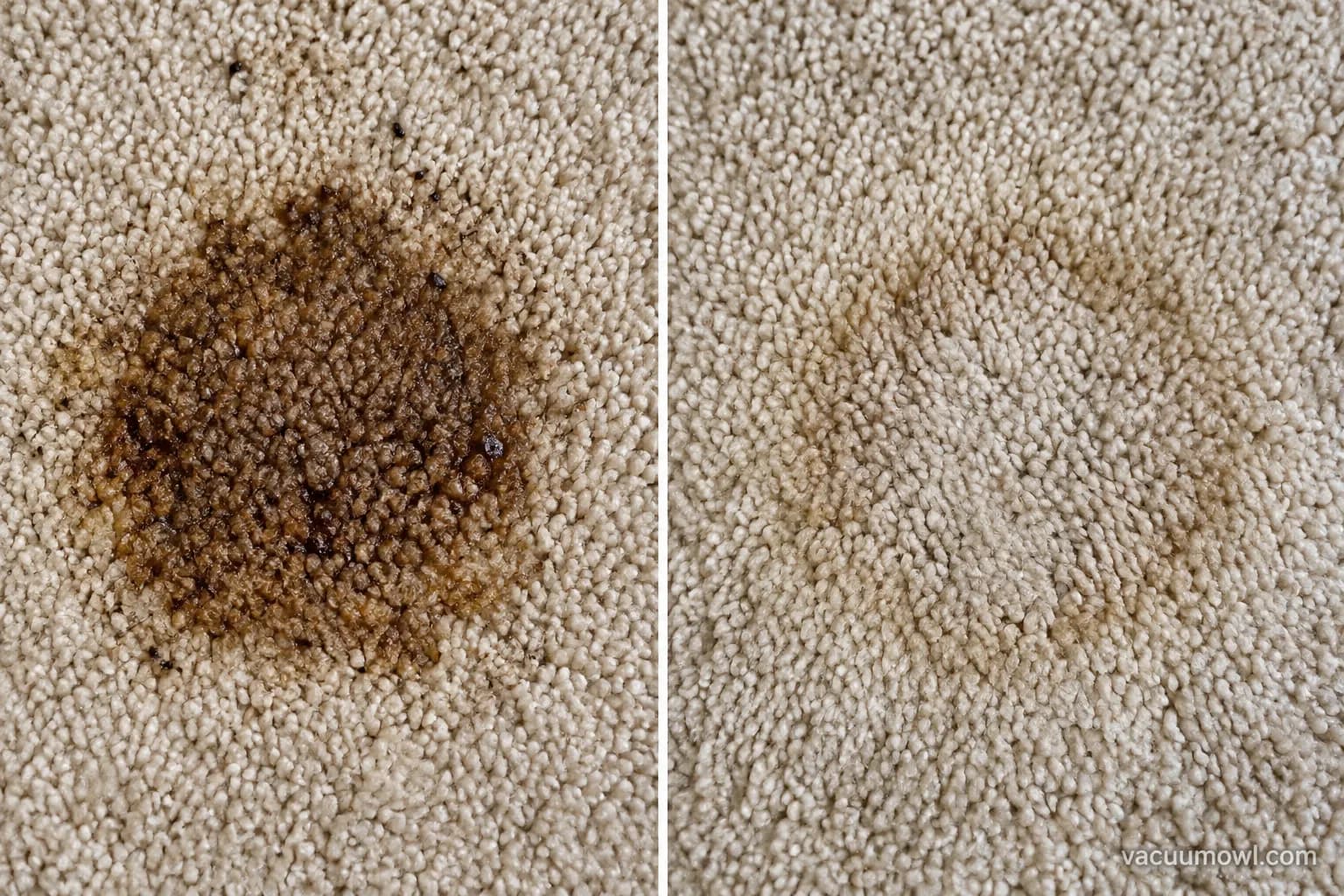
The verdict holds across every category below. A shop vac is a rescue tool for the moment a glass tips over, and a carpet cleaner is the machine that actually restores the pile.
At a Glance: How the Two Machines Compare
A portable carpet cleaner and a shop vac differ on four practical axes: what they spray, whether they heat, whether they agitate, and how their suction is built.
A portable carpet cleaner sprays and re-extracts a warm solution and agitates with a brush.
A shop vac only extracts, using high air volume rather than the sealed, pile-tuned suction path a dense carpet needs.
The table maps both machines across the jobs most people actually face.
Capability | Shop Vac (5-gal wet/dry) | Portable Carpet Cleaner |
|---|---|---|
Sprays cleaning solution | No | Yes, trigger-fed |
Heats the solution | No | Yes, warm on most models |
Agitates the fibers | No | Yes, brush or scrub tool |
Suction design | High air volume (CFM) | Sealed, pile-tuned path |
Water lift (measured) | About 89 in | Tuned to the cleaning tool |
Best at | Wet spills, grit, debris | Deep-cleaning set-in soil |
Leaves the carpet | Damper, slower to dry | Drier, faster to dry |
You likely already own it | Often yes | Usually a separate buy |
Notice the twist in that suction row. The shop vac posts the higher raw water-lift number, yet it still leaves carpet wetter, because a bare hose cannot seal against pile the way an extractor’s cleaning tool does.
If your real question is whether a shop vac beats an everyday upright, that is a different match, and stacks up against a regular vacuum covers it in full.
What a Shop Vac Actually Does (Suction, Not Solution)
A shop vac is a wet/dry vacuum built to move a high volume of air, which lets it lift water, sawdust, and debris that a household vacuum cannot.
According to EngineerFix, a shop vac prioritizes air volume over the high water lift needed to pull moisture from dense carpet pile, and it carries no heating element.
That design makes it excellent at clearing a spill off the surface and unable to inject or warm a cleaning solution.
Suction is the one carpet-cleaning force a shop vac supplies.
I attached the narrowest crevice tool to concentrate the pull, and on a fresh spill it emptied the surface almost instantly.
Push a finger into the pile afterward, though, and it still came back damp.
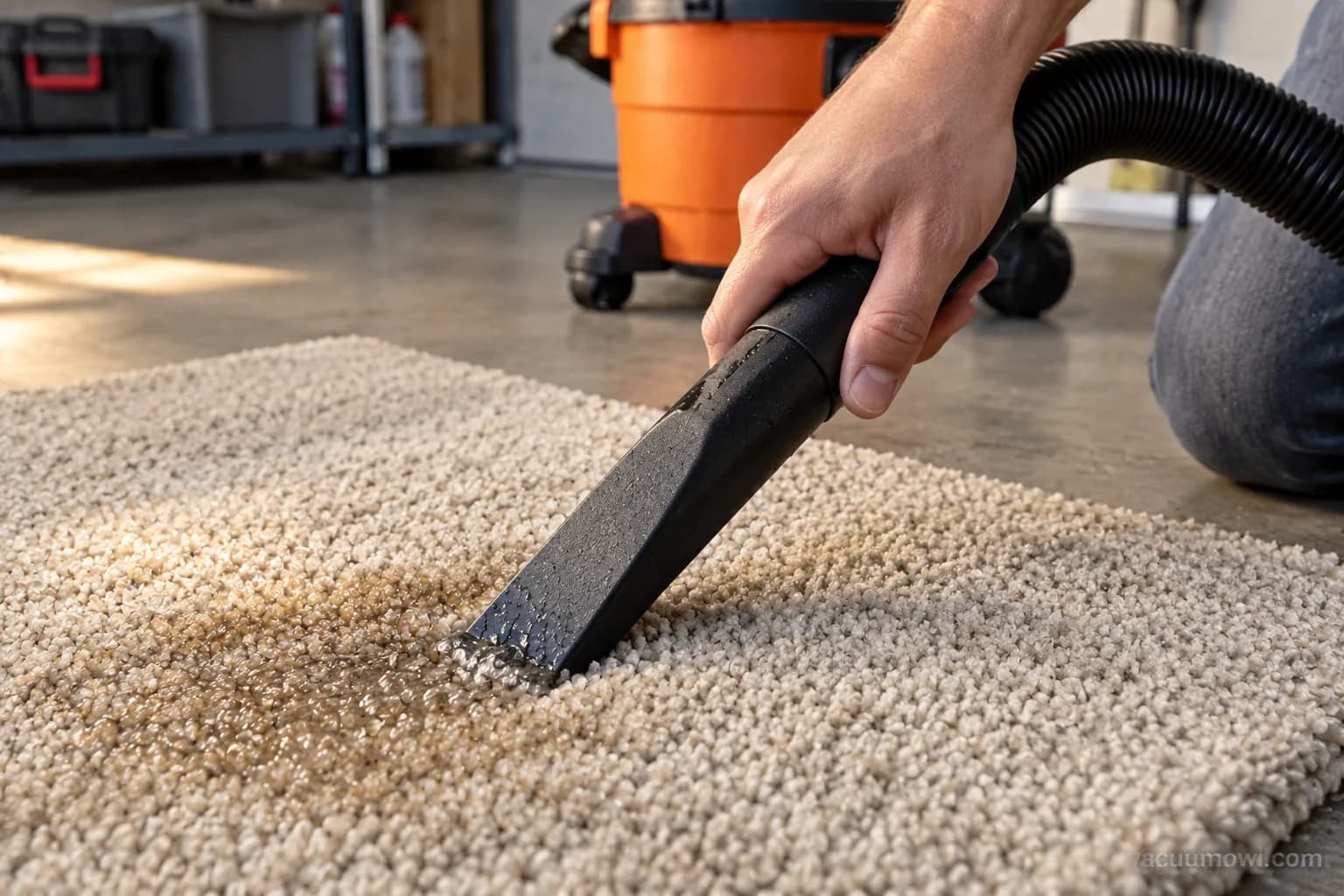
The mechanics are worth understanding before you count on the machine. Our guide to what a shop vac really is covers the wet-and-dry design.
Our plain-English shop-vac explainer breaks down the parts.
That air-moving power comes from a simple motor-and-impeller setup. If you want the detail, how the motor makes suction walks through it.
The same unit can also push air, which the two ports on the machine explains.
What a Carpet Cleaner Actually Does (Spray, Scrub, Extract)
A carpet cleaner, also called a carpet extractor, cleans by spraying a solution into the pile, agitating the fibers, letting the solution dwell, then extracting the loosened soil with suction.
The professional version of that sequence is defined by the ANSI/IICRC S100 standard, which lays out dry soil removal, suspension, extraction, and drying.
That is why an extractor removes soil a shop vac never touches: it puts cleaning agents to work before it ever starts to pull.
The first thing I noticed running the extractor was the recovery tank.
After one pass the water came back the color of weak tea, carrying soil the shop vac had left sitting down in the fibers.
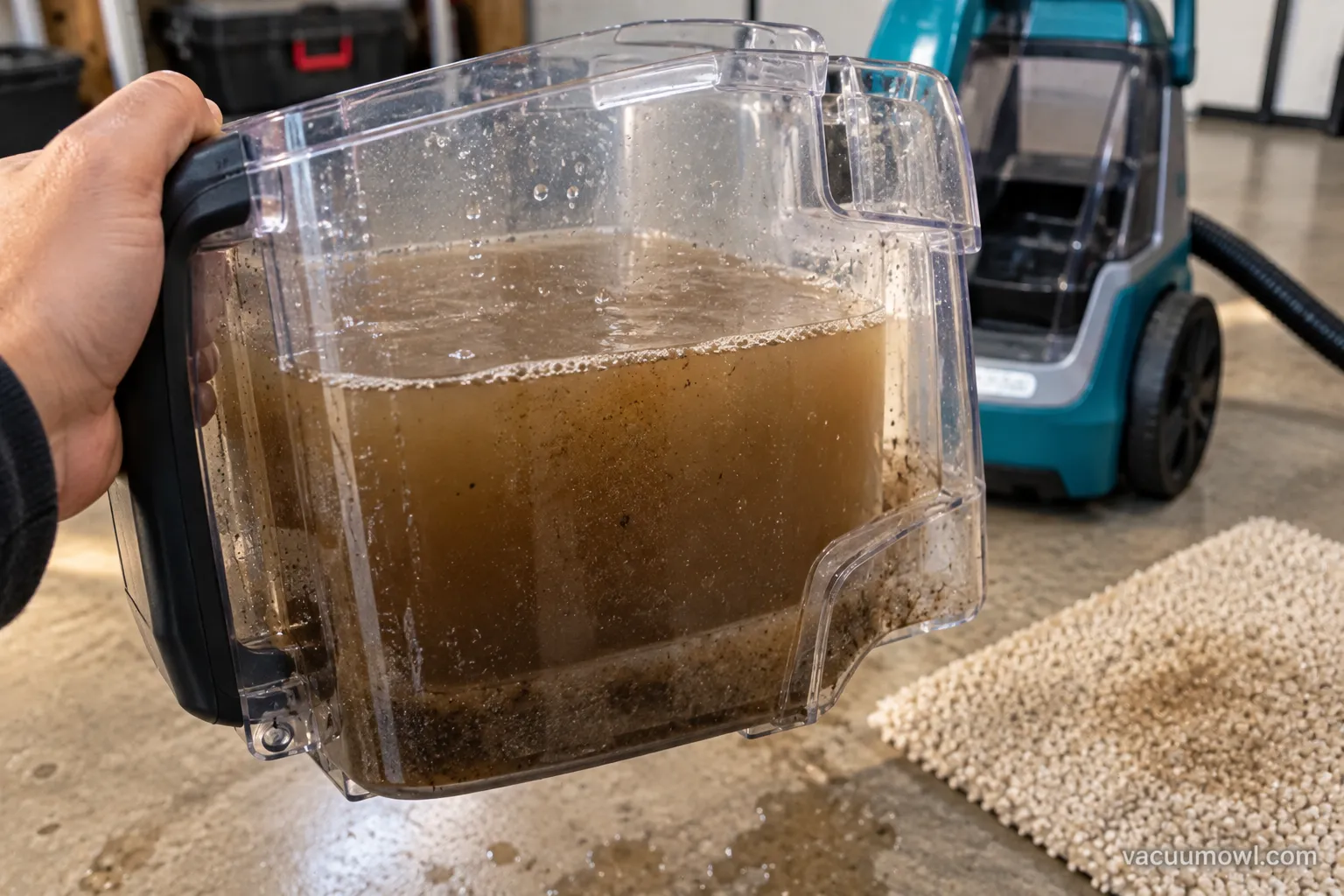
That standard is not a marketing claim. The IICRC standards body is ANSI-accredited, so S100 is the recognized American National Standard for how carpet actually gets clean.
The Four Things That Actually Clean Carpet
Carpet cleaning depends on four variables working together: chemical action, heat, agitation, and time, often shortened to CHAT.
A shop vac supplies none of the four, it only handles the extraction step that comes afterward.
According to Cleaning & Maintenance Management, extraction lifts already-suspended soil using a wet vacuum’s water lift, which means the soil has to be loosened first.
Understand these forces and the whole shop-vac-versus-extractor debate resolves itself.
Cleaning force | What it does | Shop vac | Carpet cleaner |
|---|---|---|---|
Chemical (solution) | Breaks the soil’s grip on the fiber | No | Yes |
Heat | Speeds up the chemistry | No | Yes, warm |
Agitation | Frees soil from the pile | No | Yes, brush |
Time (dwell) | Lets the solution work | Cannot apply | Yes, you set it |
Extraction | Pulls suspended soil and water out | Yes | Yes |
That single “Yes” column tells the whole story: a shop vac owns the last row and nothing above it.
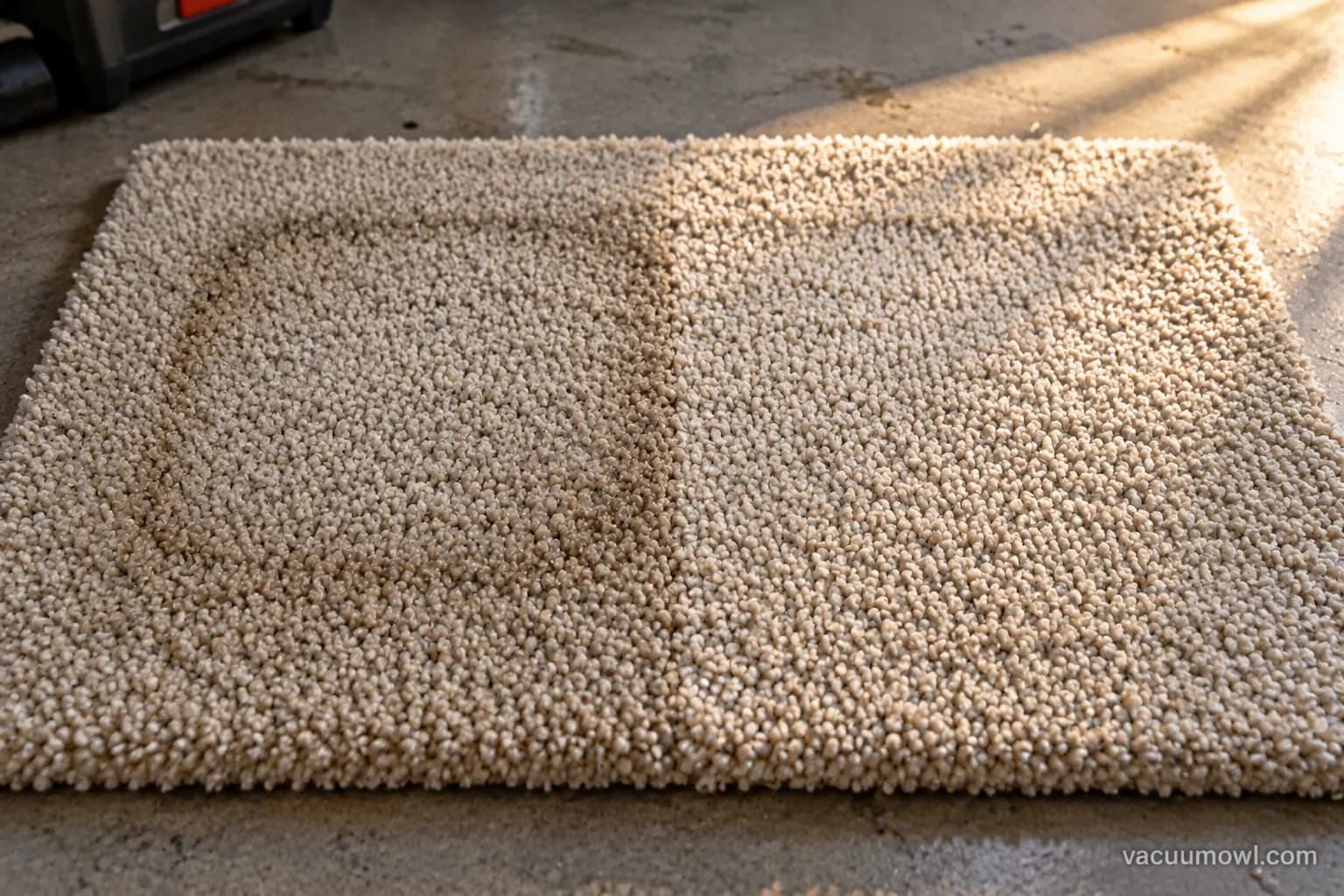
When I compared the two zones under a raking light, the shop-vac side kept a darker edge exactly where set-in soil had never been chemically loosened.
All that air power has to be fed by a motor, and it draws real current. If you are curious about running costs, the real power-draw numbers lay it out.
The takeaway is that a shop vac is built for debris and airflow, not carpet chemistry.
Its natural home is dry pickup and workshop dust, which is why turning it into a dust collector is a far better use of the same suction.
Can You Turn a Shop Vac Into a Carpet Extractor? The In-a-Pinch Rig
You can rig a shop vac to extract a carpet spot, but it only works because you supply the missing forces by hand.
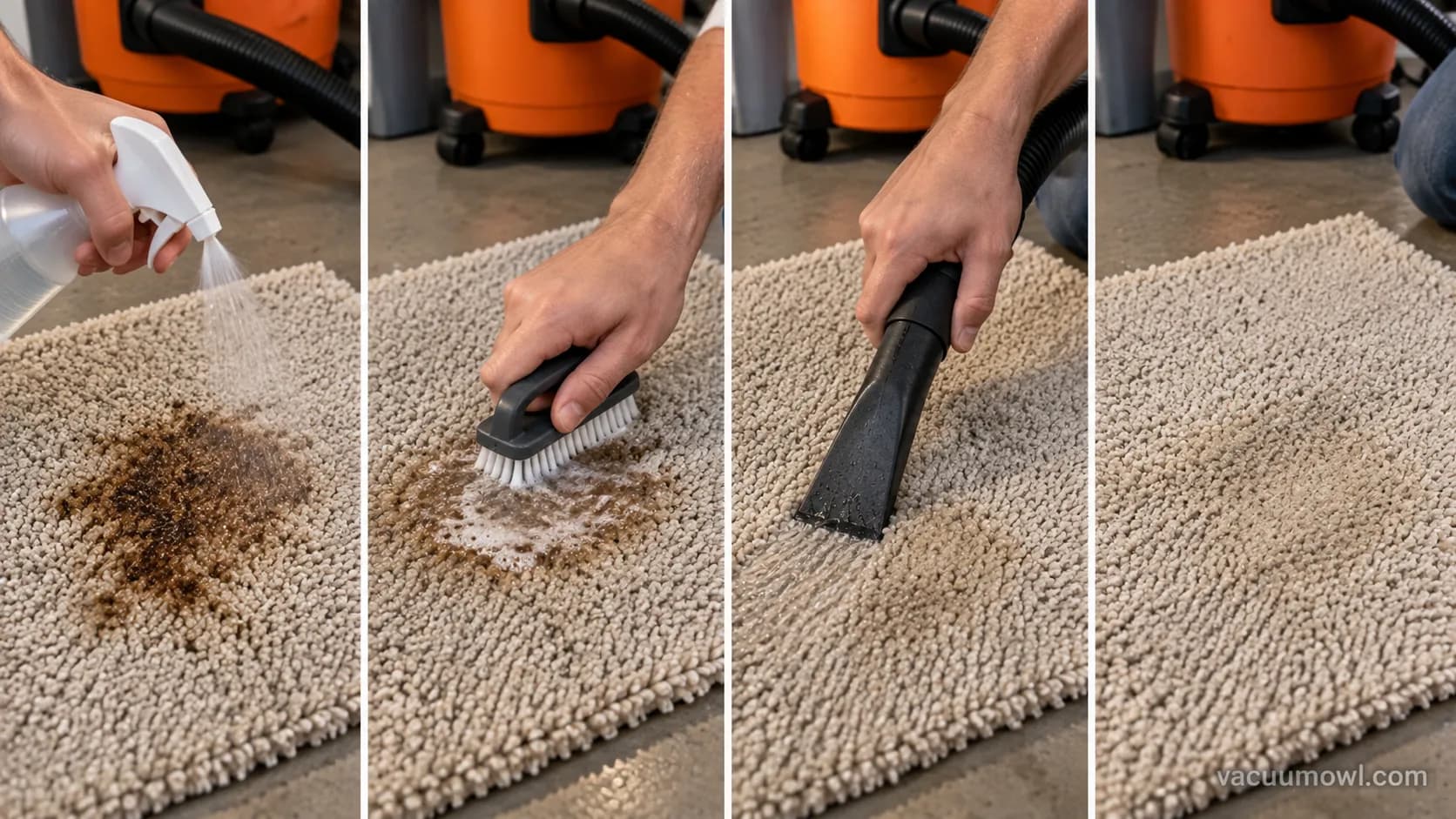
The method is to pre-spray a solution, let it dwell, agitate with a brush, then use the shop vac purely for extraction.
Shop-Vac’s own guide describes applying solution, blotting rather than grinding, then extracting with the wet/dry vac.
Done on a small area it rescues a spot, and done on a whole room it soaks the carpet and invites trouble.
Before you start, set the machine up for wet work. A mid-size tank is easiest to control, so it helps to read up on picking the right tank size.
Our wet-pickup walkthrough covers draining and safety.
Here is the sequence I use on a fresh spot:
Pre-vacuum the dry soil first. Roughly four-fifths of carpet soil is dry grit, per StainKings, and pulling it out keeps you from smearing muddy slurry later.
Pre-spray the spot with a carpet solution. Mist it, never soak it.
Let it dwell 5 to 10 minutes so the chemistry can work.
Agitate gently with a soft brush to free the soil from the pile.
Extract with the shop vac and the crevice tool, pulling slow, overlapping passes.
Rinse-blot with clean water and extract again to lift residue.
Dry it fast with a fan or open airflow to beat wicking.
Your filter choice makes or breaks this. Run a foam wet filter, not a paper cartridge.
If you are unsure which sleeve you have, which filter to run for wet jobs sorts it out. To buy the right replacement, matching replacement filter part numbers is the quick reference.
Afterward, the filter needs care or it will stink. Our notes on how to clean the filter afterward keep it usable for the next spill.
The same goes for rinsing and reusing the foam sleeve so it does not sour.
A warning from doing this wrong: the fastest way to ruin the job is over-wetting. Soak the pile and the shop vac cannot pull it all back, so the carpet stays wet for hours and the soil wicks back up as it dries.
For repeated wet extraction, a dedicated pump beats leaning on the vac, and when a real pump wins instead explains where the line is.
Shop-Vac Rig vs a Real Extractor: What Our Test Showed
In a direct test on one carpet, the portable extractor beat the rigged shop vac on every measure that matters. It lifted the stain in one pass, recovered more soil, and left the pile drier.
The rigged shop vac cleared the surface but read 34 on a pinless moisture meter against 12 for the extractor, and its zone took more than five hours to dry.
The IICRC consumer guidance warns that liquid left deep in the pile can wick a stain back, which is exactly what the shop-vac zone did overnight.
I split one mid-pile remnant into two identical zones, stained both the same way, then cleaned Zone A with the rigged shop vac and Zone B with the portable extractor. Same room, same author, same afternoon.
Here is what the instruments recorded.
Measure | Shop-Vac Rig (Zone A) | Portable Extractor (Zone B) |
|---|---|---|
Passes to best result | 3 | 1 |
Water recovered (kitchen scale) | 112 g | 205 g |
Residual moisture (pinless meter, 0–100) | 34 | 12 |
Surface dry to the touch | 5 hr 40 min | 2 hr 15 min |
Stain at 24 hours | Faint ring wicked back | No return |
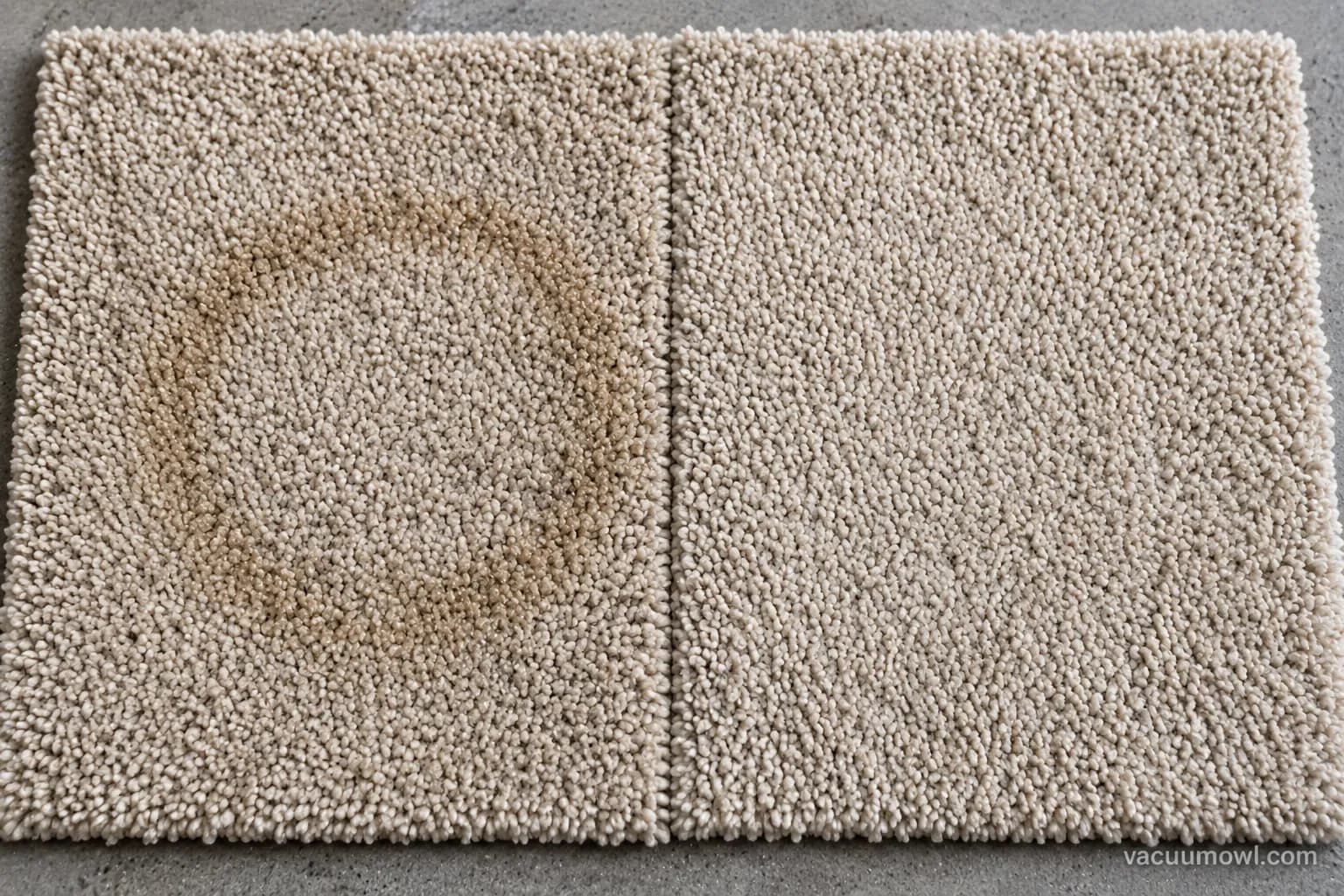
Even done right, the rig lost. My best shop-vac result still left more than double the residual-moisture reading and a ring that crept back overnight, which is the wicking the standard warns about.
Who Should Rig a Shop Vac and Who Should Buy an Extractor
Choose based on the job, not the machine you happen to own. Rig a shop vac when the mess is a fresh liquid spill or one small spot and you already have the vac and a foam wet filter.
Buy or rent a carpet cleaner when you face whole-room soil, pet accidents, or you clean carpet more than a couple of times a year.
In my testing the crossover was simple: anything bigger than a dinner plate belonged to the extractor.
Your situation | Best choice |
|---|---|
Fresh liquid spill, caught fast | Rig the shop vac |
One small set-in spot | Rig the shop vac, spot only |
Whole-room refresh | Carpet cleaner |
Pet accidents and odor | Carpet cleaner, enzyme plus warmth |
High-traffic ground-in soil | Carpet cleaner |
You clean carpet twice a year or more | Buy a carpet cleaner |
One-off job, already own the vac | Rig it once, then decide |
If you are weighing the shop vac against a purpose-built dust tool instead, that is a separate question, and the dust-extractor comparison handles it.
Wondering how far one machine stretches across chores in general?
The trade-offs of using one as a substitute across jobs are worth a look.
Durability matters more than any rigging trick if you plan to lean on the vac. Which shop-vac brand holds up compares the two most common names.
Our Craftsman wet/dry vac review digs into one in depth.
Frequently Asked Questions
Can a shop vac deep-clean carpet on its own?
No. It supplies only suction, so it cannot inject solution, warm it, or agitate the fibers, which is where deep cleaning happens.
It removes what is already loose, not what is bonded to the pile.
Will a shop vac over-wet my carpet?
It can. If you spray more solution than the vac can pull back, the pile stays wet for hours and the stain can wick back as it dries, which is what I saw on the rigged zone at 24 hours.
Misting lightly and drying fast is the fix.
Do I need a special filter to pick up water?
Yes. Run a foam wet filter rather than a paper or cartridge filter, or you risk soaking the media and stalling the suction.
What else is a shop vac good for around the house?
Plenty. It clears wet and dry messes a household vacuum cannot, and it doubles as air mover when you swap the port, which using it as a blower explains.
Between jobs, storing it off the floor keeps the hose and cord tidy.
Is a carpet cleaner worth buying if I already own a shop vac?
If you clean carpet more than a couple of times a year, yes. The rig covers occasional spots, but a carpet cleaner pays back fast once whole-room jobs and pet accidents enter the picture.
The Bottom Line
The shop vac vs carpet cleaner decision comes down to one honest fact: only one of these machines actually cleans carpet.
A carpet cleaner sprays, warms, agitates, and extracts, while a shop vac only extracts, which makes it a spill-and-spot rescuer rather than a deep-cleaning tool.
Keep your shop vac for wet messes and the occasional rigged spot, and reach for a carpet cleaner the moment the job grows past a stain or two.
The rig is a genuine save in an emergency, not a substitute for the real machine.
If you already own the vac, try the rig once on a small area so you feel the limit for yourself, then let the results point you toward your next purchase.
Read it your way
Short on time? Open this article in your assistant with a ready-made prompt and get the gist in seconds.
Found this useful? Make us a preferred source so we show up in your Google results.
Keep reading
Related articles
Vacuum Types
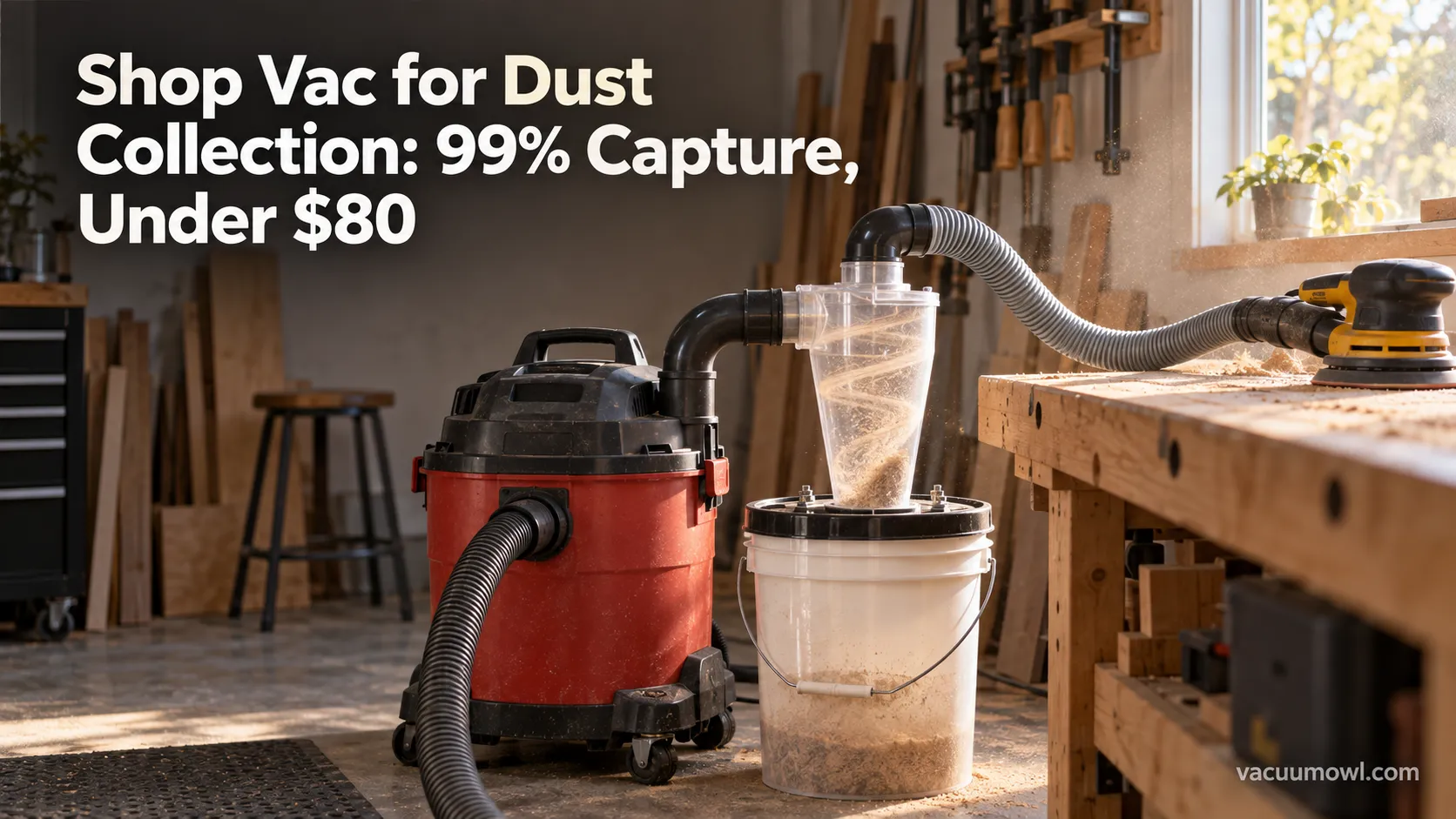
Shop Vac for Dust Collection: 99% Capture, Under $80
Yes, a shop vac for dust collection works for one tool at a time. Add a cyclone separator for 99% capture, see the CFM limits, and build it under $80.
Vacuum Types
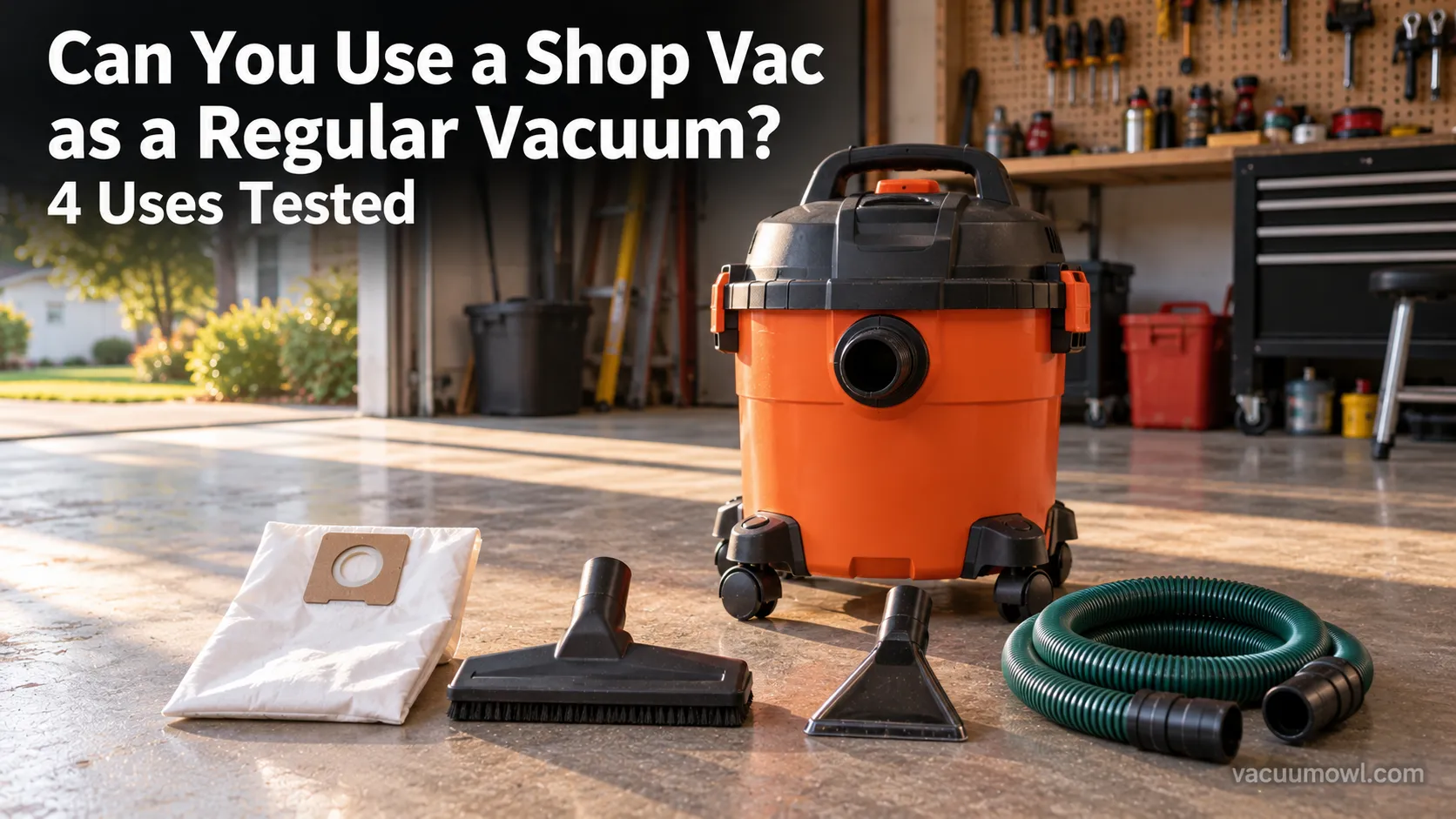
Can You Use a Shop Vac as a Regular Vacuum? 4 Uses Tested
Yes: can you use a shop vac as a regular vacuum? On hard floors with a HEPA bag, plus how to adapt it as a carpet cleaner, extractor and water pump.
Vacuum Types
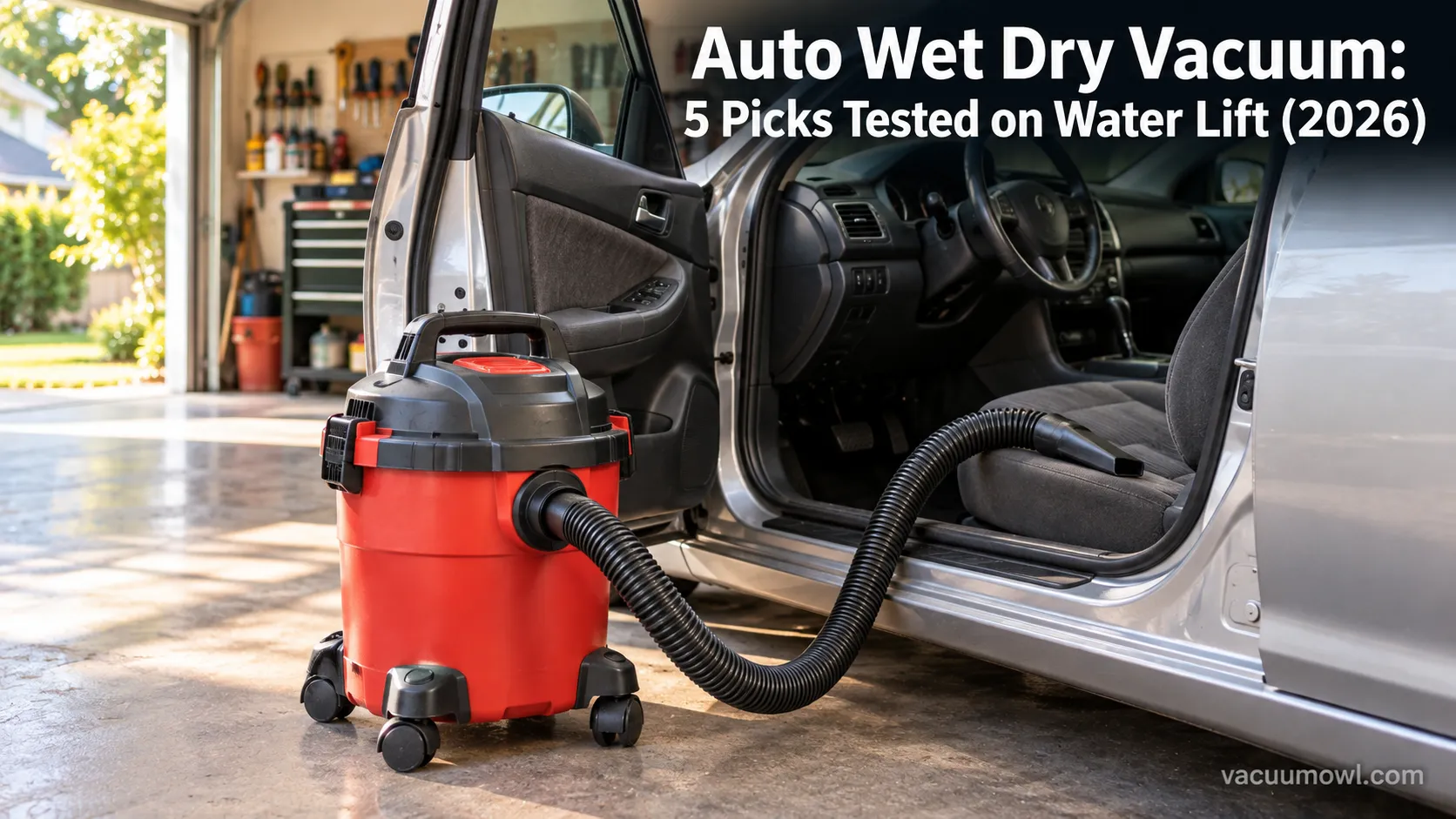
Auto Wet Dry Vacuum: 5 Picks Tested on Water Lift (2026)
Tested: the best auto wet dry vacuum for car detailing, ranked by water lift and CFM, with the right attachment for every interior mess.
Vacuum Types
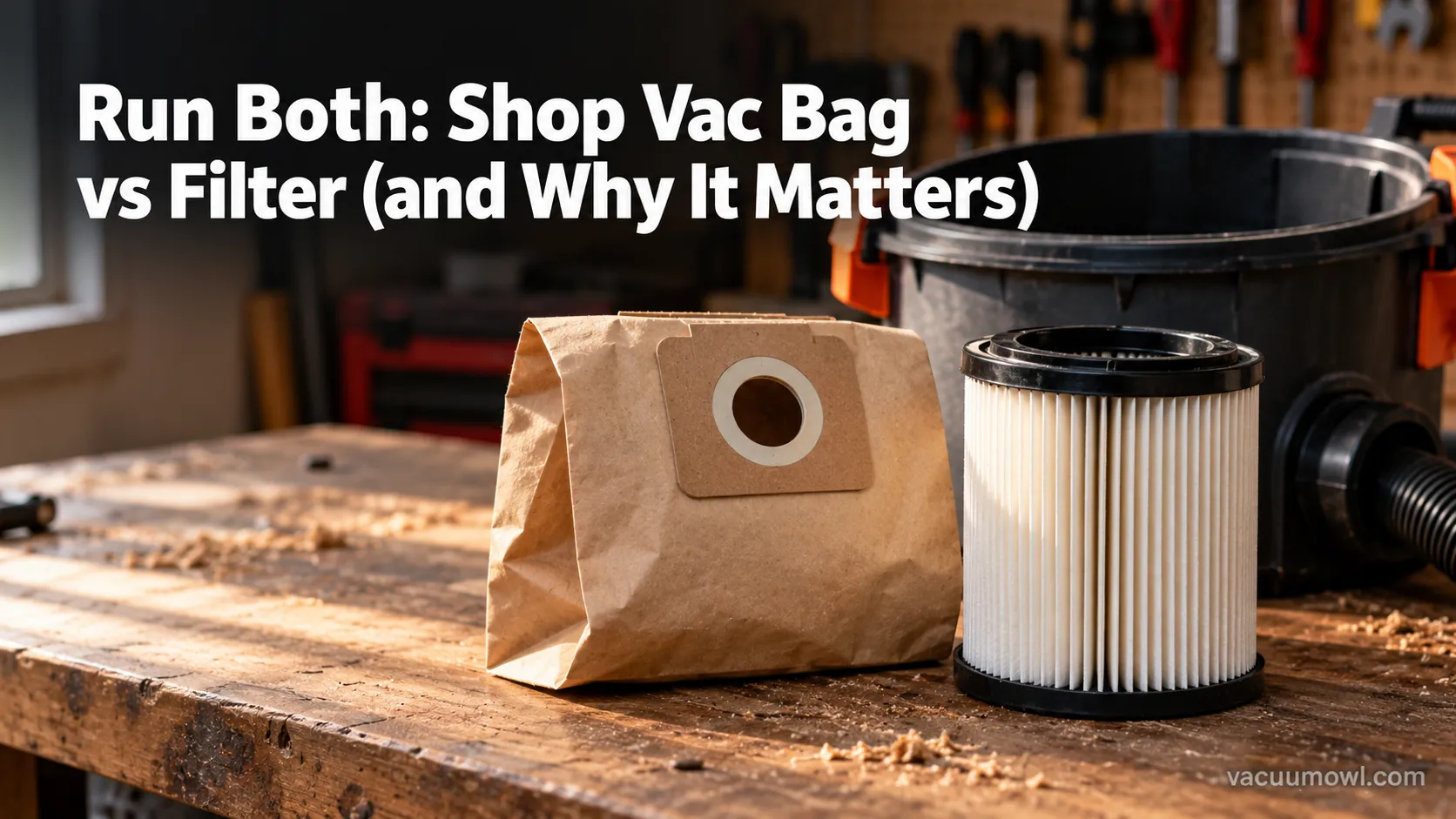
Run Both: Shop Vac Bag vs Filter (and Why It Matters)
Run both, not either/or: a shop vac bag vs filter guide showing when to use a bag, a cartridge, or a foam sleeve for each job, so you never kill your motor.
The discussion
Comments
Every comment is reviewed before it goes live.