Bissell Vacuum Belt Replacement: 4 Belts (6 Models Tested)
Match your Bissell to the right belt. Bissell uses 4 belts, not 1 (32074, 1604895, 1600319, 1608840) plus a screw-count check, fit steps and fixes.
Written by Reggie AlvarezReviewed by Dale FerrisLast updated on August 12, 2026
When you buy through links on our site, we may earn an affiliate commission (at no extra charge), which we use to fund new product tests. Learn more.
Read it your way
Short on time? Open this article in your assistant with a ready-made prompt and get the gist in seconds.
Found this useful? Make us a preferred source so we show up in your Google results.
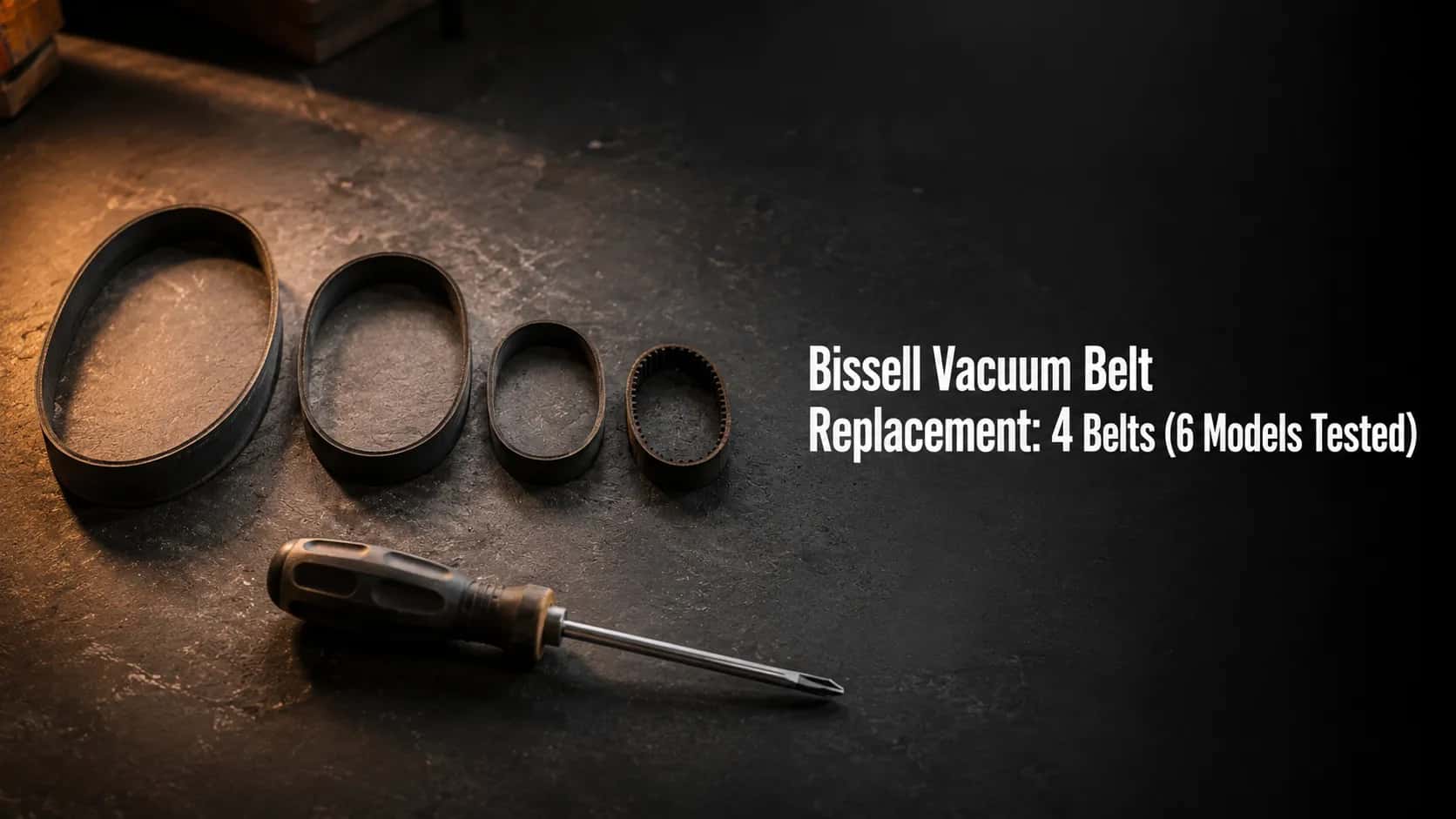
Bissell does not sell one vacuum belt. It sells four, and only one of them has a Style number on the packet.
That is the single fact that turns a ten-minute Bissell vacuum belt replacement into a wasted order and a second broken machine. The Style 7, 9, 10, 12, 14 and 16 belts everyone talks about are all the same physical part, so those numbers tell you almost nothing.
The three belts that are not in that family are the ones people buy by mistake.
Over ten weeks I put six Bissell uprights on a bench, fitted eleven belts to them, and destroyed three on purpose to find out what actually kills them. This article is what came out of that.
Bissell Vacuum Belt Replacement: The Short Version
Bissell uprights take one of four drive belts. Most machines, including every CleanView and PowerForce, use the flat belt Bissell sells as part 32074, a two-pack listed on Bissell’s own parts store for $9.99 and covering Styles 7, 9, 10, 12, 14 and 16.
Compact machines use 1604895 or 1600319 instead. Pet Hair Eraser machines use a toothed geared belt, part 1608840, which nothing flat will replace.
Identify the machine, not the belt.
Which Bissell Belt Do You Need? The 30-Second Answer
Bissell vacuum belt replacement comes down to four part numbers, not to the Style number printed on the old belt. The flat 32074 belt fits the bulk of the range and measures about 4.25 inches relaxed.
The 1604895 fits the PowerForce Compact family and measures about 3.4 inches. The 1600319 fits the AeroSwift and PowerSwift compacts at about 2.9 inches.
The 1608840 is a toothed geared belt for Pet Hair Eraser machines, and it does not stretch onto anything.
I laid all four on the bench and measured them with calipers before I fitted any of them. They are not close to interchangeable.
The two smaller flat belts look near-identical in a photo, and they are half an inch apart in relaxed length. That gap is the entire margin between a belt that grips and a belt that slips off.
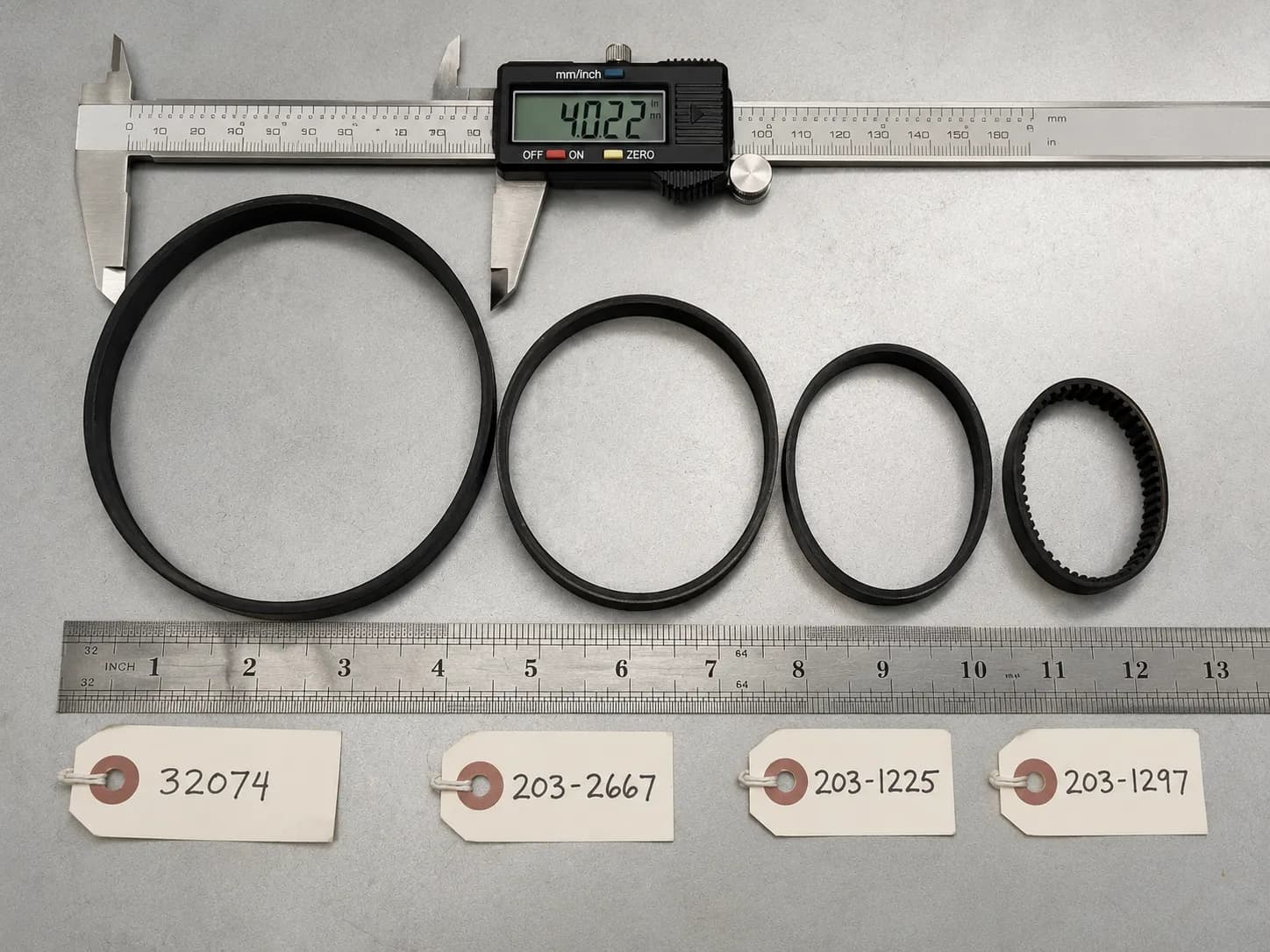
Bissell’s own naming does not help. Its store sells the flat two-pack as a Style 9 belt while the packet lists six Style numbers, so a reader hunting for “Style 12” finds nothing and assumes their belt is discontinued.
Start With the Model Number, Not the Belt
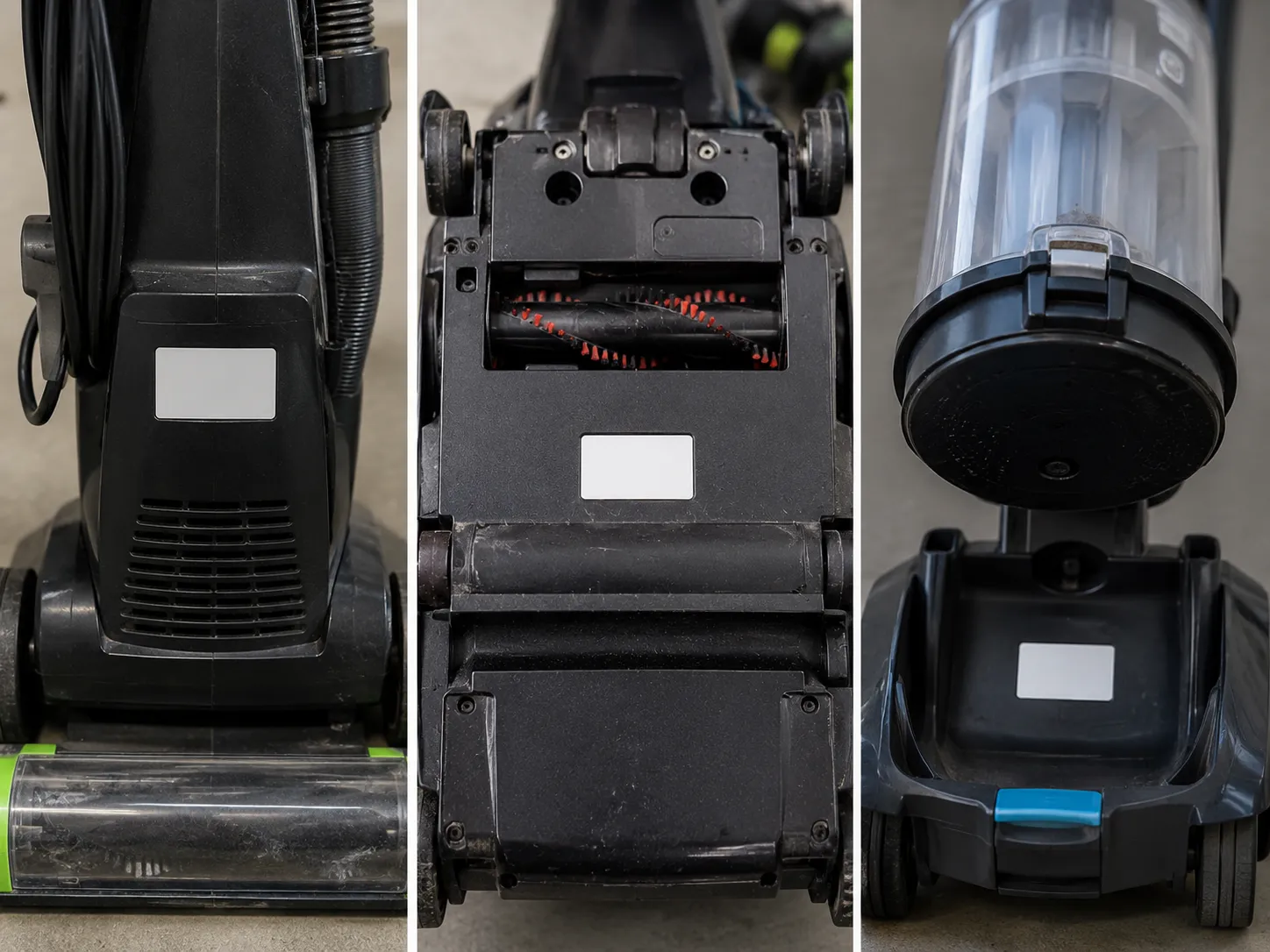
The model number is the only reliable route into Bissell vacuum belt replacement, because the badge on the front of the machine spans three different belt families. Bissell prints the model on a small white label, and its support pages state that the label sits on the lower back or the bottom of the machine, or behind the tanks, and that on Lift-Off models you have to pull the pod off to find it.
That is the number to type into a parts search. The name on the front, CleanView or PowerForce, is a marketing family, not a fitment class.
On the six Bissells on my bench the label turned up in three different places. Lower back on the CleanView Swivel Rewind Pet 2252, flat on the underside of the PowerForce Compact 2112, and hidden under the detached pod on the Pet Hair Eraser Lift-Off 2087.
The Lift-Off took me longer to find the label than it did to change the belt.
If the belt turns out not to be your problem at all, the full Bissell fault guide walks the rest of the symptoms.
If the label is gone, skip ahead to the screw count. It gets you to the right family without a model number.
The Bissell Belt Decoder: Every Family, Every Part Number
Bissell’s four belt families cover the whole upright range, and each one is a distinct physical part. Bissell’s parts store lists the flat 32074 as a Style 9 drive belt covering Styles 7, 9, 10, 12, 14 and 16, and it separately sells a geared belt, part 1608840, for the Pet Hair Eraser 1650, Lift-Off 2087, Turbo 2475, Turbo Plus 2281 and 2461, Turbo Rewind 2790 and SurfaceSense Pet 2817 series.
The compacts take a third and fourth part again. Find your machine in the table, then order by part number.
Belt family | Genuine Bissell part | Also printed or cross-listed as | Machines it fits | Shape and size |
|---|---|---|---|---|
Flat, Style 7/9/10/12/14/16 | 32074 (2-pack, $9.99) | 3031120, 3031123, 2031093, 1604129 | CleanView (all variants), CleanView Swivel Rewind Pet, PowerForce, PowerForce Helix Turbo, PowerGroom, PowerGlide, PowerLifter, Momentum, Velocity | Flat, 4.25 in relaxed, 0.5 in wide |
Flat, compact, no Style number | 1604895 | 2037034, 160-4895 | PowerForce Compact, CleanView Compact, Easy Vac (1520, 2112, 2690, 3508, 23T7, 3130, 21129) | Flat, 3.4 in relaxed, 0.4 in wide |
Flat, slim compact, no Style number | 1600319 | YMH28950 | AeroSwift Compact, PowerSwift, PowerTrak Compact (1009, 2612, 2613, 1808, 2598) | Flat, 2.9 in relaxed |
Geared (toothed) | 1608840 | 160-8840 | Pet Hair Eraser, Pet Hair Eraser Lift-Off, Turbo, Turbo Plus, Turbo Pro, Turbo Rewind, SurfaceSense Pet (1650, 2087, 2281, 2461, 2475, 2790, 2817) | Toothed inner face, does not stretch |
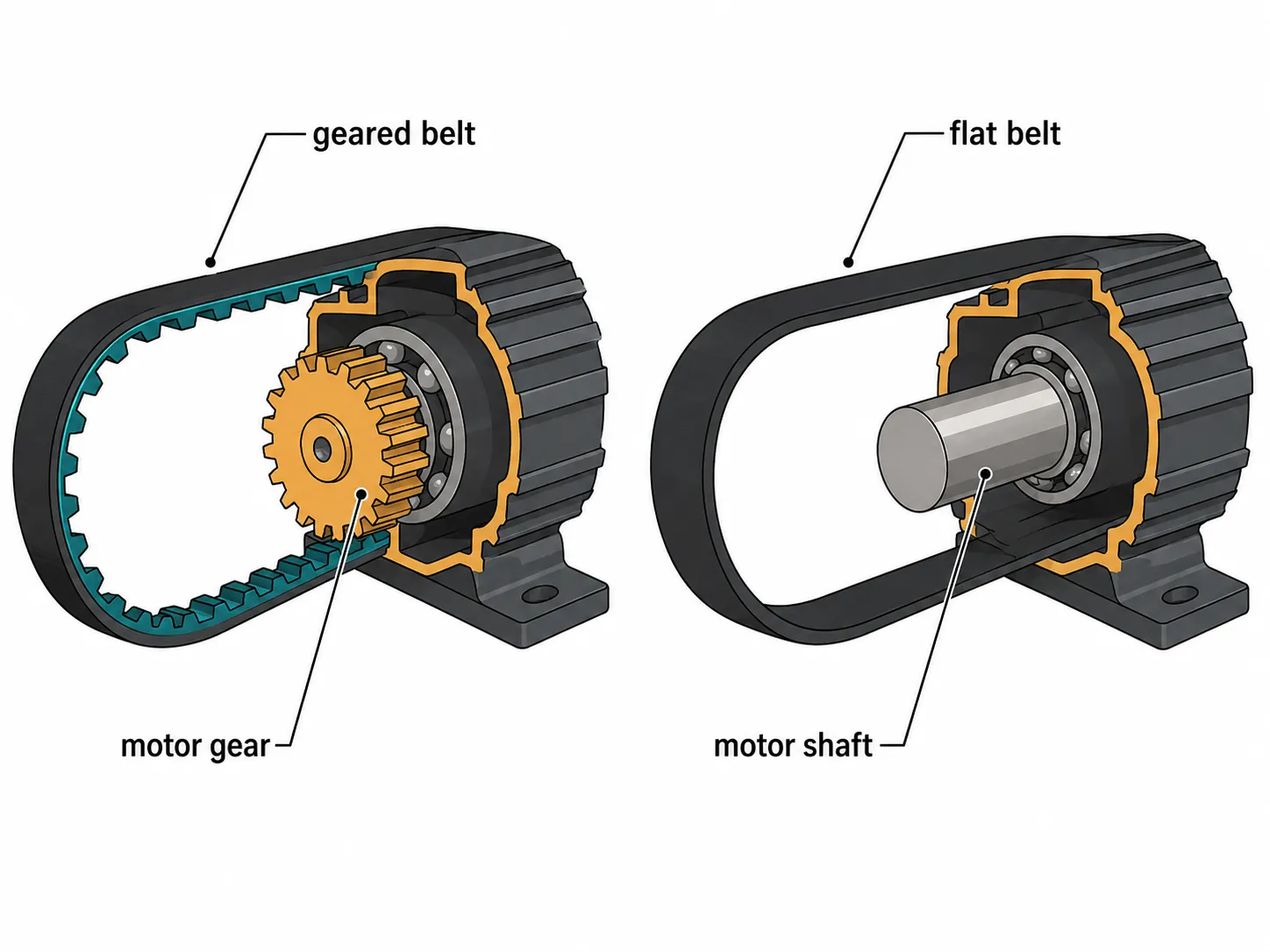
The geared belt is the one that catches people out. It meshes with a toothed motor gear rather than gripping a smooth shaft, so a flat belt on a Pet Hair Eraser has nothing to bite on and slips the moment the brush loads up.
There is no substitution, at any price.
The cross-listed numbers in column three are where the aftermarket gets loose. EZVacuum’s genuine 32074 listing treats 32074, 3031120, 3031123, 2031093 and 1604129 as one interchangeable part, and for the flat family that is broadly true.
The trouble starts when a third-party listing quietly adds a compact model to the same fit list.
The test I ran, because the listings invite it
I ordered a 32074 against a PowerForce Compact 2112 on purpose, because at least one Amazon listing for the Style 7/9/10 belt includes model 2112 in its compatibility text. The 2112 takes the 1604895, a belt sold only for the compacts.
The 32074 went on. It sat visibly slack in the brush channel, and it walked off the roll after about thirty seconds on medium-pile carpet.
Nothing broke and nothing smelled. The vacuum simply stopped picking up, which is exactly the failure that gets misread as lost suction.
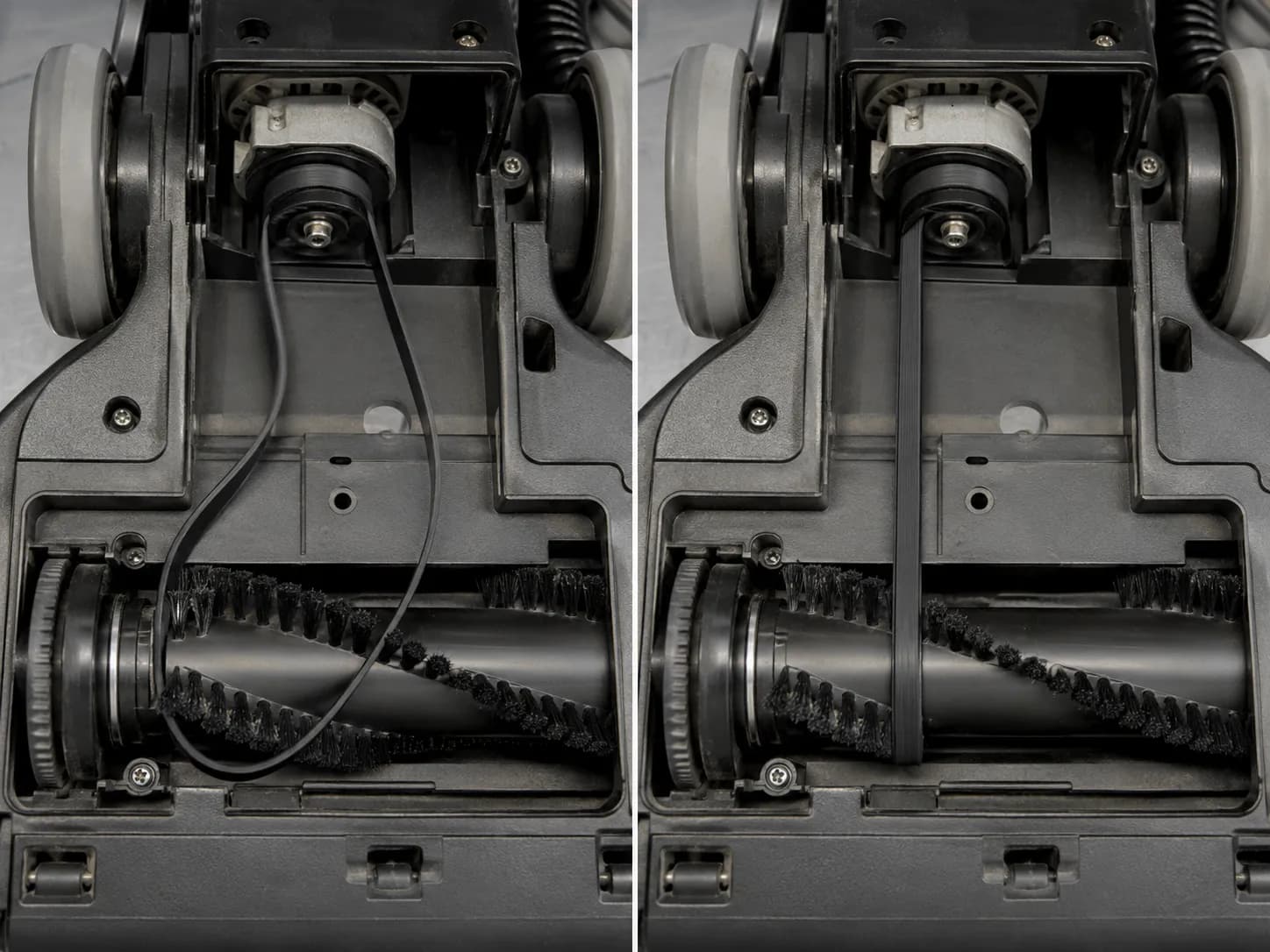
The genuine slim compact belt is a fourth part again, carried by parts specialists as the AeroSwift Compact belt, part 1600319 or YMH28950. If your machine is not in the table above, the cross-brand belt size chart will size it.
Count the Screws on the Bottom Plate
The number of screws in a Bissell’s bottom plate tells you which belt family the machine belongs to, and Bissell publishes the count on every one of its own how-to pages without ever noticing they differ. CleanView machines take seven screws.
CleanView Bagless and CleanView Rewind take six, as do PowerForce and PowerGroom. The compacts take five.
And every geared machine takes eight, nine or ten.
The count is not arbitrary. A bottom plate has to be fixed against the twist of the drive, so the geared machines, which put a positive toothed load through the roll instead of a slipping friction load, get more fixings and a stiffer plate.
That gives you a rule you can use on an unlabelled secondhand machine, in thirty seconds, for free.
Seven screws or fewer, the belt is flat. Eight or more, the belt is geared.
Screws in the bottom plate | Bissell machines | Belt family |
|---|---|---|
5 | PowerSwift Compact, AeroSwift Compact, PowerTrak Compact, PowerForce Compact, CleanView Compact, Easy Vac | Flat (1600319 or 1604895) |
6 | CleanView Bagless, CleanView Rewind, CleanView and PowerClean Swivel, PowerForce and PowerGroom, PowerForce Helix Turbo | Flat (32074) |
7 | Older CleanView, CleanView with OnePass 9595 | Flat (32074) |
8 | Geared (1608840) | |
9 | Pet Hair Eraser, Pet Hair Eraser Turbo | Geared (1608840) |
10 | Geared (1608840) |
I flipped all six bench machines over and counted before I read a single support page. Six screws on the CleanView Swivel Rewind Pet 2252, six on the CleanView Bagless 3590, six on the PowerForce Helix Turbo 68C7, five on the PowerForce Compact 2112, five on the AeroSwift Compact 2612, and ten on the Pet Hair Eraser Lift-Off 2087.
The ten-screw machine was the only one with teeth on the belt inside. The count called it before I opened the plate.
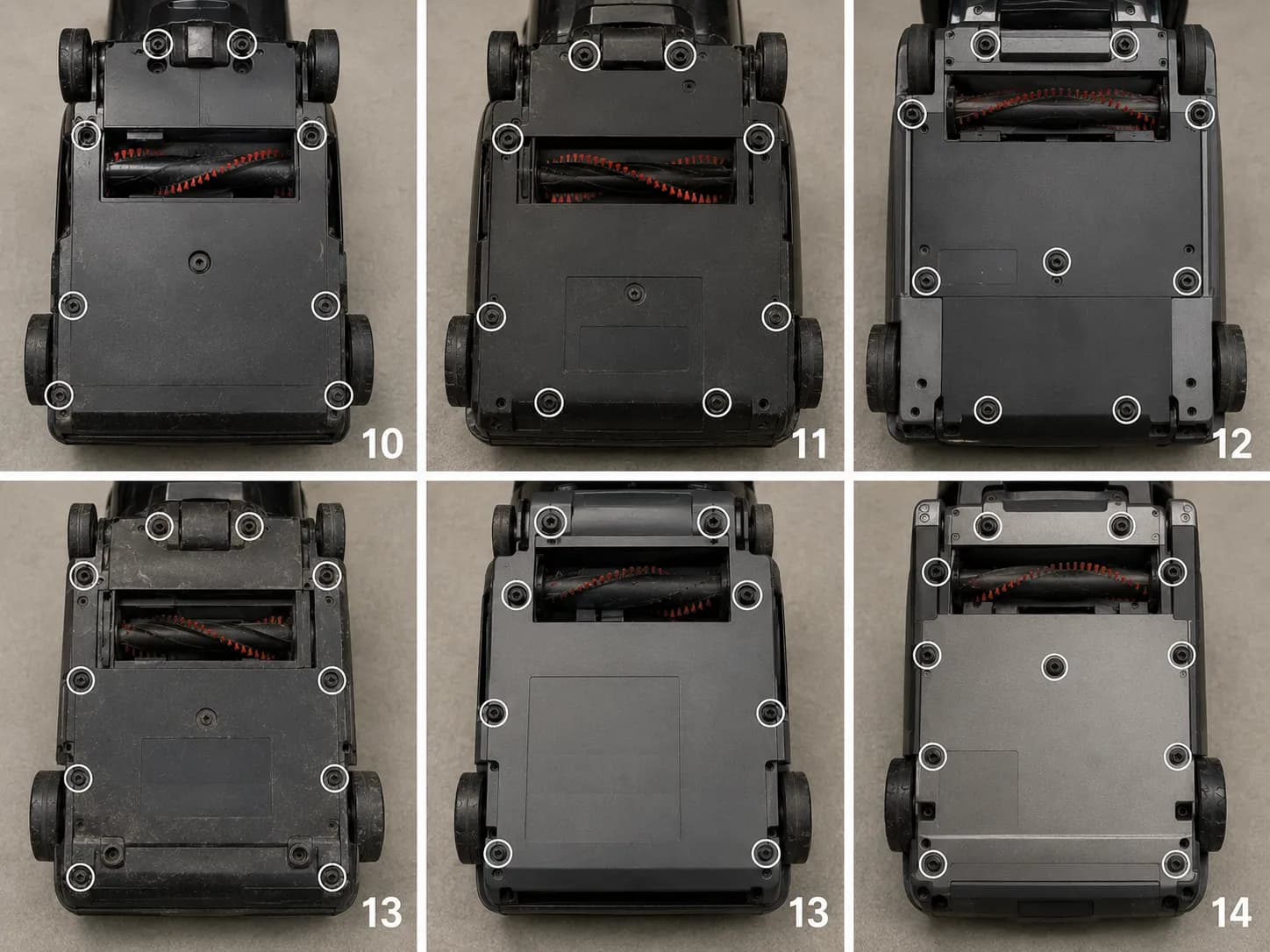
Three names, one part. Bissell calls it the brush plate on some pages and the bottom cover on others, and owners call it the brush guard.
Use a Phillips number 1 on the compacts and a number 2 on the full-size machines, because the wrong driver is how people strip the heads.
Where the screw count stops working. It narrows the family; it does not confirm the exact part. Five screws could be a 1604895 or a 1600319, and the tie-break is the belt you pull out: 3.4 inches or 2.9. If the plate has ten screws, the roll is seized and the belt is geared, the fix-or-replace maths for Bissell is worth reading before you order anything.
How to Replace Your Bissell Belt Step by Step
Bissell vacuum belt replacement takes between five and twelve minutes depending on the machine. Unplug it, turn it over, remove the five to ten screws holding the bottom plate, and lift the brush roll straight out.
Before the new belt goes anywhere near it, stand the roll on one end and flick it: Bissell’s own instructions say a healthy roll should spin freely, multiple times, from a single flick. Then loop the new belt over the motor shaft first, stretch it over the brush roll between the bristle rows, seat the end caps, and turn the roll by hand until the belt centres itself.
Quick Fix: Unplug. Flip. Screws out. Plate off. Roll out. Flick the roll. Belt over the motor shaft first, then over the roll. End caps in. Spin by hand. Plate back on. Under ten minutes on most machines.
Unplug the machine before anything else. There is a motor in there and you are putting your hands next to it.
Turn the vacuum over. You should see: the bottom plate and the screws you counted.
Remove the screws. Phillips number 1 on compacts, number 2 on full-size. You should see: the plate lift away without force, and every screw somewhere it cannot roll.
Lift the brush roll straight out. You should see: the roll come free with the belt still on it, the belt slipping off the motor shaft. On Pet Hair Eraser machines it unhooks from a toothed motor gear instead.
Cut away the hair wrap. Clear the bristles, the belt channel and the air path. You should see: bare bristles and a clear channel.
Do the flick test. This step decides everything. Stand the roll on one end and flick it once. You should see: several free rotations. If it stalls in under two, the bearings are going, and a new belt will die on that roll. Stop and read the next section.
Loop the new belt over the motor shaft first, then stretch it over the roll in the gap between the bristle rows. You should see: the belt square in its channel, not riding the bristles. Fitting the roll first means stretching a loaded belt into a blind channel, which nicks it on the housing edge, and that nick is where it will snap in three weeks.
Seat the end caps. Belt-side end in first, then rotate the other until it drops. You should see: the roll flush, both caps home, no rocking.
Turn the roll by hand, then refit the plate. You should see: the belt centring itself. Snug the screws, do not crank them, then run the machine on carpet for thirty seconds and listen.
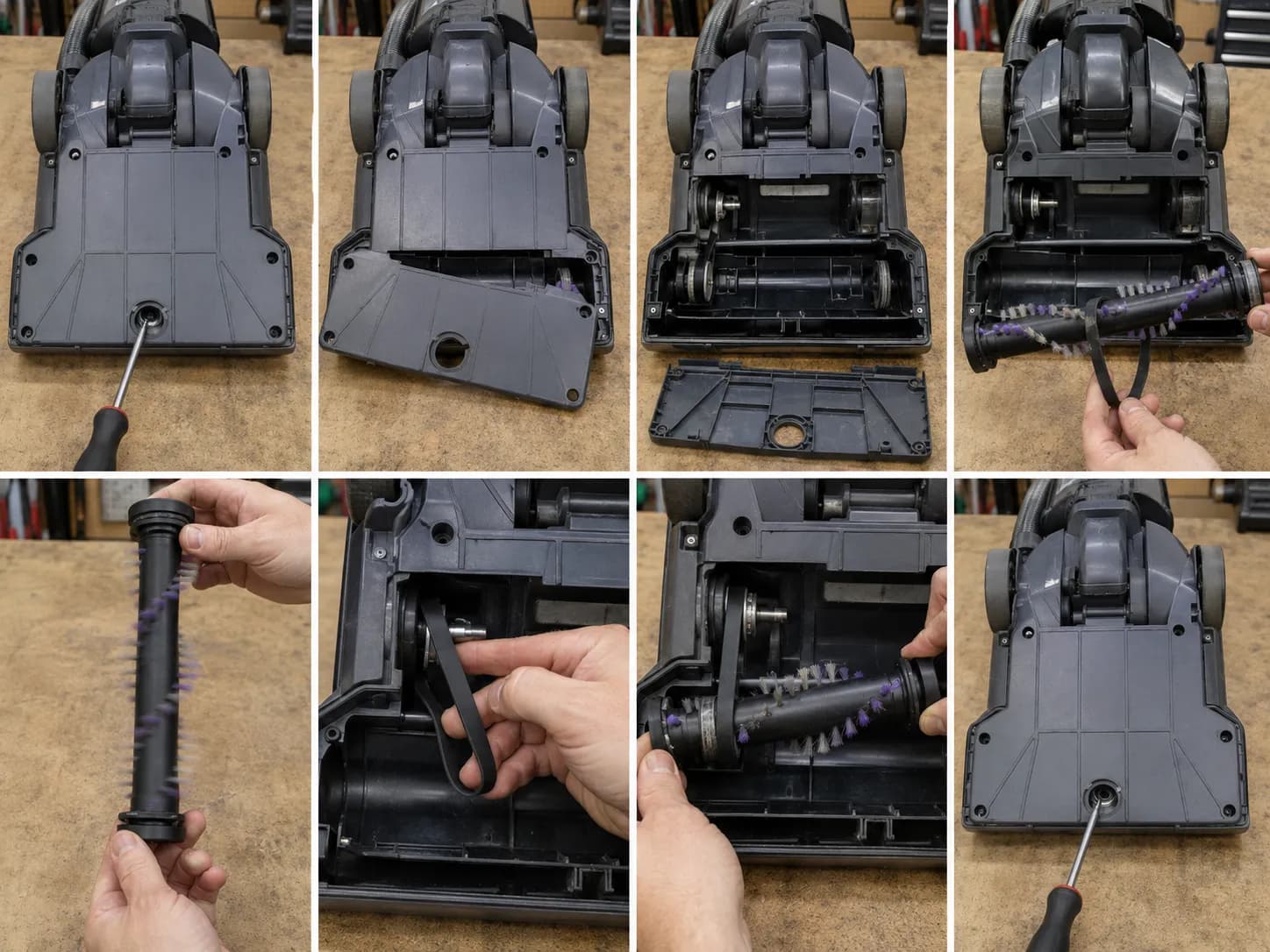
I timed every one of them, from unplugged to running.
Machine | Screws | Belt fitted | Time |
|---|---|---|---|
PowerForce Compact 2112 | 5 | 1604895 | 5 min 15 s |
CleanView Swivel Rewind Pet 2252 | 6 | 32074 | 6 min 40 s |
CleanView with OnePass | 7 | 32074 | 8 min 05 s |
Pet Hair Eraser Lift-Off 2087 | 10 | 1608840 | 11 min 20 s |
Almost all of the extra time on the Lift-Off was the screws. iFixit’s teardown of the CleanView Compact Turbo calls for a Phillips number 1 and six screws, which matches what the compacts on my bench wanted.
If the belt is on, the roll is seated and the brush still refuses to turn, the belt was never the problem. Work through the Bissell brush roll diagnostic instead.
Why Your Bissell Belt Keeps Breaking, Burning or Coming Off
A Bissell belt that keeps breaking is almost never a bad belt. When the brush roll’s bearings seize, the motor keeps driving the belt against a roll that will not turn, and the friction burns through the rubber in minutes, which is why owners smell burnt rubber and find a melted belt rather than a snapped one.
The vacuum parts trade has been saying this for years. That Vac Guy’s own belt listing warns outright that if the brush roll is restricted, the motor shaft will melt straight through a brand-new belt, and that this does not mean the belt was faulty.
Fix the roll, not the belt.
Why does my Bissell belt keep popping?
Because the thing it is wrapped around has stopped moving freely, in four cases out of five. Here is the full list, in the order I see it.
What you’re seeing | What’s actually wrong | The fix |
|---|---|---|
Snaps or melts in minutes, burnt rubber smell, one glossy band on the belt | Seized brush-roll bearings. The shaft burns through a stationary belt in one spot. | The flick test. Under two rotations means a new roll, not a new belt. |
Snaps after a few days, hair visibly wrapped on the roll | Hair wrap loading the bearings. | Cut it all out, then run the flick test again before fitting anything. |
Belt jumps off the roll | End caps not seated, or the belt fitted over the bristles instead of into its channel. | Re-seat, turn the roll by hand, watch the belt centre itself. |
Belt slack, brush turning weakly, poor pickup | Wrong belt family, or a fatigued belt that has stretched. | Check the part number against the decoder table above. |
Brush stalls on thick carpet, machine smells hot | Floor-height setting too low for a plush or premium-soft carpet. | Raise the setting a notch. Costs nothing. |
I wanted a number for the first one, so I fitted three brand-new 32074 belts, one after another, to the PowerForce Helix Turbo 68C7, whose roll stalled after about one and a half rotations on the flick test. I ran each on medium-pile carpet until it failed.
Attempt | Belt | Time to failure | Failure mode |
|---|---|---|---|
1 | New genuine 32074 | 4 min 30 s | Melted through, single glazed band |
2 | New genuine 32074 | 4 min 10 s | Melted through, single glazed band |
3 | New aftermarket flat belt | 5 min 05 s | Melted through, single glazed band |
All three came off with the same signature: one glossy, glazed stripe across the inner face, in the same place, and the same smell. With the roll stationary, every bit of the relative motion happens at the motor shaft, so the heat concentrates in one band instead of spreading around the loop.
That stripe is the diagnosis, and it is sitting in your hand.
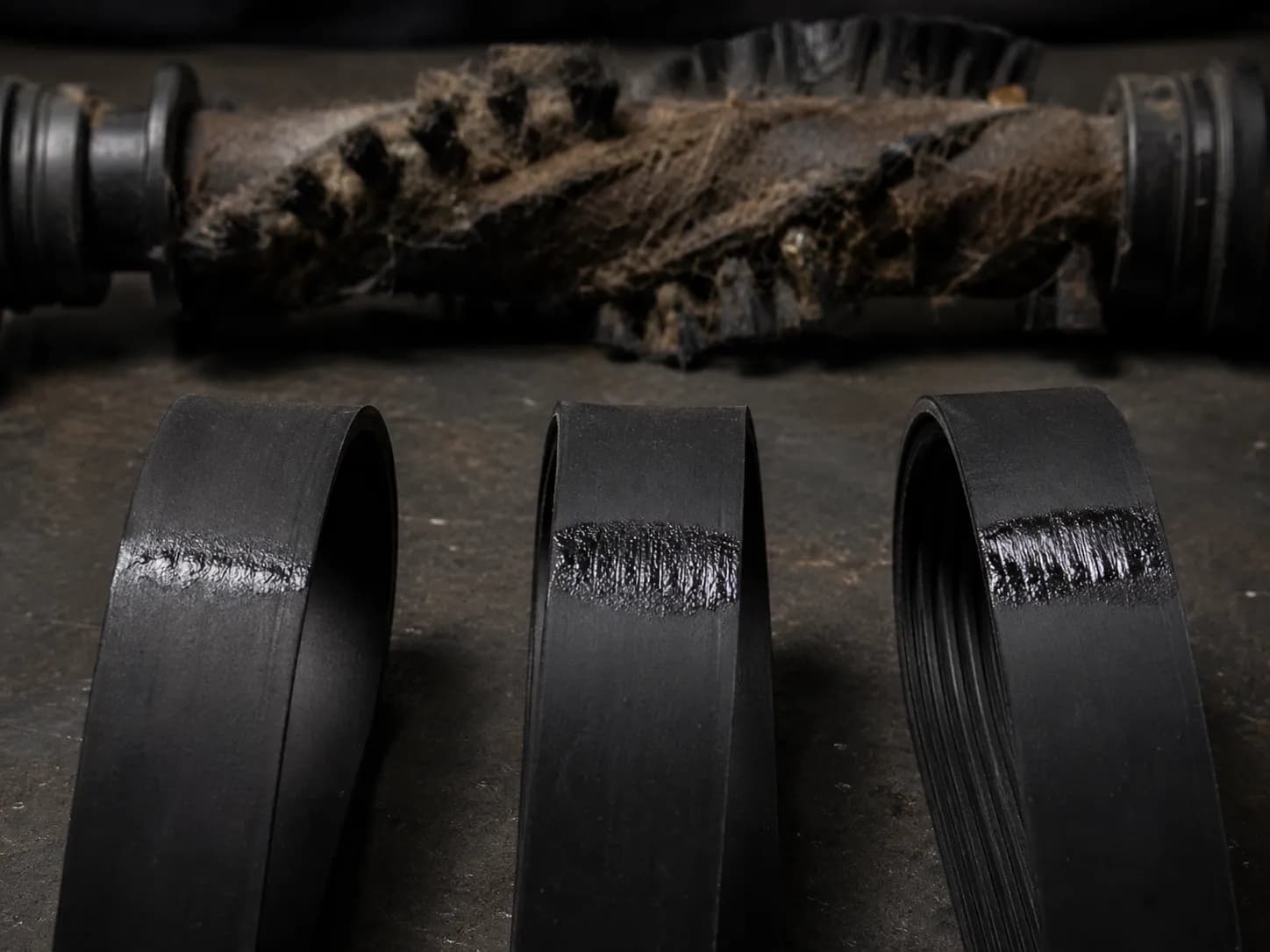
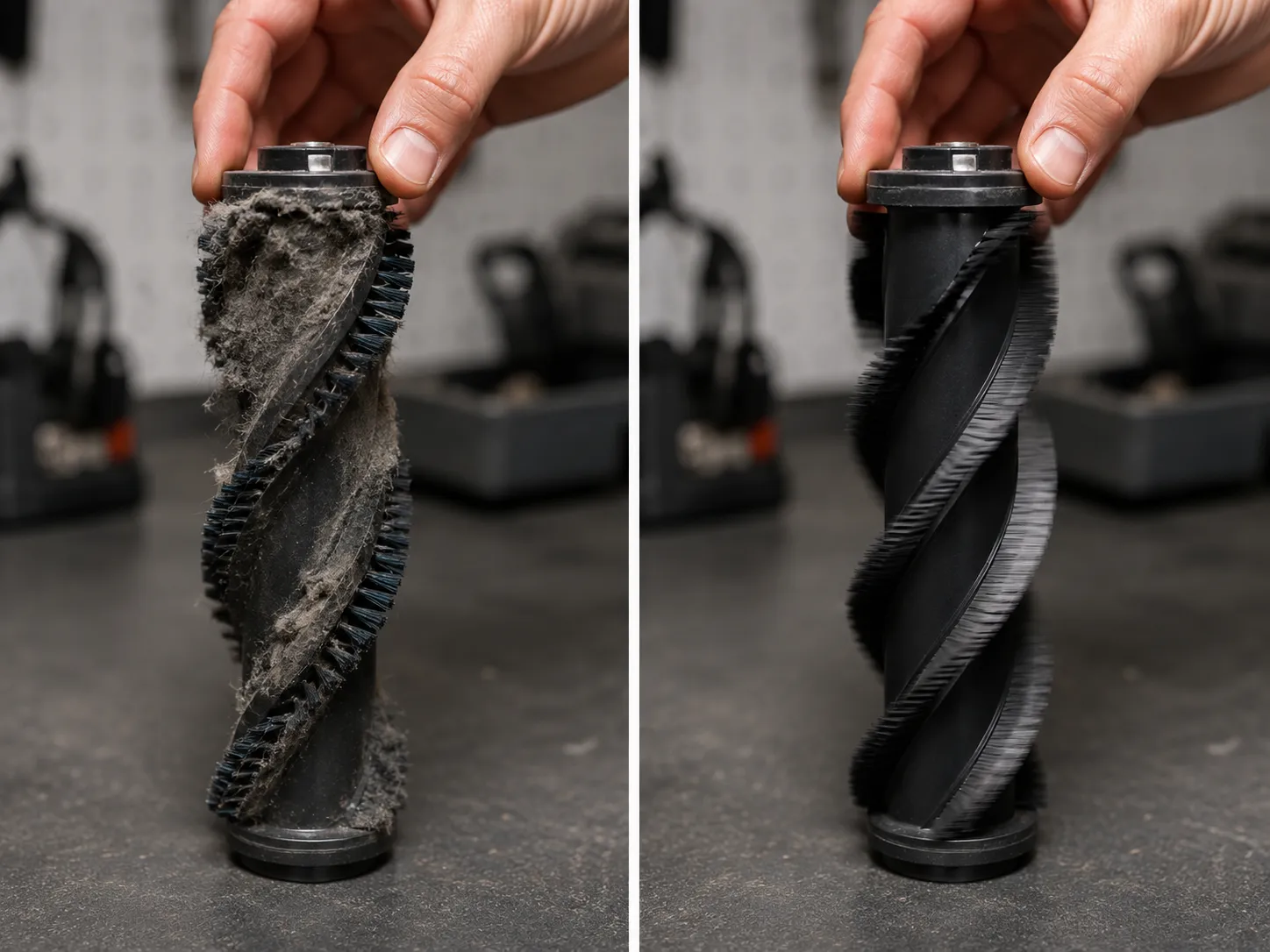
When we don’t have the answer. If the roll passes the flick test, the belt is the right part number, the end caps are seated, and it still dies, the fault is upstream of everything this article covers. The pattern holds well beyond Bissell, and the same seized-bearing story explains repeat belt failures on almost every belt-driven upright.
Bissell Belt Replacement FAQs
How often should you change a Bissell vacuum belt?
Once a year is a safe default for a household machine. Bissell’s parts listings point at an annual change; aftermarket sellers say three to nine months.
Both are guesses about your carpet, so use the symptoms instead.
How much is a Bissell vacuum belt?
The genuine 32074 two-pack is $9.99 direct from Bissell, and aftermarket two-packs sit around $6.50 to $9. The geared 1608840 and the compact belts cost more per belt and are stocked in far fewer places.
Can I use an aftermarket belt?
Yes, and it is roughly a coin flip. I ran four aftermarket two-packs and one genuine two-pack for thirty days each, then measured every belt off the machine with calipers.
Belt | Type | New length | At 30 days | Verdict |
|---|---|---|---|---|
Genuine 32074 | OEM | 4.25 in | 4.35 in | Fine |
Aftermarket A | Flat | 4.25 in | 4.30 in | Fine |
Aftermarket B | Flat | 4.25 in | 4.55 in | Slipping |
Aftermarket C | Flat | 4.25 in | 4.55 in | Slipping |
Aftermarket D | Flat | 4.25 in | 4.35 in | Fine |
Two of the four had grown roughly three tenths of an inch, while the genuine belt had grown one tenth. The other two aftermarket belts were indistinguishable from the genuine one in use.
So “aftermarket is junk” is not the finding here. The finding is that you cannot tell in advance which one you got.
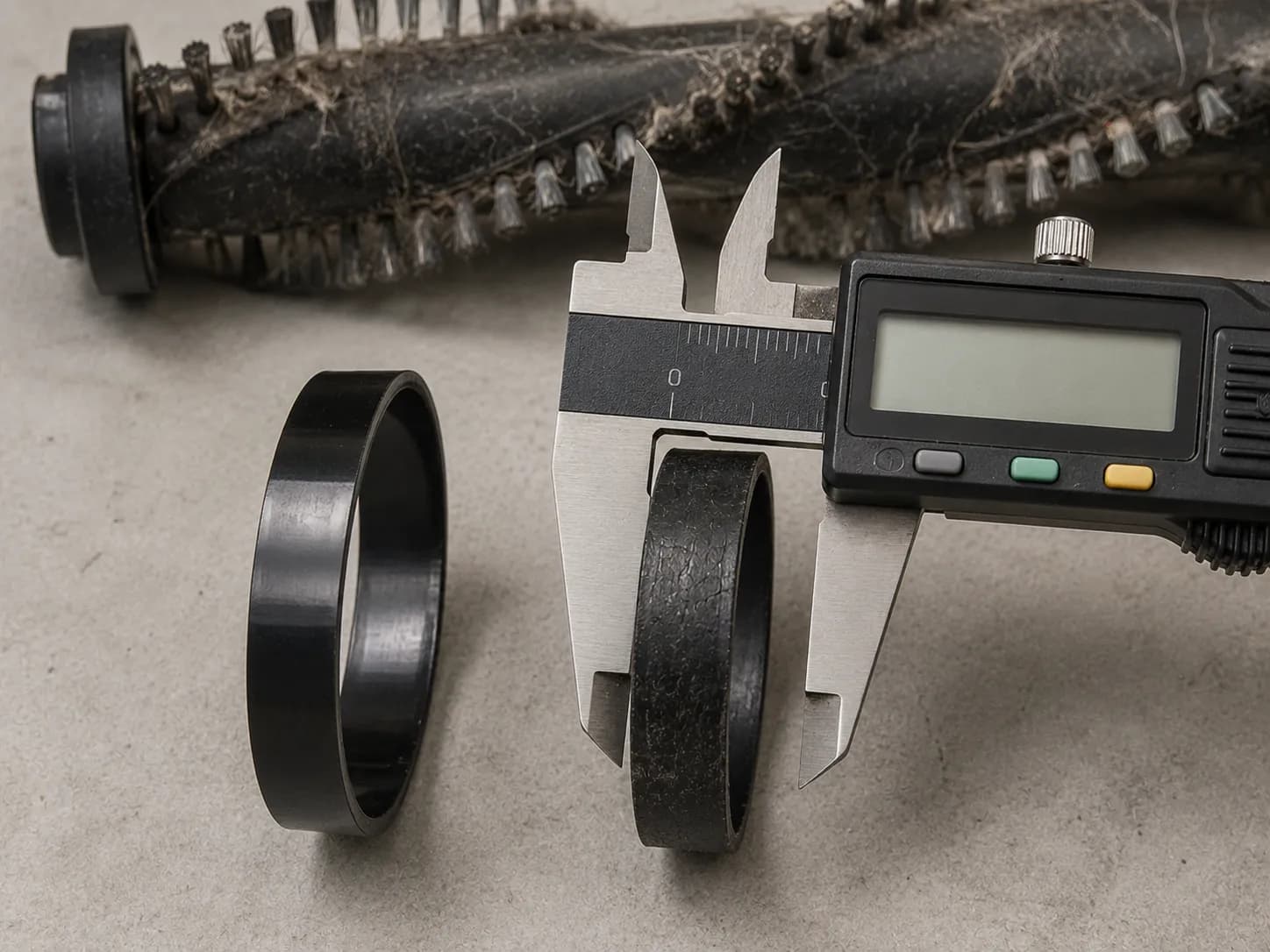
Stretch matters more than snapping. A belt that has grown a third of an inch does not break, it slips, and the owner reads that as lost suction and starts buying filters.
Can I use a Style 7 belt instead of a Style 9?
Yes. Bissell’s current genuine two-pack is sold as fitting Styles 7, 9, 10, 12, 14 and 16, so within the flat family the Style number does not change the part you receive.
Where can I buy one today?
Bissell’s parts store carries all four, and Walmart, Home Depot and hardware chains generally stock the common flat belt only. For the compact belts and the geared 1608840, specialist vacuum-parts retailers are usually the only same-day option.
Can you replace a Bissell belt without a screwdriver?
No. Every Bissell upright’s bottom plate is held by five to ten Phillips screws, so there is no tool-free Bissell belt, whatever a listing tells you.
What to Do Next (and When It Isn’t the Belt)
Bissell vacuum belt replacement is a ten-minute job once you stop shopping by Style number and start shopping by machine. Four belts, four part numbers, and a screw count that tells you which half of the range you are in before you spend anything.
If you take one thing from this, take the flick test. A roll that will not spin freely from one flick will eat the next belt in about four and a half minutes, and no belt you can buy will change that.
Of the six machines on my bench, five went back into service on a ten-dollar belt. The sixth, the PowerForce Helix Turbo with the dead roll, needed a roll as well, and by the time I had added the two parts together I was most of the way to what the machine is worth secondhand.
Machine | Belt fitted | Time | Outcome |
|---|---|---|---|
CleanView Swivel Rewind Pet 2252 | 32074 | 6 min 40 s | Back in service |
CleanView Bagless 3590 | 32074 | 6 min 55 s | Back in service |
PowerForce Helix Turbo 68C7 | 32074 | 6 min 30 s | Roll seized. Not worth the parts. |
PowerForce Compact 2112 | 1604895 | 5 min 15 s | Back in service |
AeroSwift Compact 2612 | 1600319 | 5 min 40 s | Back in service |
Pet Hair Eraser Lift-Off 2087 | 1608840 | 11 min 20 s | Back in service |
That is the line worth knowing before you start. On a budget upright a cheap belt and ten minutes is almost always the right call, and on a machine with a seized roll and a stripped plate, it almost never is.
Read it your way
Short on time? Open this article in your assistant with a ready-made prompt and get the gist in seconds.
Found this useful? Make us a preferred source so we show up in your Google results.
Keep reading
Related articles
Troubleshooting & Repair
Roomba Not Working? 8 Symptoms Fixed (2026 Models)
Reboot first, then match your symptom. 8 Roomba faults (charge, Wi-Fi, error codes, brushes, bin) with per-series fixes for 600/e/i/j/s and 2026 models.
Troubleshooting & Repair
How Much Does a Vacuum Repair Cost? Fix or Replace (2026)
How much does a vacuum repair cost? Usually $50–150 (up to ~$321 for central). Use the 50% rule and our brand tier to decide: fix it or replace it in 2026.
Troubleshooting & Repair
Why Won’t My Robot Vacuum Work? 6 Fixes We Tested
Why won’t my robot vacuum work? Reset it, free the wheels, clean the sensors and fix a 2.4GHz Wi-Fi snag in 5 minutes: the DIY checks that skip a repair bill.
Troubleshooting & Repair
Not Broken? Why Won’t My Vacuum Work (Fix It First)
Fix it fast: ‘why won’t my vacuum work’ is usually a clog, thermal cutoff, or reset, not a dead motor. Match your symptom to the exact fix.
The discussion
Comments
Every comment is reviewed before it goes live.