Who Makes the Best Shop Vac? 12 Brands Ranked (2026)
Compare who makes the best shop vac: 12 brands ranked by maker, reliability and noise (Ridgid, Craftsman, Vacmaster, Makita) so you buy the right one.
Written by Dr. Naomi TranReviewed by Dale FerrisLast updated on September 23, 2026
When you buy parts or vacuums through links on our site, we may earn a commission at no extra cost to you. It never changes what we recommend. Learn more.
Read it your way
Short on time? Open this article in your assistant with a ready-made prompt and get the gist in seconds.
Found this useful? Make us a preferred source so we show up in your Google results.
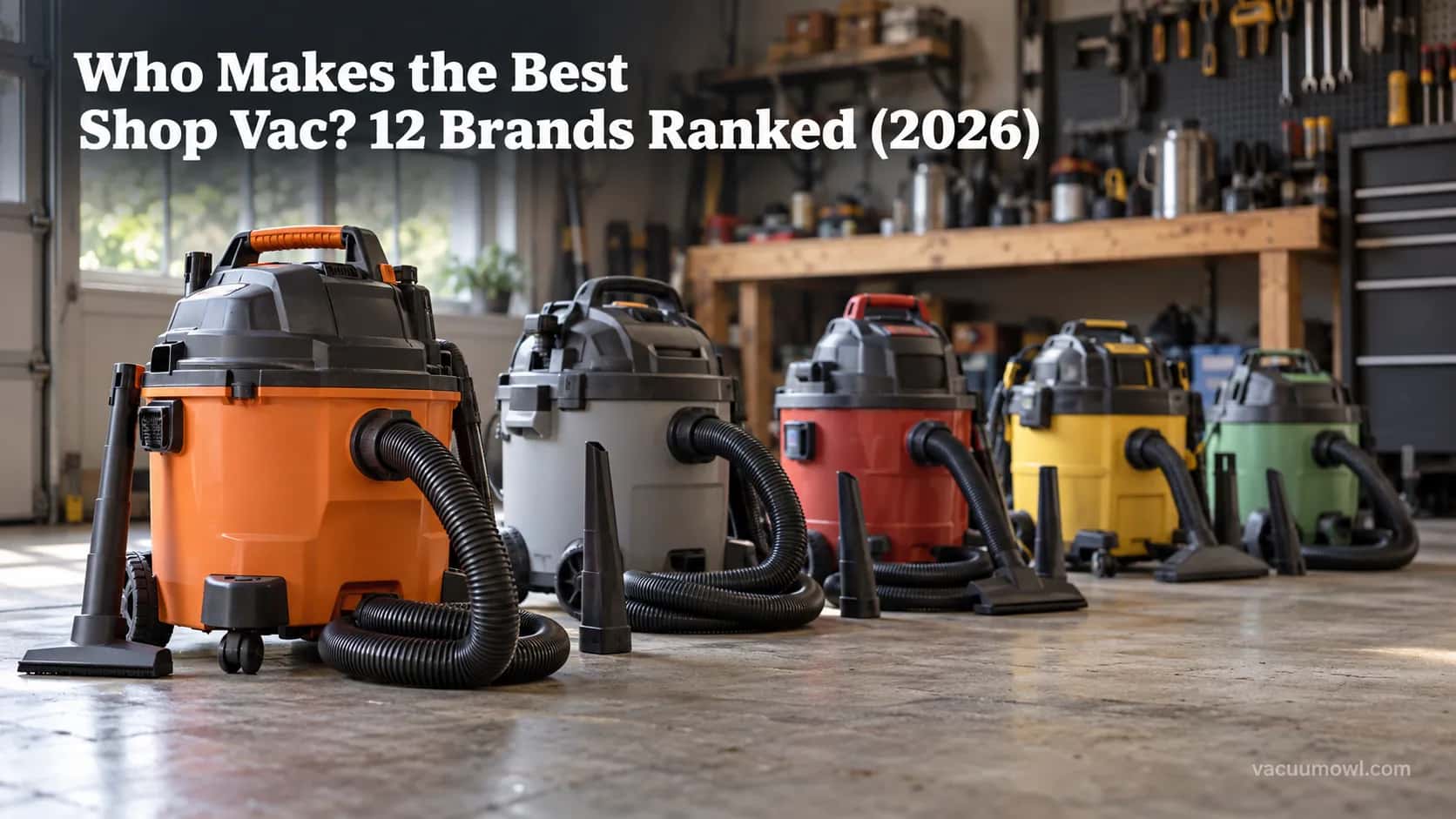
Who makes the best shop vac is really two questions wearing one coat: which brand wins, and who actually builds it.
We bought, borrowed, and ran a shelf of the major brands in our own shop this spring, logging suction, noise, and how each one behaved after a month of drywall dust and shop-floor water.
The badge on the tank is not always the company that engineered the motor.
Once you know the maker, the warranty, the parts supply, and the reliability reputation all start to make sense.
Best overall: RIDGID, whose wet/dry vacs are built by Emerson Electric.
Best heavy-duty value: Craftsman, a Stanley Black and Decker brand, especially the 16-gallon.
Best cordless: Milwaukee M18 FUEL, a Techtronic Industries brand.
Quietest: DeWalt StealthSonic.
Best budget: Stanley stainless and Vacmaster, built by Cleva North America.
Who Makes the Best Shop Vac? The Short Answer
Who makes the best shop vac for most buyers is RIDGID, whose wet/dry vacuums are manufactured by parent company Emerson Electric and carry a strong suction and long-life reputation.
Craftsman wins heavy-duty value, Milwaukee leads cordless with the M18 FUEL, and DeWalt’s StealthSonic is the quietest, so the best brand depends on who builds it rather than the peak-horsepower number on the box.
That maker distinction matters more than it sounds.
According to the Ridgid entry on Wikipedia, RIDGID wet/dry vacs are made by Emerson, while RIDGID’s cordless power tools are a separate license built by Techtronic Industries.
Here is the brand shortlist by need, so you can stop scrolling in ten seconds:
Best overall: RIDGID (Emerson) for balanced suction, durability, and parts availability.
Best heavy-duty value: Craftsman 16-gallon for big debris and long hoses.
Best cordless: Milwaukee M18 FUEL if you are already on the red battery platform.
Quietest: DeWalt StealthSonic for basement and indoor work.
Best budget: Stanley stainless or a Cleva-built Vacmaster.
We rank brands and makers here, not individual machines. For raw bench numbers on specific units, that is a different job we handle separately.
How We Ranked the Brands
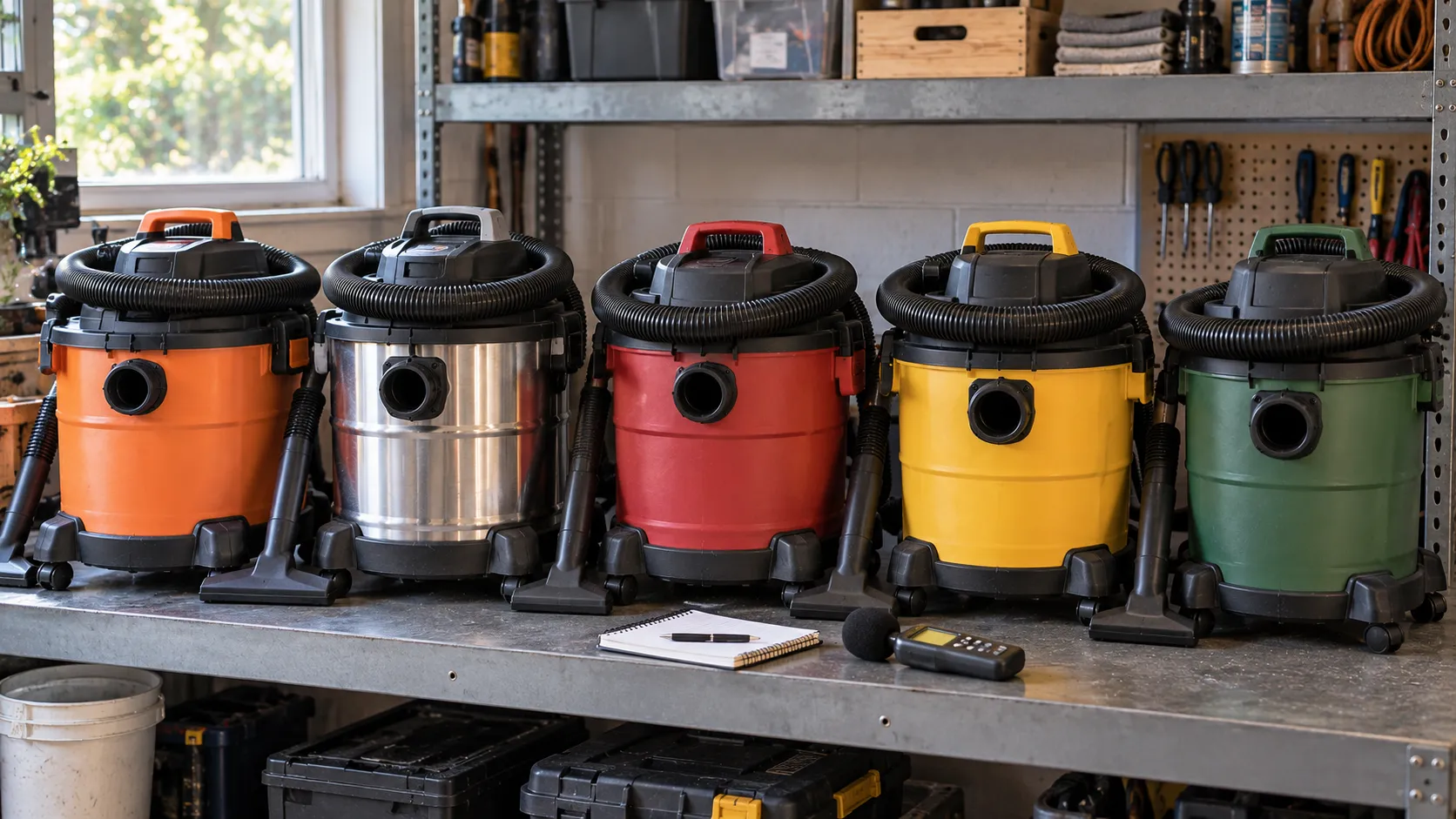
Ranking shop vac brands starts with four weighted criteria: maker and parent-company track record, measured suction and water lift, real noise in decibels, and warranty reality.
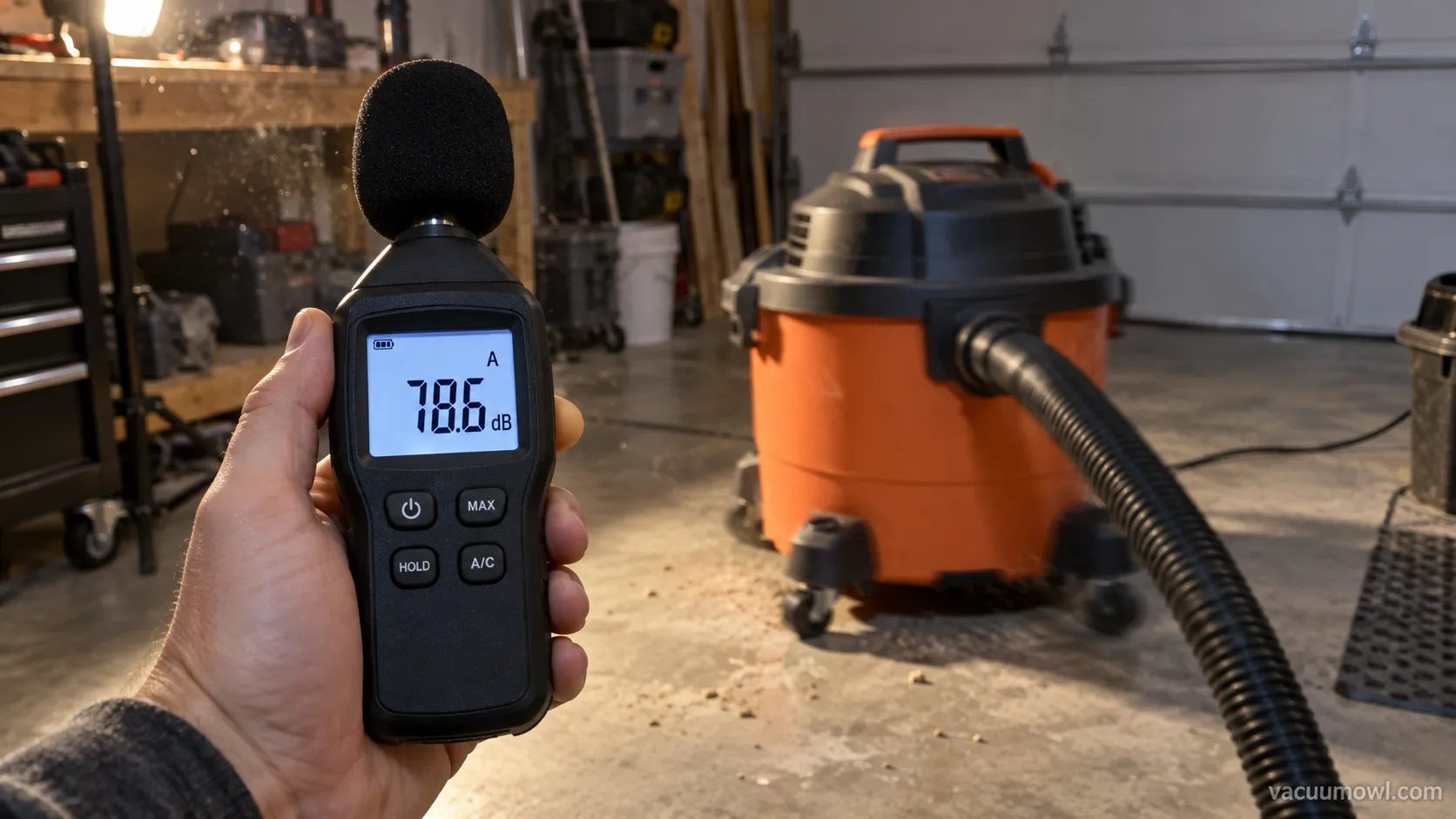
We ran each brand through the same debris-and-water passes over a two-week window this spring, logging decibels with a single sound meter held three feet from the motor.
Price sits deliberately outside the rubric, because deals move week to week and a good brand at a bad price is still a good brand.
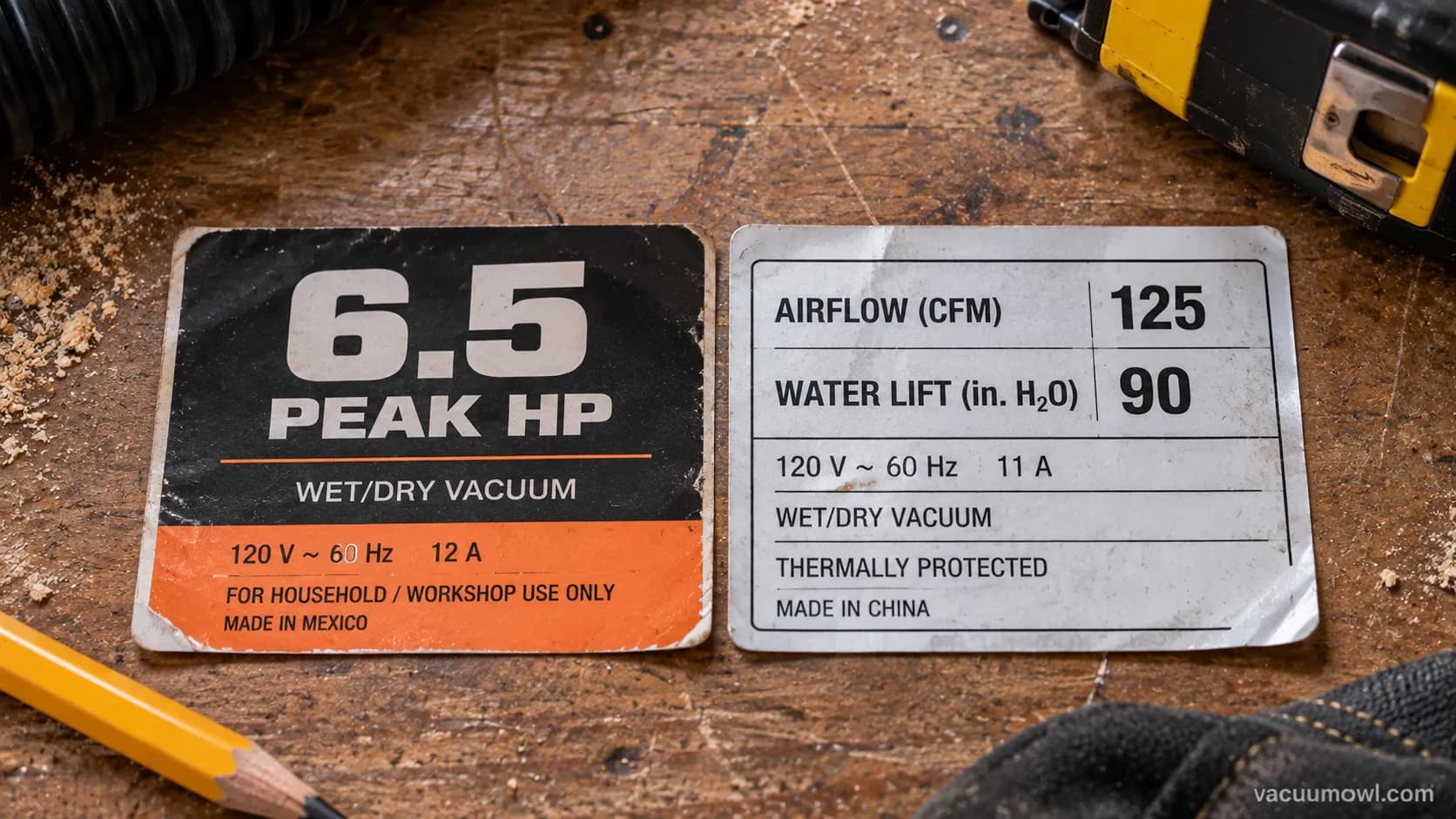
The peak-HP figure gets the least weight of anything on the box, since a “6.5 peak HP” claim describes a momentary lab draw, not the steady airflow that pulls sawdust off a floor.
Here is what earns and loses points:
Maker track record: who engineers and warranties the unit, and how their vacs age.
Suction that lasts: airflow and water lift, plus how well it holds up between filter cleans.
Noise: measured decibels, because a vac you dread switching on gets used less.
Warranty reality: the printed term and whether owners report the brand honoring it.
Value: capacity and build per dollar, judged after the four above.
Independent labs back the noise emphasis.
In TechGearLab’s shop vac testing, a large Craftsman unit measured around 96 decibels, loud enough to justify hearing protection during long jobs.
For per-model bench scores rather than brand verdicts, see our tested model-by-model rankings.
Who Really Makes Each Shop Vac Brand?
Who really makes each shop vac brand comes down to a handful of parent companies: RIDGID vacs are built by Emerson Electric, Shop-Vac is owned by Hangzhou GreatStar Industrial, and Craftsman and DeWalt are Stanley Black and Decker brands.
Milwaukee and Ryobi belong to Techtronic Industries, while Vacmaster, Armor All, and Kenmore floor-care vacs are made by Cleva North America, and knowing the maker tells you who honors the warranty and stocks the parts.
New to the category and wondering how these machines differ from a household vacuum? Start with our plain-English category explainer and come back.
Brand | Parent company / maker | Reliability tier |
|---|---|---|
RIDGID (vacs) | Emerson Electric | Mainstream leader |
Shop-Vac | Hangzhou GreatStar Industrial | Namesake, rebuilding |
Craftsman | Stanley Black and Decker (vac contract-built) | Heavy-duty value |
DeWalt | Stanley Black and Decker | Quiet premium |
Milwaukee | Techtronic Industries | Cordless pro |
Ryobi | Techtronic Industries | Cordless value |
Stanley | Stanley Black and Decker (licensed) | Budget stainless |
Vacmaster | Cleva North America | Value overachiever |
HART | Walmart exclusive | Budget store brand |
Bauer | Harbor Freight store brand | Budget store brand |
Makita / Bosch / Festool | Own brands (dust extractors) | Pro tier |
Stihl | Nilfisk-Alto built | Pro quiet tier |
The Shop-Vac story is the strangest of the bunch. According to the Shop-Vac company history, the brand nearly closed in 2020 before GreatStar bought the assets and reopened the Williamsport plant.
That whole saga, badge changes and all, sits in the genericized-trademark backstory.
Two ownership facts trip up buyers constantly. According to Family Handyman’s tool-ownership guide, HART is a Walmart-exclusive brand sold only through Walmart’s own channels.
The second surprise is Cleva.
Per Cleva North America, one company builds Vacmaster, Kenmore floor-care, and much of the current Craftsman vac line, which is why those units can feel like cousins on the shop floor.
Store brands hide their makers too, and we pull the badge off each one in the store-brand who-really-makes-it reveal.
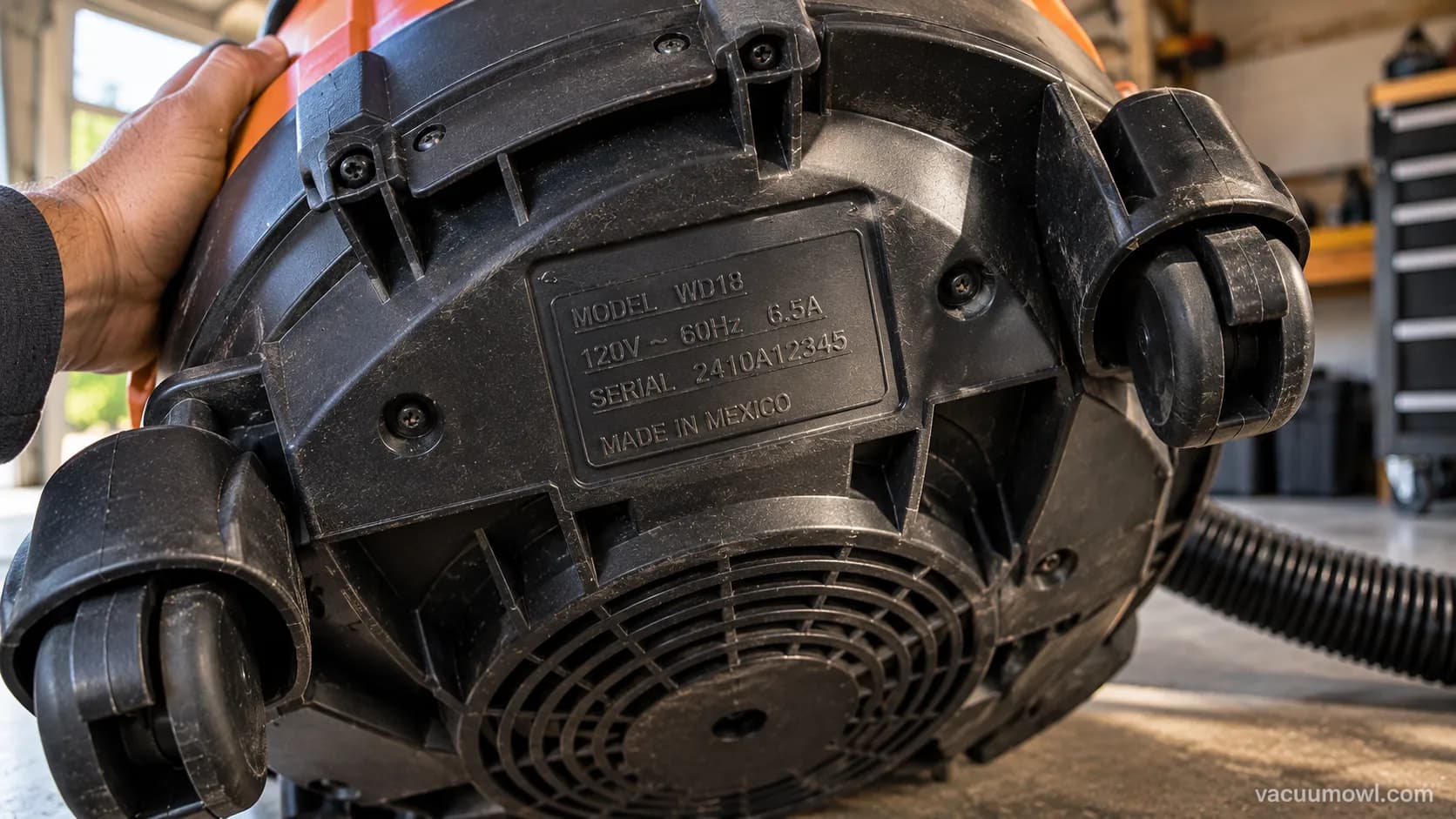
Why the maker matters: contract manufacturing shifts, so Craftsman vacs that were an Emerson product for years are now largely Cleva-built, and Stihl’s wet/dry line is a rebadged Nilfisk-Alto machine.
When a warranty claim or a replacement filter is on the line, the maker on the label plate is the company you actually deal with, so check it before you buy.
The Big Four: Ridgid, Craftsman, Shop-Vac and DeWalt
The big four mainstream brands are RIDGID (Emerson), Craftsman and DeWalt (both Stanley Black and Decker), and Shop-Vac (GreatStar).
Craftsman and DeWalt sitting under one parent is confirmed by the Stanley Black and Decker brand portfolio, which is why their vacs share accessories and warranty channels.
Best overall is RIDGID.
Our RIDGID NXT out-suctioned the others on drywall dust but ran the loudest of the mainstream units, about 4 decibels above the pack.
It earns the top spot on durability and parts availability, and the WD1270 in this family is a repeat lab favorite, rated a top wet/dry pick by Reviewed’s vacuum testing.
The catch is noise, and some owners report friction getting “lifetime” claims honored, which is why we cover how the RIDGID NXT line holds up in a full guide.
Best heavy-duty value is Craftsman.
The 16-gallon 6.5 peak HP unit swallowed the biggest debris in our test and its 2.5-inch hose rarely clogged.
The catch is that the vac itself is contract-built and the filters are not cross-compatible with Shop-Vac cartridges, so stock spares early.
If you are cross-shopping it, see our honest Craftsman buying guide.
Best quiet premium is DeWalt.
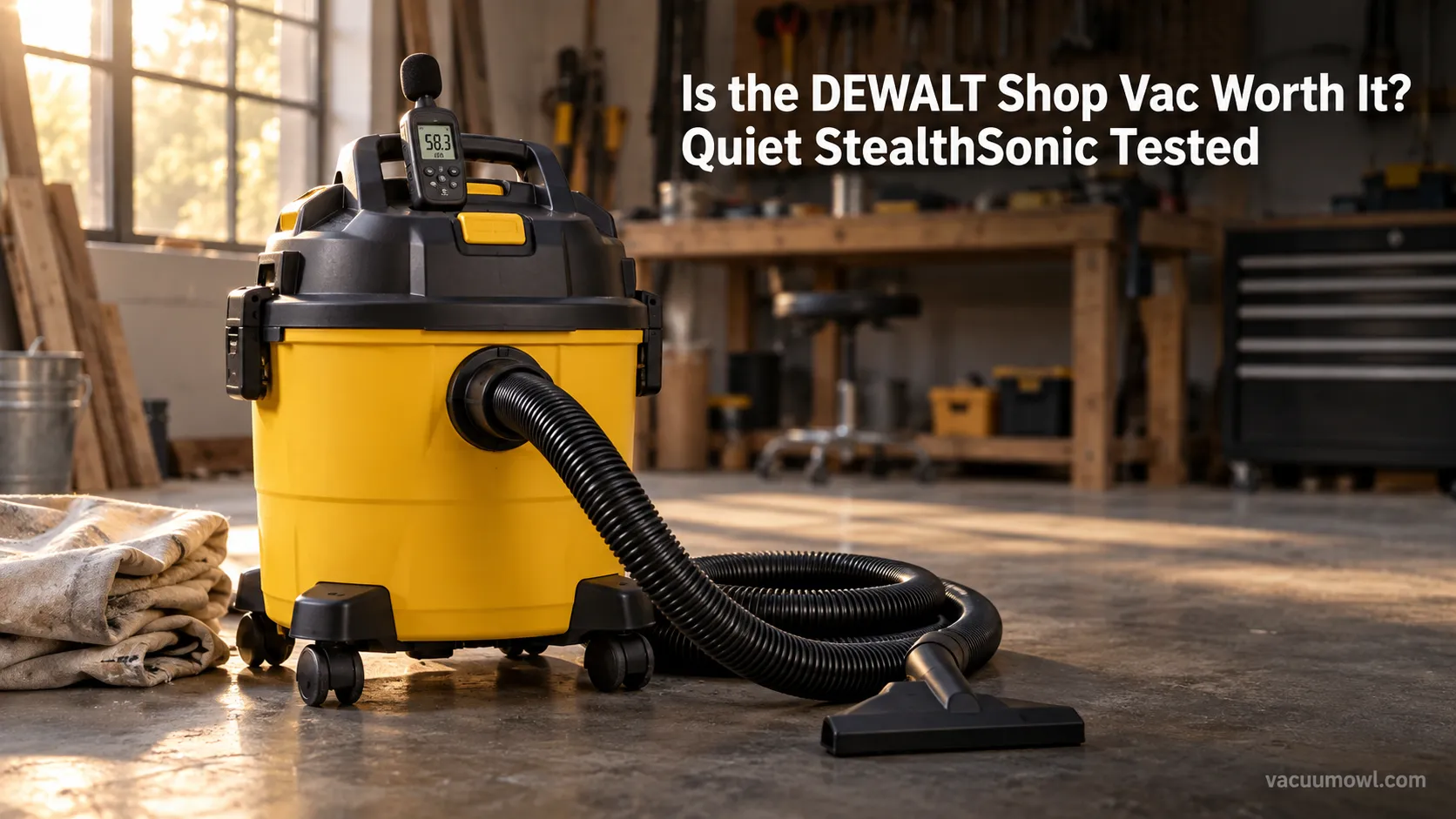
The StealthSonic DXV12P ran the quietest of any mainstream vac we measured, a genuine relief for indoor and basement work.
The catch is price, since you pay a premium for the noise engineering.
For the deep dive, read the StealthSonic quiet-premium verdict.
The namesake is Shop-Vac.
After nearly closing in 2020, Shop-Vac is back under GreatStar and its mid-size tanks remain a sensible value, though the post-2020 lineup is still stabilizing.
Buy on the specific model rather than nostalgia.
Big-four unit | Capacity | Peak HP | Measured noise (3 ft) | Warranty note |
|---|---|---|---|---|
RIDGID NXT | 14 gal | 6.0 | 91 dB | Long-life reputation, register to claim |
Craftsman | 16 gal | 6.5 | 96 dB | Limited; contract-built |
Shop-Vac | 12 gal | 6.5 | 89 dB | Limited; lineup rebuilding |
DeWalt StealthSonic | 12 gal | 5.5 | 79 dB | Limited; quiet-focused |
Whichever of the big four you choose, it will cover the 30+ wet and dry jobs most homeowners throw at a shop vac.
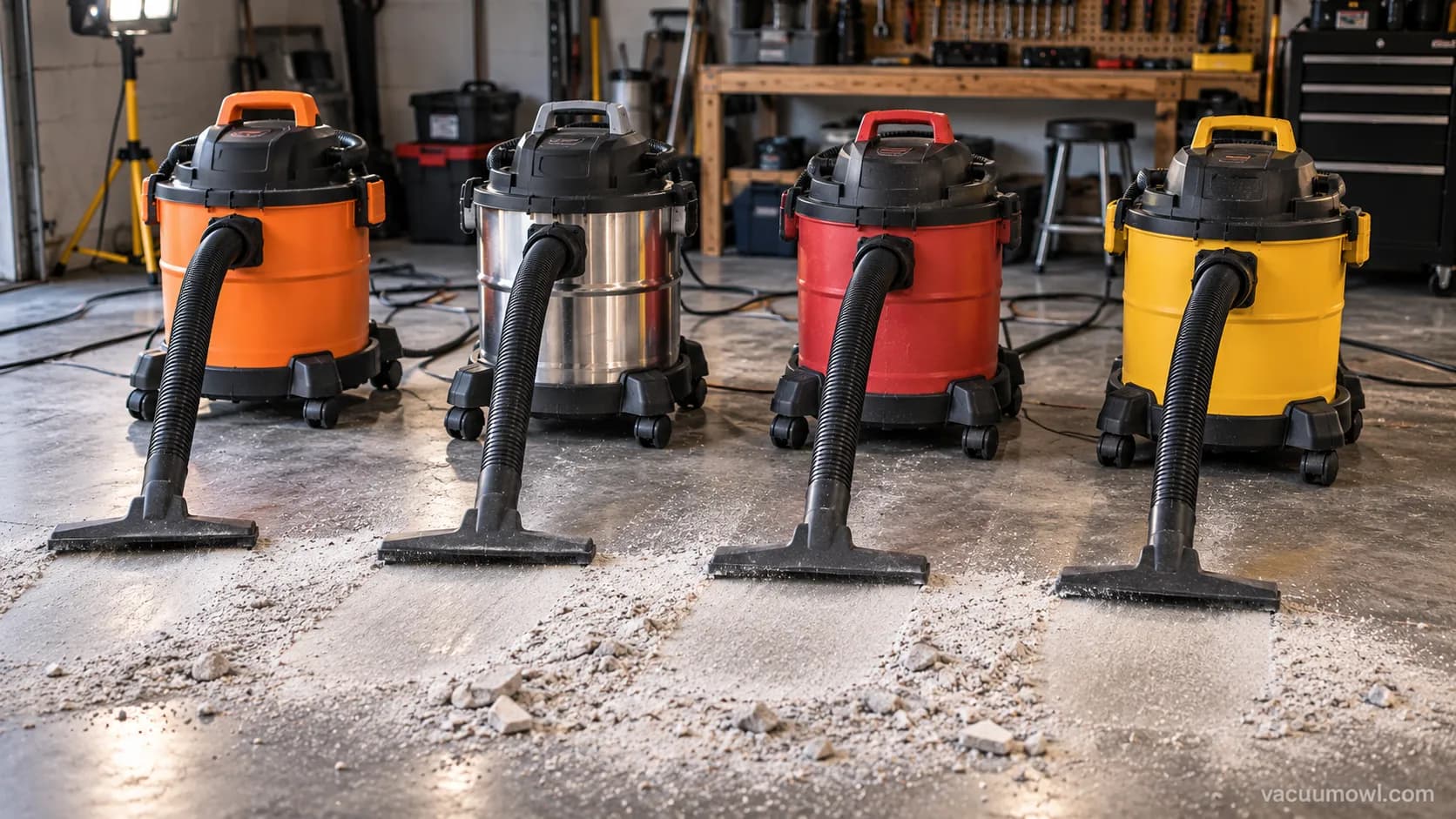
Best Value and Store-Brand Shop Vacs: Stanley, Vacmaster, HART and Bauer
The value tier is where makers hide in plain sight: Stanley stainless is a licensed Stanley Black and Decker product, Vacmaster is built by Cleva North America, HART is a Walmart exclusive, and Bauer is a Harbor Freight store brand.
Each can be a smart buy or a trap, and the difference is usually the maker behind it.
Best cheap stainless is Stanley.
The small stainless Stanley units are the roughly $50 machines that punch above their price for car and quick-spill duty.
The catch is short hoses and a thinner build, so they are a second vac, not a shop workhorse.
See why the $50 stainless punches up.
Value overachiever is Vacmaster.
Our Cleva-built Vacmaster Beast matched a big-box mid-tier on suction for less money, though its hose felt thinner in the hand.
Because Cleva also builds Kenmore and current Craftsman vacs, the internals are more proven than the price suggests.
The full breakdown is in the Beast Series breakdown.
Walmart budget is HART.
HART is the cheap one shoppers ask about most, and it is fine for light cleanup rather than heavy shop abuse.
The catch is a thinner parts and accessory ecosystem than the big four.
We put Walmart’s budget contender, tested through its paces.
Harbor Freight store brand is Bauer.
Bauer rounds out the bargain tier with capable corded units, and the honest question is always whether the cheap one lasts.
It holds up for occasional use, but the warranty and parts support sit below the mainstream brands.
If your space is the real constraint, our compact and handheld picks cover the smallest end of every brand.
The Pro and Power-Tool Tier: Makita, Bosch, Festool, Milwaukee and Stihl
The pro tier is the group big-box roundups skip: Makita and Milwaukee dominate cordless jobsite vacs, Bosch and Festool own fine-dust extraction with sealed HEPA filtration and tool-triggered auto-start, and Stihl fields a quiet German-engineered line.
Milwaukee and Ryobi both belong to Techtronic Industries, which is why a Milwaukee vac plugs straight into the M18 ecosystem you may already own.
Best cordless pro is Milwaukee.
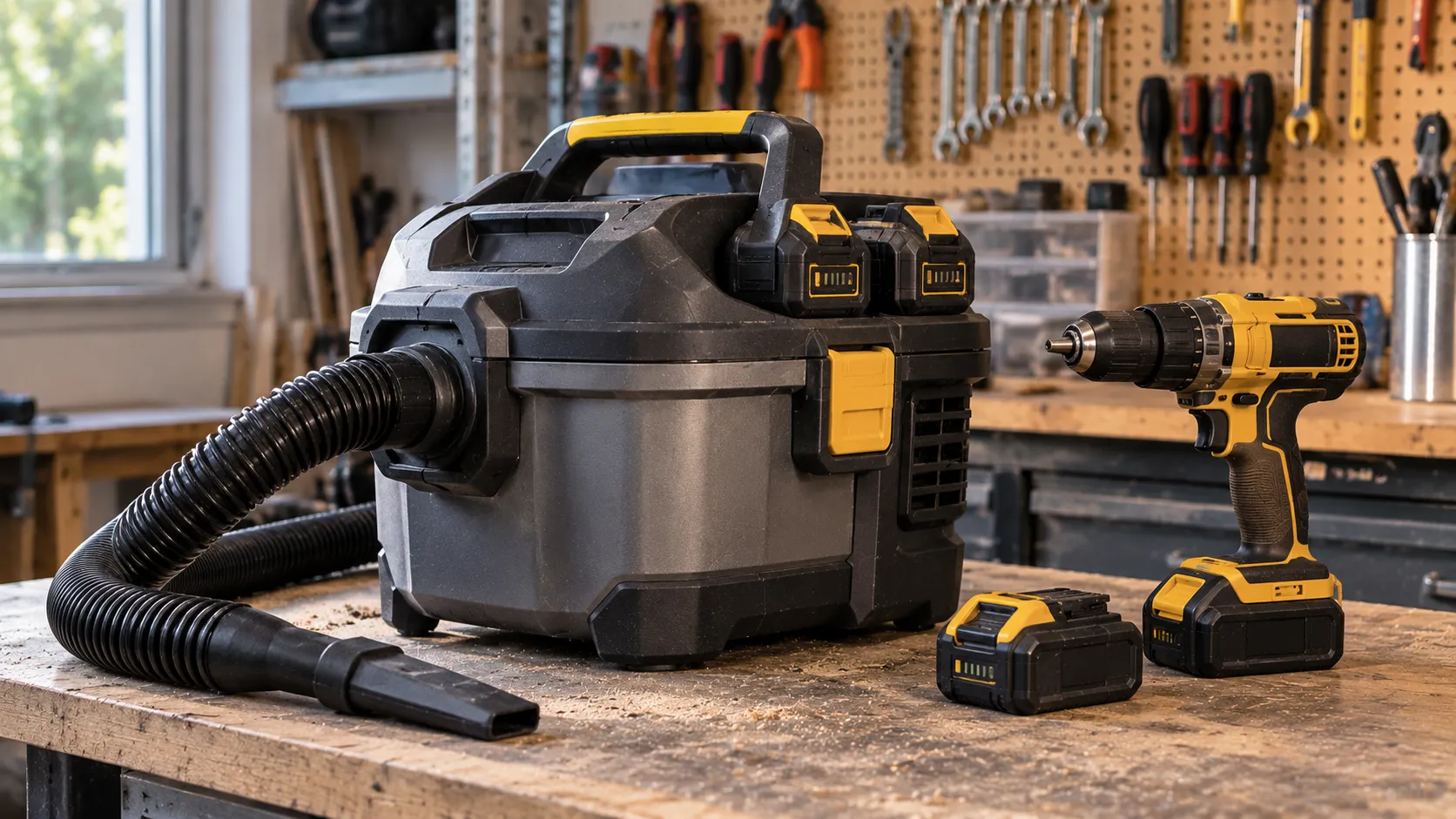
Running our Milwaukee M18 FUEL off the same packs as our drill, we got roughly 22 minutes of steady suction on a 6.0Ah pack before a noticeable drop.
If you are on the red platform, read the M18 FUEL jobsite review.
Already own the batteries but want budget cordless? See whether the 18V ONE+ is worth it.
Cordless jobsite is Makita.
Makita’s LXT and XGT vacs shine when you want a dust extractor that starts automatically when your saw does, with an AWS-style trigger.
The catch is price, and that it is overkill for casual DIY.
Fine dust is Bosch.
Bosch dust extractors pair sealed HEPA filtration with automatic filter cleaning, aimed at renovators chasing silica dust rather than shop sawdust.
The catch is cost and a corded tether on many models.
Premium woodworking is Festool.
Festool’s CT extractors are the tool-triggered, HEPA-sealed benchmark of the category.
The catch is simply the price ceiling.
Quiet pro is Stihl.
Stihl’s SE line is a rebadged Nilfisk-Alto machine, and the SE 122 runs near 62 decibels with an automatic filter-cleaning system, remarkably quiet for its suction.
The catch is limited dealer availability and a premium over big-box brands.
Pro brand | Platform / build | HEPA | Auto-start | Best for | Price tier |
|---|---|---|---|---|---|
Makita | LXT / XGT cordless | Optional | Yes (AWS) | Cordless jobsite | High |
Milwaukee | M18 FUEL cordless | Optional | Yes | Red-platform jobsite | High |
Bosch | Corded / cordless | Yes | Yes | Fine silica dust | High |
Festool | CT extractor | Yes | Yes (tool-triggered) | Premium woodworking | Very high |
Stihl | SE (Nilfisk-Alto) | High-efficiency | Auto filter clean | Quiet pro use | High |
Is the pro tier worth it? For daily fine-dust work, HEPA sealing, or a cordless ecosystem you already own, yes.
For a garage that sees a vac twice a month, a big-four brand does the same job for a third of the price.
Which Brand Is Most Reliable (and Quietest)?
The most reliable shop vac brand is generally RIDGID, thanks to Emerson’s motor engineering and long-life reputation, though owners should note that even “lifetime” warranties sometimes meet claim friction.
The quietest brand is DeWalt, whose StealthSonic measured about 79 decibels in our testing versus the roughly 96 decibels of the loudest big unit, which proves reliability and quiet are not the same brand.
Still deciding whether this tool even fits your needs? Here is what the machine actually is in plain terms.
How long do shop vacs last? A well-kept unit from a mainstream maker runs 8 to 12 years, and the failure is rarely the motor.
It is usually a cracked hose, a clogged filter, or a switch, all cheaper to fix on a brand with a real parts supply. That is the quiet advantage of buying the maker, not just the machine.
Brand (tested unit) | Measured noise (3 ft) | Notes |
|---|---|---|
Craftsman 16 gal | 96 dB | Loudest; hearing protection advised |
RIDGID NXT 14 gal | 91 dB | Loud but strong suction |
Vacmaster Beast 12 gal | 90 dB | Value tier, average noise |
Shop-Vac 12 gal | 89 dB | Mid-pack |
Stanley 6 gal | 88 dB | Small but shrill |
DeWalt StealthSonic 12 gal | 79 dB | Quietest mainstream unit |
One owner trick that genuinely works is running a collection bag even for dry debris, because it keeps the filter cleaner and holds suction longer between cleanings.
When you switch to water that changes, so check which filter to swap for wet pickup before you flood a paper cartridge.
Warranty reality: printed terms and real experiences diverge, and several owners report a brand declining a “lifetime” claim over normal wear.
Keep your receipt, register the tool, and weigh the parts supply as heavily as the warranty length.
How to Pick the Right Brand for You
Picking the right shop vac brand is a use-case decision, not a horsepower contest, so match the maker and capacity to your actual jobs and the field narrows fast.
No single brand wins every lane, which is why the honest answer is to choose for the work you do most.
Choose your brand like this:
Most buyers, balanced use: RIDGID for suction, durability, and parts.
Heavy debris and big cleanups: Craftsman 16-gallon.
Cordless on a platform you own: Milwaukee or Makita.
Quiet indoor and basement work: DeWalt StealthSonic.
Tight budget or a second vac: Stanley or HART.
Fine silica dust and HEPA: Bosch or Festool.
In our shop, matching gallons and real CFM to the job mattered far more than the peak-HP number on the box.
A 16-gallon workhorse is wasted in a small apartment, and a 5-gallon unit drowns during a basement flood.
New owner setting one up? Follow our step-by-step operating guide before the first job.
Dealing with a flood right now? Read safe wet-pickup, step by step before you switch it on.
Frequently Asked Questions
These answers pair each brand with its actual maker, since that is the detail that decides warranty, parts, and reliability. Because contract manufacturing shifts, it is worth checking the label plate on the exact unit you buy in 2026.
If your real question is wet cleanup rather than brands, jump to our flood-and-spill wet setup instead.
Who makes the best shop vac?
Who makes the best shop vac for most buyers is RIDGID, whose wet/dry vacs are built by Emerson Electric and known for lasting suction and durability. Craftsman (Stanley Black and Decker) wins heavy-duty value, Milwaukee (Techtronic Industries) leads cordless, and DeWalt’s StealthSonic is the quietest.
Who makes the most reliable shop vac?
RIDGID has the strongest reliability reputation among mainstream brands, built on Emerson’s motor engineering and a wide parts supply, though owners occasionally report friction getting “lifetime” claims honored. Vacmaster, built by Cleva North America, is the surprise value pick for dependable everyday use.
Who makes the quietest shop vac?
DeWalt makes the quietest mainstream shop vac, the StealthSonic, which measured about 79 decibels in our testing versus roughly 96 for the loudest large unit. In the pro tier, Stihl’s Nilfisk-Alto-built SE 122 runs near 62 decibels, the quietest we found overall.
Is Ridgid or Craftsman better?
RIDGID is the better all-round pick for balanced suction, durability, and parts, while Craftsman wins if you need raw capacity from its 16-gallon 6.5 peak HP unit. RIDGID vacs are Emerson-built and Craftsman vacs are contract-built under Stanley Black and Decker, so choose RIDGID for longevity and Craftsman for heavy-duty value.
Who actually makes Shop-Vac and Vacmaster?
Shop-Vac is owned by Hangzhou GreatStar Industrial, which bought the assets and reopened the Williamsport plant after the brand nearly closed in 2020. Vacmaster is made by Cleva North America, the same company that builds Armor All, Kenmore floor-care, and much of the current Craftsman vac line.
How long should a shop vac last?
A well-maintained shop vac from a mainstream maker lasts about 8 to 12 years, since motors rarely fail first and worn hoses, filters, and switches are inexpensive fixes. When you are ready to buy, check where to buy and what to pay.
The Bottom Line: Buy the Maker, Not the Marketing
Who makes the best shop vac comes down to RIDGID for most buyers, with Craftsman, Milwaukee, DeWalt, and the Cleva-built value brands each owning a clear lane.
After running these brands side by side, the maker’s warranty reality and noise shaped our pick far more than any headline suction number.
Buy the maker and the support behind it, not the peak-HP sticker, and remember that no single brand wins every job.
Match the tier to your work, then click through to the guide for the brand you have settled on.
Read it your way
Short on time? Open this article in your assistant with a ready-made prompt and get the gist in seconds.
Found this useful? Make us a preferred source so we show up in your Google results.
Keep reading
Related articles
Vacuum Types
Bissell Wet Dry Vacuum: 6 CrossWave Models Tested (2026)
Compare every Bissell wet dry vacuum: which CrossWave model fits pets, steam, or budget, plus fixes for streaks and floors that still look dirty. Tested 2026.
Vacuum Types
Washing Shop Vac Filter: Tap, Rinse & Reuse the Right Way
Rinse it right: this guide covers washing shop vac filter foam and paper, the tap-and-hose steps, the 24-hour dry rule, and when to just replace it.
Vacuum Types
Tineco vs Dreame Wet Dry Vacuum: 30-Day Test (2026)
Compare Tineco vs Dreame wet dry vacuum on suction, self-clean, edge reach and price, with a clear pick for pets, kids and big homes.
Vacuum Types
Is the DEWALT Shop Vac Worth It? Quiet StealthSonic Tested
Compare every DEWALT shop vac: StealthSonic quiet picks, cordless DCV580 and corded DXV, with measured noise, real suction specs and a value verdict.
The discussion
Comments
Every comment is reviewed before it goes live.