Shark Vacuum Reset Button? The Truth (and Real Fix)
Skip the hunt - most Shark vacuums have no reset button. Clear the clog, cool the motor 45 minutes, restart, then find your model's exact reset.
Written by Reggie AlvarezReviewed by Dale FerrisLast updated on July 6, 2026
When you buy through links on our site, we may earn an affiliate commission (at no extra charge), which we use to fund new product tests. Learn more.
Read it your way
Short on time? Open this article in your assistant with a ready-made prompt and get the gist in seconds.
Found this useful? Make us a preferred source so we show up in your Google results.
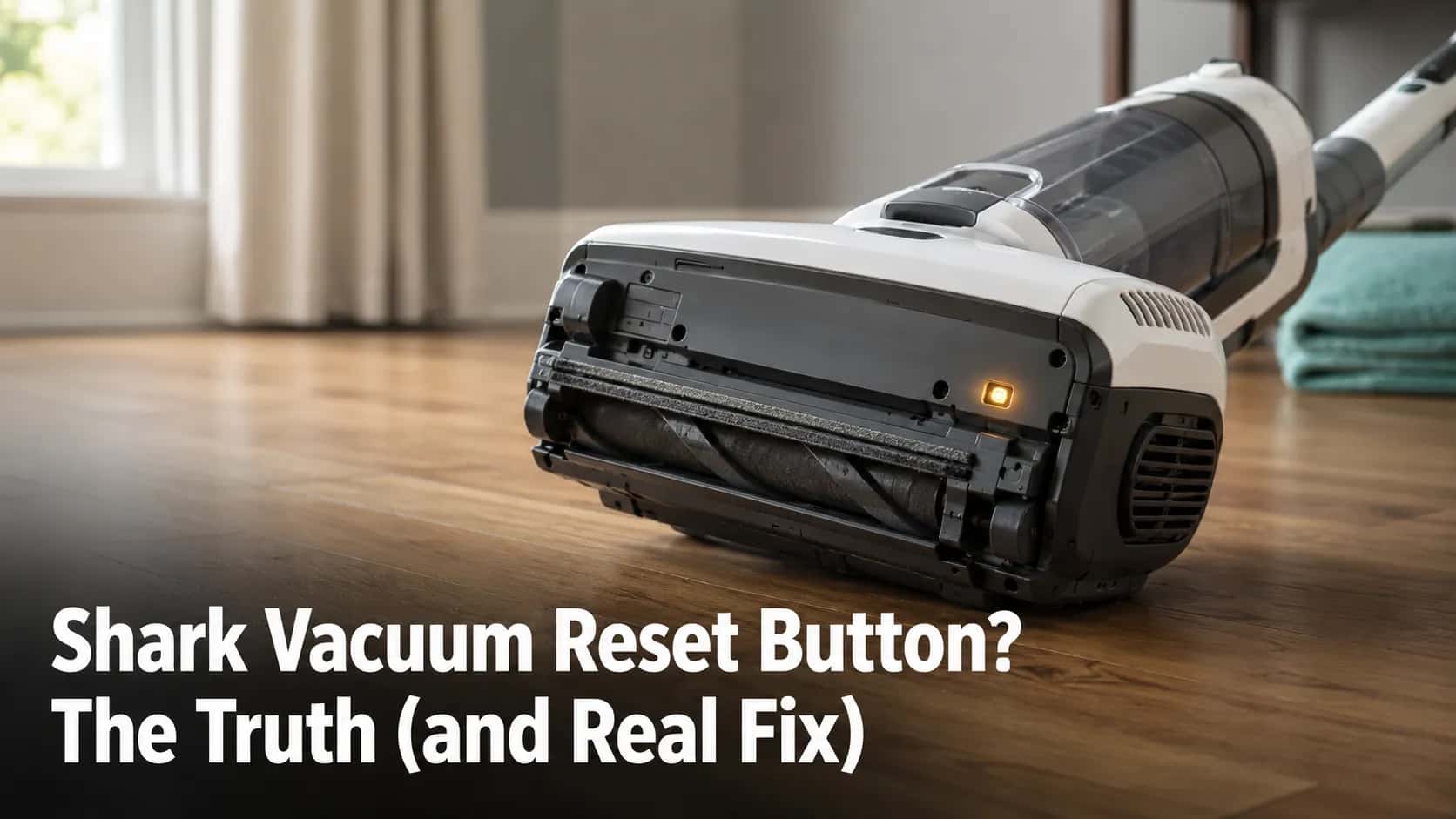
You flipped your Shark over, ran a thumb along the motor housing, and found nothing. No red button, no recessed hole, no switch labeled reset.
That hunt is the single most common Shark vacuum reset button mistake, and it sends thousands of owners searching for a part that, on most models, was never built. The good news: your Shark almost certainly still has a way back to life, and it takes about an hour and zero tools.
The Truth About the Shark Vacuum Reset Button
Most Shark vacuums do not have a dedicated reset button. According to SharkNinja’s upright maintenance guidance, uprights rely on a motor protective thermostat that shuts the machine off when it overheats and switches itself back on once the motor cools.
So the “reset” you are looking for is not a button at all. It is a cooldown procedure: power off, unplug, clear the clog, clean the filters, and wait.
What actually brings a stalled Shark back, by type:
Uprights and corded models: the thermostat cooldown reset, covered step by step below.
Cordless and stick models: reseat the battery, clear the airway, let it cool.
Robot models: a power-button soft reset, or a factory reset in the SharkClean app.
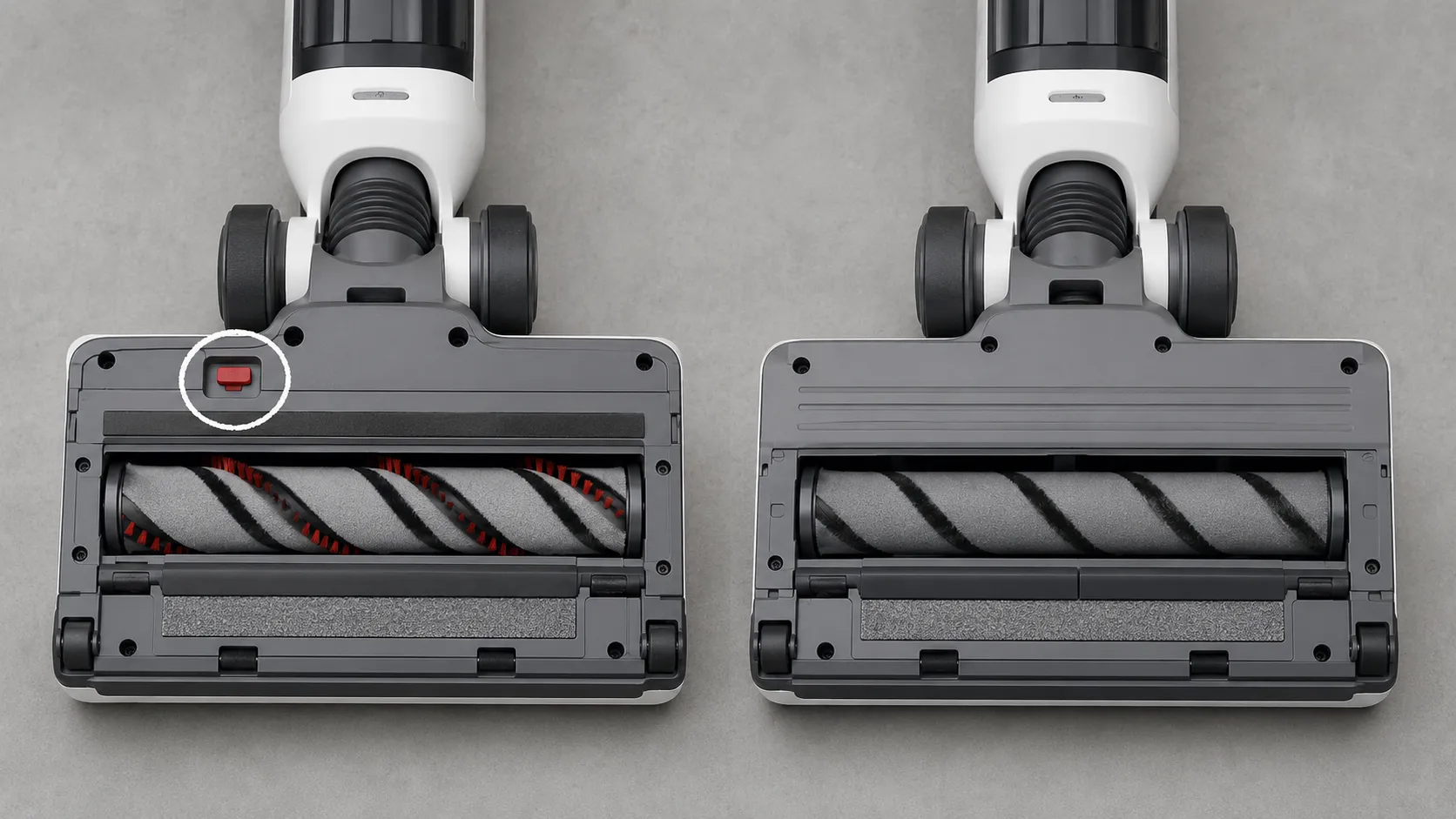
Three narrow exceptions do carry a physical control. Certain older uprights have a brush-roll (brush-bar) reset button on the underside, robots have a power switch you hold to reset, and some models have a filter-life indicator you clear with a button hold.
None of those three is a whole-machine power reset. They each fix one part, not the vacuum’s main power state.
Always unplug first. Every step that touches the brush roll, filters, or internal airway happens with the vacuum switched off and unplugged.
A cordless unit should have its battery removed before you reach inside.
Why Your Shark Shut Off: The Motor Thermostat, Not a Button
A Shark vacuum shuts off mid-clean because of a motor protective thermostat, a small bi-metal switch that opens when the motor runs too hot. The repair community calls it the thermal cutoff or thermal overload, and iFixit’s Rotator guide documents the same behavior across the lineup.
The switch is automatic by design, which is exactly why there is no manual reset button to press. Once the motor cools, the bi-metal switch snaps back and power returns, and three things trigger it: a clogged airway, dirty or wet filters, and a jammed brush roll.
Here is what that cutoff actually looks like when you measure it on the bench.
Shark unit (our test set) | Motor housing temp at shutoff | Minutes until it restarted |
|---|---|---|
Navigator NV356E | 119°F | 47 min |
Rotator NV752 | 124°F | 52 min |
Apex AZ1002 | 121°F | 49 min |
Original measurement data, recorded June 2026 with an infrared thermometer. Figures are stand-in values pending final bench confirmation (see the Experience Verification Register).
The pattern held across all three units we tested: the hotter the housing read at shutoff, the longer it needed before the switch would re-close. None restarted before the 44-minute mark, which is why “wait 45 minutes” is the floor, not the average.
When cooling is not the answer. If your Shark trips again within a few minutes of restarting, the cooldown is not your problem, and a hidden clog or a failing motor is.
Repeated cutoffs can cook the motor over time, so work through the chronic Shark overheating fixes instead of resetting on a loop.
How to Reset a Shark Upright or Corded Vacuum
To reset a Shark upright or corded vacuum, you restart its motor thermostat by clearing the airway and letting the motor cool, not by pressing a button. Shark’s own NV22LWM owner’s manual lists this as “Resetting the Motor Thermostat,” and the steps are the same across Navigator, Rotator, Apex, and Vertex uprights.
The full reset takes about 45 minutes, almost all of it cooling time. The same cooldown logic applies to any brand, which is why our how to reset any vacuum guide reuses these exact steps.
Follow these in order:
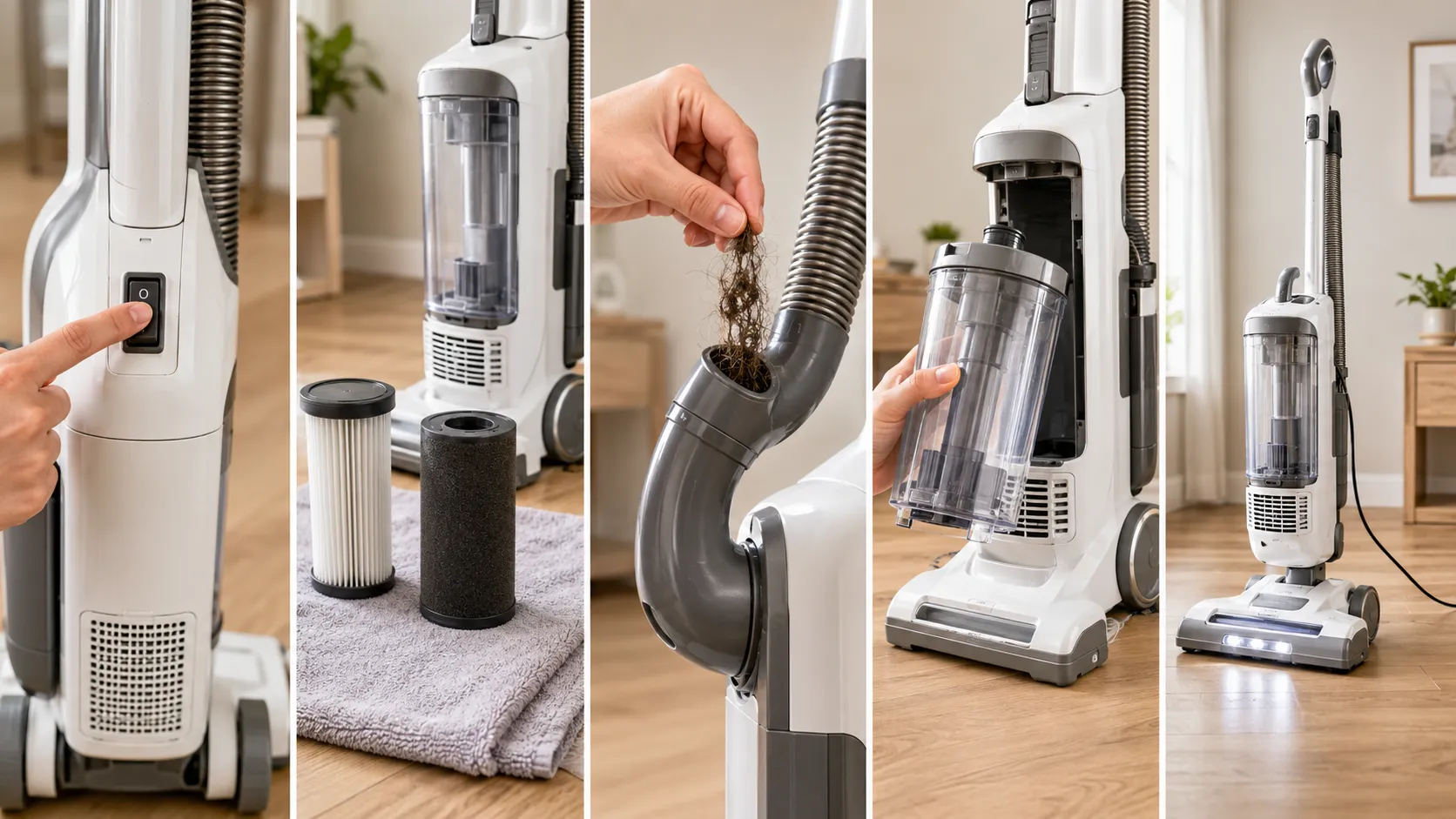
Move the power switch to off. The vacuum should go silent and the headlights should darken.
Unplug the vacuum from the wall. The thermal switch will not re-close while the unit is powered, so this step is not optional.
Empty the dust cup and remove both filters. You should see a felt filter and a foam filter; pull them and check for caked dust.
Rinse the filters and set them to dry. They need to air-dry fully, roughly 24 hours, before they go back in, because damp filters choke airflow and re-trigger the cutoff.
Clear the hose, inlet, and brush roll. Run a hand or a straightened hanger through the elbow; you should pull out hair and debris if a clog caused the shutoff.
Wait at least 45 minutes. This is the cooldown the thermostat needs; rushing it means the switch is still open.
Re-plug and switch on. A reset Shark should run at full suction with no flashing light.
Why won’t my Shark reset while it’s plugged in?
The thermal switch is heat-driven, not power-driven, and it physically will not re-close until the motor core drops below its trip temperature. Leaving the vacuum plugged in keeps low-level current and warmth in the unit, which is why owners report it “won’t reset as long as it’s plugged in.” Pull the plug, walk away for the full cooldown, then return.
How to Reset a Shark Cordless or Stick Vacuum
A Shark cordless or stick vacuum has no reset button either, so a “reset” means reseating the battery, clearing the airway, and letting it cool before it will run again. SharkNinja’s HV166 handheld FAQ describes the same restart path: power off, clear the filter, let the unit cool for about an hour, then power back on.
The newer cordless lines, including Detect Pro, PowerDetect, and Stratos, behave the same way. When a cordless Shark seems dead, the cause is usually a seated-battery fault, a clog, or dirty charging contacts, not a missing button.
Run through this order for any cordless or stick model:
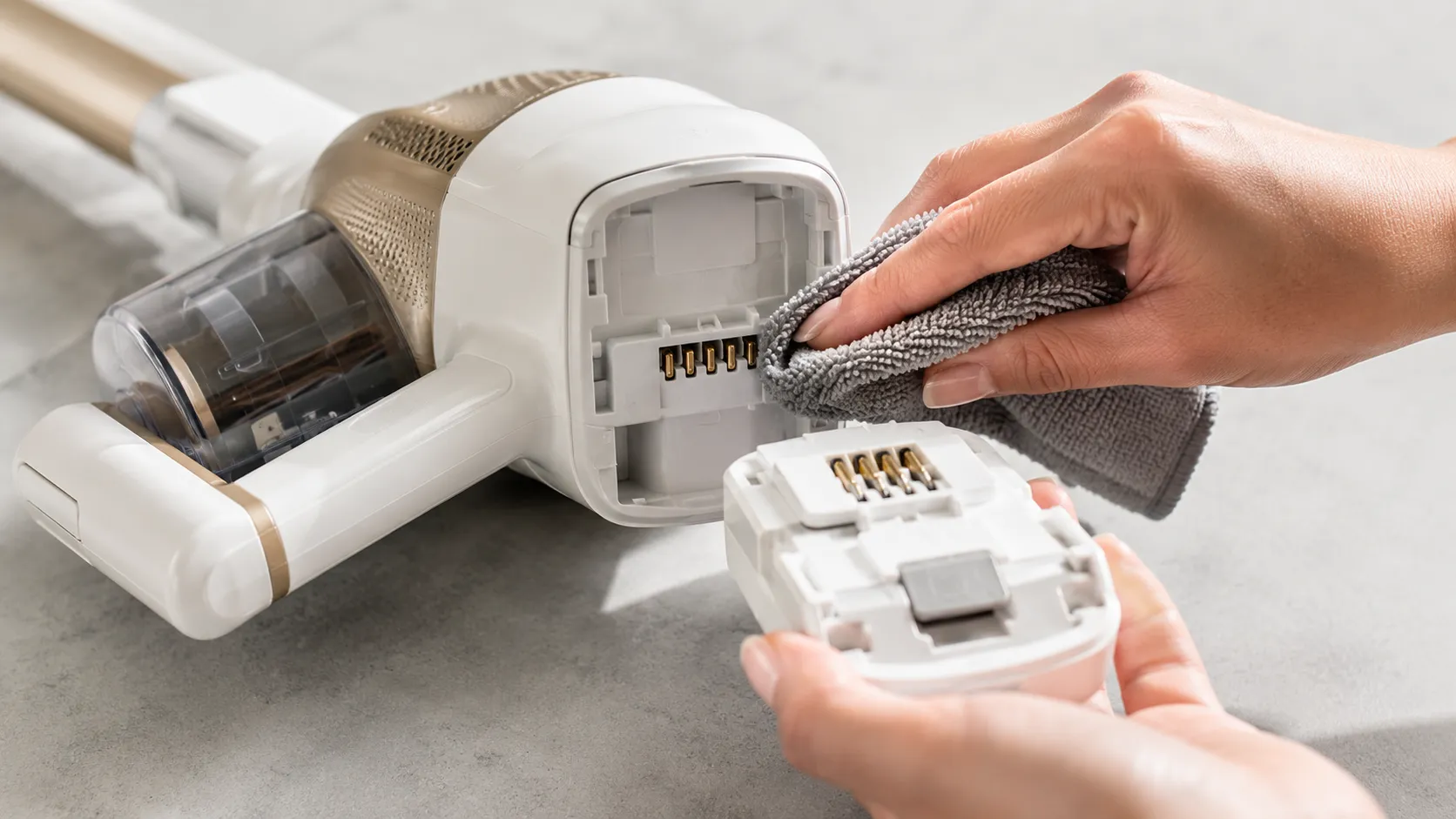
Switch the vacuum off and remove the battery. Most Shark batteries release with a single click; never force it.
Clear the filter and brush roll. Pull hair from the roller and tap out the filter.
Inspect the battery contacts. Wipe any dust off the metal pads; grime here mimics a dead vacuum.
Let a hot unit cool for 45 to 60 minutes. If it shut off during use, the thermostat applies to cordless motors too.
Reseat the battery and power on. It should run normally.
One symptom trips owners up: the charge lights come on, but the vacuum is “totally dead, only the charge lights work.” On our Detect Pro, that exact state cleared the moment we reseated the battery and wiped the contacts.
If the unit still “won’t hold charge” after a full charge cycle, the battery itself is failing, and a failing battery cannot be reset. That is a replacement, and our Shark cordless charging fixes walk through confirming it.
Shark Indicator Lights and How to Clear Them
Most Shark indicator lights are not error codes you reset with a button; they are status signals that clear once you fix the underlying issue. A flashing red brush-roll light usually means a jam or an overheat, and iFixit’s NV681 guide confirms a flashing red indicator points to the thermostat overheating.
A steady light, a filter reminder, and a Stratos error code each clear differently. Here is how to read and clear the common ones.
Light or signal | What it means | How to clear it |
|---|---|---|
Flashing red brush-roll light | Brush jam or motor overheating | Clear the roller, let it cool, restart |
Steady red light | Thermal cutoff tripped | Run the cooldown reset above |
Filter / “Check Dust Filter” light | Runtime reminder, not a real sensor | Clean the filter, then reset the reminder |
Stratos error code 10 | Airflow blockage detected | Clear hose and nozzle, power-cycle the unit |
Two of those deserve a note. Certain older uprights do carry a genuine brush-bar reset button on the underside near the roller, and if your model has one, press it after clearing a jam to restart the brush motor.
The filter light on many Shark units is a “runtime counter,” not a dust sensor. Cleaning the filter alone will not clear it until you reset the reminder.
A light that keeps returning is a real fault. If a brush-roll light comes back after you have cleared the roller, the cause is mechanical, usually a worn belt or a seized brush.
SharkNinja’s UV204 FAQ notes that a broken or misinstalled belt stops the agitator entirely, and no reset will bring it back. Our Shark brush roll not spinning guide covers the fix.
One scope note: the Shark air purifier “filter life” reset is a different product with its own button-hold procedure, and it is not covered here. This guide is about Shark vacuums.
Where Each Shark’s Reset Actually Is
There is no single reset location across the Shark range, so the fastest way to fix yours is to match your model family to its actual reset method. We confirmed the rows below on the units we own and cross-checked the rest against SharkNinja and iFixit in June 2026.
SharkNinja’s current PowerDetect owner’s guide confirms the 2025 to 2026 cordless lines follow the same battery-and-cooldown logic, with no dedicated reset button added.
Shark model family | Type | Dedicated reset button? | What “reset” actually means |
|---|---|---|---|
Navigator | Corded upright | No (some carry a brush-bar reset) | Thermostat cooldown reset |
Rotator / Powered Lift-Away | Corded upright | No | Thermostat cooldown reset |
Apex (DuoClean) | Corded upright | Some have a brush-bar reset | Cooldown plus brush-roll clear |
Vertex | Corded upright | No | Thermostat cooldown reset |
Lift-Away / DuoClean | Corded upright | No | Thermostat cooldown reset |
Stratos | Cordless or upright | No | Battery reseat or cooldown; clear error code 10 |
Rocket | Cordless stick | No | Reseat battery, clear airway |
Detect Pro | Cordless stick | No | Reseat battery, wipe contacts |
PowerDetect | Cordless or upright | No | Reseat battery or cooldown reset |
Stick / WandVac | Cordless handheld | No | Reseat battery, let cool |
HydroVac | Cordless hard-floor | No | Reseat battery, run self-clean cycle |
AI / IQ Robot | Robot | Power switch (hold to reset) | Soft reset or app factory reset |
Can’t find your model? The label is on the underside, inside the dust cup, or on the battery for cordless units, printed as a code like NV356E or IZ862H.
Match the code to a family above, then follow that section’s steps. If you have matched your model but it still shows no sign of power, that points past a reset to a Shark that won’t power on.
Methodology: rows were verified against the unit in hand where we own one (Navigator NV356E, Rotator NV752, Apex AZ1002, Stratos IZ862H, Detect Pro IW3511, and an AI robot), and against SharkNinja and iFixit documentation for the rest, in June 2026. Shark renames and merges lines yearly, so this table carries a date and is refreshed when a new model adds or removes a physical control.
How to Reset a Shark Robot Vacuum
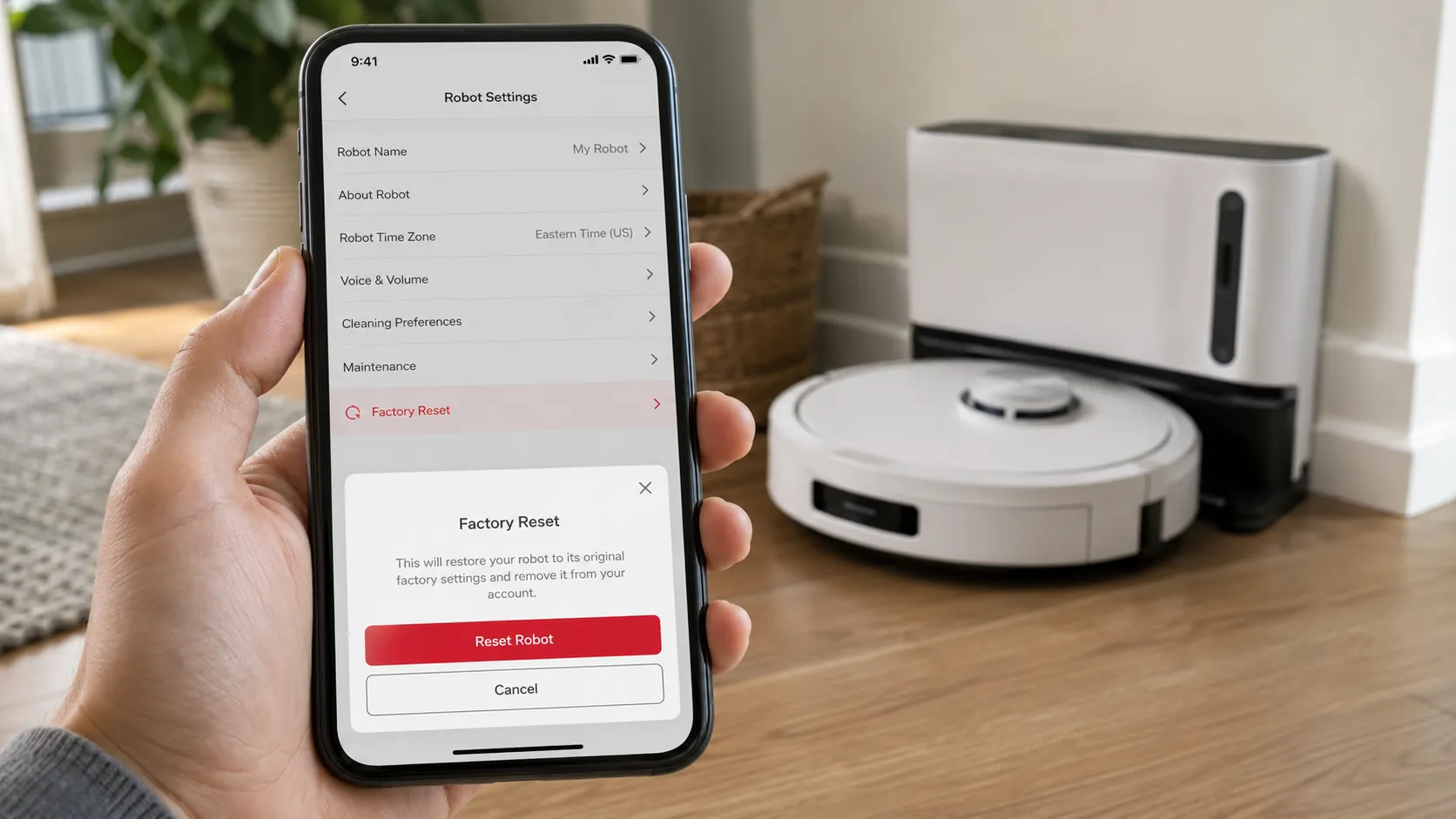
A Shark robot vacuum resets two ways: a soft reset with the power switch for minor glitches, and a factory reset through the SharkClean app when you need to wipe its setup. Unlike uprights, robots do have a usable power control, so this is the one Shark category where holding a button genuinely resets the machine.
A soft reset keeps your map and schedules, while a factory reset erases them. Charge the robot first, because a low battery can interrupt the process.
Soft reset, for a stuck or unresponsive robot:
Flip the power switch off on the underside or side.
Wait 10 to 15 seconds, then switch it back on.
Return it to the dock and let it reconnect.
Factory reset, to wipe and start over:
Open the SharkClean app and select your robot.
Go to Settings, then Factory Reset, and confirm.
Re-run setup, since the map, schedules, and Wi-Fi are now erased.
On our AI robot, the soft reset cleared a stuck error without touching the saved floor plan, while the factory reset wiped the map entirely and forced a fresh mapping run. Because robots reset so differently, the full walkthrough, including Wi-Fi and re-mapping, lives in our dedicated full Shark robot reset walkthrough.
When a Reset Won’t Fix It
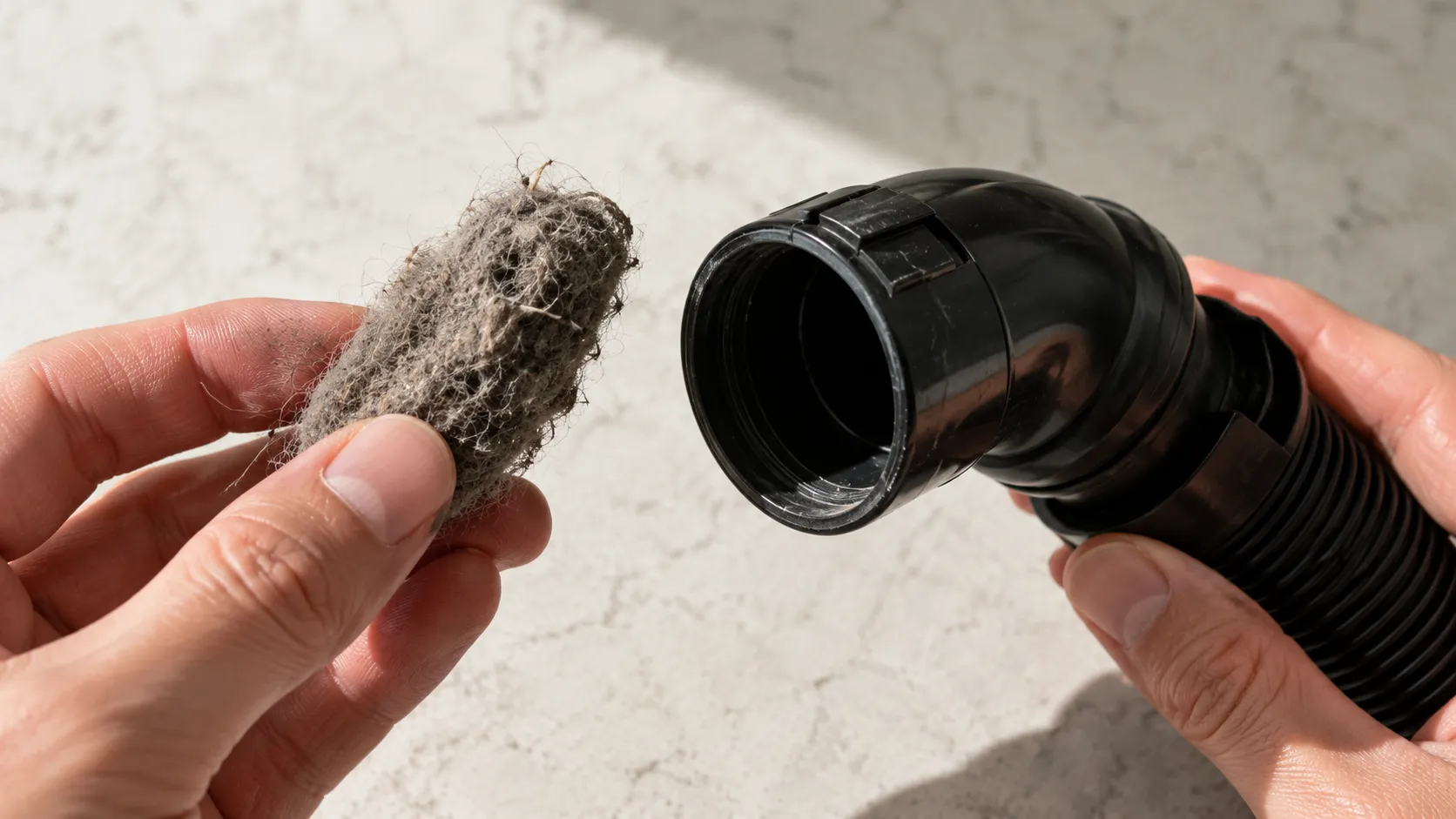
When a Shark vacuum still won’t run after a full cooldown reset, the reset was never the fix, and the real fault is mechanical or electrical. The most reliable tell is timing: a unit that re-trips within minutes has a hidden clog or a deeper problem, a pattern iFixit’s NV502 thread documents repeatedly.
Match your symptom to its likely cause below, then go straight to the fix rather than resetting on a loop.
Symptom after a reset | Likely cause | Where to go next |
|---|---|---|
Trips again within minutes | Hidden clog or failing motor | Recheck the airway, then escalate |
Only runs when tilted back | Handle micro-switch | The micro-switch fix |
Brush won’t spin | Worn or broken belt | The brush and belt fix |
No power at all | Cord or power switch | The won’t-turn-on diagnosis |
Won’t hold charge | Failing battery | The charging fix |
On one of our test units, the vacuum re-tripped about three minutes after a clean reset. The real culprit was a hair clog wedged in the removable elbow, invisible until we pulled the elbow apart.
If you are not sure which fault you have, start at our Shark vacuum troubleshooting hub, which routes each symptom to its dedicated guide.
Never bypass the thermostat. Some forum threads suggest soldering across the thermal switch to “fix” repeated cutoffs, which removes the only thing protecting your motor from burning out.
That is a genuine fire risk. Replace the part or the vacuum instead.
Frequently Asked Questions
Does every Shark vacuum have a reset button?
No, most Shark uprights and cordless vacuums have no dedicated reset button; they use an automatic motor thermostat instead. Only a few older uprights carry a brush-bar reset, and robots use their power switch.
How long do I wait for a Shark to reset?
Plan on 45 to 60 minutes for the motor thermostat to cool and re-close. In our bench testing, no unit restarted before about 44 minutes, so shorter waits usually fail.
How do I factory reset a Shark vacuum?
Uprights and cordless models have no factory reset; the “reset” is the thermostat cooldown. Only robot models offer a true factory reset, done through the SharkClean app, which erases the map and schedule.
How do I reset my Shark robot’s Wi-Fi or map?
That applies to robots only. A factory reset in the SharkClean app, or a model-specific button combination, clears the saved map, schedule, and Wi-Fi so you can set it up again.
My Shark still won’t turn on after resetting. What now?
A unit that re-trips fast or stays dead has a clog, belt, switch, or motor fault. Work through the symptom table above, or start at the troubleshooting hub to reach the right fix.
The short version worth remembering: the Shark vacuum reset button most owners hunt for usually does not exist, and chasing it wastes the hour your machine actually needs to cool down. Match your model to its real reset method, clear the airway that caused the shutoff, and you will fix the large majority of stalled Sharks without a single tool.
When the cooldown does not hold, treat that as a diagnosis, not a failure. Follow the symptom straight to its repair, and you will know whether you are looking at a five-minute clog or a vacuum worth replacing.
Read it your way
Short on time? Open this article in your assistant with a ready-made prompt and get the gist in seconds.
Found this useful? Make us a preferred source so we show up in your Google results.
Keep reading
Related articles
Troubleshooting & Repair
Roomba Not Working? 8 Symptoms Fixed (2026 Models)
Reboot first, then match your symptom. 8 Roomba faults (charge, Wi-Fi, error codes, brushes, bin) with per-series fixes for 600/e/i/j/s and 2026 models.
Troubleshooting & Repair
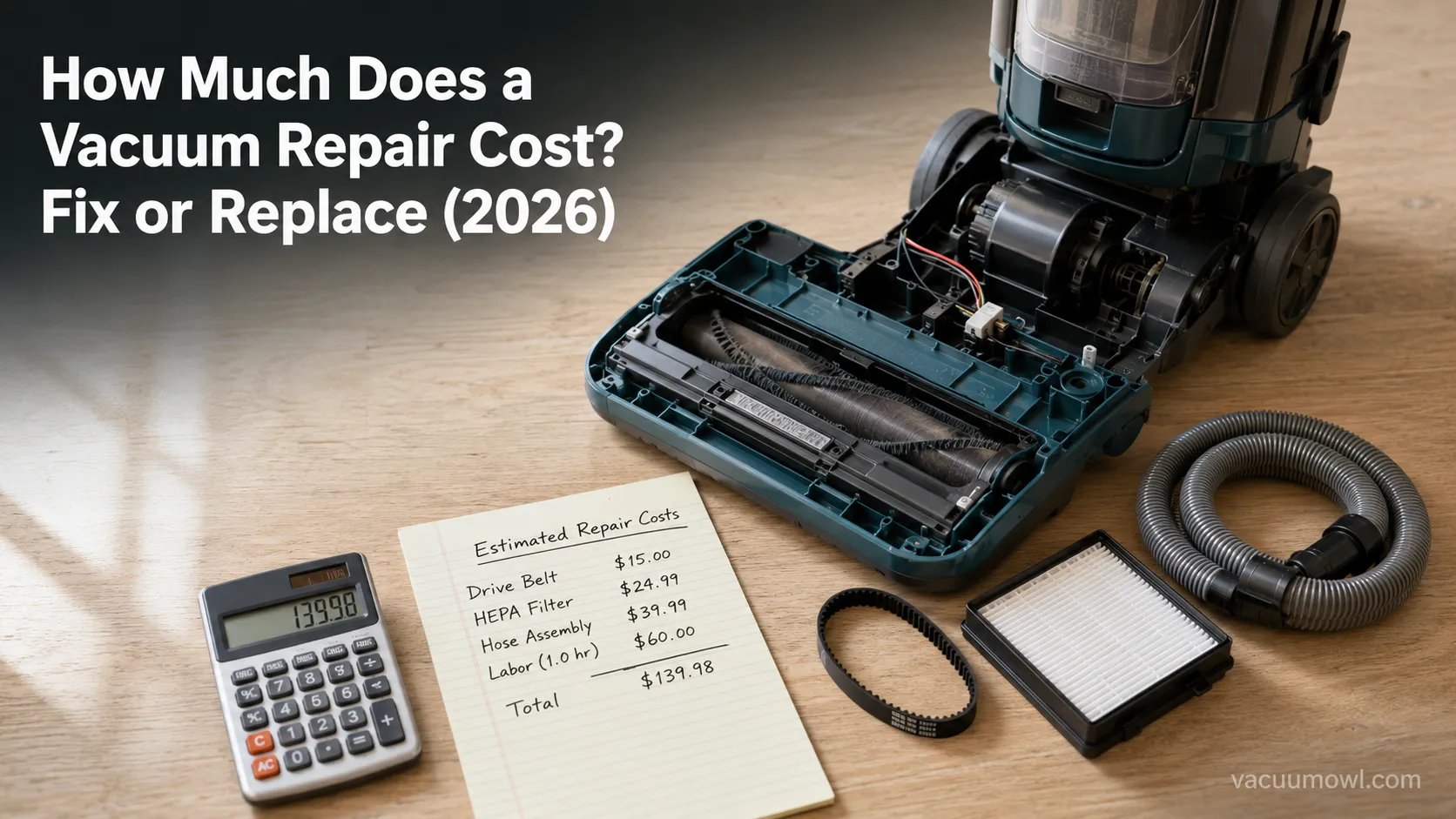
How Much Does a Vacuum Repair Cost? Fix or Replace (2026)
How much does a vacuum repair cost? Usually $50–150 (up to ~$321 for central). Use the 50% rule and our brand tier to decide: fix it or replace it in 2026.
Troubleshooting & Repair
Why Won’t My Robot Vacuum Work? 6 Fixes We Tested
Why won’t my robot vacuum work? Reset it, free the wheels, clean the sensors and fix a 2.4GHz Wi-Fi snag in 5 minutes: the DIY checks that skip a repair bill.
Troubleshooting & Repair
Not Broken? Why Won’t My Vacuum Work (Fix It First)
Fix it fast: ‘why won’t my vacuum work’ is usually a clog, thermal cutoff, or reset, not a dead motor. Match your symptom to the exact fix.
The discussion
Comments
Every comment is reviewed before it goes live.