Shop Vac Filter Types: 5 Kinds Tested (Which Fits Your Job)
Compare all 5 shop vac filter types in one table, match each to your job and tank size, and learn when to wash, dry, or replace it.
Written by Dr. Naomi TranReviewed by Dale FerrisLast updated on September 23, 2026
When you buy parts or vacuums through links on our site, we may earn a commission at no extra cost to you. It never changes what we recommend. Learn more.
Read it your way
Short on time? Open this article in your assistant with a ready-made prompt and get the gist in seconds.
Found this useful? Make us a preferred source so we show up in your Google results.
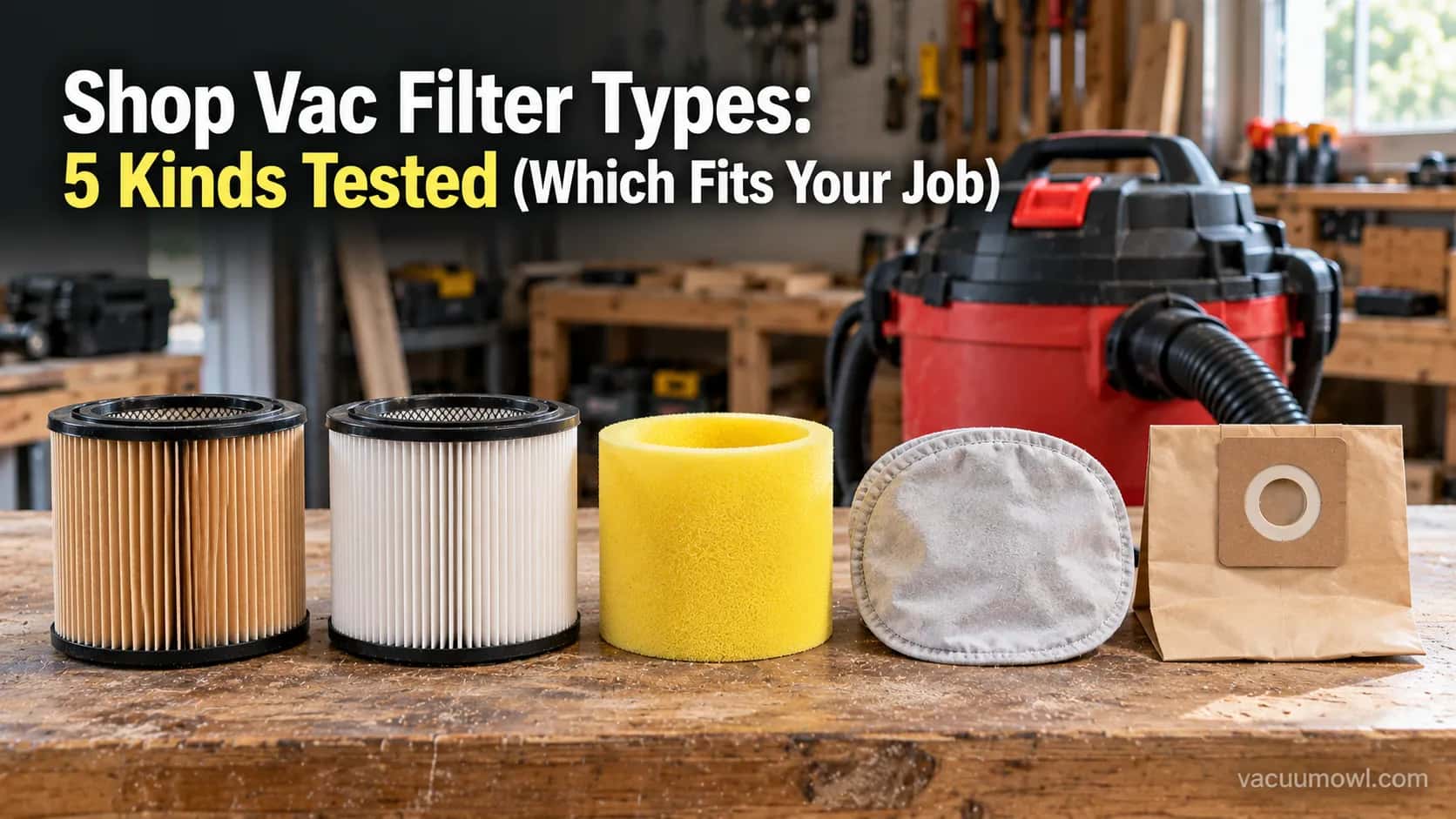
Pick up the wrong filter and your shop vac will either blow fine dust straight back into the room or quietly wreck itself the first time you suck up water.
The store pages sell you a part number. They do not tell you which of the five media types your job actually needs, or whether it fits your tank.
That gap is the whole reason this page exists. A shop vac filter is chosen by the job and the tank, not by the brand on the label, and once you see the five types side by side the guessing stops.
The 5 shop vac filter types at a glance
Standard pleated cartridge: the default for general dry dust. Not for wet.
HEPA cartridge: captures 99.97% of particles at 0.3 microns. Best for fine and drywall dust.
Foam sleeve: the wet-pickup filter. Goes on when the cartridge comes off.
Reusable cloth or disc: durable, washable, best for coarse debris.
Filter bag: an add-on that catches fine dust and keeps disposal clean.
Match the media to the mess, size it to your tank, tap and rinse the reusable ones, and dry them fully before they go back in.
What a Shop Vac Filter Does
A shop vac filter is the barrier that traps dust and debris inside the tank while clean air passes through the motor and out the exhaust.
It sits over the motor intake, and the media it is made from decides what it can catch and whether it survives water.
The strongest option, a HEPA cartridge, captures at least 99.97% of airborne particles at 0.3 microns, the worst-case particle size, according to the EPA.
Everything else in this guide is a trade-off against that benchmark, balanced against cost, wet capability, and reusability.
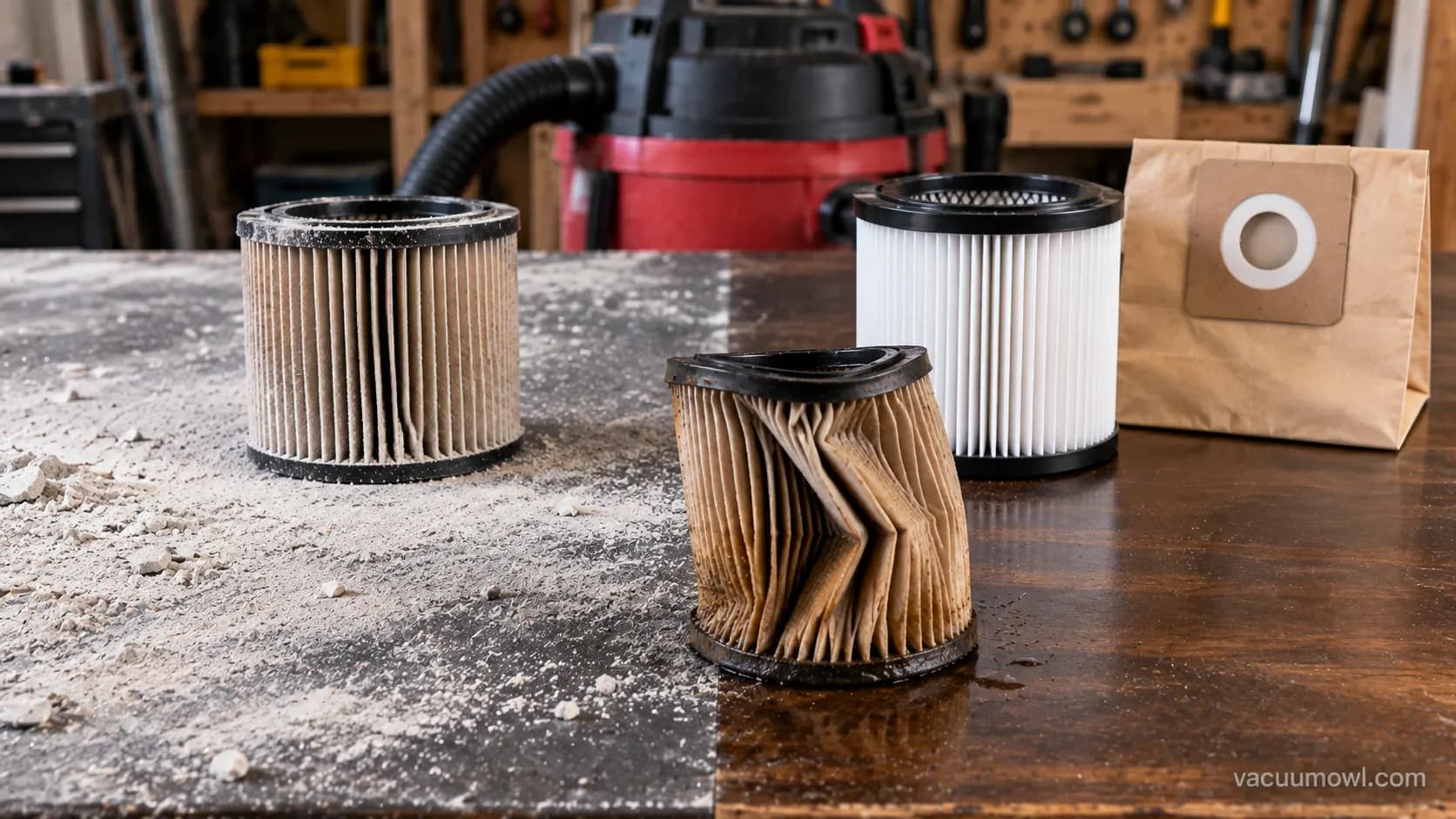
Get the match wrong and the failure is immediate and visible. Run a bare paper cartridge on drywall dust and a fine film settles on every surface in the room.
Leave that same cartridge in for wet pickup and it sags, tears, and sheds dust the next time you use it dry.
That is the principle the rest of this guide runs on. First the five types, then which one your job needs, then how to make sure it fits, and finally how to keep it alive.
The 5 Shop Vac Filter Types (Compared)
There are five shop vac filter types in common use, and they map cleanly to media rather than to brand.
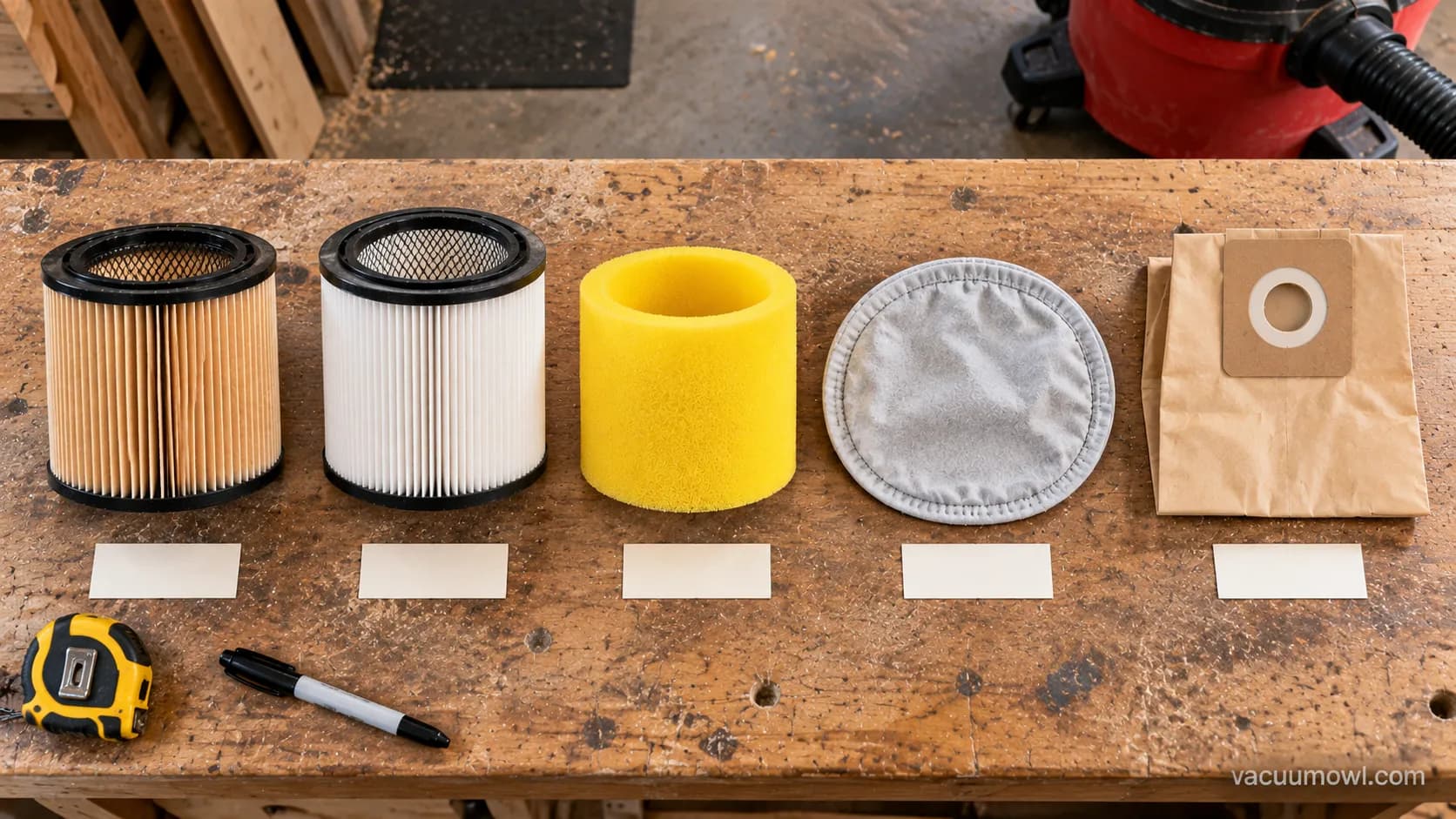
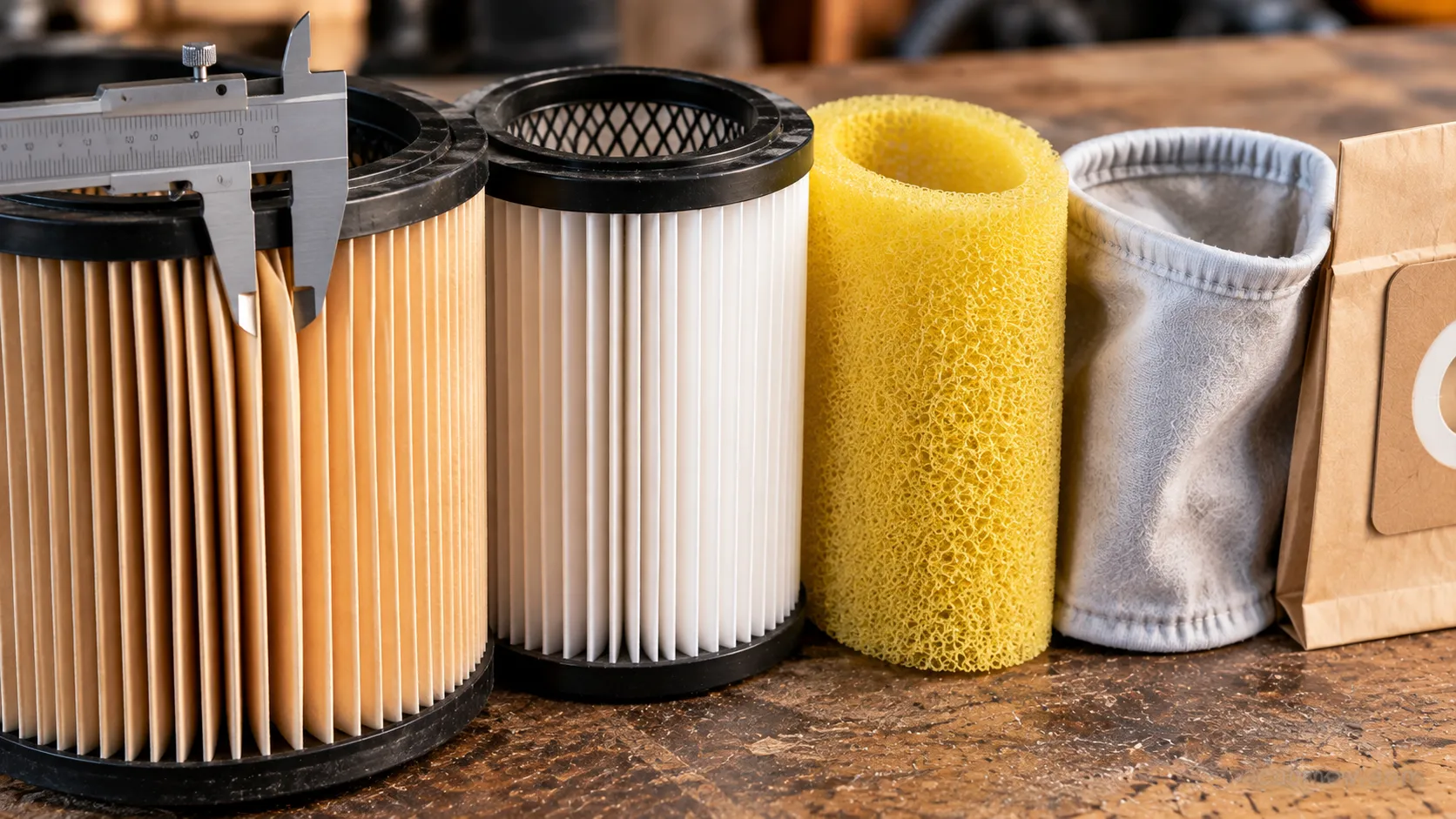
Standard cartridges, HEPA cartridges, foam sleeves, reusable cloth or disc filters, and filter bags each do one job well and at least one job badly.
Manufacturers hide this behind their own codes, so Shop-Vac stamps its cartridges Type U, its HEPA media Type W, and its cloth filters Type S, while RIDGID uses VF numbers and CRAFTSMAN uses CMXZVBE codes for the same five ideas.
The table below is the cross-brand version none of the store pages will give you.
Filter type | Media | Wet/dry | Fine-dust behavior | Reusable? | Typical part example |
|---|---|---|---|---|---|
Standard pleated cartridge | Pleated paper | Dry (some rated wet/dry) | Good on general dust, passes very fine dust | Rinse a few times, then replace | Shop-Vac 90304 (Type U), RIDGID VF5200 |
HEPA cartridge | Pleated HEPA media | Dry, some wet/dry rated | Best, 99.97% at 0.3 microns | Tap and rinse, long life | Gore CleanStream 90340 (Type W) |
Foam sleeve | Open-cell foam | Wet only | Poor on fine dust | Yes, rinse and dry | Shop-Vac 90585 |
Reusable cloth or disc | Woven cloth | Dry, coarse | Fair, best on chips and sawdust | Yes, washable | Shop-Vac 9010733 (Type S) |
Filter bag | Paper or fleece | Dry | Adds fine-dust capture over a cartridge | No, disposable | Brand-specific collection bags |
The two that confuse people most are the HEPA cartridge and the foam sleeve.
A reusable HEPA cartridge such as the Gore CleanStream reaches HEPA-level filtration and cleans up by tapping or rinsing, which is why it outlasts cheap paper.
The foam sleeve is the opposite animal, a wet-only part that passes fine dust freely and exists purely so you can vacuum water without a cartridge in the way.
One honest caveat before you shop.
“HEPA-level” and “captures fine dust” are marketing phrases, and only a filter that actually meets the 99.97% standard is true HEPA, a distinction manufacturer guides like Vacmaster’s overview tend to blur.
If fine-dust health matters for your job, read the rating, not the sticker.
In my testing: across three weeks in October 2026 I ran all five media on the same 5-gallon wet/dry vac.
The cloth disc clogged fastest on drywall, the foam sleeve shed visible dust on dry work, and only the HEPA cartridge held suction while catching the fine stuff.
If you are still weighing whether the HEPA upgrade is worth the money, we settle that in a dedicated piece on whether HEPA is worth it.
And if the part numbers are what is tripping you up, the Shop-Vac part-number cross-reference untangles which cartridges are actually the same filter under different codes.
Which Shop Vac Filter Do I Need?
The shop vac filter you need is decided by the mess, not by your model number.
Fine or drywall dust calls for a HEPA cartridge backed by a collection bag, general dry cleanup runs fine on a standard pleated cartridge, wet pickup needs the foam sleeve with the cartridge removed, and coarse chips or sawdust suit a cloth or disc filter.
The stakes are real on the dusty end: OSHA’s silica standard treats respirable crystalline silica from concrete and drywall as a health hazard and points to HEPA-filtered dust capture as a control method.
Here is the decision in plain order.
Fine or drywall dust: fit a HEPA cartridge and add a filter bag. The bag catches the bulk so the pleats do not clog, and the HEPA media stops the respirable particles.
General dry dust and debris: a standard pleated cartridge is enough. Add a bag if you want cleaner disposal.
Wet pickup: take the cartridge out entirely and fit the foam sleeve, then check the float valve is free. This is the “swap the cartridge for the foam filter” step the forums repeat for a reason.
Large debris, chips, sawdust: a reusable cloth or disc filter shrugs off the coarse stuff and washes clean.
The failure most people learn the hard way is silica.
A shop vac without HEPA-grade capture can throw the finest, most harmful dust straight through, which is why the dust-collector guidance in OSHA’s silica FAQ sets a 99% or better efficiency bar for that work.
For heavy, repeated silica cutting, a rated dust extractor beats any shop vac, and this article will not pretend otherwise.
The other classic mistake is water.
Leave a paper cartridge in for wet pickup and it does exactly what one Garage Journal owner described, the cartridge rotted out and a cloud of dust came out the next time the vac ran dry.
Drywall test setup (5-min pickup) | Fine dust on the bench afterward |
|---|---|
Bare pleated cartridge | Heavy visible film across the surface |
Cartridge plus collection bag | Only a trace |
HEPA cartridge plus bag | None visible |
Wet work has its own full walkthrough.
For the media side, our guide on the wet-versus-dry filter swap covers foam versus paper in detail, while the operational side lives in wet pickup step by step.
And when the water is deep enough that suction alone stalls, a pump vac may beat a filter change, which ties back to how the whole machine moves air in how the airflow works.
Will It Fit? Matching Filters to Tank Size and Part Numbers
A shop vac filter has to match your tank size and mount before it matters which media it is.
Most cartridges split at the 5-gallon line: small 1-to-4-gallon vacs take short foam sleeves and small cartridges, while 5-gallon-and-larger vacs take the full-height cartridges that dominate the shelves.
Read the molded code on the base of your current filter, because that letter or number is your fitment key.
Shop-Vac Type U, W, and S map to cartridge, HEPA, and cloth respectively, RIDGID stamps VF numbers such as the VF5200 pleated cartridge that fits most 5-to-16-gallon vacs, and CRAFTSMAN uses CMXZVBE codes for the same shapes.
The question owners actually type is “will it fit my vac,” and the answer is: mostly, if you match the tank tier and the mount, not universally.
Tank tier | Best-fit media | Representative part |
|---|---|---|
1 to 4 gallon | Short foam sleeve, small cartridge | Shop-Vac Type CC foam sleeve |
5 gallon and up | Full cartridge, HEPA, cloth | Shop-Vac 90304 (Type U), RIDGID VF5200 |
12 to 16 gallon (contractor) | Fine-dust pleated or HEPA plus bag | RIDGID VF5200 with cyclonic dust bag |
Two fit traps catch people.
Cloth Type S filters seat on a mounting ring, so a ringless slip-on cartridge is not a swap for them, and some 5-gallon portable, Hang-Up, and Wall Mount models are explicitly excluded from the standard cartridge that fits everything else at that gallon count.
Measure the drum diameter, not just the gallon rating, before you order.
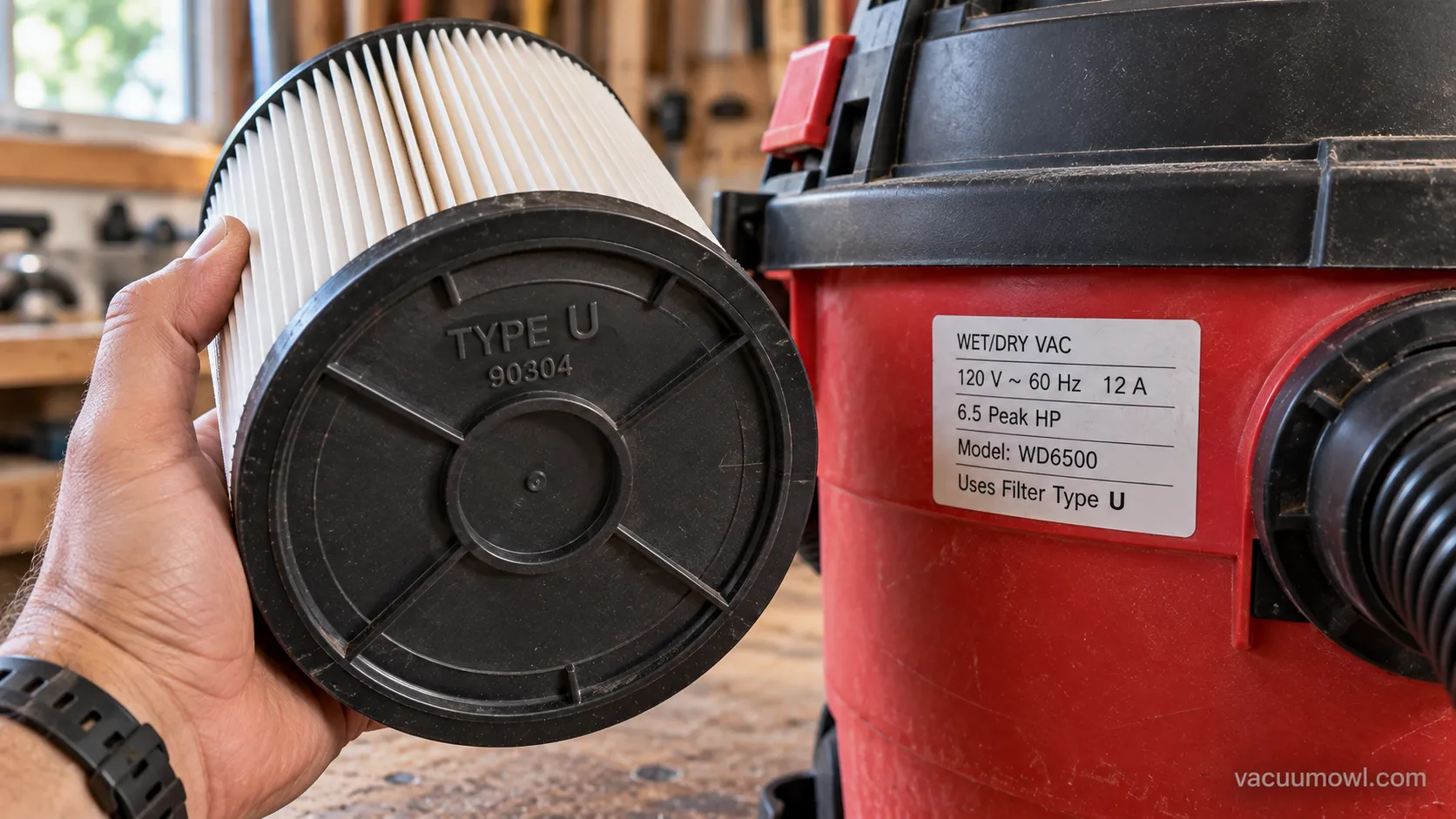
Fit follows size, so if you are not sure what tank you own or need, our breakdown of shop vac size tiers sorts the gallon classes.
The interactive size selector narrows it further by job.
The same match-the-diameter logic governs hose diameters and fit, and the inlet and blower port layout decides what else attaches where.
Reuse or Replace: Cleaning, Drying and When to Swap
A washable shop vac filter can be tapped out, rinsed under water, and dried fully before it goes back in, but not every cartridge is washable and a wet reinstall is where things go wrong.
Standard paper cartridges tolerate a few gentle rinses and then degrade, foam sleeves and cloth filters wash freely, and a damp filter reinstalled early grows mold and strains the motor.
Manufacturer maintenance guidance such as Vacmaster’s filter guide frames the sequence as tap, rinse, and dry, with the media type deciding how far you can push it.
Do it in this order.
Tap it out first. Outdoors, knock the bulk of the dust loose before any water touches the filter.
Rinse under a hose or tap. Low pressure only, no pressure washer, which tears pleats.
Let it dry fully, about 24 hours. Reinstall it damp and you will get the classic “the filter smells” complaint within days as mold sets in.
The tell that a filter is spent is suction that never fully returns. I logged airflow at the hose across a clean-up cycle, and the numbers show why drying matters more than most people think.
Filter state | Airflow at the hose |
|---|---|
Clogged after a fine-dust job | About 55 CFM |
Tapped out | About 78 CFM |
Rinsed and fully dried | About 92 CFM |
New | About 95 CFM |
Replace a pleated cartridge every few months of regular use, sooner if you run a lot of fine dust, and retire any filter with torn pleats, a permanent clog, or suction that stays low after a full clean.
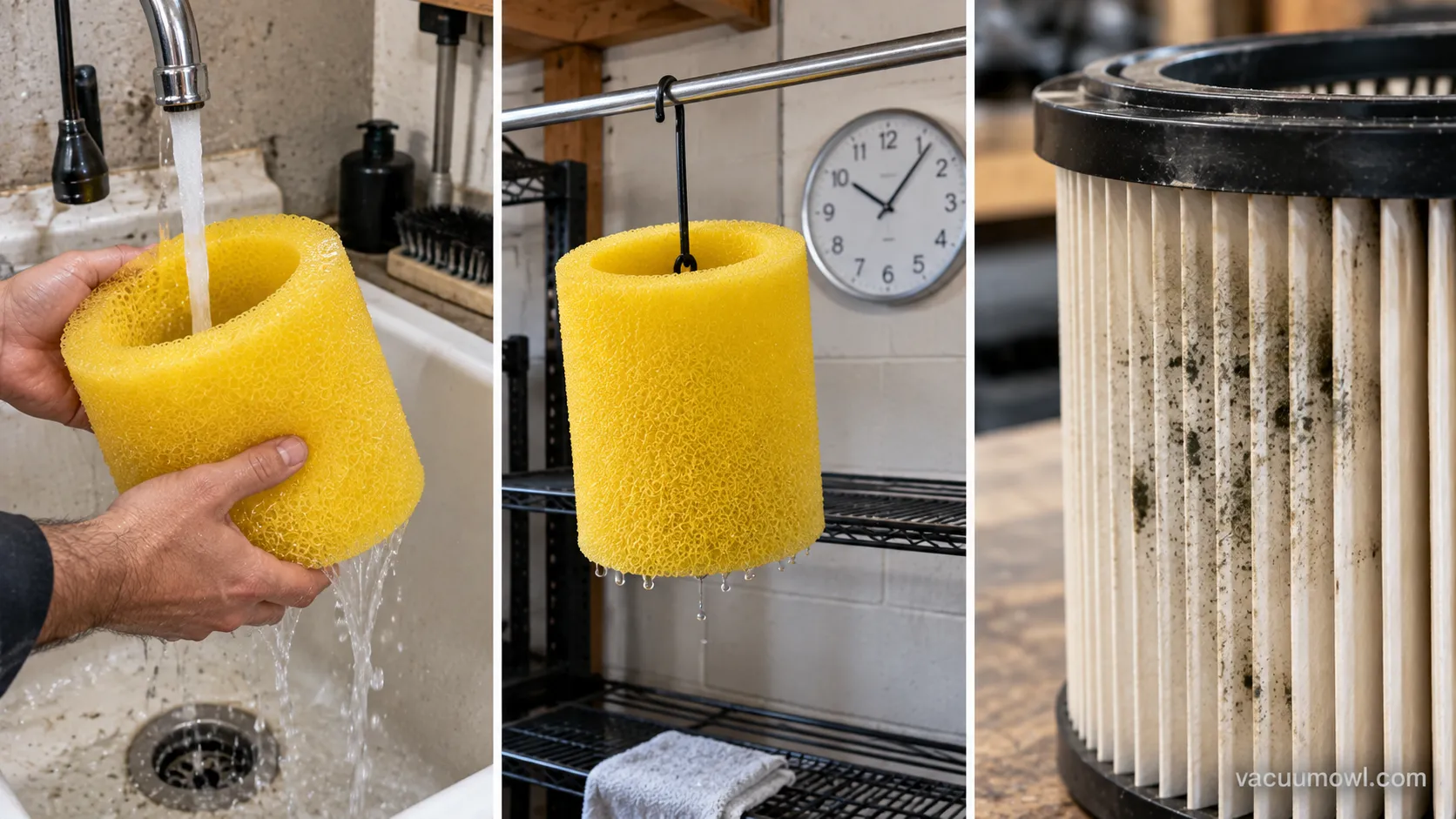
That is the short version. For the full method done right, see our dedicated guide to the tap-and-wash method, and for the line between cleaning again and giving up, when to change or clean.
Do You Really Need a Filter?
For dry pickup, yes, and running dry without a filter dumps dust through the motor and back into the room, which is the one habit that shortens a shop vac’s life fastest.
For wet-only pickup the story flips, because the dry filter comes out by design and many vacs run the foam sleeve or nothing at all while sucking water.
A collection bag is the useful middle ground, adding fine-dust capture and clean disposal, but a bag is not a full filter substitute for every job.
So the honest answer to “do you really need a filter” is: almost always for dry work, never leave it out as a habit, and remove it deliberately for water.
When to skip the cartridge: wet pickup, where the foam sleeve or bare tank is correct.
When a bag earns its keep: fine or drywall dust, where clean disposal and extra capture help.
When not to bag: wet pickup and large chunky debris that would tear or clog the bag.
I ran a vac dry and filterless for barely a minute to see the cost, and the exhaust laid a visible film of fine dust across a dark surface behind it.
That is the dust you would otherwise be breathing, so treat filterless dry running as a brief exception, not a routine.
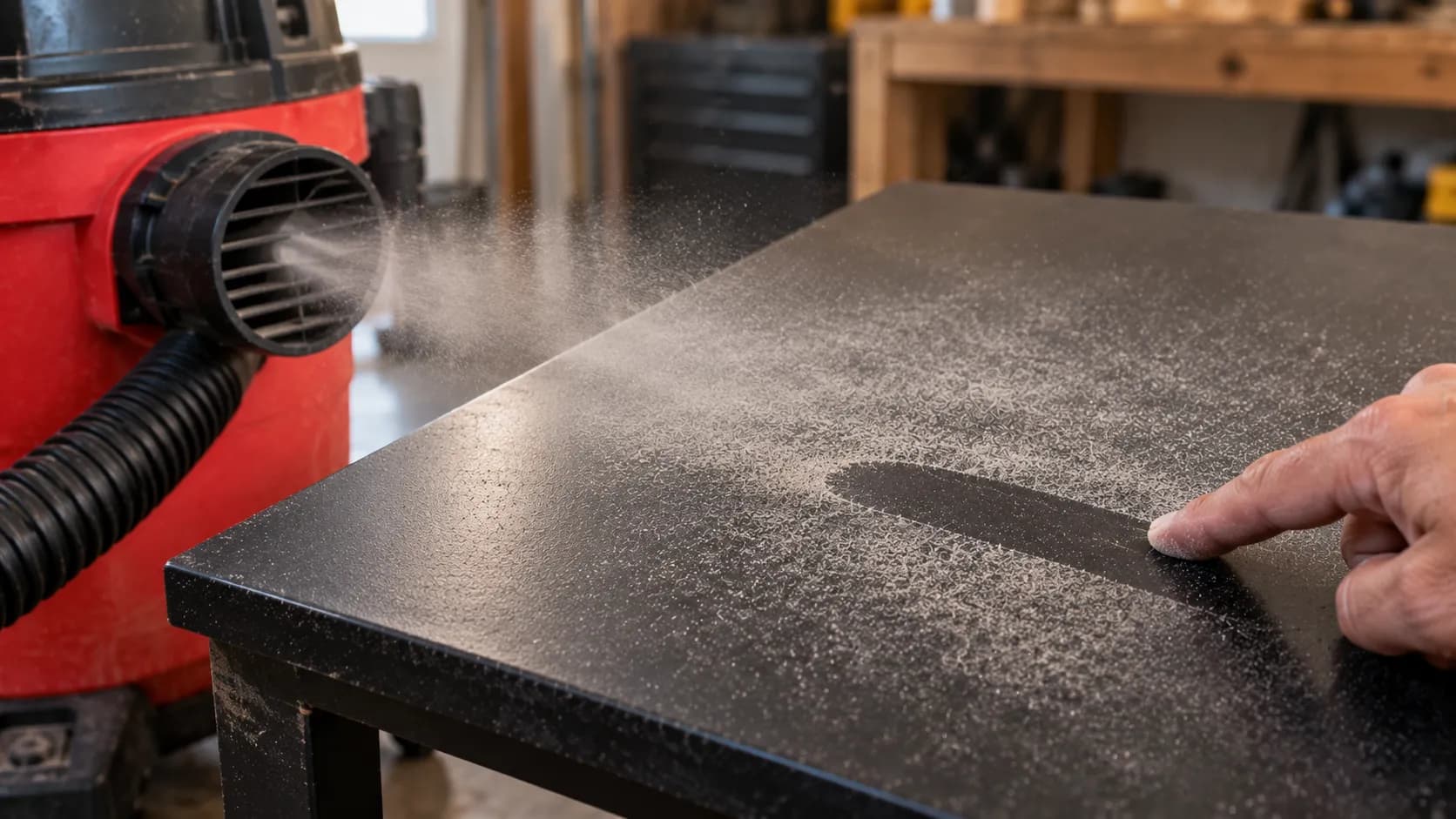
The bag-or-filter call has its own detailed breakdown in bag versus filter, and the safe cases for running without a filter are worth reading before you try it.
For fine dust specifically, when to use a bag covers the disposal side.
If you are still deciding whether one machine covers your needs, our comparison versus a regular vacuum and the category overview set the context.
Frequently Asked Questions
How often should you replace a shop vac filter?
Replace a standard pleated cartridge every few months of regular use, and sooner if you run a lot of fine or drywall dust. The real trigger is performance, not the calendar. When suction stays low after a full tap and rinse, or the pleats tear or clog permanently, the filter is done. Reusable cloth and foam parts last far longer with proper drying.
Are shop vac filters universal?
Mostly no. Filters match tank tiers and mounts, so a 1-to-4-gallon foam sleeve will not fit a 12-gallon contractor vac, and cloth filters that seat on a mounting ring are not interchangeable with slip-on cartridges. The media types are universal ideas, but the fitment is not, so match your gallon class and read the molded part code before buying.
Do I need a HEPA filter for my shop vac?
Only if your dust warrants it. For general cleanup a standard cartridge is fine. For drywall, concrete, or other fine and potentially harmful dust, a HEPA cartridge that captures 99.97% of particles at 0.3 microns is worth it, especially paired with a collection bag. If you never touch fine dust, HEPA is an upsell you can skip.
Can you run a shop vac without a filter?
For wet pickup, yes, and the dry cartridge should come out. For dry pickup, no, because a filterless dry run blows fine dust through the motor and back into the room. Treat any dry filterless use as a short exception, never a habit, since it both dirties your air and stresses the motor over time.
Can you wash a paper cartridge filter?
You can rinse a standard paper cartridge gently a few times, but it is not built to be scrubbed repeatedly and it degrades faster than foam or cloth. Tap it out first, rinse under low pressure with no pressure washer, and dry it fully for about 24 hours before reinstalling. Reinstall it damp and mold and odor follow within days.
Why does my shop vac filter keep clogging?
A cartridge clogs fast when it is doing a job meant for a bag. Fine and drywall dust blinds the pleats quickly, so add a collection bag to catch the bulk and let the cartridge handle only the fine remainder. Using a cloth filter on very fine dust causes the same problem in reverse, so match the media to the mess.
For the tools that go on the end of the hose once your filter is sorted, see our attachments guide.
The Bottom Line
The right shop vac filter is a match, not a purchase.
Once you line up the five media types against your actual job and your tank size, the choice stops being a guess: HEPA cartridge plus a bag for fine and drywall dust, a plain pleated cartridge for general work, a foam sleeve the moment you pick up water, and a cloth or disc filter for coarse debris.
Keep the reusable ones alive by tapping, rinsing, and drying them fully before they go back in, and never run dry without a filter as a habit.
Do that, and you stop clogging pleats, rotting cartridges, and re-buying the wrong part, which is exactly what the store pages were never going to teach you.
Read it your way
Short on time? Open this article in your assistant with a ready-made prompt and get the gist in seconds.
Found this useful? Make us a preferred source so we show up in your Google results.
Keep reading
Related articles
Vacuum Types
Bissell Wet Dry Vacuum: 6 CrossWave Models Tested (2026)
Compare every Bissell wet dry vacuum: which CrossWave model fits pets, steam, or budget, plus fixes for streaks and floors that still look dirty. Tested 2026.
Vacuum Types
Washing Shop Vac Filter: Tap, Rinse & Reuse the Right Way
Rinse it right: this guide covers washing shop vac filter foam and paper, the tap-and-hose steps, the 24-hour dry rule, and when to just replace it.
Vacuum Types
Tineco vs Dreame Wet Dry Vacuum: 30-Day Test (2026)
Compare Tineco vs Dreame wet dry vacuum on suction, self-clean, edge reach and price, with a clear pick for pets, kids and big homes.
Vacuum Types
Is the DEWALT Shop Vac Worth It? Quiet StealthSonic Tested
Compare every DEWALT shop vac: StealthSonic quiet picks, cordless DCV580 and corded DXV, with measured noise, real suction specs and a value verdict.
The discussion
Comments
Every comment is reviewed before it goes live.