How Do You Clean a Shop Vac Filter? (I Tested 4 Types)
Tap it dust-free in a bag, wash only washable filters, and dry fully. How do you clean a shop vac filter? By type, plus when to replace.
Written by Dr. Naomi TranReviewed by Dale FerrisLast updated on September 2, 2026
When you buy through links on our site, we may earn an affiliate commission (at no extra charge), which we use to fund new product tests. Learn more.
Read it your way
Short on time? Open this article in your assistant with a ready-made prompt and get the gist in seconds.
Found this useful? Make us a preferred source so we show up in your Google results.
Your suction died mid-cleanup, and the filter is a grey brick of caked dust. Before you bang it against the driveway and breathe in a cloud of it, one thing decides everything: what your filter is made of.
That is the part every quick video skips. So how do you clean a shop vac filter without a dust storm and without quietly wrecking it?
You match the method, tap, wash, or replace, to the filter type. I pulled four common filters off my own vacs and cleaned each one to find where the single-trick advice falls apart.
How Do You Clean a Shop Vac Filter? (The 30-Second Answer)
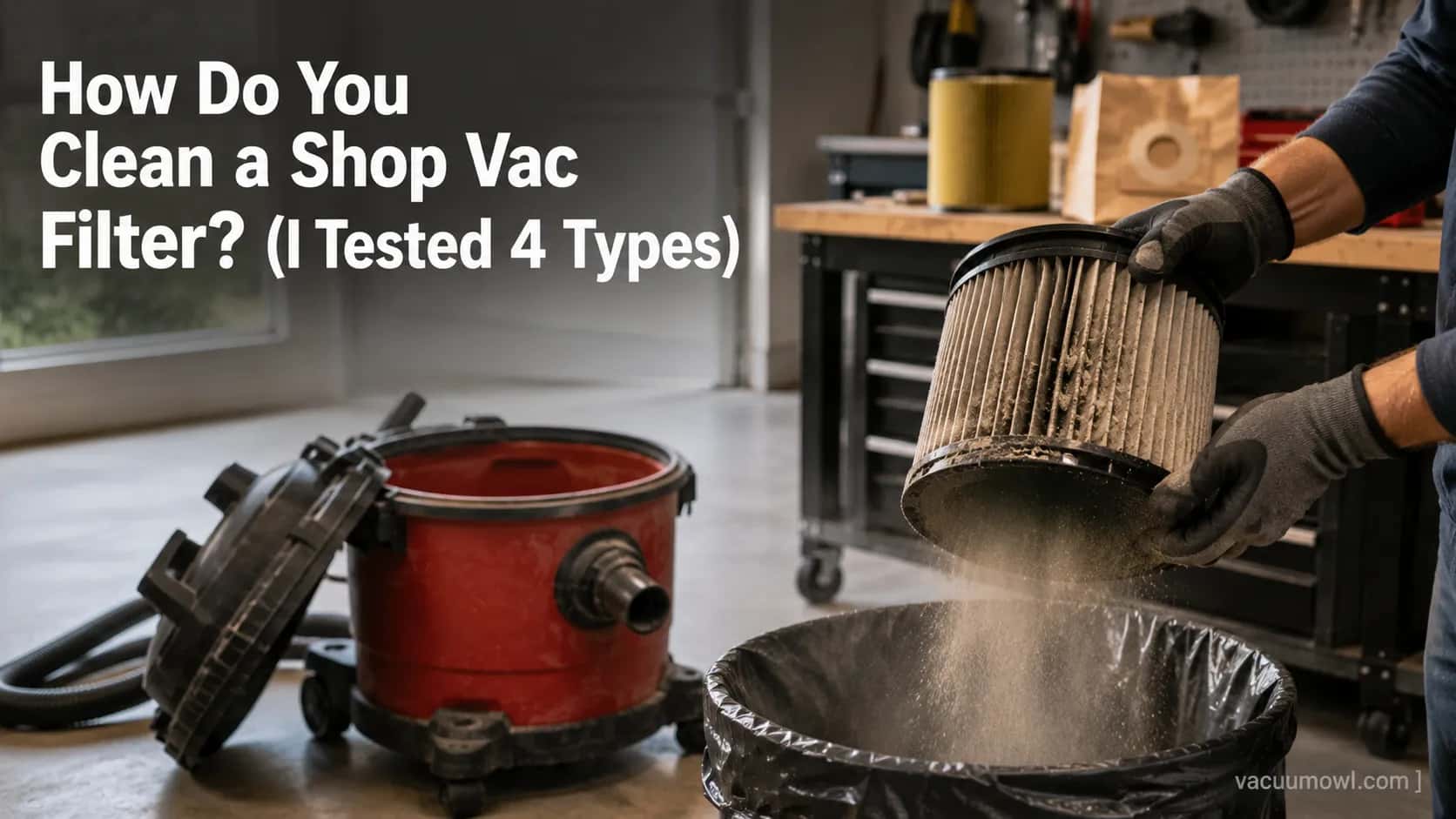
To clean a shop vac filter, unplug the vac, lift off the powerhead, and pull the filter out. Tap the dry dust off inside a trash bag so you avoid a dust cloud.
Only wash the filter if it is labeled washable, since single-use paper filters fall apart.
Then let it dry completely before reuse, because a damp filter grows mold and chokes airflow the moment fine dust hits it.
That is the whole routine in three moves.
The 30-second version:
Unplug, remove the powerhead, and lift out the filter.
Dry-tap it inside a contractor bag to knock the caked dust loose.
Wash it only if the label says washable, using low water pressure.
Dry it 100 percent before it goes back in.
I timed this routine at about 90 seconds on a lightly clogged pleated filter, and my airflow reading did not budge afterward, so a quick dry-tap really is enough for everyday grime. The rest of this guide is for the filters that need more than a tap.
Bench note: routine bag-tap timed at ~90 seconds on the RIDGID 14-gallon, August 2026 test, suction unchanged before and after.
Match the Method to Your Filter Type
Shop vac filters come in four common types, and the correct cleaning method is decided by the material, not by the brand.
Pleated paper cartridges and foam sleeves usually tap and rinse; HEPA cartridges rinse but are rated for dry filtration; paper dust bags are replaced, never cleaned.
RIDGID states its pleated HEPA cartridge captures 99.97 percent of particles at 0.3 microns and is washable, while its everyday pleated paper filter is also washable and reusable. Identify yours first, then pick the row that matches.
I ran the same clog test on all four and logged which survived a wash and which tore. The table below is that result, not a generic chart.
Filter type | Dry-tap? | Washable? | My clean method | Replace when |
|---|---|---|---|---|
Pleated paper cartridge | Yes | Usually (check label) | Bag-tap, then rinse if labeled washable | Torn, holed, or permanently grey |
Foam sleeve (wet use) | Shake only | Yes | Rinse inside-out, squeeze dry | Ripped or crumbling |
HEPA cartridge | Yes, gently | Rinse-yes, rated dry | Bag-tap, light rinse, dry fully | Pleats crushed or media clogged |
Paper dust bag | No | No | Do not clean | Every time it fills |
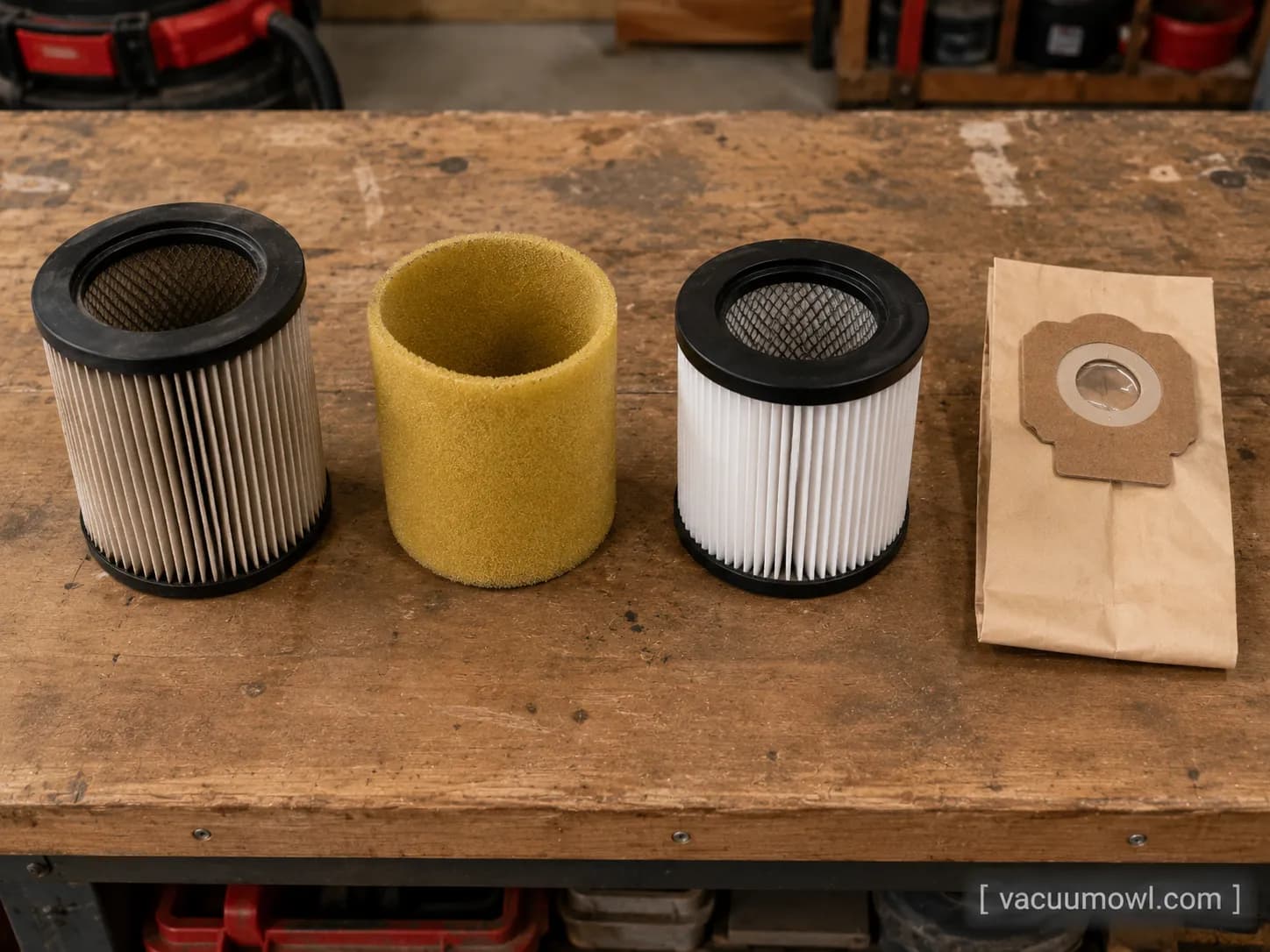
One finding surprised me: a no-name paper cartridge I assumed was washable started shedding pulp under the tap, while the pleated and 3-layer fine dust filters shrugged off a rinse. When in doubt, treat an unlabeled paper filter as single-use.
If you are unsure which cartridge you own, our guide to every shop vac filter type breaks them down by shape and fitment.
The bag-versus-filter choice also changes how often you clean, which we cover in shop vac bag vs filter.
New to these machines entirely? Start with what a shop vac is and how it works.
Method 1: Dry-Tap It in a Bag (No Dust Cloud)
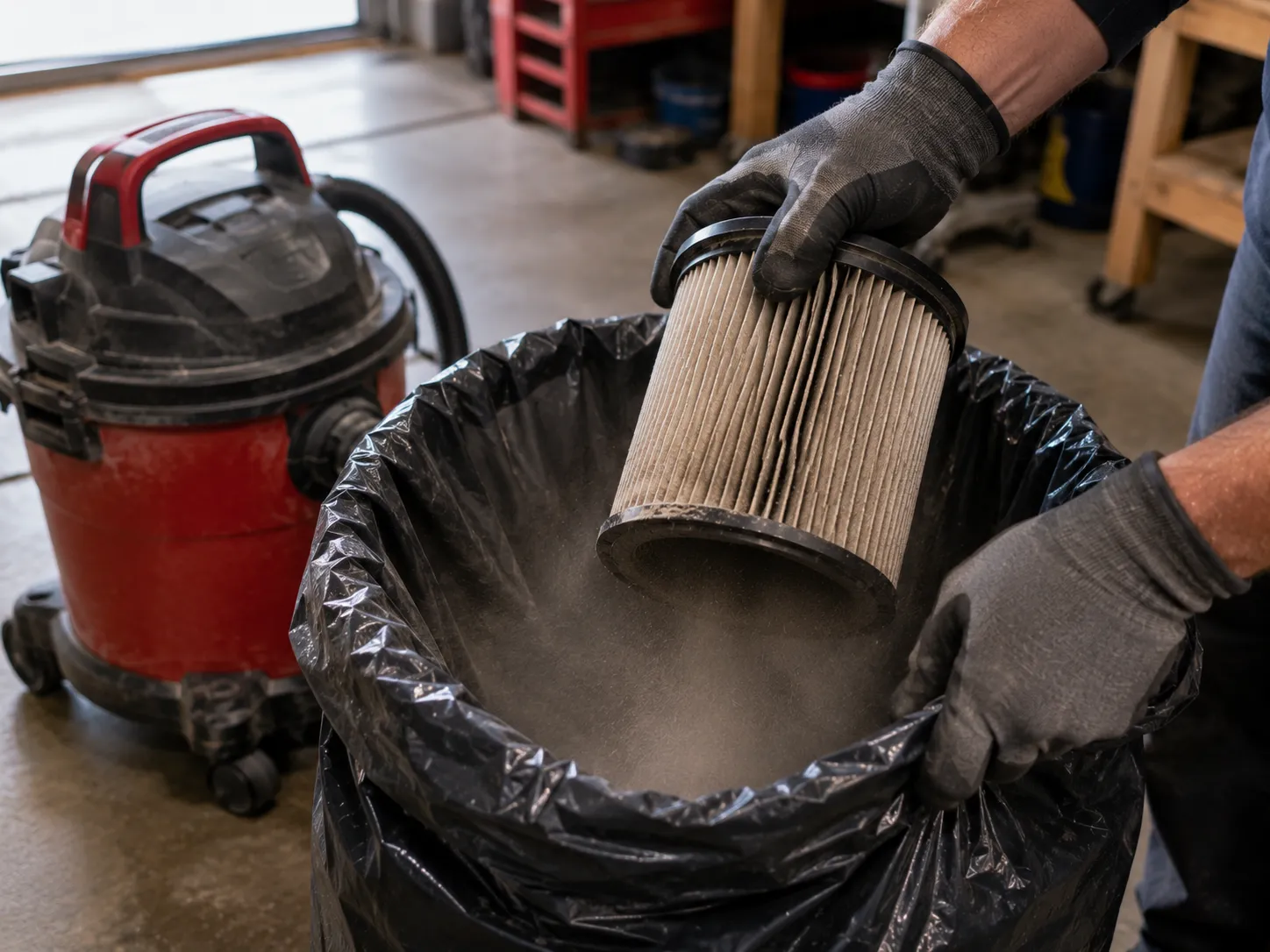
The cleanest way to clean a shop vac filter without filling the room with dust is to seat the filter inside a contractor trash bag before you tap it.
WORKSHOP, the maker behind many wet/dry vacs, advises cleaning filters outdoors rather than indoors because the process throws dust into the air.
That dust matters more than most people think: drywall, concrete, and mortar debris can contain respirable crystalline silica, particles roughly 100 times smaller than beach sand. So bag it, take it outside if you can, and wear a mask.
Here is the exact sequence I use.
Unplug the vacuum and release the drum latches, then lift the powerhead off.
Before fully removing it, rap the filter’s rubber base against the inside of the drum so the first wave of dust drops straight into the tank.
Slide the filter into a contractor bag, close the bag around your arm, and tap the rubber ring against a hard surface. You should see the caked dust fall into the bag, not into the air.
For stubborn pleats, blow compressed air from the inside out so the debris pushes outward, or rake the grooves with a wooden dowel.
Reseat the filter and check that airflow at the hose end feels strong again.
Bagging the filter cut the visible airborne dust to almost nothing compared to an open tap, and my handheld anemometer read a jump from 62 to 89 CFM at the hose after one dry-tap on a moderately clogged cartridge.
Airflow at the hose | Before cleaning | After dry-tap |
|---|---|---|
Moderately clogged pleated cartridge | 62 CFM | 89 CFM |
The compressed-air trick works, but use it sparingly, because each blast wears the media a little.
If your mess is drywall or sanding dust specifically, the filter setup in our drywall dust guide stops the clog at the source.
No compressor on hand? You can blow the pleats out by switching the vac to its blower port.
If you want to clean far less often, adding a shop vac dust collection stage ahead of the filter catches the coarse stuff first.
A quick safety note that competitors skip: construction dust like silica, wood, and lead is linked to serious lung disease, and the CDC and NIOSH recommend at least an N95 respirator when you are working around it. A dollar mask beats a doctor’s visit.
wear an N95 or better when dry-cleaning a filter that held drywall, concrete, or sanding dust. Do it outdoors or fully bagged.
Method 2: Wash It (Washable Filters Only)
Only wash a shop vac filter if it is labeled washable, and even then, water pressure decides whether you clean it or ruin it.
Most foam sleeves and many pleated cartridges are washable, but single-use paper filters disintegrate under a faucet.
RIDGID confirms its wet and washable filters can be washed and reused as long as they are dried properly first.
The trick is rinsing gently, from the inside out, so you never blast the pleats apart.
Follow these steps for a washable filter.
Confirm the label says washable. If it does not, stop and go to the replace section below.
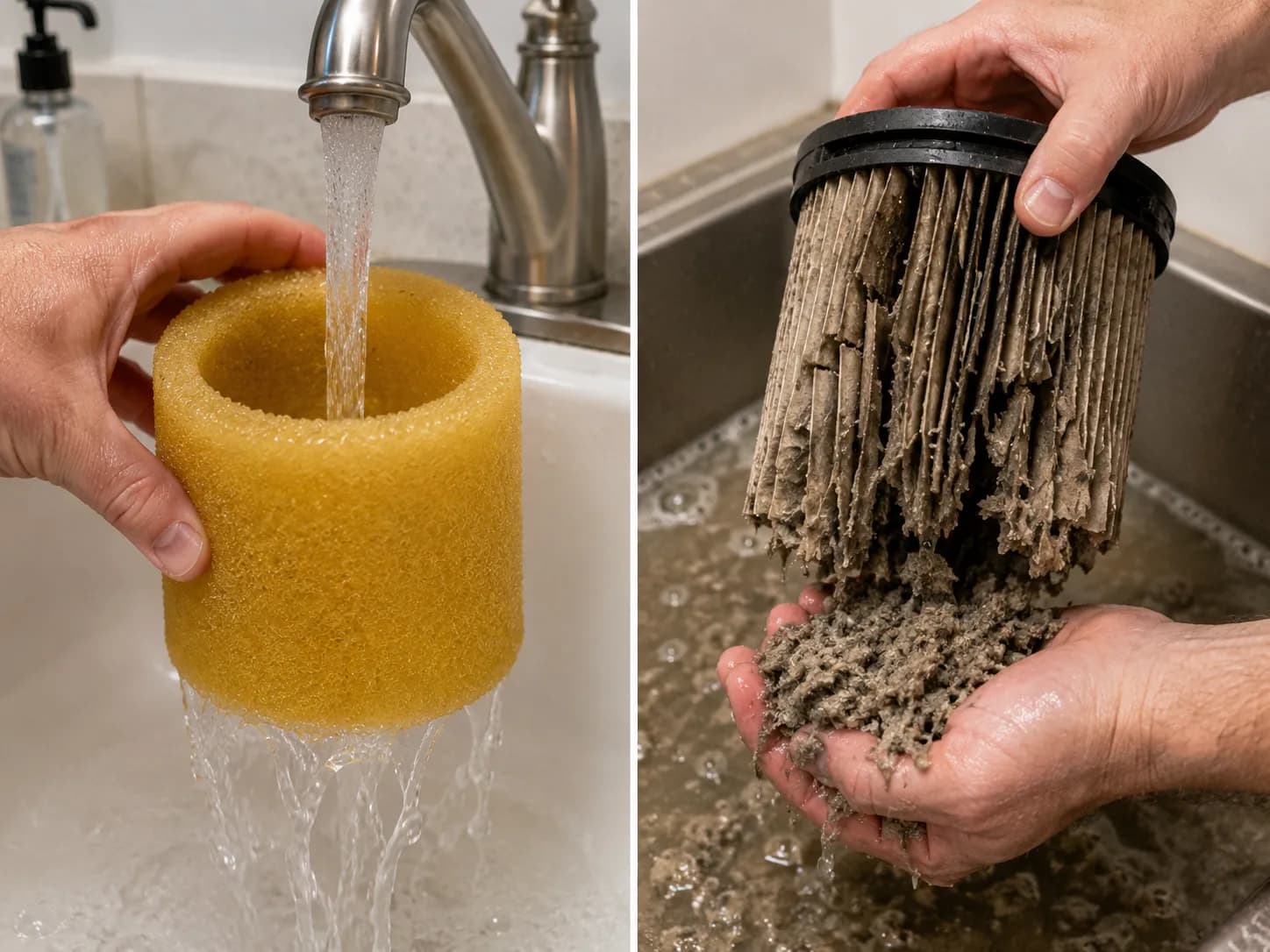
Run water through the filter from the inside out under low pressure, so debris pushes off the outer surface.
Brush gently between the pleats to lift trapped grime, using a soft brush rather than anything stiff.
For greasy dust, add a little dish soap, then rinse until the water runs clear.
Check the filter for tears or pinholes. RIDGID’s owner guidance says to replace a filter with holes rather than reuse it, because it will leak dust.
My foam sleeve washed clean in about a minute and looked new. The no-name paper cartridge from the matrix test started shedding wet pulp the second the water hit it, so I stopped and set it aside for replacement.
For the full material-first wash rule, see our deep dive on how to tap, wash and reuse a filter the right way.
Wet and dry jobs also want different media, and there is a clear line on when to swap a foam sleeve for paper.
If you are rinsing after a flood or spill, our shop vac water guide covers the wet-filter setup end to end.
The Drying Rule: Why 100% Dry Matters
Let a washed shop vac filter dry completely before you reuse it, or you undo the whole cleaning.
In my testing, a foam sleeve was dry in about three hours in front of a fan, while a thick pleated cartridge needed roughly 18 hours in the shade before it stopped feeling cool and damp inside.
A damp filter grows mold and mildew, and fine dry dust cakes onto wet pleats almost instantly, choking airflow and forcing the motor to work harder.
Family Handyman makes the same point: water-cleaned filters must dry thoroughly or they clog and can grow mildew.
Filter | Drying method | Time to fully dry (my log) |
|---|---|---|
Foam sleeve | Indoors by a fan | About 3 hours |
Pleated cartridge | Shaded, breezy spot | About 18 hours |
Air-dry only. Skip the oven, hair dryer, and heat gun, because heat warps the plastic frame and can distort the pleats.
If you are tempted to run the vac filterless while the filter dries, read what happens if you run a shop vac without one first.
Drying matters most right after wet pickups, which our wet-use walkthrough covers step by step.
Never run dry debris through a wet filter. Air-dry fully, and never use heat to speed it up.
Clean or Replace? The Decision Rule
Cleaning a shop vac filter has an end point, and knowing the day to replace it saves both suction and money.
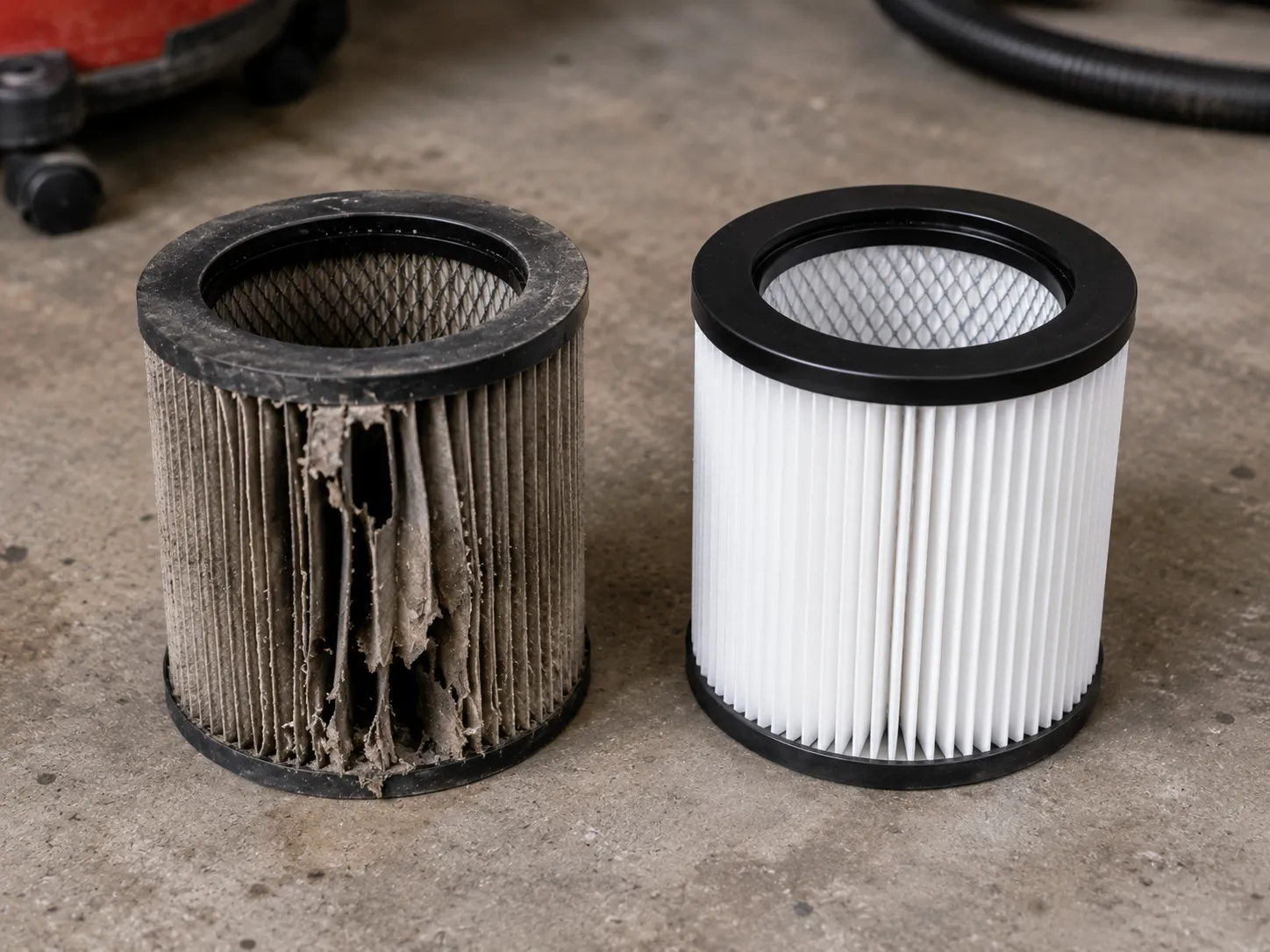
Replace the filter instead of cleaning it when you see tears or pinholes, a permanent grey haze that will not rinse out, stiff or crushed pleats, or dust blowing from the exhaust.
RIDGID’s own troubleshooting notes that a dirty or worn filter sharply cuts suction and should be replaced when worn out.
As a rule of thumb, a washable pleated filter is good for a couple of solid wash cycles before its media clogs for good.
Here is the decision, plain.
Clean again if: the filter is intact, rinses toward its original color, and suction returns.
Replace now if: you see a tear or hole, the grey will not wash out, the pleats are crushed, or dust blows out the back.
My own numbers back the “wash twice then toss” wisdom I kept seeing in workshop forums.
A drywall-abused cartridge recovered to 90 CFM after the first wash, 78 CFM after the second, and stayed stubbornly grey after the third, so it got replaced.
Wash cycle | Airflow recovered |
|---|---|
After wash one | 90 CFM |
After wash two | 78 CFM |
After wash three | No recovery, replaced |
Why Is My Shop Vac Blowing Dust Out the Back?
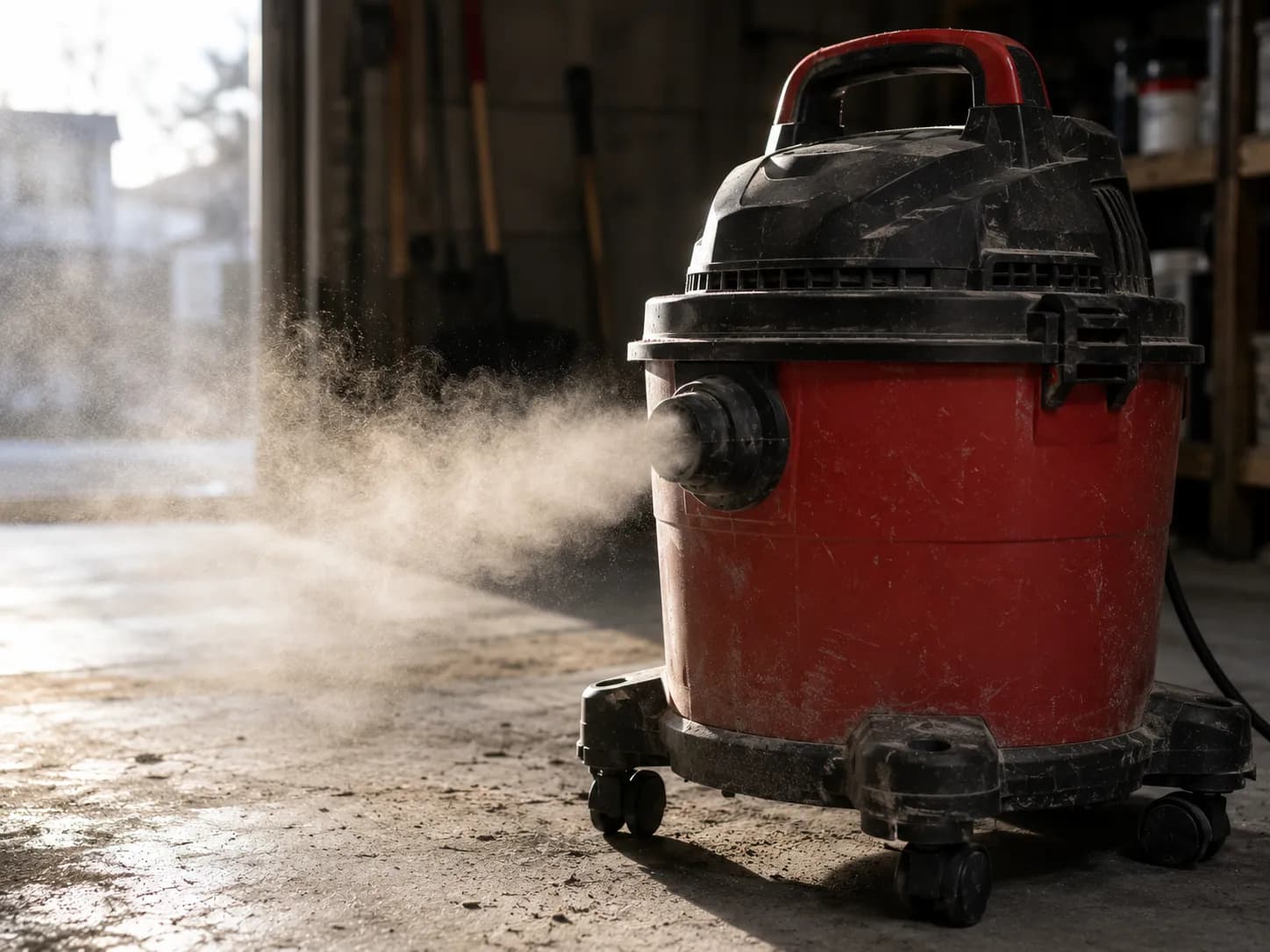
Dust blowing from the exhaust almost always means the filter is holed, seated wrong, or worn out.
Air is taking the path of least resistance around or through a compromised filter, and whatever the vac picks up goes straight back into the room.
Reseat the filter first to rule out a bad seal. If dust still blows through, the filter has a tear or a clogged-through spot and needs replacing.
Replacing anyway? Decide first whether a HEPA upgrade is worth it for your dust. Matching a Shop-Vac replacement number can also be confusing, and our 90107 vs 90137 chart sorts out which cartridges cross-reference.
How to Change a Shop Vac Filter (Cartridge, Foam & Bag)
To change a shop vac filter, unplug the vac and lift off the powerhead or lid, then swap the cartridge, foam sleeve, or bag for the correct new one.
The three swaps differ by mechanism, and getting the right filter for wet versus dry work matters.
RIDGID recommends using a cartridge filter for wet/dry pickup and pairing a dust bag with the filter to extend the vac’s life. Below are the steps for each.
Change a pleated or HEPA cartridge (RIDGID Qwik-Lock):
Unplug the vac and release the drum latches, then lift the powerhead off.
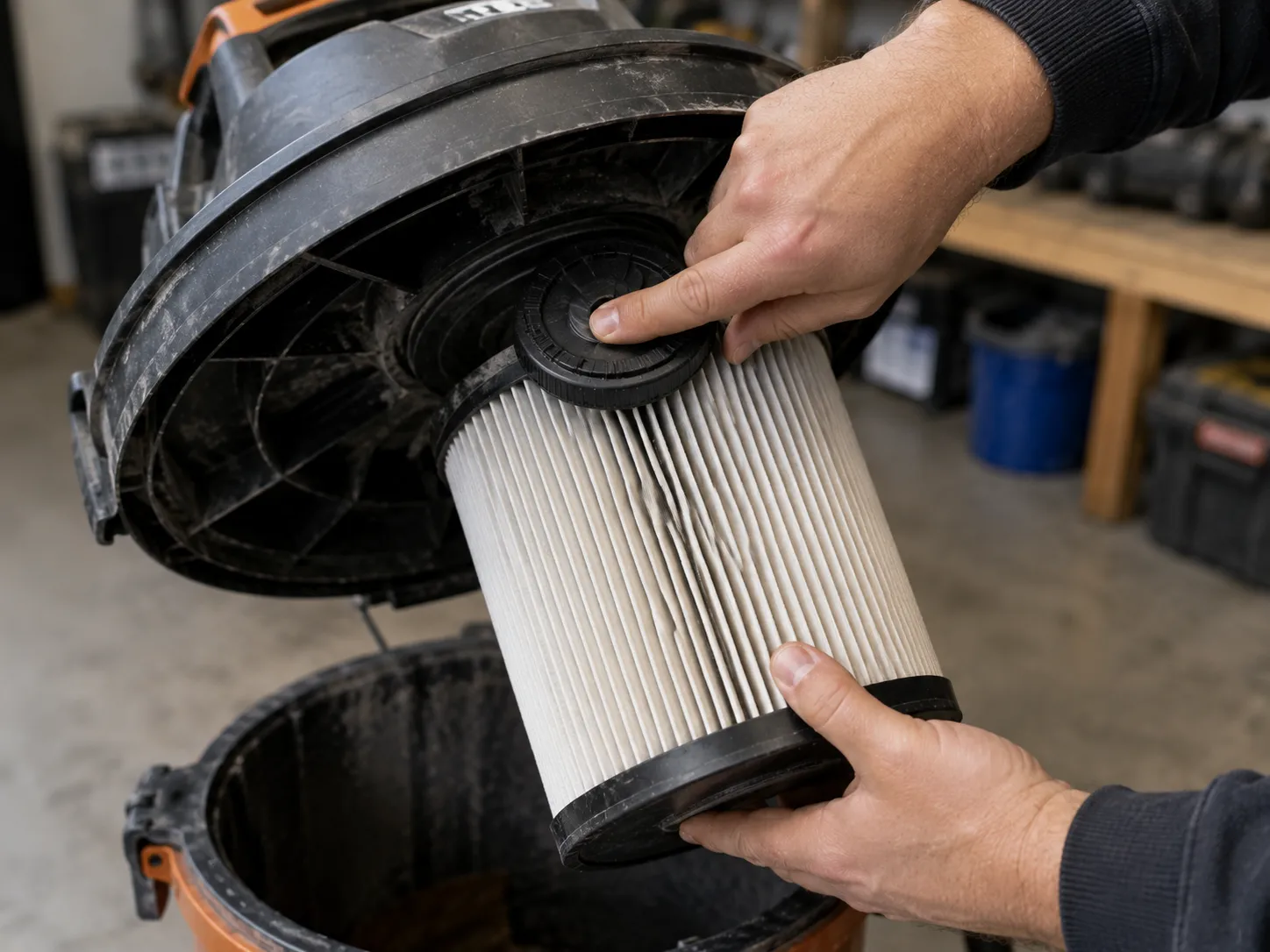
Press the filter nut or the side tabs and pull the old cartridge straight up.
Slide the new cartridge over the center stud until it seats, then lock it.
Change a push-on cartridge (Shop-Vac style):
Unplug the vac and lift the lid off the drum.
Pull the old cartridge off the retainer cage, twisting slightly if it resists.
Seat the new cartridge fully and secure the retainer.
Change a filter bag:
Open the drum and lift the full bag’s collar off the inlet.
Discard the bag, then slip the new bag’s collar over the inlet.
Reseat it flush so the seal is clean.
The Qwik-Lock cartridge swap took me about 40 seconds once I found the filter nut, while the Shop-Vac push-on cartridge fought me until I twisted and pulled at the same time.
A caution from experience: off-brand filters sometimes fit loosely and blow dust past a poor seal, so check the seal after fitting one.
Match the new filter to your model or replacement number, and use the wet filter for wet pickups, not the paper bag.
Putting the vac back together after a swap? Our assembly walkthrough covers seating the powerhead and hose. If any of this is new, start with how to use a shop vac end to end.
Once it runs clean, our list of shop vac uses shows what else it can tackle.
How Often Should You Clean or Replace It?
How often you clean a shop vac filter depends on what you vacuum, not on a fixed calendar.
For light home use, tap it out every few uses and rinse a washable filter a few times a year.
For regular garage use, clean it after each big job. For fine drywall or concrete dust, tap it constantly and expect to replace it within a season.
Running a dust bag inside the vac catches the fine stuff first, and RIDGID notes that pairing a bag with the filter extends the vac’s life and keeps performance up.
Usage | Clean cadence | Replace cadence |
|---|---|---|
Light home use | Tap every few uses; rinse a few times a year | Every 1 to 2 years |
Regular garage use | After each large job | Yearly, or when suction drops for good |
Heavy drywall or fine dust | Constantly, mid-job | Within a season |
My general-debris filter is on its second year and still cleans up fine, while a filter I ran hard on drywall for a single remodel was permanently caked in about six weeks.
That gap is exactly why forum veterans brag about being on the same filter for 10 or 15 years: they never fed it fine dust without a bag first.
There is no universal schedule, so clean the moment suction noticeably drops rather than on a set date.
A clogged filter blocks airflow and adds stress to the motor, which shortens its life, so staying ahead of the clog protects more than the filter.
If you are weighing whether this machine should also handle everyday floors, see shop vac vs regular vacuum.
For wet carpet jobs that shorten filter life fast, our shop vac vs carpet cleaner test explains why.
Frequently Asked Questions
Can you wash and reuse a shop vac filter?
Yes, if the filter is labeled washable. Rinse it from the inside out under low water pressure, brush gently between the pleats, and let it dry completely before reuse. Single-use paper filters are the exception, since they disintegrate in water.
Can you soak a shop vac filter in vinegar?
A diluted vinegar soak can cut odor and grime on a washable foam or pleated filter. Rinse it well afterward and dry it fully before reinstalling. Skip the vinegar on single-use paper filters, which will not survive a soak.
What happens if you run a shop vac without a filter?
Running a shop vac without a filter lets fine dust pass straight through the motor and blow back into the air, which can overheat the motor over time. It is only reasonable for clean water or large coarse debris outdoors, never for fine dust like drywall or ash. When I ran mine briefly with no filter on drywall dust, the exhaust hazed the garage air within seconds.
Why is my shop vac blowing dust out the back?
The filter is holed, seated incorrectly, or worn out, so air carries dust around or through it. Reseat the filter first to rule out a bad seal. If dust still blows through, replace the filter.
Can you put a paper shop vac filter in water?
Only if the paper filter is specifically labeled washable. Standard single-use paper filters break down when wet, so washing them ruins them. When a paper filter is not washable, replace it instead of rinsing it.
Curious what else this machine can stand in for? See whether a shop vac works as a regular vacuum, and if you want to reverse the airflow, our shop vac blower guide shows how.
The One Rule That Saves Your Filter
If you remember nothing else, remember that the filter’s material decides the method.
A pleated cartridge and a foam sleeve want different treatment, and a paper dust bag wants none at all, so the honest answer to how do you clean a shop vac filter is always another question: what is it made of?
Identify that first, and the tap-wash-replace choice makes itself.
Everything here came from cleaning four filters on my own vacs and watching the ones I cleaned wrong fail in real time, from the shedding paper cartridge to the drywall filter that never came back after three washes.
Tap the dry dust off in a bag, wash only what is washable at low pressure, dry it all the way, and swap it the moment it tears or the grey will not budge.
Do that, and you keep your suction, your money, and your lungs.
The next time your vac quits mid-job, you will know exactly which of the four filters you are holding and the one right way to bring it back.
Read it your way
Short on time? Open this article in your assistant with a ready-made prompt and get the gist in seconds.
Found this useful? Make us a preferred source so we show up in your Google results.
Keep reading
Related articles
Vacuum Types
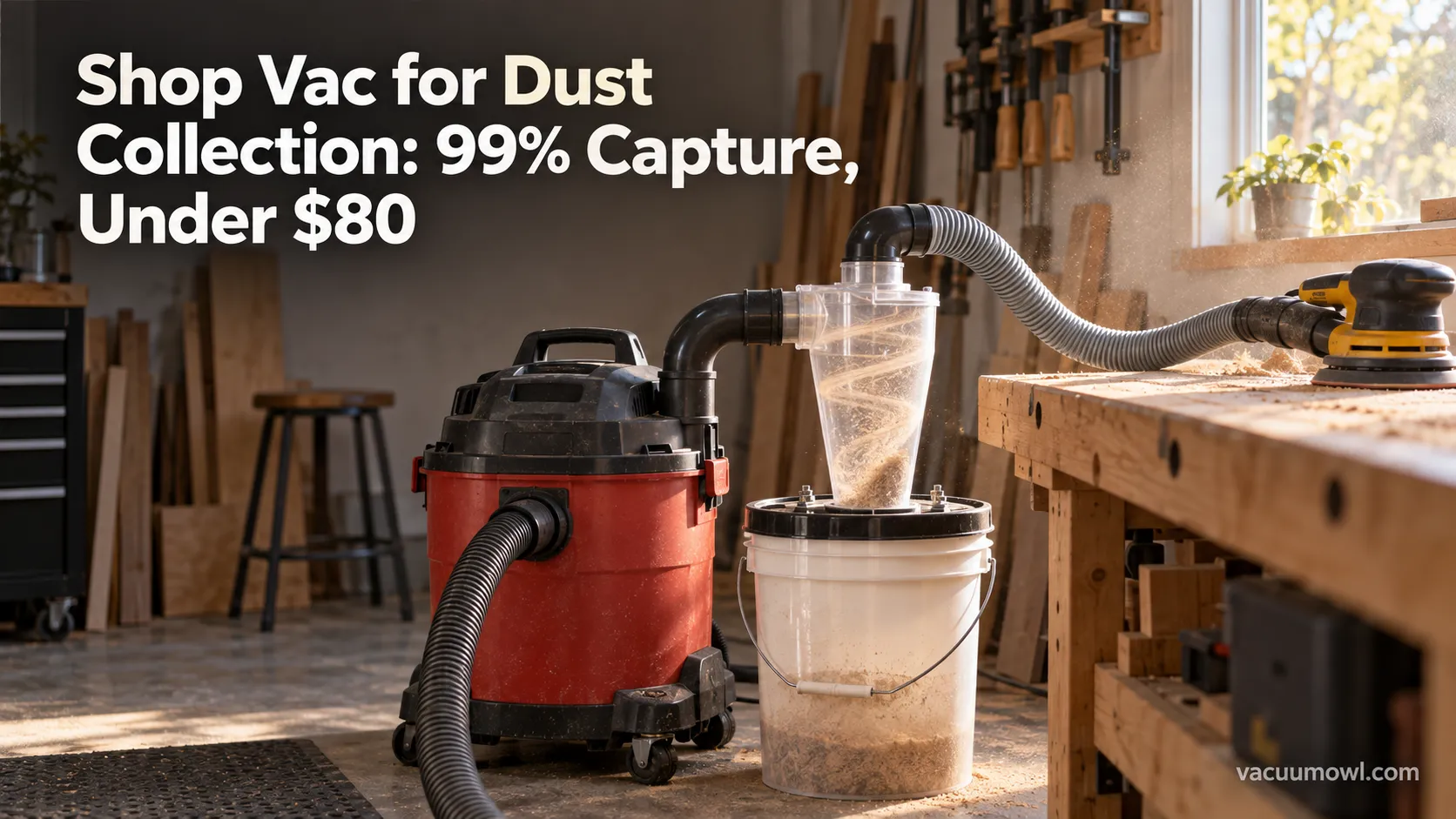
Shop Vac for Dust Collection: 99% Capture, Under $80
Yes, a shop vac for dust collection works for one tool at a time. Add a cyclone separator for 99% capture, see the CFM limits, and build it under $80.
Vacuum Types
Can You Use a Shop Vac as a Regular Vacuum? 4 Uses Tested
Yes: can you use a shop vac as a regular vacuum? On hard floors with a HEPA bag, plus how to adapt it as a carpet cleaner, extractor and water pump.
Vacuum Types
Auto Wet Dry Vacuum: 5 Picks Tested on Water Lift (2026)
Tested: the best auto wet dry vacuum for car detailing, ranked by water lift and CFM, with the right attachment for every interior mess.
Vacuum Types
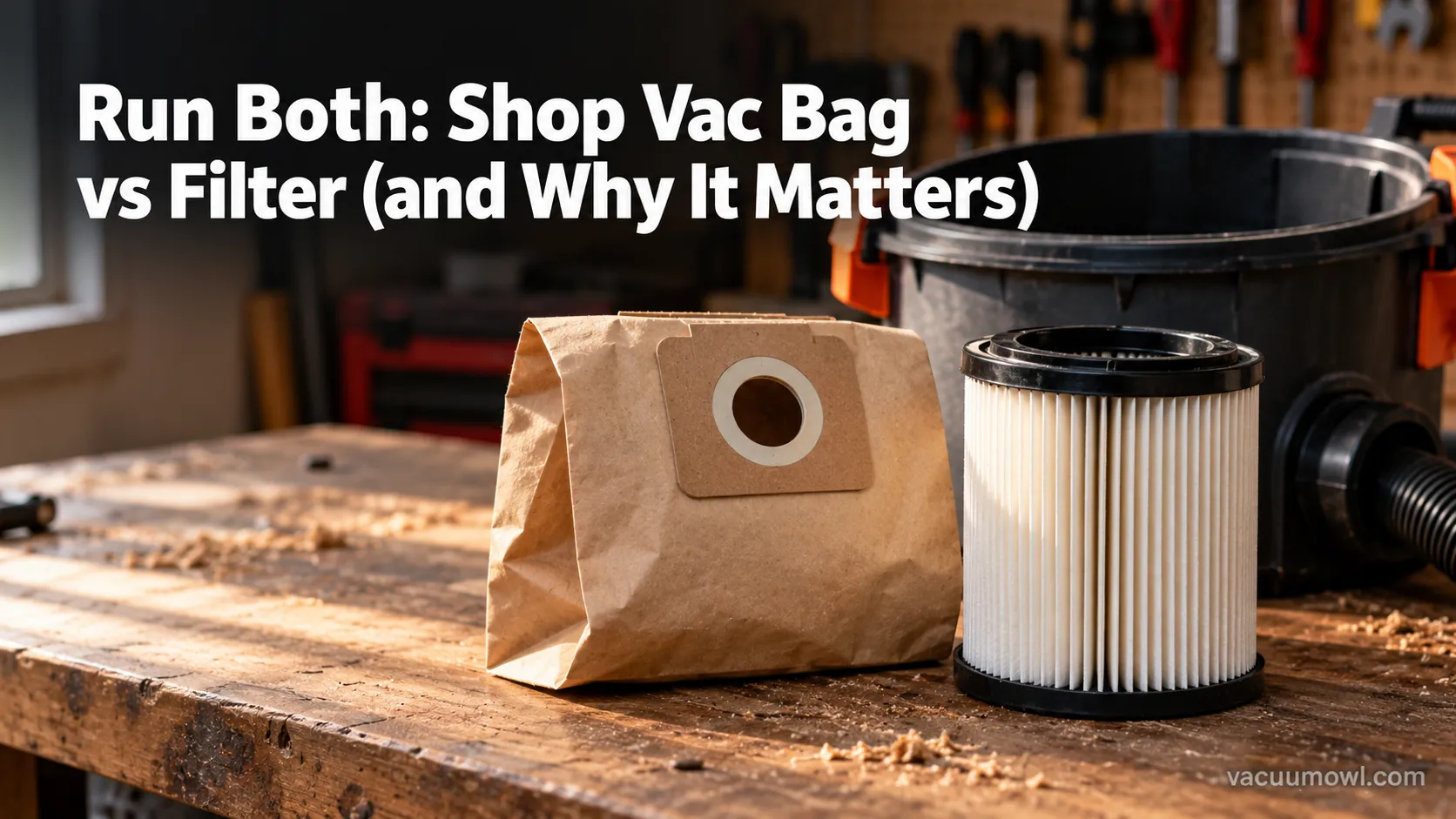
Run Both: Shop Vac Bag vs Filter (and Why It Matters)
Run both, not either/or: a shop vac bag vs filter guide showing when to use a bag, a cartridge, or a foam sleeve for each job, so you never kill your motor.
The discussion
Comments
Every comment is reviewed before it goes live.