Run Both: Shop Vac Bag vs Filter (and Why It Matters)
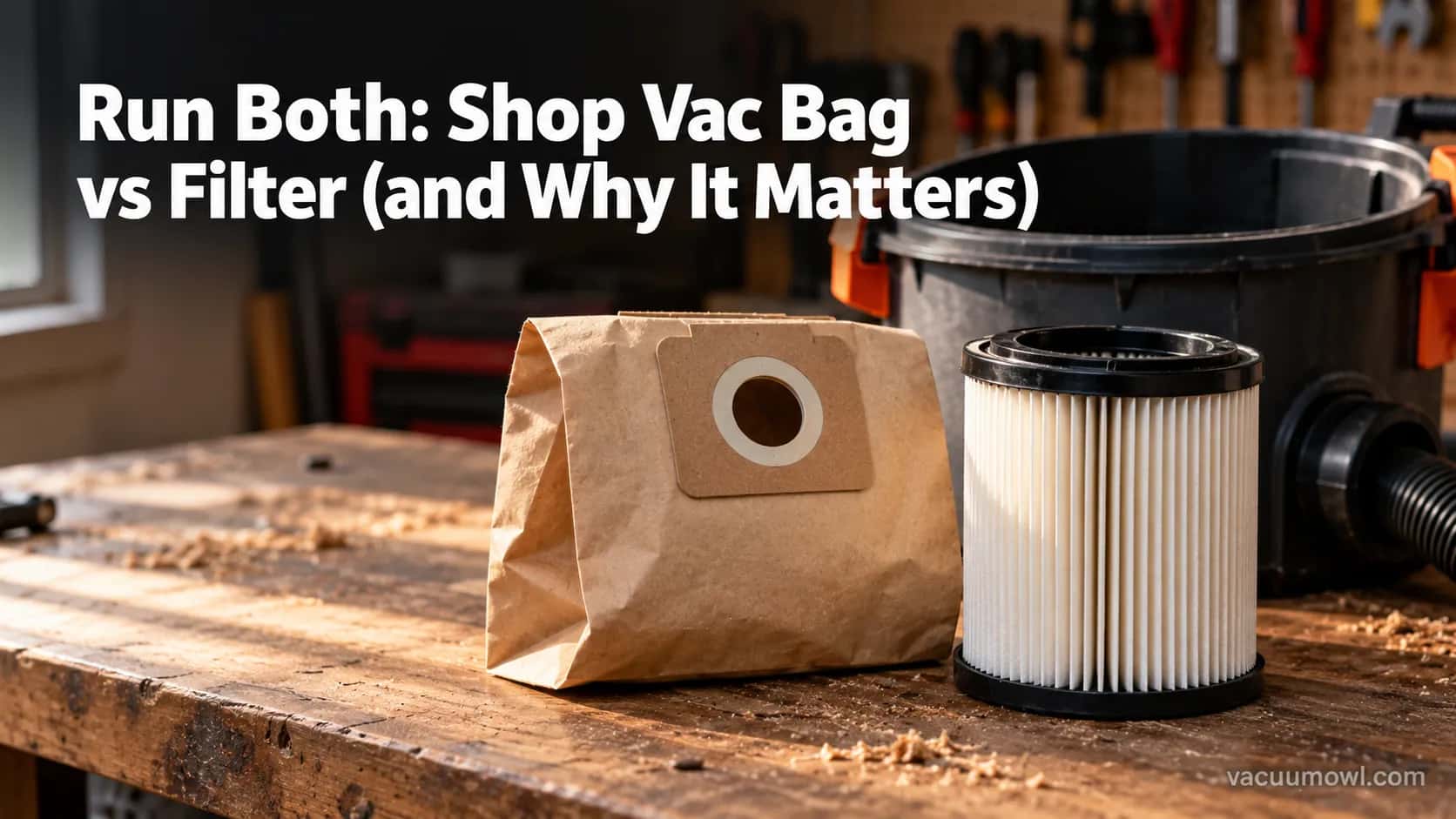
Run both, not either/or: a shop vac bag vs filter guide showing when to use a bag, a cartridge, or a foam sleeve for each job, so you never kill your motor.
Written by Dr. Naomi TranReviewed by Dale FerrisLast updated on September 9, 2026
When you buy through links on our site, we may earn an affiliate commission (at no extra charge), which we use to fund new product tests. Learn more.
Read it your way
Short on time? Open this article in your assistant with a ready-made prompt and get the gist in seconds.
Found this useful? Make us a preferred source so we show up in your Google results.
The shop vac bag vs filter question usually gets answered in three words: use both. That answer is right, but it hides the part that actually saves your machine.
A bag and a filter are not two versions of the same thing you pick between.
They do two different jobs, and knowing which job is which is what stops you killing cartridges and shortening your motor’s life.
I have run two 16-gallon vacs side by side since March 2025, one plastic and one stainless, through roughly 40 cleanup sessions.
The setups that failed taught me more than the ones that worked, and this guide turns those failures into a rule you can apply in about ten seconds.
Shop Vac Bag vs Filter: The Short Version
A shop vac bag and filter are not an either-or choice.
The bag traps bulk debris for clean disposal while the filter captures the fine dust that protects your motor, so run both by default and drop one only for wet pickup or a coarse outdoor mess.
Shop Vac Bag vs Filter: The Short Answer (Use Both)
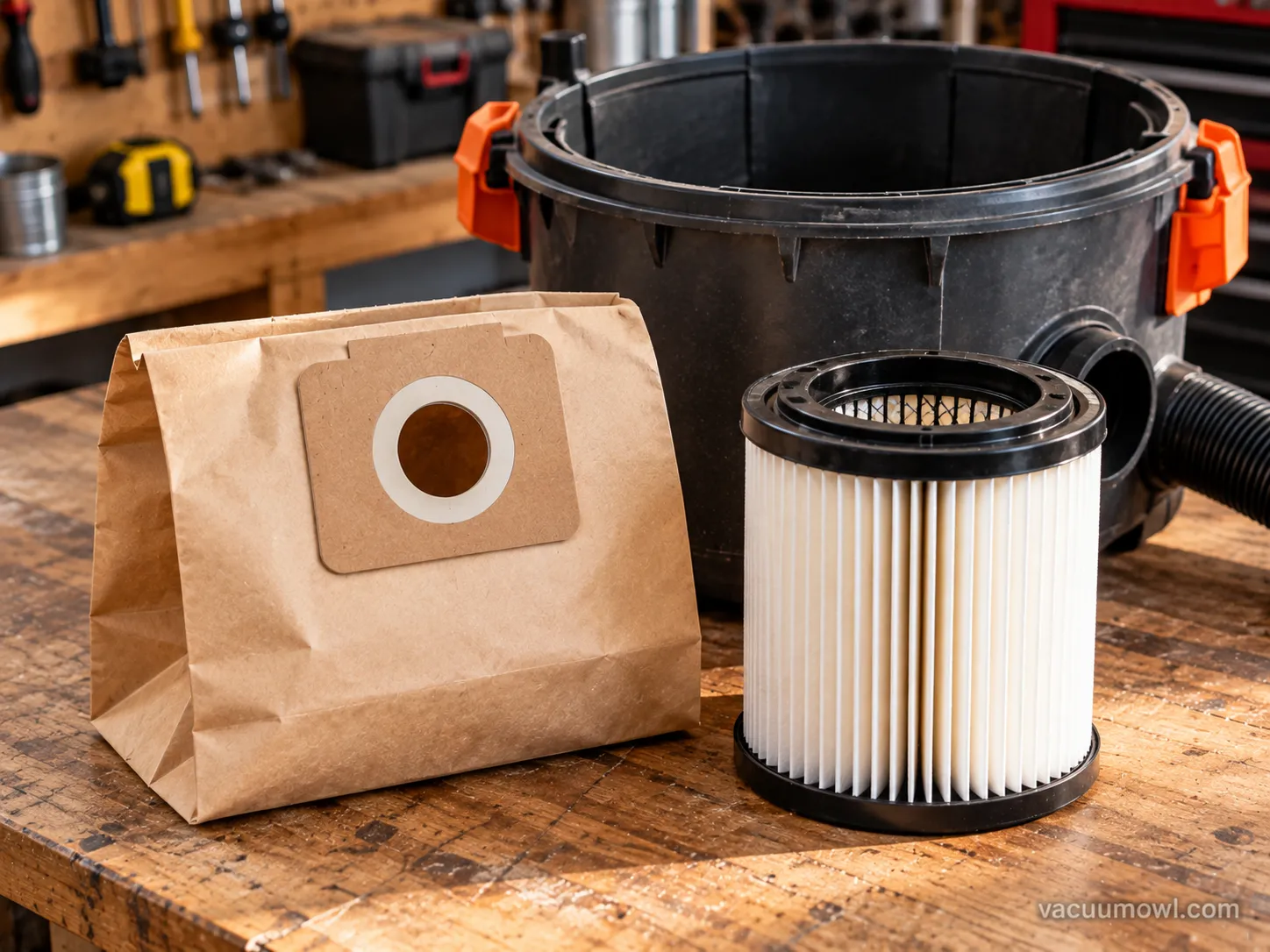
A shop vac bag and filter work as a pair, not as substitutes. The bag collects bulk debris for clean, dust-free disposal and shields the pleated filter from the worst of the load.
The filter then captures the fine particles a bag lets slip and keeps them out of the motor.
According to Shop-Vac’s own filtration guidance, disposable bags are meant to be used in tandem with a cartridge filter, and that pairing is what stops debris blowing back out the exhaust port.
So the honest default is simple: run both. Treat dropping one as the exception, not the rule.
Keep a bag and a filter in the vac by default.
The bag is for clean collection and pre-filtering, the filter is for motor protection, and only wet pickup or coarse debris justifies removing one.
Here is the split at a glance. The table below reflects the setup I ran across the full test window, from March 2025 to May 2026.
Component | Its main job | When you can skip it |
|---|---|---|
Collection bag | Traps bulk debris for clean disposal and pre-filters coarse dust | Wet pickup, or coarse outdoor debris where a little exhaust dust is fine |
Pleated filter | Captures fine dust and protects the motor and bearings | Wet pickup only, and only if you fit a foam sleeve instead |
Both together | Cleanest disposal plus full motor protection | The default you rarely break |
The rest of this guide is the exception list. The job-by-job table further down tells you exactly which setup each mess calls for.
What a Shop Vac Bag Actually Does
A shop vac bag does two real jobs, not one. It contains the bulk of the debris so you lift out a sealed bag instead of tipping a cloud of dust out of the drum.
It also works as a pre-filter, catching coarse material before it reaches the pleated cartridge.
That is why a bagged filter stays cleaner far longer, and why the pre-filter role is the one that saves you money on replacement filters.
Think of the bag as your first line of defense and the filter as the backup behind it. That order matters most with fine dust, which packs into a bare cartridge and chokes airflow quickly.
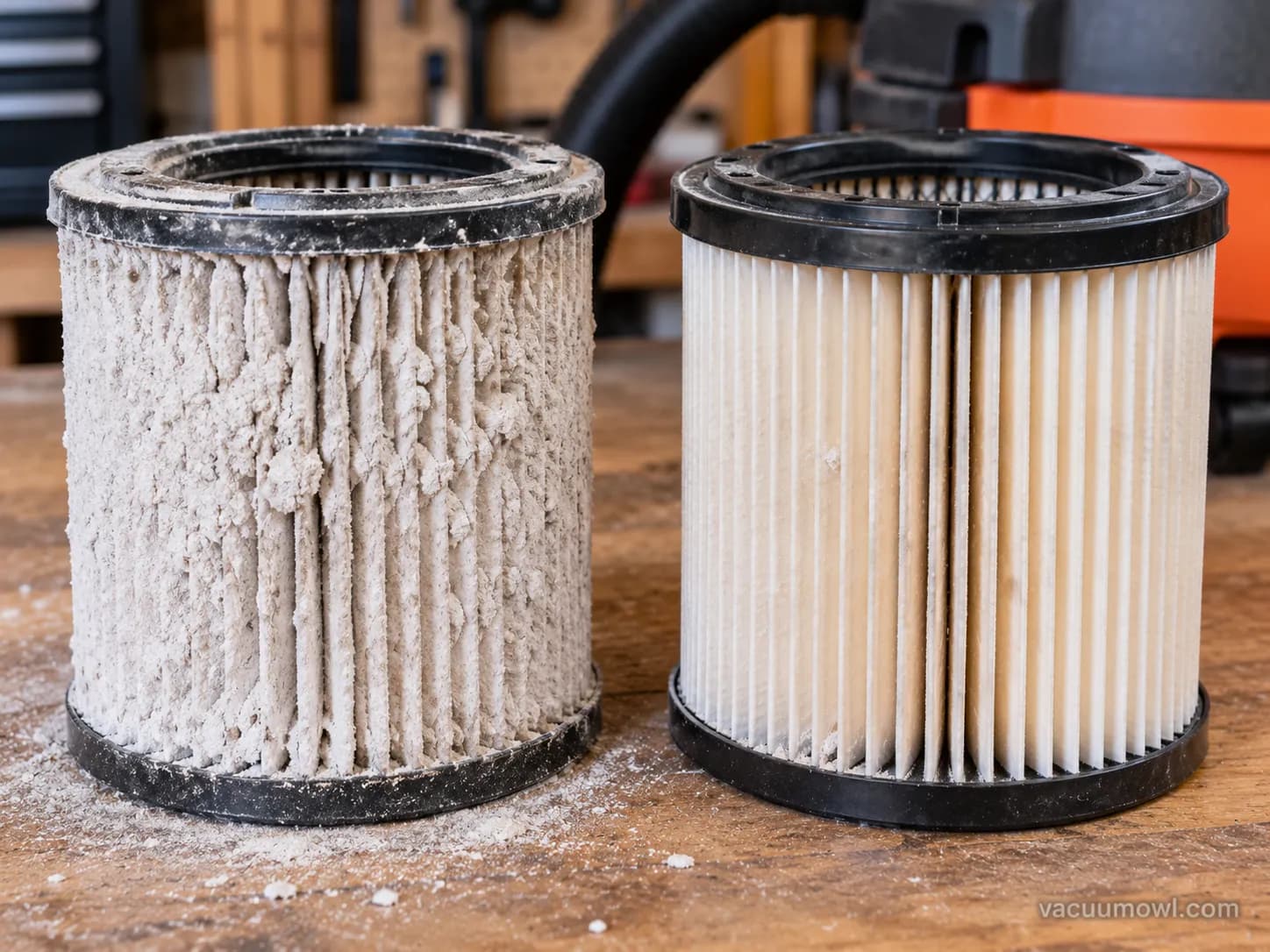
With a fine-dust bag in place, my cartridge went about three drywall sessions before suction noticeably dropped.
Bare, with no bag at all, the same cartridge clogged to roughly half suction in a single joint-compound sanding.
The before-and-after below is that exact comparison.
The catch: A full bag chokes suction. Bags are an ongoing cost, and an overfilled one restricts airflow just as badly as a clogged filter, so empty it before it bulges.
A bag is not always mandatory. For coarse, dry debris where a bit of exhaust dust does not bother you, the filter alone will do the job.
Whether a bag earns its place depends entirely on the mess, and we cover when a bag earns its place in its own guide.
For drywall-grade fines, though, a fine-dust or HEPA-rated collection bag becomes worth it.
Those fine-dust and HEPA bag options are built to trap the particles a standard bag passes through. They are the upgrade that makes the difference on sanding dust.
One more note on the bag’s limits: a paper bag can tear on sharp debris like nails or screws, which is precisely why you keep the filter installed as backup.
Forum regulars put it well, calling the filter extra protection in case your bag punctures.
If you are still getting your bearings, it helps to start with how the machine works before fine-tuning the consumables.
What the Filter Does: Motor Protection First
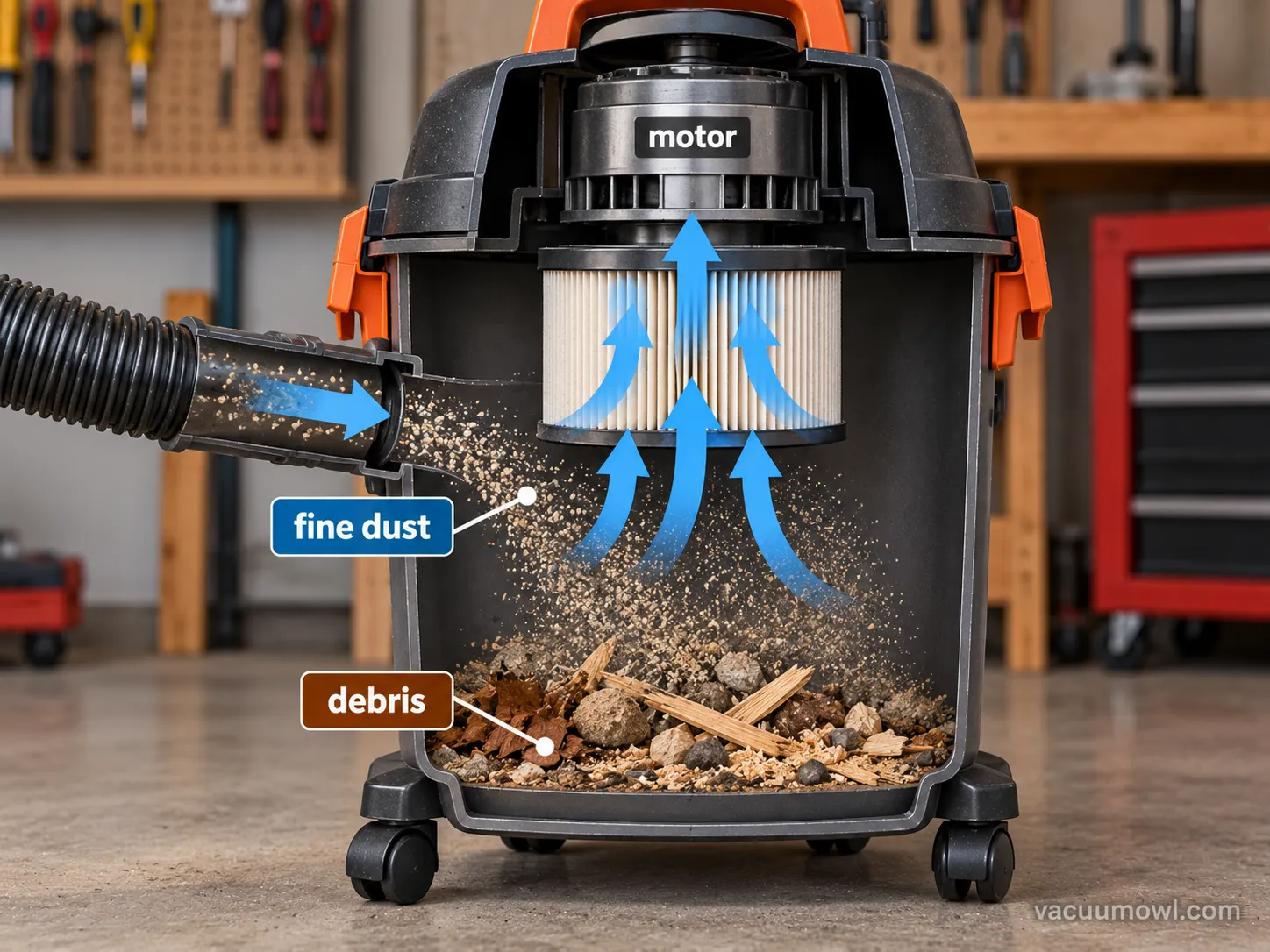
A shop vac filter has one job that outranks the rest: capturing the fine particles a bag lets through so they never reach the motor.
Chunks and coarse debris drop into the tank or the bag on their own, so the fines are the real danger.
Those fine particles ride the airstream toward the motor and grind at the bearings over time.
A HEPA-grade filter removes 99.97 percent of particles at 0.3 microns, per OSHA’s HEPA definition, which is the standard that separates real motor protection from a filter that only looks the part.
The mechanism is worth understanding, because it explains why a bag alone is not enough. Fine dust that escapes the bag heads straight for the motor’s bearing channel, and that is what shortens a motor’s life.
A bag stops the bulk, but it is the pleated filter that catches what would otherwise reach the moving parts.
This is why forum veterans are blunt that running a shop vac without a filter is the single fastest way to kill it.
Particle size is the whole story here. A standard cartridge handles general dust, a fine-dust cartridge steps down to around one micron, and a true HEPA filter reaches the 0.3-micron mark that matters for drywall and silica.
That last tier is not marketing. For silica and drywall housekeeping, OSHA’s respirable crystalline silica standard points to HEPA-filtered vacuuming as an accepted control, which tells you how fine the dangerous particles really are.
I learned the mechanism the expensive way. I killed three cartridge filters in 14 months before I made a bag standard for any fine dust.
Two clogged solid and one caked after a single joint-compound sanding. The dated log below is that record.
Filters retired, March 2025 to May 2026
Date | Job that finished it | Failure mode |
|---|---|---|
June 2025 | Drywall patch sanding, no bag | Caked solid in one session |
November 2025 | Repeated cold ash and fine sawdust | Clogged, suction under half |
March 2026 | Concrete grinding dust, bare cartridge | Pleats packed, would not clean out |
That log is the reason the rest of this guide leans so hard on matching the filter to the job.
The catch: A filter is protection, not a set-and-forget part.
Even a good cartridge clogs and needs tapping out or replacing, so treat it as a maintenance item, not a permanent fixture.
There is exactly one time you deliberately take the cartridge out, and that is wet pickup, which the next section covers.
For the dry-work edge cases, when going filterless is safe is mapped out separately so you know the rare exceptions from the dangerous ones.
Picking the right cartridge in the first place avoids most of this.
There is every filter type explained if you are unsure which one your vac takes, and a clogged cartridge often just needs cleaning how to clean the cartridge the right way rather than replacing.
When to Run Both, Bag Only, or Filter Only (by Job)
The right shop vac bag vs filter setup depends on the job, and this is where a blanket rule fails you.
Fine drywall or silica dust needs a HEPA-rated bag plus a filter, water needs the cartridge out entirely, and general debris is happy with a filter alone.
OSHA points to HEPA-filtered vacuuming for silica housekeeping in its silica dust guidance, and RIDGID’s own compliance kit shows what that looks like in a home-sized vac.
The RIDGID OSHA vac kit pairs a HEPA-media filter with a cyclonic bag to remove 99.97 percent of particles at 0.3 microns.
The table below turns all of that into a job-by-job answer. It is the section no forum thread gives you in one place.
These rows are the setups I settled on over 14 months. The drywall row is the one I got wrong first, running a bare cartridge and losing half my suction in one sanding.
Setups I run, by job (logged over 14 months)
The mess | Bag? | Filter setup | Why |
|---|---|---|---|
Fine drywall or silica dust | Yes, fine-dust or HEPA bag | Cartridge, HEPA if the vac takes one | Fines clog fast and are a health risk; per OSHA, HEPA-filtered vacuuming is the accepted control |
Sawdust and wood chips | Optional | Standard cartridge | Bag keeps disposal clean; a pre-separator helps on heavy volume |
Water and wet spills | No bag | Foam sleeve, or remove the cartridge | Paper clogs and molds when wet; foam is the wet-only filter |
General or coarse dry debris | Optional | Filter only is fine | A little exhaust dust is acceptable; bag only for cleaner emptying |
Sharp debris (nails, screws) | Yes | Cartridge stays in | The bag can puncture, so the filter is your backup |
A budget note comes up a lot here. A cloth sock pulled over the cartridge buys a little time on fine dust, but it is not a real substitute for a proper bag, and drywall dust is especially a killer of unprotected filters.
The catch: When a shop vac isn’t enough. A standard shop vac is not OSHA-compliant silica control on its own without a genuine HEPA-rated setup, and some jobs really do call for a dedicated dust extractor.
Two rows deserve their own guides. Drywall and sanding dust have a filter approach all their own, covered in the drywall dust setup.
The complete rundown of wet and dry uses, filter by filter maps every mess type in more depth.
For heavy sawdust, a cyclone pre-separator setup keeps most of the material out of the bag entirely and spares the filter.
Water is the one job where the bag comes out completely. Here is the wet-pickup routine for doing it without soaking a cartridge.
Foam Sleeve vs Cartridge Filter: The Wet vs Dry Swap
A foam sleeve and a cartridge filter are not interchangeable, and swapping them at the wrong time ruins one of them.
The foam sleeve is for wet pickup only and is too coarse for dry work, so fines pass straight through to the motor if you leave it on.
The pleated cartridge is the reverse: it is a dry filter that clogs when it gets wet and can grow mold and odor within days.
Shop-Vac’s guidance lines up with this, naming the foam sleeve as the wet-pickup filter and the cartridge and bag as the dry-work pairing.
The distinction is really about material. Foam is open-cell and coarse, so water passes and debris settles, while the cartridge’s dense pleats trap fine dust but hold moisture just as readily.
Here is the quick comparison before the swap steps.
Feature | Foam sleeve | Pleated cartridge |
|---|---|---|
Use for | Wet pickup and water | Dry dust and debris |
Material | Coarse open-cell foam | Dense pleated paper or media |
Protects against | Water reaching the motor | Fine dust reaching the motor |
Reuse after a wet job | Rinse and reuse | Usually done after one wet use |
Swapping is a short routine, and doing it in order is what keeps both filters usable.
Power off and unplug the vac before you open the lid.
Lift the motor head and remove the dry cartridge, tapping it out if it needs cleaning.
Fit the foam sleeve over the cage for any wet pickup.
Run the wet job, listening for the rising pitch when the float switch shuts it off at a full tank.
Rinse and dry the foam, then swap the dry cartridge back for your next dusty job.
The reuse rule catches people out. A paper cartridge left in for even one wet job is effectively finished, which I found the hard way.
I left a paper cartridge in for one basement-water cleanup, and it smelled of mildew within two days, so I tossed it.
The foam sleeve rinsed clean and went right back on, and the photo below is those two filters side by side.
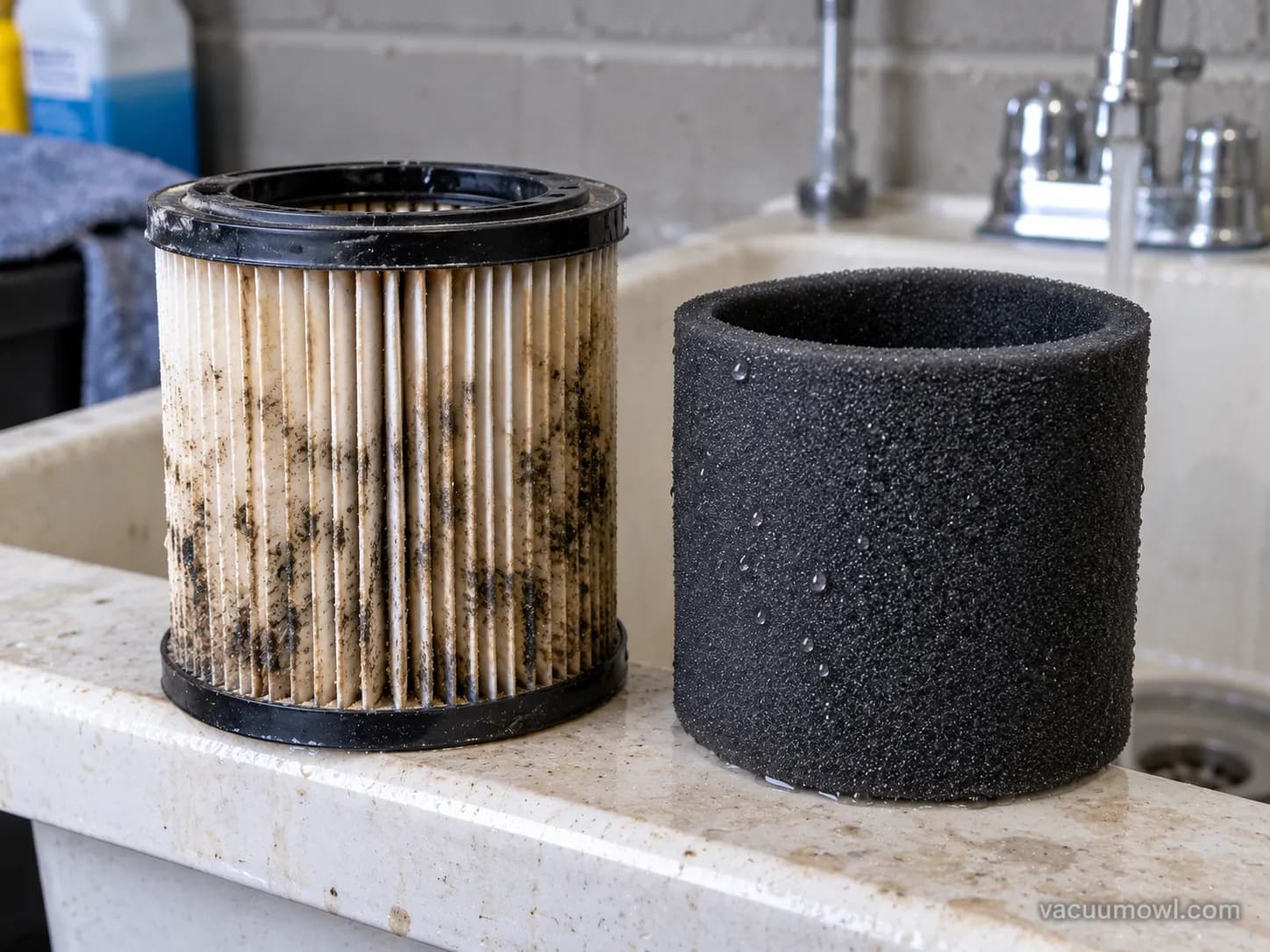
The catch: Foam is wet-only. A foam sleeve will not protect the motor from dry fines, so never leave it on for dusty work.
If you would rather not throw filters away, a washable pleated filter is the middle path, and forum users just hose it off between jobs.
The timing of when to swap foam for paper gets its own deep dive.
The routine to tap, wash and reuse a filter can stretch a single cartridge across many jobs.
Replacing a cartridge by part number is its own small headache, and the matching filter part numbers cross-reference sorts the lookalikes.
Stainless Steel vs Plastic Tank: Is Stainless Worth It?
A stainless steel vs plastic shop vac tank is a real trade-off, not a clear win for the pricier metal.
Stainless resists dents and wipes down easily, but it can still rust or pit at the welds and crimped seams if you leave it wet.
Plastic never rusts, shrugs off dents, and weighs less, but it builds static that plastic tanks are notorious for. Neither is automatically the buy-once choice, and the right pick comes down to how you use it.
The myth worth busting first is that stainless is rustproof. It is not.
Even so-called restaurant-grade stainless still rusts at seams, and forum owners report tanks that rusted through to a pinhole after being stored damp. Stainless slows corrosion, it does not stop it.
Static is the plastic tank’s equivalent weakness. Dry debris and a plastic drum can build a massive static shock, and owners describe chips that jump out like popping corn when the charge lets go.
Grounding the vac or using an anti-static hose tames most of it. Weight and mobility round out the picture, since stainless is heavier to haul and store while plastic is easier to move around a shop.
Dust-control housekeeping habits matter more than the tank material on either one, as the guidance from CPWR’s Silica-Safe housekeeping resource makes clear. A clean, dry drum outlasts an expensive one left damp.
Factor | Stainless steel | Plastic |
|---|---|---|
Rust | Can pit or rust at seams if left wet | Never rusts |
Weight | Heavier to move and store | Lighter and more mobile |
Static | Lower static buildup | Builds static, can shock |
Dents | Dent-resistant | Also dent-resistant, flexes |
Price | Higher upcharge | Cheaper |
My own tanks tell the story. My 16-gallon stainless drum grew a rust freckle at the bottom seam after about eight months of wet pickups when I left it damp.
My plastic 16-gallon has zero rust, but it zaps me every single time I empty it. The rust photo below is that stainless seam.
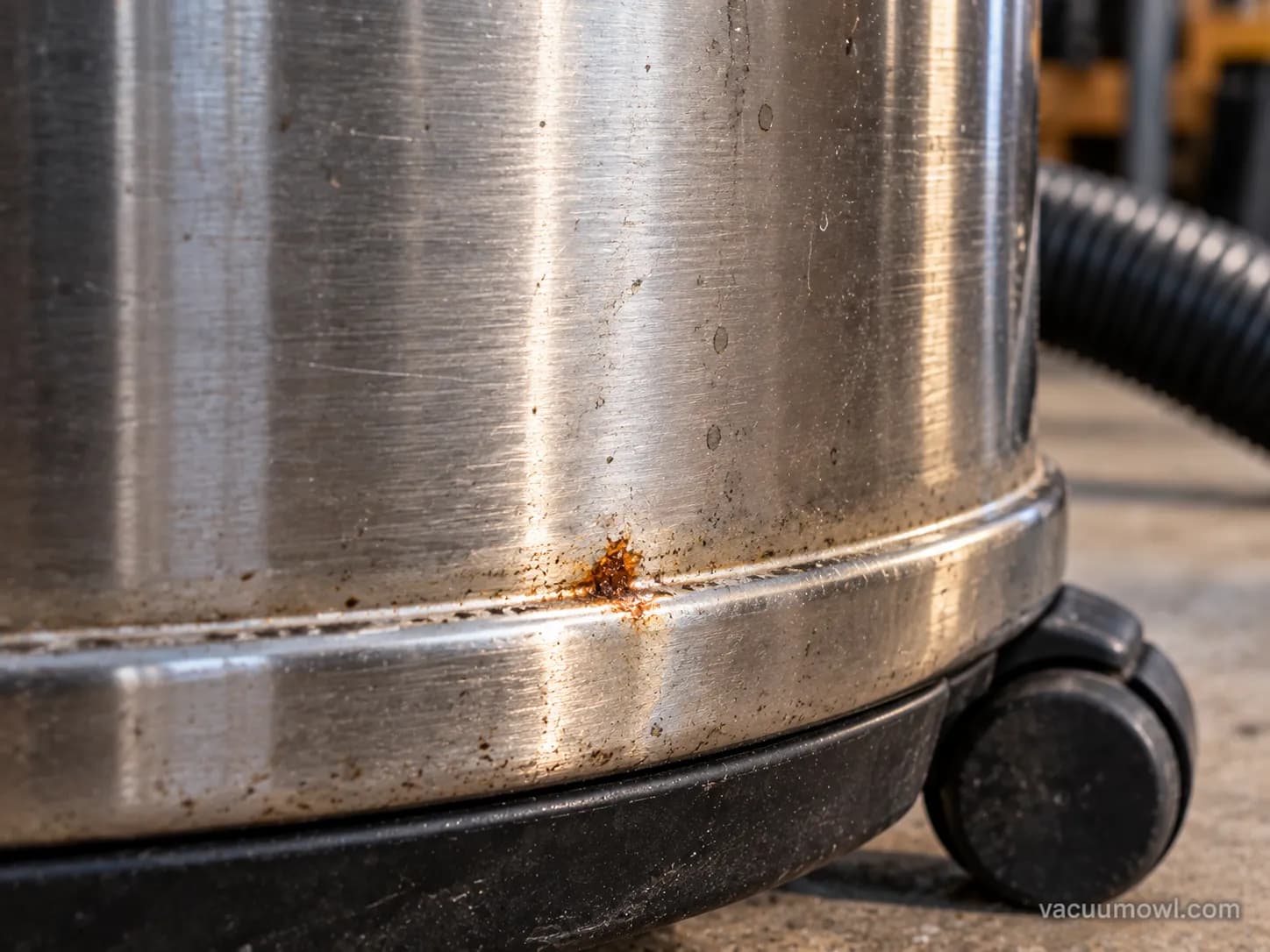
The catch: Stainless rust is usually not covered. Manufacturers frequently exclude rust from stainless warranties, so the premium does not buy you a guarantee against it.
The verdict by use pattern is straightforward. Stainless earns its keep for wet-heavy or professional use if you dry it after every job, while plastic is the better value for dry, mobile, home-shop work.
If tank material is only one factor in your buying decision, how the big brands compare weighs the rest of the spec sheet.
And if you are wondering whether a shop vac can stand in for a shop vac versus a household vacuum, we measured exactly that.
For a serious dust-collection rig, an extractor versus shop vac comparison changes the equation.
Carpet is one place a shop vac has honest limits, and the shop vac on carpet, tested piece shows exactly where it falls short of a dedicated cleaner.
Frequently Asked Questions
Should I use a bag and a filter at the same time?
Yes, by default. The bag collects debris for clean disposal and pre-filters the coarse material, while the filter captures the fine dust that would otherwise reach the motor and keeps your workspace cleanest.
Can you run a shop vac without a filter?
Only in narrow cases, such as wet pickup with a foam sleeve or coarse outdoor debris. Never run bare for fine dust, and note that blower mode is a separate exception covered in using it as a blower.
Do you use a filter for wet pickup?
You use a foam sleeve, or you remove the cartridge entirely, because a paper cartridge clogs and grows mold when it gets wet. For big standing water, a pump vacs and attachments setup beats bailing out the tank by hand.
Is drywall dust really a shop-vac killer?
Yes, and this is the mistake that cost me my first cartridge. Drywall and joint-compound fines pack a bare filter solid in a single session and slip through to the motor, so use a fine-dust or HEPA-rated bag plus a cartridge for that job.
Does a stainless steel shop vac rust?
Yes, it can. Stainless resists dents and cleans easily, but it pits and rusts at welds and seams if you store it wet, so keeping it dry with wall-mounting and storage off a damp floor helps.
Why does my shop vac shock me?
Static. Plastic tanks and dry debris build a charge that discharges through you when you touch the metal, and grounding the vac or fitting an anti-static hose is the usual fix.
The Bottom Line
The shop vac bag vs filter question was never really an either-or. The bag and the filter solve two different problems, clean collection on one side and motor protection on the other.
The owners who kill motors are almost always the ones who treated the filter as optional. Run both by default, and let the job decide your only exceptions.
Drop the bag for water, swap in a foam sleeve when you go wet, and step up to a fine-dust or HEPA setup the moment drywall or silica enters the picture.
Do that, and the fine dust that quietly destroys shop vac motors never gets the chance, so your machine keeps its suction for years instead of months.
Read it your way
Short on time? Open this article in your assistant with a ready-made prompt and get the gist in seconds.
Found this useful? Make us a preferred source so we show up in your Google results.
Keep reading
Related articles
Vacuum Types
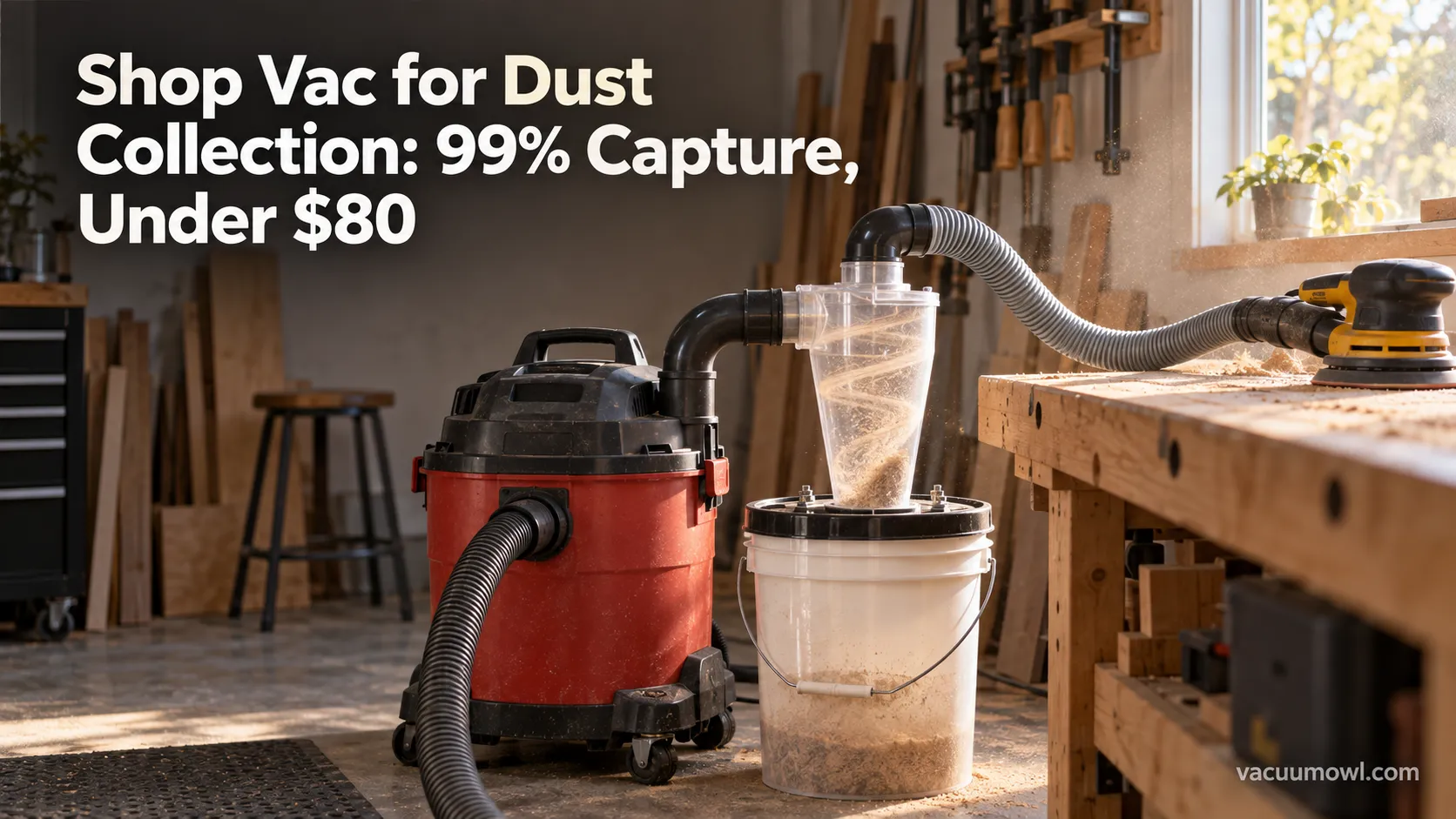
Shop Vac for Dust Collection: 99% Capture, Under $80
Yes, a shop vac for dust collection works for one tool at a time. Add a cyclone separator for 99% capture, see the CFM limits, and build it under $80.
Vacuum Types
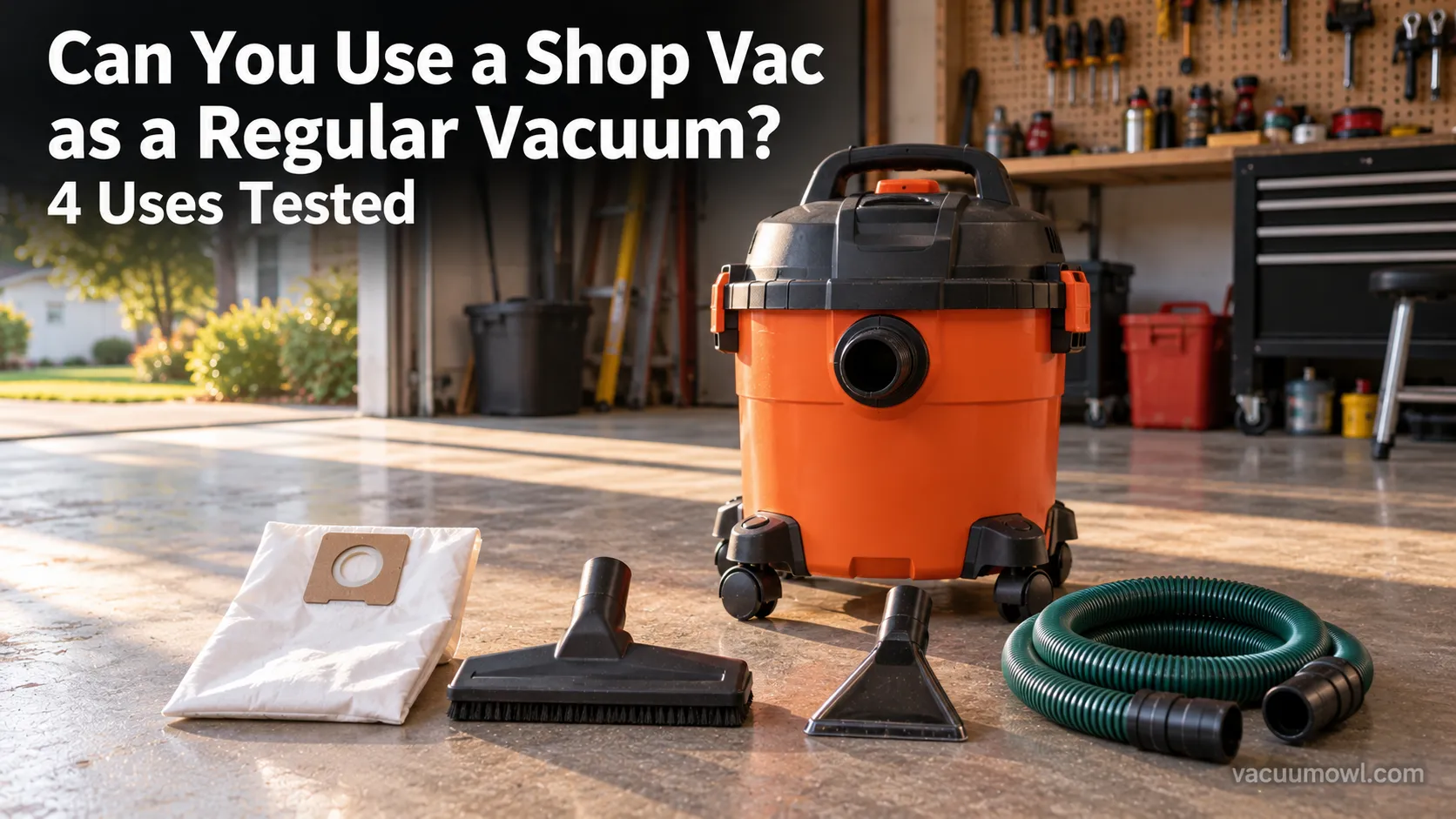
Can You Use a Shop Vac as a Regular Vacuum? 4 Uses Tested
Yes: can you use a shop vac as a regular vacuum? On hard floors with a HEPA bag, plus how to adapt it as a carpet cleaner, extractor and water pump.
Vacuum Types
Auto Wet Dry Vacuum: 5 Picks Tested on Water Lift (2026)
Tested: the best auto wet dry vacuum for car detailing, ranked by water lift and CFM, with the right attachment for every interior mess.
Vacuum Types
Shop Vac vs Carpet Cleaner: 1 Stain, 2 Machines Tested
Tested a shop vac vs carpet cleaner on one stain: the shop vac extracts spills but can’t inject, heat, or scrub. See which deep-cleans and when to rig one.
The discussion
Comments
Every comment is reviewed before it goes live.