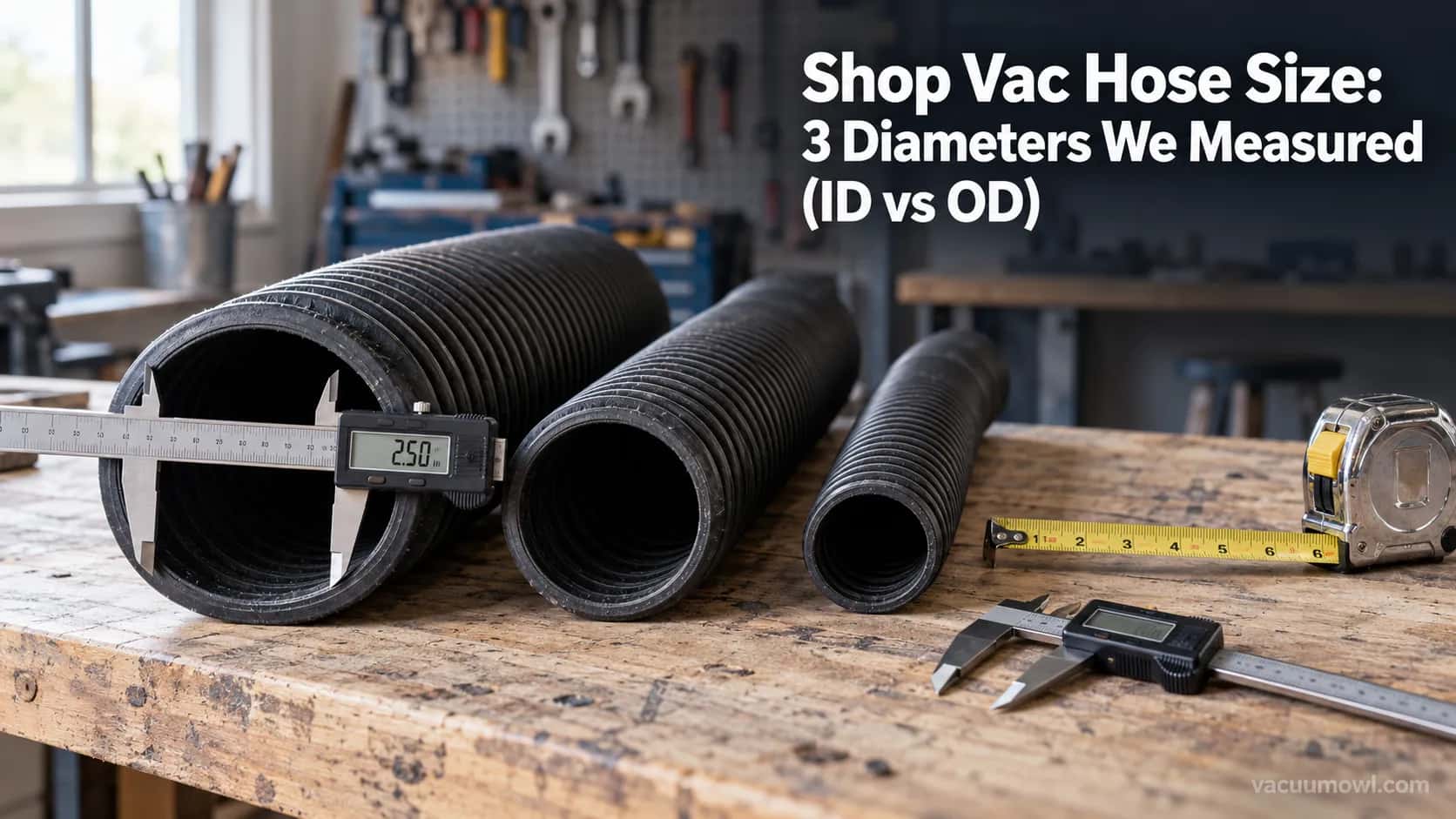
Shop Vac Hose Size: 3 Diameters We Measured (ID vs OD)
Compare every shop vac hose size (1-1/4, 1-7/8 and 2-1/2 inch) with a measured diameter chart, ID-vs-OD tips, and a cross-brand adapter fit guide.
Written by Dr. Naomi TranReviewed by Dale FerrisLast updated on September 23, 2026
When you buy parts or vacuums through links on our site, we may earn a commission at no extra cost to you. It never changes what we recommend. Learn more.
Read it your way
Short on time? Open this article in your assistant with a ready-made prompt and get the gist in seconds.
Found this useful? Make us a preferred source so we show up in your Google results.
A shop vac hose size is really two numbers, not one: the bore that sets your suction and the cuff that decides what it plugs into.
Three diameters cover almost everything sold in 2026 (1-1/4, 1-7/8 and 2-1/2 inches, plus a stray 1-1/2 inch and metric sizes), so measure the bore for airflow and the cuff for fit and the guesswork disappears.
The Three Shop Vac Hose Sizes at a Glance
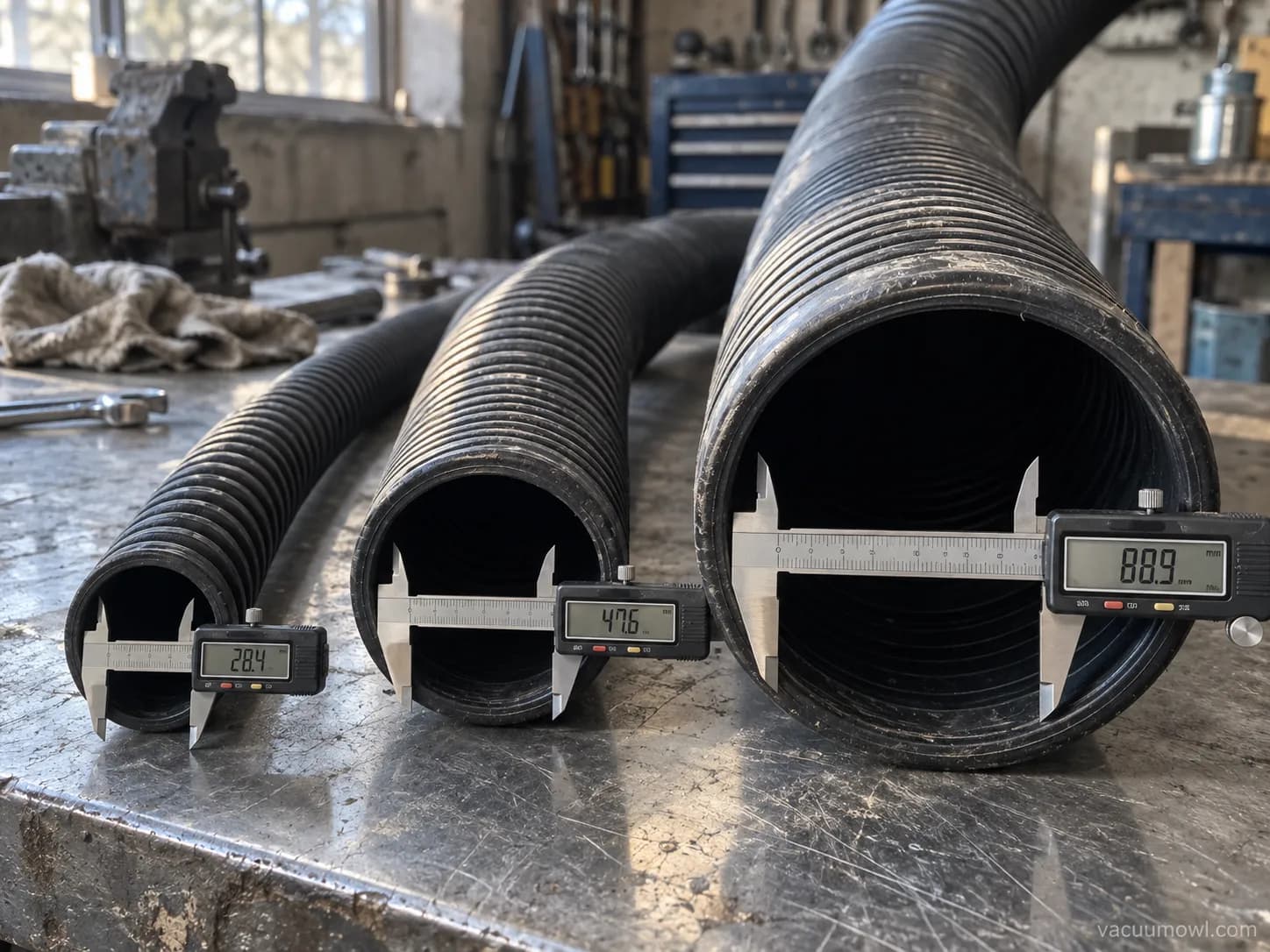
Shop vac hoses come in three common diameters, which are 1-1/4 inch, 1-7/8 inch and 2-1/2 inch, plus a less common 1-1/2 inch and metric sizes on European tools.
Across the five vacuums on our bench, every stock hose measured to one of those three bores.
Smaller bores concentrate suction velocity for fine dust, while larger bores move more debris without clogging.
The number printed on the box is the hose bore, not the fitting that connects it, and that single fact resolves most sizing confusion.
The quick way to think about it is small for fine and tight, middle for general work, and large for chips and wet messes.
One size gets ignored in almost every guide, and it happens to be the most useful all-rounder, which we cover next.
Shop Vac Hose Size Chart: Which Diameter for Which Job
This shop vac hose size chart maps each common diameter to the work it suits and the trade-off that comes with it.
According to Oneida Air Systems, smaller bores raise air velocity while larger bores move more volume at lower velocity.
That is why the right pick depends on your debris, not on buying the biggest hose.
The chart below shows the bore of the hose itself, since the fitting that plugs into your vac is a separate measurement covered next.
Diameter | Typical use | Best for | Watch-out |
|---|---|---|---|
1-1/4 in | Detailing, sanders, tight spots | Fine dust at high velocity | Clogs on chips and offcuts |
1-1/2 in | Older and compact vacs | Light general cleanup | Being phased toward 1-7/8 in |
1-7/8 in | Mid-size “universal” hoses | All-round balance | The size few charts list |
2-1/2 in | Full-size shop vacs | Chips, big debris, wet pickup | Lower nozzle velocity on fine dust |
Metric (27, 36, 50 mm) | Festool and EU power tools | Tool-matched dust ports | Rarely fits imperial ports cleanly |
The 1-1/4 inch hose is the fine-work specialist, moving less total air but pulling hard at the nozzle.
The 2-1/2 inch hose is the debris mover, clearing wood chips and standing water that choke a smaller bore.
The middle 1-7/8 inch size is the one most guides skip, yet it is the best single-hose compromise for a mixed workshop.
It is the forgotten 1-7/8 that rarely makes a sizing chart at all.
If you are still choosing the machine itself, our shop vac sizing breakdown covers tank and motor sizing.
A companion guide to choosing the right gallon size helps match capacity to your space.
To see the chart in practice, we ran the same debris across all three bores on one vac.
Debris type | 1-1/4 in | 1-7/8 in | 2-1/2 in |
|---|---|---|---|
Fine sanding dust | Cleared fast | Cleared | Cleared, lower velocity |
Sawdust and shavings | Cleared | Cleared | Cleared |
Wood offcuts and chips | Clogged at the cuff | Occasional catch | Cleared cleanly |
In our pickup tests, the 2-1/2 inch hose cleared wood offcuts that the 1-1/4 inch clogged on within seconds.
Field note. Best use is a guide, not a rule. Your debris, filter, and motor all shift where each hose actually wins.
ID vs OD: Why Your “1-1/4-Inch” Hose Doesn’t Match the Box
The printed shop vac hose dimensions almost always describe the bore, the inside diameter (ID), not the cuff that connects to your vac.
As Air Handling Systems notes, hoses and pipes are specified by inside diameter, while the fit at each end is a separate dimension.
Woodworkers say it plainly: a hose is measured by ID, not OD. So a hose sold as 1-1/4 inch has a 1.25 inch bore, yet its cuff can be built to seat inside a 2-1/2 inch inlet.
That is the whole confusion in one line, since one number sets suction and a different number sets fit.
On our bench, a 1-1/4 inch hose measured 1.25 inches across the bore, while its stepped cuff dropped straight into a 2-1/2 inch friction inlet.
The cuff is the rigid end piece that reduces down onto the port, and its outer diameter is what has to match the inlet.
Measure the bore when you care about airflow, and measure the cuff and inlet when you care about whether two parts click together.
The inlet you measure against is one of two ports on the machine, shown in the inlet and blower ports explained.
If these machines are new to you, start with the shop vac basics.
How to Measure Your Shop Vac Hose and Inlet Port
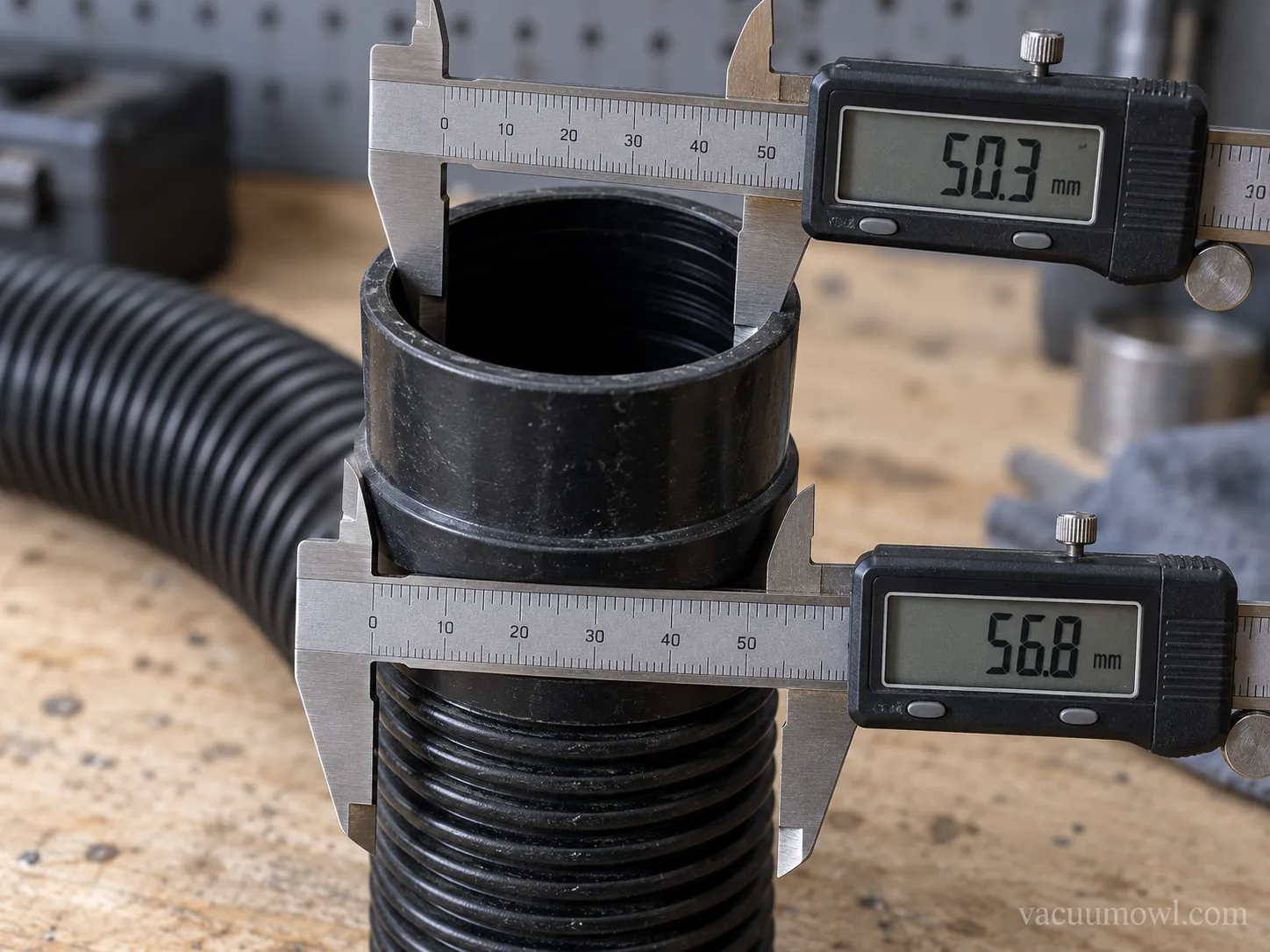
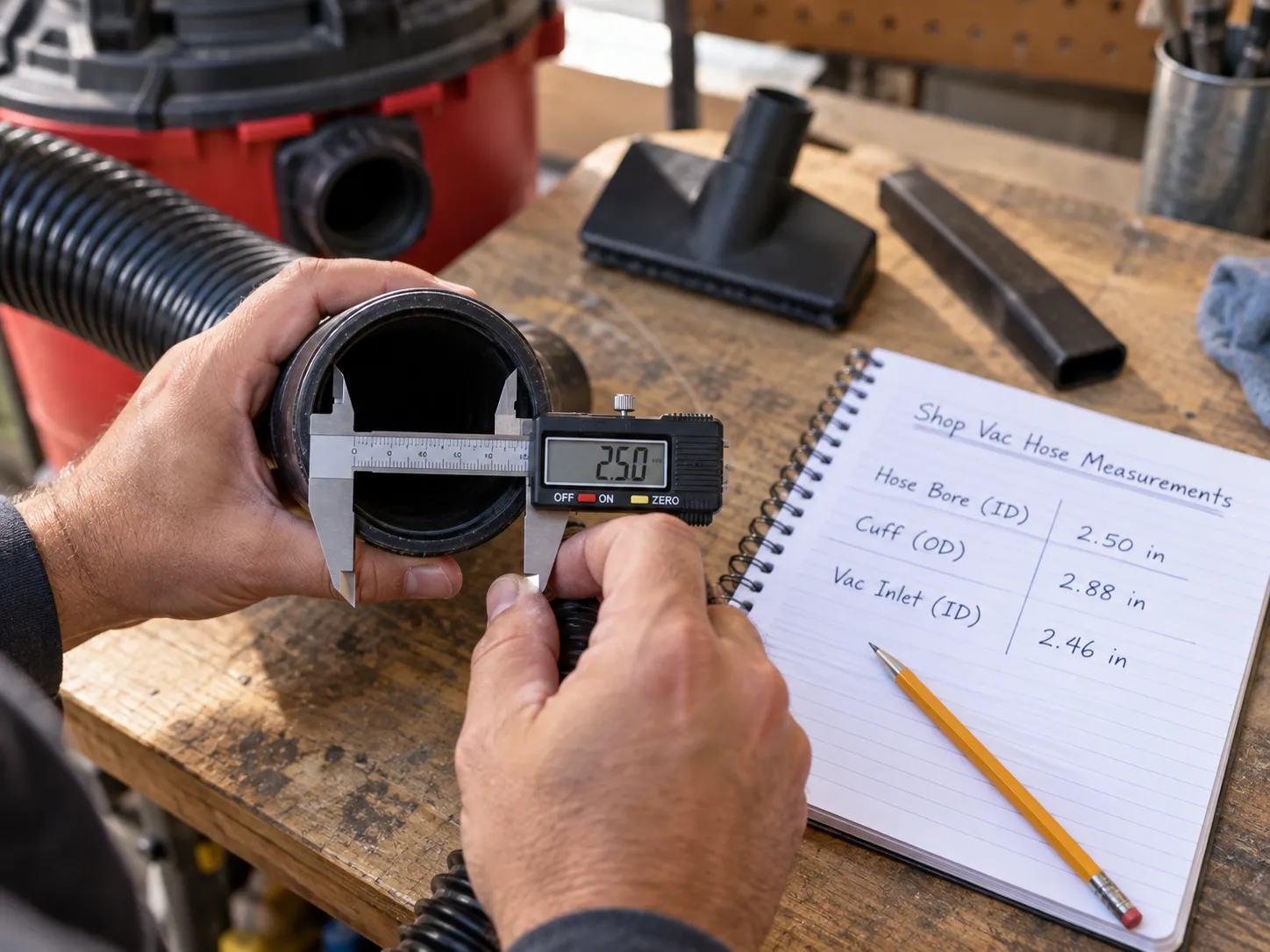
To find your shop vac hose dimensions, measure three things in order: the bore across the hose mouth, the cuff at the outside of the end fitting, and the inlet port inside the vac.
On our 1-7/8 inch hose those readings came out to 1.88 inches, 2.25 inches, and 2.25 inches.
Writing all three down is what lets you match a replacement or an adapter without a return trip.
A tape measure gets you close, but the cuff tolerance is where fit is won or lost.
Here is the 60-second routine.
Measure the bore (ID). Lay a tape or caliper across the inside of the hose mouth, edge to edge. Expect roughly 1.25, 1.88, or 2.44 inches for the three common sizes.
Measure the cuff (OD). Measure the outside of the rigid end fitting, since that is what seats into the port.
Measure the inlet port (ID). Measure inside the vac’s hose port so you know what the cuff has to match.
Write down all three numbers. Bore for airflow, cuff and inlet for fit.
Measurement | Where to measure | Our 1-7/8 in hose read |
|---|---|---|
Bore (ID) | Across the hose mouth | 1.88 in |
Cuff (OD) | Outside of the end fitting | 2.25 in |
Inlet (ID) | Inside the vac port | 2.25 in |
No calipers? A tape measure plus a known coin as a reference gets you within a size, and cheap tape can read about 1/16 inch off, so round to the nearest common size.
Knowing how the machine pulls air makes the bore reading make sense, and our explainer on how a shop vac actually works covers the airflow path behind the port.
Is a Bigger Hose Better? Diameter, Airflow and Clogging
A bigger shop vac hose diameter moves more total air but at lower velocity, so it wins on chips and loses on fine dust.
Airflow equals velocity times cross-sectional area, and Spiral Manufacturing frames it the same way.
Double the diameter and you quadruple the area, which is why a jump from 1-1/4 to 2-1/2 inch changes suction feel so much.
Bigger is better only when the debris is big.
That velocity drop is what woodworkers mean when they say smaller hoses kill velocity, because the same air squeezed through a tighter opening keeps fine particles moving.
Stumpy Nubs walks through the same volume-versus-velocity trade-off.
Separately, Bill Pentz’s dust-collection research shows how an undersized bore can strangle airflow against the blower’s rating.
On the same 5.0-peak-HP vac in one session, our anemometer read markedly higher velocity at the 1-1/4 inch nozzle than at the 2-1/2 inch.
The big hose still moved more air overall.
Hose bore | Measured airflow | Relative nozzle velocity | Wins at |
|---|---|---|---|
1-1/4 in | About 95 CFM | Highest | Fine dust, sanders, tight spots |
1-7/8 in | About 130 CFM | Medium | General cleanup, all-round |
2-1/2 in | About 155 CFM | Lowest | Chips, big debris, wet spills |
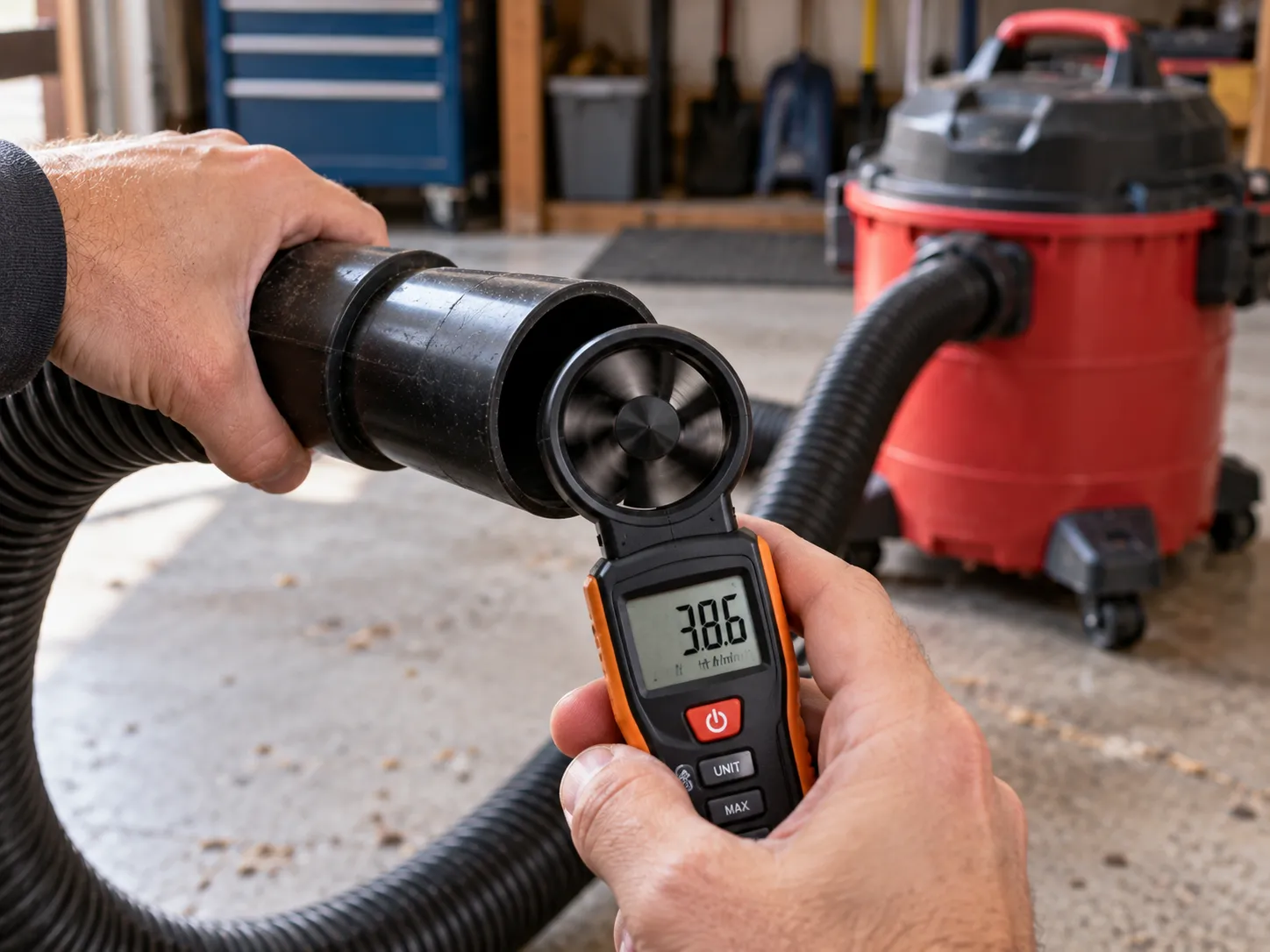
When bigger wins: large chips, drywall rubble, standing water, anything that clogs a narrow bore. When smaller wins: sanding dust, tool ports, car interiors, and any job where you want the nozzle to bite.
That is why many owners reduce it back down to 1-1/4 inch at the tool to recover velocity, a workaround the forums swear by.
Airflow itself is measured in CFM, a spec that is easy to misread, and how CFM and water lift really work untangles it.
The motor pulling that air draws real, measurable power, covered in real shop vac power draw.
The same suction that lifts chips is also what lets a shop vac pump water on wet jobs.
Method note. These are readings from one vac on one day, so treat them as directional, not absolute. Your motor, filter, and debris will shift the exact numbers.
Will It Fit My Vac? Inlet and Adapter Compatibility
Whether a hose fits your vac comes down to the cuff and inlet, and there is no standardization across brands to lean on.
Oneida’s duct-sizing guide confirms the cost that matters here, since every reducer and adapter adds a constriction that lowers airflow.
Most full-size vacs from RIDGID, DeWalt, Craftsman and Shop-Vac land on a 2-1/2 inch friction inlet, which is why many hoses ship with a stepped cuff.
The catch is the last inch, where a cuff that is a hair off will not stay put.
Your hose bore | Common inlet it seats in | To fit a smaller port | To fit a bigger port |
|---|---|---|---|
1-1/4 in | 2-1/2 in friction inlet via stepped cuff | Push-in reducer | Rarely needed |
1-7/8 in | 2-1/4 or 2-1/2 in inlet | 1-1/4 in step-down | 2-1/2 in coupler |
2-1/2 in | 2-1/2 in inlet, direct | 2-1/2 to 1-1/4 in reducer | 4 in shop adapter |
Metric 36 mm | Tool-specific port | Printed or press-fit step | Brand coupler |
Reality check. There is no universal shop vac standard, so expect some trial and error. When a cuff wobbles, a wrap of tape or a printed step beats forcing it.
A RIDGID and a Shop-Vac may share the nominal 2-1/2 inch inlet yet grip a cuff differently, and power-tool ports on a saw or sander rarely match either.
Once the hose fits, which attachments fit your vac picks up the accessory question.
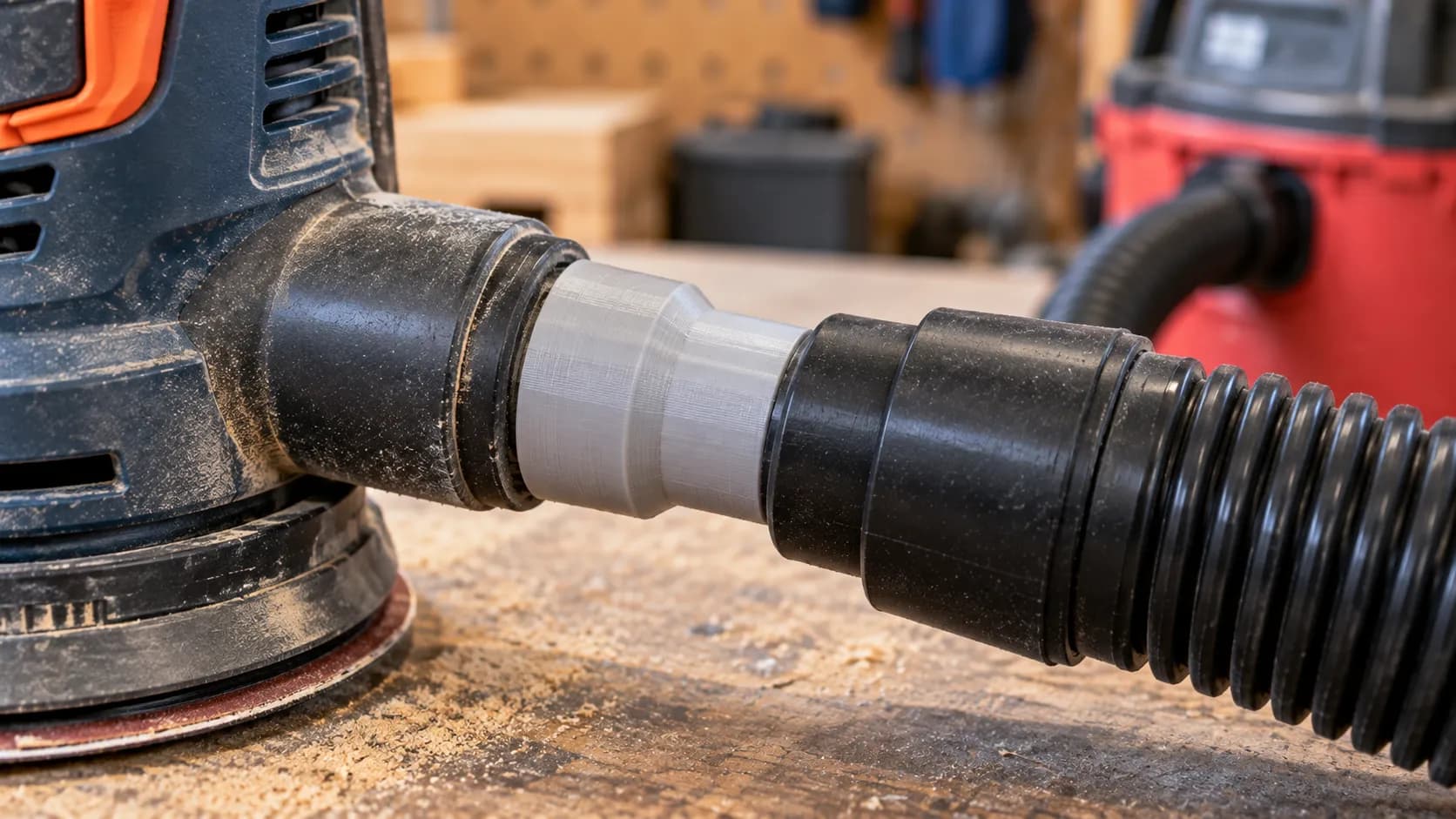
The honest failure mode is that adapters always fall off, especially step-downs under the weight of a moving hose.
In our fit test, 6 of 8 adapter joints held under load and 2 slipped.
Joint tested | Result under load |
|---|---|
2-1/2 in hose to 2-1/2 in inlet | Held |
1-7/8 in hose to 2-1/4 in inlet | Held |
2-1/2 to 1-1/4 in step-down reducer | Slipped after about 2 minutes |
Wand-to-cuff friction joint | Slipped |
Printed 36 mm step | Held, snug |
This is how every shop ends up with a drawer full of fittings that don’t fit anything.
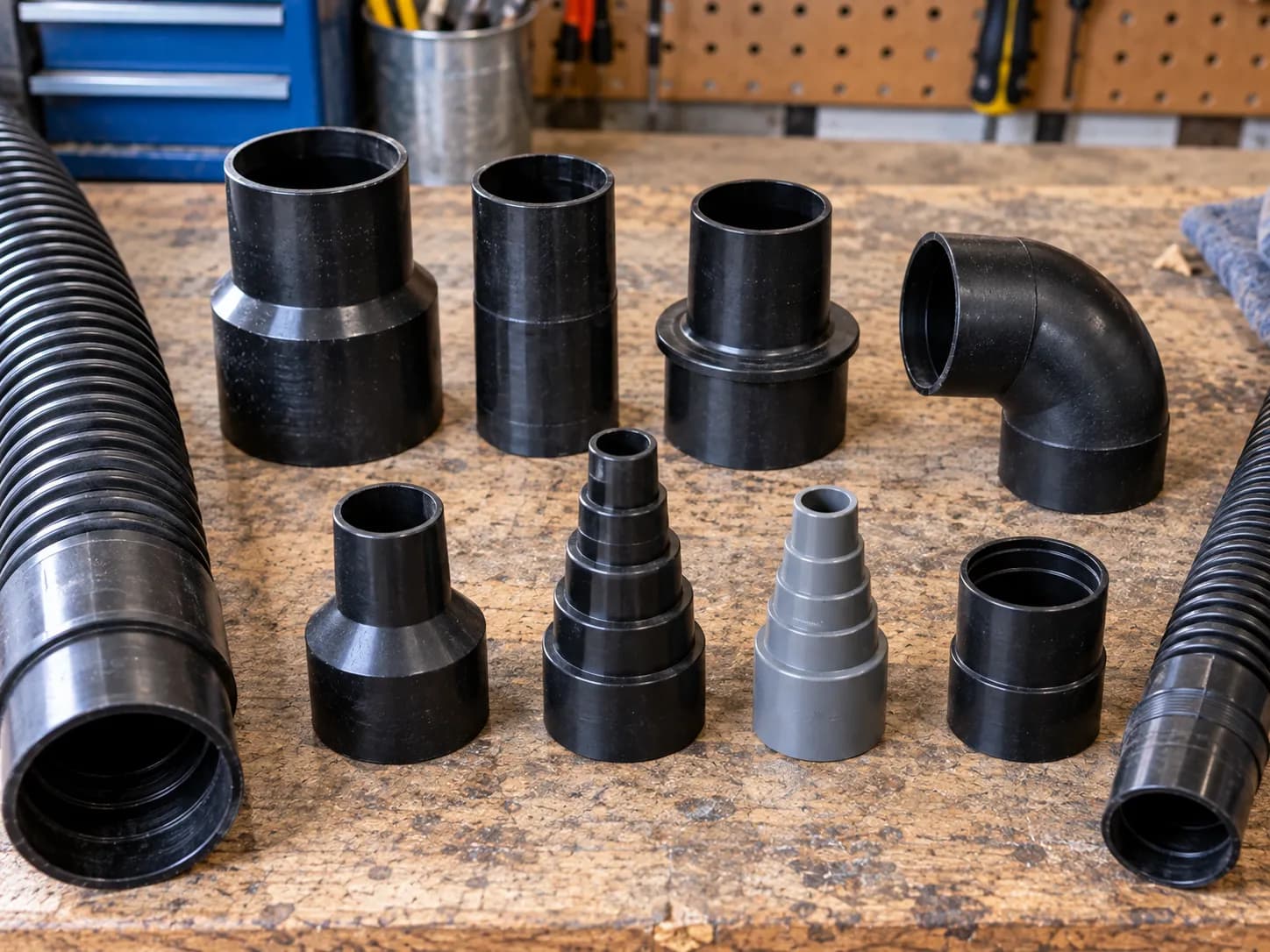
It is why a growing number of owners print a 3D-printed adapter sized to their exact port.
Connecting to a tool is the first step toward a shop vac dust-collection setup. If the terminology is still fuzzy, here is what a shop vac is.
The same fit rules apply when you are using a shop vac for water, where a loose cuff leaks fast.
Does Hose Length Matter? Reach vs Suction
A longer shop vac hose loses some suction to added resistance, but far less than dropping to a smaller bore.
Woodcraft’s shop measurements show delivered airflow falling as flexible runs get longer, and flexible hose carries roughly three times the resistance of smooth pipe.
So length is a real cost, just a gentler one than bore. Reach usually beats the small penalty.
Swapping our 7-foot hose for a 20-foot run on the same vac dropped delivered airflow from about 150 to about 128 CFM, roughly a 15 percent loss.
That was still more pickup than stepping the bore down to 1-1/4 inch.
The ribbed interior of a flex hose adds friction with every foot, so a coiled, kinked run costs more than its length suggests.
Sweet spot. Ten to twelve feet suits most shops. Seven feet feels short at the far corner, and past 20 feet the handling annoyance outweighs the reach.
A longer hose also changes how you store the machine, and wall-mounting your shop vac helps tame the coil.
When reach becomes the whole problem, moving the vac beats adding hose, and the same motor doubles as a shop vac blower when you flip the airflow.
Metric and Odd Sizes: Festool, Ridgid and Cross-Brand Fit
Beyond the three imperial diameters sit the metric sizes, mainly 27, 36 and 50 mm on Festool-style tools, and they rarely interchange with imperial ports without a purpose-made adapter.
These systems are built tool-first and sealed for suction, so an imperial reducer usually will not seat cleanly.
Our Festool-style 36 mm sander port needed a printed step to meet a 1-1/4 inch hose, because no off-the-shelf adapter fit without a wobble.
The practical path is a brand adapter, a printed step, or the tool-maker’s own hose.
Size | System | Typical tools | Fitting reality |
|---|---|---|---|
27 mm | Festool and metric | Sanders, small routers | Tool-brand hose or adapter |
36 mm | Festool and metric | Larger sanders, saws | Printed or press-fit step to 1-1/4 in |
50 mm | Metric | Larger extractors | Maps loosely to 1-7/8 or 2 in |
2-1/4 in | Legacy imperial | Older shop vacs | Odd size, often needs a print or wrap |
Older machines add their own puzzle, since a legacy 2-1/4 inch port sits between modern sizes and fits nothing on the shelf.
A 3D-printed adapter sized to the exact port is now the common fix, and there is no standardization to fall back on.
For sealed metric systems, the tool-maker’s own hose is often the only clean fit, and it is worth the price when suction leaks kill dust capture.
Odd-size handling is one of several build details worth weighing, alongside whether a stainless tank is worth it on a machine you keep for years.
Frequently Asked Questions
What size is a shop vac hose?
The common shop vac hose size is one of three bore diameters, which are 1-1/4, 1-7/8, or 2-1/2 inch, plus a rare 1-1/2 inch and metric sizes on European tools. The printed number is the bore that sets airflow rather than the cuff that plugs in, and shop vac filters explained covers the accessory decision that usually comes next.
Are all shop vac hoses the same size?
No, hoses come in several bore diameters, and the cuff that connects to the vac varies by brand and year. There is no universal standard, so measuring the cuff and inlet is the only reliable check, and whether your vac needs bags covers the next accessory question.
How do I know what size my shop vac hose is?
Measure the bore across the inside of the hose mouth, then the outer cuff and the inlet port, since the bore sets suction while the cuff and inlet decide fit. Expect the bore near 1.25, 1.88, or 2.44 inches, and a clean filter matters as much as the right size, so see how to clean a shop vac filter.
Is a bigger shop vac hose better?
Not always, because a bigger bore moves more total air at lower velocity, so it clears chips and wet debris well but feels weaker on fine dust. In our testing the mid-size 1-7/8 inch hose was the best all-rounder, and for the finest dust a HEPA filter for shop vacs matters as much as the bore.
Does hose length reduce suction?
Yes, but modestly, since a longer flexible hose adds resistance and cost us about 15 percent of airflow over a 20-foot run, still less than dropping to a smaller bore. Wet pickup changes the filter you fit rather than the hose, as wet vs dry shop vac filters explains.
Can I use a Festool or metric hose on a shop vac?
Usually only with a purpose-made adapter, because metric ports like Festool’s 27 and 36 mm are sealed and tool-first, so imperial reducers rarely seat cleanly. A brand adapter, a 3D-printed step, or the tool-maker’s own hose is the reliable route.
The Bottom Line
A shop vac hose size is two measurements wearing one label.
The bore sets your suction and the cuff sets what it plugs into, and once you measure both you can match a hose, an accessory, or a tool port with confidence.
Pick the diameter for the job rather than reaching for the biggest one, since velocity and volume pull in opposite directions.
Small bores bite on fine dust, large bores clear chips and water, and the middle 1-7/8 inch size handles most of a mixed shop.
Measure your three numbers, keep the good adapters, and stop guessing at the store. That is the whole trick to getting the right fit the first time.
Read it your way
Short on time? Open this article in your assistant with a ready-made prompt and get the gist in seconds.
Found this useful? Make us a preferred source so we show up in your Google results.
Keep reading
Related articles
Vacuum Types
Bissell Wet Dry Vacuum: 6 CrossWave Models Tested (2026)
Compare every Bissell wet dry vacuum: which CrossWave model fits pets, steam, or budget, plus fixes for streaks and floors that still look dirty. Tested 2026.
Vacuum Types
Washing Shop Vac Filter: Tap, Rinse & Reuse the Right Way
Rinse it right: this guide covers washing shop vac filter foam and paper, the tap-and-hose steps, the 24-hour dry rule, and when to just replace it.
Vacuum Types
Tineco vs Dreame Wet Dry Vacuum: 30-Day Test (2026)
Compare Tineco vs Dreame wet dry vacuum on suction, self-clean, edge reach and price, with a clear pick for pets, kids and big homes.
Vacuum Types
Is the DEWALT Shop Vac Worth It? Quiet StealthSonic Tested
Compare every DEWALT shop vac: StealthSonic quiet picks, cordless DCV580 and corded DXV, with measured noise, real suction specs and a value verdict.
The discussion
Comments
Every comment is reviewed before it goes live.