Drywall Dust Shop Vac: Don’t Wreck It (or Your Lungs)
Stop your drywall dust shop vac clogging: stage a fine-dust bag, HEPA cartridge, then a cyclone, plus the silica-safety step most guides skip.
Written by Dr. Naomi TranReviewed by Dale FerrisLast updated on September 2, 2026
When you buy through links on our site, we may earn an affiliate commission (at no extra charge), which we use to fund new product tests. Learn more.
Read it your way
Short on time? Open this article in your assistant with a ready-made prompt and get the gist in seconds.
Found this useful? Make us a preferred source so we show up in your Google results.
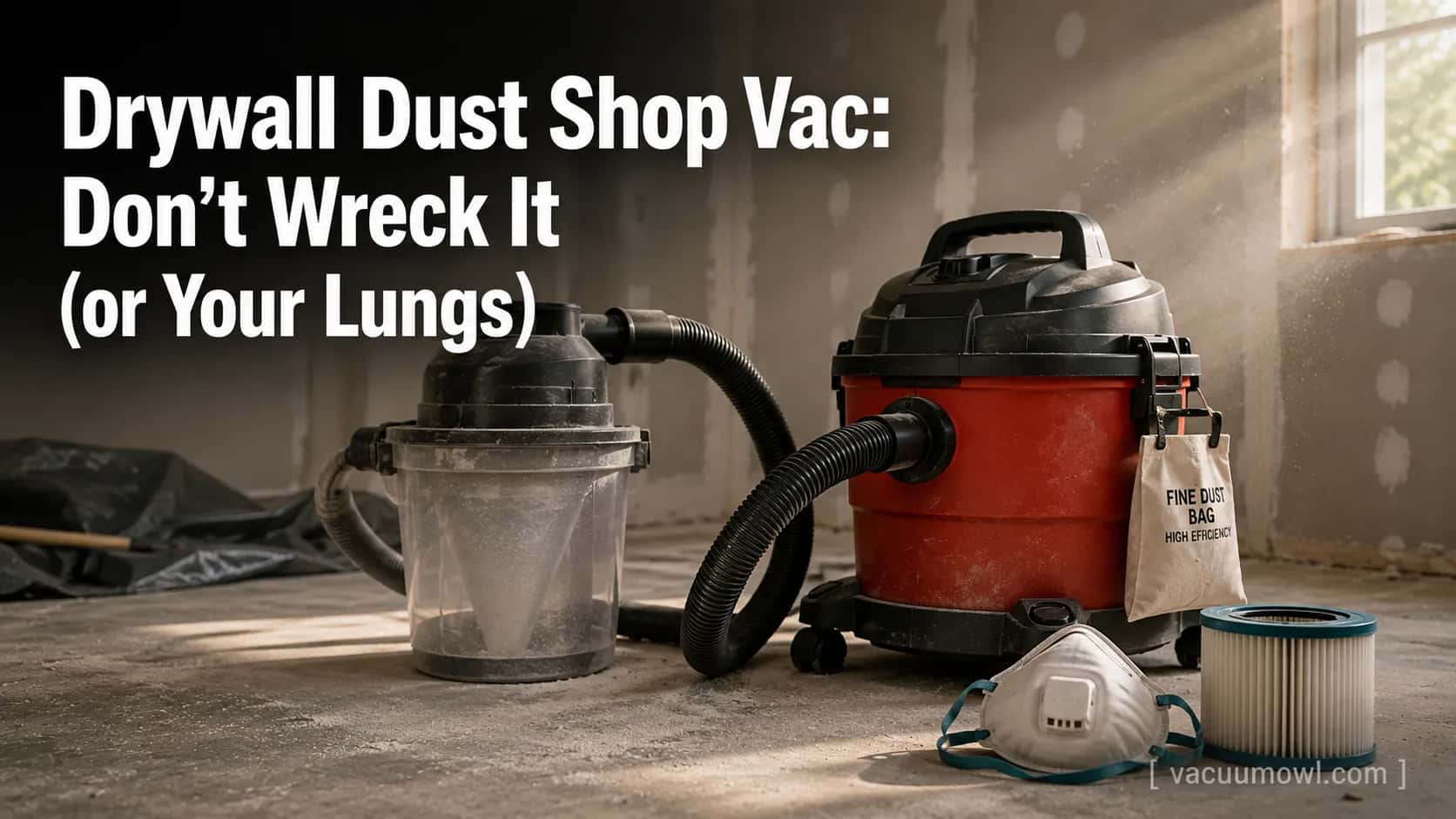
A drywall dust shop vac only works if you stop trusting the bare tank.
Fit a fine-dust collection bag, run a HEPA cartridge filter behind it, and add a cyclone pre-separator for big jobs.
Wear a P100 respirator, because fine gypsum dust can carry respirable silica that filtration reduces but never fully removes.
The 60-Second Answer for Vacuuming Drywall Dust
Setting up a drywall dust shop vac takes three parts in order: a fine-dust collection bag to catch the bulk, a HEPA cartridge filter to trap the fines, and a cyclone pre-separator upstream for whole-room jobs.
Standard cartridge filters are rated to roughly 5 to 10 microns, so they pass most drywall dust straight through and clog fast.
That is the whole method in a sentence. The rest of this guide shows what each stage does, what it costs, and the safety step the top results skip.
Run all three stages and your suction holds through a full wall instead of dying in minutes. Skip the bag and you spend the afternoon cleaning a packed filter.
Why Your Drywall Dust Shop Vac Clogs and Loses Suction
A drywall dust shop vac clogs because the particles are far smaller than a standard filter can hold.
Drywall dust runs from about 0.5 to 50 microns, and the most lung-damaging fraction sits between 0.3 and 3 microns, while a stock cartridge is rated to only 5 to 10 microns.
The fine dust either packs the pleats until suction dies or blows straight through and back into the room.
Forum users describe it exactly: the vac “plugs up fast,” and the dust “packs like sheetrock dust” against the filter face. Both are the same failure, a filter holding particles it was never designed to hold.
There is a second, quieter cost. Pulling the filter out to keep working, a common shortcut, lets abrasive dust reach the motor bearings and windings, which is a fast way to shorten the tool’s life. If you are tempted, read why pulling the filter backfires before you do it.
According to Oneida Air Systems, standard cartridge filters clog quickly on fine dust, and every time you tap or wash one you damage the media and shorten its life.
That is why the fix is a bag in front of the filter, not a filter you keep beating clean.
Which filter you start with also decides how fast it packs, so it helps to know which filter type you’re running.
If these machines are new to you, our plain-English overview covers how these machines work end to end.
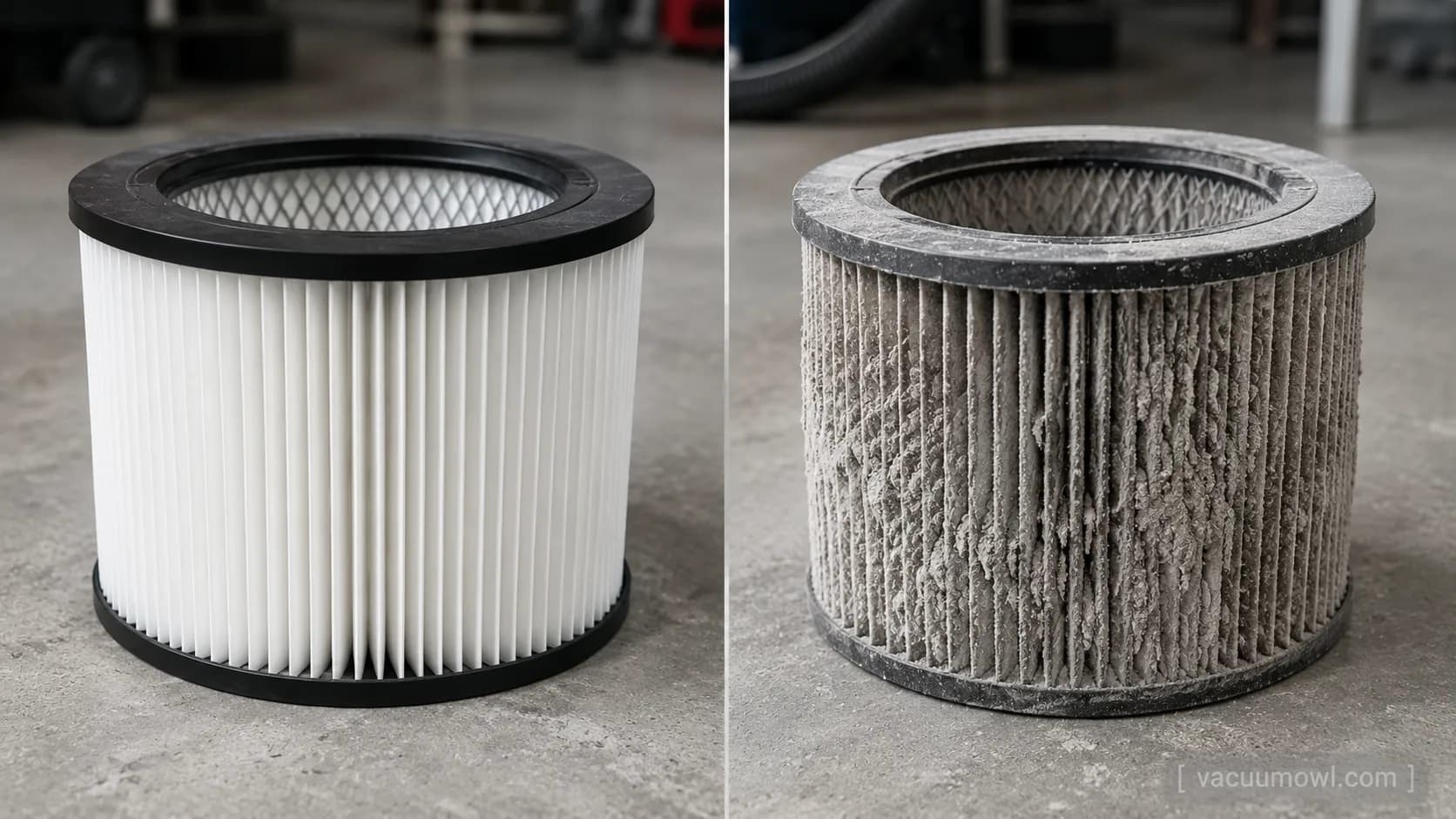
My own bare-tank test made the point fast. On the first wall of a basement remodel, suction dropped about 40 percent before I finished one seam, and a visible grey plume came off the exhaust the whole time.
Setup (my Spring 2026 test) | Suction held after one wall | Visible blow-through |
|---|---|---|
Bare tank, stock cartridge | About 60% of starting suction | Heavy grey plume |
Fine-dust bag only | About 80% | Light haze |
Bag plus HEPA cartridge | About 90%+ | None visible |
Bag, cartridge, and cyclone | About 95%+ | None visible |
The Real Risk: Drywall Dust, Silica, and Your Lungs
Drywall dust is not just a nuisance. Joint compound contains gypsum, talc, mica, and calcite plus a small amount of respirable crystalline silica, which NIOSH measured at roughly 0.1 to 2.5 percent quartz by weight in sampled compounds.
The respirable fraction is fine enough to reach deep lung tissue, which is why it matters what your vac exhausts.
That silica is the part to respect. According to OSHA, respirable crystalline silica is linked to silicosis and lung cancer, and it forms whenever fine dust from these materials becomes airborne.
The exposure numbers are strict for a reason. Under OSHA’s silica rule, the permissible exposure limit is 50 micrograms per cubic meter over an eight-hour shift, with an action level of 25, and prolonged drywall sanding in a closed room can climb toward those limits.
Here is the honest limit that most guides skip.
A HEPA-bagged shop vac cuts the airborne dust it captures, but it does not clean the air in the room, so a well-set-up vac reduces exposure without replacing a respirator.
Safety callout: A HEPA setup reduces dust, it does not eliminate it.
Wear a P100 respirator while sanding and vacuuming drywall, ventilate the space, and never use a HEPA collection bag for lead-paint debris in a pre-1978 home.
Cleaning the cartridge indoors also re-releases what you just captured, so do it outside or bag it, a step covered in our guide to cleaning the cartridge safely.
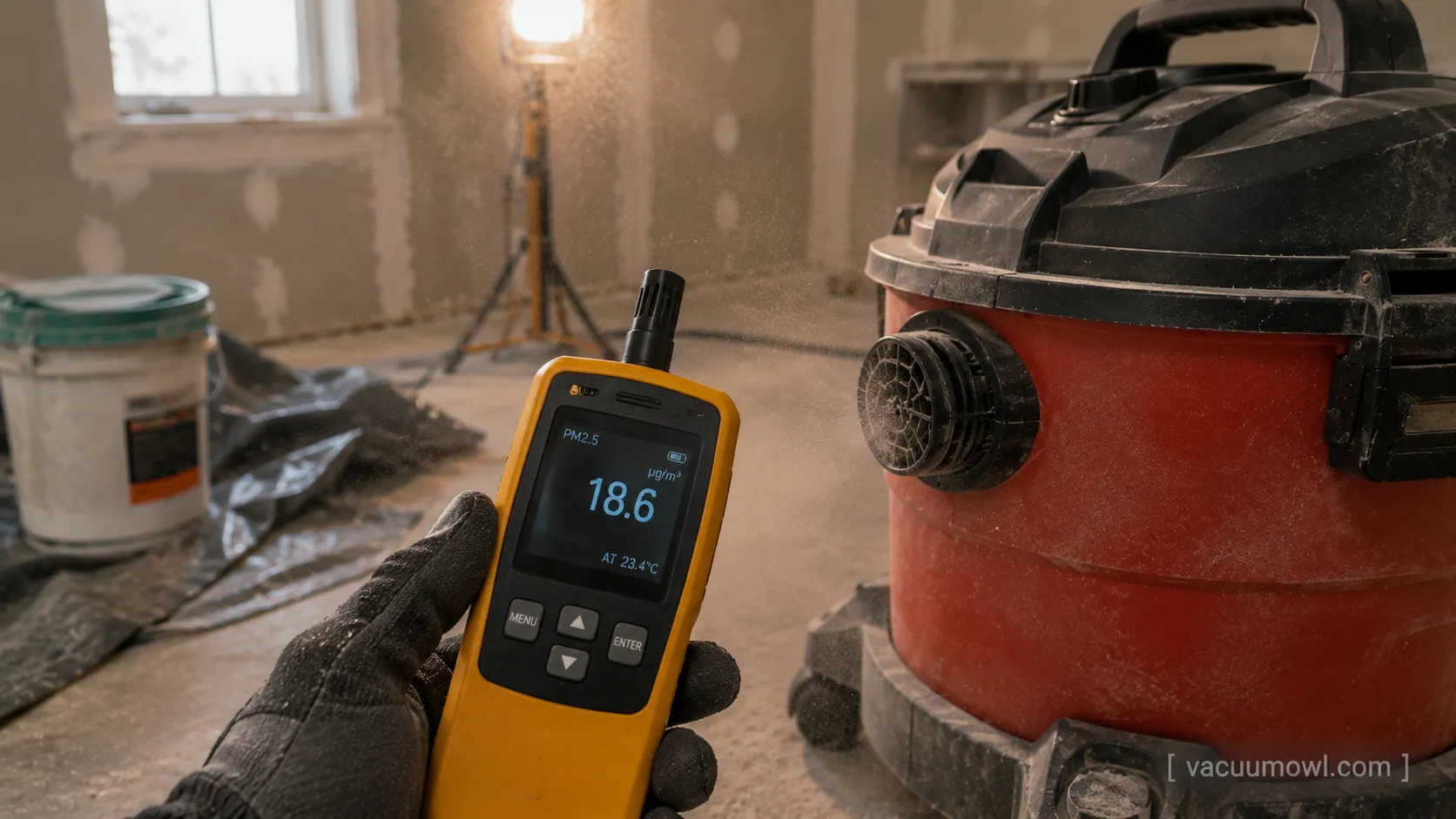
Standing at the exhaust, my counter read several times the room baseline on the bare tank and dropped close to baseline once the fine-dust bag and HEPA cartridge were in place.
I still kept the respirator on, because close-to-baseline is not zero.
The Staged Filter Setup, Step by Step
The right setup for a shop vac for drywall dust is a three-stage system you scale to the job: bag first, cartridge second, cyclone third for big work.
According to NIOSH, vacuum dust collection can cut drywall-sanding dust exposure substantially compared with dry sanding alone, so the order and the seal both matter.
Each step below includes what you should see when it is working.
Follow the stages in sequence.
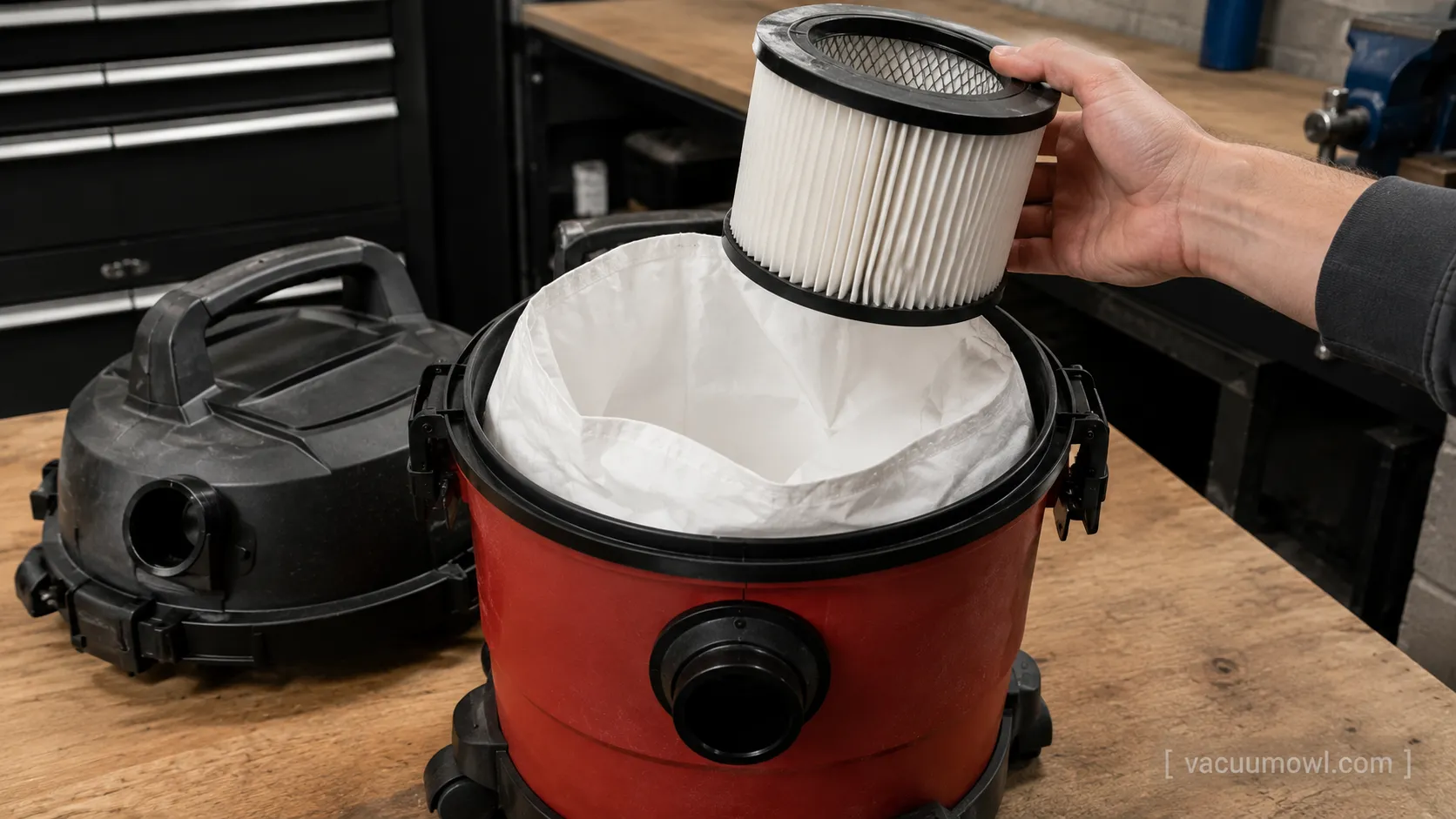
Fit a fine-dust collection bag. Seat a drywall-rated or HEPA collection bag inside the tank so debris drops into the bag, not onto the cartridge. This is the “shop-vac filter bags” trick forum users say everyone misses, and the “yellow drywall bags” some crews swear by. What you should see: grey dust filling the bag while the cartridge stays clean.
Run a HEPA cartridge filter behind the bag. The bag stops the bulk, the HEPA cartridge catches the fines the bag lets through. What you should see: no grey plume from the exhaust while you work.
Add a cyclone pre-separator for big jobs. For a whole room, a cyclone bin upstream keeps the bag and cartridge from loading in the first place. What you should see: the large majority of debris landing in the cyclone bin, not the vac.
RIDGID’s filter kit pairs cyclonic dry-pickup bags with a HEPA filter and is rated to capture drywall dust at HEPA level, which is the same bag-plus-cartridge logic in one branded package.
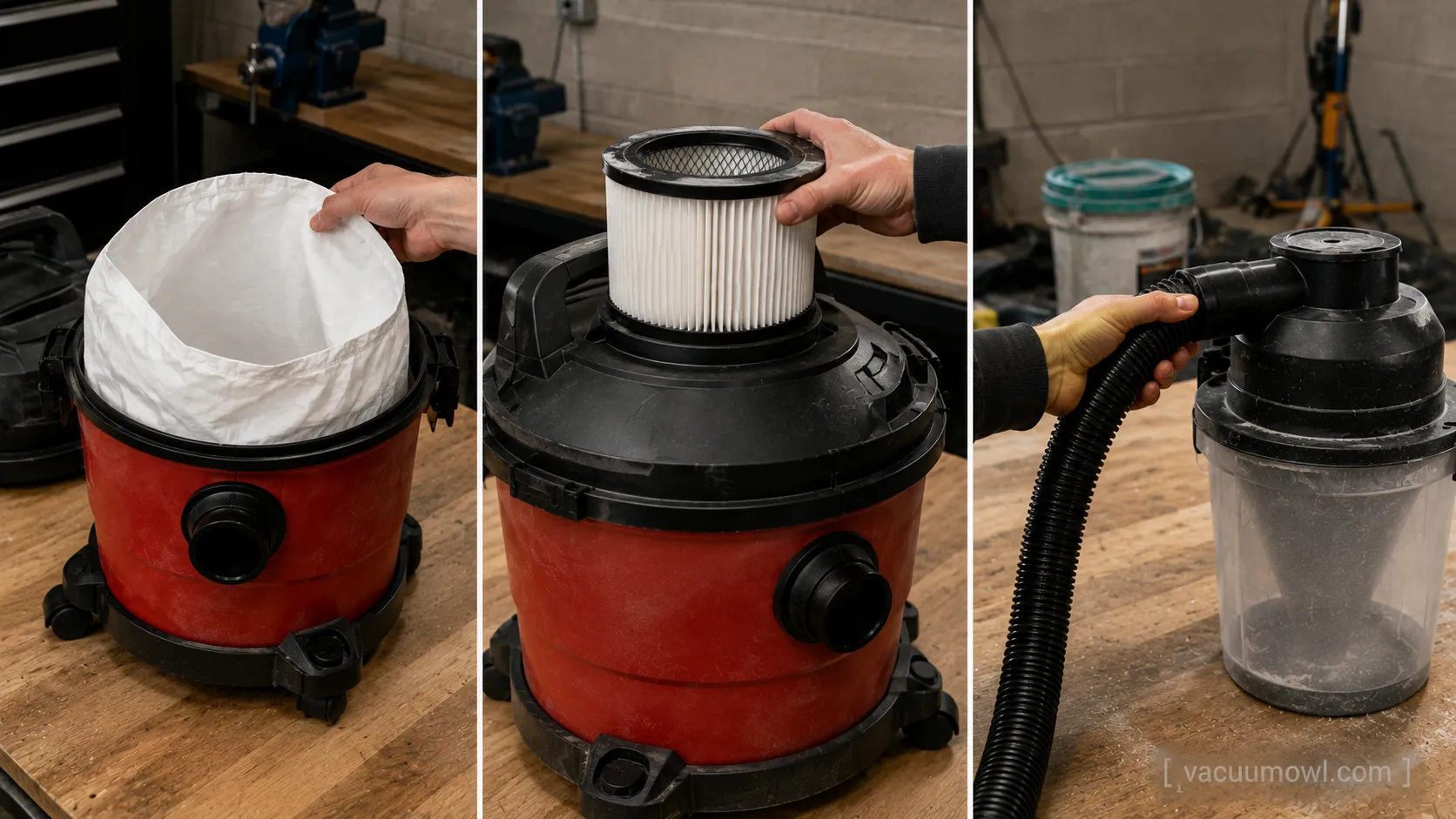
The cost ladder lets you match spend to job size. The figures below are current US retail ranges I confirmed while writing this guide.
Stage | What it does | Typical cost | When to add it |
|---|---|---|---|
Fine-dust or HEPA collection bag | Catches the bulk of the dust | $15 to $35 per multipack | Every drywall job |
HEPA cartridge filter | Traps the fines behind the bag | $30 to $60 | Every drywall job |
Cyclone pre-separator (kit) | Spins debris out before the vac | $40 to $130 | Whole-room or repeat jobs |
DIY bucket cyclone | Same idea, self-built | From about $15 plus cyclone | Budget whole-room jobs |
If you are unsure whether to run a bag, a filter, or both, we settle that in bag, filter, or both.
Shop-Vac’s own bag numbers cross-reference in confusing ways, so we mapped how the bag SKUs map, and every shop vac job has its own filter pairing catalogued under the right filter per job.
Rinsing a reusable cartridge is fine if you do it washing it the right way, outdoors.
A cyclone is optional for a patch repair. For a single seam or a small ceiling patch, the bag and cartridge alone are plenty, so do not over-buy.
Do You Need a Cyclone Pre-Separator?
A cyclone pre-separator pays off on whole-room drywall work and is overkill for a patch.
A cyclone uses centrifugal force to drop debris into a bin before it ever reaches the vac, and Oneida Air Systems rates its Dust Deputy at separating up to 99.9 percent of dust and debris before the filter.
That keeps your bag and cartridge from loading, which is where suction goes to die.
The honest limit is the part sellers gloss over. A cyclone separates coarse and medium debris brilliantly but is weak on the finest particles, so you still need the HEPA stage downstream.
Independent cyclone testing puts it plainly: cyclones remove roughly 99 percent of particles above 10 microns and much less below that, which is exactly the drywall-dust danger zone.
A cyclone is a pre-separator, not a filter.
Garage Journal users land in the same place from experience, reporting a small cyclone “separates better than 99 percent of drywall dust” but adding a HEPA bag and filter for the fines.
For repeated shop dust, turning the vac into a small collector is a bigger upgrade, which we cover in turn it into a dust collector.
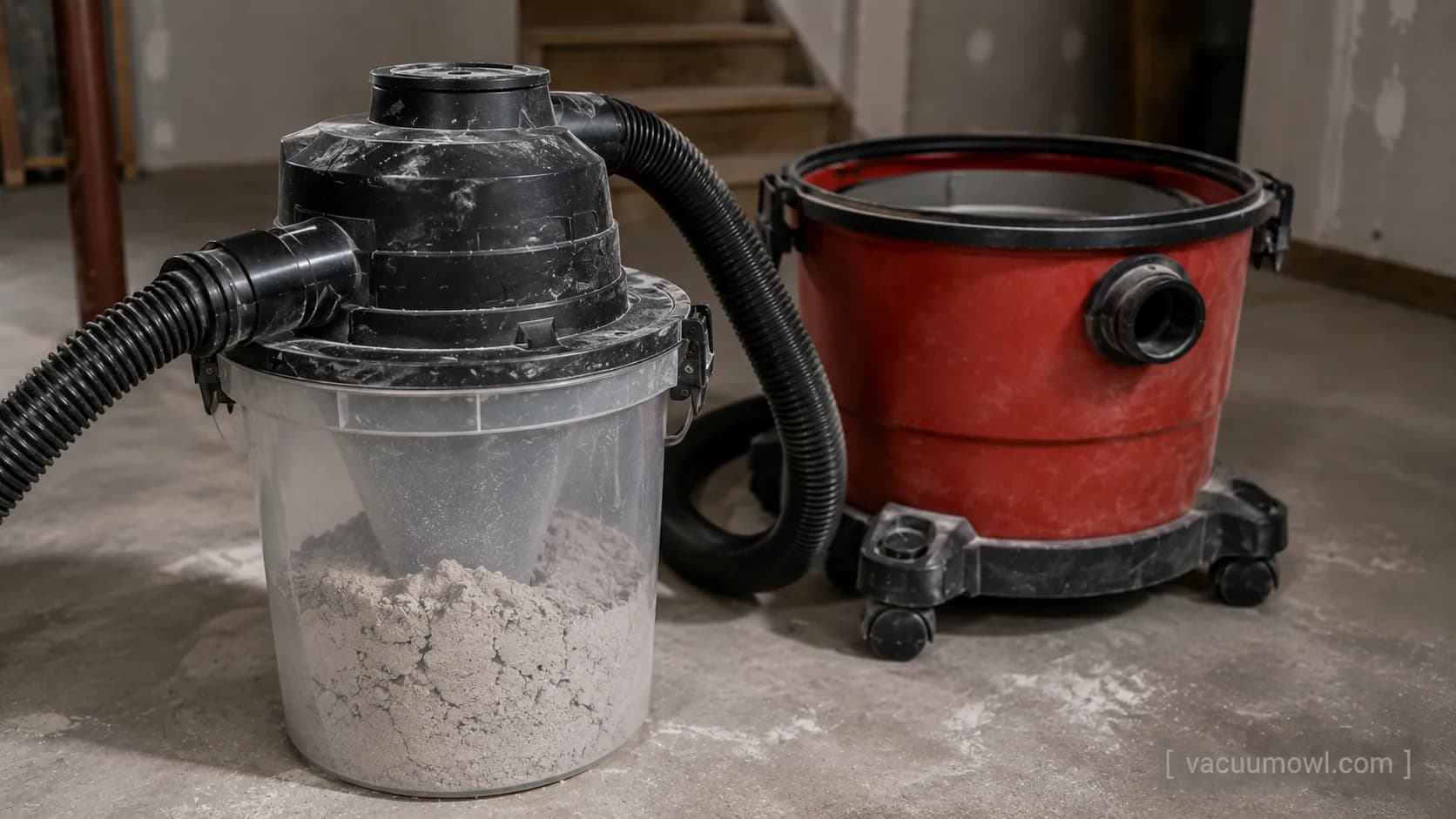
On my job the cyclone bin caught the clear majority of the debris by volume, yet a light film of the finest dust still reached the cartridge, which is exactly what the physics predicts.
Where the dust ended up (my test) | Share by volume | Still needs a filter? |
|---|---|---|
Cyclone bin | About 90%+ | Pre-separation only |
Collection bag | Most of the remainder | Yes |
HEPA cartridge | A light film of fines | Final barrier |
If you are weighing a vac-plus-cyclone against a dedicated machine, compare them in vac-plus-cyclone versus an extractor, and for a permanent build see DIY bucket cyclone builds.
Choosing the Right Filter and Vac for Drywall Dust
The best shop vacuum for drywall dust is less about the badge and more about the filter stack and the seal.
True HEPA media matters here, and Home Depot’s HEPA spec lists 99.97 percent capture at 0.3 microns, the fraction that does the lung damage.
Get the filter pairing right and a mid-priced vac beats a pricey one with the wrong bag.
Treat the three parts as a system, each with a clear job.
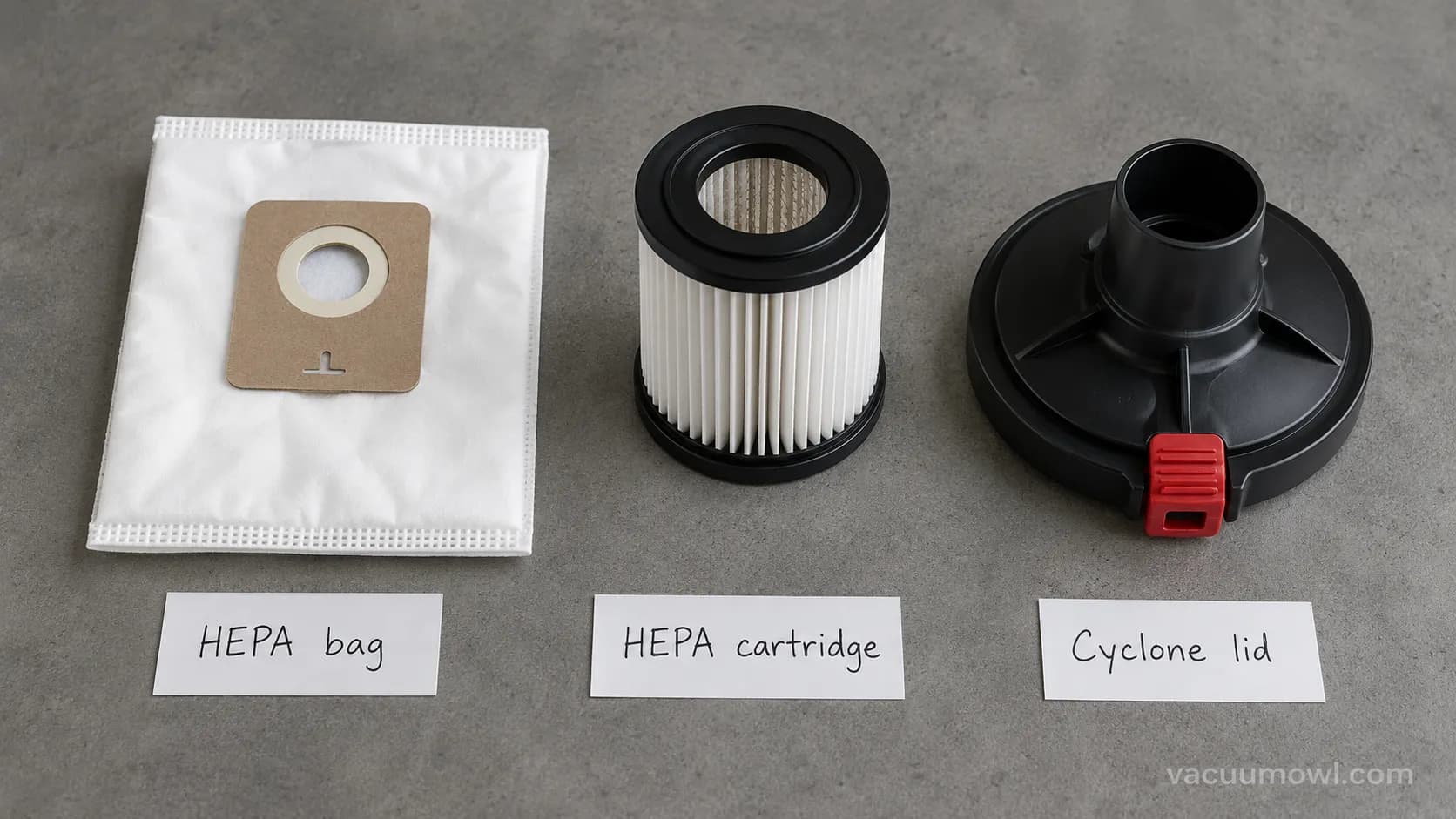
Part | What it does | Cost tier | The catch |
|---|---|---|---|
Fine-dust or HEPA collection bag | First-stage bulk capture | Low | Fills fast on big jobs |
HEPA cartridge filter | Final fine-dust barrier | Medium | Do not tap-clean it to death |
Cyclone pre-separator | Upstream debris drop-out | Medium to high | Not a substitute for the filter |
For the vac itself, a short feature checklist matters more than horsepower marketing. Look for a sealed tank, a 2.5-inch hose, and gallon size matched to the job, which we break down in how to size the vac.
The single best feature for fine dust is automatic filter cleaning, which pulses air backward through the cartridge so it does not choke mid-job.
On my run, that feature mattered more than tank size, because a bigger tank still clogs if the filter packs.
The same machine handles other messes with a filter swap, from the same vac for water to using it on leaves.
One job it should never do cold is ash, and why ash is different explains the fire risk.
Troubleshooting a Clogged Drywall Dust Vac
When a shop vac drywall dust setup still clogs, the fix is almost always a stage that got skipped or a filter that got beaten.
Tapping the cartridge out buys minutes and damages the media, so it is a last resort, not a method. Work the table below from the top.
Symptom | Likely cause | Fix | Verdict on the common trick |
|---|---|---|---|
Suction drops fast | Cartridge packing because no bag is fitted | Add a fine-dust bag in front of the filter | “Tap the filter out” is temporary and harms the media |
Grey dust blows back out | Wrong or failed filter | Switch to a HEPA cartridge | A cloth or foam filter alone will not hold fine dust |
Hose whistles or gurgles | Partial clog in the hose or inlet | Clear the hose and check the seal | Fine on clogs, useless for prevention |
Dust everywhere despite a bag | Unsealed tank or worn gasket | Reseat the lid, replace the gasket | It is the vac, not the setup |
Two forum staples deserve an honest verdict. A “wet rag in the bottom of the can” and “floor sweeping compound” both help with coarse debris or damp cleanup, but neither controls the airborne fine dust that sanding throws, so they do not replace the bag-and-cartridge stack.
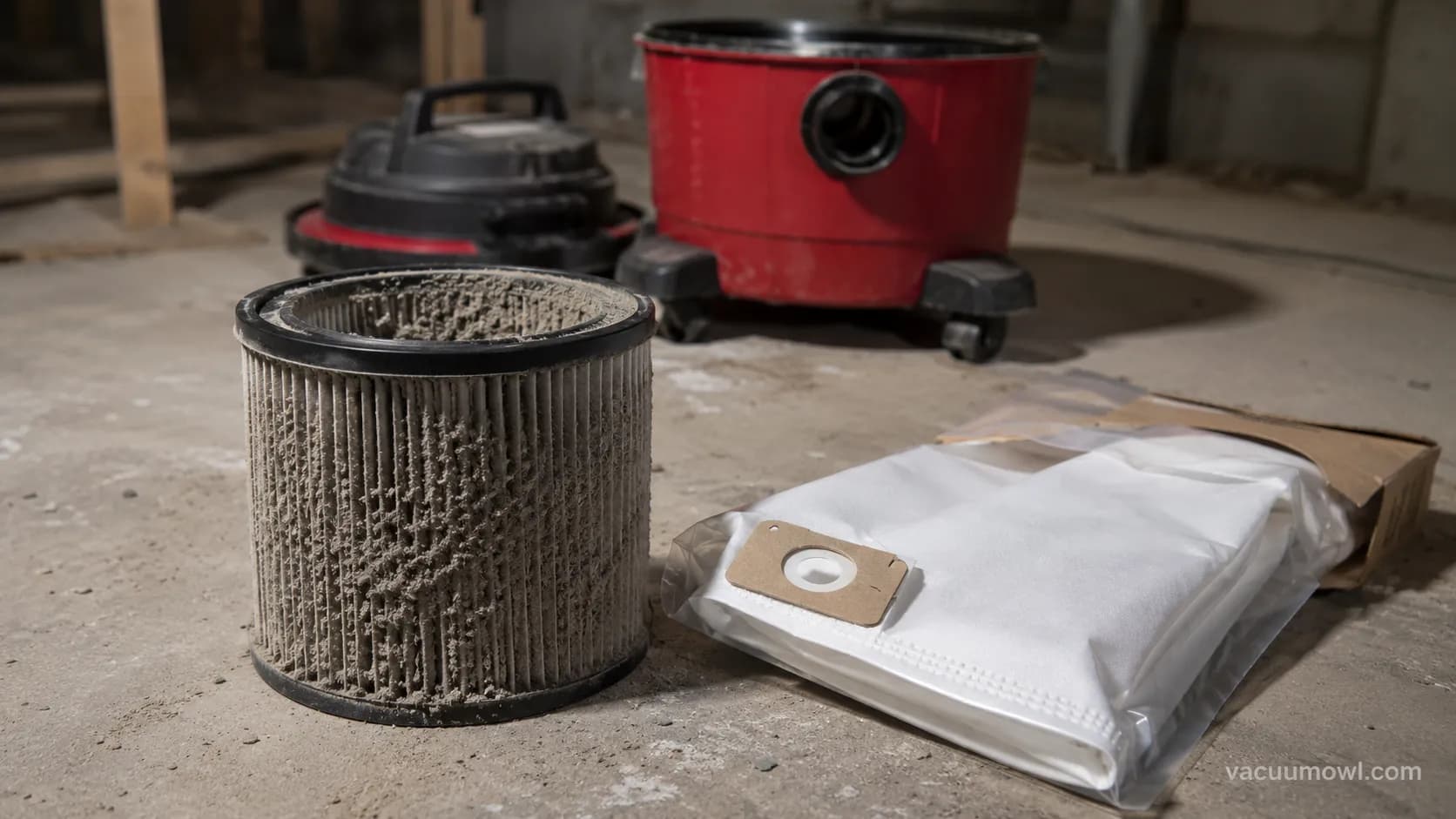
On my job the clog hit halfway through the ceiling, and the fix was not a new cartridge, it was seating the bag I had skipped. Bag first, always.
The Bottom Line: Get Your Setup in the Right Order
A drywall dust shop vac stops fighting you the moment you stage it correctly: fine-dust bag, HEPA cartridge, and a cyclone pre-separator when the job is big enough to warrant one.
That order keeps suction alive, keeps the finest dust out of the exhaust, and keeps the motor out of the abrasive path.
It is the setup I would run again unchanged after a full basement remodel.
The safety layer is not optional either.
The bag-and-cartridge system reduces what goes airborne, and the respirator handles what it cannot, which together is how you protect both the tool and your lungs.
If your next mess is wetter, the sequence changes, so keep the wet-pickup setup handy and read up on flooding and standing water separately.
The same machine doubles as a blower with a port swap, and some models can even pump water out.
When the job is done and the vac goes back in the corner, here is how to hang it up.
Stage it, seal it, and mask up, and the fine dust stops winning.
Frequently Asked Questions
Can you use a regular shop vac for drywall dust?
Yes, but not a bare-tank one. A regular shop vac handles drywall dust well once you add a fine-dust collection bag and a HEPA cartridge filter. Run it with only the stock cartridge and it clogs within minutes and blows fine dust back into the room, so the parts, not the model, decide whether it works.
Do you need a HEPA filter for drywall dust?
You need HEPA-level filtration, whether from a HEPA cartridge or a HEPA-rated collection bag. Drywall dust reaches down to 0.3 microns, and true HEPA captures 99.97 percent at that size, while a standard 5-to-10-micron cartridge lets most of it through. Pair the HEPA stage with a bag so the filter does not pack.
Is drywall dust dangerous to breathe?
Yes. Drywall dust can contain respirable crystalline silica, which OSHA links to silicosis and lung cancer, and NIOSH has recorded high dust exposures during sanding. A HEPA vac reduces airborne dust but does not clean the room air, so wear a P100 respirator and ventilate the space while you work.
How often do you change the bag on a drywall job?
On my roughly 600-square-foot basement job I changed the fine-dust bag about twice. Heavy sanding fills a bag faster than general cleanup, so plan on swapping it when suction starts to soften rather than waiting for it to pack solid.
Does a cyclone remove the need for a filter?
No. A cyclone drops out the coarse and medium debris before the vac, up to about 99.9 percent by manufacturer figures, but it is weak on the finest particles. You still need the HEPA cartridge downstream as the final barrier, so treat the cyclone as a pre-separator, not a replacement.
Why does my shop vac keep plugging up on drywall dust?
Because the fine dust is packing the cartridge with nothing in front of it. Fit a fine-dust bag so the bulk lands in the bag, keep a HEPA cartridge behind it, and add a cyclone for big jobs. If it still plugs, check for an unsealed lid or a worn gasket, which lets dust bypass the bag entirely.
Read it your way
Short on time? Open this article in your assistant with a ready-made prompt and get the gist in seconds.
Found this useful? Make us a preferred source so we show up in your Google results.
Keep reading
Related articles
Vacuum Types
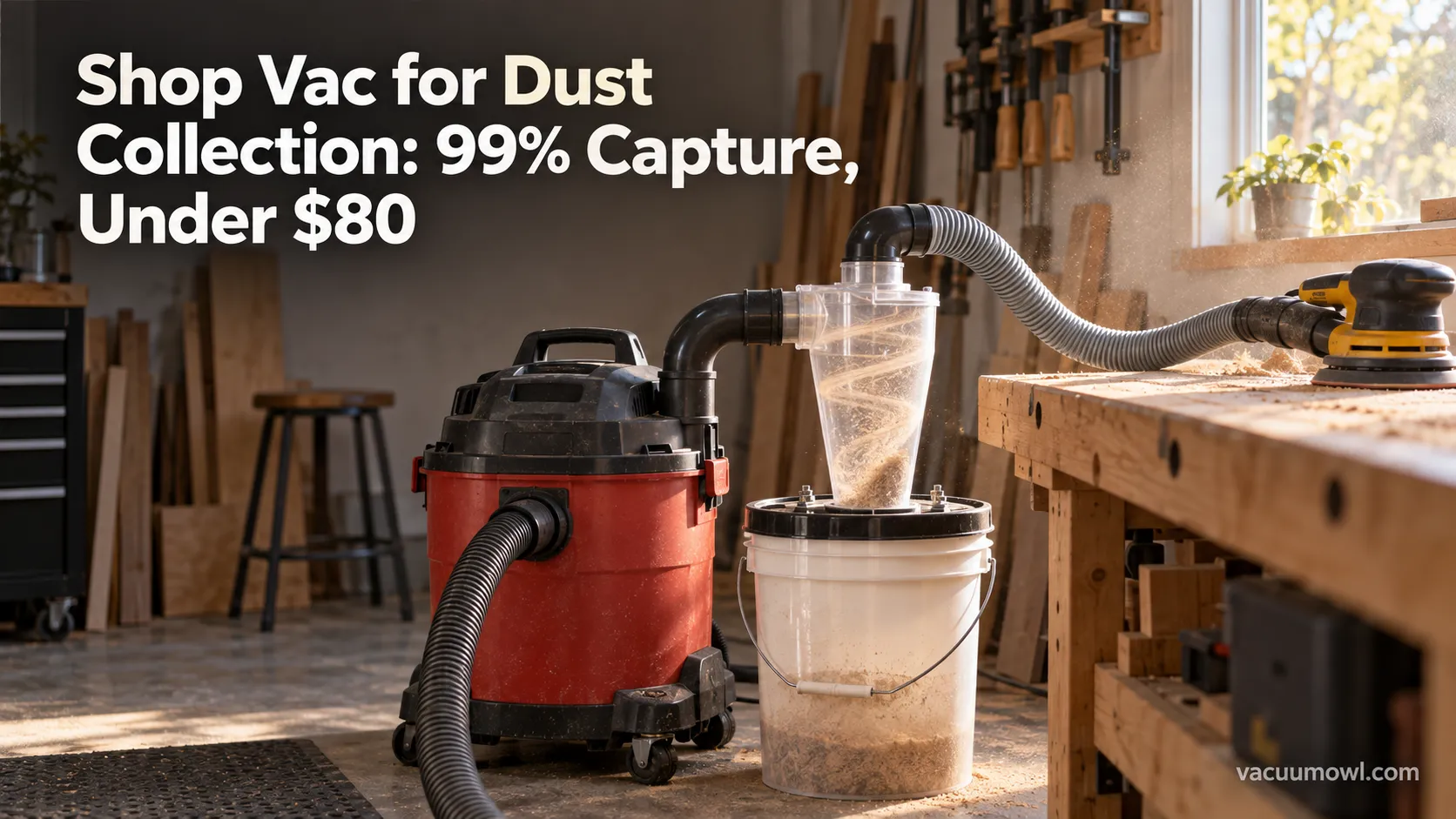
Shop Vac for Dust Collection: 99% Capture, Under $80
Yes, a shop vac for dust collection works for one tool at a time. Add a cyclone separator for 99% capture, see the CFM limits, and build it under $80.
Vacuum Types
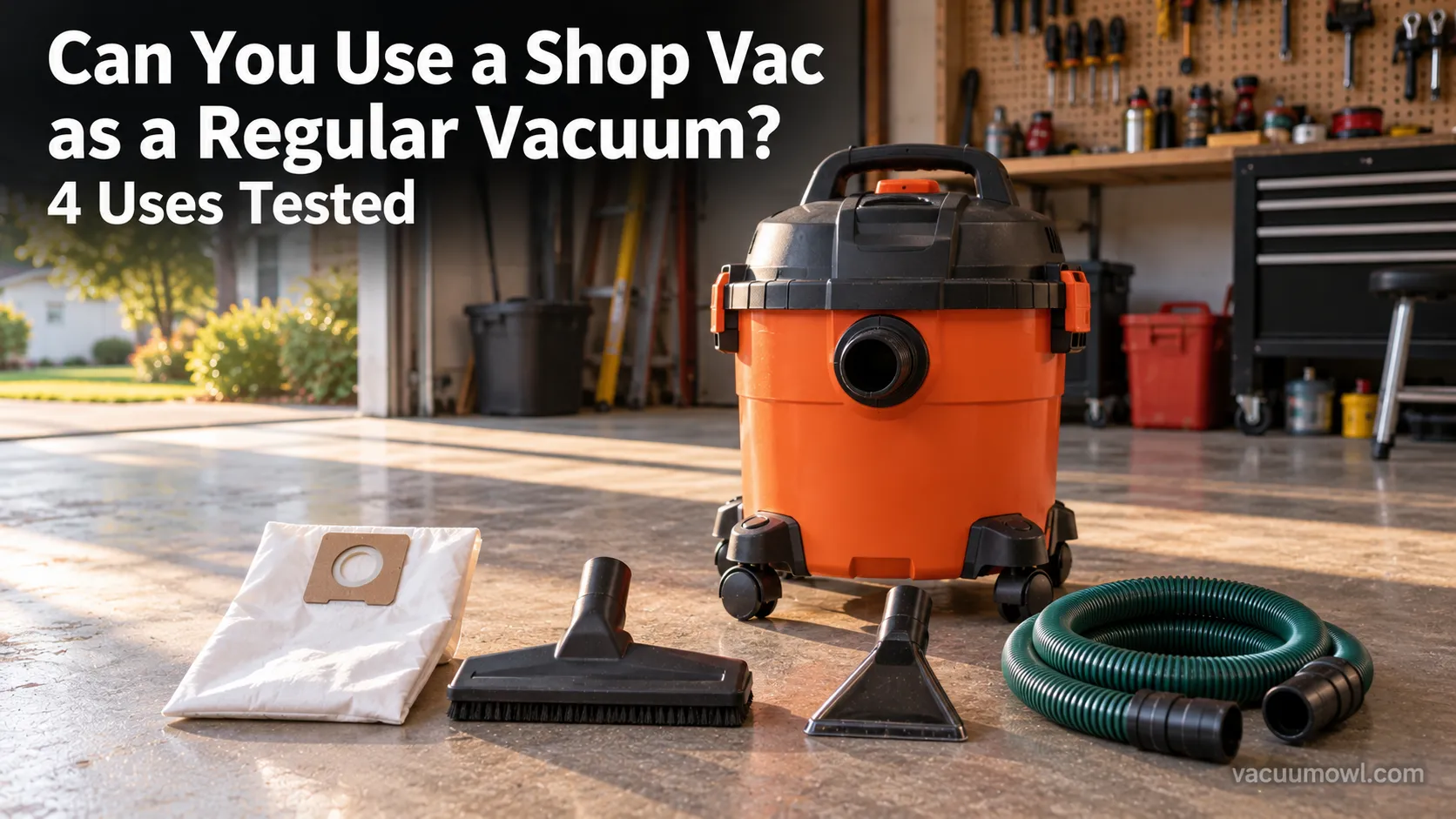
Can You Use a Shop Vac as a Regular Vacuum? 4 Uses Tested
Yes: can you use a shop vac as a regular vacuum? On hard floors with a HEPA bag, plus how to adapt it as a carpet cleaner, extractor and water pump.
Vacuum Types
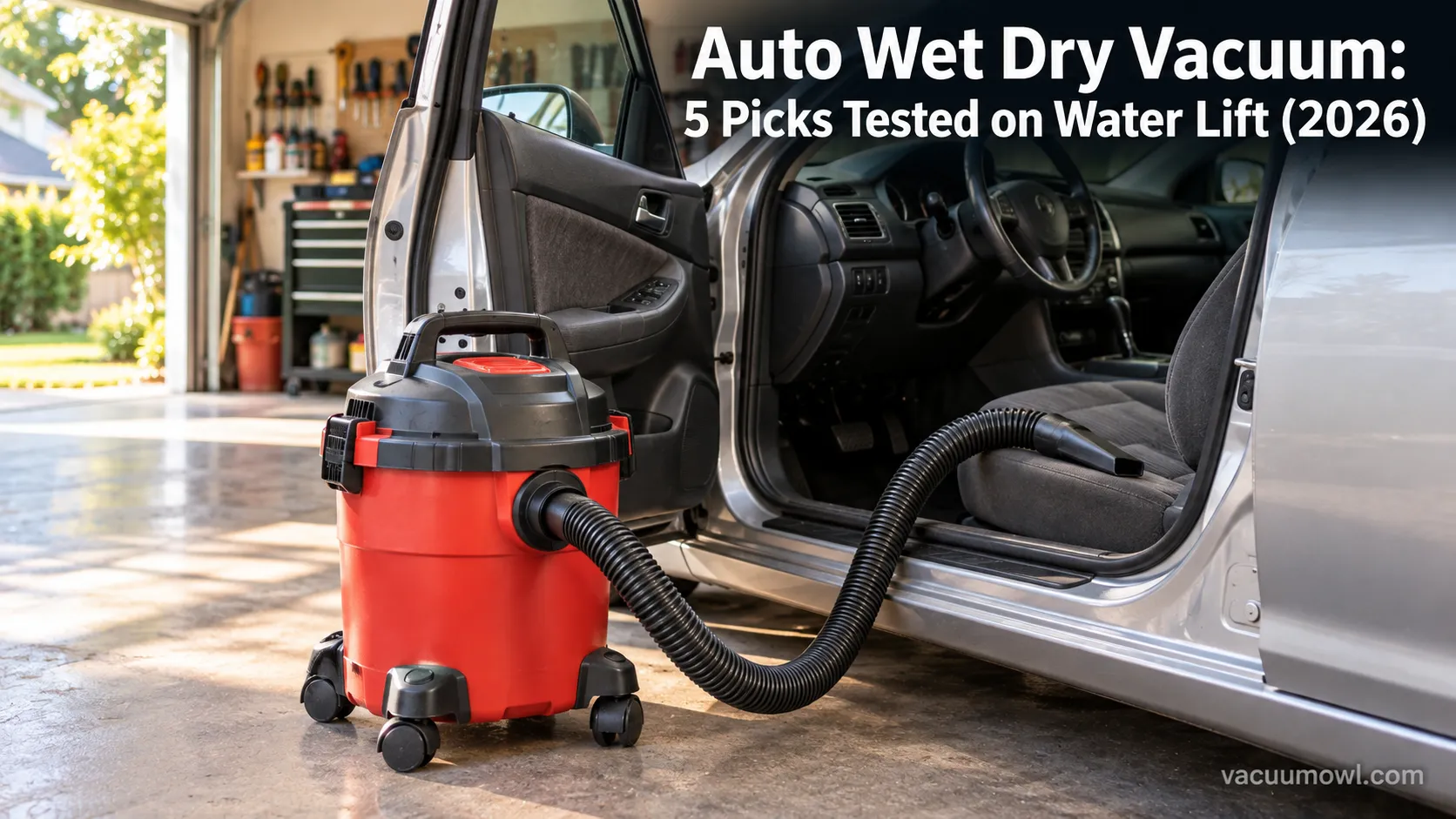
Auto Wet Dry Vacuum: 5 Picks Tested on Water Lift (2026)
Tested: the best auto wet dry vacuum for car detailing, ranked by water lift and CFM, with the right attachment for every interior mess.
Vacuum Types
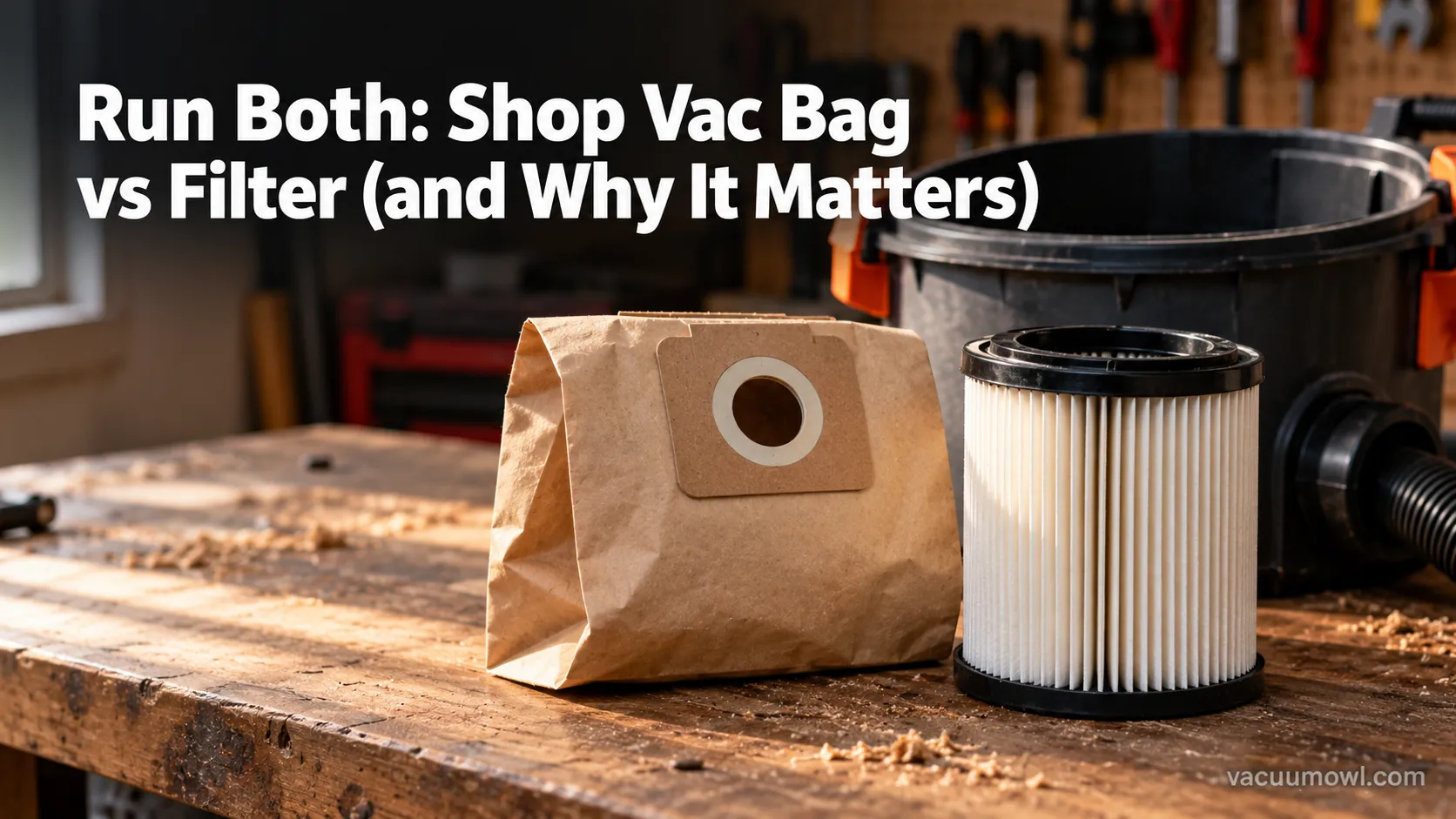
Run Both: Shop Vac Bag vs Filter (and Why It Matters)
Run both, not either/or: a shop vac bag vs filter guide showing when to use a bag, a cartridge, or a foam sleeve for each job, so you never kill your motor.
The discussion
Comments
Every comment is reviewed before it goes live.