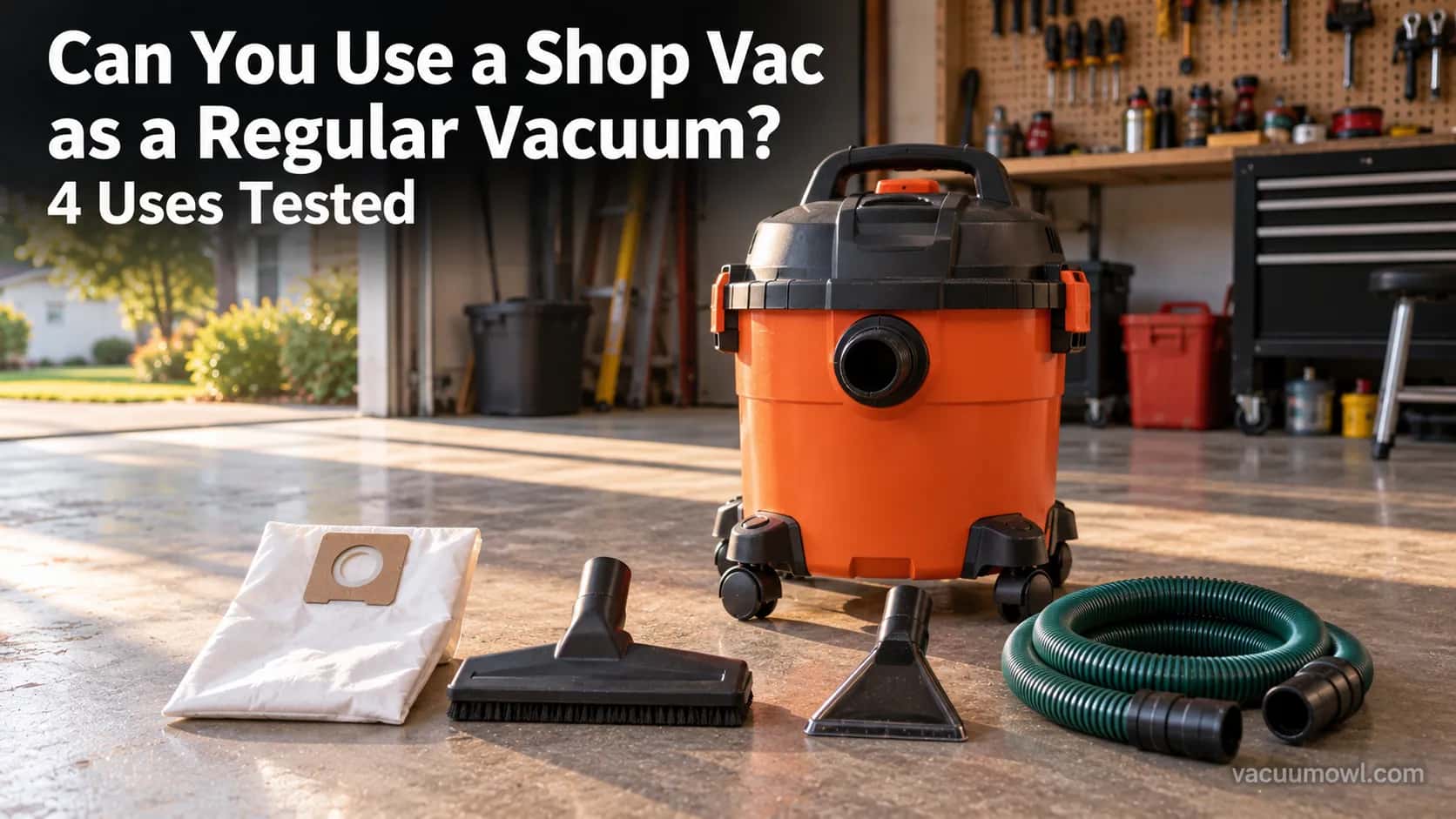
Can You Use a Shop Vac as a Regular Vacuum? 4 Uses Tested
Yes: can you use a shop vac as a regular vacuum? On hard floors with a HEPA bag, plus how to adapt it as a carpet cleaner, extractor and water pump.
Written by Dr. Naomi TranReviewed by Dale FerrisLast updated on September 9, 2026
When you buy through links on our site, we may earn an affiliate commission (at no extra charge), which we use to fund new product tests. Learn more.
Read it your way
Short on time? Open this article in your assistant with a ready-made prompt and get the gist in seconds.
Found this useful? Make us a preferred source so we show up in your Google results.
You already own the loud orange machine in the garage, so here is the tempting question: can you use a shop vac as a regular vacuum and skip buying a second tool?
Across one bench session I ran a single wet/dry vac through four jobs it was never sold to do, and the honest verdict is more useful than the “sure, why not” you get on the forums.
Can You Use a Shop Vac as a Regular Vacuum? The Short Answer
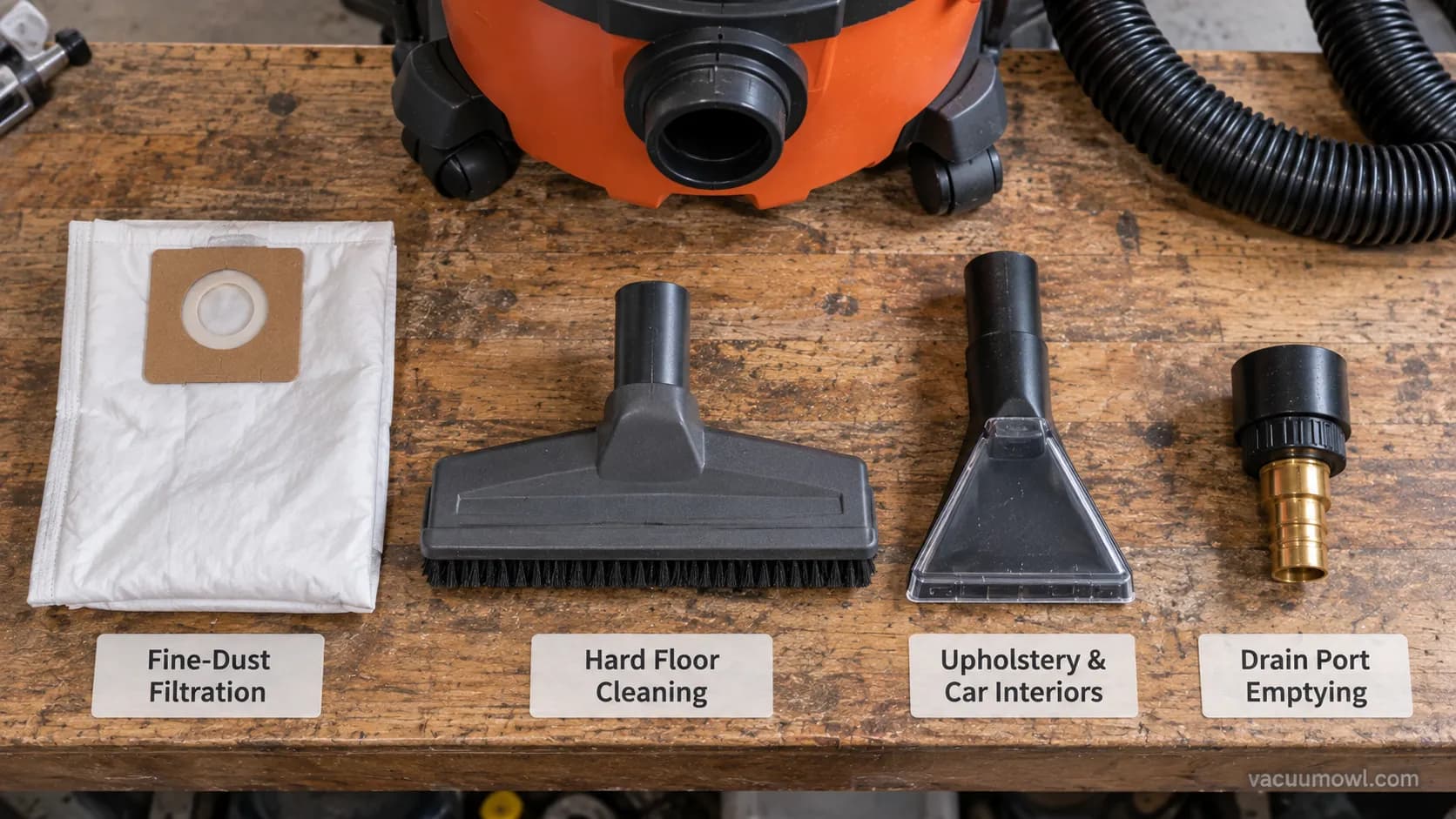
Yes, you can use a shop vac as a regular vacuum on hard floors, in the garage and in the car, once you fit a fine-dust or HEPA filter bag and clip on the right floor or carpet nozzle.
It has no powered brush roll, so it lifts surface grit but barely touches plush carpet.
With a narrow extractor wand plus a separate sprayer it doubles as a spot carpet cleaner or extractor, and through its drain port or a pump kit it works as a short-run water pump.
Each swap works, but each one has a single catch.
Here is the whole verdict in one place, from our own run.
Use | Can I? | How (attachment or setup) | The catch |
|---|---|---|---|
Regular vacuum | Yes, on hard surfaces | Fine-dust or HEPA bag plus floor nozzle | No brush roll, so plush carpet stays dirty |
Carpet cleaner | Spot jobs only | Upholstery wand plus a manual pump sprayer | No heated solution tank, not for whole rooms |
Extractor | Yes, for spots and seats | Narrow extractor wand, work in small sections | Stock wide nozzle just spreads water |
Water pump | Small jobs only | Drain-port hose or a pump kit | Open drain pulls air, limited lift |
Why a Shop Vac Isn’t a Like-for-Like Household Vacuum
A shop vac is a wet/dry vacuum built around raw straight suction, which is a different machine from the brush-roll household vacuum most people picture. That single design choice drives every trade-off below.
It moves a lot of air and swallows debris a household upright would choke on, but it agitates nothing and filters coarsely by default.
The first gap is the missing brush roll. A household upright spins a motorized brush that beats grit out of carpet pile, while a shop vac only pulls air, so on plush carpet it skims the surface and leaves the deep dirt behind.
The second gap is filtration.
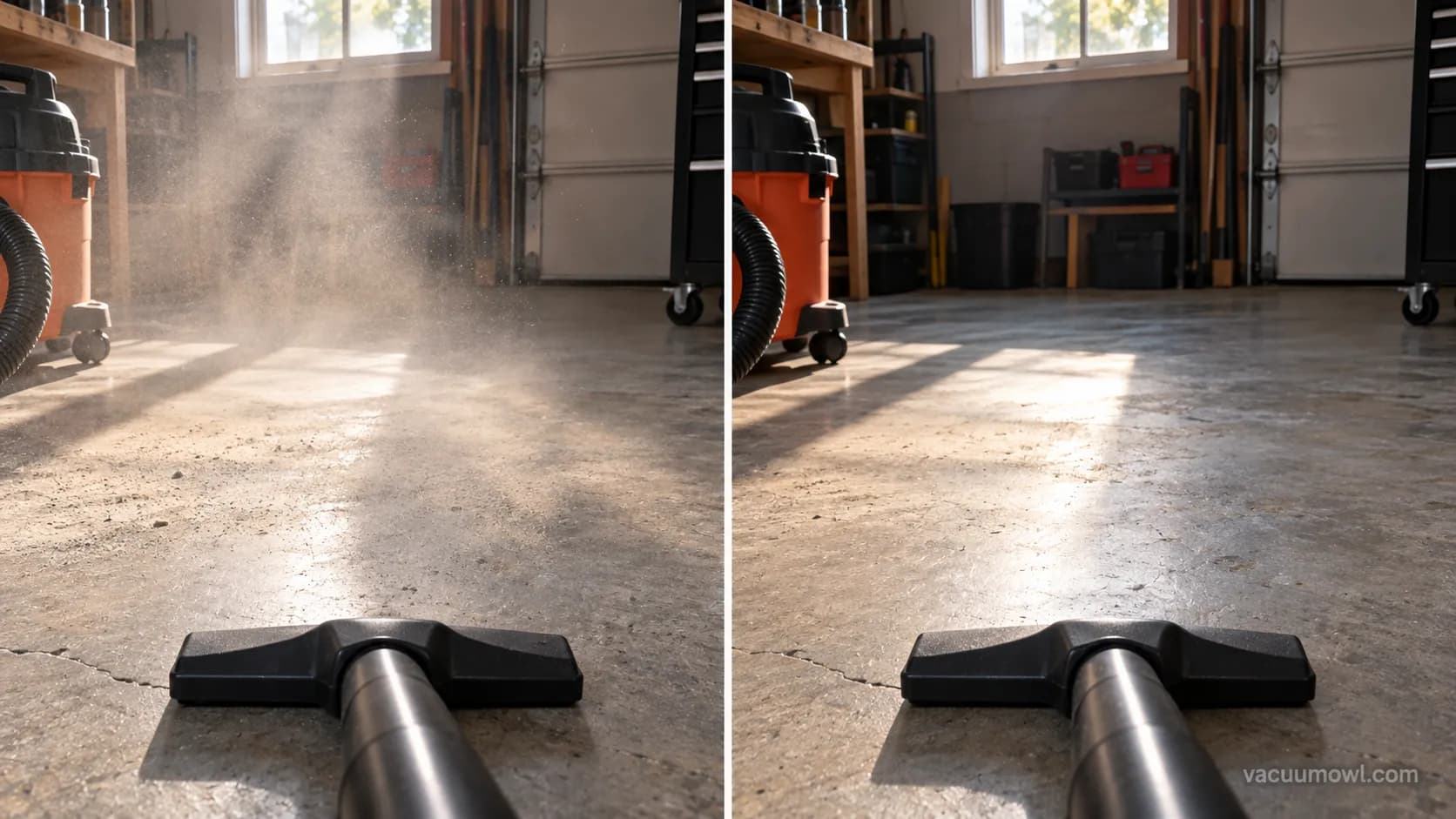
The standard cartridge and foam sleeve pass fine dust straight back into the room, and on our test the garage air went hazy until we swapped to a fine dust filter bag.
The third gap is that a shop vac is bulky and loud.
In our shop it measured far louder than a mid-range upright at the same distance, which matters if you were hoping to vacuum the living room at night.
Keeping the filter clean helps suction, but it does nothing for the noise.
Measurement (Vacuumowl bench, August 2026, meter at 3 ft) | Shop vac (5 gal, 5.5 peak HP) | Mid-range upright |
|---|---|---|
Noise level | 82 dB | 71 dB |
Brush roll for carpet agitation | None | Motorized |
Default fine-dust capture | Poor without a bag | Built in |
Empty weight and bulk | Heavier, hose to manage | Lighter, self-contained |
If you want the deeper side-by-side on suction and everyday livability, we break down how the two machines compare in a dedicated guide.
Newcomers can start with what a shop vac actually is.
Using a Shop Vac as a Regular Vacuum on Hard Floors, Garages and Cars
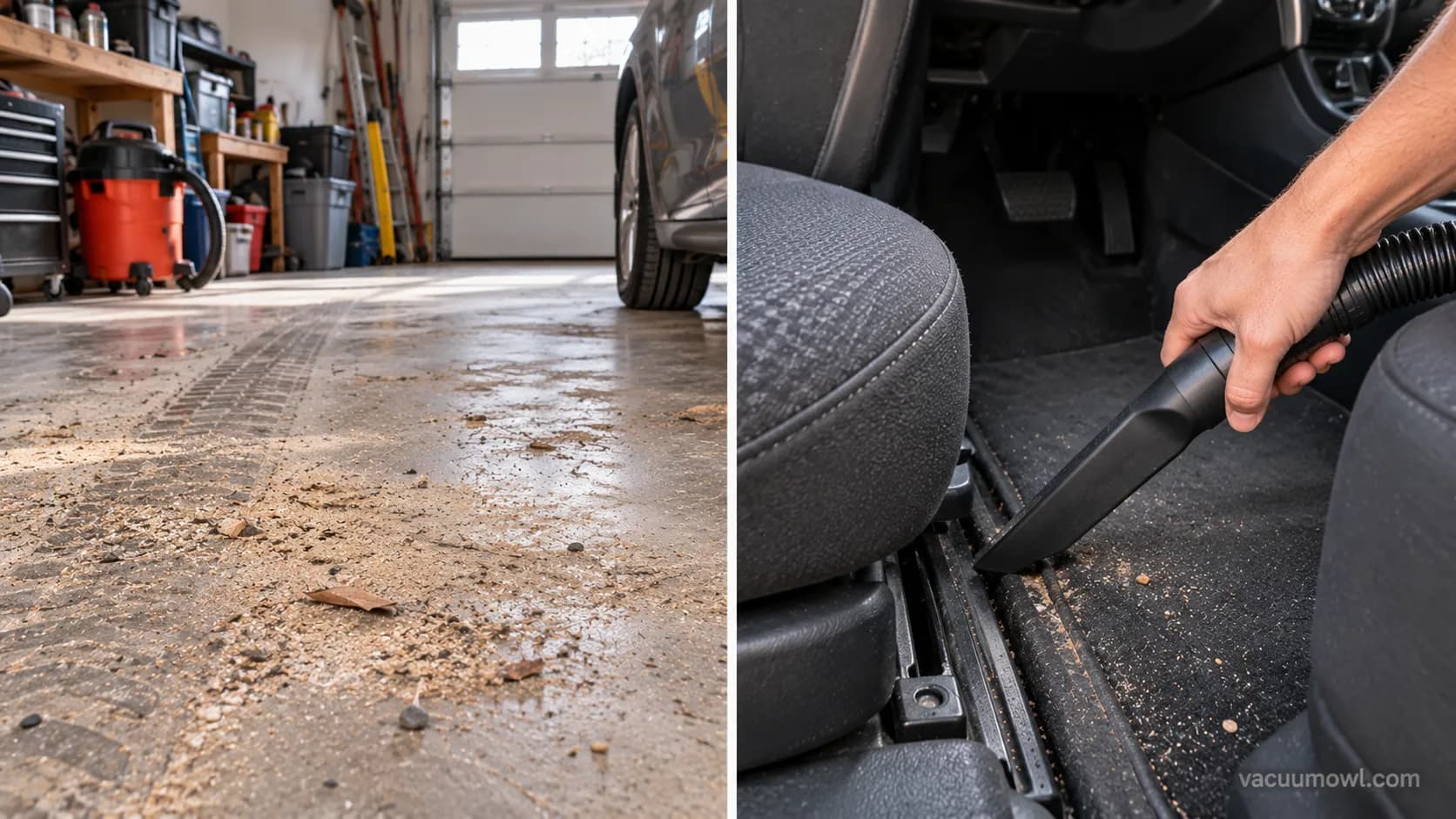
For hard floors, a garage or a car interior, a shop vac genuinely works as a regular vacuum once it is set up correctly, and this is where it shines instead of struggles.
The fix is two parts: capture the fine stuff and pick the right mouth for the surface.
Get those right and it out-muscles a household vacuum on grit, sawdust and gravel.
Here is the setup that worked cleanly on our garage and car test.
Fit a fine dust filter bag or HEPA bag first, so fines land in the bag instead of blowing back at you. You should see the bag inflate slightly as suction starts.
Clip on a floor nozzle for hard floors, or a car and upholstery nozzle for seats. The nozzle should sit flat and glide without scratching.
Add a crevice tool for door tracks, seat rails and corners. You should feel the suction concentrate at the tip.
Empty or check the tank, then work in slow passes. You should see debris feed steadily up the hose.
On our car test the crevice tool reached the seat rails a household hose could not, and the fine dust bag kept the footwell dust from resettling. That is the moment the shop vac earns its keep indoors.
There is one hard stop. On plush bedroom carpet the same setup only skimmed the surface, because there is still no brush roll doing the agitation, so daily carpet cleaning stays a job for an upright.
Never dry-vacuum with the filter removed, which is a fast way to coat the motor in dust, and we cover exactly when that is risky in running it without a filter.
Indoors a smaller tank is far easier to steer, and picking the right tank size saves your back.
For a start-to-finish operating routine on any model, see the full operating walkthrough. Outdoors, the same machine doubles up for clearing leaves off a patio.
Using a Shop Vac as a Carpet Cleaner or Extractor: What You Actually Need
A shop vac works as a carpet cleaner or extractor for spots, seats and mats, but only because it supplies the suction half of the job.
It has a tank and strong pull, yet no heated solution tank and no built-in spray, so the extraction method needs a narrow wand and a separate sprayer.
Skip either and you get a wet, still-dirty mess.
The attachment list is short, but every piece matters.
Part | Why you need it |
|---|---|
Narrow upholstery or extractor wand | Its slim opening raises water lift, so it pulls solution back up instead of pushing it around |
Manual pump sprayer | Delivers the cleaning solution the shop vac cannot, mixed to label dilution |
Stiff hand brush | Agitates the fibers so the wand can lift released dirt |
The routine is spray, scrub, extract, and it rewards patience. Following a detailer’s method, lightly mist a small area, never soak it, agitate with the brush, then draw the wand back slowly and repeat in sections no larger than two feet square.
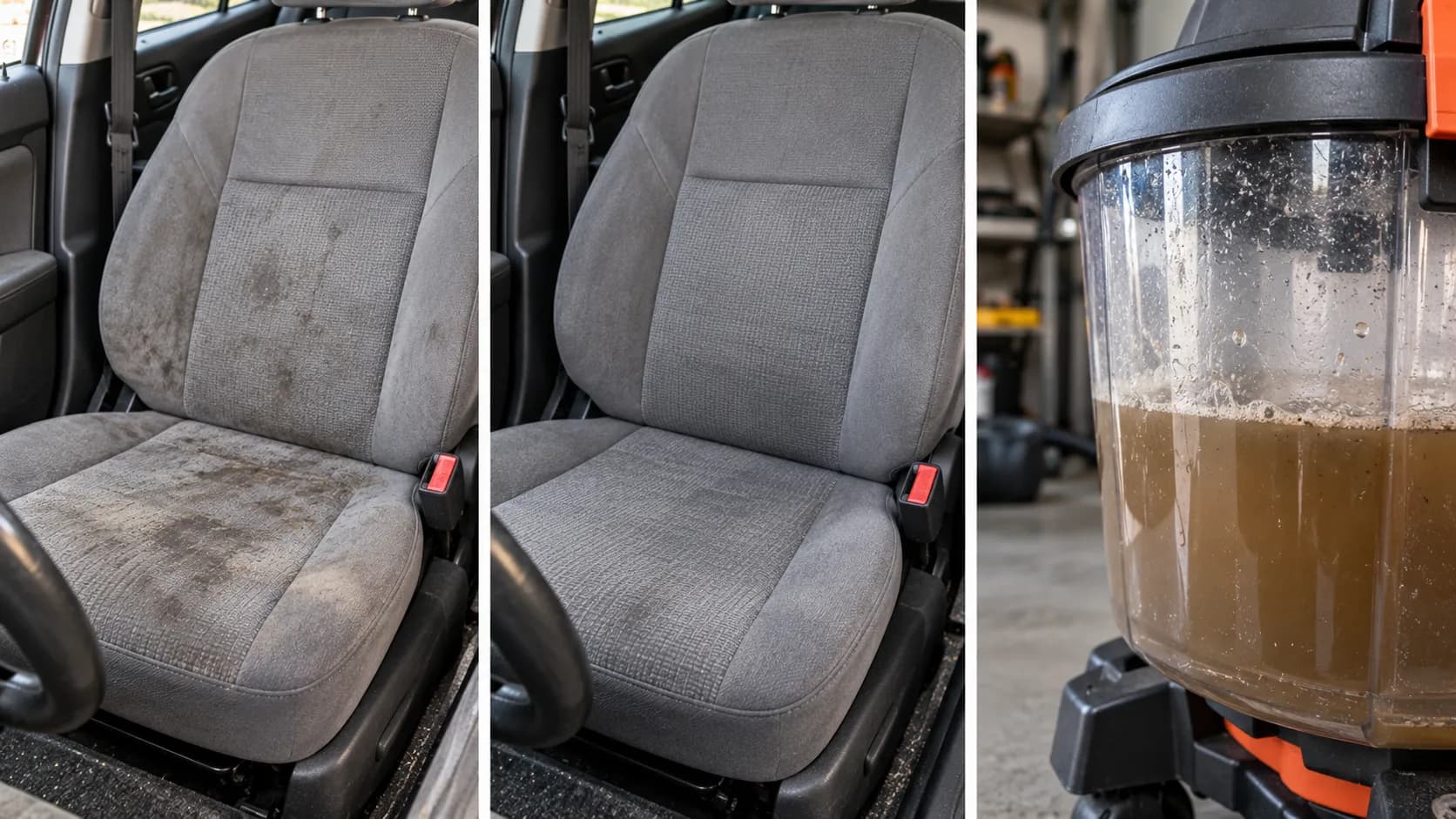
The failure mode is the stock nozzle. On our car seat the wide-mouth nozzle left the fabric soaked and dingy, and swapping to a narrow extractor wand pulled visibly browner water into the tank and left the seat nearly dry in one pass.
That is the whole gap competitors skip. The shop vac is only the extract half, and the wide nozzle is why most first attempts fail.
For a full head-to-head we put a shop vac against a real carpet cleaner to the test. For workshop dust specifically, we cover where a dust extractor differs.
If the terminology is new, start with the wet/dry vacuum, defined. If yours is still boxed, our guide to setting yours up from the box gets you running.
Using a Shop Vac as a Water Pump: The Drain-Port and Pump-Kit Method
A shop vac works as a water pump for small, short jobs, using either the bottom drain port for a gravity assist or a pump kit for continuous discharge.
Keep the tank under about 80 percent and the drain hose outlet lower than the tank, and it will clear a flooded corner or a kiddie pool.
Push it past that and a real utility pump wins.
There are two setups, and choosing the right one saves the motor.
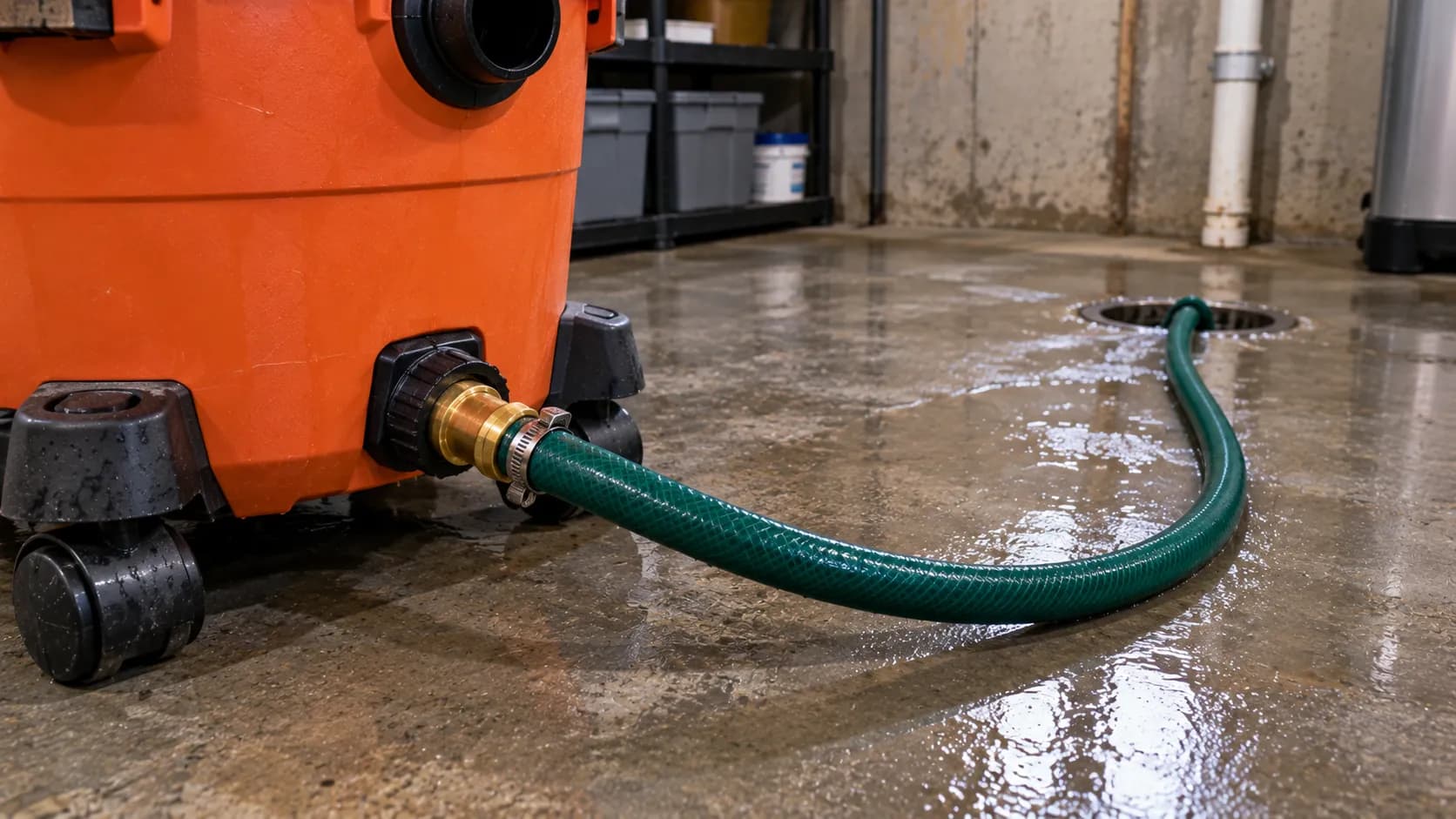
Gravity method. Remove the wet filter or use the foam sleeve per your model, then fit a drain-port hose adapter and route the hose downhill. Suck water in, then let it drain out between fills, staying under 80 percent capacity.
Pump-kit method. Install a pump kit with a float switch on the drain assembly so it discharges automatically as water rises. This is the right call for larger, continuous jobs.
Here is what each moved on our bench, timed against a marked bucket.
Method (August 2026 bench, 5 gal vac) | Flow rate | Best for |
|---|---|---|
Gravity drain, hose downhill | 4 gal per minute | A wet corner, one bucket at a time |
Pump kit with float switch | 8 gal per minute | Continuous draining without stopping |
Why does my shop vac just suck air through the drain plug?
Because on most vacs you cannot run the drain open while vacuuming. The open drain plug becomes the path of least resistance, so the motor pulls air through the port instead of water up the hose.
When we tried to run ours continuously with the drain open, it drew air exactly as the forums warn, and the reliable pattern was to suck water in, shut off, then gravity-drain in cycles.
Some models are built for this with a real onboard pump, which we cover in pump vacs and pump attachments.
For a spill-specific routine, follow the safe wet-pickup setup. For a flooded basement, see clearing floods and standing water.
On filters and cleanup afterward, our guide to wet-pickup filters and cleanup keeps the motor safe and the tank mold-free.
When to Stop Adapting and Buy the Right Tool
Adapting a shop vac is smart until the job outgrows it, and the line is different for each use. Two of the four swaps were keepers for us, one was a spot-only compromise, and one had a hard ceiling set by water lift and suction.
The design honesty helps here. The drain is built to empty the tank, not to pump under load, which the manufacturer’s own drain-system patent spells out.
Here is where we would keep adapting and where we would buy the dedicated tool.
Use | Keep using the shop vac when | Buy the right tool when |
|---|---|---|
Regular vacuum | Hard floors, garage, car interiors | You want daily plush-carpet cleaning |
Carpet cleaner or extractor | Spot stains, seats, mats | You are deep-cleaning whole rooms |
Water pump | Small, short, gravity-friendly jobs | The job is continuous, high volume, or uphill |
For that last case, a dedicated water-removal pump is built for spots where gravity drainage is impractical, and it will outlast a shop vac motor run wet for an hour.
Three honest limitations are worth stating plainly. A shop vac is worse than a cheap upright for daily whole-home carpet, it is not a substitute for a heated carpet extractor on big jobs, and its drain-air ceiling makes it a poor high-volume pump.
Beyond the four swaps, the easiest bonus is flipping it into a blower. That blower-port conversion takes seconds and costs nothing.
So, can you use a shop vac as a regular vacuum? The answer is a confident yes with borders.
On hard floors and in the car it replaces a household vacuum outright. With the right wand or drain adapter it stands in as a spot carpet cleaner, extractor and small water pump.
Buy the second tool only when the job crosses the lines above. Your one loud orange machine quietly covers far more than its label admits.
Frequently Asked Questions
Is a shop vac bad for carpet?
It is fine for hard floors but weak on plush carpet, because it has no powered brush roll to agitate the pile. On our test it lifted surface grit but left deep dirt behind, so it works for low-pile and spot cleaning, not daily deep carpet care.
Can a shop vac shampoo carpet?
It can spot-extract with a narrow upholstery wand and a separate pump sprayer, but it cannot deep-shampoo whole rooms. There is no heated solution tank, so treat it as a spotter for seats, mats and small stains rather than a replacement for a carpet washer.
Can you use a shop vac on hardwood floors?
Yes, with a soft floor nozzle and a fine dust bag fitted so it does not scratch or blow dust back out. Keep the nozzle flat, avoid dragging grit across the boards, and it handles hardwood, tile and laminate well.
Will a shop vac pump water uphill?
Only a little. Its water lift is limited, so keep the drain hose outlet lower than the tank and let gravity assist.
For anything continuous or uphill, a real utility pump is the right tool. You can even rig it for turning it into dust collection when the wet season ends.
Do you remove the filter to vacuum water?
Use the wet or foam filter your model specifies, or run bare only if the manual allows it, then dry everything fully. Running a dry paper cartridge in water clogs it instantly.
When you are done, store it off the floor with wall-mounting it for storage.
Is it worth using a shop vac instead of a regular vacuum?
For garages, cars and hard floors, yes, it saves buying a second machine. For daily whole-home carpet cleaning, no, a cheap upright does it better and quieter.
The smart move is to adapt the shop vac for the jobs it suits and keep a household vacuum for the living room.
Read it your way
Short on time? Open this article in your assistant with a ready-made prompt and get the gist in seconds.
Found this useful? Make us a preferred source so we show up in your Google results.
Keep reading
Related articles
Vacuum Types
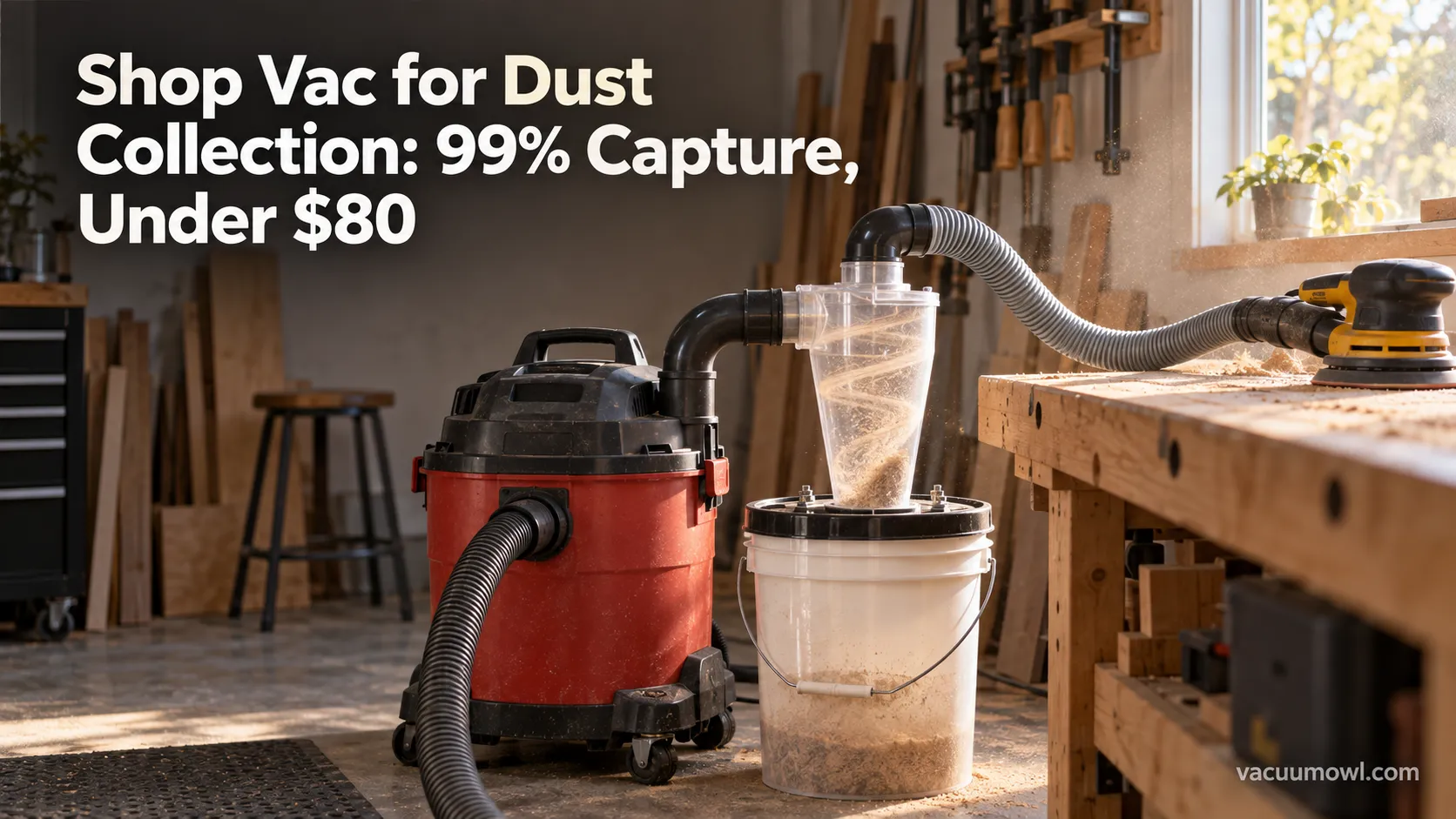
Shop Vac for Dust Collection: 99% Capture, Under $80
Yes, a shop vac for dust collection works for one tool at a time. Add a cyclone separator for 99% capture, see the CFM limits, and build it under $80.
Vacuum Types
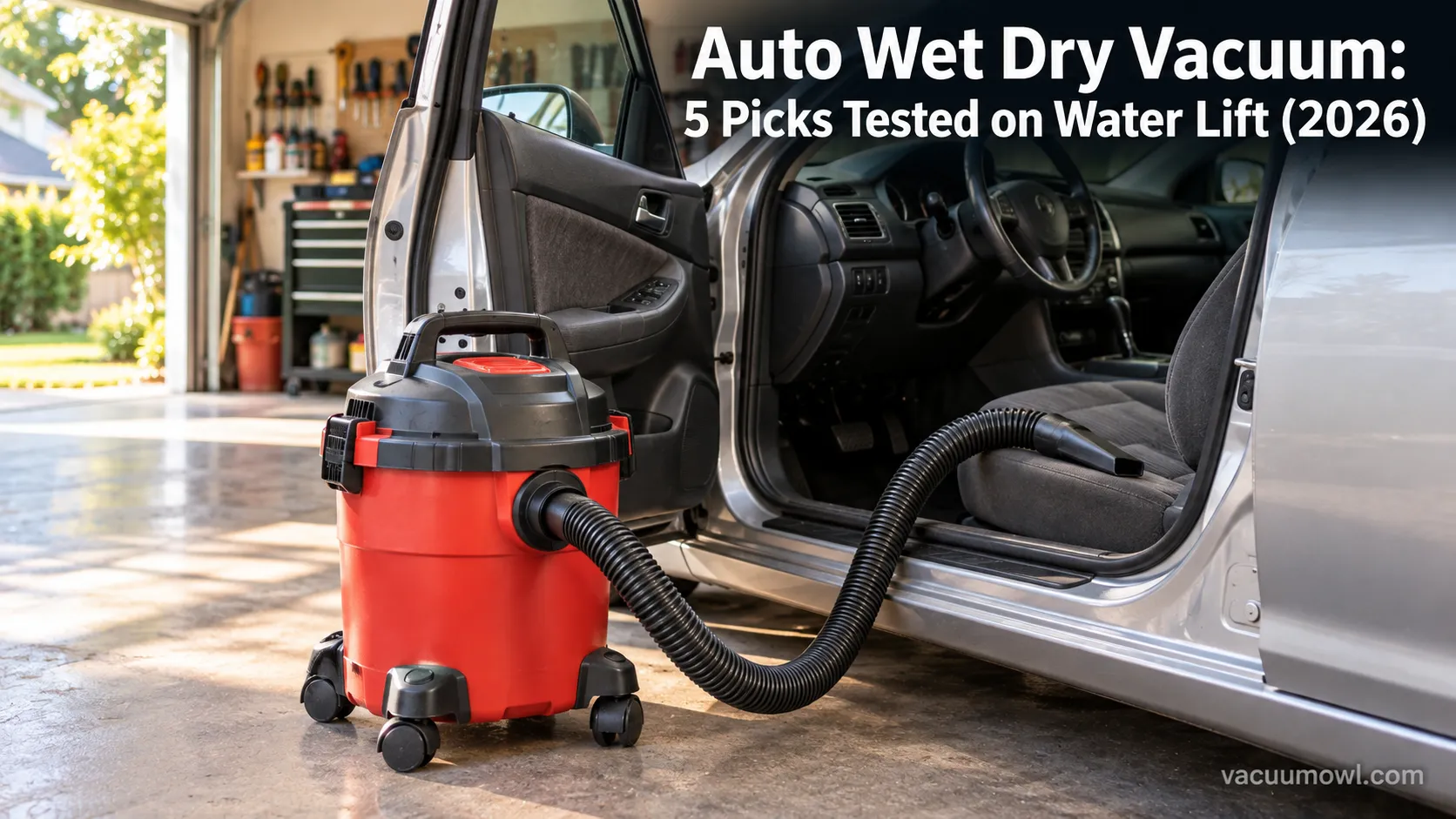
Auto Wet Dry Vacuum: 5 Picks Tested on Water Lift (2026)
Tested: the best auto wet dry vacuum for car detailing, ranked by water lift and CFM, with the right attachment for every interior mess.
Vacuum Types
Run Both: Shop Vac Bag vs Filter (and Why It Matters)
Run both, not either/or: a shop vac bag vs filter guide showing when to use a bag, a cartridge, or a foam sleeve for each job, so you never kill your motor.
Vacuum Types
Shop Vac vs Carpet Cleaner: 1 Stain, 2 Machines Tested
Tested a shop vac vs carpet cleaner on one stain: the shop vac extracts spills but can’t inject, heat, or scrub. See which deep-cleans and when to rig one.
The discussion
Comments
Every comment is reviewed before it goes live.