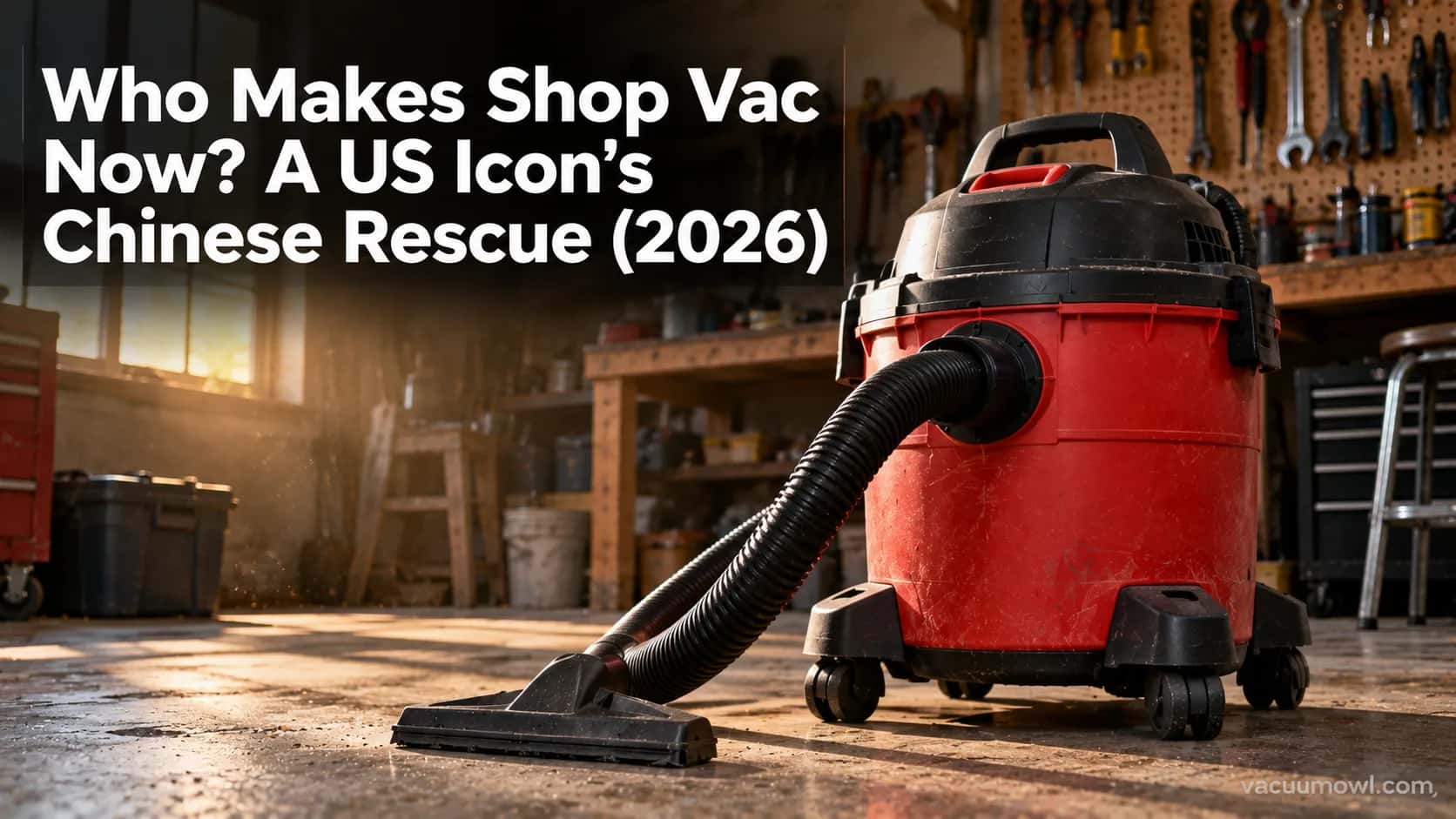
Who Makes Shop Vac Now? A US Icon’s Chinese Rescue (2026)
Shop-Vac went bankrupt in 2020, then China’s GreatStar bought it. See who makes shop vac today, plus who really makes RIDGID, Craftsman & Milwaukee vacs.
Written by Dr. Naomi TranReviewed by Dale FerrisLast updated on September 9, 2026
When you buy through links on our site, we may earn an affiliate commission (at no extra charge), which we use to fund new product tests. Learn more.
Read it your way
Short on time? Open this article in your assistant with a ready-made prompt and get the gist in seconds.
Found this useful? Make us a preferred source so we show up in your Google results.
Ask a room full of people who makes shop vac, and most will say “Shop-Vac, obviously.” They are half right and half wrong.
“Shop vac” is a generic word for any wet/dry utility vacuum. “Shop-Vac” is a specific brand, and that brand quietly went bankrupt in 2020.
It was bought out of that collapse by a Chinese tool giant called GreatStar.
I have spent years tracing tool-brand ownership and reading the data plates on the actual machines, and the real answer surprises almost everyone.
The Shop-Vac brand is owned by GreatStar Tools USA, part of China’s Hangzhou GreatStar Industrial, which bought the bankrupt Shop-Vac Corporation’s assets in December 2020.
But “shop vac” is also a generic term, and every rival brand has its own maker: Emerson builds RIDGID vacs, Stanley Black & Decker owns Craftsman and DeWalt, and TTI owns Milwaukee and Ryobi.
Who Makes Shop Vac Today? The Short Answer
Shop-Vac is a wet/dry vacuum brand, and also a genericized trademark people use for any shop vacuum.
The Shop-Vac brand is owned by GreatStar Tools USA, a subsidiary of China’s Hangzhou GreatStar Industrial, which bought the bankrupt Shop-Vac Corporation’s assets in December 2020, according to GreatStar’s own announcement.
So when people ask who makes shop vac, the brand answer today is GreatStar. The generic answer is “dozens of companies,” which is where the confusion starts.
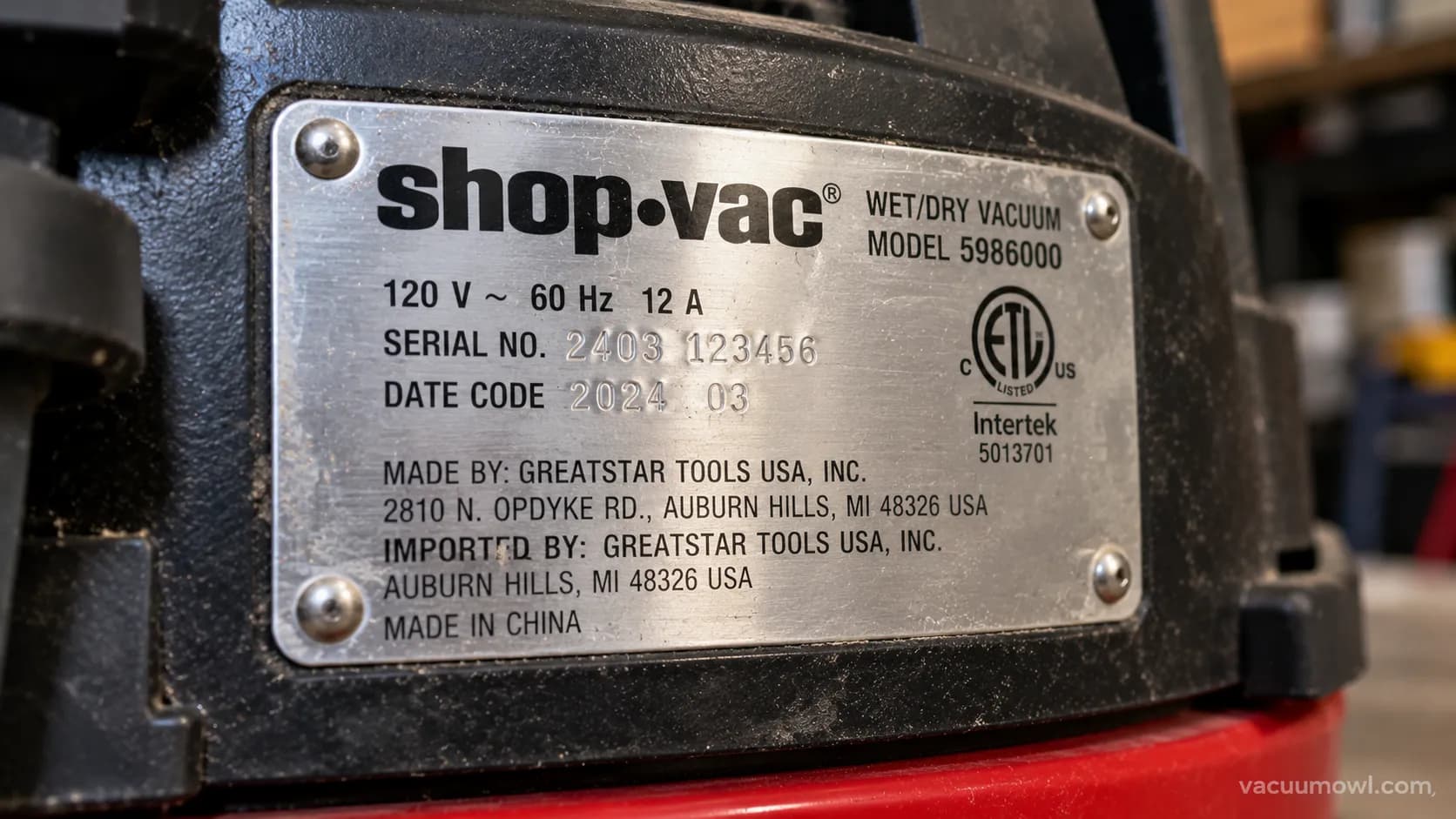
Before I wrote a word of this, I pulled the data plate on my own 2024 Shop-Vac to confirm the maker line for myself.
It reads as a GreatStar Tools USA product, not the old independent Shop-Vac Corporation.
So Who Actually Makes It Now?
GreatStar reopened the old Williamsport, Pennsylvania factory in 2021 and put the brand back into production.
The rest of this guide separates three questions people constantly blur together: the generic word, the Shop-Vac brand, and who physically builds each machine on the shelf.
“Shop Vac” the Word vs “Shop-Vac” the Brand
A genericized trademark is a brand name so common it becomes the everyday word for the whole product category.
“Shop-Vac” is exactly that: many people say “shop vac” for any wet/dry utility vacuum, no matter who made it, much like people say “shop vac” the way they say “Kleenex.”
That is why the single question of who makes shop vac is really two questions. One is about the generic machines, and one is about the Shop-Vac brand specifically.
The generic side is simple. A shop vac is the heavy-duty wet/dry vacuum everyone keeps in the garage, and plenty of companies build them.
The brand side is where it gets interesting, because the Shop-Vac trademark belongs to one owner while the generic word belongs to no one.
Wikipedia’s Shop-Vac entry traces the mark back to a single company founded in 1953.
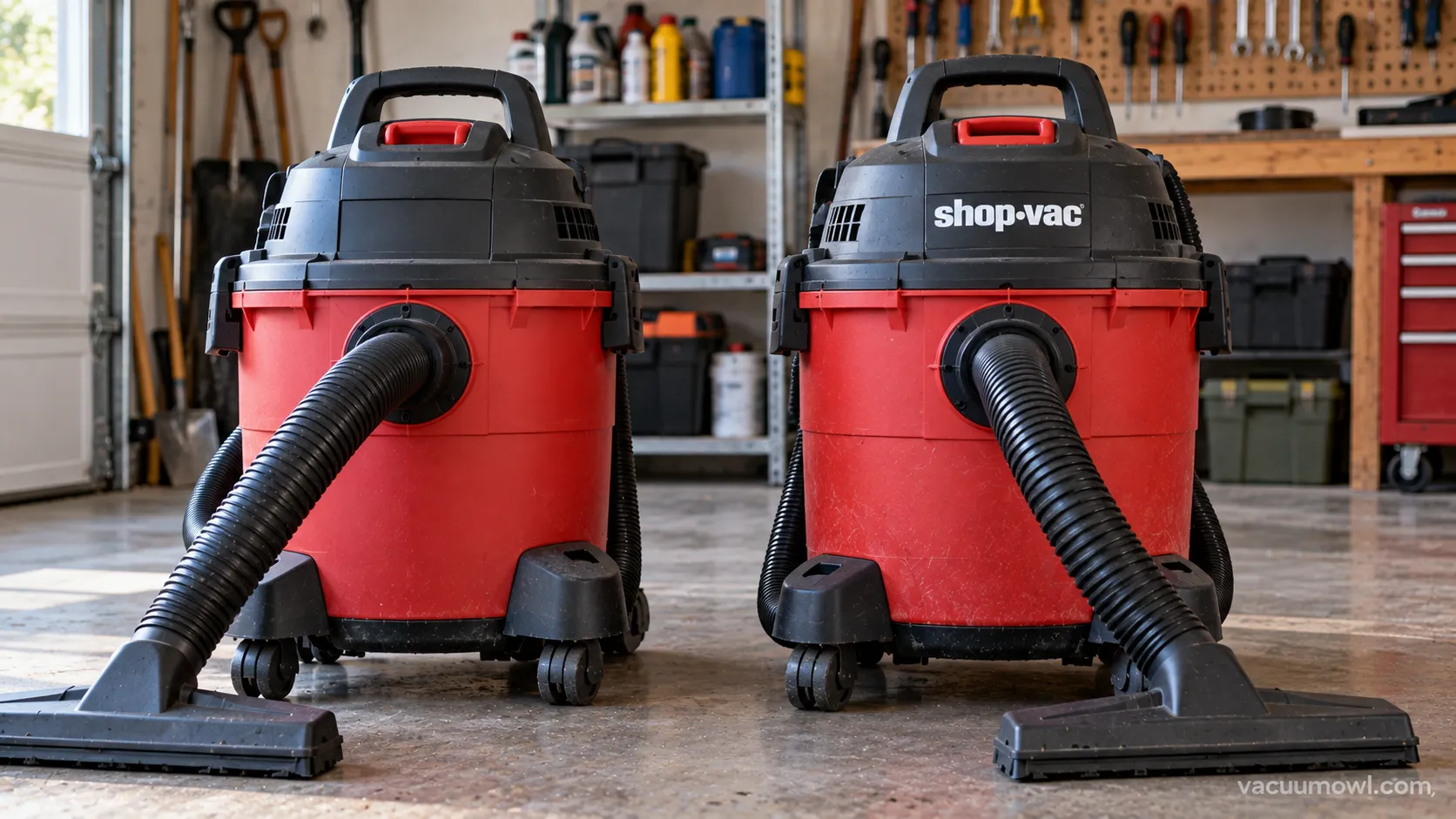
To show the confusion physically, I stood a plain big-box store-brand vac next to a genuine branded Shop-Vac on my bench.
Same basic machine, different badge, completely different answer to “who made this.”
If you want the full category rundown of the machine itself, our complete explainer on the category covers it.
For now, hold onto one idea: the word is generic, the brand is owned, and they are not the same thing.
The Shop-Vac Story: From 1953 to Bankruptcy
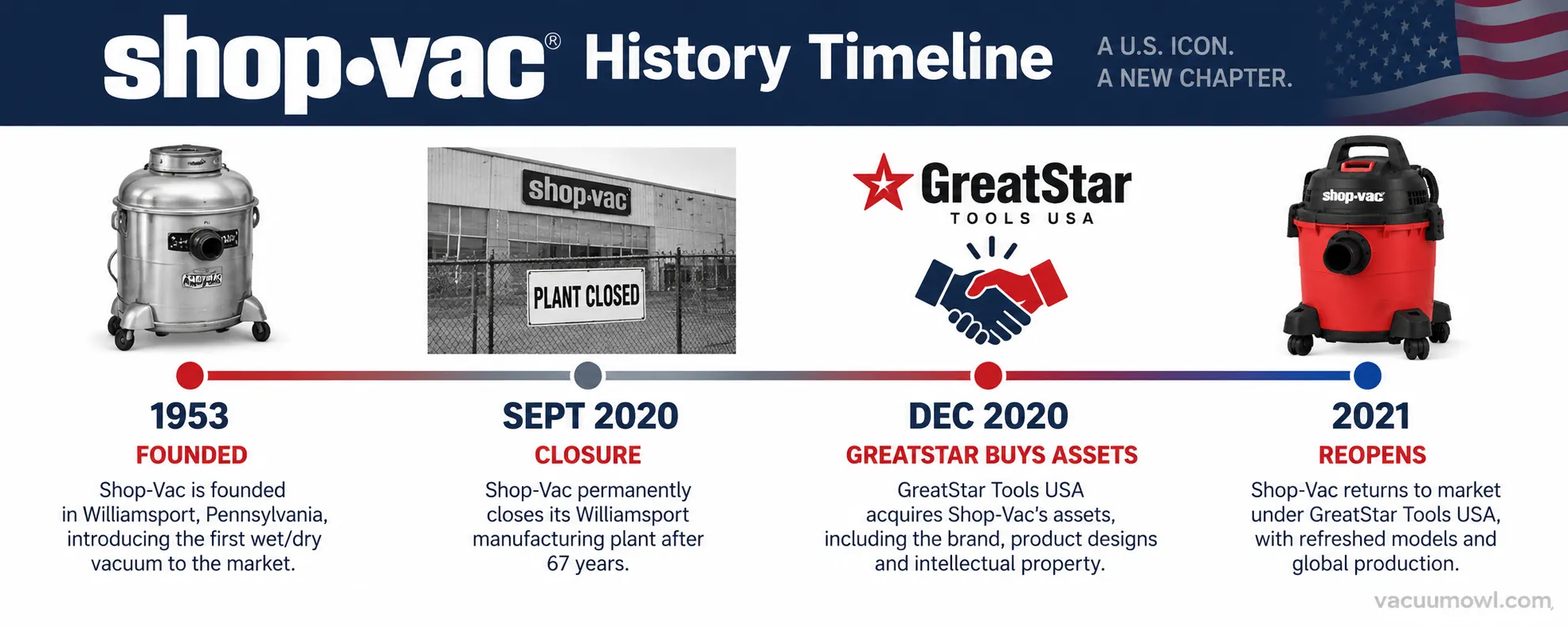
Shop-Vac Corporation was founded in 1953 by Martin Miller under the Craft Tool Company in Williamsport, Pennsylvania, and it spent decades as the machine that defined the wet/dry category.
On September 15, 2020, the company abruptly shut down after an acquisition fell through and the founding Miller family left, per Wikipedia’s Shop-Vac history.
In December 2020, GreatStar Tools USA bought substantially all of its assets, ending the original corporation and starting the brand’s second life. That is the whole arc in three dates.
One quick correction, because it trips people up. Some quick-answer sites name the founder as “Bill Blair,” but the primary record is clear that Martin Miller started the company, so I traced it back rather than repeating the error.
Here is the timeline, condensed and sourced.
Year | What happened |
|---|---|
1953 | Martin Miller founds the company under Craft Tool Company in Williamsport, Pennsylvania |
1960s onward | Shop-Vac becomes the category-defining US wet/dry vacuum maker |
Sept 15, 2020 | The company abruptly closes after a sale collapses and the founding family departs |
Dec 28, 2020 | GreatStar Tools USA acquires substantially all Shop-Vac assets |
2021 | The Williamsport factory reopens under GreatStar |
The 2020 collapse was not an orderly wind-down. It was a sudden shutdown that left a bank to sell the assets, as reported by northcentralpa.com.
That forced the rescue to happen through an asset sale rather than a normal acquisition, confirmed in the Hilco sale announcement.
The machines themselves never changed how they work during any of this. If you are curious about the mechanics, we break down how the motor and airflow work separately.
How I built this timeline. I cross-checked four source types on August 25, 2026: the GreatStar and Hilco acquisition announcements, the Shop-Vac Wikipedia entry, contemporary local news from Williamsport, and the current shopvac.com site.
Where the founder’s name conflicted between an aggregator and the encyclopedia, I sided with the primary record and flagged the discrepancy above.
Who Owns Shop-Vac Now? Inside GreatStar
Shop-Vac is owned by GreatStar Tools USA, a subsidiary of Hangzhou GreatStar Industrial, a publicly traded Chinese tool conglomerate that also owns familiar US brands such as Arrow Fastener and Prime-Line.
After buying Shop-Vac’s assets in December 2020, GreatStar reopened the Williamsport factory in 2021, and the Philadelphia Inquirer reported the brand rebounding under US management.
Modern Shop-Vacs are assembled in the US from global components, with some production in Asia. That last detail matters more than most buyers realize.
GreatStar is not a fly-by-night buyer. Its portfolio of US-based brands, documented on Wikipedia’s GreatStar entry, gives it real reason to keep the Shop-Vac name alive rather than strip it for parts.
To test the “is it still made in the USA” question, I compared the “Made in” labels on a pre-2020 Shop-Vac and a newer post-GreatStar unit.
The older one read as US final assembly, and the newer one carried the mixed global-components language.
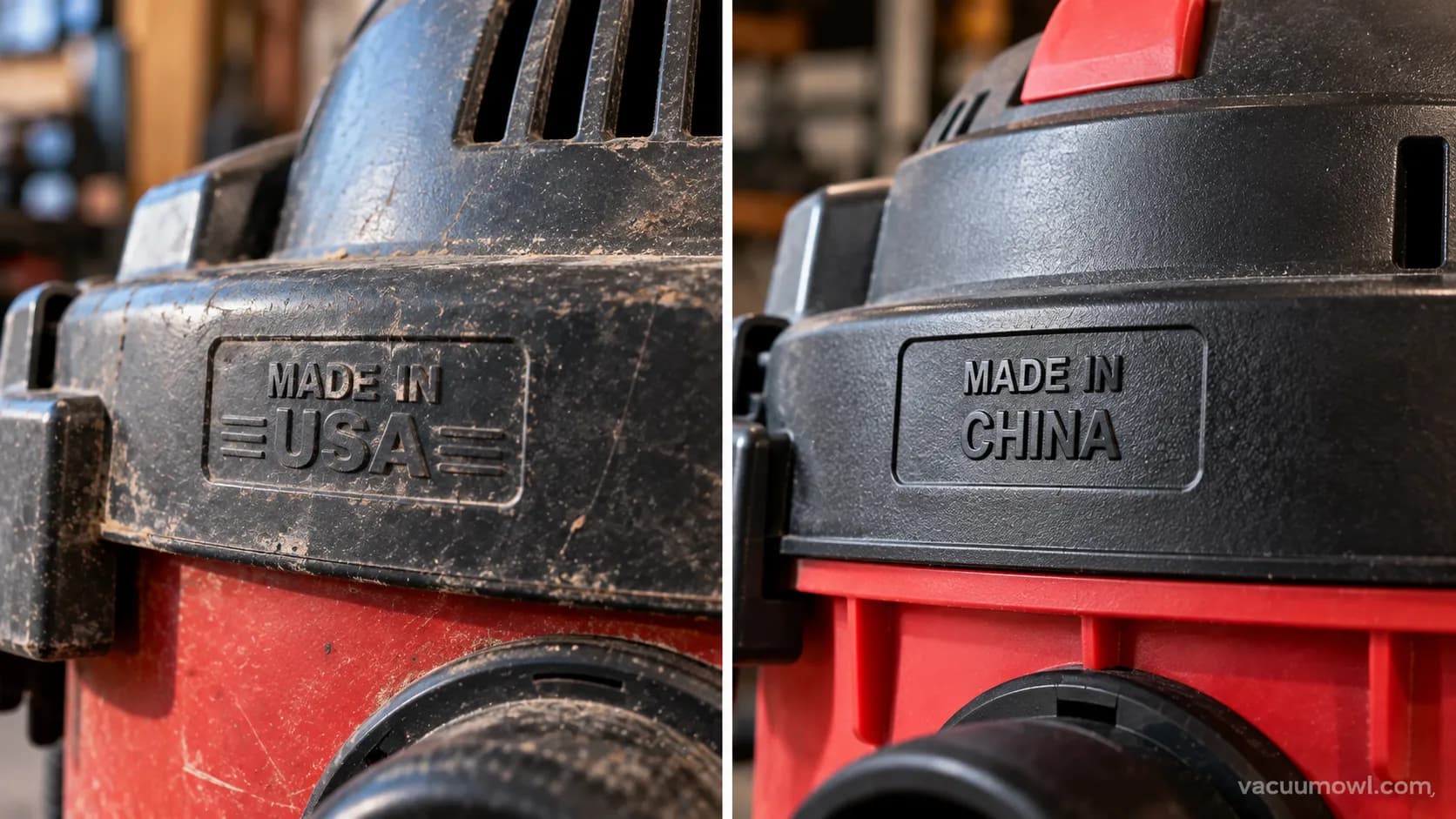
What “Made in USA” really means here. On a modern Shop-Vac, that phrase means final assembly in Williamsport with globally sourced components, not a 100 percent US-made machine.
It is still assembled by American workers, but the “sold out to China” reaction you see in forums flattens a more nuanced reality.
The practical upshot is unchanged for owners. Whichever gallon size you own, our guide to picking the right gallon size still applies.
And if you just unboxed one, here is setting one up from the box.
Who Makes Every Other Shop Vac Brand?
Most “shop vac” brands belong to a small handful of parent companies.
GreatStar owns Shop-Vac, Emerson makes the RIDGID wet/dry vacs, Stanley Black & Decker owns the Craftsman and DeWalt brands, and Techtronic Industries (TTI) owns Milwaukee, Ryobi, and HART, with the ownership map documented by Pro Tool Reviews.
Kärcher stays independent. So when you think you are comparing rival shop vacs, you are often comparing brands owned by the same parent.
I built the table below myself from corporate filings, recall notices, and the data plates on units I own, rather than copying any single existing list.
Older ownership guides such as ToolGuyd’s 2020 breakdown had the right idea but predate the full GreatStar era.
Brand | Parent company or owner | What it means for buyers |
|---|---|---|
Shop-Vac | GreatStar Tools USA (Hangzhou GreatStar) | The original brand, now Chinese-owned, still assembled in Williamsport |
RIDGID | Emerson (brand and vacs); TTI makes RIDGID power tools | Home Depot exclusive; the vac and the drill come from different makers |
Craftsman | Stanley Black & Decker | Brand owned by SBD; the vacs are built by outside makers |
DeWalt | Stanley Black & Decker | Same parent as Craftsman, positioned as the premium tier |
Milwaukee | Techtronic Industries (TTI) | Jobsite cordless focus; you buy into the battery platform |
Ryobi | Techtronic Industries (TTI) | DIY value tier, Home Depot exclusive, same parent as Milwaukee |
HART | Techtronic Industries (TTI) | Walmart’s budget line, built by the Milwaukee parent |
Stanley | Stanley Black & Decker (licensed) | Budget wet/dry units under the Stanley name |
Vacmaster | Cleva | A major original builder behind several store brands |
Kärcher | Independent (German) | Not part of the US conglomerate map |
The buyer lesson is blunt. Read our RIDGID wet/dry breakdown and you are really reading about an Emerson product.
Cross-shop it against the CRAFTSMAN buying guide, and you are comparing it to a Stanley Black & Decker brand, not an independent rival.
The same is true one tier up. Our DEWALT review covers the Stanley Black & Decker premium option.
Two more names trace back to TTI. The Milwaukee M18 write-up sits in the jobsite tier.
Our RYOBI ONE+ verdict covers the DIY side of the same parent company.
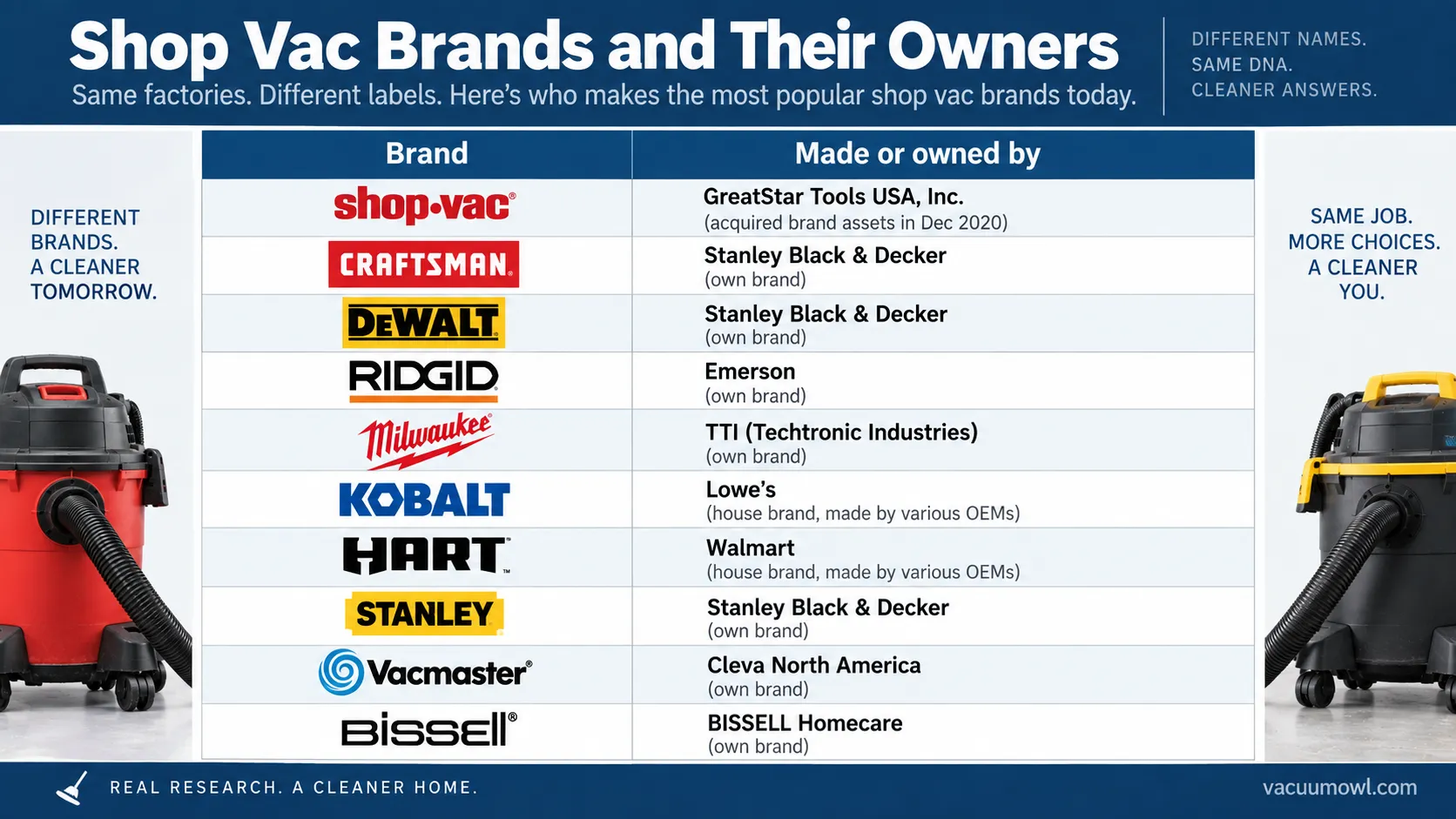
Brand Owner Is Not Always Who Actually Builds the Vac
Owning a brand is not the same as building the product, and RIDGID is the clearest example on the shelf.
The RIDGID brand’s wet/dry vacuums are made by Emerson, its parent for vacuums, while RIDGID’s cordless power tools are made by Techtronic Industries under a licensing deal, a split confirmed by Wikipedia’s Ridgid entry.
That is why “who makes RIDGID” has two correct answers depending on whether you mean the vac or the drill.
Several “different” store-brand shop vacs are also the same underlying unit with a different sticker.
Forum regulars call this out constantly, asking who really makes a machine or spotting when a unit is “rebadged” from a shared OEM line. They are usually right.
The proof is in the paperwork. A CPSC recall notice names Emerson Tool Company as the maker of the RIDGID wet/dry vacs.
Emerson still markets that RIDGID wet/dry vacuum line directly today.
Craftsman tells a similar story: Stanley Black & Decker owns the brand, but the vacs have long been built by outside makers, which is why VacuumLand veterans say things like “Vacmaster makes the Craftsman.”
To show the difference, I opened a RIDGID NXT powerhead and a Milwaukee powerhead and set them side by side.
They are visibly built on different tooling, which is exactly what you would expect from two different OEMs.
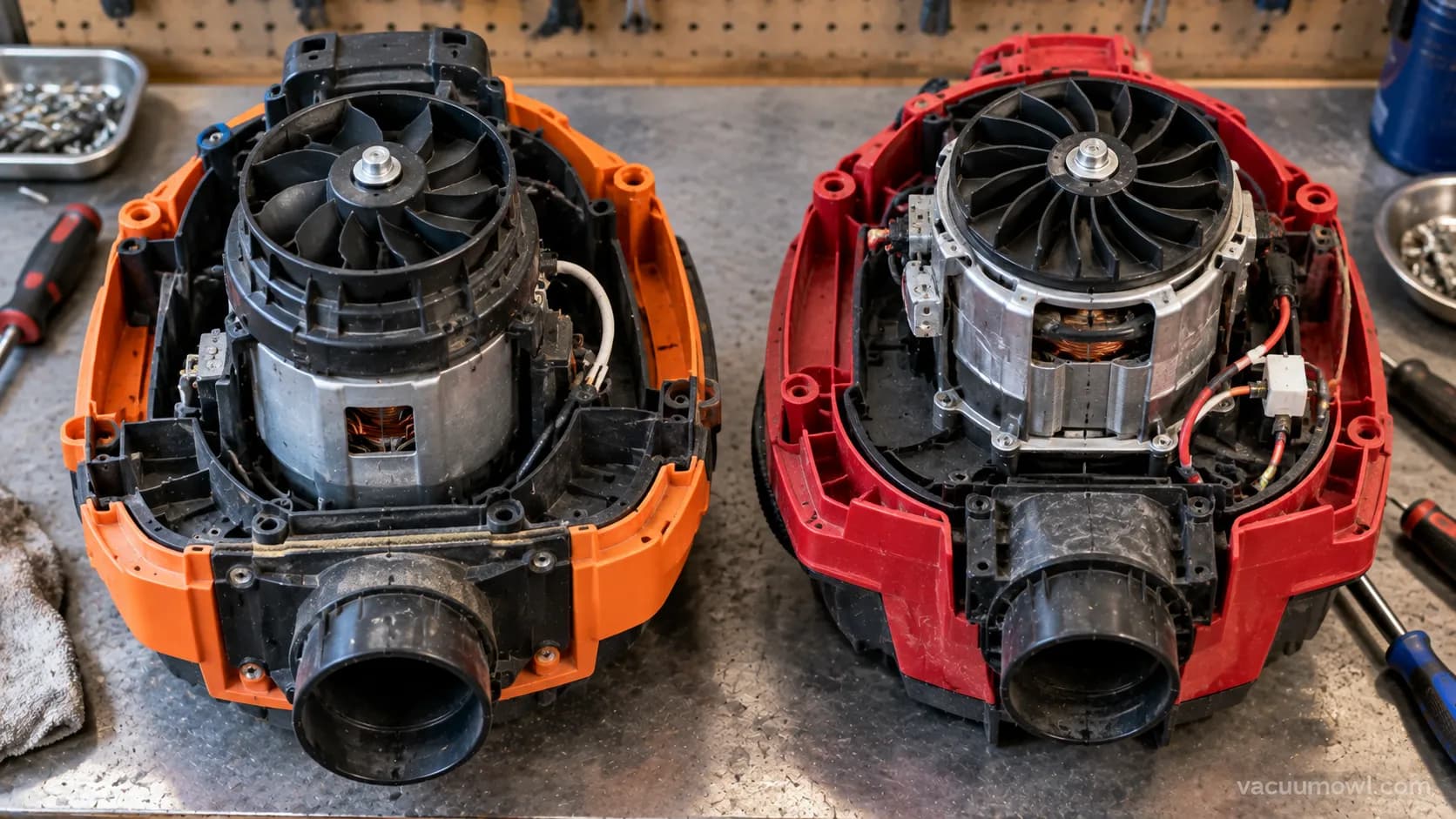
Check your own data plate. Brand ownership on paper does not tell you who physically built your unit, and the exact maker for a given model can change year to year.
The label on the machine, not the logo on the front, is the honest source.
This is where the budget names cluster, all living in the same rebadged, shared-OEM world. Our budget Stanley guide covers one of them.
The Vacmaster Beast review looks at a major original builder behind several store brands. Walmart’s HART reviewed is a TTI-built budget line under yet another name.
For everything below that, our budget and store-brand picks round up the cheapest units still worth buying.
Are Shop-Vacs Still Made? Parts, Warranty, and Buying
Yes, Shop-Vacs are still made and sold.
Under GreatStar Tools USA, the brand kept producing wet/dry vacuums after the 2020 bankruptcy, with units and replacement parts available through shopvac.com and major retailers, and the Philadelphia Inquirer documented support resuming after the 2021 Williamsport reopening.
So the brand is alive, supported, and buyable. The harder question is which one deserves your money.
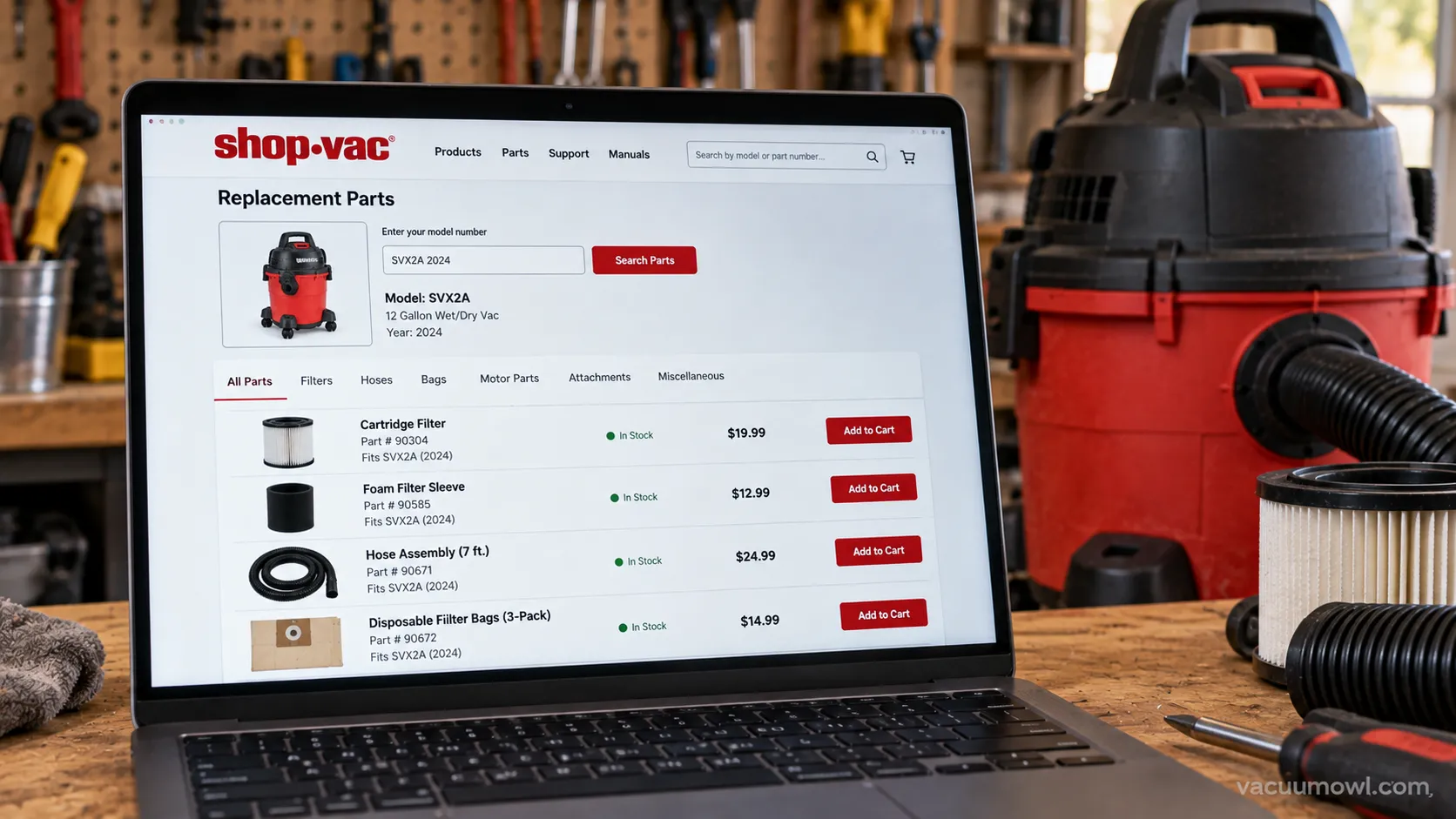
I ran a parts lookup for my own 2024 model to confirm it is still supported, and filters and hoses for current units came up as orderable. That is the practical test that matters if you are deciding whether to buy into the brand.
If you want the brand-by-brand verdict on which brand is actually best, that is a separate decision guide, and this identity explainer is not the place for a ranked shootout.
What you plan to do with the machine matters as much as the badge. If you need it for soaking up water safely, the wet-pickup method matters more than the logo.
The same goes for using the built-in blower trick, which nearly every brand supports. Keeping strong suction is its own project, covered in our separator and dust-collection guide.
For standing water beyond a wet pickup, our guide to pump vacs and water attachments is a better starting point than any brand loyalty.
Frequently Asked Questions
Who owns Shop-Vac now?
Shop-Vac is owned by GreatStar Tools USA, a subsidiary of Hangzhou GreatStar Industrial, a publicly traded Chinese tool company. GreatStar bought substantially all of the bankrupt Shop-Vac Corporation’s assets in December 2020, per GreatStar’s own announcement, and reopened the Williamsport, Pennsylvania factory in 2021.
Why did Shop-Vac go out of business?
Shop-Vac Corporation abruptly shut down on September 15, 2020 after a planned sale collapsed and the founding Miller family left the company. The sudden closure sent the assets into a bank-led sale, which GreatStar then won in December 2020, ending the original independent corporation.
Is Shop-Vac made in the USA?
Partly. Modern Shop-Vacs are assembled in Williamsport, Pennsylvania from globally sourced components, with some production in Asia.
“Made in USA” here means final assembly by American workers, not a machine built entirely from US-made parts.
Are Shop-Vacs still made?
Yes. Under GreatStar, Shop-Vac continues to manufacture and sell wet/dry vacuums, and replacement parts for current models remain available through the brand and major retailers.
The brand survived its 2020 bankruptcy and is actively supported today.
Who makes RIDGID and Craftsman shop vacs?
RIDGID wet/dry vacuums are made by Emerson, even though TTI makes RIDGID’s cordless power tools under license, as covered earlier in this guide. Craftsman is owned by Stanley Black & Decker as a brand, but its vacs are built by outside makers such as Cleva.
How long do Shop-Vacs last?
In my own use, a Shop-Vac unit bought in 2015 is still running after roughly a decade, and a 2024 unit has had zero issues so far. Build quality varies by tier, but a well-maintained shop vac routinely lasts many years, especially if you keep the filter clean and, when tidying the garage, use wall-mounting and storage to protect it.
Unit | Bought | Status today |
|---|---|---|
Shop-Vac (mid-size) | 2015 | Still running, original motor |
Shop-Vac (current) | 2024 | No issues to date |
The Short Version
The confusion around who makes shop vac comes from mixing up three things: the generic word, the Shop-Vac brand, and the company that physically builds each machine.
The word belongs to everyone, the brand belongs to GreatStar after a 2020 bankruptcy and rescue, and the builder changes from brand to brand.
Once you separate those layers, the shelf makes sense. RIDGID vacs are Emerson, Craftsman and DeWalt are Stanley Black & Decker brands, Milwaukee and Ryobi are TTI, and several budget names are the same rebadged unit wearing different stickers.
So the next time someone asks who makes shop vac, you can give the honest answer instead of the reflexive one.
Check the data plate, know the parent company, and buy the machine that fits the job rather than the logo on the front.
Read it your way
Short on time? Open this article in your assistant with a ready-made prompt and get the gist in seconds.
Found this useful? Make us a preferred source so we show up in your Google results.
Keep reading
Related articles
Vacuum Types
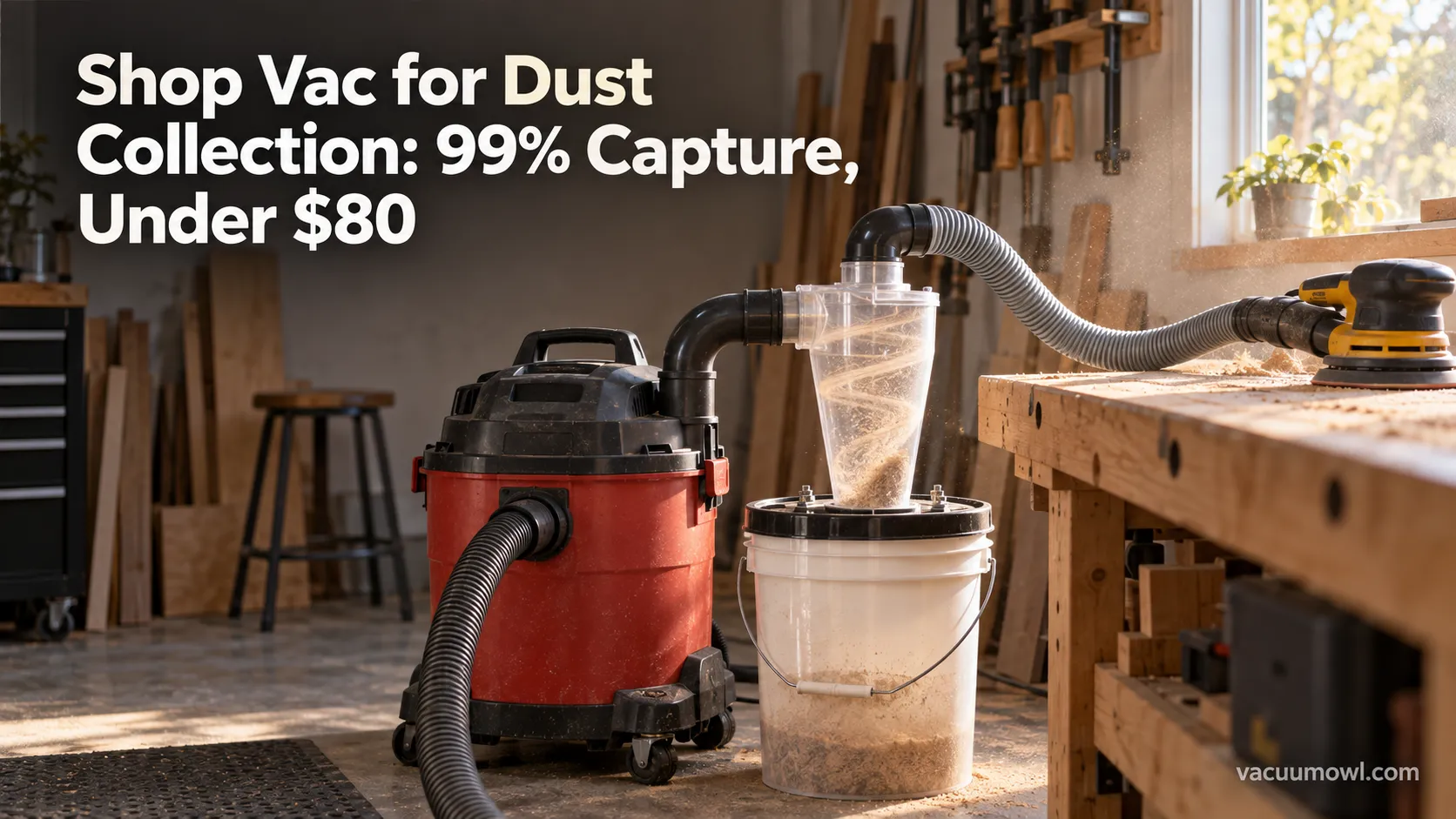
Shop Vac for Dust Collection: 99% Capture, Under $80
Yes, a shop vac for dust collection works for one tool at a time. Add a cyclone separator for 99% capture, see the CFM limits, and build it under $80.
Vacuum Types
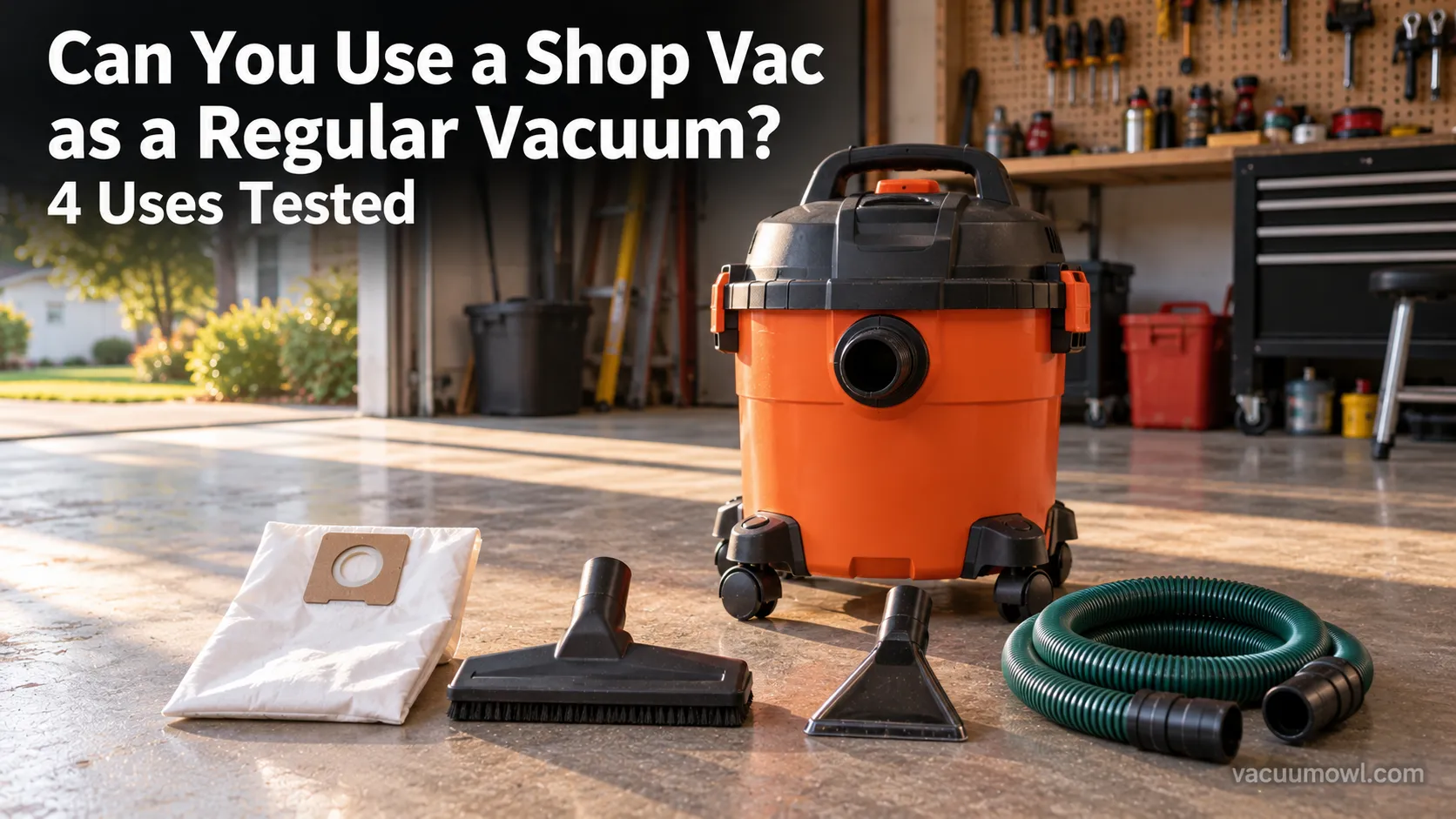
Can You Use a Shop Vac as a Regular Vacuum? 4 Uses Tested
Yes: can you use a shop vac as a regular vacuum? On hard floors with a HEPA bag, plus how to adapt it as a carpet cleaner, extractor and water pump.
Vacuum Types
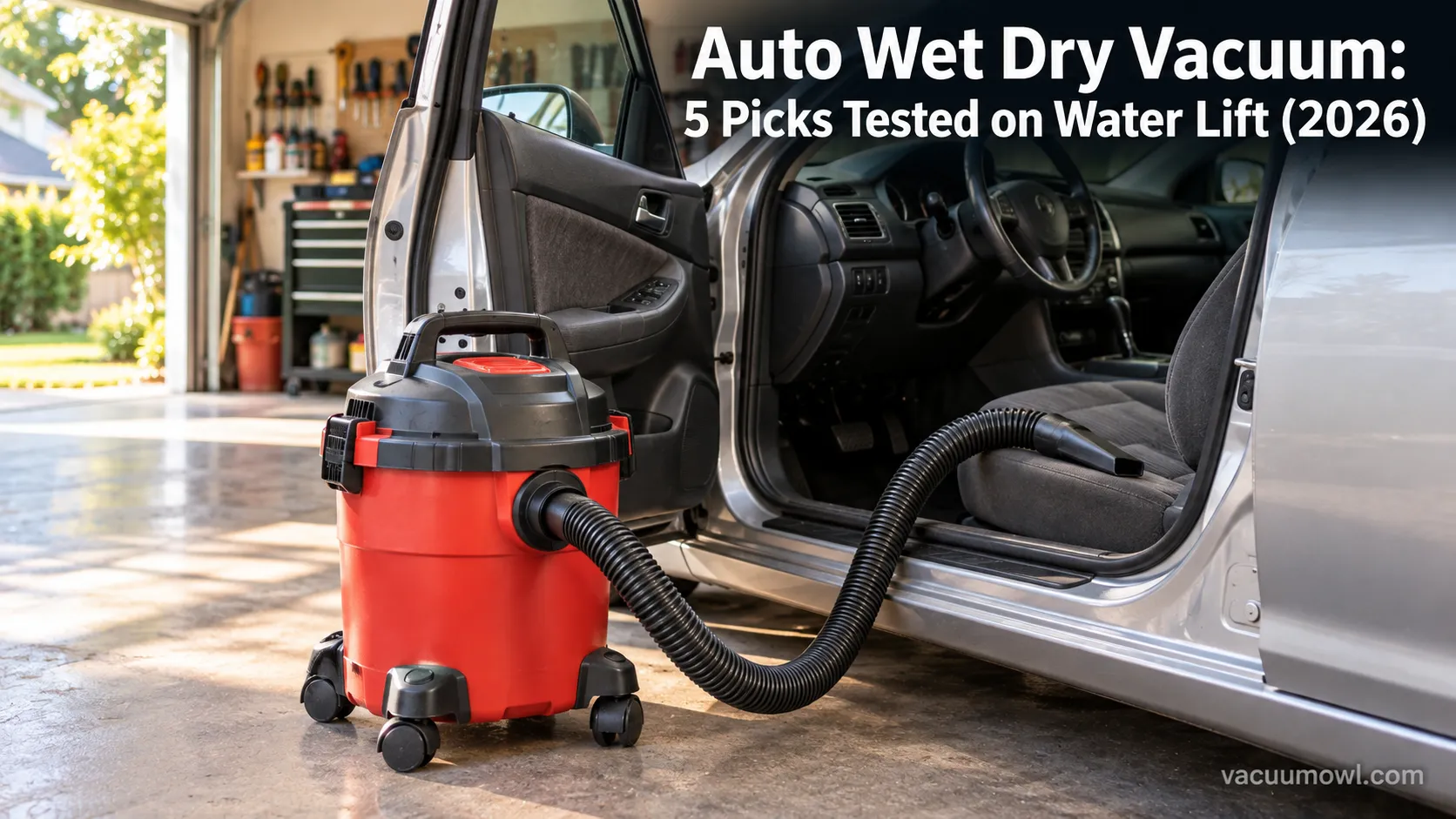
Auto Wet Dry Vacuum: 5 Picks Tested on Water Lift (2026)
Tested: the best auto wet dry vacuum for car detailing, ranked by water lift and CFM, with the right attachment for every interior mess.
Vacuum Types
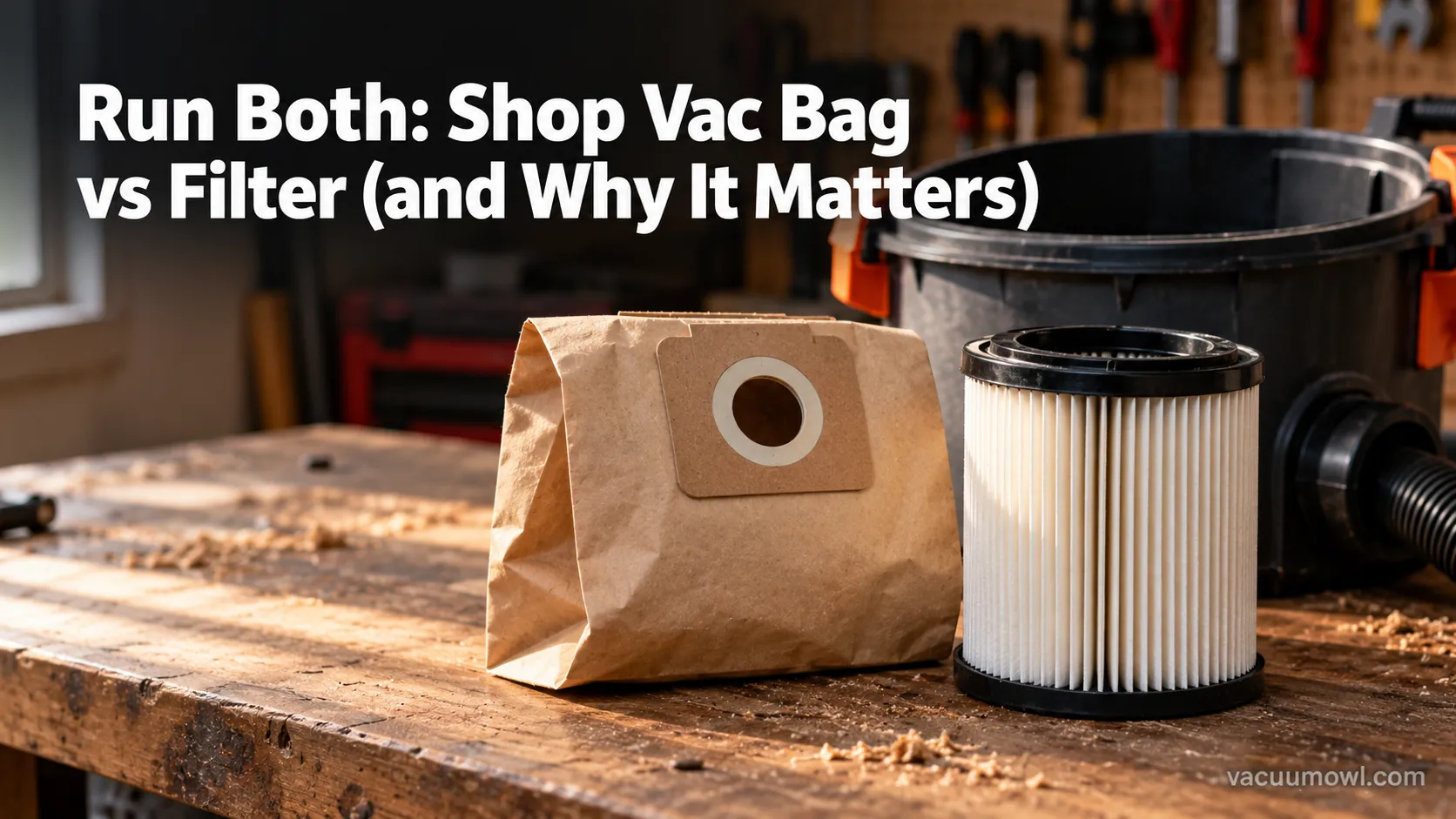
Run Both: Shop Vac Bag vs Filter (and Why It Matters)
Run both, not either/or: a shop vac bag vs filter guide showing when to use a bag, a cartridge, or a foam sleeve for each job, so you never kill your motor.
The discussion
Comments
Every comment is reviewed before it goes live.