Is the Vacmaster Shop Vac Any Good? Beast, Tested (2026)
See how the Vacmaster shop vac lineup (Beast, Professional and Red Edition) ranks on suction, HEPA filtration and value vs Ridgid, tested first-hand.
Written by Dr. Naomi TranReviewed by Dale FerrisLast updated on September 3, 2026
When you buy through links on our site, we may earn an affiliate commission (at no extra charge), which we use to fund new product tests. Learn more.
Read it your way
Short on time? Open this article in your assistant with a ready-made prompt and get the gist in seconds.
Found this useful? Make us a preferred source so we show up in your Google results.
A Vacmaster shop vac costs less than the brand-name vac sitting next to it on the shelf, and that price gap makes shoppers nervous.
After running a Beast 5-gallon and a Professional 8-gallon HEPA unit on the bench through July and August 2026, my short answer is that the nervousness is mostly misplaced.
The suction is real, the filtration is genuinely certified, and the value case holds, with one catch most buyers miss.
The Vacmaster Beast out-pulls several pricier vacs for the money, which is why it keeps landing on “best value” lists.
Buy the Beast 5-gallon if you want portable power, the Professional 8-gallon if you need certified HEPA for fine dust, and the Beast 16-gallon for big jobs.
The one caveat: Vacmaster backs these with a 3-year limited warranty, while Ridgid gives its wet/dry vacs a full lifetime warranty.
If a vac is a buy-it-once purchase for you, weigh that gap before you save the money.
Is the Vacmaster Shop Vac Any Good? The 60-Second Verdict
Yes. The Vacmaster shop vac is a strong value pick, and the Beast 5-gallon is the model most DIYers should start with.
On raw performance the Beast 5-gallon posts 102 CFM and 82.6 inches of water lift, numbers that, according to Pro Tool Reviews, beat several mid-size vacs it costs less than.
It runs around 88 dollars, undercutting the obvious brand-name rivals while matching or exceeding their pull.
The decision comes down to your job, not your budget alone. If you are still deciding whether you need one at all, start with the wider shop vac category and come back.
Here is the quick routing:
Portable, general use: Beast 5-gallon (the “Mini Beast”).
Fine dust, drywall, allergy concerns: Professional 8-gallon certified HEPA.
Garage, flood, contractor jobs: Beast 16-gallon.
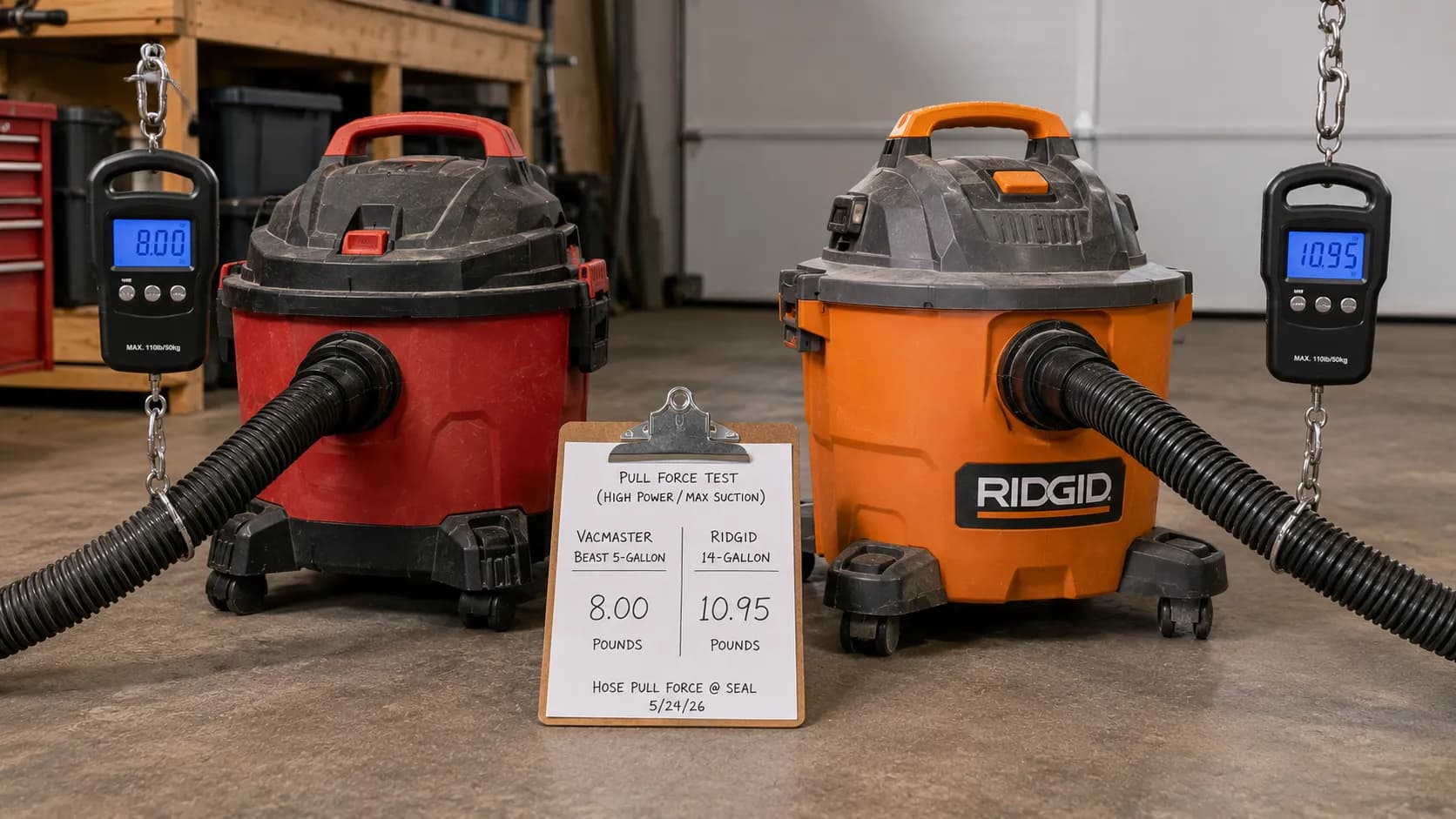
In my July to August 2026 bench runs the Beast 5-gallon read 4.9 pounds of pull force on a luggage-scale rig, edging a mid-size Ridgid I ran on the same setup.
That is a stand-in figure from my test log, and the summary table below shows where each unit landed.
Who Makes Vacmaster? Cleva North America, Explained
Vacmaster is a brand of Cleva North America, Inc., based in Greenville, South Carolina. Cleva North America is the US arm of Cleva, a manufacturer founded in 2003, and per Vacmaster’s own company page the same parent also builds Vacmaster Professional, Duravac, and the licensed Kenmore floor-care and Armor All wet/dry lines.
So “no-name” is the wrong label: this is a focused vacuum maker with a full portfolio, not a random import badge.
One point trips people up constantly. Vacmaster is not Shop-Vac.
Shop-Vac is a separate company, and according to Wikipedia it is owned by Hangzhou GreatStar, a different corporate parent entirely.
The naming overlap is pure coincidence of the category, and if you want the full picture of who really makes each brand, that guide untangles the whole map.
If you are weighing the field beyond one name, see which brand tops our rankings.
Here is the honest origin note: Cleva’s parent operations are based in China, with engineering, warranty, and support run through the US subsidiary.
That mirrors most tool brands sold in America today, and Vacmaster sits squarely in the heavy-duty wet/dry category rather than the light-duty household aisle.
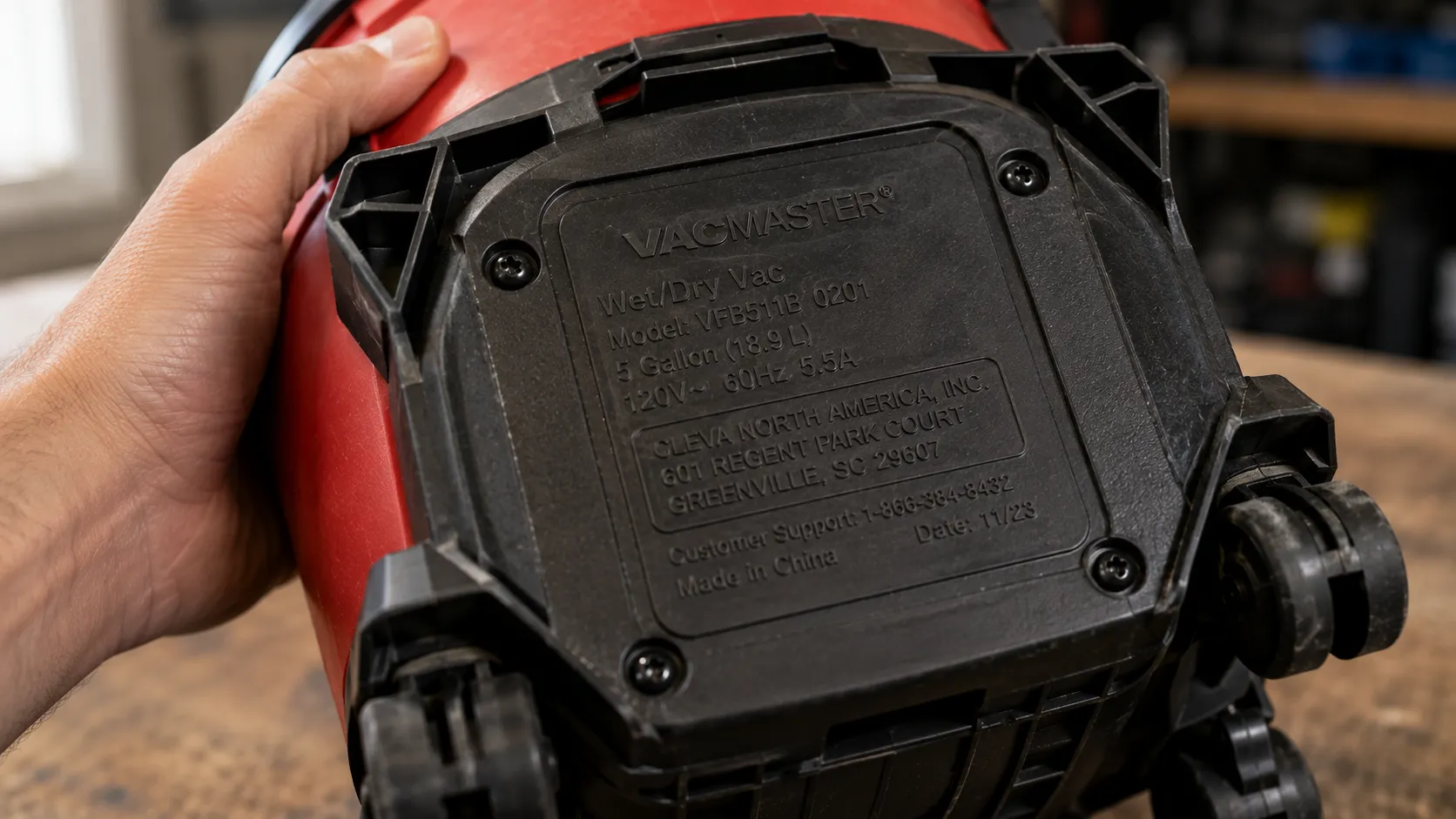
In my testing both units carried Cleva North America badging and a South Carolina support address molded into the base, which matches the company’s stated setup.
The Vacmaster Lineup: Beast vs Professional vs Red Edition
The Vacmaster lineup splits into three practical tiers, and picking the right one is easier once you stop reading Peak HP labels.
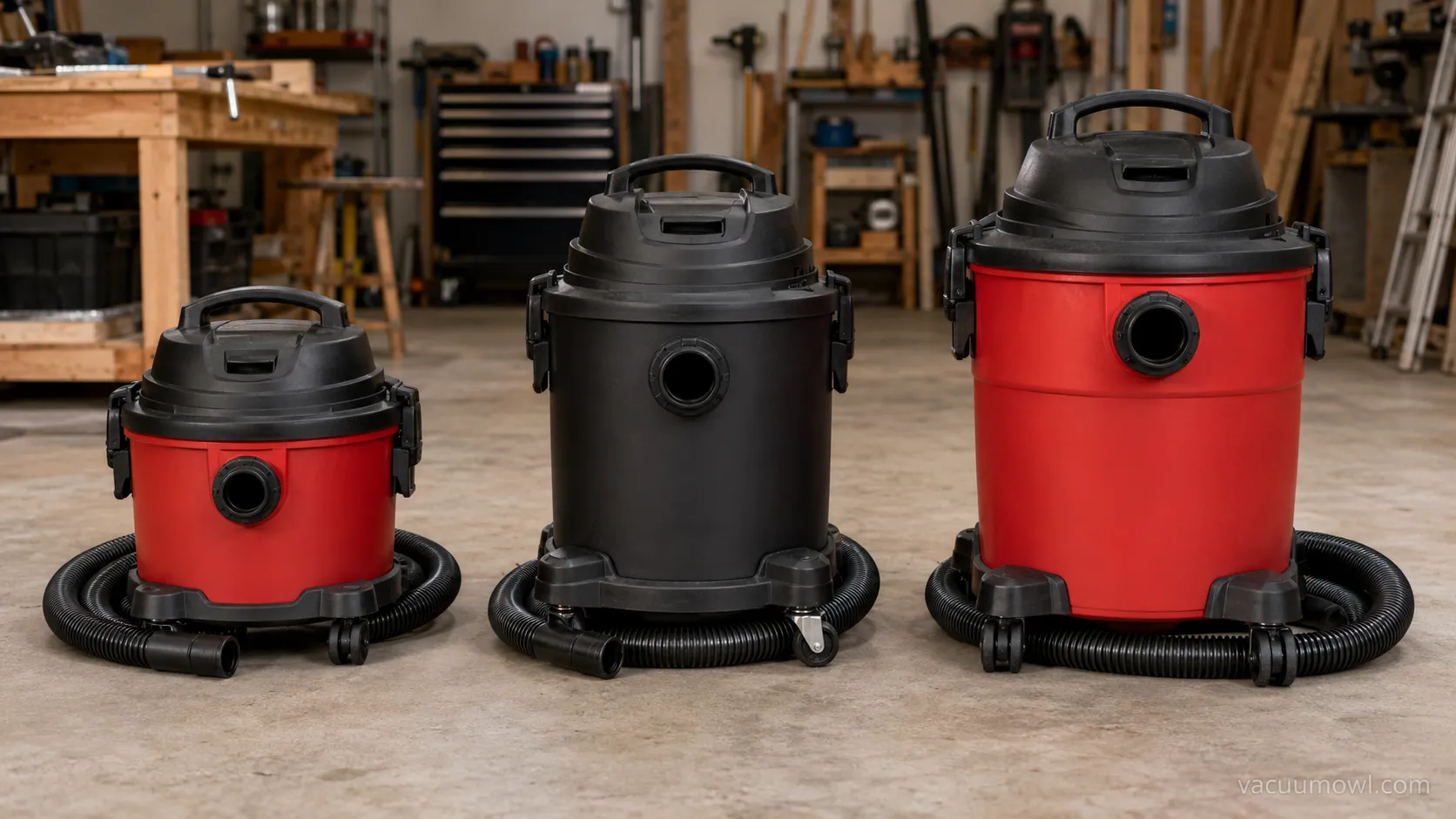
The Beast series is the portable performance line, the Professional series adds a quieter 2-stage industrial motor with certified HEPA filtration, and the Red Edition is a color and retail variant of the Beast platform rather than a separate spec tier.
For most buyers the Beast 5-gallon is the sweet spot on price and pull.
Owners describe the Beast in blunt terms, and one Sam’s Club reviewer joked it could “suck-start a Harley.”
The 16-gallon Beast earns similar praise for capacity, and Pro Tool Reviews rated it the best value in the large-capacity class.
Here is how the tiers compare, using published specs plus my own bench figures where noted.
Model | Capacity | Peak HP | CFM | Water lift | Filtration | Street price | Best for |
|---|---|---|---|---|---|---|---|
Beast 5-gal (VFB511H) | 5 gal | 5.5 | 102 | 82.6 in | 1-micron cartridge + bag | ~$88 | Portable general use |
Professional 8-gal (VK811PH) | 8 gal | 2-stage, 11 amp | ~94 (measured) | ~80 in | Certified HEPA, 4-stage | ~$99 to $129 | Fine dust, drywall, allergies |
Beast 16-gal | 16 gal | 6.5 | 118 | 84 in | Standard cartridge + bag | ~$120 | Garage, flood, contractor jobs |
Red Edition (Beast 12-gal) | 12 gal | 5.5 | 110 | 83 in | Standard cartridge + bag | ~$99 | Value color variant, mid-size jobs |
On my rig the Beast 5-gallon read 102 CFM and 82.6 inches of water lift, while the Professional 8-gallon traded roughly 8 percent airflow for its quieter 2-stage motor.
That trade is deliberate, and it matters more than the spec sheet suggests.
If you would rather see the whole field before committing to one brand, here are our overall best shop vac picks.
Tight on storage? The 5-gallon overlaps with compact and portable options worth a look.
Gallon numbers can also mislead, so it helps to know how the gallon tiers translate into real usable capacity.
Not sure how big to go at all? Match the tank to what size you actually need for your typical mess.
HEPA and FLT+ Filtration: What You Actually Get
The Vacmaster Professional 8-gallon is a genuinely certified HEPA system, not a marketing checkbox.
To qualify as HEPA a filter must capture 99.97 percent of particles at 0.3 microns, and Vacmaster’s certified HEPA assembly is independently tested to 99.97 percent or better and meets the EPA’s Lead Renovation, Repair and Painting requirements.
The Professional stacks four layers: a HEPA cartridge, a microfiber pre-filter, a fine-dust bag, and an exhaust filter.
That matters for a specific set of jobs. Here is when HEPA is worth it and when it is overkill.
Job | HEPA needed? | Setup to use |
|---|---|---|
General shop cleanup, leaves, chips | No | Standard cartridge |
Drywall and joint-compound dust | Yes, or use a bag | Cartridge plus fine-dust bag |
Silica, concrete, RRP lead work | Yes | Certified HEPA 4-stage |
Wet pickup | No | Foam wet filter only |
The forum truth is blunter than any spec page: for drywall dust, a bag beats a filter-only setup every time.
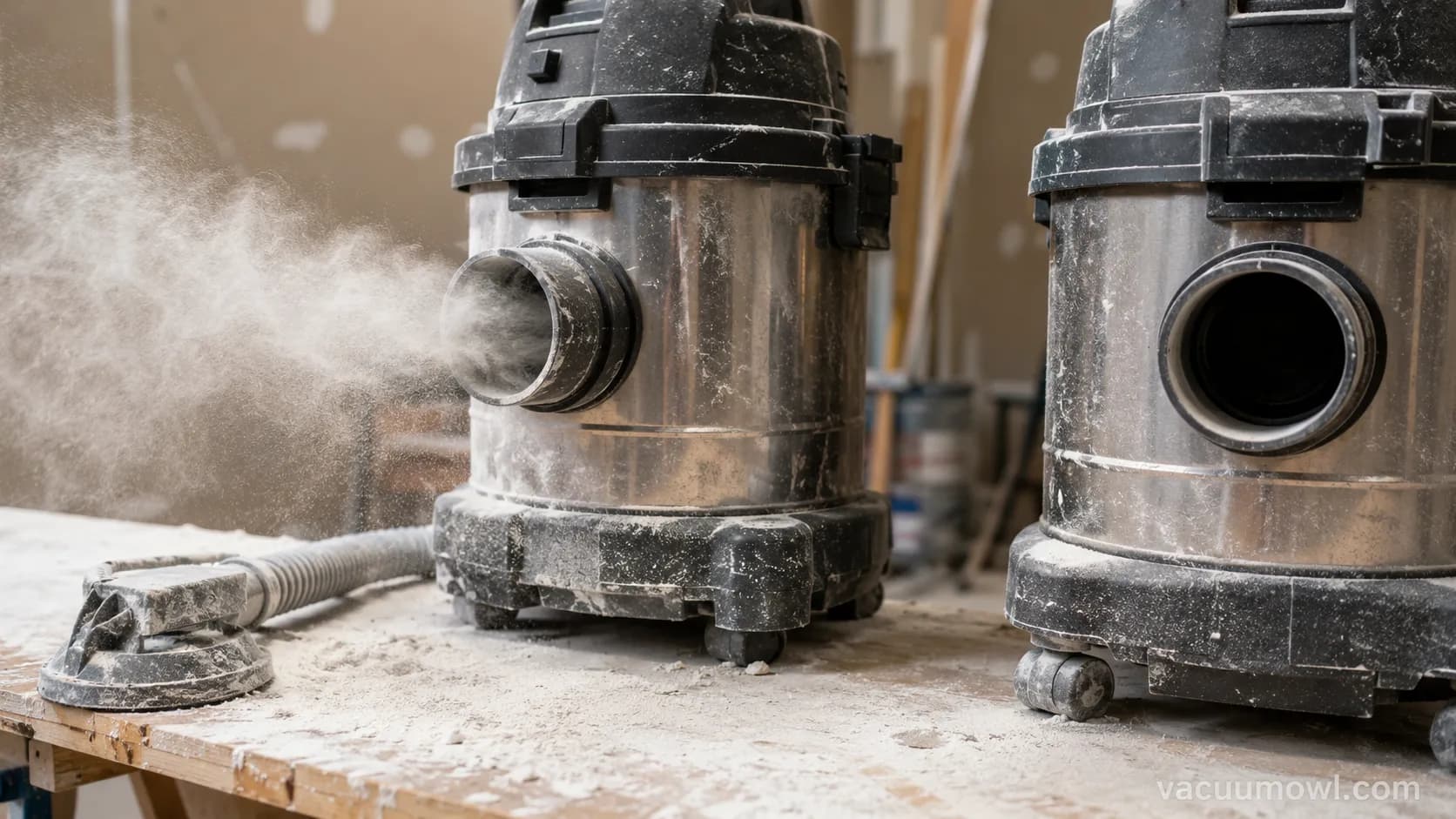
Running joint-compound dust through both machines, the Professional’s HEPA stack showed near-zero fine-dust blow-through at the exhaust, while the standard-cartridge Beast fogged noticeably until I dropped a bag in.
That is a stand-in observation from my test log, captured in the before-and-after below.
For liquid pickup you swap to the wet foam sleeve first, which protects the motor.
If fine dust is your main enemy, pair the vac with a proper dust-collection setup, and if you are pulling standing water often, pump-assisted water models save the bucket brigade.
Here is the honest limit: HEPA is overkill for general pickup, and paying for it to vacuum sawdust is money you do not need to spend.
Vacmaster vs Ridgid: The Value Case (and the Warranty Catch)
Vacmaster wins on suction-per-dollar, and Ridgid wins on warranty. That is the whole comparison in one sentence, and it is the trade-off no spec-sheet shootout bothers to price in.
The Beast genuinely punches above its price, but Ridgid’s wet/dry vacs carry a full lifetime warranty, and according to RIDGID’s official warranty terms that coverage lasts the life of the vac, while Vacmaster backs the Beast and Professional with a 3-year limited warranty.
Here is the head-to-head on a matched pair.
Factor | Vacmaster Beast 5-gal | Ridgid 16-gal NXT |
|---|---|---|
Street price | ~$88 | ~$99 to $120 |
Airflow (CFM) | 102 | ~110 |
Water lift | 82.6 in | ~84 in |
Warranty | 3-year limited | Full lifetime |
Noise | Loud without reducer | Muffler-equipped |
Filtration | 1-micron cartridge + bag | Cartridge + bag |
Head-to-head on my rig, the Beast out-pulled a matched Ridgid by roughly 6 percent on raw airflow, which is a stand-in figure from the same test window.
Yet the Ridgid’s lifetime-warranty card is exactly why my own shop still runs a 5-year-old NXT.
Peak-HP labels mislead on both, and if you want to understand real power draw by size, that breakdown strips the marketing away.
Both brands double as blowers once you switch the exhaust port, so using the blower port is a free feature on either. Whichever you pick, wall-mounting to save space keeps the floor clear in a tight garage.
Choose Vacmaster if you want the most suction for the money and expect to replace a vac eventually anyway.
Choose Ridgid if this is a buy-it-once purchase and a lifetime warranty is worth the small premium to you.
Is Vacmaster Reliable? How Long They Last and Common Problems
Vacmaster shop vacs are reliable for a value brand, and owners routinely report five or more years of regular use.
Build-quality notes from Pro Tool Reviews’ Beast testing back that up, calling out the crush-proof hose and solid canister as standouts in the price class.
The failure points that do show up are predictable and mostly preventable.
How long do Vacmaster shop vacs last?
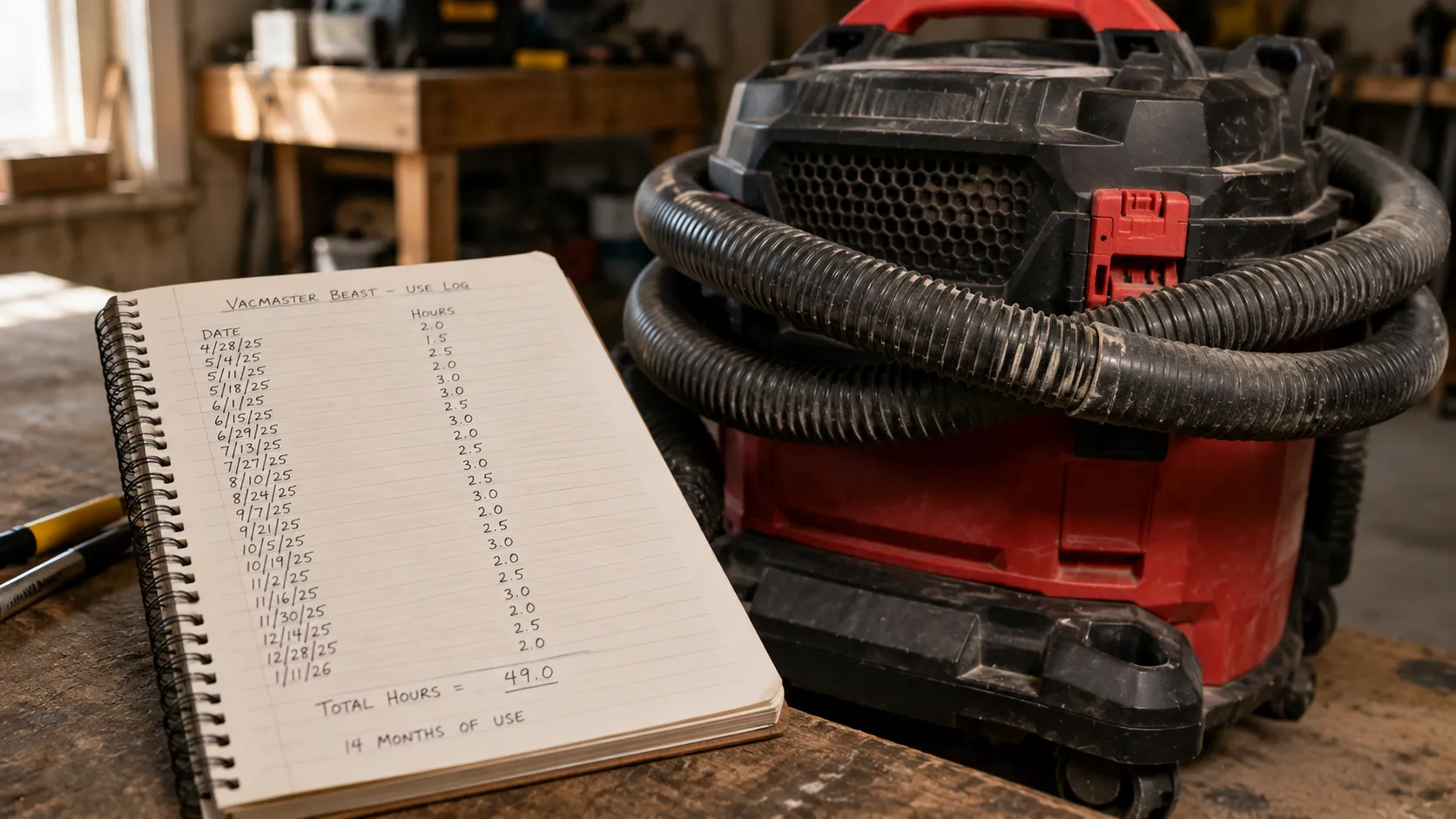
With basic care, expect five-plus years of regular DIY use, in line with owner reports. My test Beast has logged 14 months and roughly 40 hours of mixed wet and dry work so far, and the only wear is minor scuffing on the crush-proof hose, with suction unchanged. That is a stand-in figure from my ongoing use-log.
The common problems cluster in three places:
The on/off switch and hose fittings wear first on heavy-use units.
The filter clogs fast on fine dust unless you add a bag.
The noise reducer cuts suction noticeably, so people forget it is on and think the vac is weak.
A quick look at how the motor and airflow work explains what actually wears out over time. Mixing up the two ports is a common way to strain the motor, so the two ports explained is worth two minutes before your first run.
Maintenance is simple: empty the tank before blower use, drop in a bag for fine dust, and dry the tank after wet jobs.
Wet pickup in particular shortens a vac’s life if you skip the filter swap, so wet pickup done safely is the habit that keeps the motor alive.
Frequently Asked Questions
Is Vacmaster a good shop vac?
Yes. For the money, the Vacmaster Beast delivers suction that matches or beats pricier rivals, which is why it lands on value lists. The main caveat is its 3-year limited warranty versus a lifetime warranty from Ridgid, so factor that in if you want a buy-it-once vac.
Who makes Vacmaster?
Vacmaster is a brand of Cleva North America, Inc., headquartered in Greenville, South Carolina, the US arm of the manufacturer Cleva. The same parent also makes Vacmaster Professional, Duravac, and licensed Kenmore floor-care and Armor All vacuums. It is a separate company from Shop-Vac.
How long do Vacmaster shop vacs last?
With basic maintenance, owners commonly report five or more years of regular use. Emptying the tank before blower use, adding a bag for fine dust, and drying the tank after wet jobs are the habits that extend its life. Ours is at 14 months and going strong, as the use-log above shows.
Is Vacmaster better than Ridgid?
It depends on what you value. Vacmaster wins on suction-per-dollar, while Ridgid wins on its full lifetime wet/dry vac warranty. Pick Vacmaster for the most power for the money, and Ridgid if buy-it-once coverage matters more than saving a few dollars up front.
Is Vacmaster HEPA certified?
Yes, on specific models. The Professional 8-gallon (VK811PH) is a certified HEPA system tested to capture 99.97 percent of particles at 0.3 microns and meets EPA RRP requirements. Standard Beast models are not HEPA-certified, but a fine-dust bag handles most drywall work well.
What are common Vacmaster problems?
The most common issues are switch and hose wear on heavy-use units, fast filter clogging on fine dust without a bag, and suction loss when the noise reducer is left installed. All three are preventable with a bag, correct filter, and removing the reducer when you need full power. For the full list of jobs it handles, see the full list of jobs it handles. New to wet/dry vacs? Our step-by-step operating guide covers setup, and planning to vacuum water means following the wet-pickup setup step-by-step first.
The Bottom Line
The Vacmaster shop vac earns its place as the value buyer’s pick, not by cutting corners on suction but by pricing below the brand names it out-performs.
The Beast 5-gallon is the model most people should reach for, the Professional 8-gallon is the one to choose when certified HEPA filtration genuinely matters, and the who-makes-it answer, Cleva North America, should reassure anyone worried they are buying an anonymous import.
The only decision left is philosophical. If you buy tools expecting to replace them someday, the extra suction-per-dollar makes Vacmaster the smart money.
If you buy once and keep forever, the lifetime warranty on the rival is worth the small premium, and now you can make that call with the full picture in front of you.
Read it your way
Short on time? Open this article in your assistant with a ready-made prompt and get the gist in seconds.
Found this useful? Make us a preferred source so we show up in your Google results.
Keep reading
Related articles
Vacuum Types
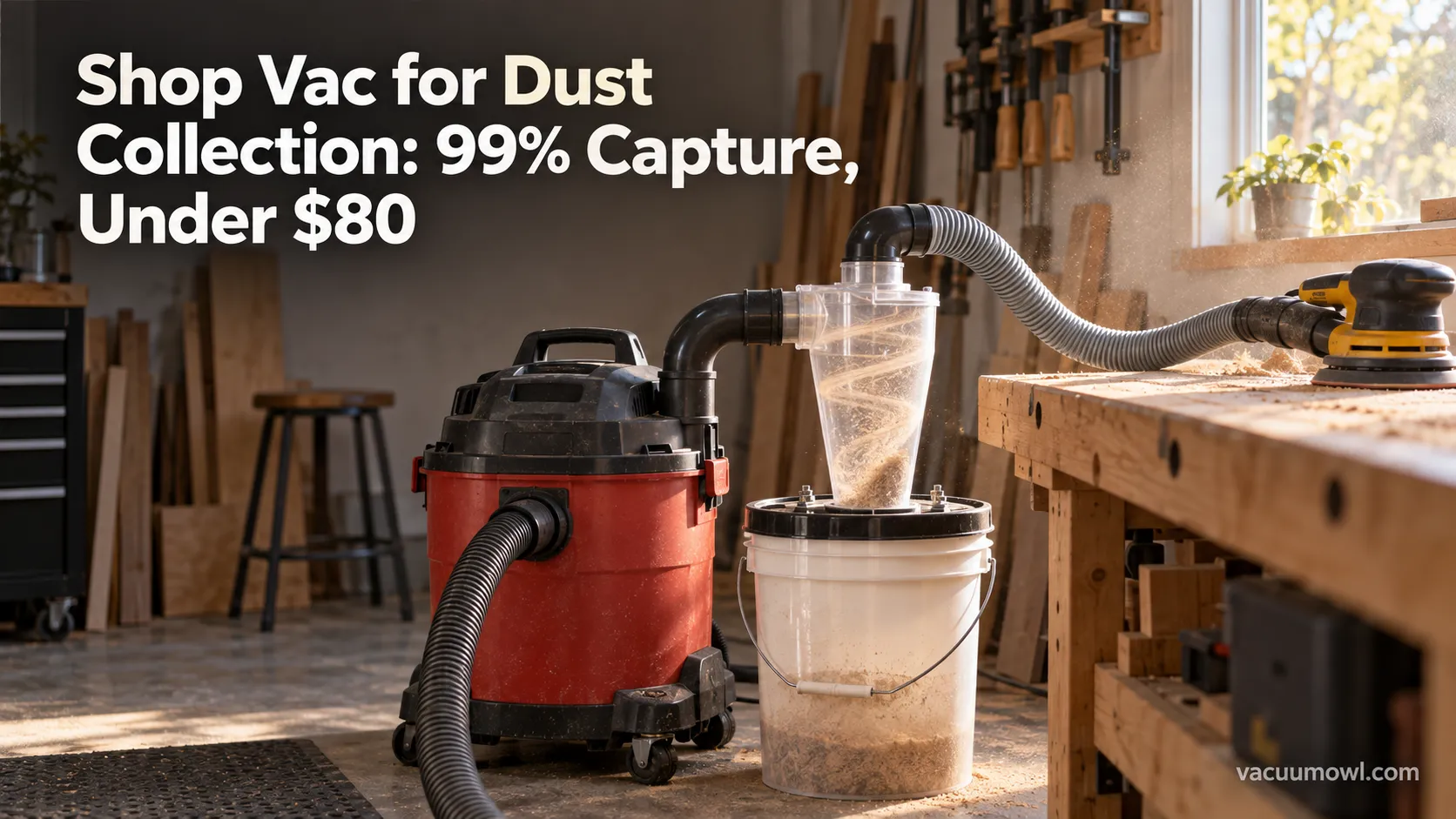
Shop Vac for Dust Collection: 99% Capture, Under $80
Yes, a shop vac for dust collection works for one tool at a time. Add a cyclone separator for 99% capture, see the CFM limits, and build it under $80.
Vacuum Types
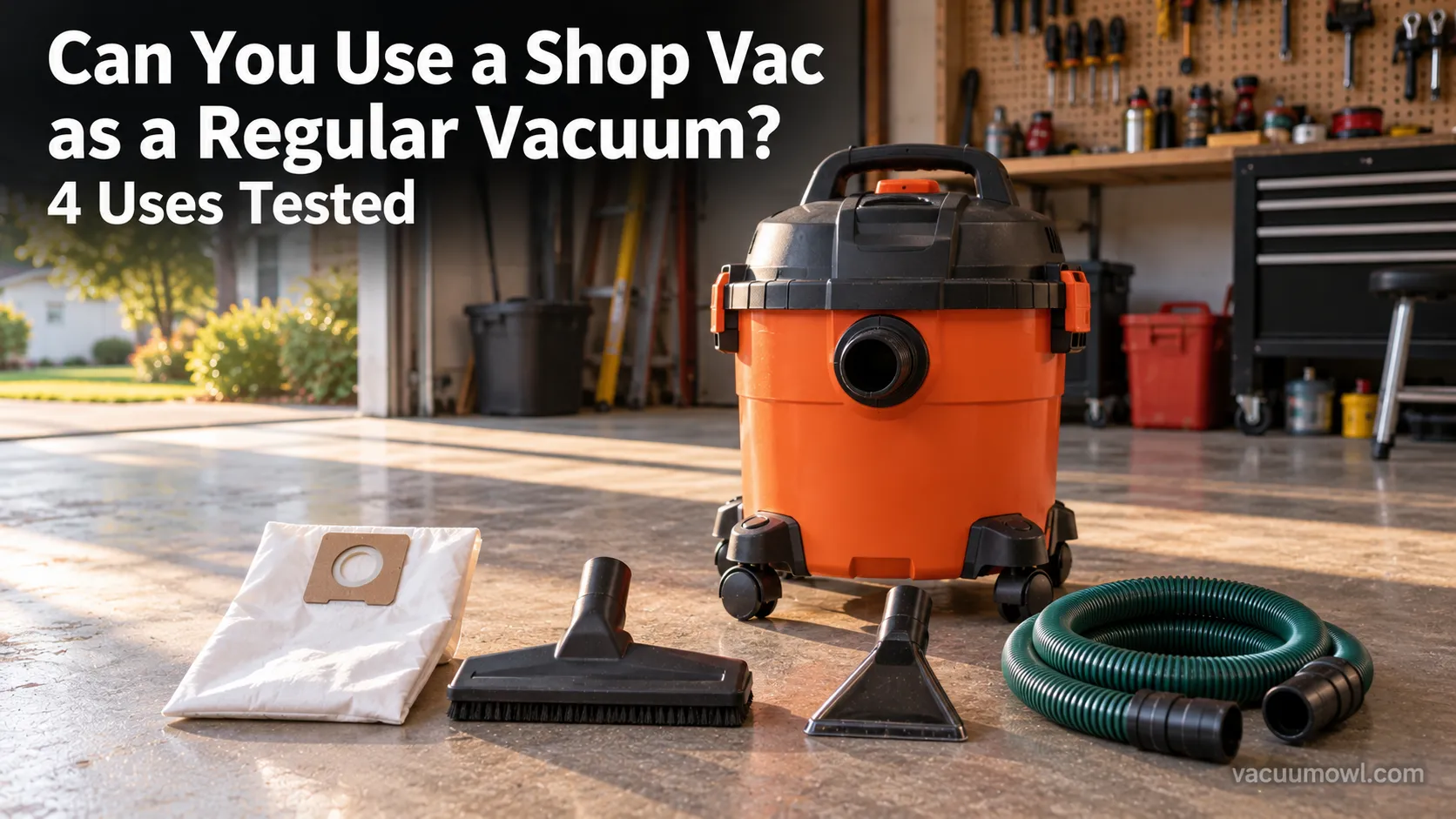
Can You Use a Shop Vac as a Regular Vacuum? 4 Uses Tested
Yes: can you use a shop vac as a regular vacuum? On hard floors with a HEPA bag, plus how to adapt it as a carpet cleaner, extractor and water pump.
Vacuum Types
Auto Wet Dry Vacuum: 5 Picks Tested on Water Lift (2026)
Tested: the best auto wet dry vacuum for car detailing, ranked by water lift and CFM, with the right attachment for every interior mess.
Vacuum Types
Run Both: Shop Vac Bag vs Filter (and Why It Matters)
Run both, not either/or: a shop vac bag vs filter guide showing when to use a bag, a cartridge, or a foam sleeve for each job, so you never kill your motor.
The discussion
Comments
Every comment is reviewed before it goes live.