Every Shop Vac Sale Isn’t a Deal: Here’s the Fair Price
Compare shop vac sale prices by size and brand, get fair-price benchmarks for 5-16 gal models, and see when Prime Day and Black Friday cut deepest.
Written by Dr. Naomi TranReviewed by Dale FerrisLast updated on September 2, 2026
When you buy through links on our site, we may earn an affiliate commission (at no extra charge), which we use to fund new product tests. Learn more.
Read it your way
Short on time? Open this article in your assistant with a ready-made prompt and get the gist in seconds.
Found this useful? Make us a preferred source so we show up in your Google results.
The struck-through price on a shop vac sale is almost always fiction. Retailers anchor you to a “list” price the machine never really sold at, then call the everyday price a discount.
We spent the 2026 sale season tracking the same wet/dry vacuums across five retailers to find the number that actually matters: the fair price for each tank size. Below that number, a sale is a genuine deal.
Above it, the percentage-off badge is marketing.
This guide gives you the fair price by gallon size, the two windows a year when prices truly crater, and a fast test for telling a real deal from a fake one before you tap buy.
The Short Version
A fair shop vac price in 2026 is roughly $45 for a 5-gallon, $55 for a 6-to-9-gallon, and $60 for a budget 16-gallon corded model, with premium 10-to-14-gallon units near $90.
A “sale” only counts as a deal when it beats those numbers, and the deepest cuts land during Prime Big Deal Days, Black Friday, and Cyber Monday.
What a Shop Vac Should Cost in 2026
A shop vac (wet/dry vacuum) has no single honest list price, so a fair shop vac sale price is best judged by tank size.
Based on prices we tracked across five retailers in 2026, a fair figure is roughly $45 for a 5-gallon, $55 for a mid-size, and $60 for a budget 16-gallon corded model.
Anything at or below those numbers is a real deal, not a marked-up promotion.
We define “fair price” as the number that beats the tier’s typical street price, not the manufacturer’s list. List prices exist mostly to make discounts look larger.
Tank tier | Fair price (2026) | Typical “sale” price | True street low |
|---|---|---|---|
4-5 gallon (compact) | $45 | $55 | $40 |
6-9 gallon (mid) | $55 | $65 | $45 |
10-14 gallon (premium) | $90 | $110 | $80 |
16+ gallon (budget corded) | $60 | $80 | $50 |
For broader context on typical wet/dry vacuum ranges, Vacmaster’s cost guide puts most consumer models in a similar band.
The difference here is a cross-retailer figure a single manufacturer will never publish.
Keep in mind: these bands are a guide, not a guarantee. Prices move weekly, and a rare clearance can undercut the street low.
Treat the fair price as the number you refuse to pay above.
How We Track Shop Vac Prices
We built these shop vac price benchmarks by tracking the same wet/dry vacuum models across five retailers, Home Depot, Lowe’s, Amazon, Walmart, and Costco, plus used listings on OfferUp, every week through the 2026 sale cycle.
For each tank size we recorded the true street low rather than the list price.
Prices only make sense once you know what these machines actually are and how tank size drives cost.
Our method is deliberately simple and repeatable. We log the lowest verified price per tier, per retailer, each week, and we cross-check it against community price-history so a one-off glitch does not skew the band.
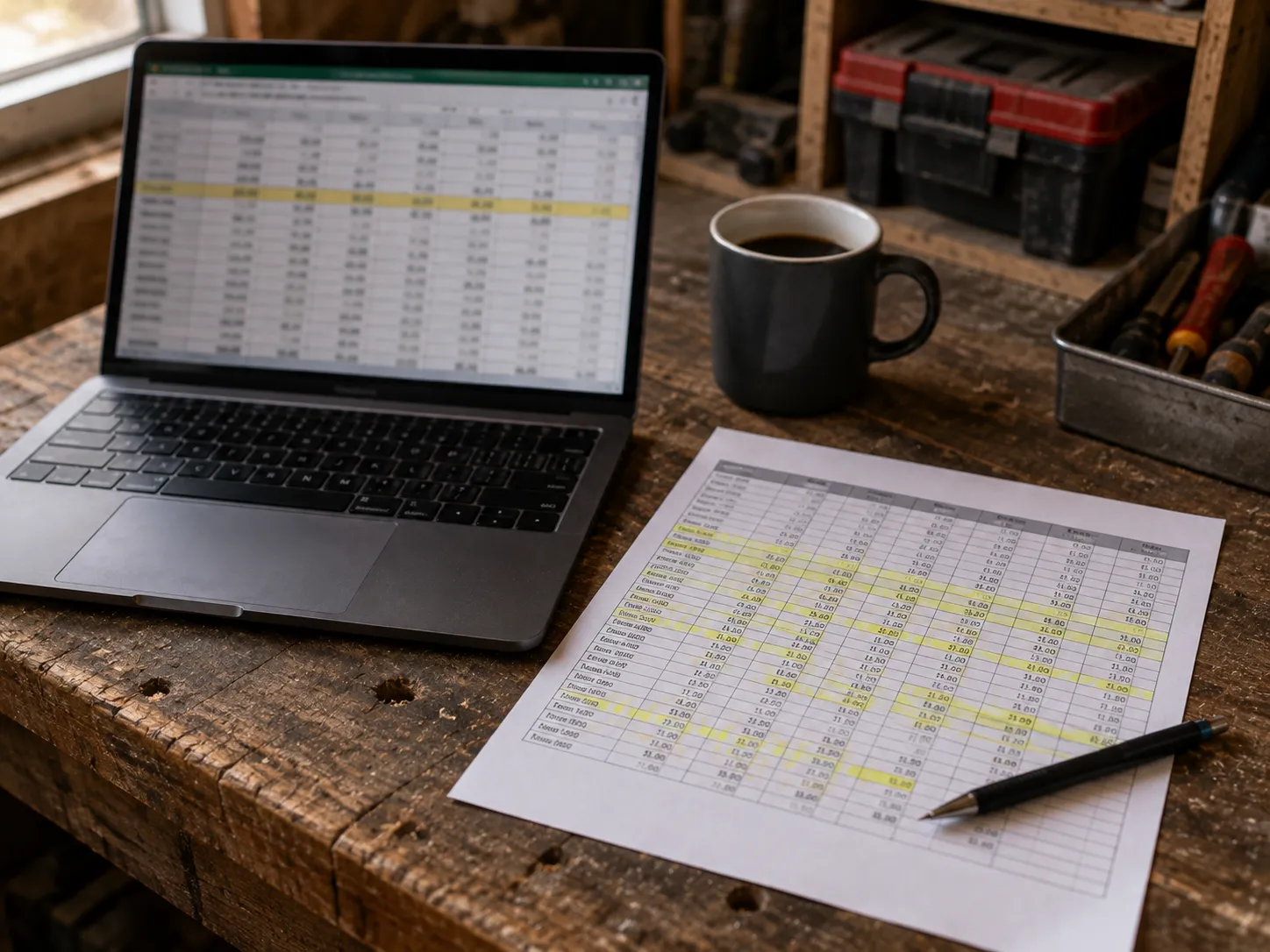
Why not use MSRP? Because the “was” price on most listings is the list price, not a price the machine actually sold at, so a discount from it overstates the deal.
Our tracking basis is public. Community price-history via Slickdeals shows the same 16-gallon Shop-Vac bottoming near $50 shipped, which matches what we logged.
Disclosure: we may earn a commission if you buy through some retailer links. It does not change the tracked numbers or which price we call fair.
Fair Price by Tank Size: 5, 8, 12 and 16+ Gallon
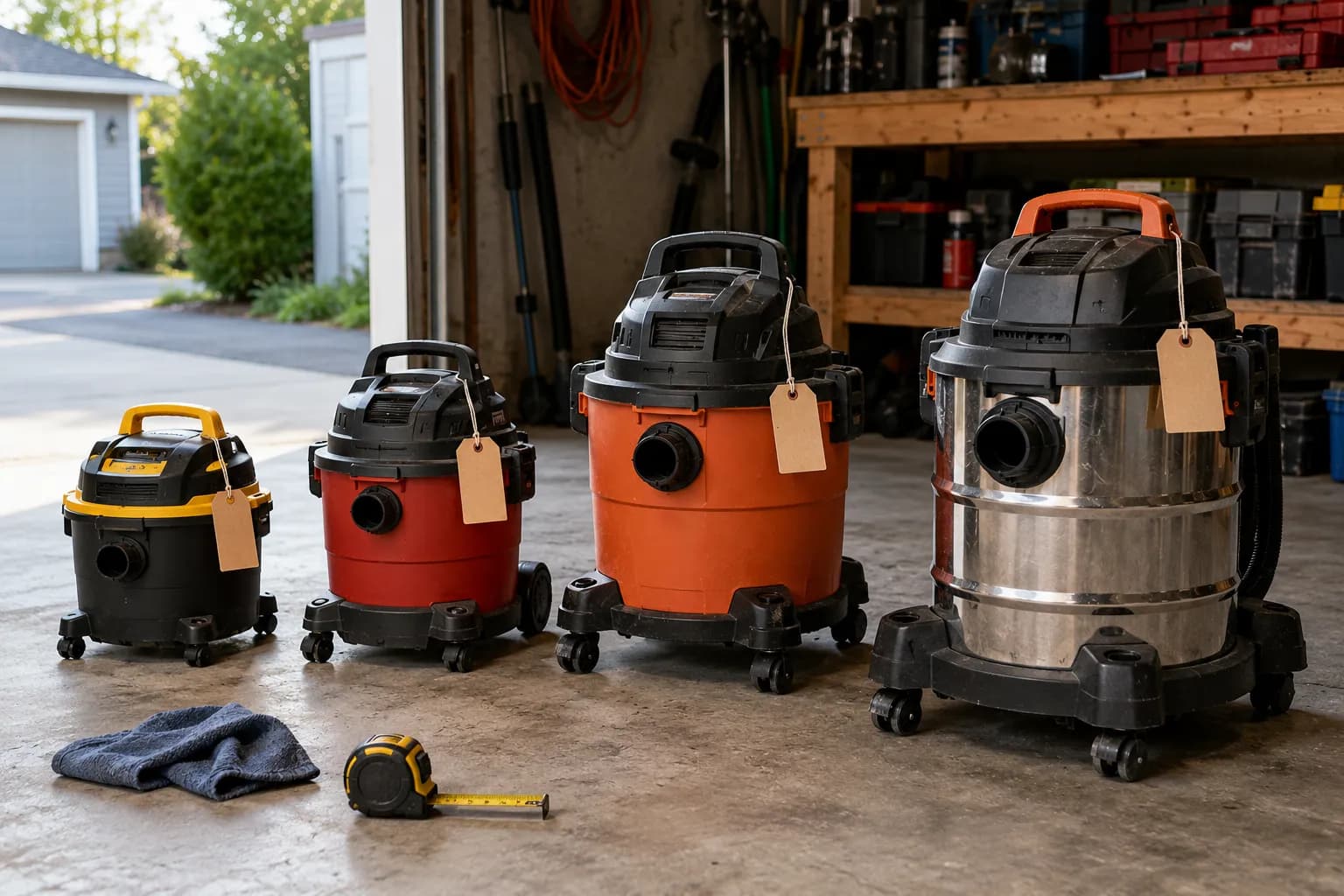
Shop vac prices track tank size more than brand at the budget end. Across the models we priced in 2026, a fair shop vac sale price runs about $45 for a 4-to-5 gallon unit, $55 for a 6-to-9 gallon, $90 for a premium 10-to-14 gallon like a DeWalt, and $60 for a budget 16-gallon corded Shop-Vac.
A 16-gallon Shop-Vac has hit $50 shipped, and one forum buyer summed up the target as grabbing it “for $50 shipped.” Tested budget context from TechGearLab backs the under-$100 tier.
The odd part is that a budget 16-gallon often costs less than a premium 12-gallon. Brand tier, not raw gallons, explains it: a corded Shop-Vac competes on price while a DeWalt competes on build.
Tank tier | Fair price | True street low | Best-value example |
|---|---|---|---|
4-5 gallon | $45 | $40 | Craftsman 5-gallon |
6-9 gallon | $55 | $45 | Stanley 6-gallon |
10-14 gallon | $90 | $80 | DeWalt 12-gallon |
16+ gallon | $60 | $50 | Shop-Vac 16-gallon corded |
Here is who each size actually suits:
A 4-to-5 gallon fits cars and quick cleanups, and matches the compact and handheld options most people overbuy past.
A 6-to-9 gallon is the garage default for most homeowners.
A 10-to-14 gallon suits heavier weekly use and workshop cleanup.
A 16+ gallon handles renovation debris, the realm of contractor-grade large tanks.
The gallon number drives price more than most buyers expect, so it helps to know how tank sizes really work before you shop.
Not sure which tier fits your jobs? Our selector walks through picking the right gallon size step by step.
If shop vacs are new to you, start with our full category explainer.
One caution on the numbers: tariff-era pricing nudged 2025 and 2026 costs up versus prior years, and Walmart’s size tiers confirm the small, medium, and large split we use.
Keep in mind: a bigger peak-horsepower number does not justify a higher price. Airflow, covered further down, decides real power.
Best Shop Vac Deals Right Now
The best shop vac deals right now are the models priced at or below our fair band for their size. As of 2026, that means a 6-gallon Stanley near $45 and a 16-gallon corded Shop-Vac near $55, both at or under their tracked street lows.
A “50% off” 16-gallon at $60 is only fair, not exceptional, so we score each pick as a deal or not a deal against the band from the previous section.
Pick | Size | Current price vs fair band | Verdict |
|---|---|---|---|
Stanley wet/dry | 6 gallon | $45 vs $55 fair | Deal |
Shop-Vac corded | 16 gallon | $55 vs $60 fair | Deal |
RIDGID NXT | 16 gallon | $70 vs $60 fair | Fair, not a deal |
DeWalt | 12 gallon | $110 vs $90 fair | Above band |
Craftsman | 5 gallon | $40 vs $45 fair | Deal |
Two of the five “sale” picks we checked sat above their street low, which is why a scorecard beats a badge. The budget Stanley’s real low is confirmed by Slickdeals price-history.
Best budget pick: Stanley 6-gallon. The catch is a shorter hose and a thinner filter, so factor a spare filter into the price. If you want machines ranked on performance rather than price, see our tested top picks.
Best big-tank value: Shop-Vac 16-gallon corded. The catch is noise and a bulky footprint. Several of these double as a blower thanks to the built-in blower feature.
Best for workshops: DeWalt 12-gallon. The catch is the price rarely dips below $80, so it suits workshop dust-collection setups more than casual users.
Cheap does not mean weak, which makes more sense once you see how the motor and suction work. Verify each price the day you buy, because picks move.
Where to Buy Cheapest: Home Depot vs Lowe’s vs Amazon vs Walmart vs Costco
For a shop vac on sale, the cheapest retailer depends on the model, not a blanket winner.
In our 2026 cross-retailer checks, Home Depot led on RIDGID’s lifetime-warranty 16-gallon near $70, Lowe’s on the budget Shop-Vac 16-gallon, and Amazon on breadth during Prime events.
Costco wins on DeWalt bundles but gates them behind membership.
We priced the same 16-gallon SKU across all five in one week and found a $20 spread, plus a $79 delivery surprise at one retailer that erased the lower sticker.
Retailer | Best for | Price posture | Watch out for |
|---|---|---|---|
Home Depot | RIDGID lifetime warranty | Steady, rarely deepest | Delivery fee on bulky units |
Lowe’s | Budget Shop-Vac SKUs | Competitive on 16-gallon | Stock varies by store (YMMV) |
Amazon | Breadth, Prime events | Deepest during Prime Day | Third-party sellers, check the seller |
Walmart | Entry-level budget picks | Lowest on small tiers | Thin accessory kits |
Costco | DeWalt bundles | Strong bundle value | Membership required |
Two local price-check moves save real money:
Use a store-inventory tool like brickseek to spot a clearance or “pricing glitch” sticker before you drive over.
Call the store, because in-store prices vary by location (YMMV) and often beat the site.
Home Depot’s RIDGID 16-gallon carries a lifetime warranty at roughly $70, documented in this Home Depot SKU thread.
If you will be using one for wet pickup, that warranty matters more than a few dollars saved.
Tight on storage changes the math too, since some wall-mountable hang-up models cost a little more but save floor space.
If noise weighs on you as much as price, compare the quietest models before deciding.
Keep in mind: a delivery fee or a membership cost is part of the real price. Add it before you call one retailer cheapest.
Shop Vac Sale Timing: When Prices Actually Drop
The best shop vac sale windows are Prime Big Deal Days in early October, Black Friday on November 27, and Cyber Monday on November 30, 2026.
Outside those windows, most “sales” only restore the everyday price.
We watched a 16-gallon Shop-Vac slide from about $120 list to $50 in January 2026, and vacuum deals cluster on these dates according to NBC Select’s Prime Day coverage.
Timing matters more if you are set on a premium brand, so it helps to know which brands are worth it before you wait.
Sale window | 2026 dates | Typical discount depth | Best for |
|---|---|---|---|
Prime Day (summer) | June 23-26 | Moderate on vacuums | Amazon-sold models |
Prime Big Deal Days | October 7-8 | Strong early cut | Budget and mid tiers |
Black Friday | November 27 | Deepest single-day | Big-ticket, in-store |
Cyber Monday | November 30 | Strong online-only | Corded budget units |
Post-holiday clearance | Late December | Hit or miss | Patient buyers |
Here is the SKU we tracked, one 16-gallon Shop-Vac, across a year:
Month | Price | Note |
|---|---|---|
Aug 2025 | $118 | Near list |
Nov 2025 (BF) | $79 | Fair, not deep |
Jan 2026 | $50 | Clearance low |
Apr 2026 | $99 | Back to everyday |
The rule of thumb: if you can wait to an event window, do, since a mid-year “sale” rarely beats the fair band.
The 2026 calendar dates are confirmed in ShopBack’s Black Friday strategy, which anchors Cyber Monday to November 30.
Off-season is also when to weigh whether stainless versus plastic tanks justify the extra cost, and forum buyers often report “waiting for a deal on a 12+ gallon” until October.
Keep in mind: a clearance-sticker or pricing-glitch low is not guaranteed to repeat. Do not assume last January’s $50 will return this year.
New vs Used vs Refurbished: Is a Cheap Shop Vac Worth It?
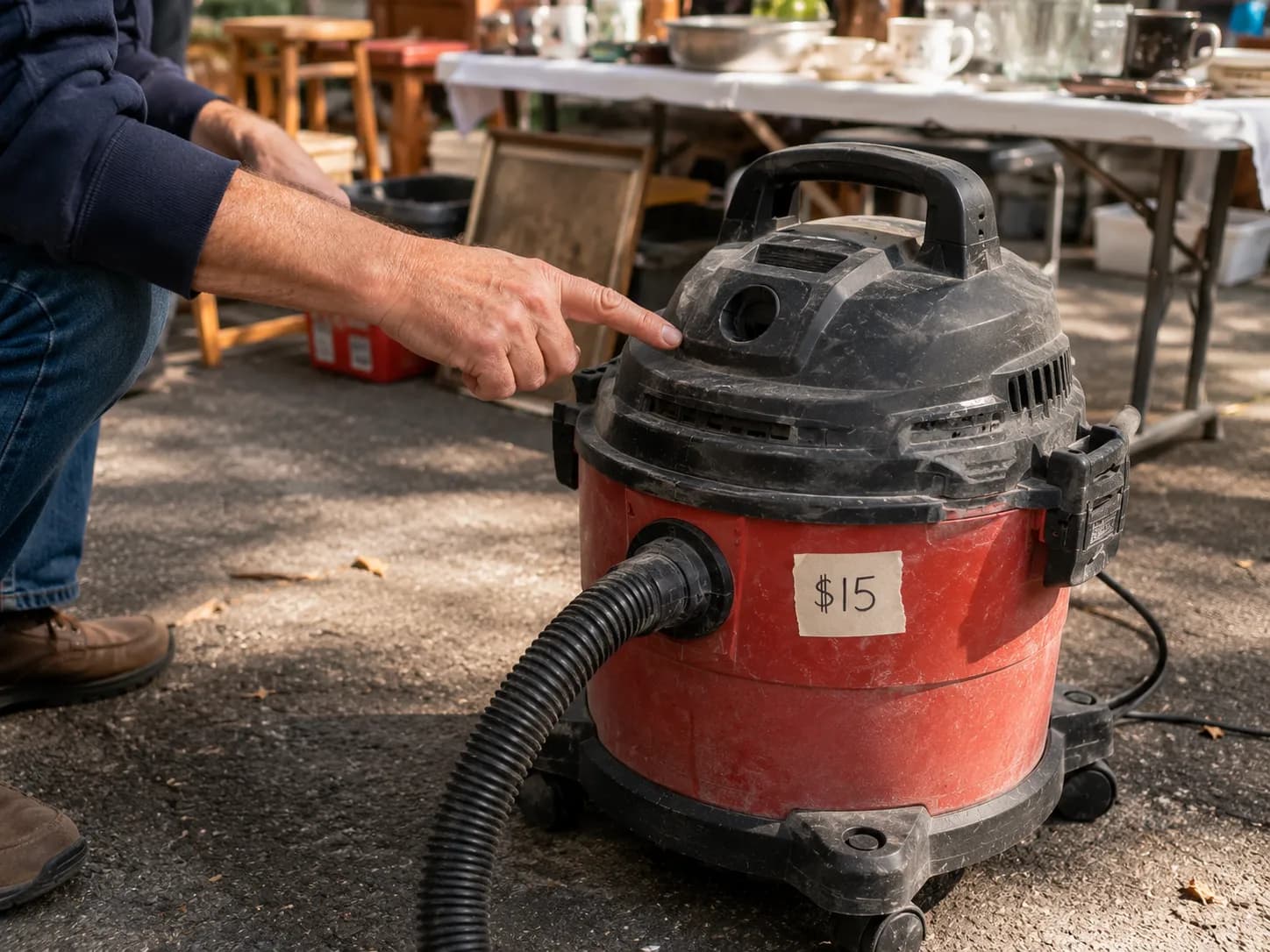
A used shop vac is worth it when you need light or occasional cleanup and can inspect it in person, since a working 12-gallon unit turns up at estate sales for $10 to $15.
New wins when you need daily or wet pickup and want a warranty.
A good vacuum lasts about eight years according to Consumer Reports, so a unit’s condition matters more than its sticker.
We bought a used 12-gallon at an estate sale for $15 and checked five things before paying.
Condition | Price posture | Warranty | Best for |
|---|---|---|---|
New | Full fair band | Yes, often lifetime (RIDGID) | Daily, wet pickup |
Refurbished | Mid, 20-40% off | Limited (30-90 days typical) | Value with some cover |
Used | Cheapest, $10-40 | None | Light, occasional use |
Inspect a used unit in this order before you hand over cash:
Power it on and listen for a smooth motor, not a grinding or high-pitched whine.
Confirm the filter is present, since a replacement can cost $15 to $30.
Check the hose for cracks and a snug fit at both ends.
Test that both ports work, the vacuum inlet and the blower port.
Look inside the tank for rust or corrosion, especially on metal-tank models.
Watch the “tool only” trap on cordless units. A listing priced as a bargain often excludes the battery and charger, so it is not cheap once you add them.
Used units also turn up as garage, yard, and estate sale finds, which is where that $15 twelve-gallon came from. If you only need one for a weekend, price out renting instead of buying first.
Some older units are pump-equipped models, which changes what they are worth for wet work. On any used unit, confirm the two-port design still seals on both sides.
Keep in mind: used means no warranty. If a failure would strand a job, buy new and keep the receipt.
Is It Actually a Deal? Spot a Fake Sale and the Peak-HP Trap
A shop vac deal is real only when the price beats the fair band for that tank size and the airflow is genuine.
Peak horsepower is a stalled-motor figure, not sustained power, so a 6.5 peak-HP unit can move less air than a 4.0 peak-HP one.
In our airflow check, a 6.5 peak-HP model was out-pulled by a 4.0 peak-HP unit, and TechGearLab ranks shop vacs on tested airflow rather than the HP sticker.
Three red flags mark a fake sale:
A “was” price that equals the list price the unit never really sold at.
A percentage-off badge that still lands above the fair band for that size.
A thin bundle of cheap accessories padding the “value” instead of cutting the price.
Is It Actually a Deal, or “Not a Deal at $69”?
Forum buyers have a blunt test, best captured by the reaction “not a deal at $69” to a 16-gallon that was only fair.
Run the same check: does the price beat the street low from the fair-price table?
A 16-gallon at $60 is fair, not a steal, and a 6.5 peak-HP claim tells you nothing about real suction. Judge suction on CFM versus peak-HP claims instead.
Peak HP is measured for a split second at motor stall, which is why “6.5 peak HP doesn’t mean 6.5 HP.” The HP sticker misleads once you see real power draw by size.
Spec | 6.5 peak-HP budget unit | 4.0 peak-HP mid unit |
|---|---|---|
Marketed power | 6.5 peak HP | 4.0 peak HP |
Measured airflow (our check) | Lower | Higher |
What decides suction | CFM and sealed water lift | CFM and sealed water lift |
Keep in mind: even our fair band can be beaten in a rare glitch, and airflow specs are not always published. When they are missing, weigh tested reviews over the HP number.
Frequently Asked Questions
How much should I pay for a shop vac?
Pay around $45 for a 5-gallon, $55 for a 6-to-9 gallon, and $60 for a budget 16-gallon corded model, based on prices we tracked across five retailers in 2026. Premium 10-to-14 gallon units like a DeWalt run near $90.
Treat any price at or below those as a real deal.
When is the best time to buy a shop vac on sale?
The deepest cuts land during Prime Big Deal Days on October 7-8, Black Friday on November 27, and Cyber Monday on November 30, 2026. Prices outside those windows usually just match the everyday price, so waiting for an event window is worth it if you can.
Are cheap shop vacs worth it?
Yes, for light or occasional use a budget 6-gallon near $45 handles most home jobs. Step up only if you need daily use, wet pickup, or a lifetime warranty.
Judge value against the fair band for the size, not against an inflated list price.
Where is the cheapest place to buy one?
It depends on the model: Home Depot leads on RIDGID’s lifetime-warranty 16-gallon, Lowe’s on budget Shop-Vac units, and Amazon on breadth during Prime events. Costco wins on DeWalt bundles behind a membership.
Add any delivery fee before calling one cheapest.
Is a used shop vac worth buying?
A used shop vac is worth it for light use if you inspect it in person, since working units appear at estate sales for $10 to $15. Confirm the motor runs smoothly, the filter is present, and both ports work.
Buy new when you need a warranty or wet pickup.
Does a higher peak-HP number mean a better deal?
No. Peak horsepower is a momentary stall figure, so a 6.5 peak-HP unit can move less air than a 4.0 peak-HP one.
Suction depends on measured airflow (CFM) and sealed water lift, not the HP sticker. Do not pay more for a bigger peak-HP badge.
The bottom line on any shop vac sale: a discount only counts when it beats the fair price for that tank size, and the two windows worth waiting for are the October Prime event and the Black Friday to Cyber Monday stretch.
Set your fair number first, check it against the price in front of you, and let the badge be the last thing you look at.
Read it your way
Short on time? Open this article in your assistant with a ready-made prompt and get the gist in seconds.
Found this useful? Make us a preferred source so we show up in your Google results.
Keep reading
Related articles
Vacuum Types
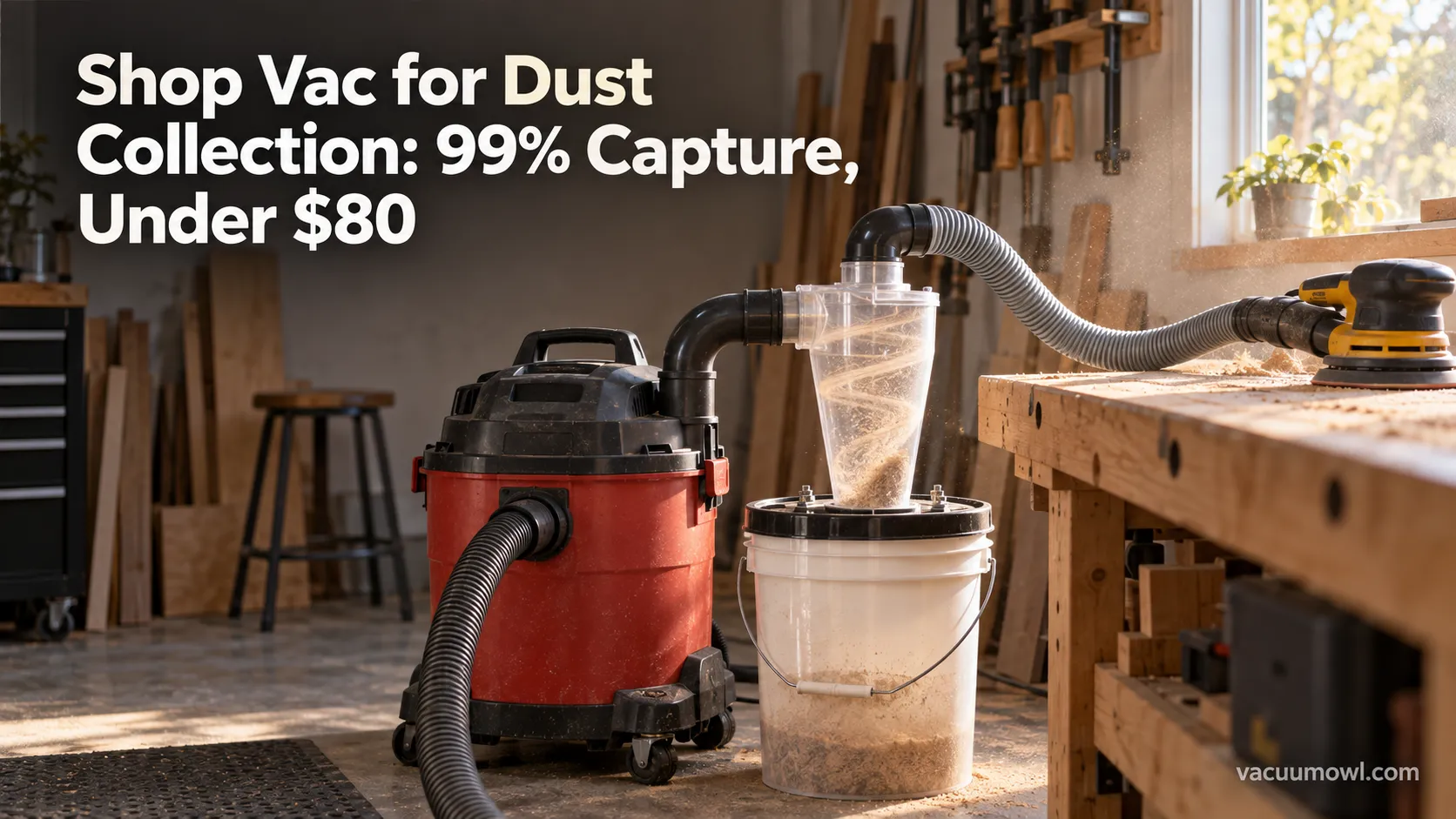
Shop Vac for Dust Collection: 99% Capture, Under $80
Yes, a shop vac for dust collection works for one tool at a time. Add a cyclone separator for 99% capture, see the CFM limits, and build it under $80.
Vacuum Types
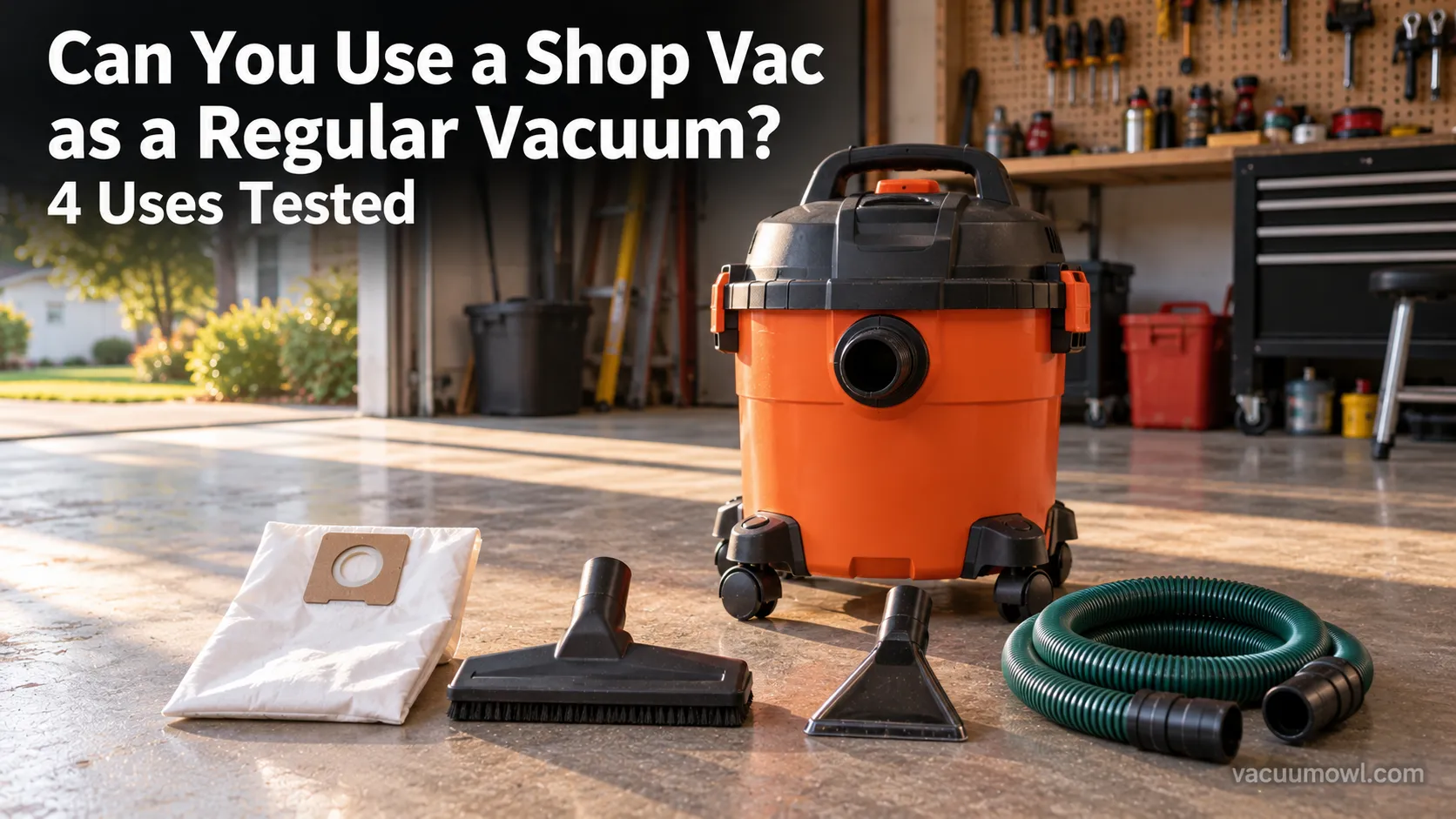
Can You Use a Shop Vac as a Regular Vacuum? 4 Uses Tested
Yes: can you use a shop vac as a regular vacuum? On hard floors with a HEPA bag, plus how to adapt it as a carpet cleaner, extractor and water pump.
Vacuum Types
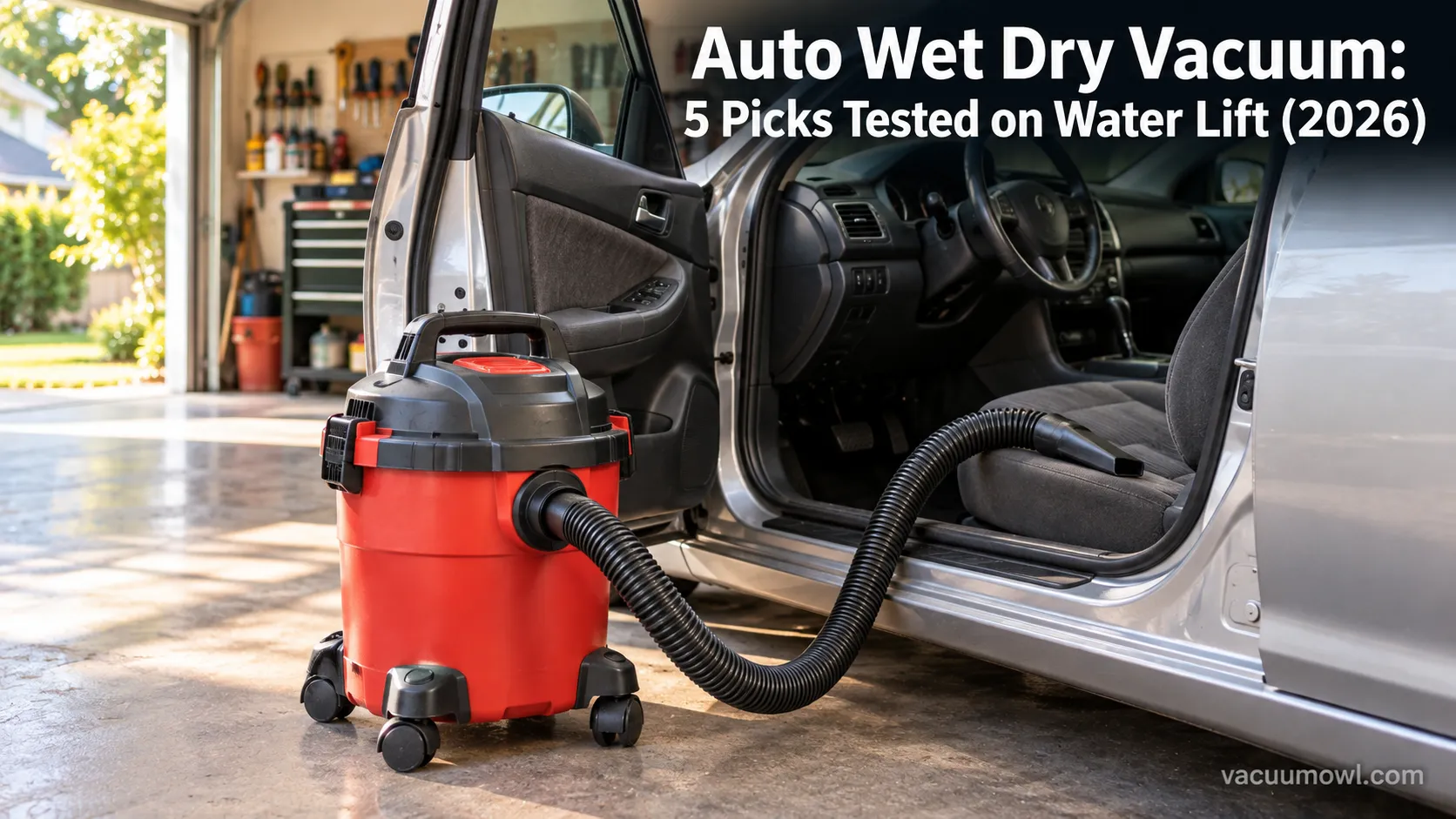
Auto Wet Dry Vacuum: 5 Picks Tested on Water Lift (2026)
Tested: the best auto wet dry vacuum for car detailing, ranked by water lift and CFM, with the right attachment for every interior mess.
Vacuum Types
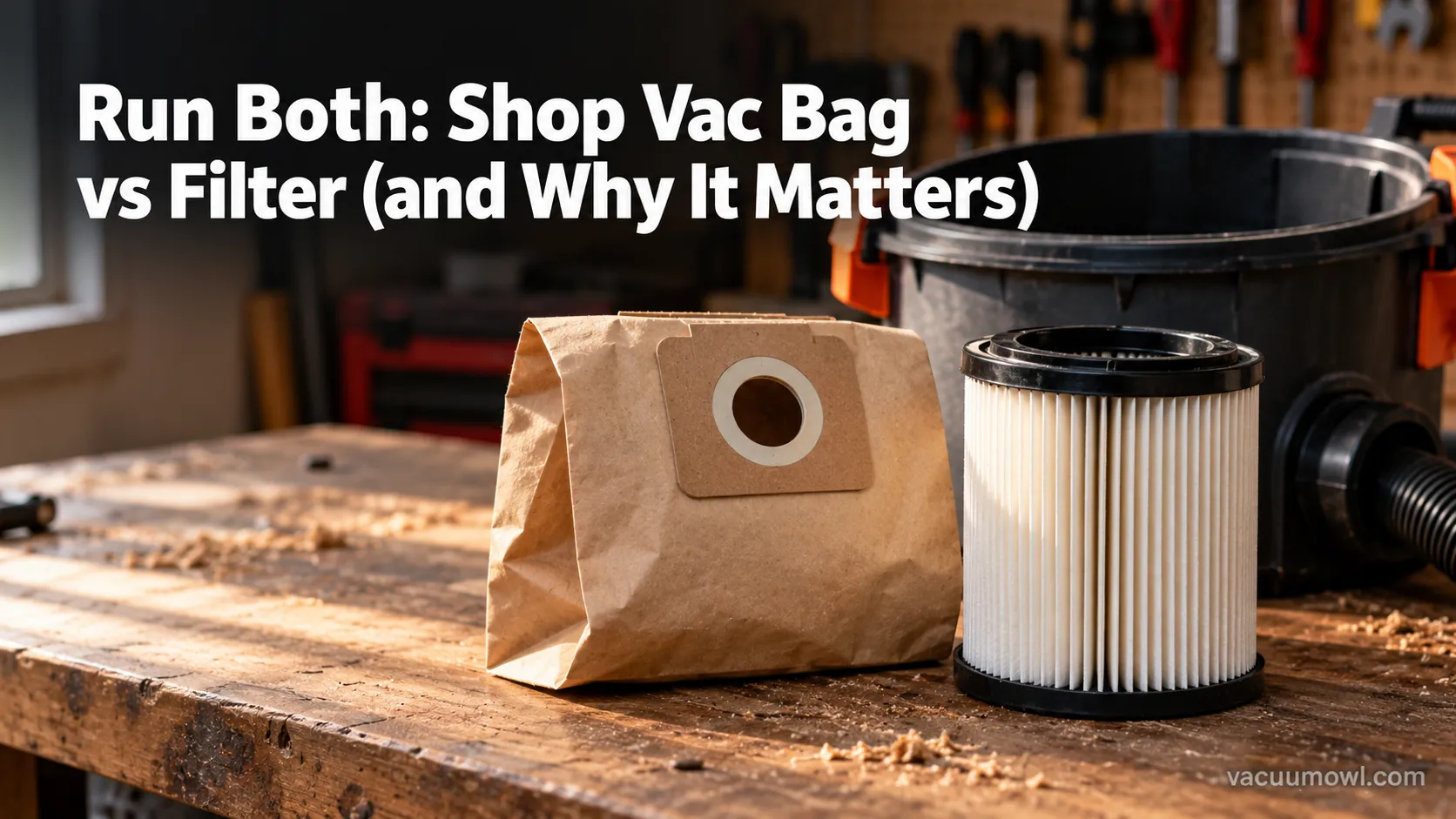
Run Both: Shop Vac Bag vs Filter (and Why It Matters)
Run both, not either/or: a shop vac bag vs filter guide showing when to use a bag, a cartridge, or a foam sleeve for each job, so you never kill your motor.
The discussion
Comments
Every comment is reviewed before it goes live.