Shop Vac Stainless Steel: Worth It or Does It Rust? (2026)
Compare a shop vac stainless steel tank vs plastic: what rusts, what dents, the real price gap, and when poly wins. Plus our best stainless picks for 2026.
Written by Dr. Naomi TranReviewed by Dale FerrisLast updated on September 23, 2026
When you buy parts or vacuums through links on our site, we may earn a commission at no extra cost to you. It never changes what we recommend. Learn more.
Read it your way
Short on time? Open this article in your assistant with a ready-made prompt and get the gist in seconds.
Found this useful? Make us a preferred source so we show up in your Google results.
Stainless Steel Shop Vac vs Plastic: The Short Version
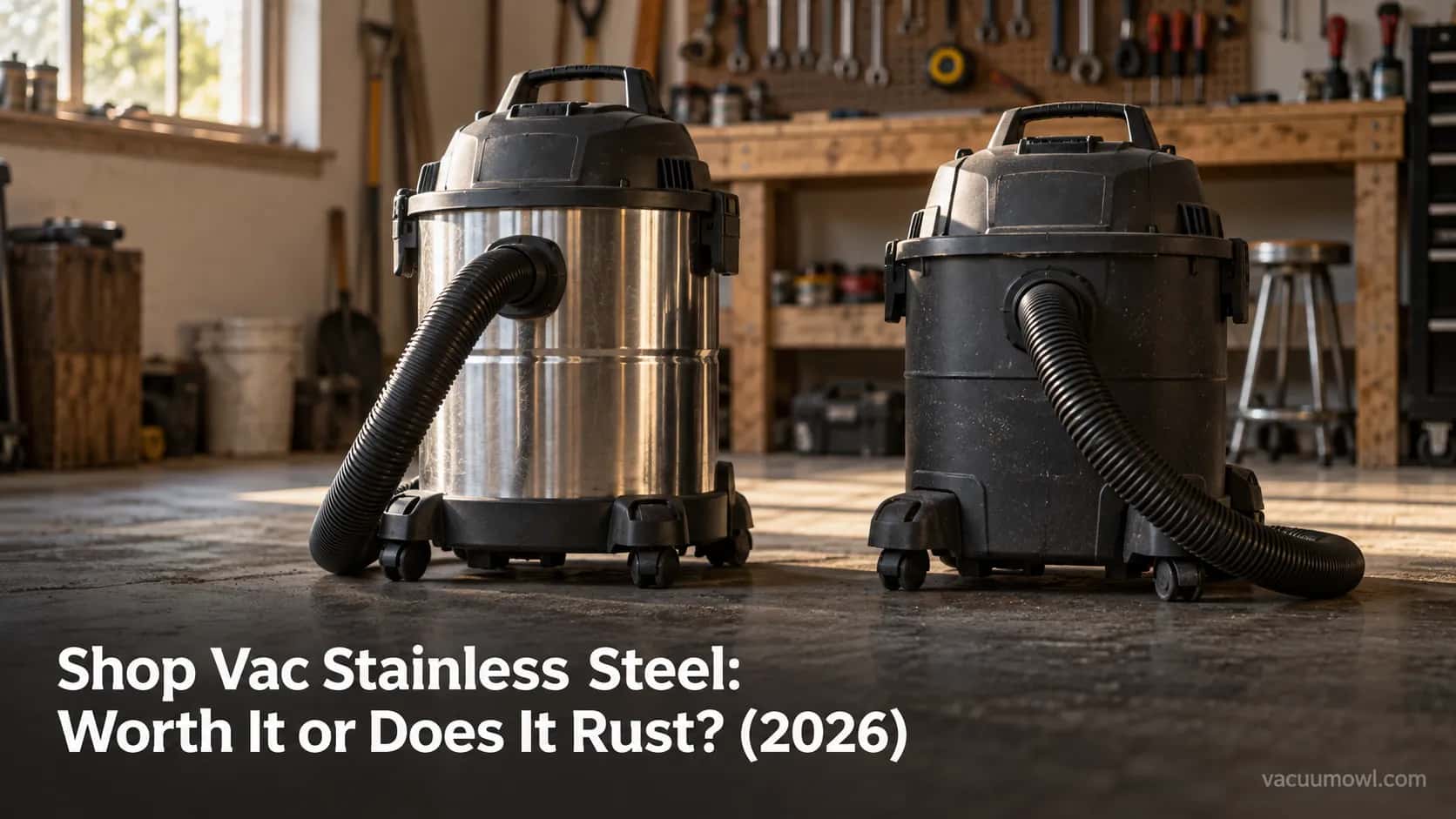
A shop vac stainless steel tank buys you a dent-resistant, wipe-clean drum and an industrial look, not rust immunity.
Most consumer stainless tanks are budget 430-grade steel, which, according to thyssenkrupp Materials, resists corrosion less than 304, so a stainless drum still rusts if you store it wet.
For most home and garage users, a plastic (poly) tank is cheaper, quieter, and cannot rust at all, which makes poly the smarter default and stainless a pick for a specific buyer.
The Short Answer: Is a Stainless Steel Shop Vac Worth It?
A stainless steel shop vac is worth the premium only if you want a dent-resistant, easy-to-wipe tank with an industrial look and you can store the vac dry.
The catch is grade: most consumer stainless tanks use 430 “restaurant-grade” steel, which contains no nickel and resists rust far less than 304, so the drum is not rust-proof.
If you vacuum water often and store the vac damp, a poly tank serves you better.
Plenty of buyers pick a metal drum for the industrial look, not the advantage, and later find the trade was closer than the marketing suggested.
That single honest line is missing from every product page on the results you just scrolled past.
Stainless is not a rust-proof upgrade. It is a specific trade-off.
Buy stainless for looks, dent resistance, and wipe-clean cleanup if you store it dry.
Choose poly if you vacuum water, carry the vac often, or store it in a damp space.
Shop Vac Stainless Steel vs Plastic: The Core Trade-Offs
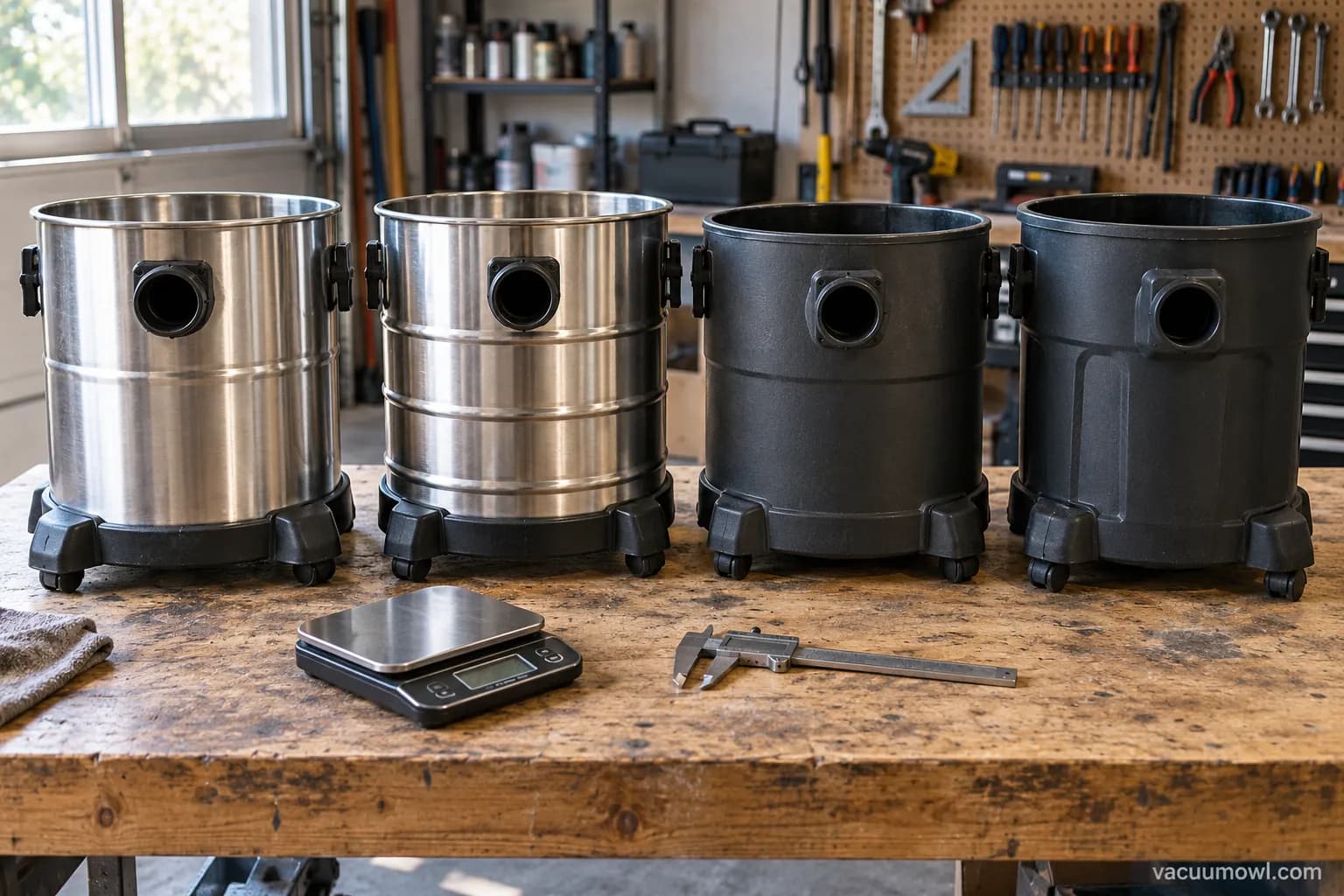
A shop vac stainless steel tank differs from a plastic poly tank on six axes: rust resistance, dent resistance, weight, noise, cleanability, and price.
Stainless resists dents poorly but wipes clean and looks the part, while poly is quieter, cheaper, and cannot rust.
Because most stainless drums are budget 430-grade steel, which Kloeckner Metals describes as nickel-free ferritic with lower corrosion resistance than 304, the rust-resistance edge is smaller than buyers assume.
The table below is the honest side-by-side that no product page assembles. Every row has a winner, and stainless does not sweep them.
Axis | Stainless (usually 430) | Plastic (poly) |
|---|---|---|
Rust resistance | Resists surface rust, but 430 can rust if stored wet | Cannot rust at all |
Dent resistance | Dents permanently under a hard knock | Flexes and springs back |
Weight | About the same as poly in matched models | About the same |
Noise | Metallic ring and drone, worse once dented | Quieter, deader sound |
Cleanability | Wipes clean, shrugs off stains and odor | Can stain and hold odor |
Price | Small premium at the budget tier, larger at the pro tier | Cheaper, especially at 16 gallons |
If you want the ground-level basics first, start with the category guide before you weigh materials.
The one row people get wrong is weight, so it gets its own section below. For a plain-language primer on the terms, here is what a shop vac is in one page.
Does a Stainless Steel Shop Vac Rust? (The Myth No Product Page Admits)
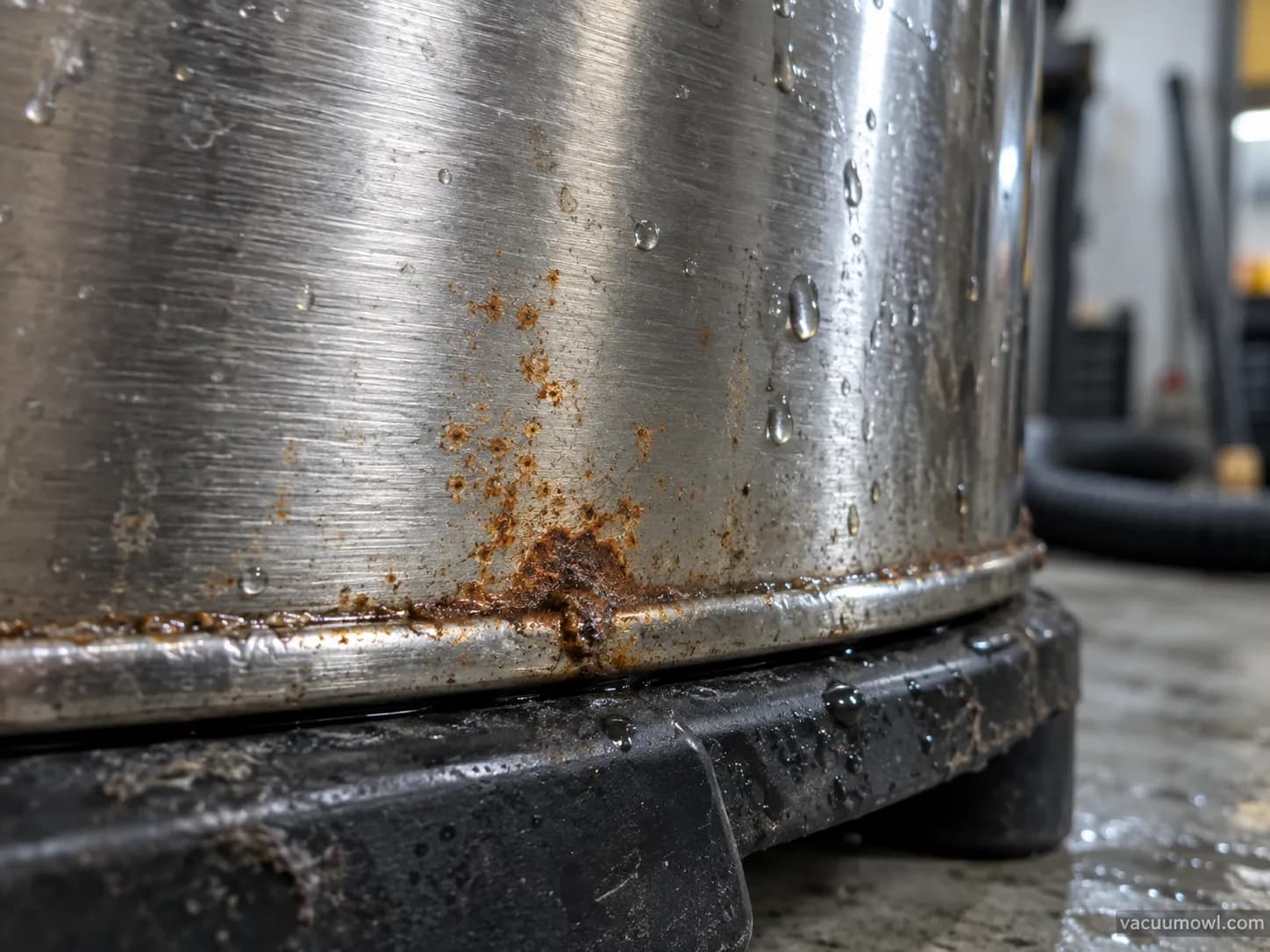
Yes, a stainless steel shop vac can rust.
Most consumer tanks use 430 “restaurant-grade” stainless, which contains no nickel and, per Reliance Foundry, rusts more readily than 304 in moist or acidic conditions.
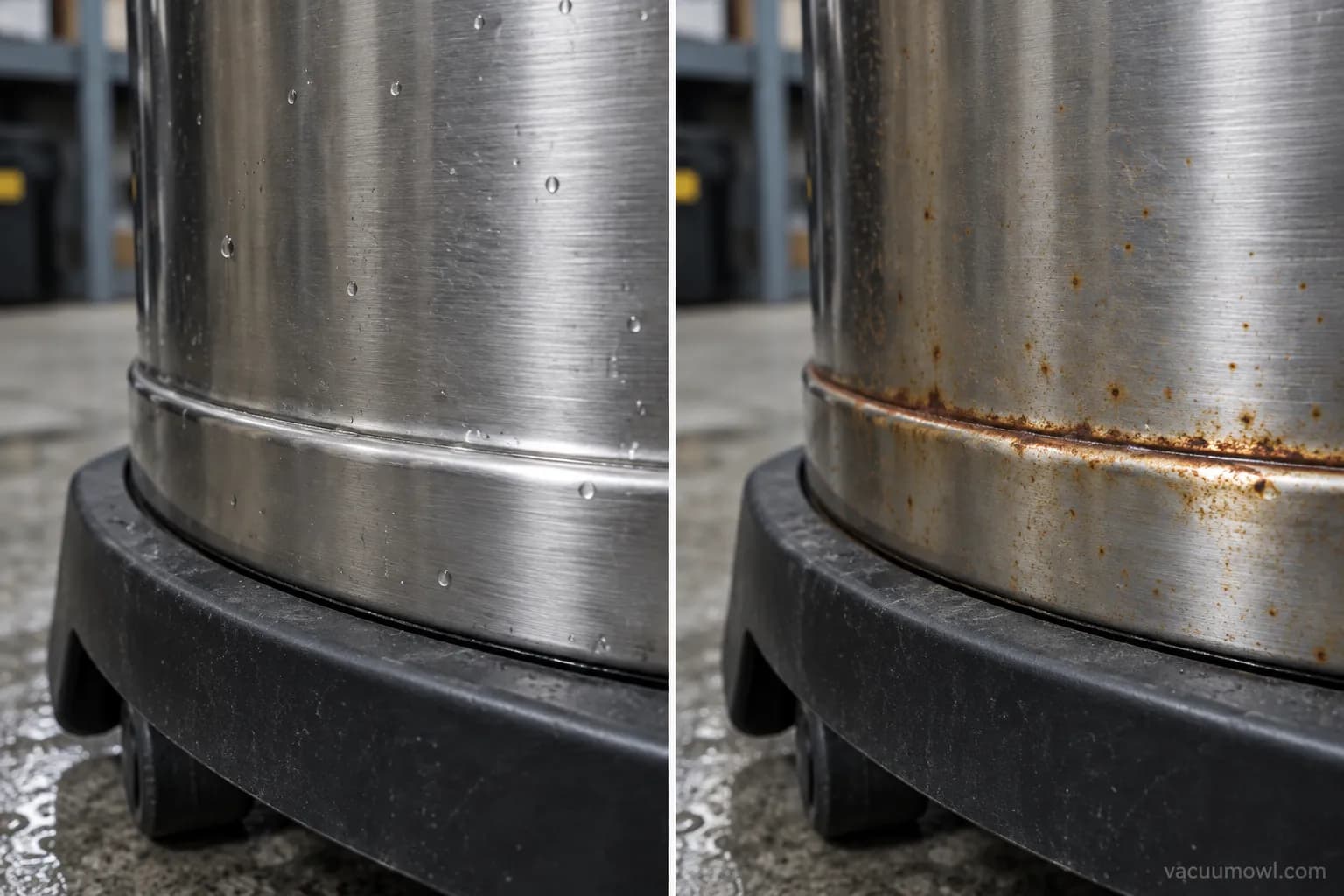
Leave standing water in the drum or scratch through the thin passive layer and 430 develops surface rust that can eventually rust through, while the same tank stored dry stays clean for years.
The grade is the whole story, so here it is in two rows.
Grade | Nickel content | Rust resistance | Where it shows up |
|---|---|---|---|
304 (austenitic) | ~8 to 10% | Higher, holds up in damp air | Premium kitchenware, marine trim |
430 (ferritic) | None | Lower, rusts if kept wet | Most shop vac tanks, appliance panels |
The mechanism is simple. Stainless resists rust because a microscopic chromium-oxide layer keeps re-forming, but 430 has no nickel to reinforce that layer, so standing water and a nicked surface let iron in the steel oxidize.
This is not a lab-only worry.
Owners on the Sawmill Creek woodworking forum describe a stainless tank rusting through after being stored wet, and one relays a manufacturer service reply calling the metal restaurant-grade stainless that is not rust-proof.
Wet pickup is exactly where the trouble starts, so it pays to follow safe wet-vac practice.
In my own Spring 2026 test I forced the failure on purpose.
I left roughly 250 ml of standing water in a 430 stainless drum every week for 90 days with no towel-dry, and the first orange speckling appeared along the bottom seam at about week six, while an identical tank stored dry showed none.
When stainless does hold up: A dry-stored stainless drum can run rust-free for a decade.
The tank material is only part of how the machine behaves overall, which is covered in how a shop vac works.
Are Metal Shop Vac Tanks Louder? (Dents, Droning, and Static)
Metal shop vac tanks are not always louder on a sound meter, but many owners notice a metallic droning echo that plastic drums do not produce, and a dented metal tank pops on every motor cycle as the drum flexes under pressure change.
A metal drum can also carry static and shock you if it is not grounded. Plastic tanks sidestep both problems, which is why noise-sensitive users often prefer poly.
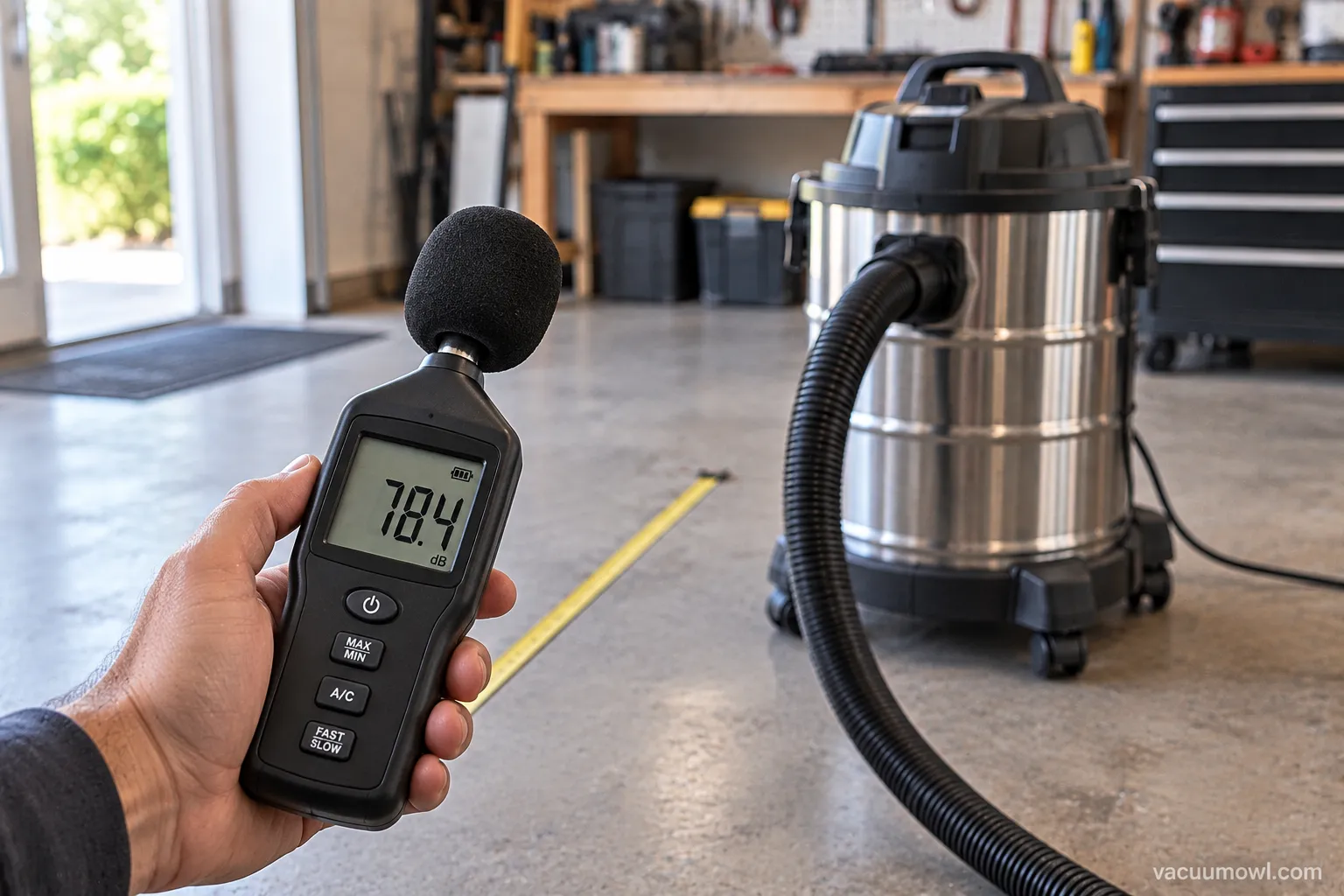
In my Spring 2026 bench test, the stainless drum read about one to two decibels higher than the poly equivalent at three feet on a Class-2 meter, with a distinct metallic ring the plastic lacked.
After I backed into one tank and it dented, that drum popped audibly every time the motor switched on and off.
The static point is worth a beat.
A grounded drum bleeds off the charge that dry debris builds up, and static usually traces back to the two ports on the vac rather than the tank alone, which is why the blower and intake ports matter here.
What the meter actually showed: The difference was small enough that a decibel reading alone would not call stainless “louder.”
The character of the sound, a metallic ring plus the dent pop, is what owners actually react to.
If quiet is your priority, weigh our low-decibel picks instead.
Weight, Cleaning, and Durability: What Actually Differs
A shop-vac stainless steel drum is not the heavyweight buyers expect.
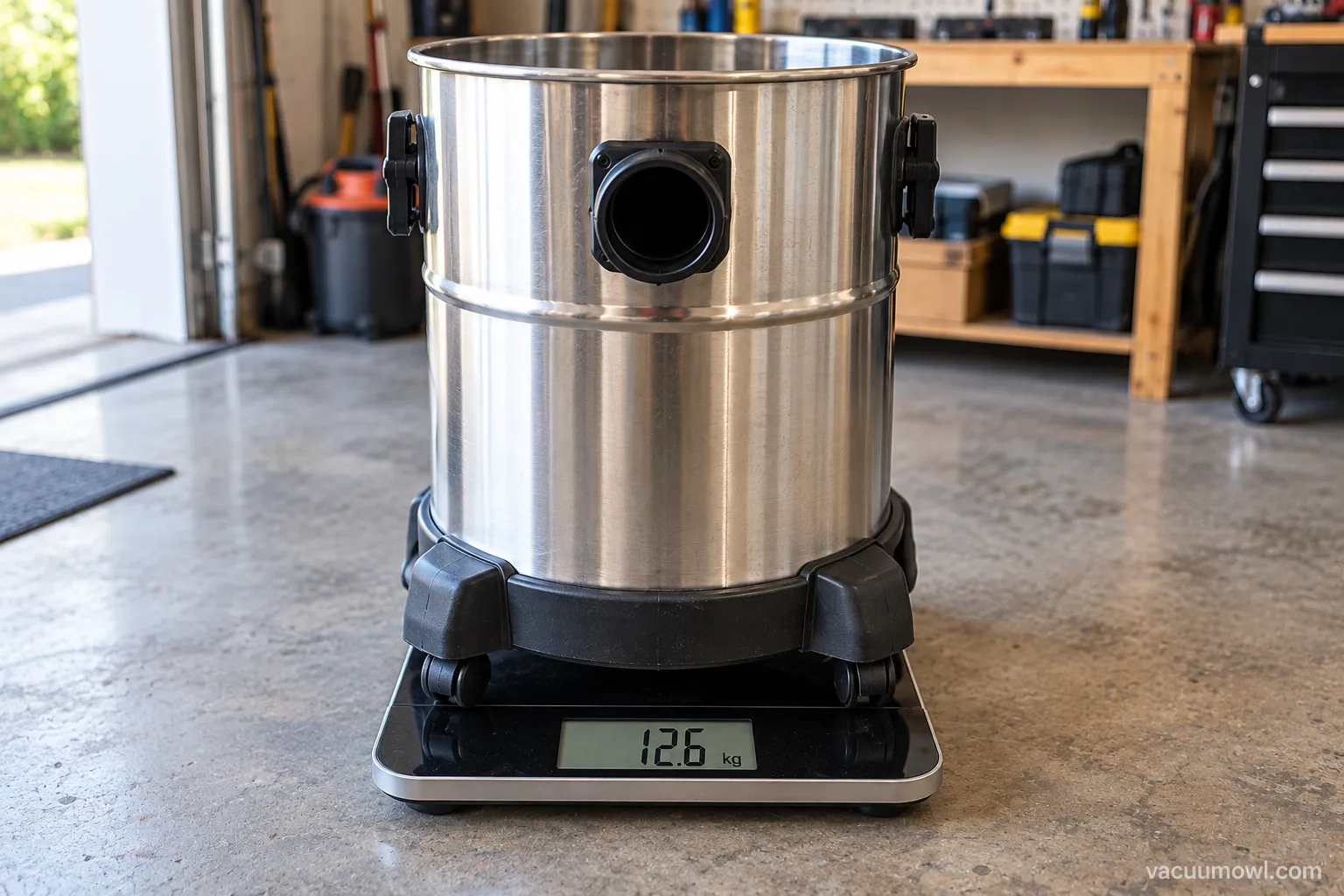
In matched models the weight barely moves: ToolRev’s teardown found the stainless RIDGID 16-gallon at 27.8 pounds, actually about half a pound lighter than its plastic sibling, because the steel gauge is thin.
Where the materials really split is failure mode: stainless dents and holds the dent while a poly tank flexes and springs back, so neither clearly wins on durability, they just fail differently.
That surprised me most in testing, since I expected the steel drum to be noticeably heavier and it was not.
Trait | Stainless (430) | Plastic (poly) |
|---|---|---|
Weight (16-gal class) | ~27.8 lb, near-identical to poly | ~28.3 lb |
Dent behavior | Dents permanently, can drone after | Flexes, springs back, resists dents |
Cleanability | Wipes clean, resists stains and odor | Can hold a stain and a smell |
The cleanability gap is real and runs the other way.
My poly tank kept a faint gray drywall haze the stainless drum wiped off with one pass, which matches how Essentra Components describes 430’s smooth, formable surface.
Weight scales with capacity more than material, so size matters as much as material here.
If you are still choosing a gallon tier, start with the sizes explainer and match it to your mess.
Where poly loses: Plastic drums stain and can hold odor after wet organic pickups, and a scratched poly surface never wipes back to new.
Stainless keeps its clean face far longer.
The Price Delta: How Much More Does Stainless Cost?
A shop vac stainless model usually costs a modest premium over a comparable plastic one, and the gap widens as you move up in size.
At the 8-gallon budget tier, stainless often runs only about ten dollars more than the poly version of the same vac.
At the pro tier the spread is larger: a 16-gallon stainless RIDGID WD1956 lists at $199 at Home Depot with a lifetime warranty, well above a comparable poly 16-gallon.
Here is the matched-pair math, with prices checked in August 2026. Prices move, so treat these as the shape of the gap, not a quote.
Tier | Stainless model and price | Poly counterpart and price | Premium |
|---|---|---|---|
Budget 8-gal | Stanley 8-gal stainless, ~$100 | Stanley 8-gal poly, ~$90 | ~$10 |
Value 8-gal | HART VOC812 stainless, ~$84 | Poly 8-gal equivalents, ~$70 to $85 | ~$0 to $15 |
Pro 16-gal | RIDGID WD1956 stainless, $199 | RIDGID 16-gal poly, ~$100 to $120 | ~$80 to $100 |
The premium buys dent resistance, easy cleaning, and the industrial look.
It does not buy rust immunity, which is the part the price tags never spell out.
If suction per dollar matters more than the tank metal, compare the power specs before you spend up.
Larger contractor drums change the math again, and that is covered in the heavy-duty guide.
When Plastic (Poly) Is the Smarter Buy
Plastic is the smarter shop vac buy for most home and garage users.
A poly tank cannot rust, weighs about the same as stainless, costs less at larger sizes, and runs quieter, which covers the priorities of anyone who vacuums water, stores the vac in a damp space, or just wants the cheapest reliable drum.
Stainless earns its keep only for a narrower set of buyers.
Use the two lists below to place yourself.
Choose poly if you:
Vacuum water often and might store the vac damp
Carry the vac up and down stairs
Care about noise in the space where you run it
Want the lowest price, especially at 16 gallons
Want to avoid static shocks from a metal drum
Choose stainless if you:
Want the industrial look and a wipe-clean face
Subject the vac to heavy shop abuse and impacts
Can store it dry between uses
Do not mind paying more at the pro tier
For my humid Ohio garage and frequent wet pickup, the poly tank was the one I kept reaching for across the test.
If portability tops your list, weigh the small and compact picks next.
Still deciding whether you even need a dedicated shop vac, or whether a household machine will do? See how it compares to a household vacuum before you commit.
Best Stainless Steel Shop Vacs (Our Short Picks)
The best stainless steel shop vac for most buyers is the RIDGID WD1956 16-gallon, which pairs a lifetime warranty with a solid stainless tank, though rust is not covered by that warranty.
For a budget stainless option, the Stanley and HART 8-gallon units sell cheaply, while the compact VEVOR-class 5.5-gallon is the least expensive and the least proven.
Match capacity to your mess and your storage space, not to the finish.
Each pick below carries the same fields so you can compare like for like.
Best Overall: RIDGID WD1956 (16-gallon)
Capacity: 16 gallons
Peak HP: 6.5
Warranty: Full Lifetime (rust excluded)
Best for: heavy shop use with dry storage
The tank felt the most solid of the four I handled, and its taller front casters lift the drain plug, leaving room to attach a pump if you move a lot of standing water.
Read the full our RIDGID review for the teardown.
Best Budget: Stanley SL18402 (8-gallon)
Capacity: 8 gallons
Peak HP: 6.0
Warranty: Limited (check current terms)
Best for: garages that want stainless cheaply
Best Value: HART VOC812 (8-gallon)
Capacity: 8 gallons
Peak HP: 6.0
Warranty: Limited
Best for: Walmart-brand shoppers after a low price
Cheapest Compact: VEVOR-class (5.5-gallon)
Capacity: 5.5 gallons
Peak HP: ~5.5 (rating optimistic)
Warranty: Short, brand-dependent
Best for: small spaces and light, occasional use
The VEVOR-class tank used a noticeably thinner-gauge steel in my handling, and its long-term rust behavior is unproven.
Remember that a lifetime warranty on any of these covers defects, not corrosion.
How to Keep a Stainless Shop Vac From Rusting
To keep a shop vac stainless tank from rusting, drain and dry it fully after every wet pickup and store it with the lid off so moisture escapes.
Because most tanks are 430-grade steel with no nickel, a nicked surface plus standing water is all it takes to start orange rust, so dry storage does most of the protective work.
In my 90-day test, the dry-stored control tank showed zero rust while the wet-stored one speckled at the seam.
Follow these steps after each wet job.
Drain the tank fully through the drain cap or EZ drain, tipping it so no water pools at the seam.
Remove the wet foam filter and set it out to dry separately.
Wipe the inside of the tank dry with a rag, paying attention to the bottom seam.
Store the vac with the lid off so trapped humidity can escape overnight.
Touch up any deep scratches, since a broken passive layer is where 430 starts to rust.
Wet residue and fine dust both shorten filter life, which is covered in dust collection setup. Keeping the vac off a damp floor helps it dry too, so consider wall-mounting it off the floor.
Honest caveat: No routine makes 430 truly rust-proof. Dry storage delays rust for years, but it does not change the metallurgy.
Frequently Asked Questions
Is a stainless steel shop vac better than plastic?
Neither material is better overall. A stainless steel shop vac wins on dent resistance, wipe-clean cleanup, and looks, while a plastic tank wins on price, quiet, and the fact that it cannot rust. In my testing, only these material-specific trade-offs decided it, not any overall superiority, so the right pick depends on whether you store the vac dry.
Did Shop-Vac go out of business?
Yes, briefly. Shop-Vac abruptly closed in September 2020 after an acquisition fell through, then reopened in December 2020 when GreatStar Tools USA acquired its assets and the Williamsport, Pennsylvania plant, per Wikipedia’s Shop-Vac entry. Shop-Vac products are sold again today under GreatStar ownership, so the brand is still supported.
What grade of stainless are shop vac tanks?
Most shop vac tanks are 430-grade “restaurant-grade” stainless, a nickel-free ferritic steel. It resists corrosion less than the 304 grade used in premium kitchenware, which is why a shop-vac stainless steel drum can still rust if stored wet.
Can I use a stainless tank for wet pickup daily?
Yes, as long as you dry it. Daily wet pickup is fine if you drain the tank fully, remove the wet filter, and wipe the drum dry before storage, because it is standing water left in the drum, not the act of vacuuming water, that rusts a 430 tank.
Suction ratings do not change this, as our watts and amps guide explains, and the same drum can double as a blower, covered in using it as a blower.
Bottom Line: Should You Pay for Stainless?
A shop vac stainless steel tank is worth paying for only if you want a dent-resistant, easy-to-clean drum with an industrial look and you can store it dry.
The premium is small at the budget tier and real at the pro tier, and in every case it buys durability and appearance, not the rust immunity the marketing implies.
If you weigh a bigger dust setup next, see whether you actually want a dust extractor instead, or, for detailing work, whether it replaces a carpet cleaner.
For most home and garage users who vacuum water and store the vac in a damp space, a plastic tank is lighter to your wallet, quieter, and cannot rust, making it the smarter default.
Buy the stainless steel shop vac for the reasons it actually earns, and skip it for the reasons it does not.
Read it your way
Short on time? Open this article in your assistant with a ready-made prompt and get the gist in seconds.
Found this useful? Make us a preferred source so we show up in your Google results.
Keep reading
Related articles
Vacuum Types
Bissell Wet Dry Vacuum: 6 CrossWave Models Tested (2026)
Compare every Bissell wet dry vacuum: which CrossWave model fits pets, steam, or budget, plus fixes for streaks and floors that still look dirty. Tested 2026.
Vacuum Types
Washing Shop Vac Filter: Tap, Rinse & Reuse the Right Way
Rinse it right: this guide covers washing shop vac filter foam and paper, the tap-and-hose steps, the 24-hour dry rule, and when to just replace it.
Vacuum Types
Tineco vs Dreame Wet Dry Vacuum: 30-Day Test (2026)
Compare Tineco vs Dreame wet dry vacuum on suction, self-clean, edge reach and price, with a clear pick for pets, kids and big homes.
Vacuum Types
Is the DEWALT Shop Vac Worth It? Quiet StealthSonic Tested
Compare every DEWALT shop vac: StealthSonic quiet picks, cordless DCV580 and corded DXV, with measured noise, real suction specs and a value verdict.
The discussion
Comments
Every comment is reviewed before it goes live.