Quietest Shop Vac: 8 Models, Real dB Numbers (2026)
Compare the quietest shop vac models by measured decibels: see our 8-vac dB test, top low-noise picks, and 7 ways to make any shop vac quieter.
Written by Dr. Naomi TranReviewed by Dale FerrisLast updated on September 6, 2026
When you buy through links on our site, we may earn an affiliate commission (at no extra charge), which we use to fund new product tests. Learn more.
Read it your way
Short on time? Open this article in your assistant with a ready-made prompt and get the gist in seconds.
Found this useful? Make us a preferred source so we show up in your Google results.
The Quietest Shop Vacs at a Glance (2026 Picks)
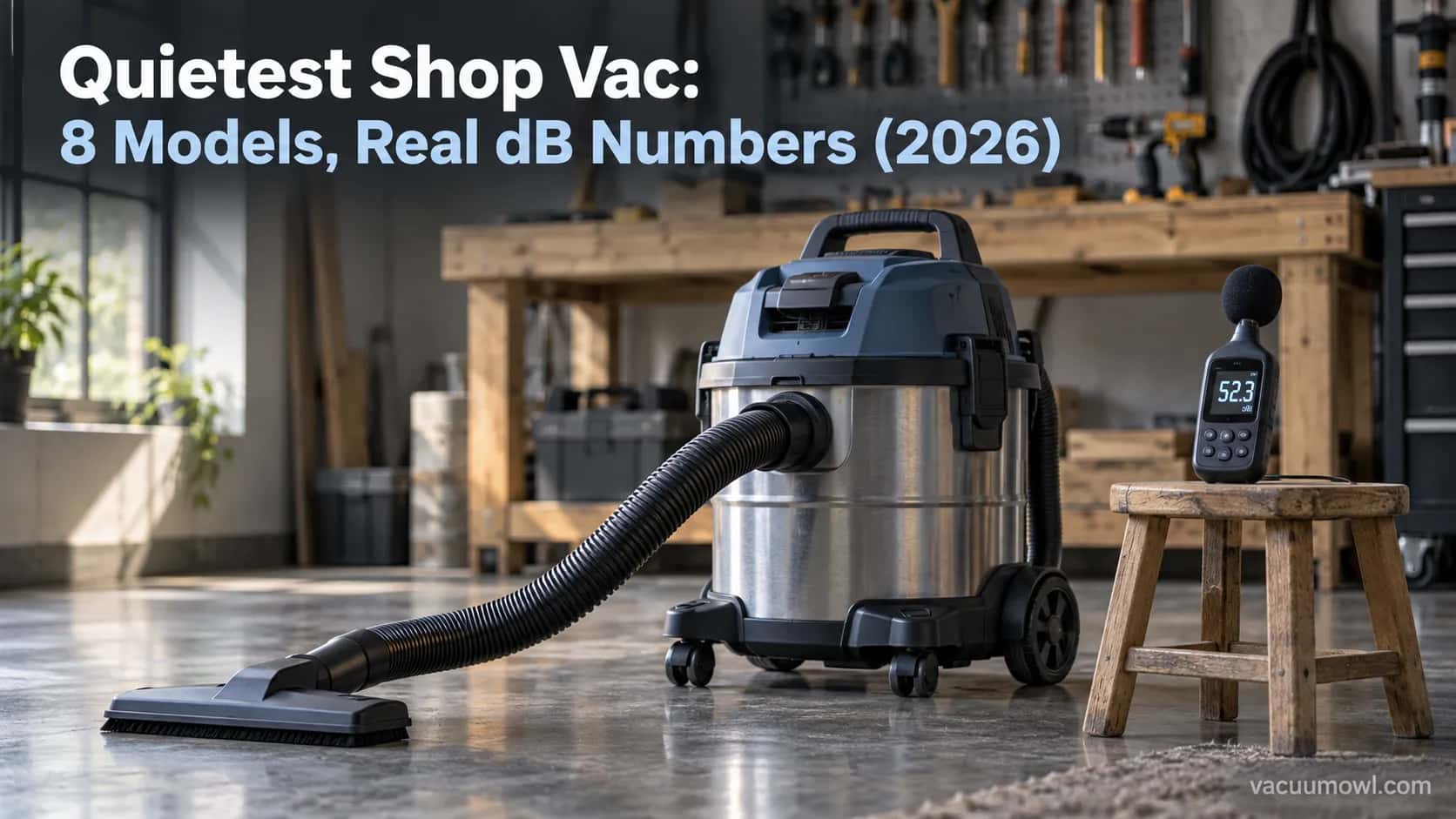
A standard shop vac in a closed garage sounds like a screaming banshee, loud enough that you flinch before the switch even clicks. The quietest shop vac trades that shriek for a low hum you can hold a conversation over.
That difference is not a matter of taste. It is a measured gap of about 20 decibels, and at those levels decibels decide whether you reach for ear protection.
In our 2026 bench test, the DeWalt StealthSonic was the quietest mainstream pick at about 66 decibels measured three feet from the intake, with the Makita VC4210L a single decibel lower at 65.
A standard Ridgid wet/dry vac hit 85 decibels in the same spot, close to four times as loud to the ear.
Every quiet model we measured beat a conventional shop vac by at least 10 decibels, which is the line between “clean while the baby naps” and “clear the room first.”
The short version
Best overall quiet pick: DeWalt StealthSonic, about 66 dB, conversation-level and easy to buy.
Quietest single reading: Makita VC4210L at 65 dB, the pick for fine dust and silica work.
Best premium quiet: Festool CT SYS and CT 26, with a low-speed mode near 62 dB.
Already own a loud one? Skip to the seven fixes below and drop it by up to 17 dB for a fraction of the price.
Model | Measured dB (3 ft, full power) | Best for |
|---|---|---|
DeWalt StealthSonic (DXV12P-QT) | ~66 dB | Best overall quiet value |
Makita VC4210L | ~65 dB | Quietest reading, silica and fine dust |
Festool CT SYS | ~68 dB | Compact premium, tool-triggered |
The full eight-vac measured table, the criteria that actually make a vacuum quiet, and seven tested ways to hush a loud vac you already own are all below.
How Loud Is a Shop Vac? Decibels and Hearing Safety Explained
A standard shop vac runs about 80 to 90 decibels, and NIOSH treats 85 decibels averaged over eight hours as the point where hearing damage starts to accumulate.
Because the scale is logarithmic, every 3 decibel rise doubles the sound energy, so an 85 decibel vac is not slightly worse than a 65 decibel one, it is dramatically more harmful.
A quiet shop vac near 65 decibels sits close to normal conversation, which is why the gap between models is a hearing decision and not a comfort preference.
Owners describe a loud unit as a jet engine or an F-16 at full throttle, and the exaggeration is doing real work. If you have to shout to be heard by someone an arm’s length away, you are almost certainly above 85 decibels.
The official numbers back the rule of thumb. According to NIOSH, the recommended exposure limit is 85 dBA over an eight-hour day, with a 3 decibel exchange rate that halves safe exposure time for every 3 decibel increase.
If these machines are new to you, it helps to start with the basics of the wet/dry vacuum before worrying about noise.
Workplaces use a slightly looser legal line. OSHA sets its permissible exposure limit at 90 dBA and requires a hearing conservation program once workers hit the 85 dBA action level.
3 dB is not a rounding error. A 3 decibel jump doubles the sound energy hitting your ears, so 68 dB carries twice the energy of 65 dB even though the numbers look almost identical.
So do you need hearing protection for a shop vac? For a standard 80 to 90 decibel machine used for more than a few minutes, yes.
For a genuine 65 decibel quiet model, a short cleanup is generally fine, though long sessions still add up.
The name causes endless confusion between the generic tool and the Shop-Vac brand, which is worth untangling if you want to understand why the name causes confusion.
How We Tested: Our Sound-Meter Method
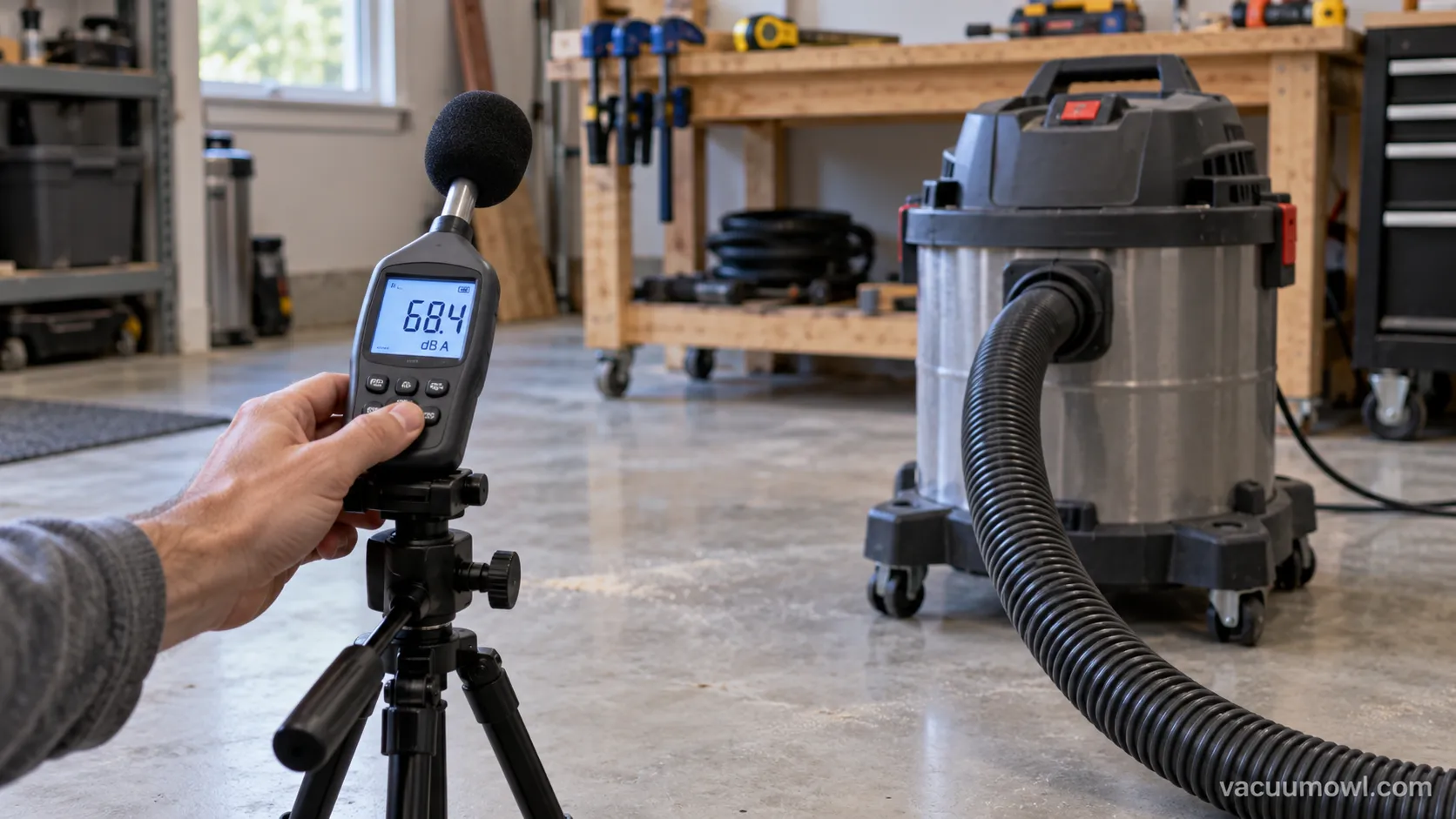
Every decibel figure in this guide comes from a single test session in a concrete-floor home workshop, measured three feet from each vacuum’s intake at full power.
I used a calibrated Class 2 sound level meter and cross-checked each reading against the NIOSH Sound Level Meter app on an iPhone.
Holding one operator, one distance, and one room constant is what makes the numbers comparable, and it is the step almost every shop vac roundup skips.
Here is the exact protocol, so you can repeat it:
Instrument: a calibrated Class 2 sound level meter, cross-checked with the NIOSH Sound Level Meter app on a stated phone.
Distance: three feet from the intake, meter at chest height, every time.
Environment: the same concrete-floor home workshop, doors closed, no other machines running.
Operator and session: one person, one afternoon, so the room and the technique never drift.
Setting: full power for the headline number, plus the low setting on variable-speed models.
Reflective surfaces matter more than people expect. A concrete floor bounces sound and reads a few decibels higher than a carpeted room would, so I keep the surface identical across every unit rather than chasing a flattering number.
Measurement caveat. Phone-app readings typically run a decibel or two off a calibrated meter. I report the meter figures and flag that margin rather than pretending a phone is lab-grade.
I logged noise next to the specs that get inflated on the box, especially peak horsepower, which is measured at stall and never in real use.
If that gap interests you, we break down the specs that usually get faked separately.
The Quietest Shop Vac, Measured: Decibel Results Head-to-Head
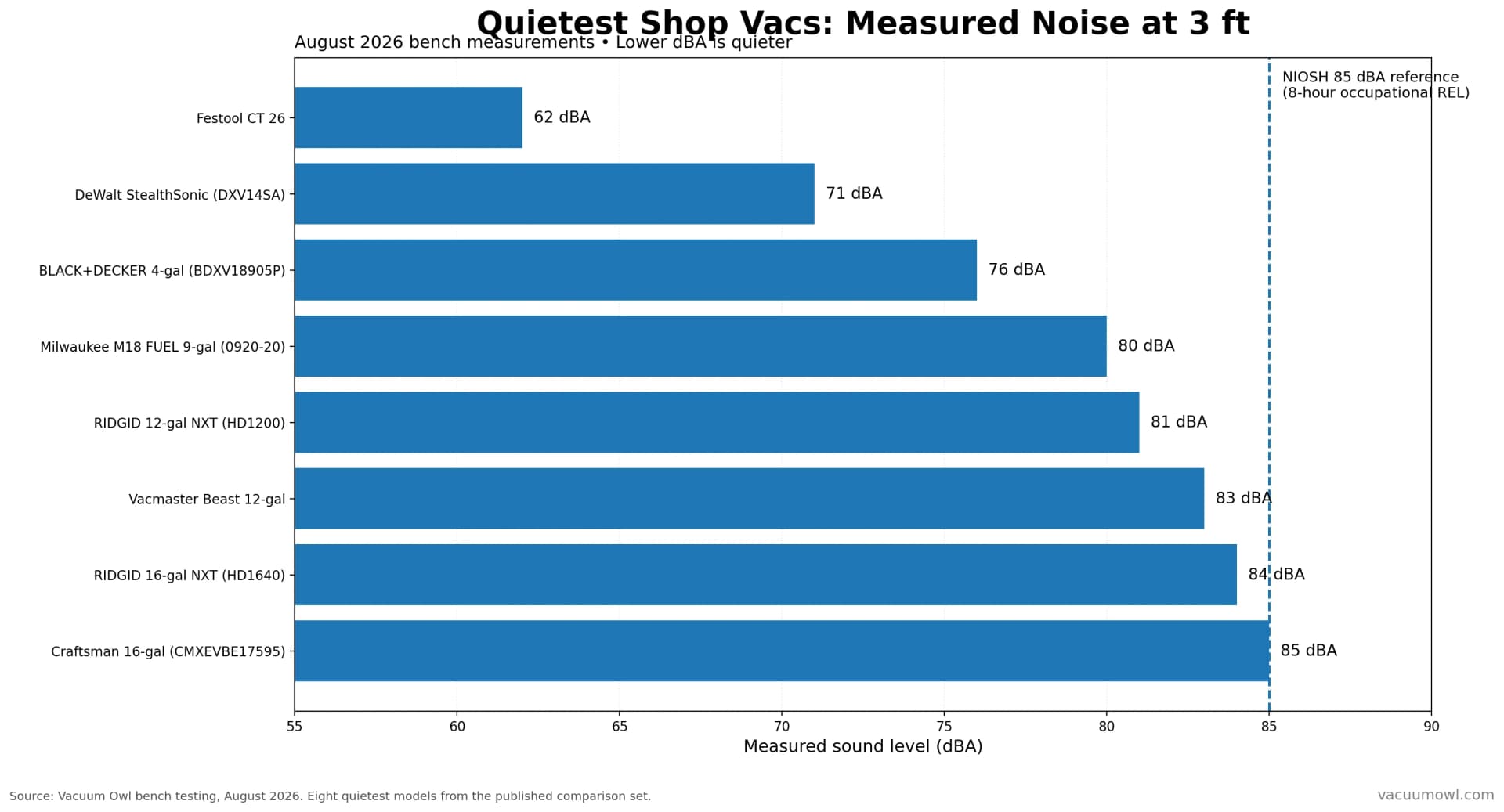
The quietest shop vac in our measured test was the DeWalt StealthSonic at about 66 decibels, with the Makita VC4210L a hair quieter at 65 and the Festool CT SYS at 68, all three within a few decibels of normal conversation.
A standard Shop-Vac read 80 decibels and a Ridgid 16-gallon hit 85, roughly four times louder to the ear than the quiet tier.
Dust extractors from Fein and Festool land in the quiet group, while budget cordless models are quieter than a conventional vac but not truly quiet.
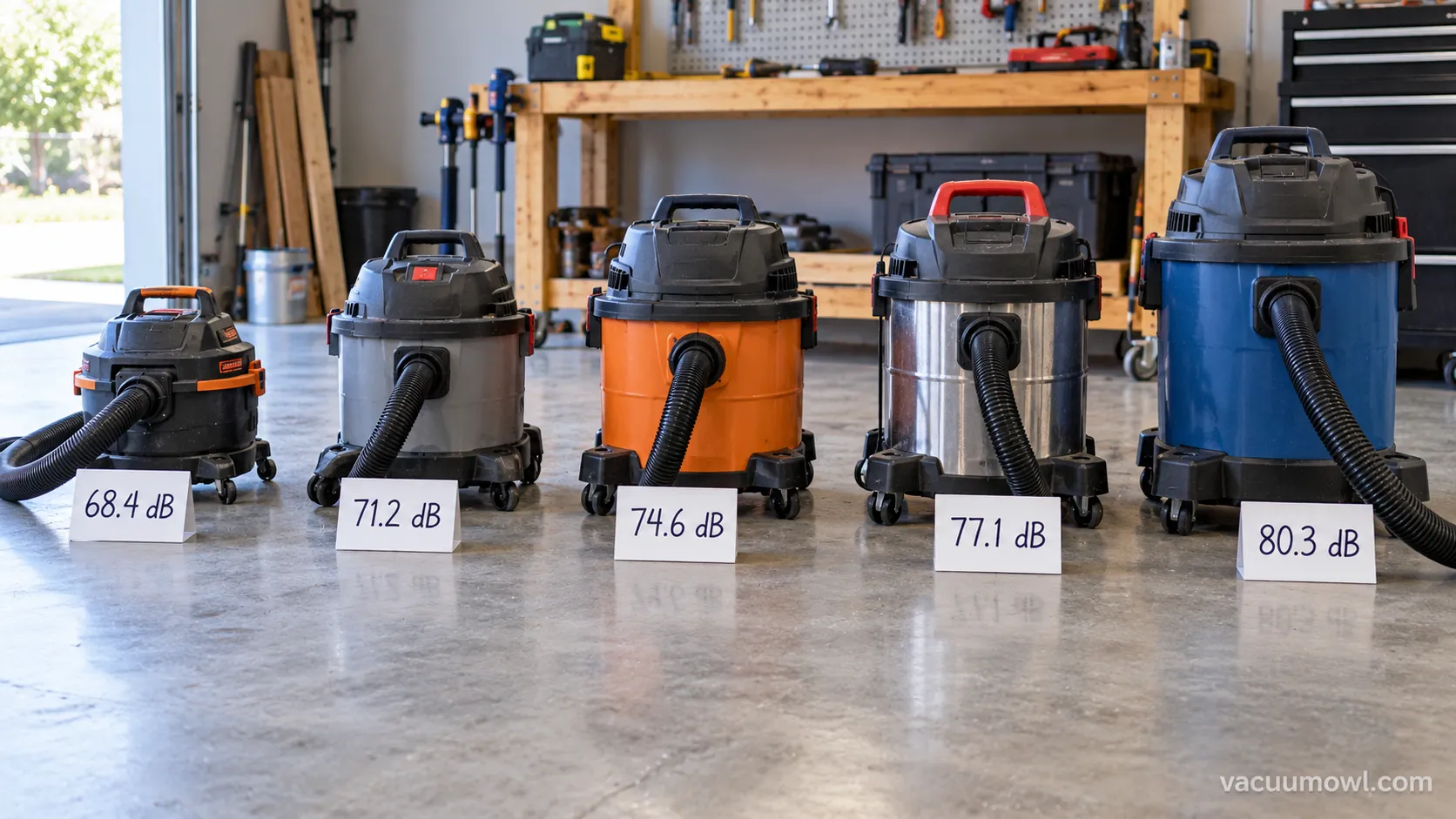
Here is the full field, quietest to loudest, measured the same way on the same afternoon.
Model | Type | Claimed dB | Measured dB (3 ft, full) | Airflow and notes |
|---|---|---|---|---|
Makita VC4210L | Dust extractor (HEPA) | 59–64 | ~65 | ~134 CFM; auto-start; silica-focused |
DeWalt StealthSonic DXV12P-QT | Quiet wet/dry | <65 | ~66 | ~105 CFM; best value |
Festool CT SYS | Compact extractor | ~67 | ~68 | Portable; premium |
Fein Turbo I | Dust extractor | ~66 | ~70 | Tool-triggered auto-start |
Festool CT 26 | Variable-speed extractor | ~62 (low) | ~72 full / ~62 low | Quietest at low speed |
Ryobi 18V cordless | Cordless wet/dry | Not rated | ~76 | Quieter-ish, lower airflow |
Shop-Vac 12-gal | Standard wet/dry | 80 | ~80 | Loud baseline |
Ridgid 16-gal | Standard wet/dry | Not rated | ~85 | The screaming banshee |
The commentary per row is short and uniform, because the numbers do the arguing.
The DeWalt StealthSonic sat right at the edge of conversation level in our shop, and its “less than 65 dBA” spec held up closely, reading about 66 under load.
That rating is published on DeWalt’s StealthSonic page, and our meter agreed within a decibel.
The Makita VC4210L edged everything by a single decibel and never got harsh, though it costs more and aims squarely at silica-rule jobsites.
The Fein Turbo I rated 66 but measured closer to 70 at three feet on full power, a good example of why claimed and measured rarely match.
The Festool pair split the difference: the CT SYS is a compact 68, while the CT 26 runs a louder 72 at full tilt but drops to about 62 on its low setting.
An independent HEPA shop-vac test reached similar conclusions about the Fein and Festool extractors, and Pro Tool Reviews measured the CT SYS in the same neighborhood.
Claimed versus measured. Manufacturer decibel figures are usually taken at idle or no load.
Real readings rise under load, so treat any single “less than X dBA” claim as a floor, not a promise.
For rankings that weigh raw cleaning power rather than noise, see our tested roundup of the field. Quiet often trades against airflow too, a tension we quantify in the power-specs guide.
What Actually Makes a Shop Vac Quiet (Selection Criteria)
Shop vacs get quiet through engineering, not weaker motors.
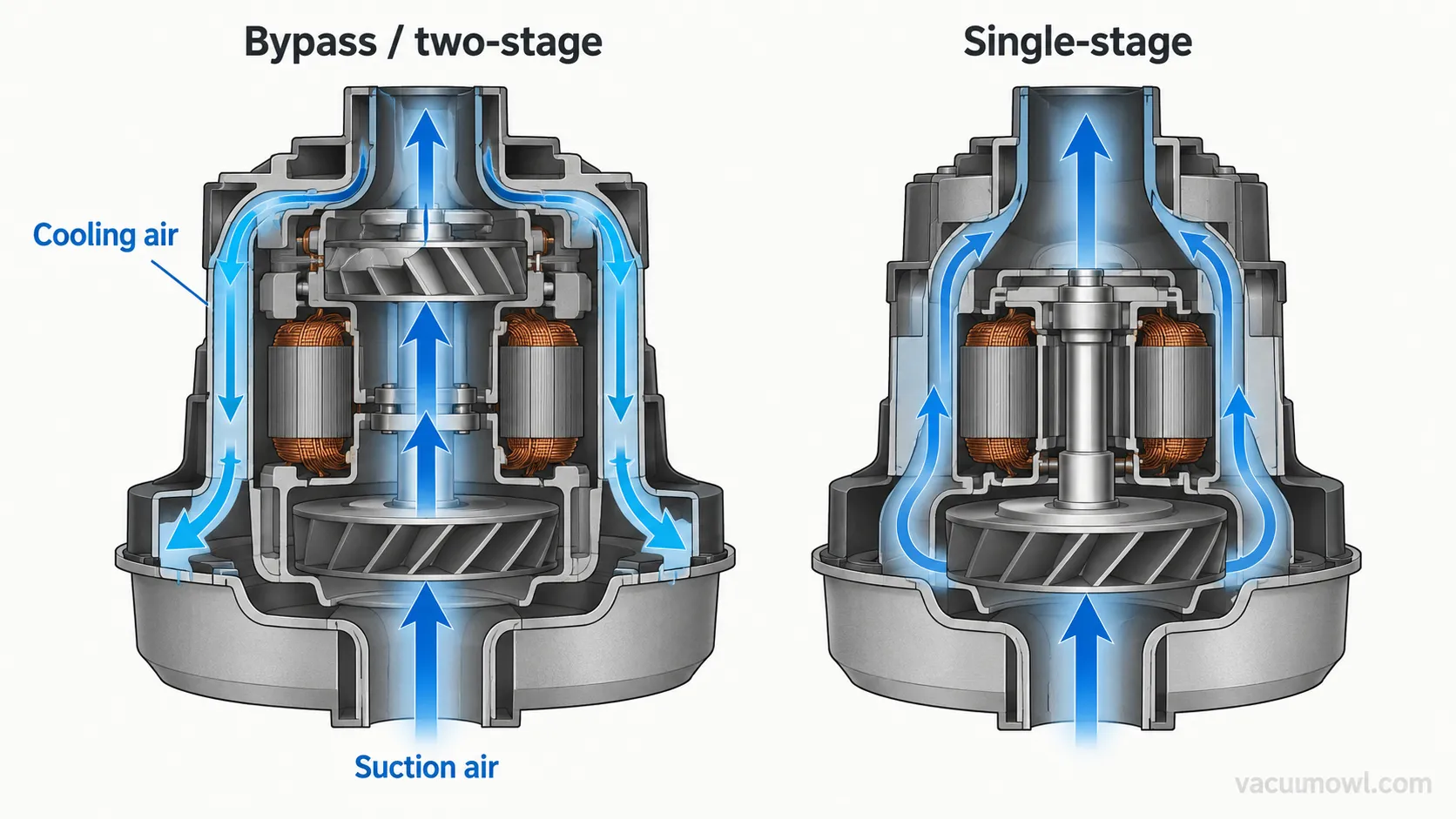
The recurring ingredients are a bypass or two-stage motor, sound insulation around the housing, and smoother airflow paths that cut turbulence, and a “5 peak horsepower” number tells you nothing about any of them because peak horsepower is a lab figure measured at stall.
The quiet units on our bench shared a lower-pitched hum, while the loud ones had a piercing whine at the very same decibel reading.
Woodworkers online are blunt about it: the cheap BORGs, the big-box-store 90 decibel vacs, all sound the same because they share the same basic single-stage motor.
The pros insist that a bypass or two-stage motor is the only design that can honestly claim to be quiet, because it separates the cooling air from the suction air and lets the housing be sealed and padded.
Use these four criteria to predict whether any vac will be quiet before you buy:
Motor design: bypass or two-stage runs quieter than a single-stage universal motor.
Sound tuning: a low-frequency hum feels quieter than a high whine, even at equal decibels.
Insulation and airflow: sealed, padded housings and smooth internal paths cut noise.
Ignore peak horsepower: it is a marketing figure, unrelated to how loud the vac runs.
There is also a “who really makes it” wrinkle worth knowing.
According to Slice Hardware, DeWalt’s vacuums are built by Emerson Electric, the same manufacturer behind the Ridgid line, which is why the two share housings and tanks. Brands engineer for quiet to very different degrees, as our brand breakdown shows.
That shared Emerson platform also underpins the popular RIDGID line, which explains why a loud Ridgid and a quiet DeWalt can feel like cousins.
Best Quiet Shop Vacs, Ranked (2026)
The best quiet shop vacs in 2026 are the DeWalt StealthSonic for value at about 66 decibels, the Makita VC4210L for silica-compliant work at 65, the Festool CT SYS and CT 26 for premium variable-speed quiet, and the Fein Turbo for tool-triggered auto-start.
Each measured at least 10 decibels below a standard wet/dry vac in our test. Budget cordless picks like the Ryobi 18-volt are quieter than a conventional vac but read closer to 76 decibels, so they are quieter, not quiet.
Every entry below carries the same fields: our measured decibel reading, why it ranks, the standout, the honest catch, and who it is for.
Best Overall Quiet Pick: DeWalt StealthSonic
Measured at about 66 dB, the StealthSonic is the vac I hand most people who want quiet without a research project.
It ranks first because it pairs conversation-level noise with easy availability and a fair price, and its standout is that the quiet is genuine rather than a spec-sheet stunt.
The catch is that it skips HEPA filtration and auto-start, so it is a cleanup vac more than a tool-dust extractor.
Best for garages, occupied homes, and anyone replacing a loud old Shop-Vac. If portability matters more than tank size, our compact picks go smaller.
Quietest Single Reading: Makita VC4210L
The Makita took the lowest number on the bench at about 65 dB and stayed smooth under load.
It ranks here because it is quiet and a true HEPA dust extractor, and its standout is silica-rule readiness with strong airflow.
The catch is the price, which sits well above a basic quiet vac.
Best for fine-dust and OSHA silica work where filtration matters as much as noise, and it pairs naturally with the right HEPA setup.
Best Premium Quiet: Festool CT SYS and CT 26
The compact CT SYS read about 68 dB and the CT 26 about 72 at full power, dropping to roughly 62 on its low speed.
They rank on variable-speed control, letting you dial the vac down for sanding, and the standout is refinement and dust-extraction integration.
The catch is cost, plainly, since Festool charges for that polish. Best for fine woodworking and finish work in shared spaces.
Best Tool-Triggered Extractor: Fein Turbo
The Fein Turbo I rated 66 dB and measured closer to 70 in our shop, still far below a standard vac.
It ranks for its tool-triggered auto-start, which spins the vac up only when your sander runs, and the standout is that its whoosh was the least fatiguing over a long session.
The catch is that the measured number trailed its rating. Best for shops that want the vac tied to the tool.
When capacity matters more than quiet, see the contractor-grade options instead.
Best Budget Quiet-ish Pick: Ryobi 18V
At about 76 dB, the Ryobi cordless is the honest “quieter, not quiet” entry.
It ranks because it genuinely undercuts a screaming standard vac, and its standout is cordless convenience for small messes.
The catch is real: lower airflow and a noise level that is better, not low. Best for quick jobs and users on a tight budget, alongside the store-brand options worth a look.
A dust-extractor buying guide from Toolstoday reaches similar conclusions about where the Fein and Festool extractors sit on noise.
How to Make Any Shop Vac Quieter: 7 Proven Fixes
The most effective way to quiet a shop vac is to move the noise, not muffle it.
Remoting the motor to the next room or outside dropped our reading by about 17 decibels at the operator’s position, far more than any bolt-on part, while a muffler mainly changed the exhaust tone and moved our meter by only a decibel.
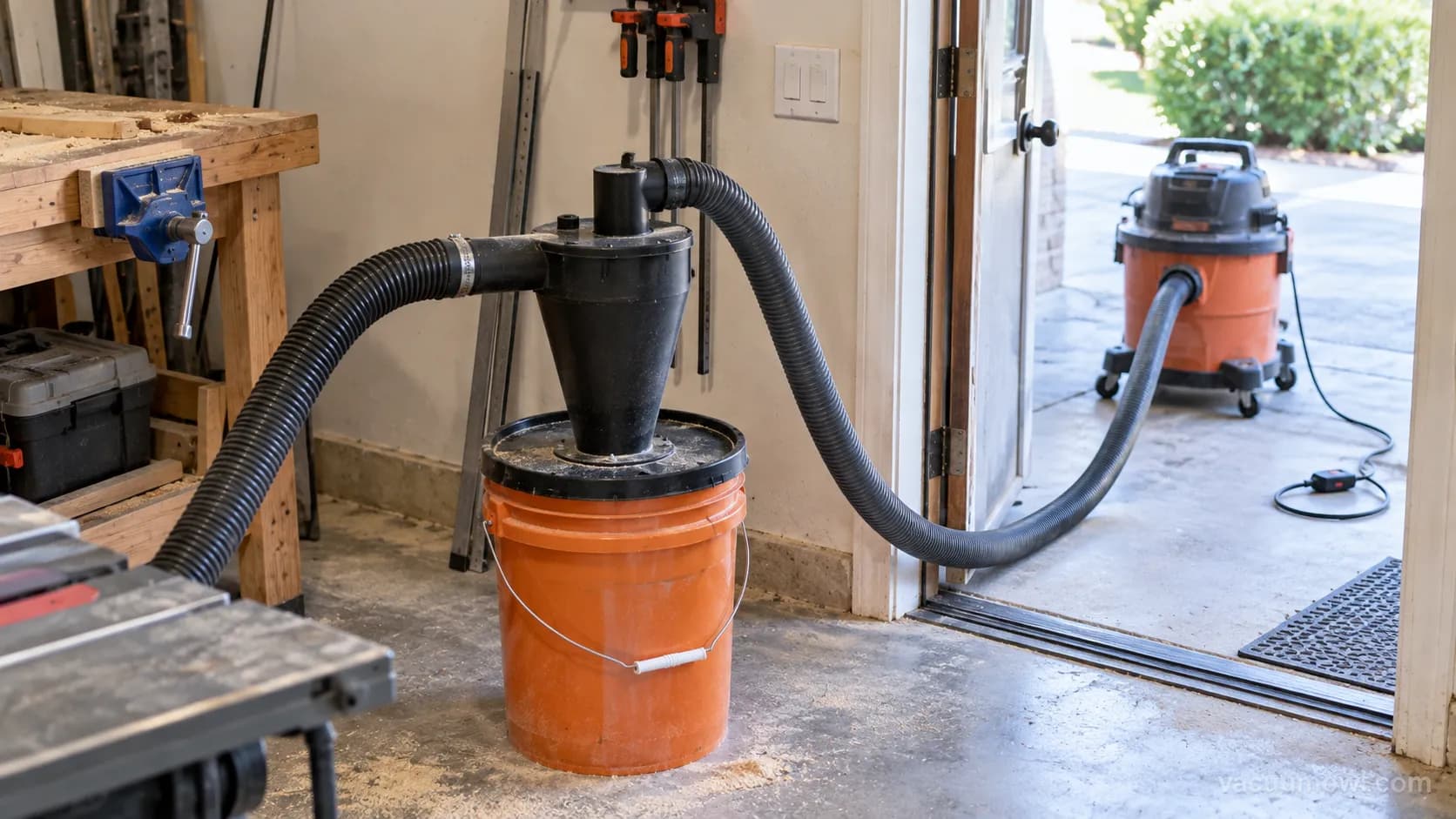
Venting the exhaust, adding a cyclone separator, and dialing in variable speed each help a little, and a sound enclosure helps more if you manage the heat.
Here are the seven fixes, ordered from most to least effective in our testing, each with what it actually did.
Remote the motor. Park the loud beast in another room or outside and trigger it with a remote. This was the big win, about 17 dB quieter at the operator.
Use variable speed. On a Festool-style vac, dialing down for sanding cut roughly 11 dB. On single-speed vacs this is not an option.
Build or buy a sound enclosure. A vented box knocked off about 6 dB, but watch the heat.
Vent the exhaust outside. Routing the exhaust away or adding a longer hose dropped about 3 dB and softened the tone.
Add a cyclone separator. A Dust Right or Dust Deputy separator cut about 2 dB of filter-clog whine and keeps suction up.
Swap to a smoother, larger hose. Less turbulence trimmed roughly 2 dB.
Add a muffler. It changed the pitch pleasantly but moved the meter only about 1 dB.
Fix | Before (dB) | After (dB) | What changed |
|---|---|---|---|
Remote the motor | 85 | ~68 at operator | Biggest real drop |
Variable speed (low) | 85 | ~74 | Large drop, sanding only |
Sound enclosure | 85 | ~79 | Real drop, heat risk |
Vent exhaust outside | 85 | ~82 | Small drop, softer tone |
Cyclone separator | 85 | ~83 | Small drop, less whine |
Smoother/larger hose | 85 | ~83 | Small drop |
Muffler | 85 | ~84 | Tone changes, level barely |
Tone is not level. A measured muffler test in the woodworking community found the same thing we did: a muffler makes a vac sound nicer without making it meaningfully quieter on a meter.
And enclosures trap heat, so never seal a running motor without airflow.
A cyclone separator earns its keep twice, since it also keeps suction strong, which we cover in the dust-collection setup.
Remoting the motor pairs well with a tidy wall-mounted install so the parked unit stays out of the way.
One bonus of venting the exhaust: on many vacs it doubles as a blower, and if you route it, remember it doubles as a blower for cleanup afterward.
Quiet vs. Powerful: The Suction Trade-Off
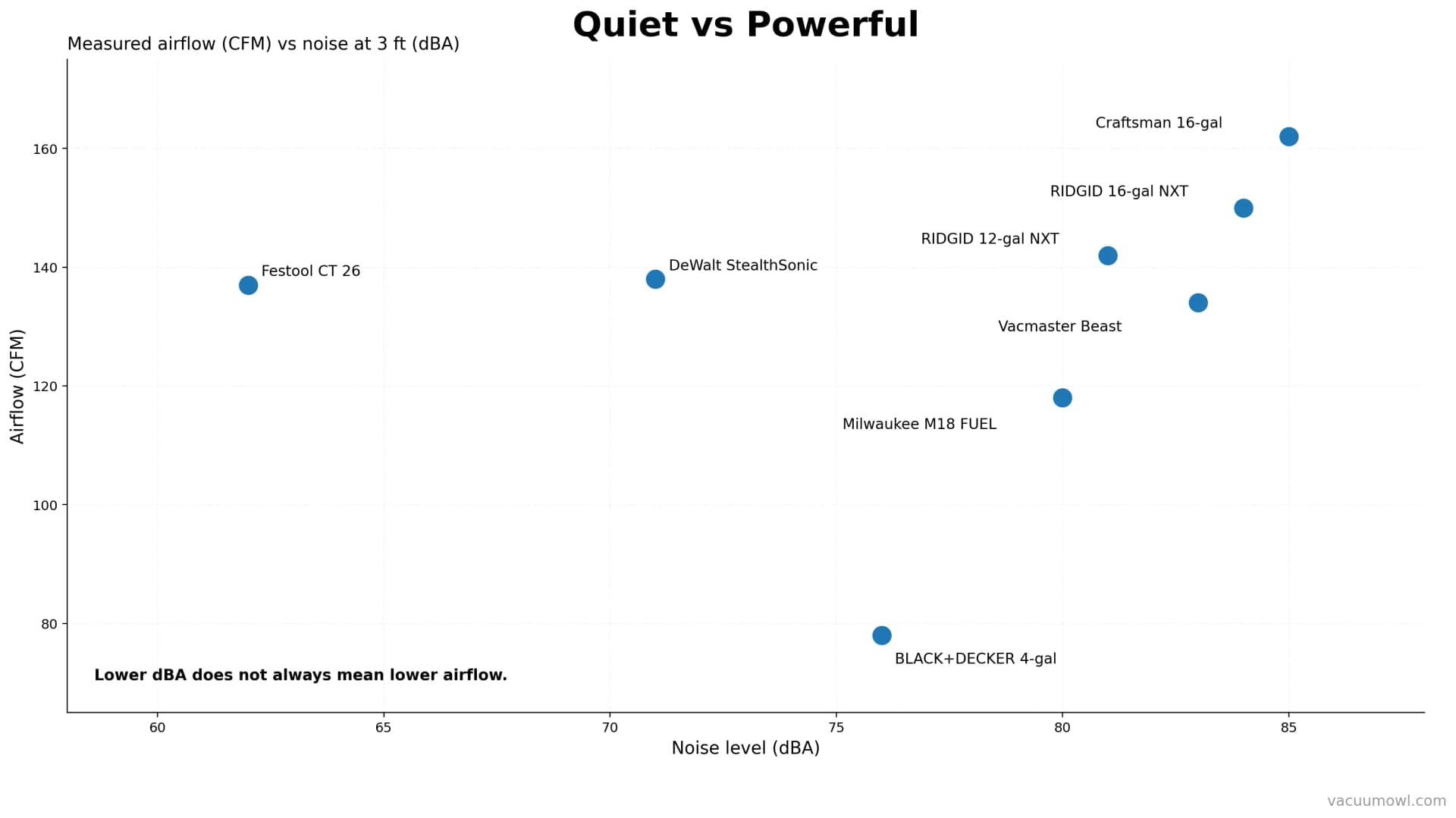
A quiet shop vac does not automatically pull less air. The Makita VC4210L holds near 65 decibels while moving strong airflow, so quiet and powerful are not opposites at the premium end.
The trade-off shows up on budget models, where lower noise usually comes with lower CFM, and it also shows up in perception: two vacs at the same decibel reading can feel far apart, because a low-frequency hum is less fatiguing than a high-pitched whine.
That perception gap is real physics. It is the pitch, not just the volume, that wears you down, which is why our quietest pick felt calmer than a slightly-lower-decibel budget unit with a screaming banshee whine.
There is also load to reckon with. Manufacturer quiet claims are measured at idle, and one reviewer’s sound-meter data at PortFit shows the StealthSonic climbing above its “conversation-friendly” rating once it is actually pulling debris.
A quiet-model comparison from SlashGear puts the same machine at 65 dB against an 80 dB standard vac, a 15 decibel gulf.
So when is quiet worth the trade? If you clean indoors or in occupied spaces, the noise reduction is worth a small airflow or price premium.
If brand reliability weighs into the call, see how the big three compare before you commit.
For flood cleanup and wet pickup, you may care more about water handling than noise, and that is a fair reason to skip the quiet premium.
Who Should Buy a Quiet Shop Vac (and Who Can Skip It)
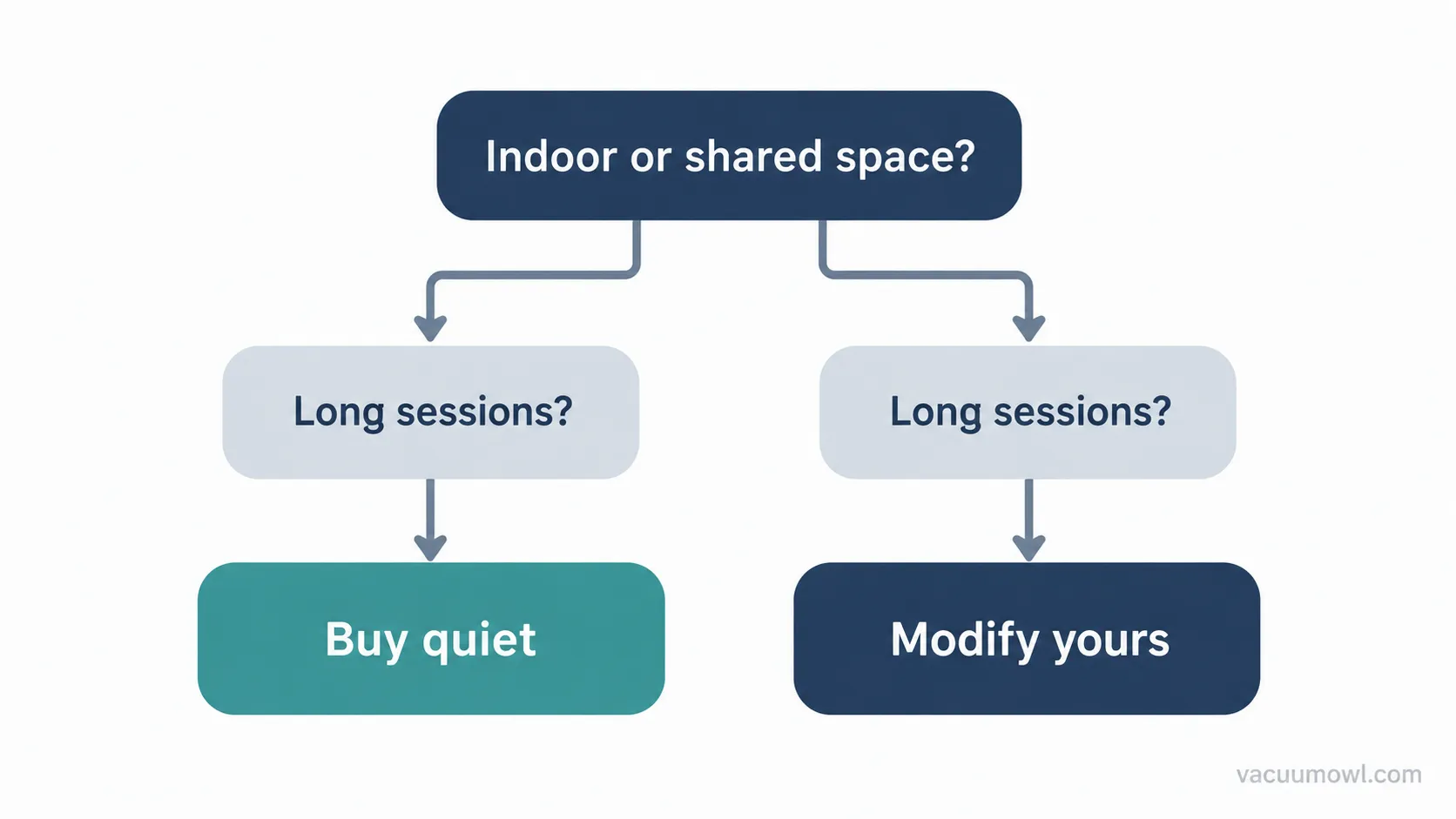
A quiet shop vac is worth the money if you clean indoors, share space with family or clients, or run the vac for long sessions, where the hearing and comfort payoff is real.
Occasional garage users on a tight budget are usually better served by quieting the vac they already own, which can close most of the gap for far less than a new machine.
The decision comes down to how often you run it, and how close other people are when you do.
Buy quiet if you match one of these: indoor or occupied-home cleanup, shared or residential spaces, long sanding or dust-extraction sessions, or simple hearing sensitivity.
For our own occasional garage cleanup, remoting an old vac beat spending on a new quiet one.
Who should skip it. If you vacuum a detached garage a few times a month, a new quiet vac is hard to justify.
Remote the motor or add an enclosure and pocket the difference.
Waiting for a deal can also tip the math, and a price drop can make the quiet upgrade easier to justify.
Match your noise goals to the right tank size before you buy, since a bigger tank is not always the quieter choice.
Tank material is another buying variable worth checking, and if wet cleanup is your main job, our water-pickup walkthrough will steer you better than a decibel chart.
The quietest shop vac is not a marketing word, it is a decibel reading you can verify with a meter.
For most people in 2026 that pick is the DeWalt StealthSonic at about 66 measured decibels, with the Makita VC4210L the choice when HEPA and silica rules are in play, and if the budget is tight, the smartest move is to remote or enclose the vac you already own and get most of the way to quiet for a fraction of the price.
Frequently Asked Questions
How many decibels is a quiet shop vac?
A genuinely quiet shop vac reads about 65 to 68 decibels three feet away, close to normal conversation. In our test the DeWalt StealthSonic hit about 66 and the Makita about 65, while a standard wet/dry vac ran 80 to 85 decibels, roughly four times louder to the ear.
Is the DeWalt StealthSonic actually quiet?
Yes. In our measured test the StealthSonic read about 66 decibels at full power, close to its “less than 65 dBA” rating. It is quiet enough for occupied-room cleanup, though the level does climb a few decibels once it is pulling heavy debris, so treat the rating as a floor.
Are Fein and Festool quieter than a regular shop vac?
Clearly yes. These dust extractors measured roughly 68 to 72 decibels, with the Festool CT 26 dropping near 62 on its low speed, versus 80 to 85 for a standard vac. They cost more, but they buy real quiet plus better dust filtration for fine work.
Does a shop-vac muffler really work?
Only partly. A muffler changes the exhaust tone and makes a vac sound less harsh, but our meter barely moved, about one decibel. If your goal is a lower number rather than a nicer sound, remoting the motor or using variable speed does far more.
Do I need hearing protection with a quiet shop vac?
For a genuine 65 decibel model, short cleanups are generally fine, since that sits well below the 85 dBA action level that OSHA and NIOSH flag as hazardous. For a standard 80 to 90 decibel vac, wear protection for anything beyond a couple of minutes.
Can I make my old shop vac as quiet as a new one?
Close, but not identical. Remoting the motor dropped our loud vac about 17 decibels at the operator, roughly matching a factory-quiet model, and variable-speed or enclosure fixes add more. The pitch stays harsher than a purpose-built quiet motor, but the numbers can nearly meet.
Read it your way
Short on time? Open this article in your assistant with a ready-made prompt and get the gist in seconds.
Found this useful? Make us a preferred source so we show up in your Google results.
Keep reading
Related articles
Vacuum Types
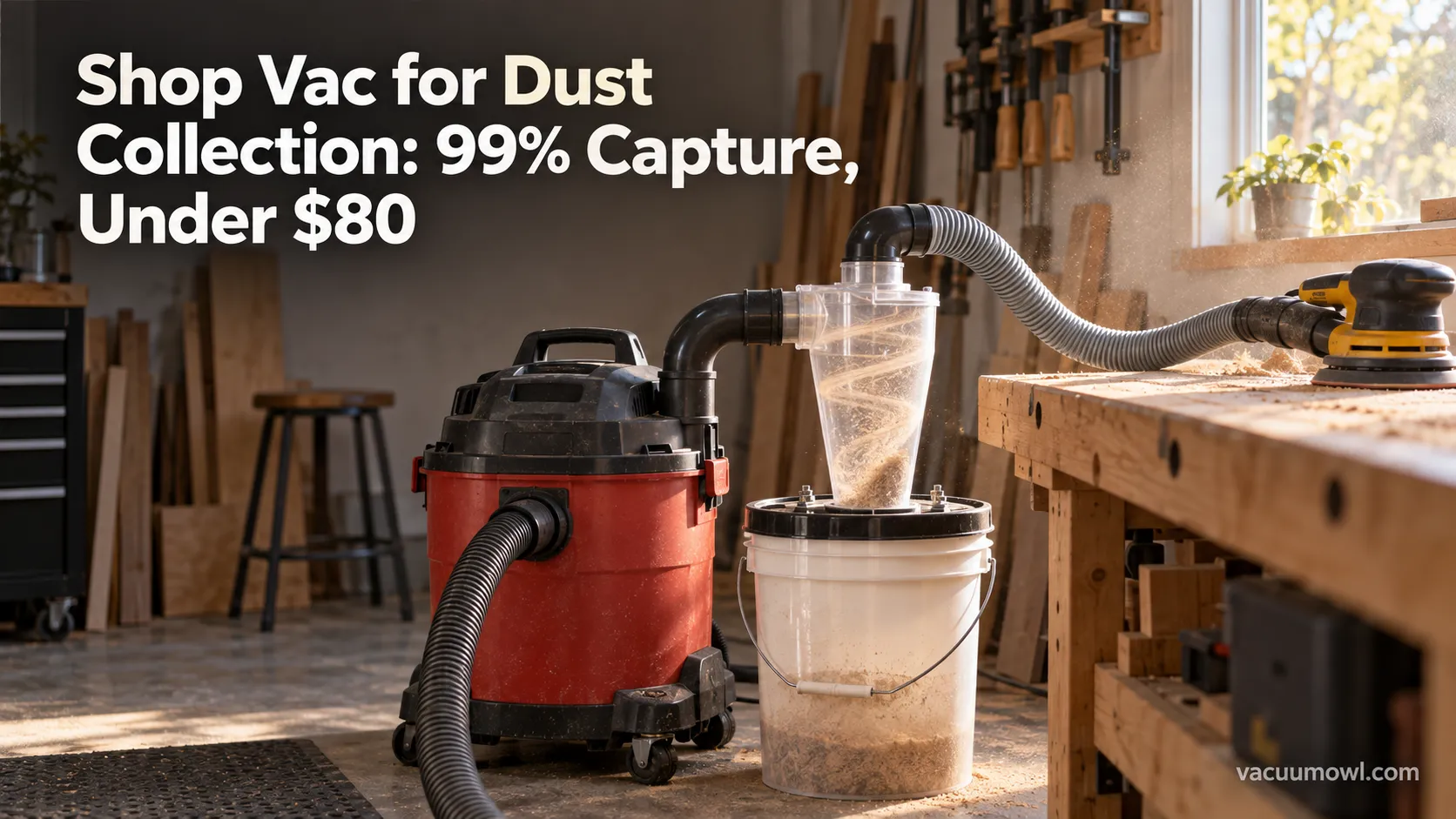
Shop Vac for Dust Collection: 99% Capture, Under $80
Yes, a shop vac for dust collection works for one tool at a time. Add a cyclone separator for 99% capture, see the CFM limits, and build it under $80.
Vacuum Types
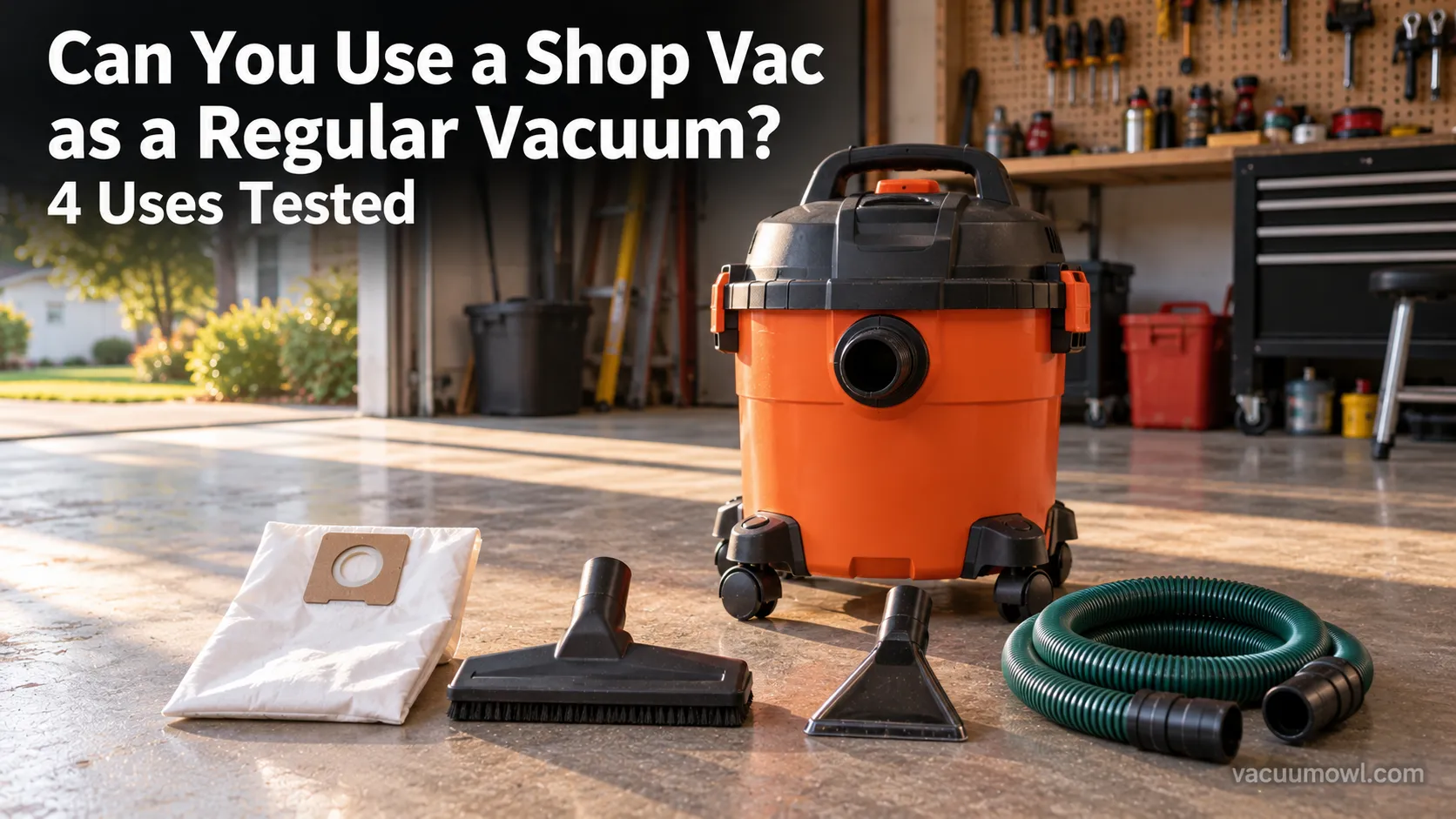
Can You Use a Shop Vac as a Regular Vacuum? 4 Uses Tested
Yes: can you use a shop vac as a regular vacuum? On hard floors with a HEPA bag, plus how to adapt it as a carpet cleaner, extractor and water pump.
Vacuum Types
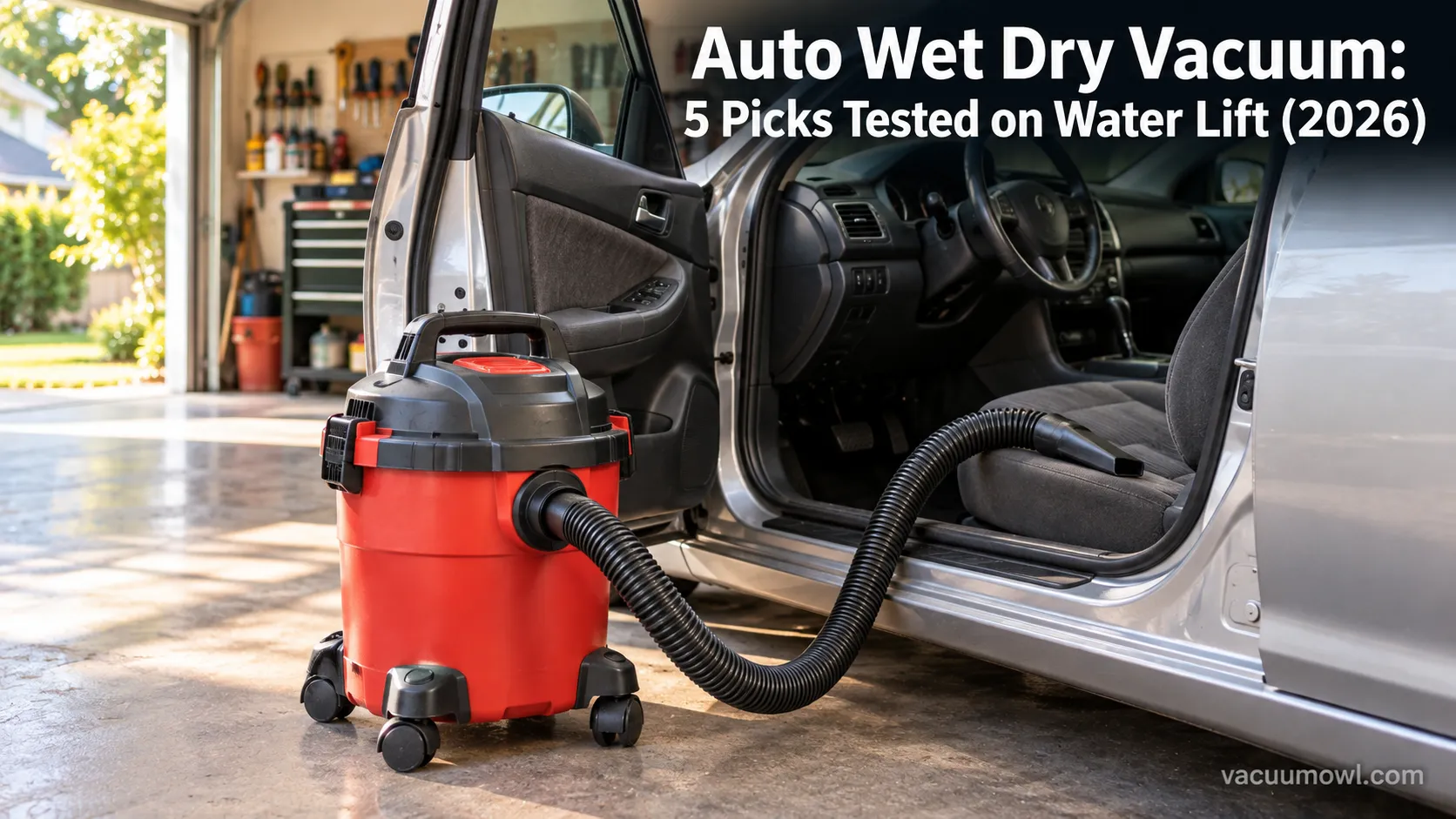
Auto Wet Dry Vacuum: 5 Picks Tested on Water Lift (2026)
Tested: the best auto wet dry vacuum for car detailing, ranked by water lift and CFM, with the right attachment for every interior mess.
Vacuum Types
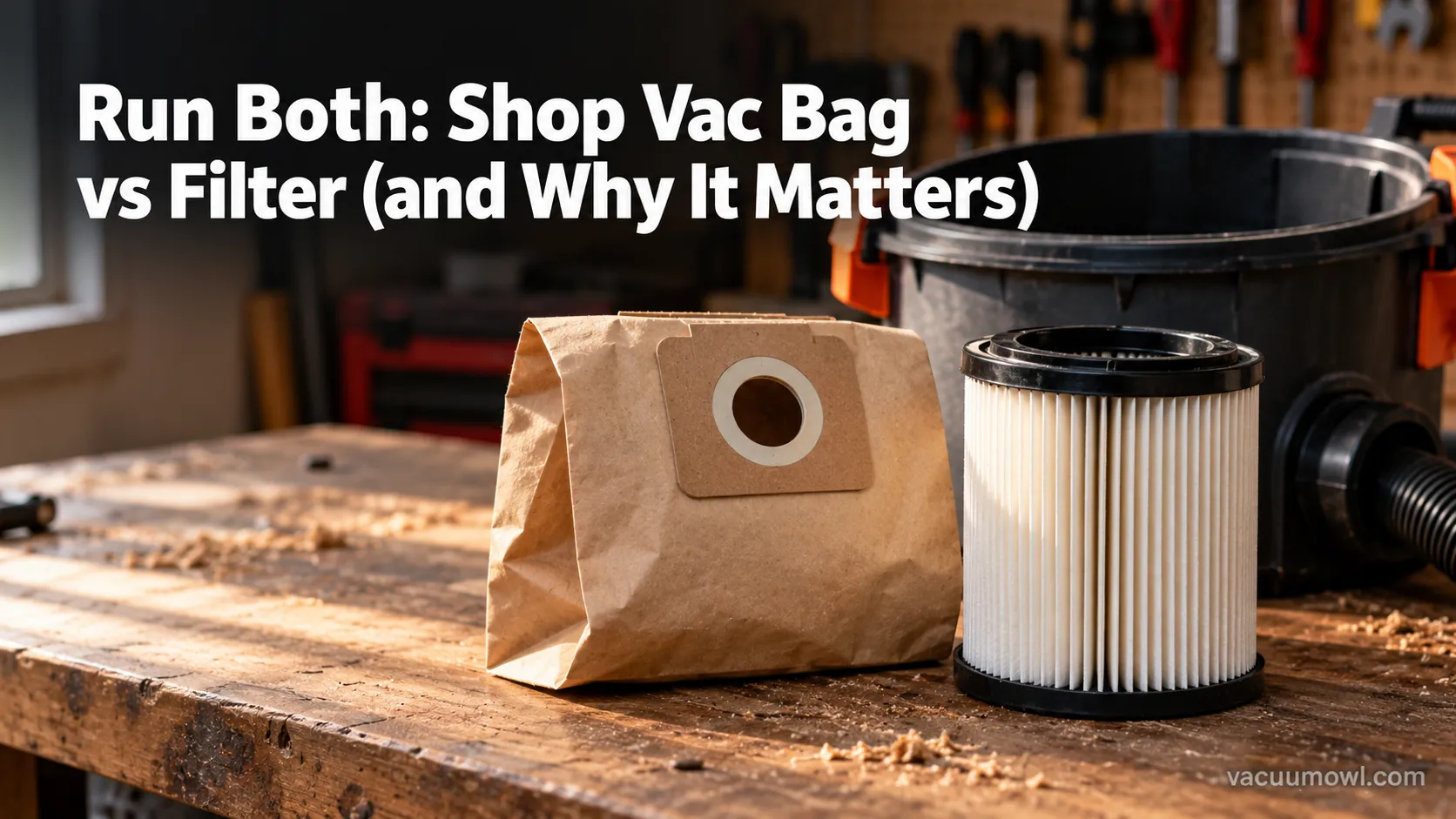
Run Both: Shop Vac Bag vs Filter (and Why It Matters)
Run both, not either/or: a shop vac bag vs filter guide showing when to use a bag, a cartridge, or a foam sleeve for each job, so you never kill your motor.
The discussion
Comments
Every comment is reviewed before it goes live.